
How General Contractors Use Subcontractors
A general contractor signs the contract with you, then hires licensed specialists, called subcontractors, to do the electrical, plumbing, framing, roofing and other trade work. Done well, you get one point of accountability and a coordinated schedule. Done carelessly, you get unpaid bills that can become liens, so ask for licenses, insurance certificates and lien releases.
What a general contractor actually does
A homeowner's contract is with one company. That company, the general contractor, promises to deliver the finished project, and it decides who does each piece of the work, in what order, and to what standard. The pieces usually go to subcontractors: separate businesses that each hold a license in one trade and are paid by the general contractor, not by you.
On a typical remodel the general contractor writes the scope, prices it, pulls the building permit, orders materials, schedules the trades so the plumber is not waiting on the framer, schedules inspections, and walks the job with you at the end. The trades themselves are the subcontractors' work.
Why a general contractor is allowed to subcontract
California's license law is built around it. A B license (General Building) is the classification for projects that need two or more unrelated trades, and the holder is expected to coordinate them. Business and Professions Code section 7057 also lets a Class B contractor take on work in a trade it does not hold, in limited cases, when it subcontracts that work to an appropriately licensed contractor. Read section 7057 on leginfo.legislature.ca.gov, and ask your contractor how it applies to a single-trade job.
The rule on the other side is that every trade must be done by someone licensed for it. Electrical work is C-10, plumbing is C-36, roofing is C-39. How to check a contractor's license shows how to verify each one.
What you gain from the subcontractor model
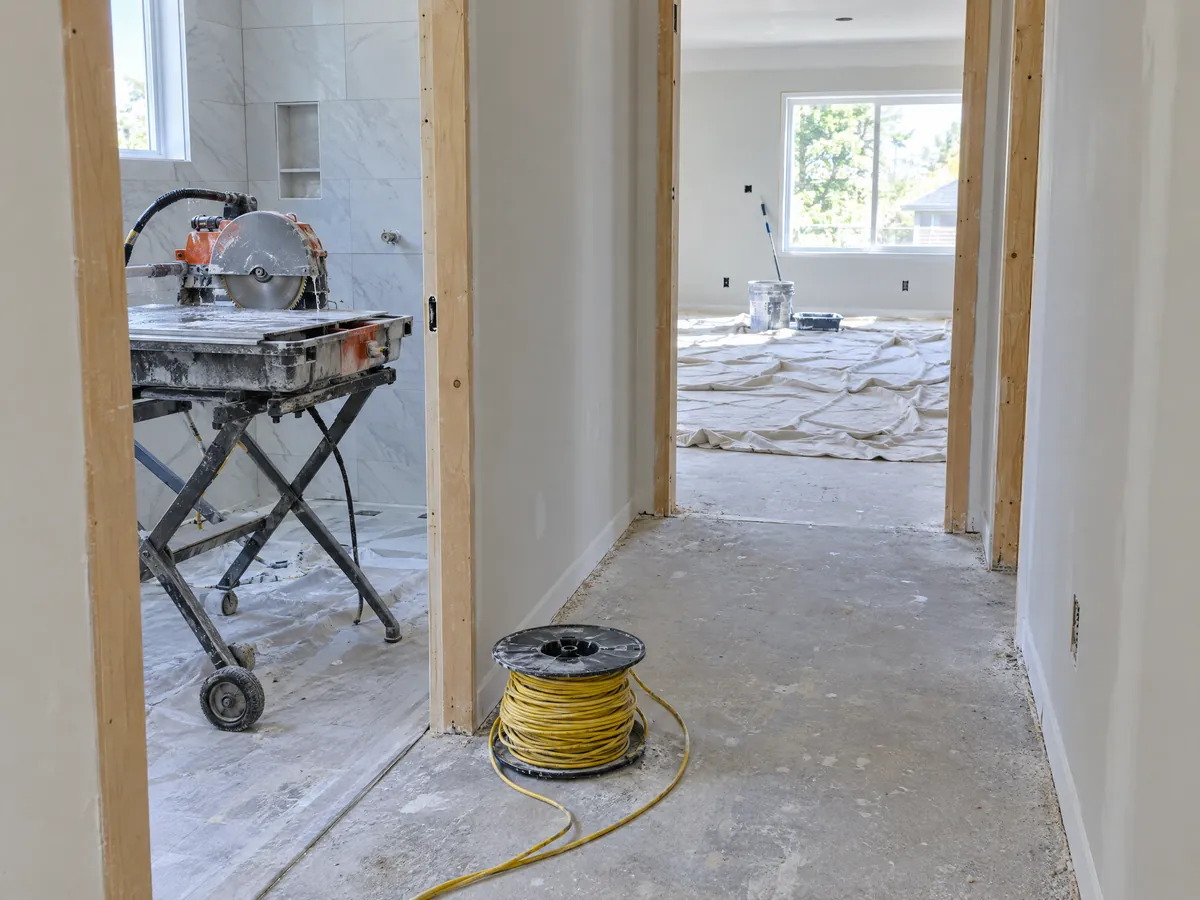
A specialist who installs shower pans or tile every week tends to make fewer mistakes at it than a generalist who does it a few times a year. That is the strongest reason the model exists. The other benefits are practical:
- One contract, one place to complain. If the floor is uneven, you call the general contractor, not four businesses.
- Coordinated timing. Someone owns the schedule and the order of the trades.
- Permits handled together. The general contractor pulls the building permit. Los Angeles issues separate plumbing, electrical and heating permits alongside it, and those are often pulled by the trade that does the work.
- Right license for each job. The general contractor can bring in a C-10 electrician for the panel instead of doing it with a license that doesn't cover it.
Where the risks are
The model fails in predictable ways, and all of them are manageable if you know them in advance.
- Unpaid subcontractors. If a contractor does not pay a subcontractor or supplier, that unpaid party may have lien rights against your property, which is why the home improvement contract rules require a mechanics-lien warning.
- Thin insurance. A subcontractor without workers' compensation coverage for its crew may create exposure for you if someone is hurt on your property.
- Gaps between trades. When one trade finishes late, the next one leaves for another job, and your schedule slips.
- Blurred accountability. If the contract does not say who answers a warranty call, you can end up passed between businesses.
- Hidden mark-ups. A fixed price can hide how the contractor built it. Ask whether the price is fixed or cost plus, and what the contractor's fee covers.
- Change orders. Extra work that a subcontractor finds mid-job, such as rotted framing behind a wall, passes through the contractor to you. The contract should require a written change order, with the price, before that work begins.
Who does what on a room addition
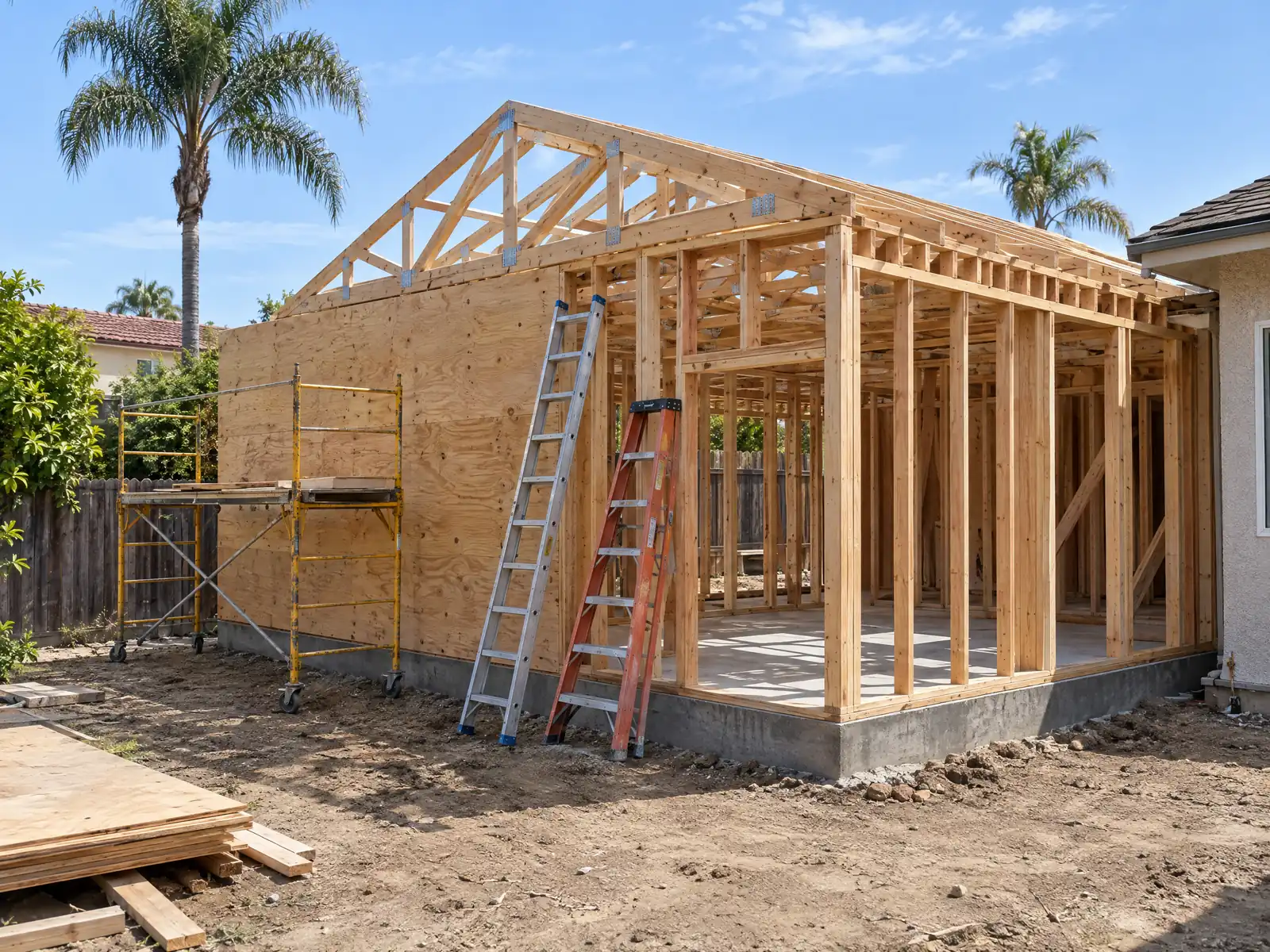
A room addition shows the model at full size. A concrete subcontractor forms and pours the foundation, a framing crew builds the walls and roof structure, and a roofer closes the roof. Electrical, plumbing and heating-and-cooling specialists run their rough work next, and the city inspects before anything is covered. Insulation, drywall, flooring, painting and trim follow, each by its own specialist.
Every handoff is a place where a schedule can slip or a bill can go unpaid. A good general contractor sequences the trades so none waits on another, keeps the permit card current, and tells you which inspection is next. A weak one lets those jobs drift and calls you when something is late.
What to ask for before work starts
California law gives you some of these on request. The home improvement contract rules in Business and Professions Code section 7159 require a statement on whether subcontractors will be used, with the list available to you on request, and a statement that you may ask for lien releases. The CSLB's sample contract guidance points owners to three protections: get the subcontractor and supplier list, allow 20 days for preliminary notices to arrive, and consider joint checks. Beyond those, ask for:
- Each subcontractor's license number, and look it up the same way you look up the general contractor's.
- A certificate of insurance from each subcontractor, naming the policy period and coverage.
- Lien releases from every subcontractor and supplier with each progress payment, and unconditional final releases at the end.
- A permit plan, meaning who pulls which permit and who schedules each inspection.
- A warranty statement saying who answers a callback and for how long, in writing, with any manufacturer or subcontractor warranties passed through to you.
How MDG Builders works, in general terms
MDG Builders holds CSLB license #1040337 with B and C-61/D-12 classifications, and its CSLB record lists workers' compensation as exempt because the company has no employees. Put those two facts together and the model follows: MDG signs your contract and takes responsibility for plans, permits and schedule, and licensed subcontractors do the work in the field. We show the record line by line in how to check a contractor's license.
That means the questions in the section above are fair to put to MDG, and to any other contractor. For an ADU or a room addition, the pieces that matter most are the foundation, framing, electrical and plumbing trades, which the room additions and ADU construction pages describe. If you are planning a larger build, room addition vs ADU helps you decide what to hire for.
Subcontractor questions
Can a general contractor do roofing in California?
A general building contractor can manage a roofing job, usually by hiring a roofer with a C-39 license. Business and Professions Code section 7057 allows a Class B contractor to take work in a trade it does not hold when it subcontracts that work to an appropriately licensed contractor, with limits for single-trade jobs. Ask who holds the roofing license.
Do I pay the subcontractor or the general contractor?
You pay the general contractor, according to the payment schedule in your contract. Your contract is with the general contractor, who pays the subcontractors. If you are worried about unpaid trades, ask for lien releases with each payment, and consider joint checks that name the contractor and the subcontractor together.
Who is responsible if a subcontractor does bad work?
The general contractor you signed with. The subcontractor's agreement is with the contractor, not with you, so you hold the contractor responsible and it holds the subcontractor responsible. Put the warranty terms and the name of the party who answers callbacks in the contract, before work begins.
Does a general contractor mark up subcontractor work?
Most do, because the price includes coordination, scheduling, permits and the risk of managing the job. That is not a problem in itself. Ask whether your price is fixed or cost plus, and what the contractor's fee covers. A clear answer matters more than the size of the number.
If a contractor has no employees, who works on my project?
Subcontractors do, along with any workers those subcontractors employ. A contractor whose CSLB record shows workers' compensation as exempt has certified it has no employees. That is fine only if the people on your job work for licensed subcontractors, so ask for each one's license number and certificate of insurance.
What should my contract say about subcontractors?
It should state whether subcontractors will be used, and it should say the list is available on request (Business and Professions Code section 7159). It should also include the mechanics-lien warning, a statement that you can ask for lien releases, and a payment schedule tied to completed work, with any change orders in writing.
Work that goes with this

Room Additions
Family rooms, primary suites and second stories, from zoning check to final inspection, with sourced prices.
See room additions →
Kitchen Remodeling
Cabinets, counters, layout changes, permits and a written schedule, with prices tied to named sources.
See kitchen remodeling →
ADU Construction
Garage conversions, detached ADUs and JADUs, with the 2026 permit clocks, utilities and sourced costs explained.
See ADU construction →More contractor guides
How to Check a Contractor's License in California
Read a CSLB license record line by line, learn what a B license means, and see MDG's own record as a worked example.
Read the guide →
Room Addition vs ADU: Which Should You Build?
Cost, permits, rules and income compared for a Los Angeles homeowner choosing between building onto the house and building a second unit.
Read the guide →Ready to plan your project?
Call or send the form. We schedule a site visit and send a written proposal.