
Flooring Installationin Santa Fe Springs, CA
Flooring installation in Santa Fe Springs starts with what lies under the old floor: 69.2 percent of homes predate 1980, so test old vinyl and mastic for asbestos and the slab for moisture first. Carpet, vinyl and tile are exempt from a building permit in the code text we read, but hardwood is not named, so ask Building & Safety.
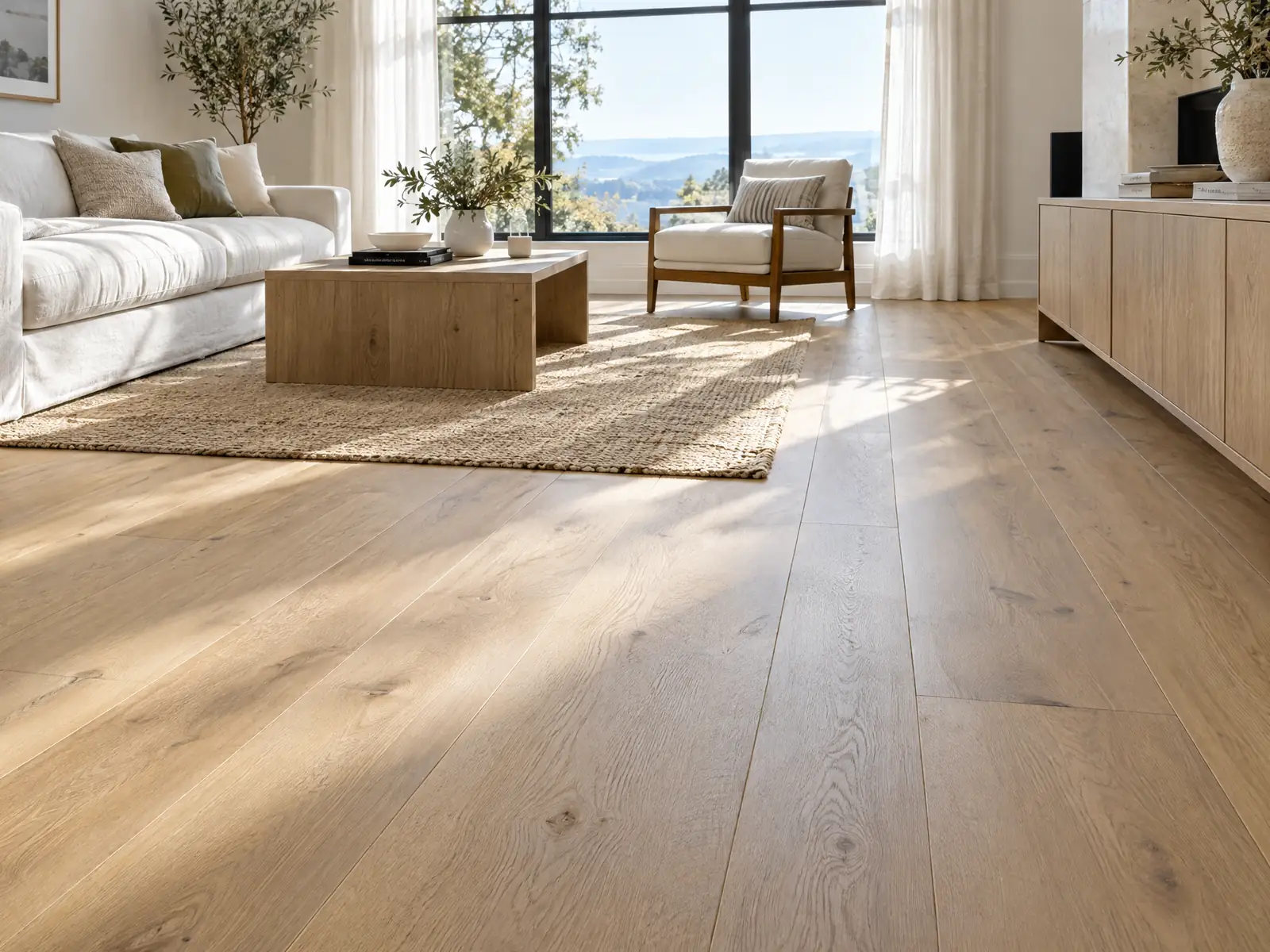
Santa Fe Springs began as a health resort. Dr. James E. Fulton found a sulfur spring in 1871 and built the Fulton Wells resort around it, the Santa Fe Railway bought land here for its Los Angeles to San Diego line in 1886, and the city incorporated on May 15, 1957. Census estimates for 2020 to 2024 count 5,927 housing units, and 45.3 percent of them were built in the 1950s. The General Plan calls most of the residential neighborhoods single-family homes from that decade, so a floor in town is more likely to sit on a 70-year-old slab or raised frame than on anything new.
MDG Builders, CSLB #1040337, is a Tarzana general contractor. We write the scope, bring the permit questions to the Building & Safety Division and hire a licensed flooring or tile subcontractor to lay the floor. Materials and prices are on the flooring page, and the Santa Fe Springs overview lists everything else we manage here.
What Santa Fe Springs Building & Safety and the Municipal Code say about flooring work
Where flooring permits come from in Santa Fe Springs: City of Santa Fe Springs Community Development Department, Building & Safety Division.
- Municipal Code 150.001.002(B)(2) says installing carpet, vinyl, tile and similar floor coverings does not need a building permit where disabled access requirements do not apply, and the City's handout names carpeting as permit-free finish work.
- CSLB defines the C-15 Flooring and Floor Covering classification as preparing any surface for installing flooring and floor coverings, laying carpet, resilient sheet goods and tile, and wood floors, and it does not include ceramic tile.
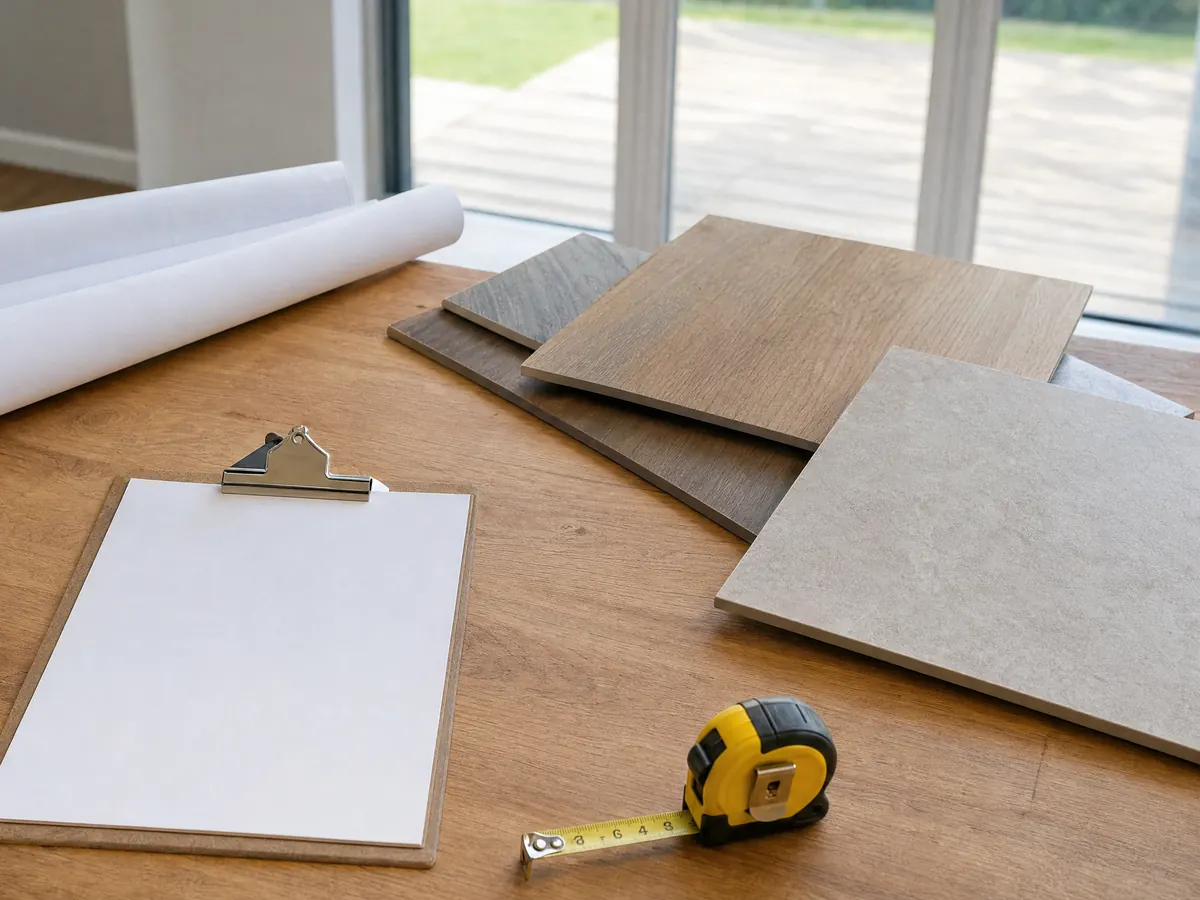
Is there asbestos or lead under old flooring in a Santa Fe Springs house?
Possibly, and only a lab report settles it. Census estimates put 61.0 percent of the city's homes before 1970 and 69.2 percent before 1980, so vinyl tile, sheet goods and black mastic from those decades may be hiding under newer planks. OSHA's asbestos rule for construction treats asphalt and vinyl flooring installed in or before 1980 as asbestos-containing until a test shows otherwise, and it forbids sanding flooring or its backing.
Send a sample to a lab before a start date is set. The proposal should say who removes a layer that tests positive and who pays for it, because that one line can move both the budget and the schedule.
Lead is the second question. EPA's Renovation, Repair and Painting program requires anyone paid to disturb painted surfaces in housing built before 1978 to be EPA-certified, and baseboards or door casings pulled for a new floor are painted surfaces. The EPA page we read does not list the minor-repair size limits, so ask the crew for its certification instead of guessing.
- Was a sample of the old tile and mastic sent to a lab?
- Who removes a layer that tests positive?
- Is the crew certified for lead-safe work on baseboards?
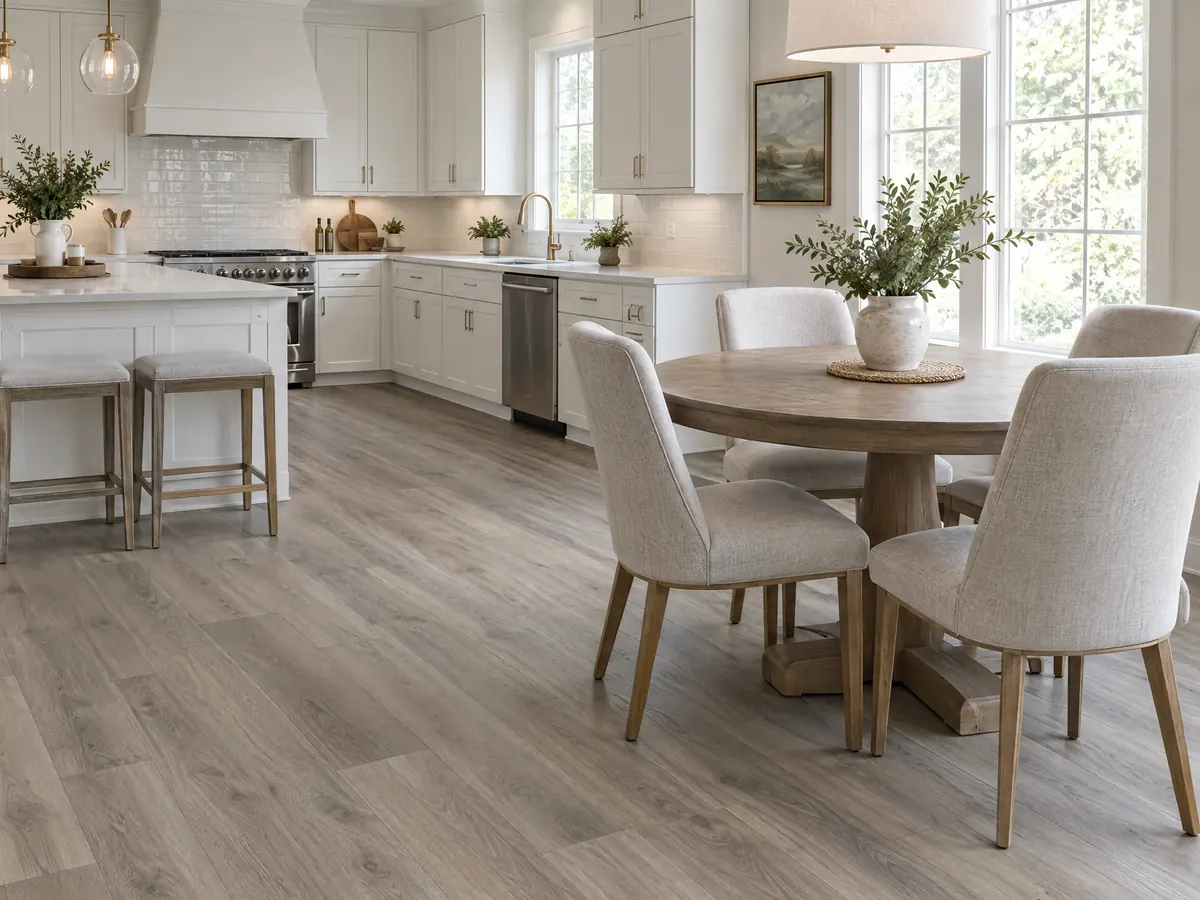
Why does moisture come up through concrete floors in Santa Fe Springs homes?
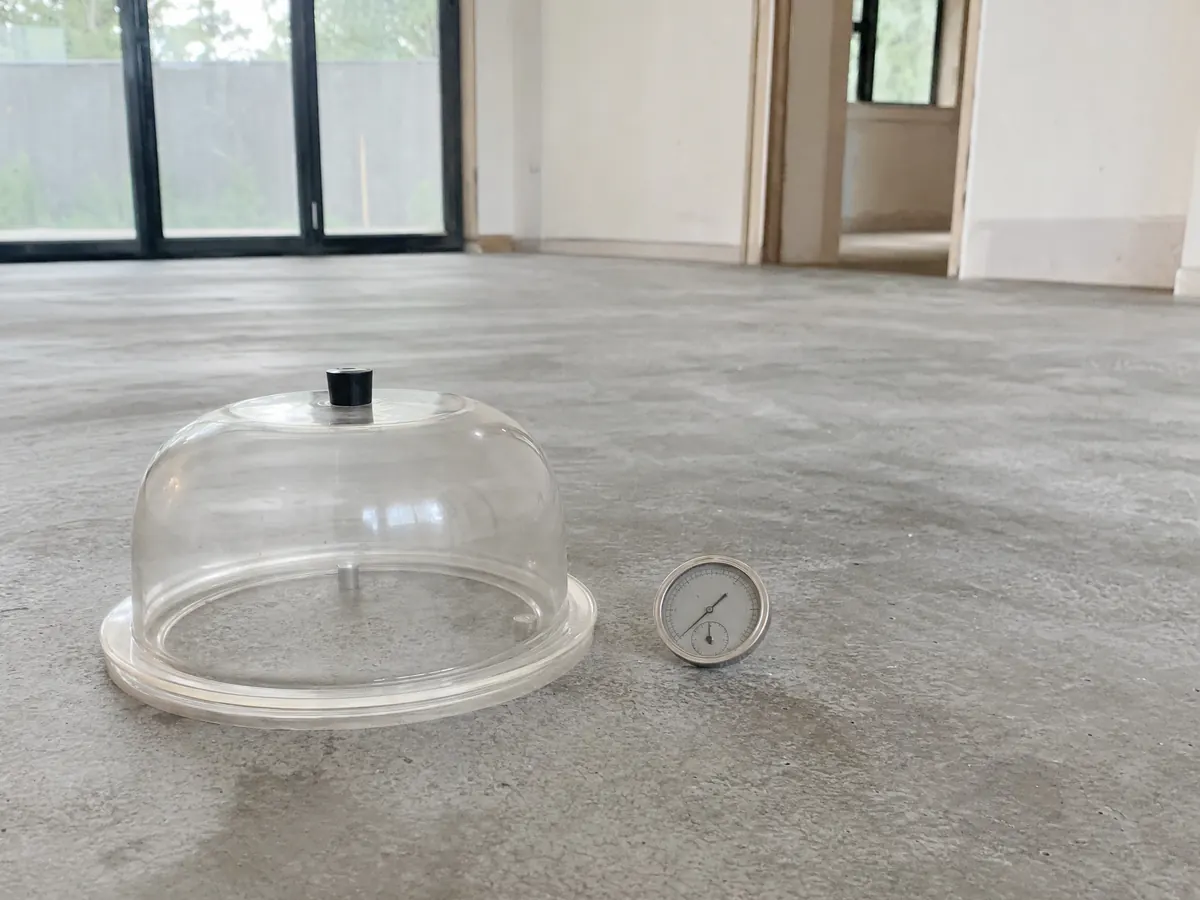
A slab is porous, so some vapor always rises; the question is whether it exceeds what the flooring maker allows. ASTM F2170 reads relative humidity inside drilled holes and ASTM F1869 weighs vapor escaping under a calcium chloride dish. Neither standard sets a pass mark, because the plank, vinyl or adhesive manufacturer does, so ask for the readings written beside that limit.
Rain explains little here. NOAA's 1991 to 2020 normals for the Whittier City Yard station, about 3.7 miles northeast, show 13.32 inches a year, 10.57 of them from December through March and just 0.06 inch in July. The City's Safety Element says the water table is deeper than 50 feet across the city, so our reading is that a leaking line, an irrigated bed against a wall or a downspout dumping beside the footing is likelier than groundwater, and a probe test shows which rooms run high.
The same element describes sand, loam and clay soils and flags liquefaction susceptibility in the north, west of Norwalk Boulevard and south of Imperial Highway, while calling liquefaction unlikely. It does not call the soil expansive, so we cannot blame swelling clay for a crack; mark each one and check whether one side sits higher before anything rigid goes over it.
Do you need a permit to replace flooring in Santa Fe Springs?
For carpet, vinyl and tile, the code text says no. Municipal Code 150.001.002(B)(2) lists carpet, vinyl, tile and similar floor coverings as not needing a building permit where disabled access rules do not apply, and the City's handout names carpeting as permit-free finish work. Neither names hardwood or laminate, so ask Building & Safety at (562) 868-0511 ext. 7560 whether they count as similar. That text comes from the GoCodebook mirror, because the official amlegal copy blocked our access; confirm it with the City.
Structural work is a different matter. Replacing a subfloor or joists, or moving plumbing and wiring while the floor is open, brings permits back, and Chapter 150 says an exemption never excuses breaking the code or another City rule. The counter is open Monday through Thursday, 7:30 to 11:30 a.m. and 2 to 4:30 p.m., City Hall is closed Fridays, plans go through the GoPOST portal and an inspection needs a request at least 24 hours ahead.
Two more items travel with any permit. Chapter 150 says one year without an approved inspection ends a permit, while the City's older handout says 180 days, so confirm which rule applies before a job stalls. Every application also needs a Construction Waste Management Plan with a goal of recycling at least 75 percent of project waste, which matters when torn-out flooring is the debris.
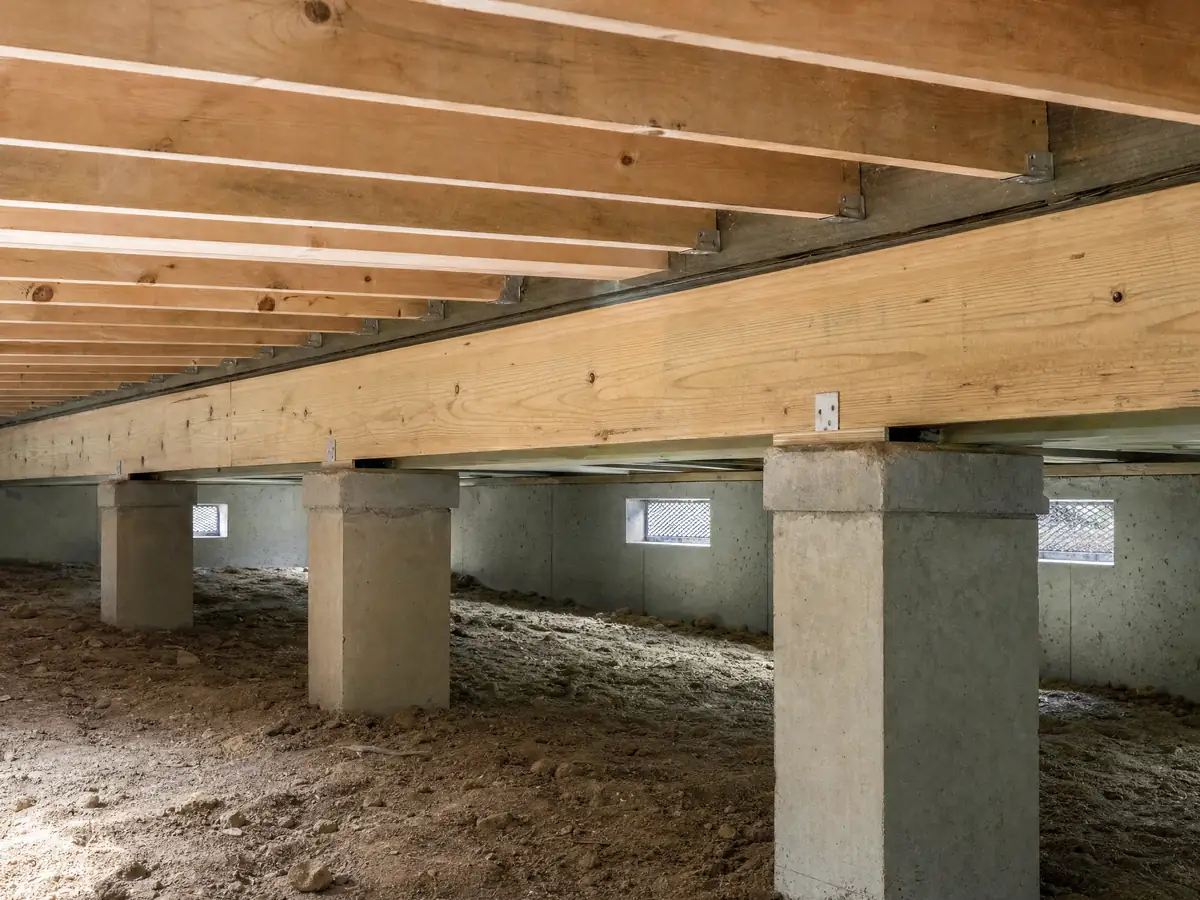
How do you tell if the raised wood floor in a 1950s Santa Fe Springs house is sound?
Look from below before you order anything. We found no count of how many homes here have raised floors rather than slabs, so check which one you have. On a raised floor, water stains under a bath or kitchen, sag near a heavy wall, insect damage and soft spots all change the scope, and none of them shows through a floor register.
Age raises the odds. About 50.6 percent of the city's units went up before 1960, which gives a plumbing seep or a roof leak decades to work on the framing. Put any subfloor repair on its own proposal line with a unit price, and have the crawlspace photographed before and after the work.
A soft floor can reach past carpentry. The City's permit FAQ puts new or replaced water, gas and drain lines under a plumbing permit and drywall or interior changes under a building permit, so a spongy bathroom floor can become a job with several permits and trades.
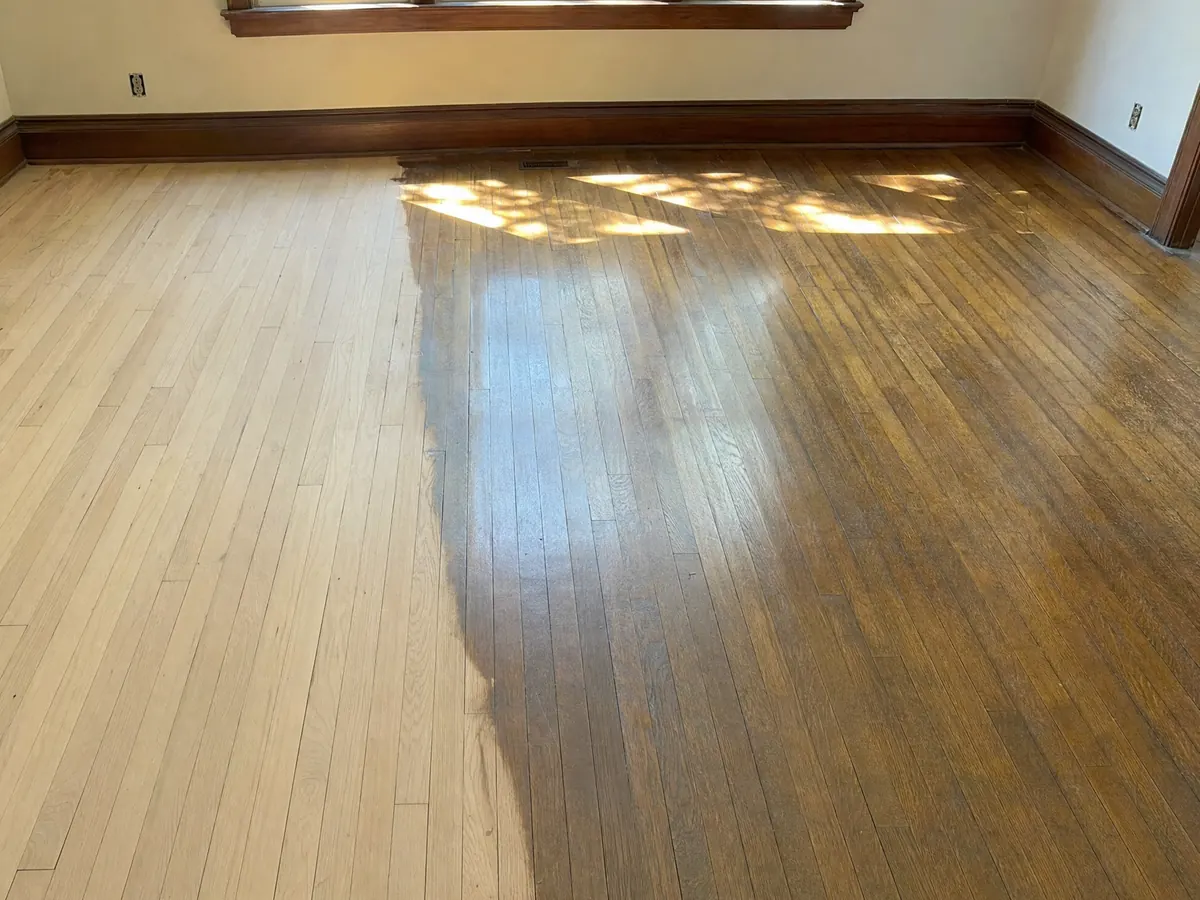
Can old hardwood under carpet in a Santa Fe Springs home be refinished?
Often, if enough solid wood stands above the tongue, which a floor register or a cut edge reveals. With 2,999 of the city's units built before 1960, plenty of carpeted rooms may hide boards worth saving, and our flooring cost guide sets refinishing beside replacement.
Finish choice has an air-quality rule behind it. South Coast AQMD's Rule 1113 sets VOC limits for architectural coatings, so ask which product the finisher plans to use and read its VOC figure from the data sheet. We read the rule's table page and not the full text, so we print no number for floor finishes.
No historic district or design review turned up in the code chapters we read, so we found no extra approval step for a refinished floor.
Who approves new flooring in a Santa Fe Springs rental, condo or townhome?
The owner or association comes first. Census estimates count 39.4 percent of the city's 5,716 occupied homes as renter-occupied and 29.6 percent of units as part of buildings with five or more units, so many floor jobs start with a landlord or a board. A tenant needs written consent before material is ordered, and for a condo or townhome the association's documents control hard floors; Civil Code section 4765 sets how a board must answer a change request.
Newer housing is in the mix. The Villages at Heritage Springs added more than 500 homes and townhomes on former oil land, and the 150-unit Miro Apartments were built in 2015. Sound and underlayment rules differ by complex, and the sources we found disagree on a numeric sound standard, so we print none; ask for the written rule before buying planks.
What does a flooring contractor charge in Santa Fe Springs, and what license applies?
We found no Santa Fe Springs price study, so these are Los Angeles figures from Angi's 2026 pages, rated medium to low in confidence because Angi does not show its method. Installer labor runs $3 to $9 per square foot on Angi's pages, with engineered hardwood at $10 to $18 installed, solid hardwood at $12 to $22 and refinishing at $4 to $8. On a 1,000 square foot ranch, engineered hardwood multiplies to $10,000 to $18,000 before demolition, subfloor repair, testing and stairs, which belong on their own lines.
CSLB's C-15 class covers preparing surfaces and laying carpet, resilient goods and wood floors but excludes ceramic tile, which belongs to C-54. Since January 1, 2025 the unlicensed limit is $1,000 under AB 2622, and it does not apply when a permit is needed or the person hires help. Our license check guide shows how to look a number up.
An owner can pull a permit personally if the owner lives in the house, but the City's Owner-Builder Declaration warns that an owner who hires unlicensed workers can be treated as their employer and carry liability for their injuries. A licensed contractor signs a separate declaration listing a license number and expiration date.
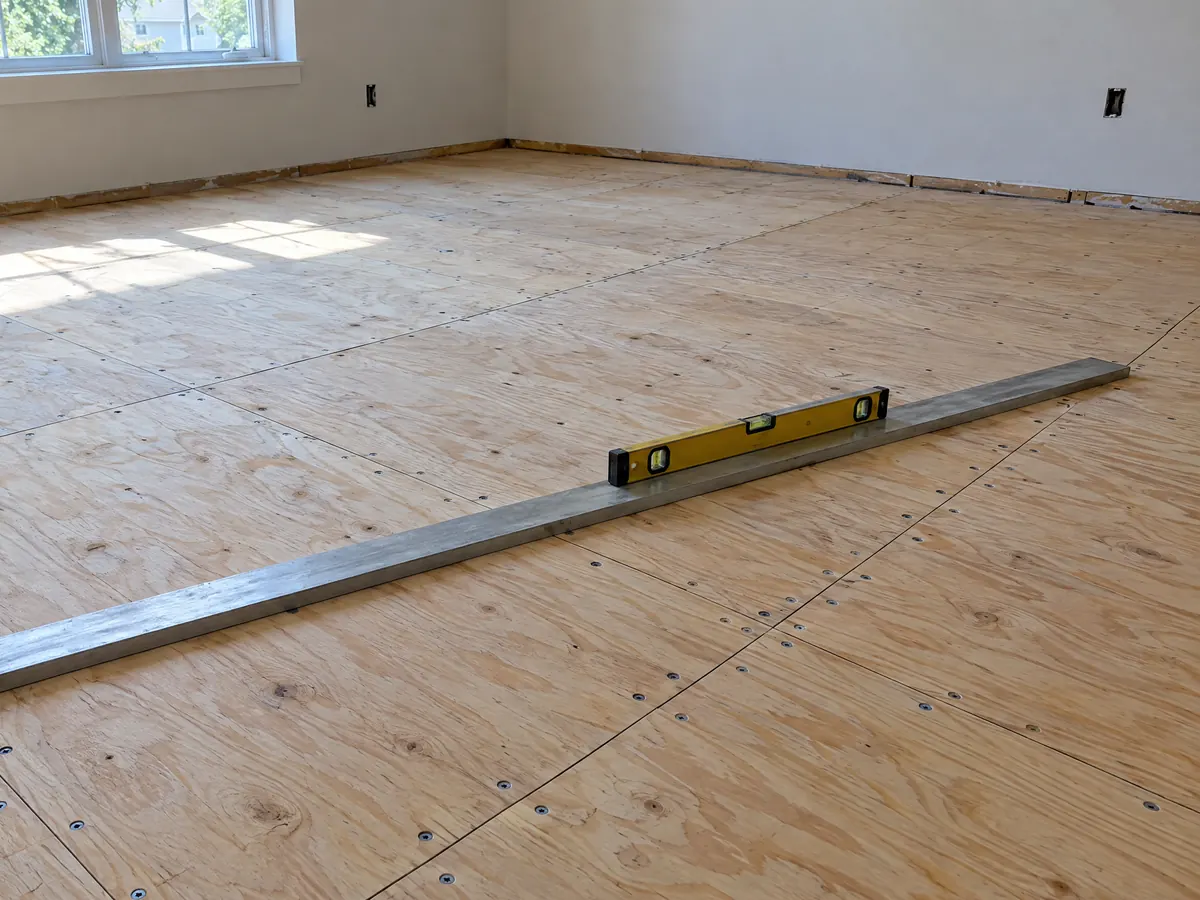
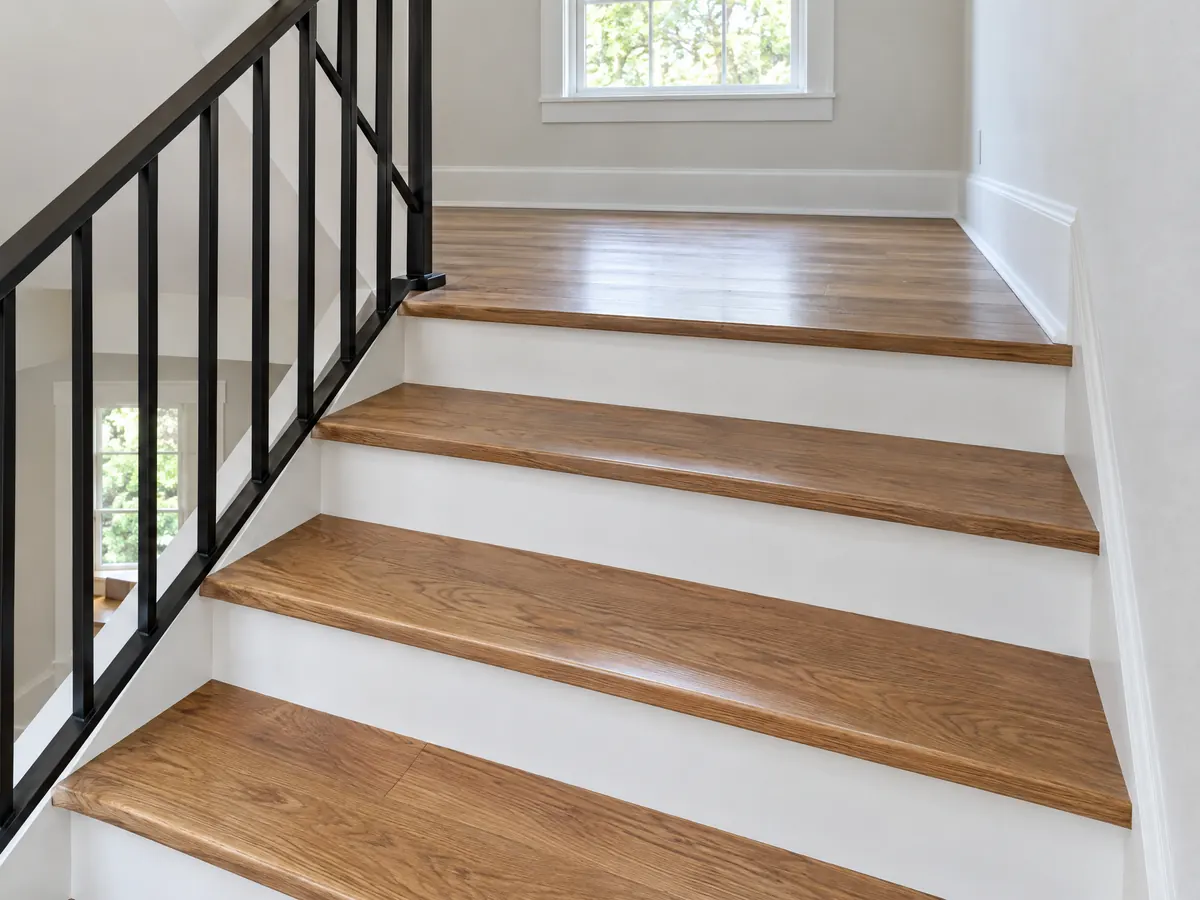
Flooring photos from Santa Fe Springs and nearby communities
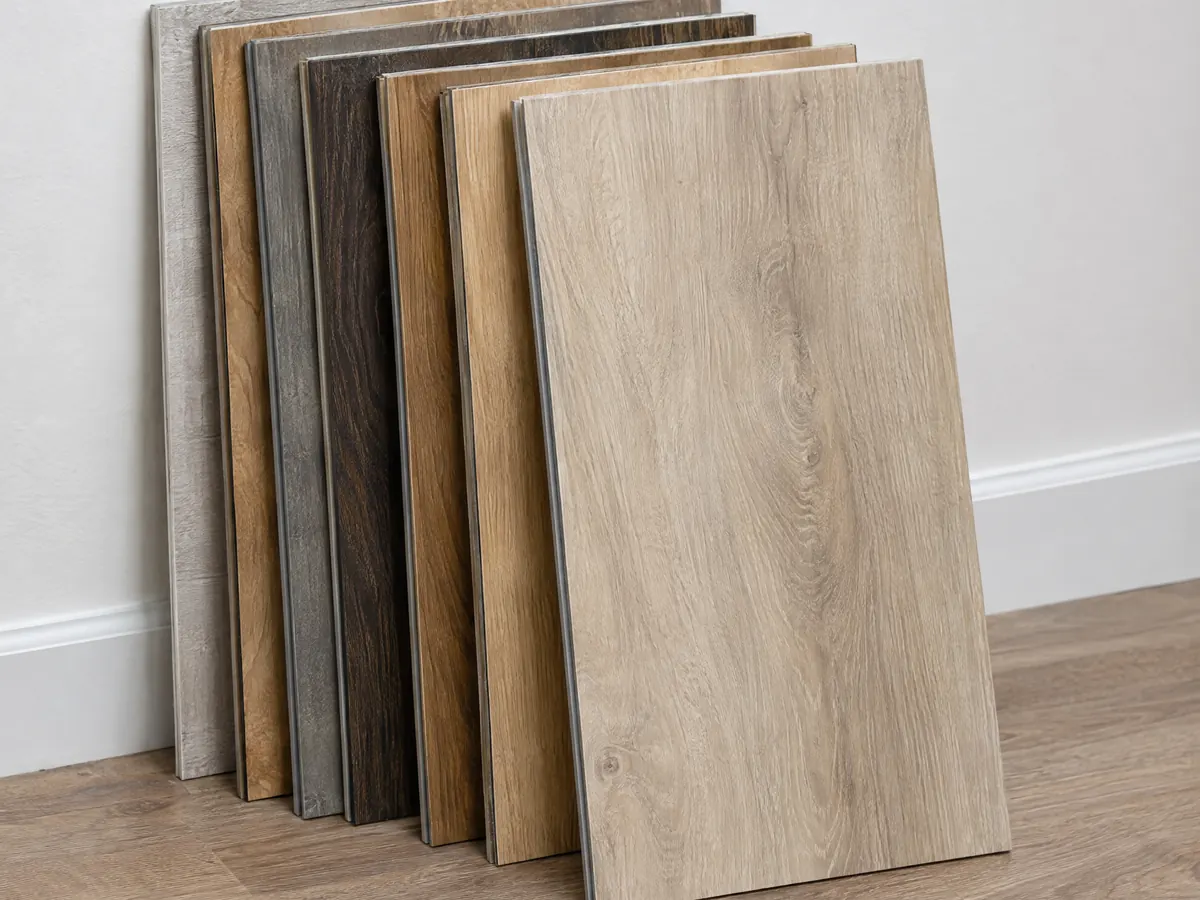
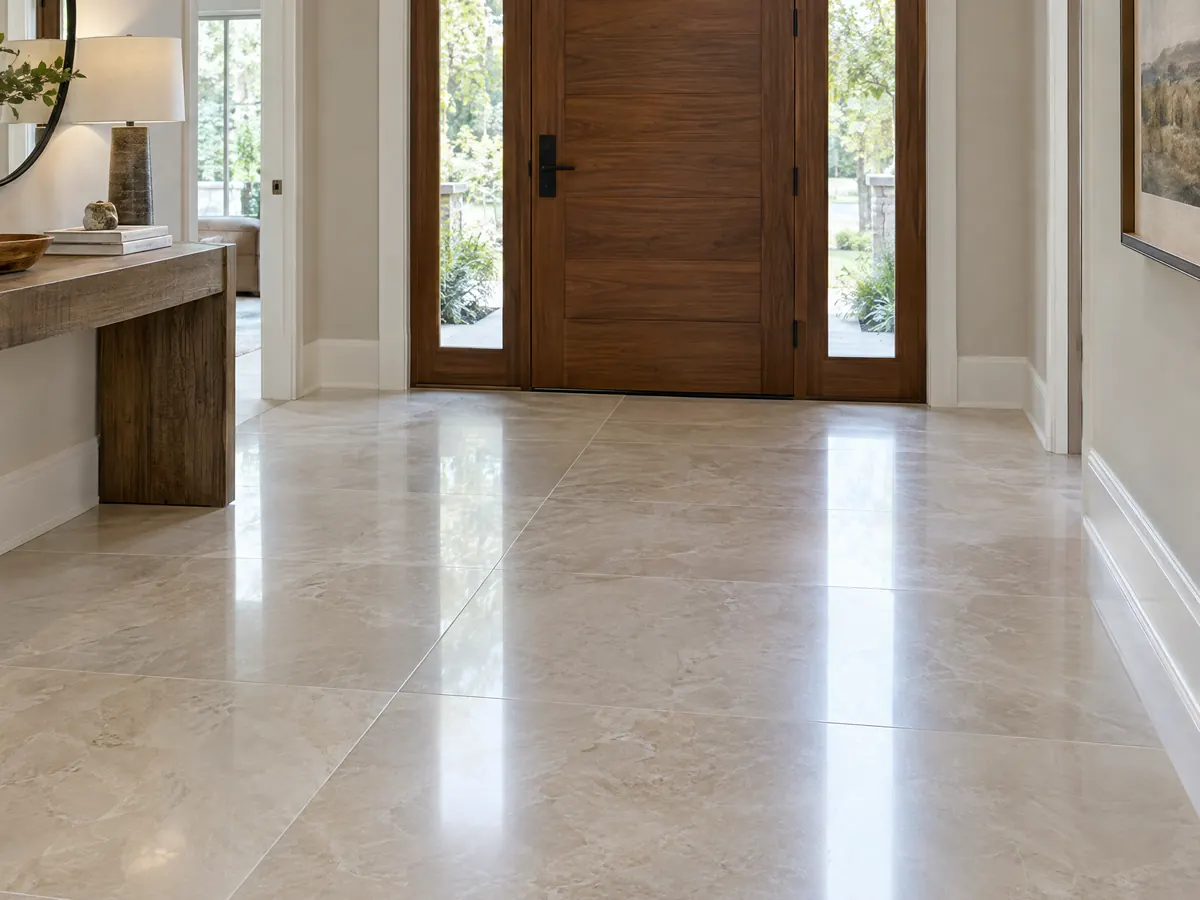
Subfloor prep, plank samples, finished oak and tile from Santa Fe Springs, Norwalk, Whittier and nearby towns, shown at the stages that matter. Tap any photo to enlarge it.
What flooring costs around Santa Fe Springs
Dollar figures here are Los Angeles planning ranges from our flooring page, not a Santa Fe Springs bid, and a proposal should itemize demolition, testing, subfloor work and stairs. For the same lot, see concrete in Santa Fe Springs and decks in Santa Fe Springs. Neighboring comparisons: flooring in Norwalk, flooring in Whittier, flooring in Downey and flooring in Los Angeles.
| What it covers | Typical range |
|---|---|
| Installation labor only | $3 to $9 per sq ft |
| Solid hardwood, installed | $12 to $22 per sq ft |
| Engineered hardwood, installed | $10 to $18 per sq ft |
| Refinishing existing hardwood | $4 to $8 per sq ft |
| Laminate, whole project | $2,000 to $5,500 |
| Hardwood, whole project | $3,153 to $8,496 |
| Removing the old floor | $455 to $685 per 200 sq ft |
| Tile | No sourced Los Angeles range |
Other work we manage in Santa Fe Springs
Santa Fe Springs flooring questions, answered
Do you need a permit to replace flooring in Santa Fe Springs?
For carpet, vinyl and tile, the Municipal Code text we read says no building permit is needed, but hardwood and laminate are not named, so confirm them with Building & Safety at (562) 868-0511 ext. 7560. Replacing a subfloor or moving plumbing and wiring is a separate permit question.
How much does it cost to have flooring professionally installed?
Angi's 2026 Los Angeles pages list installer labor at $3 to $9 per square foot, plus material: $10 to $18 installed for engineered hardwood and $12 to $22 for solid. We found no Santa Fe Springs study and rate these medium to low in confidence. Demolition, subfloor repair and testing are separate lines.
How much to refloor a 2000 sq. ft. house?
Labor at $3 to $9 per square foot works out to $6,000 to $18,000 across 2,000 square feet before material, and engineered hardwood at $10 to $18 installed would total $20,000 to $36,000. Those are multiplied Los Angeles ranges, not a Santa Fe Springs bid; a walk through the house sets the real number.
Can you put flooring over concrete?
Yes, once the slab is tested and prepared. The flooring or adhesive manufacturer sets the allowable moisture, so the installer should take ASTM F2170 probe readings or run an F1869 calcium chloride test, then fill cracks and flatten the surface. On a 1950s Santa Fe Springs slab, mark and check every crack first.
Why does moisture come through a concrete floor in Santa Fe Springs?
Vapor rises from the soil because concrete is porous. The City's Safety Element puts the water table below 50 feet, so leaks, irrigation and downspouts beside a wall are the likelier local causes. A probe or calcium chloride test gives the number the flooring maker needs.
Is there asbestos under old vinyl flooring in Santa Fe Springs homes built before 1980?
Possibly, and no one can tell by eye. OSHA treats asphalt and vinyl flooring installed in or before 1980 as asbestos-containing until tested, and 69.2 percent of Santa Fe Springs homes predate 1980. Send a lab sample before any sanding or dry scraping, and ask who removes a positive layer.
Can I refinish hardwood floors instead of replacing them in Santa Fe Springs?
Often, when the wood above the tongue is thick enough to sand, which a floor register or cut edge shows. Angi's 2026 Los Angeles pages put refinishing at $4 to $8 per square foot and new solid hardwood at $12 to $22, both medium to low in confidence. Ask the finisher for the coating's VOC data sheet.
Can I put new flooring in a Santa Fe Springs rental or condo?
Only with the owner's or association's written approval. A tenant needs the landlord's consent, and a condo or townhome board's documents control hard floors above a neighbor. Civil Code 4765 sets how a board must respond to a change request, so ask for the rule in writing first.
What license does a flooring contractor need in Santa Fe Springs?
Carpet, resilient flooring and wood floors fall under CSLB's C-15 class, and ceramic tile under C-54. Work that needs a permit must go to a licensed contractor even under $1,000, and the down payment is capped at $1,000 or 10 percent of the price, whichever is less. Look the license up on the CSLB site first.
Tell us the rooms, the floor under your feet and any old tile
List the rooms, say whether you think the house sits on a slab or a raised floor and mention any vinyl or tile you know is original. The asbestos and moisture questions come with us to the first visit.