
Concrete Companyin Barstow, CA
A concrete company in Barstow works under the Mojave Desert air district's dust rule, not South Coast's, and no City page we read says whether flat patios and driveways are exempt, so call Building & Safety. Block walls over 3 feet and retaining walls of any height need a permit, and a driveway approach goes through Engineering.
Barstow was a mining and freight crossroads before the Santa Fe Railroad arrived in 1888, and the business district was moved to where Old Town stands today and celebrated on July 4, 1925. The Census Bureau's 2024 five-year estimates count 10,017 homes, 61.6 percent of them single-family detached and half of them built before 1970, so many slabs, driveways and block walls here have stood through decades of sun, wind and the occasional flood.
MDG Builders, CSLB #1040337, is a Tarzana general contractor that designs, permits and manages the job while licensed subcontractors form and pour. For a Barstow slab we write the scope and take permit and right-of-way questions to the City's Building & Safety Division. The concrete page explains finishes, and the Barstow overview lists the other trades we coordinate here.
What Barstow's Building & Safety Division, Engineering, the Mojave Desert AQMD and state law say about concrete work
Where concrete permits come from in Barstow: City of Barstow Community Development Department, Building & Safety Division.
- Grading permit (Chapter 15.12, mirror): no grading without a permit from the Building Official unless exempt; exemptions include excavation for a structure already permitted, trenches for utilities and wells, an excavation of 50 cubic yards or less that is under 2 feet deep or has a cut slope of 5 feet or less and no steeper than 2:1, and fills not supporting a structure that are under 1 foot deep on slopes flatter than 5:1, or under 3 feet and 50 cubic yards, or under 5 feet and 20 cubic yards. A grading permit does not cover retaining walls, and engineered grading must be done by a state-licensed contractor.
- Retaining and block walls: the Municipal Code requires a building permit for retaining walls of any height and for block walls over 3 feet (top of footing to top of wall), and the City's forms page posts Retaining Wall Specifications and Non-Retaining Block Wall Specifications handouts (those PDFs were not in the Wayback Machine, so their contents were not read).
- Concrete in the public right of way: the plan checklist sends the Encroachment Permit Application to Engineering ((760) 255-5156; fee questions at (760) 255-5154). No City page on flat residential concrete (driveways, patios) was found, so whether it is exempt is unverified; the Building Permit Application categories that touch concrete are foundation only, block wall, deck/patio cover and grading.
- Dust and concrete: MDAQMD Rule 403's general duty (no visible dust beyond the property line except in High Winds, and every reasonable precaution during excavation, grading and clearing) applies to construction activity in the District; the Dust Control Plan and other construction requirements apply to the larger projects listed in its applicability section (10 acres residential, 5 acres non-residential).
How do wind, blow sand and Rule 403 affect a patio or driveway pour in Barstow?
Desert wind is a scheduling fact in Barstow, and the Mojave Desert Air Quality Management District puts it in writing. Its Rule 403, amended October 28, 2020 and read in a Wayback Machine copy stamped February 18, 2025, defines High Winds as gusts above 25 mph or a 15-minute average above 15 mph. The rule bars visible dust from lingering past the property line except during High Winds, and it expects non-essential earth moving to be reduced when winds are high.
A District Dust Control Plan applies to residential construction or demolition that disturbs at least 10 acres, non-residential work of 5 acres, other projects of 20 acres, jobs moving more than 2,500 cubic yards a day for three days and any site causing a dust nuisance. A backyard patio is nowhere near those numbers. The rule's 24-hour trackout cleanup is written for covered projects, but wetting the base and covering spoil is sensible habit anyway, and the City's Housing Element notes that blow-sand land was zoned industrial.
Heat and frost are the other conditions. NOAA's normals for the Barstow station show about 67.6 days a year above 100 F, a July average high of 102.1 F and about 31.8 nights at 32 F or lower. We found no Barstow source on pour temperatures, so ask the finisher how the crew handles a hot afternoon, when the slab gets cured and what happens when a gust or a cold night arrives.
Can you pour a patio, sidewalk or driveway in Barstow without a permit?
We could not confirm it. No City page we could read says flat residential concrete is exempt. The two handouts that might, the Retaining Wall Specifications and Non-Retaining Block Wall Specifications, are posted on the City's forms page but were not in the Wayback Machine, so we did not read them. The Building Permit Application's concrete-related boxes are foundation only, block wall, deck or patio cover and grading. A slab with footings, a carport pad or a slab for an addition is more likely to need a permit than a plain slab on grade, so call before ordering the truck.
The counter is paper and part-time. Plans carry original wet signatures, City Hall is open Monday to Thursday from 8:00 a.m. to 5:30 p.m. and closed Fridays, and the phone is (760) 255-5179. The 2026/2027 Master Fee Schedule sets plan review at 65 percent of the building permit fee. The City's rules sit in the Municipal Code, which we read in GoCodebook's third-party mirror, whose text can lag the City's own, so confirm any limit with the Building Division.
Owner-builders should read the City's owner-builder page first. It says the owner must have lived on the site as a principal residence for 12 months, the exemption is limited to two structures in three years, and signing the permit makes the owner responsible for every phase and possibly an employer. It also repeats the state rule that bidding on a project of $500 or more takes a California CSLB license.
Who approves a driveway approach in Barstow, and what do demolition and wash-down rules add?
Engineering handles the public side. The City's plan checklist sends the Encroachment Permit Application, street, sewer and drainage plans and any hydrology report to Engineering at (760) 255-5156, with fee questions at (760) 255-5154. A new approach or curb cut crosses the sidewalk strip, so it is likely an Engineering matter. We found no page that names driveway approaches, so ask what is required before a crew breaks a curb.
Tearing out old concrete brings paperwork. The Municipal Code requires a City Waste Management Plan Application with each applicable building permit, and the checklist lists Solid Waste and Recycling at (760) 255-5126 for the plan and an organics questionnaire. It also asks for MDAQMD approval for demolitions, at (760) 245-1661, and we did not find out whether a driveway tear-out counts as one.
Cleanup has its own local rule. The water conservation chapter says no water may run into the street and no one may wash down driveways or sidewalks except to clear a fire or sanitation hazard, so rinsing a chute or hosing slurry toward the gutter is a question for the crew. The sight-triangle rule keeps shrubs and ground cover to 3 feet within 30 feet of an intersection, or 10 feet at driveways, which matters where a new driveway meets the street.
How tall can a block wall or retaining wall be in a Barstow yard before it needs a permit?
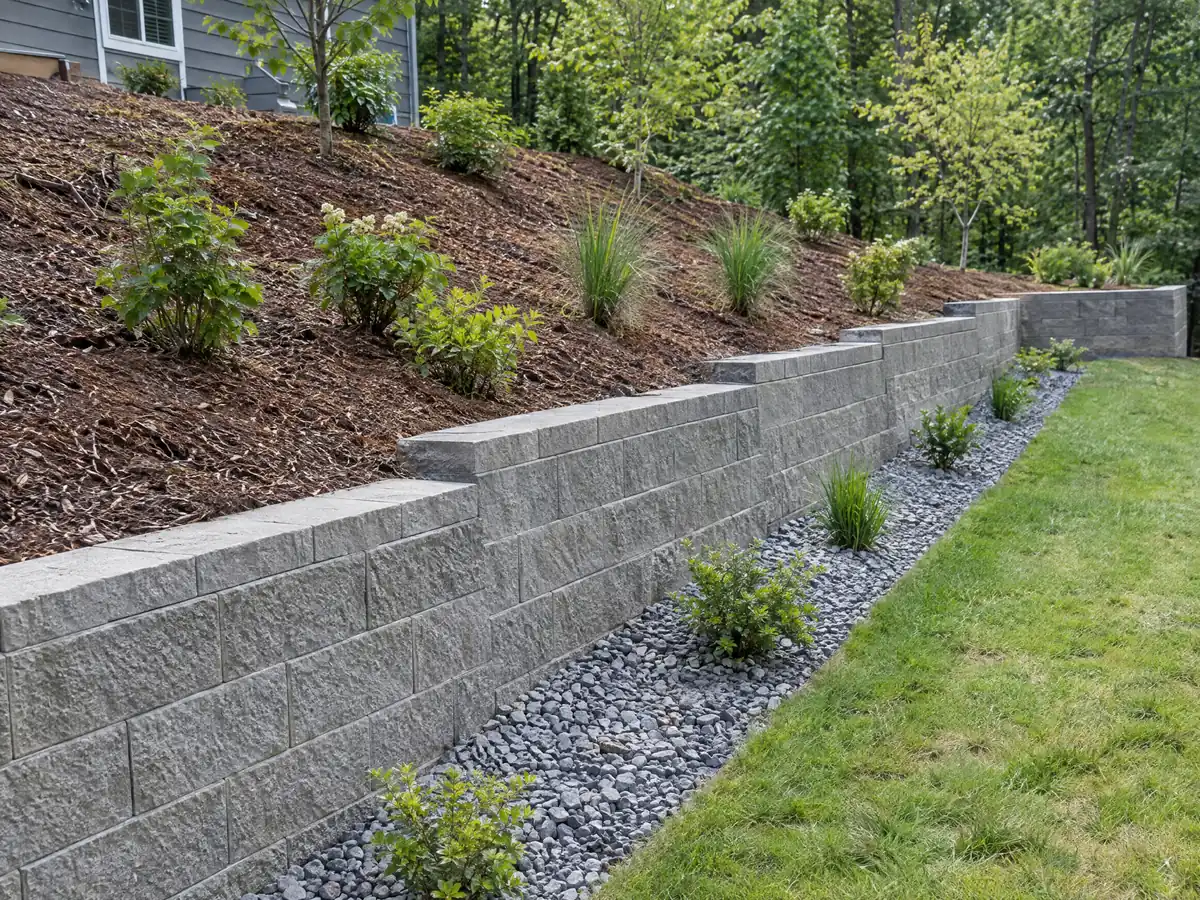
A block or garden wall may reach 3 feet, measured from the top of the footing to the top of the wall, without a permit, while a retaining wall of any height needs a building permit. That comes from Sec. 15.08.020 of the Municipal Code in GoCodebook's third-party mirror. A grading permit does not cover a retaining wall, so a wall that holds back fill is its own application.
Zoning sets separate heights. Fences, hedges and walls may reach 6 feet in rear yards, along interior side lines and behind the front setback line, with nothing above 3.5 feet in a required front or street-side yard except an open chain-link fence up to 4 feet. On a corner lot, a 6 foot fence in the street-side yard must stand at least 40 feet from the front property line. A wall for a public parking area beside homes must be 6 foot masonry, or 42 inches in the front setback.
A tall wall in this wind also acts as a sail. We found no Barstow wind speed or footing rule for walls, and the block wall and retaining wall specification PDFs were not archived, so ask the plan checker what footing and steel the City expects before pricing. In our reading of CSLB's classes, poured retaining walls are C-8 work and block walls are C-29 masonry, so the proposal should say which subcontractor builds which.
What do the Mojave River, desert washes and fault zones mean for slabs and footings in Barstow?
The floodplain chapter adopts a FEMA flood insurance study dated January 17, 1997, with maps dated March 18, 1996 and later amendments, and the City Engineer reviews every development permit. Grading rules do not apply in floodways unless a hydrologic and hydraulic analysis shows no rise in base flood level. We did not check the current effective map for any address, so ask Engineering whether a lot is mapped before a slab is designed.
Flash floods are not hypothetical. News reports of a September 2025 storm describe floodwater in Barstow streets and washes, and a 2019 report said the Mojave River flowed through town for the first time in eight years. The Housing Element discourages homes in flood-prone areas or asks that the pad be raised above flood elevation. Chapter 15.12 requires a grading permit unless an exemption applies, such as a fill under 1 foot deep on a slope flatter than 5:1 that supports no structure.
Faults and habitat add edge cases. The Safety Element says the Barstow and Lenwood faults cross the city, each with a 500-foot Alquist-Priolo zone where no publicly occupied structures can be built, and that all of Barstow is in Seismic Zone D. Single-family lots allow 45 percent lot coverage with 10 foot front and 5 foot side and rear setbacks, so ask Planning whether paving counts toward coverage.
How much does concrete work cost in Barstow, and who needs which license?
No Barstow study with a stated method turned up, so the anchor is Angi's Los Angeles pages. They give $4 to $13 a square foot for a patio (August 4, 2026), $15 to $30 for stamped concrete (July 20, 2026) and $8 to $20 for a driveway (May 5, 2026). The Bureau of Labor Statistics reports a $33.67 mean hourly wage for cement masons in the Los Angeles area as of May 2025, which sets a labor floor, and desert bids may differ.
Our planning figures are $8 to $14 a square foot for plain flatwork of 300 square feet or more, $15 to $30 for decorative finishes and $9 to $20 to replace a driveway, demolition included. A plain 400 square foot slab lands near $3,200 to $5,600. Small jobs carry minimum charges, and walls are priced by height, footing and drainage after a site visit.
Poured concrete is CSLB's C-8 class, and California limits a home improvement down payment to $1,000 or 10 percent of the price, whichever is less, under Business and Professions Code 7159.5. Our license check guide shows how to read a CSLB record.
Concrete photos from Barstow and nearby communities
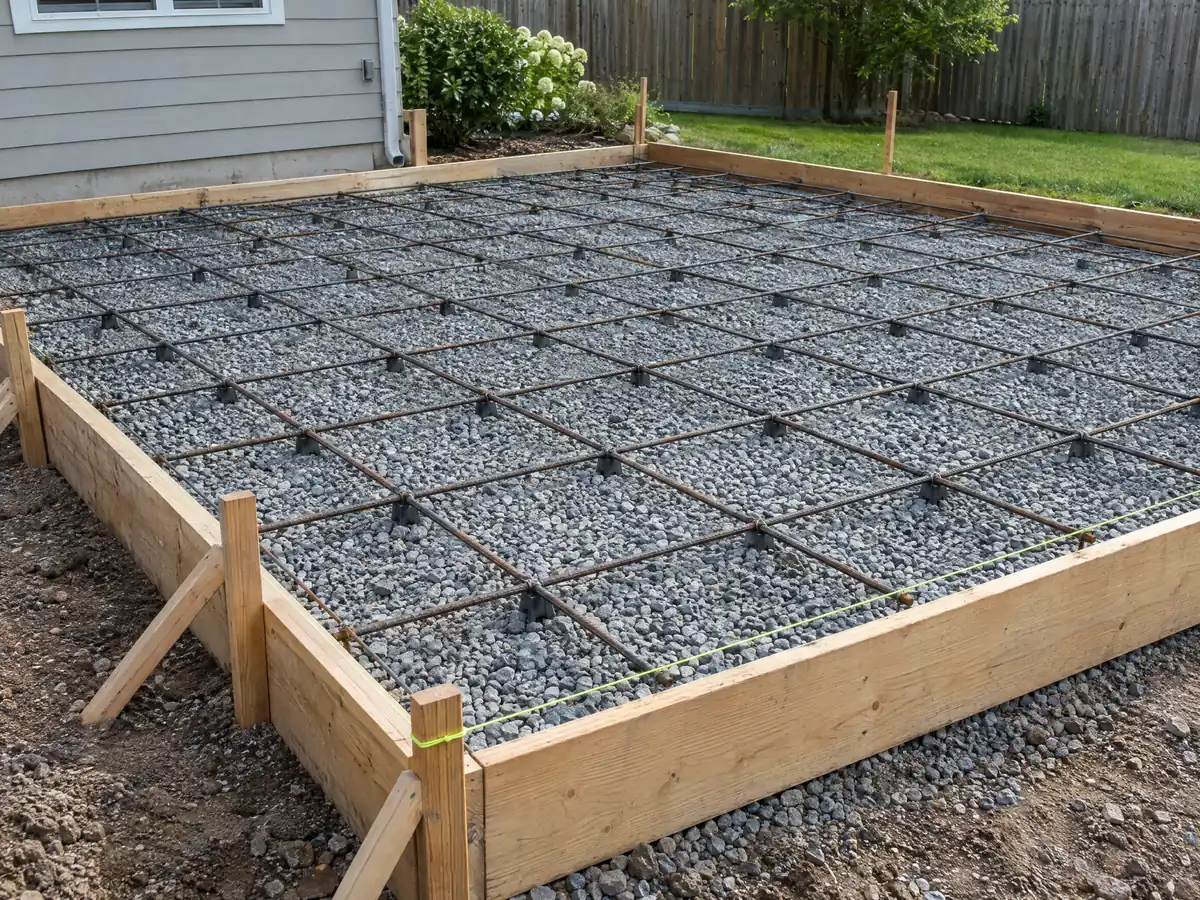
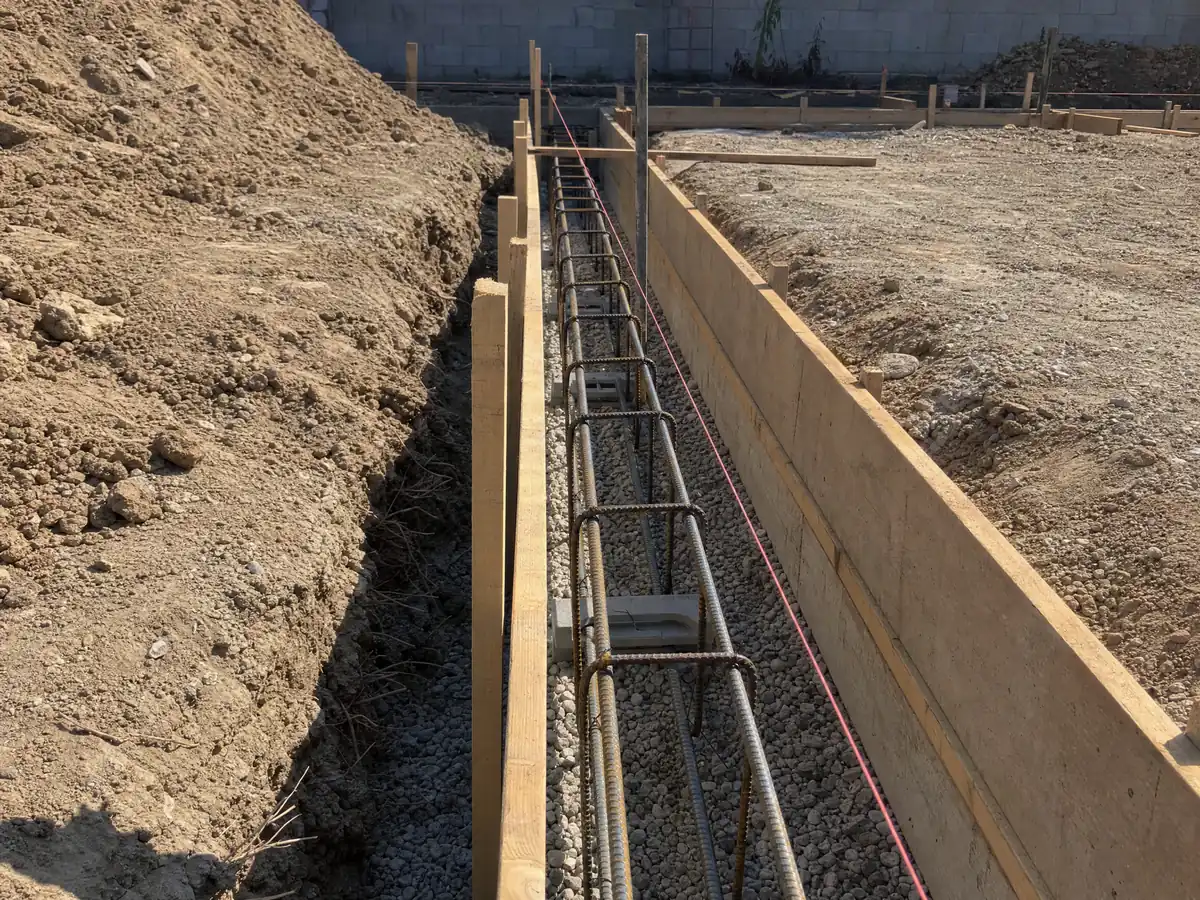
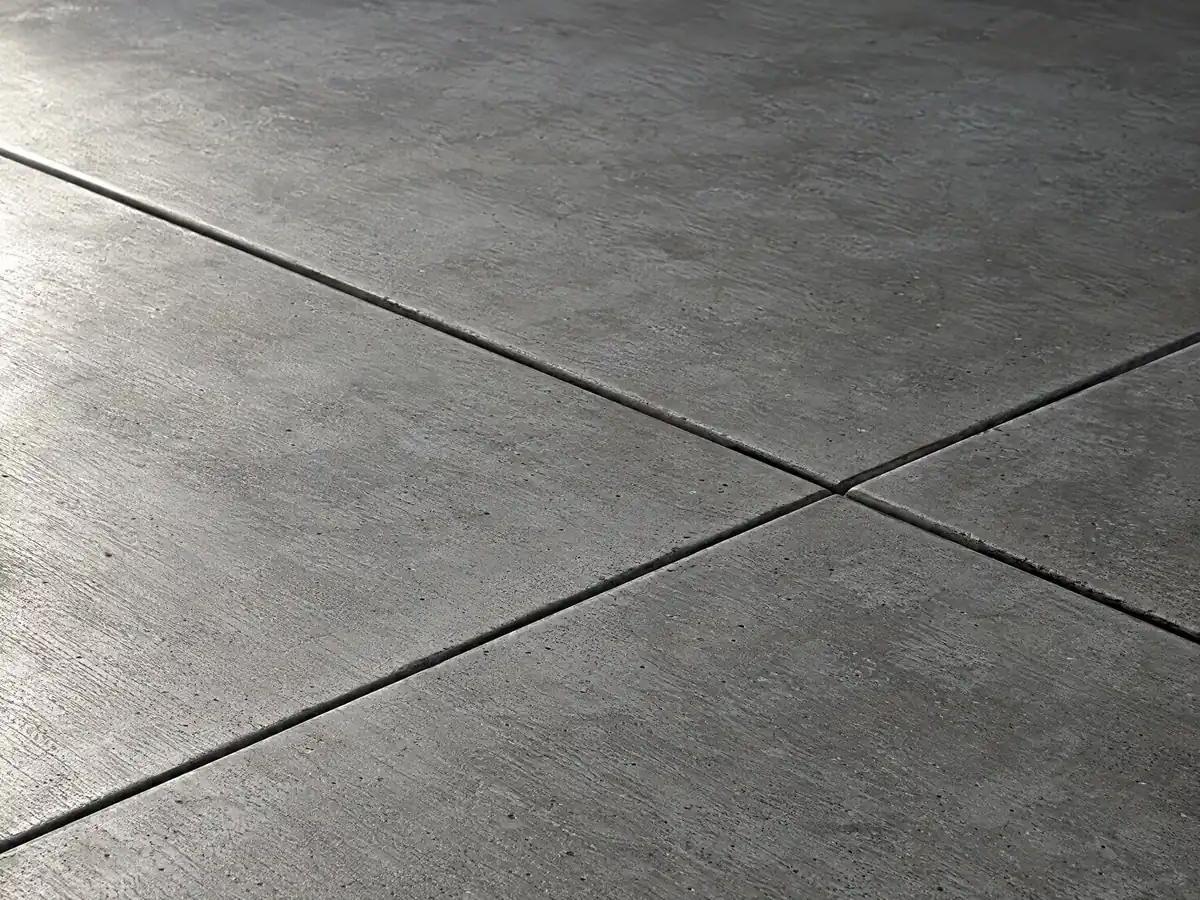
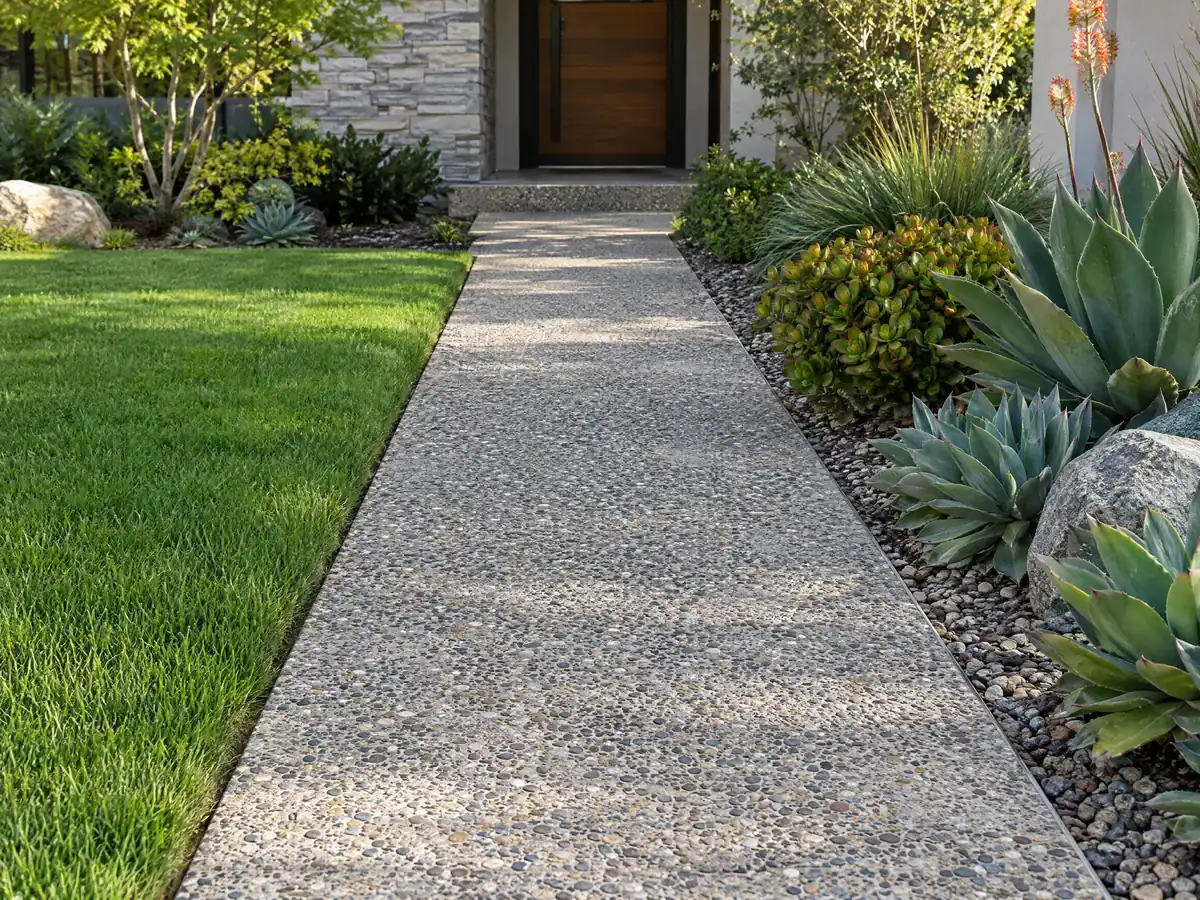
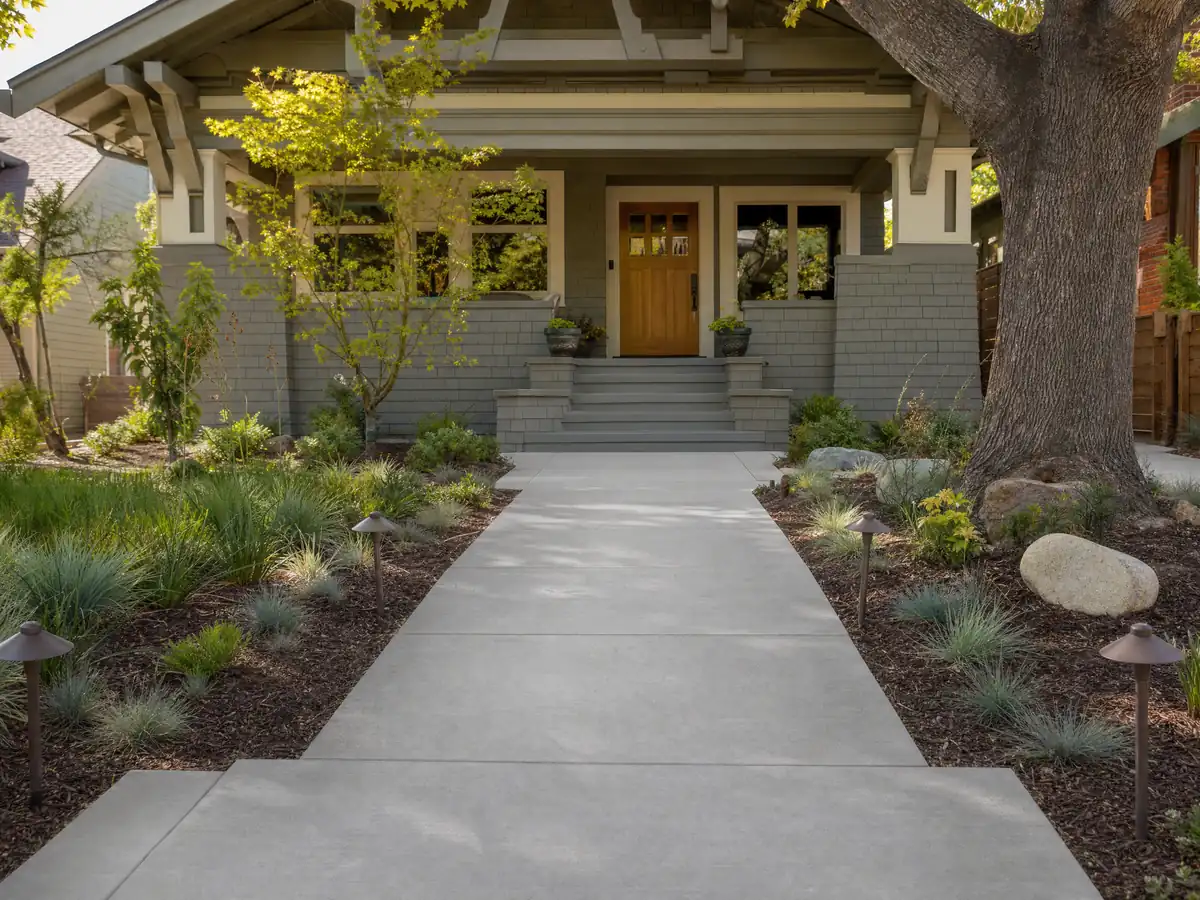
Footings, rebar, screeded slabs and finished walks and patios from Barstow and the desert communities around it, shown at the steps where the rules bite. Tap any photo to enlarge it.
What concrete costs around Barstow
Dollar figures on this page are Los Angeles planning ranges, not a Barstow bid, so ask for demolition, haul-off, rebar, drainage and any grading or wall permit as separate lines. The same lot may also need flooring in Barstow or decks in Barstow. Along the same desert corridor, compare concrete in Victorville, concrete in Apple Valley and concrete in Hesperia, with concrete in Los Angeles as the big-city benchmark. Adelanto has no page here yet. The subcontractor guide shows which trade forms a slab and which finishes it, and the flooring cost guide prices the surfaces that go over one.
| What it covers | Typical range |
|---|---|
| Patio, walkway or slab, broom finish, 300 sq ft or more | $8 to $14 per square foot |
| Decorative: stained, stamped or exposed aggregate | $15 to $30 per square foot |
| Driveway replacement, with demolition of the old slab | $9 to $20 per square foot |
| 20 by 20 foot plain patio (400 sq ft) | About $3,200 to $5,600 |
| 20 by 20 foot decorative patio (400 sq ft) | About $6,000 to $12,000 |
| Small jobs under 300 sq ft | Usually above the per-foot range |
| Retaining walls | Set by the written proposal |
Barstow concrete questions, answered
Can I pour a concrete patio without a permit?
Possibly, but we could not confirm it for Barstow. No City page we read says flat residential concrete is exempt, and the wall handouts that might were not archived. A slab with footings, a patio cover or a carport is more likely to need a permit. Call Building & Safety at (760) 255-5179 with the size and use before ordering the truck.
How much should a 20x20 concrete patio cost?
A plain 20 by 20 foot patio is 400 square feet, which at our Los Angeles planning range of $8 to $14 a square foot comes to about $3,200 to $5,600. Angi's August 2026 Los Angeles page shows a wider $1,600 to $5,200. No Barstow study turned up, and stamping, tear-out and drainage add to either figure.
Can I expand my driveway without a permit?
Widening on your own lot and cutting a new curb opening are different questions. We found no City page that settles the first. A new approach crosses public right of way, so it is likely an encroachment permit matter for Engineering at (760) 255-5156. Zoning limits apply too, including 45 percent lot coverage on single-family lots, so confirm the property line first.
What is the maximum height of a retaining wall without a permit in California?
In Barstow there is none: the Municipal Code, in GoCodebook's third-party copy, requires a building permit for retaining walls of any height. Block or garden walls are exempt up to 3 feet, measured from the top of the footing to the top of the wall. Confirm both numbers with the Building Division, because the copy can lag the City's own text.
Is 4 inches of concrete thick enough for a driveway?
Four inches is a common thickness for residential driveways, but we found no Barstow code section that sets it, so treat it as industry practice. Heavier trucks, weak soil or a lot near a wash call for the contractor's or an engineer's design. Ask what base, reinforcement and joints the bid includes.
How much does a 300 sq ft stamped concrete patio cost?
Angi's Los Angeles page for stamped concrete, updated July 20, 2026, gives $15 to $30 a square foot, so 300 square feet runs about $4,500 to $9,000, against an Angi average of $5,948. These are Los Angeles figures, not a Barstow bid. Demolition, grading and sealer come on top, and small patios often carry minimum charges.
How tall can a fence or block wall be in a Barstow front yard?
Nothing over 3.5 feet in a required front or street-side yard, except an open chain-link fence up to 4 feet, under Sec. 19.06.030 in GoCodebook's third-party copy of the zoning code. Rear and interior side yards allow 6 feet. Walls over 3 feet and retaining walls need building permits, so ask the Building Division before ordering block.
Does dust from a concrete job break a rule in Barstow?
Rule 403 of the Mojave Desert AQMD bars visible dust from lingering beyond the property line except during High Winds, defined as gusts above 25 mph or a 15-minute average above 15 mph. Its Dust Control Plan starts at 10 acres of residential disturbance, so a patio faces the general duty, not the paperwork. We read it in a Wayback copy from February 2025.
What license does a concrete company need in Barstow?
The usual license for concrete work is CSLB's C-8 class for poured concrete, and block walls usually fall under C-29 masonry. Look up the number on the CSLB site and ask each subcontractor for a license and certificate of insurance. Barstow's plan checklist wants business license verification for the general contractor and each subcontractor.
Tell us the lot, the slab size and where the water runs
Tell us what is going in, about how large it is, which way the yard drains and whether the work touches the sidewalk, a wall or a wash. We bring the dust, flood and permit questions to the first visit.