
Concrete Companyin Apple Valley, CA
A concrete company in Apple Valley works under a code that asks for a wind erosion control plan before grading, Town approval before any Joshua tree is touched and a clearing permit on developed lots over a half acre. We found no published list of flatwork that needs no permit, so call the Permit Center first.
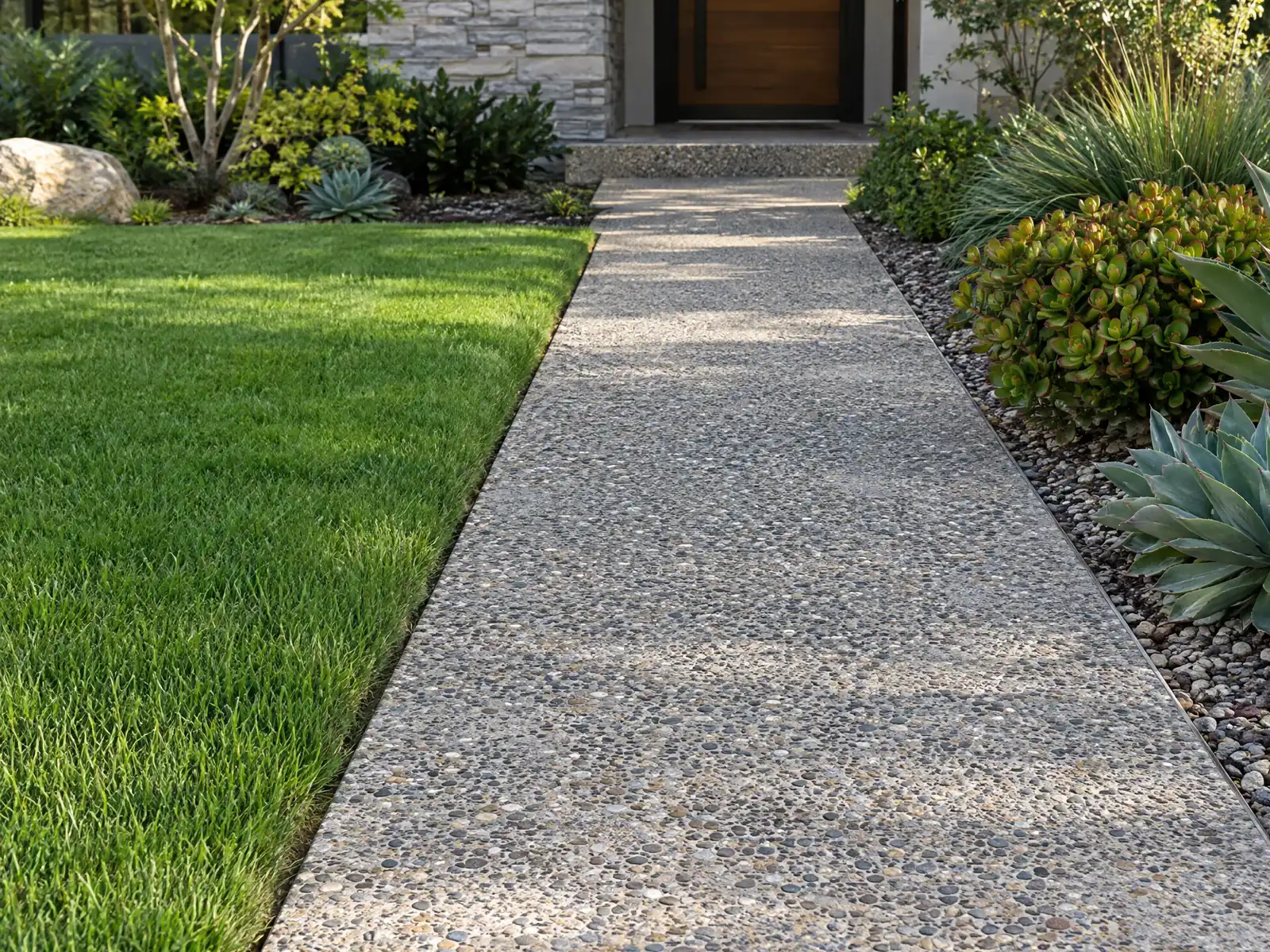
Concrete in Apple Valley starts with land. The Town covers 78 square miles, the Housing Element says it was founded on rural single-family and estate lots, and the Census Bureau's 2024 estimates count about 27,600 homes, nearly 79 percent of them single-family detached. Streets in many neighborhoods still have dirt shoulders, and a patio, a barn slab or a long driveway can cover more ground here than a whole lot in a coastal city.
MDG Builders (CSLB #1040337) is a general contractor in Tarzana. On an Apple Valley pour we write the scope, take grading and permit questions to the Town's Permit Center and hire a licensed concrete subcontractor to form, place and finish the work. The concrete page covers finishes and mixes, and the Apple Valley overview lists the other trades we coordinate in town.
What the Apple Valley Permit Center, Planning, the Mojave Desert AQMD and state law say about concrete work
Where concrete permits come from in Apple Valley: Town of Apple Valley Permit Center (Building and Safety Division).
- Grading (CBC Appendix J as amended in Municipal Code 8.12.010, Apple Valley Municipal Code, third-party GoCodebook mirror, 2026-10 edition, text as of 2026-10-04): a grading permit is required except for listed cases such as utility excavations and excavation for a permitted structure; grading over 5,000 cubic yards or supporting a structure is engineered grading with a civil engineer's plan; a written wind erosion control plan (small phases, water trucks, chemical crust stabilizers or hydroseeding) and a water erosion control plan are required; building pads need at least 2 percent drainage; and a retention area holding more than 18 inches of water must percolate within 72 hours.
- Large-lot grading review (Appendix J as amended, section J112, Apple Valley Municipal Code, third-party GoCodebook mirror, 2026-10 edition, text as of 2026-10-04): single-lot grading outside a subdivision goes to the Assistant Director of Community Development for compatibility review when cuts or fills exceed 4 feet, 13,000 sq ft or more is graded, or grading is on slopes of 15 percent or more, judged against the Town's goals of preserving natural contours and minimizing disturbance; decisions can be appealed to the Planning Commission within 10 days.
- Clearing permit (Appendix J, section J113, Apple Valley Municipal Code, third-party GoCodebook mirror, 2026-10 edition, text as of 2026-10-04): no one may clear or grub any vacant lot, or any developed lot larger than one half acre, without a Town clearing permit, which is denied if clearing would cause significant blowing dust or topsoil erosion; exemptions include vegetation removal requested by AVFPD or the county flood control district (by mowing, not ground disturbance) and bona fide agricultural activity served by an adequate water system.
- Soils reports: the Town's Soils Investigation Reports standard practice (revised 10/3/2023) requires a soils report for any structure inside the designated soils investigation area on its map regardless of grading amount (exception: over-excavate at least 3 feet deep and 5 feet beyond the footprint and recompact), and outside it when fill exceeds 1,000 cubic yards, grading exceeds 5,000 cubic yards or a cut-fill daylight line passes through a building or pad; stock pool plans may not be used in expansive soil areas.
How much of an Apple Valley lot can concrete and buildings cover, and where can they sit?
Less than you might hope on a small lot, and far more room than a tract city allows on a large one. Table 9.28.040-A of the Development Code, read in GoCodebook's third-party mirror, caps lot coverage at 25 percent in R-VLD, R-A, R-LD and R-E, 30 percent in R-E 3/4 and R-EQ and 40 percent in R-SF. Minimum lots run from 18,000 sq ft in R-SF and R-EQ up to 5 acres in R-VLD. Accessory footprints count toward coverage, but the text we read does not say whether a flat slab does, so ask Planning.
R-SF and R-EQ lots have setbacks of 30 feet in front, 25 in back, 15 on one side, 10 on the other and 25 on a street side. The old Ranchos tracts follow their own numbers. A zoning-map district in parentheses points to Chapter 9.63's overlay matrix, which fixes setbacks tract by tract and replaces the standard ones, and Tract 2851 lots 1 to 25 list 50 feet at the front and street side. County maps recorded from March 1, 1948 to January 1, 1987 can control too.
Horse country adds a spacing rule. Code 9.29.030 says buildings and roofed structures for farm animals sit behind the house, at least 10 feet from the rear line and at least 65 feet from any off-site habitable structure, and open unroofed pens can sit 5 feet from side and rear lines when they are 65 to 70 feet from neighbors' homes. A barn or wash-rack slab must respect those numbers before forms go up.
What is a wind erosion control plan, and does a patio or driveway job need one?
It is a written plan the Town's grading rules require before ground is disturbed. Appendix J, as amended in Municipal Code 8.12.010 and read in the third-party mirror, demands a wind erosion control plan built on small work phases, water trucks, chemical crust stabilizers or hydroseeding, plus a separate water erosion plan. Grading needs a permit except in listed cases such as utility excavations and excavation for a permitted structure, and grading that supports a structure or tops 5,000 cubic yards is engineered grading.
Pads need at least 2 percent drainage, and a retention area holding more than 18 inches of water must percolate within 72 hours. Development Code 9.70.020(B) adds that all land use activity, construction included, must avoid measurable dust or dirt beyond the parcel line, through scheduling, watering, hydroseeding, palliatives or wind fences approved by the Town Engineer. We did not find whether a small flat pour counts as grading, so ask.
The air district's Rule 403, which we read in a Wayback copy stamped February 18, 2025, bars visible dust beyond the property line except in High Winds, meaning gusts above 25 mph or a 15-minute average above 15 mph. Its full dust control plan process starts at 10 acres of residential construction, and projects under half an acre (21,780 sq ft) are exempt from its requirements, so a typical lot sits below it while the Town rules above still apply.
Do Joshua trees and the clearing permit decide where concrete can go in Apple Valley?
They can, on any lot. Development Code 9.76.040 says no Joshua tree on any property in any zoning district may be disturbed, moved or removed until the Town reviews and approves it, and a tree must stay in place if the record shows it is 40 years old, 15 feet wide, 15 feet tall or has a trunk 12 inches across at 4 feet. To save a tree the Planning Commission may trim a front setback by up to 10 percent (no more than 7.5 feet) and side or rear setbacks by up to 20 percent.
A violation is a misdemeanor, every tree counts as its own offense and the court can order a bonded replacement program. State law adds a layer: the Western Joshua Tree Conservation Act requires CDFW authorization for take, and we could not verify whether CDFW has delegated that authority to the Town. Other regulated natives, including Mojave yucca, barrel cactus, mesquite and creosote rings, need a Town permit under 9.76.020. The FY 2023-24 fee schedule lists a $341 survey fee.
Clearing has its own gate. Appendix J, section J113, bars clearing or grubbing any vacant lot, or any developed lot over one half acre, without a Town clearing permit, which is denied if it would cause significant blowing dust or topsoil erosion. Vegetation removal requested by the fire district or the county flood control district is exempt when it is done by mowing rather than ground disturbance, and the written plan should say which of the two a crew is doing.
What does the Apple Valley Dry Lake flood overlay do to slabs, footings and fill?
Inside the lake it governs the height of everything habitable. Chapter 9.62's FH-L zone covers ground at or below 2,909 feet, where new habitable floors must sit 2 feet above that base flood elevation, fill must come from within the lake or balance out, slopes can be no steeper than 5:1 and owners record an acknowledgment that access streets may flood. Paved access at least 20 feet wide is required before a certificate of occupancy for a new unit or for more than 50 feet of added floor area, as the mirrored text puts it.
Water here runs to desert playas. The General Plan says most drainage ends in them, with the Dry Lake the largest, and that the west side drains through Bell Mountain Wash and the smaller Desert Knolls Wash to the Mojave River, spreading into braided channels and sheet flow across the valley floor. The storms of February and March 1938 remain the benchmark for damaging floods, so grade every new slab to carry water away from the house.
The Town's Soils Investigation standard, revised October 3, 2023, requires a soils report for any structure inside its designated area regardless of grading amount, unless the builder over-excavates 3 feet deep and 5 feet beyond the footprint and recompacts. Outside the area a report is triggered by fill over 1,000 cubic yards or grading over 5,000, and stock pool plans may not be used in expansive soil.
How tall can a block wall or retaining wall be on an Apple Valley lot?
Six feet for most solid walls, with exceptions. Development Code 9.28.120, in the third-party mirror, limits a solid wall or fence to 6 feet outside the required front yard and keeps it at least 12 feet from the right-of-way in the street side setback. Solid walls in the front yard, or within 12 feet of the right-of-way on a street side, stop at 48 inches unless CC&Rs say otherwise, while open wrought iron with decorative pilasters or spires can reach 6 feet.
Corners and curbs add limits. Nothing may exceed 30 inches inside the clear sight triangle, which is 30 feet from an intersection and 10 feet at driveways, and walls above 4 feet in rear or street side yards must sit at least 28 feet from the curb of a Major road and 24 feet from a Secondary road. Walls cannot cross easements. Combination retaining and privacy walls in side or rear yards top out at 8 feet from the lowest grade unless the Planning Commission approves a Development Permit.
Any wall over 3 feet, retaining and perimeter walls included, goes to Planning Division review. The model code text we read exempts retaining walls up to 4 feet from the bottom of the footing unless they hold a surcharge, but the Town posts Garden Wall and Retaining Wall detail handouts we could not read, so confirm the exempt height with the Permit Center. Block is masonry work under CSLB's C-29 class.
Does a patio, driveway or footing in Apple Valley need a permit, and what does the Town charge?
We could not find the Town's list of flatwork that needs none, so we do not claim one. The Permit Worksheet asks for square footage of slab only plus linear feet of block and retaining wall, which tells you those items are counted. Call the Permit Center at (760) 240-7000. Its published minimum for any permit is $183.25, and the FY 2023-24 schedule adopted September 26, 2023 rates a porch or patio at 0.20 of living-area fees, though the Town may have updated it.
Large lots bring one more review. Under Appendix J section J112, single-lot grading outside a subdivision goes to the Assistant Director of Community Development when cuts or fills exceed 4 feet, 13,000 sq ft or more is graded or slopes reach 15 percent, judged against preserving natural contours. Appeals go to the Planning Commission within 10 days.
A permit brings a debris duty. The Waste Management Plan must be filed with the application, at least 65 percent of project debris must be recycled through Burrtec or a self-haul to a permitted facility, and receipts go to ep@applevalley.org 24 hours before the final inspection. Noisy tools are barred from 7 p.m. to 7 a.m. on weekdays and all day on weekends and holidays when the sound disturbs a neighbor, so book concrete saws accordingly.
How much does concrete work cost in Apple Valley, and who needs which license?
No Apple Valley price study with a stated method turned up, so the anchor is Angi's Los Angeles pages. The patio page dated August 4, 2026 shows $4 to $13 a square foot, the stamped page of July 20, 2026 shows $15 to $30 and the driveway page of May 5, 2026 shows $8 to $20. The Bureau of Labor Statistics reports a mean wage of $33.67 an hour for cement masons in the Los Angeles metro area as of May 2025, a benchmark High Desert bids may not follow.
For planning we use $8 to $14 a square foot for plain flatwork of 300 square feet or more, $15 to $30 for decorative finishes and $9 to $20 for driveway replacement with demolition. Apple Valley's big lots make the areas large: an 800 square foot slab, the size of a 20 by 40 patio, lands near $6,400 to $11,200 when plain. Small jobs cost more per foot because of minimum charges, and walls wait for a site visit.
CSLB's C-8 class covers poured concrete. A home improvement contractor may not take more than $1,000 or 10 percent of the price up front, whichever is less, under Business and Professions Code 7159.5. Our license check guide shows how to read a CSLB record.
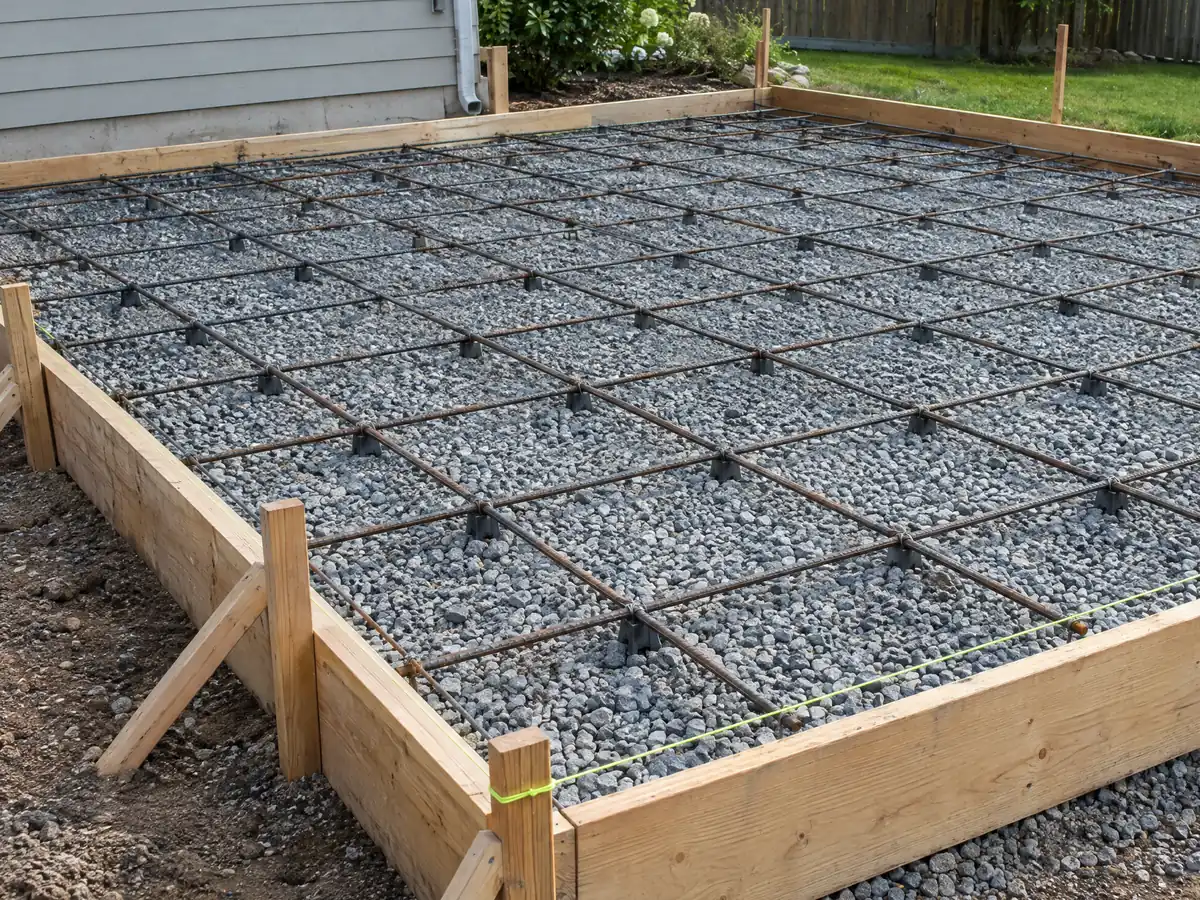
Concrete photos from Apple Valley and nearby communities
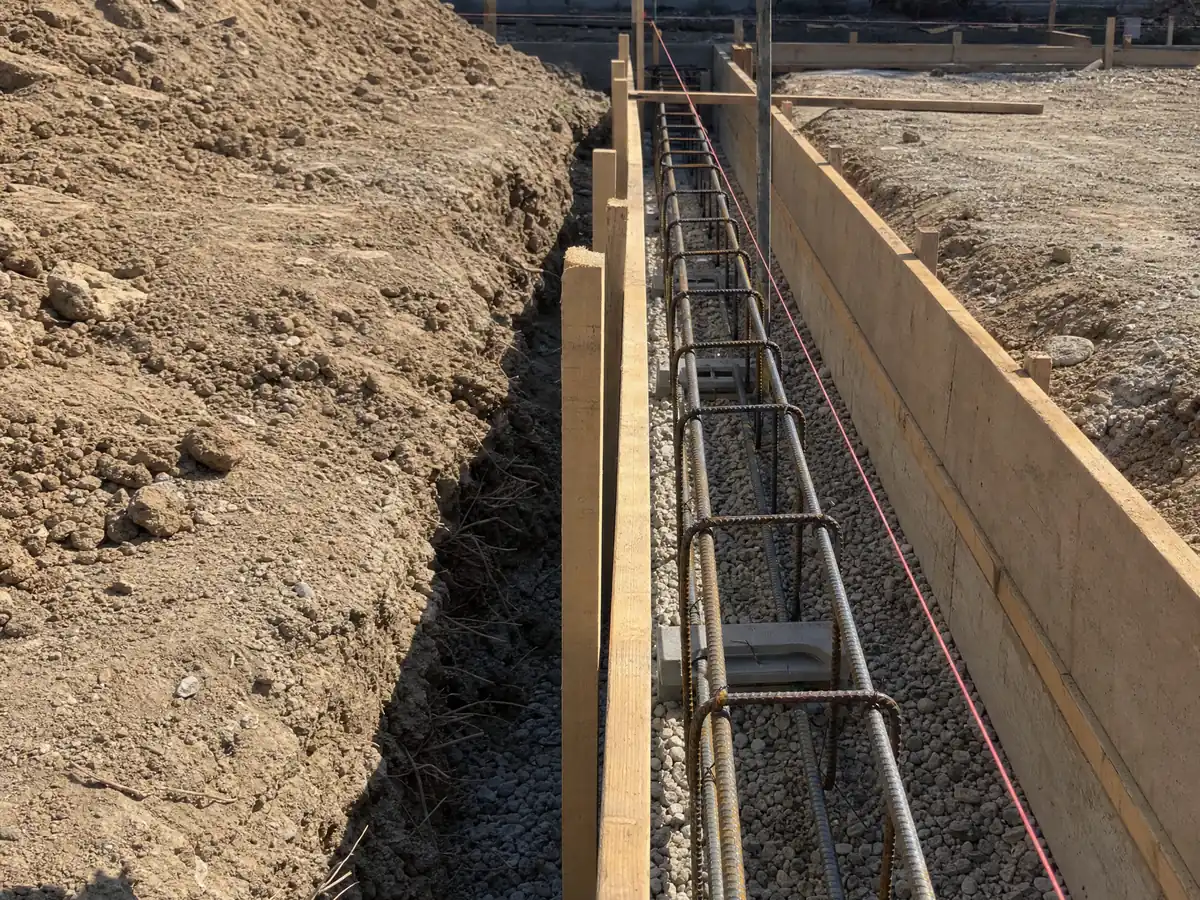
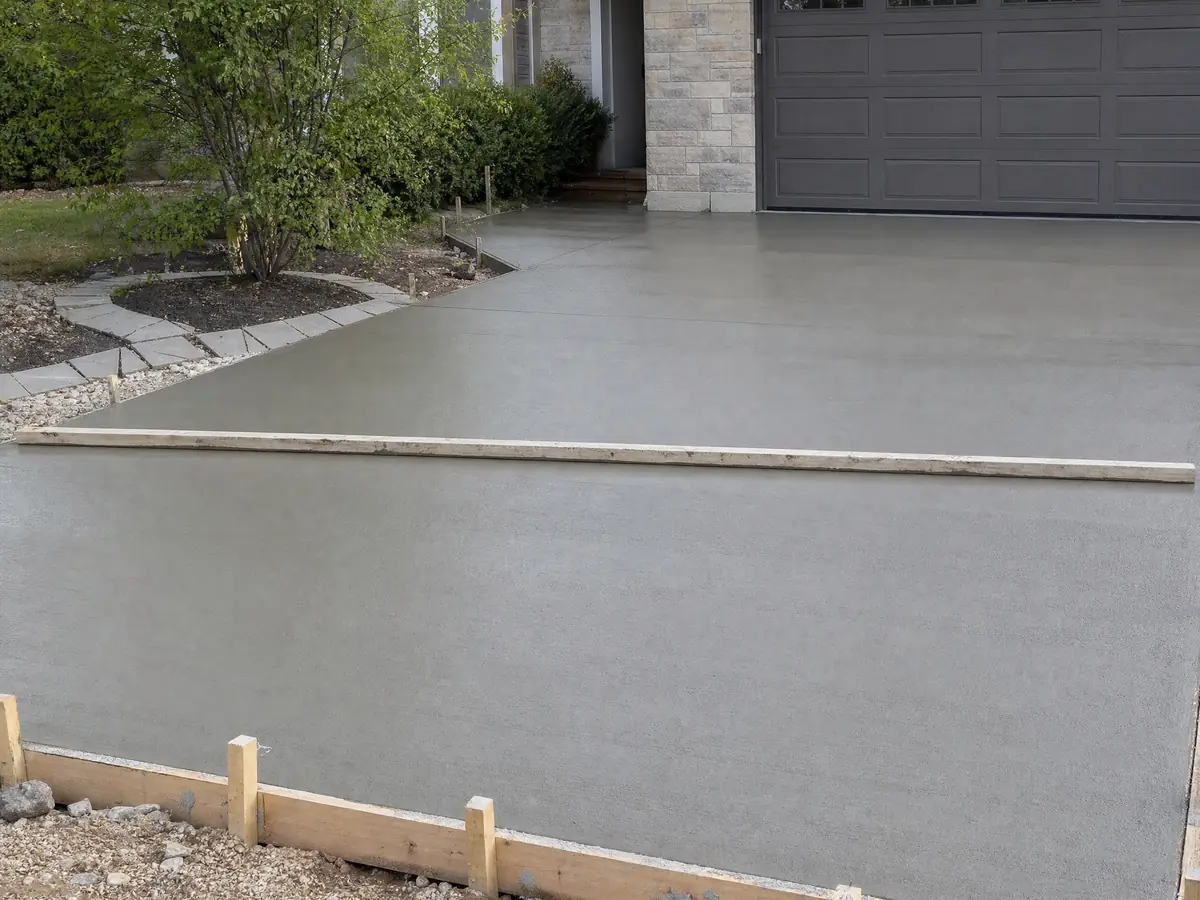
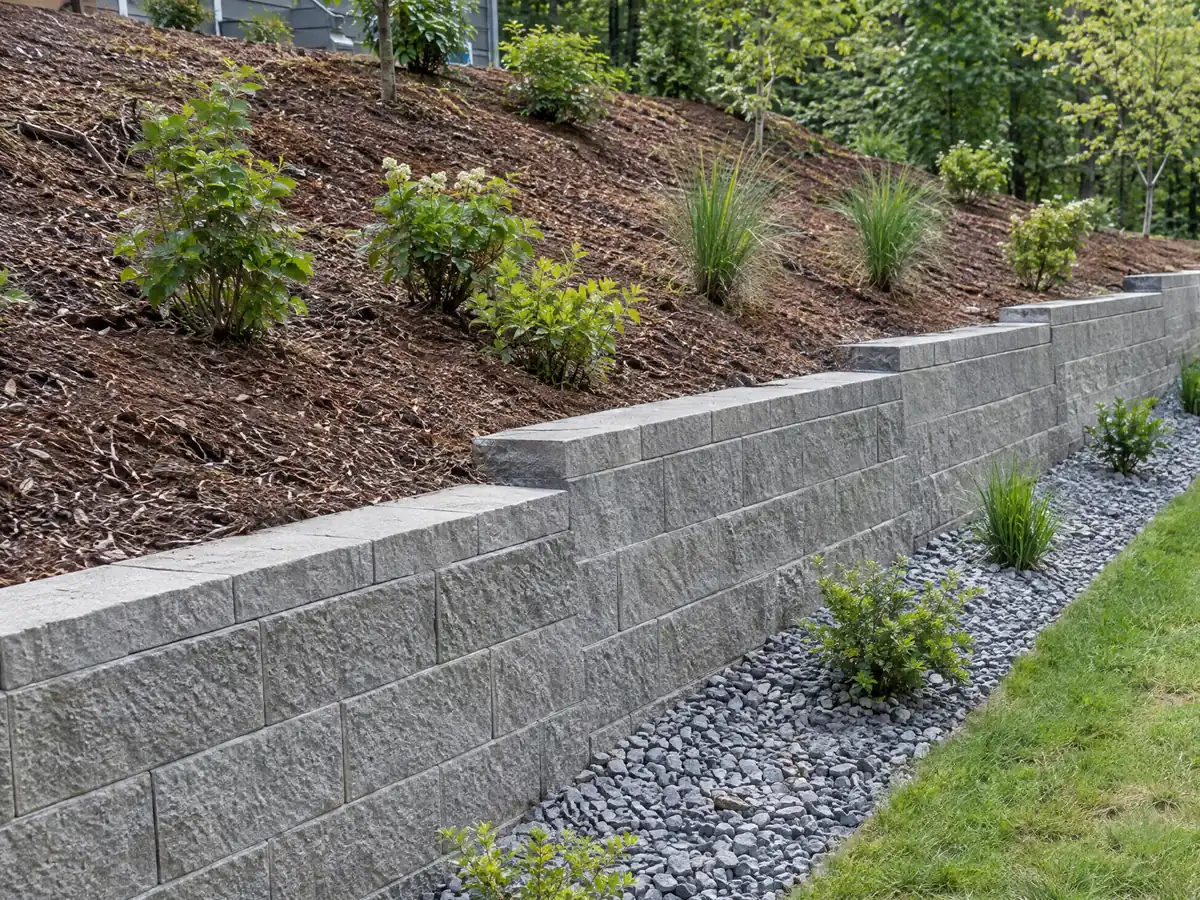
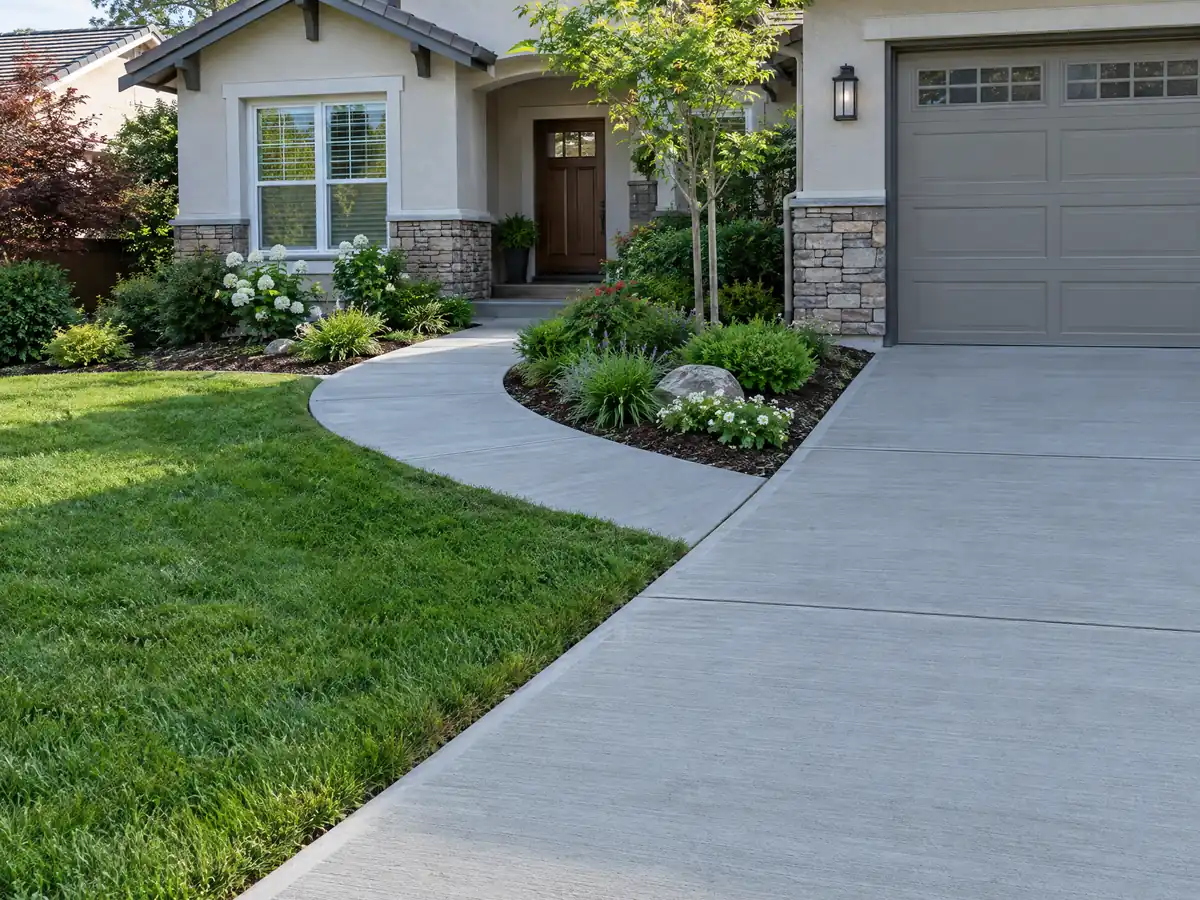
Footings, rebar, screeded slabs and finished walks and patios from Apple Valley and the High Desert towns around it, shown at the steps where the rules bite. Tap any photo to enlarge it.
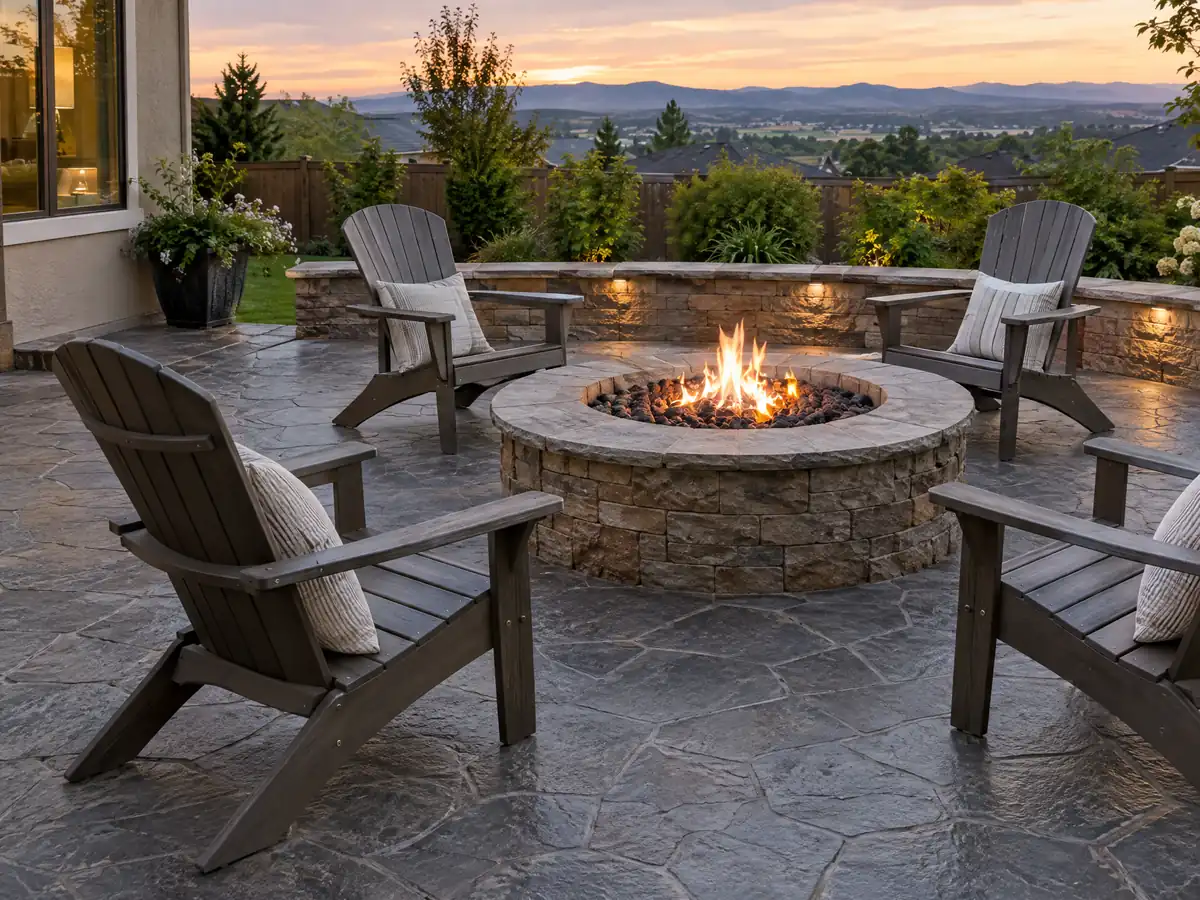
What concrete costs around Apple Valley
The dollar figures above are Los Angeles ranges, not an Apple Valley bid, so ask for demolition, haul-off, rebar, drainage and any grading or wall permit as separate lines. The same lot may need flooring in Apple Valley or decks in Apple Valley. Down the road, compare concrete work in Victorville and concrete in Hesperia, and across the Cajon Pass see concrete in San Bernardino and concrete in Fontana, with concrete in Los Angeles as the benchmark. Adelanto and Barstow are the next towns on the corridor. For who forms a slab and who finishes it, see the subcontractor guide, and for surfaces that go on top, the flooring cost guide.
| What it covers | Typical range |
|---|---|
| Patio, walkway or slab, broom finish, 300 sq ft or more | $8 to $14 per square foot |
| Decorative: stained, stamped or exposed aggregate | $15 to $30 per square foot |
| Driveway replacement, with demolition of the old slab | $9 to $20 per square foot |
| 20 by 20 foot plain patio (400 sq ft) | About $3,200 to $5,600 |
| 20 by 20 foot decorative patio (400 sq ft) | About $6,000 to $12,000 |
| Small jobs under 300 sq ft | Usually above the per-foot range |
| Retaining walls | Set by the written proposal |
Other work we manage in Apple Valley
Apple Valley concrete questions, answered
Do I need a permit to pour a concrete patio in Apple Valley?
We could not confirm it, because the Town's list of exempt work did not turn up in anything we read. The Permit Worksheet counts square feet of slab and linear feet of block wall, and grading and clearing rules can apply on large lots, so call the Permit Center at (760) 240-7000 with the size and location before ordering the truck.
How much should a 20x20 concrete patio cost?
Plain concrete at our Los Angeles planning range of $8 to $14 a square foot runs about $3,200 to $5,600 for 400 square feet, and Angi's August 2026 Los Angeles page shows $1,600 to $5,200 for a 20 by 20 slab. No Apple Valley study turned up. Stamping, demolition and drainage add to the figure.
How much is a 20x40 patio?
At our Los Angeles planning range of $8 to $14 a square foot, a plain 800 square foot slab runs roughly $6,400 to $11,200, and stamped work at $15 to $30 runs $12,000 to $24,000. Those are Los Angeles figures, not an Apple Valley bid. Grading, a wind erosion plan and the Town's permit fees are separate.
Can I expand my driveway without a permit?
Not necessarily. We found no Town page on driveway aprons or curb cuts, so ask the Permit Center whether Engineering needs to review one. On your own lot, lot coverage of 25 to 40 percent, Joshua tree approval and the clearing permit on developed lots over a half acre can all apply before the concrete does.
What is the maximum height of a retaining wall without a permit in California?
The 2022 model code text we read exempts retaining walls up to 4 feet from the bottom of the footing to the top unless they carry a surcharge. Apple Valley sends any wall over 3 feet to Planning Division review, so use the lower number and ask the Permit Center what applies at your address.
Is 4 inches of concrete thick enough for a driveway?
Four inches is a common thickness for residential driveways, but we found no Apple Valley code section that sets it, so treat it as industry practice. Heavy trucks, expansive clay or collapsible fill call for more, and the number should come from the written proposal or an engineer, with base, steel and joints.
Does Rule 403 apply to a small concrete job in Apple Valley?
Rule 403's full dust control plan process applies at 10 acres of residential construction and projects under half an acre are exempt from its requirements, so a backyard pour sits below it. Dust still may not leave the parcel under the Town's code. Apple Valley is in the Mojave Desert AQMD, and we read the rule in a Wayback copy.
Do Joshua trees block a concrete project in Apple Valley?
They can. Town approval is required before any Joshua tree on any property is disturbed or removed, and trees at least 40 years old, 15 feet wide, 15 feet tall or with a 12 inch trunk must stay unless removal is approved. Setbacks can be trimmed to save one. Call Planning before cutting or digging near a tree.
What license does a concrete company need in Apple Valley?
The usual license is CSLB's C-8 class for poured concrete, and block walls fall under masonry, C-29. Verify the number on the CSLB site and ask each subcontractor for a license and certificate of insurance. The Permit Worksheet asks contractors for a license type, expiration date and city business license number, so ask the Town what applies.
Tell us the lot size, the slab and which way the water runs
Say what is going in, about how large it is, how the yard drains and whether the work touches a wall, a Joshua tree or a horse pen. Grading, dust and permit questions come with us to the first visit.