
Deck Builderin Apple Valley, CA
A deck builder in Apple Valley should settle the permit question with the Town first, because its exempt-work list did not turn up in anything we read. Lot coverage of 25 to 40 percent, tract-specific Ranchos setbacks, Joshua tree approval and an independent fire district all shape the plan.
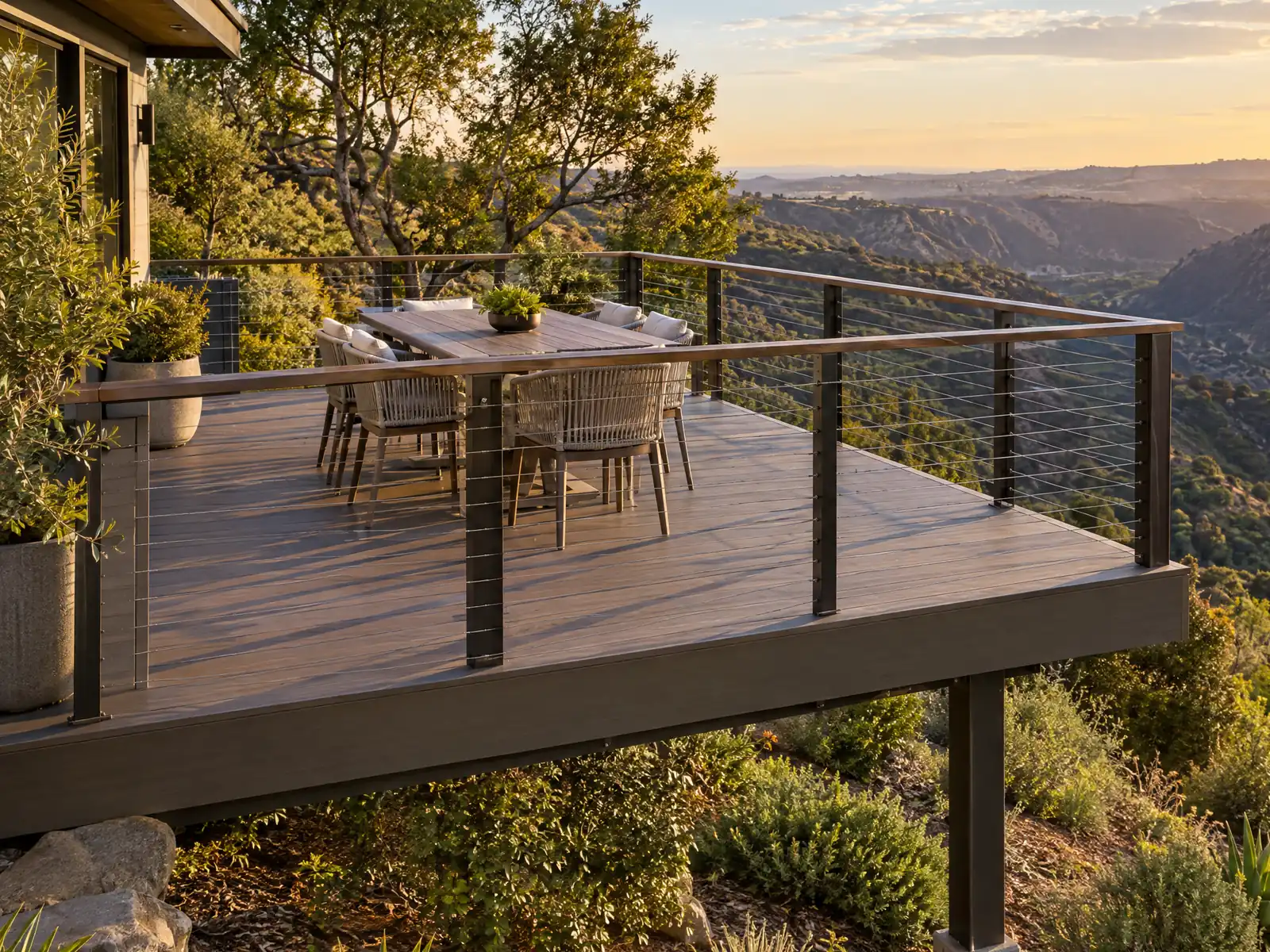
Apple Valley decks sit on big lots. About 78.9 percent of the Town's 27,627 homes are single-family detached in the Census Bureau's 2024 estimates, the median house went up in 1988 and the Housing Element describes a Town founded on rural single-family and estate lots. A deck original to a median house is about 38 years old, which is when joists, ledgers, stairs and guards deserve a hard look, and a newer neighborhood such as Ocotilla Ranch builds on lots of 18,000 to 29,000 sq ft with a horse path.
MDG Builders (CSLB #1040337) is a general contractor in Tarzana. For an Apple Valley deck we draw the design, put permit questions to the Town's Permit Center and fire questions to the District, and hire a licensed carpentry subcontractor to frame it. The decks page covers materials and ranges, and the Apple Valley overview lists our other trades in town.
What the Apple Valley Permit Center, Planning, the Fire Protection District and state law say about decks
Where decks permits come from in Apple Valley: Town of Apple Valley Permit Center (Building and Safety Division).
- Accessory structures (Development Code 9.29.020, Apple Valley Municipal Code, third-party GoCodebook mirror, 2026-10 edition, text as of 2026-10-04): non-habitable accessory structures up to 120 sq ft and 10 feet tall may sit within 5 feet of a side or rear line outside the front and street side setbacks and easements; larger or taller ones need the zoning setbacks and 10 feet from the rear line; on lots under 2.5 acres a single accessory building can be no more than 75 percent, and all accessory buildings together no more than 100 percent, of the house's roofed area, and all accessory footprints count toward lot coverage; height is capped at the house height or 16 feet for one story; patios, gazebos, patio enclosures, solariums and sunrooms may use any code-allowed material.
- Pool, spa and patio items on the Town's lists: the FY 2023-24 fee schedule gives all-in pool fees for a pool accessory to a single-family home of $606.43 with a standard plan and $727.72 without, $363.85 for a site-built spa or hot tub and $251.80 for plan review only; Table A rates a porch, patio, carport or shed at 0.20 and a patio enclosure at 0.50 of living-area fees, and raised decking and covers over raised decking at 0.20 each. The Town also posts Patio Covers and Patio Enclosure and Conversions handouts (scanned, not read).
How close to the property line can an Apple Valley deck go, and does it count toward lot coverage?
The code text we read does not say whether a deck counts as part of the house or as an accessory structure, so the answer depends on the plan. Development Code 9.29.020, in GoCodebook's third-party mirror, lets non-habitable accessory structures up to 120 sq ft and 10 feet tall sit within 5 feet of a side or rear line, outside the front and street side setbacks and easements. Larger or taller ones need the zoning setbacks and 10 feet from the rear line.
On lots under 2.5 acres one accessory building can be no more than 75 percent, and all of them together no more than 100 percent, of the house's roofed area. Accessory footprints count toward lot coverage of 25 to 40 percent depending on the district, they sit at least 6 feet from the main structure, and height is capped at the house height or 16 feet for one story.
Old Ranchos tracts change the starting numbers. A zoning-map district shown in parentheses points to Chapter 9.63's tract-by-tract matrix, which replaces the standard setbacks and follows old recorded maps and CC&Rs. Ask Planning for your tract and the column that applies before the plan is drawn. Corner and odd-shaped lots may use the code's relief that keeps 45 percent of the lot buildable.
Does an Apple Valley deck need a permit, and what does the Town charge?
The Town's published materials do not say, and we will not guess. Its exempt-work list did not turn up on the Permit Center page or in the Permit Worksheet, though the worksheet asks for deck square footage as its own line, so decks are counted. The model residential code text we read exempts a deck of 200 sq ft or less that sits no more than 30 inches above grade, is not attached to a dwelling and does not serve the exit door. Treat that as a question and call (760) 240-7000.
The FY 2023-24 fee schedule, adopted September 26, 2023, rates raised decking at 0.20 of living-area fees, a cover over raised decking at another 0.20 and a patio enclosure at 0.50. A permit carries a $121.29 issuance fee, residential plan review is 50 percent of the permit fee and the minimum total for any permit is $183.25, plus state surcharges. Ask for an all-in estimate, since the Town may have updated the schedule.
A permit becomes invalid if work does not start within 365 days or stops for 365 days, and the Building Official may grant one written extension of up to 180 days. The Town can also charge a reinspection fee when work is not ready for a requested inspection, plans are not on site or access is not provided.
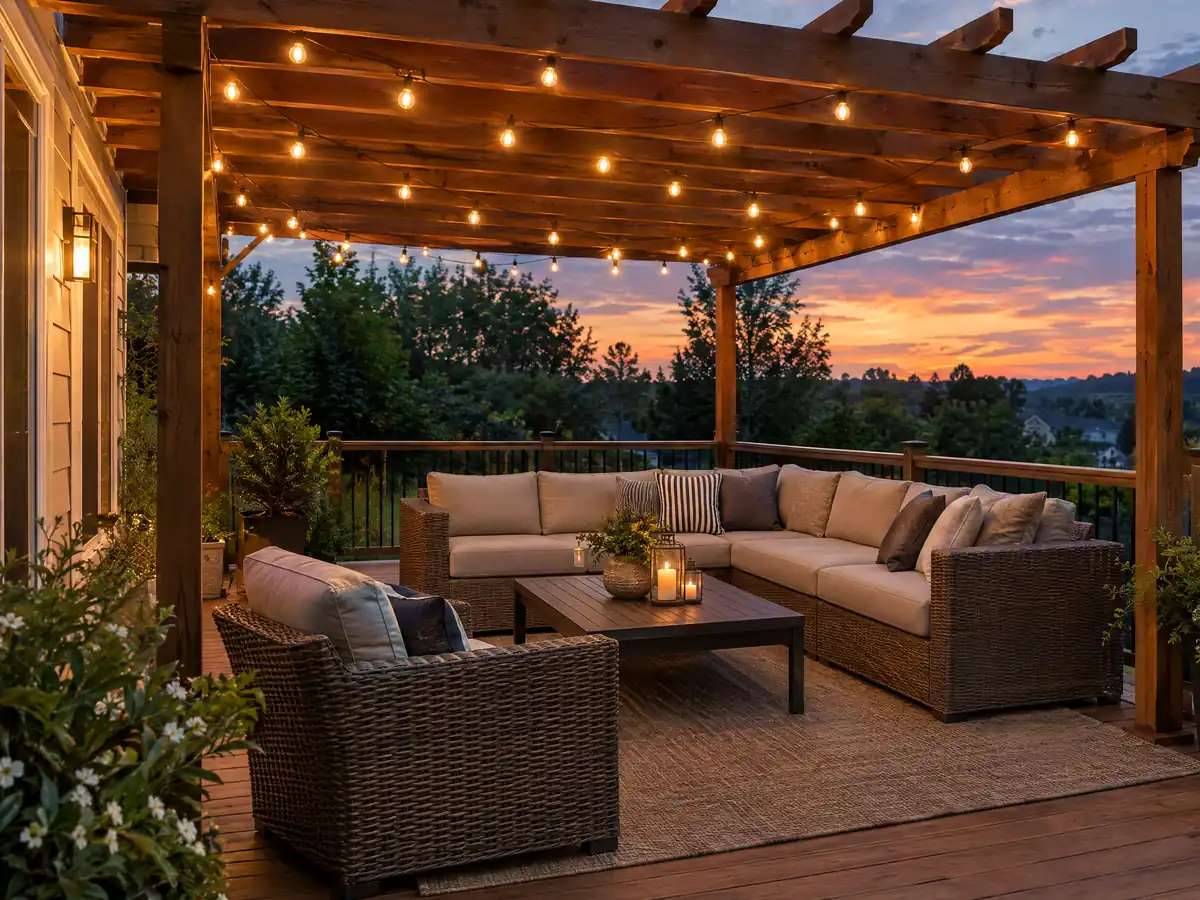
What changes when an Apple Valley deck gets a patio cover, a pergola or a pool beside it?
A cover adds structure and paperwork. The Town posts Patio Covers and Patio Enclosure and Conversions handouts, both scanned images we could not read, and its code lets patios, gazebos, patio enclosures, solariums and sunrooms use any code-allowed material. Because the fee schedule rates an enclosure at 0.50 and a cover at 0.20, closing in a cover moves it to a higher fee factor.
A pool next to a deck has its own price list under the same schedule: $606.43 all in with a standard plan, $727.72 without one, $363.85 for a site-built spa or hot tub and $251.80 for plan review alone. The Town's barrier handout requires a barrier around any pool, spa or hot tub holding water over 18 inches deep, standing 60 inches above grade, with no more than a 2 inch gap underneath (4 inches over solid surfaces) and openings that stop a 4 inch sphere.
Gates must be self-closing, self-latching and swing away from the pool. A door from the house or garage that opens to the water needs an alarm sounding for 30 seconds at 85 decibels or more, or in new construction a self-closing, self-latching door. Ask the plan checker how the 60 inches is measured where a deck surface meets the barrier.
Do Joshua trees, horse pens and big desert lots change a deck plan in Apple Valley?
A deck footprint can collide with a Joshua tree. The Town must approve before any Joshua tree on any lot is disturbed, moved or removed, and its interim policy of July 21, 2021 asks site plans to show every western Joshua tree on the site or within 40 feet of planned disturbance. That policy predates the 2023 state act and may be superseded, so ask Planning which procedure applies. A transplant needs a Desert Native Plant Expert and is approved once in 10 years.
A tree that must stay shrinks the buildable area, which is why the Planning Commission may trim side and rear setbacks by up to 20 percent to keep it. CDFW's free hazard permits cover only limited cases, such as dead trees or a living tree that has fallen within 30 feet of a structure, and they cannot authorize removing a living tree.
Horse pens set the other limit. Farm animal buildings must stay 65 feet from any off-site habitable structure, a building put up later within 65 feet makes the pen legal nonconforming, and commercial stables and arenas need at least 5 acres. The code measures to habitable structures, and we did not find whether an open deck or cover counts, so ask Planning before building near a neighbor's stalls.
What do Apple Valley deck footings, ledgers and guards have to meet?
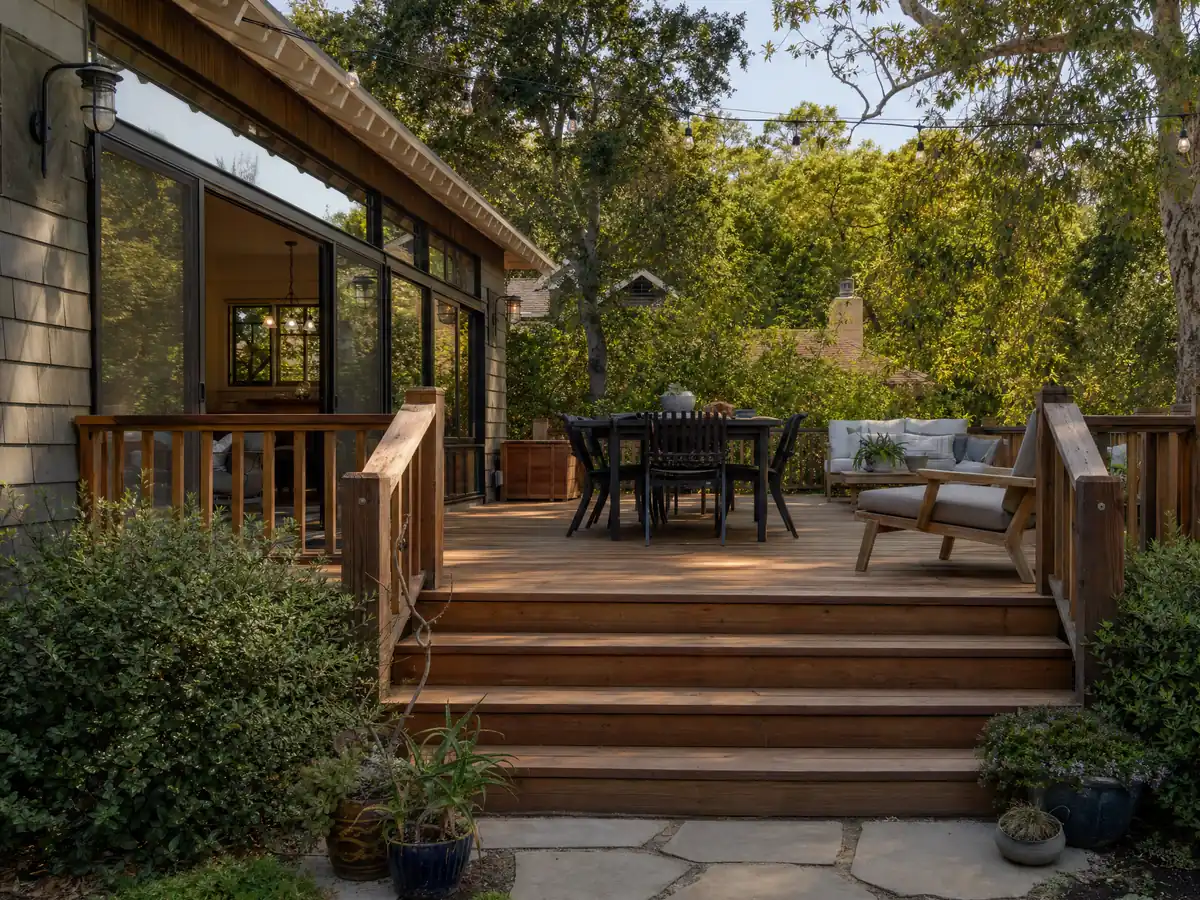
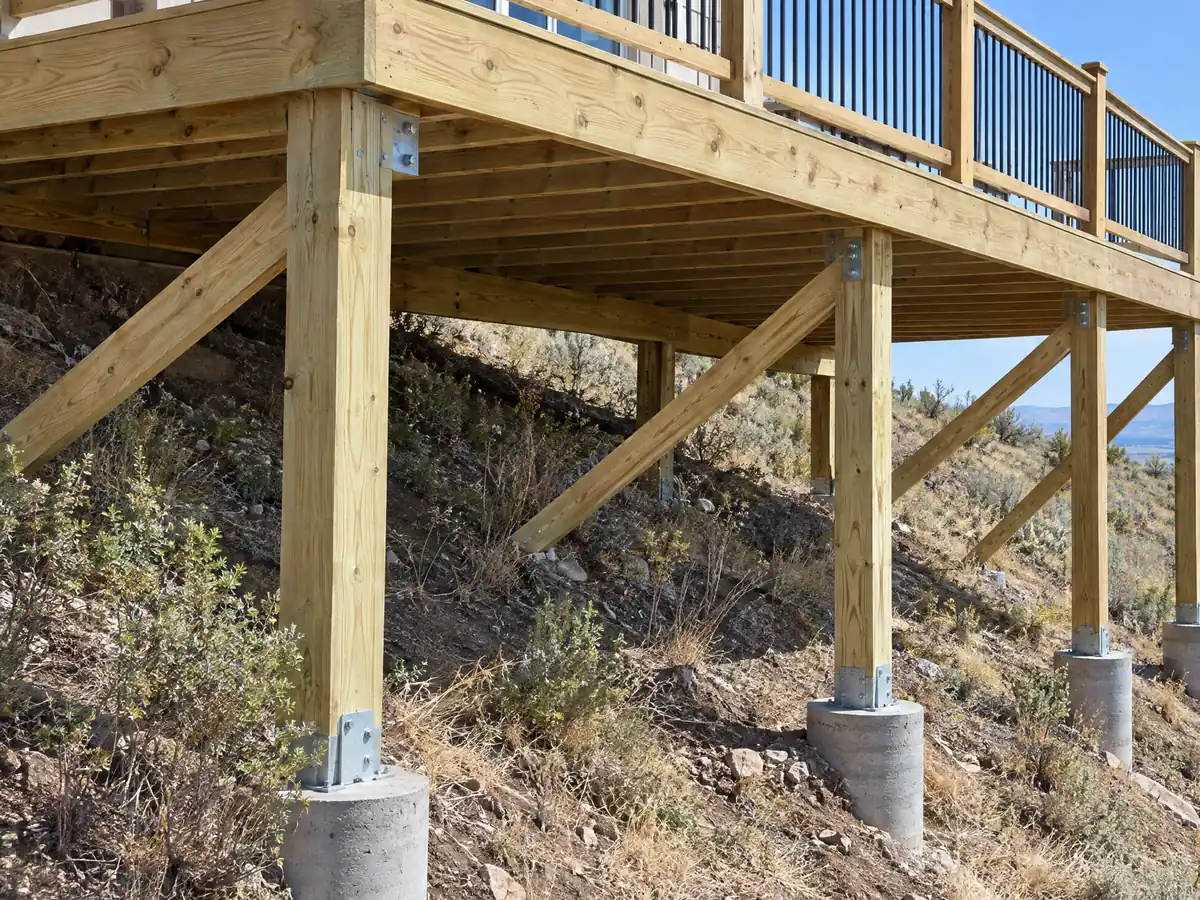
Footing depth is the open question. The Town's snow load, frost depth and design wind speed did not turn up in any source we opened, and we will not borrow another city's numbers, so ask the plan checker for the design values before footings are sized. NOAA's nearest station normals show about 54 mornings a year at or below 32 F and a snowfall normal of 0.0 inches, which is context rather than a code value.
A soils report is required for any structure inside the Town's designated soils investigation area, and the General Plan warns that young alluvium can collapse when wetted, especially where heavy irrigation sits next to foundations. Posts beside a sprinkler line or planter are the case to raise. Clay-rich older fan soils are moderately expansive, and so are the Dry Lake's silts and clays.
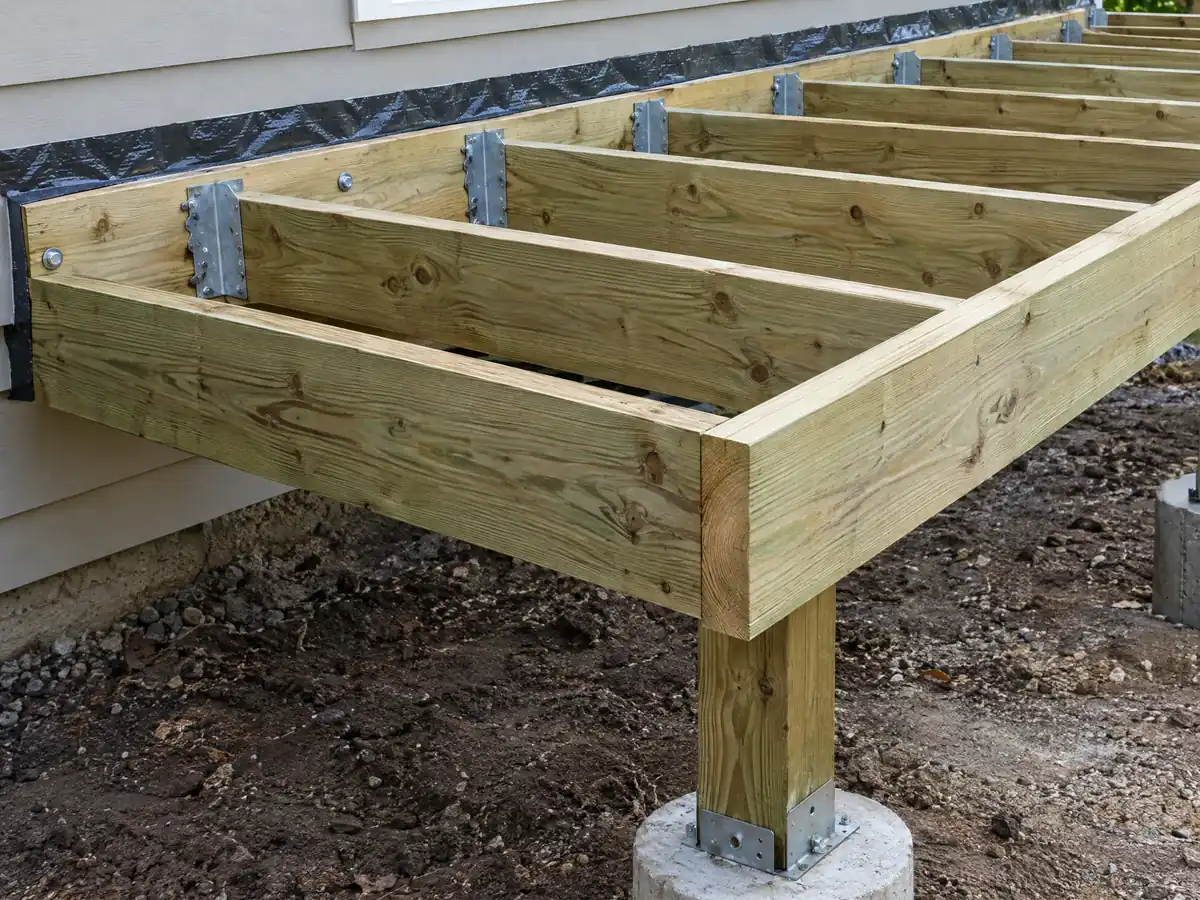
The 2022 California Residential Code text we read calls for a pressure-treated ledger of at least 2x8, flashed, with hot-dipped galvanized or stainless fasteners, and lateral hold-downs of two 1,500 pound devices within 24 inches of each end or four 750 pound devices. A guard is required where the walking surface is more than 30 inches above grade within 36 inches of the edge, at least 42 inches tall, with openings that stop a 4 inch sphere. The Town adopted the 2025 edition in Chapter 8.13, so confirm the numbers.
Does an Apple Valley deck need ember-resistant boards, and who reviews fire questions?
It depends on the zone, and we could not verify any address's zone. Fire protection and plan review belong to the independent Apple Valley Fire Protection District, not the Town, and CAL FIRE's March 24, 2025 maps for Local Responsibility Areas now show Moderate, High and Very High zones, with parts of the District in State Responsibility Area. The Town adopted the 2025 California Wildland Urban Interface Code in Chapter 8.23 with no local amendments shown, and the District's zone maps are the place to start.
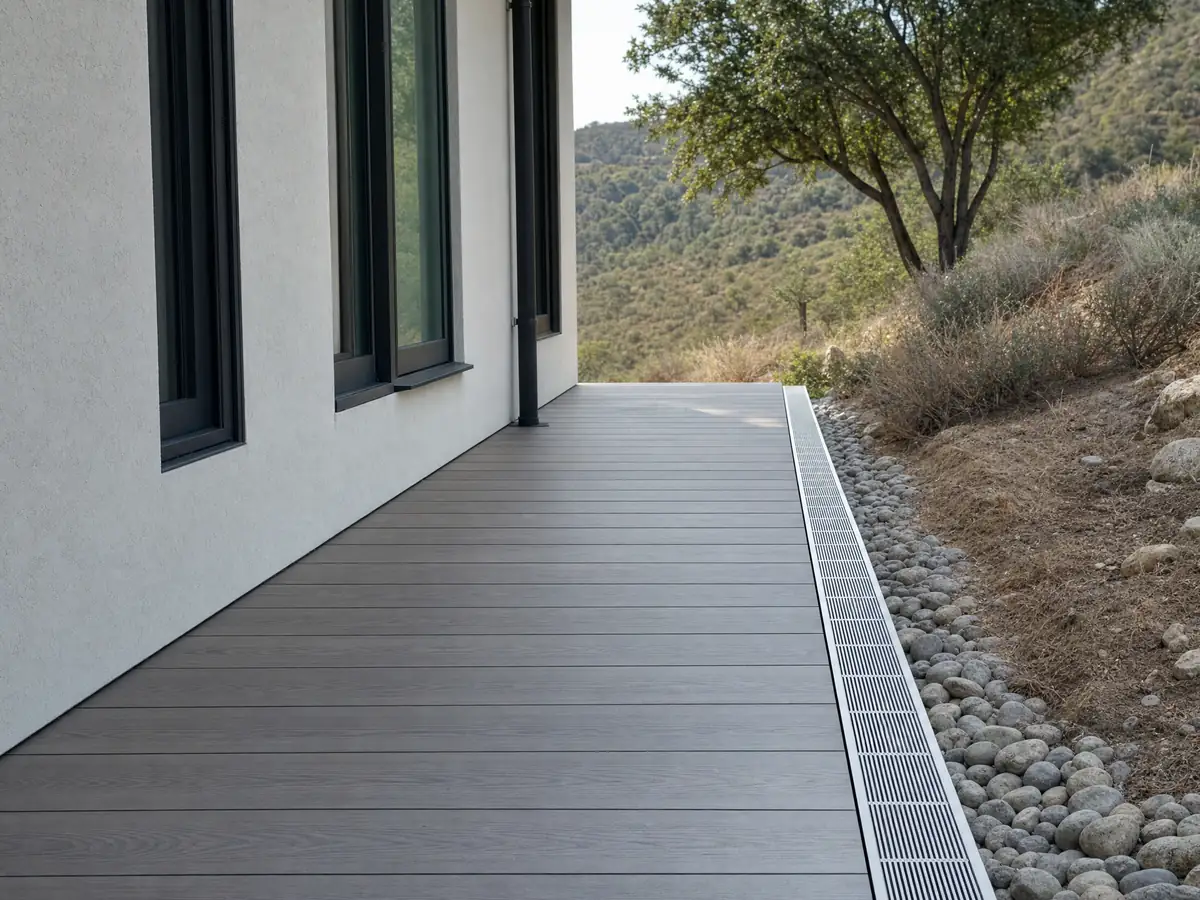
The model code's wildland-urban-interface section lists allowed deck surfaces as ASTM E2632 or E2726 tested, ignition-resistant, fire-retardant-treated or noncombustible material. One University of California extension summary said some tested composites did not meet the ignition-resistant definition, so check any board against the State Fire Marshal listing instead of the brochure.
The District's defensible space checklist asks for tree branches at least 10 feet from structures, wood piles at least 35 feet away and grass mowed to 4 inches or less. Its hazard abatement program inspects over 25,000 parcels a year in the Town, gives a notice with typically 30 days to comply and charges a non-refundable $80 admin fee when its own contractor does the work.
What does a deck builder charge in Apple Valley, wood or composite?
No Apple Valley deck study with a stated method turned up, so the anchor is the 2025 Cost vs. Value report that Remodeling publishes. For a Los Angeles deck of 16 by 20 feet with built-in bench, planter, three steps and full railing, it prices treated wood at $18,419, which resold for 99.6 percent of cost, and composite at $26,872, which resold for 73.9 percent. Angi's Los Angeles deck page of October 28, 2025 shows an average of $13,570 and a range of $6,335 to $20,871.
For planning we use $45 to $75 a square foot in pressure-treated wood and $65 to $110 in composite. A 14 by 20 deck is 280 square feet, so about $12,600 to $21,000 in wood and $18,200 to $30,800 in composite before permits and engineering, and on a large Apple Valley lot the deck is often bigger. The Bureau of Labor Statistics shows a mean wage of $37.79 an hour for carpenters in the Los Angeles metro area as of May 2025.
A wood deck is framing and rough carpentry under CSLB's C-5 class. Under Business and Professions Code 7159.5, the first payment on a home improvement job cannot exceed $1,000 or 10 percent of the price, whichever is smaller. Our license check guide shows how to verify a license number.
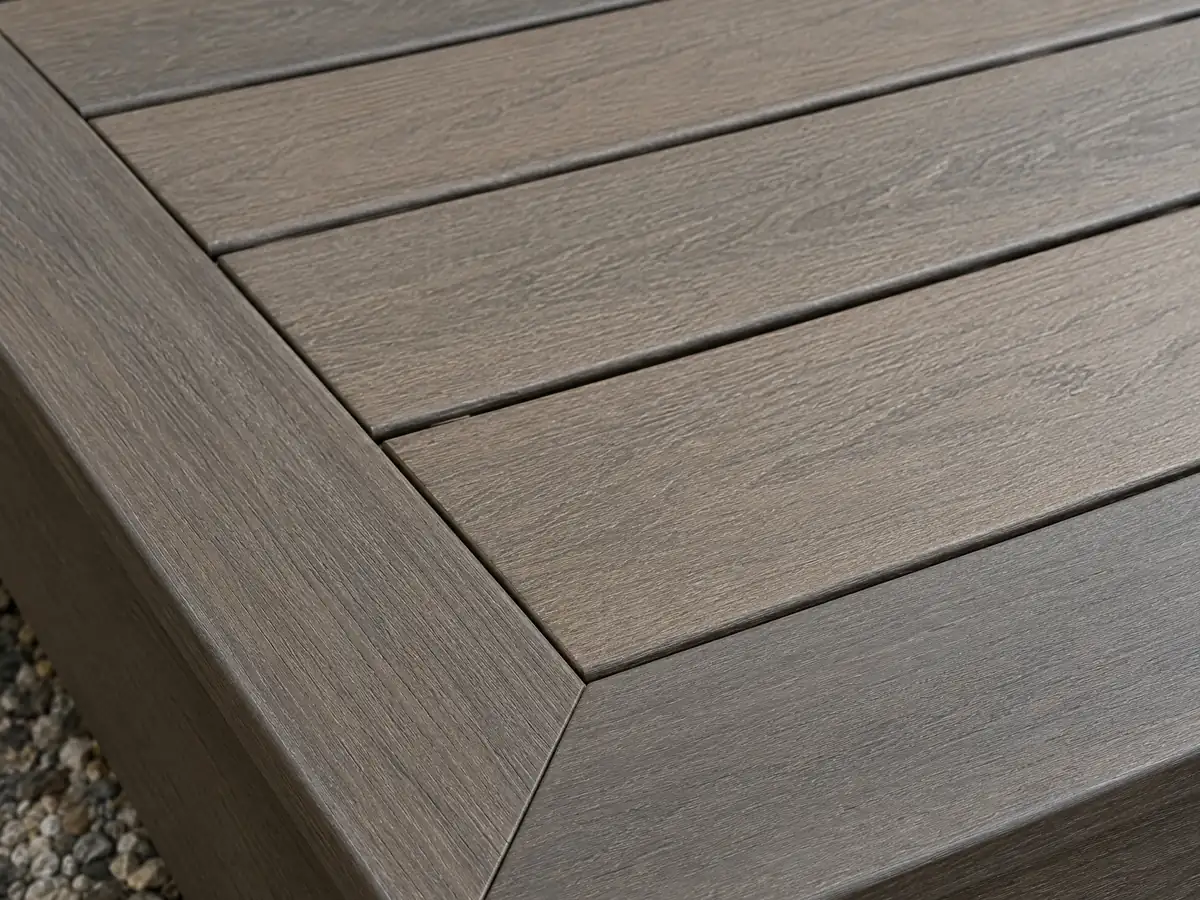
Deck photos from Apple Valley and nearby communities
Framing, footings, guards and finished decks from Apple Valley and the High Desert towns around it, shown at the steps where the rules matter. Tap any photo to enlarge it.
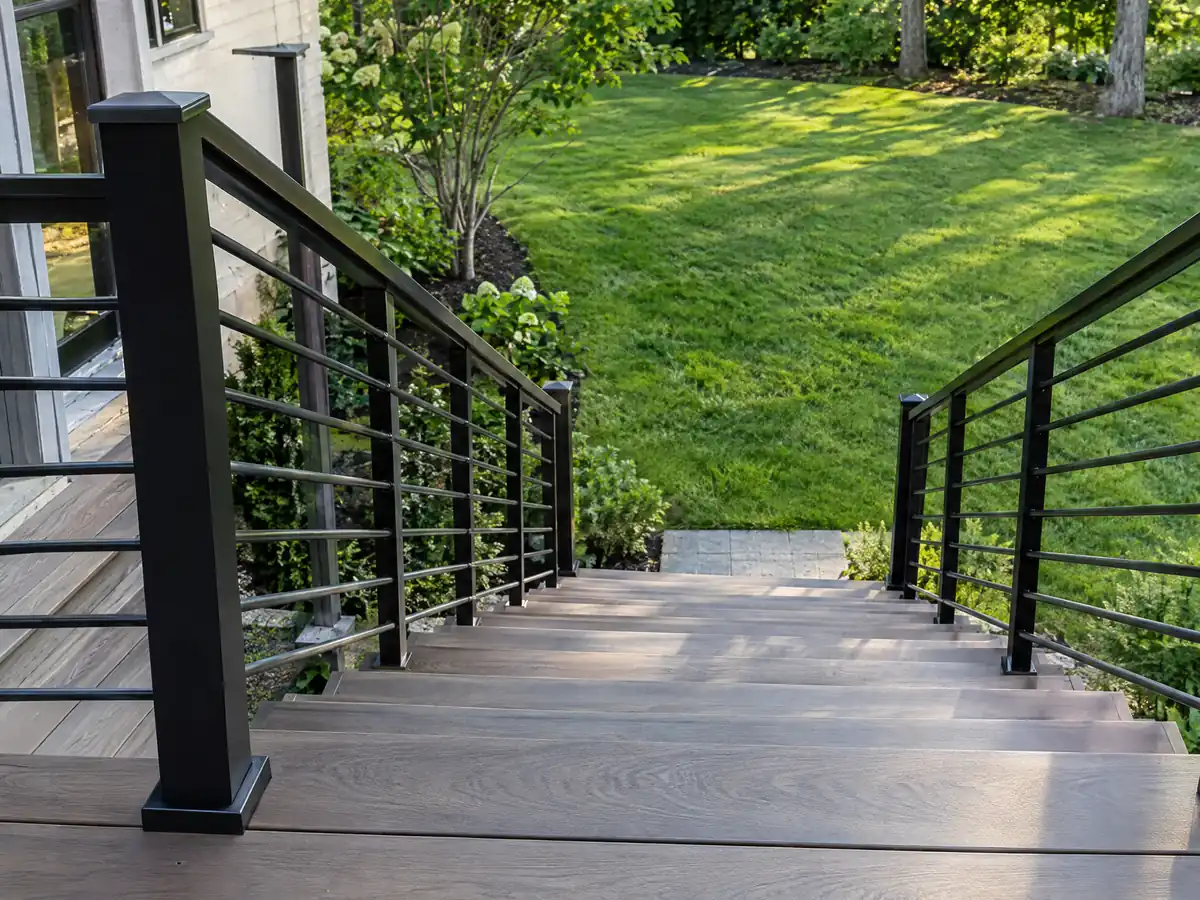
What decks costs around Apple Valley
The dollar figures above are Los Angeles ranges from our decks page, not an Apple Valley bid, so ask for permits, engineering, soils work and any fire district review as separate lines. The same lot may need flooring in Apple Valley or concrete in Apple Valley. Down the road, compare decks in Victorville and decks in Hesperia, and across the Cajon Pass see decks in San Bernardino and decks in Fontana, with decks in Los Angeles as the benchmark. Adelanto and Barstow are the next towns on the corridor, and the subcontractor guide explains who frames and who finishes.
| What it covers | Typical range |
|---|---|
| Pressure-treated wood deck | $45 to $75 per square foot |
| Composite deck | $65 to $110 per square foot |
| 16 by 20 foot wood deck (320 sq ft) | About $14,500 to $24,000 |
| 16 by 20 foot composite deck | About $21,000 to $35,000 |
| Hillside, second-story, rooftop and ipe decks | Priced by site visit |
| Permits and engineering | Quoted as separate lines |
Other work we manage in Apple Valley
Apple Valley deck questions, answered
Do you need a permit to build a deck in Apple Valley?
We could not confirm it, because the Town's exempt-work list did not turn up in the Permit Center page, the Permit Worksheet or the form library. The worksheet counts deck square footage, so treat a deck as permit work until the Town says otherwise. Call the Permit Center at (760) 240-7000 with the size, height and whether it touches the house.
Can I build a deck without a permit in California?
Sometimes, depending on the agency. The model residential code text we read exempts a deck of 200 sq ft or less, no more than 30 inches above grade, not attached to a dwelling and not serving the exit door, while the 2022 building code's exempt list has no deck line. Apple Valley has not published its own list that we found.
How much would a 14x20 deck cost?
A 14 by 20 deck is 280 square feet, so our Los Angeles planning range of $45 to $75 a square foot gives about $12,600 to $21,000 in treated wood, and $65 to $110 gives $18,200 to $30,800 in composite. These are Los Angeles figures before permits and engineering, not an Apple Valley bid.
How much would a 20x20 composite deck cost?
A 400 square foot composite deck lands near $26,000 to $44,000 at our Los Angeles planning range of $65 to $110 a square foot, before permits and engineering. Remodeling's 2025 Cost vs. Value report shows $26,872 for a smaller 16 by 20 composite deck with bench, planter and steps. No Apple Valley study with a stated method turned up.
Is railing height 36 or 42 for decks?
Use 42 inches. The 2022 California Residential Code text we read sets the minimum guard height at 42 inches, with openings that stop a 4 inch sphere, and requires a guard once the walking surface is more than 30 inches above grade. Apple Valley adopted the 2025 edition, so confirm the numbers with the plan checker.
Is it cheaper to build a wood deck or composite deck?
Wood costs less up front. Cost vs. Value's 2025 Los Angeles report shows $18,419 for wood against $26,872 for composite, though wood resold for 99.6 percent of cost and composite for 73.9 percent. We found no Apple Valley data on how desert heat treats either, so ask each manufacturer about its warranty and surface temperature limits.
What happens if a deck is built without a permit?
Under Municipal Code 8.10.110 and 8.10.120, in the third-party mirror, the Town issues no permit until past-due enforcement costs are paid, treats violations as infractions or misdemeanors and can record a Notice of Pendency against the property. A recorded notice is public, so ask the Permit Center how to legalize the deck before you list the house.
Can I get a permit after the deck is built?
Possibly. The fee schedule says certification of existing work done without a permit costs the same as the permit for the work investigated, payable at plan submittal or before permit issuance. Ask the Permit Center what it will accept, and do not cover framing or footings until it says so.
Does an Apple Valley deck have to be built with fire-resistant boards?
Only where the lot falls under the wildland-urban-interface rules, and we could not determine any address's zone. The Town adopted the 2025 California Wildland Urban Interface Code, and the Apple Valley Fire Protection District handles fire plan review. Ask the Permit Center and the District which rules attach to your address.
What license does a deck builder need in Apple Valley?
A current California license is required, usually a general building license or CSLB's C-5 class for framing and rough carpentry. Check the number on the CSLB site and ask each subcontractor for a license and certificate of insurance. The Permit Worksheet asks contractors for a license type, expiration date and city business license number.
Tell us the lot, the height and the fire zone question
Say how high the deck will sit, how big the lot is, whether a cover, a pool, a Joshua tree or a horse pen is nearby and whether this is new work or a repair. Setback, fire map and soil questions come with us to the first visit.