
ADU Constructionin Apple Valley, CA
ADU construction in Apple Valley follows state law first: approval is ministerial, an agency must call an application complete within 15 business days and decide within 60 days of a complete one, and a conversion needs only a building permit. Septic lots under one acre face limits, and the Town has no ADU page.
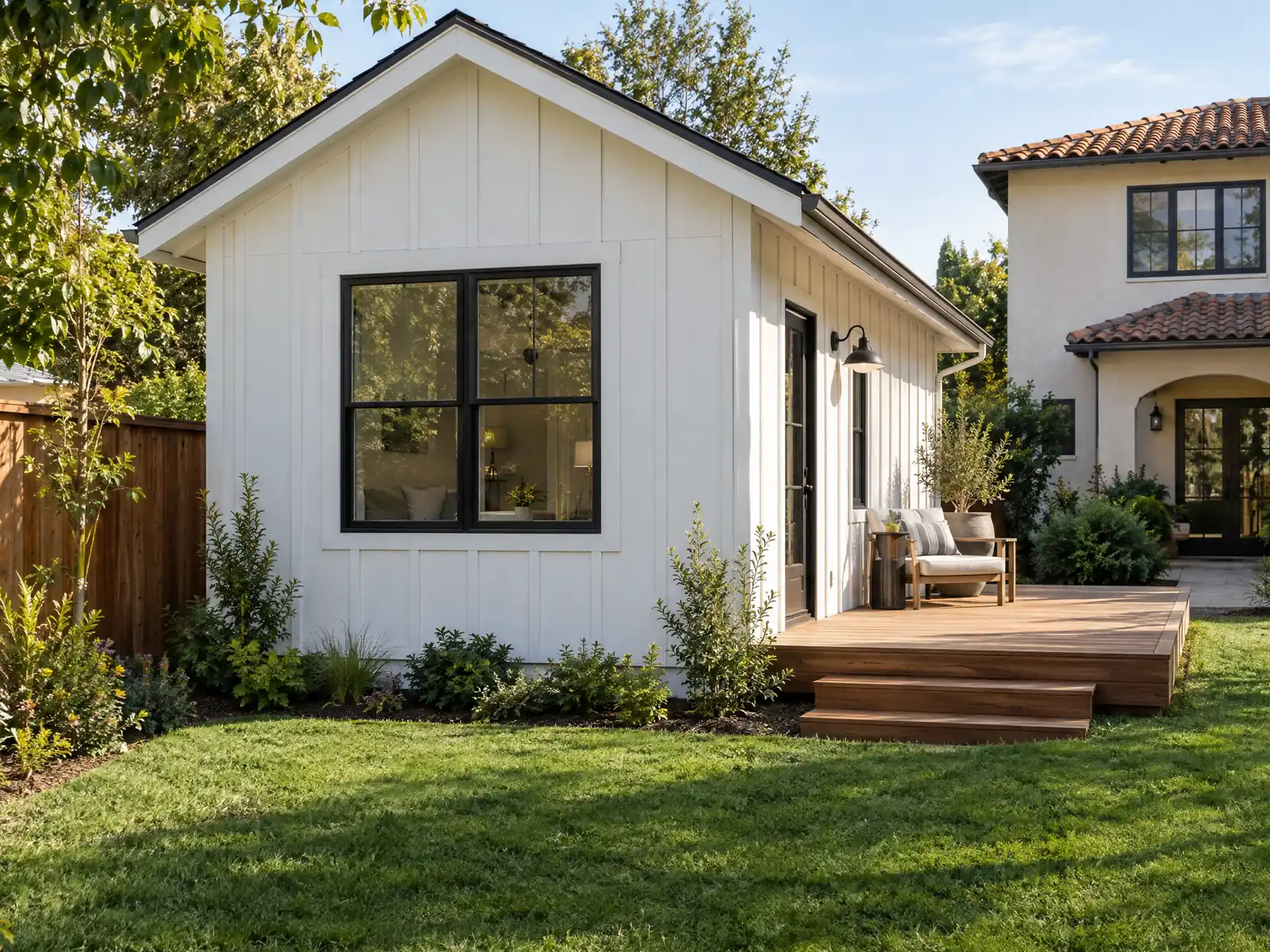
Apple Valley grew from apple orchards and guest ranches into a Town of big lots, and the Housing Element says it was founded on rural single-family and estate lots with half-acre minimums. The Census Bureau's 2024 one-year estimates count 27,627 homes, plus or minus 2,058, about 78.9 percent of them single-family detached, with a median year built of 1988. Median gross rent is $1,653, plus or minus $114, and median home value is $444,900, plus or minus $21,164. Backyards here are measured in thousands of square feet, so septic rules, not space, are often the real limit.
This page leads with California's ADU statute, because it sets the floor, then reads Development Code 9.29.120 against it, then covers septic and sewer, garage conversions, Joshua trees, roofs and dust, the Dry Lake flood overlay, fire, rentals and the schedule. The Town's code reached us only through GoCodebook, a third-party mirror (2026-10 edition), and the Town has no standalone ADU page, so confirm every number with the Permit Center and Planning. Costs are on our ADU construction page.
Town of Apple Valley Planning and Building rules that apply to ADU construction
Where adu construction permits come from in Apple Valley: Town of Apple Valley Permit Center (Building and Safety Division).
- ADU ordinance (Development Code 9.29.120, Apple Valley Municipal Code, third-party GoCodebook mirror, 2026-10 edition, text as of 2026-10-04): ADUs and JADUs need a building permit and are approved ministerially within 60 days of a complete application; a lot with a single-family home may have one ADU and one JADU inside the house; attached ADUs are capped at 50 percent of the home's habitable area or 1,200 sq ft, whichever is greater; no parking is required and replaced garage spaces need not be rebuilt; an 800 sq ft detached or attached ADU at least 16 feet high with 4-foot side and rear setbacks cannot be precluded by lot coverage; conversions of existing structures need no setback correction; fire sprinklers are required only if the primary home has them. The Town has no standalone ADU web page among the pages read.
- ADU sewer and lot rules (Development Code 9.29.120, Apple Valley Municipal Code, third-party GoCodebook mirror, 2026-10 edition, text as of 2026-10-04): the whole property must connect to sewer when sewer is available; where it is not, an ADU can only occupy bedrooms in a home with an adequately sized onsite wastewater system or convert a pre-2020 accessory structure already on one, and no onsite system can be installed or expanded for an ADU on a site under 1 acre (Lahontan Regional Water Quality Control Board). Detached ADUs on lots under 2.5 acres must be behind the main house and are capped at 50 percent of the primary footprint or 1,200 sq ft; lots of 1 acre or more can seek larger ADUs by Minor Development Permit. The mirrored text still contains an owner-occupancy clause and a 30-day minimum rental term; whether the Town enforces owner occupancy under current state law was not verified.
- Two-unit projects (Development Code 9.29.220, Apple Valley Municipal Code, third-party GoCodebook mirror, 2026-10 edition, text as of 2026-10-04): the Town implements Gov. Code 65852.21 with ministerial approval by the Assistant Town Manager or designee for individual (not corporate) owners of legally subdivided single-family-zone lots, with a Subdivision Map Act certificate of compliance, recorded deed restrictions and a completeness notice within 30 days.
Sources for these rules
How do you build an ADU in Apple Valley, and how long does the Town have to answer?
California's ADU statute, Government Code sections 66310 to 66342, starts the story. It makes the permit ministerial, which means no hearing, no discretionary review and only objective standards. Since SB 543 took effect on January 1, 2026, the Town has 15 business days to say in writing whether your application is complete and then 60 days to approve or deny a complete one, and a missed deadline counts as approval. A denial has to list every defect, and an appeal must be answered within 60 business days. The statute is on the state's legislative site.
Apple Valley's own code, in the mirror we read, also calls for ministerial approval within 60 days of a complete application, which matches the state's outer clock. Applications go through a downloadable form or the Online Permit Center, and we found no ADU handout or fee line. The Town publishes 30 to 60 days for most planning projects, but an ADU is a building permit, so budget for the 60 day limit, not an average.
What does Apple Valley's ADU ordinance say about size, setbacks and fire sprinklers?
In Development Code 9.29.120, as the mirror shows it, a lot with a single-family home may have one ADU and one junior unit inside the house. An attached ADU is capped at 50 percent of the home's habitable area or 1,200 square feet, whichever is greater, and an 800 square foot unit at least 16 feet high, with 4 foot side and rear setbacks, cannot be blocked by lot coverage. No parking is required, replaced garage spaces need not be rebuilt, conversions of existing structures need no setback correction, and fire sprinklers are required only if the primary home has them.
Detached units on lots under 2.5 acres must sit behind the main house and are held to a limit tied to 50 percent of the primary footprint or 1,200 square feet, while lots of 1 acre or more can ask for a larger unit through a Minor Development Permit. Section 9.29.220 separately carries out the state's two-unit rule for individual owners of legally subdivided lots, with a certificate of compliance and recorded deed restrictions. The mirror still shows an owner-occupancy clause and a 30 day minimum rental term, so ask Planning in writing which wording it applies today.
Can an Apple Valley ADU go on a septic system, and who supplies water and power?
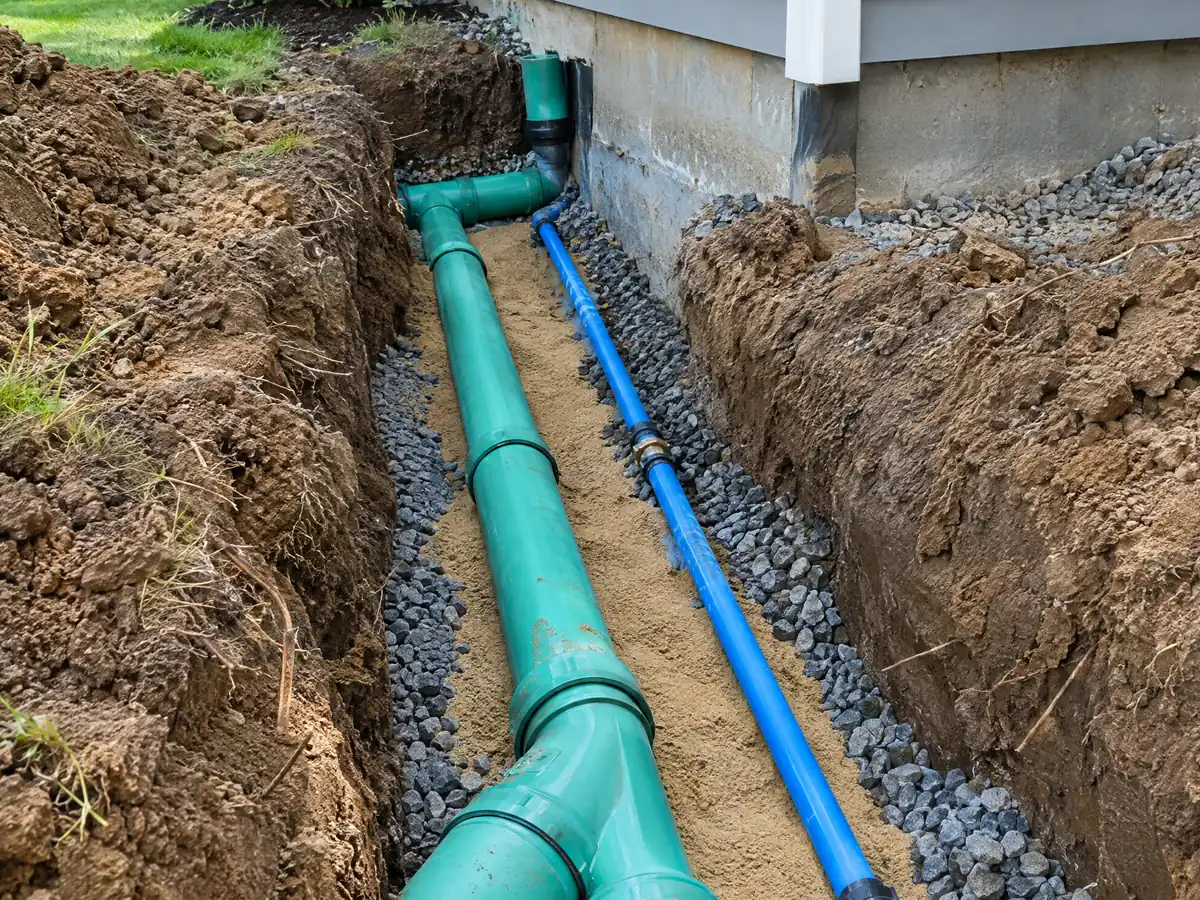
This question stops more Apple Valley ADUs than any setback. Under the mirror's 9.29.120, the whole property must connect to sewer when sewer is available. Where it is not, an ADU can only occupy bedrooms in a home that already has an adequately sized onsite wastewater system, or convert an accessory structure built before 2020 that already sits on one, and no onsite system can be installed or expanded for an ADU on a site under 1 acre, a rule that cites the Lahontan Regional Water Quality Control Board. On that wording, a new detached unit on a septic lot has no clear path unless sewer is available, so ask the Town to confirm.
Sewer coverage is a moving target. The General Plan's 2008 data put about 30 percent of development on sewer, and the Housing Element counts over 3,000 acres of vacant estate land that could be built on septic, so ask Town engineering what serves your parcel. Apple Valley Ranchos Water Company serves most of the Town, and the Town's eminent domain case to buy the system went back to the Court of Appeal in August 2026. Southern California Edison delivers electricity, while Apple Valley Choice Energy, launched in April 2017, supplies the generation unless an owner opts out. State law adds that a conversion of existing space cannot be forced to add a new utility connection.
Can you convert an Apple Valley garage, and how is that different from a guest house?
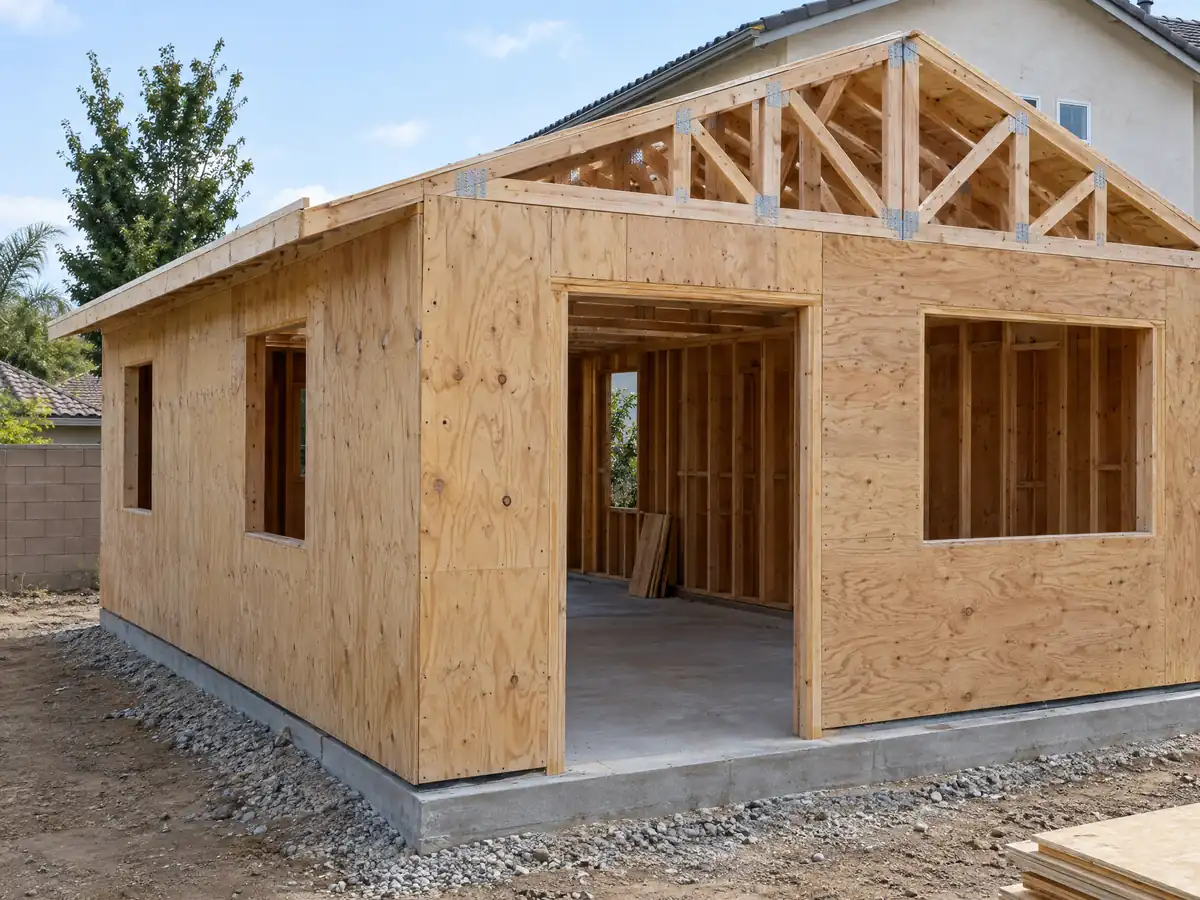
Yes, and a conversion is the simplest path. A garage or other existing structure turned into an ADU needs a building permit and, in the mirror's text, no setback correction. State law bars a Town from requiring replacement parking when a garage, carport or covered space is converted, and an ADU and a junior unit can be combined inside an existing house or accessory structure. The fee formula subtracts the old use from the new, so a garage turned into living area uses 1.00 less 0.50, a factor of 0.50 in the FY 2023-24 schedule. That is a formula fact, not a price quote.
A garage floor was built for cars, so a bedroom and kitchenette raise insulation, bathroom, sewer and electrical questions the slab hides. A guest house is treated differently: guest quarters are limited to 400 square feet with no kitchen and no rental, and one detached habitable pool house or studio is allowed per lot with no kitchen or bedroom. A rented unit with a kitchen reads as an ADU, with an ADU's permits and sewer rules. Metal or cargo containers are prohibited in most residential districts, so a container unit is not an option in the mirror's text.
Do Joshua trees, a Class A roof and dust rules apply to an ADU in Apple Valley?
Joshua trees do, on every lot. Municipal Code 9.76.040 says no Joshua tree on any property in any zoning district may be disturbed, moved or removed without Town review and approval, and trees at least 40 years old by record, 15 feet wide, 15 feet tall or with a 12 inch trunk must stay in place unless removal is approved. To save one, the Planning Commission can trim a front setback by up to 10 percent, not more than 7.5 feet, and side setbacks by up to 20 percent. Violations are misdemeanors, each tree a separate offense. The state's Western Joshua Tree Conservation Act separately requires CDFW authorization for take, and we could not confirm CDFW has delegated permitting to the Town.
A new detached unit also meets the amended building code's roof rule: every roof covering must be Class A, with a 25 percent exception only for repairs and additions to an existing roof. The Town bars measurable dust or dirt beyond the parcel line, so a slab and trench job needs water, hydroseeding or similar controls, and grading calls for a written wind erosion control plan. The Mojave Desert AQMD, not South Coast, runs Rule 403, whose full dust plan starts at 10 acres of residential work and exempts projects under one half acre. Visible dust still may not cross the property line except in High Winds, gusts above 25 mph.
Does the Apple Valley Dry Lake flood overlay or the fire district affect an ADU?
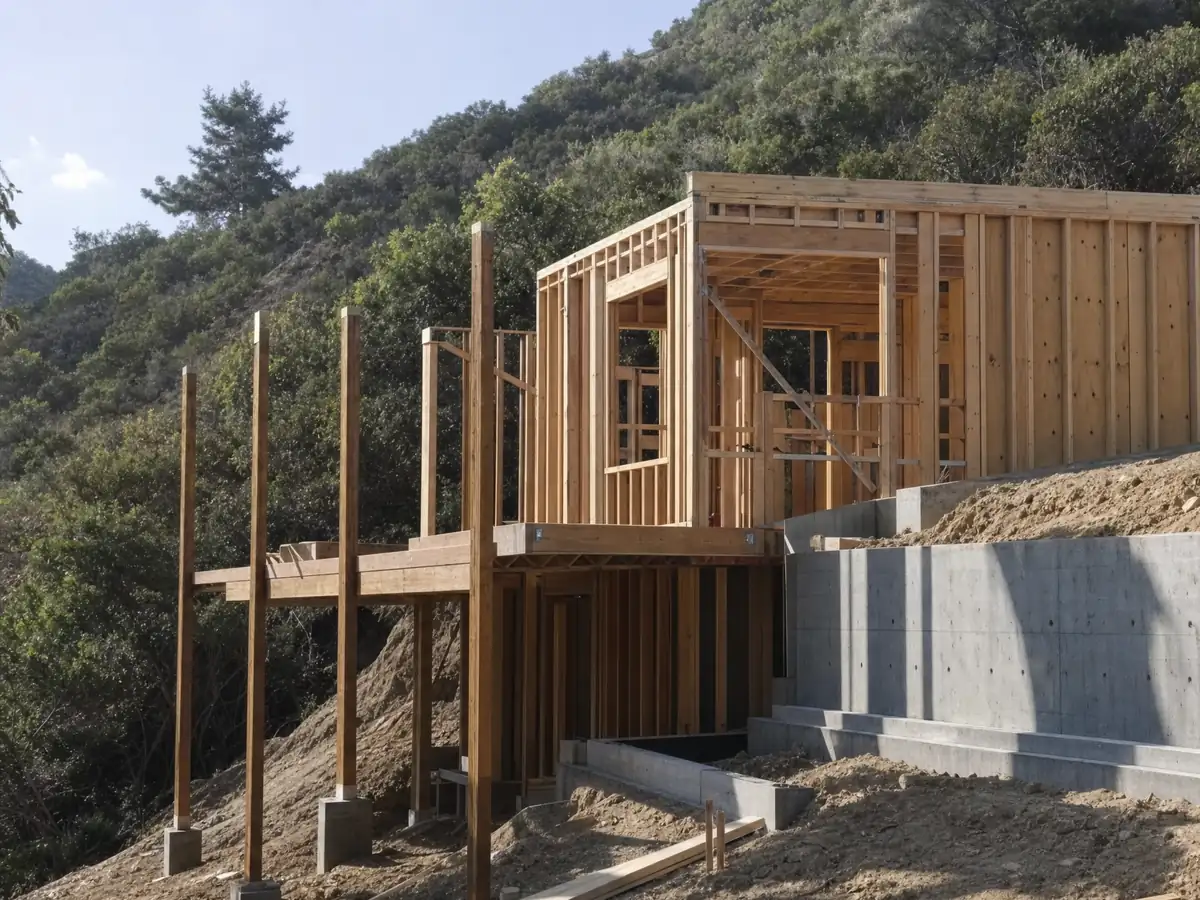
Only for some parcels, but the rules are strict. In the Dry Lake overlay, at or below 2,909 feet, new habitable floors must sit at least 2 feet above the 2,909 foot base flood elevation, fill must come from within the lake or be balanced, slopes can be no steeper than 5 to 1, and the owner records an acknowledgment that access streets may flood. Paved access at least 20 feet wide is needed before a certificate of occupancy for a new unit or an increase of more than 50 feet of floor area. The Mojave River floodplain on the west edge adds liquefaction where saturated sediments lie within about 50 feet of the surface.
Fire protection belongs to the independent Apple Valley Fire Protection District, not the Town. It reviews residential sprinkler plans by email at plans@avfpd.org, and the state rule that an ADU needs sprinklers only if the main house has them still applies. CAL FIRE's March 24, 2025 maps for Local Responsibility Areas show Moderate, High and Very High zones, parts of the District are State Responsibility Area, and the Town has adopted the 2025 California Wildland Urban Interface Code. The Town also charges a fire suppression development fee on new and extended dwelling units, and we did not read the amounts or whether an ADU pays. We could not tell which zone covers an address, so use the District's hazard map page.
Can an Apple Valley ADU be rented, can an HOA stop it, and who builds it?
State law lets a Town require rentals of 30 days or longer, and the mirror's text does. A rented ADU also appears to fall under the Town's rental housing chapter, which requires an annual property maintenance certificate and inspection for any rental unit, so ask whether the certificate covers a backyard unit. HOA rules cannot ban an ADU outright, since the state's HCD handbook says Civil Code 4751 and 714.3 void rules that effectively prohibit or unreasonably restrict one. Ranchos-era tracts also carry recorded setbacks and CC&Rs that the Town's overlay follows, so pull your tract's records early.
MDG Builders, CSLB #1040337, designs the unit, files the plans and runs the schedule, while licensed subcontractors pour, frame, wire and plumb it, and you can ask each for a license number and a certificate of insurance. A permit lapses if work has not started within 365 days of issue, and one extension of up to 180 days is allowed. For help vetting bids use our license check guide, and the junior unit is explained in the ADU versus JADU guide.
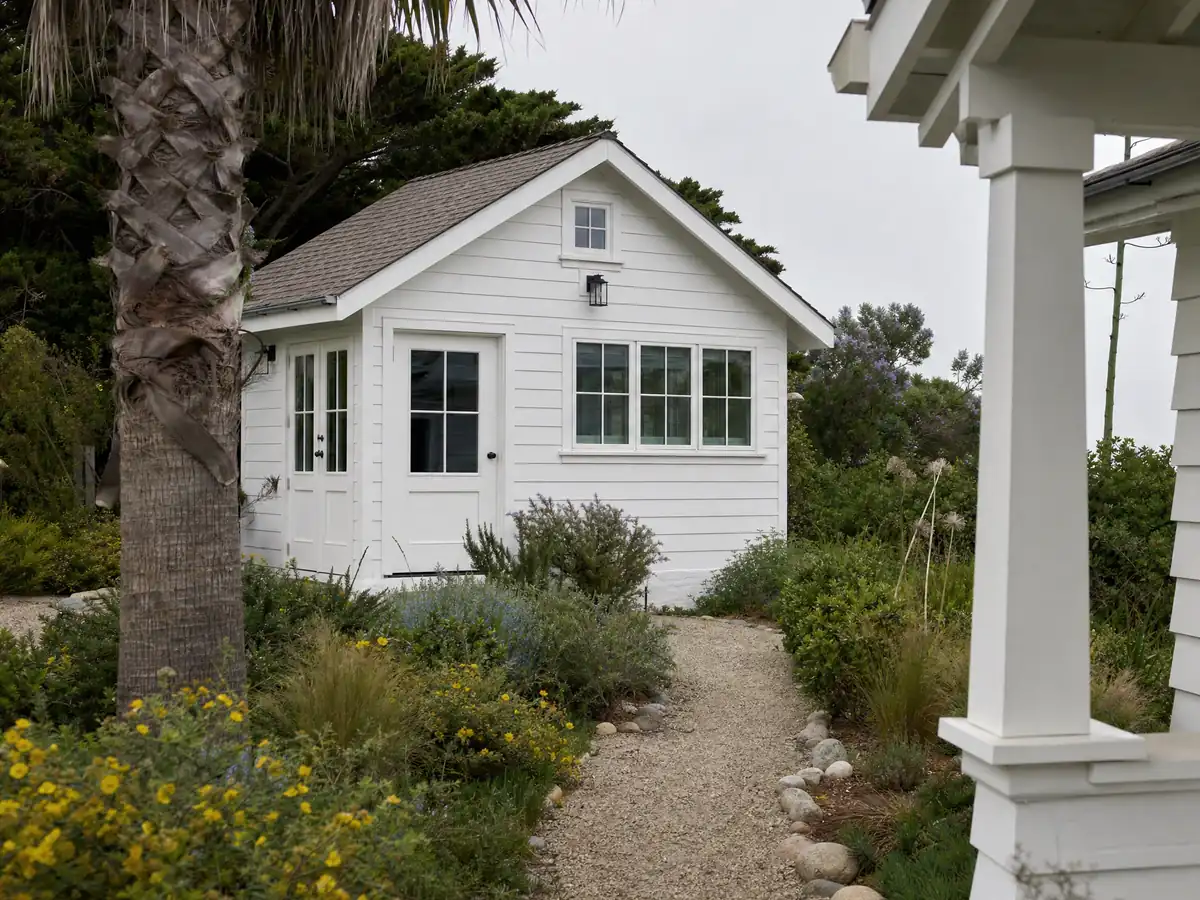
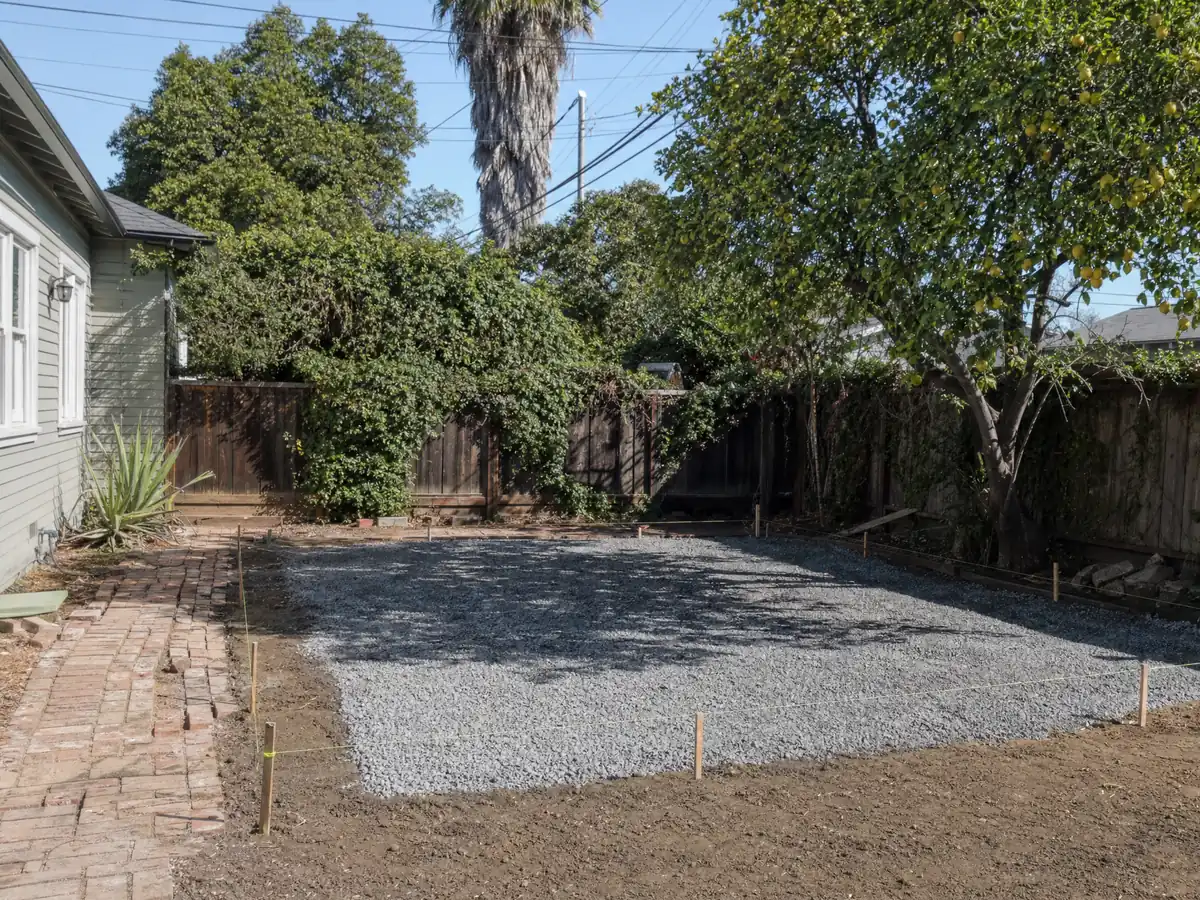
ADU photos from Apple Valley and nearby homes
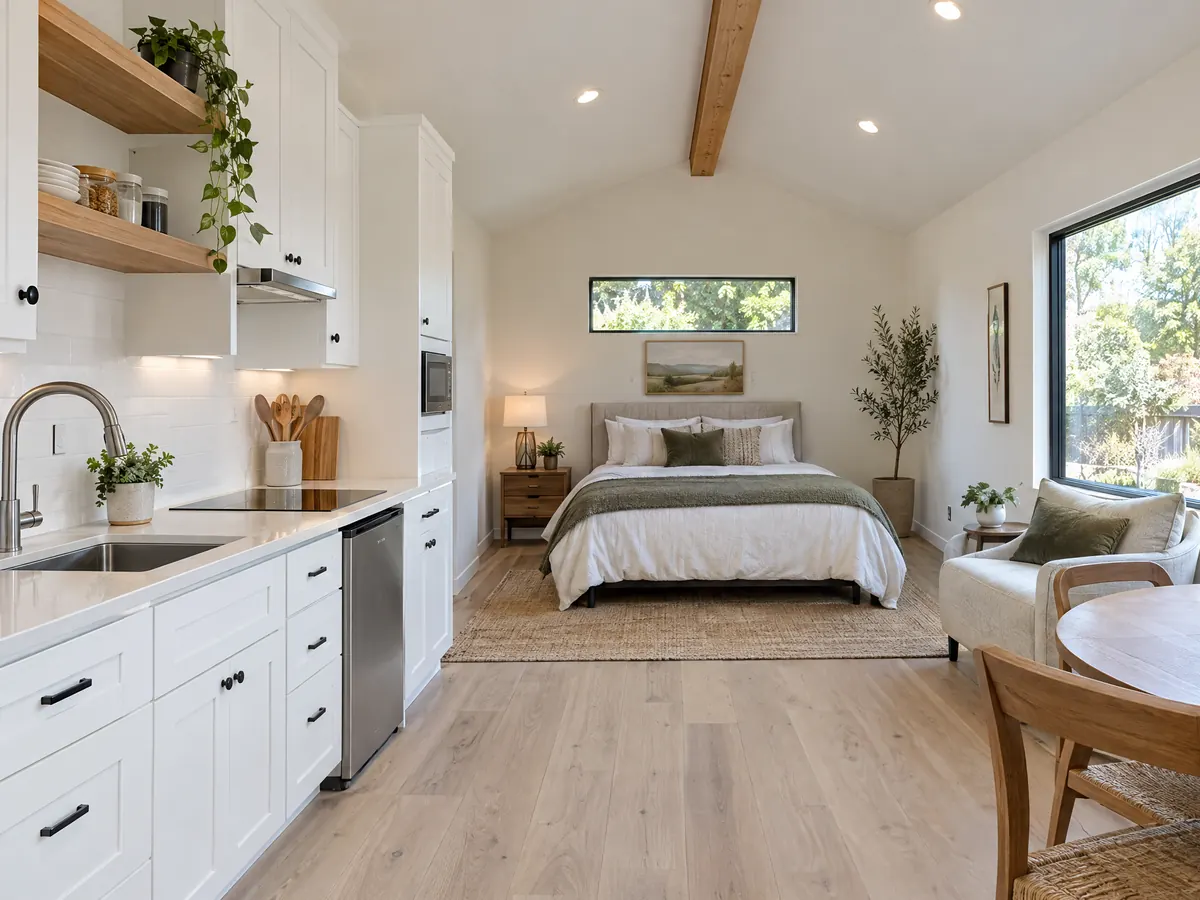
ADU scenes tied to Apple Valley, from slabs and utility trenches to finished studios and backyard cottages, on the large desert lots of the High Desert. Tap a photo to enlarge it.
What adu construction costs around Apple Valley
On our ADU construction page, plan on roughly $100,000 to $200,000 to turn a garage into a studio or one bedroom, and roughly $200,000 to $400,000 for a new detached unit of 400 to 800 square feet. None of it is an Apple Valley bid. Three independent sources stand behind the ranges: a UC Berkeley survey of 2018 and 2019 ADU owners and applicants put the Los Angeles County median at $100,000, the Terner Center estimated $148,000 for Los Angeles in 2020, and the 2025 Cost vs. Value report from Remodeling magazine lists a Los Angeles ADU at $178,536, with 39.9 percent recovered at sale. High Desert costs may differ, and the median home here is worth $444,900, plus or minus $21,164. A sewer run or septic limit, a Joshua tree plan, grading, a flood-overlay slab or a roof upgrade can each add a line that regional data misses, and we did not read the Town's ADU fees, so permit, plan check, fire and impact charges come as separate lines in a written proposal. State law exempts an ADU of 750 square feet or less from impact fees, though utility connection charges are separate. The ADU cost guide explains the method. For ADUs nearby see Victorville, Hesperia and Los Angeles. A bath in the unit is on the Apple Valley bathroom page, an attached project on the Apple Valley room addition page, windows on the Apple Valley window page, and the Apple Valley area page lists every trade we cover in the Town.
| What it covers | Typical range |
|---|---|
| Garage conversion to a studio or one bedroom | $100,000 to $200,000 |
| New detached ADU, 400 to 800 sq ft | $200,000 to $400,000 |
| UC Berkeley survey, Los Angeles County median, 2018 and 2019 projects | $100,000 overall. $90,000 garage. $180,000 detached. |
| Terner Center and Berkeley CCI, 2020 | $148,000 Los Angeles estimate. $167,000 statewide average. |
| Remodeling Cost vs. Value 2025, Los Angeles | $178,536 job cost |
| Electrical and plumbing, Angi Los Angeles, January 2026 | Electrical $2,600 to $7,800. plumbing $3,900 to $10,400. |
| City permit and plan check fees | Not priced here |
Other work we manage in Apple Valley
Apple Valley ADU questions, answered
How do I build an ADU in Apple Valley?
Apply to the Town's Permit Center by downloadable form or through the Online Permit Center. State law makes approval ministerial, with a written completeness answer in 15 business days and a decision within 60 days of a complete application. Expect site and building plans, energy calculations and a plan for any Joshua tree on the lot. The Town has no ADU page, so call Planning at (760) 240-7000 extension 7100 first.
How big can an ADU be in Apple Valley?
State law lets a detached ADU reach 1,200 square feet and bars a local cap below 850 square feet, or 1,000 for more than one bedroom. The mirrored code ties detached units on lots under 2.5 acres to 50 percent of the main house footprint or 1,200 square feet and caps a junior unit at 500 square feet inside the house. Ask Planning which limit it applies today.
How much does it cost to build an ADU in California?
We put a garage conversion at about $100,000 to $200,000 and a new detached unit of 400 to 800 square feet at about $200,000 to $400,000. Those ranges draw on Berkeley, Terner Center and Cost vs. Value data for Los Angeles, not an Apple Valley survey, and septic or sewer work can move them, so a proposal after a site visit sets your price.
Do I need to provide parking for my ADU?
Generally no. The mirrored code requires no parking for an ADU, and state law bars replacement parking when a garage or carport is converted. We found no Apple Valley handout on the point, so ask Planning how your lot is counted, especially where a recorded tract condition or HOA rule mentions parking.
What is the difference between an ADU and a JADU?
A JADU is capped at 500 square feet, lives inside the single-family house and needs its own entrance and an efficiency kitchen, while an ADU can be detached, attached or converted, with its own kitchen and bathroom. The Town allows one ADU and one JADU on a lot with a single-family home. Under 2026 state law, owner occupancy applies to a JADU only when it shares a bathroom.
Do I have to live on the property to build or rent an ADU?
Not under state law, which bars an owner-occupancy rule for ADUs, though a Town may require rentals of 30 days or longer. The mirrored Apple Valley text still carries an owner-occupancy clause and a 30 day minimum, so confirm in writing with Planning which wording applies. For a JADU, state law asks for owner occupancy only when sanitation is shared.
How long does it take to get an ADU permit?
State law gives the Town 60 days from a complete application, after a 15 business day completeness check, and an agency that misses the deadline is deemed to approve. The Town publishes no ADU-specific review time. Design before filing takes extra weeks, and a correction round adds more if the Town asks for one.
Do Joshua trees stop me from building an ADU in Apple Valley?
Not by themselves, but no Joshua tree on any lot can be disturbed, moved or removed without Town approval under Municipal Code 9.76.040. Trees meeting size or age criteria must be preserved in place unless removal is approved, and the Planning Commission can reduce setbacks to save one. Violations are misdemeanors, each tree a separate offense, so survey the lot before design.
Can an HOA stop me from building an ADU?
Not outright. The HCD handbook reads Civil Code 4751 and 714.3 as voiding covenants that effectively prohibit or unreasonably restrict a backyard unit on a single-family lot, and AB 130 (2025) keeps fees and financial requirements out of the reasonable rules that remain. Association review is separate from the Town permit, so request the covenants in writing and apply to both.
Can I build an ADU on septic in Apple Valley?
Rarely on a lot under 1 acre. In the mirrored text, no onsite system can be installed or expanded for an ADU on a site under 1 acre, so an ADU can only use an existing adequate system for bedrooms in the home or convert a pre-2020 structure already on one. Where sewer is available the whole property must connect. Ask Town engineering what serves your parcel.
Tell us about your Apple Valley ADU
Tell us the neighborhood, the lot size, whether the house is on sewer or a septic tank, whether you want a garage conversion, a detached unit or a junior unit, and whether a Joshua tree or an association is involved, and the first visit will start with the state-law path and the sewer question.