
ADU Constructionin Los Angeles, CA
Yes, ADU construction is possible on most City of Los Angeles lots, but the parcel decides which kind. The City runs two tracks: its own ordinance units and the state-protected types it must approve. Hillside fire-zone lots and coastal lots narrow the choice, so we check the parcel maps before anyone draws a floor plan.
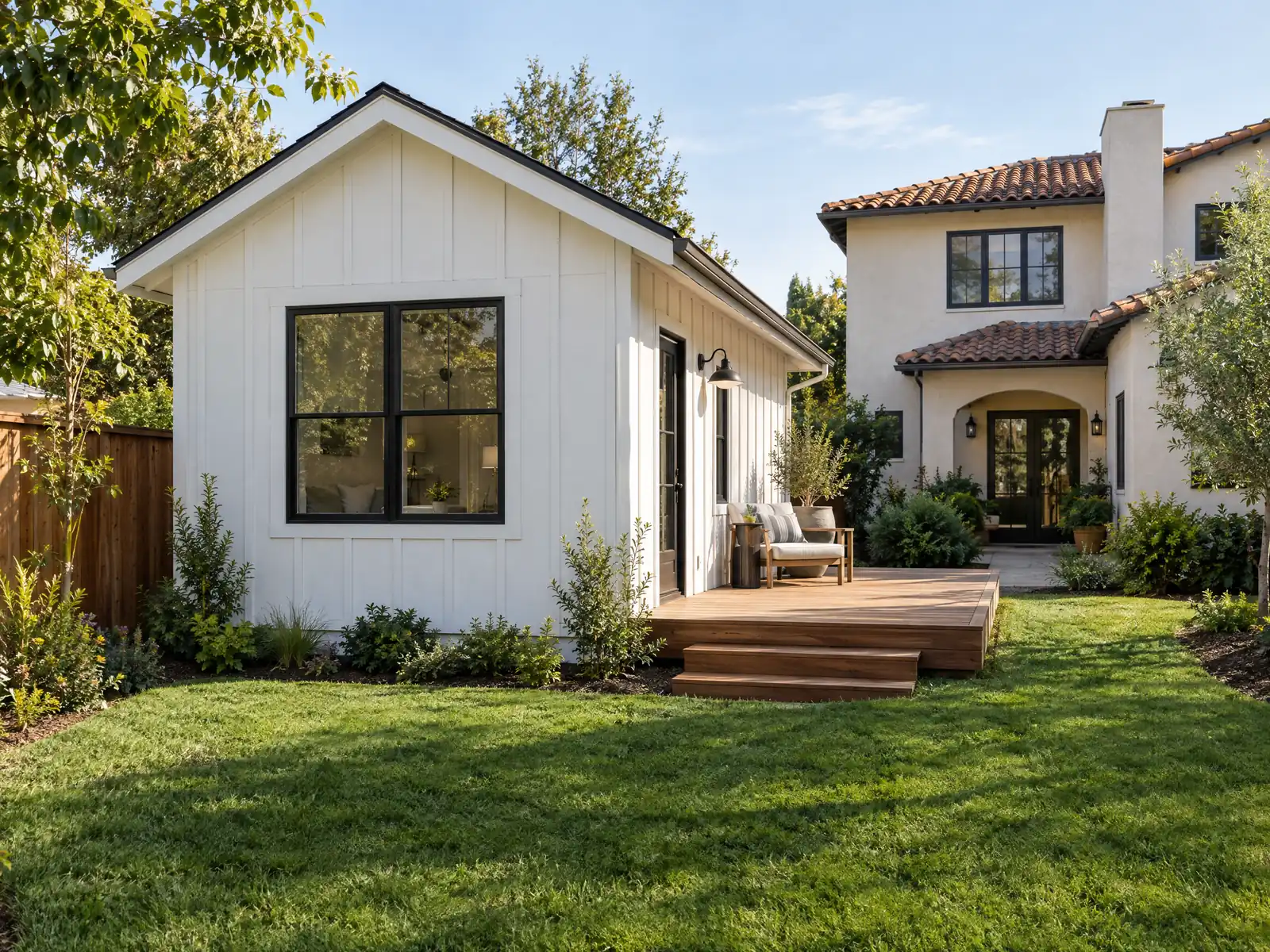
An ADU inside the City of Los Angeles is permitted by LADBS, with City Planning setting the zoning standards, and both offices read state law through guidance of their own. That is why a backyard in Woodland Hills and one in Venice can end up with very different answers even though the same department stamps the plans. Many projects also start with an aging garage or yard behind an older house: detached single family homes are roughly 38 percent of the City's housing, and close to half of all units went up before 1960.
This page covers what is particular to the City: how its ordinance and the state types split, where hillside, fire and coastal maps limit the options, and what the Standard Plan Program does and does not save. The statewide rules, the garage conversion checklist and our cost table are on the main ADU construction page, and our other City work is collected on the Los Angeles area page.
ADU rules from LADBS and City Planning
Where adu construction permits come from in Los Angeles: Los Angeles Department of Building and Safety (LADBS).
- The City ADU ordinance, Ordinance 186,481, was adopted December 11, 2019 and took effect December 19, 2019. It added LAMC Section 12.22A.33, the local standards for ADUs, Junior ADUs and movable tiny houses.
- LADBS runs a Standard Plan Program with pre-approved detached ADU plans prepared by private architects and engineers. LADBS still reviews each approved plan for fit with the property, zoning and foundation.
- City Planning's ZA Memo 143 says agencies including LADBS and City Planning must approve or deny a complete ADU application within 60 days, and an application not acted on in 60 days is deemed approved under Government Code Section 66317(a).
- Per ZA Memo 143, a State ADU can be one detached new unit of up to 800 square feet with four foot side and rear setbacks, and a JADU is up to 500 square feet inside a single family residence.
- ZA Memo 143 says ADUs under 750 square feet carry no impact fees, ADUs are exempt from City park fees and the Affordable Housing Linkage Fee, and LAUSD school fees apply to ADUs larger than 500 square feet.
- LAMC 12.22A.33(c)(4) bars local ordinance ADUs on lots that are in both a Very High Fire Hazard Severity Zone and a Hillside Area unless an exception applies. ZA Memo 143 says that bar may not be enforced on State ADU types.
- ZA Memo 143 says State ADU law does not override the Coastal Act, so an ADU in the coastal zone follows the Coastal Development Permit procedure in the LAMC, which can include a public hearing.
- An unpermitted ADU or JADU built before January 1, 2020 can be permitted under the AB 2533 process in LADBS bulletin P/BC 2026-161. Applications go through ePlanLA or by appointment at an LADBS office.
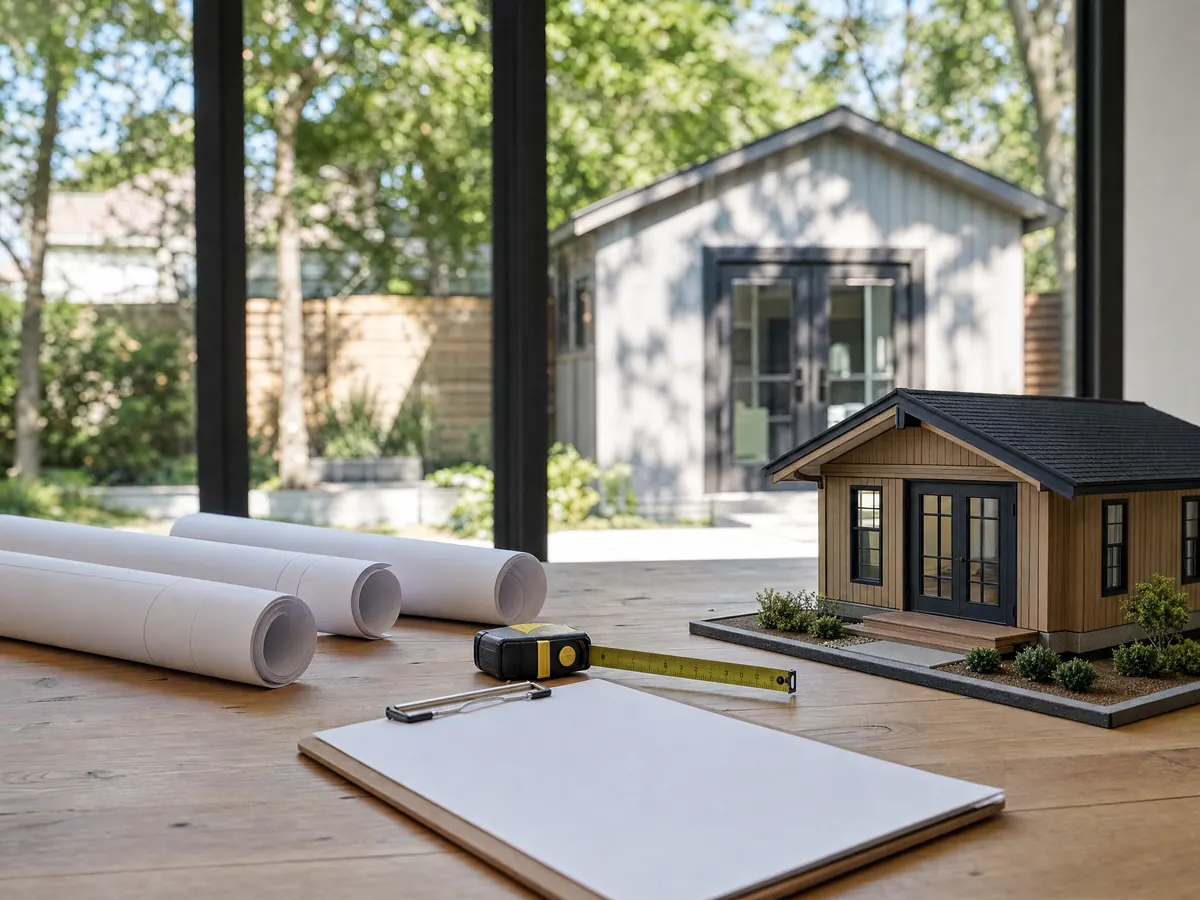
ADU construction in Los Angeles: ordinance unit, state unit or garage conversion?
The City wrote its own ADU standards into the zoning code in late 2019, and Sacramento has rewritten the state ADU law several times since. City Planning's ZA Memo 143 is the document that reconciles the two. It sorts every project into either a local ordinance ADU, built to the City's standards, or one of the state ADU types the City has to approve with almost no local conditions attached.
The trade-off is size against certainty. According to the memo's table, an ordinance unit can be larger and can rise to two stories. A state unit is smaller and lower but far harder for anyone to block, which makes it the fallback on difficult parcels. One of the state types is a conversion inside an existing garage or other accessory structure. On a roomy flat lot in Sherman Oaks or Encino, the ordinance track often yields more living space; on a constrained lot, the state track is usually the one that clears review.
One caution about dates. Revision 1 of the memo is dated August 2025, before the state changes that took effect on January 1, 2026, so a few of its statements already trail the statute. Where the two differ, we follow the Government Code and ask the City how it is applying the newer text.
Thinking about a smaller unit inside the house instead? The ADU vs JADU guide lays out how the junior unit compares.
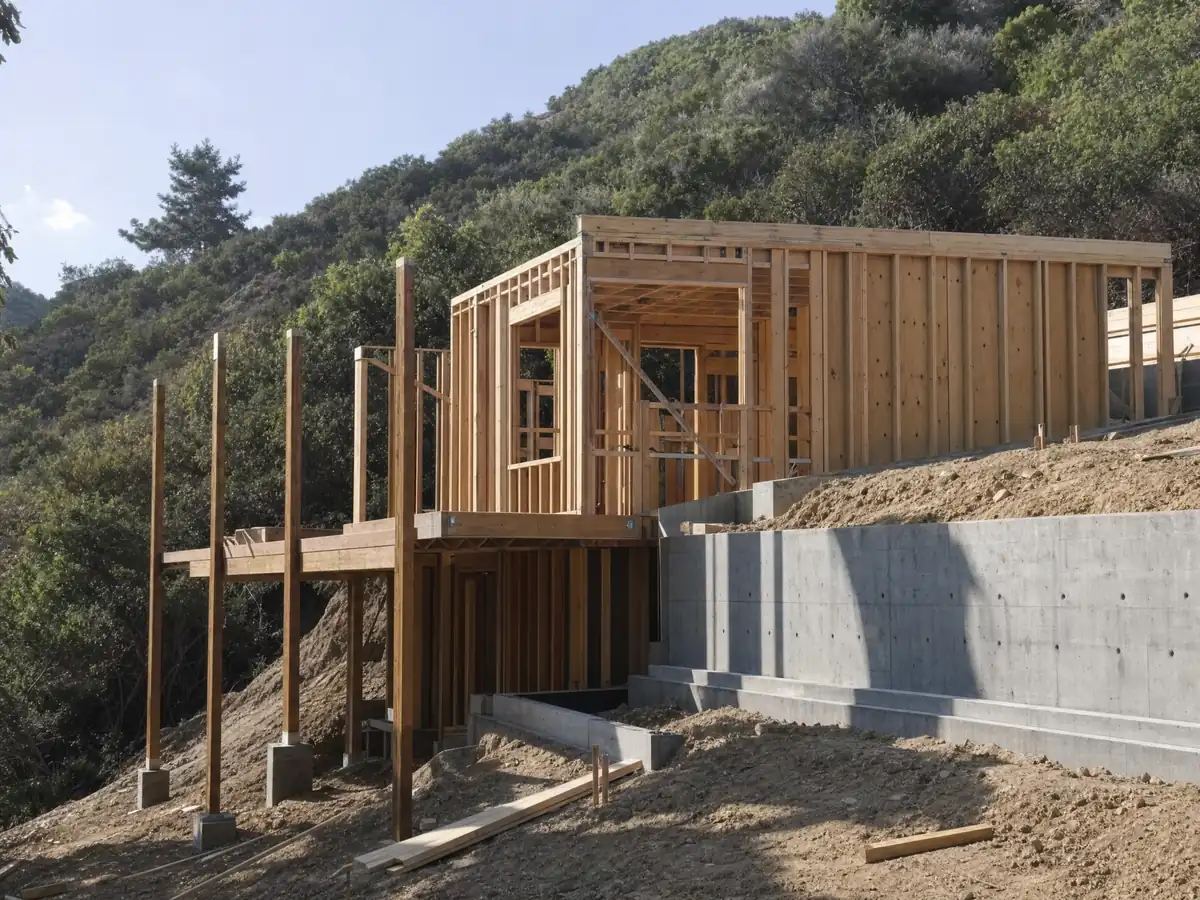
ADU construction on a canyon or coastal lot in Los Angeles
This is where the City is unusual. Los Angeles has Very High Fire Hazard Severity Zones, a mapped Hillside Area and a coastal zone, and a single parcel can fall inside more than one. On a lot carrying both the fire and hillside labels, the City code shuts out ordinance ADUs unless an exception applies, while City Planning says that bar may not be used against the state types. So if a hillside lot in Bel Air or Laurel Canyon also shows the fire zone, the realistic menu is a conversion, a JADU or the smaller state detached unit, and we design to that from the first sketch.
Fire zone status changes the building too. In the Very High zone the new unit is built to Chapter 7A, which means a Class A roof, vents that resist embers, tempered glazing and a noncombustible deck surface close to the walls. LAFD's year round brush clearance covers the ground within 200 feet of structures, and a new unit is one more structure to keep clear around. CAL FIRE released new recommended maps in March 2025 that the City still has to adopt, so we confirm the parcel with LAFD instead of trusting an older map.
Does a coastal Los Angeles lot change ADU construction?
Near the ocean, the Coastal Act still governs, and the state ADU statute does not set it aside. A lot in Venice or San Pedro should be checked against the coastal zone boundary before design, because a coastal unit goes through the City's Coastal Development Permit procedure, and that procedure can include a public hearing. We put that step at the front of the schedule, alongside the building permit.
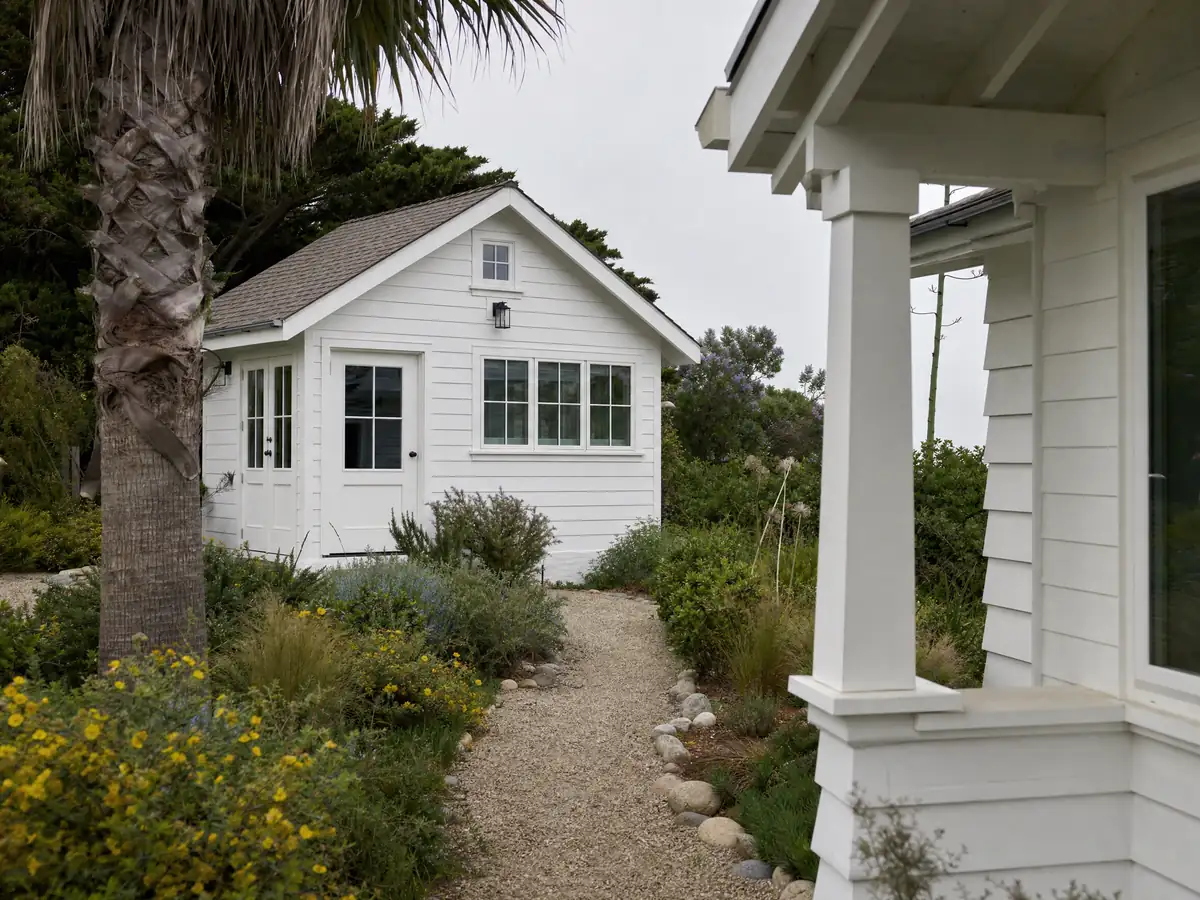
Build an ADU in Los Angeles: do LADBS standard plans save time?
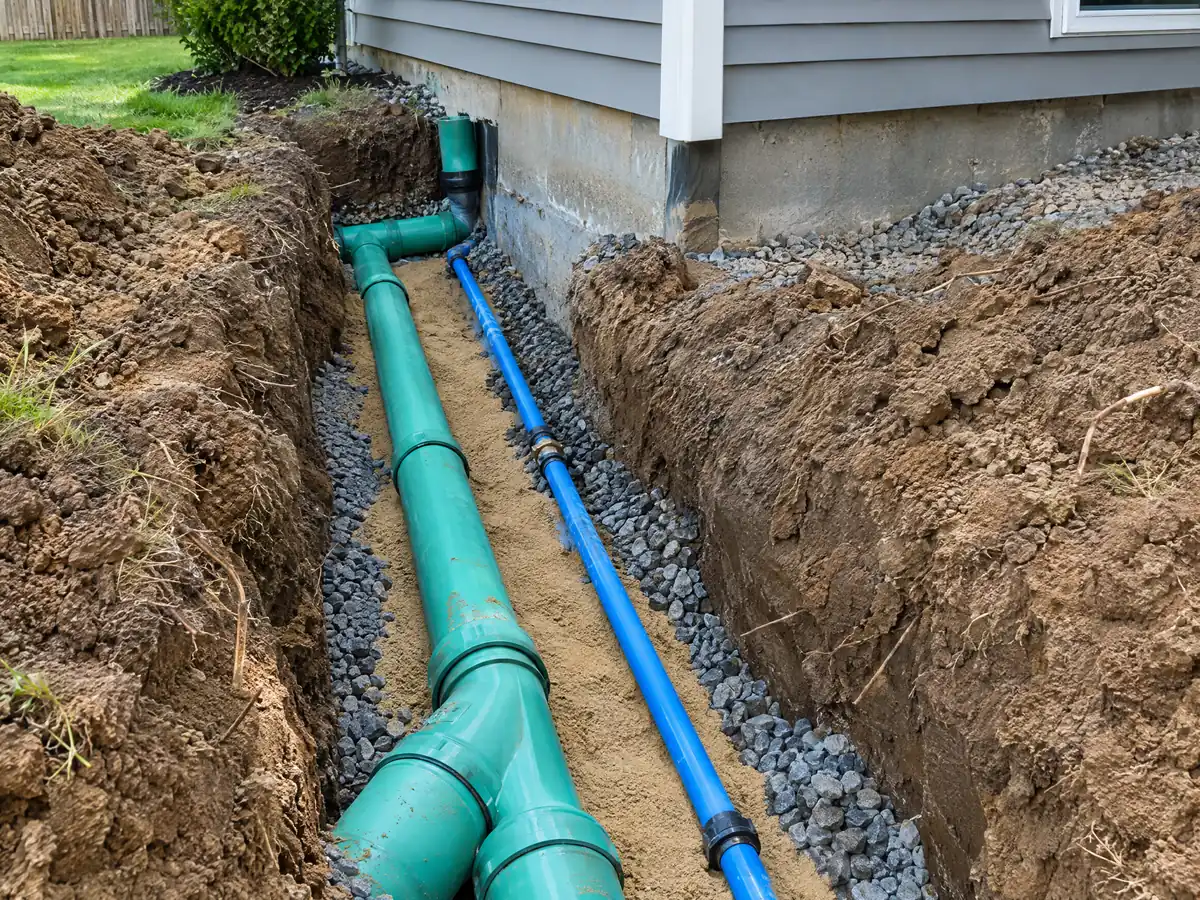
Sometimes. A plan from the Standard Plan Program has already had its code items checked by LADBS, so the review of your project narrows to whether that design suits your site. The questions that usually decide a backyard unit are site questions, though: an odd lot line, a sewer lateral running the wrong direction, a slope that changes the footing, an easement right where the unit wants to sit. A standard plan answers none of those.
We use a standard plan when its footprint and foundation fit the lot, and draw a custom unit when they do not. Ask LADBS whether a standard plan can be used for a garage conversion, since the program as the City describes it covers new detached units.
Two City details matter to owners with an old garage. Tearing down a detached garage for an ADU needs no placard or written notice under the memo, except on a historic district property such as one in an HPOZ. And a unit built without permits before 2020 has its own legalization path through an LADBS bulletin, which our garage conversion permit steps guide walks through.
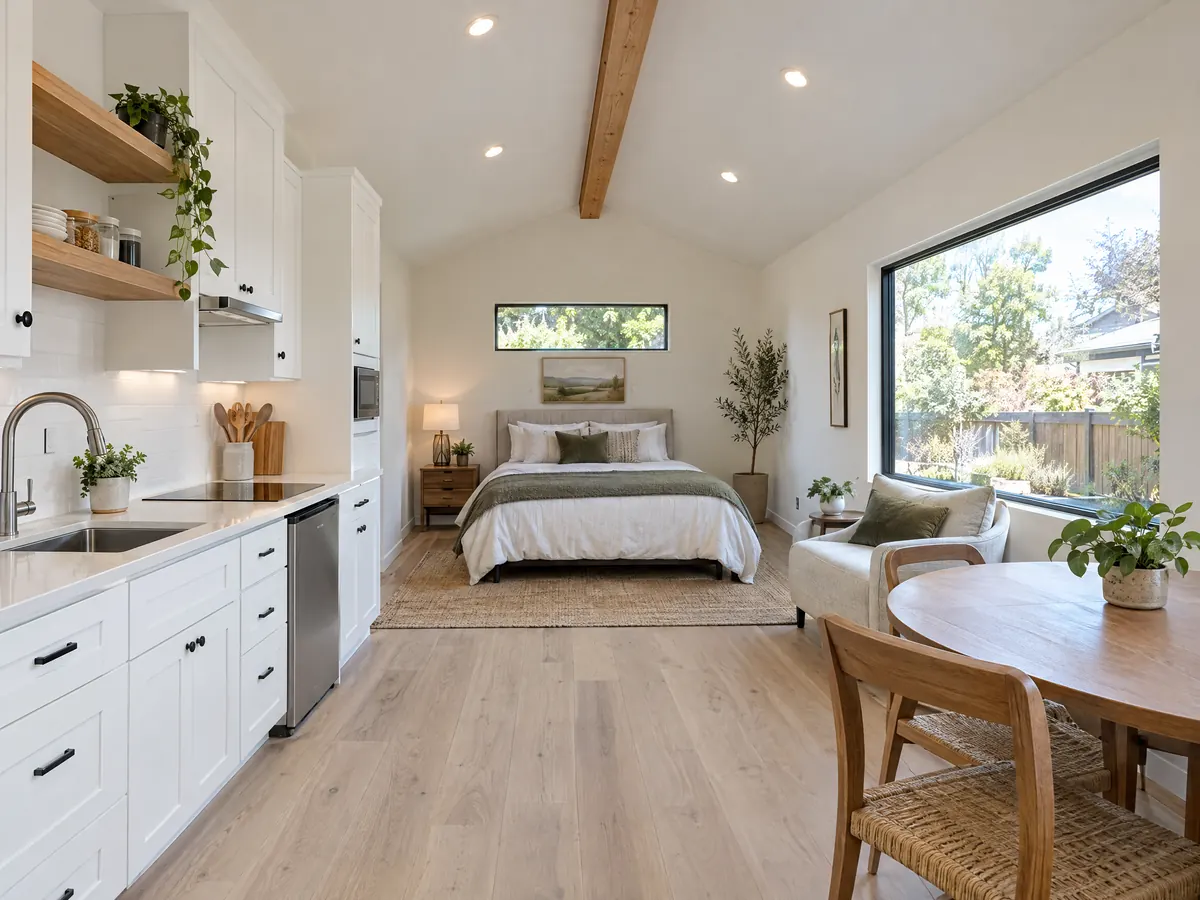
What the City's older housing means for a backyard unit
Around a fifth of the City's homes date from before 1939, and the Housing Element warns that aging buildings more often carry worn or unsafe wiring and pipes. For an ADU, that means the existing service and the sewer line get a hard look before the new unit is tied in. A load calculation and a camera inspection of the sewer lateral are far easier to act on during design than after framing.
Rentals shape the plan as well. Roughly 63 percent of units in the City are renter-occupied, and where a lot already holds a rent stabilized building, LAHD may require a habitability plan for tenants before renovation work goes ahead. If your property is in that group, raise it with LAHD early.
MDG Builders draws the unit, files it with the City and keeps the schedule, while licensed subcontractors pour, frame, plumb and wire it. We are based in Tarzana and take ADUs across the City. Owners next door in Glendale, Burbank, Culver City, Santa Monica or Beverly Hills answer to their own city halls, so the rules on this page stop at the City line.
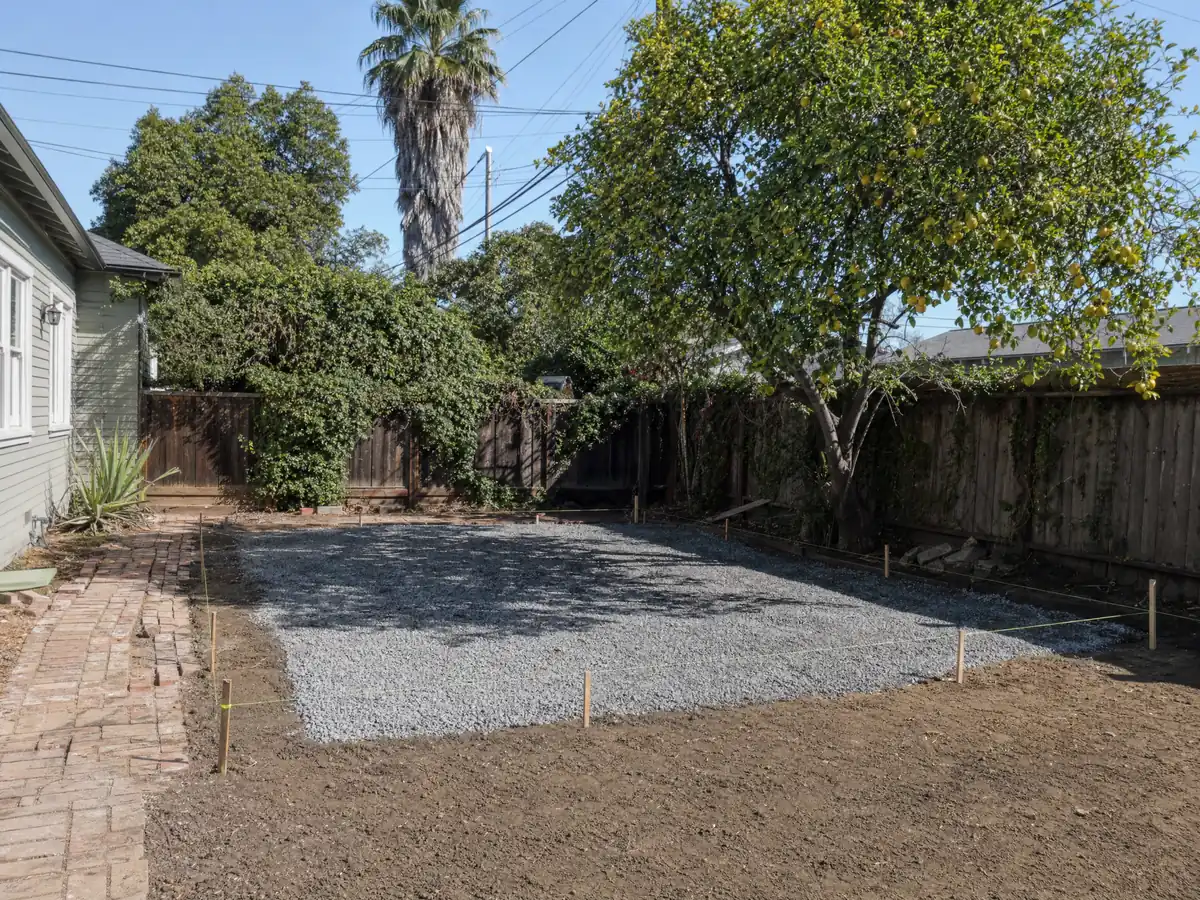
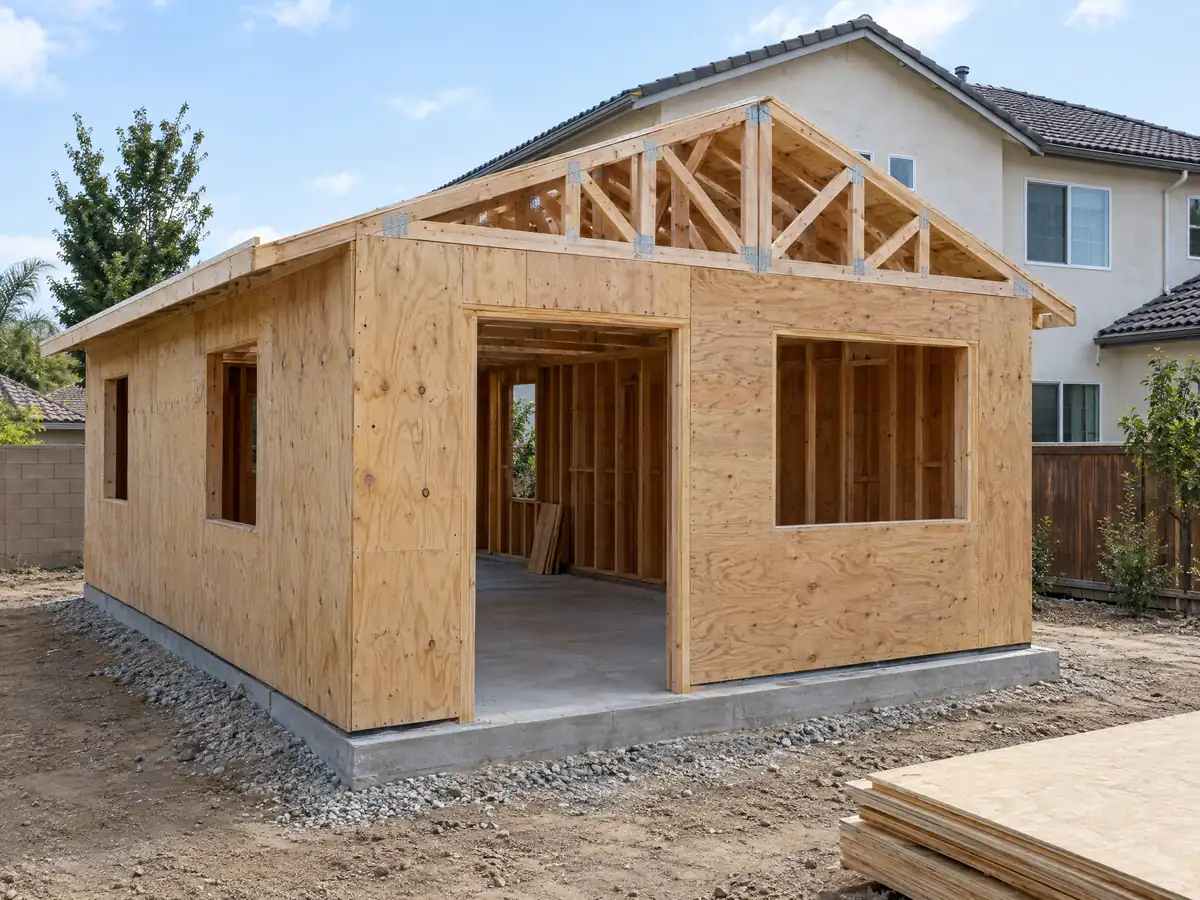
Backyard unit details from Los Angeles lots
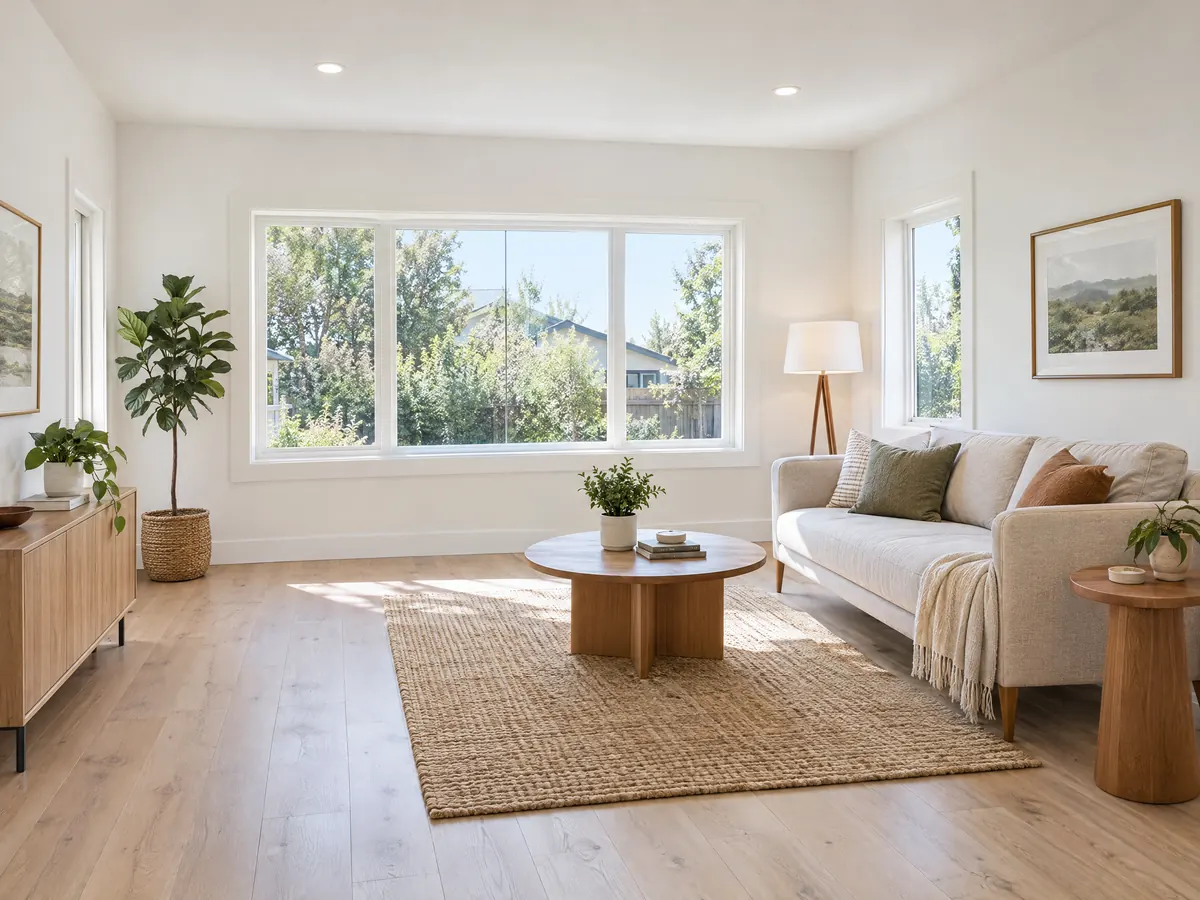
Three views of the framing, slab and interior work behind a Los Angeles backyard unit. Tap a photo to enlarge it.
What adu construction costs around Los Angeles
In our ADU cost table, a garage conversion runs roughly $100,000 to $200,000 and a new backyard unit $200,000 to $400,000, drawn from named studies, and nothing in the City rules changes those bands. City permit fees are left out because we could not verify current amounts; the LADBS Permit Fee Calculator and your written proposal give the figures for your address. The same lot often needs other work, so see room additions in Los Angeles, concrete work in Los Angeles and kitchen remodeling in Los Angeles. A lot across the line in Glendale or Pasadena sits under a different ordinance, summarized in the Glendale building overview and the Pasadena building overview.
| What it covers | Typical range |
|---|---|
| Garage conversion to a studio or one bedroom | $100,000 to $200,000 |
| New detached ADU, 400 to 800 sq ft | $200,000 to $400,000 |
| UC Berkeley survey, Los Angeles County median, 2018 and 2019 projects | $100,000 overall. $90,000 garage. $180,000 detached. |
| Terner Center and Berkeley CCI, 2020 | $148,000 Los Angeles estimate. $167,000 statewide average. |
| Remodeling Cost vs. Value 2025, Los Angeles | $178,536 job cost |
| Electrical and plumbing, Angi Los Angeles, January 2026 | Electrical $2,600 to $7,800. plumbing $3,900 to $10,400. |
| City permit and plan check fees | Not priced here |
Other work we manage in Los Angeles
Los Angeles ADU questions for City lots
Can you build a two-story ADU in Los Angeles?
Yes, if it is a City ordinance ADU and the lot allows it. ZA Memo 143 lists two stories for ordinance units, while the state detached type of up to 800 square feet keeps the lower state height of 16 feet, or 18 near major transit. Lots that are both hillside and Very High fire zone usually cannot use the ordinance track, so a second story is off the table there.
Can I rent my Los Angeles ADU on Airbnb?
Probably not as a full-time nightly rental. State law lets the City require ADU tenancies of 30 days or longer, and the City's home-sharing rules form a separate, strict system on top of that. Read the current home-sharing ordinance and ask the Los Angeles Housing Department about your property before short stays go into the budget.
Are Los Angeles pre-approved ADU plans faster?
They can shorten the code review, not the site review. LADBS has already checked a standard plan's code items, but it still looks at how that plan fits your lot, your zoning and your foundation. A plan that suits a flat, open yard can need changes on a narrow or sloped one, and that is usually where the time goes.
Can I build an ADU on a hillside lot in a Los Angeles fire zone?
Often yes, but usually only one of the state types. Where a lot carries both the Very High fire label and the Hillside Area label, the City code rules out ordinance ADUs, and City Planning says it may not apply that bar to state ADUs. That leaves a conversion, a JADU or the smaller detached unit, built to Chapter 7A fire rules.
How much are ADU permits in Los Angeles?
We do not print a figure, because we could not verify a current LADBS fee amount for ADUs. The LADBS Permit Fee Calculator estimates fees for a defined project, and your MDG proposal lists them for your address. Size still matters: the City's ADU guidance waives impact fees below 750 square feet, and LAUSD school fees apply above 500.
Does a coastal lot in Los Angeles need extra approval for an ADU?
Yes, a coastal zone ADU needs a Coastal Development Permit as well as the building permit. City Planning's memo treats the Coastal Act as still in force for ADUs, so the City's coastal procedure applies and can include a public hearing. Check the coastal boundary for lots near the shore, such as in Venice or San Pedro, before design starts.
Do I need to replace parking for ADU construction in Los Angeles?
No, not when the ADU replaces a garage, carport or other parking space. Sections 66314 and 66322 of the Government Code bar replacement parking in that case, and a new unit can be required to provide no more than one space per ADU or per bedroom, whichever is less. No parking at all can be required within half a mile walking distance of public transit or inside a historic district. Ask LADBS how it applies to your parcel.
How long does it take to get an ADU permit in Los Angeles?
State law sets two clocks. The City has 15 business days to tell the applicant whether an application is complete, then 60 days to approve or deny a completed one for a lot with an existing house, and it is deemed approved if nothing happens (Government Code 66317). We found no official figure for how long LADBS takes in practice, so we treat vendor timelines as unverified.
Send us your Los Angeles address
Give us the address and the kind of unit you want. We check the fire zone, hillside and coastal maps before we talk design.