
Roof Repairin Apple Valley, CA
An Apple Valley roof must be Class A, except that repairs and additions touching 25 percent or less of the roof may match the existing material. The Town's amended building code says so. Fire review belongs to the Apple Valley Fire Protection District, and we could not verify which hazard zone covers any one address.
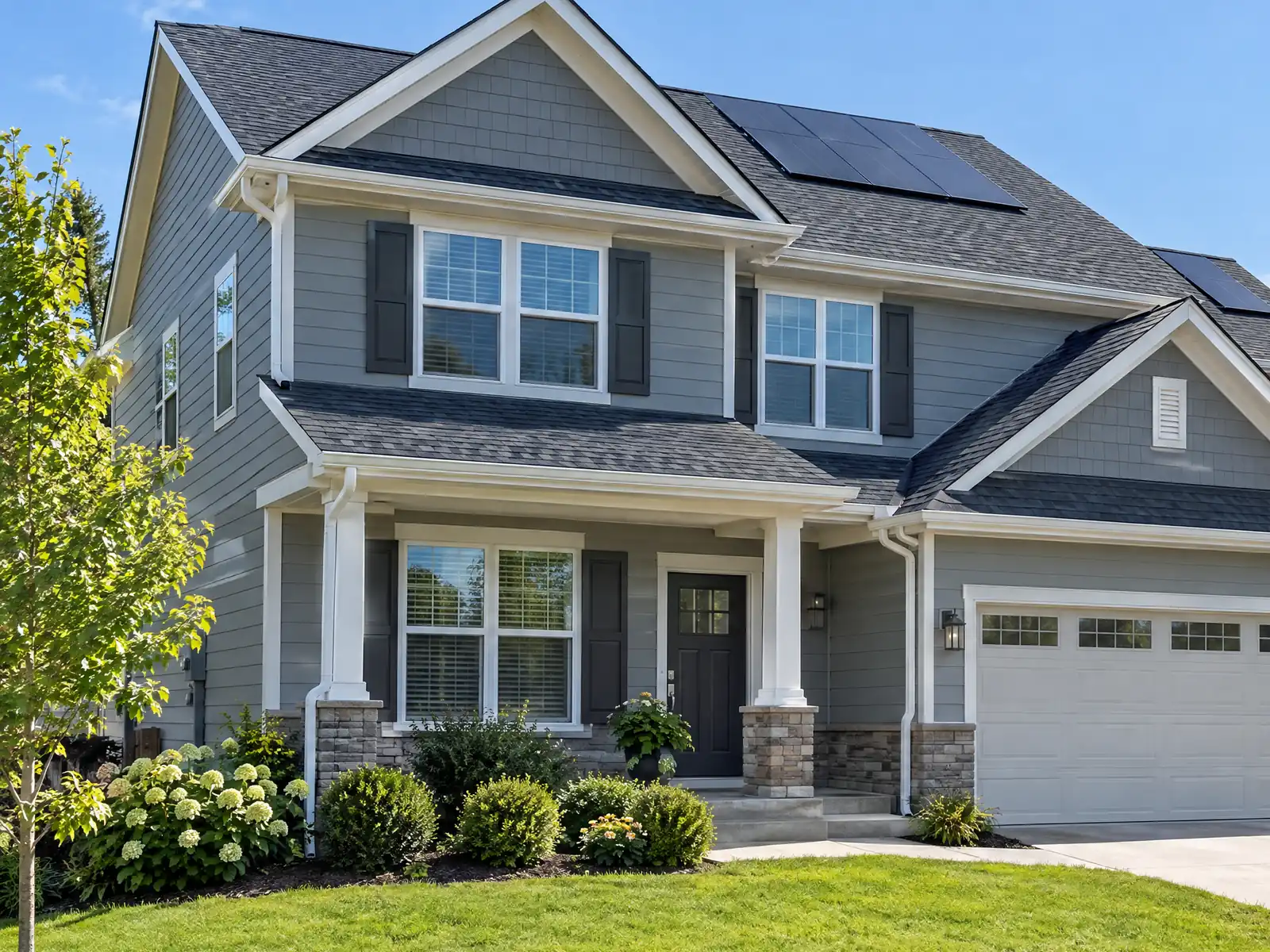
Apple Valley is a Town of large desert lots, so a roof job here often means several roofs. Census Bureau ACS 2024 one-year estimates count 27,627 homes (plus or minus 2,058), with a median year built of 1988, 32.8 percent from the 1980s and 25.0 percent from the 2000s. The Town grew from the Apple Valley Ranchos Land Co. lots sold from February 22, 1946 and incorporated after the November 8, 1988 Measure K vote, so the roofs we see are mostly 1980s to 2000s houses plus a Ranchos-era core near Navajo Road.
On a roofing job, MDG Builders (CSLB #1040337) acts as the general contractor: we write the scope, ask the Town which filings apply and hold the schedule, and a licensed C-39 roofing subcontractor does the tear-off and the new covering. Our roofing page has the sourced prices, the Apple Valley overview lists every trade we manage here, and the guides for Victorville and Hesperia show how the two nearest High Desert cities treat the same work. Permits come from the Town's Permit Center. Municode refused our requests, so the code text below comes from GoCodebook, a third-party mirror (text as of October 4, 2026), and the air district rules from stamped Wayback Machine copies. Confirm each item with the Town.
What Apple Valley's amended building code, the fire district and the Mojave air district say about roofs
Where roofing permits come from in Apple Valley: Town of Apple Valley Permit Center (Building and Safety Division).
- Roof covering (CBC Sec. 1505.1 as amended in Municipal Code 8.12.010, Apple Valley Municipal Code, third-party GoCodebook mirror, 2026-10 edition, text as of 2026-10-04): any roof covering on a structure regulated by the building code must be Class A, except that repairs and additions replacing or adding 25 percent or less of the total roof area may use material matching the existing roof.
- Roof materials and appearance (Municipal Code 9.31.030(D), Apple Valley Municipal Code, third-party GoCodebook mirror, 2026-10 edition, text as of 2026-10-04): metal roofing that simulates S-shaped or flat tile, or shake if consistent with surrounding homes, and products on the Planning Commission Metal Roof Policy Statement are allowed in all residential districts; other exposed metal roofing is reviewed case by case by the Planning Commission; roofing that looks flat and seamless is expressly prohibited in all residential zones; corrugated metal exteriors are prohibited.
- Re-roof paperwork: Building and Safety posts ReRoof CF1R and a 2019 CF2R Roofing Radiant Barrier form among its handouts; the Town's permit-exemption list for re-roofing was not found.
- Rooftop solar (Municipal Code Ch. 8.38, Apple Valley Municipal Code, third-party GoCodebook mirror, 2026-10 edition, text as of 2026-10-04): small residential rooftop solar systems (10 kW AC or less, or 30 kW thermal, on a single or duplex dwelling and within height limits) follow an expedited process based on the California Solar Permitting Guidebook; staff issue a non-discretionary permit on a complete application, and approval cannot be conditioned on an HOA's approval. The FY 2023-24 fee schedule lists a single-family photovoltaic permit and plan review fee of $432.48. Chapter 8.39 separately covers electric vehicle charging systems and the Town posts an EV charging station checklist.
- Local electricity: Apple Valley Choice Energy (launched April 2017 as a Community Choice Aggregation program governed by the Town Council) supplies the electricity generation for Apple Valley addresses while Southern California Edison still delivers power, bills and maintains lines; customers can opt out and stay with SCE.
Does an Apple Valley roof have to be Class A, and what is the 25 percent exception?
Yes, with one exception. The Town's amended section 1505.1 of the California Building Code, found in Municipal Code 8.12.010, requires every roof covering on a regulated structure to be Class A, the top fire-test rating. The exception says repairs and additions that replace or add 25 percent or less of the total roof area may use material matching the existing roof. Many cities rely on the model code and leave this out, which is why a roofer's habits from another town may not fit here.
Two practical points follow. First, the 25 percent is measured against the whole roof, so a roofer who calls a job small needs to say how many square feet the whole roof has. Second, nothing we read explains how the Town counts repairs done in stages, so a patch this year and another next year could add up. Ask the Permit Center how it measures area before you split a job into phases.
Class A is a rating for the assembly a manufacturer tested (ASTM E108 or UL 790), so the proposal should name the shingle or tile and the underlayment beneath it, and the data sheet should show the Class A listing.
Ask for the Class A listing on the product data sheet before you sign.
Do I need a permit to re-roof in Apple Valley, and what paperwork comes with it?
The Town's list of work that needs no permit did not turn up in anything we opened, so the honest answer is to call before treating a re-roof as exempt. The Permit Center at Town Hall, 14955 Dale Evans Parkway, takes requests by downloadable form or through its Online Permit Center, and the main number is (760) 240-7000. Its form library includes a ReRoof CF1R energy form and a 2019 CF2R roofing radiant barrier form, which hints that energy paperwork rides along with some re-roofs. Ask which ones.
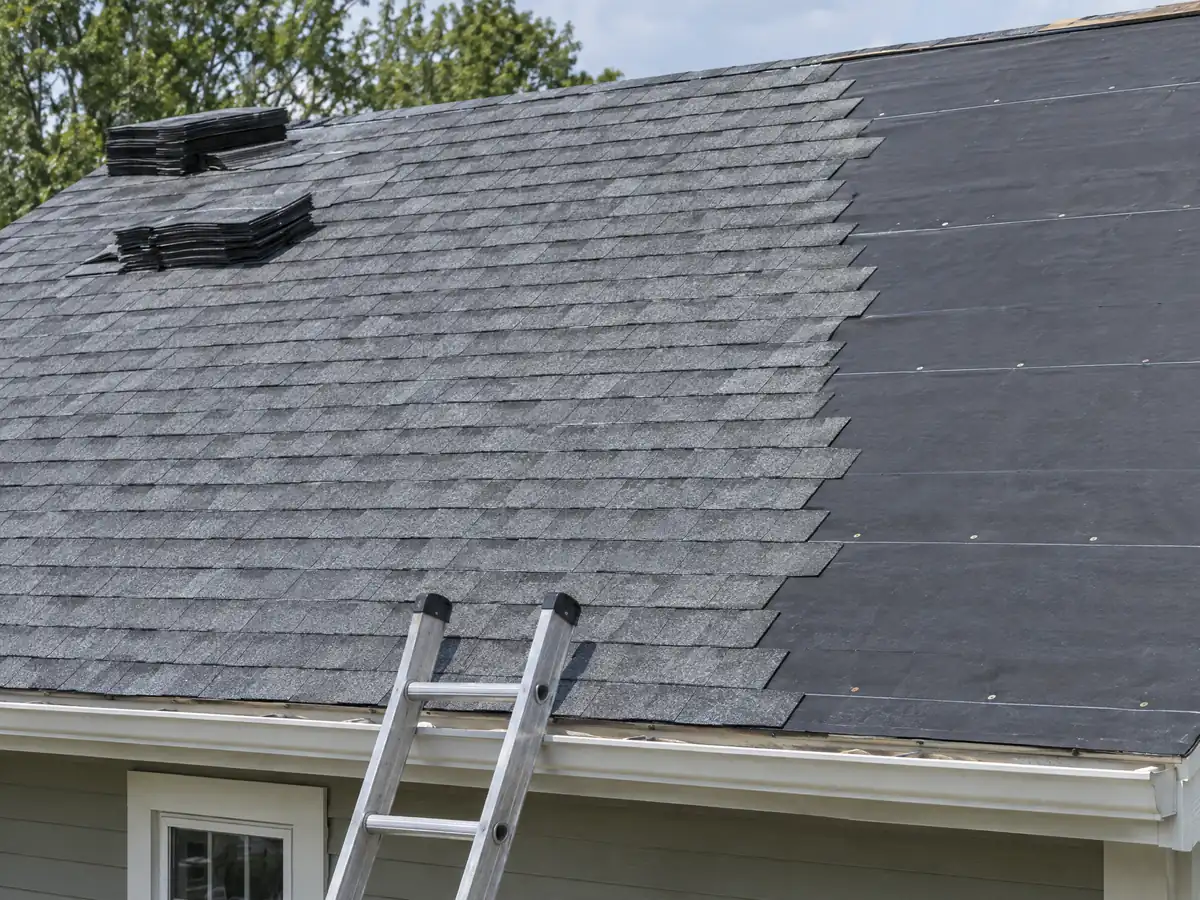
Once a permit exists, the amended code sets the clock: the permit lapses if work does not start within 365 days or stops for 365 days, and the Building Official can grant one written extension of up to 180 days. Every permit application also needs a Waste Management Plan. The Town expects at least 65 percent of project debris to be recycled, through the franchise hauler Burrtec Waste Industries or a permitted facility, with weigh tickets emailed 24 hours before the final inspection.
A tear-off also needs a trash bin: Municipal Code 8.20 sets a roll-off of at least 1.5 cubic yards for a house outside a tract, in place when work starts and gone before final.
What can go on an Apple Valley roof: metal, tile, flat membranes or solar panels?
The residential design standards care about how a roof looks. Metal that imitates S-shaped or flat tile, or shake when it fits the surrounding homes, and products on the Planning Commission's Metal Roof Policy Statement are allowed in every residential district. Other exposed metal gets a case-by-case review. Roofing that looks flat and seamless is expressly prohibited in residential zones, and we could not tell how that reads for a low-slope membrane behind a parapet. Put that question to Planning before it becomes a price.
On infill houses, the Town's design checklist awards points for a roof material other than composition, so a new house that wants tile or metal has a reason to ask early. Corrugated metal exteriors are banned outright.
Rooftop solar on a house, 10 kW AC or less and within the height limit, follows the expedited, non-discretionary process in Chapter 8.38, and approval cannot depend on an HOA. That chapter does not say how a detach and reset for a re-roof is filed, so ask the counter. Generation here is supplied by Apple Valley Choice Energy while Southern California Edison still delivers the power.
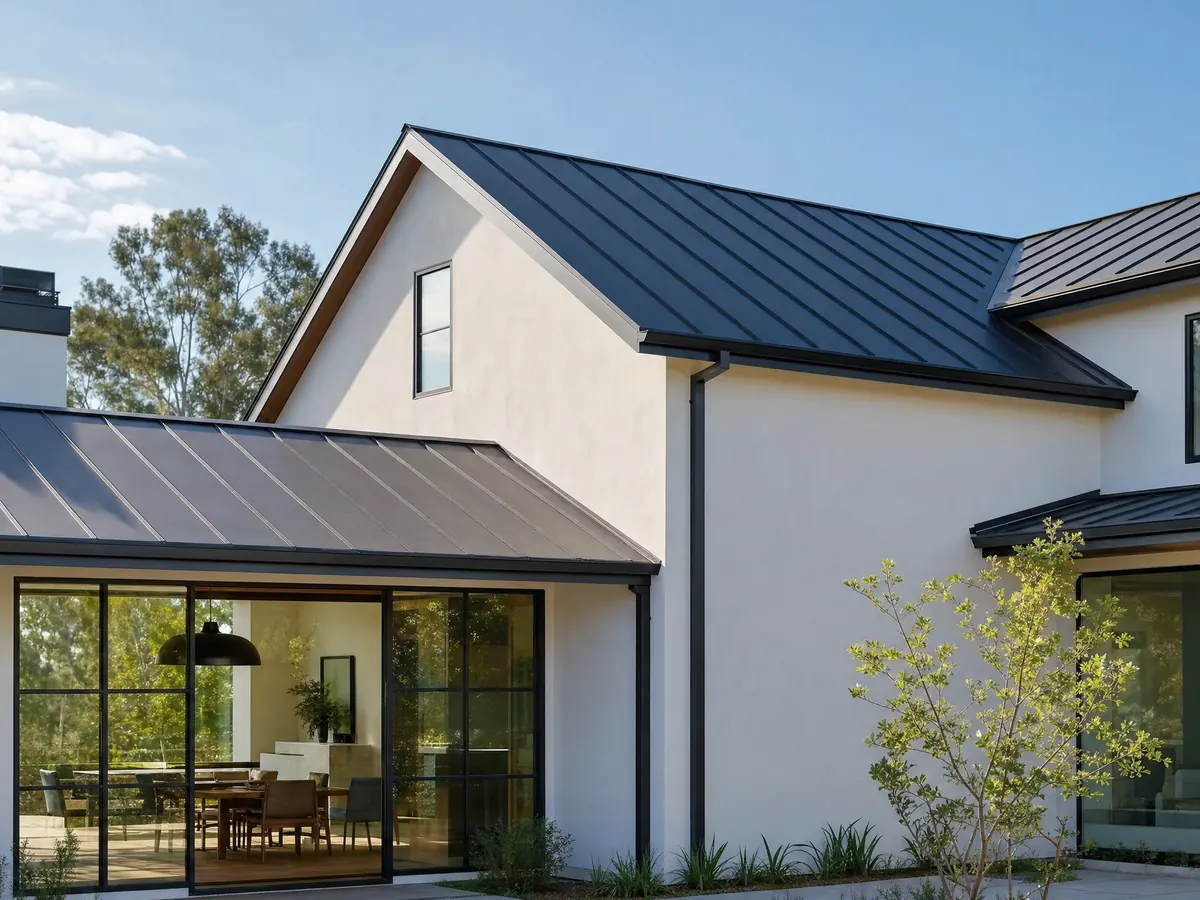
Who reviews fire for an Apple Valley roof, and is my address in a hazard zone?
Fire is not a Town department. The independent Apple Valley Fire Protection District provides fire protection and plan review, and its service area runs past the Town into county land. Plans go to the District by email at plans@avfpd.org, and the plan review types it lists are sprinkler plans, new commercial work, alarms, underground fire lines and tract maps. We found nothing saying a plain re-roof needs a District review.
Zones are changing. CAL FIRE released new maps on March 24, 2025 that, for local responsibility areas, add Moderate and High classes to the Very High class the older map showed alone, and part of the District is state responsibility area served by CAL FIRE Station 335 on Tussing Ranch Road. The Town adopted the 2025 California Wildland Urban Interface Code with no local changes. We could not verify the class for any single address, and the District names Riverside Drive and Mariana as wildland urban interface.
The District also runs a yearly hazard abatement program over more than 25,000 parcels. A notice typically gives 30 days to comply, and if the District's contractor does the clearing, a non-refundable $80 admin fee applies plus the contractor's charges.
Get the hazard zone answer from the District in writing, not from a phone call.
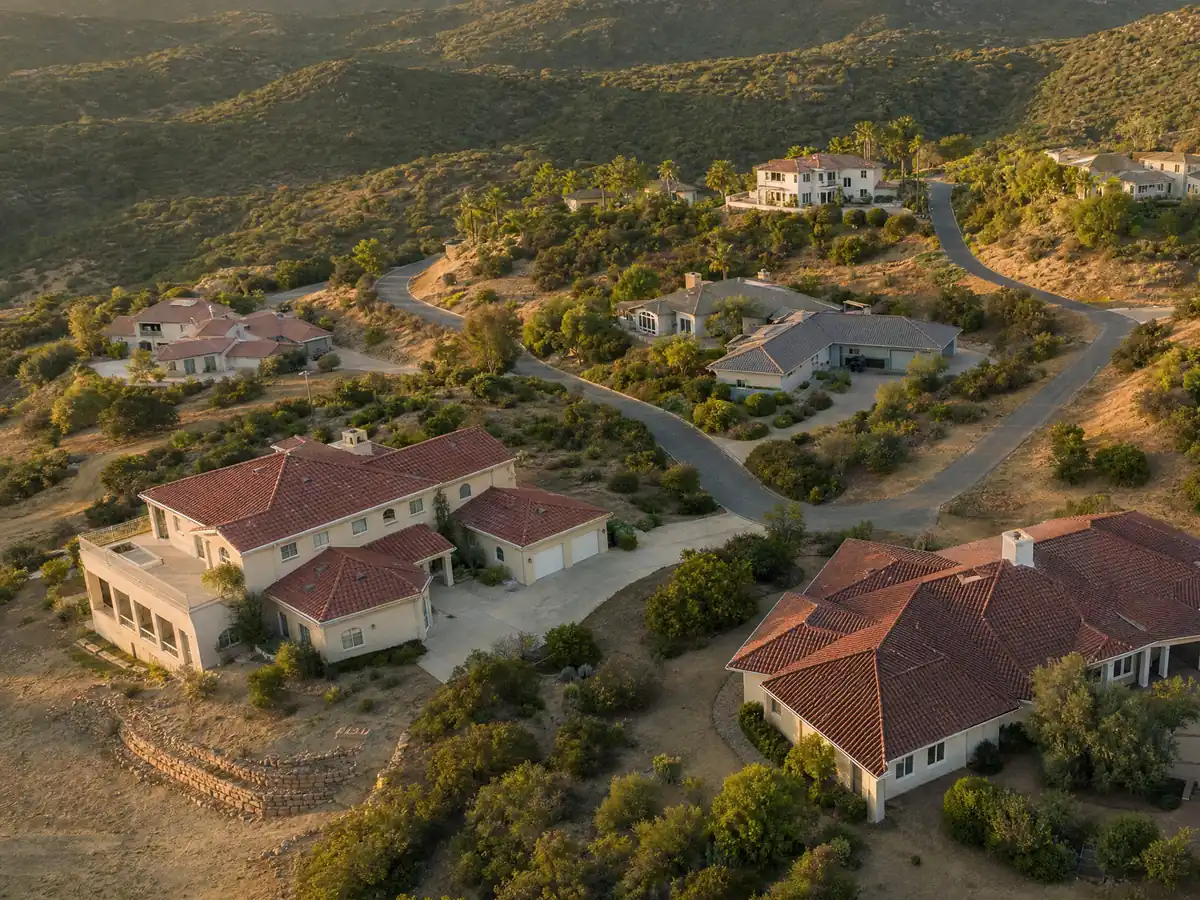
What do 42 days over 100 degrees, 54 freezing nights and Cajon Pass wind do to an Apple Valley roof?
NOAA's 1991 to 2020 normals for the Victorville station, the closest with a published file and about 4.7 miles from Apple Valley's center point, show 5.57 inches of rain a year, 3.96 of them from December through March. July highs average 97.5 F and December lows 32.5 F. A year brings about 42 days above 100 F and about 54 days at or below 32 F, and the snowfall normal is 0.0 inches.
The Town sits higher than that station. Its General Plan puts the alluvial fans between about 3,400 feet near the Fairview Mountains and 2,700 feet along the Mojave River, so the east side can run colder. The same plan lists winds associated with the Cajon Pass, acting on sandy soils, as a hazard, and the air district calls a gust above 25 mph High Winds. We did not find the Town's design wind speed, snow load or seismic category and will not borrow Victorville's, so ask the plan checker to name them.
- Shingles lifting at the rake edges after a spring blow
- Granules piling up at the downspout
- Sun-cracked sealant around vents and flashings
- A ceiling stain after the first winter storm
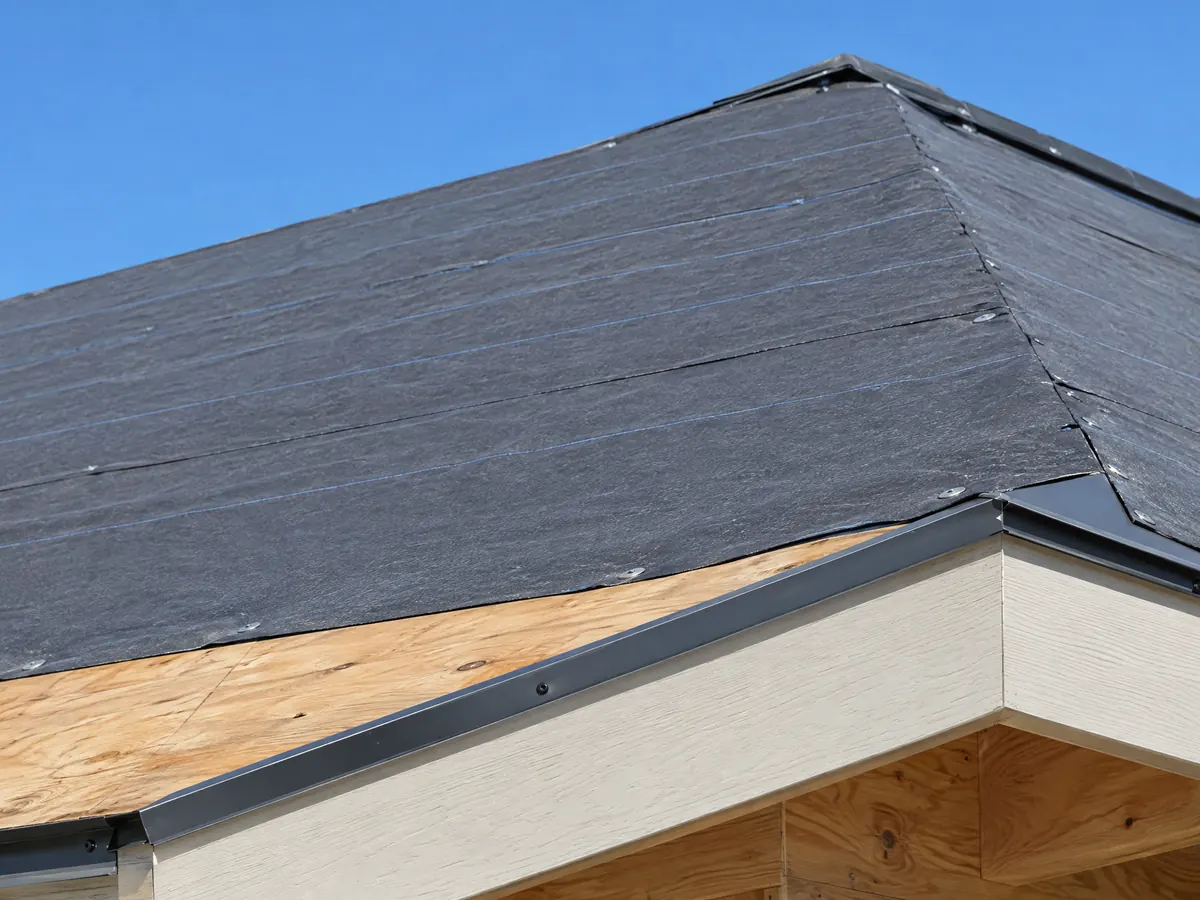
How old are Apple Valley roofs, from the 1946 Ranchos lots to the 2000s tracts?
If the median 1988 house never had a re-roof, its roof is about 38 years old. ACS puts 9,054 units in the 1980s and 6,895 in the 2000s, and 6,729 units, or 24.4 percent, predate 1980. We found no local roof survey and print no lifespan. The Town's history page explains the oldest layer: orchards grew apples by the ton by 1920 until the Depression and pumping costs ended them, then the Ranchos Land Co. sold its first town lot in Unit 1 off Navajo Road in 1946.
ACS counts about 2,087 units from the 1940s and 1950s, with wide margins of error, and they sit around Navajo Road and Highway 18. Large lots mean large roofs: residential minimums run from 18,000 square feet in R-SF and R-EQ up to 5 acres, with lot coverage of 25 to 40 percent. A house, a detached garage, a guest quarters up to 400 square feet and a horse barn can be four roofs on one parcel, so ask whether a bid counts every one.
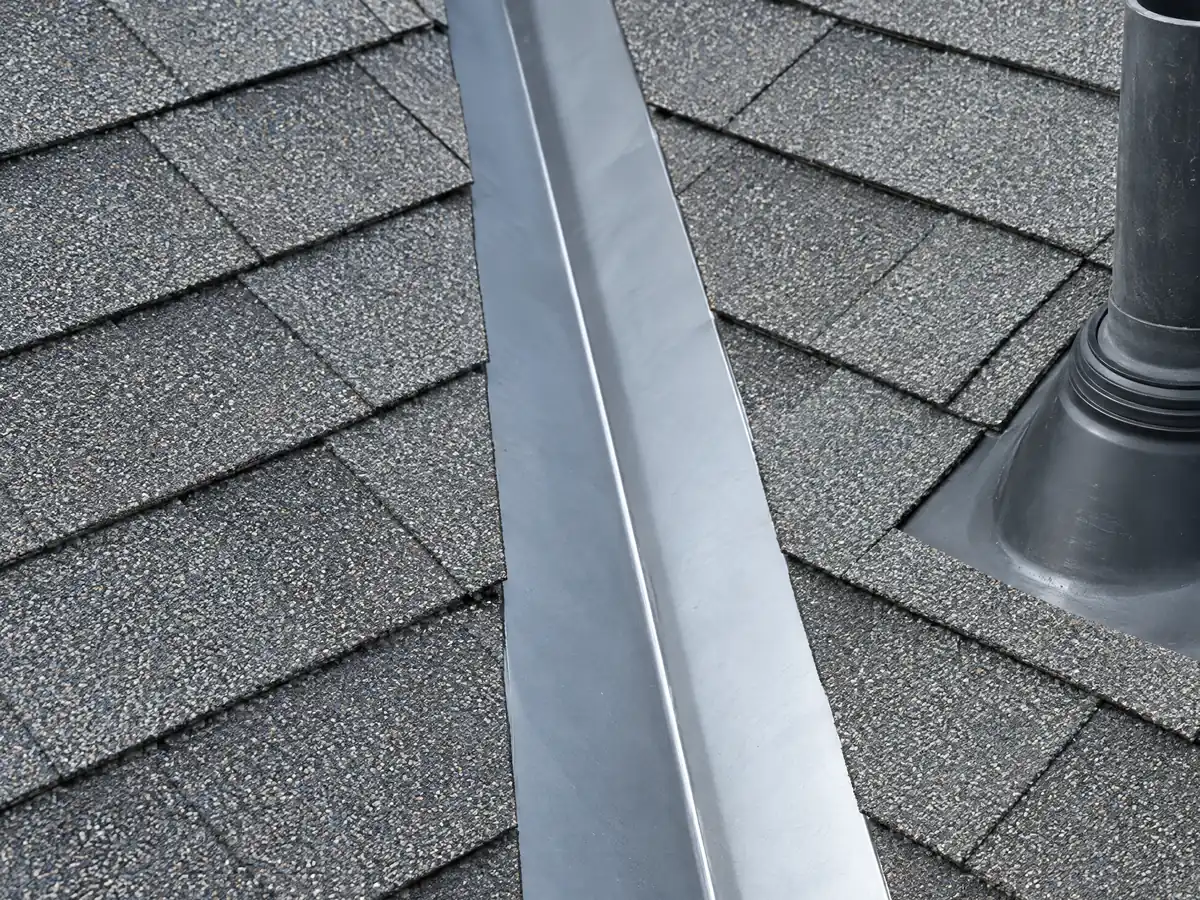
How much does roof replacement cost in Apple Valley, and can a repair loan help?
No Apple Valley price survey turned up, so the yardsticks are Los Angeles ones. Angi's roof guide, updated July 31, 2026, shows a $17,271 average, $4 to $12 a square foot for asphalt, $7 to $15 for tile and $7 to $16 for metal, with tear-off adding $1,000 to $3,000. Remodeling magazine's 2025 Cost vs. Value report prices a Los Angeles asphalt reference roof at $36,417 and metal at $62,069 on a roof size it does not publish. We plan on $10,000 to $25,000 for asphalt, $15,000 to $37,000 for tile and $20,000 and up for metal on a typical house.
The Town's Residential Rehabilitation Loan Program offers 0 percent deferred loans of up to $75,000 for eligible owner-occupied homes of one to four units, for code, safety, energy and deferred maintenance work, with income below 80 percent of area median and a home value of no more than $499,000. We could not confirm that a roof qualifies, so ask the Town.
Roofing is CSLB class C-39. Under Business and Professions Code 7159, a down payment is capped at $1,000 or 10 percent of the price, whichever is less. Our license guide and subcontractor guide explain how to verify a card.
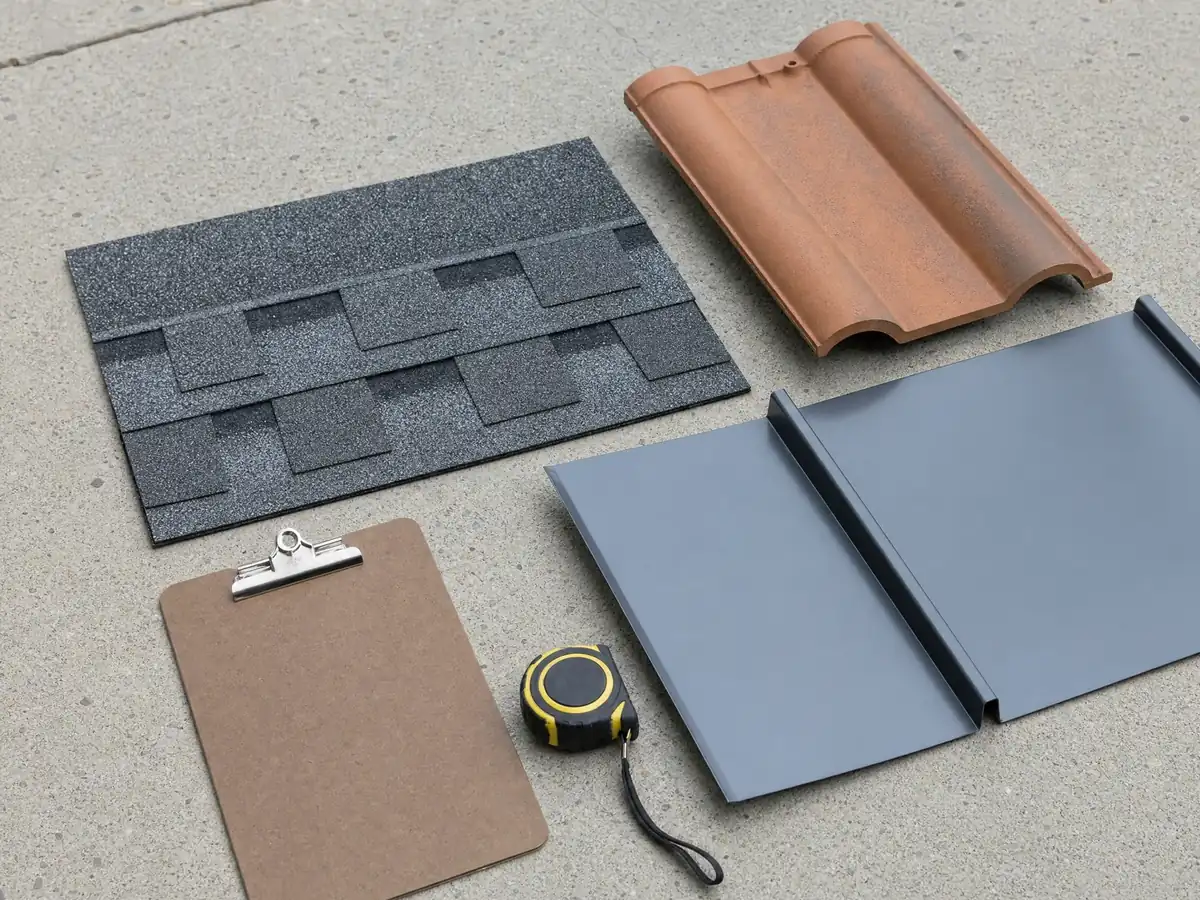
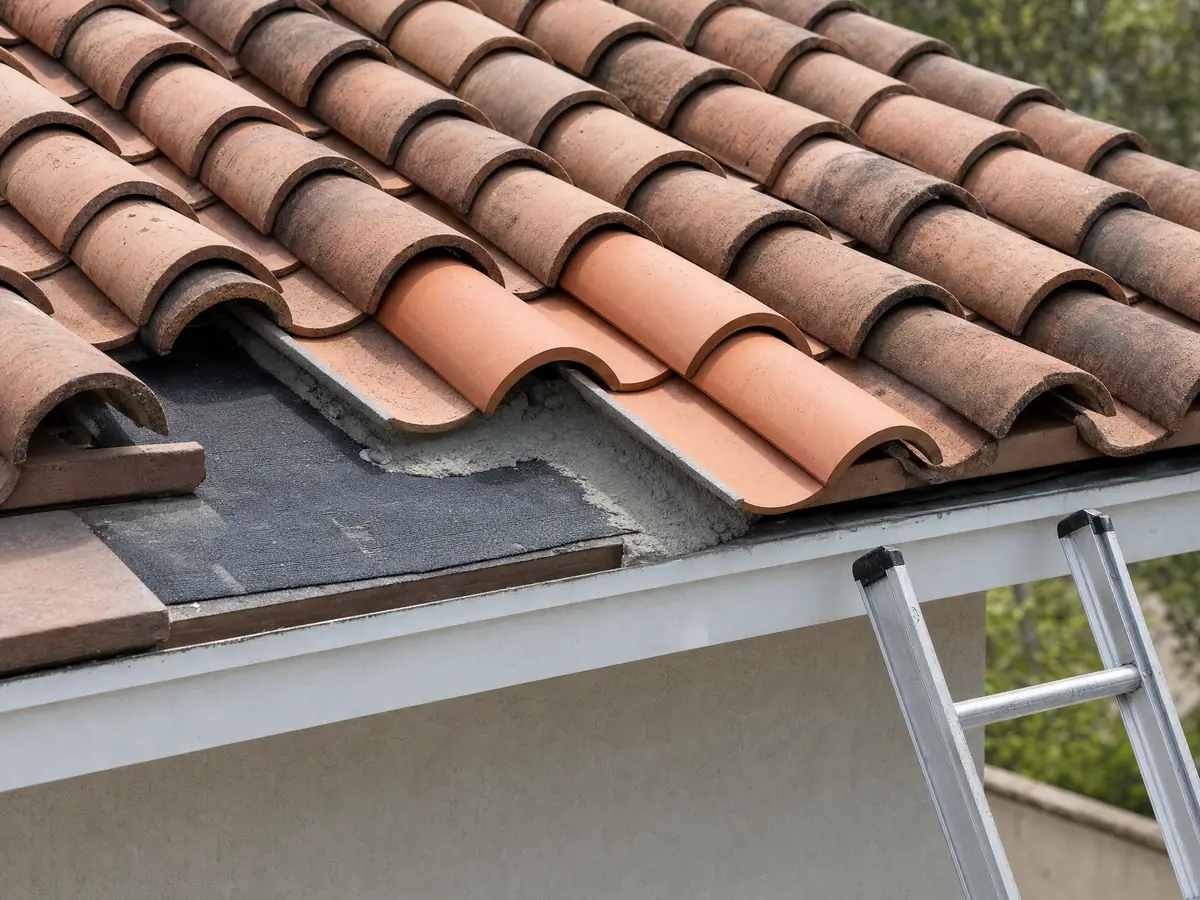
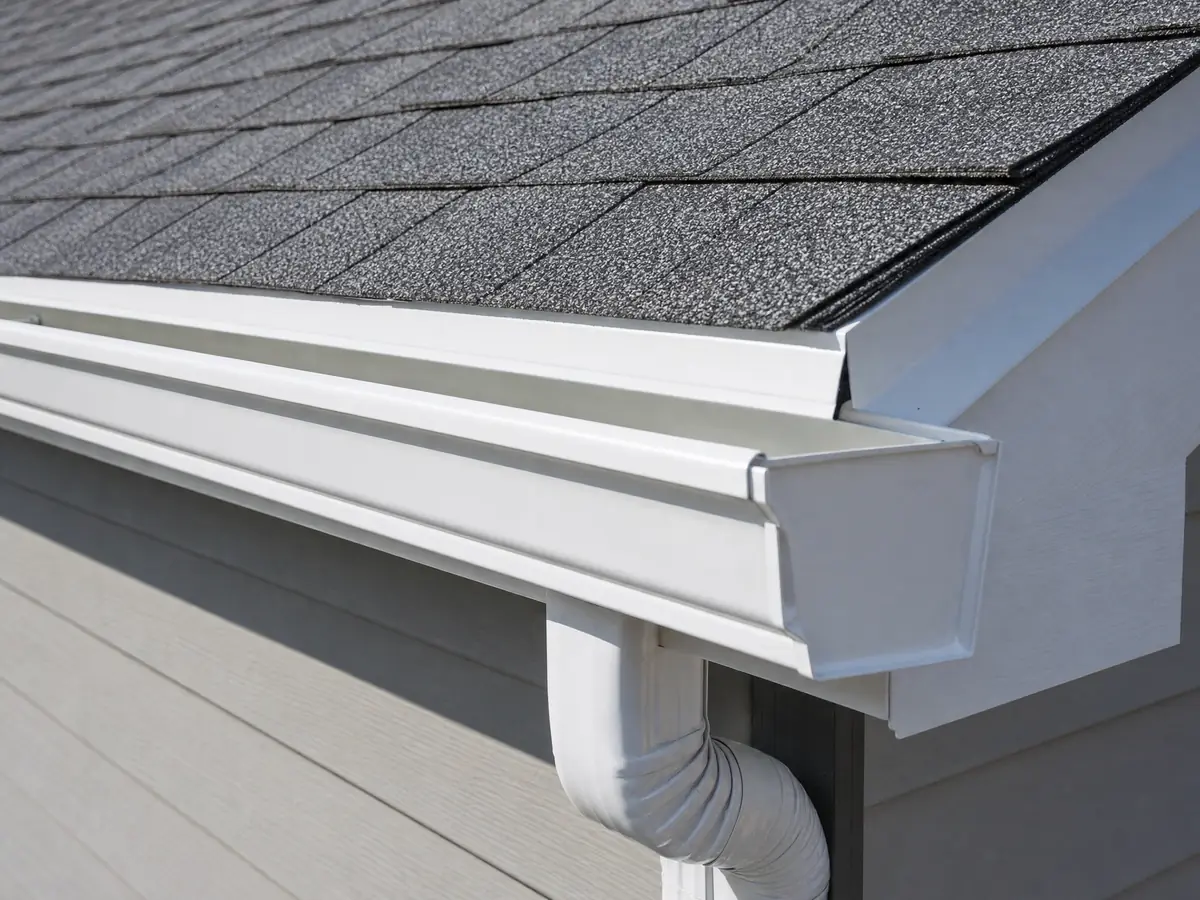
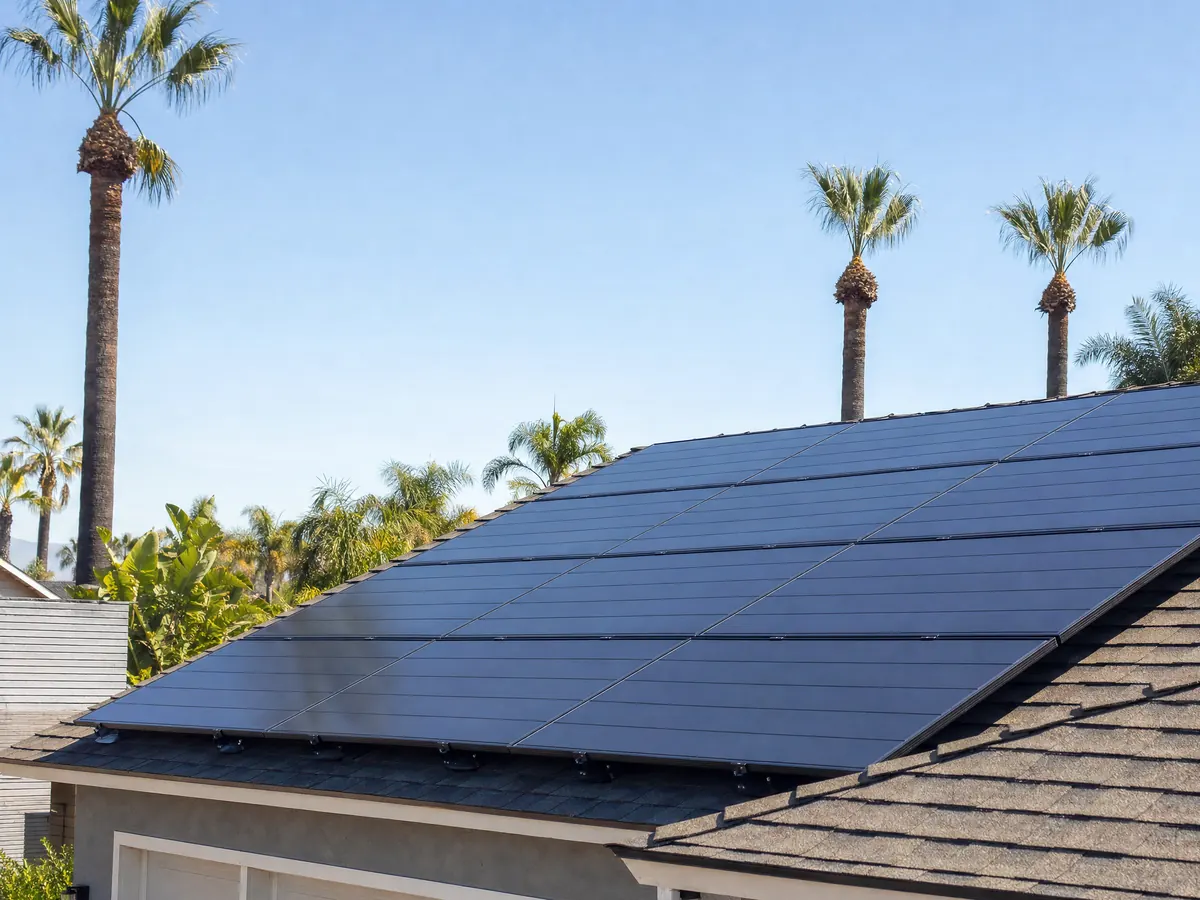
Roofing photos from Apple Valley and nearby communities
Roofing scenes tied to Apple Valley places such as Town Hall, Granite Hills High School and the airport area, and to nearby Victorville and Spring Valley Lake, from tear-offs and underlayment to flashing, metal panels and solar resets.
Where these Apple Valley roof figures come from
The table on the roofing page pairs every roofing price with the report behind it and the year it was published, and the California roofing cost guide explains why a survey average and a fixed reference roof differ so much. Roof work often brings other outside jobs, and the Town's rules for them are on the fencing page, the painting page and the kitchen remodeling page. For a Los Angeles County rulebook to set against the High Desert's, read the roofing guide for Glendale.
| What it covers | Typical range |
|---|---|
| Asphalt shingle, typical single-family roof | $10,000 to $25,000 |
| Concrete or clay tile | $7 to $15 per sq ft |
| Metal | $7 to $16 per sq ft |
| Remodeling Cost vs. Value 2025, Los Angeles | Asphalt $36,417. metal $62,069. |
| Extras | Tear-off $1,000 to $3,000. solar detach and reset $500 to $1,000. |
Other work we manage in Apple Valley
Apple Valley roofing questions, answered
Do I need a permit to replace my roof in Apple Valley?
Probably, but the Town's exempt-work list did not turn up in what we read, so confirm by phone at (760) 240-7000. The Permit Center takes requests by form or its online portal and posts re-roof energy forms. Ask whether your scope needs a permit and a Waste Management Plan before the tear-off date is booked.
What is the 25 percent rule for roofing?
In Apple Valley it is the line in the Class A requirement: repairs and additions that replace or add 25 percent or less of the total roof area may use material matching the existing roof. Anything beyond it must be Class A. The code does not explain how staged repairs are counted, so ask the Permit Center.
Does my Apple Valley roof have to be Class A?
Yes for any roof covering on a regulated structure, except repairs and additions of 25 percent or less of the roof area. The rule is in the Town's amended building code, read in a third-party mirror of the Municipal Code. Ask the roofer to put the product's Class A listing in the proposal.
How much does a roof replacement cost in Apple Valley?
We found no Apple Valley survey. Angi's Los Angeles guide shows a $17,271 average, and our planning ranges for a typical house are $10,000 to $25,000 in asphalt, $15,000 to $37,000 in tile and $20,000 and up in metal. Tear-off, deck repair and solar resets cost extra, and a large lot may have several roofs.
How much does a 1500 sq ft roof cost?
Angi's Los Angeles asphalt range of $4 to $12 a square foot works out to about $6,000 to $18,000 for 1,500 square feet of roof, and tile at $7 to $15 gives $10,500 to $22,500. That is arithmetic, not a quote, and the roof is usually larger than the floor plan beneath it.
Is my roof in a fire hazard zone in Apple Valley?
We cannot say for your address. CAL FIRE's March 24, 2025 maps add Moderate and High classes to the Very High class for local areas, and part of the District is state responsibility area, but we did not read parcel data. Ask the Apple Valley Fire Protection District for the class in writing.
How long does a roof last in Apple Valley?
We found no local roof survey and print no lifespan. The record shows about 42 days a year above 100 F, about 54 nights at or below 32 F and strong Cajon Pass winds. Ask the roofer for the manufacturer's written warranty and what voids it, then compare products on that basis.
What is the best time of year to replace a roof?
Neither extreme is ideal. December through March brings 3.96 of the 5.57 inches of rain, while July and August highs average about 97 F. Spring and fall sit between them, though wind can arrive anytime. Ask how the crew protects a stripped deck when a gust or storm is forecast.
Do solar panels have to come off for a new roof?
Usually the array is detached and reset by a solar installer, which Angi prices at $500 to $1,000 in Los Angeles. The Town's solar chapter covers new small systems and does not say how a reset is filed, so ask the Permit Center before the roofer books a tear-off date.
How do I check a roofing contractor's license in California?
Look the number up on the Contractors State License Board site, confirm that class C-39 shows as active and that the name matches your contract. Then ask for a certificate of insurance and proof of workers' compensation coverage. Our license guide walks through each step.
Ask for a roof inspection in Apple Valley
Tell us the part of town, the roof covering, the year the house was built and how many roofs sit on the lot. Before we call back, we check the Class A line and the fire district question for your address.