
Concrete Companyin Fontana, CA
A concrete company in Fontana works through several separate approvals: the City's code exempts a retaining wall only up to 3 feet, a driveway apron in the public right of way needs an Engineering permit, and permitted jobs need a waste plan with Burrtec hauling. We found no list naming patio slabs, so describe flatwork to Building & Safety.
Fontana's concrete follows its farming and steel past. The City says A.B. Miller bought 17,000 acres in 1905 and used 200 horses, mules, plows and scrapers to turn them into citrus orchards, poultry farms and cattle farms, and San Bernardino County's history page says he planted long rows of eucalyptus to shield his groves from severe winds. Kaiser Steel opened outside town in 1942, Wikipedia's census table shows the population jumping from 36,804 in 1980 to 87,535 in 1990, and the Census Bureau's 2024 estimates credit the 1980s with 15,101 of Fontana's 61,759 homes, so many driveways, patio slabs and block walls are now 37 to 46 years old.
MDG Builders, CSLB #1040337, is a general contractor in Tarzana that plans, permits and manages the job while a licensed concrete subcontractor forms, places and finishes. For a Fontana pour we write the scope, take the permit and right-of-way questions to the City's Building & Safety Division and book the work around the dust, hauling and wind issues below. The concrete page explains finishes, and the Fontana overview lists the other trades we manage here.
What Fontana's Building & Safety Division, Engineering, South Coast AQMD and the County sand rules say about concrete work
Where concrete permits come from in Fontana: City of Fontana Building & Safety Division (Development Services, Community Development).
- Fontana's amended CBC Appendix J (Municipal Code 5-62(l) to (n)) exempts from a grading permit an excavation of 50 cubic yards or less on one lot that does not block a drainage course and is under 2 feet deep or leaves a cut slope no taller than 5 feet and no steeper than 1.5 to 1, and a fill of 50 cubic yards or less that is under 1 foot deep on terrain flatter than 20 percent or under 3 feet deep and not supporting structures; grading plans must come from a licensed or registered design professional and over 5,000 cubic yards from a registered civil engineer. Read in GoCodebook's third-party mirror.
- Removing, altering or building curb, gutter, sidewalk, pavement or a driveway approach in the public right-of-way needs an Engineering Department Driveway Approach Construction Permit (Standard Plan No. 1001) valid for one year; the handbook (rev. 2/5/24) lists a $286 review fee, a $45 issuance fee, a $176 minimum inspection fee and a 5 percent software fee, requires 2 days' notice and a pre-construction meeting with the Public Works inspector, and allows no weekend work unless an overtime inspection is scheduled. Engineering is at (909) 350-7610.
- By Ordinance No. 1879 (February 8, 2022) Fontana adopted San Bernardino County's code sections on controlling blowing sand and soil erosion by wind; the County agricultural commissioner and the County soil erosion and dust prevention commission issue the permits and enforce them, with fees paid to the County. The mirror shows the article but not the list of County sections it adopts, so the specific triggers were not read. Read in GoCodebook's third-party mirror.
- South Coast AQMD Rule 403 (Fugitive Dust) applies to activity capable of generating dust, including construction, grading and demolition, and defines high wind conditions as instantaneous wind speeds above 25 miles per hour, a threshold the City says Santa Ana gusts in the Cajon Pass corridor regularly exceed.
- Fontana's amended CBC Appendix I (Municipal Code 5-62(k)) lets a patio cover sit on a concrete slab on grade without footings only if the slab is at least 3.5 inches thick, columns carry no more than 750 pounds each, and the cover is built solely of aluminum or similar light material with a current ICC evaluation report stating that footings are not required and giving uplift anchoring for at least a 100 mile per hour wind; everything else needs footings.
- The Residential Code amendment table for Fontana (Municipal Code 5-601) sets design criteria that affect slabs and footings: ground snow load zero, frost line depth 12 to 24 inches, termite damage Very Heavy, Seismic Design Category D2 or E, weathering negligible, winter design temperature 43, mean annual temperature 60, and Exposure C as the minimum wind exposure unless the Building Official accepts Exposure B. Read in GoCodebook's third-party mirror.
Where does broken concrete go when a slab or driveway comes out in Fontana?
Breaking out a slab leaves a pile, and in Fontana only one company may haul it. Municipal Code 24-31(B), part of the City's sole franchise hauler agreement, lets hauling from construction or demolition be contracted only through Burrtec Waste Industries, and an owner may self-haul only when the owner holds both the collection container and the vehicle. Ask how the crew's own dump truck fits that rule before you compare haul-off prices.
A building permit adds a plan. Each application must carry a Construction Waste Management Plan documenting CALGreen 4.408 and 5.408 compliance, with at least 65 percent of construction debris diverted from landfill, and the City issues no permit without an approved plan. The pages we read do not say whether a pour that needs no building permit still triggers a plan.
Hours are fixed too. Section 18-63(7) of the Municipal Code, as the gocodebook mirror shows it, limits building work to 7 a.m. to 6 p.m. on weekdays and 8 a.m. to 5 p.m. on Saturdays and lists no Sunday hours, which matters to a crew that wants to break out a slab before the heat. South Coast AQMD Rule 1403 covers demolition that disturbs asbestos-containing material, so a slab removed along with an old structure deserves a survey question.
Can I pour a concrete patio or walkway in Fontana without a permit?
We could not confirm it for a ground-level patio slab. The City publishes no exempt-work list that we could open, and the amended code on the gocodebook.com mirror, a third party, exempts only solid fences up to 3 feet 6 inches, open fences up to 4 feet, retaining walls up to 3 feet from the footing bottom and small grading. Treat a new patio, walk or slab as a call to Building & Safety at (909) 350-7640, with a sketch, before anything is formed.
The grading exemptions are specific. Under the amended Appendix J, an excavation of 50 cubic yards or less on one lot needs no grading permit if it blocks no drainage course and is under 2 feet deep or leaves a cut slope no taller than 5 feet and no steeper than 1.5 to 1. A fill of 50 cubic yards or less is exempt when it is under 1 foot deep on terrain flatter than 20 percent, or under 3 feet deep and carrying no structure. Grading plans come from a licensed or registered design professional, and from a registered civil engineer above 5,000 cubic yards.
A permitted pour has a calendar. The City says a first plan check typically takes about 3 to 4 weeks and later rounds about 2, and afterward only the signing contractor or the site owner may sign for the permit. The City's Patio Cover Specifications handout is a scanned image we could not read, so ask the counter whether it changes anything for a slab under a cover.
Does a Fontana driveway, apron or walk need City approval?
Anything in the public right-of-way is Engineering's business. Removing, altering or building curb, gutter, sidewalk, pavement or a driveway approach there needs a Driveway Approach Construction Permit under Standard Plan No. 1001, valid for one year. The City's handbook, revised February 5, 2024, lists a $286 review fee, a $45 issuance fee, a $176 minimum inspection fee and a 5 percent software fee, and asks for 2 days' notice and a pre-construction meeting with the Public Works inspector. Engineering answers at (909) 350-7610.
Weekends are restricted. The handbook allows no weekend work unless an overtime inspection is scheduled, so a Saturday pour at the curb is a scheduling item, and fees change, so check the current handbook before you budget.
Old trees complicate a widening. The tree preservation article, Municipal Code 28-61 and following, requires a removal permit for heritage, significant or specimen trees on projects that involve a subdivision or design review, and heritage trees include windrow trees and European olives from the farming era, the period when Miller planted his eucalyptus rows against the wind. Removal includes paving over the root area or changing the grade around a tree, so a new walk beside an old row can count. We read that text on the mirror.
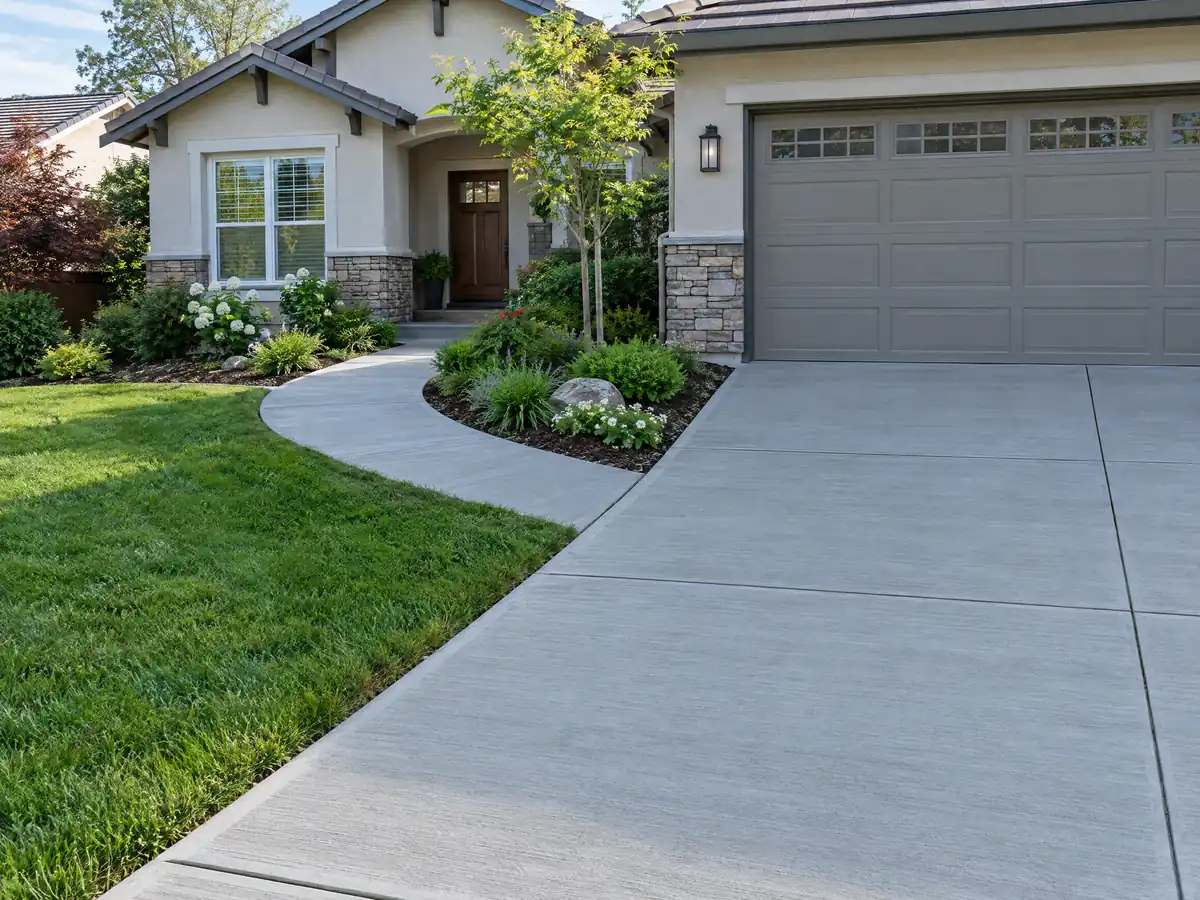
How tall can a block wall or retaining wall be in Fontana before it needs a permit?
Three feet for a retaining wall, which is lower than the model code. The amended Section 105.2 on the mirror exempts retaining walls only up to 3 feet measured from the bottom of the footing, and only if they carry no surcharge and impound no flammable liquids, where the 2022 California Building Code text we read says 4 feet. A solid fence is exempt up to 3 feet 6 inches and an open fence at least 90 percent open up to 4 feet. The City's block wall handout asks for a permit above 42 inches and a signed block wall or fence agreement if any part crosses a property line.
The standard wall has a spec. The handout, revision 06-23-08, calls for 8-inch slumpblock or 6-inch precision block, bars 6-inch slumpblock and 4-inch precision block, wants cells with rebar solid-grouted and bars the standard wall from retaining earth. Inspections are footing, bond beam and final, with no concrete or grout before City approval. A block wall on a 2-foot retaining wall tops out at 6 feet overall, and the City says its standard design carries no guarantee against failure.
Zoning and fire add limits. Section 30-464 caps a retaining wall plus fence at 9 feet combined, and inside the Fire Hazard Overlay any fence or wall required next to a fuel modification area must be masonry. Poured walls fall under CSLB's C-8 class, and block walls under C-29 masonry.
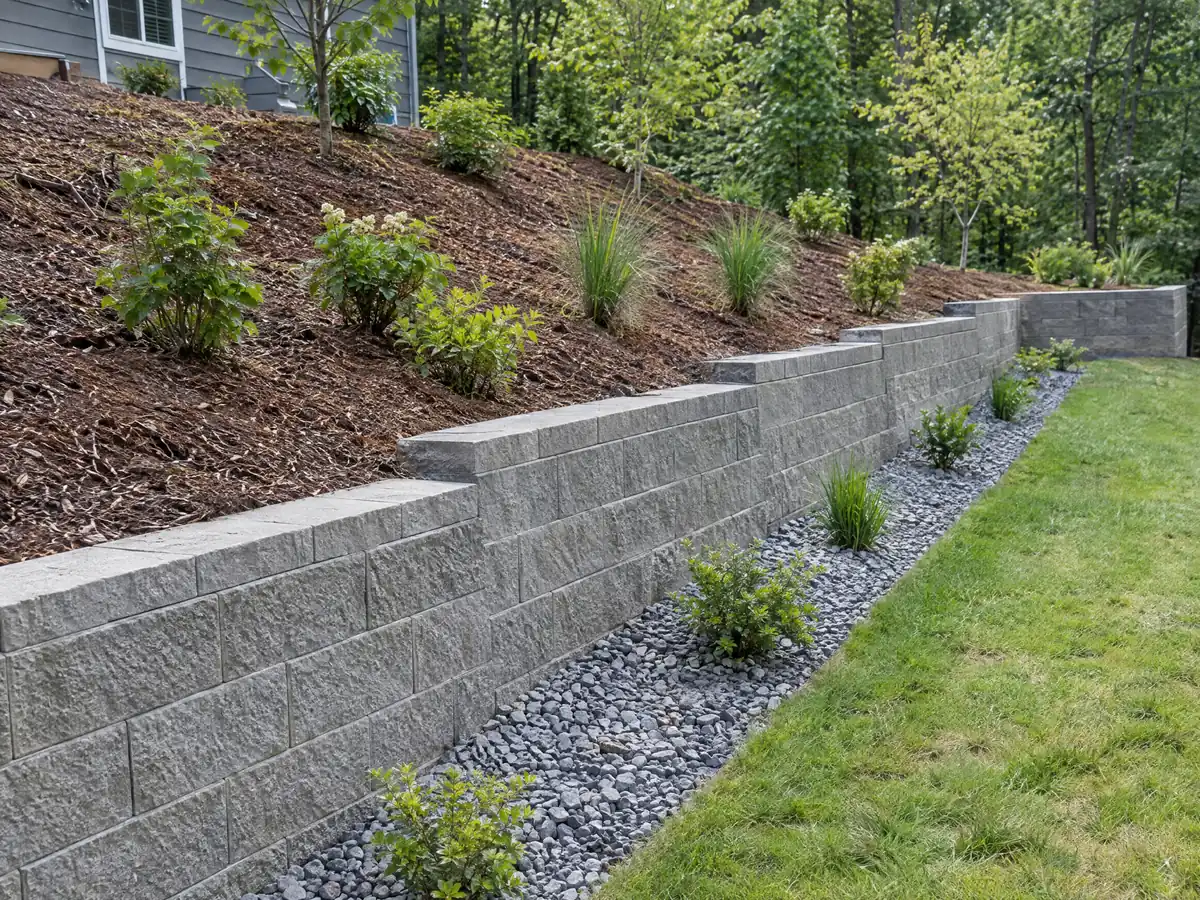
What do Fontana's alluvial soils, termites and fault zones mean for footings and slabs?
Soil and shaking set footings here, not frost. The City's Residential Code table lists ground snow load zero, a frost line of 12 to 24 inches, termite damage Very Heavy, Seismic Design Category D2 or E and Exposure C as the minimum wind exposure unless the Building Official accepts Exposure B. Fontana sits on a young alluvial fan from Lytle Creek, per Wikipedia, and the City's handouts ask for a geotechnical report wherever expansive, compressible or shifting soils or a special soil study zone can be verified.
The October 2026 draft hazard plan names the Cucamonga fault crossing the northern city at the foot of the San Gabriels, says Alquist-Priolo Earthquake Fault Zones affect the northern city limits and finds liquefaction potential along the Lytle Creek wash corridor. That plan was a public review draft, so its details can still change, and we did not look up any address against the maps.
Wind reaches the slab through whatever stands on it. Fontana's amendment to Appendix I lets a patio cover sit on a slab on grade without footings only if the slab is at least 3.5 inches thick, columns carry no more than 750 pounds each and the cover is built solely of aluminum or similar light material with an ICC evaluation report giving uplift anchoring for at least a 100 mile per hour wind. Everything else needs footings, and the City's handout uses 129 mph for Risk Category II in its special wind region.
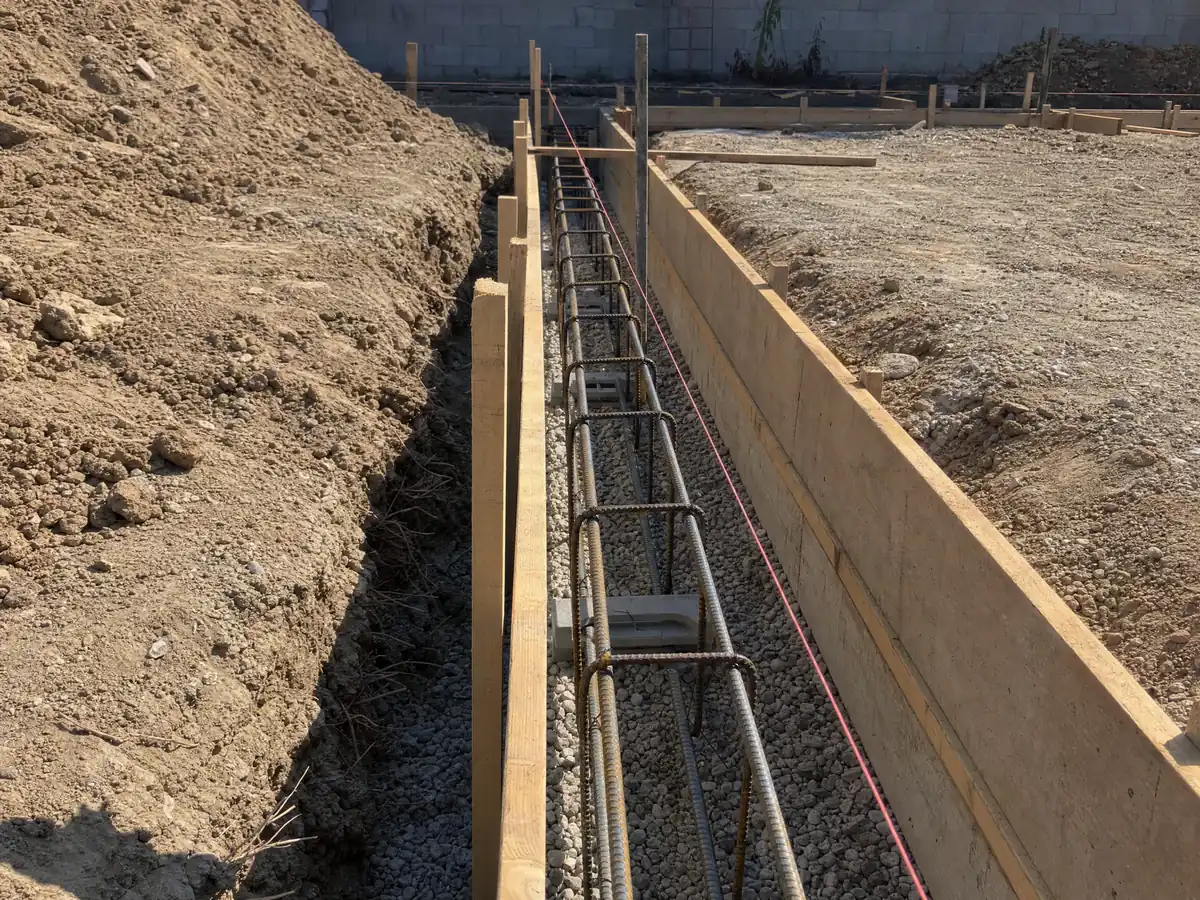
Do Santa Ana winds, blowing sand and dust rules change how concrete is poured in Fontana?
They can stop a pour. The City says Santa Ana winds accelerate through the Cajon Pass just north of town, that gusts in that corridor regularly exceed 60 miles per hour from about September through May and that northern Fontana is most exposed. South Coast AQMD Rule 403 covers fugitive dust from construction, grading and demolition and treats instantaneous winds above 25 miles per hour as high wind conditions, a line those gusts often cross. Ask the contractor how the site is wetted and when the crew quits on a windy afternoon.
Fontana also adopted San Bernardino County's code sections on blowing sand and soil erosion by wind, through Ordinance No. 1879 of February 8, 2022. The County agricultural commissioner and the County soil erosion and dust prevention commission issue those permits, with fees paid to the County. The mirror shows the article but not the list of County sections, so we cannot say which parcels or kinds of work trigger it, and the first call should go to the City.
Heat sets the pour calendar. Ontario averages 94.9 F highs in August and about 93 days a year at or above 90 F, and Redlands about 104, so we gathered no Fontana source on curing limits and suggest asking how the slab is shaded, dampened and cured at your address in August. Sealers fall under Rule 1113, which defines floor coatings to include clear coatings on concrete flooring, and the exact limit is in the District's table, which we did not quote.
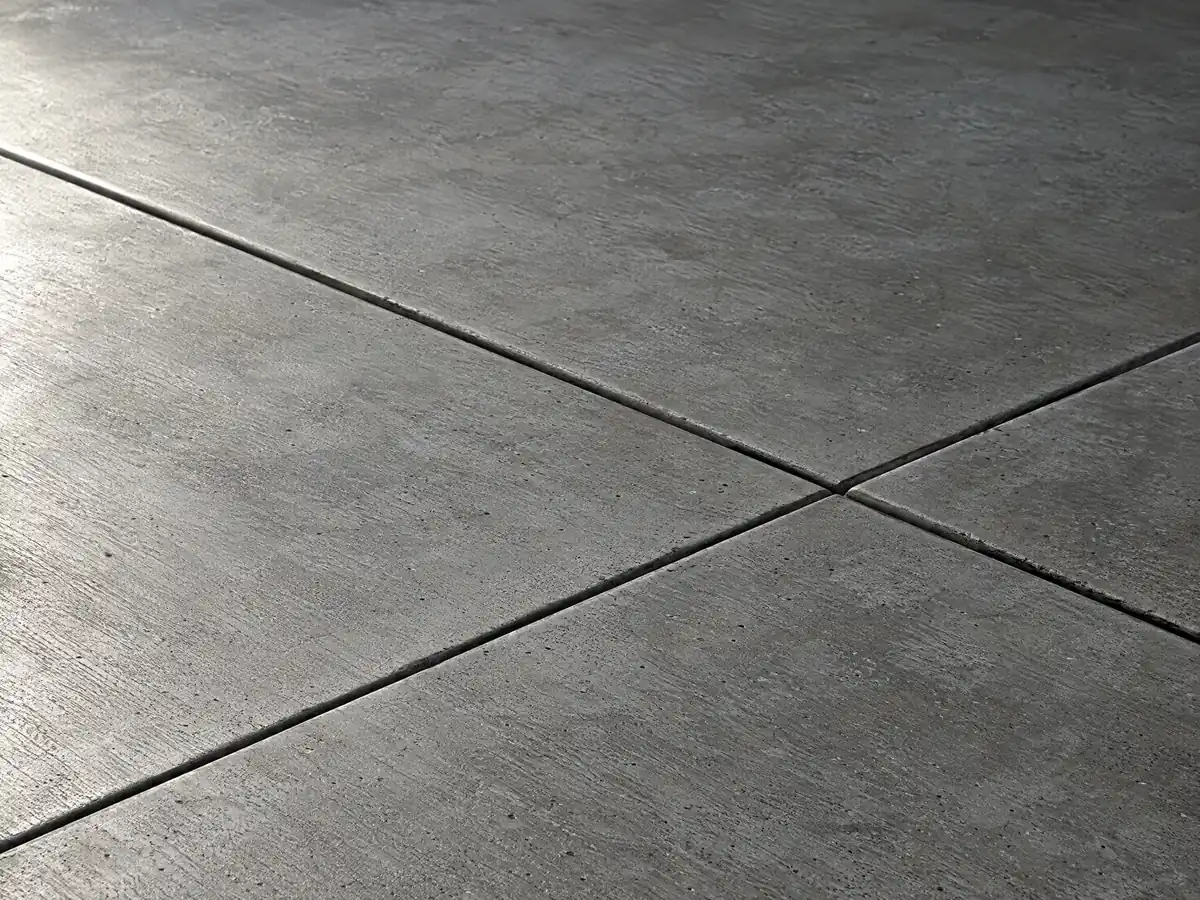
How much does concrete work cost in Fontana, and what license does a concrete company need?
No Fontana price study with a stated method turned up, so we lean on Angi's pages for Los Angeles: $4 to $13 a square foot for a patio (August 4, 2026), $15 to $30 for stamped (July 20, 2026) and $8 to $20 for a driveway (May 5, 2026). Federal wage data (BLS, May 2025) put the mean hourly wage of cement masons in the Los Angeles area at $33.67. Inland Empire bids may differ.
Our Los Angeles planning figures are $8 to $14 a square foot for plain flatwork of 300 square feet or more, $15 to $30 for stained, stamped or exposed aggregate and $9 to $20 for driveway replacement with demolition, which puts a plain 20 by 20 slab near $3,200 to $5,600. In Fontana, ask for demolition, Burrtec haul-off, any right-of-way permit and engineering as separate lines. Minimum charges push small jobs above the per-foot averages, while a retaining wall waits for a site visit because height, drainage and engineering drive its price.
A concrete job that needs a permit needs a licensed contractor, since the state's $1,000 limit for unlicensed work ends once a permit is required. Under Business and Professions Code 7159.5, a home improvement down payment is capped at $1,000 or 10 percent of the price, whichever is less, and our license check guide shows how to verify a license number.
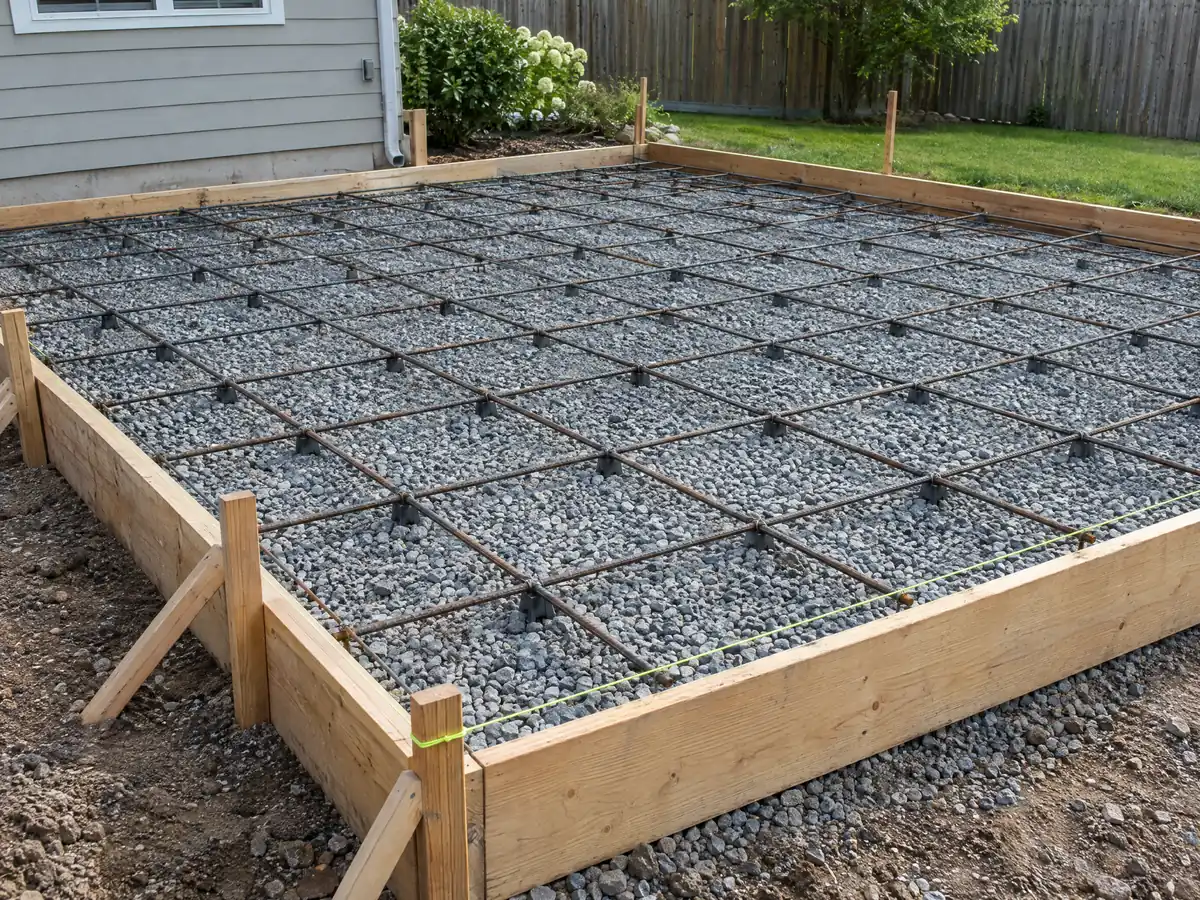
Concrete photos from Fontana and nearby communities
Forms, rebar, finished flatwork and block walls from Fontana and the neighborhoods around it, shown at the steps where the permit lines matter. Tap any photo to enlarge it.
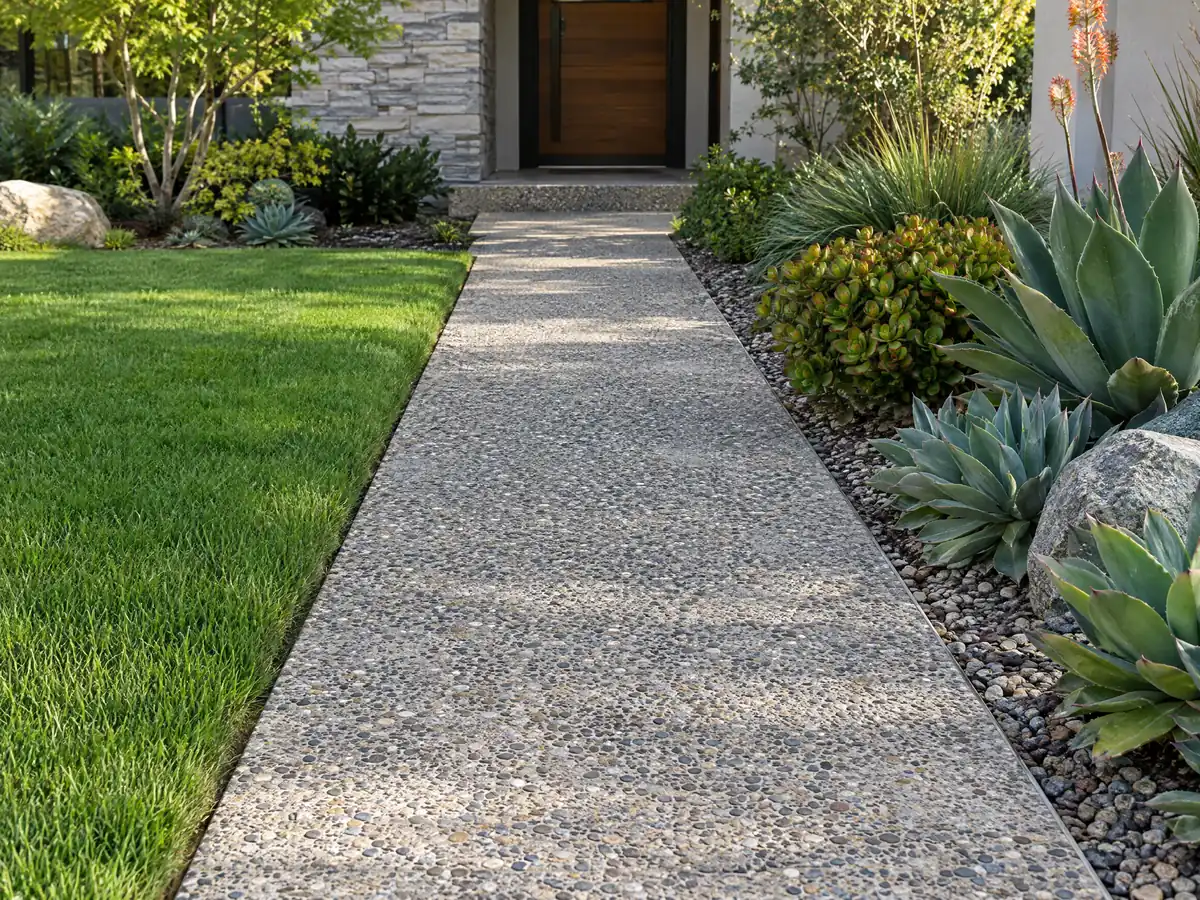
What concrete costs around Fontana
The dollar figures on this page are Los Angeles planning ranges from our concrete page, not a Fontana bid, so the written proposal should show demolition, hauling, base, rebar, engineering and any right of way permit as separate lines. A new slab often goes with flooring in Fontana or decks in Fontana. To compare nearby cities, read concrete in San Bernardino, concrete in Jurupa Valley and concrete in Riverside, with concrete in Los Angeles as the big-city benchmark. For who forms and who finishes, see the subcontractor guide, and for what can sit on top of a slab, the flooring cost guide.
| What it covers | Typical range |
|---|---|
| Patio, walkway or slab, broom finish, 300 sq ft or more | $8 to $14 per square foot |
| Decorative: stained, stamped or exposed aggregate | $15 to $30 per square foot |
| Driveway replacement, with demolition of the old slab | $9 to $20 per square foot |
| 20 by 20 foot plain patio (400 sq ft) | About $3,200 to $5,600 |
| 20 by 20 foot decorative patio (400 sq ft) | About $6,000 to $12,000 |
| Small jobs under 300 sq ft | Usually above the per-foot range |
| Retaining walls | Set by the written proposal |
Fontana concrete questions, answered
Can I pour a concrete patio without a permit?
We could not confirm it for Fontana. The City publishes no exempt-work list we could open, and the exemptions we found cover small fences, retaining walls up to 3 feet and small grading, not patio slabs. Call Building & Safety at (909) 350-7640 with your dimensions before forming, and confirm the third-party code text with the City.
How much should a 20x20 concrete patio cost?
Twenty by twenty feet is 400 square feet, so our $8 to $14 Los Angeles planning range gives $3,200 to $5,600, and Angi's Los Angeles patio page lists $1,600 to $5,200 for that size. Neither is a Fontana bid. Stamped or exposed aggregate at $15 to $30 raises the total, and Burrtec haul-off is extra if an old slab comes out.
How much does a 300 sq ft stamped concrete patio cost?
At the $15 to $30 per square foot range on Angi's July 20, 2026 stamped page for Los Angeles, 300 square feet comes to $4,500 to $9,000, and that page averages $5,948 overall. These are Los Angeles ranges rather than a Fontana bid, and small jobs usually price above average because of minimum charges.
Can I expand my driveway without a permit?
Probably not without a call. Any curb, gutter, sidewalk or approach work in the public right-of-way needs an Engineering permit under Standard Plan 1001, and we did not find Fontana's front yard paving limits. Zoning for your address is on the City's map, and Engineering at (909) 350-7610 can say where the right-of-way line sits.
What is the maximum height of a retaining wall without a permit in California?
The 2022 California Building Code text we read exempts retaining walls up to 4 feet from footing bottom to top unless they carry a surcharge, but Fontana's amended Section 105.2 stops at 3 feet and adds that they impound no flammable liquids. Anything taller, or any wall under a surcharge, needs a permit, so confirm the wording with the City.
Is 4 inches of concrete thick enough for a driveway?
Four inches is a common figure for walks and patios, but we found no Fontana code number for driveway thickness and the sources we read treat thickness, base and joint spacing as industry practice. Vehicle weight and soil matter. Have the concrete subcontractor put the slab thickness, base and steel into the written proposal.
Do I need a grading permit to pour concrete in Fontana?
Not for small jobs. The amended grading appendix exempts an excavation of 50 cubic yards or less, if it blocks no drainage course and stays shallow or leaves a modest cut slope, and a fill of 50 cubic yards or less under set depths. Larger earthwork needs plans from a licensed professional, and the Hillside Overlay adds a permit on slopes of 10 percent or more.
Who can haul away broken concrete in Fontana?
Burrtec Waste Industries, in most cases. Municipal Code 24-31(B) says construction and demolition hauling may be contracted only through Burrtec, and an owner may self-haul only with a container and vehicle the owner owns. Permitted jobs also need a Construction Waste Management Plan diverting at least 65 percent of debris from landfill.
What license does a concrete company need in Fontana?
A concrete company needs a California license in the C-8 concrete class, or C-29 masonry for block walls. Check the number on the CSLB site and ask each subcontractor for a license number and certificate of insurance. On a permit, the City also asks the signing contractor to show State and City licenses and workers' compensation coverage.
Tell us what you want poured, its size and the lot type
Describe the patio, driveway, walk or wall, the rough size and whether the lot is flat, sloped toward the foothills or has trees along the street. Haul-off, wall height and right of way questions come with us to the first visit.