
Concrete Companyin Jurupa Valley, CA
A concrete company in Jurupa Valley can pour sidewalks and driveways no more than 30 inches above grade without a building permit, but retaining walls over 2 feet, fences over 3 feet, paving past 6,000 square feet and any work in the street need City approval. Most of the city has high liquefaction potential, so ask about a soils report.
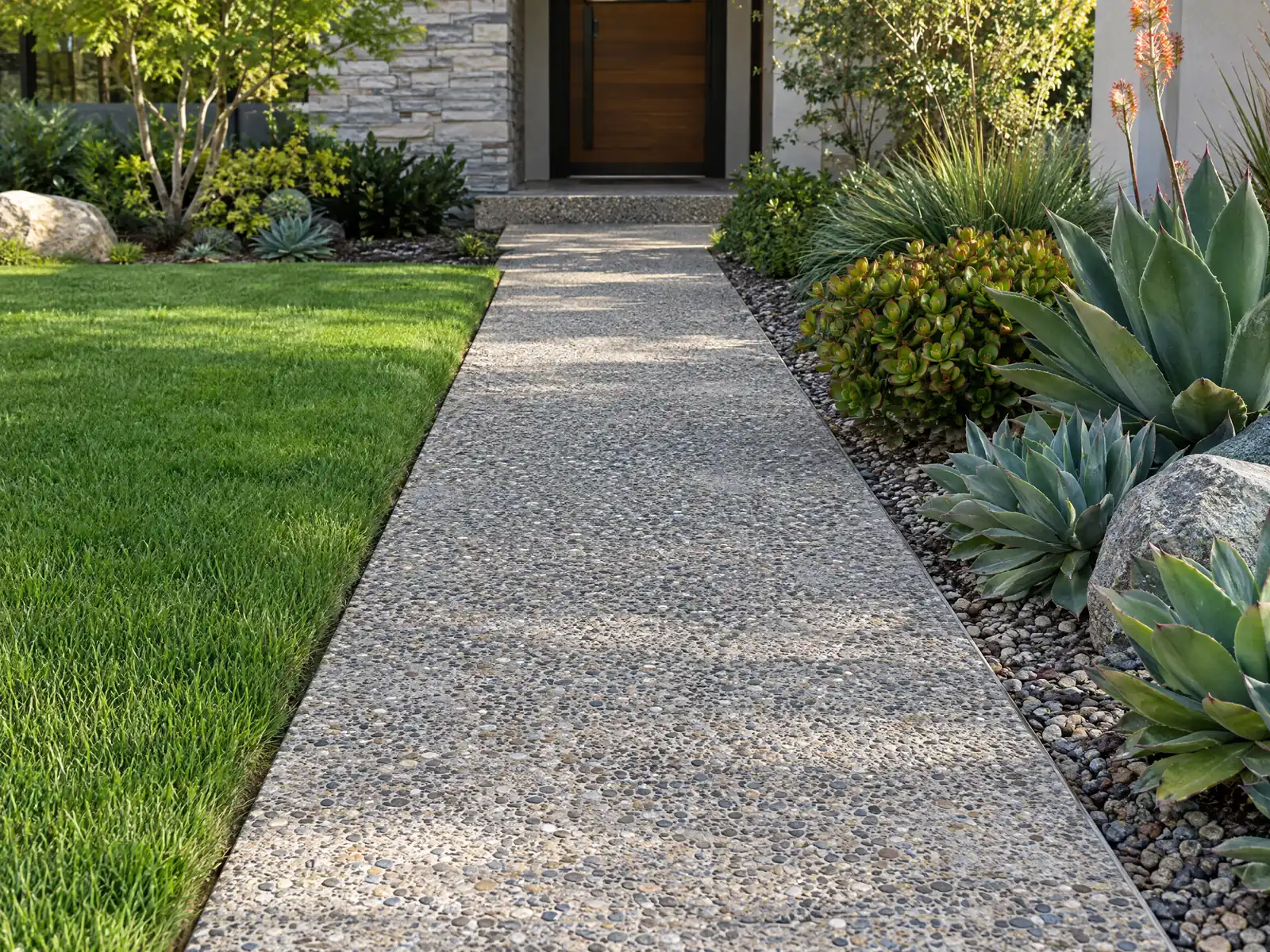
Concrete here has plenty of ground to cover. The City spans about 44 square miles, its 2017 General Plan, the first since incorporation in 2011, protects a semi-rural, equestrian character with half-acre lots in the mix, and Wikipedia notes that a rail junction on Pedley's north edge once served the Crestmore cement mill and a rock quarry. The Census Bureau's 2024 estimates credit the 1970s and 1980s with 11,477 of the city's 28,434 homes, so many walks, drives and patio slabs are now 35 to 55 years old.
MDG Builders (CSLB #1040337) is a general contractor in Tarzana, not a concrete crew. We scope the job, put the permit questions to the Building & Safety Department and Public Works, then hire a licensed concrete subcontractor to form, pour and finish. The concrete page explains finishes, and the Jurupa Valley overview shows the other trades we manage in the city.
What Jurupa Valley's Building & Safety Department, Public Works, South Coast AQMD and state law say about concrete work
Where concrete permits come from in Jurupa Valley: City of Jurupa Valley Community Development, Building & Safety Department.
- Sidewalks and driveways not more than 30 inches above adjacent grade, not over a basement or story below and not part of an accessible route are exempt from a building permit (Section 105.2); the City's room addition checklist and zoning rules still apply (text read in GoCodebook's copy of the Jurupa Valley Municipal Code, 2026-10 edition updated 2026-10-04, a third-party mirror; the City's Municode site returned HTTP 403 to automated requests).
- Driveway rules in the R-R, R-A and R-1 zones: one driveway per street frontage, a landscape strip at least 3 feet wide between the driveway and the side lot line along its full length, and a 30 foot maximum width, with more than one driveway only for multifamily or lots with wide frontage (text read in GoCodebook's copy of the Jurupa Valley Municipal Code, 2026-10 edition updated 2026-10-04, a third-party mirror; the City's Municode site returned HTTP 403 to automated requests).
- Paving more than 6,000 square feet of private road, driveway or parking surface on natural grade needs a grading permit unless Public Works waives it, and work in the street right-of-way (curb cuts, aprons, sidewalks) needs an Encroachment Permit (text read in GoCodebook's copy of the Jurupa Valley Municipal Code, 2026-10 edition updated 2026-10-04, a third-party mirror; the City's Municode site returned HTTP 403 to automated requests).
- Pool setbacks: private swimming pools must sit at least 5 feet from any property line or dwelling and other pools at least 10 feet (Section 9.240.240), which limits how close pool decks and surrounding flatwork can come to a lot line (text read in GoCodebook's copy of the Jurupa Valley Municipal Code, 2026-10 edition updated 2026-10-04, a third-party mirror; the City's Municode site returned HTTP 403 to automated requests).
- Soil: the General Plan says most of Jurupa Valley has a high groundwater table and High liquefaction potential, expansive and collapsible soils and groundwater-related subsidence occur, and development in much of the City needs geotechnical reports, so slab and footing work may need a soils report before design.
- Long or gated driveways: the local Fire Code amendments require fire apparatus access roads with at least 24 feet of unobstructed width and 13 feet 6 inches of vertical clearance, and new motorized gates must open automatically for emergency vehicles per Riverside County Fire Department standards (text read in GoCodebook's copy of the Jurupa Valley Municipal Code, 2026-10 edition updated 2026-10-04, a third-party mirror; the City's Municode site returned HTTP 403 to automated requests).
Sources for these rules
- gocodebook.com: chapter 8.05 adoption of construction codes 1
- gocodebook.com: chapter 9.45 r r zone rural residential
- gocodebook.com: chapter 8.70 grading regulations
- gocodebook.com: chapter 9.240 general provisions
- jurupavalley.org: Master General Plan GP Tech Amendment Adopted Feb 2024
- gocodebook.com: chapter 8.10 adoption of fire code 2
How do liquefaction, groundwater and expansive soil affect a slab in Jurupa Valley?
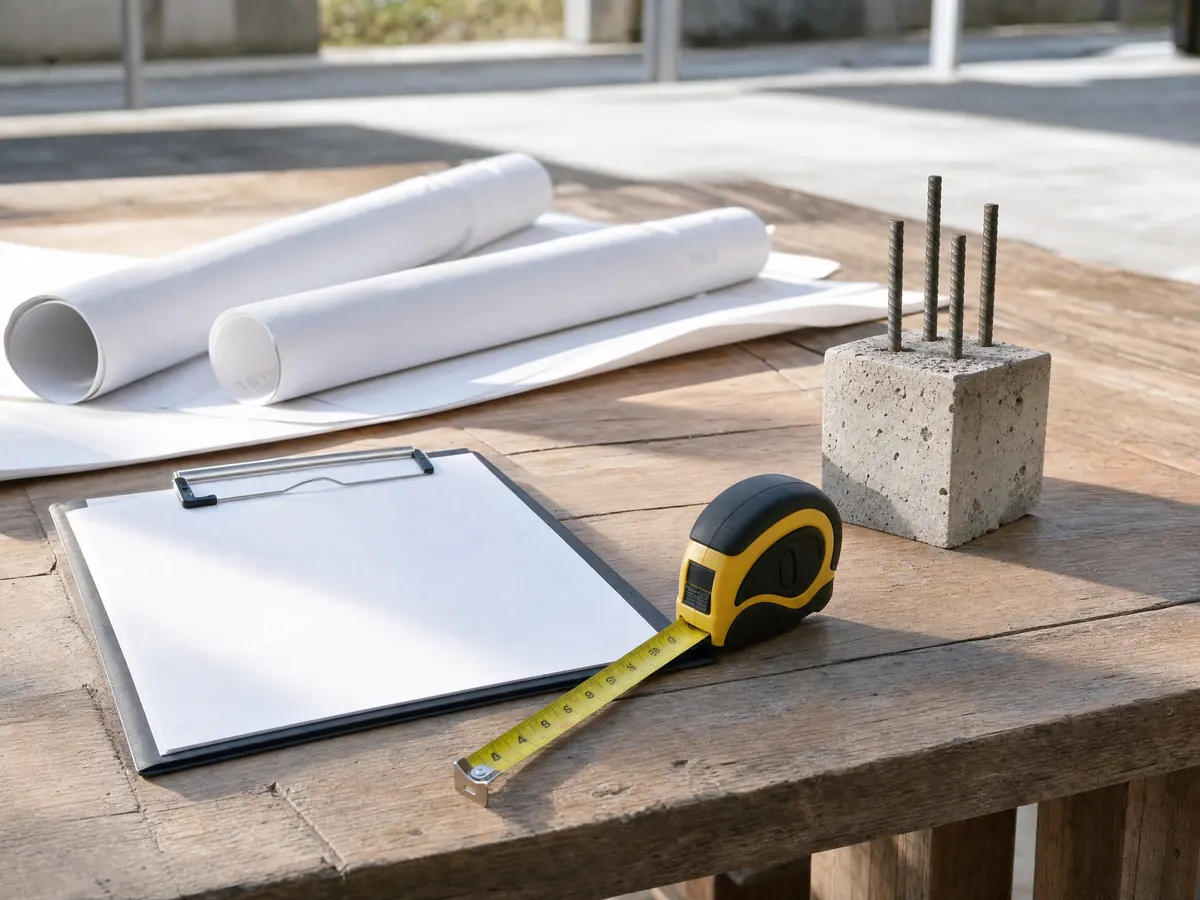
They shape how deep and how reinforced a slab should be. The General Plan says most of the city has a high groundwater table and High liquefaction potential, that expansive and collapsible soils occur and that development across much of Jurupa Valley needs geotechnical or soils reports. A garden patio may never need one, but a footing under a room addition or a heavy wall might, so ask early whether the Building Official will want a report.
The river corridor adds flood context. The State's liquefaction zones run mostly along the Santa Ana River, FEMA maps put the main flood hazard in the southern part of the city near the river and along Pyrite Creek, and the City sits downstream of Seven Oaks Dam. A 2022 KVCR report describes a roughly four-year, $36 million repair of about 2.5 miles of levee that began September 21, 2022. We could not verify that it finished or what changed on the flood maps.
Floodplain rules sit in Municipal Code Chapter 8.15, whose text we could not read, so we state none of its permit rules. For a lot near the river, Pyrite Creek or a channel, ask the City for the flood zone at the address before pricing a slab, and ask the finisher how the pad drains, since the City itself reports urban street flooding and localized drainage problems.
Can I pour a concrete patio or driveway in Jurupa Valley without a permit?
Often yes for simple flatwork, but not for everything. The local Section 105.2 exempts sidewalks and driveways not more than 30 inches above adjacent grade, not over a basement or story below and not part of an accessible route. A ground-level patio slab is not named, so describe it to the counter rather than assuming the sidewalk line covers it. That text comes from GoCodebook's third-party copy of the code because the City's Municode library blocks automated requests, so confirm it.
Two other thresholds catch big pours. Paving more than 6,000 square feet of private road, driveway or parking surface on natural grade needs a Public Works grading permit unless it is waived, and so does placing or stockpiling more than 100 cubic yards of earth. Work in the street, such as a curb cut, an apron or a sidewalk panel, needs an Encroachment Permit from Engineering and Public Works.
Planning can come first. The City says most new development needs a Planning permit before a building permit can issue, and it invites anyone remodeling to call a staff planner at (951) 332-6464 about zoning, height, setbacks and parking. A building permit lapses after 12 months without work, and a plan check application stays valid for 180 days.
How wide can a driveway be on a half-acre lot, and what about gates and fire access?
In the R-R, R-A and R-1 zones a lot gets one driveway per street frontage, up to 30 feet wide, with a landscape strip at least 3 feet wide between the driveway and the side lot line along its whole length. More than one is allowed only for multifamily lots or lots with wide frontage. The R-R zone needs a half-acre, so long drives on larger lots run into the fire access rules below. Which zone applies must be checked on the City's zoning map.
Long or gated drives face fire rules. The local Fire Code amendments, enforced by CAL FIRE/Riverside County Fire, require fire apparatus access roads at least 24 feet wide with 13 feet 6 inches of vertical clearance, and new motorized gates must open automatically for emergency vehicles. The City's gate standard adds that a motorized vehicle gate needs an electrical permit and a UL 325 listed operator.
Horse properties add conditions. The Equestrian Lifestyle Protection Overlay in the General Plan requires equestrian-friendly parcel size, setbacks and trails for new development inside it, and names Mira Loma, Sunnyslope, Crestmore Heights, Pedley and Glen Avon among the centers of horse keeping. Ask Planning whether a new driveway or pad near a corral or trail triggers extra review.
When does a block wall or retaining wall need a permit in Jurupa Valley?
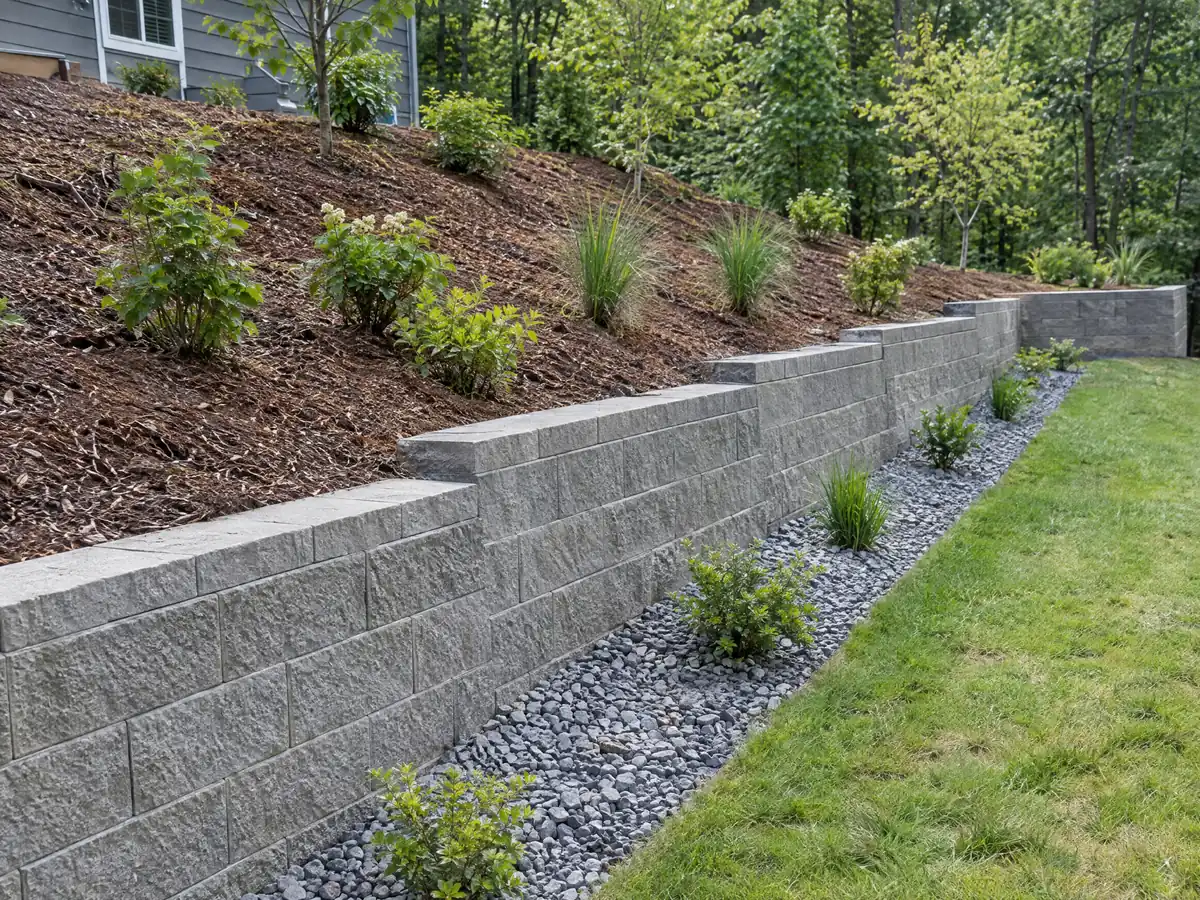
A retaining wall needs a permit above 2 feet, measured from the top of the footing, or at any height when it carries a surcharge. That is stricter than the 4 foot line owners often expect from the model code. The City's retaining wall standard, revised 05/06/2026, covers walls up to 6 feet with #4 rebar at set spacings, fully grouted cells, rubberized waterproofing and a drain of 4 inch perforated pipe in permeable fabric, and it allows no building, driveway or vehicle load behind the wall. A site plan is required.
Fences and freestanding walls answer to two sets of rules. A building permit is needed above 3 feet in any material, while zoning caps residential fences and walls at 6 feet and makes front and street-side ones open to view above 42 inches. The City's block wall standard, revised 04/7/2026, covers walls of 3 to 6 feet with two footing options, grouted cells and four inspections, and it is not designed to retain soil. Walls under 3 feet need no permit.
Shared lines need paperwork. A block wall on a property line needs the City's Property Line Agreement signed by the adjoining owner, and nothing may be built over an easement. Block walls are masonry under CSLB's C-29 class, while poured concrete falls under C-8.
How close can a pool deck, patio slab or patio cover sit to a lot line?
Private pools must sit at least 5 feet from any property line or dwelling, and other pools at least 10 feet, under Section 9.240.240, which limits how far pool decks and surrounding flatwork can stretch toward a lot line. In-ground pool plans go through Accela with a site plan, and the City asks for 42 inch guardrails where a raised deck around a pool is more than 30 inches high. The pool sheet still cites the 2022 codes, so ask which edition governs.
Barriers are their own item. The City's Pool Enclosure handout asks for a fence or wall at least 5 feet high around the whole pool, with no climbable members, self-closing and self-latching gates that open outward and door alarms of at least 85 dB. Plan the slab edge so those details fit without cutting new concrete later.
A patio cover can share the slab. The City publishes a permit-ready patio cover plan of about 400 square feet, approved by Council in November 2024 to shorten plan check, and its Attached Patio standard calls for 18 inch wide by 12 inch deep footings on 1,500 psf soil and a 7 foot minimum clear height. A slab under a cover should match that footing layout.
What do the dust, debris, sealer and noise rules mean for a concrete job here?
Dust is regulated twice. SCAQMD Rule 403 covers any activity capable of generating fugitive dust and bars dust that stays visible past the property line, so saw-cutting, demolition and grading need wetting or other controls. Separately, Municipal Code Chapter 6.25 designates Agricultural Dust Control Area No. 1 in Mira Loma, where disturbing 3 acres or more needs a City permit to control wind erosion, so an ordinary yard pour is not caught but clearing a large lot could be.
Debris has a trigger. A project valued at $25,000 or more, or one that needs a demolition permit, is a covered project that must divert at least 65 percent of its waste, file a waste management plan with the permit application, post a deposit and pay a program fee set by Council. Projects needing only plumbing, electrical or mechanical permits are outside it, and a large flatwork job can reach that valuation.
Sealers and hours have limits. SCAQMD Rule 1113 sets 50 grams per liter for floor coatings, a category that includes clear coatings on concrete, and for driveway sealers, on the copy we read amended February 5, 2016. Private construction near a dwelling is exempt from the City's noise limits only outside 6 p.m. to 6 a.m. in June through September and 6 p.m. to 7 a.m. in October through May.
How much does concrete work cost in Jurupa Valley, and who needs which license?
No Jurupa Valley price study with a stated method turned up, so the anchors are Angi's Los Angeles pages. They show patios at $4 to $13 a square foot as of August 4, 2026, stamped patios at $15 to $30 as of July 20, 2026 and driveways at $8 to $20 as of May 5, 2026. Federal wage data put cement masons in the Los Angeles metro area at a $33.67 mean hourly wage in May 2025, a wage and not a price. Inland bids can differ.
Planning numbers from our Los Angeles work: plain patios, walks and slabs of 300 square feet or more cost $8 to $14 per square foot, decorative finishes such as stained, stamped or exposed aggregate cost $15 to $30, and replacing a driveway including tear-out costs $9 to $20. A plain 20 by 20 slab therefore falls near $3,200 to $5,600. Minimum charges push small jobs higher per foot, and retaining walls are priced after a visit because height, drainage and engineering drive them.
A permit voids the $1,000 limit that lets unlicensed people take small jobs, so permitted concrete work needs a licensed contractor. Business and Professions Code 7159.5 caps the down payment at $1,000 or 10 percent of the contract price, whichever is smaller, and our license check guide shows how to verify a CSLB number.
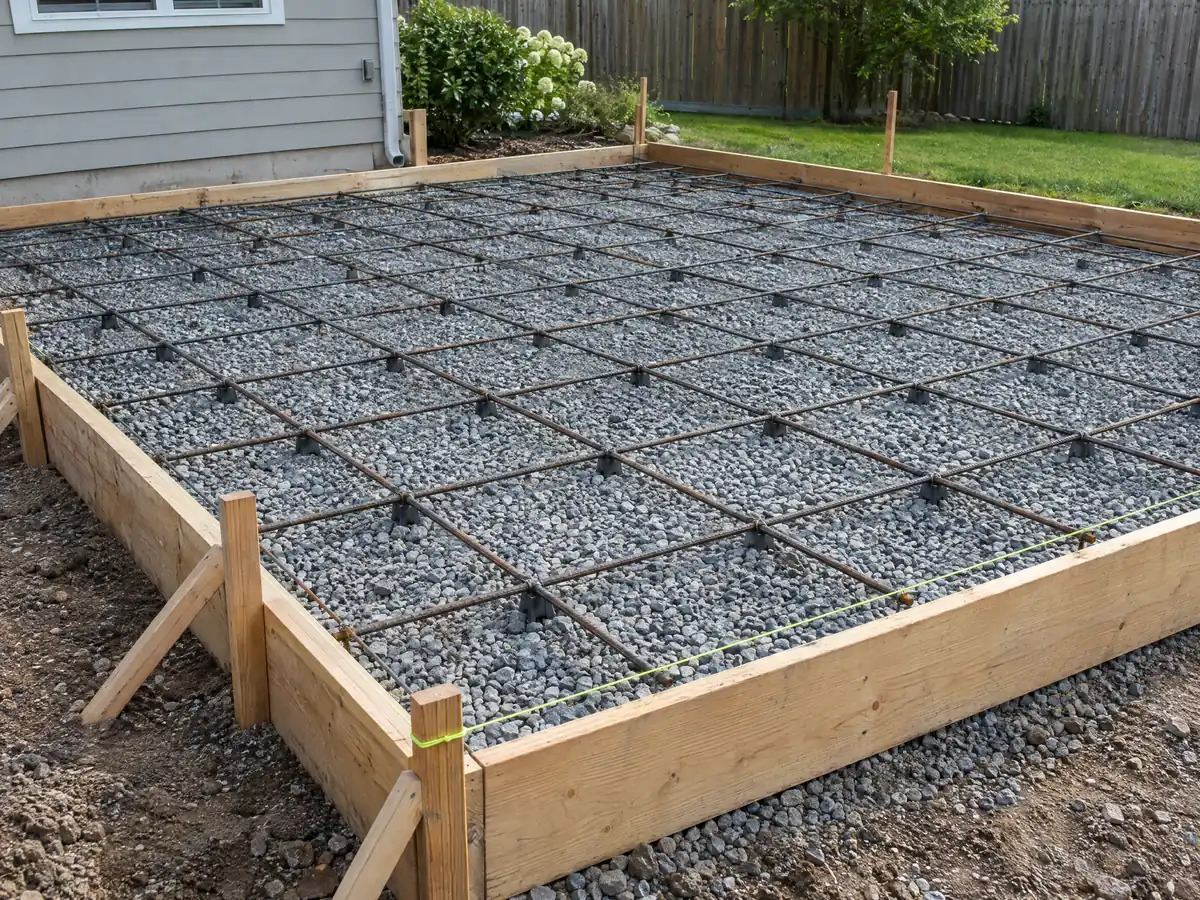
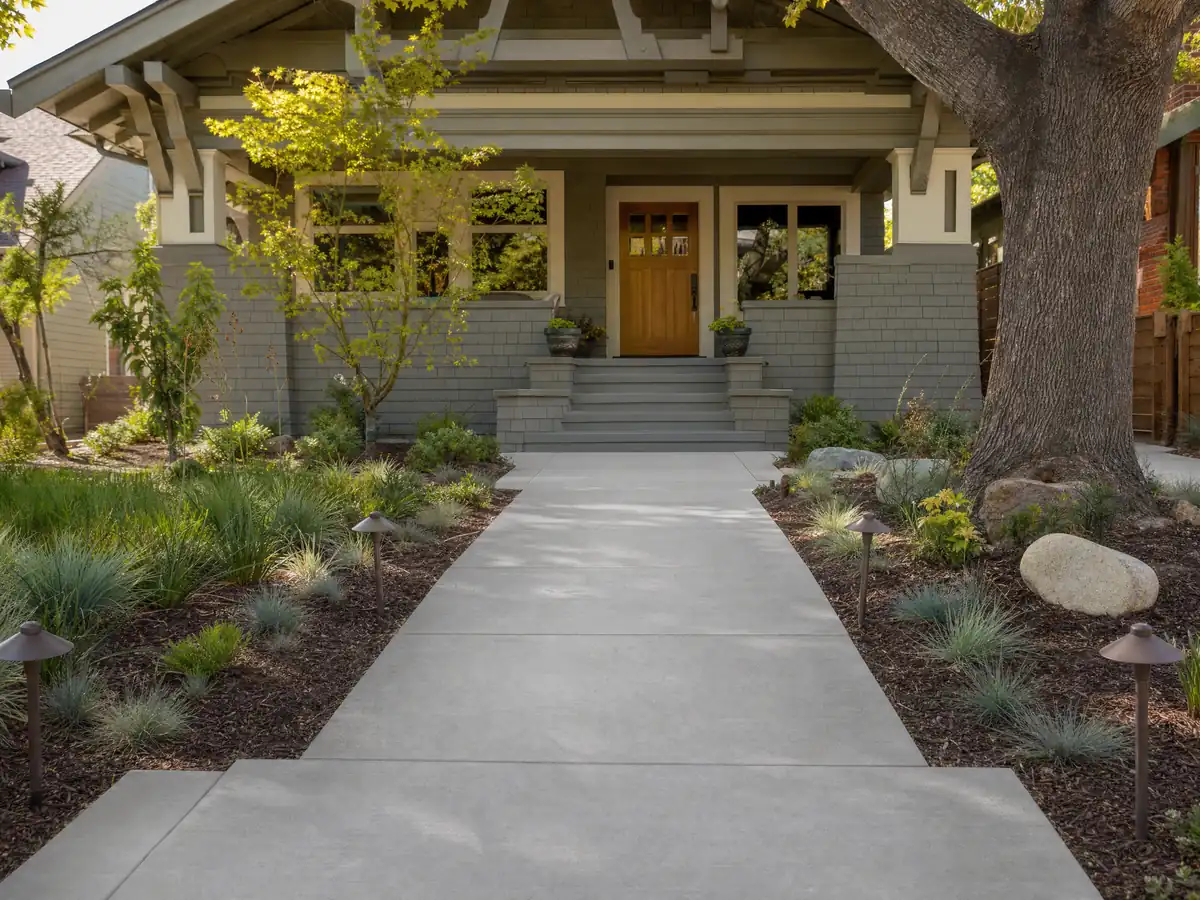
Concrete photos from Jurupa Valley and nearby communities
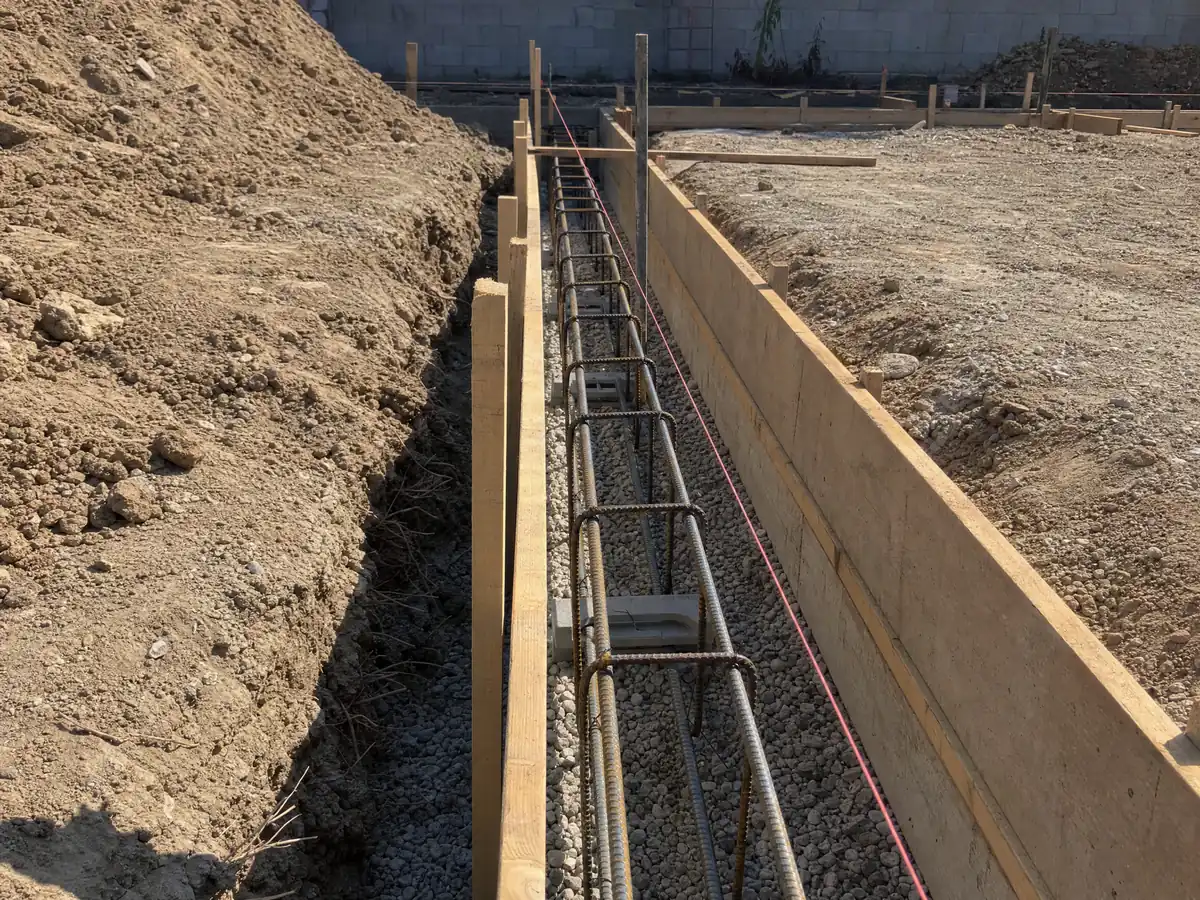
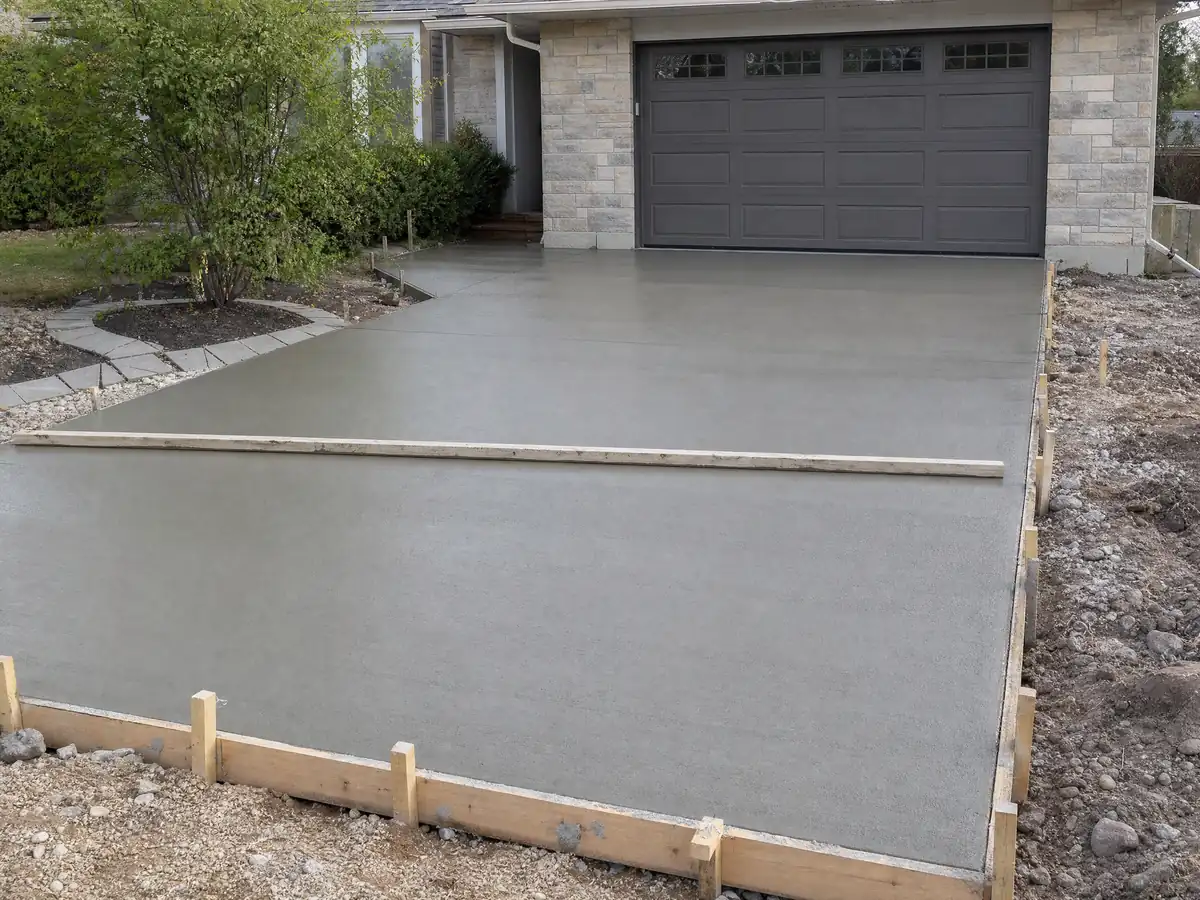
Footings, rebar, screeded slabs and finished walks, drives and patios from Jurupa Valley and the communities around it, shown at the steps where the rules bite. Tap any photo to enlarge it.
What concrete costs around Jurupa Valley
These figures are Los Angeles planning ranges, not a Jurupa Valley bid, and demolition, haul-off, rebar, drainage plus any grading or wall permit belong on separate lines of the written proposal. The same lot may need flooring in Jurupa Valley indoors or decks in Jurupa Valley outside. See concrete work in Riverside, concrete in Corona and concrete in Moreno Valley for nearby cities, and concrete in Los Angeles for the benchmark. The subcontractor guide explains who forms and who finishes, and the flooring cost guide prices surfaces that go over a slab.
| What it covers | Typical range |
|---|---|
| Patio, walkway or slab, broom finish, 300 sq ft or more | $8 to $14 per square foot |
| Decorative: stained, stamped or exposed aggregate | $15 to $30 per square foot |
| Driveway replacement, with demolition of the old slab | $9 to $20 per square foot |
| 20 by 20 foot plain patio (400 sq ft) | About $3,200 to $5,600 |
| 20 by 20 foot decorative patio (400 sq ft) | About $6,000 to $12,000 |
| Small jobs under 300 sq ft | Usually above the per-foot range |
| Retaining walls | Set by the written proposal |
Other work we manage in Jurupa Valley
Jurupa Valley concrete questions, answered
Can I pour a concrete patio without a permit?
Sometimes in Jurupa Valley. The local exemption covers sidewalks and driveways up to 30 inches above grade that are not over a basement or part of an accessible route, but it does not name a patio slab, and zoning and setbacks still apply. Give Building & Safety the size, height and distance to the lot line before a truck is booked.
How much should a 20x20 concrete patio cost?
At our Los Angeles planning range of $8 to $14 per square foot, 400 square feet of plain concrete costs about $3,200 to $5,600. Angi's Los Angeles patio page of August 2026 prices patios at $4 to $13 a square foot. No Jurupa Valley study turned up, and stamping, demolition and drainage all add cost.
Can I expand my driveway without a permit?
Not safely without asking. A private driveway up to 30 inches above grade is on the exemption list, but zoning allows one driveway per frontage up to 30 feet wide with a 3 foot landscape strip, paving over 6,000 square feet needs a grading permit, and work in the street needs an Encroachment Permit.
What is the maximum height of a retaining wall without a permit in California?
In Jurupa Valley the exemption stops at 2 feet, measured from the top of the footing, and any wall carrying a surcharge needs a permit at any height. The City's standard covers walls up to 6 feet with grouted cells and drainage. Other cities use 4 feet, so check the local rule.
Is 4 inches of concrete thick enough for a driveway?
Four inches is common for walks and light slabs, but we found no Jurupa Valley rule that sets flatwork thickness. High groundwater and expansive soils argue for a written base, reinforcement and joint plan. Ask the finisher to state thickness, mesh or rebar, joint spacing and base material before the pour.
How much does a 300 sq ft stamped concrete patio cost?
At Angi's Los Angeles range of $15 to $30 per square foot, 300 square feet of stamped concrete runs roughly $4,500 to $9,000. We found no Jurupa Valley study. Color, sealing, slab demolition and drainage move the number, so the real figure comes from a site visit.
How tall can a fence or wall be in a Jurupa Valley yard?
Six feet in residential zones, with front and street-side fences open to view above 42 inches. A building permit is needed above 3 feet, which is stricter than the zoning cap, and pool barriers always need one. Perimeter chain link is banned, except for repairs to chain link that stood before September 1, 2023.
Does Jurupa Valley's soil crack concrete slabs?
It can. The General Plan names expansive and collapsible soils, a high water table and High liquefaction potential across most of the city. Cracks also depend on base, joints, drainage and curing, so ask the finisher how each is handled on your lot and whether a soils report is advisable.
What license does a concrete company need in Jurupa Valley?
A concrete company needs a current California license, usually C-8 for poured work or C-29 for block walls, plus a workers' compensation certificate when a permit is pulled. The City registers local businesses rather than licensing them, so ask the counter which applies. Check the CSLB number and ask each subcontractor for insurance proof.
Tell us the lot, the slab size and whether it reaches a wall or the street
Say what you want poured, roughly how big it is, whether the yard is flat or sloped, how far it sits from the property line and whether any of it touches the sidewalk. We bring the soil, drainage and permit questions along to the first visit.