
Concrete Companyin Riverside, CA
A concrete company in Riverside can pour simple sidewalks and driveways without a building permit when they sit no more than 30 inches above grade, but work in the public right-of-way, grading past the City's limits, hillside and arroyo lots and walls over 4 feet need City review. Zoning also caps fence heights below the permit exemption.
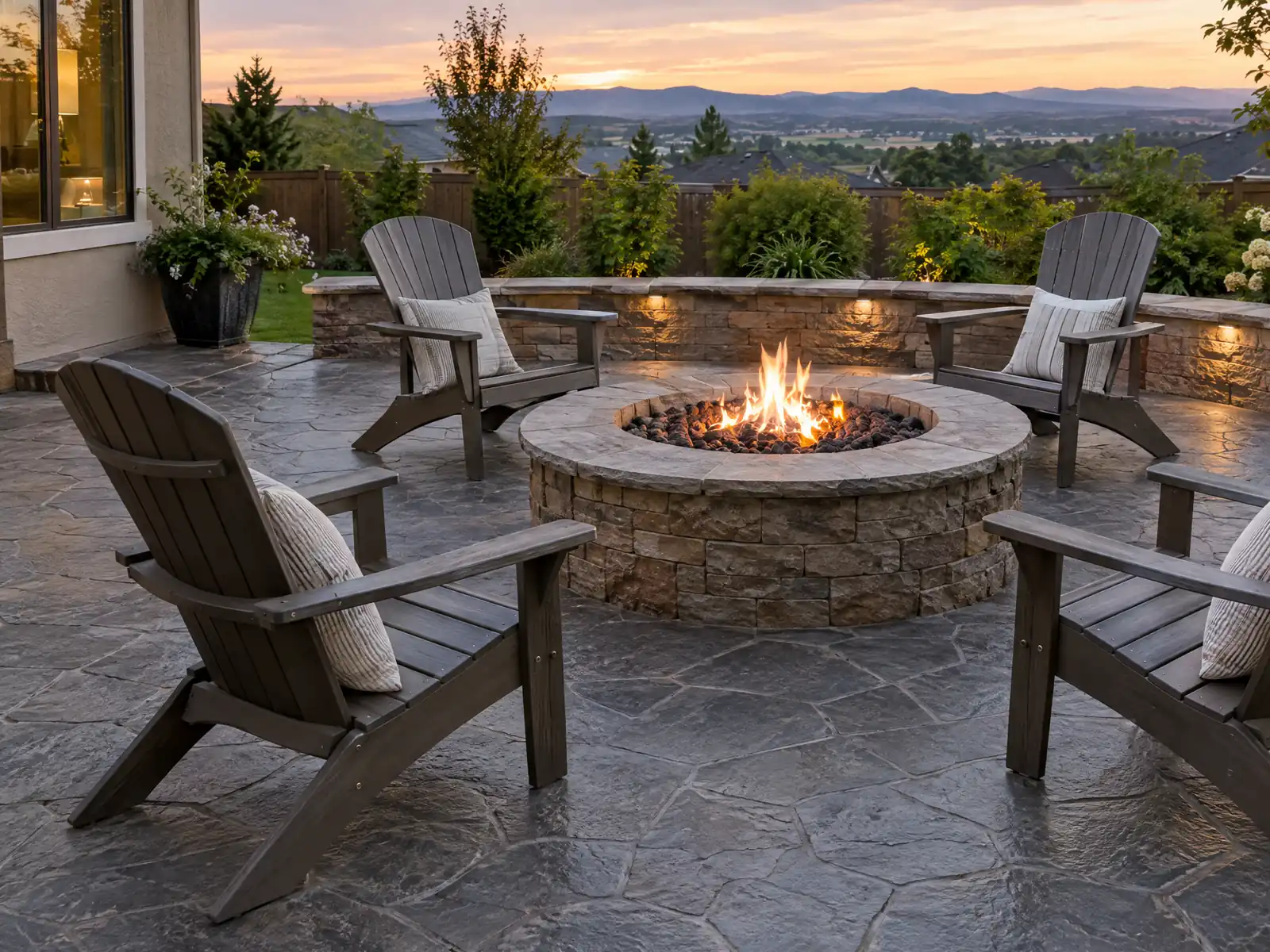
Riverside's concrete grew out of water and fruit. The City says the citrus era made it the wealthiest city per capita by 1895, and the town then spread across the valley in a postwar surge: Wikipedia's census table shows 46,764 residents in 1950 and 140,089 in 1970, and the Census Bureau's 2024 estimates credit 1950 through 1979 with 52,227 of the city's 107,868 homes. Many original walks, driveways and patio slabs are now 45 to 75 years old.
MDG Builders, CSLB #1040337, is a general contractor in Tarzana. On a Riverside pour we draft the scope, put the permit and right-of-way questions to the City's Building & Safety Division and hire a licensed concrete subcontractor to form, place and finish the work. The concrete page explains finishes, and the Riverside overview shows the other trades we manage here.
What Riverside's Building & Safety Division, Public Works, SCAQMD and state law say about concrete work
Where concrete permits come from in Riverside: City of Riverside Community & Economic Development Department, Building & Safety Division.
- Bulletin 140 exempts sidewalks and driveways not more than 30 inches above adjacent grade, not over a basement or story below and not part of an accessible route, and retaining walls up to 4 feet, but item 1.1 says associated grading, public right-of-way or other nonexempt work needs its own permit.
- RMC 17.12.010 gives the Public Works Director authority over any work done in a public right-of-way dedicated to the City, and lists grading permit exemptions that include footings and basement excavation under a valid building permit (unless the unsupported cut exceeds 5 feet), excavation under 2 feet deep or without a cut slope over 5 feet steeper than 2:1, and fill under 3 feet deep on slopes flatter than 5:1 that does not exceed 50 cubic yards per lot, support structures or block drainage; hillside and arroyo parcels follow Chapter 17.28 regardless. (Chapter 17.12 text was read in GoCodebook's copy of the Riverside Municipal Code, a third-party mirror refreshed 2026-10-04, because the City's own Municode site returned HTTP 403)
- Dust control: SCAQMD Rule 403 applies to any activity or man-made condition capable of generating fugitive dust, including construction and demolition, and defines high wind conditions as instantaneous wind speeds above 25 mph; Rule 403.1 is a supplement that applies only to fugitive dust sources in the Coachella Valley, and Riverside is in the Inland Empire (region in our data file), not the Coachella Valley.
- Flatwork near a house in a fire zone: the Riverside Fire Department's Zone 0 guidance (0 to 5 feet from the building) says to avoid combustibles and calls the area an excellent location for walkways, paver hardscape, rock mulch or pea gravel, coupled with a 6-inch vertical noncombustible section where the ground meets the siding; Zone 1 runs 5 to 30 feet and Zone 2 runs 30 to 100 feet.
- Paving on a cultural resource: Title 20 lets the Historic Preservation Officer administratively approve paving for driveways, walkways and patios and changes to driveway approaches (subject to WQMP requirements). (Chapter 20.25 text was read in GoCodebook's copy of the Riverside Municipal Code, a third-party mirror refreshed 2026-10-04, because the City's own Municode site returned HTTP 403)
- Soil conditions to plan for: the City's Public Safety Element says soils with high shrink-swell potential occur primarily west of the Riverside Municipal Airport and in the Lake Mathews drainage but can be found throughout the City, and names four primary liquefaction areas (the Santa Ana River, a broad area south and west of the airport, part of western Riverside along La Sierra Avenue and a small area along the southern boundary).
Sources for these rules

How do Riverside's soils, 96 mph wind and zero snow load affect a concrete slab?
The City's Local Design Criteria page shows what Riverside skips: ground snow load is zero, frost line depth is not applicable and Risk Category II wind is 96 mph, usually Exposure C. Footing depth here is driven by soil and by the structure above it, not by freezing. The same page lists Seismic Design Category D and site class D as the default unless a geotechnical engineer specifies otherwise.
Soil changes from district to district. The Public Safety Element says soils with high shrink-swell potential occur mainly west of Riverside Municipal Airport and in the Lake Mathews drainage but can be found throughout the city, and it names four primary liquefaction areas: along the Santa Ana River, south and west of the airport, part of western Riverside along La Sierra Avenue and a small strip on the southern boundary. RMC 16.08.185 requires a geological investigation before a building permit in those areas, though the Building Official may exempt minor structures. That code text comes from GoCodebook's mirror, so confirm it with the City.
Heat and rain set the pour calendar. NOAA's normals for Fire Station 3 show 10.02 inches of rain a year, about 110 days at or above 90 F and about 28 at or above 100 F. We gathered no Riverside source on curing limits, so ask the finisher how a slab is shaded, dampened and cured at your address in August.
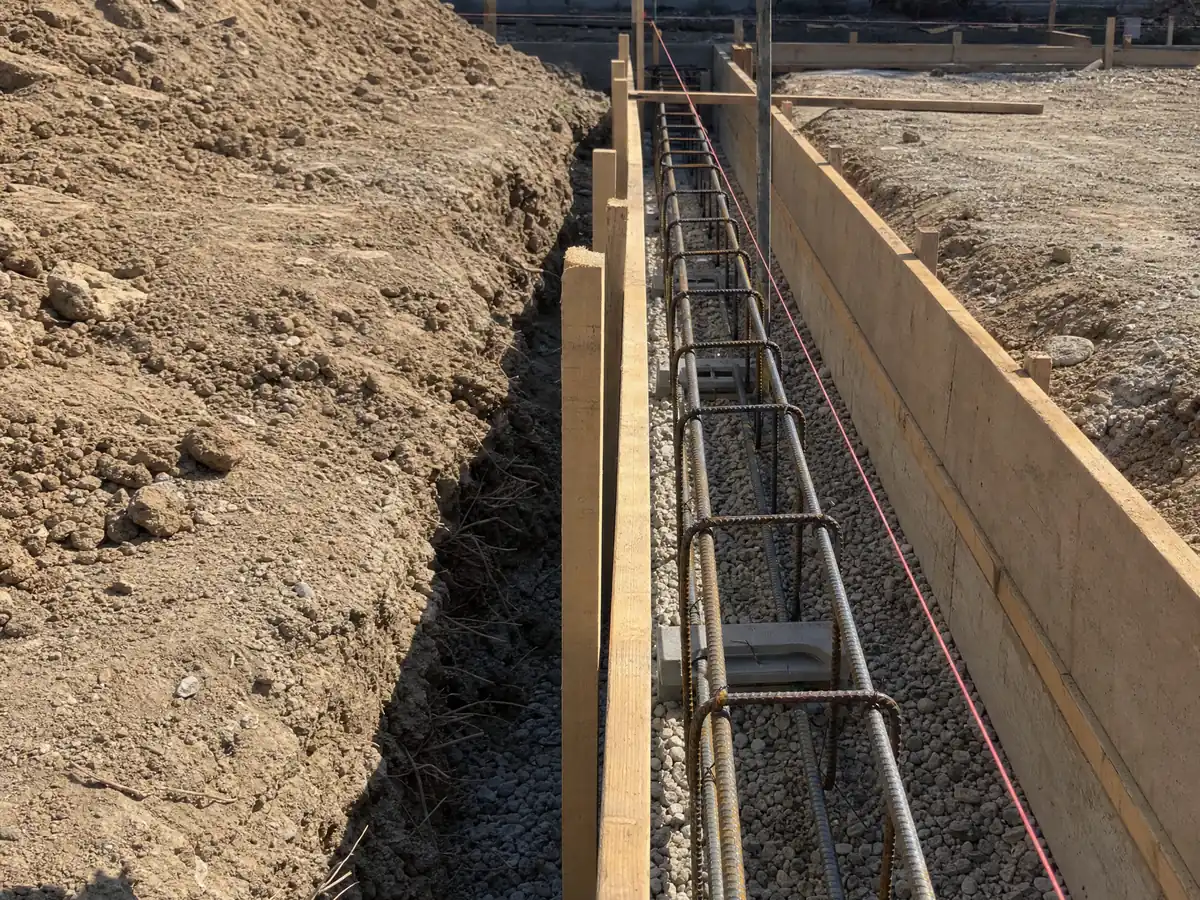
Can I pour a concrete patio or walkway in Riverside without a permit?
Probably, for simple flatwork. Bulletin 140, the City's exemption list issued August 4, 2026, exempts sidewalks and driveways not more than 30 inches above adjacent grade that sit over no basement or story below and are not part of an accessible route. Retaining walls up to 4 feet are exempt too, counted from footing bottom to wall top, unless the wall carries a surcharge. A patio slab on the ground is not named, so describe it to Building & Safety rather than assuming the sidewalk line covers it.
Item 1.1 of the bulletin adds that grading, public right-of-way work and other nonexempt work need their own permits, and the bulletin says an exemption never authorizes work that breaks zoning or easement rules. RMC 17.12.010 exempts excavation under 2 feet deep and fill under 3 feet deep on slopes flatter than 5 to 1, as long as the fill stays under 50 cubic yards per lot, supports no structure and blocks no drainage.
Anything bigger goes through plan check. Bulletin 137 puts freestanding walls in Tier 0 at 5 working days and most patio covers in Tier 1 at 10, and the Permits page says simple patio covers can sometimes be issued over the counter the same day. A permit lapses if work does not start within a year or stalls for a year under RMC 16.04.310, per GoCodebook's copy of the code.
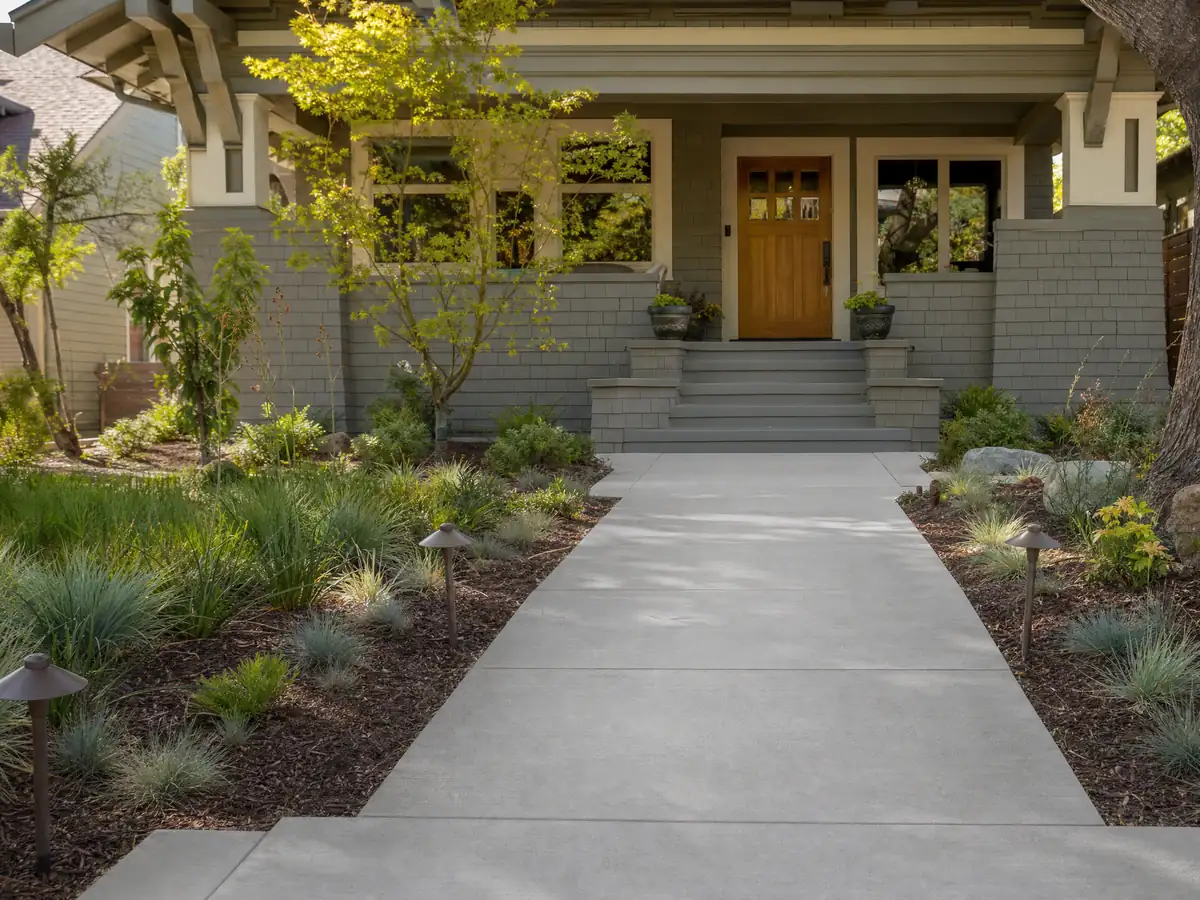
Does a driveway, apron or paving change need City approval in Riverside?
Anything touching the public right-of-way is Public Works business. RMC 17.12.010 gives the Public Works Director authority over work in a right-of-way dedicated to the City, and Bulletin 140's exemption for private driveways does not extend past the property line. We found no City page on driveway approaches or sidewalk panels, so confirm where the lot line sits and who permits the apron before pricing demolition.
Older streets carry extra layers. Title 20 lets the Historic Preservation Officer administratively approve paving for driveways, walkways and patios on a cultural resource, subject to storm water quality rules. On Victoria Avenue, the November 2019 policy requires a Certificate of Appropriateness for any building within 200 feet on a lot with frontage, and it lists driveways, fencing and walls among the items reviewed.
Age varies block by block. The City says nearly all Wood Streets homes predate World War II and most Eastside homes predate the 1950s, so walks there can be older than the 1950 to 1979 tracts. If a block may sit in a historic district, send Planning a photo before the old walk comes out.
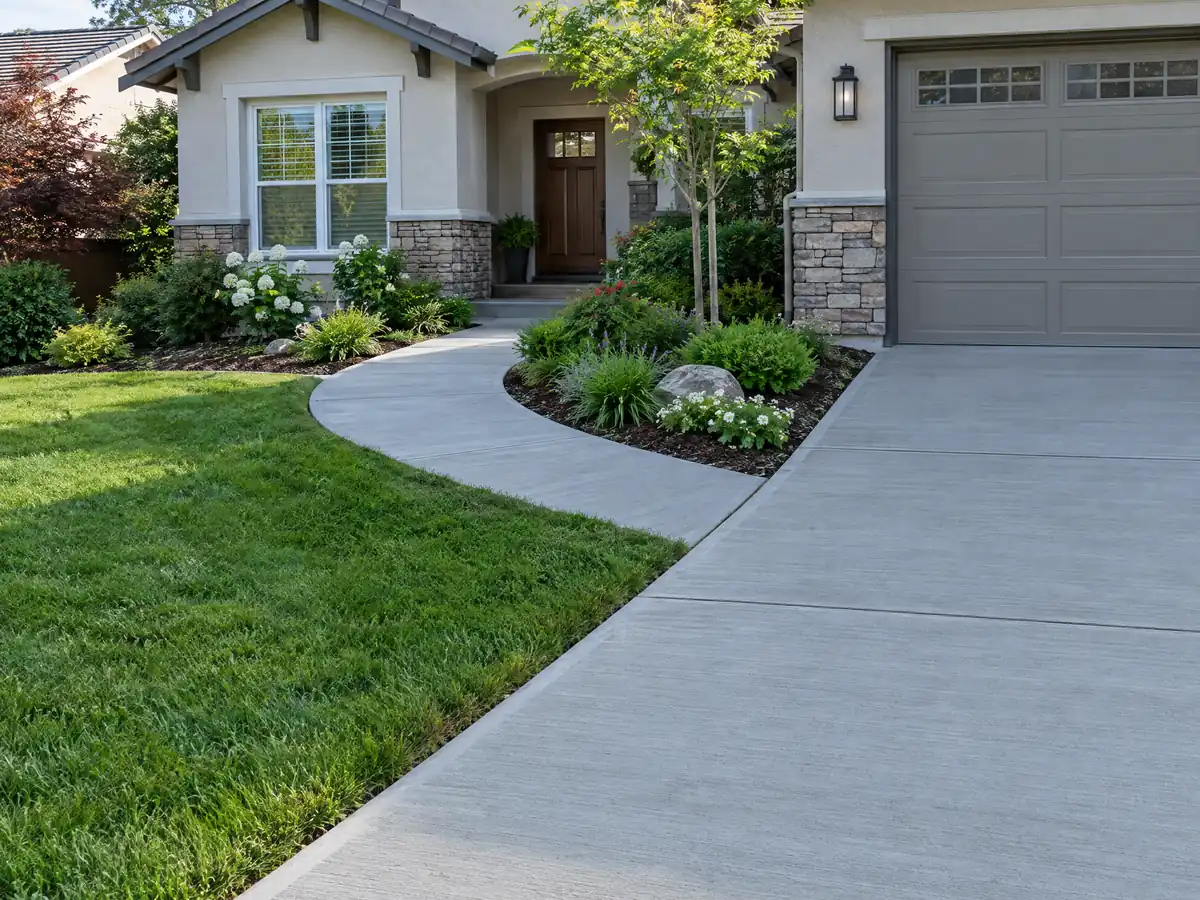
How tall can a block wall, fence or retaining wall be in Riverside?
Zoning sets the height, even where building permits do not. Bulletin 140 exempts fences not over 7 feet and retaining walls not over 4 feet, but Zoning Code 19.550.030 limits a front yard fence to 4 feet in most zones, the R-1 zones included, with the part above 3 feet at least three parts open to one part solid. The RA-5, RC, RR and RE zones allow 6 feet. Side and rear fences may reach 7 feet where the street cannot see them. A fence can be exempt from a permit and still be illegal.
Walls have more lines. Combined freestanding and retaining walls may not exceed 10 feet, a retaining wall exposed to public view stops at 3 feet, and a clear triangle with 15-foot legs at each corner must stay free of anything over 3 feet. A new single-family home needs decorative masonry or similar on street-facing walls. The City's standard block wall, Drawing 208, assumes 1,500 psf soil bearing and an 80 mph wind figure older than the 96 mph in the Local Design Criteria, and it puts footings at least 5 feet from a slope face.
Licenses split by material. CSLB's C-8 class covers poured concrete, and C-29 masonry covers concrete block walls for structures and fences. No independent per-foot wall price turned up, so none is printed. On a shared line, Civil Code 841 presumes equal cost and 30 days' written notice.
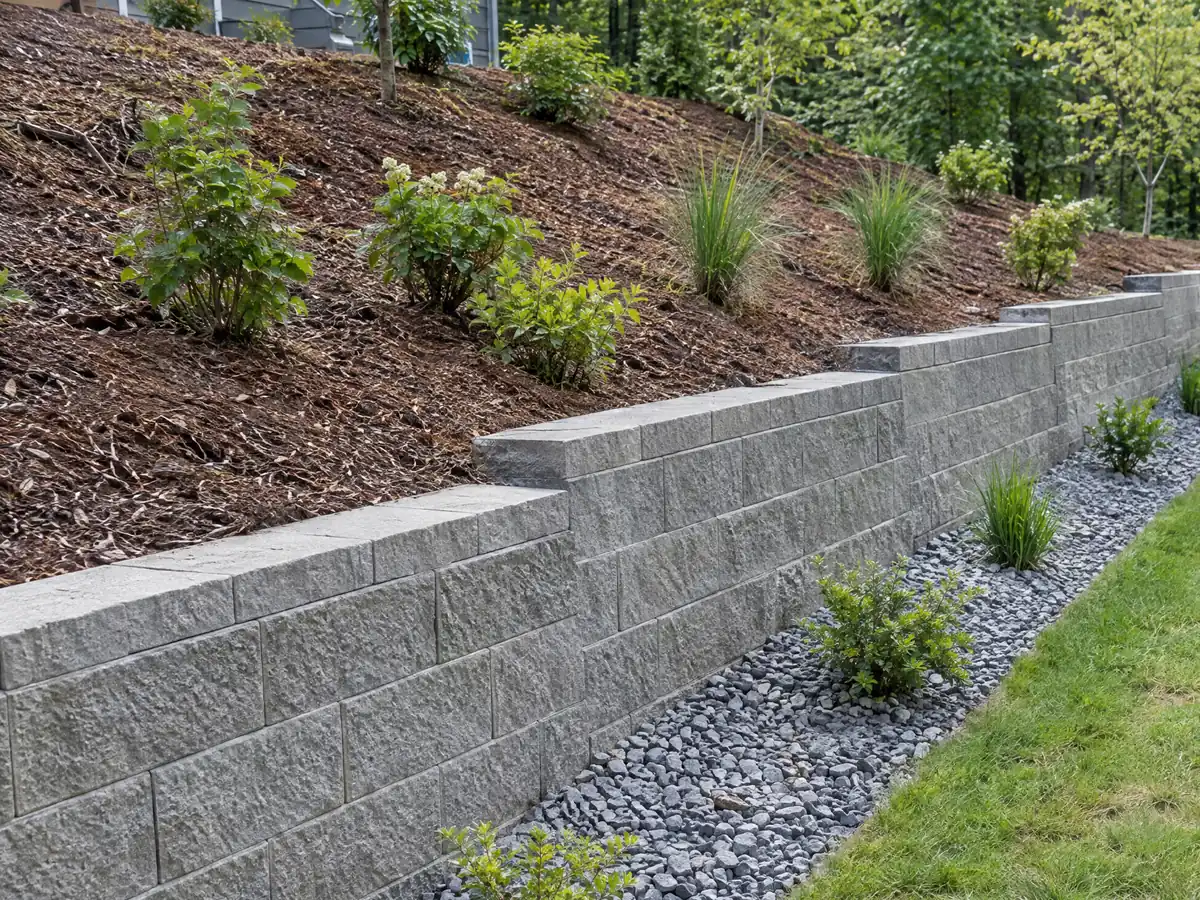
Can you pour or grade on a Riverside hillside, beside an arroyo or in a fire zone?
Hillside rules start at a 10 percent slope. RMC 17.12.020 and 17.28.020 apply to any grading in the RC zone, on land with an average natural slope of 10 percent or more, or within or beside the Mockingbird Canyon, Woodcrest, Prenda, Alessandro, Tequesquite and Springbrook arroyos. Grading is limited to the minimum for the house, driveway, garage and a small level yard, with pad limits of 27,000, 21,000 and 18,000 square feet at 10 to 15, 15 to 30 and 30 to 40 percent slope, driveways no wider than 15 feet and nothing within 50 feet of those arroyos.
Fire adds a second map. The State Fire Marshal issued the 2025 recommended zones on March 24, 2025, RMC 16.32.365 designates them and owners in High and Very High zones keep 100 feet of defensible space. We did not open the parcel viewer, so we cannot say which streets are mapped. The City's fire hazard zone page is the place to check an address.
Concrete earns its keep within 5 feet of the house. The Fire Department's Zone 0 guidance says to avoid combustibles there and calls the strip an excellent place for walkways, paver hardscape, rock mulch or pea gravel, with a 6 inch vertical noncombustible section where the ground meets the siding. Zone 1 runs 5 to 30 feet and Zone 2 runs 30 to 100 feet.
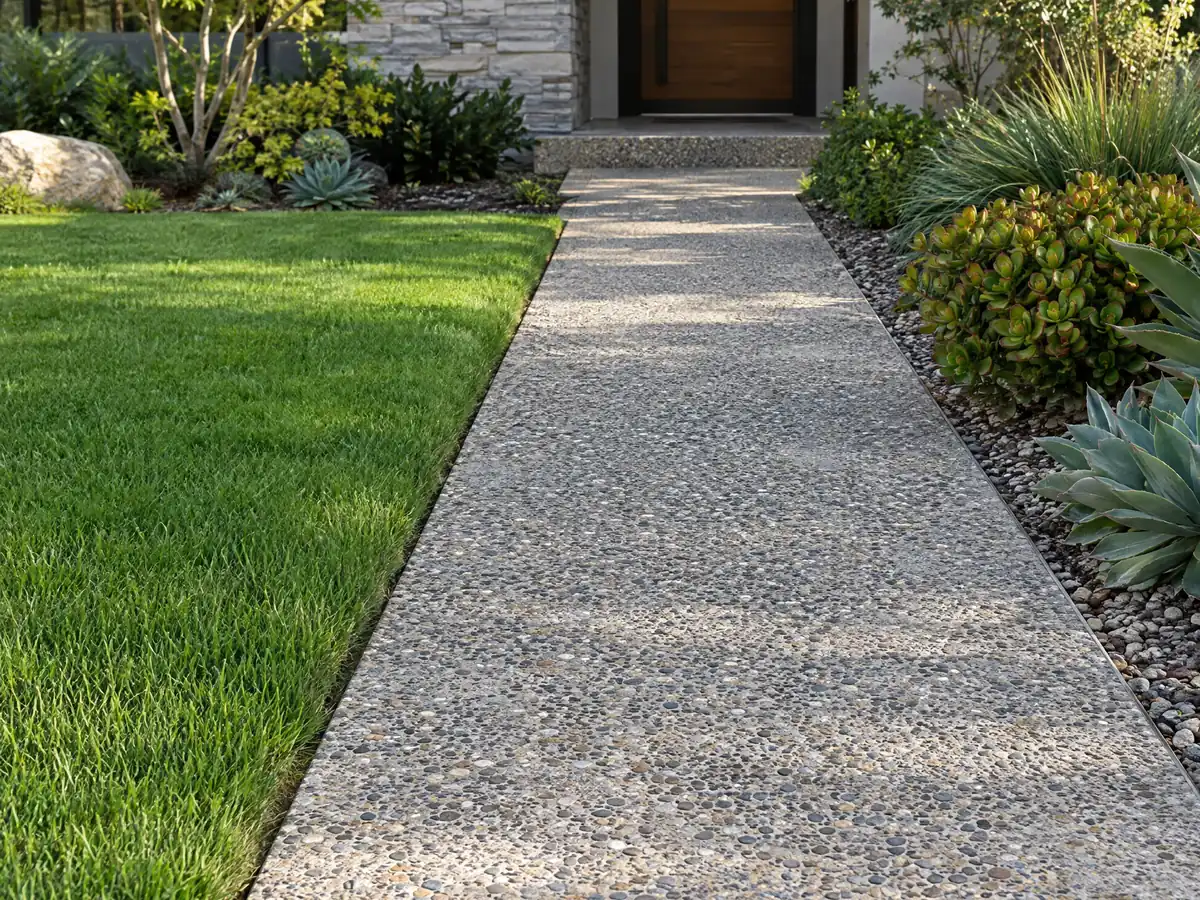
What do the dust, sealer and noise rules mean for a concrete job in Riverside?
SCAQMD Rule 403 governs the dust. It applies to any activity capable of generating fugitive dust, construction and demolition included, and it treats instantaneous wind above 25 mph as high wind conditions. Rule 403.1 is a supplement for the Coachella Valley only, and Riverside is in the Inland Empire, so it does not apply here. Ask the contractor how the site is wetted and when the crew stops on a windy afternoon.
Sealers have VOC limits. SCAQMD Rule 1113, last amended February 5, 2016 on the copy we read, lists 50 grams per liter for floor coatings, which include clear coatings for concrete flooring, and for driveway sealers, and 100 for waterproofing sealers and for stains. Whether the District amended the rule after 2016 was not confirmed, so ask which compliant product goes on and keep the label.
Hours come from RMC 7.35.020.G: permitted construction is exempt from the noise rules only between 7 a.m. and 7 p.m. on weekdays and 8 a.m. and 5 p.m. on Saturdays, and not on Sundays or federal holidays. That text is from GoCodebook's copy, not the City's own site. Tearing out a slab with a house or a structure is a separate matter: Rule 1403 covers asbestos in demolition, and the City's plan-check note C129 asks for proof of SCAQMD notification before a demolition or renovation permit.
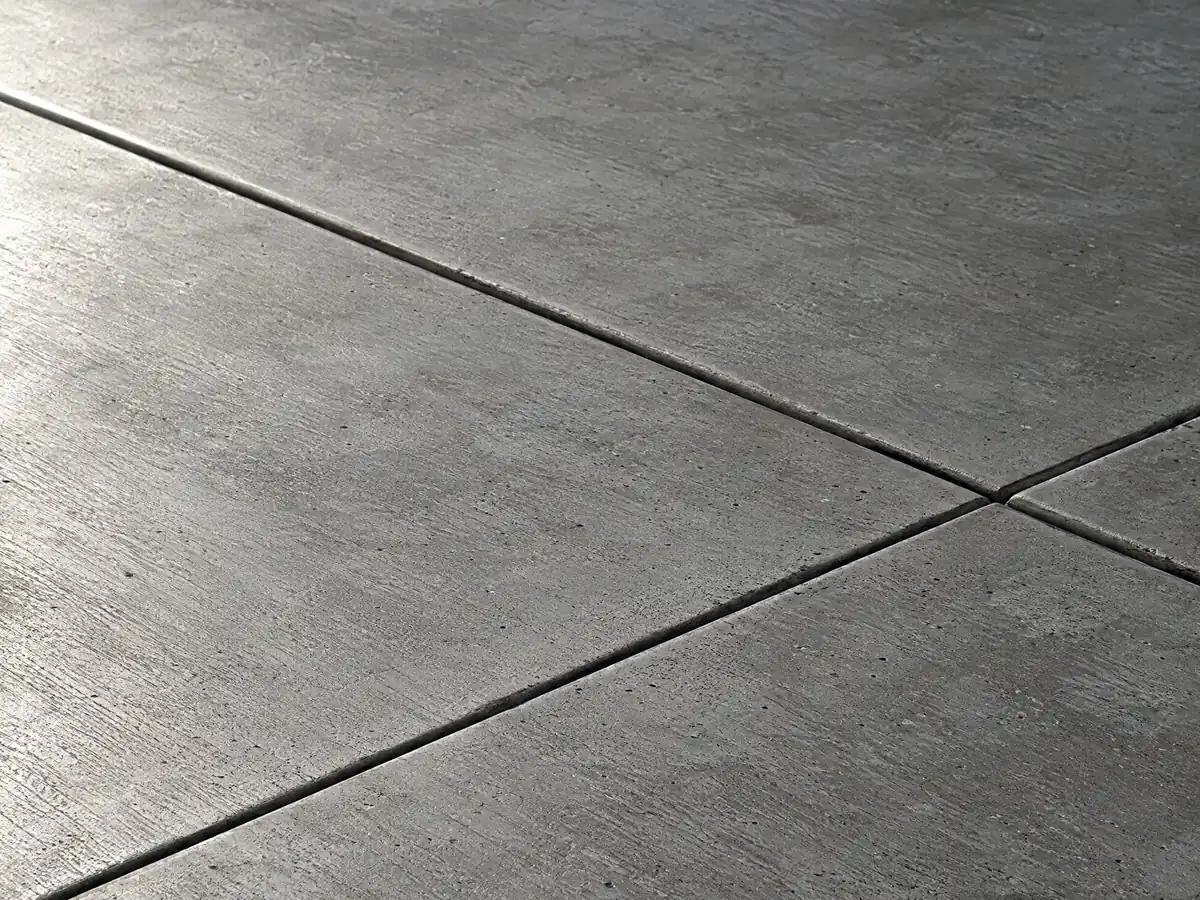
How much does concrete work cost in Riverside, and who needs which license?
No Riverside price study with a stated method turned up, so the anchor is Angi's pages for Los Angeles. Its patio page of August 4, 2026 gives $4 to $13 a square foot with a $5,248 average, the stamped page of July 20, 2026 gives $15 to $30, and the driveway page of May 5, 2026 gives $8 to $20. Federal wage data show a $33.67 mean hourly wage for cement masons in the Los Angeles metro area in May 2025. Riverside bids may differ.
Our planning figures for Los Angeles are $8 to $14 a square foot for plain flatwork of 300 square feet or more, $15 to $30 for stained, stamped or exposed aggregate and $9 to $20 for driveway replacement including demolition, so a plain 20 by 20 slab lands near $3,200 to $5,600. Small jobs cost more per foot because of minimum charges, and a retaining wall is priced by height, drainage and engineering after a visit.
A job that needs a permit needs a licensed contractor, because the state's $1,000 unlicensed limit ends once a permit is required. Under Business and Professions Code 7159.5 the deposit on a home improvement contract is limited to $1,000 or 10 percent of the price, whichever is smaller, and our license check guide shows how to verify a license number.
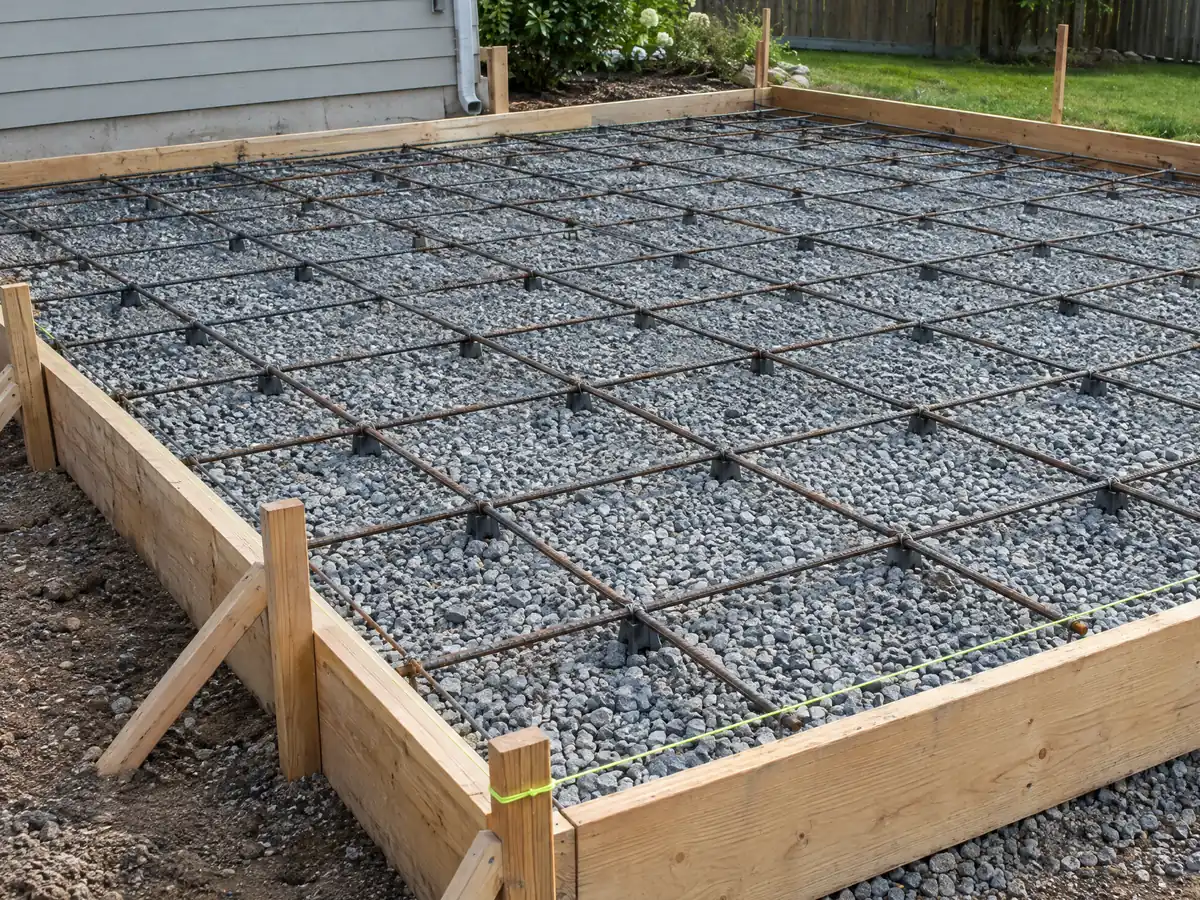
Concrete photos from Riverside and nearby communities
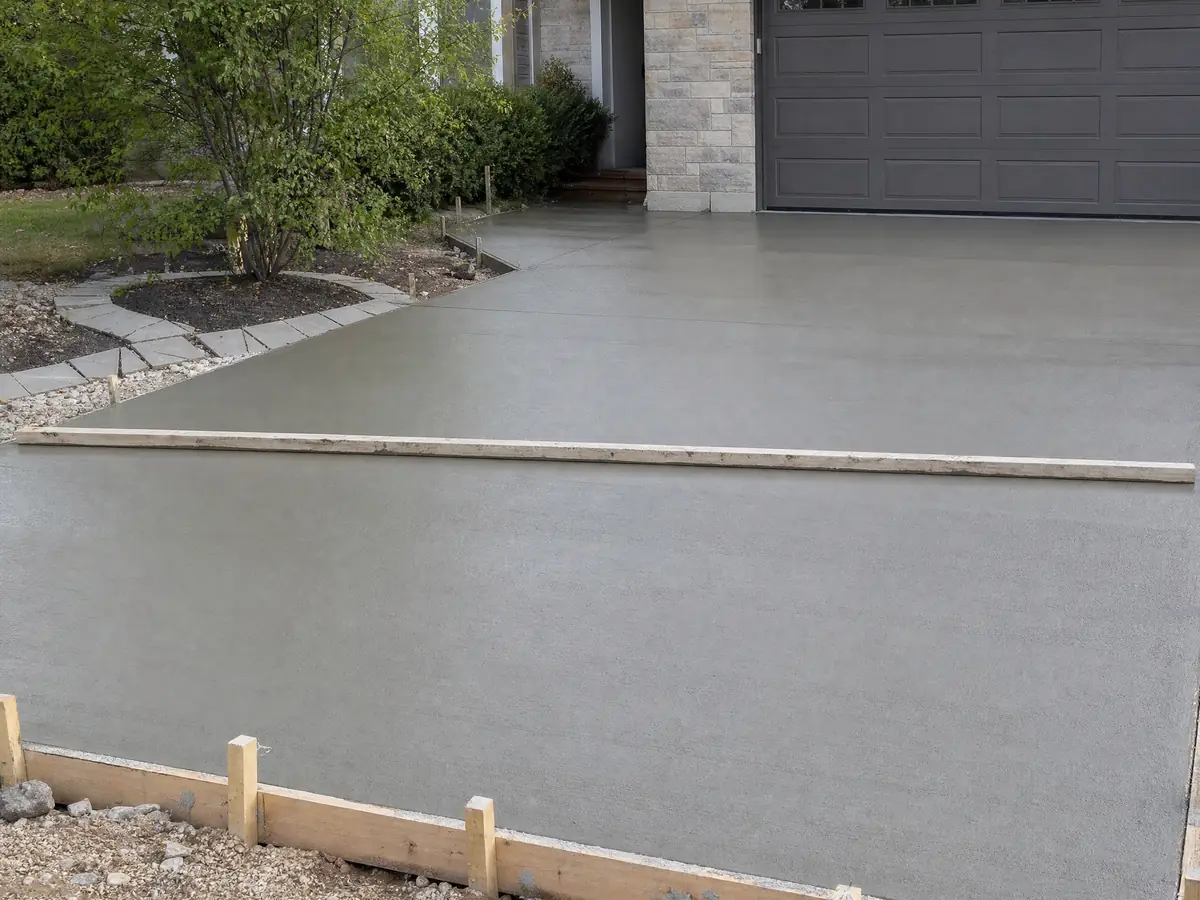
Footings, rebar, screeded slabs and finished walks and patios from Riverside and the communities around it, shown at the steps where the rules bite. Tap any photo to enlarge it.
What concrete costs around Riverside
Dollar figures here are Los Angeles planning ranges, not a Riverside bid, and demolition, haul-off, rebar, drainage and any grading or wall permit should be separate lines on the written proposal. The same property may need flooring in Riverside or decks in Riverside. For neighbors, read concrete work in Corona, concrete in Pomona and concrete in Temecula, and concrete in Los Angeles for the benchmark city. The subcontractor guide shows which trade forms the slab and which finishes it, and the flooring cost guide prices the surfaces that go over one.
| What it covers | Typical range |
|---|---|
| Patio, walkway or slab, broom finish, 300 sq ft or more | $8 to $14 per square foot |
| Decorative: stained, stamped or exposed aggregate | $15 to $30 per square foot |
| Driveway replacement, with demolition of the old slab | $9 to $20 per square foot |
| 20 by 20 foot plain patio (400 sq ft) | About $3,200 to $5,600 |
| 20 by 20 foot decorative patio (400 sq ft) | About $6,000 to $12,000 |
| Small jobs under 300 sq ft | Usually above the per-foot range |
| Retaining walls | Set by the written proposal |
Riverside concrete questions, answered
Can I pour a concrete patio without a permit?
Sometimes in Riverside. Bulletin 140 exempts sidewalks and driveways up to 30 inches above grade that are not over a basement or part of an accessible route, but it does not name a patio slab, and grading, right-of-way work and zoning limits still apply. Call Building & Safety with the size, height and location before ordering the truck.
How much should a 20x20 concrete patio cost?
At our Los Angeles planning range of $8 to $14 per square foot, 400 square feet of plain concrete costs about $3,200 to $5,600, while Angi's August 2026 Los Angeles patio page shows a 20 by 20 slab at $1,600 to $5,200. No Riverside study turned up. Stamping, demolition and drainage add cost.
Can I expand my driveway without a permit?
Not safely without asking. A private driveway not over 30 inches above grade is on the City's exemption list, but work in the public right-of-way is Public Works business, and zoning, Victoria Avenue and historic review can all apply. We found no City page on driveway approaches, so confirm the property line first.
What is the maximum height of a retaining wall without a permit in California?
In Riverside the exemption stops at 4 feet, measured from the bottom of the footing to the top of the wall, and it does not apply to a wall that carries a surcharge. Zoning also limits walls exposed to public view to 3 feet. Ask Building & Safety before assuming a short wall near a slope is exempt.
Is 4 inches of concrete thick enough for a driveway?
Four inches is common for walks and light slabs, but we found no Riverside rule that sets flatwork thickness. Soil movement and vehicle weight argue for a written base, mesh and joint plan. Ask the finisher to state thickness, reinforcement, joint spacing and the base material before the pour.
How much does a 300 sq ft stamped concrete patio cost?
At Angi's Los Angeles range of $15 to $30 per square foot, 300 square feet of stamped concrete runs roughly $4,500 to $9,000, and the page lists a $5,948 average. We found no Riverside study, and color, sealing and old slab demolition shift the number, so the real figure comes from a site visit.
How tall can a fence or block wall be in a Riverside front yard?
Four feet in most zones, with anything above 3 feet at least three parts open to one part solid, and 6 feet in the RA-5, RC, RR and RE zones. The 7 foot permit exemption does not override zoning. Corner lots must keep a 15-foot visibility triangle clear of anything over 3 feet.
Does Riverside's soil crack concrete slabs?
It can. The City says soils with high shrink-swell potential occur mainly west of the airport and in the Lake Mathews drainage but can be found anywhere in the city. Cracks also depend on base, joints, drainage and curing, so ask the finisher how each is handled on your lot.
What license does a concrete company need in Riverside?
A concrete company needs a current California license, usually C-8 for poured work or C-29 for block walls, plus a City of Riverside business license and a workers' compensation certificate when a permit issues. Check the CSLB number and ask each subcontractor for a certificate of insurance.
Tell us the lot, the slab size and the slope
Say what you want poured, roughly how big it is, whether the yard is flat or sloped and whether any of it reaches the sidewalk or a wall. The soil, drainage and permit questions come with us to the first visit.