
Deck Builderin Riverside, CA
A deck builder in Riverside should treat every deck as permit work until Building & Safety says otherwise, because neither the City's Permits page nor its exemption list names a deck. Guards are required above 30 inches, and the Fire Department wants nothing combustible within 5 feet of the house. Hillside lots and historic districts add review.
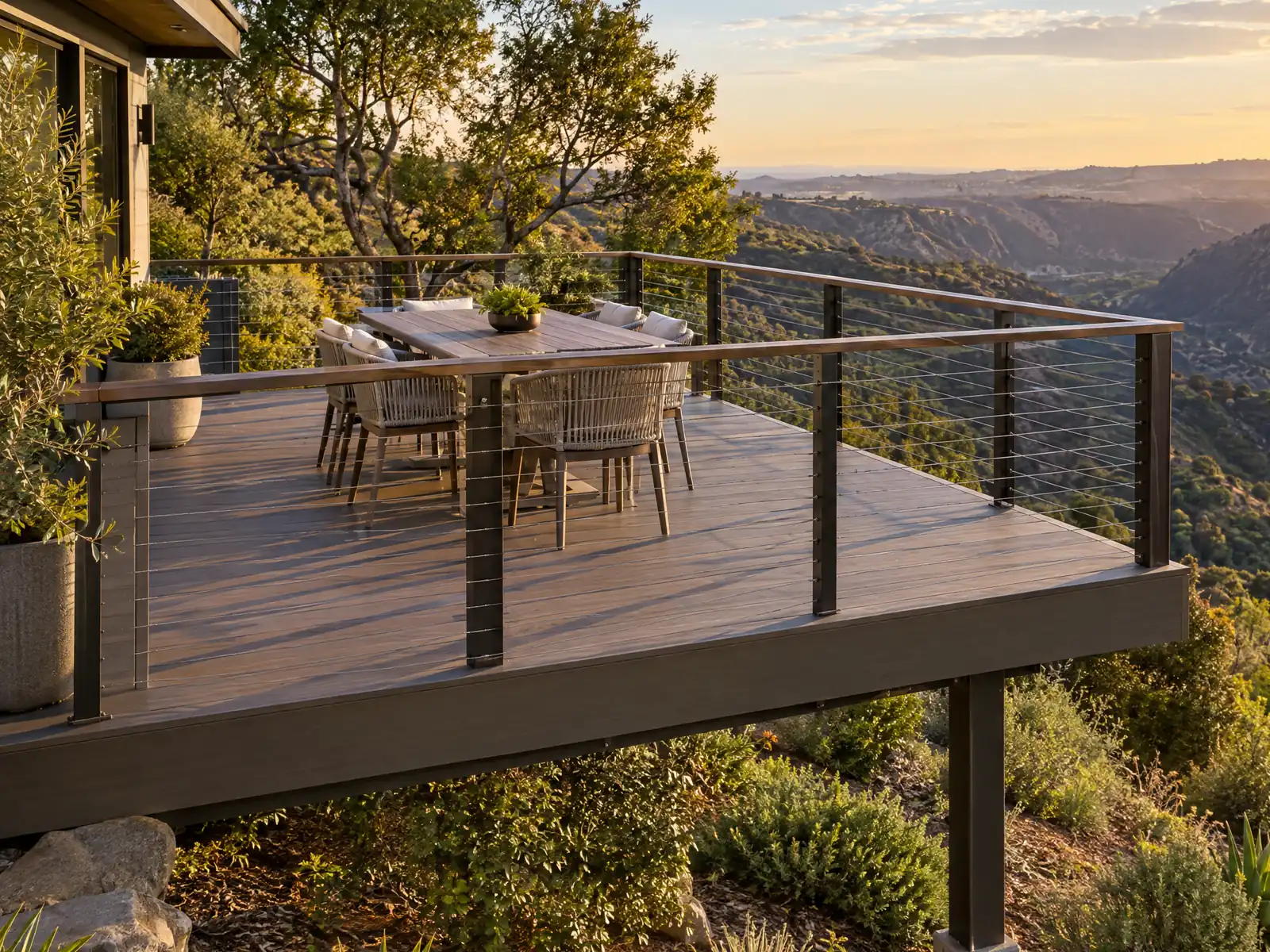
Riverside was incorporated in 1883 and became a charter city in 1907, per Wikipedia, so it writes and enforces its own building rules. The Census Bureau's 2024 estimates count 65,327 single-family detached homes, 60.6 percent of the city's 107,868 units, and about 48 percent of all homes date from 1950 through 1979. A typical backyard deck here is a retrofit onto a postwar house that was built with a slab patio, or a decades-old deck that now needs its boards, stairs and ledger checked.
MDG Builders, CSLB #1040337, is a Tarzana general contractor. We draw the deck, put the permit and fire questions to Riverside's Building & Safety Division and hire a licensed carpentry subcontractor to build it. Materials and ranges are on the decks page, and the Riverside overview lists the other trades we manage here.
What Riverside's Building & Safety Division, Fire Department and state law say about decks
Where decks permits come from in Riverside: City of Riverside Community & Economic Development Department, Building & Safety Division.
- Decks: neither the Permits page nor Bulletin 140 lists a deck, platform or porch exemption (the only grade-level flatwork exemption is sidewalks and driveways not more than 30 inches above adjacent grade), so ask Building & Safety whether a low ground-level deck is exempt before building.
- The fee schedule has a 'Decks, Balconies, Stairways' fee category and the City's plan-check notes add that guards are required where an elevated walking surface is more than 30 inches above the floor or grade below and that enclosed framing in exterior balconies and elevated walking surfaces needs net cross ventilation of at least 1/150 of the area of each space.
- Patio covers and accessory structures (19.440.030): patio covers may be one story, at least 5 feet from rear and interior side lot lines and unenclosed on at least three sides; accessory structures may cover no more than 35 percent of the required side or rear setback area and may not sit in the front setback; pools and spas must be at least 3 feet from any property line and outside the front setback; a detached tool or storage shed up to 120 sq ft and 10 feet tall may be exempt from a building permit. (Chapter 19.440 text was read in GoCodebook's copy of the Riverside Municipal Code, a third-party mirror refreshed 2026-10-04, because the City's own Municode site returned HTTP 403)
- The City's standard patio cover drawing (Drawing 206) is not designed to be enclosed and notes that additional engineering is required if it is enclosed, shows 4x4 minimum posts, 18 to 24 inch square by 12 inch deep footings and a 6 foot 8 inch to 8 foot clearance, and requires artificial lighting for rooms whose windows open into the covered area.
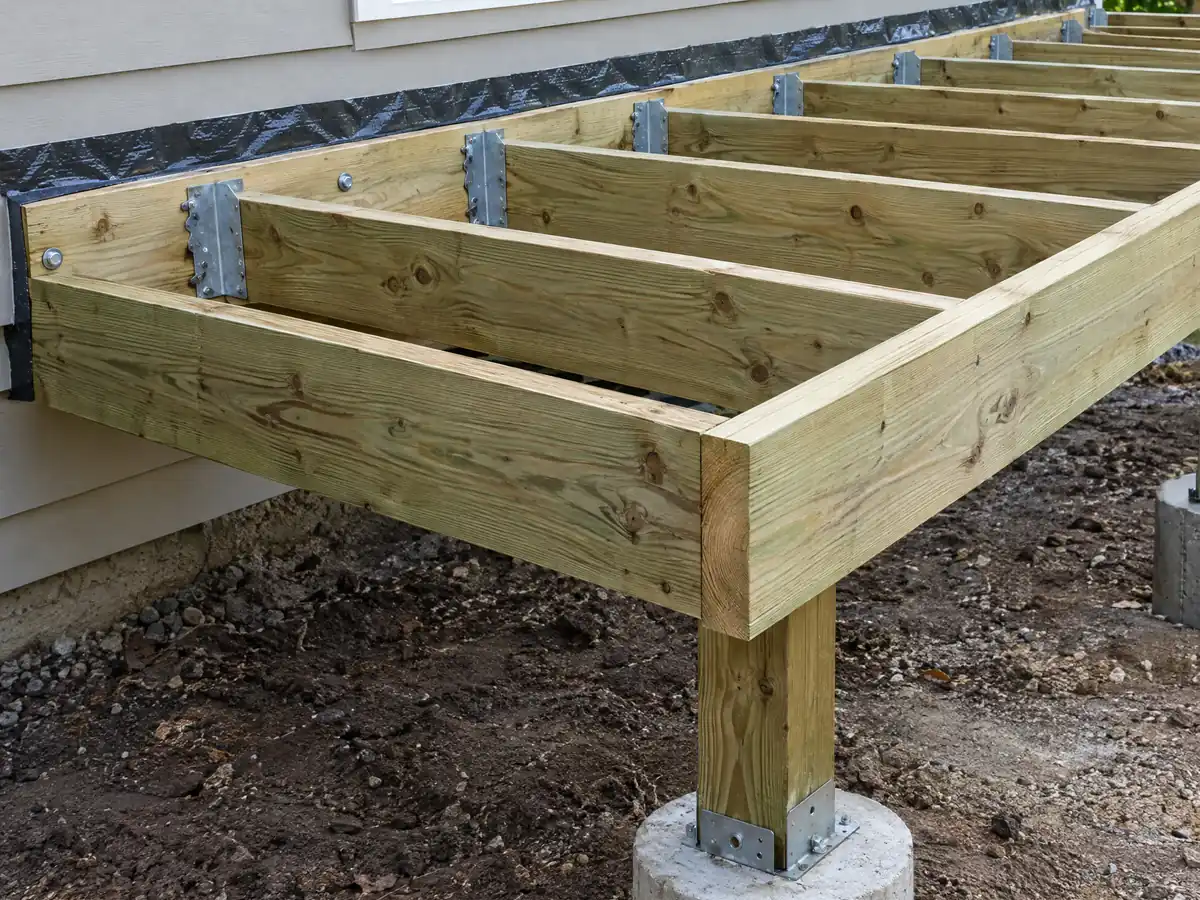
- Decks and trellises in fire zones: the Riverside Fire Department says Zone 0 (0 to 5 feet from buildings, structures and decks) should have no combustible woody plants, mulch, woodpiles, combustible trellises or stored items, and Zone 1 (5 to 30 feet) requires removing combustible material and vegetation from around and under decks.
- In the City's WUI plan-check notes, unenclosed accessory structures attached to a building with habitable space and projections, other than decks, must be heavy timber or constructed of noncombustible, fire-retardant-treated, ignition-resistant or fire-rated materials (CWUIC 504.7) when the home is a new building in a High or Very High zone or WUI zone.
Do you need a permit to build a deck in Riverside?
We could not confirm that a low deck is exempt, so treat it as permit work until the City says otherwise. Neither the Permits page nor Bulletin 140, the City's exemption list issued August 4, 2026, names a deck, platform or porch, and the only grade-level flatwork exemption is for sidewalks and driveways not more than 30 inches above adjacent grade. The fee schedule dated July 1, 2026 carries a Decks, Balconies, Stairways category, but its table is scrambled in the PDF, so we quote no amount.
Call the permit counter at (951) 826-5800 with the height, the size and whether the deck touches the house. Bulletin 137 does not list decks by name, so ask which plan check tier applies: Tier 0 is 5 working days and Tier 1 is 10.
A permit needs a licensed contractor holding a City of Riverside business license and a workers' compensation certificate. It expires if work does not start within a year or stalls for a year under RMC 16.04.310, per GoCodebook's copy of the code. RMC 16.08.040 also lets the Building Official withhold a permit while violations exist on the property, so clear any open notice first.
How high must a deck railing be, and what holds a deck to the house?
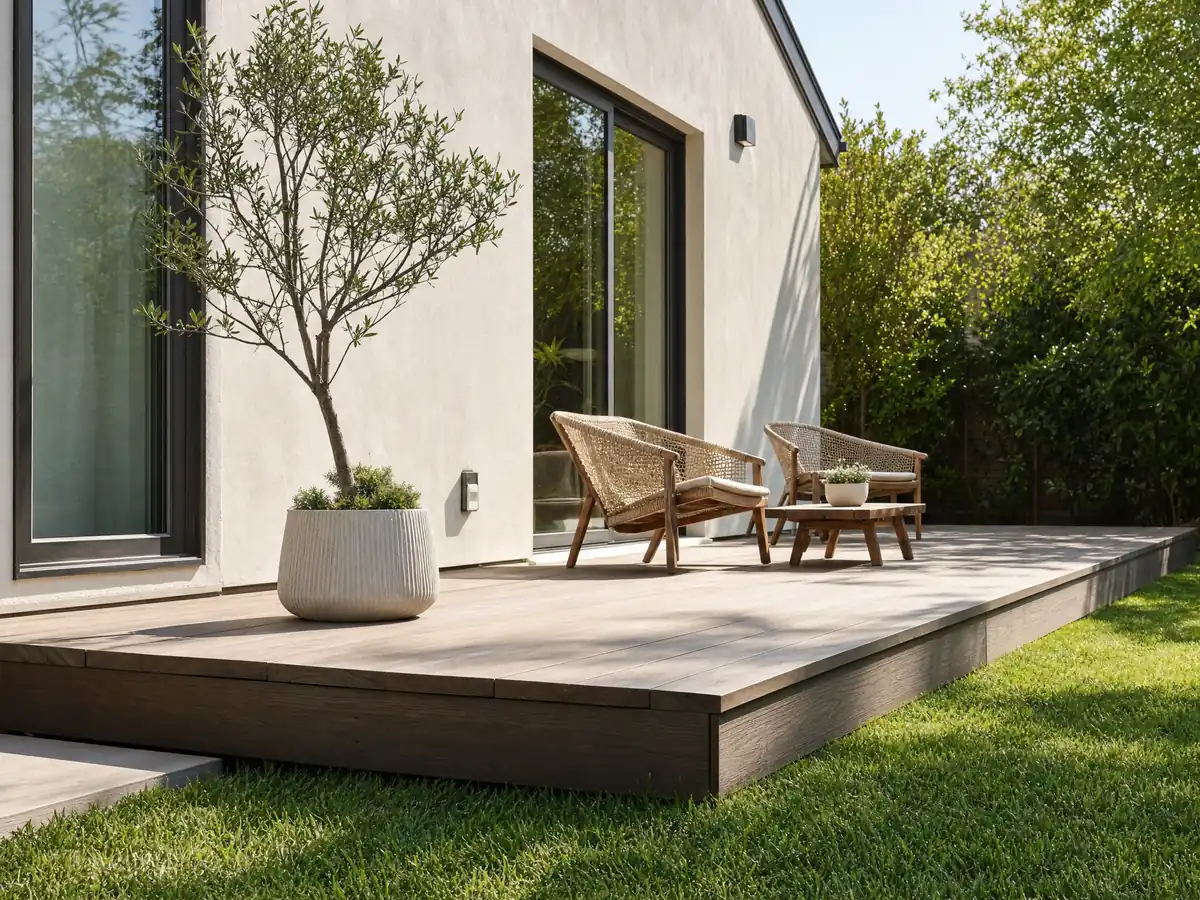
Forty-two inches is the model-code answer. Riverside's plan-check notes require a guard where an elevated walking surface is more than 30 inches above the floor or grade below, and the 2022 California Residential Code sets the minimum guard height at 42 inches with openings that stop a 4 inch sphere (R312.1). The City has enforced the 2025 edition since January 1, 2026, so confirm the numbers at the counter. The notes also require net cross ventilation of 1/150 of the area in enclosed framing under elevated walking surfaces.
The ledger is where decks fail. The 2022 edition asks for a pressure-treated ledger at least 2 by 8 that carries no concentrated beam loads and is never fastened to stone or masonry veneer (R507.9.1.1), with hot-dipped galvanized or stainless fasteners and flashing, and for lateral hold-downs of two 1,500 pound devices within 24 inches of each end or four 750 pound devices (R507.9.2).
Riverside's design criteria set the loads. Ground snow load is zero and frost depth does not apply, wind is 96 mph for Risk Category II and Seismic Design Category D covers conventional construction. A zero snow load does not make a light deck, since crowds, planters and a hot tub still count, so ask who sizes the beams.
What do deck footings need on a Riverside slope or in clay and loose soil?
Soil and slope decide the footing here, not frost. The City lists site class D as the seismic default unless a geotechnical engineer says otherwise, says soils with high shrink-swell potential occur mainly west of the airport and in the Lake Mathews drainage, and requires a geological investigation under RMC 16.08.185 where liquefaction potential is identified, with minor structures sometimes exempted. Ask for the soil question to be answered before footings are drilled.
Hillsides add grading limits. RMC 17.28.020 reaches land with a 10 percent average slope, the RC zone and the Mockingbird Canyon, Woodcrest, Prenda, Alessandro, Tequesquite and Springbrook arroyos, and bars grading or development within 50 feet of those arroyos. The Public Safety Element puts steep slopes in the Box Springs Mountains, Alessandro Heights, Hawarden Hills and the Norco Hills. A retaining wall under a deck is exempt only up to 4 feet from footing bottom to top and without a surcharge, so ask whether the deck load counts as one.
In the RC zone no building permit issues until slope planting and irrigation plans and Chapter 19.710 design review are approved, and cut and fill slopes over 5 feet must be landscaped and irrigated, per GoCodebook's copy of 19.100.050.
What does a deck need in Riverside's High and Very High fire zones?
The City's guidance starts at the wall of the house. The Fire Department's Zone 0 rule asks for nothing combustible within 5 feet of buildings, structures and decks, so no woody plants, mulch, woodpiles, combustible trellises or stored items, and Zone 1, from 5 to 30 feet, requires removing combustible material and vegetation from around and under decks. Owners in High and Very High zones also keep 100 feet of defensible space.
Building rules are narrower than many owners expect. In the City's plan-check notes, unenclosed accessory structures attached to a habitable building, and projections other than decks, must be heavy timber or noncombustible, fire-retardant-treated, ignition-resistant or fire-rated (CWUIC 504.7) for new buildings in High or Very High zones or WUI zones. Decks are carved out of that line, and the notes we read set no deck board rule. The state code lists allowed decking surfaces at R337.9.3, we could not confirm that any composite brand qualifies, and the Fire Department can say which standard applies to your address.
We could not read which parcels are mapped. The Public Safety Element names Mount Rubidoux, the Santa Ana River Basin, Lake Hills, Mockingbird Canyon and Monroe Hills, Sycamore Canyon, Box Springs Mountain and the La Sierra and Norco Hills as the main interface areas, and the Bain Fire burned 907 acres by May 19, 2026 near Van Buren Boulevard. Ask for the zone at your address before choosing boards.
Where can a deck, patio cover or pergola go on a Riverside lot?
Zoning keeps covers out of the front. RMC 19.440.030 says a patio cover may be one story, at least 5 feet from rear and interior side lot lines and unenclosed on at least three sides, and accessory structures may cover no more than 35 percent of the required side or rear setback area and may not sit in the front setback. That text is from GoCodebook's copy of the code.
The City's standard patio cover drawing, Drawing 206, is not designed to be enclosed, shows 4x4 minimum posts and 18 to 24 inch square footings 12 inches deep, and requires artificial lighting for rooms whose windows open into the covered area. Pre-approved Alumawood covers are Tier 0, and simple patio covers can sometimes be issued over the counter the same day.
Pools and fences change the layout. Pools and spas must sit at least 3 feet from a property line, and RMC 16.06.040 brings the entire pool barrier up to current standards when work changes the gates, fences or walls that form it. Side and rear fences may reach 7 feet where the street cannot see them, front yard fences are limited to 4 feet in most zones, and Civil Code 841 asks for 30 days' written notice before spending on a shared fence.
Can you do deck repair in Riverside without a permit, and what about termites?
Swapping boards is upkeep, but we found no Riverside sentence that says so. Because the City's pages give no deck exemption, send Building & Safety photos before the crew arrives and treat new framing, a new ledger, stairs or a taller guard as permit work. On a designated property, Title 20 lets the Historic Preservation Officer approve like-for-like repair administratively and waive forms for insignificant changes, while a Certificate of Appropriateness is still needed for exterior changes to designated resources and Historic Districts.
Wood in Riverside has enemies. The City lists termite infestation as 'Very Heavy', and University of California guidance says drywood termites are most common in Southern California and infest decks and fences, so a repair should fix whatever keeps wood damp. Old paint matters too: the ACS counts 61,636 homes built before 1980, so EPA's lead-safe renovation rule likely reaches many paid repairs that disturb painted wood.
Finishes have limits. SCAQMD Rule 1113 caps stains at 100 grams per liter and varnish and lacquer wood coatings at 275 on the copy we read, amended February 5, 2016. Later amendments were not confirmed, so ask which product goes on and whether it meets the limit.
What does a deck builder charge in Riverside, wood or composite?
We found no Riverside deck price study, so the anchor is Remodeling magazine's 2025 Cost vs. Value report for Los Angeles. It prices a 16 by 20 foot deck with a bench, planter, three steps and full railing at $18,419 in wood, recouping 99.6 percent, and $26,872 in composite, recouping 73.9 percent. Angi's Los Angeles page, updated October 28, 2025, shows a $13,570 average inside a $6,335 to $20,871 spread. Resale figures belong to Los Angeles and may not carry to Riverside.
Our planning figures are $45 to $75 per square foot for pressure-treated wood and $65 to $110 for composite, so a 16 by 20 deck comes to about $14,500 to $24,000 in wood or $21,000 to $35,000 in composite before permits and engineering. No independent source prices hillside, fire zone or engineered decks, so those wait for a site visit.
A deck is framing and rough carpentry under CSLB's C-5 class, and a permitted deck needs a licensed contractor at any price. Business and Professions Code 7159.5 caps a down payment at $1,000 or 10 percent, and our license check guide shows how to verify a number.
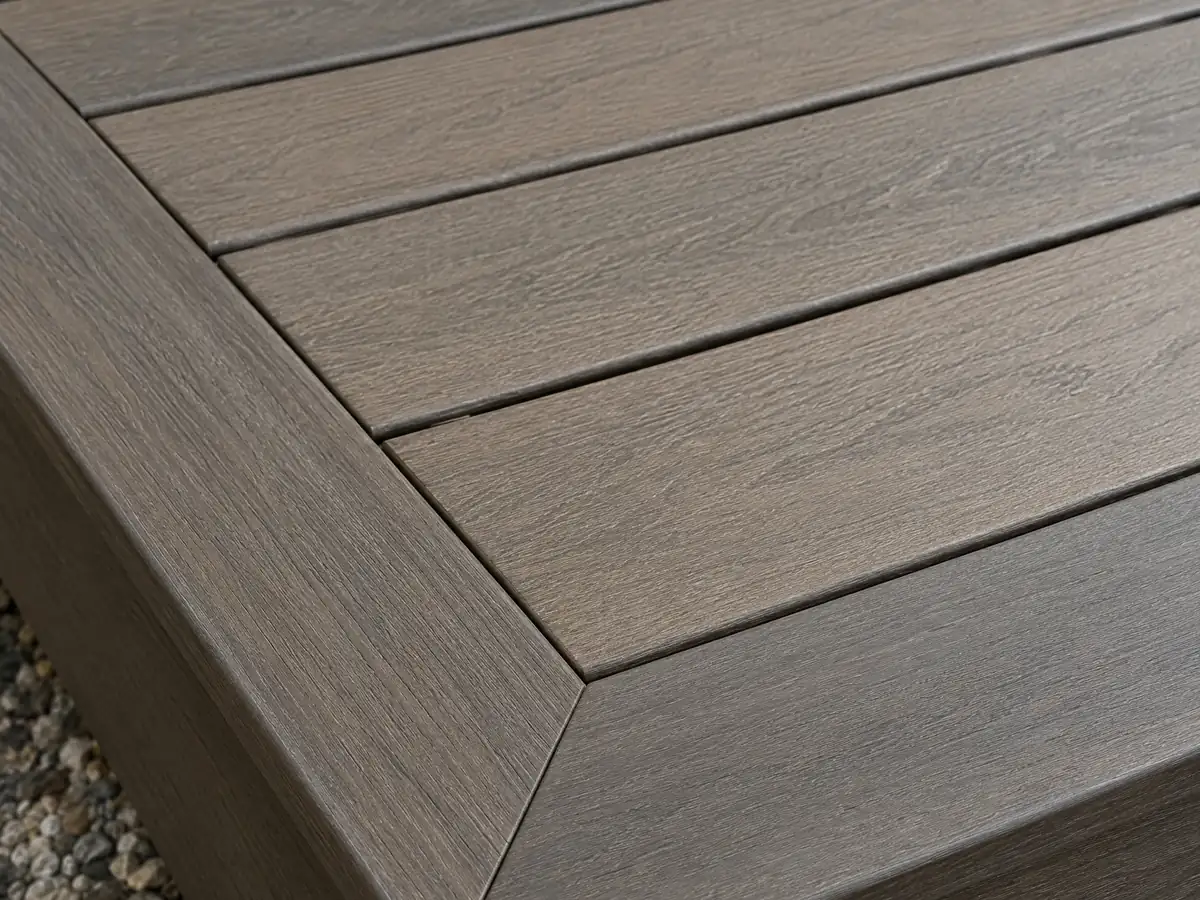
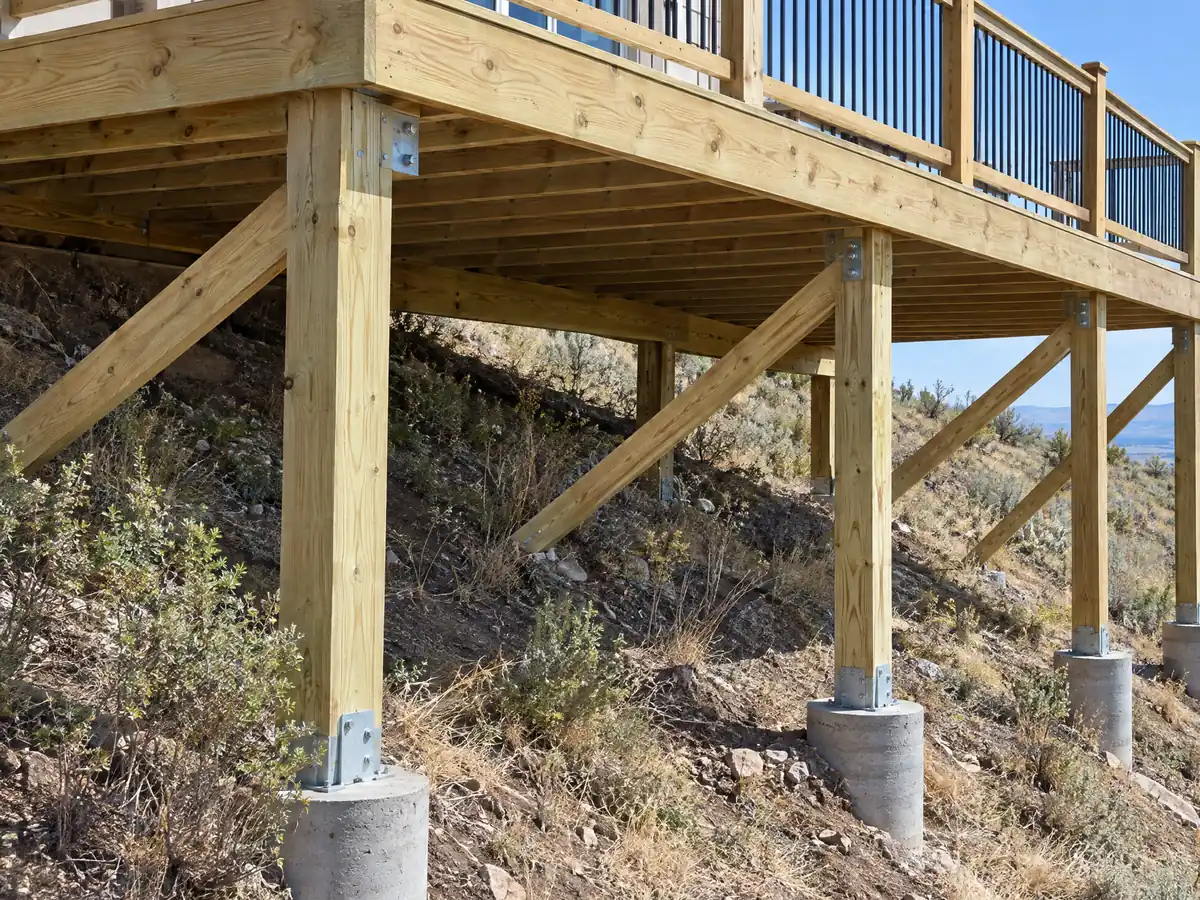
Deck photos from Riverside and nearby communities
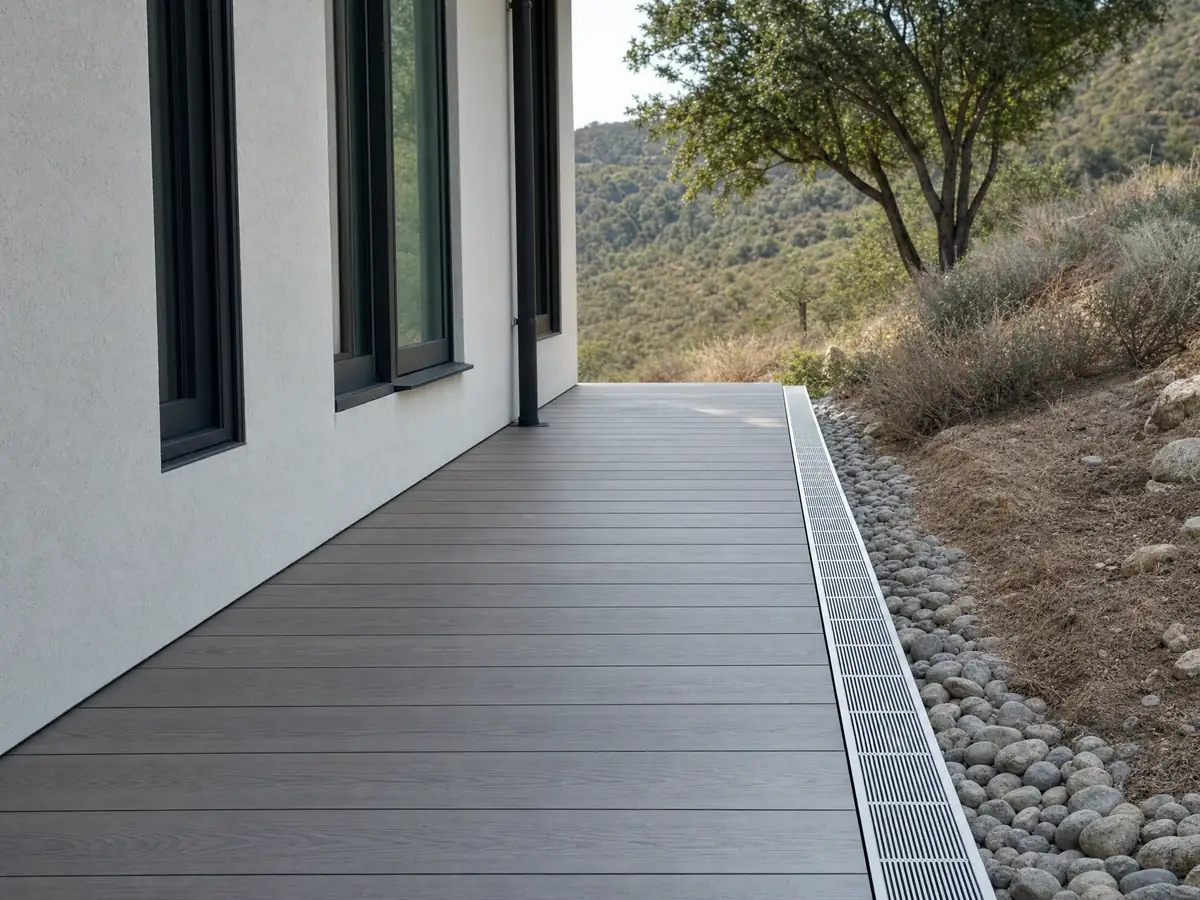
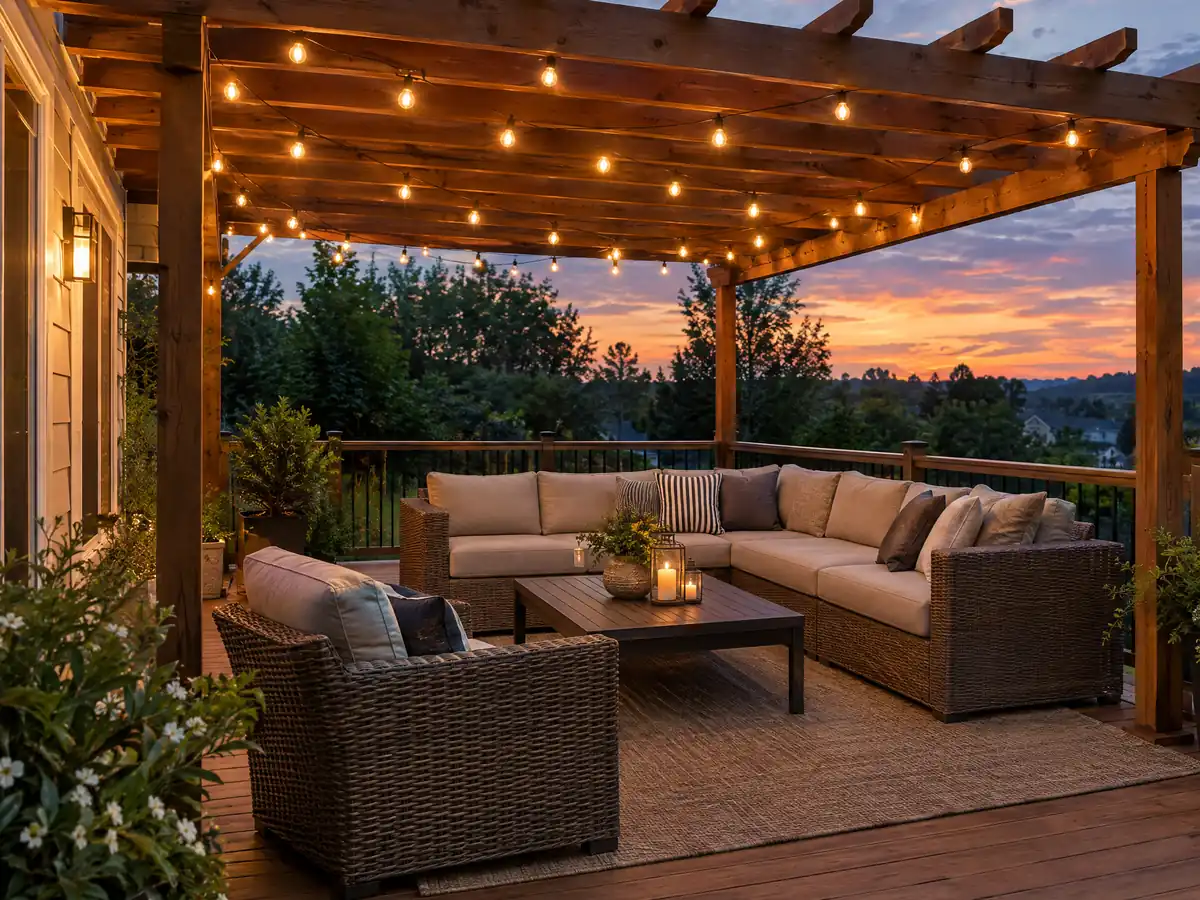
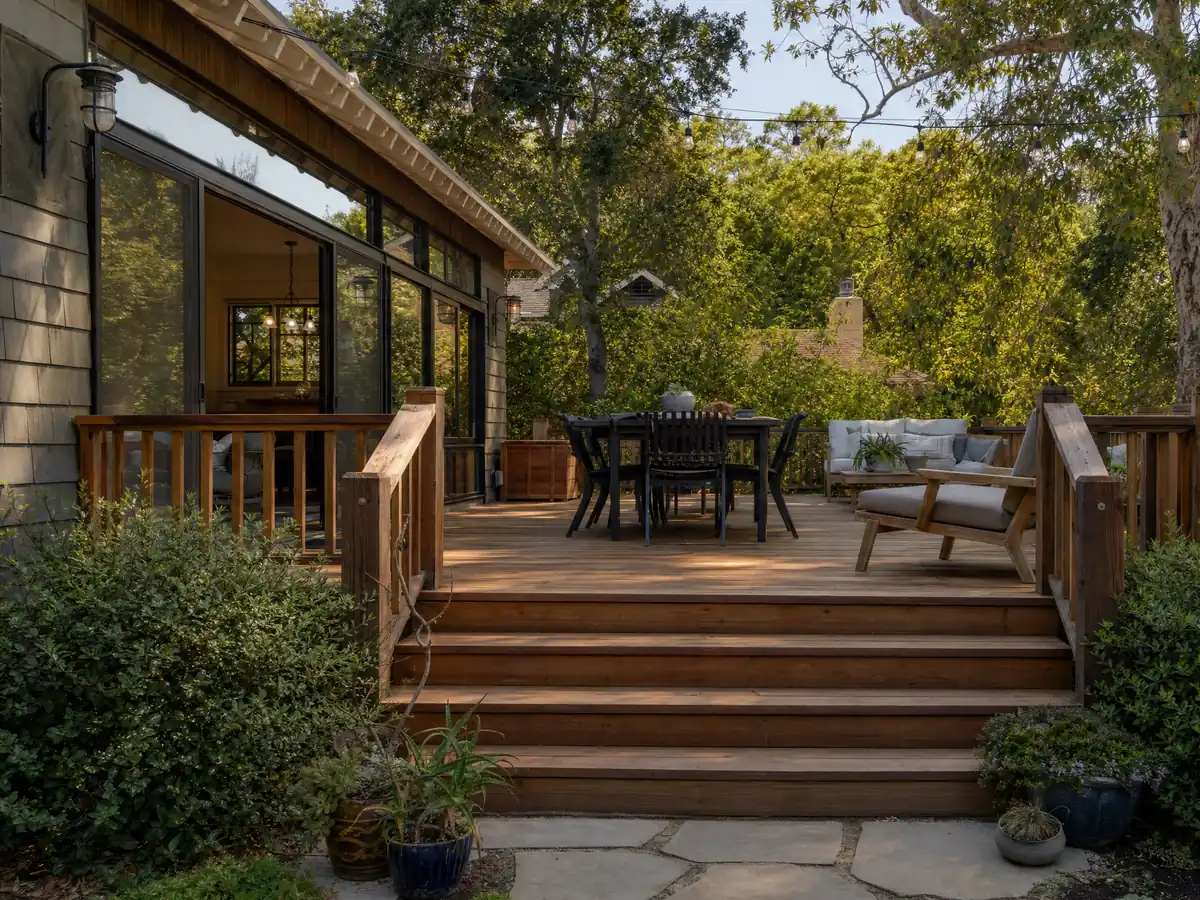
Framing, footings, guards and finished decks from Riverside and the communities around it, shown at the steps where the rules matter. Tap any photo to enlarge it.
What decks costs around Riverside
Dollar figures here are Los Angeles planning ranges from our decks page, not a Riverside bid, and permits, engineering, soils work and any fire plan review belong on separate proposal lines. The same property may need flooring in Riverside or concrete in Riverside. For neighbors, read decks in Corona, decks in Pomona and decks in Claremont, and decks in Los Angeles for the big-city benchmark. The subcontractor guide explains who frames and who finishes.
| What it covers | Typical range |
|---|---|
| Pressure-treated wood deck | $45 to $75 per square foot |
| Composite deck | $65 to $110 per square foot |
| 16 by 20 foot wood deck (320 sq ft) | About $14,500 to $24,000 |
| 16 by 20 foot composite deck | About $21,000 to $35,000 |
| Hillside, second-story, rooftop and ipe decks | Priced by site visit |
| Permits and engineering | Quoted as separate lines |
Riverside deck questions, answered
Do you need a permit to build a deck in Riverside?
Treat it as yes until the City says otherwise. Neither Riverside's Permits page nor Bulletin 140 lists a deck exemption, and the fee schedule has a Decks, Balconies, Stairways category. Call the permit counter at (951) 826-5800 with the height, size and whether the deck touches the house.
Is railing height 36 or 42 for decks?
Forty-two inches in the 2022 California Residential Code, which sets the guard minimum at 42 inches with openings that stop a 4 inch sphere. Riverside's notes require a guard where the walking surface is more than 30 inches above grade, and the City enforces the 2025 edition, so confirm the numbers.
Does a 3 foot high deck need a railing?
Yes. Riverside's plan-check notes require guards wherever an elevated walking surface is more than 30 inches above the floor or grade below, and 3 feet is 36 inches. The guard also needs to meet the minimum height and opening size in the code edition the City applies.
How much would a 20x20 deck cost?
A 20 by 20 deck is 400 square feet, so our planning range of $45 to $75 per square foot gives $18,000 to $30,000 in treated wood and $65 to $110 gives $26,000 to $44,000 in composite. Those are Los Angeles figures before permits and engineering, not a Riverside bid.
How much should a 16x20 deck cost?
In Remodeling magazine's 2025 Cost vs. Value report, the Los Angeles 16 by 20 foot deck (bench, planter, three steps, railing) costs $18,419 in wood and $26,872 in composite. We plan wood at $14,500 to $24,000 and composite at $21,000 to $35,000 for that size. Riverside hillside and fire zone decks cost more.
Is it cheaper to build a wood deck or composite deck?
Wood costs less to build: the same 16 by 20 foot deck priced at $18,419 in wood and $26,872 in composite in the Los Angeles Cost vs. Value report. In a Riverside fire zone, check the Fire Department's rules for decking before price, because some products may not qualify and we could not confirm any composite brand.
What happens if a deck is built without a permit?
We did not find Riverside's penalty schedule. RMC 16.08.040 lets the Building Official withhold new permits while violations exist on a property, and any unpermitted work can complicate a sale or insurance claim. Ask Building & Safety how an after-the-fact permit would proceed before listing the house.
Can I get a permit after the deck is already built?
Sometimes. Riverside's Safety-First Amnesty Program lets owners legalize unpermitted residential work without penalties when it was built before September 30, 2018 under SB 1226, and new alterations must meet current codes. Ask the City whether a deck qualifies, and consider the optional confidential third-party inspection first.
Can I repair a deck in Riverside without a permit?
Replacing a few boards looks like upkeep, but we found no City sentence that confirms an exemption, so send Building & Safety a photo first. New framing, a ledger, stairs or a taller guard are more likely permit work. A designated historic property may also need a Certificate of Appropriateness.
What license does a deck builder need in Riverside?
A deck is framing and rough carpentry under CSLB's C-5 class, and a general building contractor can take the job and hire the framer. A permitted deck can never use the $1,000 unlicensed-work limit, and Riverside wants a City business license and workers' compensation certificate. Check the CSLB number and ask each subcontractor for a license.
Tell us the lot, the height and the fire zone question
Say how high the deck will sit, whether the lot is flat or sloped, whether the house is in a historic district and what the deck or repair should do. We bring the permit, fire map and soil questions to the first visit.