
Deck Builderin Pomona, CA
A deck builder in Pomona can skip a building permit only on a deck of 200 square feet or less, no more than 30 inches high, detached from the house and not serving an exit door. Anything attached, higher or larger needs a permit, and zoning limits where it can sit.
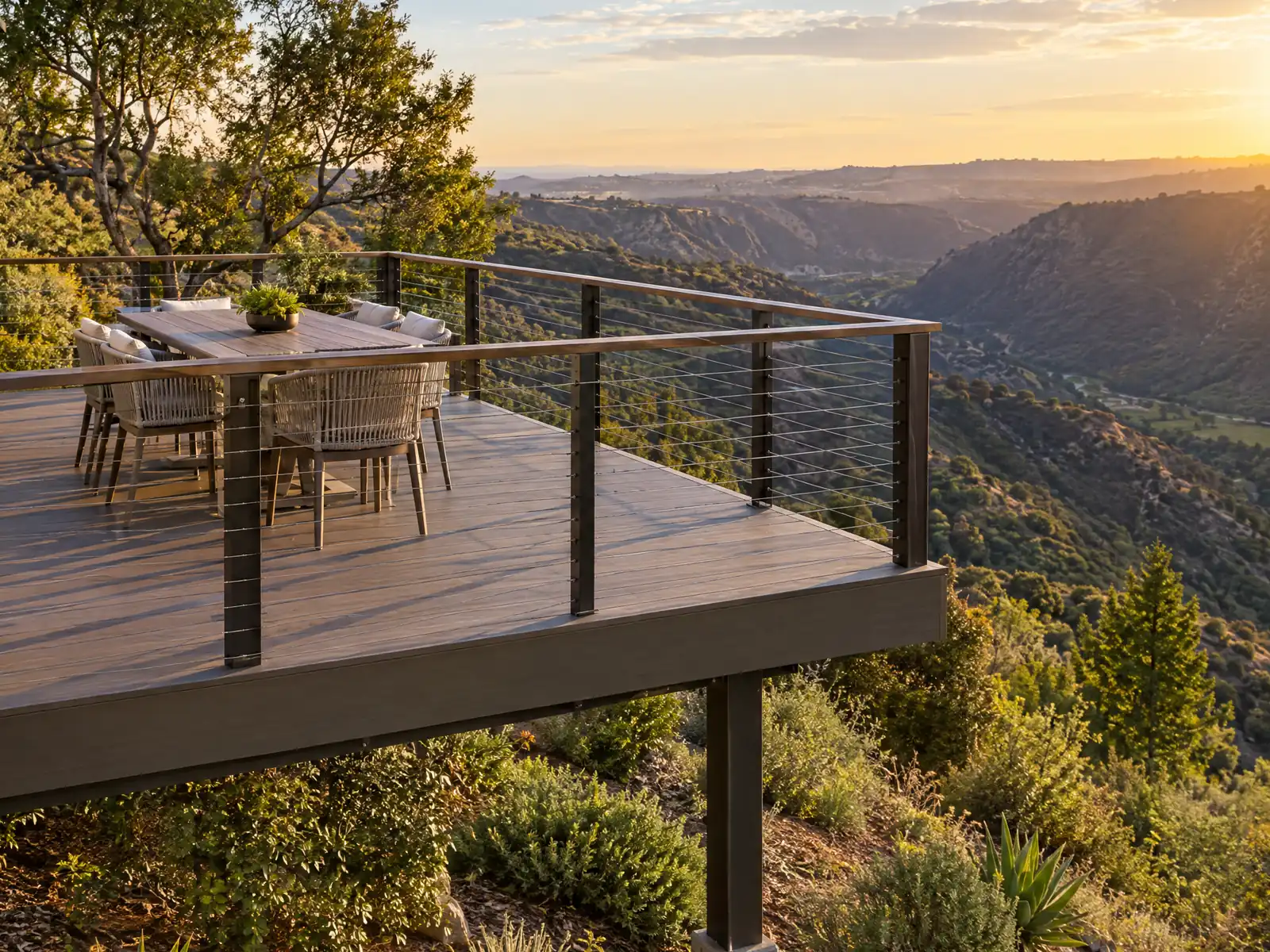
A deck is a backyard job, and Pomona has plenty of backyards. Census estimates count 26,226 single-family detached homes, about 58.5 percent of the city's 44,805 housing units. Many belong to the postwar tract streets that filled in after Interstate 10 reached Pomona in 1954, since the 1950s alone built 21.9 percent of the housing, and others to the older houses of the historic districts, where the back of the lot can be as regulated as the front.
MDG Builders, CSLB #1040337, is a general contractor in Tarzana. We design the deck, ask Pomona Building and Safety the permit questions and run the schedule, and licensed subcontractors frame, surface and rail it. Materials, labor and pricing sources are on our decks page, and the Pomona overview lists the other trades we manage here.
What Pomona's codes and the state residential code say about decks
Where decks permits come from in Pomona: City of Pomona Development Services Department, Building and Safety Division.
- A deck is exempt from a building permit only if it is 200 square feet or less, not more than 30 inches above grade at any point, not attached to the dwelling and not serving a required exit door (state R105.2). Anything attached to the house, higher or larger needs a permit, and any accessory structure still needs the zoning ministerial permit and a side or rear yard location within the lot's coverage and setbacks.
- Pomona's house form modules cap impervious coverage at 75 percent (House Medium 1) or 70 percent (House Broad 1), so a large deck, patio or slab counts toward that limit on top of the building coverage cap of 45 percent.
Sources for these rules
Which deck boards are allowed near the Very High fire zone pockets in Pomona?
Pomona is mostly outside the mapped zone, but not entirely. Municipal Code section 74-32 adopts CAL FIRE's Very High Fire Hazard Severity Zone maps (Ordinance 4104, 2008) and says that new construction or building expansion inside a zone since July 1, 2008 must meet Chapter 7A of the Building Code. A grid check run for our fact sheet against the state's Local Responsibility Area layer found about 0.9 percent of the city in a Very High polygon, mostly around Elephant Hill beside the Phillips Mansion in Spadra. It is the older state layer, not the 2025 map, so look up the parcel first.
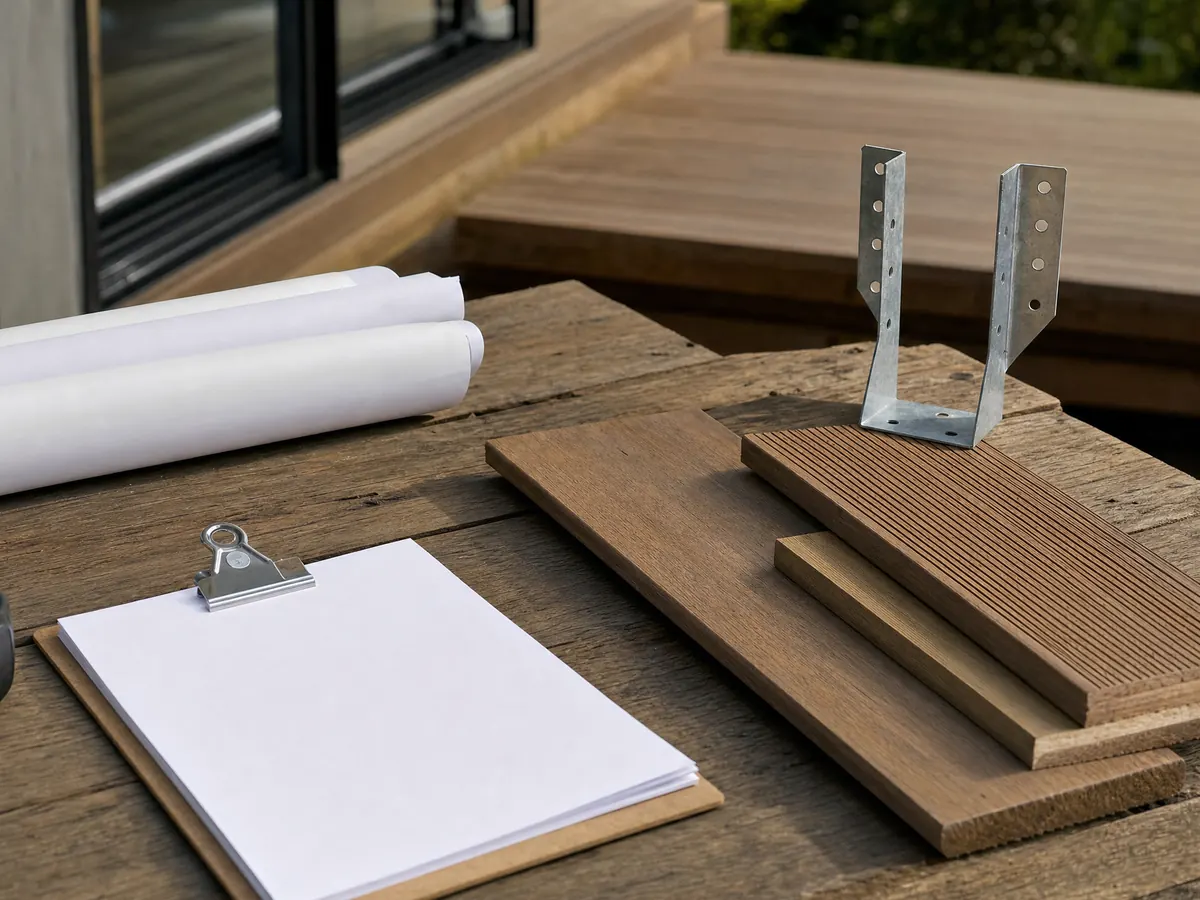
Inside a zone, section R337.9.3 of the California Residential Code lists the allowed decking surfaces: boards tested to ASTM E2632 or E2726, ignition-resistant, fire-retardant-treated or noncombustible materials. A UC Extension summary said some tested composites did not meet the ignition-resistant definition, so check any product against the State Fire Marshal's listing, not the brochure.
Zone 0, the state's proposed ember-resistant rule for the first 5 feet around a house, is the part we cannot confirm, because sources conflict on its adoption status. Ask Building and Safety whether a deck or stair against the wall faces extra limits.
Can you build a deck in Pomona without a permit, and what is the largest deck allowed without one?
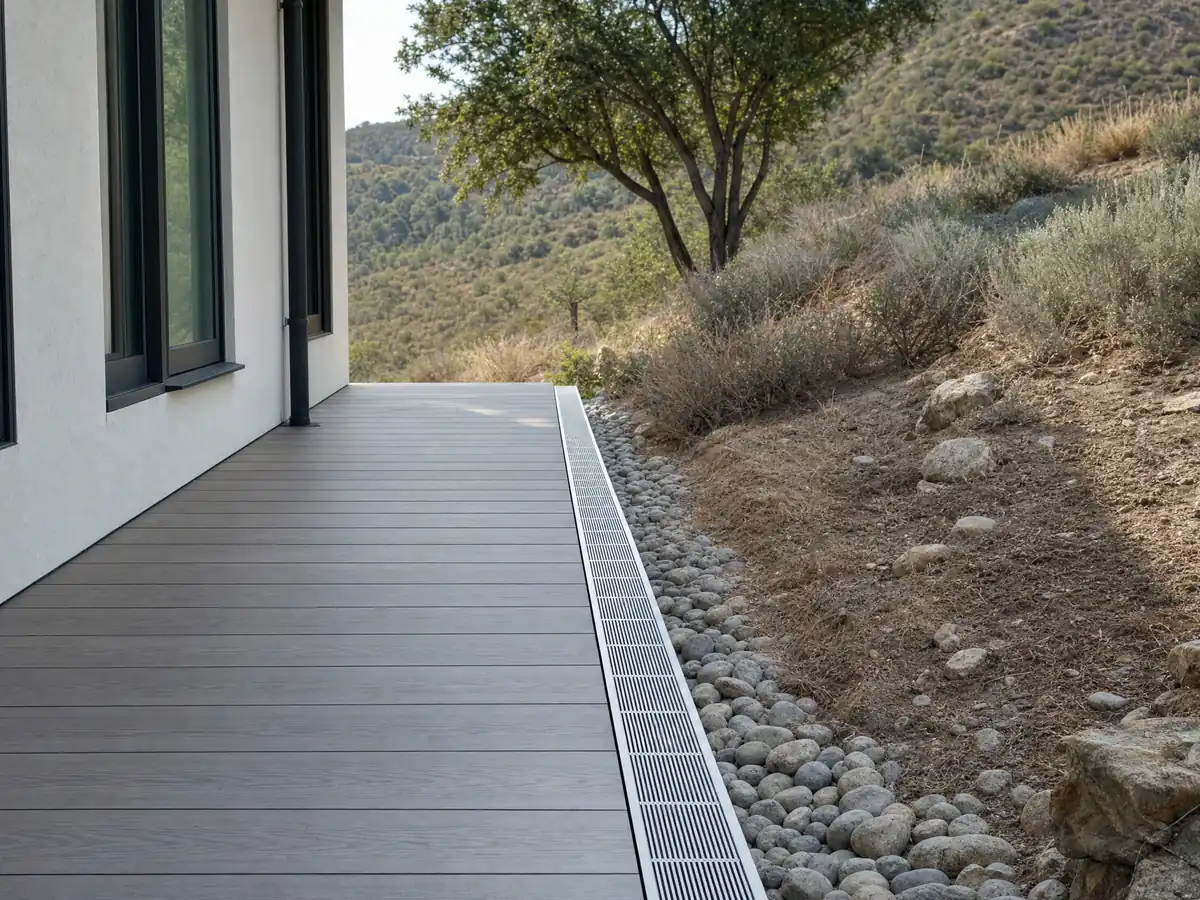
The largest deck that skips a building permit is 200 square feet, no more than 30 inches above grade at any point, not attached to the dwelling and not serving a required exit door. That is section R105.2 of the state code, read in a City of Albany excerpt, and Pomona's Article II lists no amendment to it. Fees are set by council resolution, and none appears in the code text, so we print none.
Zoning is a separate gate. Pomona's code says every accessory use or structure needs a Ministerial Permit under Sec. 1170.C unless Sec. 550.C says otherwise, and a new accessory structure may be built only in a side or rear yard within the lot's coverage, setback and height limits. Whether a freestanding deck counts as one is a question for Pomona Planning, so ask before a front-yard deck is drawn.
Coverage is the third limit. House Medium 1 allows 45 percent building coverage and 75 percent impervious coverage, and House Broad 1 allows 45 and 70, so a big deck competes with the patio and driveway for the same allowance. Ask Planning to confirm in writing which module applies to your lot and whether open-board decking counts toward the impervious figure, since the code text we read does not say.
Deck repair in Pomona: when does a fix need a permit and an inspection?
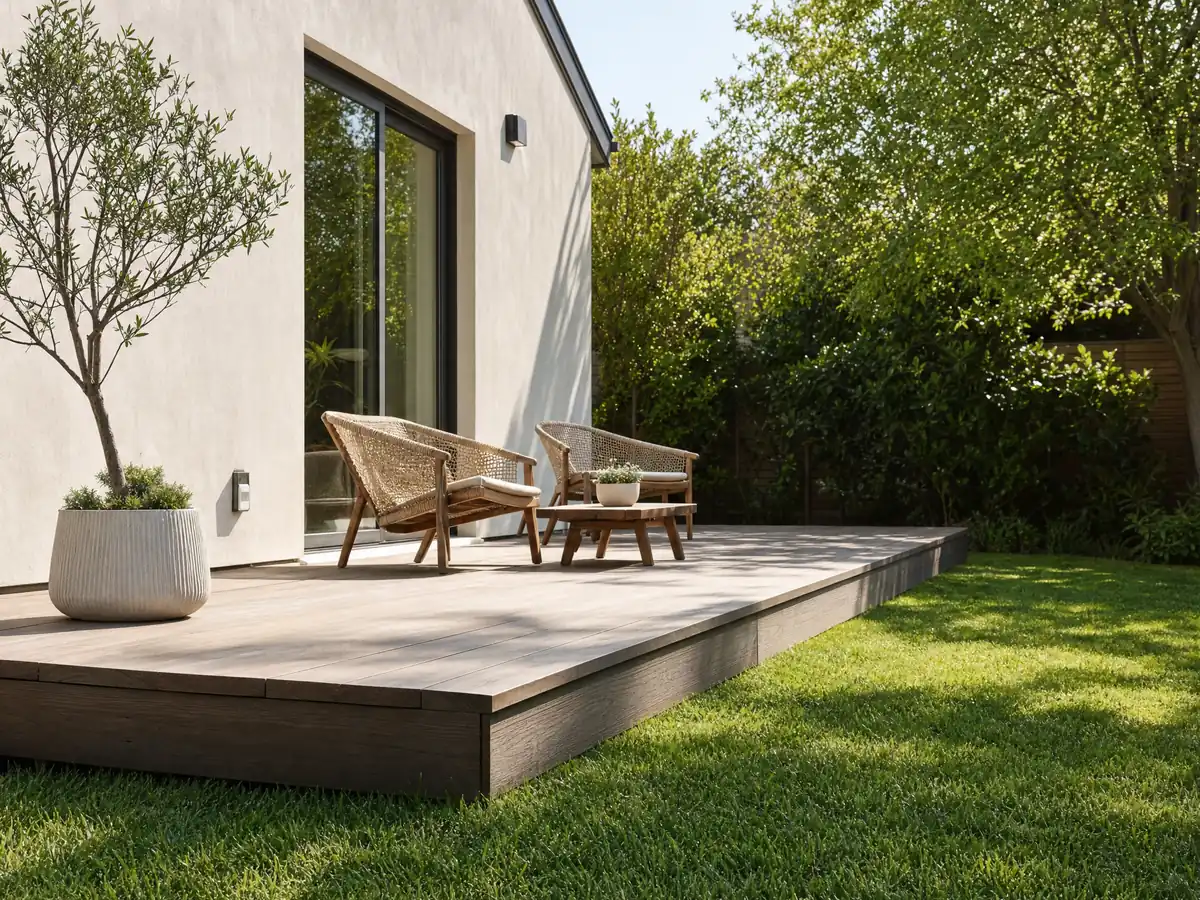
We found no Pomona rule that separates like-for-like repair from new construction, so the answer depends on what comes out. Replacing worn boards and fasteners is maintenance. Replacing the ledger, posts, beams or joists is structural, and a deck that is attached, over 30 inches high or over 200 square feet already sits outside the exemption, so ask Building and Safety before the first board is pulled.
On a rebuild, the 2022 California Residential Code asks in R507.9.1.1 for a ledger of at least 2x8 pressure-treated lumber, with no concentrated loads from beams and no attachment to stone or masonry veneer. R507.9.1.3 requires hot-dipped galvanized or stainless fasteners and a flashed ledger, and R507.9.2 calls for two 1,500 pound hold-down devices within 24 inches of each end, or four 750 pound devices. Pomona adopted the 2025 edition, so an inspector's numbers may differ.
UC Statewide IPM says drywood termites are common across Southern California and that dampwood termites need moisture, so it advises fixing leaks in roofs and decks. Probe suspect posts and the ledger before pricing a repair.
- Is the ledger bolted or lagged to the framing, and is it flashed?
- Are the posts sound at ground level?
- Will rot found mid-job be priced as a separate line?
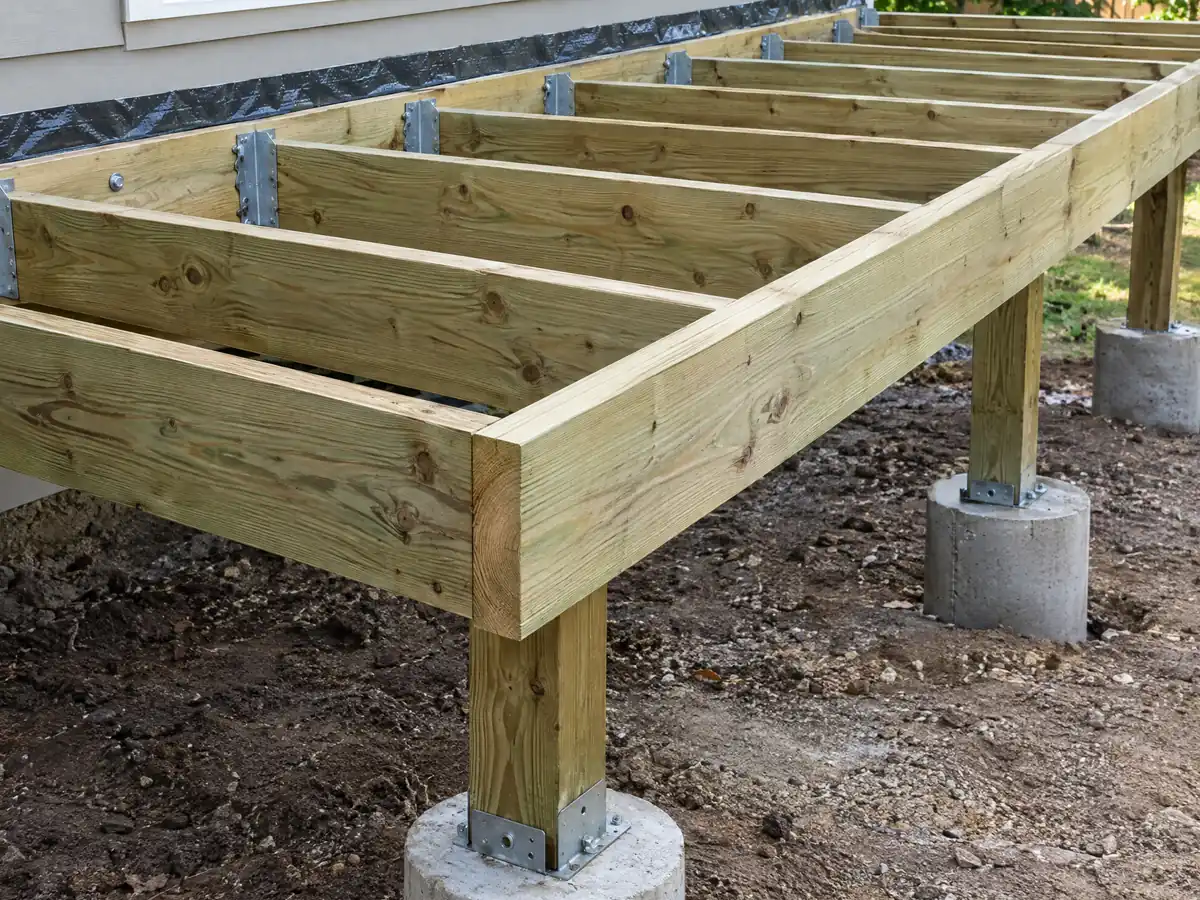
How high must a deck railing be: 36 inches or 42?
Forty-two inches. Section R312.1.1 of the California Residential Code requires a guard where the walking surface is more than 30 inches above grade within 36 inches of the edge, R312.1.2 sets the minimum height at 42 inches, and R312.1.3 requires openings small enough to stop a 4 inch sphere. A deck at or below 30 inches needs no guard, though it can still need a permit if it is attached to the house. A porch or stair railing is a separate question: we found no Pomona rule on replacing one, so ask the counter.
Ask the builder which inspections the permit calls for and to give you the signed inspection card at each stage. If the deck is exempt there will be no inspection, so ask for photos of the footings and ledger before they are covered. Any guard on a deck near a pool also has to work with the pool setbacks in Pomona's zoning code, which keep a pool and its equipment at least 5 feet from a rear, side or street side lot line.
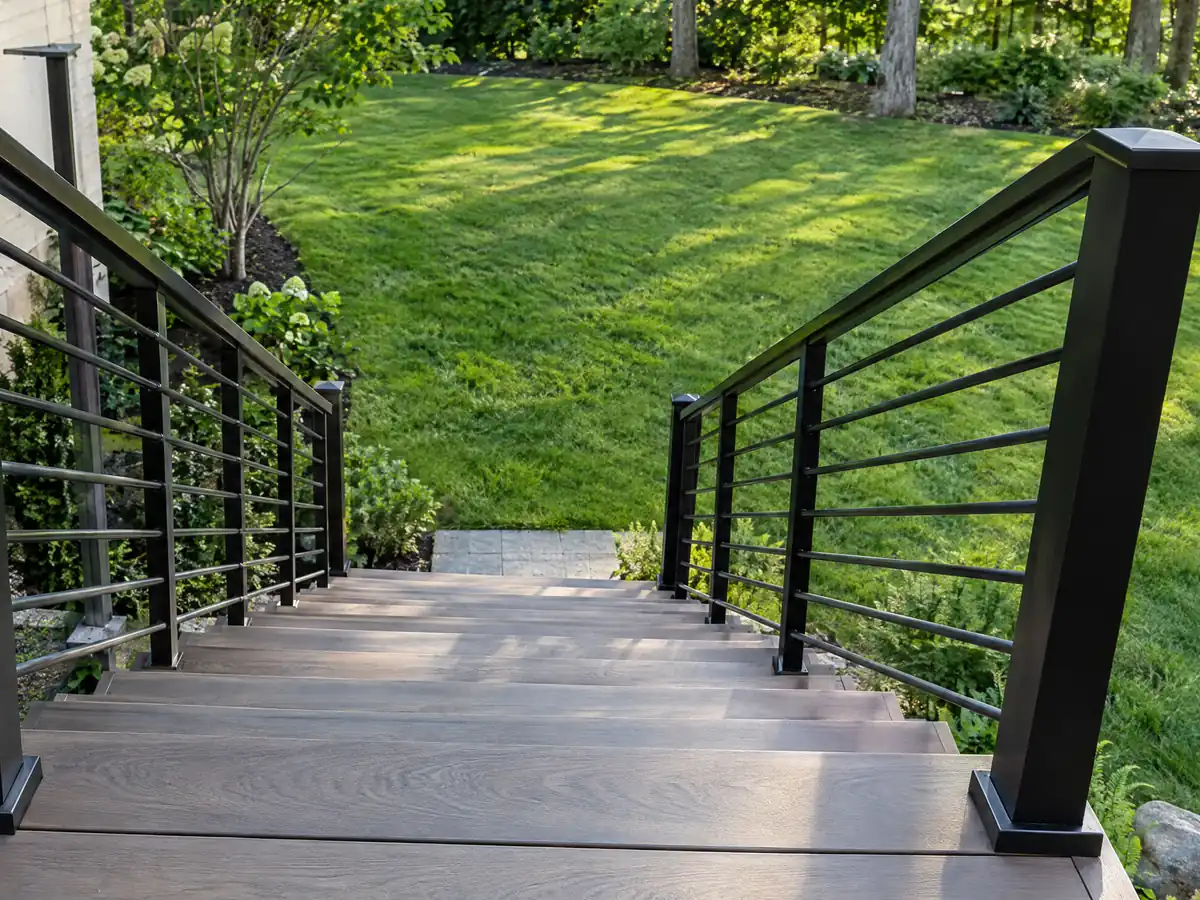
Can you build or replace a deck in one of Pomona's historic districts?
It needs review first. In Hacienda Park, Lincoln Park, Wilton Heights, Edison, Civic Center and Landmark Quarter, and on individual landmarks, the zoning code treats additions, accessory structures and infill on a historic resource as a Major Certificate of Appropriateness item decided by the Historic Preservation Commission, and the building permit waits for the approval. Lincoln Park holds 821 structures, most built between the 1890s and the 1940s.
The code's examples do not mention decks, so whether a rear deck is minor work for staff or a Commission item is Planning's call. Under Municipal Code chapter 2, division 4, the Commission may recommend written design standards for permits to construct, change or remodel, so ask Planning for the adopted standards for your district before choosing boards, rails or a footprint. Bring photos of the rear elevation and a site plan. The permit waits for the Commission's decision, and we did not find its meeting calendar, so ask Planning how long review usually takes before you fix a start date.
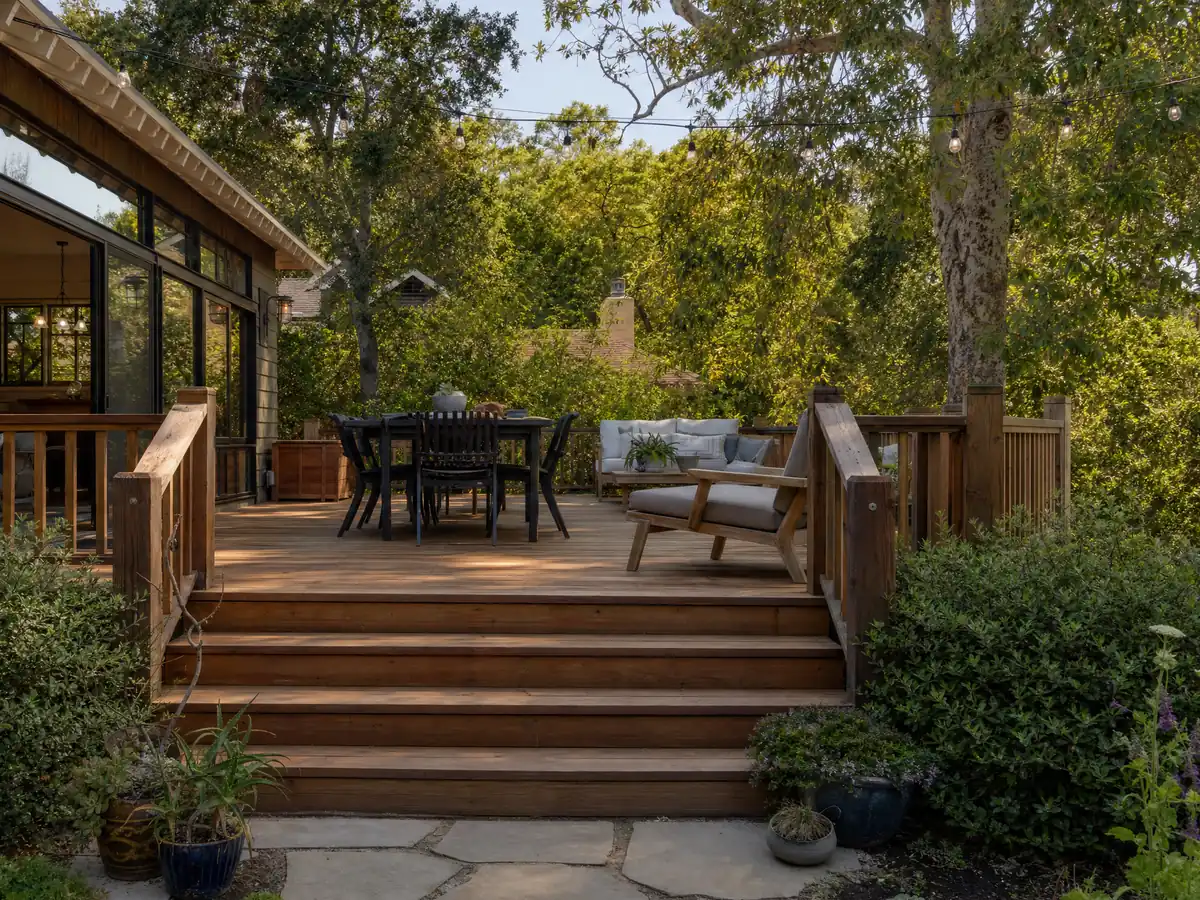
How much does a deck cost in Pomona, wood or composite?
We found no Pomona price study, so these are Los Angeles figures. The 2025 Cost vs. Value report from JLC and Zonda prices a defined 16 by 20 foot deck with treated framing, a built-in bench and planter, three steps and full railing at $18,419 in wood, which resold for 99.6 percent of cost, and at $26,872 in composite, which resold for 73.9 percent. Together with Angi's Los Angeles pages, that supports about $45 to $75 per square foot for a flat-lot, attached pressure-treated deck and $65 to $110 for composite, with permits and engineering extra.
Multiplied out, a 16 by 20 foot wood deck is roughly $14,500 to $24,000 and a 20 by 20 foot wood deck $18,000 to $30,000. We rate wood medium in confidence and composite medium to low, and we print no price for hillside or second-story decks, which are quoted after a site visit.
Wood costs less to build, while composite recovers less of its cost at resale in the Los Angeles report. Ask for the board brand, the framing material and the fire rating on the proposal. Taking out an old deck is demolition work, and Pomona's rule that 50 percent of the waste from demolition and remodeling projects be recycled or reused (Municipal Code sections 62-871 to 62-874) may apply, so ask whether a deposit is due.
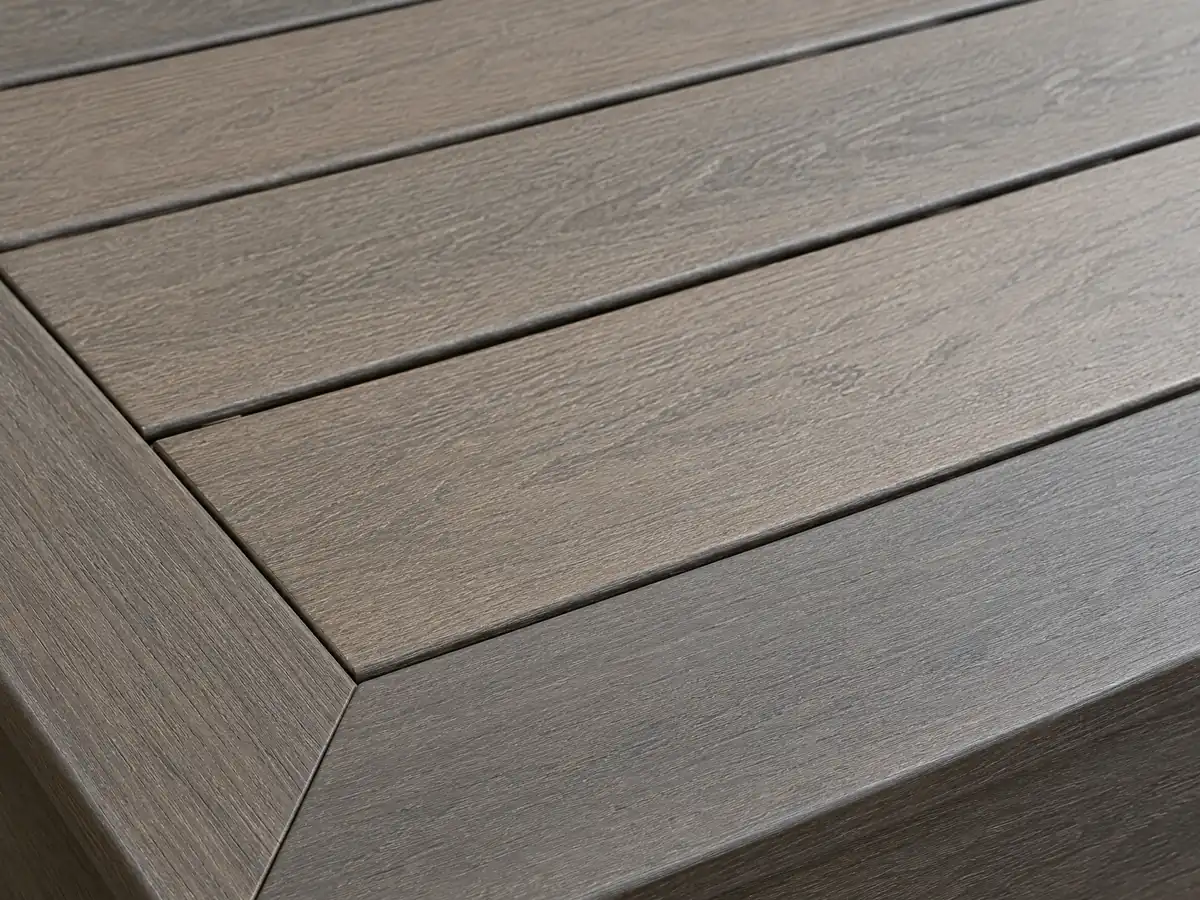
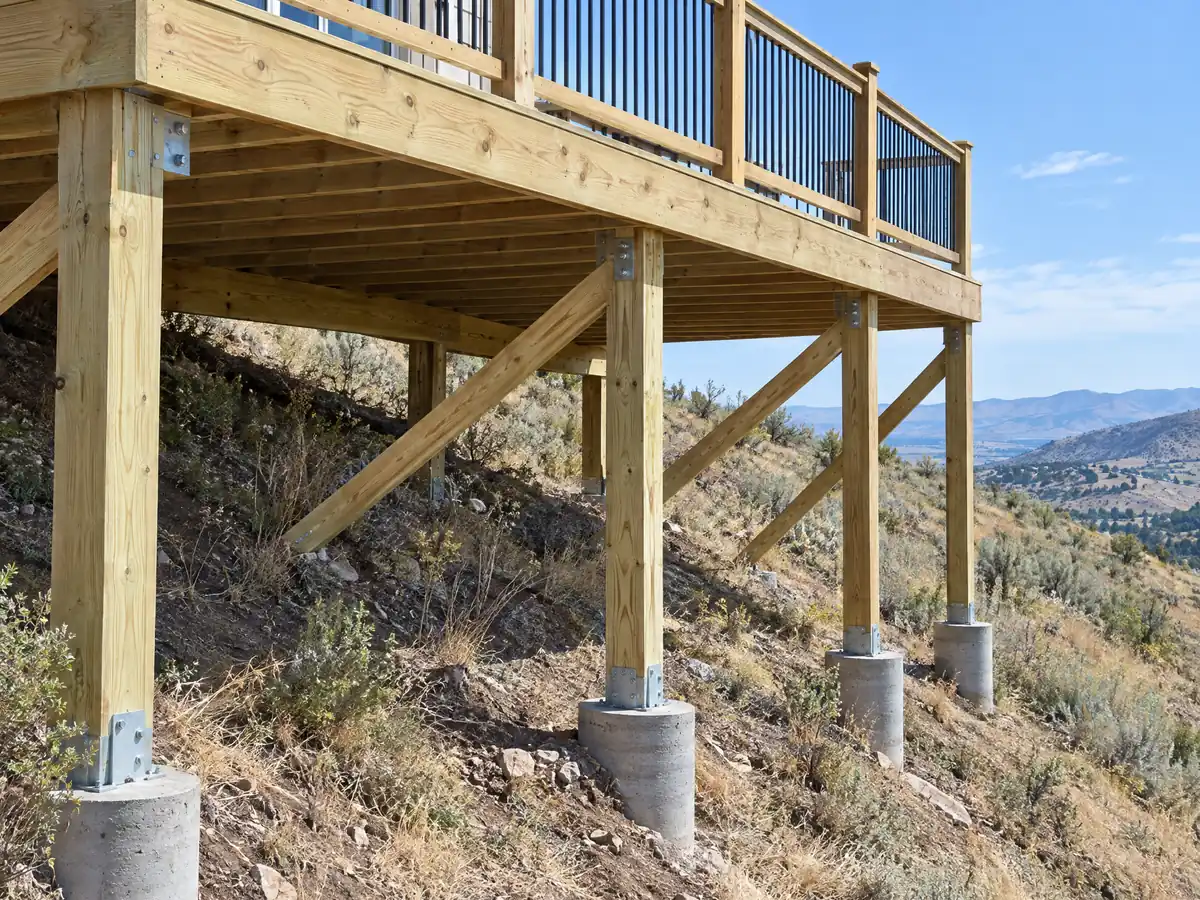
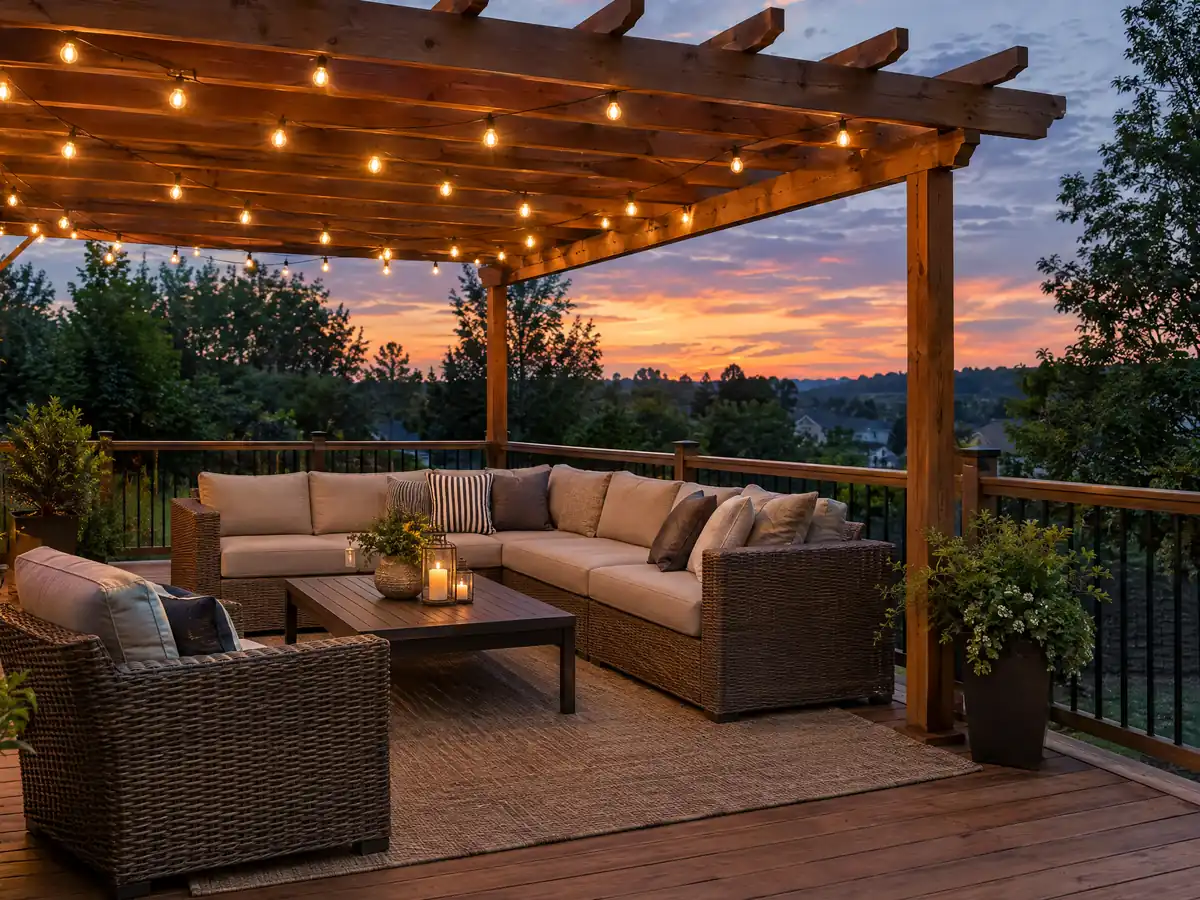
Deck photos from Pomona and nearby communities
Six photos of decks around Pomona and its neighbors, from low rear decks and framing to boards, posts and rails. Tap a photo to enlarge it.
What decks costs around Pomona
Prices here are the Los Angeles ranges on our decks page, not a Pomona quote, and the subcontractor guide explains how the work is split. Fire-rated boards, engineering and design review are separate lines in a proposal. Related pages: decks in Los Angeles, deck building in Glendale, decks in Pasadena, concrete work in Pomona and flooring in Pomona.
| What it covers | Typical range |
|---|---|
| Pressure-treated wood deck | $45 to $75 per square foot |
| Composite deck | $65 to $110 per square foot |
| 16 by 20 foot wood deck (320 sq ft) | About $14,500 to $24,000 |
| 16 by 20 foot composite deck | About $21,000 to $35,000 |
| Hillside, second-story, rooftop and ipe decks | Priced by site visit |
| Permits and engineering | Quoted as separate lines |
Pomona deck questions, answered
Can I build a deck without a permit in Pomona?
Only a small one. A deck of 200 square feet or less, no more than 30 inches above grade, not attached to the house and not serving a required exit door is exempt from a building permit under the state code. Zoning still applies, so ask Planning about the location and coverage before you build.
What is the largest deck you can build without a permit in Pomona?
Two hundred square feet, and it must also stay within 30 inches of the ground, stand apart from the dwelling and not serve a required exit door. Pomona adds no amendment we could find. A deck that is bigger, higher or attached to the house needs a building permit and inspections.
Is deck railing height 36 or 42 inches in Pomona?
Forty-two inches under the California Residential Code, with openings that stop a 4 inch sphere. A guard is needed once the walking surface sits more than 30 inches above the grade within 36 inches of the deck edge. Pomona adopted the 2025 code, and we read the 2022 text, so confirm the numbers with Building and Safety.
How much should a 16x20 deck cost in Pomona?
About $14,500 to $24,000 in pressure-treated wood and $21,000 to $35,000 in composite, using Los Angeles figures of $45 to $75 and $65 to $110 per square foot for a flat-lot attached deck. The Cost vs. Value report priced its fuller 16 by 20 spec at $18,419 in wood. Permits and engineering are extra.
How much would a 20x20 deck cost in Pomona?
Roughly $18,000 to $30,000 in pressure-treated wood and $26,000 to $44,000 in composite, by multiplying 400 square feet by Los Angeles ranges of $45 to $75 and $65 to $110 per square foot. That is arithmetic on medium to medium-low confidence sources, not a quote. Stairs, rails and site conditions move the number.
Is it cheaper to build a wood deck or a composite deck?
Wood is cheaper to build. In the 2025 Los Angeles Cost vs. Value report a 16 by 20 foot wood deck cost $18,419 against $26,872 for composite, and the wood deck resold for 99.6 percent of its cost against 73.9 percent. Composite may need less upkeep, but we found no sourced Pomona maintenance figure.
What decking is allowed in a Pomona fire zone?
In a Very High zone, the residential code lists boards tested to ASTM E2632 or E2726, ignition-resistant, fire-retardant-treated or noncombustible materials. Pomona has only small pockets, about 0.9 percent of the city by our check, mostly around Elephant Hill. Look up your parcel and check any composite product against the State Fire Marshal's listing.
Do I need a permit for deck repair in Pomona?
Not for swapping boards, but likely for structural work. We found no Pomona rule that separates repair from new construction. Replacing a ledger, posts, beams or joists is structural, and an attached, high or large deck already needs a permit, so ask Building and Safety before work starts.
What license does a deck builder need in Pomona?
A contractor license for any deck job of $1,000 or more in labor and materials, or any job that needs a permit. A general building (B) contractor may take framing and carpentry work, and C-5 covers framing and rough carpentry. We did not verify which class covers composite surfacing, so check the license at the CSLB website.
Can I add a deck in a Pomona historic district?
Yes, after review. Additions, accessory structures and infill on a historic resource need a Major Certificate of Appropriateness from the Historic Preservation Commission, and the building permit waits for it. The code does not name decks, so ask Planning how a rear deck is classified before you design one.
Send the address and a photo of the yard
Tell us the size, height above the ground, whether the deck touches the house and what is there now. We check the zoning bracket and fire zone before we call.