
Concrete Companyin Pomona, CA
A concrete company in Pomona works around three local rules: a Public Works permit for any driveway approach or street sidewalk, zoning caps on how much of a lot can be covered, and engineering for retaining walls above 4 feet. A plain slab on grade is often exempt from a building permit, but zoning still applies.
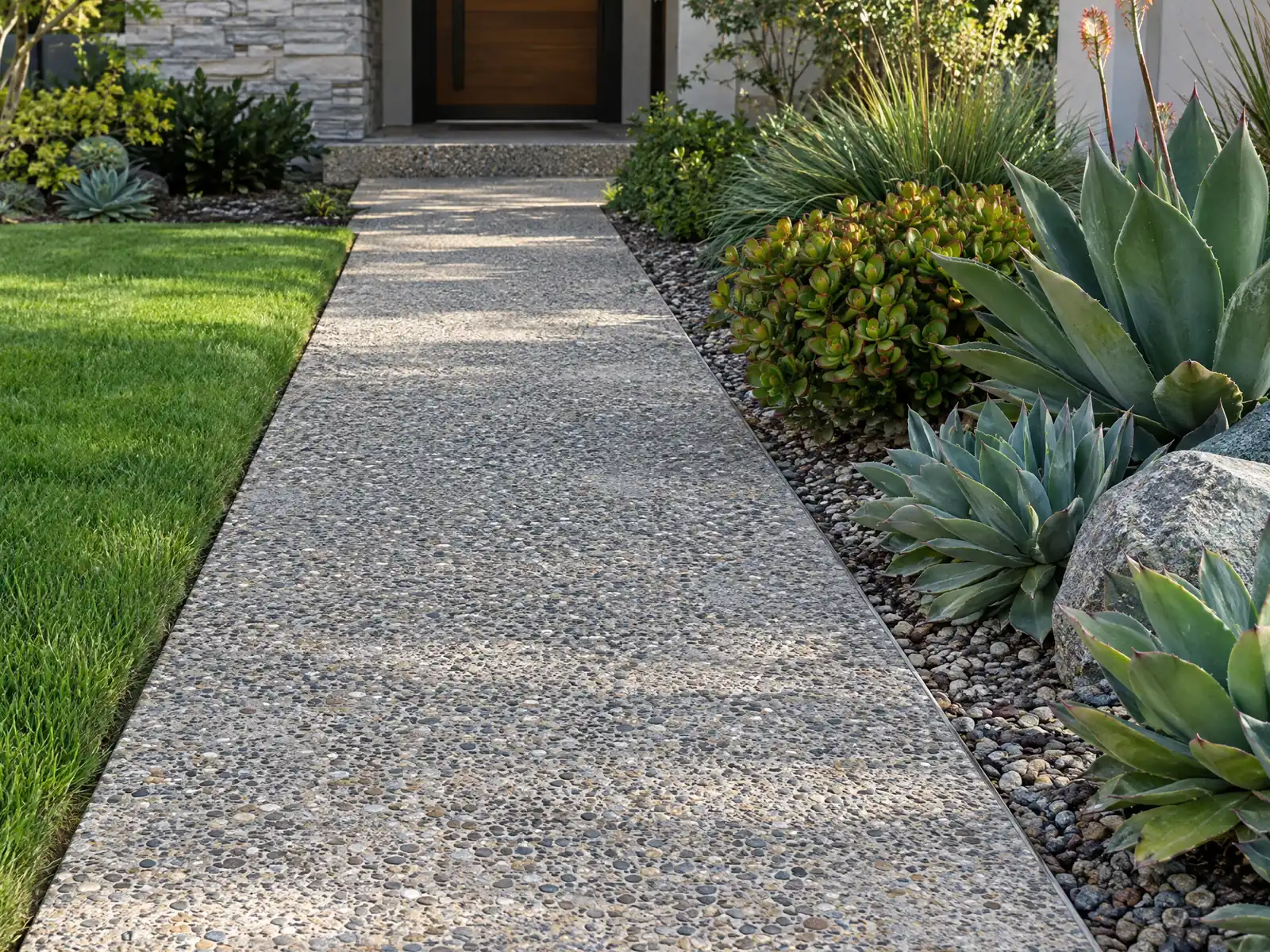
Pomona's concrete shows the city's growth in layers. The city incorporated in 1888 and Interstate 10 reached it in 1954. A 2012 historic resources report quoted in Metro's cultural resources appendix says farmland was converted to tract housing after World War II and that a branch of the California State Polytechnic College opened on the Kellogg Ranch in 1956. Census estimates say about 39.8 percent of today's homes predate 1960, so many driveways, walks and patio slabs are well past middle age.
MDG Builders, CSLB #1040337, is a general contractor in Tarzana. We scope the job, ask Pomona Building and Safety and Public Works the permit questions, and manage the schedule, and a licensed concrete subcontractor forms, pours and finishes the work. Slab types and pricing are on our concrete page, and the Pomona overview lists the other trades we manage in the city.
What Pomona's municipal code and zoning code say about concrete
Where concrete permits come from in Pomona: City of Pomona Development Services Department, Building and Safety Division.
- In Pomona a driveway, entrance or exit that connects a street with private property where curb and sidewalk exist needs a permit from the Director of Public Works/City Engineer (section 46-116), with a cash deposit set by the engineer held until the driveway and curb cut are finished to specification, plus permit and inspection fees set by council resolution.
- Pomona driveway standards (article III, division 1): the floor of a driveway through the sidewalk area must be at least 6 inches thick and run straight to the gutter flow line, no part may come within 6 feet of a fire hydrant, and overall width is limited to 50 percent or less of the lot frontage involved unless the City Council waives it.
- A sidewalk built in a Pomona street right-of-way needs its own permit from the Director of Public Works/City Engineer (section 46-52) and must follow city specifications. Anyone building a new building or dwelling must also build curbs, gutters and sidewalks along the street frontage unless adequate ones exist (section 46-53), and final utility connections are withheld until they exist or are guaranteed by a deposit.
- The state permit-exempt list covers sidewalks and driveways not more than 30 inches above grade, but not the Pomona public right-of-way permit or the zoning impervious coverage caps of 75 percent (House Medium 1) and 70 percent (House Broad 1).
- CSLB defines the C-8 Concrete classification as forming, pouring, placing, finishing and installing mass, pavement, flat and other concrete work.
Do you need a permit to replace a driveway or sidewalk in Pomona?
Yes, if the work touches the street side of your lot. Under Municipal Code section 46-116, a driveway or entrance connecting a street with private property where curb and sidewalk exist needs a permit from the Director of Public Works/City Engineer. The engineer sets a cash deposit, held until the driveway and curb cut are finished to specification. Permit and inspection fees come from a council resolution we could not open, so we print none.
The driveway standards in Article III, division 1 ask for a floor at least 6 inches thick through the sidewalk area, running straight to the gutter flow line, with no part within 6 feet of a fire hydrant. Total width is limited to 50 percent of the frontage involved unless the City Council waives it.
A sidewalk in a street right-of-way needs its own permit under section 46-52, and anyone building a new dwelling must also build curb, gutter and sidewalk along the frontage unless adequate ones exist. The code text we read does not say who pays to repair an existing cracked sidewalk, so ask Public Works.
- What deposit has the City Engineer set for this curb cut?
- Is the driveway width under 50 percent of the frontage?
- Where is the nearest fire hydrant?
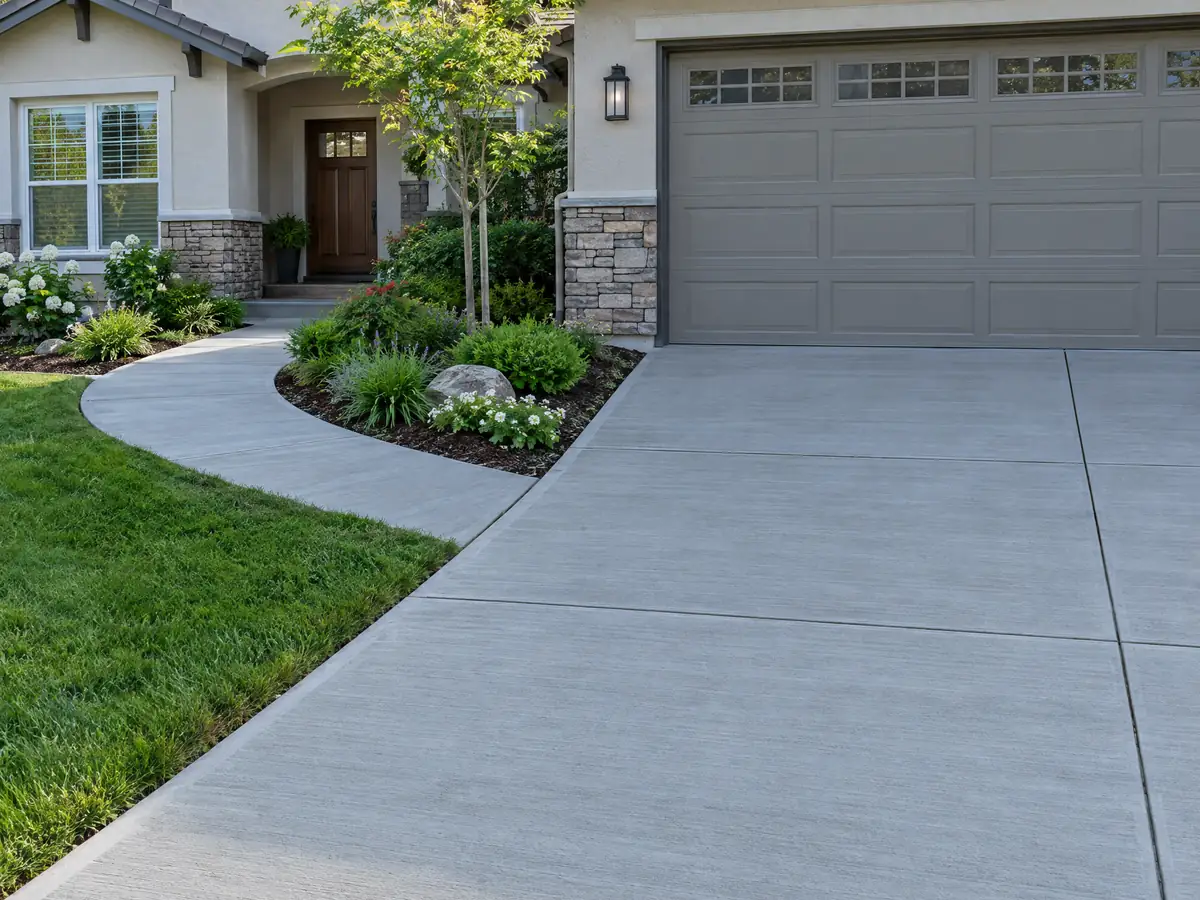
How much of a Pomona lot can a patio, driveway or slab cover?
Less than the whole yard, and the limit depends on the lot's module. Pomona's Zoning and Development Code, adopted July 1, 2024, gives every parcel a bracket on the zoning map with Form, Frontage and Use modules. In Part 3 of that code, House Medium 1 (used by RND1 and RND5) allows building coverage up to 45 percent and impervious coverage up to 75 percent, while House Broad 1 (RND4) allows 45 and 70 percent.
Impervious coverage includes slabs, so a driveway widened for a second car or a large patio draws on the same allowance as the house. Because the modules are set lot by lot in brackets on the zoning map, two neighbors can have different numbers, and a 1950s tract lot may already be close to its limit. A shed, detached garage or pool is an accessory structure that needs the zoning ministerial permit and may sit only in a side or rear yard. A pool and its equipment must stay at least 5 feet from a rear, side or street side lot line, and Municipal Code section 74-291 asks for a three-foot walkway between a pool and any building.
Inside a specific plan area, such as Downtown Pomona, Phillips Ranch or Mission 71, the plan sets the standards. Ask Pomona Planning which bracket and plan your parcel sits in before the forms go up.
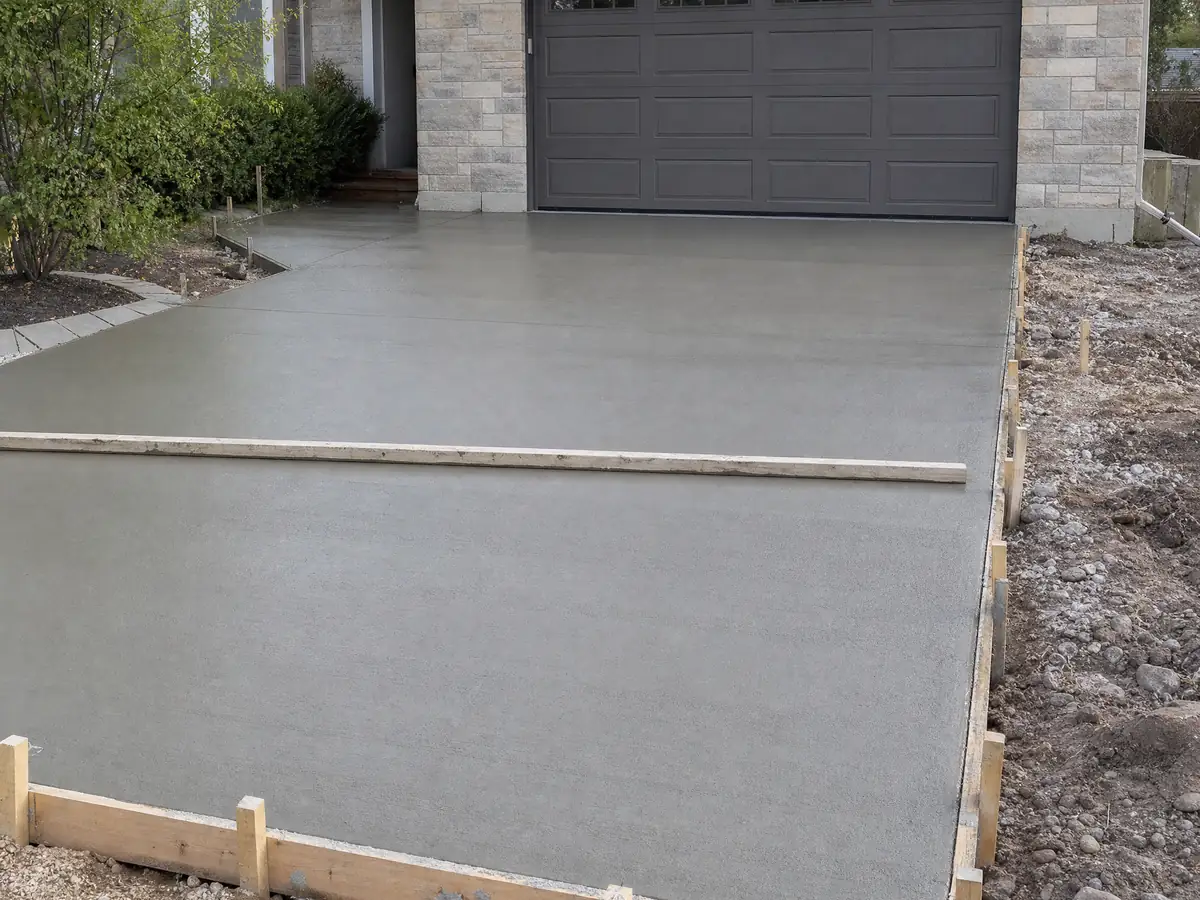
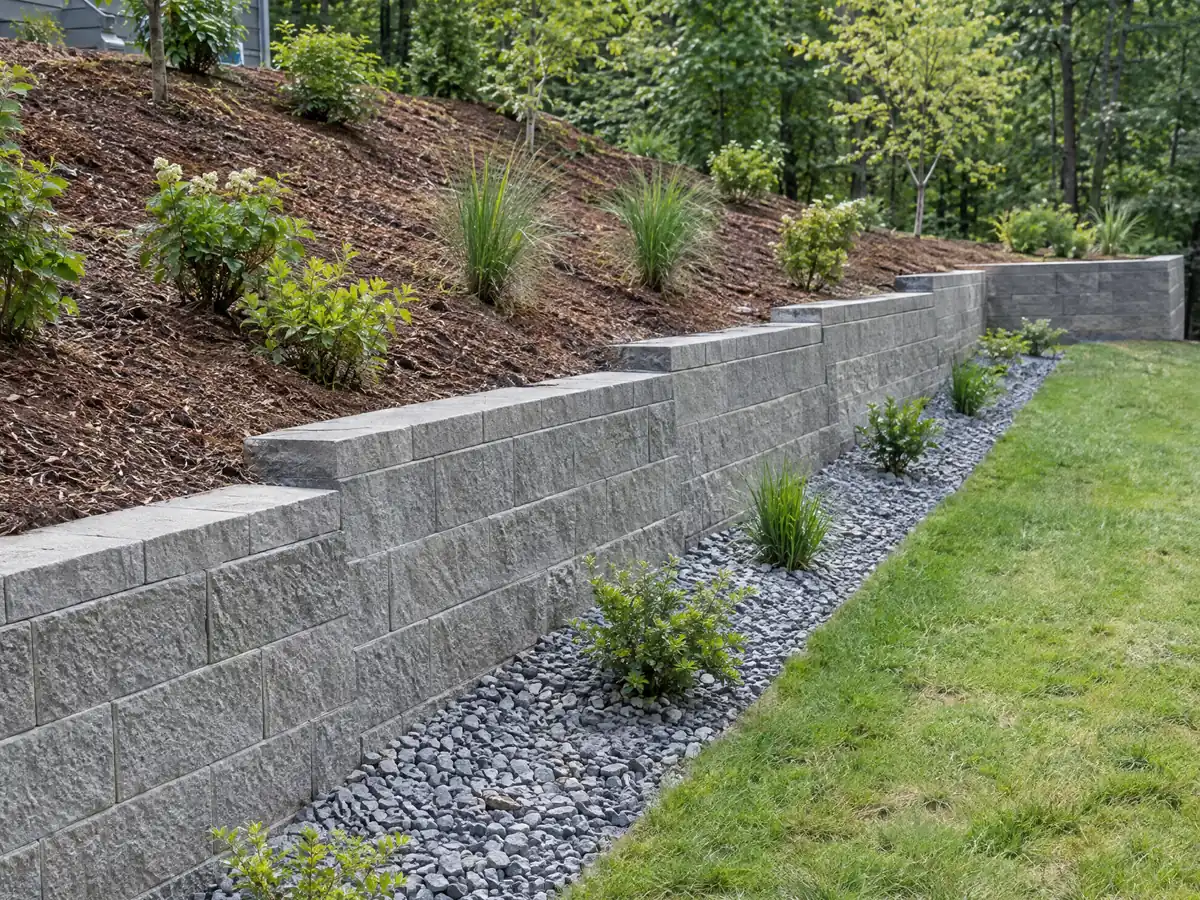
How tall can a retaining wall be in Pomona before it needs a permit?
Four feet is the permit line, and ten feet is the zoning ceiling. The state exempt list covers retaining walls not over 4 feet, measured from the bottom of the footing to the top, unless they support a surcharge such as a driveway or a slope. Pomona's zoning code separately caps a retaining wall at 10 feet, asks for multiple walls on one lot to sit at least 3 feet apart, requires landscaping on walls over 8 feet, and measures height from the top of the wall to the lowest adjacent ground.
In a front yard, a retaining wall cannot exceed the front-yard fence type's maximum height, which is 4.5 feet in the single-unit districts. A wall that is exempt from a building permit can still break these zoning numbers.
Licensing splits the work. CSLB's C-8 class covers forming, pouring, placing and finishing concrete, while C-29 masonry covers concrete block walls. A poured wall goes to a C-8 firm and a block wall to a C-29 firm, and we request the license number before the quote is final. Ask also who designs and stamps any wall above the exemption, and whether the permit is in the price.
Drainage behind the wall is where the money goes. Ask whether it is in the price.
What happens to old concrete in Pomona's historic districts?
Lincoln Park alone holds 821 structures, mostly built from the 1890s to the 1940s, and Pomona's six historic districts (Hacienda Park, Lincoln Park, Wilton Heights, Edison, Civic Center and Landmark Quarter) carry an -H overlay. For a historical resource, no building or demolition permit issues until the Certificate of Appropriateness is approved. The passages we read list foundation repairs, roofs, chimneys and some fences as minor work, and say nothing about walks, steps or curbs, so ask Planning before an old section is broken out.
A new accessory structure, addition or infill is a Major Certificate of Appropriateness item decided by the Historic Preservation Commission, and the building permit waits for it. A slab for a new accessory building belongs to that larger review, which is a very different conversation from patching a walk.
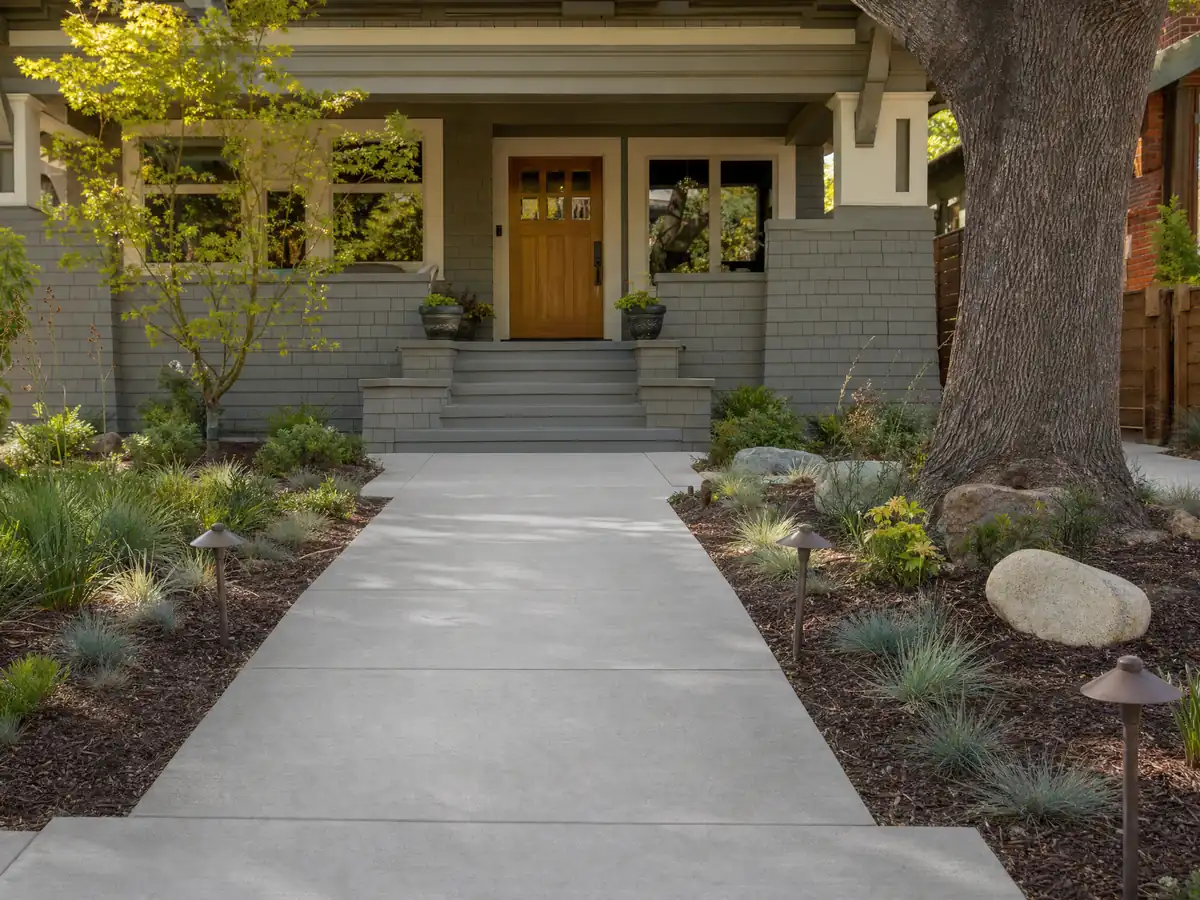
When a section of old walk or driveway is replaced, photograph the existing finish first and ask the subcontractor to match the neighbors' joint spacing and surface. That is practice, not a code rule. Pomona's Mills Act program applies to designated landmarks and contributing houses, which is another reason to talk to Planning before original flatwork is removed.
Can concrete be poured in Pomona's summer heat or in the rain?
Yes, with planning for both. NOAA's 1991 to 2020 normals for the Pomona/Fairplex station count 70.5 days a year at or above 90 F and 10.7 at or above 100 F, with average highs rising from 67.9 F in January to 92.4 F in August. The National Ready Mixed Concrete Association's hot weather bulletin CIP 12 says high air and concrete temperature, low humidity, wind and sun all speed up moisture loss and setting.
It advises avoiding the hottest part of the day when possible, never sprinkling water on a slab to ease finishing, and using windbreaks, sunscreens, mist fogging or evaporation retardants where low humidity and wind could cause plastic shrinkage cracking.
Rain is the other half: 11.47 of the station's 14.47 inches a year fall from December through March. We found no code rule on pouring in rain, so ask the subcontractor how a fresh slab will be covered and when the pour is called off, and schedule flatwork for dry months where the plan allows. A pour that must go in during summer is usually booked for the early morning.
What does concrete work cost in Pomona for a patio, driveway or walk?
We found no Pomona price study with a stated method, so these are Los Angeles figures. Angi's 2026 pages and HomeGuide overlap on plain patios, walkways and slabs at roughly $8 to $14 per square foot installed on a flat site with a 4 inch broom finish. Stained, stamped or exposed aggregate finishes run $15 to $30, and replacing a driveway runs $9 to $20 with the old slab demolished. We rate plain flatwork medium in confidence and driveways low.
Multiplied out, a 20 by 20 foot plain patio is about $3,200 to $5,600, and $6,000 to $12,000 at decorative prices. Pomona's 6 inch minimum through the sidewalk area is thicker than the 4 inch slab behind those figures, so an apron may price above the range. Small jobs run above per-foot averages because of minimum charges, and the Bureau of Labor Statistics put the mean cement mason wage in the Los Angeles-Long Beach-Anaheim area at $33.67 an hour in May 2025.
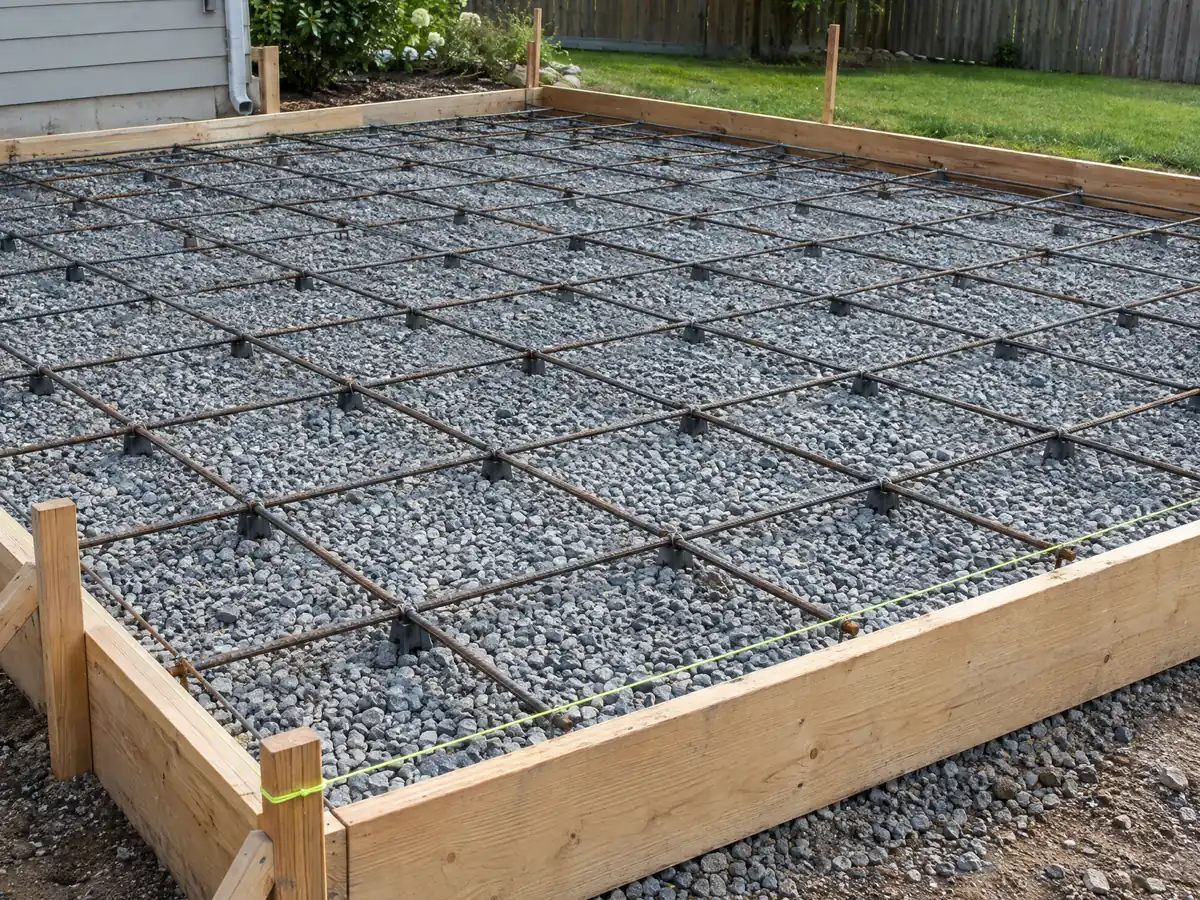
We print no per-foot price for retaining walls. Angi's Los Angeles range of $2,674 to $11,842 depends on height, drainage and engineering. Ask for the sidewalk apron, the main slab, rebar and haul-off on separate lines, with the thickness and base written down.
Concrete photos from Pomona and nearby communities
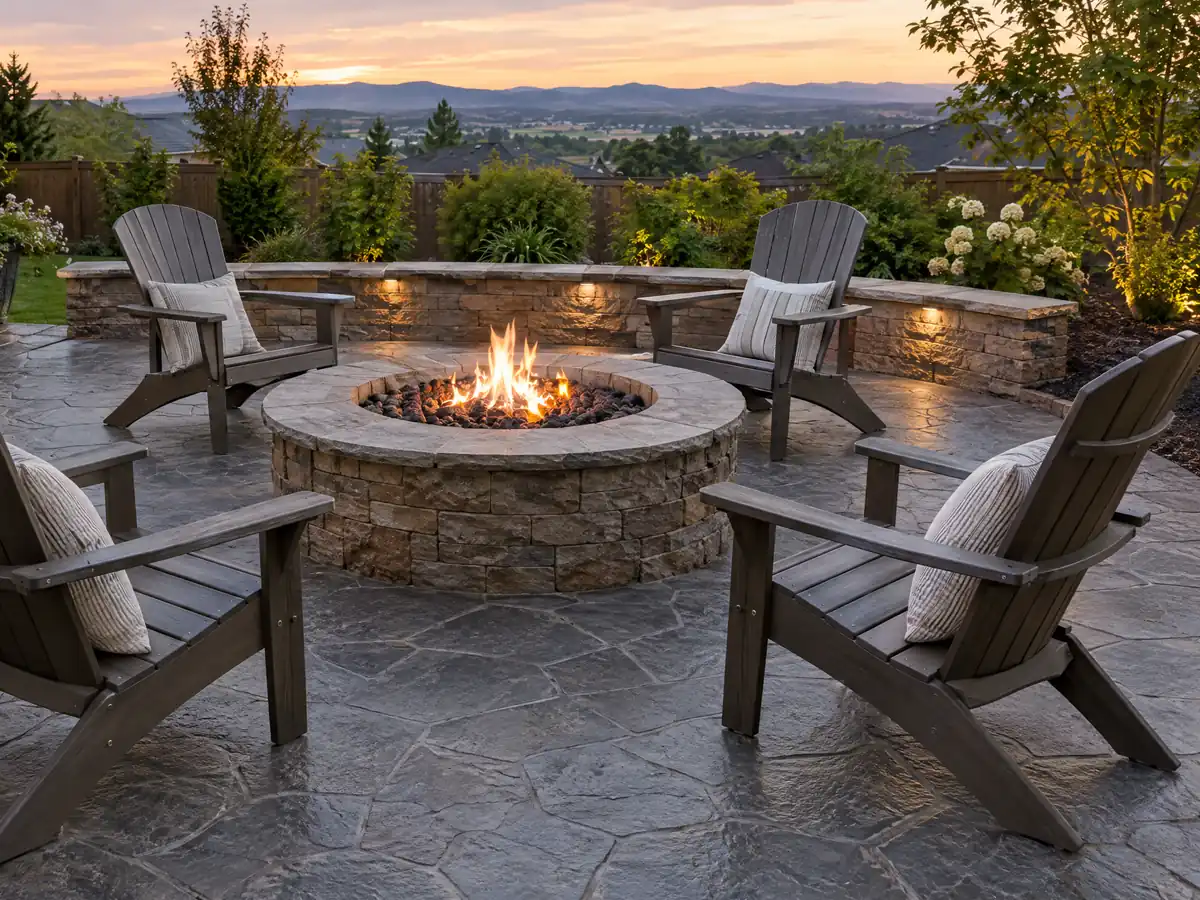
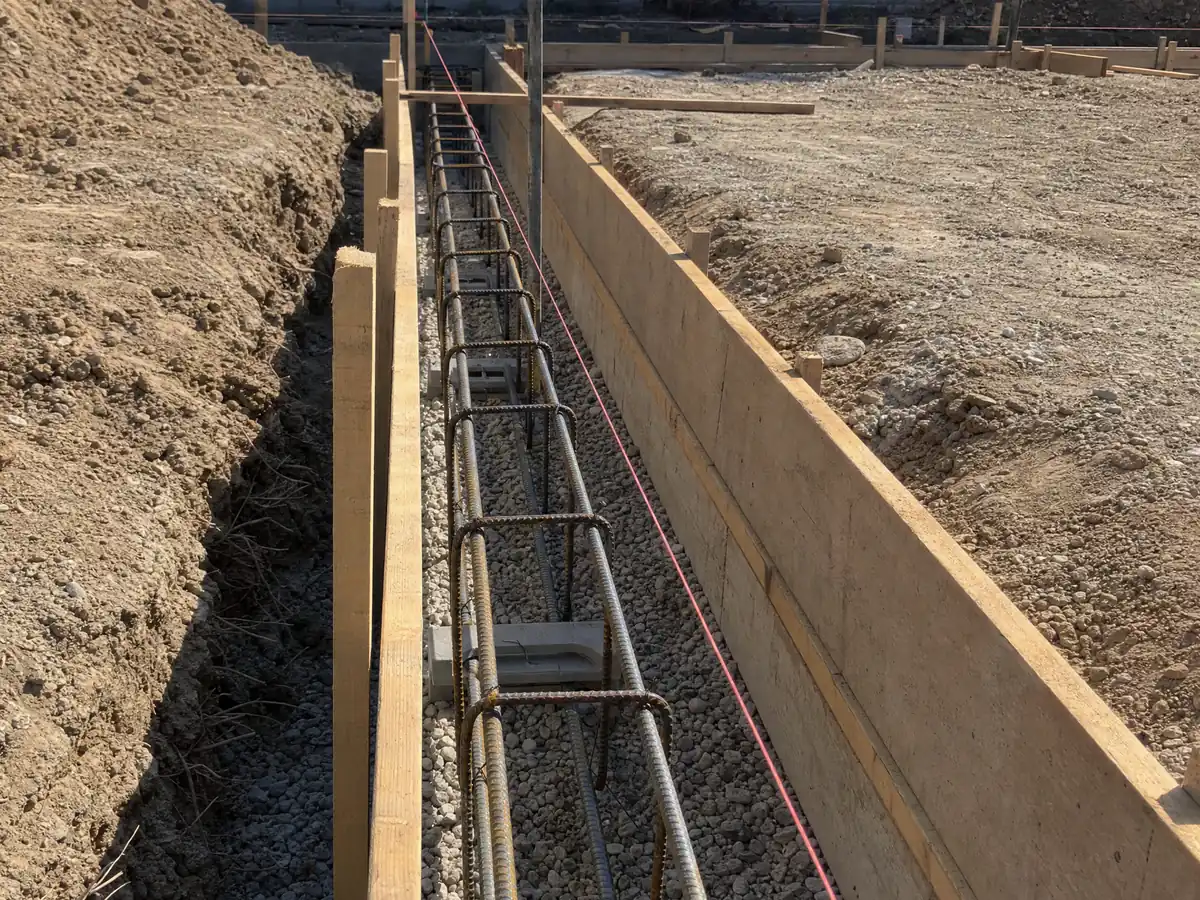
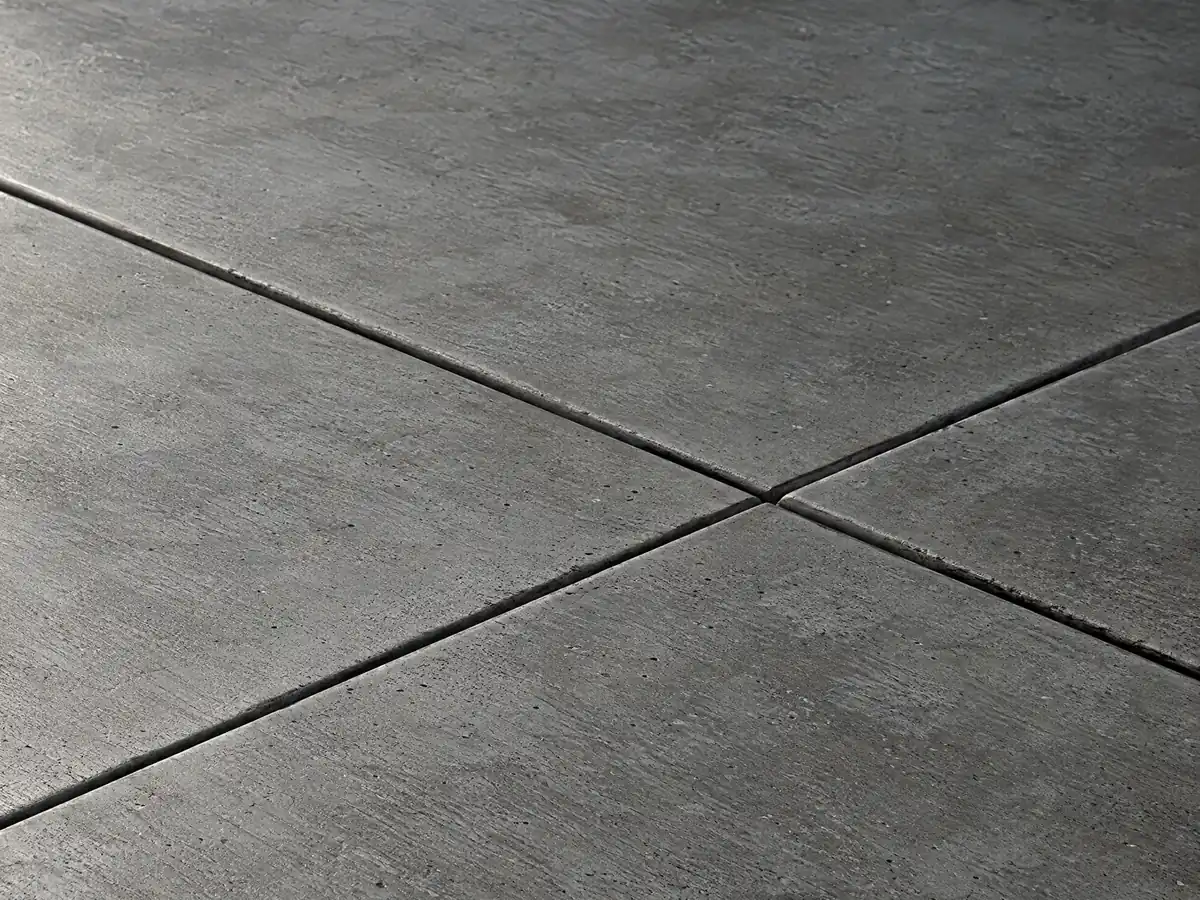
Six photos of concrete work around Pomona and its neighbors, from walks and driveways to forms, rebar and block walls. Tap a photo to enlarge it.
What concrete costs around Pomona
Prices here are the Los Angeles ranges on our concrete page, not a Pomona quote. Demolition and haul-off, rebar, the curb cut deposit and the permit are separate lines in a proposal, and the license check guide shows how to verify a bidder. Related pages: concrete work in Los Angeles, concrete in Glendale, concrete in Pasadena, flooring in Pomona and decks in Pomona.
| What it covers | Typical range |
|---|---|
| Patio, walkway or slab, broom finish, 300 sq ft or more | $8 to $14 per square foot |
| Decorative: stained, stamped or exposed aggregate | $15 to $30 per square foot |
| Driveway replacement, with demolition of the old slab | $9 to $20 per square foot |
| 20 by 20 foot plain patio (400 sq ft) | About $3,200 to $5,600 |
| 20 by 20 foot decorative patio (400 sq ft) | About $6,000 to $12,000 |
| Small jobs under 300 sq ft | Usually above the per-foot range |
| Retaining walls | Set by the written proposal |
Pomona concrete questions, answered
Can I pour a concrete patio without a permit in Pomona?
Possibly. The state exempt list covers sidewalks and driveways not more than 30 inches above grade, but a patio slab is not named, and zoning still limits coverage to 75 percent impervious on some lots and 70 on others. Ask Building and Safety about your exact slab, and ask Planning about coverage, before ordering concrete.
Can I expand my driveway without a permit in Pomona?
Not if the widening reaches the street side. A driveway connecting a street to private property where curb and sidewalk exist needs a Public Works permit under section 46-116, with a cash deposit. Total width is also limited to 50 percent of the frontage involved, and the slab counts toward the lot's impervious coverage.
What is the maximum height of a retaining wall without a permit in Pomona?
Four feet, measured from footing bottom to wall top, and only if the wall carries no surcharge. That is the state exempt-list line. Pomona's zoning code separately caps retaining walls at 10 feet and limits front-yard walls to the fence type's height, so exempt does not mean unlimited.
How much should a 20x20 concrete patio cost in Pomona?
About $3,200 to $5,600 for a plain broom-finish patio, and $6,000 to $12,000 for stained, stamped or exposed aggregate. That multiplies 400 square feet by Los Angeles ranges of $8 to $14 and $15 to $30 per square foot from Angi and HomeGuide. It is arithmetic, not a quote, and small jobs often carry minimum charges.
How much does a concrete driveway cost in Pomona?
Use $9 to $20 per square foot for replacement including demolition of the old slab, a low-confidence Los Angeles range from Angi's 2026 pages. We found no Pomona study. Slope, access, thickness and the apron through the sidewalk area move the number, and a written proposal after a site visit sets the real price.
Is 4 inches of concrete thick enough for a driveway in Pomona?
Not through the sidewalk area, where Pomona's code asks for a floor at least 6 inches thick. Four inches is a common thickness for patios and walks, but we found no code citation that fixes it, so treat it as practice. Ask the subcontractor for thickness, base and rebar in writing.
Who pays to fix a cracked sidewalk in Pomona?
The code text we read does not say, and we found no repair or reimbursement program, so call Public Works before assuming. We do know any sidewalk in the street right-of-way needs a permit under section 46-52 and must follow city specifications, so a repair is not a private slab job.
Who is allowed to do concrete work in Pomona, and what license do they need?
A contractor holding a C-8 concrete license, or C-29 for block walls, unless the whole job costs $1,000 or less in labor and materials, needs no permit and uses no hired workers. California raised that limit from $500 in 2025. Check the license number at the CSLB website before you accept a quote.
Can you pour concrete in the rain or the heat in Pomona?
Yes, with precautions. Pomona has about 70 days a year at or above 90 F, and industry guidance calls for avoiding the hottest hours, not sprinkling water on the surface and using windbreaks or evaporation retardants. Rain mostly falls from December through March; ask the subcontractor how a fresh slab will be covered.
Do you replace cracked or sunken concrete in Pomona?
Yes, through a licensed concrete subcontractor that we manage. The first step is finding why it moved, whether roots, drainage or a poor base, because new concrete over the same cause cracks again. Pieces of public sidewalk need the Public Works permit, and a historic district lot should be checked with Planning first.
Send the address and a photo of the area
Tell us the street, the size and slope of the area and whether the slab, wall or driveway is new or a repair. We check Public Works and zoning before we call.