
Concrete Companyin Glendale, CA
A concrete company in Glendale needs a Public Works permit to build, rebuild or remove any curb, sidewalk or driveway in the public street, while a driveway on your own lot answers to zoning: single-family zones cap it at 45 percent of the front area and ask for decorative paving inside the setback.
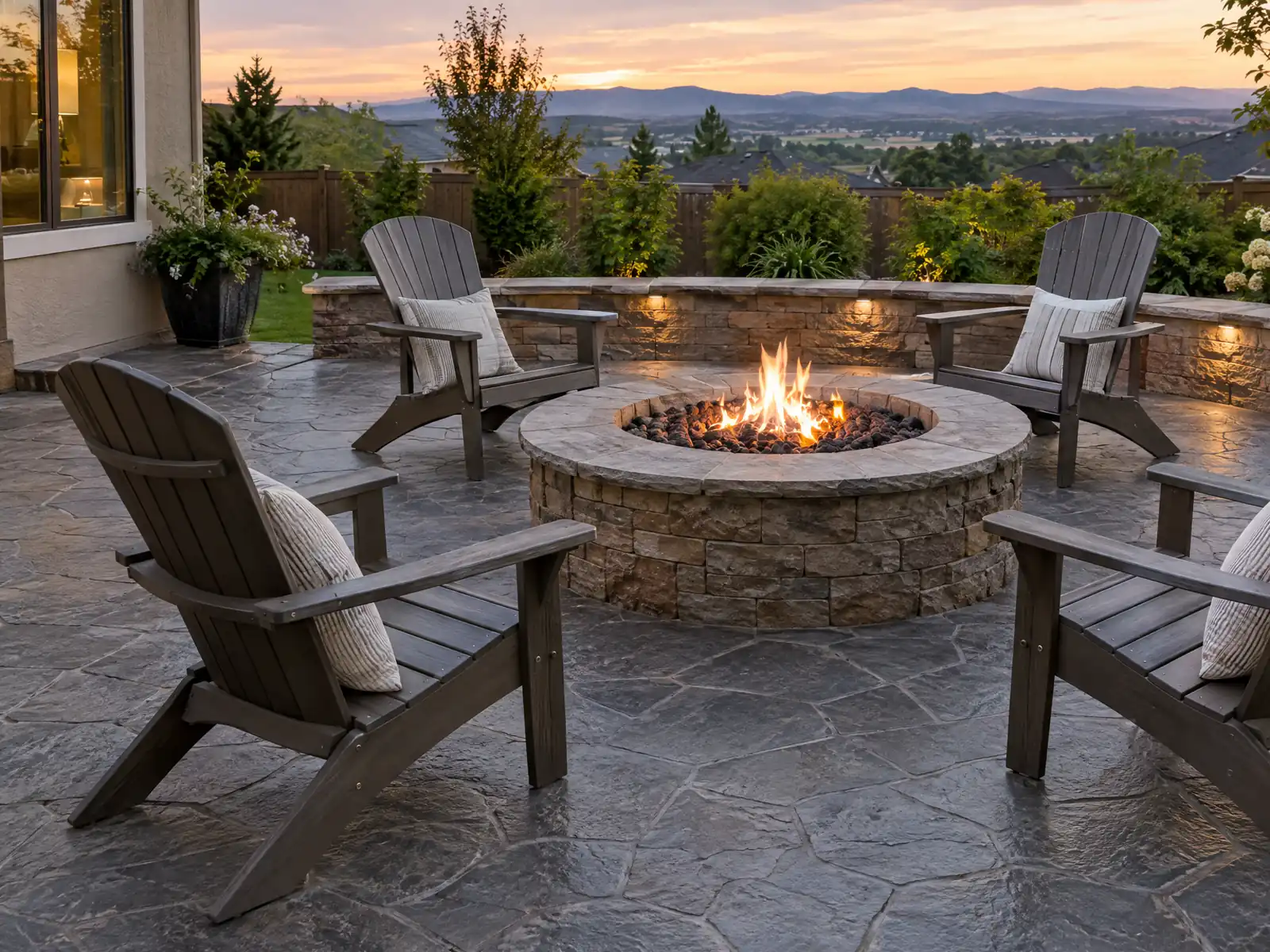
Concrete is where Glendale's rules meet the street. A driveway has two halves with two different offices: the apron and curb belong to the public right of way, and the slab behind the sidewalk belongs to your lot and to the zoning code. Add a Verdugo foothill grade, five historic districts and a city that grew from 13,536 people in 1920 to 62,736 in 1930, and every pour starts with a short list of lookups at the Permit Services Center.
The concrete page explains slab thickness, finishes, cracking and prices, and the Glendale area page lists the other trades we manage in the city. Here we cover what Glendale adds: who permits what, how much of a front yard can be paved, hillside walls and the review that reaches even a front walk.
Rules that shape concrete work in Glendale
Where concrete permits come from in Glendale: City of Glendale Community Development Department, Building & Safety (Permit Services Center).
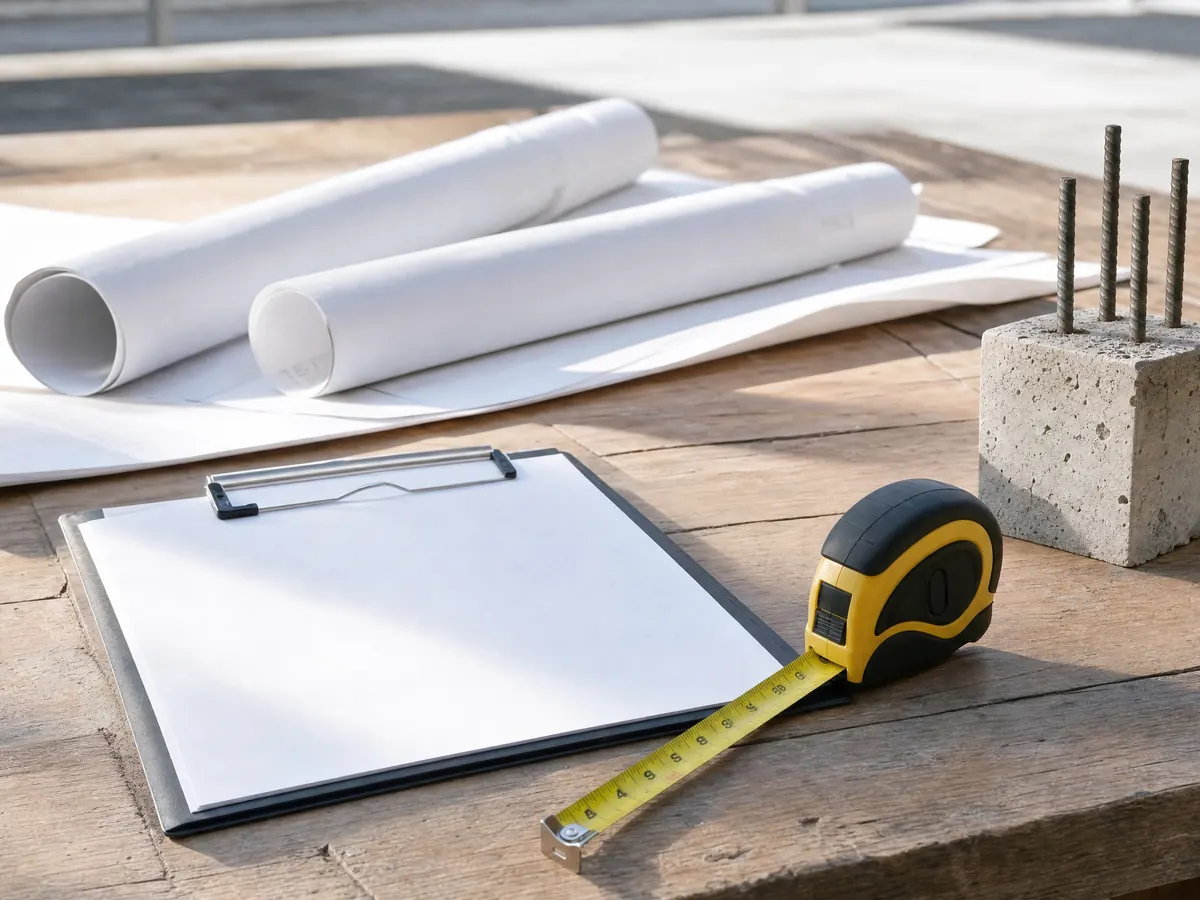
How much of a Glendale front yard can be concrete driveway?
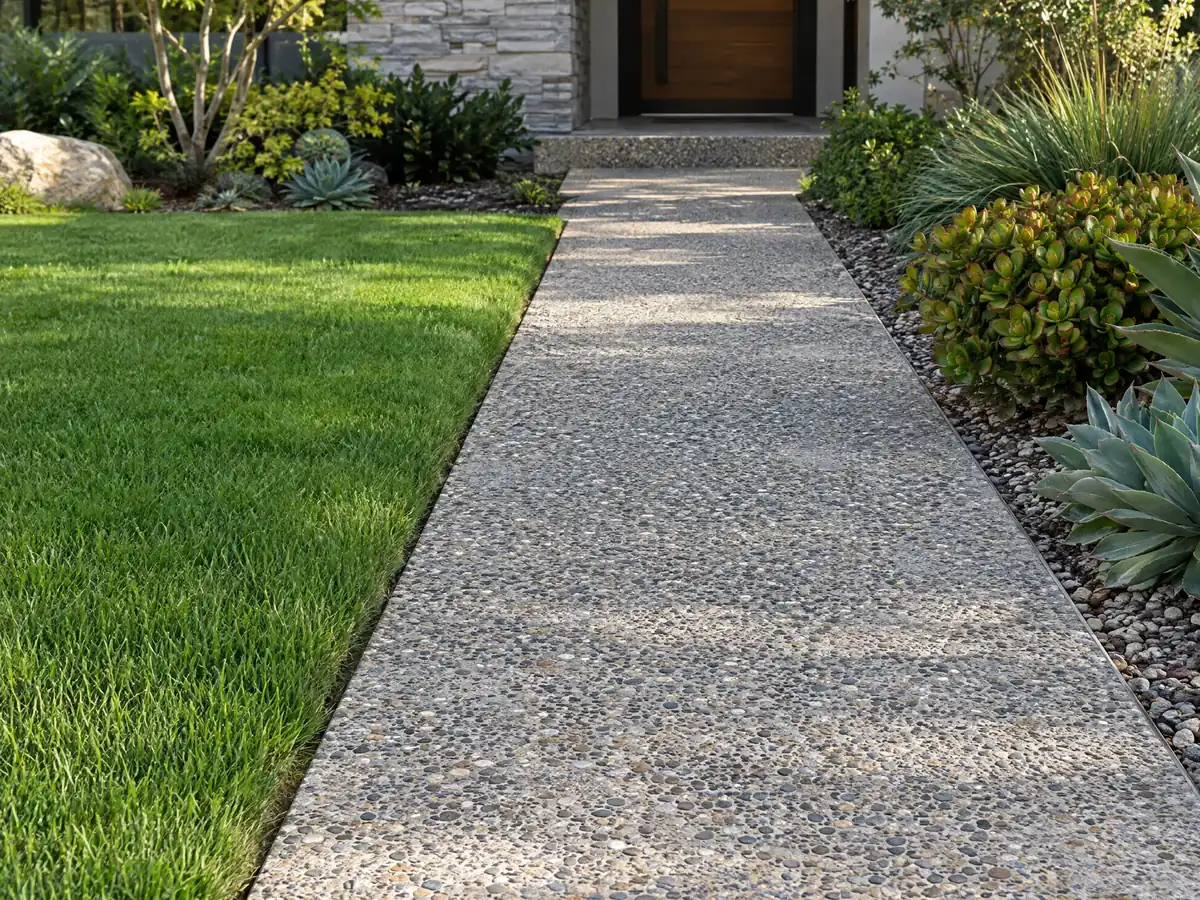
In the ROS, R1R and R1 zones, section 30.11.070 of the zoning code allows driveways and walks in the front setback but limits the driveway to the area reasonably needed to reach parking behind it. A driveway may not occupy more than 45 percent of the area measured back 25 feet from the street right of way, and on a street side the cap is 45 percent of the setback.
Surface matters too. Under section 30.32.130, driveway surfaces inside the street-front and street-side setbacks of those zones must include decorative paving such as brick, stone or stamped concrete, unless the director approves an alternative. A walkway beside a driveway has to be split from it by a two foot planting strip at least 18 inches high along 75 percent of the driveway length, or by another physical barrier.
Circular driveways need a lot at least 80 feet wide, buildings set back 25 feet, an outer turning radius of 25 feet and a width of no more than 15 feet, with pavers, permeable paving or a landscaped median and planting across much of the strip in front.
- Confirm the zone (ROS, R1R, R1 or multifamily) on the City's property research tool.
- Measure the paved share of the front area before drawing the new drive.
- Ask Planning whether the director must approve the paving material.
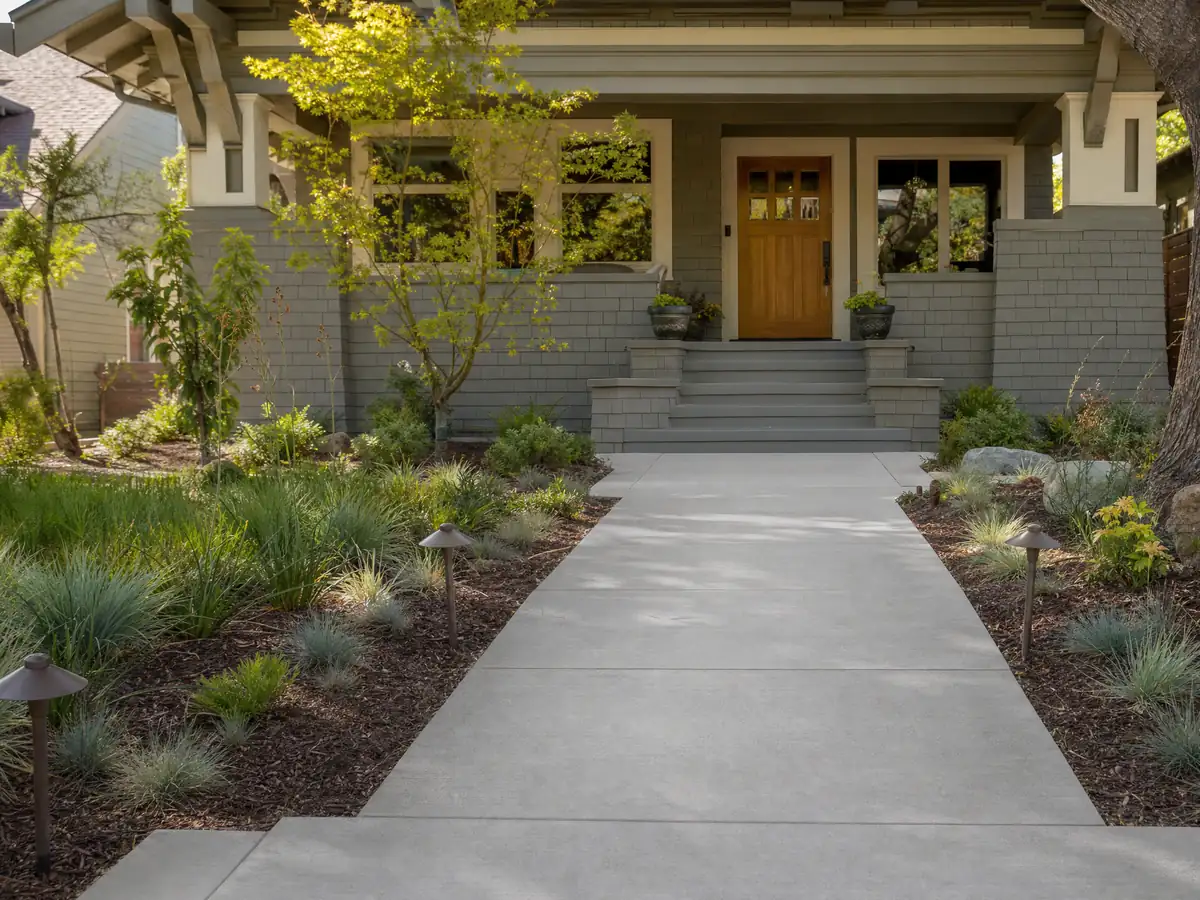
Who gives the permit for a new driveway, sidewalk or curb in Glendale?
The Public Works director does. Municipal Code section 12.20.010 requires a permit to build, rebuild, remove or destroy a curb, gutter, sidewalk, driveway, drain or similar improvement in a public street, alley or way. The application states the location and the quantities, and driveway width is measured at the back of the apron. The applicant pays a nonrefundable application fee plus an inspection fee based on the quantity inspected.
The director keeps standard plans for curbs, gutters, sidewalks and driveways, and an apron is built to them. If a curb or sidewalk is removed and not restored to standard within 30 days of written notice, the City can reconstruct it and charge the property owner. Digging in the right of way, such as a trench for a drain line, also needs a written excavation permit under section 12.08.040.
Behind the sidewalk the rules change. A new driveway must be at least 10 feet wide clear, or 9 feet in a residential zone where no one needs to walk beside it, and in ROS, R1R and R1 zones the slope may not exceed 20 percent. We line up the Public Works permit and the building or zoning approvals together, so the apron and the slab are not approved on different calendars.
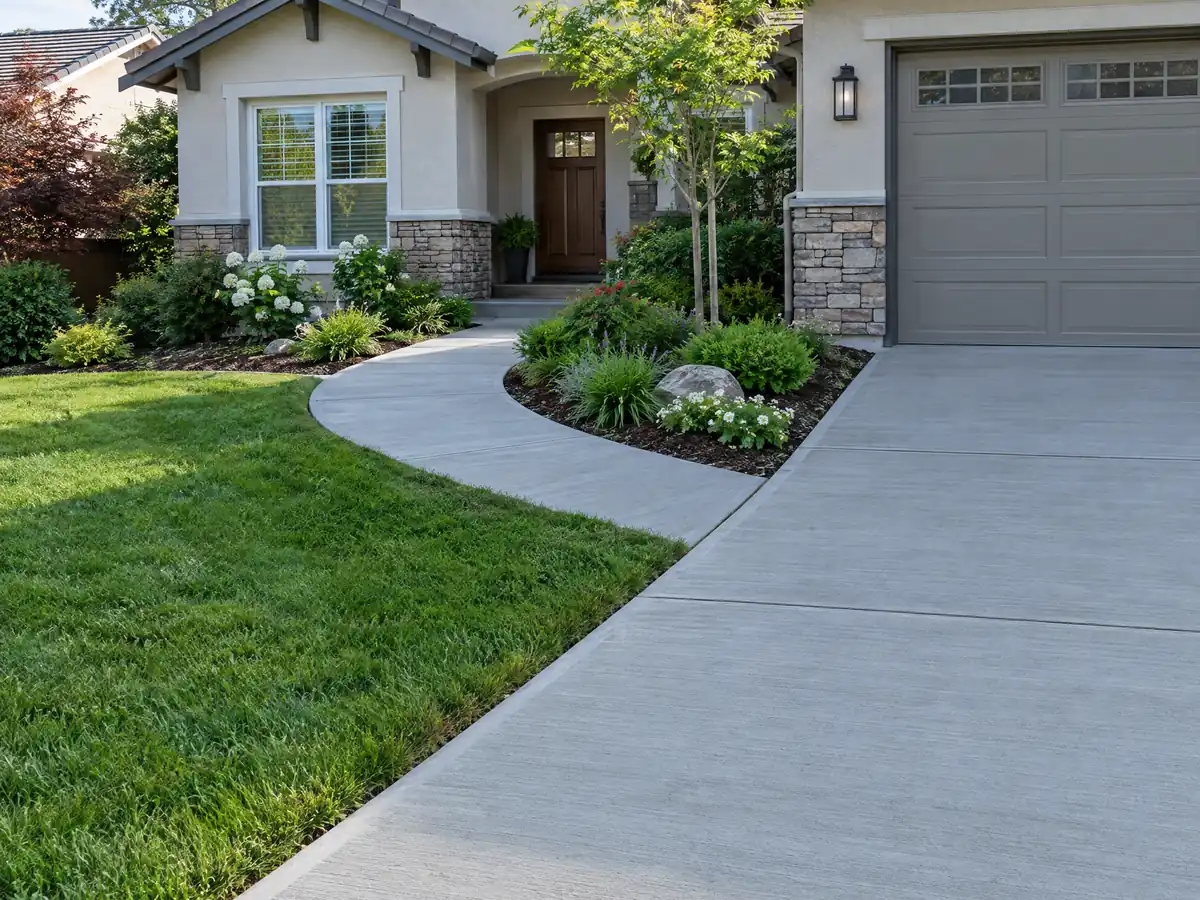
Old walks and driveways on Glendale's 1920s blocks
Glendale was platted in 1887 and incorporated on February 15, 1906. Census counts rose from 2,746 in 1910 to 13,536 in 1920 and 62,736 in 1930, and the blocks of that boom are what the Rossmoyne district (mostly 1923 to 1950), Royal Boulevard (mostly 1927 to 1948) and Ard Eevin Highlands (mostly 1920s to 1940s) now protect. About 20 percent of today's units date from 1939 or earlier.
Driveways poured before today's rules may be narrower than the 10 and 9 foot widths in section 30.32.130. The zoning code lets the owner of a single-family home add a garage or addition when the existing driveway is at least 8 feet wide, and a narrower one can apply for an administrative exception under Chapter 30.44.
The 1980s boom brought apartments and condominiums, and the same section sets separate minimums for them: 12 feet for one dwelling on a flag lot, 20 feet for a driveway shared by flag-lot dwellings and 11 feet for subterranean garages. A shared drive or garage ramp is checked against those numbers, not the single-family ones.
Retaining walls and concrete work on Glendale hillside lots
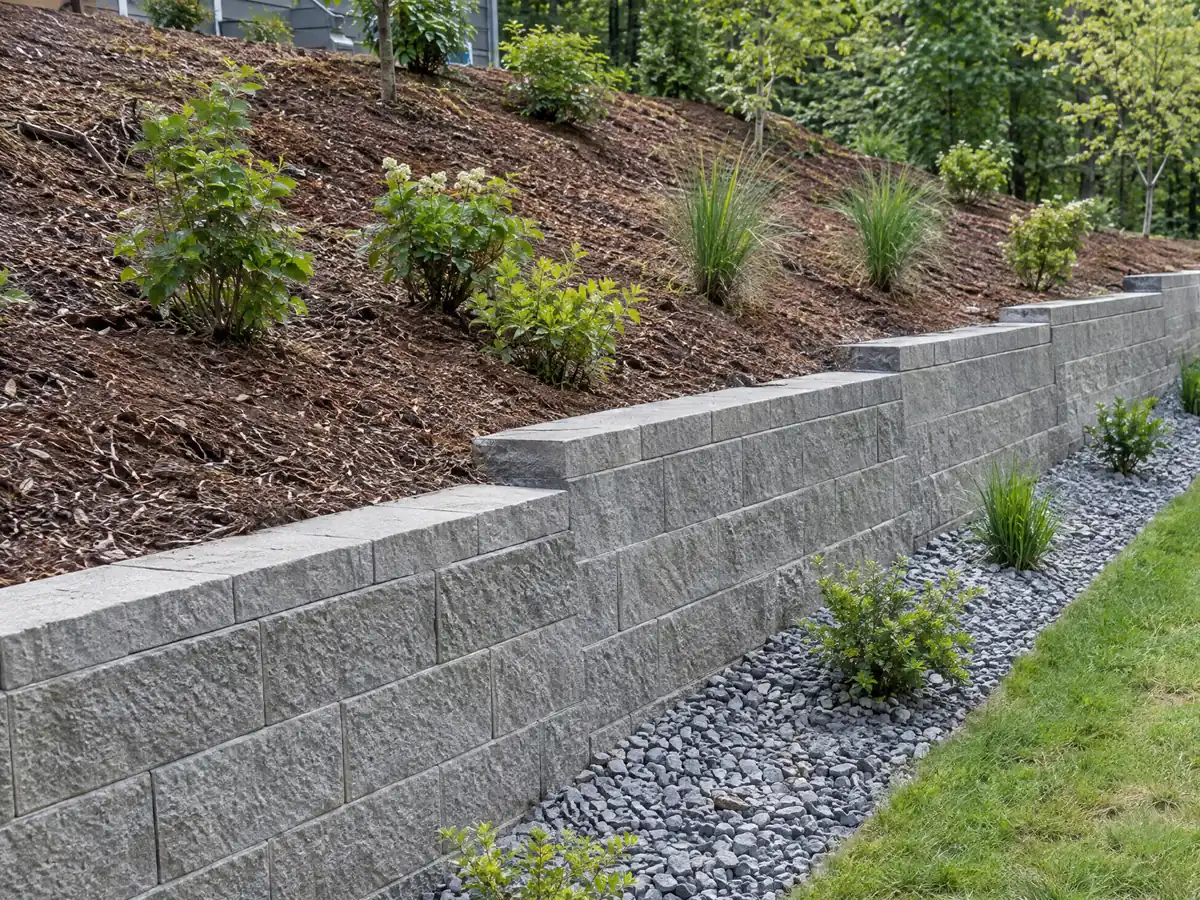
In the ROS and R1R zones, section 30.30.010 limits an exposed retaining wall to 5 feet, plus 2 more if it is faced with approved decorative masonry or stone, when its toe sits within 15 feet of a street property line, and to 3 feet within 5 feet of an interior property line. Up to two or three successive walls are allowed on slopes no steeper than 2:1 when spaced at least 5 feet apart. In the front setback, retaining walls and planters up to 18 inches high are allowed.
Grading is its own chapter. Chapter 15.12 defines hillside areas as mountainous terrain on the Title 16 map or land in the R1 or SR zones, and the city engineer or building official checks grading plans against the hillside design guidelines before issuing a permit. Drainage devices must be concrete colored to match the hillside or made of natural-looking materials, and cut and fill slopes are planted and irrigated right after rough grading.
The state's model permit-exempt list covers retaining walls up to 4 feet measured from the bottom of the footing, unless they carry a surcharge. Zoning still applies, so a wall under 4 feet can need review. Zoning, grading and the wall's footing are reviewed as separate questions.
Can you replace a walkway or driveway in a Glendale historic district?
Only after review. In the five historic districts, section 30.25.054(B) makes construction or removal of hardscape, fences and walls subject to the director's review and approval even when no building permit applies. Driveways and walkways fall under hardscape, and a feature that the district survey identifies as significant is a protected landscape feature whose removal also needs sign-off.
Properties on the Glendale Register outside a district follow Chapter 15.20, which uses nearly identical wording in section 15.20.084. Routine landscape maintenance is allowed except for protected features, so patching a small crack is different from tearing out a surveyed walk.
Before we price a pour in Rossmoyne, Royal Boulevard, Ard Eevin Highlands, Cottage Grove or Brockmont Park, we ask Planning whether the survey lists the walk, the drive or the retaining wall, and we bring photos and the proposed finish. Block walls add a second set of limits, covered on our Glendale fencing page. Ask for the survey page in writing so the answer travels with your file.
What a Glendale concrete company should plan for in heat and rain
NOAA's 1991 to 2020 normals for the Burbank Glendale Pasadena Airport station show 53.9 days a year above 90 degrees and 7.2 above 100, with 13.91 inches of rain, 11.37 of them from December through March. Summer pours fight fast surface drying, and winter pours fight rain on fresh concrete. We ask a crew for its plan on shade, early starts, covers and curing before the date is set, since we found no Glendale curing rule to cite.
Who does the work matters. CSLB lists concrete under the C-8 classification, which covers forming, pouring, placing and finishing, and masonry block under C-29. The state's $1,000 unlicensed-work allowance disappears if a permit is needed, and Municipal Code 15.26.010 adds a Glendale City license on top of the state license. Our license lookup guide shows the check.
MDG is a general contractor with CSLB #1040337: we scope, permit and manage the job, and a licensed concrete subcontractor pours it. Our subcontractor explainer describes what you can ask for, including that subcontractor's license number and certificate of insurance.
Concrete details from Glendale lots
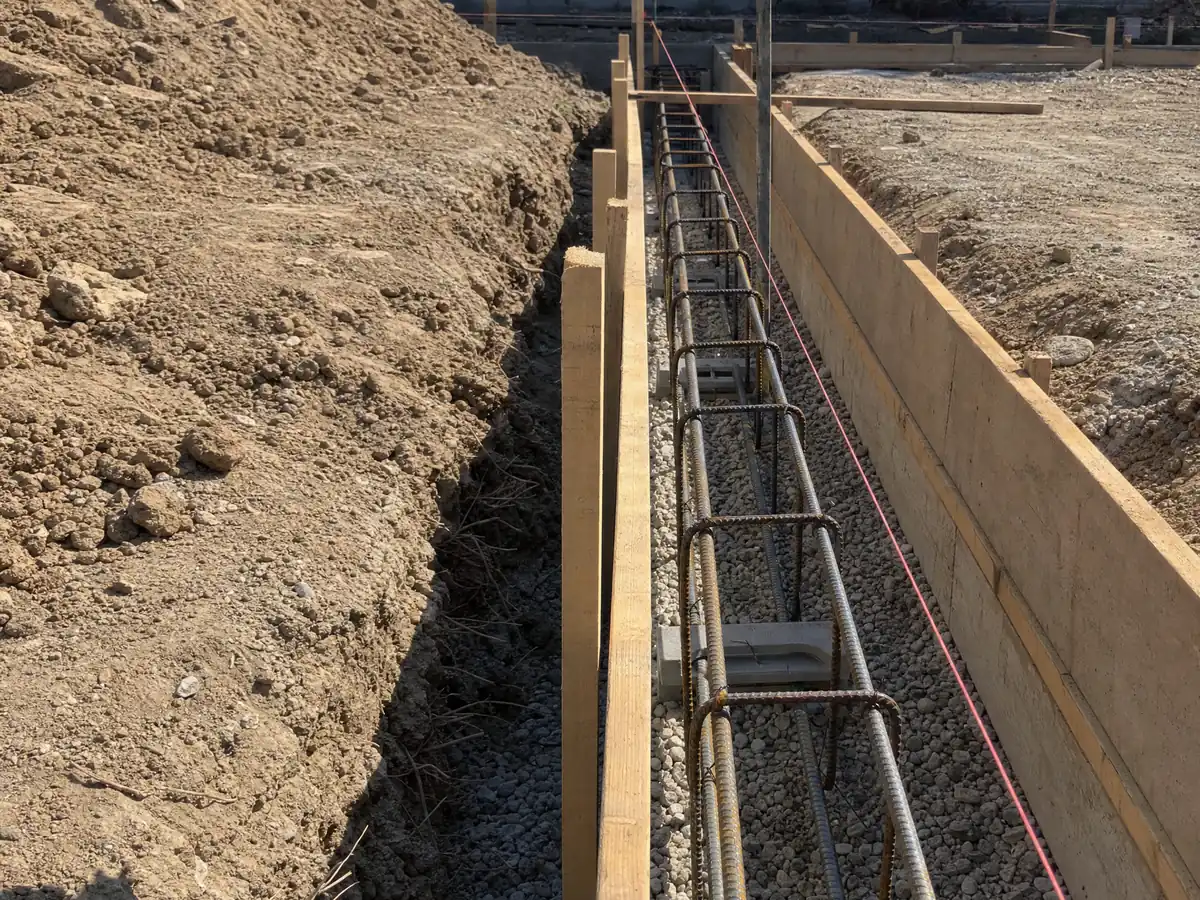
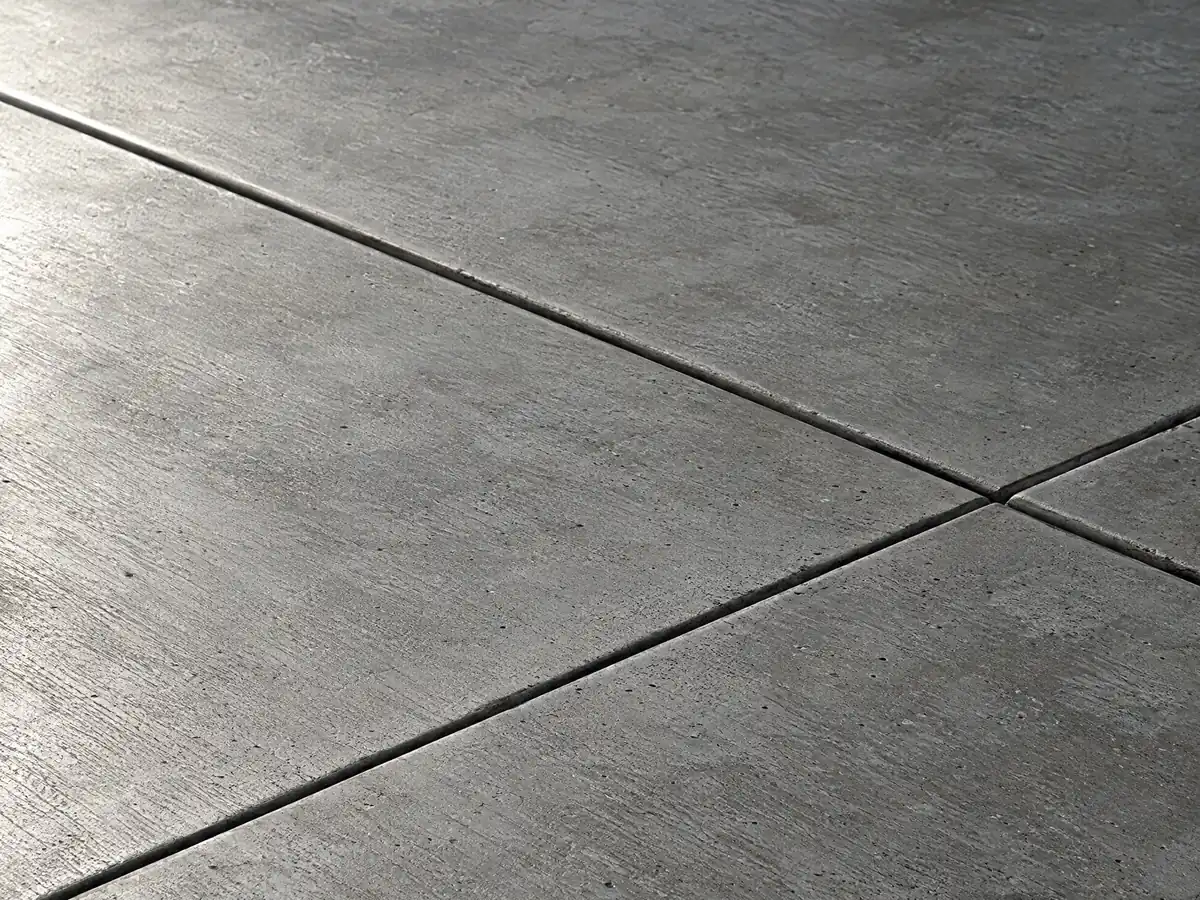
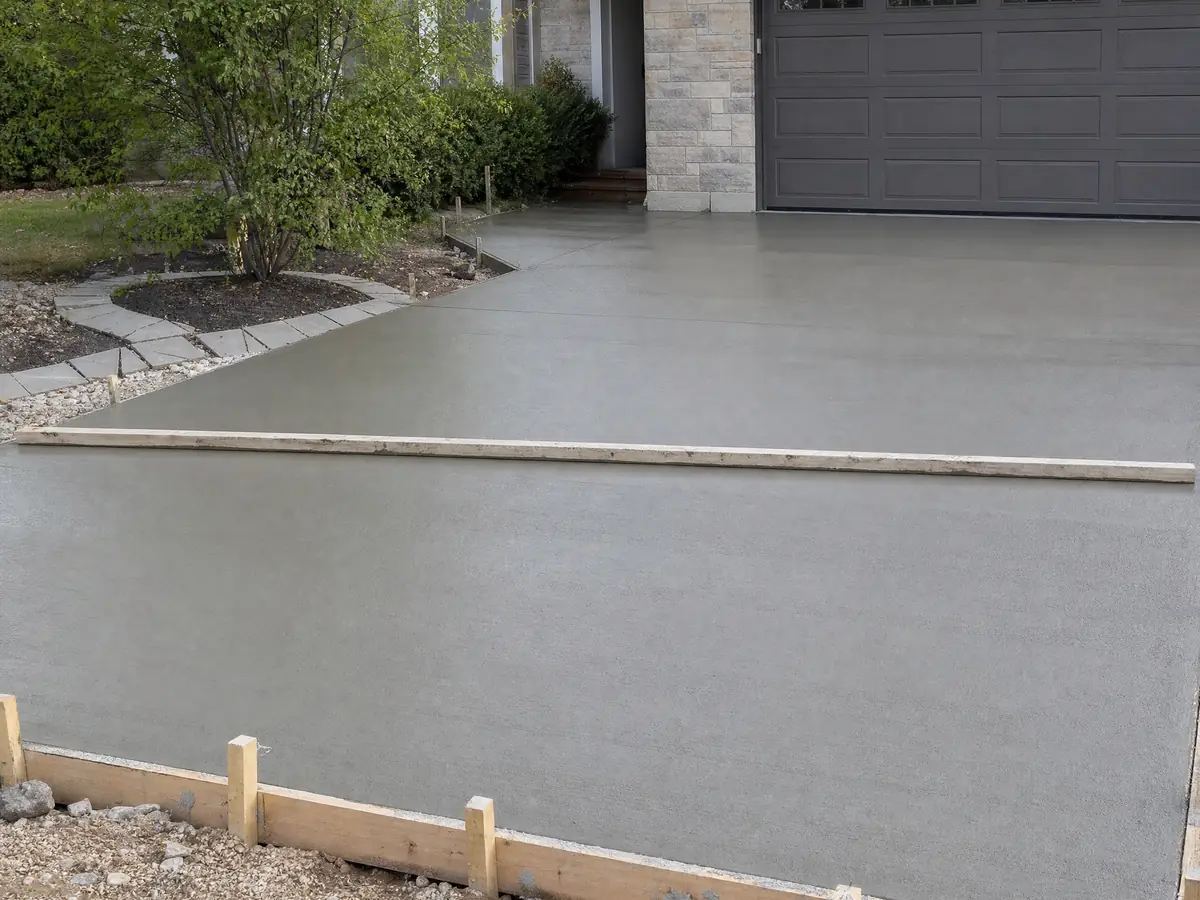
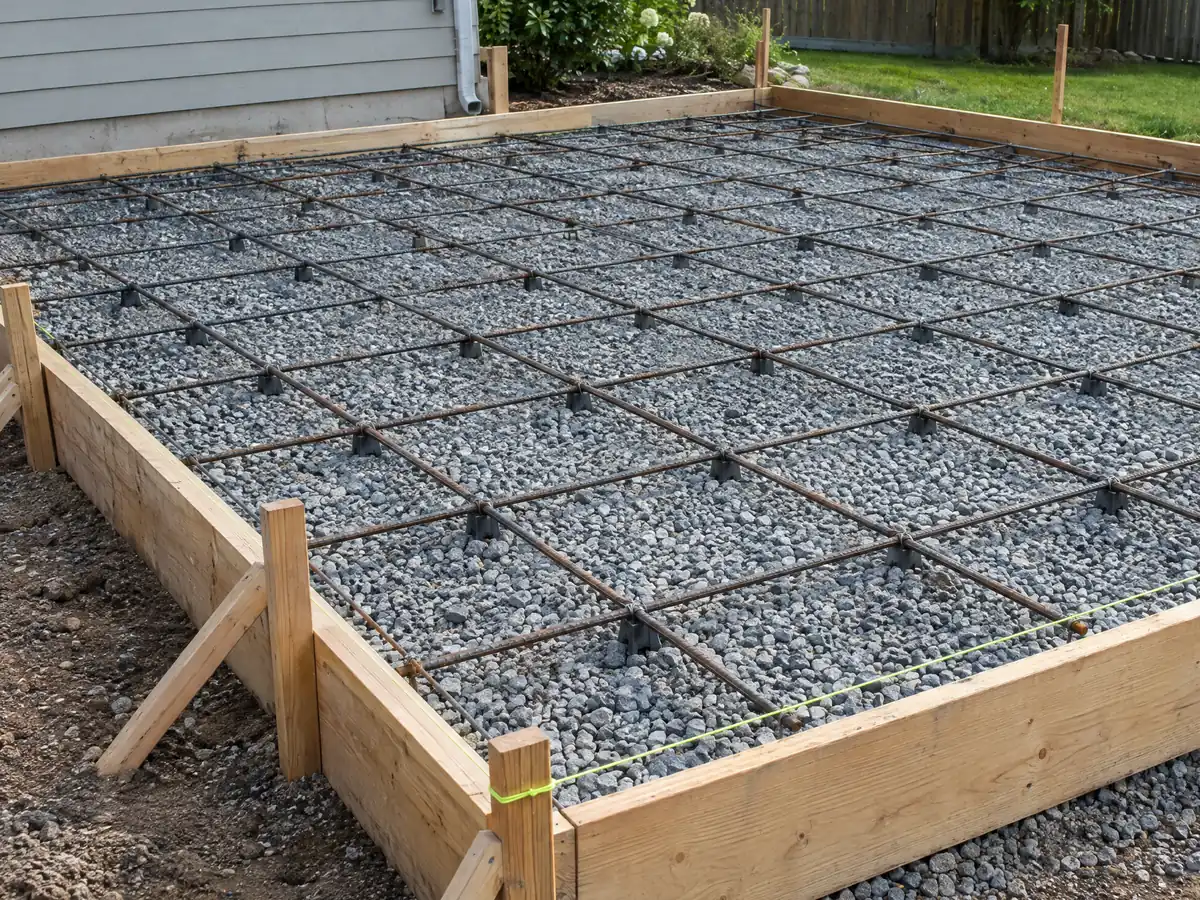
Three views of the forms, rebar and finishes behind a Glendale concrete job. Tap a photo to enlarge it.
What concrete costs around Glendale
The concrete price table puts plain broom-finished patios, walks and slabs of 300 square feet or more at $8 to $14 per square foot, decorative finishes at $15 to $30 and driveway replacement with demolition at $9 to $20, using Angi's Los Angeles pages and HomeGuide. We found no Glendale-specific source. Retaining walls carry no published per-foot figure: height, footing, steel, drainage and engineering set the price. The same lot often needs other work, so see concrete in Los Angeles, decks in Los Angeles and ADU construction in Los Angeles, and the Pasadena area page for the next city over.
| What it covers | Typical range |
|---|---|
| Patio, walkway or slab, broom finish, 300 sq ft or more | $8 to $14 per square foot |
| Decorative: stained, stamped or exposed aggregate | $15 to $30 per square foot |
| Driveway replacement, with demolition of the old slab | $9 to $20 per square foot |
| 20 by 20 foot plain patio (400 sq ft) | About $3,200 to $5,600 |
| 20 by 20 foot decorative patio (400 sq ft) | About $6,000 to $12,000 |
| Small jobs under 300 sq ft | Usually above the per-foot range |
| Retaining walls | Set by the written proposal |
Concrete work in Glendale: permits, driveways, walls and cost
Do I need a permit to pour a concrete patio or slab in Glendale?
Possibly, so ask first. The model state exemption list covers sidewalks and driveways up to 30 inches above grade but names no patio slab, and we found no Glendale statement on ground-level patios. Anything raised, covered or tied to the house is a different question. Building and Safety can answer for your lot.
Can I widen my driveway in Glendale without a permit?
Not freely. In the ROS, R1R and R1 zones a driveway may not exceed 45 percent of the front area measured back 25 feet from the street, and the apron and curb need a Public Works permit under Municipal Code 12.20.010. Check the zoning and the permit before ordering concrete.
Is stamped concrete required for a driveway in a Glendale front yard?
In ROS, R1R and R1 zones, the driveway surface inside the street-front and street-side setbacks must include decorative paving such as brick, stone or stamped concrete, unless the director approves another material. The rule we read applies to those setbacks, so confirm what applies behind them. Check your zone on the City's property research tool before choosing a finish.
How much does a concrete driveway cost in Glendale?
We found no Glendale-specific price, so we use Los Angeles area ranges: driveway replacement with demolition runs about $9 to $20 per square foot, from Angi's May 2026 Los Angeles page. Thickness, haul-off, grading and the curb apron move the number. Our written proposal for your driveway is the real price.
How much does a 20x20 concrete patio cost in Glendale?
A 400 square foot plain patio comes to about $3,200 to $5,600 at $8 to $14 per square foot, and a decorative one to about $6,000 to $12,000 at $15 to $30. That is our arithmetic from Los Angeles area ranges, not a Glendale quote. Small jobs usually price above the per-foot range.
How tall can a retaining wall be in Glendale without a permit?
The state's model list exempts retaining walls up to 4 feet from footing bottom to top unless they carry a surcharge, but Glendale zoning still caps heights: in ROS and R1R, 5 feet plus 2 for decorative masonry near a street line, and 3 feet near an interior line. Ask Building and Safety before building.
Can you pour concrete in the rain in Glendale?
Contractors avoid it, because rain on fresh concrete can damage the surface and ruin the finish. Glendale averages 11.37 of its 13.91 yearly inches from December through March, so crews watch the forecast, cover fresh work and reschedule. Ask any crew for its rain plan in writing before the pour date.
Is 4 inches of concrete thick enough for a driveway in Glendale?
Four inches is the common figure for light residential loads, but we found no Glendale code citation for thickness, so it is industry practice rather than a quoted rule. Heavier vehicles, soft soil and hillside grades can call for more depth or steel. The proposal states the thickness and reinforcement.
Who is allowed to do concrete work in Glendale, and what license do they need?
A contractor with the C-8 concrete classification, or C-29 for masonry block. Unlicensed work is capped at $1,000 including materials since January 1, 2025, and not allowed if a permit is needed. Municipal Code 15.26.010 adds a Glendale City license requirement on top of the state license. Verify the number on the CSLB site.
Can I replace a walkway in a Glendale historic district without approval?
No, ask first. In the five districts, construction or removal of hardscape, fences and walls needs the director's review even with no building permit, and a surveyed walk can be a protected feature. Patching small cracks is routine maintenance. Bring photos and the proposed finish to Planning before any demolition.
Plan a driveway, patio or wall in Glendale
Describe the pour, its approximate size and whether it reaches the curb or sits on a slope. We check the zone, the historic status and the hillside map before we price it.