
Concrete Companyin Alhambra, CA
A concrete company in Alhambra works inside the front yard rules: street-facing yards must be mostly planted, with ordinary hardscape capped at 25 percent, and a driveway approach, curb or sidewalk needs a Public Works permit. Walks and driveways no higher than 30 inches above grade are exempt from a building permit.
Alhambra's concrete is mostly older than the people walking on it. The Historical Society says Henry Huntington marketed Wuest-Bushnell as a streetcar suburb and that the Bean Tract holds many homes from the 1930s and 1940s, and the 2020 to 2024 census estimates put the median year built at 1960, with 49.5 percent of units built before 1960. Slabs and aprons of that age crack, settle and heave, and replacing them now meets a rewritten rulebook, because the City's new Zoning Code and Map took effect October 3, 2026.
MDG Builders (CSLB #1040337) is a Tarzana general contractor. We scope the pour, put the permit questions to the Alhambra Building Division and Public Works, and keep the schedule, and a licensed concrete subcontractor forms, places and finishes the slab. Slab types and sourced pricing are on the concrete page, and the Alhambra overview lists the other trades we manage here.
What Alhambra's Zoning Code and Municipal Code say about concrete
Where concrete permits come from in Alhambra: City of Alhambra Community Development Department, Building Division.
- Driveways, walks and decks not more than 30 inches above grade are exempt from a building permit (AMC 20.05.010 section 107.2), but work in the public right-of-way, including a driveway approach, curb, sidewalk or gutter, needs a written permit from the Director of Public Works with approved plans, and the fees are doubled if work starts first and the applicant held a contractor license or had applied for a permit before (AMC 13.24.020).
- Street-facing yards (front, street side, and a rear yard visible from a street) must be landscaped with live plants or artificial turf, with up to 25 percent of the yard in non-decorative hardscape (concrete, asphalt, gravel, driveways, sidewalks) and up to 25 percent in decorative permeable hardscape (brick, stone, mulch). Landscape and hardscape in a front or street side yard may not be used as parking spaces (23.17.030 and 23.17.050).
- The City's FAQ on replacing a front lawn says a detailed landscape plan goes to the Planning Division for approval, live plants must cover at least half of the front yard, decorative permeable hardscape and non-decorative hardscape are each capped at a quarter, and artificial turf is allowed.
- For a new construction ADU, the City's guide says a separate grading and drainage plan submittal and permit are needed if 50 cubic yards or more of earth is cut, filled or over-excavated, or if an excavation creates a slope over 5 feet high steeper than 2 to 1. A building permit cannot issue until grading and drainage plans are approved and stamped by Planning.
- In AMC 20.05.030 the City amended Appendix J so the Building Official may refuse a grading permit if the grading or the proposed land use does not comply with the Planning and Zoning code. For engineered grading, completion requires certifications and reports from the field engineer, soils engineer and engineering geologist, including a finding on landslide, settlement and slippage hazards.
- On a garage conversion with an existing slab but no vapor retarder, the City's ADU guide lists approved alternate membranes (ICC ESR 1413, 2417, 2785 and 3474 products) to meet the vapor retarder requirement of R506.2.3, and says new footings must be at least 12 inches deep (or match deeper existing footings), 2,500 psi concrete, with four 1/2-inch bars.
- The code limits how much a lot may be raised: the first floor street elevation may not be more than 3 feet above the top of the required curb at any point of the adjacent right-of-way, and the site may not be artificially raised more than 2 feet above adjacent properties measured at the property line (AMC 23.12.070).
- The City's Forms and Guides page lists Grading Permit Forms A and B, Grading General Notes, a Rough and Finish Grading Certification, a Backfill of Swimming Pools requirement sheet and AQMD Rule 1403 guidance (how to apply).
Should a cracked walk or driveway in an old Alhambra tract be patched or replaced?
That depends on why it cracked. Concrete in the older tracts is seventy to a hundred years old and was laid before today's base, joint and drainage habits. A hairline crack in a sound slab is cosmetic. A slab that has dropped at a joint, tilts toward the house or has heaved over a root is a safety and drainage problem, and a patch will not fix its cause.
Roots bring a City rule. A Tree Permit is needed to remove or materially alter oaks, California native trees and mature trees above the size thresholds in AMC 23.12.170, which means oaks over 15 feet tall or 12 inches across and other mature trees over 20 feet or 24 inches, with exceptions for fruit trees, non-native palms, routine pruning and side and rear yards on RL and RM lots. Neighbors within 300 feet are notified of a removal application, so a plan to cut big roots beside a walk should reach Planning first.
Historic review rarely touches flatwork. The City's 2023 survey designated no property, and the 2025 ordinance does not block ordinary maintenance that leaves design, material and appearance unchanged (23.23.140), so a walk replaced to match the old one is the simple version of this job.
How much of an Alhambra front yard can be concrete?
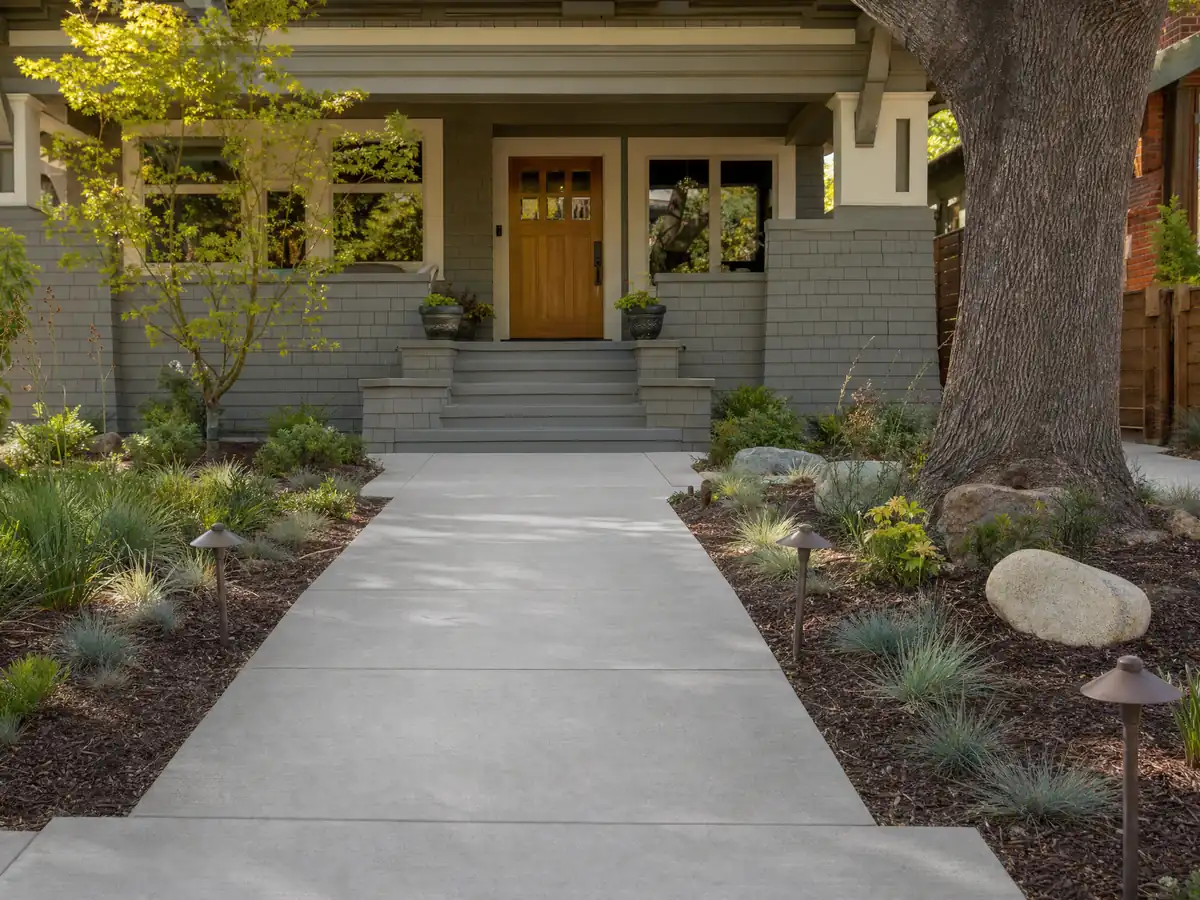
A quarter of it, at most. Under the October 2026 Zoning Code, street-facing yards, meaning the front yard, the street side yard and any rear yard visible from a street, must be landscaped with live plants or artificial turf. Up to 25 percent may be non-decorative hardscape such as concrete, asphalt, gravel, driveways and sidewalks, and up to 25 percent decorative permeable hardscape such as brick, stone or mulch (23.17.030). Hardscape there may not serve as parking (23.17.050).
The City's FAQ on replacing a front lawn says a detailed landscape plan goes to Planning for approval and that artificial turf is allowed. Garage-side numbers matter too: a single-unit home needs 2 spaces in an enclosed garage (Table 23.20.040), required parking may not sit in a front or street side yard, a driveway serving a garage must be at least 20 feet deep, and in the RL zone the minimum width is 10 feet (23.20.090).
The City warns that its online Municipal Code can trail the 2026 update by months, and we read these figures from the October 2026 Zoning Code PDF. Ask Planning at 626-570-5034 to confirm your zone and the hardscape count before the plan reaches a concrete subcontractor.
- Is the yard street-facing, and what share is paved now?
- Does the new plan keep live plants or turf over half the yard?
Which concrete work in Alhambra needs a permit, and which does not?
Plain flatwork skips the building permit, not every rule. Section 107.2 of AMC 20.05.010 exempts driveways, walks and decks no more than 30 inches above grade, with no basement or story below and no accessible route. A ground-level patio slab is not named on that line, so ask the Building Division to confirm yours. The same section says an exemption never allows work that breaks the code, and separate plumbing, electrical and mechanical permits still apply, which matters for a gas line to a fire pit.
The public right-of-way belongs to another office. A driveway approach, curb, sidewalk or gutter needs a written permit from the Director of Public Works with approved plans (AMC 13.24.020), and fees are doubled when work begins first and the applicant held a contractor license or had applied for a permit. We found no permit fee schedule for Alhambra, so this page prints no permit fees.
Digging has its own threshold. For a new ADU, the City's guide calls for a separate grading and drainage permit when 50 cubic yards or more of earth is cut, filled or over-excavated, or when an excavation leaves a slope over 5 feet high steeper than 2 to 1, and Planning must stamp those plans before the building permit issues. The Forms and Guides page lists the grading forms.
How tall can a retaining wall be in Alhambra before it needs a permit?
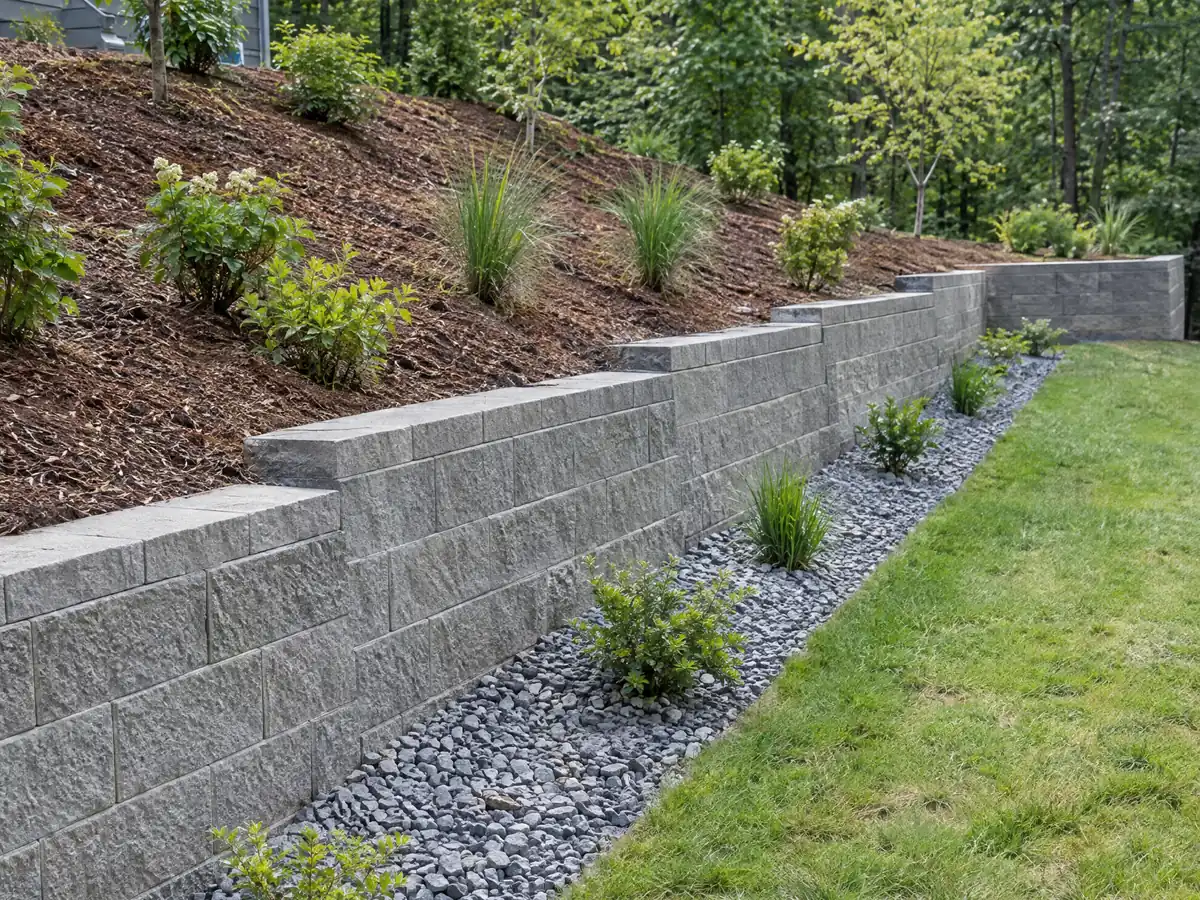
Four feet, counted the way the code counts. A wall holding back no more than 4 feet of soil, measured from the bottom of the footing to the top, and carrying no extra surcharge such as a driveway or building above it, appears on the exempt list in section 107.2. A taller wall, or one under a surcharge, needs a permit.
Zoning has separate limits. In a required front yard or within 5 feet of a street side line, a fence on a retaining wall may rise no more than 3 feet above the retained dirt, and wall and fence together may not top 6 feet above sidewalk elevation (23.12.050). A lot cannot be built up freely either: the first floor street elevation may sit no more than 3 feet above the top of the required curb, and the site no more than 2 feet above neighbors at the property line (23.12.070).
Two trades are involved. CSLB's C-8 concrete class covers forming and placing concrete, while C-29 masonry covers concrete block walls for structures and fences, so a poured wall and a block wall can mean different subcontractors. Ask who draws anything taller than the exempt line and whether drainage behind the wall has a price.
Can you pour concrete in Alhambra's summer heat and winter rain?
Yes, with planning. NOAA's 1991 to 2020 normals for the San Gabriel Fire Department station, 2.1 miles from the city center, show an August average high of 87.6 F, about 64.5 days a year at 90 F or hotter and 7.1 days at 100 F or hotter. The Pasadena station, higher up the valley, counts 74.1 days at 90 F or hotter, so jobs along the north edge of the city run a little warmer. Hot, dry days shorten the time a crew has to finish a surface, so ask what shade, wetting and curing the subcontractor plans.
Rain is concentrated: 15.67 inches a year, with 81 percent from December through March. We found no Alhambra rainy-season grading restriction, but a fresh slab needs covering and a plan for runoff, so ask how the forms and subgrade will be protected if a storm is forecast.
A crew that starts at dawn to beat the heat still has a limit. The noise exemption for construction holds only if nothing happens between 7 p.m. and 7 a.m. on weekdays and Saturday, or on any Sunday or federal holiday, unless the Director of Community Development approves other hours (AMC 18.02.060(C)).
What do plain, stamped and driveway concrete cost in Alhambra?
No Alhambra price study turned up, so these are Los Angeles planning figures. Angi's 2026 Los Angeles pages put patios at $4 to $13 per square foot, stamped patios at $15 to $30 and driveways at $8 to $20, and HomeGuide's patio page overlaps the plain range. Our concrete page works from $8 to $14 per square foot for typical patios, walks and slabs of 300 square feet or more, and $9 to $20 for a driveway with the old slab removed.
Stained, stamped and exposed aggregate finishes sit in a higher band of $15 to $30 per square foot, because pattern tools, color and sealing add hours on top of the pour. Take a 20 by 20 foot patio of 400 square feet: at the plain rate it comes to $3,200 to $5,600, and at the decorative rate $6,000 to $12,000.
Small jobs usually price above the per-foot averages because of minimum charges. For labor context, the federal wage survey puts the mean pay of cement masons in the Los Angeles-Long Beach-Anaheim area at $33.67 an hour as of May 2025, which is wages and not a billing rate.
What should be checked in the ground before an Alhambra footing, slab or garage conversion?
Start with the County's hazard layers, which we sampled at 207 points inside the city. None fell in a liquefaction zone, an Alquist-Priolo fault zone or the 100-year or 500-year flood plain. One sat in an earthquake-induced landslide zone near 34.0629 north and 118.1558 west, and one inside a County dam inundation area for the Laguna Regulating Basin. Those are point results, so a soils report is how to know a particular lot. We found no expansive soil source, so we make no soil claim.
Slopes get their own rules. Where a lot falls more than 25 percent from the curb to a point 50 feet back, the code adjusts the RL front setback and lets a garage for up to two cars, no taller than 10 feet, sit 5 feet from the front and side lines (Table 23.04.030 note A); driveways over 25 percent slopes in RL have no minimum depth.
A garage turned into living space needs a slab that passes. The City's ADU guide lists alternate vapor membranes (ICC ESR 1413, 2417, 2785 and 3474) for a slab with no retarder, and calls for new footings at least 12 inches deep, or matching deeper existing ones, in 2,500 psi concrete with four 1/2-inch bars.
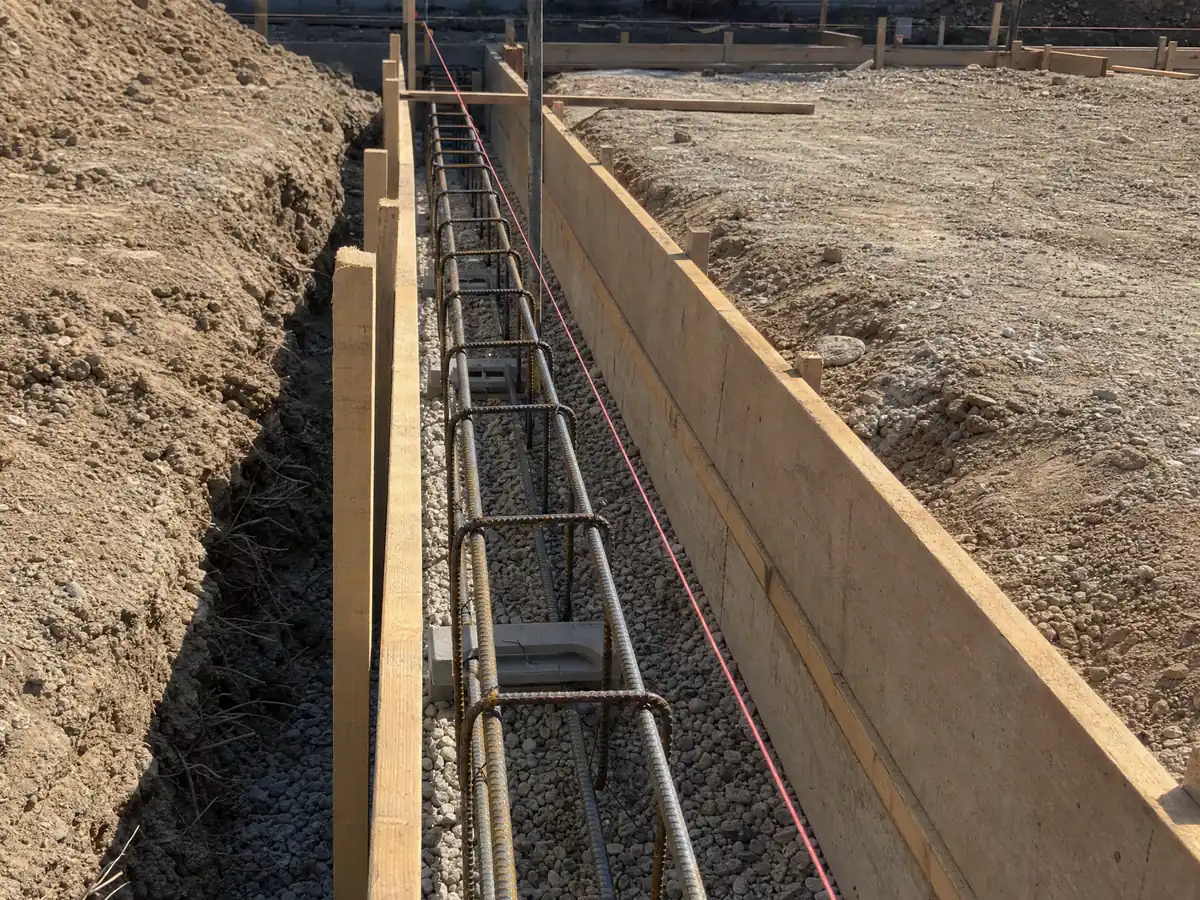
Concrete photos from Alhambra and nearby communities
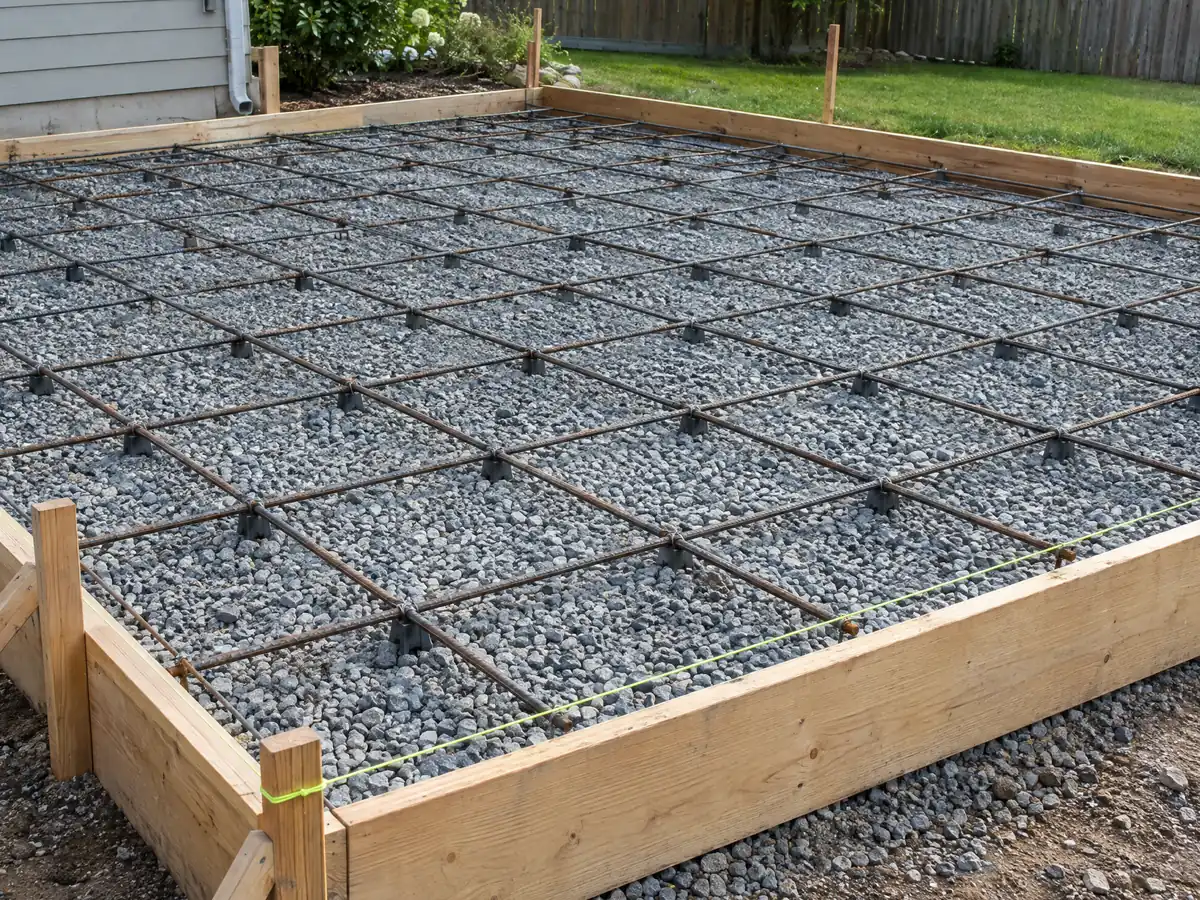
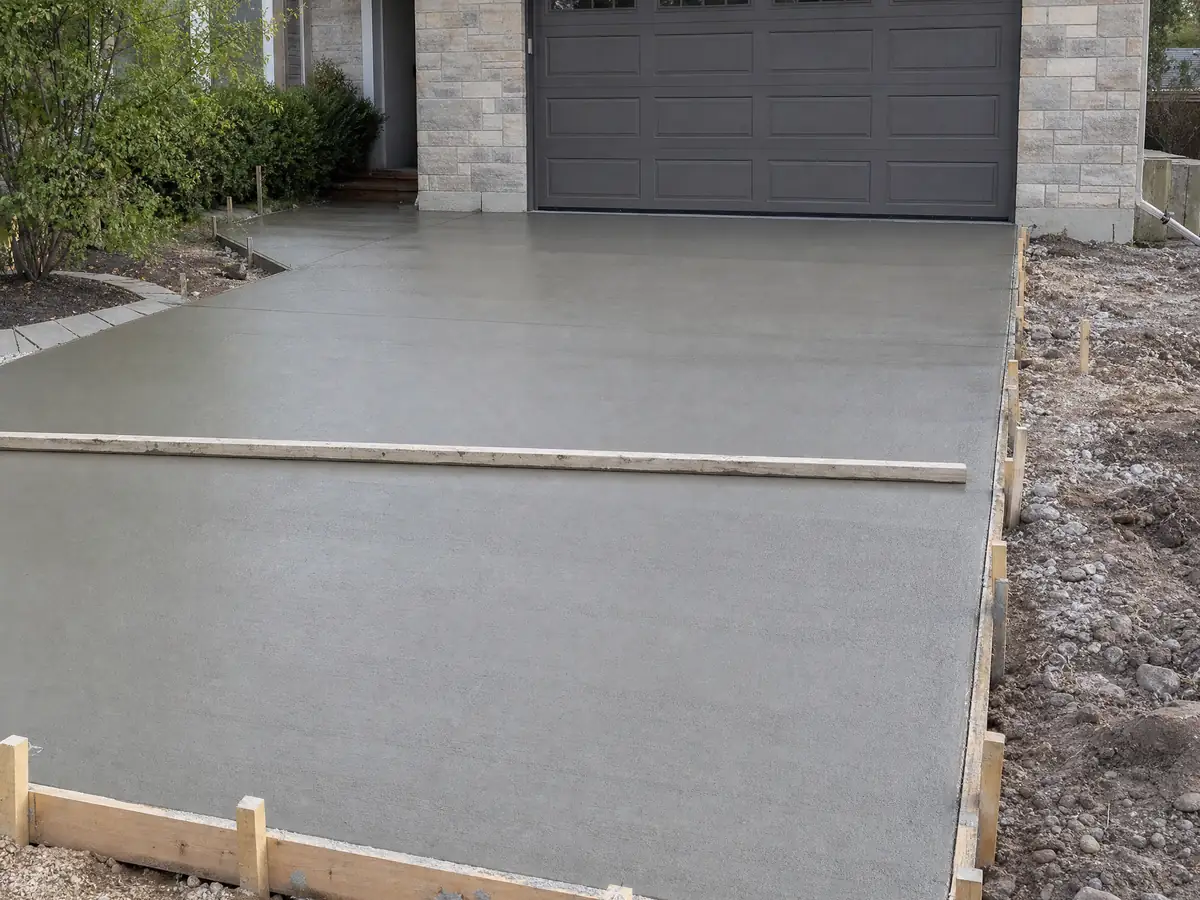
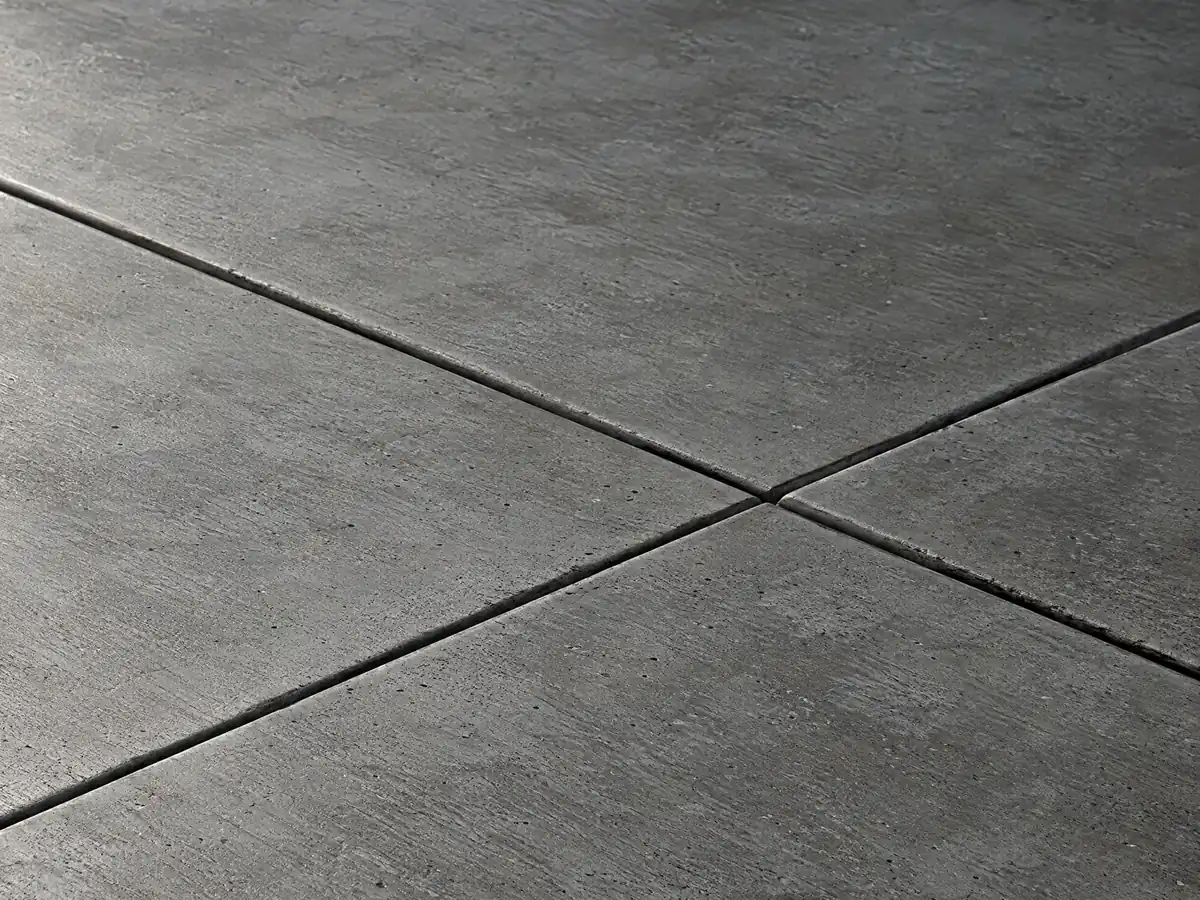
Forms, rebar and finished flatwork from Alhambra and nearby towns, including walks, driveways and block walls. Tap any photo to enlarge it.
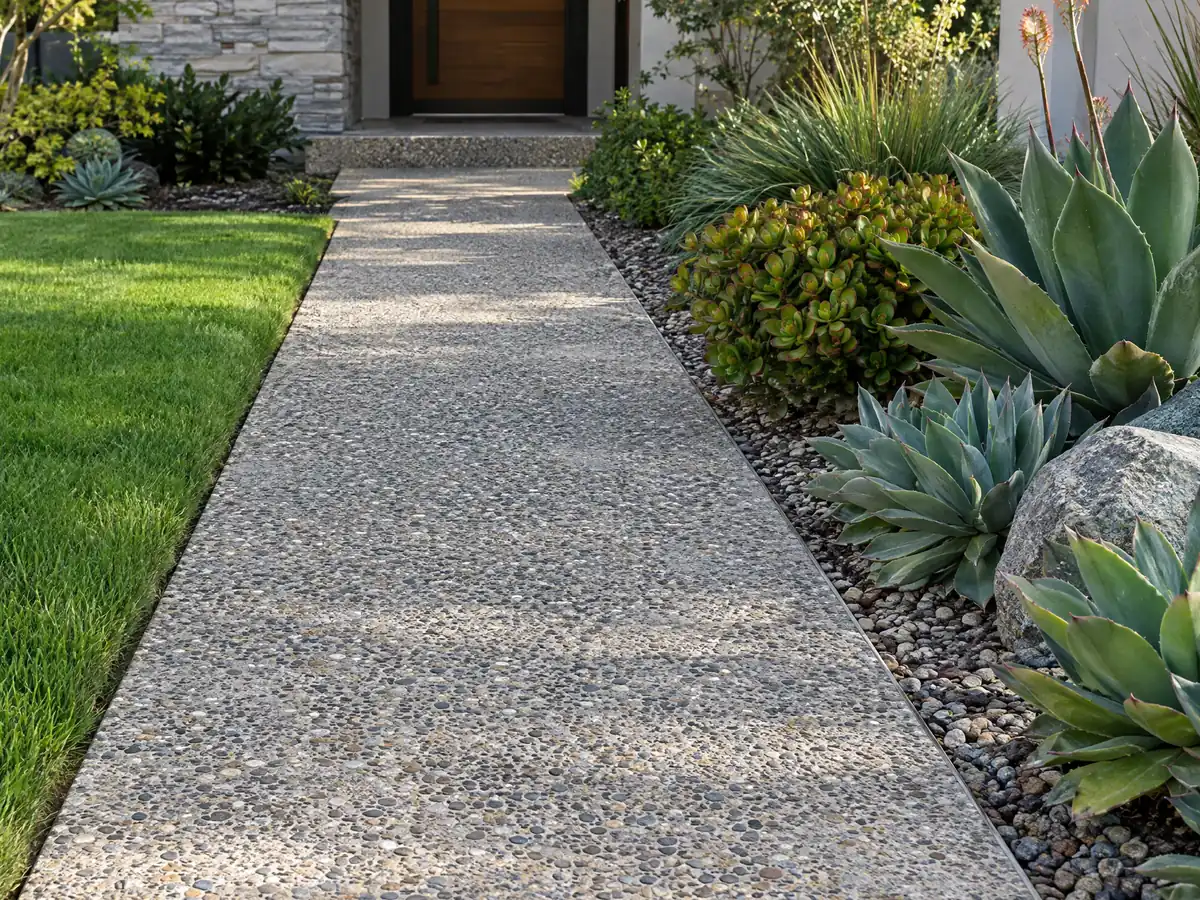
What concrete costs around Alhambra
Dollar figures here are Los Angeles planning ranges from the concrete page, not an Alhambra bid, and the subcontractor guide explains how the trade work is divided. Demolition, rebar, approach fees and permits should each appear as their own line. For comparison, see concrete work in Pasadena, concrete in Glendale and concrete in Los Angeles, and for the rest of the property, flooring in Alhambra and decks in Alhambra.
| What it covers | Typical range |
|---|---|
| Patio, walkway or slab, broom finish, 300 sq ft or more | $8 to $14 per square foot |
| Decorative: stained, stamped or exposed aggregate | $15 to $30 per square foot |
| Driveway replacement, with demolition of the old slab | $9 to $20 per square foot |
| 20 by 20 foot plain patio (400 sq ft) | About $3,200 to $5,600 |
| 20 by 20 foot decorative patio (400 sq ft) | About $6,000 to $12,000 |
| Small jobs under 300 sq ft | Usually above the per-foot range |
| Retaining walls | Set by the written proposal |
Alhambra concrete questions, answered
Can I pour a concrete patio without a permit in Alhambra?
Possibly. The Municipal Code exempts walks and driveways no higher than 30 inches above grade, but a ground-level patio slab is not named, so confirm yours with the Building Division at 626-570-5032. A patio cover, a gas line or lighting circuits are separate questions, and zoning rules still apply.
Can I expand my driveway without a permit in Alhambra?
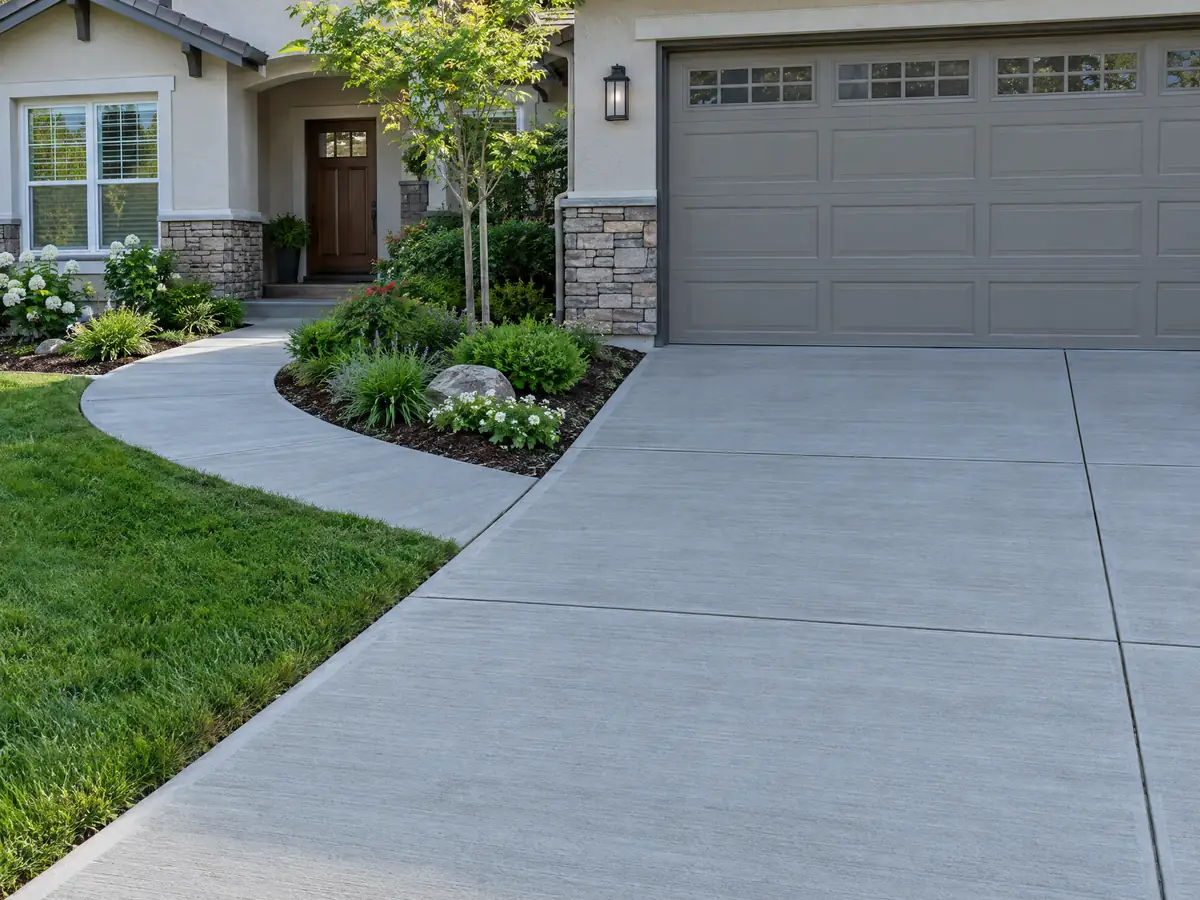
Not freely. New paving is limited by the front yard rule, which caps ordinary hardscape at 25 percent of a street-facing yard, and widening an approach across the sidewalk needs a Public Works permit. Required parking may not sit in a front or street side yard. Ask Planning to measure your yard first.
How much of an Alhambra front yard can be paved?
Up to 25 percent in non-decorative hardscape such as concrete, plus up to 25 percent in decorative permeable materials like brick, stone or mulch, leaving live plants or artificial turf over the rest. That comes from the October 2026 Zoning Code. A landscape plan goes to Planning when a lawn is replaced.
What is the maximum height of a retaining wall without a permit in Alhambra?
Four feet from the bottom of the footing to the top, and only if the wall carries no extra load. Zoning is separate: in a front yard, a fence on a wall adds no more than 3 feet over the retained dirt and the pair cannot exceed 6 feet above the sidewalk.
How much should a 20x20 concrete patio cost in Alhambra?
Roughly $3,200 to $5,600 for a plain broom finish and $6,000 to $12,000 for decorative work, based on 400 square feet at Los Angeles planning rates of $8 to $14 and $15 to $30 per square foot. Those come from Angi and HomeGuide pages, so a written proposal sets the real price.
How much does a concrete driveway cost in Alhambra?
Plan on $9 to $20 per square foot with the old slab removed, a low-confidence Los Angeles range drawn from Angi's 2026 pages; no Alhambra study turned up. A 500 square foot driveway multiplies out to $4,500 to $10,000. Slope, access and the approach across the sidewalk move the number.
Is 4 inches of concrete thick enough for a driveway in Alhambra?
Four inches is common practice for patios and walks, but no Alhambra rule we found fixes the figure. A driveway carries vehicles, and the approach is built to the City's specifications. Ask the subcontractor to state thickness, base and reinforcing in the proposal instead of assuming.
Who permits a driveway apron, sidewalk or curb in Alhambra?
The Director of Public Works. Work in the public right-of-way needs a written permit with approved plans under AMC 13.24.020, and fees are doubled if work starts first and the applicant already held a contractor license or had applied for a permit. Building permits are a separate office.
Who is allowed to do concrete work in Alhambra, and what license is needed?
The license classes are C-8 for poured concrete and C-29 for masonry block walls. Only a job of $1,000 or less including materials, needing no permit, can go without a license under Business and Professions Code 7048. Look up any number on the CSLB site before signing.
Can you pour concrete in the rain or the heat in Alhambra?
Yes, with precautions. The nearest weather station records about 64.5 days a year at 90 F or hotter, and 81 percent of the 15.67 inches of rain falls from December through March. Ask how the subcontractor will shade, cure and cover a fresh slab, and what happens if a storm is forecast.
Send the address and a photo of the yard
Tell us the street, how much of the front yard is paved or planted now and whether the slab, wall or driveway is new or a repair. We check the hardscape and approach rules before we call back.