
Concrete Companyin San Gabriel, CA
A concrete company in San Gabriel works inside tight R-1 rules: a front yard driveway is usually limited to 12 feet wide, and slabs, patios and decks all count toward a 35 percent lot coverage cap. Low walks and driveways may skip a building permit, but ask about walls, drainage and anything in the public right of way.
The first concrete in San Gabriel's neighborhoods went down when the city filled in around a streetcar stop. A Pacific Electric line served the mission area around 1905, the population passed 11,000 by 1940 and 20,000 by 1950, and the 1940s remain the biggest decade for housing, at 18.7 percent of homes in the City's Housing Element. About 75 percent of the 13,818 homes the Census Bureau counts are older than 1980, so many front walks, driveways and garage slabs are more than 70 years old, in a market where the median owner-occupied home is valued at $945,700.
MDG Builders, CSLB #1040337, holds a general contractor license and does not pour concrete itself: we scope the job, check the rules with San Gabriel's Planning and Building counter, and hire a licensed concrete or masonry subcontractor to form, pour and finish. Regional prices are on our concrete page, and the San Gabriel overview lists the other trades we manage here.
What San Gabriel's code, Planning and Public Works say about concrete
Where concrete permits come from in San Gabriel: City of San Gabriel Community Development Department, Building and Safety Division and Planning Division.
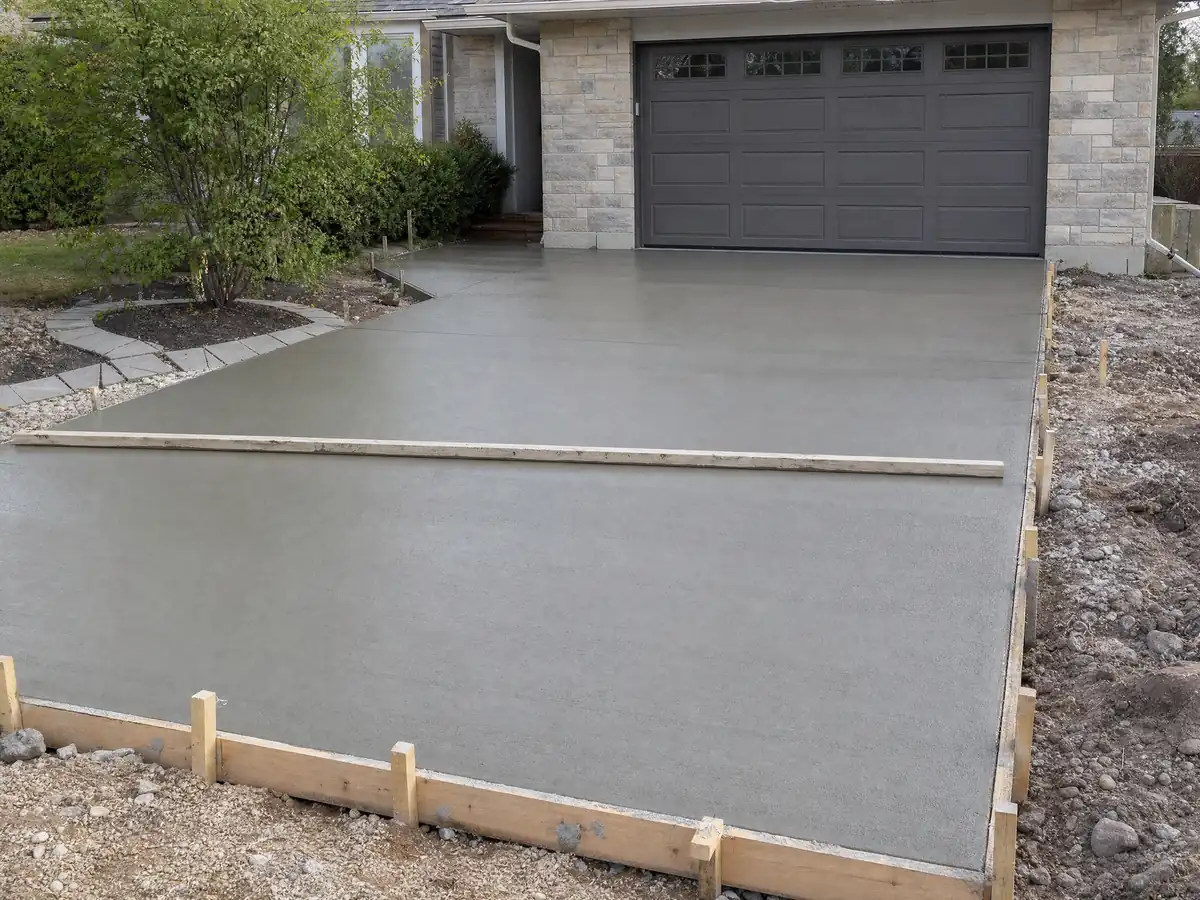
- San Gabriel's R-1 front yard rules (153.037(C) and (D)) limit a driveway to 12 feet wide (20 feet if the garage is beside or behind the house, parallel to the street and with its door parallel to the street), walkways from sidewalk or driveway to the entry to 42 inches wide, and open platforms to 6 inches high and a 6 foot projection. Vehicle parking areas and accessory structures are prohibited in front and street side yards.
- San Gabriel counts impervious surfaces wider than 42 inches (other than required driveways), covered and uncovered patios, accessory structures and raised and at-grade decks toward the R-1 lot coverage cap of 35 percent of net lot area (153.042). A new slab, patio or driveway widening is therefore a coverage question as well as a building permit question.
- San Gabriel Public Works requires an encroachment permit from Engineering for work in the right of way such as awnings, canopies, scaffolding and temporary sidewalk or lane closures, and an Underground Service Alert fee is collected when right-of-way excavation is involved. The page lists no separate driveway approach or sidewalk permit, so ask Engineering before cutting or replacing a curb, sidewalk or approach.
- The state list of permit-exempt work (2025 Residential and Building Code excerpt) exempts sidewalks and driveways not more than 30 inches above grade, and San Gabriel's amendment in 150.002(B) removes items 2 and 3 of the residential list, which are not the sidewalk and driveway item in that 2025 numbering. Zoning, coverage, drainage and right-of-way rules still apply to concrete work that is exempt from a building permit.
- San Gabriel's zoning code says drainage should be retained on site and directed to landscaped areas where feasible, and lists porous pavement, infiltration trenches and dry wells among accepted stormwater best management practices (153.132). For new buildings all required setbacks except entry and exit areas must be landscaped (153.535(A), with 153.532 limiting the landscape chapter to new buildings).
- CSLB defines the C-8 Concrete classification as forming, pouring, placing, finishing and installing mass, pavement, flat and other concrete work, and it excludes contractors whose sole business is plaster coatings or placing reinforcing steel.
How wide can a driveway or front walk be in a San Gabriel front yard?
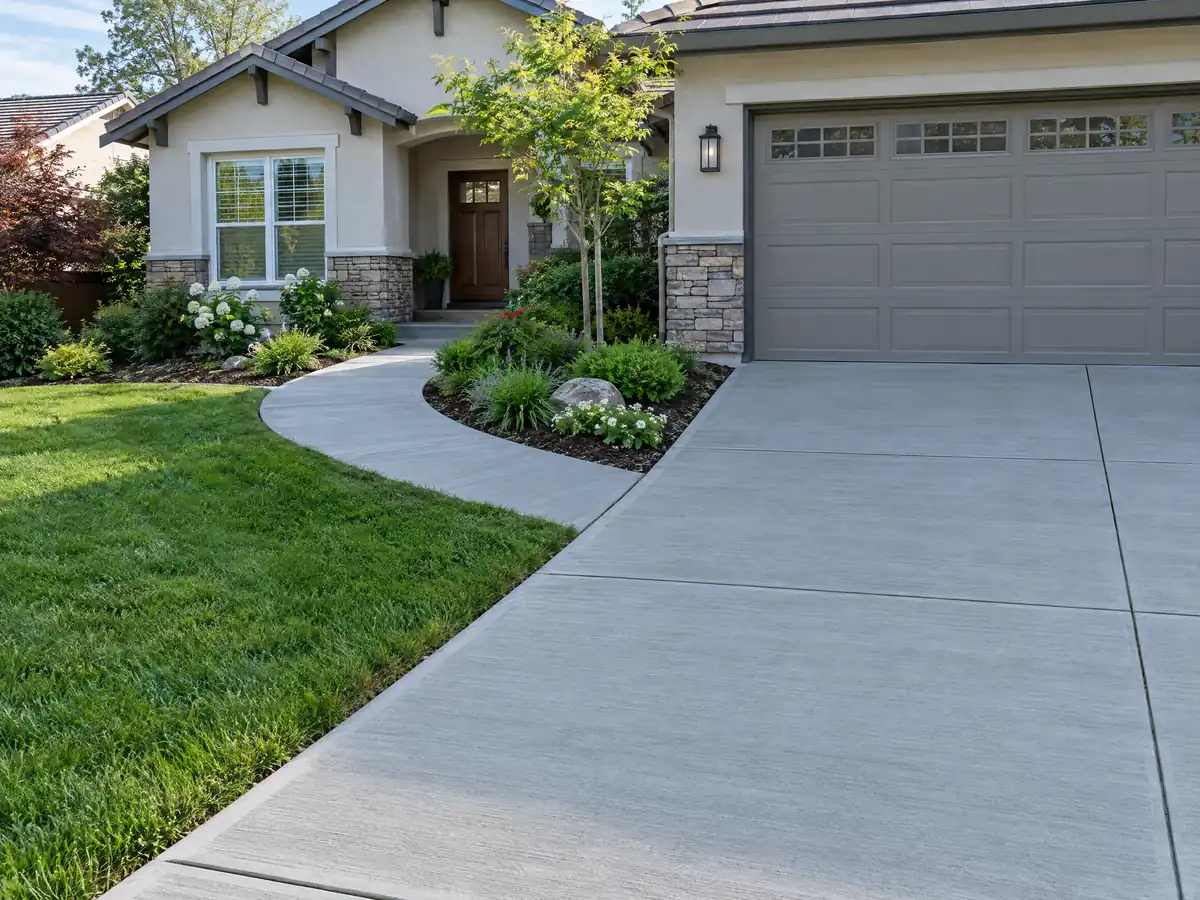
In an R-1 front yard, a driveway is limited to 12 feet wide, or 20 feet if the garage sits beside or behind the house, parallel to the street, with its door facing parallel to the street. Walkways from the sidewalk or driveway to the entry stop at 42 inches, and open platforms at 6 inches high with a 6 foot projection. Parking areas and accessory structures are prohibited in front and street side yards (Municipal Code 153.037).
Those numbers come from the code as shown on GoCodebook, a third-party mirror, so confirm them with Planning, and they apply to R-1 lots only. We did not summarize the standards for R-1A, R-2 or R-3 parcels, and the City's zoning map is a PDF kept at the Community Development office, so ask which zone your street is in.
A wide paved apron or a second parking pad is the usual way owners run into this rule. The code also asks that new buildings landscape their required setbacks except for entry and exit areas, which is one more reason to draw the pavement on a site plan before ordering concrete.
- Which zone is the lot in, and does the 12 foot limit apply?
- Is the existing driveway a legal width, or would replacing it reset the rule?
Does a concrete patio count toward San Gabriel's 35 percent lot coverage cap?
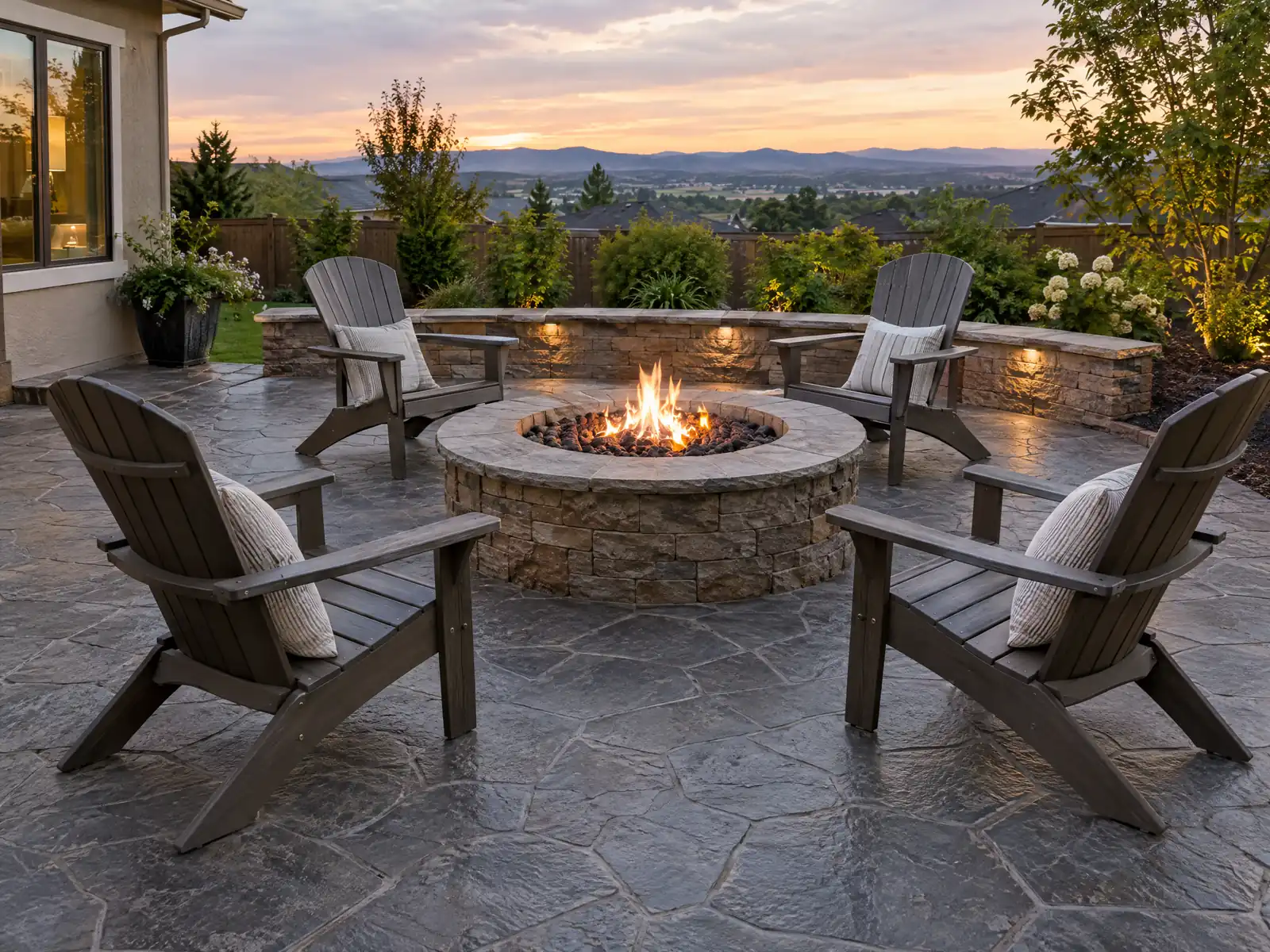
Yes. Municipal Code 153.042 caps R-1 lots at 35 percent of net lot area and counts impervious surfaces wider than 42 inches (other than required driveways), covered and uncovered patios, accessory structures, and raised and at-grade decks. On a 7,000 square foot lot, our example and not a San Gabriel average, that is 2,450 square feet for the house, garage, patio and everything else combined.
So a new slab is a zoning question as well as a building one. The City's planning handout sends accessory structures such as patios to over-the-counter Planning review, and the same chapter asks that site drainage and runoff be retained on site and directed toward landscaped areas where feasible. It lists porous pavement, infiltration trenches, dry wells and cisterns among accepted practices (Municipal Code 153.132).
Ask the contractor to total the existing house, garage, walks and decks before pricing the slab. A beautiful stamped patio that pushes the lot over the cap is a patio the City can refuse.
- Does the total of house, garage, walks, patios and decks stay under 35 percent of the lot?
- Where will runoff go, and can part of the patio use porous pavement or a dry well?
Does pouring a driveway, sidewalk or slab in San Gabriel need a permit?
A low walk or driveway may not need a building permit. One city's copy of the 2025 state exempt list excuses sidewalks and driveways up to 30 inches above grade, and San Gabriel amends that list in Municipal Code 150.002(B) by deleting the fence and retaining wall entries. The 2022 numbering San Gabriel adopted was not opened, so we describe the change in words. Zoning, coverage, drainage and right of way rules still apply to work that skips a building permit.
The public side of the property line is Public Works. An encroachment permit from Engineering covers awnings, canopies, scaffolding and temporary sidewalk or lane closures, and the page lists no separate driveway approach or sidewalk permit, so ask before cutting a curb, sidewalk or approach. Inspections in the right of way need two working days of notice.
Crews bring trucks. Roll-off bins in the street need a permit, and mixers, pump trucks and other large equipment parked on the street need on-street parking approval from Engineering. A contractor from outside the city also needs a City business license, with an out-of-town application for CSLB-licensed firms.
- Is any part of the work, the trucks or the bin in the public right of way?
- Does the contractor hold a San Gabriel business license?
Do retaining walls and block walls in San Gabriel need a permit?
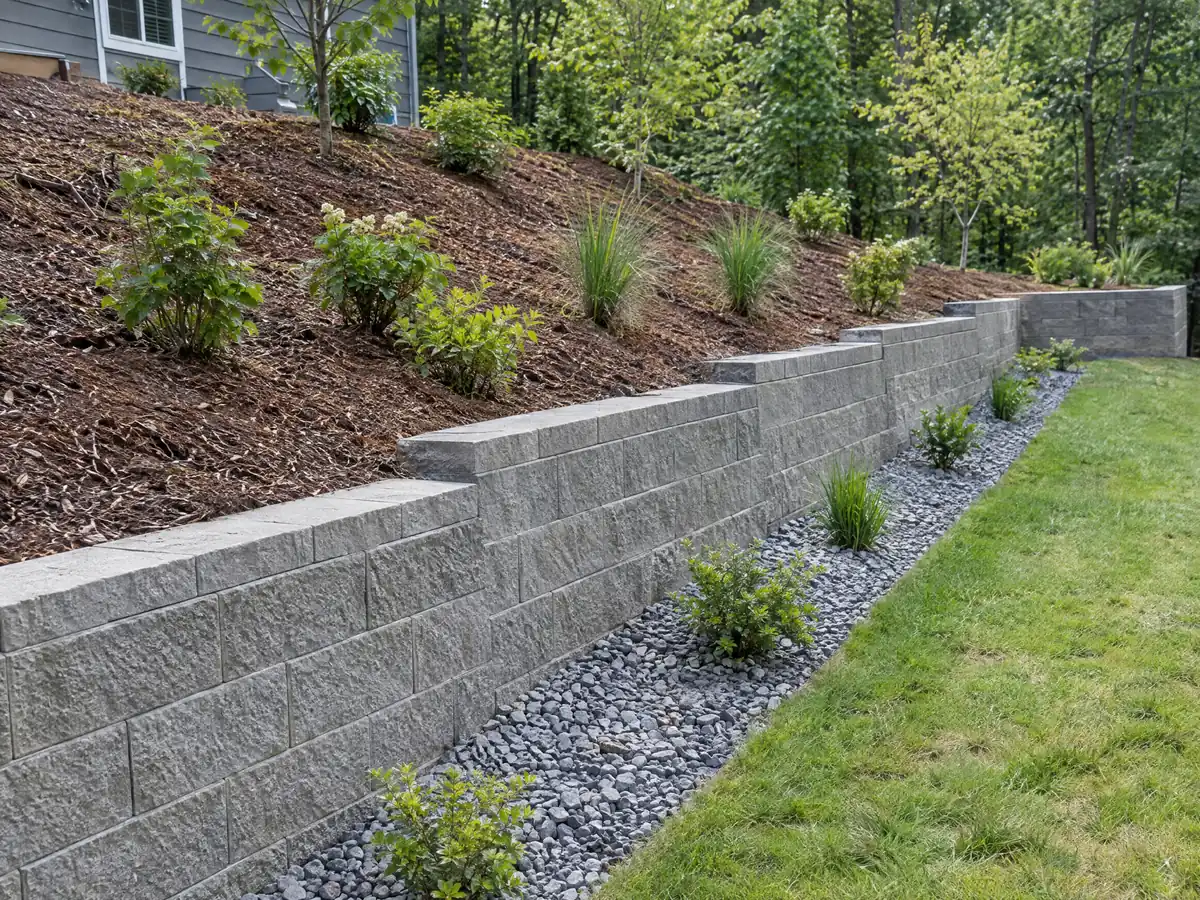
Assume yes and ask which kind. The state exempt list normally excuses low fences and retaining walls, but San Gabriel removed both items from it, and we did not find a height at which the City starts requiring a permit, so we print none. Fences and block walls also go to over-the-counter Planning review with an application, a PDF site plan and, for a wall on a shared line, a Block Wall Location Agreement signed and notarized by both owners placing the wall on the center line of the property line.
Height limits follow the fence rule. A fence or wall may reach 6 feet along the rear lot line, 4 feet between the front of the main building and the front lot line, must sit 30 inches back from the front property line, and on a corner lot within 35 feet of the intersection it may rise only 2 feet above the curb (Municipal Code 153.127). The City's design guidelines favor stucco-matched or split-face block for solid walls.
Block walls generally fall under CSLB's masonry class C-29, and poured walls under the concrete class C-8, so the subcontractor's license depends on the wall.
- Is the wall on a shared line, and are both owners willing to sign the location agreement?
- Is the wall block or poured, and is the subcontractor licensed for that kind?
What should be checked in the ground before a San Gabriel footing, slab or ADU foundation?
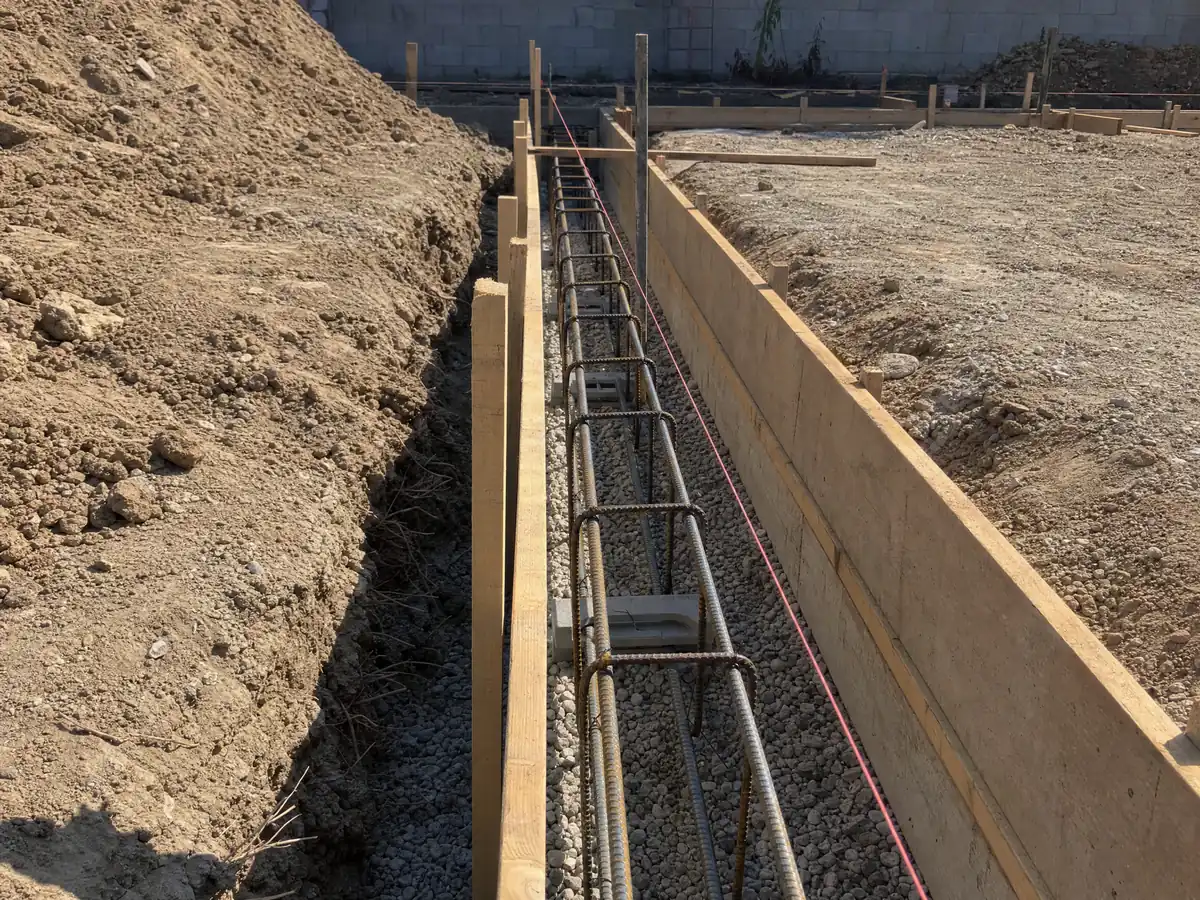
The City's residential submittal requirements call for a soils report for any new foundation work in a liquefaction zone and for two unit developments there. The state's Seismic Hazard Zone layer for the El Monte quadrangle, released March 25, 1999, shows liquefaction zones in the area, but our three sample points (Mission San Gabriel, Gabrielino High School and Country Club Drive) fell outside it. Ask Building and Safety whether the parcel is mapped before pricing a footing or slab.
Faults and water need the same parcel-level question. Alquist-Priolo fault zone polygons that touch the area begin around latitude 34.117 on the north edge, and we did not test the city line against them. The County's 100-year floodplain layer shows nothing inside a box around the city, but Public Works names the Alhambra Wash, the County Flood Control District and the County Sanitation District as agencies that may issue separate permits.
An ADU slab brings its own numbers: detached units up to 850 square feet (1,000 for two bedrooms), 4 feet from side and rear lines and 6 feet from other buildings, with a 10 foot fire lane within 150 feet of the lot (Municipal Code 153.047).
- Has Building and Safety said whether the parcel is in a liquefaction zone?
- Does the foundation need a soils report before the permit is issued?
What do heat, rain and work hours mean for a concrete pour in San Gabriel?
Heat is the daily risk, rain the seasonal one. NOAA's 1991 to 2020 normals for the San Gabriel Fire Department station show about 64.5 days a year at or above 90 degrees and 7.1 at or above 100, and 12.75 of the 15.67 inches of annual rain falling from December through March. Concrete sets faster in hot, dry air and a downpour can ruin a fresh surface, so schedule big pours for mild mornings and keep a plan for plastic sheeting.
Hours shape that plan. Municipal Code 150.003 allows construction from 7 a.m. to 7 p.m. Monday through Friday and 8 a.m. to 4 p.m. Saturday, and bars it on Sundays and Council holidays, with an exception for an owner or immediate family working on their own property. A pour started at 7 a.m. in August has to be finished in daylight heat.
Larger jobs carry site rules too. The City requires a fence at least 6 feet high around the property during construction or demolition, and a site security and screening plan before demolition or grading permits are applied for.
- What time will the truck arrive, and what is the rain plan?
- How will the surface be shaded or cured on a day above 90 degrees?
What does concrete work cost in San Gabriel for a patio, walk or driveway?
No San Gabriel price study turned up, so these are Los Angeles figures from Angi pages posted in 2026. Patios run $4 to $13 per square foot (an average of $5,248, and $1,600 to $5,200 for 20 by 20 feet), stamped patios $15 to $30, and driveways $8 to $20 (about $2,500 for 200 square feet). We summarize our planning range at $8 to $14 per square foot for plain flatwork of 300 square feet or more, $15 to $30 for decorative finishes and $9 to $20 for driveway replacement including demolition, with medium confidence for plain work and less for the rest.
Small jobs cost more per foot because crews have minimum charges. Labor anchors the math: federal figures for May 2025 put cement masons in the Los Angeles-Long Beach-Anaheim area at a mean $33.67 an hour. Retaining walls we leave unpriced because a wall's height and drainage drive the cost more than its length.
Demolition adds paperwork. Chapter 54 requires 65 percent of construction and demolition waste to be diverted, with a refundable deposit of 3 percent of project value or $10,000, whichever is less, on remodels of $10,000 or more and on every demolition and grading job. See our guide to how general contractors use subcontractors for who does what.
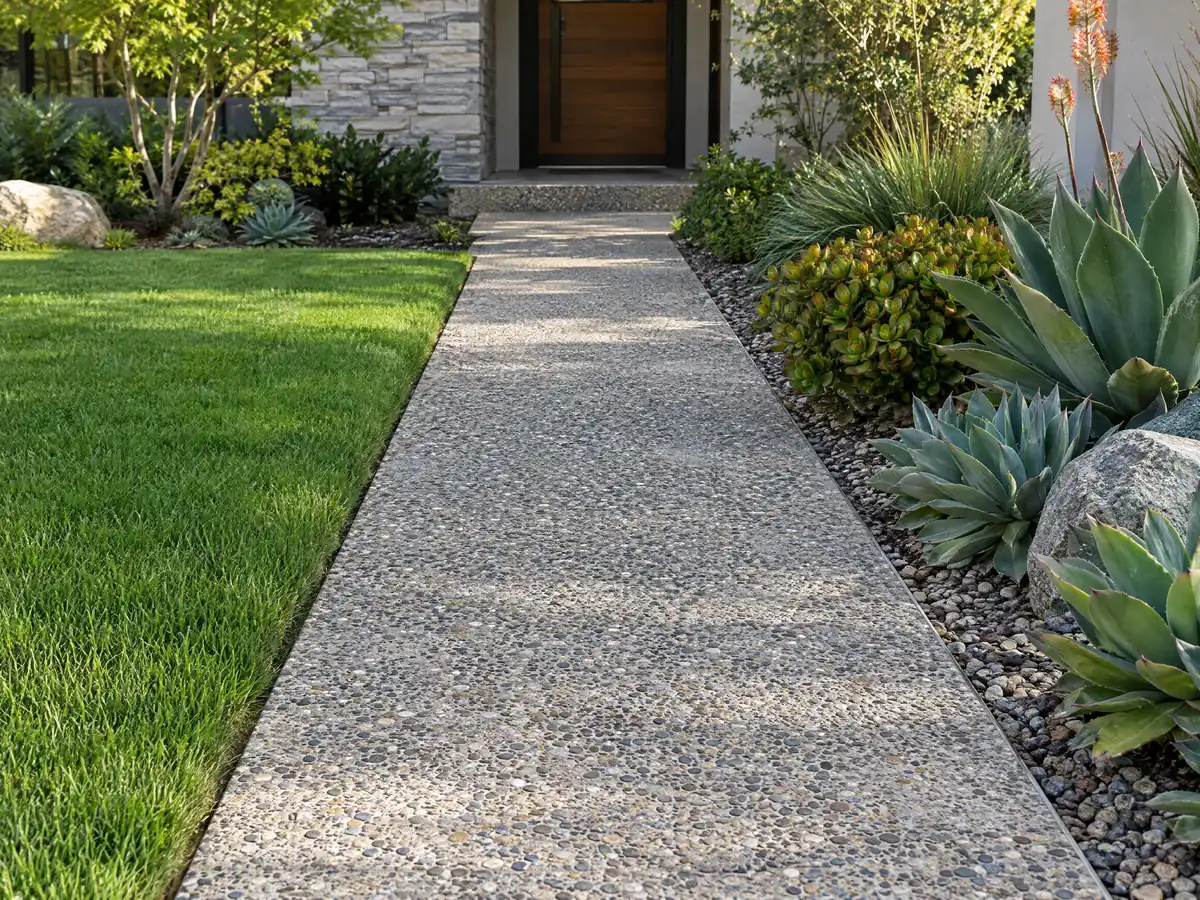
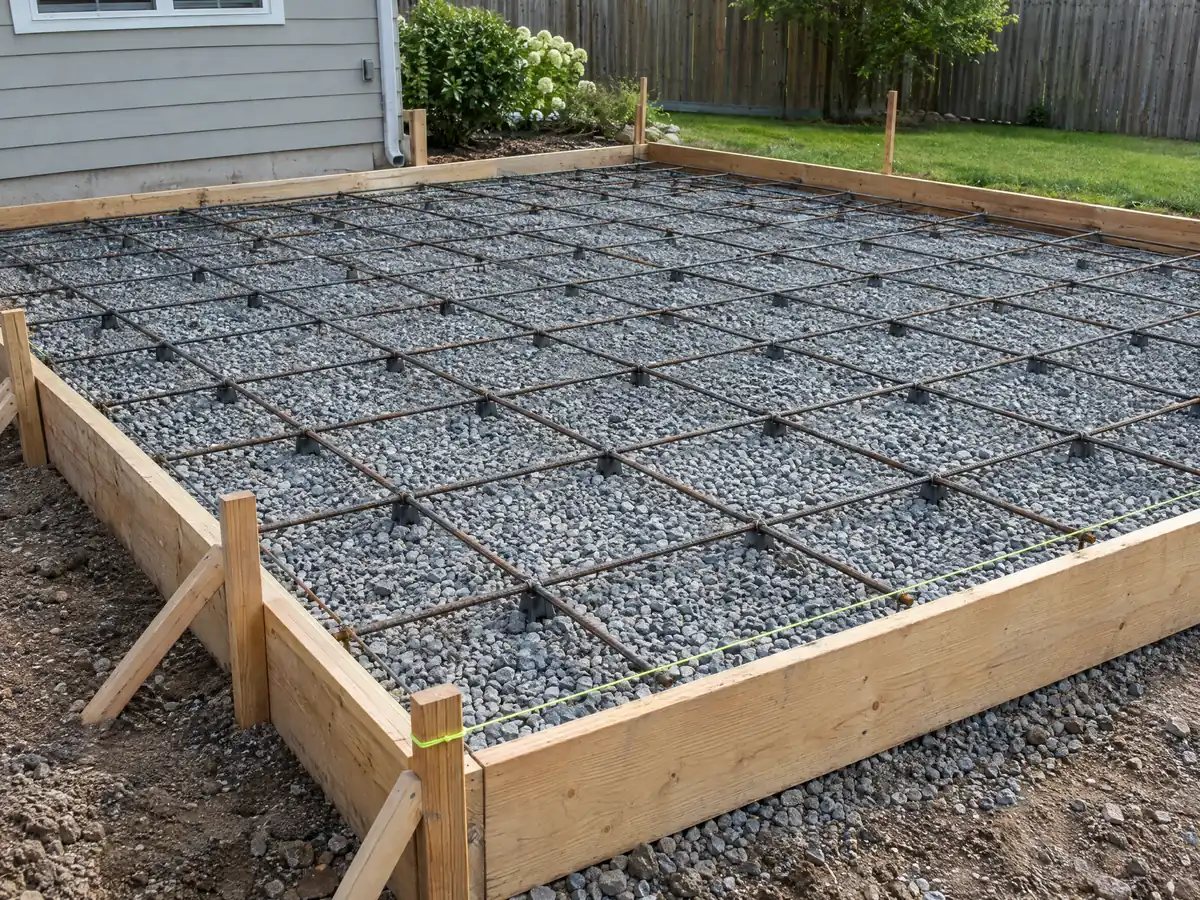
Concrete photos from San Gabriel and nearby communities
Concrete around San Gabriel and its neighbors, from footing trenches and block walls to finished driveways, patios and walks. Tap a photo to enlarge it.
What concrete costs around San Gabriel
These ranges are planning figures from the regional research on our concrete page, not a San Gabriel bid. CSLB defines class C-8 as forming, pouring, placing, finishing and installing concrete work, so check any bidder's license with our license check guide. Compare nearby pages: concrete in Alhambra, concrete in Rosemead, concrete in Arcadia, concrete in Monterey Park and concrete in Los Angeles. In San Gabriel itself, see flooring and decks. Temple City and South Pasadena also border the city.
| What it covers | Typical range |
|---|---|
| Patio, walkway or slab, broom finish, 300 sq ft or more | $8 to $14 per square foot |
| Decorative: stained, stamped or exposed aggregate | $15 to $30 per square foot |
| Driveway replacement, with demolition of the old slab | $9 to $20 per square foot |
| 20 by 20 foot plain patio (400 sq ft) | About $3,200 to $5,600 |
| 20 by 20 foot decorative patio (400 sq ft) | About $6,000 to $12,000 |
| Small jobs under 300 sq ft | Usually above the per-foot range |
| Retaining walls | Set by the written proposal |
Other work we manage in San Gabriel
San Gabriel concrete questions, answered
Can I pour a concrete patio without a permit in San Gabriel?
Maybe for the building permit, but not for zoning. A patio on the ground counts toward the 35 percent R-1 lot coverage cap, and the City sends patios to Planning over-the-counter review. We found no patio handout, so call Planning at (626) 308-2806 with the size, the lot area and a sketch before ordering concrete.
Can I expand my driveway without a permit in San Gabriel?
Check first, because the width limit is tight. In an R-1 front yard a driveway is limited to 12 feet, or 20 feet when the garage sits beside or behind the house and faces parallel to the street, and parking areas are barred in front yards. Cutting a curb or approach also involves Engineering in the public right of way.
How much should a 20x20 concrete patio cost in San Gabriel?
Angi's Los Angeles page, updated in August 2026, shows $1,600 to $5,200 for a 20 by 20 foot concrete patio, and $4 to $13 per square foot for patios overall. No San Gabriel study turned up. Stamped finishes run $15 to $30 per square foot, and a small job's minimum charge can push the per-foot price higher.
How much do contractors charge for concrete work in San Gabriel?
On Angi's 2026 Los Angeles pages, plain patios run $4 to $13 per square foot, stamped patios $15 to $30 and driveways $8 to $20. Our planning range for plain flatwork of 300 square feet or more is $8 to $14. Demolition, grading, permits and drainage are separate lines, and every figure is medium confidence at best.
Is 4 inches of concrete thick enough for a San Gabriel driveway?
Four inches is the common thickness for walks and patios, but we found no San Gabriel rule or code citation that sets a driveway thickness, so treat it as industry practice. Soil, vehicle weight and reinforcing change the answer. Ask the contractor to state thickness, base and rebar on the proposal.
Do I need a permit for a retaining wall in San Gabriel?
Assume so and ask. San Gabriel removed the fence and retaining wall items from the state permit-exempt list, and we found no height at which a permit begins. Block walls and fences also go through Planning review, and a wall on a shared line needs a notarized Block Wall Location Agreement from both owners. Call the Building Division before ordering block.
Are you allowed to pour your own driveway in San Gabriel?
Only an owner who lives in the home, or intends to, and does the work personally can pull an owner-builder permit, and it must be a one or two family home. Rentals must use licensed contractors for permitted work. Driveway width, coverage and right of way limits apply either way, and the City accepts no letter of authorization in place of the owner.
Can you pour concrete in the rain in San Gabriel?
Not safely on a fresh surface. About 81 percent of San Gabriel's 15.67 inches of annual rain falls from December through March, so crews watch the forecast and keep sheeting ready. Heat is the other limit: the Fire Department station records about 64.5 days a year at or above 90 degrees. Pours also stop at 7 p.m. on weekdays and 4 p.m. Saturday.
What license does a concrete company need in San Gabriel?
A California license in the concrete classification, C-8, or masonry, C-29, for block walls, plus a San Gabriel business license if the firm is based elsewhere. Unlicensed work is limited to $1,000 and never covers a job that needs a permit or hires workers. Check the license number on CSLB's website before paying a deposit.
Tell us about the concrete and the lot
Say whether you want a walk, patio, driveway, slab or wall, roughly how big it is, what the lot's zone and size are if you know them, and whether old concrete has to come out first, and we will bring a tape and a site plan to the first visit.