
Concrete Companyin Temple City, CA
A concrete company in Temple City works to a tight front yard: paving may cover 45 percent of an R-1 front yard at most, 22 percent must stay live plants, and driveway width sits between a 16 foot zoning cap and a 20 foot Public Works limit. Flat walks and driveways under 30 inches are permit-exempt.
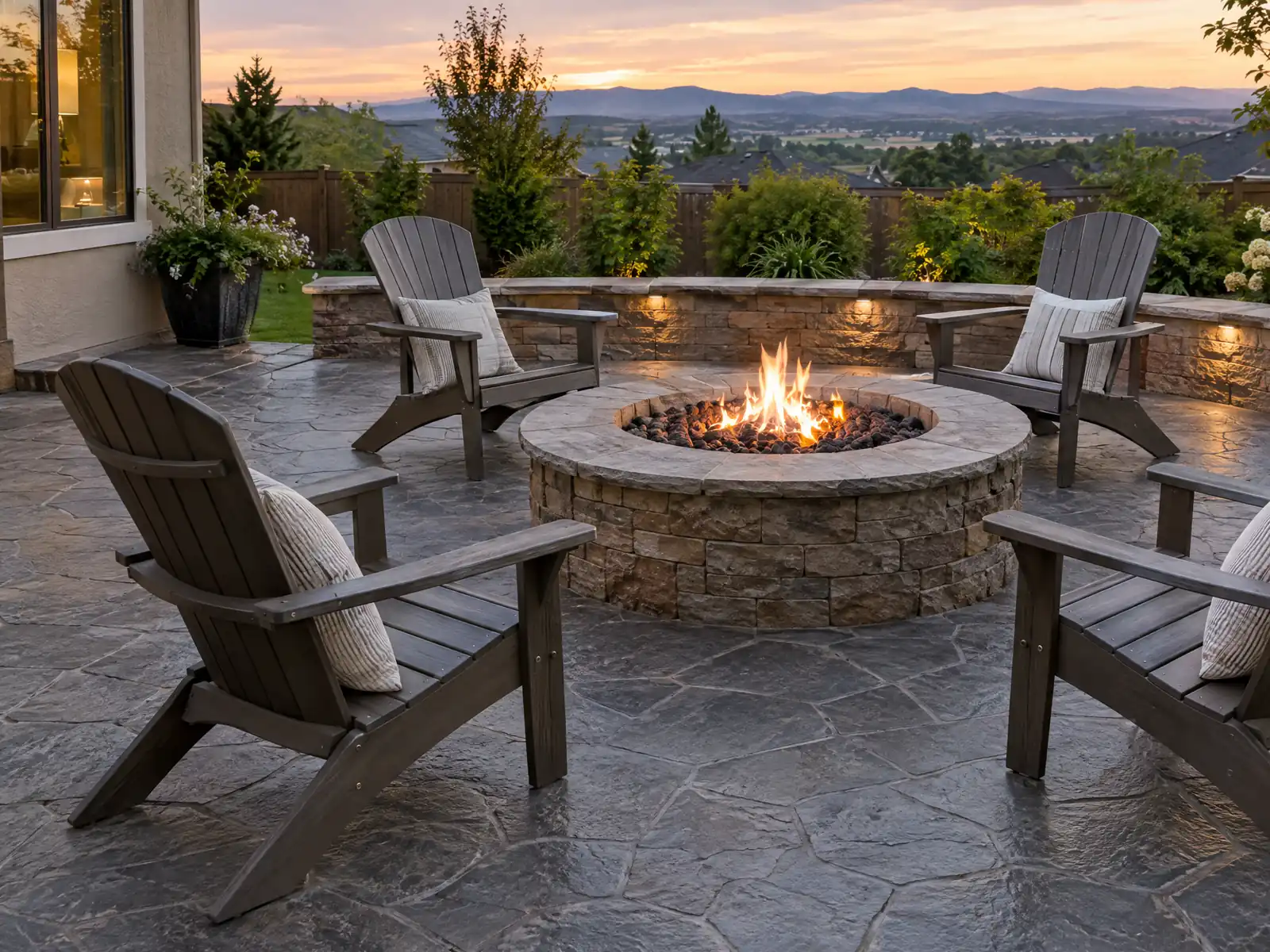
Temple City is a city of front yards. Of 11,992 homes, 9,652 (80.5 percent) are single-family detached, and the median owner-occupied home is valued at $961,800, so a driveway or front walk rarely stands alone: it fronts a house with a lot riding on its curb appeal. Voters approved incorporation on April 26, 1960, at a population of 31,838 after the post-war boom, and today's zoning code is unusually specific about what the front of a lot may hold.
MDG Builders, CSLB #1040337, is a general contractor in Tarzana that draws the scope, walks it through Planning and Building & Safety and hires a licensed concrete subcontractor to form, pour and finish. Materials and finishes are on the concrete page, and the Temple City overview lists the other trades we manage in town.
What Temple City's Planning Division, Zoning Code and Municipal Code say about concrete work
Where concrete permits come from in Temple City: City of Temple City Community Development Department, Building & Safety Division.
- Municipal Code 7-1-2.B exempts decks, walks and driveways not more than 30 inches above grade and not over any basement or story below, and not part of an accessible route, from a building permit. Zoning and public right-of-way rules still apply.
- In the R-1 zone (9-1G-12.H) hardscape, meaning walkways and driveways of asphalt, concrete, pavers or decomposed granite, must not exceed 45 percent of the front yard; the front yard must include at least 22 percent live vegetation; decomposed granite or stone may not exceed 20 percent of the front yard; and rocks, stones and pebbles are not to be used near public sidewalks or streets.
- In the R-1 zone (9-1G-12.G) driveways are limited to a maximum paved width of 16 feet where the garage door faces the street (with 2 feet clear on each side) and 12 feet where the garage door is perpendicular to the street, vehicles may park in front or side yards only on paved driveways, and 9-1G-12.H says no more than 12 feet of the vehicular access to the garage may be hardscape with 4 feet of landscaping on either side. The two driveway widths are not reconciled in the text, so ask Planning before pouring a wider driveway.
- The City's Public Works policy on residential driveway approaches (April 4, 2022) says a new approach must be 8 to 20 feet wide (10 feet maximum for a one-car garage at or near the front setback, 20 feet for a two-car garage), there may be one approach per street frontage per parcel, approaches may not be shared, the approach width must match the driveway width on the lot, and the approach must sit at least 5 feet from the curb return and may not extend in front of a neighbor's property.
- Municipal Code 9-1N-7.C makes the property owner repair or replace any public right-of-way infrastructure, including street trees, damaged during construction, as directed by the City Engineer (or pay a fee in lieu).
- The Building & Safety page says the division handles encroachment permits for work in the public right-of-way, and the Fees page says encroachment permit fees come from the City fee schedule rather than the 120 percent of County fee rule.
- Artificial turf (9-1N-11) must carry at least an eight-year no-fade warranty, may not exceed 43 percent of a front yard, is prohibited in parkways, must sit on a permeable backing draining at least 30 inches per hour, must use silica sand or zeolite infill (rubber crumb is prohibited), and must be installed by a licensed professional.
- CSLB defines the C-8 Concrete classification as forming, pouring, placing, finishing and installing mass, pavement, flat and other concrete work, and setting screeds for pavements or flatwork.
How much of a Temple City front yard can be paved?
Less than half. Zoning Code 9-1G-12.H caps hardscape, meaning walkways and driveways of asphalt, concrete, pavers or decomposed granite, at 45 percent of an R-1 front yard and requires at least 22 percent live vegetation. On a hypothetical 2,000 square foot front yard, that is 900 square feet of paving at most and 440 of plants. Decomposed granite or stone may fill no more than 20 percent, and rocks, stones and pebbles are not to be used near public sidewalks or streets.
Artificial turf has its own list. Section 9-1N-11 limits it to 43 percent of a front yard, bars it from parkways and asks for an eight-year no-fade warranty, a backing that drains at least 30 inches an hour, silica sand or zeolite infill (rubber crumb is prohibited) and a licensed installer. Paving, stone and turf compete for the same yard, so total them before a pour is ordered.
These sections come from gocodebook, a third-party copy of the code, and they describe R-1 lots. The official site was blocked to us, so confirm with Planning for your zone.
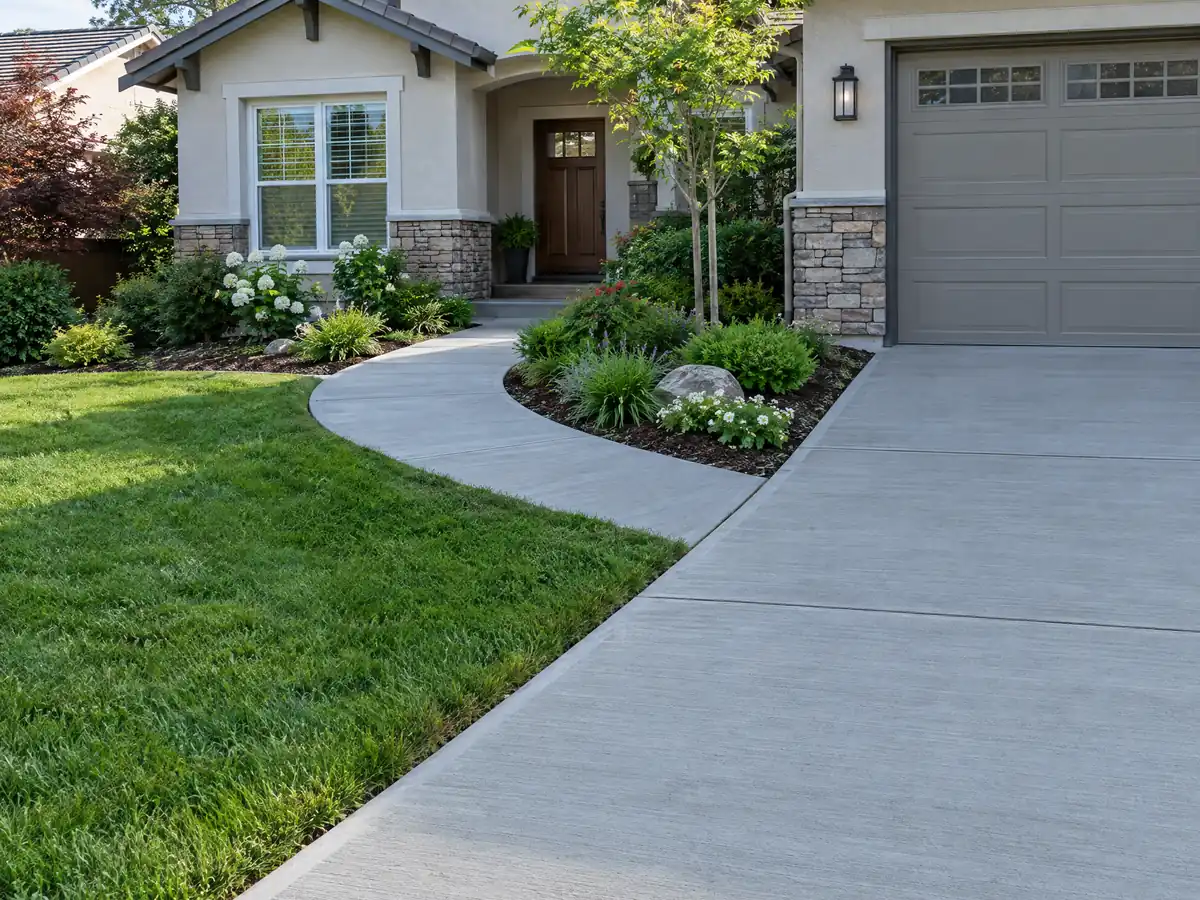
How wide can a Temple City driveway be, 16 feet or 20 feet?
The City's own documents disagree, so treat the answer as a question for Planning. Zoning Code 9-1G-12.G caps paved driveway width at 16 feet where the garage door faces the street, with 2 feet clear on each side, and at 12 feet where the door is perpendicular to the street. Section 9-1G-12.H adds that no more than 12 feet of the access to the garage may be hardscape, with 4 feet of landscaping on either side.
The Public Works residential driveway approach policy, dated April 4, 2022, speaks in other numbers. A new approach is 8 to 20 feet wide: 10 feet at most for a one-car garage at or near the front setback and 20 feet for a two-car garage, one per street frontage, never shared, at least 5 feet from the curb return and never in front of a neighbor's property. The policy also says approach width must match the driveway on the lot, which collides with the 16 foot zoning cap.
We did not resolve the conflict, and nobody should assume the larger number wins. Bring a site plan and get the answer in writing before forms are cut.
- Which way does the garage door face the street?
- How wide is the lot frontage and how wide is the approach you want?
- Does the width on paper match the width the Public Works policy allows?
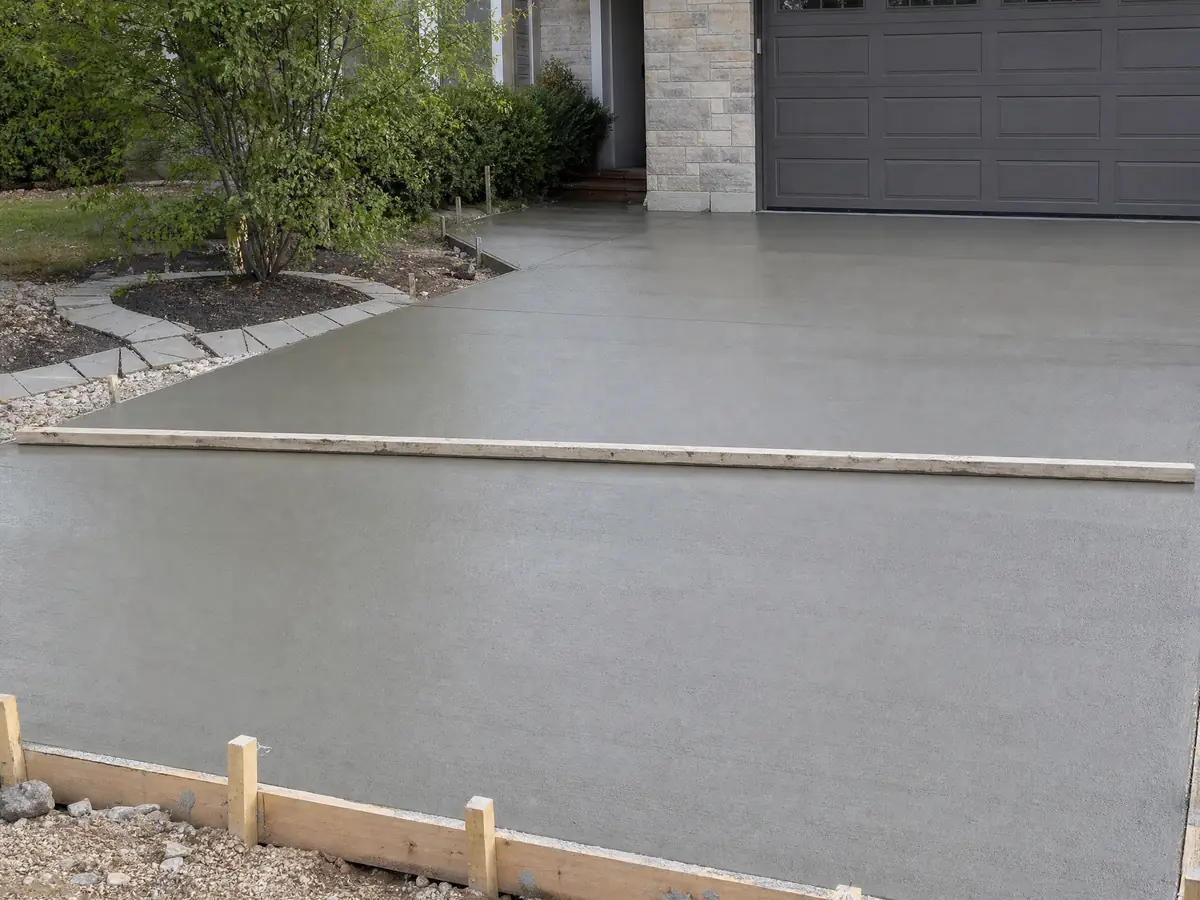
What does Temple City require when concrete work touches the sidewalk, an apron or a street tree?
Work in the public right of way is its own approval. Building & Safety handles encroachment permits, and their fees come from the City fee schedule rather than the 120 percent of County fees rule that covers plan check and building permits. Section 3-4E-1 bars any physical obstruction in the sidewalk and street right of way other than permitted driveway aprons, turf, ground cover and street trees.
Trees come with a gate. Section 3-4D-8 requires a City permit to plant, remove, trim or cut above or below ground any public tree, and it bars improvements that impede planting or maintaining one, changes to the grade around it and building material piled beside it. A slab edge or a root cut therefore needs the City first.
Damage lands on the owner. Section 9-1N-7.C makes the property owner repair or replace public infrastructure harmed during construction, street trees included, as the City Engineer directs, or pay a fee in lieu. Photograph the curb, gutter, sidewalk and tree before the crew arrives.
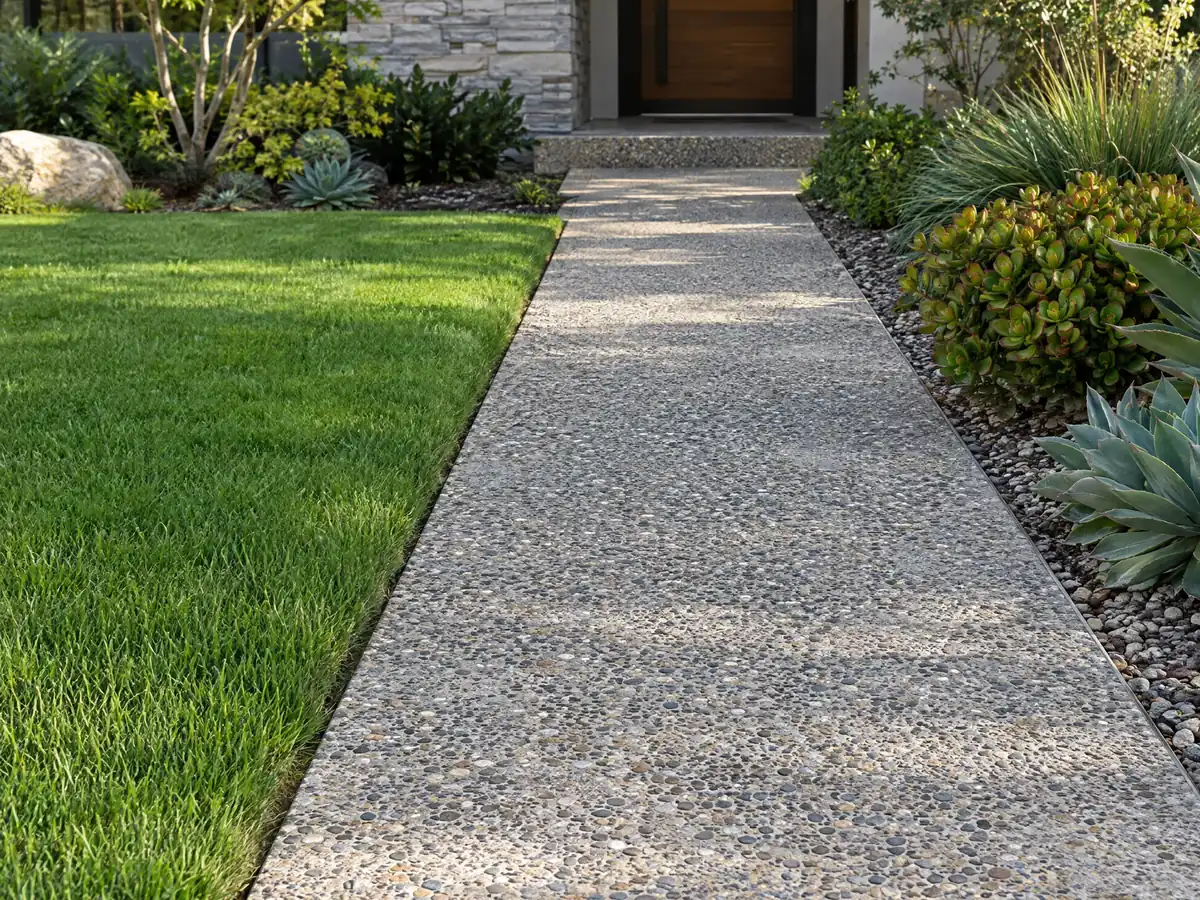
What do 1950s slabs and Temple City's hot summers mean for a new pour?
Most of the concrete here is old. The 1950s built 3,530 homes, 54.2 percent of all homes predate 1960, and 1,485 more went up in the 1960s, so an original walk or driveway is somewhere between 66 and 76 years old. Walter Temple platted the townsite in 1923, so flatwork around the Original Temple Townsite may date from before the 1950s. Age alone is not a defect, but a patched, sunken or lifted slab is a reason to price replacement beside repair.
Heat shapes how a crew pours. NOAA's normals for the San Gabriel Fire Department station show average highs from 67.8 F in December to 87.6 F in August, 64.5 days a year above 90 F and 7.1 above 100 F; that station's temperature record is only 17 years, so read the counts as approximate. We found no Temple City soil study, so we make no claim about the ground.
Ask the foreman where the control joints go, how the base is graded and wetted, and how the surface is cured when the afternoon passes 90 F.
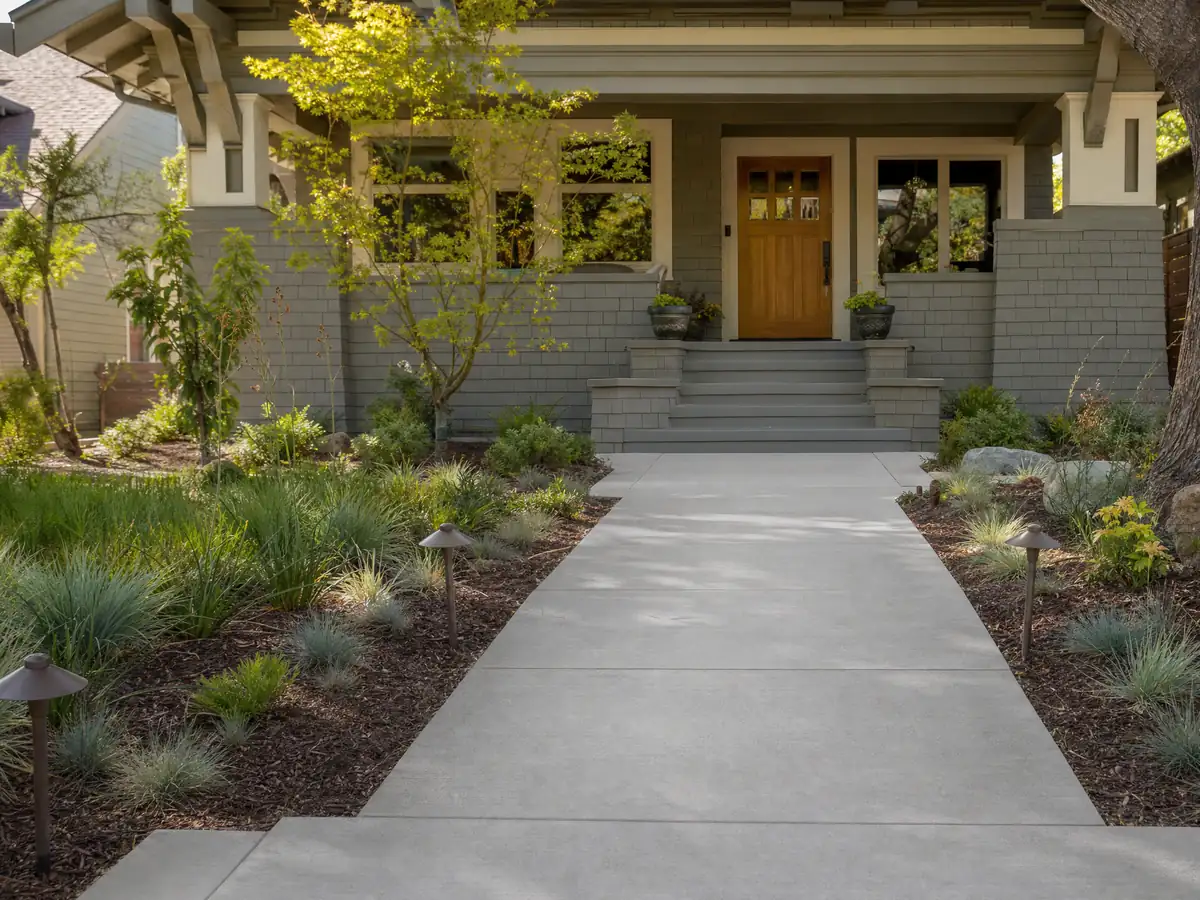
Can you pour a concrete patio or walk in Temple City without a permit?
A walk or driveway, probably; a patio slab, ask. Municipal Code 7-1-2.B exempts decks, walks and driveways that are not more than 30 inches above grade, not over a basement or story below and not part of an accessible route. A ground-level patio slab is not named in what we read, so send Building & Safety the dimensions and the distance to each property line before you order concrete. Zoning and right of way rules still apply to exempt work.
If a permit is needed, Planning Division approval comes first, then a plan check filing through the City's electronic plan check page, with review averaging about two weeks. Permit Tech counter hours are Monday through Thursday, 8:00 to 11:30 and 1:30 to 4:30, and appointments are recommended. How long a permit stays valid is a conflict we cannot settle: the City page says 6 months, the code says a year to begin work, so ask the counter which applies.
Wash water and slurry should never reach the gutter, so ask the crew how it will be contained.
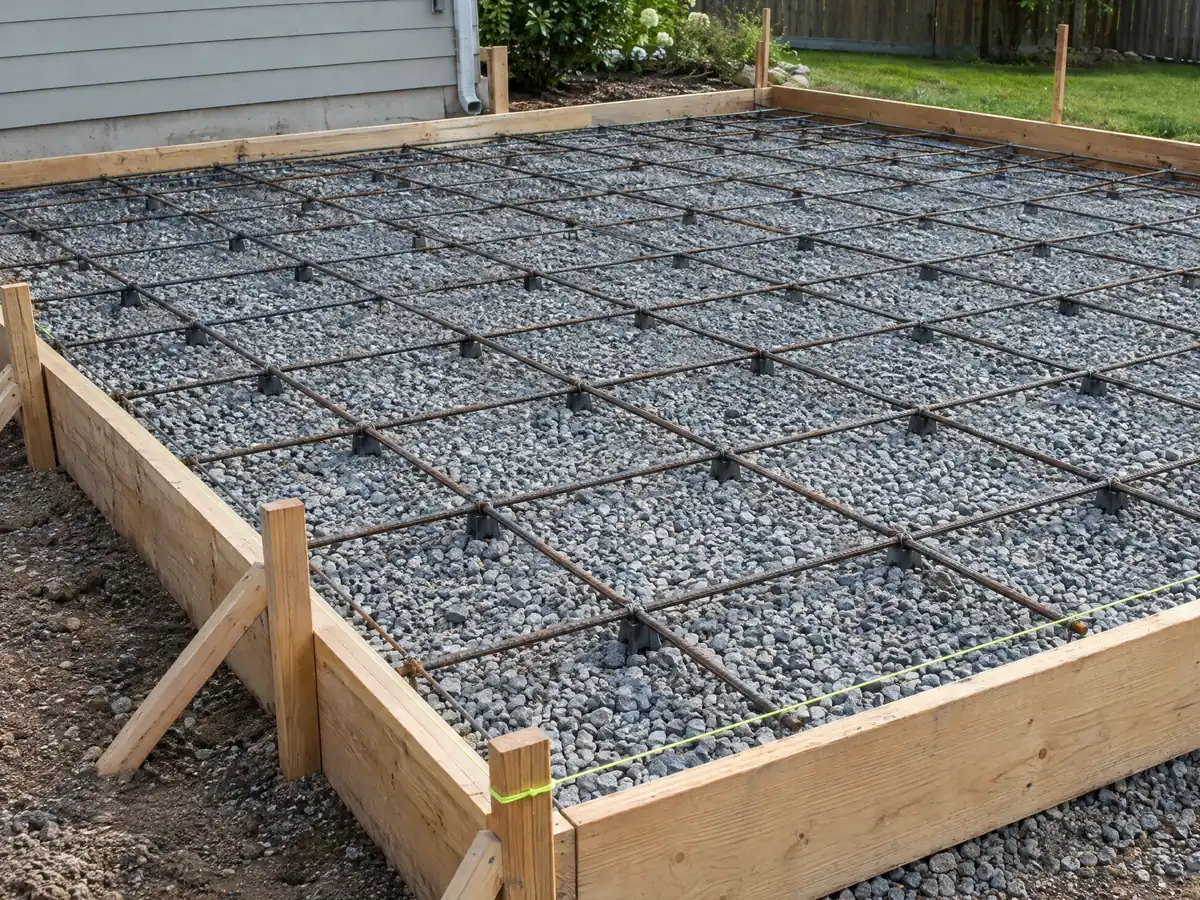
How tall can a retaining wall be in Temple City before it needs a permit?
Four feet is the exemption line, measured from the bottom of the footing. Municipal Code 7-1-2.B exempts retaining walls that hold back no more than 4 feet, unless they carry a surcharge, and zoning limits still apply. Zoning measures differently from the building code. In front and street side yards, a grade difference over 12 inches from the public right of way turns a wall into a retaining wall, allowed up to 3 feet there, with a non-view-obscuring fence on top only if it sits back 3 feet from the wall (9-1N-3.B).
On interior side and rear yards, height is measured from the highest adjacent grade and retaining walls up to 3 feet are not counted toward the fence maximum. In a front yard, a wall, fence or hedge is capped at 36 inches view-obscuring or 42 inches non-view-obscuring (9-1N-3.C).
CSLB's C-29 masonry class covers block walls for structures and fences, so a block wall and a poured slab can go to different trades. Our subcontractor guide shows how that is run.
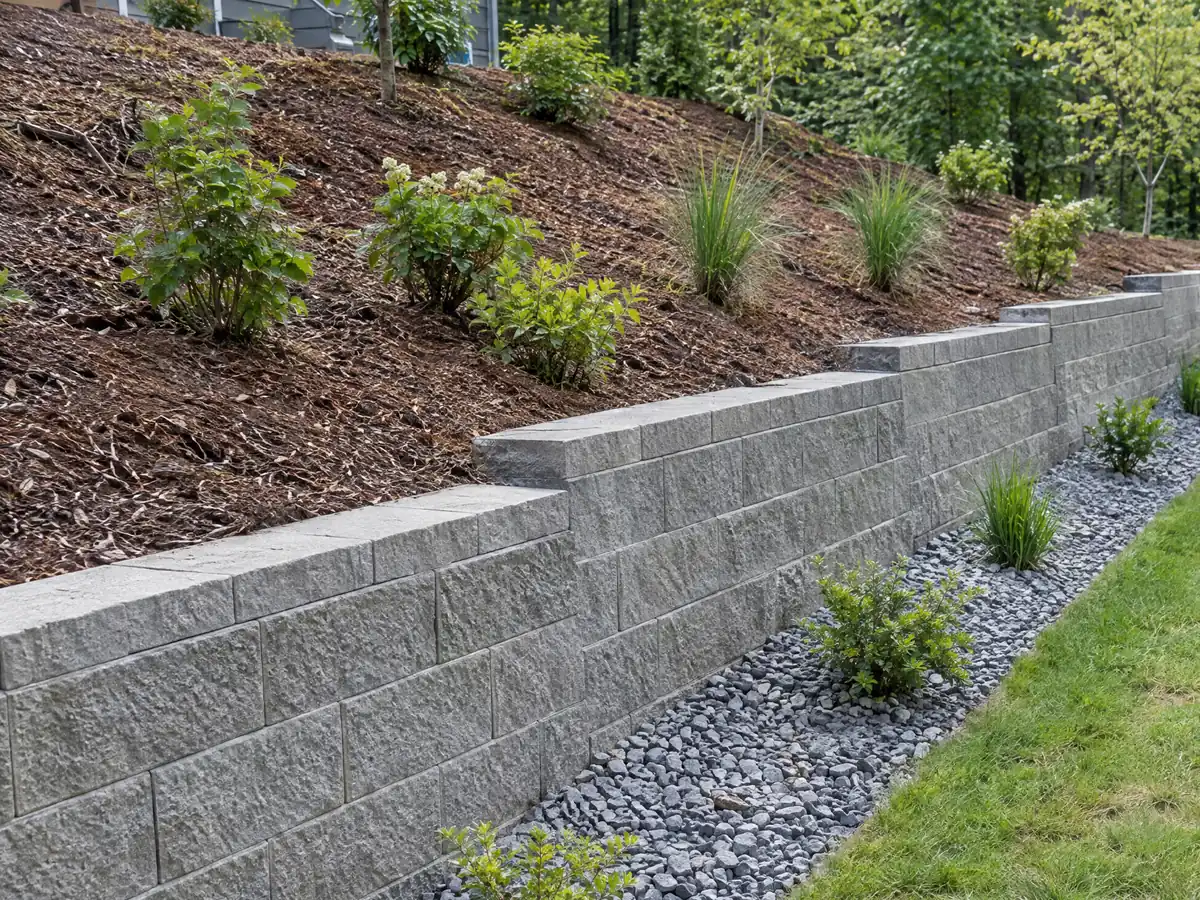
What does concrete work cost in Temple City, and what should a crew be licensed for?
No Temple City price study turned up, so these are Los Angeles figures from Angi's 2026 pages, built on customer surveys and pro data. They list patios at $4 to $13 per square foot (average $5,248), a 20 by 20 foot slab at $1,600 to $5,200, stamped work at $15 to $30 and driveways at $8 to $20 (average $7,270). We rate plain flatwork medium and decorative work and driveways lower, and small jobs run higher per foot because of minimum charges.
The Bureau of Labor Statistics' May 2025 survey puts mean pay for cement masons in the Los Angeles metro at $33.67 an hour, which sets a floor for labor but is not what a company bills. Demolition, haul-off, base, rebar and City fees belong on separate lines of a proposal.
CSLB's C-8 class covers forming, pouring, placing and finishing flat and other concrete work. California's $1,000 limit on unlicensed minor work never covers a job that needs a permit, and our license check guide shows how to verify a number.
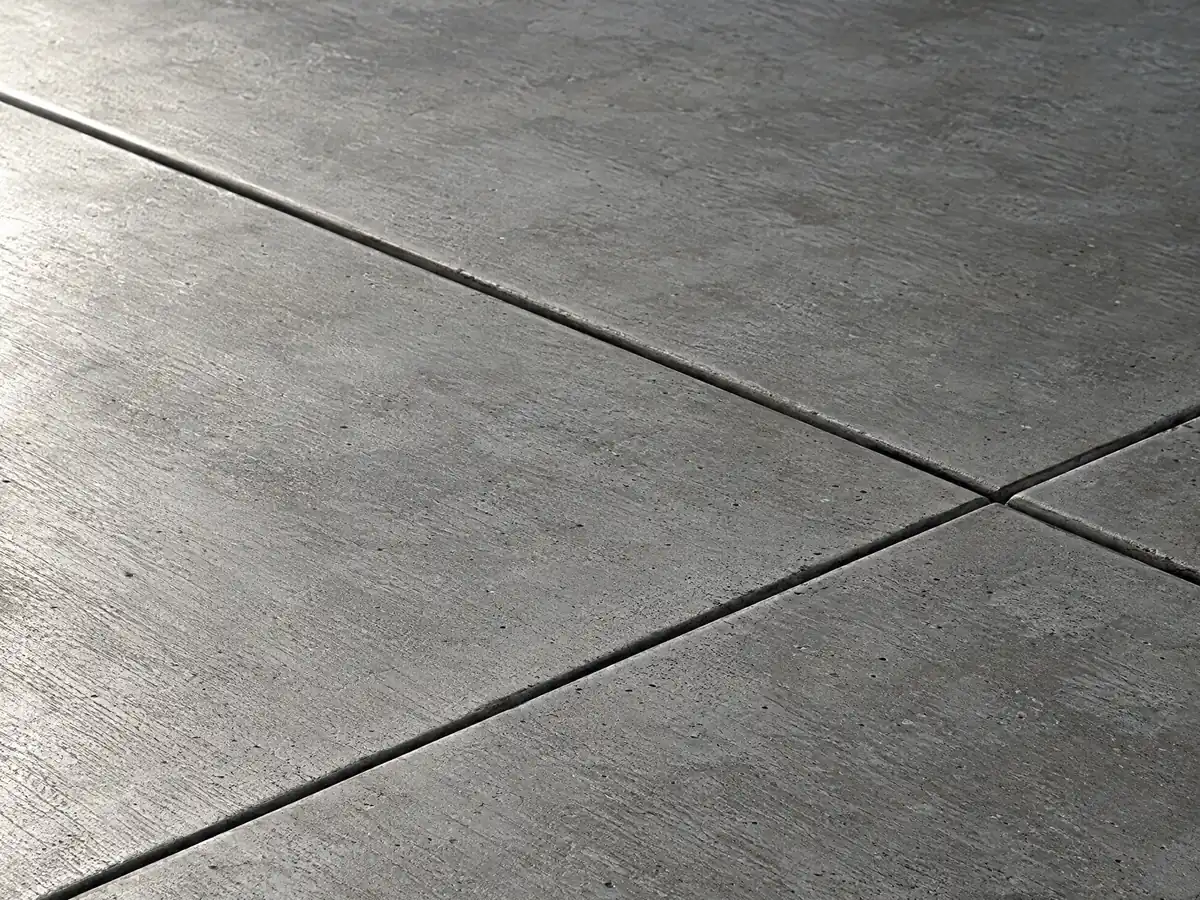
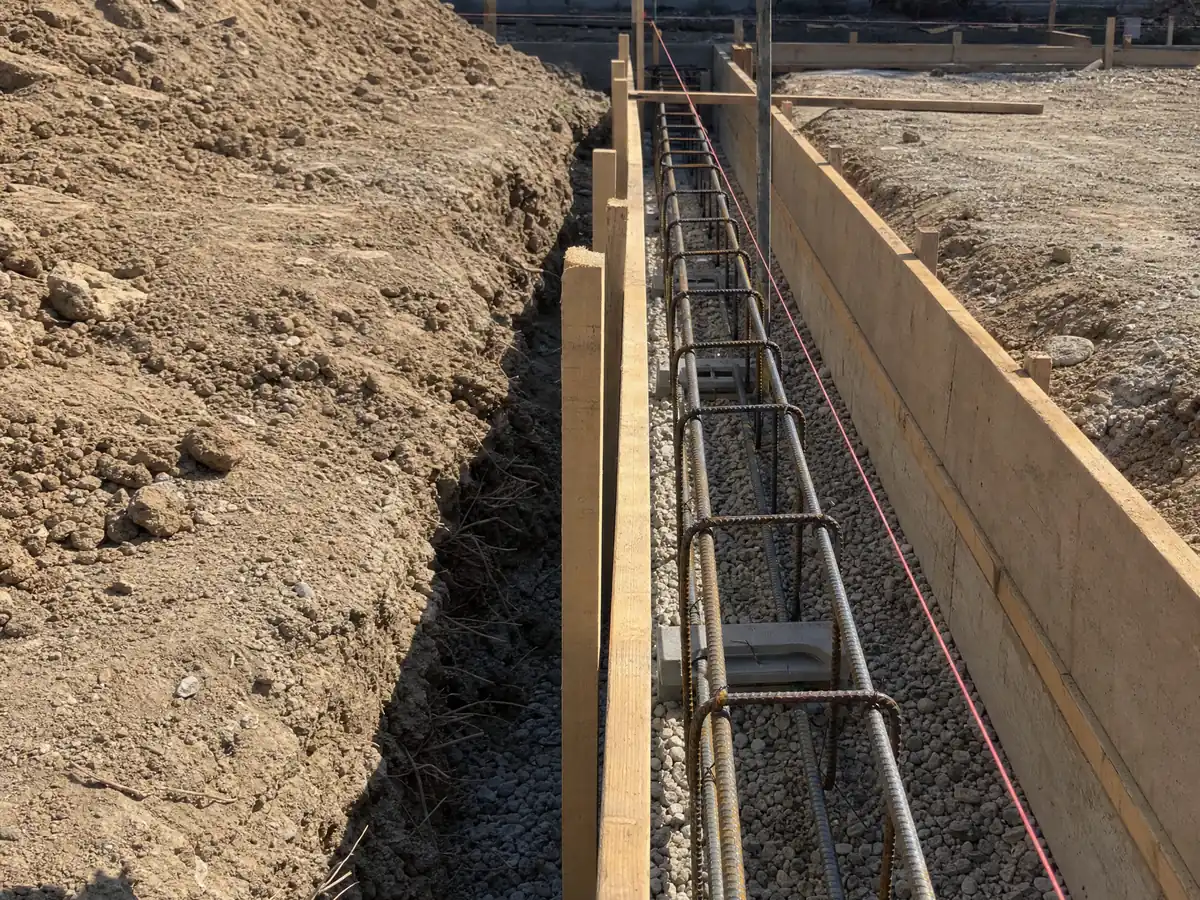
Concrete photos from Temple City and nearby communities
Driveways, patios, walks and forms from Temple City and nearby towns, shown at the stages that matter. Tap any photo to enlarge it.
What concrete costs around Temple City
Dollar figures on this page are Los Angeles planning ranges from our concrete page, not a Temple City bid, and the proposal should show demolition, base and any City fees on their own lines. For the same lot, see flooring in Temple City and decks in Temple City. Neighboring comparisons: concrete in Arcadia, concrete in San Gabriel, concrete in Rosemead and concrete in Los Angeles.
| What it covers | Typical range |
|---|---|
| Patio, walkway or slab, broom finish, 300 sq ft or more | $8 to $14 per square foot |
| Decorative: stained, stamped or exposed aggregate | $15 to $30 per square foot |
| Driveway replacement, with demolition of the old slab | $9 to $20 per square foot |
| 20 by 20 foot plain patio (400 sq ft) | About $3,200 to $5,600 |
| 20 by 20 foot decorative patio (400 sq ft) | About $6,000 to $12,000 |
| Small jobs under 300 sq ft | Usually above the per-foot range |
| Retaining walls | Set by the written proposal |
Other work we manage in Temple City
Temple City concrete questions, answered
Can I pour a concrete patio without a permit in Temple City?
Possibly, but a ground-level patio slab is not named on the City's exempt list. Municipal Code 7-1-2.B exempts walks and driveways not more than 30 inches above grade, so send Building & Safety the slab size and its distance from each property line, and ask whether any review applies before you order a pour.
Can I expand my driveway without a permit in Temple City?
Probably without a building permit, since 7-1-2.B exempts driveways under 30 inches above grade, but zoning still limits width. The zoning cap is 16 feet (12 feet for a perpendicular garage door) while Public Works allows an approach up to 20 feet, and the two conflict, so ask Planning in writing.
What is the maximum height of a retaining wall without a permit in Temple City?
Four feet, measured from the bottom of the footing, unless the wall carries a surcharge. That is the exemption in Municipal Code 7-1-2.B, which we read on a third-party copy of the code. Zoning is stricter in front and street side yards, where a retaining wall is limited to 3 feet.
How much should a 20x20 concrete patio cost in Temple City?
Angi's 2026 page for Los Angeles lists a 20 by 20 foot patio, 400 square feet, at $1,600 to $5,200, inside a general range of $4 to $13 per square foot. No Temple City study turned up. Tear-out, base work and any decorative finish shift the figure, so measure the yard and the price follows.
How much does a concrete driveway cost in Temple City?
Angi prices Los Angeles driveways at $8 to $20 per square foot, an average of $7,270 and a spread from $3,067 to $16,472. Tear-out of the old slab, grading and apron work change the total, and the width you want must fit the zoning cap and Public Works policy, so settle that first.
How wide can a driveway be in Temple City?
It depends on which document you read: Zoning Code 9-1G-12.G caps R-1 driveways at 16 feet with a street-facing garage door and 12 feet with a perpendicular one, while the Public Works approach policy allows up to 20 feet for a two-car garage. We did not resolve that, so get Planning's answer in writing.
How much of my front yard can I pave in Temple City?
In an R-1 zone, walkways and driveways may cover at most 45 percent of the front yard, and at least 22 percent must be live vegetation. Decomposed granite or stone is capped at 20 percent. These limits come from a third-party copy of the Zoning Code, so confirm them with Planning for your lot.
How much does a stamped concrete patio cost in Temple City?
Angi's Los Angeles page for stamped work lists $15 to $30 per square foot, averaging $5,948. Patterns, colors and sealers vary widely, so we rate it below plain flatwork. Put the pattern, color and sealer on the proposal and bids become comparable.
What license does a concrete company need in Temple City?
A concrete company should hold CSLB's C-8 class, and block walls fall under C-29. Work that needs a permit must go to a licensed contractor even under $1,000. Look the license up on the CSLB site before accepting a bid, and ask for each subcontractor's number as well.
Send the address and a photo of the front yard
Describe what you want poured, its rough size and what is there now, perhaps a cracked drive or a bare side yard. The width and front yard questions come along to the first visit.