
Fence Companyin Temple City, CA
A fence company in Temple City works from three numbers: 36 inches for a solid front yard fence, 42 inches for an open one and 6 feet in the side and rear yards. Corner lots add cutback triangles, and a 12 inch grade change turns a wall into a retaining wall. Many fences need no building permit, though zoning applies.
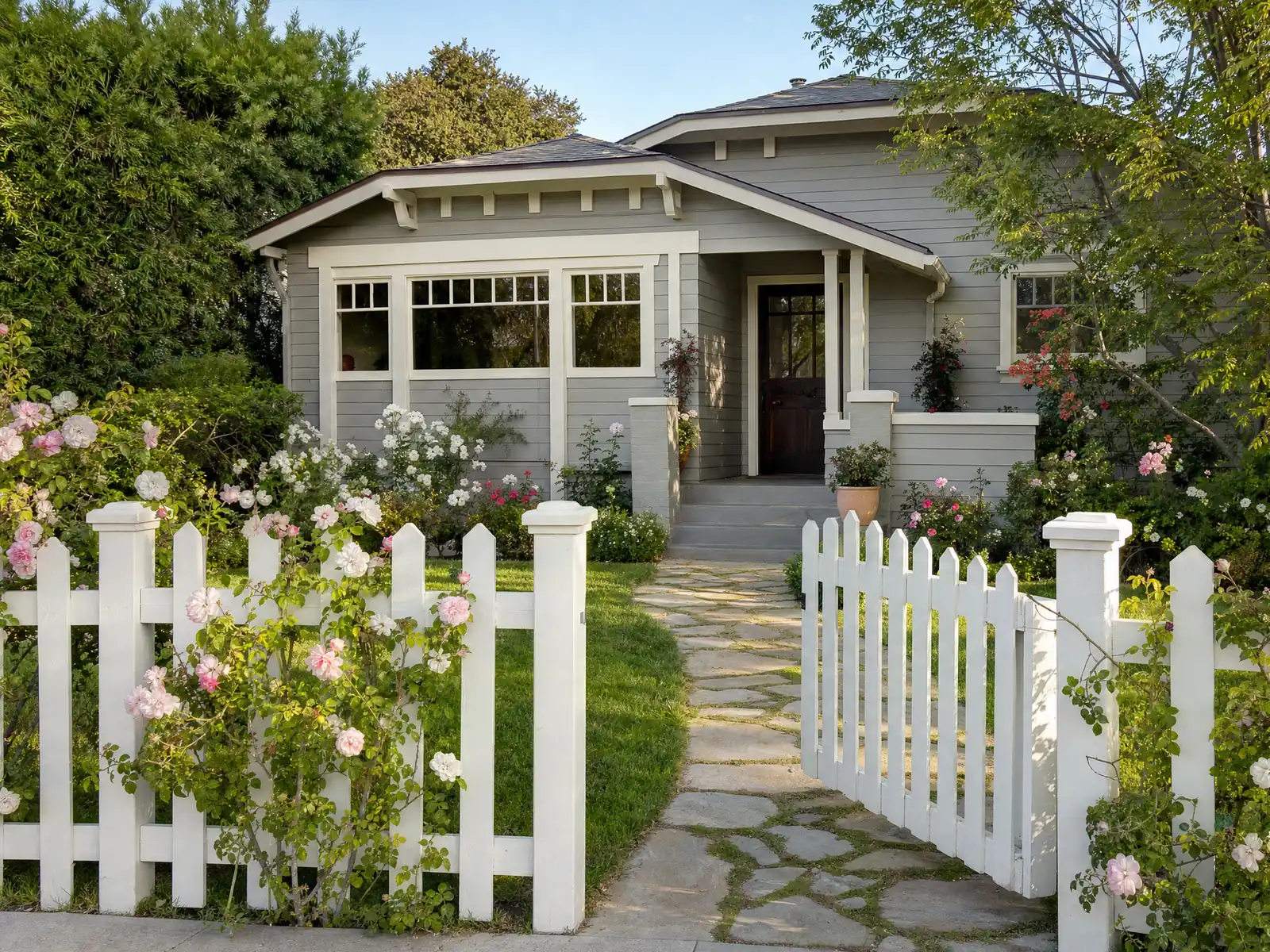
Temple City's fences mark the edges of a postwar suburb. Voters approved incorporation on April 26, 1960, at a population of 31,838, and the Census Bureau's 2024 five-year estimates now count 9,652 detached houses among 11,992 housing units, 80.5 percent of the stock. The founding Temple townsite, Tract 6561, dates to 1923, and the zoning code that governs those lots today is unusually specific about the front of the property, with separate limits for solid and open fences, corner triangles and grade changes.
On a fence job, MDG Builders (CSLB #1040337) checks the lot lines against the code, files whatever the City asks for and schedules the trades, and licensed subcontractors build it: a C-13 fencing contractor for wood, vinyl, iron and chain link, and a masonry contractor for block. Our fencing page holds the sourced prices, the Temple City overview covers the other trades, and neighboring cities set their own heights, as the guides for Rosemead and Alhambra show.
What Temple City's zoning code and permit list say about fences
Where fencing permits come from in Temple City: City of Temple City Community Development Department, Building & Safety Division.
- Municipal Code 7-1-2.B exempts from a building permit chain-link, wrought-iron and similar fences up to 12 feet; masonry, concrete, wood and similar fences up to 6 feet (wood fences up to 8 feet if 60 percent or more open and not wind-loaded); and retaining walls retaining not more than 4 feet measured from the bottom of the footing, unless they support a surcharge. Zoning height limits still apply.
- Municipal Code 9-1N-3.C limits a wall, fence or hedge in a front yard to 36 inches when view-obscuring and 42 inches when non-view-obscuring. A wall, fence or security gate up to 6 feet is allowed on any part of an R-zoned lot except the front yard and, on a corner lot, the driveway visibility area.
- In the driveway visibility area (corner side yard driveways only: a triangle at 45 degrees from the street property line to a point 10 feet along the driveway edge) the maximum fence, wall or hedge height is 36 inches. Where a front garage door is perpendicular to the street, a fence crossing the driveway is limited to 36 inches view-obscuring or 42 inches non-view-obscuring (9-1N-3.C).
- Code 9-1N-3.C allows a fence or wall up to 6 feet in the front yard on a parcel where the adjacent house or garage sits farther back than the house or garage on the parcel, but it may not be closer to the front lot line than the adjacent house or garage. A wall or fence may not be placed in the front yard of a multi-family zone lot that has a multi-family use, except where the building code requires it.
- Height is measured differently by yard (9-1N-3.B): in front and street side yards from the lowest adjacent grade when the grade difference from the public right-of-way is 12 inches or less; more than 12 inches counts as a retaining wall, allowed up to 3 feet in front and street side yards, with an additional non-view-obscuring fence permitted if set back 3 feet from the retaining wall. On interior side and rear yards height is measured from the highest adjacent grade and retaining walls up to 3 feet are not counted toward the maximum.
- Corner cutback rule 9-1N-2: no visual obstruction in a triangle 15 feet from a street or alley intersection, 15 feet from two alleys, and 10 feet from a driveway and street corner (17 feet on irregular lots). Solid fences, walls, mailboxes and mounds over 36 inches, open-work fences over 42 inches and hedges or shrubs over 36 inches are not allowed in the cutback area.
- Municipal Code 3-4D-8 requires a City permit to plant, remove, trim or cut above or below ground any tree in the public right-of-way, and bars building retaining walls, fences or similar improvements that impede the planting or maintaining of public trees or affect their growth, changing the grade around a public tree, or piling building material around one. Section 3-4E-1 prohibits any physical obstruction in the sidewalk and street right-of-way other than permitted driveway aprons, turf, ground cover and street trees.
- California Civil Code 841 presumes adjoining owners share equally the cost of building, maintaining or replacing a fence on their boundary unless they agreed otherwise in writing; the owner who plans the work must give each affected neighbor 30 days' prior written notice with the stated contents, and a court can order less than an equal share if equal sharing would be unjust.
How tall can a fence or hedge be in a Temple City front yard?
Three feet if it is solid, three and a half if it is open. Municipal Code 9-1N-3.C caps a wall, fence or hedge in a front yard at 36 inches when it obscures the view and 42 inches when it does not. The rule covers hedges as well as boards, so a privet that has grown past 36 inches can be out of compliance with no fence in sight.
One exception is worth knowing. Where the neighbor's house or garage sits farther back than yours, a fence up to 6 feet is allowed in your front yard, though it may not come closer to the front lot line than that neighbor's house or garage. A multi-family lot with a multi-family use may have no front yard wall or fence except where the building code requires one. This text comes from the GoCodebook mirror of the City code, because the official American Legal copy blocked our tools, so confirm it with the City.
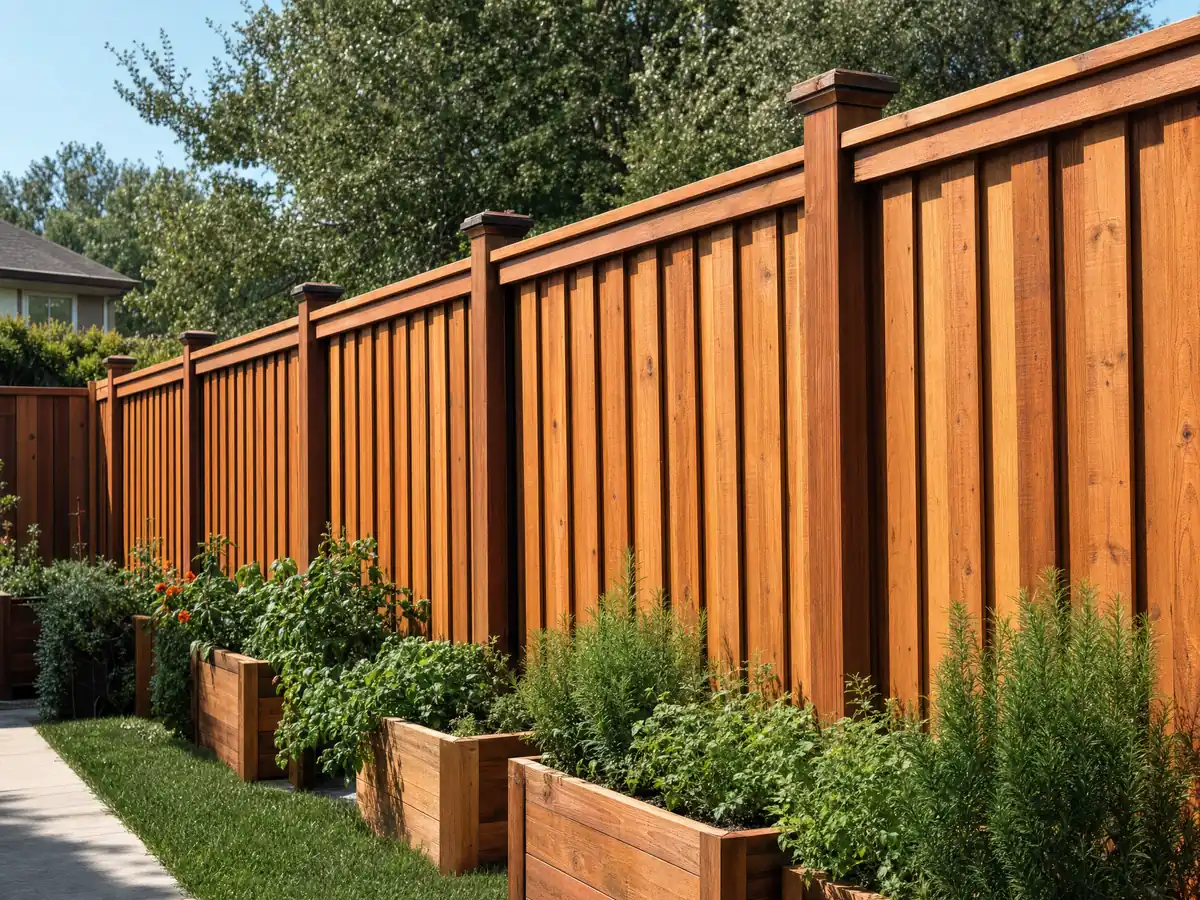
What is the maximum height for a backyard fence in Temple City?
Six feet is the zoning ceiling. The same section allows a wall, fence or security gate up to 6 feet on any part of an R-zoned lot except the front yard and, on a corner lot, the driveway visibility area. On interior side and rear yards, height is measured from the highest adjacent grade, and a retaining wall of up to 3 feet there does not count toward the maximum. A 7 foot fence is therefore beyond what we read, and anything above 6 feet is a question for Planning before any posts are set.
Materials matter for building permits, not for zoning height. Under Municipal Code 7-1-2.B, wood and similar fences over 6 feet lose the building permit exemption, except a wood fence up to 8 feet that is at least 60 percent open and not wind-loaded. Zoning limits still apply where the building permit is exempt, so as we read it the 8 foot figure is a building code number, not a zoning allowance.
Do I need a permit to build a fence in Temple City?
Often not a building permit, but the zoning rules always apply. Municipal Code 7-1-2.B exempts chain-link, wrought-iron and similar fences up to 12 feet, masonry, concrete, wood and similar fences up to 6 feet, and retaining walls holding back no more than 4 feet, measured from the bottom of the footing, unless they support a surcharge. Anything past those lines goes to Building and Safety.
We found no City fence handout; the Handouts page lists seven items and none is about fences. We also found no Planning page saying whether a fence needs a zoning approval before it goes up, so ask the counter. Where a permit is needed, Planning approves the project first, plan check averages about two weeks and fees are 120 percent of the County of Los Angeles fees, with no dollar figure we could quote.
Ask for the answer on permits and height in writing before the fence company orders materials.
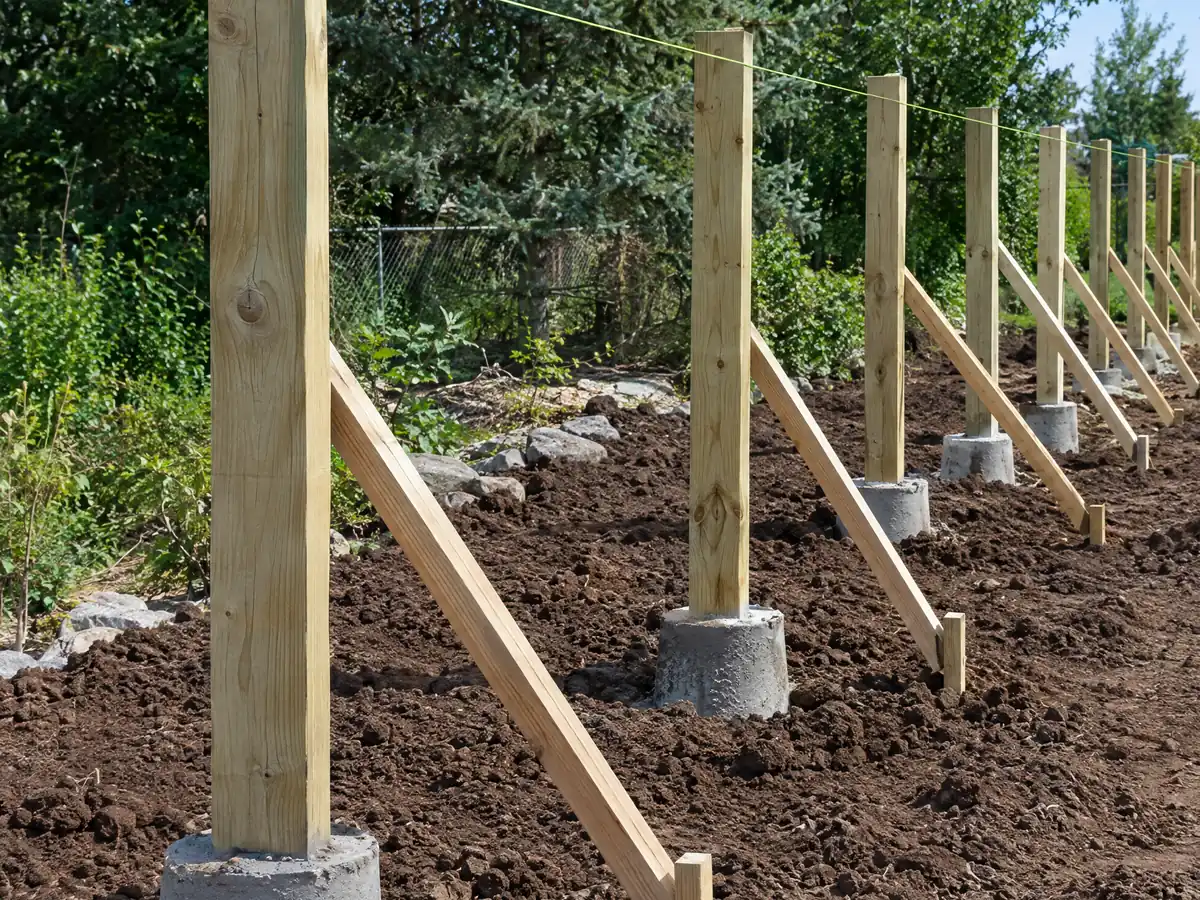
Where can a fence go on a Temple City corner lot or across a driveway?
Corner lots carry two extra tests. The cutback rule in Municipal Code 9-1N-2 bars any visual obstruction in a triangle 15 feet from a street or alley intersection, and 10 feet from a driveway and street corner, or 17 feet on irregular lots. Inside that triangle, solid fences, walls and mailboxes may not top 36 inches, open-work fences 42 inches and hedges or shrubs 36 inches.
The driveway has its own rule. On a corner side yard driveway, the visibility area is a triangle cut at 45 degrees from the street property line to a point 10 feet along the driveway edge, and nothing there may exceed 36 inches. Where a front garage door sits perpendicular to the street, a fence crossing the driveway is limited to 36 inches solid or 42 inches open, which matters for a rolling gate. A gate that clears the triangle on paper still has to be checked on the ground, so have the property lines staked before posts are set.
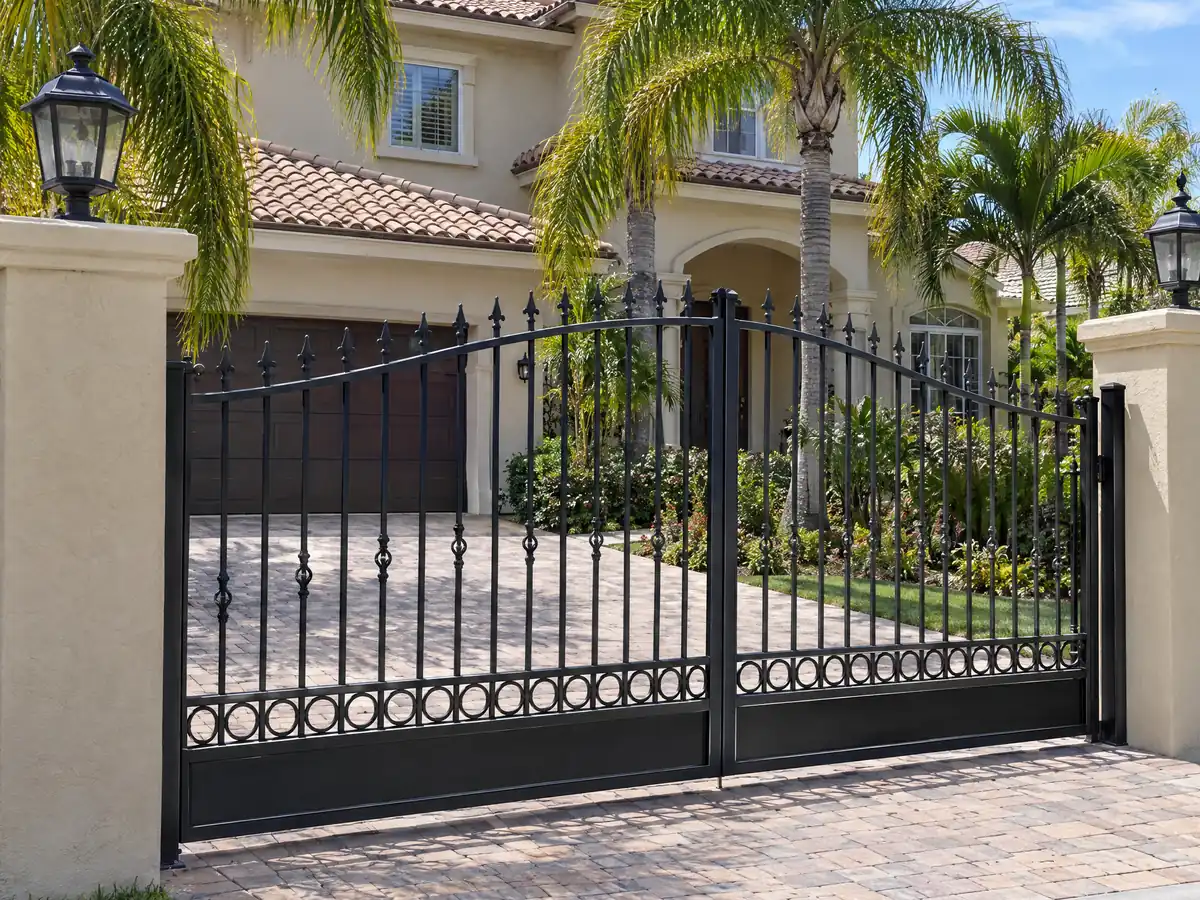
How does a grade change turn a Temple City fence into a retaining wall?
Twelve inches is the line. In front and street side yards, height is measured from the lowest adjacent grade when the ground differs from the public right-of-way by 12 inches or less. A bigger difference makes the structure a retaining wall, which the code allows up to 3 feet in those yards, with an additional non-view-obscuring fence permitted if it is set back 3 feet from the wall. On interior side and rear yards the measurement starts at the highest adjacent grade.
Block is a different trade. CSLB's C-13 Fencing classification covers fences, corrals, runs and railings and excludes masonry walls, which belong to a masonry contractor under class C-29, so use our guide to checking a contractor's license on each one. A retaining wall faces two tests, the zoning height rule and the building permit exemption above. We found no Temple City survey of slope or soil, so a wall beside a grade change deserves an engineer's opinion, not a guess.
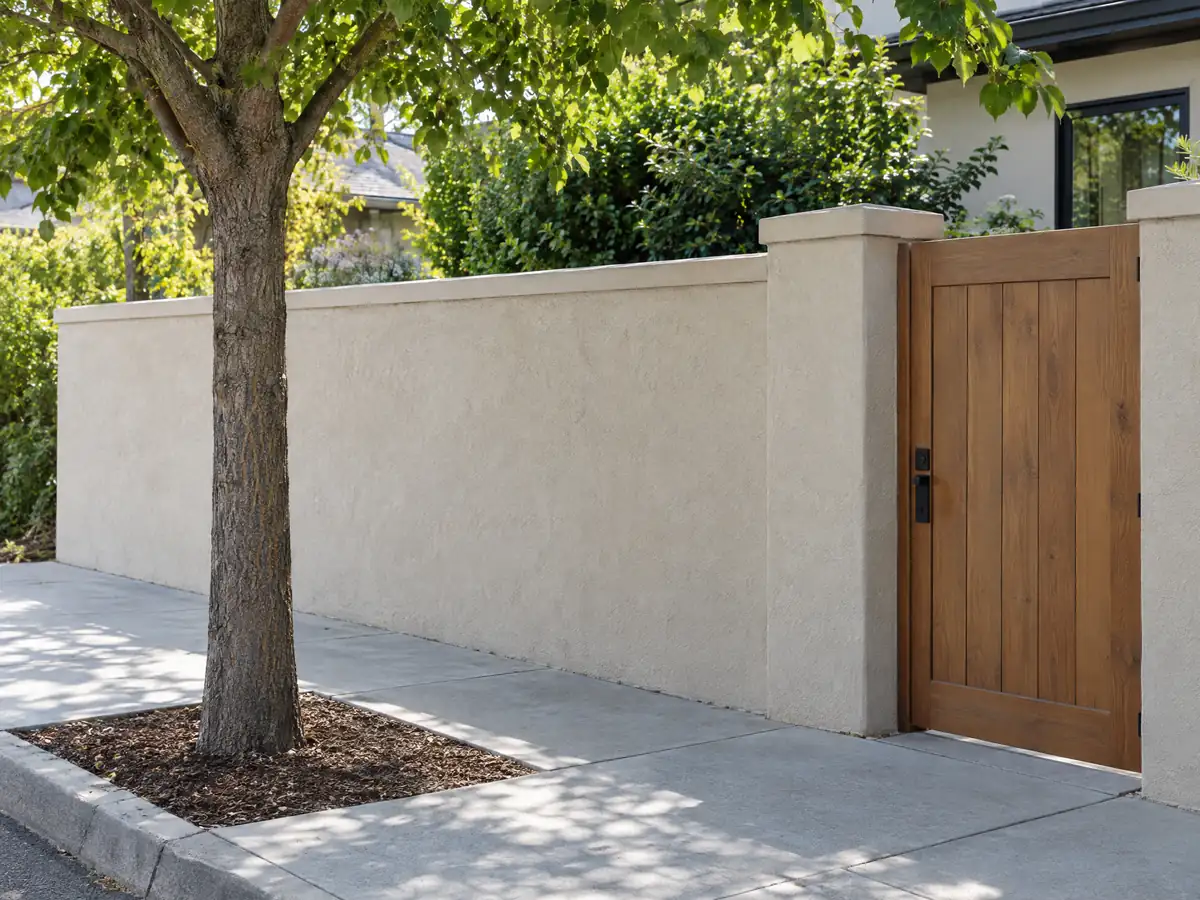
Can a fence or wall be built near a street tree or the sidewalk in Temple City?
Not in a way that harms the tree. Municipal Code 3-4D-8 requires a City permit to plant, remove, trim or cut above or below ground any tree in the public right-of-way, and it bars retaining walls, fences or similar improvements that impede the planting or maintenance of public trees or affect their growth. It also bars changing the grade around a public tree or piling building material against one, so post holes and spoil piles beside a parkway tree are worth a call first.
Section 3-4E-1 allows nothing in the sidewalk and street right-of-way except driveway aprons, turf, ground cover and street trees, so a fence or wall belongs behind the property line. Section 9-1N-7.C makes the owner repair or replace any right-of-way infrastructure, including street trees, damaged during construction, as the City Engineer directs, or pay a fee in lieu. Ask the fence company who pays for a cracked sidewalk panel before the trench goes in.
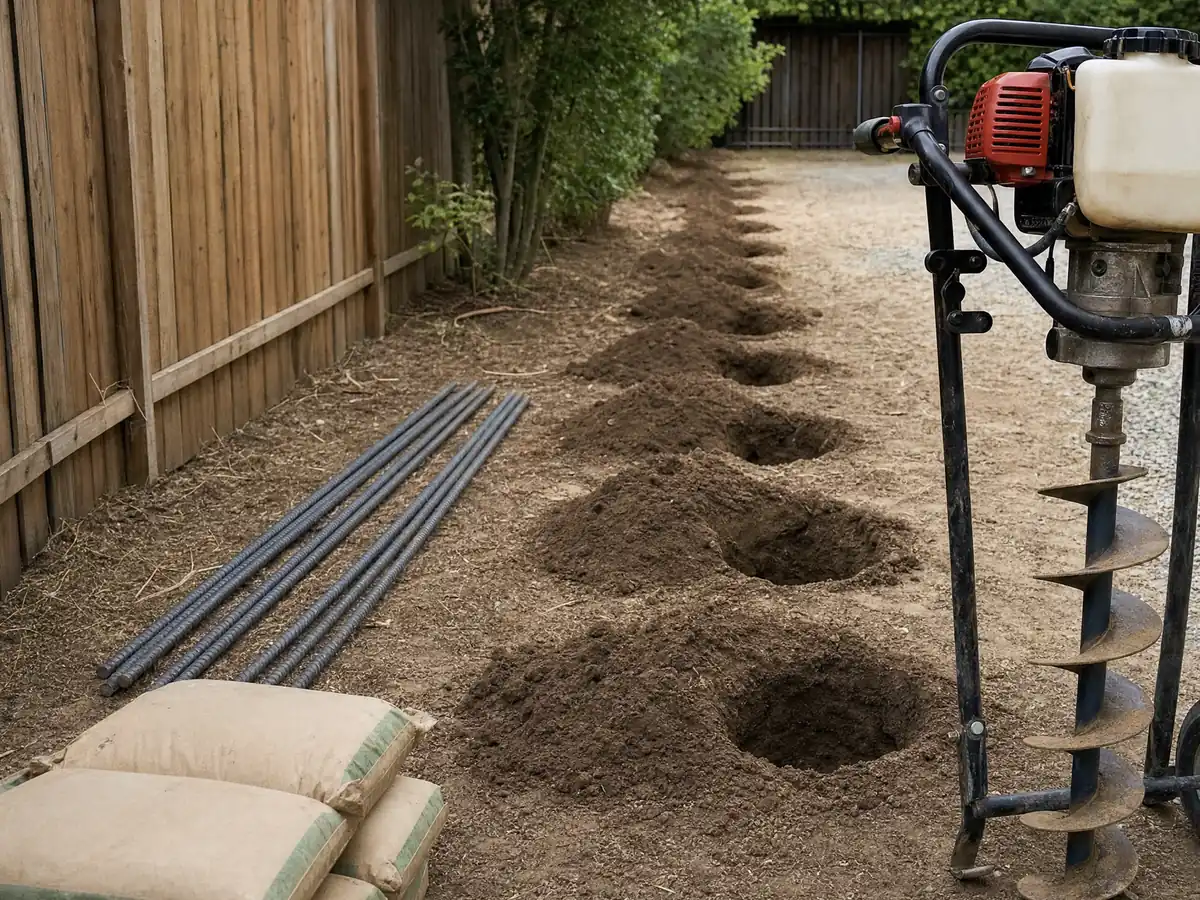
How much does fence installation cost, and does my neighbor pay half?
No Temple City price survey turned up, and the directory pages for the city list companies without prices, so we use Los Angeles sources. Angi's Los Angeles page, updated August 4, 2026, shows $15 to $60 per foot, and HomeGuide, Thumbtack and Fixr give overlapping ranges. From those we use about $25 to $55 per linear foot installed for a 6 foot wood or vinyl privacy fence, $35 to $85 for aluminum or ornamental iron and roughly $2,500 to $5,500 for a 100 foot backyard run. We trust no independent source for block wall prices, so none is printed.
For a shared boundary fence, California Civil Code 841 presumes that adjoining owners share the cost of building, maintaining or replacing it equally unless they agreed otherwise in writing. The owner who plans the work must give each affected neighbor 30 days' written notice with the stated contents, and a court can order less than an equal share if equal sharing would be unjust.
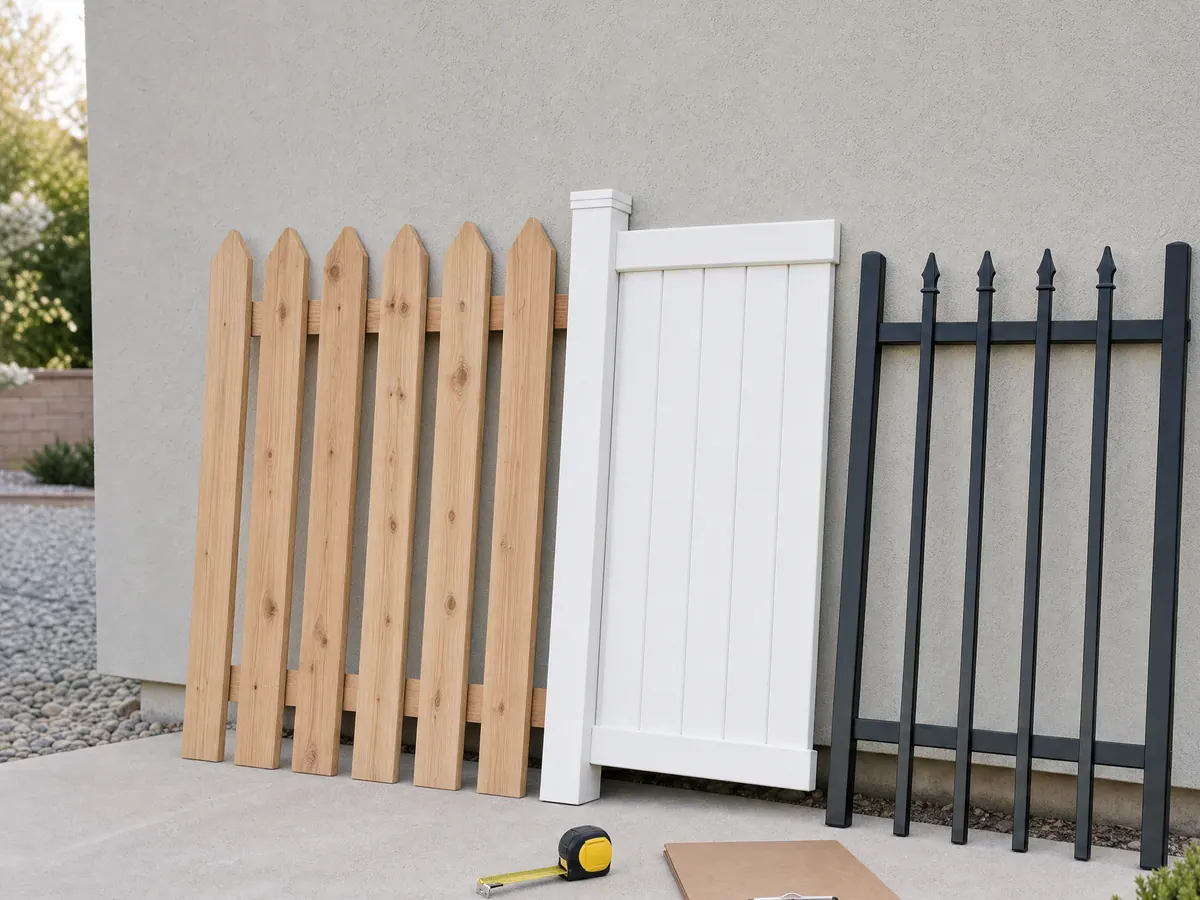
Fence photos from Temple City and nearby communities
Six fence scenes tied to Temple City blocks and to nearby places such as Arcadia, San Gabriel, Rosemead and El Monte, from open iron fronts and picket gates to block walls and tall backyard runs.
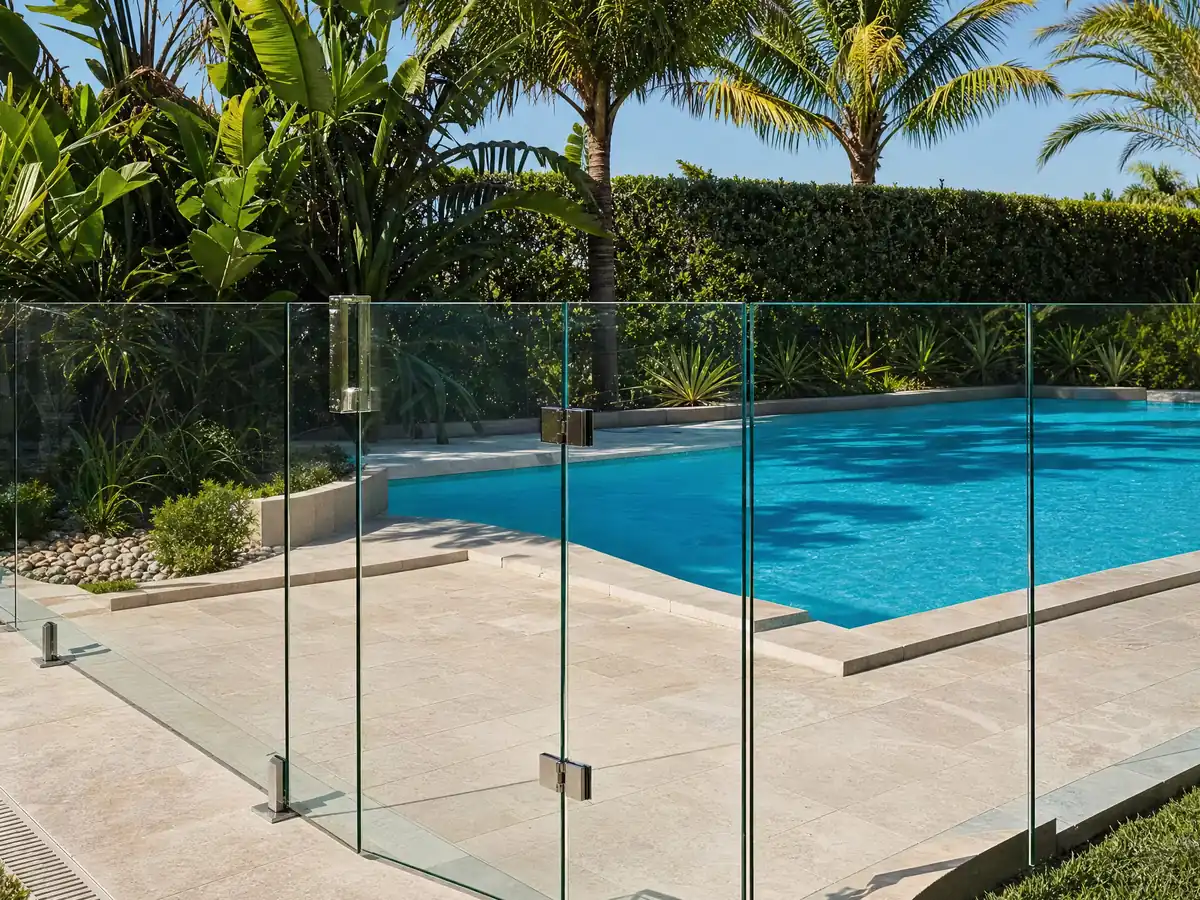
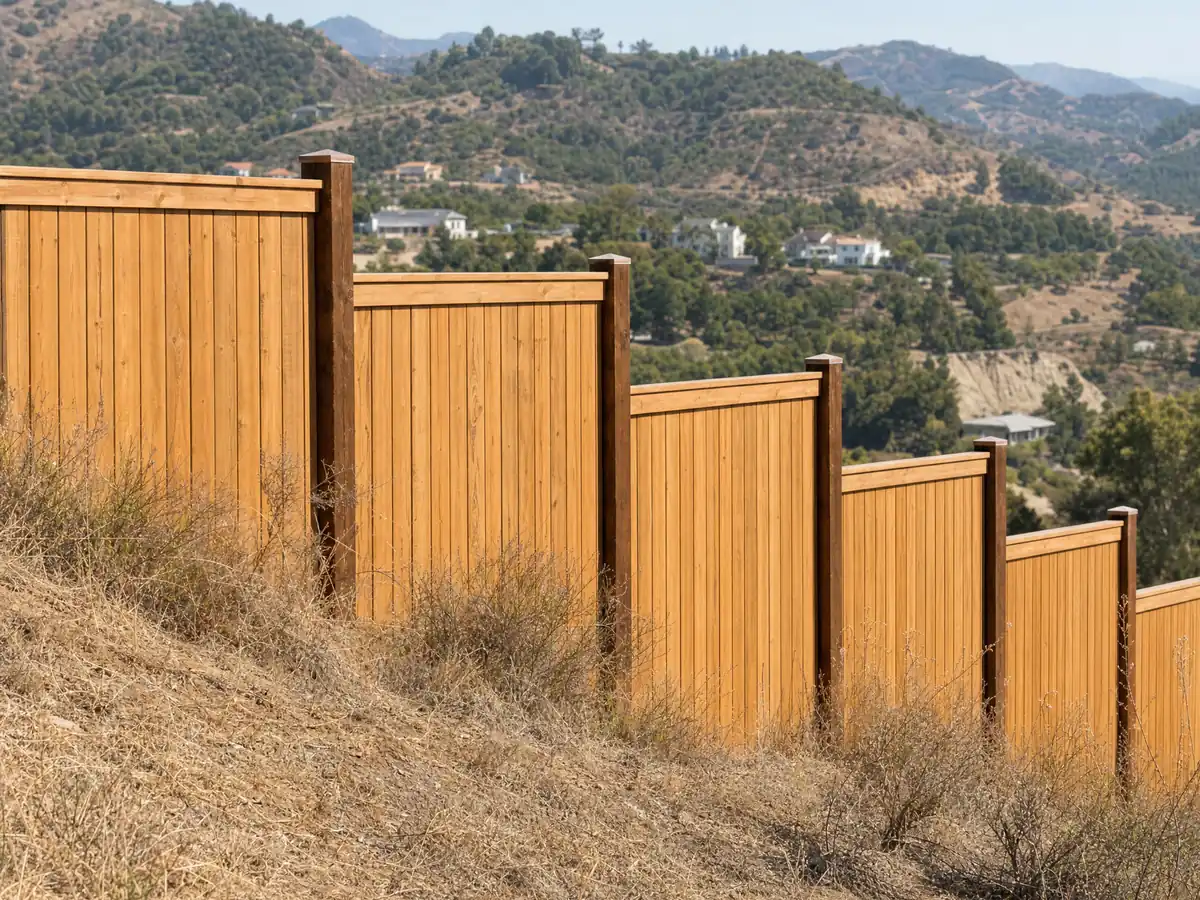
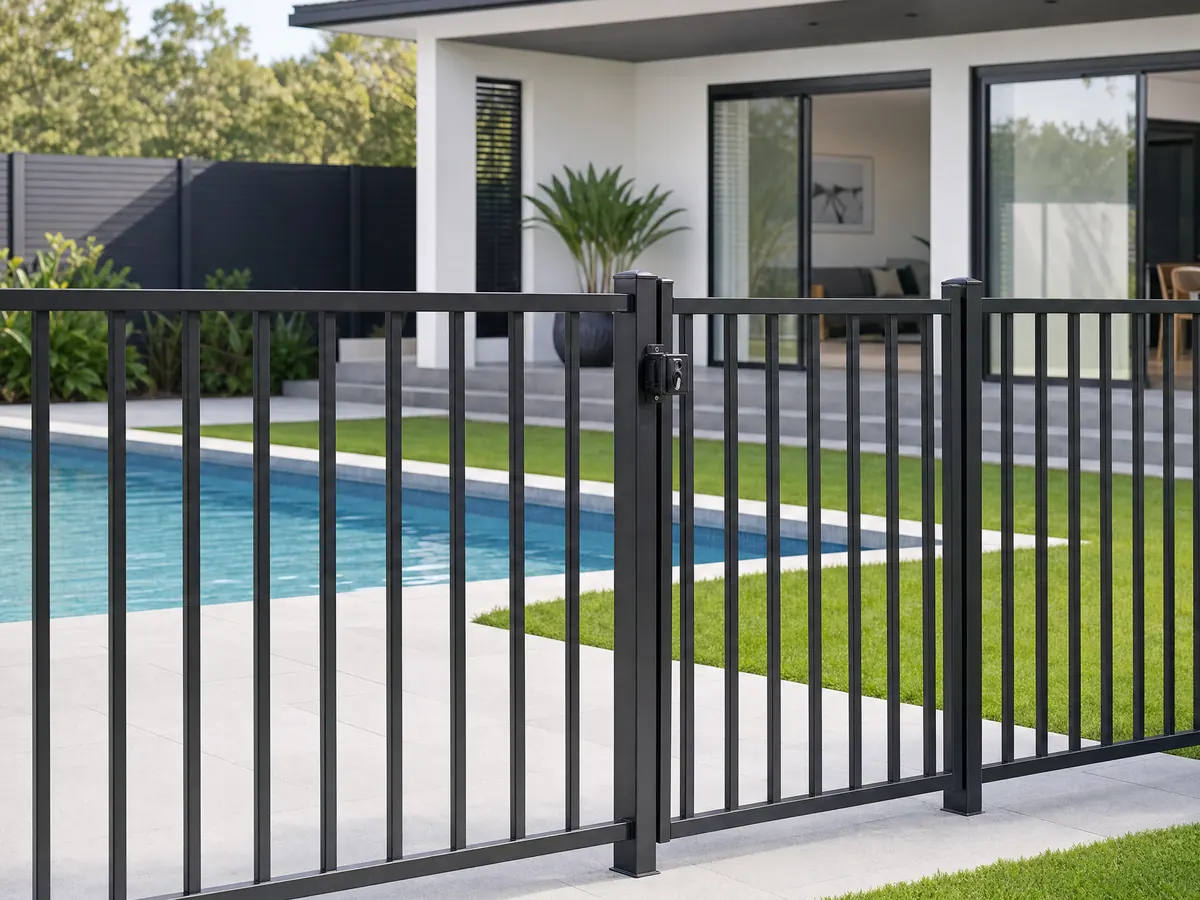
Where the Temple City fence figures come from
Our fencing price page holds the table of fence prices and where each came from, and how general contractors use subcontractors explains who builds what. A new fence often goes up with other work, and the Temple City rules for it are on the roofing page, the painting page and the kitchen remodeling page. For other cities to compare, read the fencing guides for Pasadena and Arcadia.
| What it covers | Typical range |
|---|---|
| Wood or vinyl privacy fence, 6 feet | $25 to $55 per linear foot |
| Chain-link | $12 to $30 per linear foot |
| Aluminum or ornamental iron | $35 to $85 per linear foot |
| Typical 100-foot backyard run | $2,500 to $5,500 total |
| Block walls, horizontal slat fences, gates and openers, hillside lots | Set by the written proposal |
Other work we manage in Temple City
Temple City fence questions, answered
How much should I pay for a fence installation?
Plan on about $25 to $55 per linear foot installed for a 6 foot wood or vinyl privacy fence, using our Los Angeles synthesis of Angi, HomeGuide, Thumbtack and Fixr. Aluminum or ornamental iron runs about $35 to $85. We found no Temple City survey, and gates, old fence removal and slopes change the number, so a written proposal measured on your lot is the real price.
Do I need a permit to build a fence in Temple City?
Often not a building permit, but height and location rules always apply. Municipal Code 7-1-2.B exempts chain-link and wrought-iron fences up to 12 feet, masonry, concrete and wood fences up to 6 feet and retaining walls up to 4 feet without a surcharge. We found no fence handout or zoning approval page, so ask the counter before you order materials.
What is the maximum height for a backyard fence in Temple City?
Six feet, as we read the code. Municipal Code 9-1N-3 allows a wall, fence or security gate up to 6 feet on any part of an R-zoned lot except the front yard and a corner lot's driveway visibility area. Height is measured from the highest adjacent grade in interior side and rear yards. That text is from the GoCodebook mirror, so confirm it with Planning.
Can I put up a 7 foot fence in Temple City?
Not as we read the code. The zoning ceiling on side and rear yards is 6 feet, and the building permit exemption for wood fences stops at 6 feet as well, apart from an 8 foot wood fence that is at least 60 percent open. A request above 6 feet is a question for Planning before any posts are set.
How much does 200 ft of fencing cost?
About $5,000 to $11,000 for a 6 foot wood or vinyl privacy fence at our $25 to $55 per foot Los Angeles range, which is our arithmetic, not a quote. HomeGuide shows $4,000 to $12,000 for 200 feet, though it states no method. Corners, gates, removal of the old fence and any block or iron sections change the total.
What are the new fence rules in California in 2026?
We could not verify a statewide fence rule change for 2026, so we name none. What governs a Temple City fence is local: the 36 and 42 inch front yard limits, the 6 foot limit elsewhere, the cutback triangles and the building permit exemptions. The City says it has no designated fire hazard zone, so a fire-zone fence rule is not expected on most lots.
Does my neighbor have to pay for half the fence in California?
Often in part, but not automatically. Civil Code 841 presumes adjoining owners share equally the cost of building, maintaining or replacing a boundary fence unless they agreed otherwise in writing, and the owner planning the work must give 30 days' written notice. A court can order less than an equal share if that would be unjust, so talk first and write down the deal.
What if I don't get a permit to build a fence?
The code text we read gave no Temple City penalty for an unpermitted fence, so none is stated here. Municipal Code 7-1-2 says a permit issued without plan review does not stop the building official from asking for plans later, and zoning height limits apply to every fence. Ask the counter what happens to a built fence that is out of compliance.
Can I put a privacy fence in my front yard?
Not a solid one. A front yard wall, fence or hedge stops at 36 inches when it obscures the view and 42 inches when it does not, under Municipal Code 9-1N-3.C. The exception is a parcel whose neighbor's house or garage sits farther back, where a fence up to 6 feet is allowed but may not come closer to the front lot line than the neighbor's building.
Plan your fence project in Temple City
Give us the street, which yard the fence goes in and whether the lot is a corner or has a grade change. We measure it against the City's height and cutback rules before we phone you.