
Flooring Installationin San Gabriel, CA
Flooring installation in San Gabriel usually means working in an old house: about 75 percent of homes predate 1980, so test old vinyl and baseboard paint before tear-out. The City pages we read name no flooring permit rule, so ask the Building Division, and treat structural subfloor, plumbing and wiring changes as separate questions.
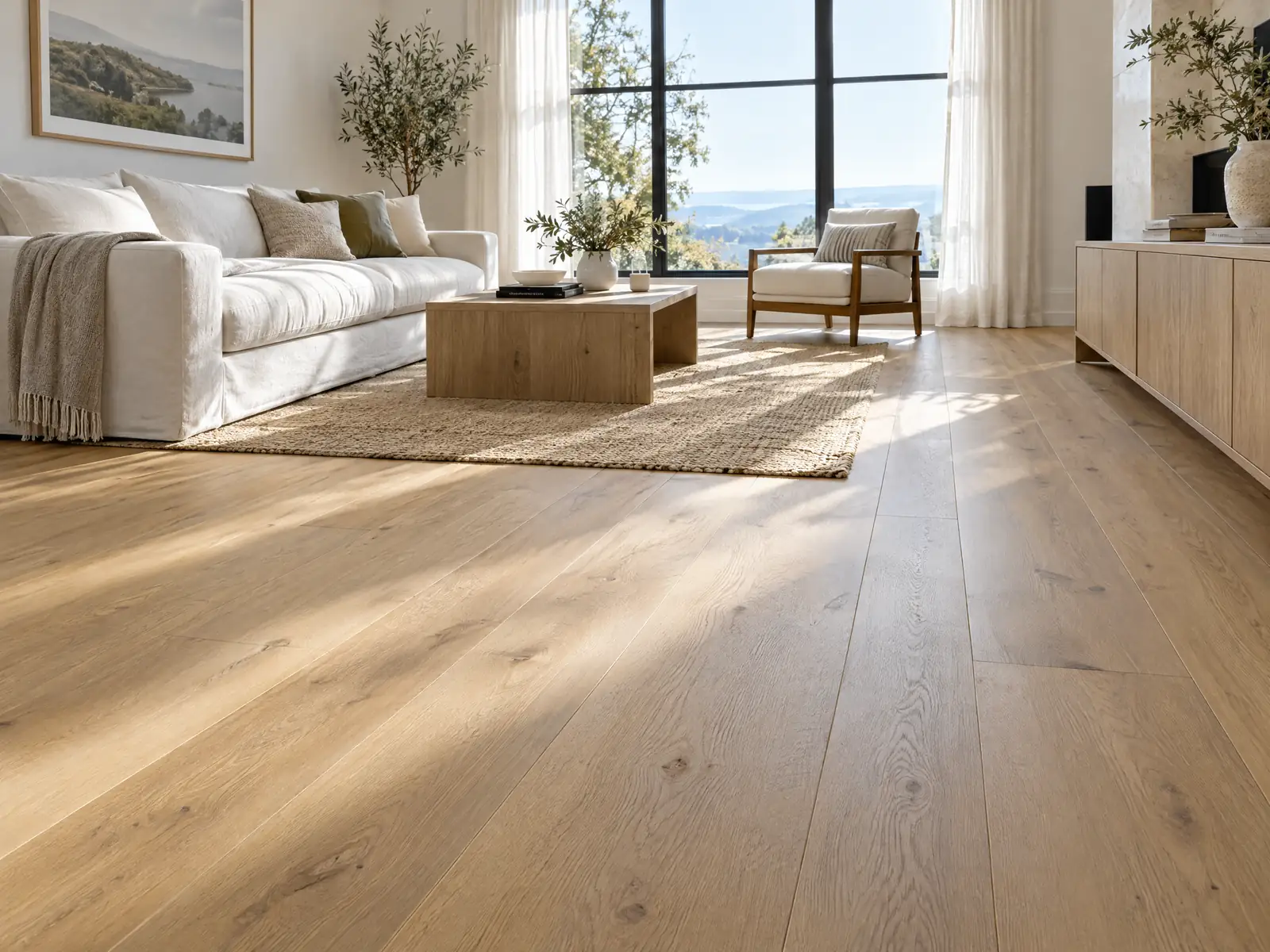
San Gabriel grew up around a mission, and its floors show the sprint that followed. Mission San Gabriel Arcangel was founded in 1771, the City incorporated on April 24, 1913 with about 1,500 residents, and the population then climbed from 2,640 in 1920 to 7,224 in 1930, 11,867 in 1940 and 20,343 in 1950. The City's Housing Element, which charts Census estimates for 2014 to 2018, puts 17.1 percent of homes at 1939 or earlier, 18.7 percent in the 1940s and 16.5 percent in the 1950s, so the floor under your feet is probably a 1940s or 1950s floor with newer layers on top.
MDG Builders, CSLB #1040337, is the general contractor on a job like this: we write the scope, take the questions below to San Gabriel's Building and Planning counter and schedule the trades, and a licensed flooring or tile subcontractor lays the floor itself. Materials and regional prices are on our flooring page, and the San Gabriel overview lists the other trades we manage in the city.
What San Gabriel's code, Planning and Building say about flooring work
Where flooring permits come from in San Gabriel: City of San Gabriel Community Development Department, Building and Safety Division and Planning Division.
- CSLB defines the C-15 Flooring and Floor Covering classification as preparing surfaces for and fitting carpet, vinyl, timber floors and other flooring materials, with finishing and repair of that work, and it excepts ceramic tile.
- The state permit-exempt list (2025 Residential and Building Code excerpt) exempts painting, papering, tiling, carpeting, cabinets, counter tops and similar finish work, and the City's bathroom remodel handout says replacing towel bars, mirrors, paint and floor coverings with no other work is maintenance needing no permit.
- San Gabriel's R-1 garage rule (Municipal Code 153.049) requires enclosed garage space for new houses and for additions over 25 percent of the existing floor area, with each new space at least 10 feet by 20 feet inside and independently accessible, no tandem credit and no carports. The internal dimension applies only to newly required garage space, not to existing garages.
- A San Gabriel garage converted to an ADU must have its garage door removed and replaced with windows, a door or matching design features, and needs no replacement parking (153.047(N)). A permit for demolition of a detached garage that is replaced by an ADU is reviewed and issued together with the ADU application.
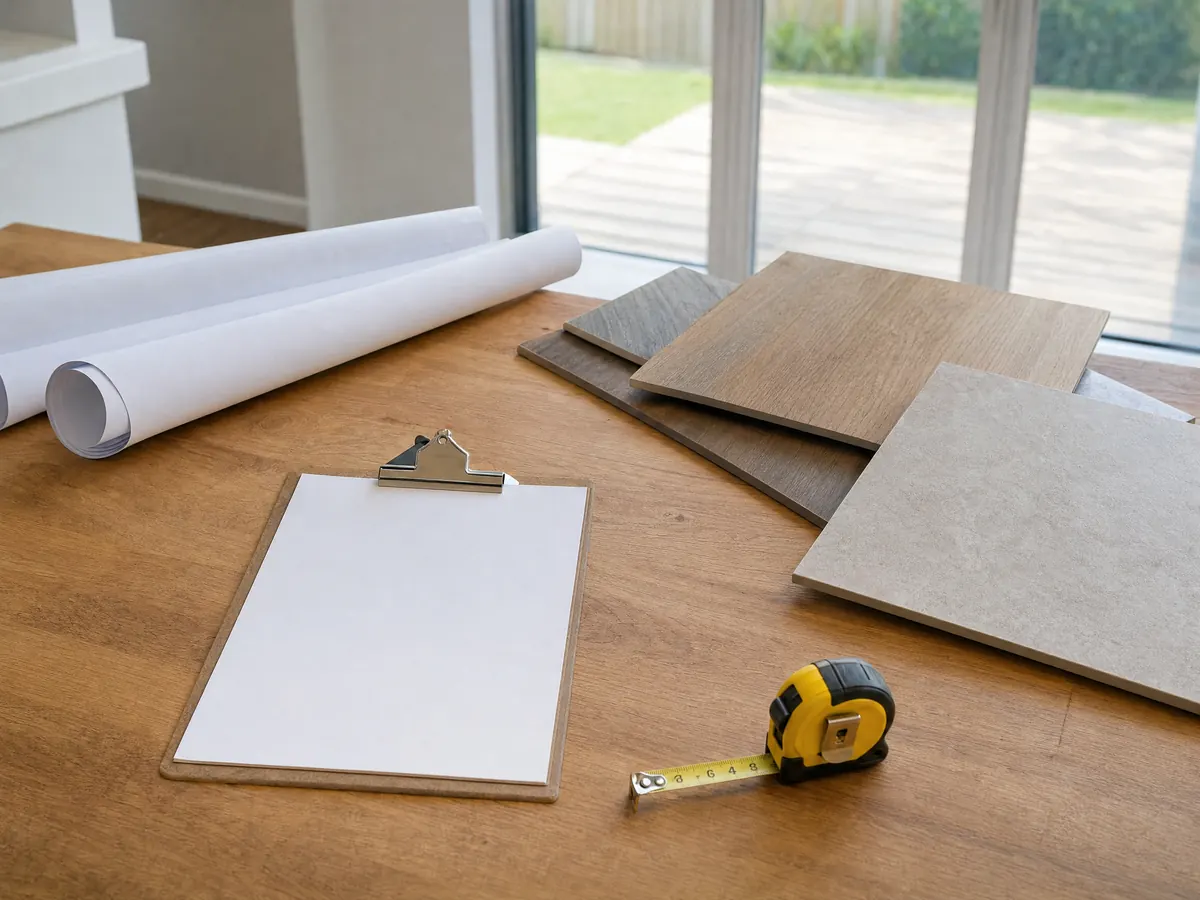
Is there oak under the carpet in a 1940s San Gabriel house?
Often enough that it is worth a look before anything is torn out. About 36 percent of San Gabriel's homes were built before 1950, according to the City's Housing Element, and a house that old can still have its original strip oak under newer carpet or vinyl. A floor register, a closet corner or a threshold edge shows what is down there without any demolition.
Whether the oak can be sanded depends on how much wood remains above the nail heads. If there is enough, refinishing is the cheaper route: Angi's Los Angeles pages put sanding and refinishing at $4 to $8 per square foot, against $12 to $22 installed for new solid hardwood. Angi does not publish its method, so we rate those figures medium to low in confidence.
A property on the City's Register of Cultural Resources needs an initial historic review before it is altered, and ordinary maintenance that needs no building permit is exempt (Municipal Code 153.600 to 153.631, read on GoCodebook, a third-party mirror of the code, so confirm with the City). We found no list of which homes are on the Register and nothing in the code that names interior floors, so ask Planning before changing the floors of a house that might be listed.
- How thick is the wood above the nail heads at a register or threshold?
- Would the house need historic review before the floors are changed?
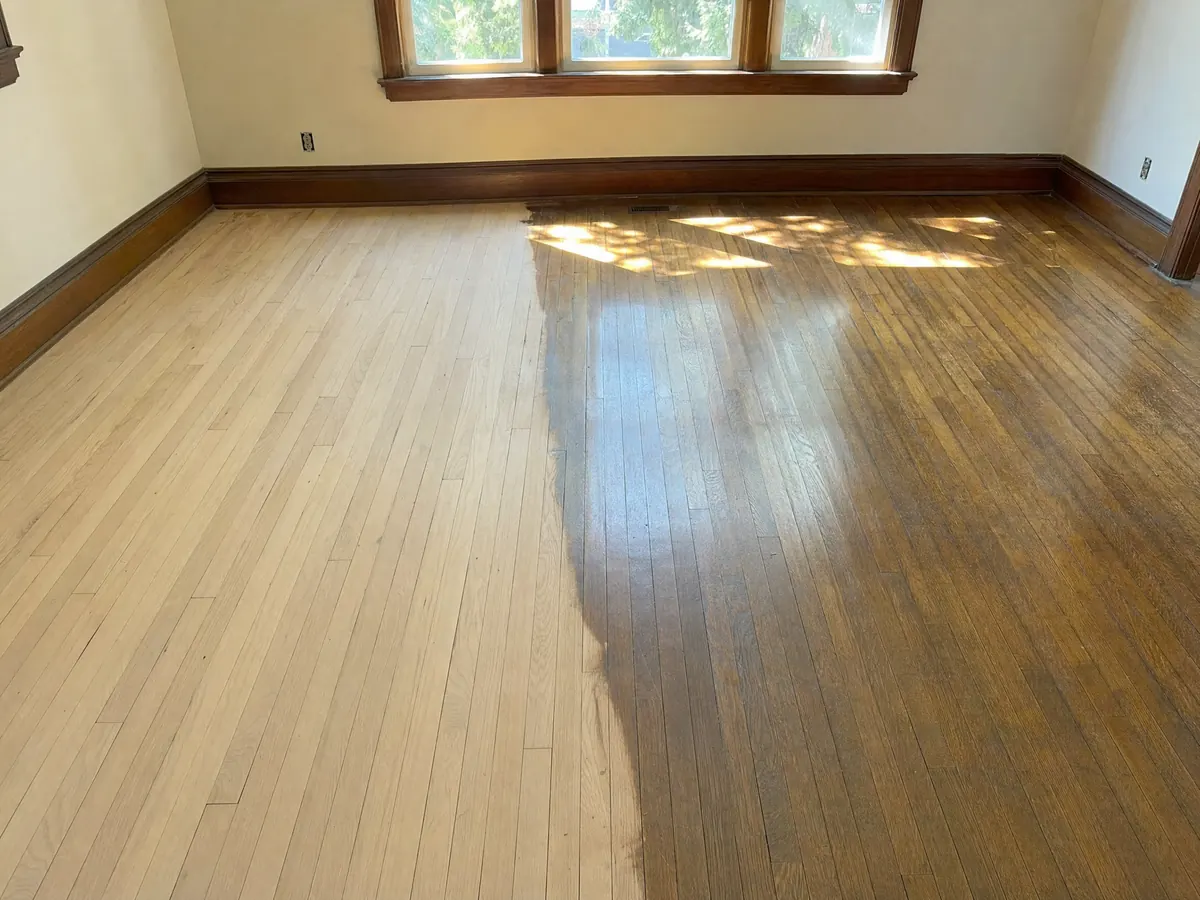
How do you check a pre-war raised floor before flooring installation in San Gabriel?
From underneath. Some of the 17.1 percent of homes built in 1939 or earlier probably sit on wood floors over a crawlspace, though the sources we read do not say how many, so the first visit should include the hatch. Look for water stains below a bathroom or kitchen, sagging near a heavy wall, powdery frass or tunnels that suggest insects, and any joist that was cut for a pipe decades ago.
What you find changes the scope. Sistering a joist or replacing sheathing is structural repair, and in San Gabriel altering or repairing a building is permit territory, so those items go to the Building Division as their own question. Ask for photographs of the framing before the new floor covers it, because nobody will see it again for decades.
A raised floor also gives the easiest chance to add insulation or correct a sloping room, so decide that before material is ordered, not after.
- Will someone photograph the joists and subfloor before the new floor goes down?
- How will a soft spot found during demolition be priced and approved?
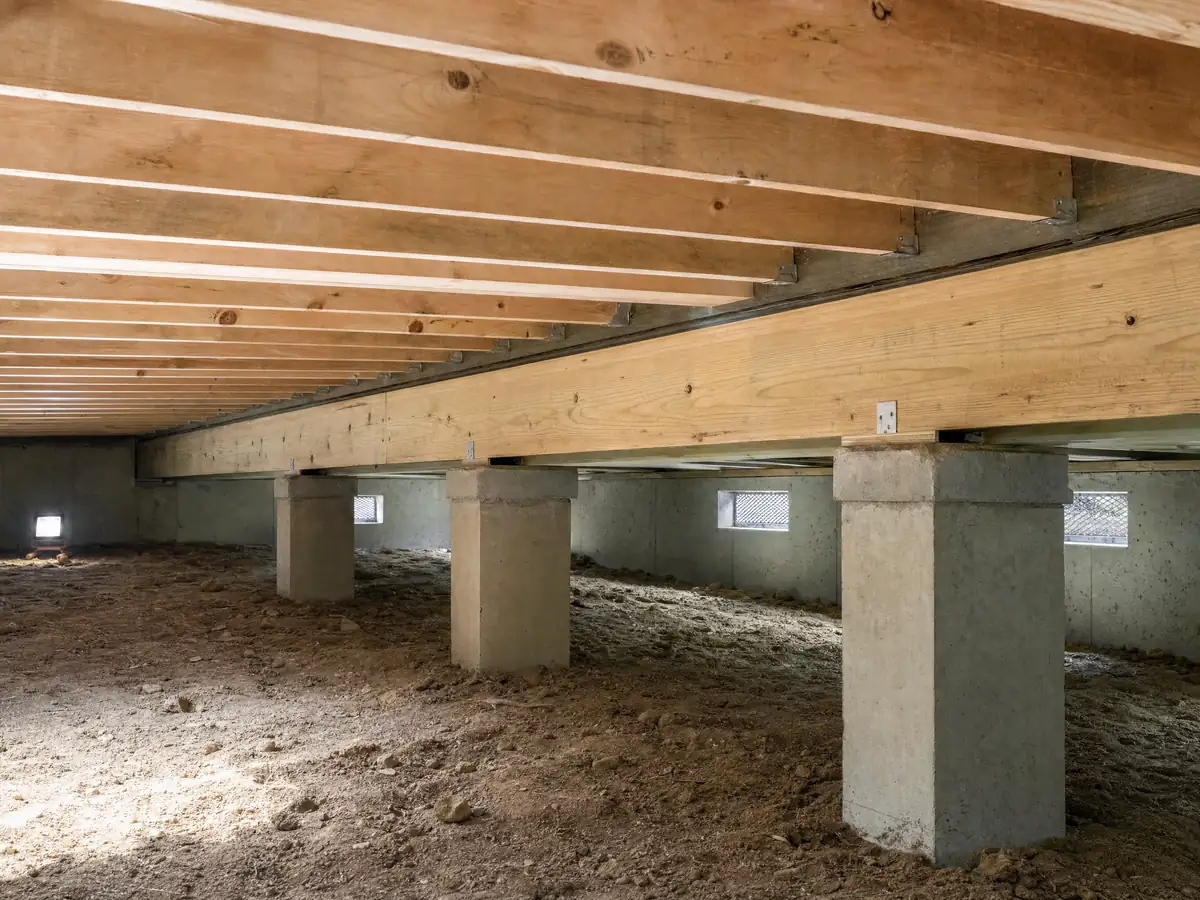
Do old vinyl tiles and baseboard paint need testing before flooring removal in San Gabriel?
Yes, test first. OSHA's asbestos standard for construction, 29 CFR 1926.1101, says asphalt and vinyl flooring installed by 1980 should be treated as asbestos containing unless testing shows otherwise. With about 75 percent of San Gabriel's homes older than 1980, the black adhesive under a worn vinyl floor deserves a lab sample before anyone sands or scrapes it.
Paint is the second test. EPA's Renovation, Repair and Painting rule covers housing built before 1978 and requires anyone paid to disturb paint there, general contractors included, to be certified. Small jobs that disturb 6 square feet or less of paint per room indoors are exempt, but pulling and scraping baseboards and door casings in an older room can pass that line quickly.
Bring the results to the estimate. If a layer tests positive, ask who removes it and how it is disposed of, and keep that line separate from the flooring price.
- Has the old vinyl or its adhesive been sampled, and where is the lab report?
- Does the crew hold EPA lead-safe certification for rooms built before 1978?
- Who is responsible for hauling away anything that tests positive?
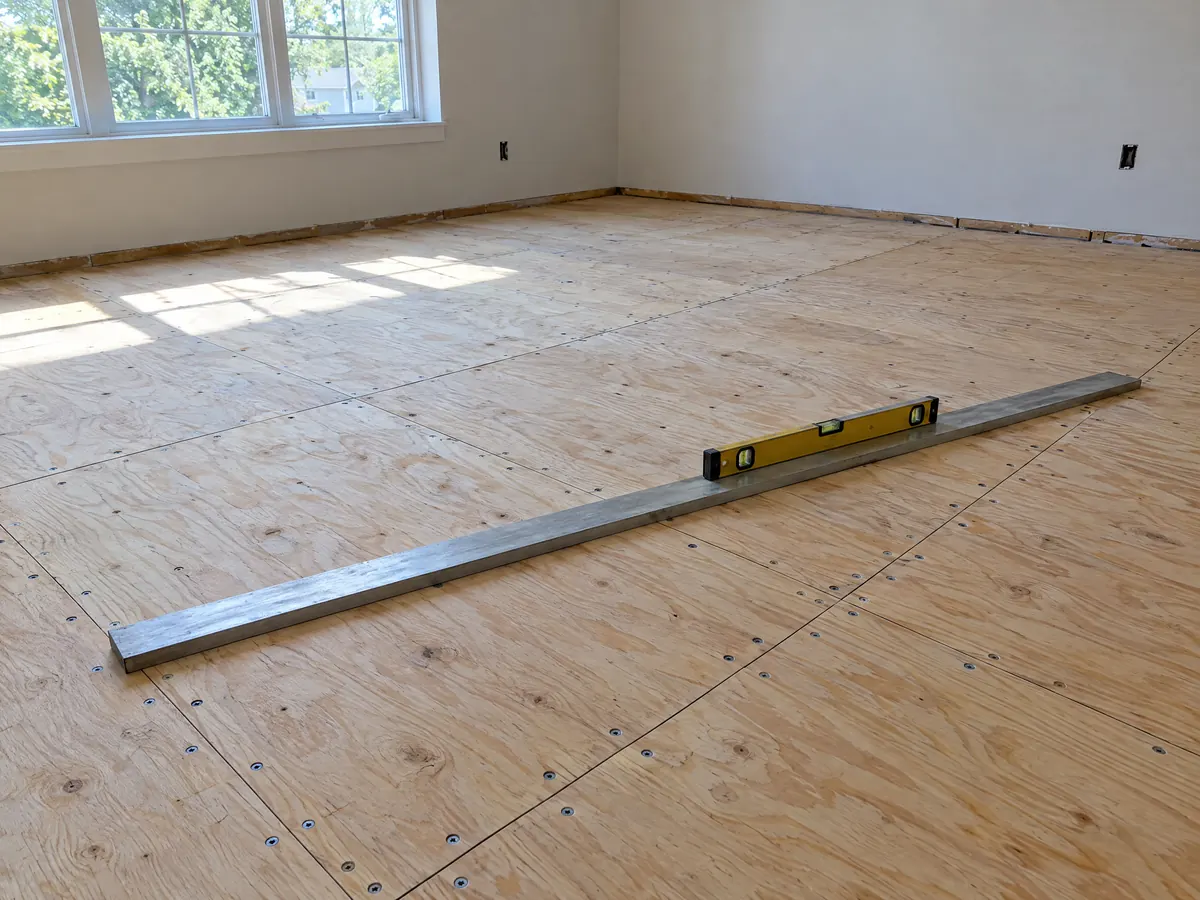
Does a flooring contractor need a permit to replace floors in San Gabriel?
Probably not for the finish floor alone, but get the answer from the City. The state's permit-exempt list, as one city's 2025 copy reads, includes painting, papering, tiling, carpeting, cabinets and similar finish work, and San Gabriel's bathroom remodel handout calls replacing floor coverings with no other work maintenance that needs no permit. That handout cites the 2019 codes, though, and San Gabriel amends the exempt list in Municipal Code 150.002(B) by striking the fence and retaining wall entries. The 2022 numbering of that list was not opened, so we describe the change in words and confirm the rest by phone.
A permit question does arise when the floor job moves other things: structural subfloor repair, relocated plumbing, new circuits, or a change to lighting or mechanical systems, which the City's residential submittal sheet says calls for a Title 24 energy analysis. Planning approval usually comes before the Building Division will issue anything.
The Building and Planning counter is in City Hall at 425 S. Mission Drive, (626) 308-2800. Its permits page lists walk-ins from 8 a.m. to 11:30 a.m. and appointments from 1 p.m. to 5 p.m., but older brochures give different hours, so confirm before driving over.
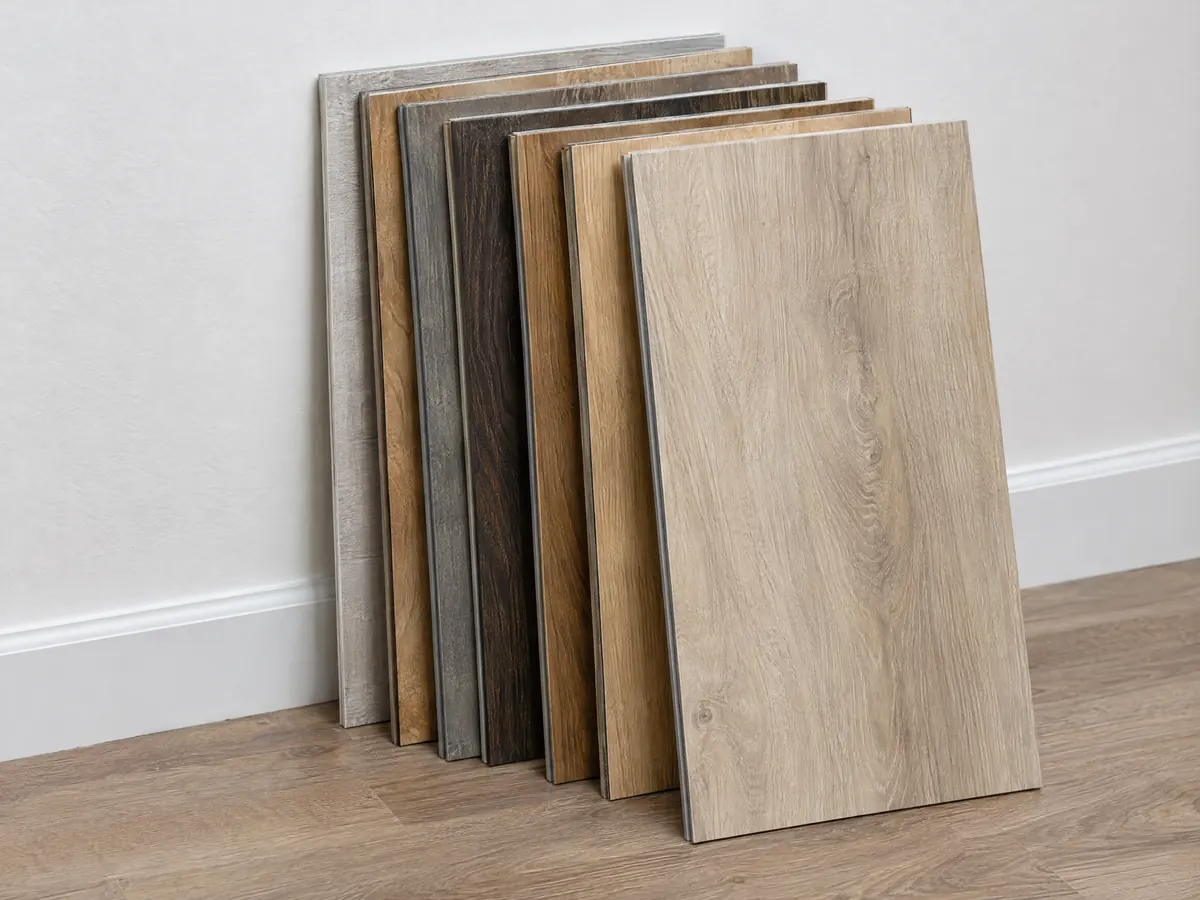
How do slab moisture, liquefaction zones and garage floors affect flooring in San Gabriel?
Rain is the easy part of the picture. NOAA's 1991 to 2020 normals for the San Gabriel Fire Department station show 15.67 inches a year, 12.75 of them from December through March, with 0.04 inch in July and none in August. The harder part is the ground: the state's liquefaction layer shows zones in the area, the City asks for a soils report for new foundation work in a zone, and our three sample points all landed outside it, so only Building and Safety can say whether a given parcel is mapped.
None of that tells you what a slab is doing. A test does. Probes sunk into the concrete read relative humidity (ASTM F2170), while a sealed dish of calcium chloride measures vapor emission (F1869), and each flooring and adhesive maker sets its own pass number. The wood flooring association's concrete subfloor guide strongly urges a vapor retarder of 0.13 perms or less under wood, so get readings in writing.
In a garage, a coating or tile leaves parking alone, and the 10 by 20 foot interior dimension in Municipal Code 153.049 applies to newly required garage space, not existing ones. Turning a garage into an ADU is different: the door must become windows or a door that matches the house, and no replacement parking is required (153.047(N)). Our garage conversion permit guide shows the steps for Los Angeles.
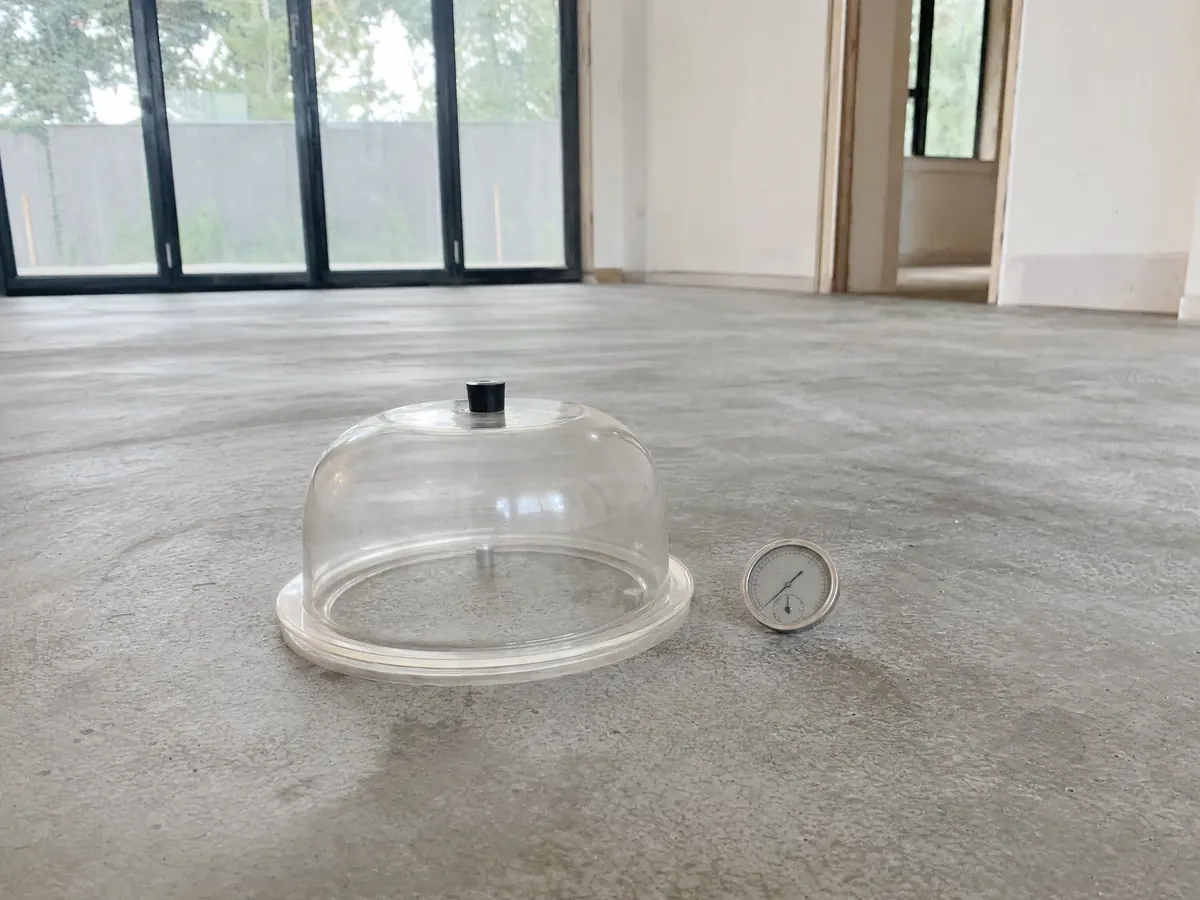
What does a flooring contractor charge for flooring installation in San Gabriel?
We found no San Gabriel price study, so here are the Los Angeles figures Angi posted in July and September 2026, which we rate medium to low in confidence because Angi shows no method. Labor runs $3 to $9 per square foot, engineered hardwood $10 to $18 installed and solid hardwood $12 to $22. Tearing out laminate costs $455 to $685 per 200 square feet.
Spread over a 1,200 square foot house, that multiplies out to roughly $12,000 to $21,600 for engineered plank and $14,400 to $26,400 for solid, before stairs, testing, slab grinding or subfloor repair. The house size is our example, not a San Gabriel average, and none of it is a bid. Our guide to flooring costs in California compares the materials.
A refloor can also trigger City rules. On remodels valued at $10,000 or more, Chapter 54 requires 65 percent of the waste to be diverted and collects a refundable deposit of 3 percent of project value or $10,000, whichever is less. CSLB puts wood, carpet and resilient floors under class C-15 and tile under C-54, so check the number with our license check guide.
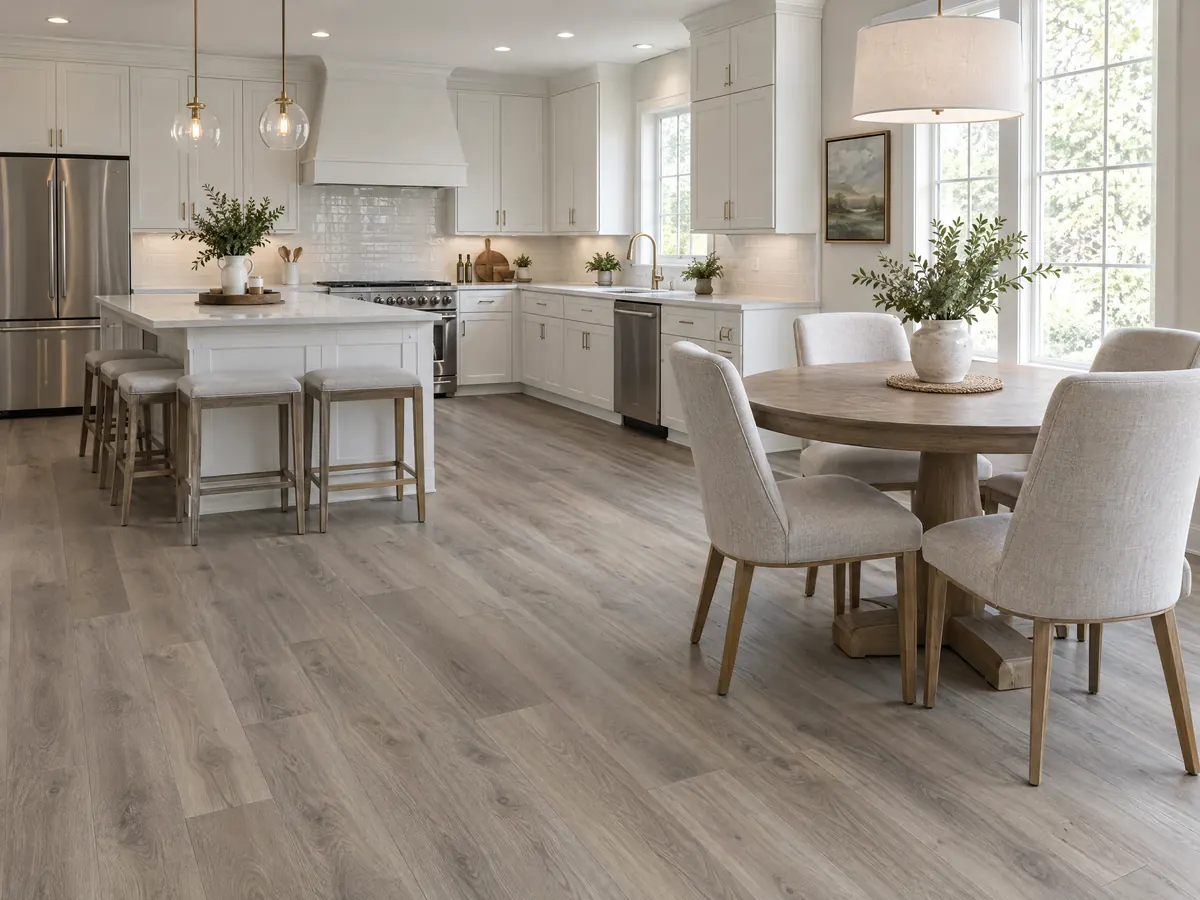
Can hard flooring go into a San Gabriel condo, apartment or rental unit?
Only with permission from whoever controls the building. The Census Bureau's 2024 five-year estimates count 6,261 of San Gabriel's 12,612 occupied homes as renter-occupied (49.6 percent) and 4,179 of 13,818 units in multi-unit buildings, so many floors have a neighbor underneath. Leases and association rules decide what is allowed, and California Civil Code section 4765 governs how an association handles an owner's architectural request.
The City adds two rules. Only an owner or a licensed contractor can pull a San Gabriel permit, and the submittal sheet says a rental must use licensed contractors for any permitted work. Construction is limited to 7 a.m. to 7 p.m. Monday through Friday and 8 a.m. to 4 p.m. on Saturday, with Sundays barred, though an owner working on his or her own property is exempt (Municipal Code 150.003). Tell neighbors before the saws start.
Tear-outs also create debris. San Gabriel Public Works says a roll-off bin or storage container placed in the public right of way needs a permit, while one sitting fully on private property does not, and large trucks parked on the street need approval from Engineering. Decide where the bin goes before the crew arrives, and ask the contractor to confirm the permit if the driveway is too short to hold it.
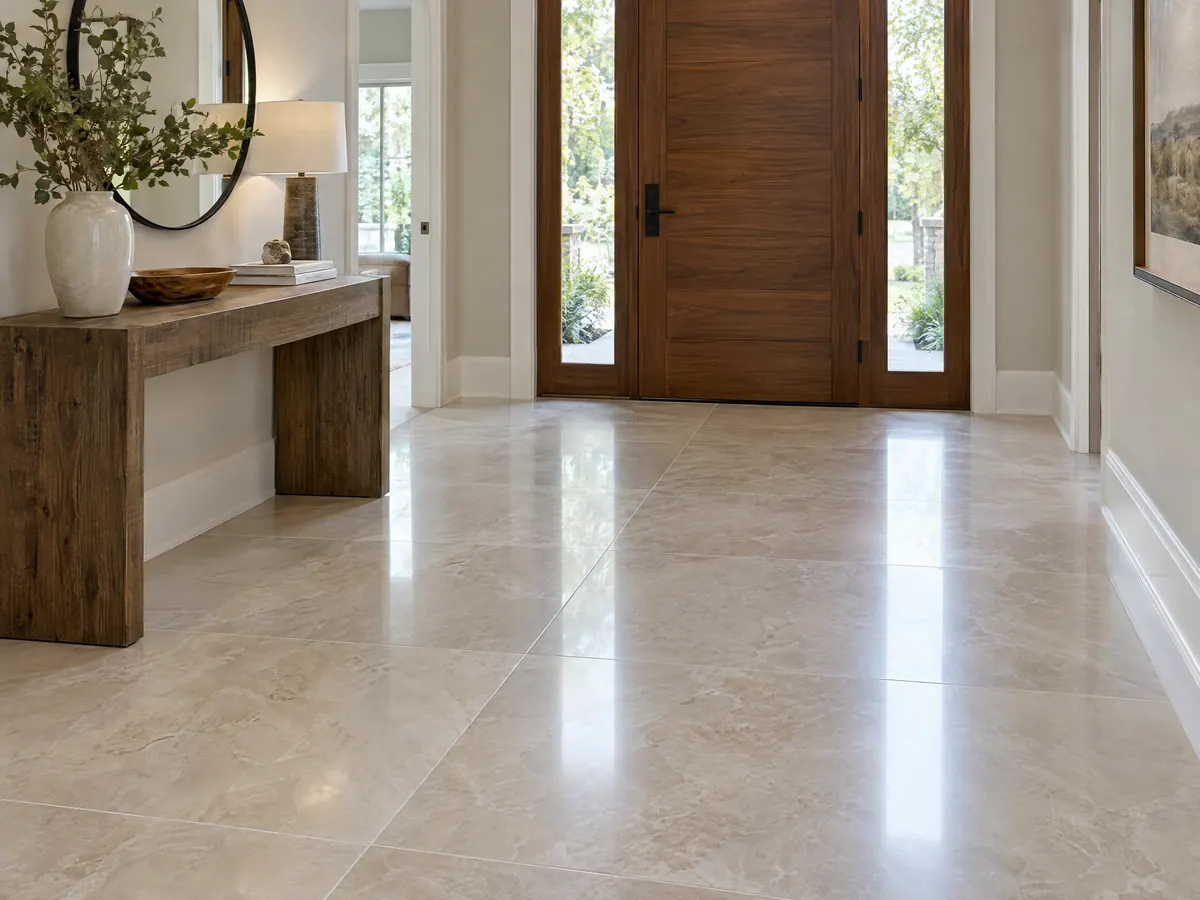
Flooring photos from San Gabriel and nearby communities
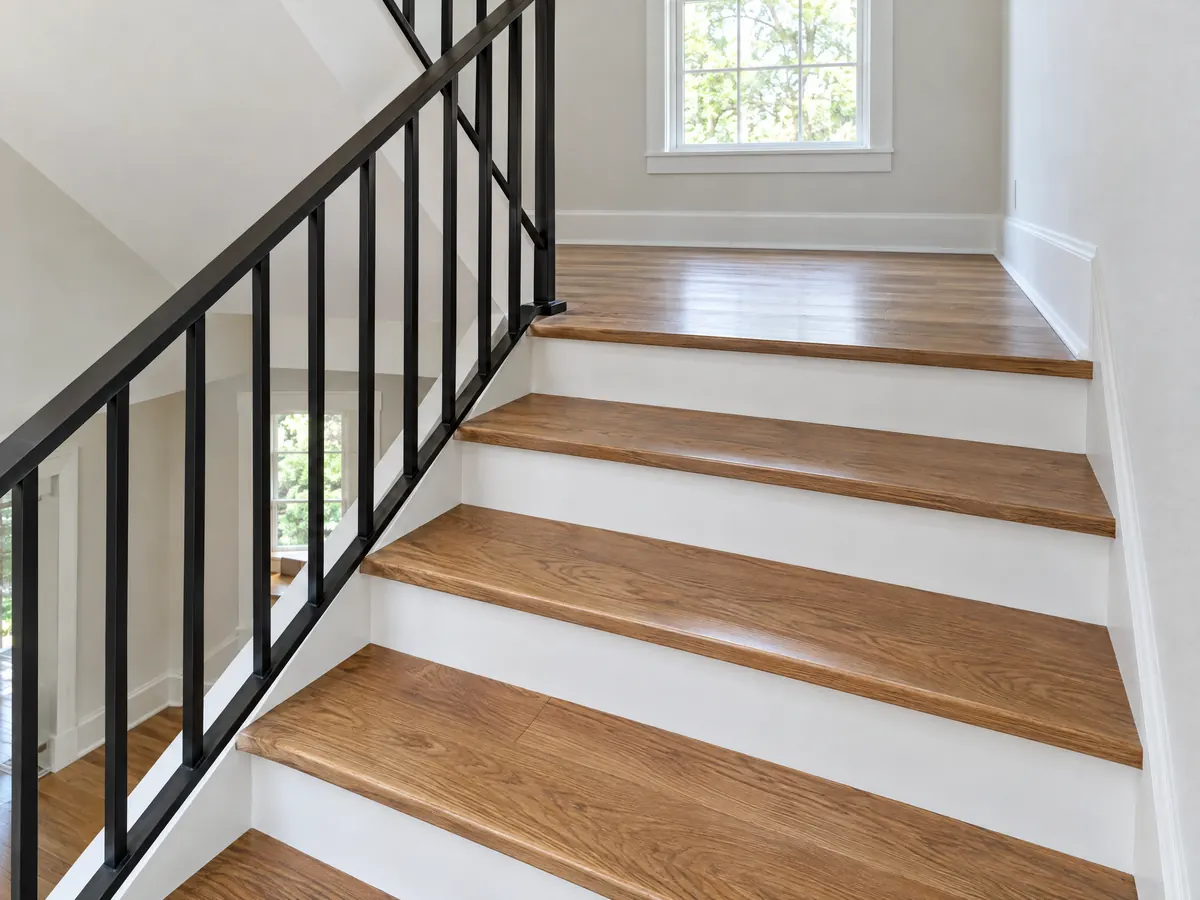
Floors around San Gabriel and its neighbors, from raised-floor framing and slab tests to finished oak, vinyl and tile. Tap a photo to enlarge it.
What flooring costs around San Gabriel
The ranges above are planning math from the regional research on our flooring page, not a San Gabriel bid, and our guide to how general contractors use subcontractors explains who does what on site. Compare nearby pages: flooring in Alhambra, flooring in Rosemead, flooring in Arcadia, flooring in Monterey Park and flooring installation in Los Angeles. In San Gabriel itself, see concrete work and decks. Temple City and South Pasadena also border the city.
| What it covers | Typical range |
|---|---|
| Installation labor only | $3 to $9 per sq ft |
| Solid hardwood, installed | $12 to $22 per sq ft |
| Engineered hardwood, installed | $10 to $18 per sq ft |
| Refinishing existing hardwood | $4 to $8 per sq ft |
| Laminate, whole project | $2,000 to $5,500 |
| Hardwood, whole project | $3,153 to $8,496 |
| Removing the old floor | $455 to $685 per 200 sq ft |
| Tile | No sourced Los Angeles range |
Other work we manage in San Gabriel
San Gabriel flooring questions, answered
Do I need a permit to replace flooring in San Gabriel?
Probably not for a finish floor alone, but ask the Building Division. The City's bathroom handout treats replacing floor coverings with no other work as maintenance, though it cites the 2019 codes. Structural subfloor repair, moved plumbing and new wiring are the likelier permit items. Call City Hall at (626) 308-2800 with your rooms and scope.
How much does it cost to have flooring professionally installed in San Gabriel?
Expect labor of $3 to $9 per square foot plus materials, using Angi's Los Angeles pages from 2026, with engineered hardwood at $10 to $18 installed and solid hardwood at $12 to $22. No San Gabriel study turned up and Angi shows no method, so confidence is medium to low. Removal, testing and subfloor repair are separate lines.
How much does it cost to install 1000 square feet of hardwood flooring in San Gabriel?
Using Angi's Los Angeles per-foot prices, 1,000 square feet comes to $12,000 to $22,000 in solid hardwood or $10,000 to $18,000 in engineered plank. We multiplied those numbers ourselves from a medium to low confidence source, so they are a planning estimate rather than a quote. Removing old laminate adds $2,275 to $3,425 over that area.
How much does it cost to refloor a 2000 square foot house in San Gabriel?
Roughly $20,000 to $36,000 in engineered plank or $24,000 to $44,000 in solid hardwood, which is double the 1,000 square foot figures from Angi's Los Angeles ranges. Planning math only. A 1940s house may add stairs, subfloor repair, slab testing or lead and asbestos work, each as its own proposal line.
Can you put flooring over concrete in San Gabriel?
Yes, once the slab is tested, flat and clean. The installer reads moisture with probes or a calcium chloride kit, compares the numbers with the flooring and adhesive maker's limit, grinds high spots and adds a vapor retarder if the product calls for one. Ask for the readings in writing, with the places where they were taken.
Why does moisture come through a concrete floor in San Gabriel?
Water vapor rises from the soil and passes through porous concrete. Most of the rain, 12.75 of 15.67 inches a year at the San Gabriel Fire Department station, falls from December through March, and a leak or planter beside a wall adds more. Weather does not predict a slab's reading, so a test does.
Can old vinyl flooring in a San Gabriel house contain asbestos?
Yes, and the eye cannot tell. OSHA says asphalt and vinyl flooring installed by 1980 should be treated as asbestos containing unless testing shows otherwise, and about 75 percent of San Gabriel homes predate 1980. Have a lab test a sample before any sanding, scraping or demolition, and ask who removes a layer that comes back positive.
Should I refinish or replace hardwood floors in an older San Gabriel house?
Refinish when enough wood remains above the nails to sand, which you can judge from a floor register or a threshold edge. Angi's Los Angeles pages list refinishing at $4 to $8 per square foot and new solid hardwood at $12 to $22, with medium to low confidence. About 36 percent of San Gabriel homes predate 1950.
What license does a flooring contractor need in San Gabriel?
A California contractor license in good standing: class C-15 covers carpet, resilient and wood floors, and tile is C-54. San Gabriel requires one to pull a permit, and out-of-town contractors also need a City business license. Check the number on CSLB's site, and remember that a deposit may not exceed $1,000 or 10 percent of the price, whichever is less.
Tell us about the floor and the house
Say which rooms are involved, what covers the floor now, when the house was built and whether it sits on a slab or a crawlspace, and we will line up sampling and moisture checks before the first visit.