
Flooring Installationin Monterey Park, CA
Flooring installation in Monterey Park starts with the ground, because the City calls its soils predominately expansive and a slab floor can move. The pages we read do not name finish flooring as a permit item, so ask the counter first. With 78.6 percent of homes built before 1980, test old layers before removal.
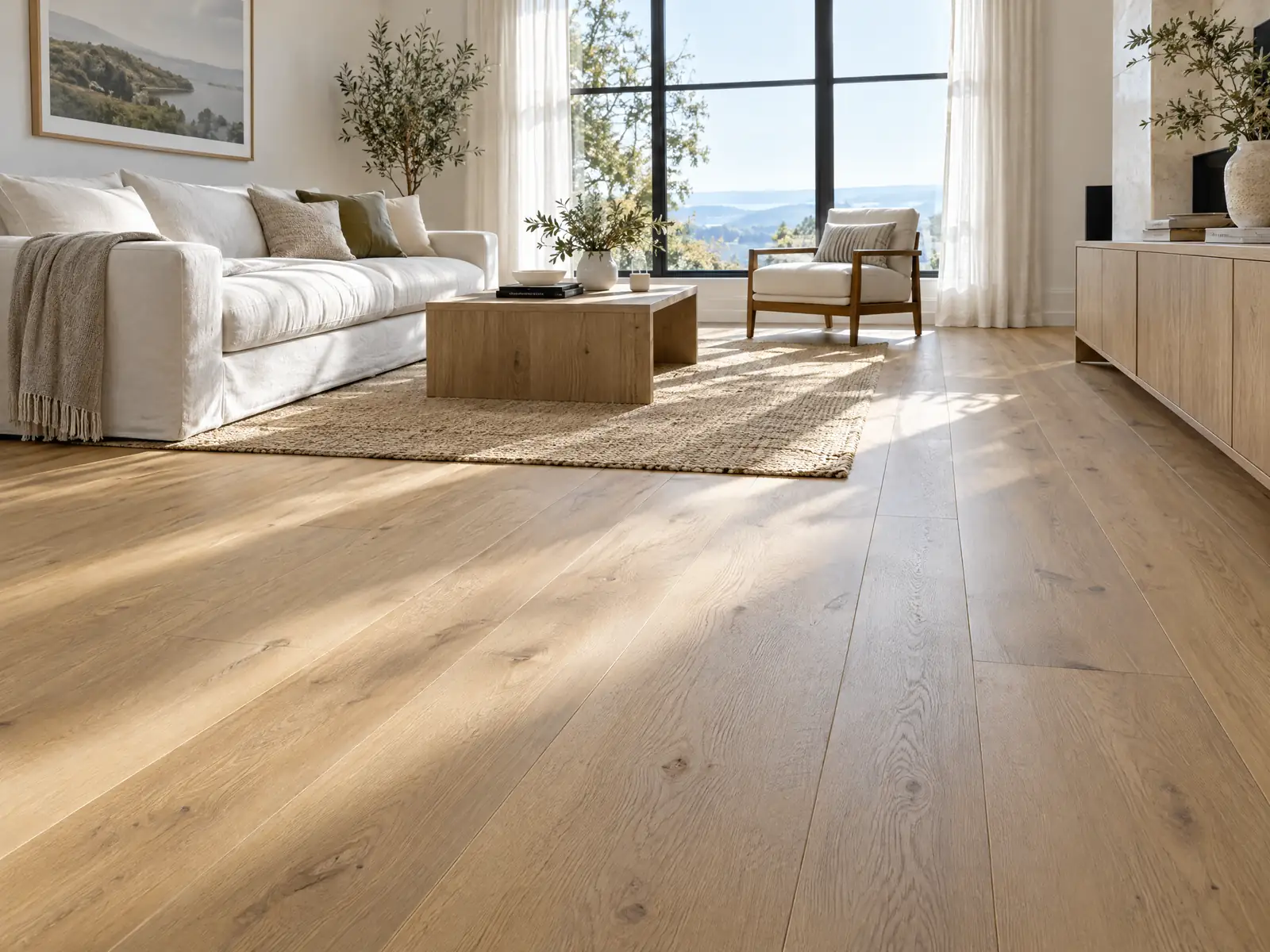
Monterey Park's floors come in layers of history. Ramona Acres, the first subdivision, opened in 1906 north of Garvey Avenue and east of Garfield, residents voted to incorporate on May 29, 1916, and Peter N. Snyder's Midwick View Estates of the 1920s stalled with the Depression, so little was built for almost two decades. After the war the central valley floor filled with tract homes, and the population went from 8,531 in 1940 to 20,395 in 1950 and 37,821 in 1960. The Census Bureau's 2020 to 2024 five-year tables count 22,134 homes with a median year built of 1963, and 27.5 percent date from the 1950s.
MDG Builders, CSLB #1040337, works here as the general contractor: we write the scope, carry the permit questions to Monterey Park Building & Safety and schedule the trades, while a licensed flooring or tile subcontractor lays the floor. Materials, license classes and regional prices are on our flooring page, and the Monterey Park overview lists the other trades we manage in the city.
What Monterey Park's codes say about flooring work
Where flooring permits come from in Monterey Park: City of Monterey Park Community Development Department, Building & Safety Division.
- Tiling, carpeting and similar finish work are exempt from a building permit under administrative provision 105.2 (item 7 in the 2019-cycle text).
- Removing more than 100 square feet of building materials in a renovation (which can include flooring removal) requires the contractor to notify the Air Quality Management District at least ten days ahead, per the City's demolition page.
- Slab-on-grade floors in Monterey Park sit on predominately expansive soils, which the City says swell when wet and, with drainage and irrigation, strongly affect how well properties hold up; the City's slab standard calls for a moisture barrier under a 2-inch sand layer.
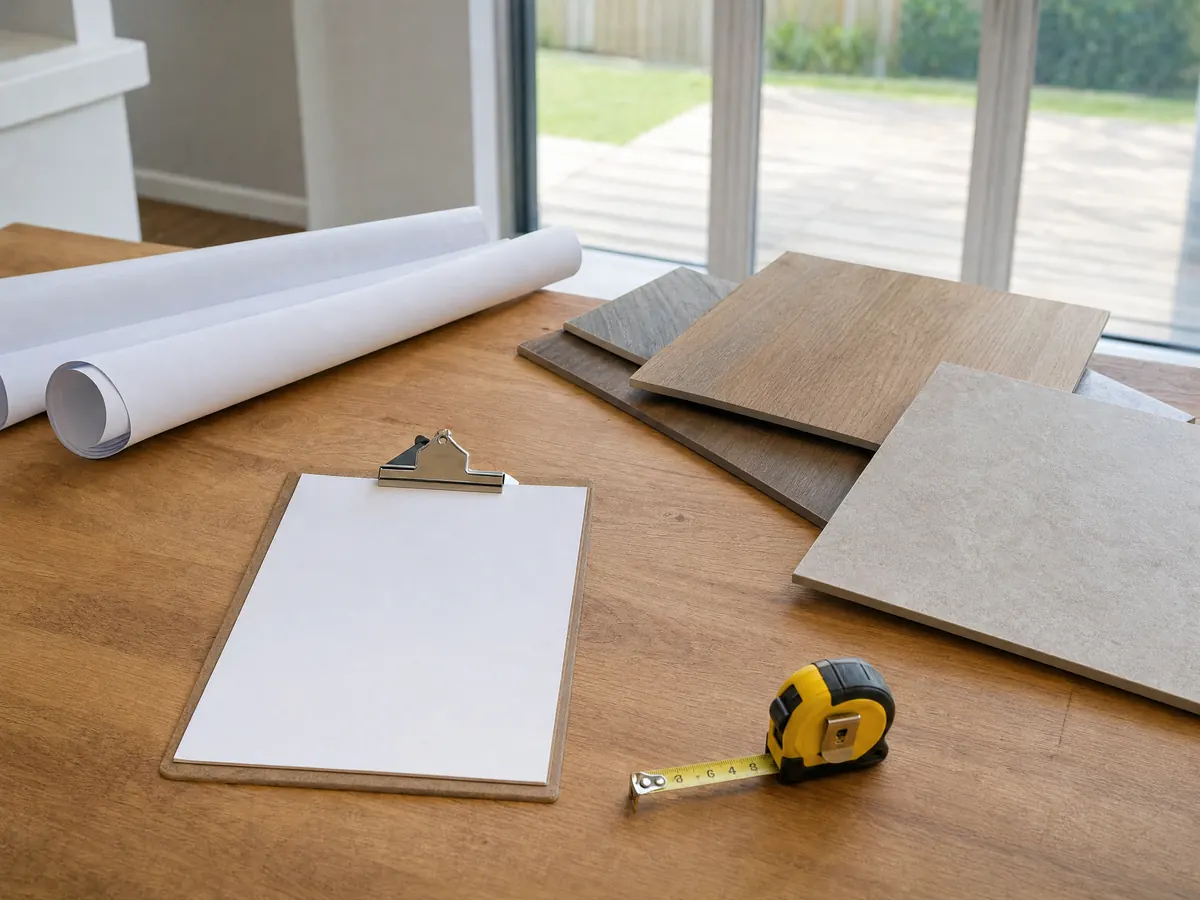
What does expansive soil mean for a tile or plank floor on a Monterey Park slab?
Quite a lot, because the City says so itself. Its guidance on expansive soil states that ground in Monterey Park is predominately expansive, that it swells when wet, and that drainage and irrigation strongly affect how a property holds up. For new slabs the City's standard, updated November 1, 2014, asks for at least 4 inches of concrete over 2 inches of sand on a moisture barrier, with No. 4 bars 15 to 18 inches apart each way. It covers only moderately expansive soil and warns that parts of the city may be worse.
A finished floor is the first layer to show what a slab is doing. Before ordering material, photograph any crack in the concrete, any tile that rocks and any gap that has opened at a door, since a new floor laid over a moving crack will copy it. The Safety Element adds that claystone and alluvium, the most common expansive soils here, can combine with hilly ground to cause settlement and slope creep, so a recurring problem near a hillside wall deserves a closer look than a hairline.
- Does the setter use a crack isolation layer or a decoupling membrane under tile?
- Who decides whether a slab is flat enough, and by what tolerance?
- Where does roof and yard water drain relative to the slab edge?
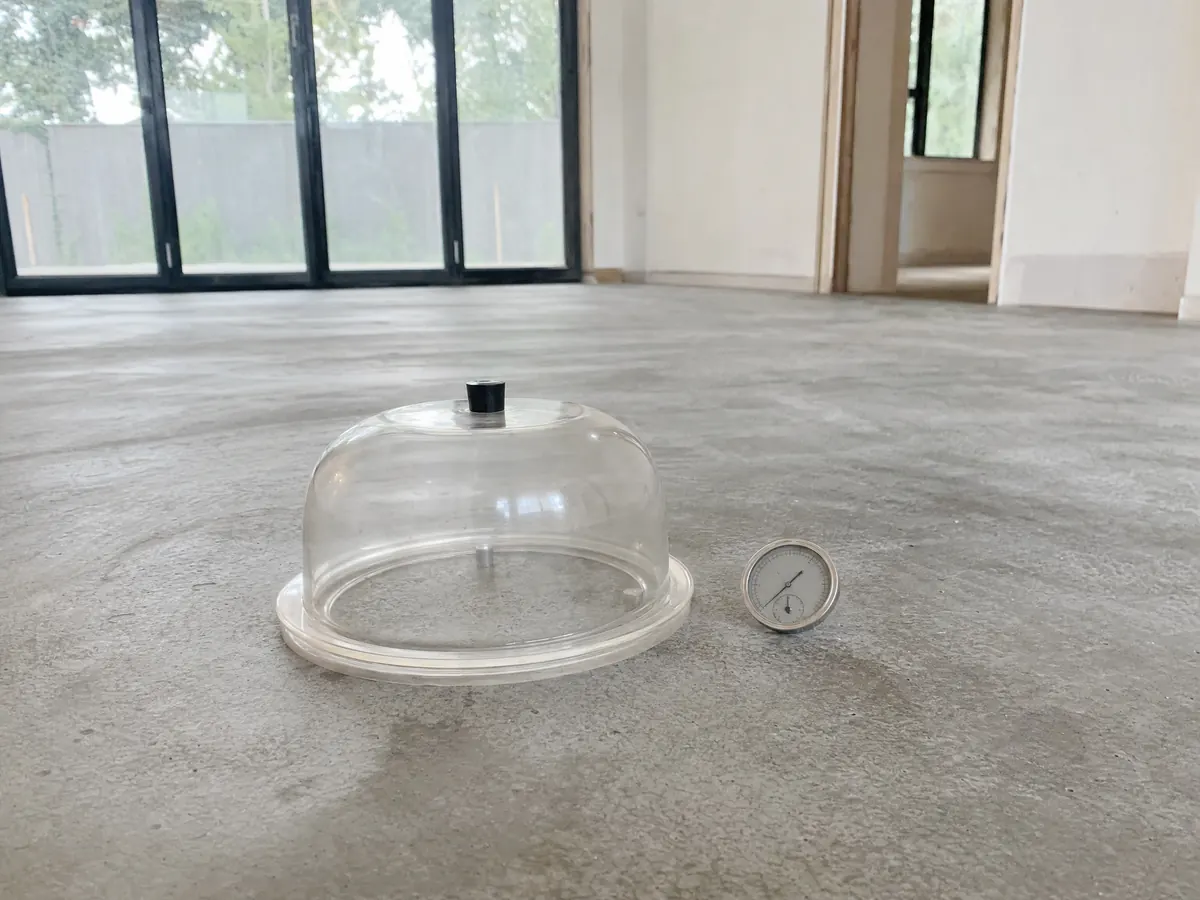
How should a Monterey Park slab be tested for moisture before flooring goes down?
With a reading taken on the slab itself, because the calendar proves nothing. NOAA's 1991 to 2020 normals for the San Gabriel Fire Department station, about 3.1 miles from the city point, show 15.67 inches of rain a year, with 12.75 inches of it from December through March. August averages none, yet vapor keeps rising from the soil under concrete all summer.
Two ASTM methods dominate. F2170 reads relative humidity inside the slab through probes set in drilled holes, and F1869 measures how much water a calcium chloride dish pulls from the surface beneath a sealed dome. Neither one carries a pass mark of its own, because the maker of each floor or adhesive publishes the limit, so gather those numbers before test day. The National Wood Flooring Association's guide to concrete subfloors also strongly recommends a vapor retarder of 0.13 perms or less under wood.
A house from 1963 predates the City's 2014 slab standard by half a century, so no one should assume a barrier sits under the concrete. Ask for probes near exterior walls, planters and downspouts, and get every reading on paper.
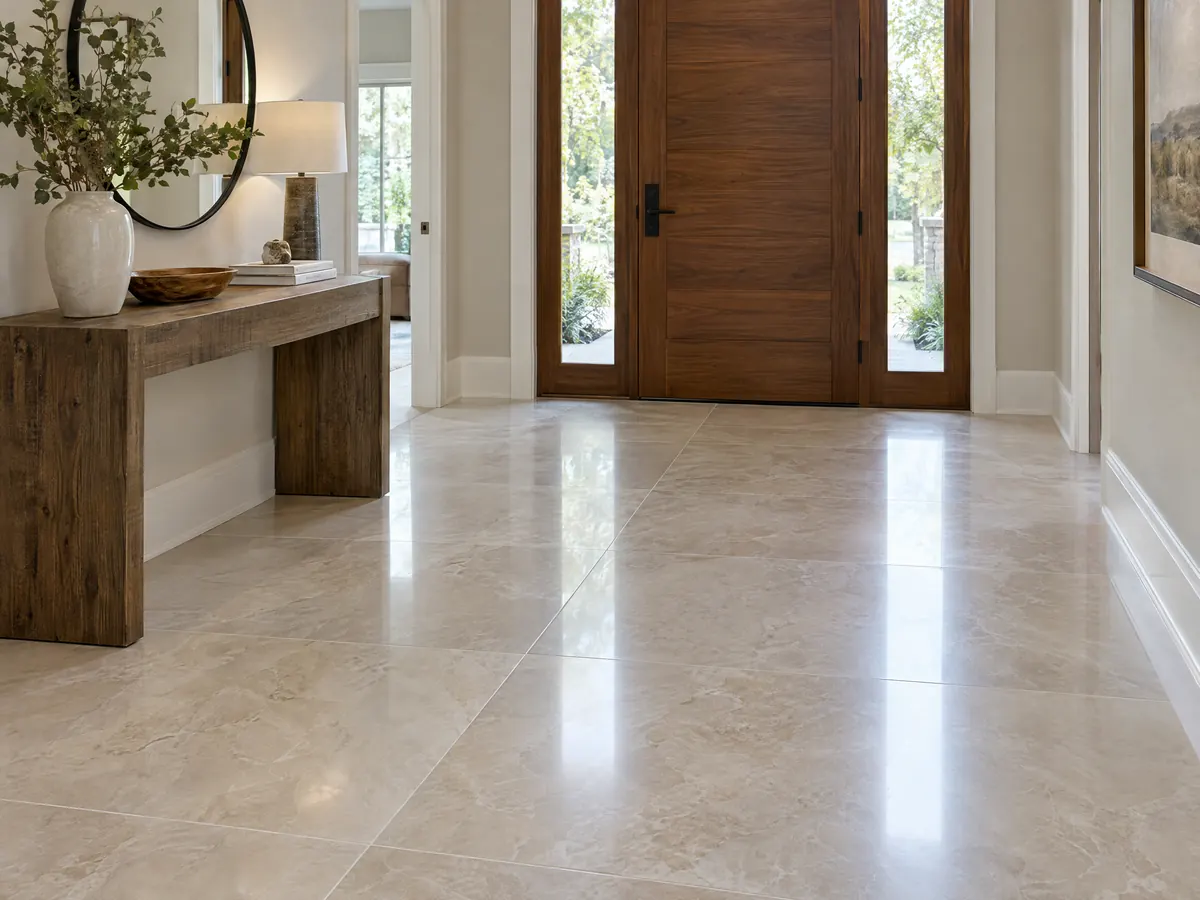
How much does a flooring contractor charge in Monterey Park, and which license is required?
We found no Monterey Park price study, so we borrow the Los Angeles ranges behind our flooring page from Angi's pages updated in July and September 2026: labor at $3 to $9 per square foot, engineered hardwood at $10 to $18 installed, solid hardwood at $12 to $22, refinishing at $4 to $8, and $455 to $685 per 200 square feet to remove a laminate floor. Angi does not publish its method, so we rate these medium to low in confidence.
Now run them on 1,200 square feet of living area. Engineered plank multiplies out to $12,000 to $21,600, solid hardwood to $14,400 to $26,400, and refinishing existing boards to $4,800 to $9,600. Removing an old floor over that area adds $2,730 to $4,110. Those are products of multiplication, not a quote, and subfloor repair, stairs, testing and slab work appear as separate lines. Our guide to flooring costs in California compares the materials.
California's contractors board puts carpet, resilient flooring and wood floors under class C-15 and tile under C-54. Check the number with our license check guide before paying a deposit.
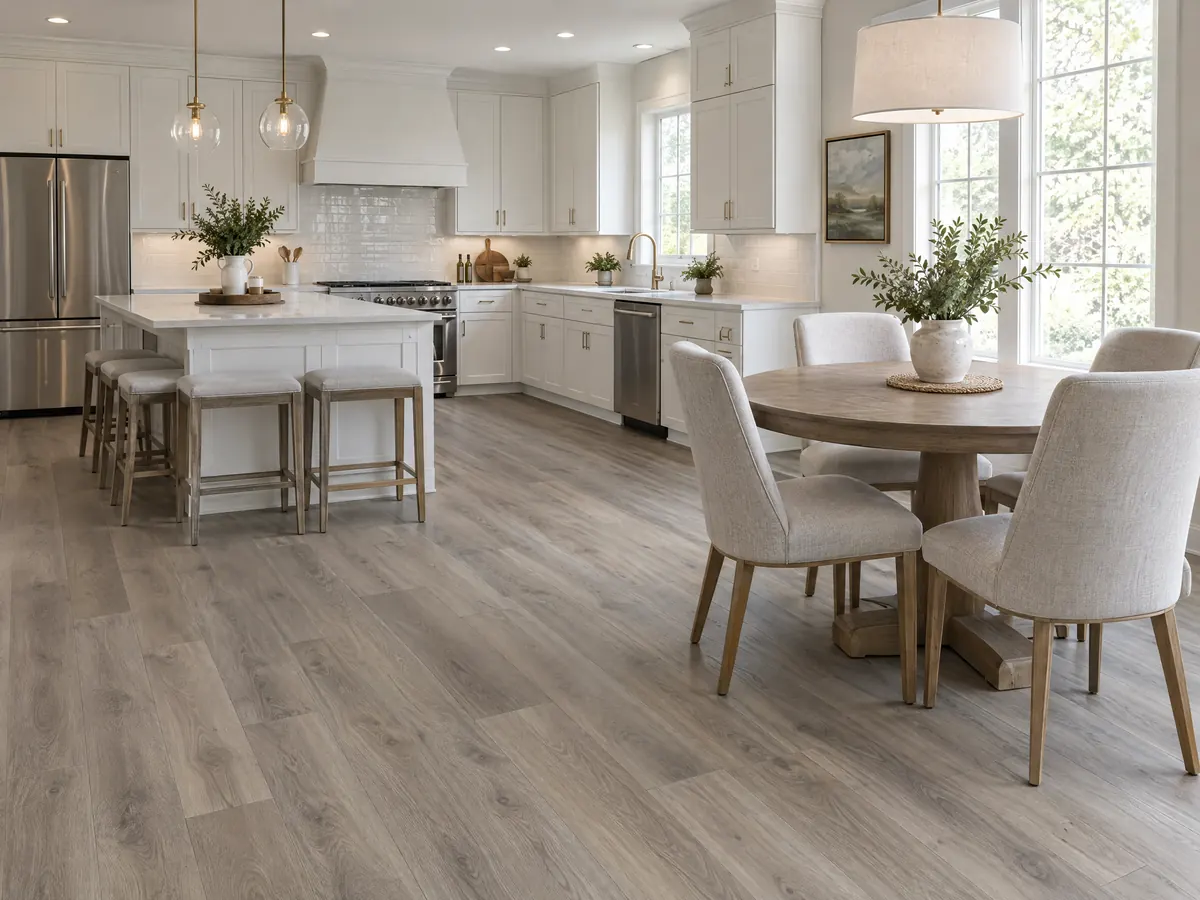
Does a new floor need a building permit in Monterey Park?
Probably not for the surface alone, but the answer comes with a label. The City's list of permit items names re-roofs, water heaters, window change-outs and drywall, and not finish floors. The exemption for tiling, carpeting and similar finish work, item 7 of section 105.2 in the 2019-cycle text (Ordinance 2165), never authorizes work that breaks another rule. A December 4, 2025 notice says the City approved adopting the 2025 code, but we did not find that ordinance, and we did not read the Municipal Code itself, so confirm the current exemption at the counter.
Joist or structural subfloor repair, moved plumbing and new wiring are the scopes that deserve a permit question every time. The City files remodels as Residential Building Alteration-Repair, and its fee schedule effective July 1, 2026 shows a permit fee of $484.77 at $10,000 of valuation, plus $67.58 to issue the first trade. Counter walk-ins run Monday to Thursday, 8:00 a.m. to noon, with appointments from 2:00 to 5:00 p.m.
Tear-out has its own rule. When more than 100 square feet of building material is removed in a renovation, State law requires the contractor to notify the Air Quality Management District ten days ahead, and the City's demolition page says a permit does not waive that duty.
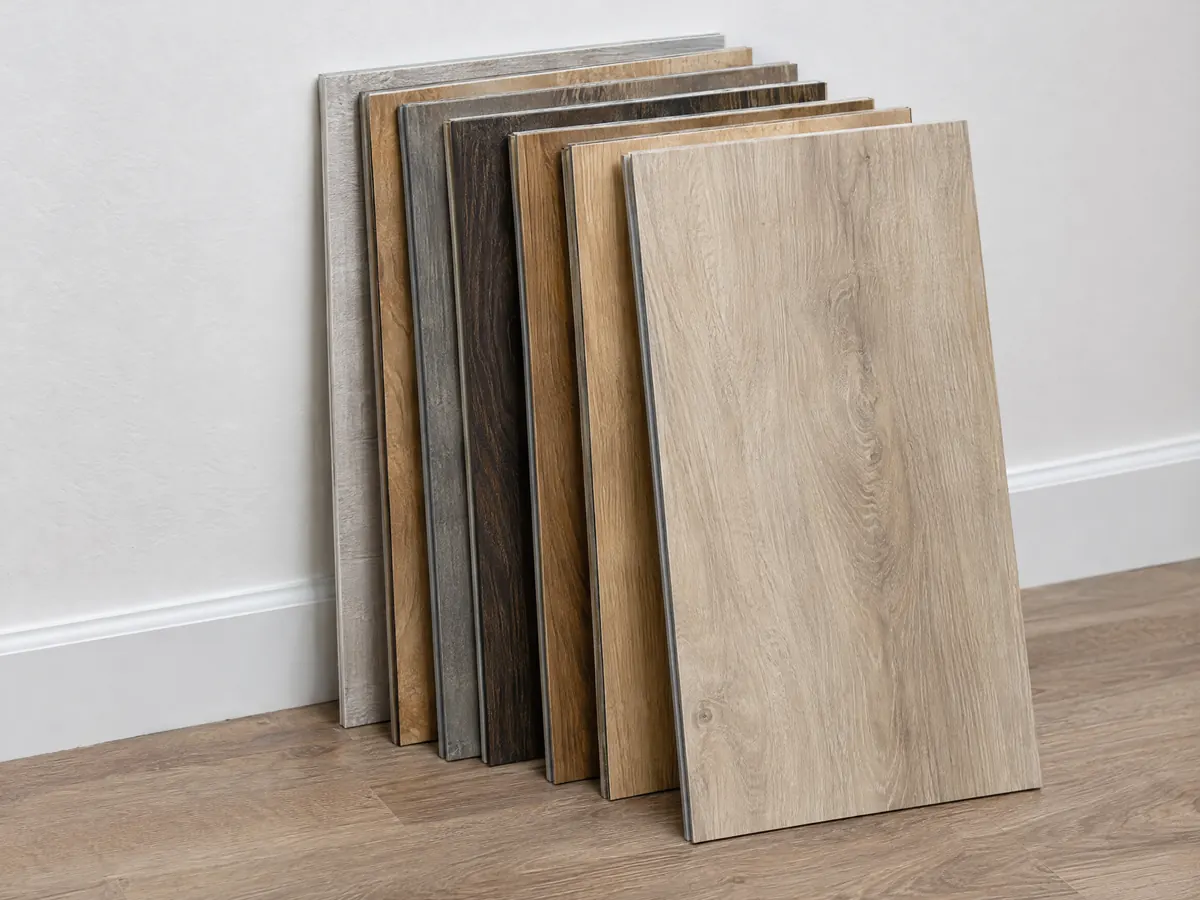
What could be under the old flooring in a Monterey Park house built before 1980?
Several layers, some of them regulated. The 2020 to 2024 tables show 17,389 of 22,134 homes (78.6 percent) built before 1980 and 9,957 (45.0 percent) before 1960, so vinyl, mastic and old paint are likely suspects. OSHA's construction asbestos standard treats asphalt and vinyl flooring installed no later than 1980 as asbestos containing unless a determination says otherwise, and it says flooring or its backing shall not be sanded.
That rule binds employers, but it shows what a careful crew will not do. A lab sample comes first, and the proposal says who removes a layer that tests positive.
Paint is the second test. The City's lead-based paint notice summarizes the federal rules for homes built before 1978, including the pamphlet a renovator must hand over, and warns that dry scraping or sanding makes lead dust, especially around windows, doors and stairs. A floor job that removes baseboards or door casings touches that paint.
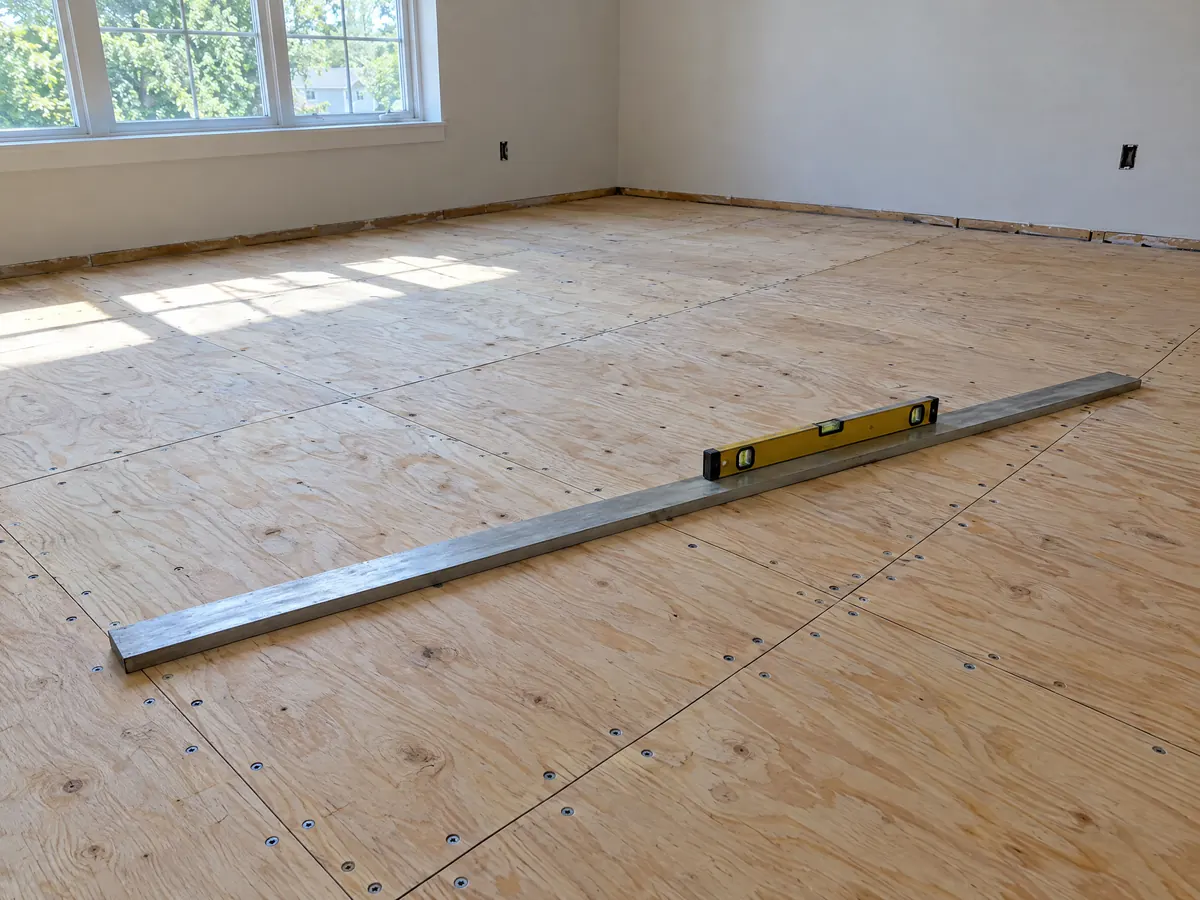
Raised floors in the Monterey Hills and Repetto Hills: what to check before new flooring
Hillside houses often sit on raised floors, and the ground under them has a record. The Safety Element says hillside soils here have failed in storms and earthquakes since the first hillside development in the 1920s, and that steep slopes along Abajo Drive gave way in the 1987 Whittier earthquake. Counting 212 evenly spaced points inside the city, 22 landed in State earthquake-induced landslide zones, a point tally rather than a parcel count.
For flooring, the crawlspace is the place to look. The City's code findings say the region is especially susceptible to termites and wood-attacking organisms, so probe sill plates and joist ends near vents, plumbing and the downhill wall before the subfloor is covered. Slope drains matter too: Municipal Code section 9.54 requires owners to keep terrace drains and down drains clear, and the City's hillside guide tells owners to have an engineer check horizontal cracks an inch wide and 10 to 15 feet long.
A floor that sags, bounces or smells damp on a slope is a structure question first and a finish question second.
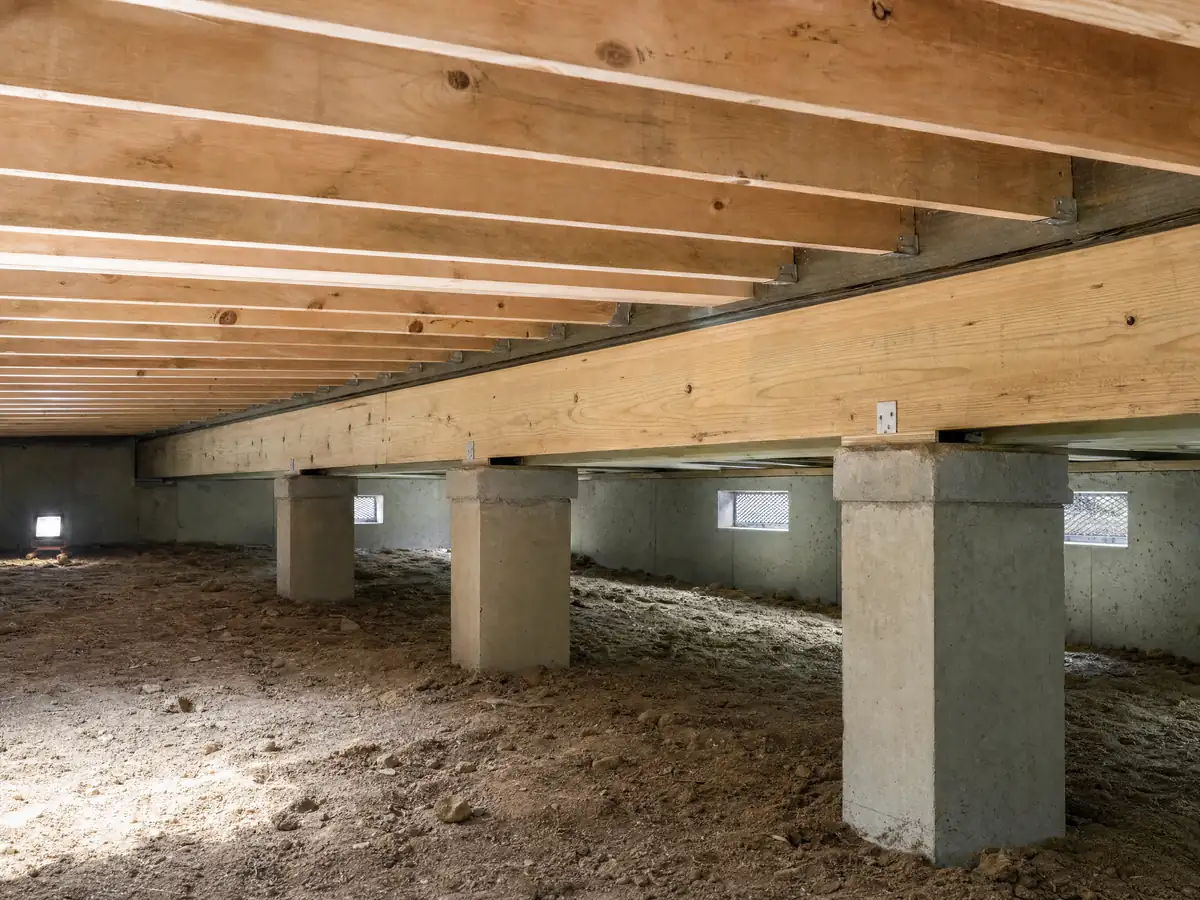
Can old wood floors in a Monterey Park home be refinished, and what applies in an apartment?
Often yes, when enough wood remains above the nails. The census tables count 1,091 homes from 1939 or earlier and 2,788 from the 1940s, and carpet may hide boards that are older than most owners. Check thickness at a floor register or an edge. Angi's Los Angeles pages list sanding and refinishing at $4 to $8 per square foot, while new solid hardwood runs $12 to $22 installed. The Los Angeles Conservancy says the City has no local historic preservation ordinance, so interior floors face no district review, though that comes from the Conservancy and Planning should confirm it.
Almost half of Monterey Park rents. Renters occupy 48.4 percent of the 20,646 occupied homes, and 5,298 homes (23.9 percent) sit in buildings of five or more units. Hard floors above another unit need written approval from the landlord or association, and California Civil Code section 4765 sets how an association must answer an owner's architectural request.
Crews may use saws, sanders and grinders from 7:00 a.m. to 7:00 p.m. on weekdays and 9:00 a.m. to 6:00 p.m. on weekends and holidays, according to the City's construction hours FAQ.
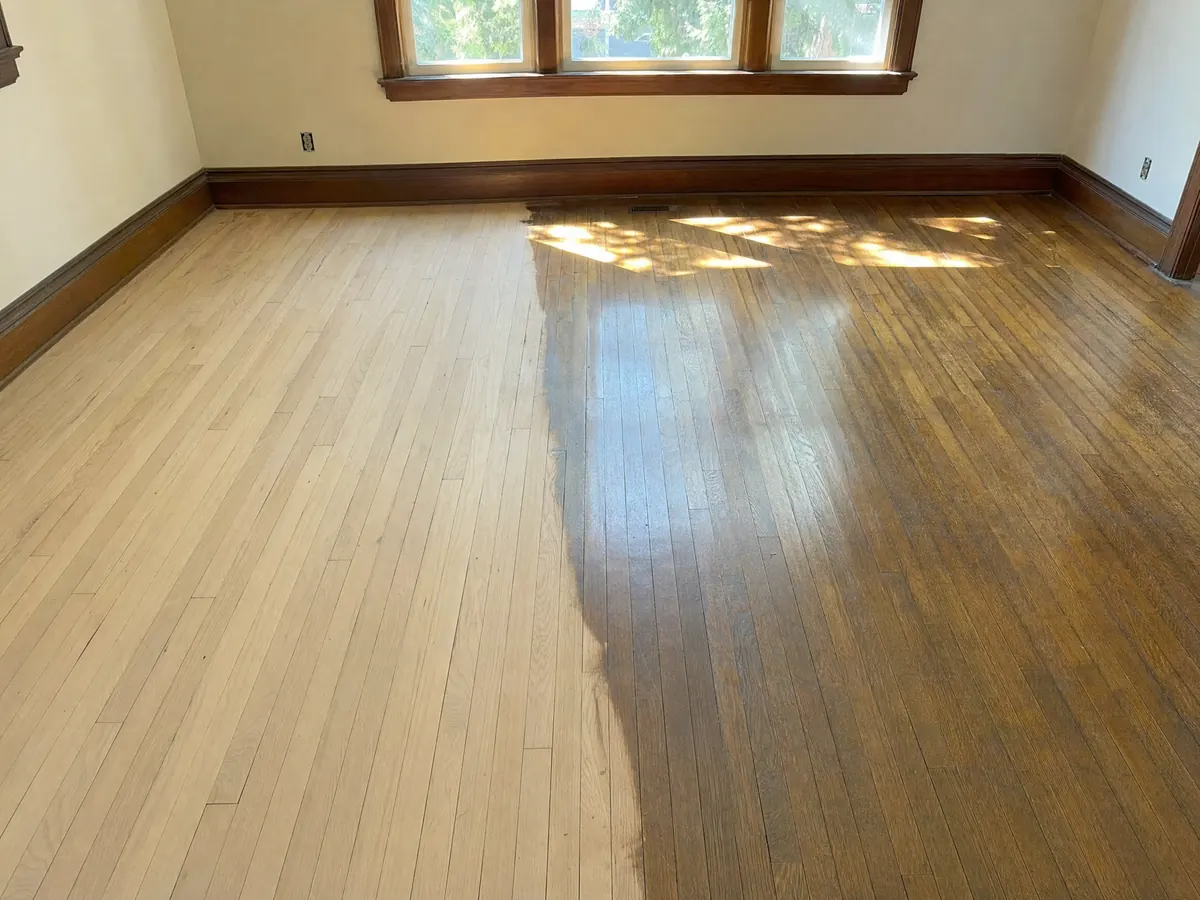
Flooring photos from Monterey Park and nearby communities
Photos of floors around Monterey Park and its neighbors, from subfloors and slab tests to new planks and tile. Tap a photo to enlarge it.
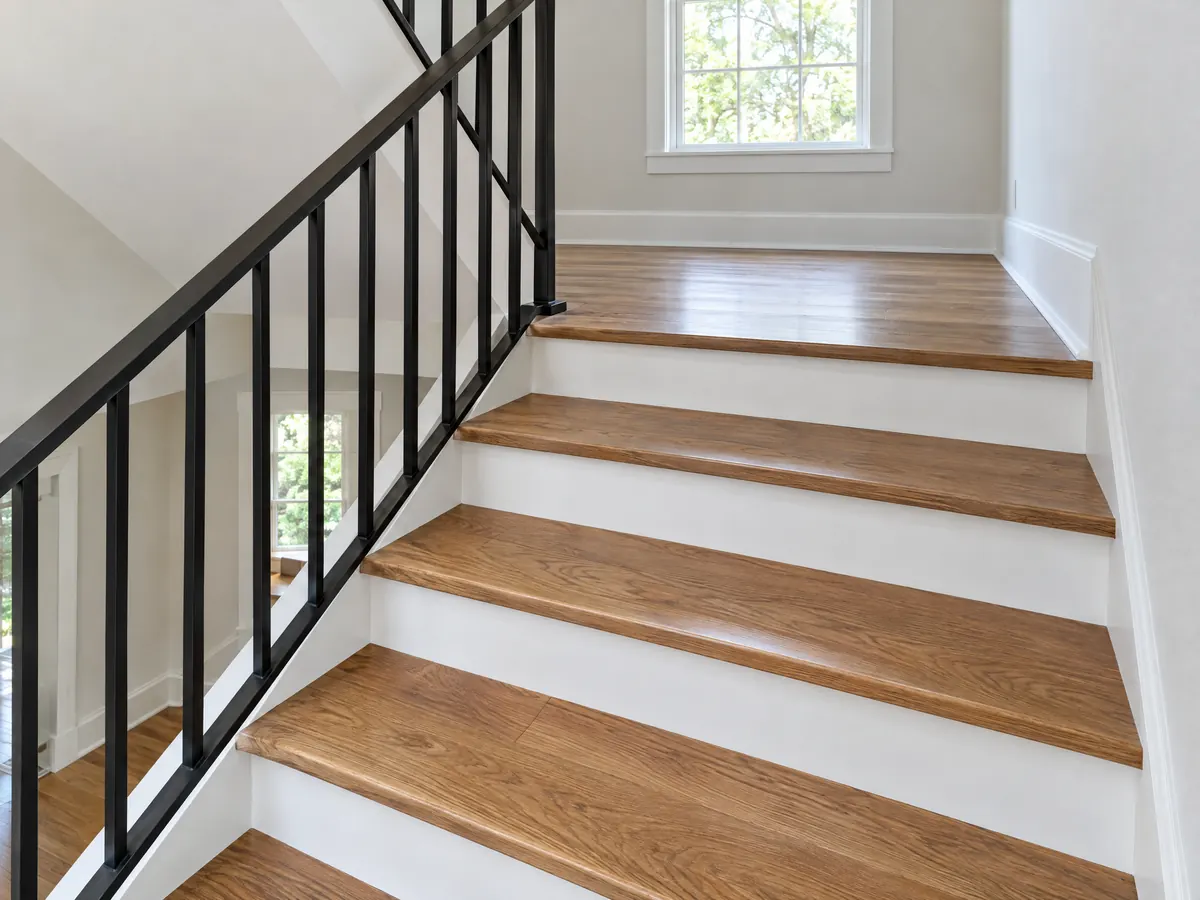
What flooring costs around Monterey Park
These are the Los Angeles ranges behind our flooring page, not a Monterey Park quote, and the subcontractor guide explains how the work is divided. Nearby pages: flooring in Montebello, flooring in Alhambra, flooring in El Monte, flooring installation in Los Angeles, concrete work in Monterey Park and decks in Monterey Park. The Alhambra overview covers the city on the north border, and Rosemead, San Gabriel and South Pasadena are the other close neighbors.
| What it covers | Typical range |
|---|---|
| Installation labor only | $3 to $9 per sq ft |
| Solid hardwood, installed | $12 to $22 per sq ft |
| Engineered hardwood, installed | $10 to $18 per sq ft |
| Refinishing existing hardwood | $4 to $8 per sq ft |
| Laminate, whole project | $2,000 to $5,500 |
| Hardwood, whole project | $3,153 to $8,496 |
| Removing the old floor | $455 to $685 per 200 sq ft |
| Tile | No sourced Los Angeles range |
Other work we manage in Monterey Park
Monterey Park flooring questions, answered
Do I need a permit to replace flooring in Monterey Park?
Ask first. The City does not name finish floors in the permit pages we read, and the exemption for tiling and carpeting comes from the 2016 and 2019 ordinances, not from a 2025 text we could find. Structural subfloor repair, moved plumbing and new wiring are likelier to need one. Call Building & Safety at 626-307-1300 with your exact scope.
How much does it cost to have flooring professionally installed in Monterey Park?
Angi's 2026 Los Angeles pages put installation labor at $3 to $9 per square foot, engineered hardwood at $10 to $18 installed and solid hardwood at $12 to $22. We found no Monterey Park study and rate the confidence medium to low. Old floor removal, subfloor repair, testing and stairs are separate lines.
How much does it cost to refloor a 2,000 square foot house in Monterey Park?
Using Angi's Los Angeles ranges, 2,000 square feet of engineered plank multiplies out to $20,000 to $36,000, and solid hardwood to $24,000 to $44,000. Treat that as arithmetic on a medium to low confidence source, not a quote. Removal, repairs, stairs and slab work are priced on their own proposal lines.
Can you put flooring over concrete in Monterey Park?
Yes, once the slab has been tested and prepared. Each floor and adhesive has a moisture limit from its maker, so the installer reads the slab with ASTM F2170 probes or an F1869 calcium chloride test, levels it and adds a vapor retarder if the product calls for one. Ask for the readings in writing.
Why does moisture come through a concrete floor in Monterey Park?
Vapor rises from the soil under the slab, and concrete is porous. About 81 percent of the area's 15.67 inches of yearly rain falls from December through March, but dry summers do not dry the ground beneath. Leaks, planters and poor drainage near a wall add more, so a probe test settles it.
Will Monterey Park's expansive soil crack a new tile floor?
It can contribute, though no one can promise either way. The City says its soils are predominately expansive and swell when wet, and a moving slab can crack tile laid rigidly on top of it. Ask the tile setter about a crack isolation layer, and photograph existing slab cracks before the work starts.
Can old vinyl flooring in a Monterey Park house contain asbestos?
Yes, and looking at it will not tell you. OSHA's asbestos standard treats asphalt and vinyl flooring installed no later than 1980 as asbestos containing unless a determination says otherwise, and 78.6 percent of the city's homes predate 1980. Send a sample to a lab before any sanding, scraping or tearing.
Should I refinish or replace hardwood floors in an older Monterey Park house?
Refinish first if the boards are thick enough to sand, which you can judge from a floor register or an edge. Sanding and refinishing runs $4 to $8 per square foot on Angi's Los Angeles pages, against $12 to $22 for new solid hardwood. Those figures are medium to low in confidence, so ask for a written scope.
Can I install hard flooring in a Monterey Park condo or apartment?
Only with written approval from the landlord or the association. About 48.4 percent of occupied homes in the city are rented, and association documents usually control hard floors above another unit. California Civil Code section 4765 governs how an association must respond to an owner's request, so get approval before ordering.
What license does a flooring contractor need in Monterey Park?
Carpet, resilient flooring and wood floors fall under CSLB class C-15, and tile under C-54, unless the full job totals $1,000 or less and needs no permit. Verify the license number on the CSLB site before signing, and remember that a deposit may not exceed $1,000 or 10 percent of the contract price, whichever is lower.
Tell us about the floor and the house
Give us the rooms, the year the house was built, what covers the floor now and whether it sits on a slab, a crawlspace or a hillside, and we will bring the right moisture and sampling checks to the first visit.