
Bathroom Remodelingin Monterey Park, CA
Bathroom remodeling in Monterey Park is filed with the City's One Stop Building Permit Center as an Alteration-Repair job, with plumbing, electrical and water heater work each carrying its own permit. The median home was built in 1963, so plan for original pipes, framing and tile waterproofing behind the walls.
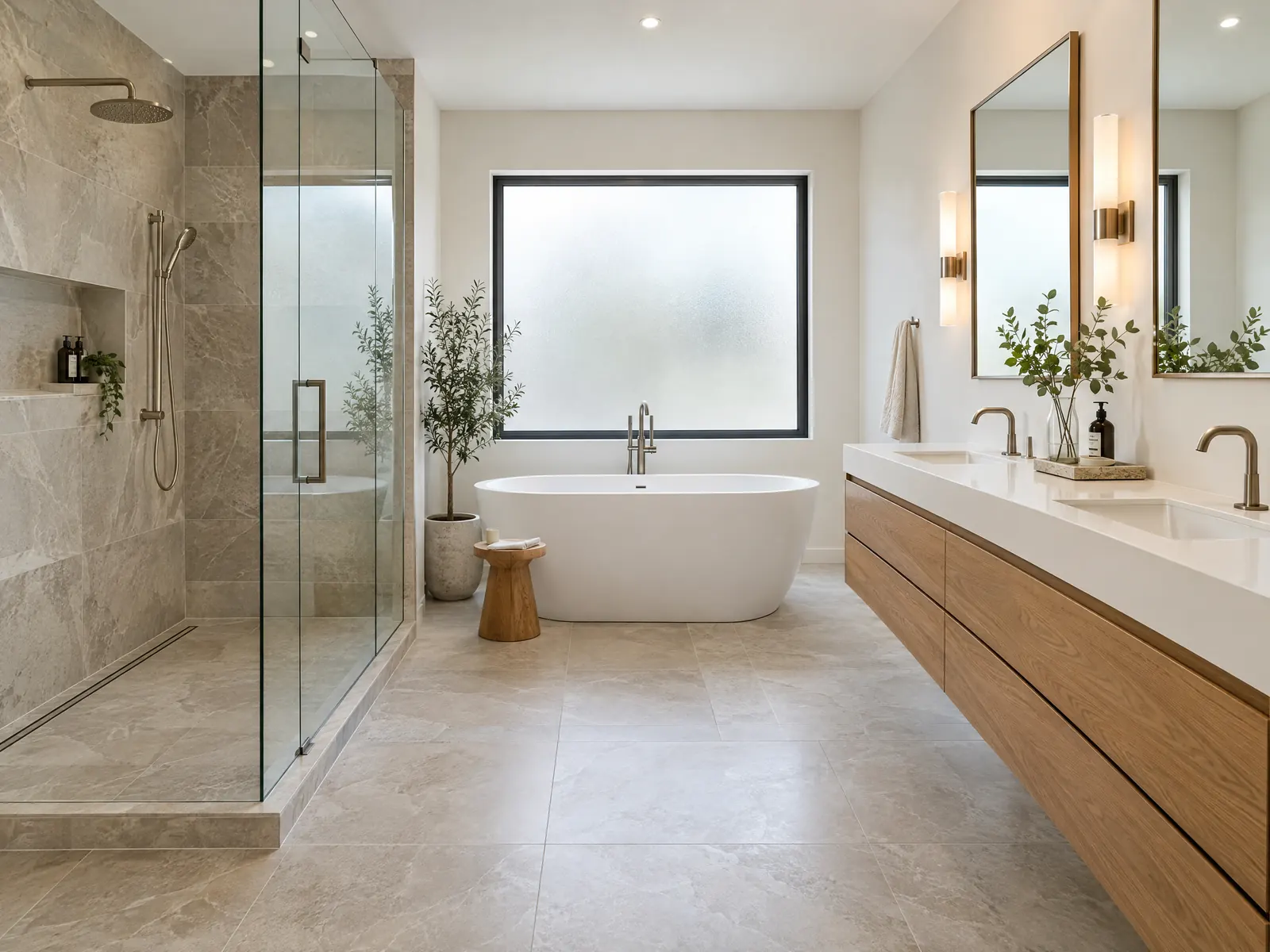
Monterey Park voted to incorporate on May 29, 1916, by 455 to 33, but its bathrooms mostly date from a later rush. Census counts show 8,531 residents in 1940, 20,395 in 1950 and 37,821 in 1960, and the 2024 American Community Survey five-year tables put the median year built at 1963, with 27.5 percent of the city's 22,134 homes coming from the 1950s alone. A hall bath here is typically a room with six decades of steam behind its tile.
This page covers what the pipes and framing tend to look like, how the City files a bathroom job, what its counter hours do to a schedule, the fan, light and fixture rules, the shower pan, rentals and condos, and whether the money comes back. Price tiers, phases and our process are on the main bathroom remodeling page.
What the City of Monterey Park says about bathroom work
Where bathroom remodeling permits come from in Monterey Park: City of Monterey Park Community Development Department, Building & Safety Division.
- A bathroom remodel is filed as Residential Building Alteration-Repair, plumbing permits cover water heaters, water closets and sinks, and electrical permits cover fixtures and equipment.
- Water heater replacement is listed among work that needs a permit, and the fee schedule says a permit is required for new installation, replacement or relocation of each listed item.
Sources for these rules
What is behind the tile in a 1950s Monterey Park bathroom?
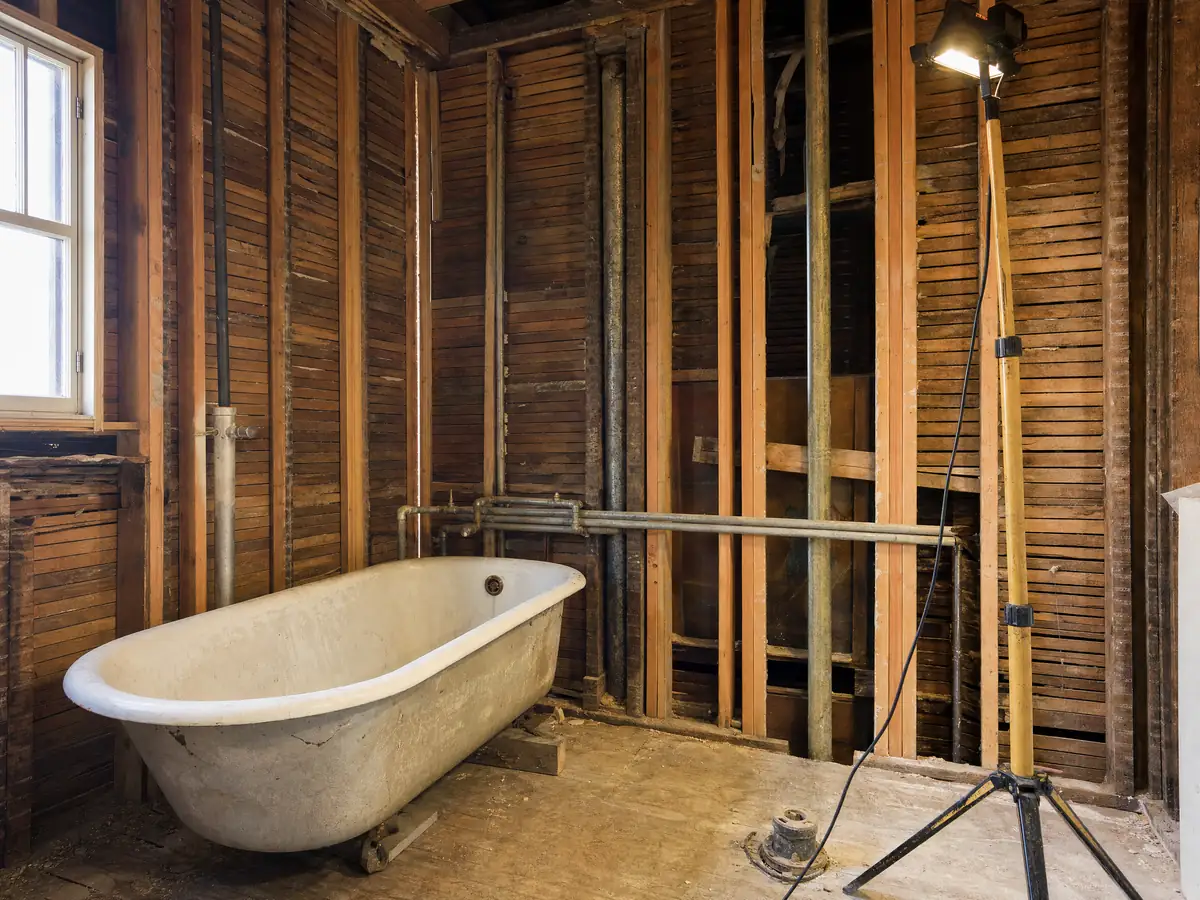
Two numbers set the scene. The 2020 to 2024 American Community Survey shows 45.0 percent of the city's homes were built before 1960 and 78.6 percent before 1980, while only 4.9 percent date from 1939 or earlier. The wall you open is usually a 1950s or 1960s tract wall, not a prewar one.
The City's 2023 Housing Element says housing more than 30 years old typically needs rehabilitation, and it lists roofs, foundation work and plumbing as the usual items. We found no source naming which supply or drain materials were common in the local tracts, so we do not guess. The proposal names a check instead: open the wall, look at the supply and drain lines, probe the subfloor around the tub and toilet, and photograph what turns up.
Hidden damage cannot be priced from the doorway. Before demolition we put a unit price in writing for replacing a section of rotted framing or a failed concealed pipe, because California requires a written change order before extra work begins and a number agreed in advance beats a dispute over a half-demolished room. In a house that predates 1978, the EPA's lead-safe rule also applies to paid work that disturbs old paint.
- Who inspects the framing and pipes once the wall is open, and on what day?
- What unit price applies to rotted wood or a failed concealed pipe?
- Who on the crew holds the lead-safe certification if the paint is older than 1978?
Do you need a permit to remodel a bathroom in Monterey Park, and what does the One Stop Center want?
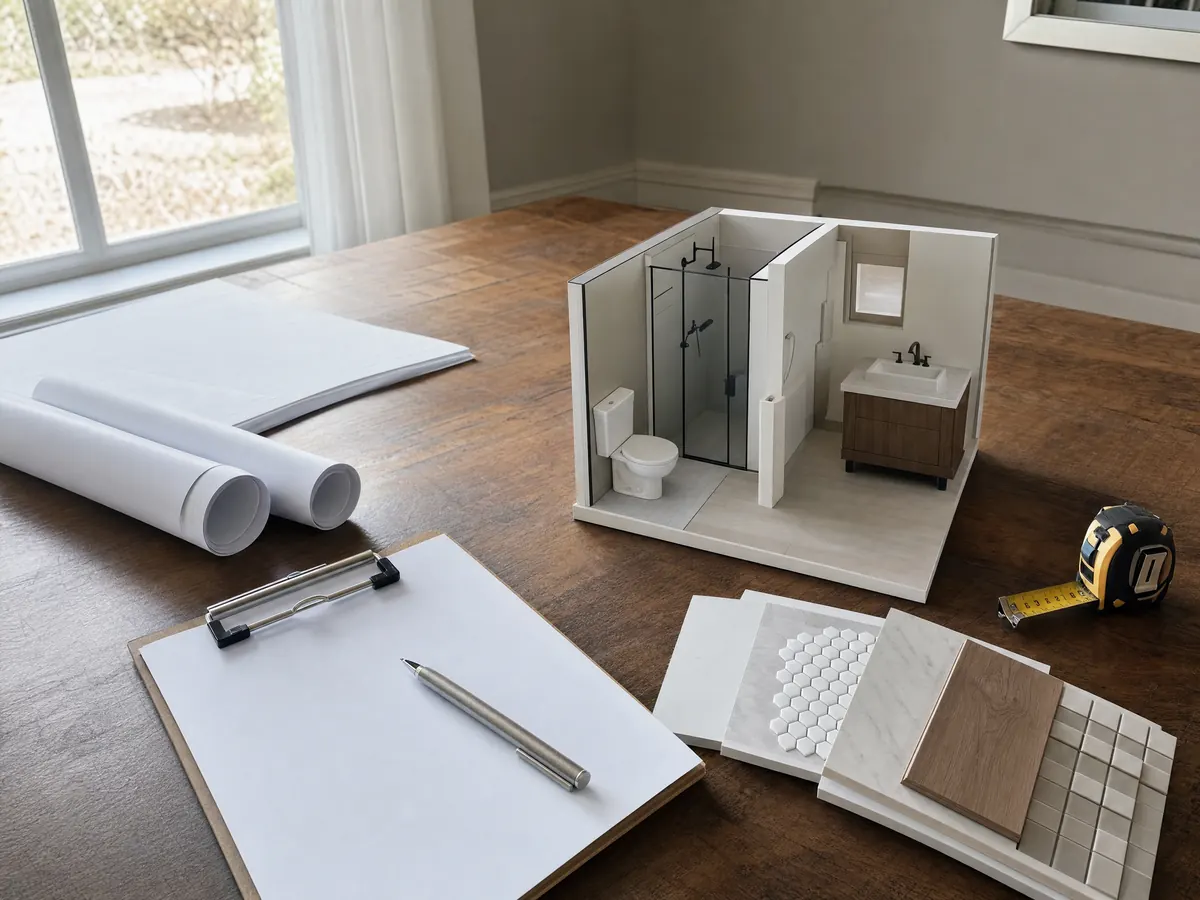
For nearly all of it, yes. The City's building permit page says that apart from a few exempt items a permit is required to construct, install, alter, repair, relocate or demolish a building or structure, and it names water heater replacement and electrical panel upgrades among the work. A bathroom remodel is a Residential Building Alteration-Repair record in the City's Accela portal, and the Step by Step Guide adds separate plumbing permits for water closets, sinks and water heaters and electrical permits for fixtures and equipment. They can be bundled with the building permit as a combo permit.
What you upload depends on the scope. Jobs that need plans submit a PDF plan set, and jobs that need none submit a Declaration form and a copy of the contractor's license. The City's plan check bulletin, updated in August 2015, lists interior modification and change of floor plan as plan check work, so moving a wall or a door lands on the plan side. We found no City page that sorts a like-for-like bathroom swap into either pile, so we ask the counter at 626-307-1300 before we price the job.
Painting, tile, carpeting, cabinets and counter tops appear as permit-exempt finish work, but that list comes from the 2019 administrative provisions in Ordinance 2165 and the 2016 text before it. A December 2025 notice on the State's CEQAnet says the City approved adopting the 2025 California codes, and we could not find that ordinance, so confirm the exemptions against whatever is in force on your permit date.
Where do you shower, and when can crews work? Monterey Park counter hours and inspection days
The City's FAQ allows construction, demolition and powered tools such as saws, sanders, drills and grinders from 7:00 a.m. to 7:00 p.m. on weekdays and 9:00 a.m. to 6:00 p.m. on Saturdays, Sundays and holidays, though it cites no code section. Noise outside those hours is reported to the Police Department at 626-573-1311.
The permit counter is the tighter clock. Walk-ins are taken Monday through Thursday from 8:00 a.m. to noon, with the last sign-in at 11:30, appointments fill 2:00 to 5:00 p.m., and every other Friday morning is appointments only for Building Division services, not inspections or plan checks. Inspections also run Monday to Thursday, 8:30 a.m. to 4:30 p.m., and are requested in Accela or on the hot-line at 626-307-1229. A request made before 4:00 p.m. is usually scheduled for the next inspection day, and the City does not book them by appointment.
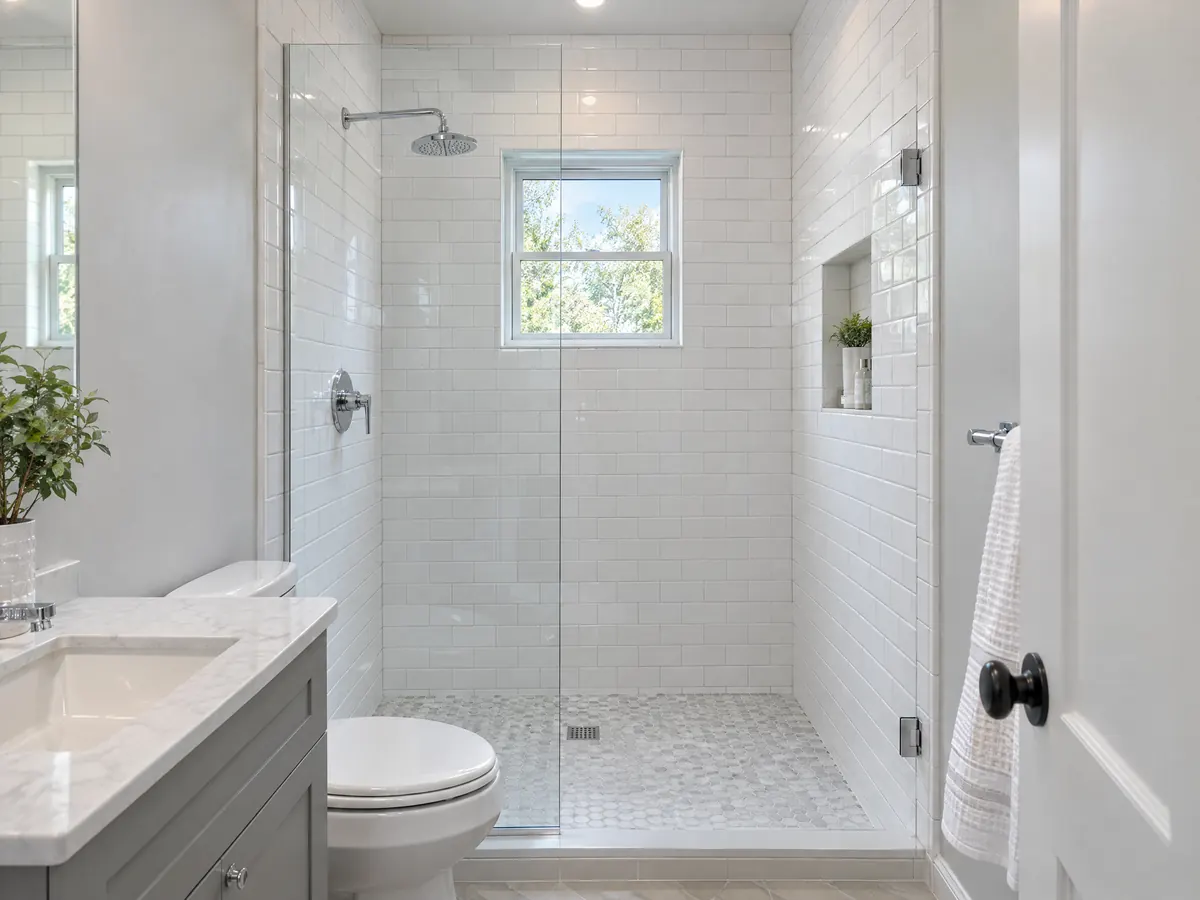
That makes the rough plumbing inspection and the flood test before tile the dates that run your calendar, since a request that misses Thursday waits for Monday. In a one-bathroom house, decide before demolition where everyone showers, write down the days the water is off, and expect the vanity top and the shower glass to come last.
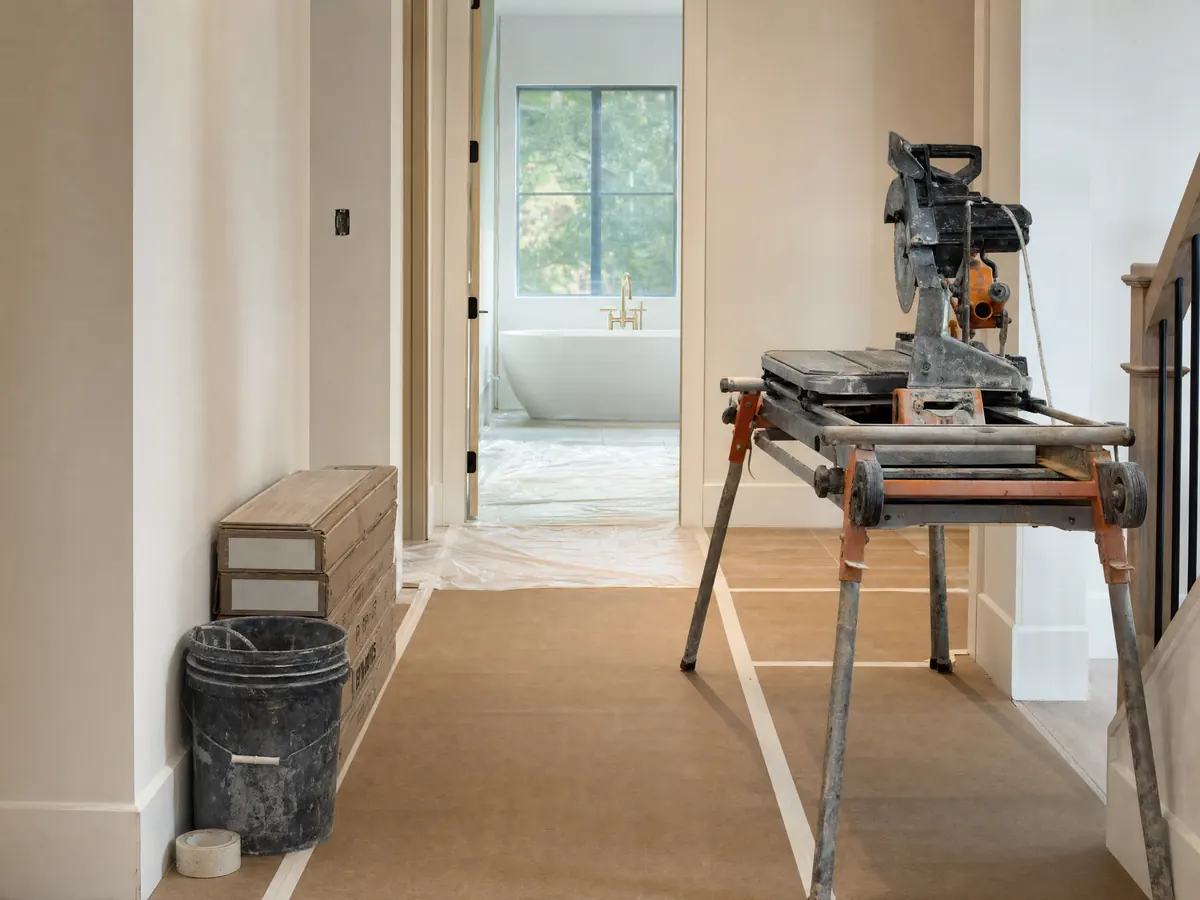
Bathroom renovation rules for fans, lights and old toilets: the 2025 Energy Code and SB 407
The California Energy Commission's summary of the 2025 residential mandatory measures, effective January 1, 2026, calls for local mechanical exhaust in each bathroom, either demand-controlled or continuous (section 150.0(o)1G), and for at least one bathroom luminaire on an occupancy or vacancy sensor that turns off automatically. A light built into the exhaust fan needs no dimmer, but it must switch separately from the fan. We read that summary, not the alteration rules in section 150.2, so we ask the plan checker whether a job of your size triggers them.
Old toilets are the second surprise. Under SB 407, Civil Code sections 1101.1 to 1101.8, non-compliant toilets, showerheads and faucets in homes built before 1994 are to be replaced when a permit is pulled, and Los Angeles County's plumbing guidance describes how a building department applies that. With a median build year of 1963, most Monterey Park houses fall in that group. We did not read the statute text or a Monterey Park handout, so we ask the counter and price compliant fixtures into the proposal.
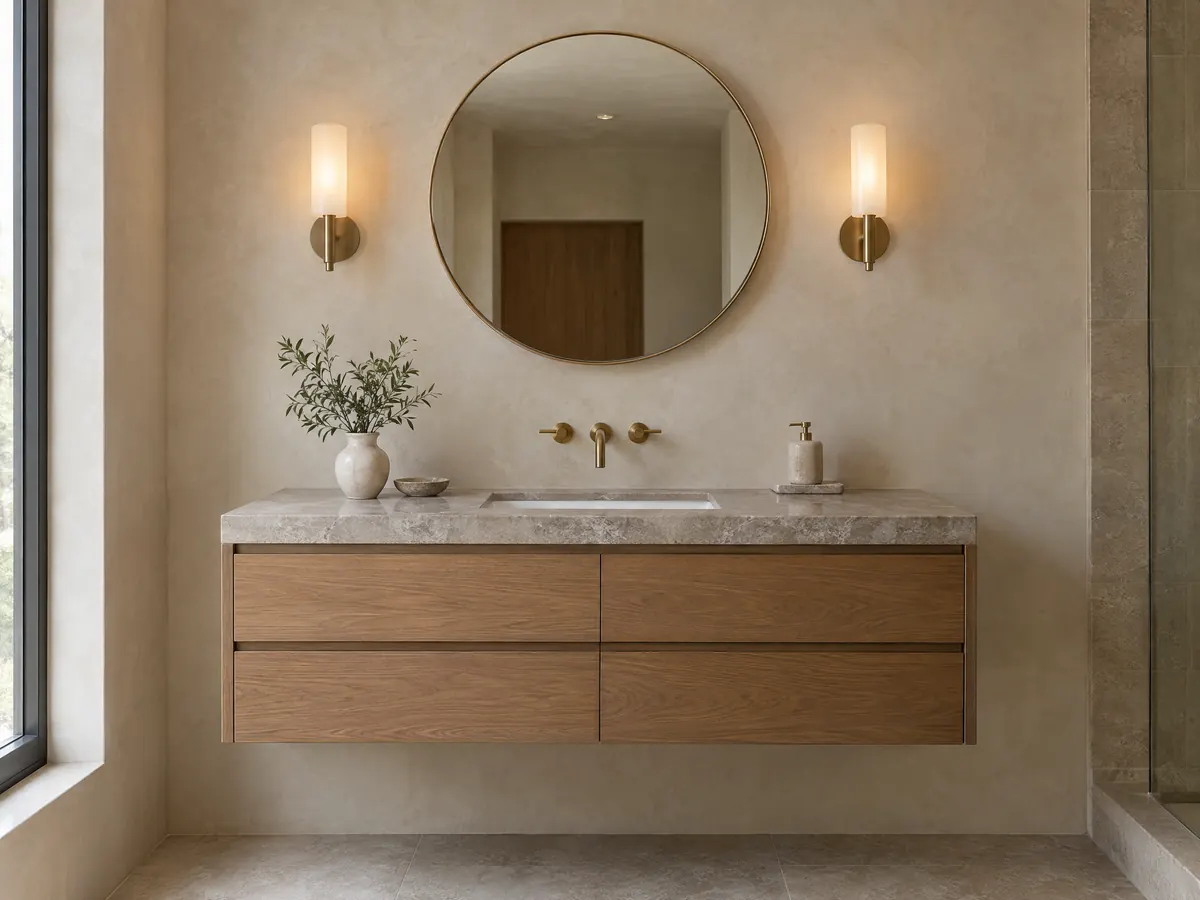
How is a shower built to last in Monterey Park, from the pan to the framing?
A pan is the one part of a bathroom that has to be right the first time. We build a sloped pan under one continuous membrane that climbs the walls and turns over the curb, fill it with water, photograph the level and leave it overnight before a tile goes on. Tile and grout are a finish, not the waterproofing. Behind the shower, the City's own code findings say the region is especially susceptible to termites and wood-attacking organisms, so soft wood around the tub and toilet gets cut out and replaced rather than painted over.
On a hillside lot, water matters beyond the room. The City's hillside protection guide tells owners to channel water away from structures and slopes, and State landslide zones cover part of the Monterey Hills and Repetto Hills: 22 of 212 evenly spaced sample points inside the city fall in them. A leak behind a wall is a small source of water compared with a rainy season, but it is water the guide would rather see elsewhere, which is one more reason the flood test comes before tile.
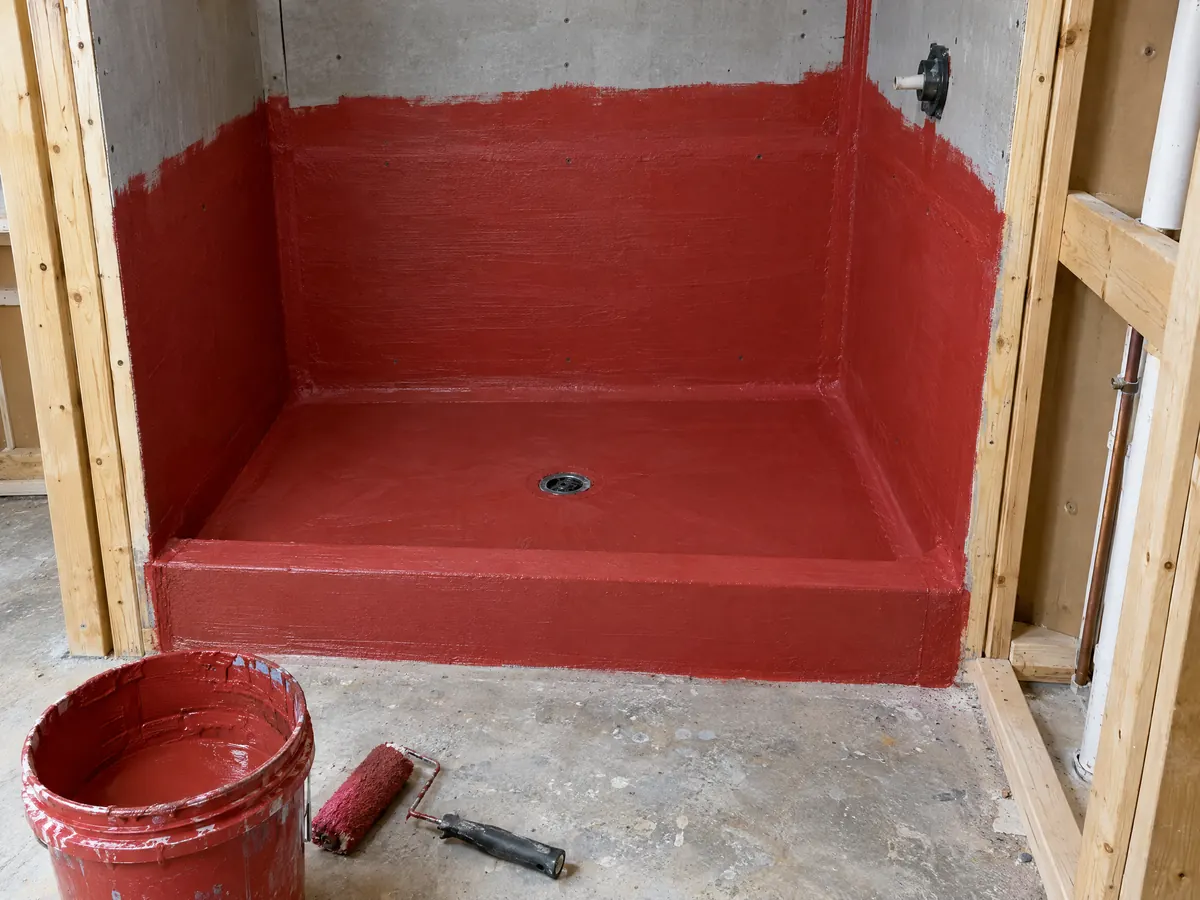
Bathroom remodeling in a Monterey Park rental, duplex or apartment building
About 48.4 percent of the city's 20,646 occupied homes are renter-occupied, and 23.9 percent of its housing units sit in buildings of five or more. So a large share of bathroom jobs involve an owner who is not the occupant, a tenant, or an association that sets its own rules.
The City's permit issuance page says a permit for a type of work can be issued only to persons licensed by the State for that trade, with a homeowner exception under certain circumstances. The City pages we read say nothing about tenant notice or association review for bathroom work, and we will not make up a rule to fill the gap. Ask the owner or management office what license and insurance paperwork they want on file, which days the tenant loses the bathroom and who supplies a substitute. Put those answers in a dated schedule the owner signs. As MDG Builders, CSLB #1040337, we manage the permit and the sequence, and the plumber, tile setter and electrician are licensed specialty subcontractors you can ask us to name. Our guide to checking a contractor license shows how to verify each trade before it enters a shared building.
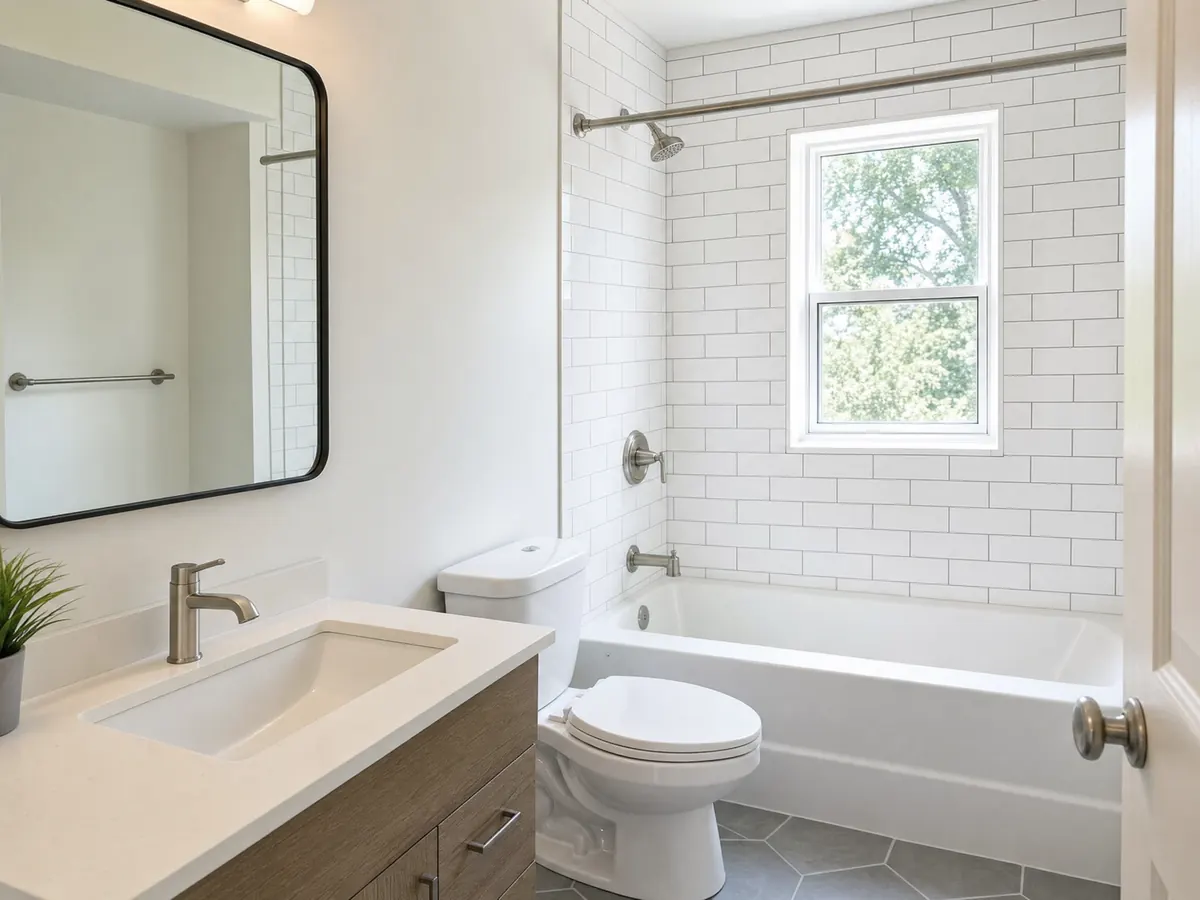
Is a bathroom remodel worth it when the median owner-occupied home is worth $863,000?
The 2020 to 2024 American Community Survey puts the median owner-occupied home value at $863,000, give or take about $16,000, and the median gross rent at $1,888. Those are citywide numbers, not an appraisal of your house. The only resale data we can cite covers Los Angeles, where Remodeling magazine's 2025 Cost vs. Value report has a midrange bath returning 89.6 percent of its cost at sale and an upscale one 42.3 percent.
The practical reading is that a same-layout remodel with a sound pan, a working fan and a layout that suits the household returns more than a marble primary suite, and a leaking shower in a house this age is something a buyer's inspector finds. If you plan to stay, spend on the pan, the ventilation and the plumbing first and on finishes second. If the unit is a rental, choose surfaces that survive tenants. Our bathroom cost guide lines up the sources.
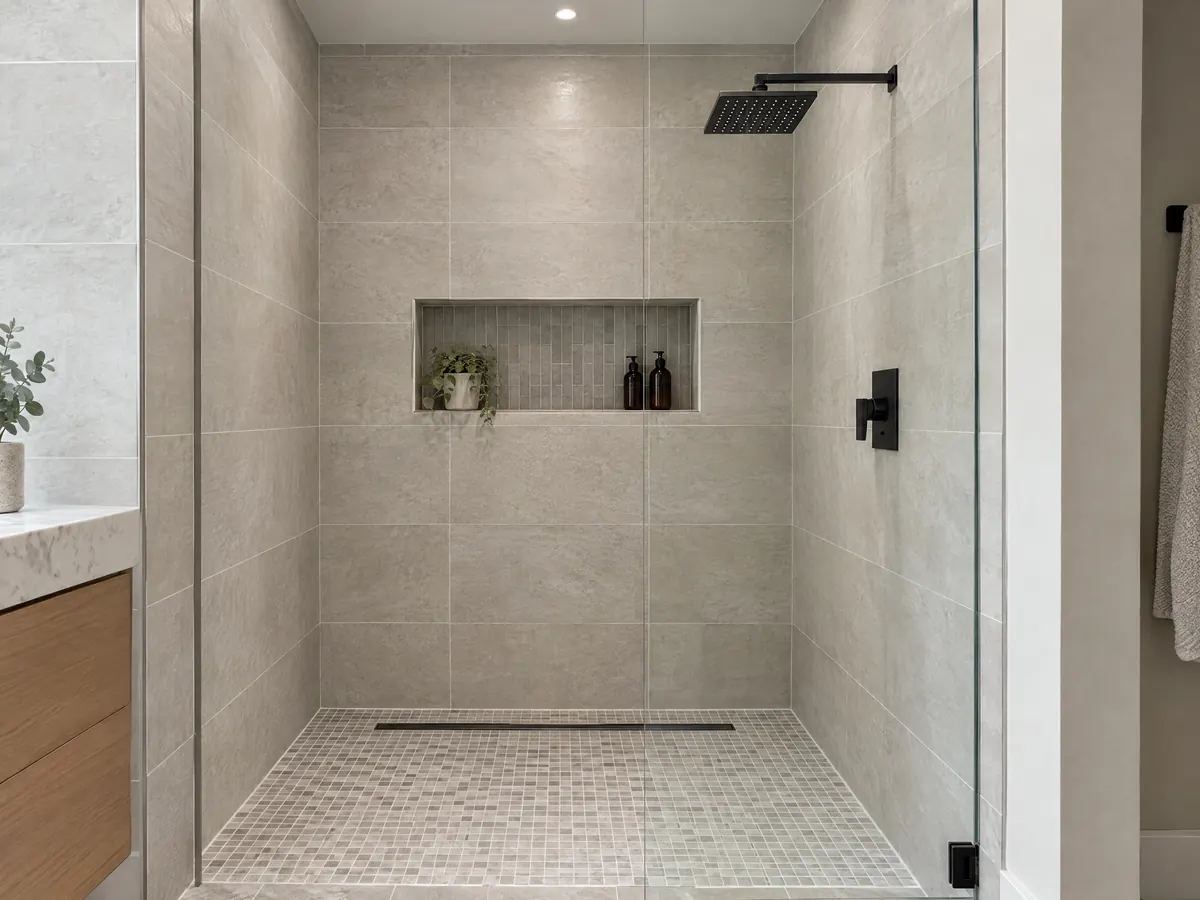
Pan, wall and tile details near Monterey Park
Three close views of the membrane, the framing and the finished tile from bathroom projects around Monterey Park. Tap a photo to enlarge it.
What bathroom remodeling costs around Monterey Park
Our regional ranges on the bathroom remodeling page are about $9,000 to $18,000 for a refresh, $25,000 to $40,000 for a mid-range remodel in the same layout and $50,000 to $85,000 or more for a primary bath. They lean on Remodeling magazine's 2025 Cost vs. Value report for Los Angeles, which lists a midrange bath at $27,143 and an upscale one at $85,055, and on Thumbtack's Los Angeles page, updated July 2026, at $8,495 to $26,582 across small and large jobs. No Monterey Park study with a stated method turned up, so treat them as regional. On the City's fee schedule effective July 1, 2026, a $10,000 valuation carries a $484.77 building permit fee and $50,000 carries $1,393.32, before plan check and the per-trade issuance charges. Hidden rot and a moved drain are the lines that move a total. Nearby, see bathroom work in Alhambra, Montebello, El Monte and Los Angeles. The same permit trip can cover new windows, a room addition or an ADU, and the Monterey Park overview lists every trade we run here. Our post on how general contractors use subcontractors explains who answers for what on site.
| What it covers | Typical range |
|---|---|
| Refresh in the same layout: new vanity, toilet, fixtures, lighting, paint, limited tile | $9,000 to $18,000 |
| Mid-range full remodel in the same layout: new shower or tub, tile, vanity, fixtures, lighting and fan | $25,000 to $40,000 |
| Upscale or primary bath: stone, custom glass, freestanding tub, double vanity, heated floor | $50,000 to $85,000 and up |
| Adding a new bathroom | $60,000 to $120,000 |
Other work we manage in Monterey Park
Questions about bathroom remodeling in Monterey Park homes
Do I need a permit for a bathroom remodel in Monterey Park?
Yes for anything beyond finish work. Monterey Park files a bathroom remodel as a Residential Building Alteration-Repair job, with separate plumbing and electrical permits where those trades are touched. Painting, tile and cabinets appear on the City's exempt list, but that list comes from older ordinances, so call the counter at 626-307-1300 with your exact scope first.
How long does a bathroom remodeling take?
Expect several weeks of site work once design and permits are done. Our phase estimates are 3 to 7 days for demolition and rough plumbing, 3 to 5 days for waterproofing, 1 to 2 weeks for tile and fixtures, then 1 to 2 weeks for shower glass. Monterey Park runs inspections Monday to Thursday only, so one missed request can cost days.
How much does a bathroom remodel cost in California?
Our working ranges are about $9,000 to $18,000 for a refresh, $25,000 to $40,000 for a mid-range job in the same layout, and $50,000 to $85,000 or more for a primary bath. They rest mainly on Los Angeles data, since no Monterey Park study with a stated method turned up. The written proposal is the real price.
Can a handyman do a bathroom remodel?
Only a small one. California limits unlicensed work to $1,000 in labor and materials, and that exemption is void when a permit is needed. Monterey Park issues permits for a trade only to persons licensed for it, with a homeowner exception in certain circumstances. Check any license on the CSLB website before you sign.
Can I use my bathroom during the remodel?
No, not for the stretch when the fixtures are out, and in a one-bathroom house that can be weeks. Water is shut off on set days for rough plumbing and the pan test. Arrange a second bathroom, a gym or a short rental before demolition, and write the shutoff days into the schedule.
Do I need to replace the toilet during a bathroom remodel?
Often yes in a house built before 1994. California's SB 407, Civil Code sections 1101.1 to 1101.8, calls for replacing non-compliant toilets, showerheads and faucets when a permit is pulled, as Los Angeles County's guidance describes it. We did not read a Monterey Park handout on this, so ask the counter and budget for compliant fixtures.
What is the difference between a bathroom remodel and a bathroom renovation?
In everyday use there is none, and permits do not care about the word. What matters is scope: new finishes in the same layout, or changes to walls, drains and structure. In Monterey Park a change of floor plan is plan check work, so scope decides the paperwork, the timeline and the price, not the label.
Is remodeling a bathroom worth it?
A midrange remodel usually is. Remodeling magazine's 2025 Cost vs. Value report for Los Angeles shows a midrange bath recouping 89.6 percent of its cost at sale, against 42.3 percent for an upscale one. That is a Los Angeles figure, not a Monterey Park one, but it favors sound waterproofing and layout over luxury finishes.
What documents does Monterey Park need for a bathroom remodel permit?
It depends on the scope. A job that needs plans uploads a PDF plan set and supporting calculations in the Accela portal, and a job that needs none uploads a Declaration form and a copy of the contractor's license. Permit fees are set by the value of the work, so have your contract total ready.
Do I need a general contractor for a bathroom remodel?
Not by law for every job, but most remodels benefit from one. Plumbing, electrical, tile and often drywall meet in one small room, and someone has to sequence them and stand behind the permit. A general contractor does that with licensed specialty subcontractors, and you can ask for each license number.
Tell us about your Monterey Park bathroom
Tell us the neighborhood, roughly when the house was built, how many bathrooms it has and whether it sits on a slope or in a rental or condo, and we will shape the first visit around that.