
Fence Installationin Glendale, CA
Fence installation in Glendale is tightest in the front yard: most residential lots allow no fence in the street setback, and only the North Glendale F overlay (42 inches) and the Horse H overlay (48 inches) make exceptions. A fence company in Glendale also has to check design review above three feet and historic districts.
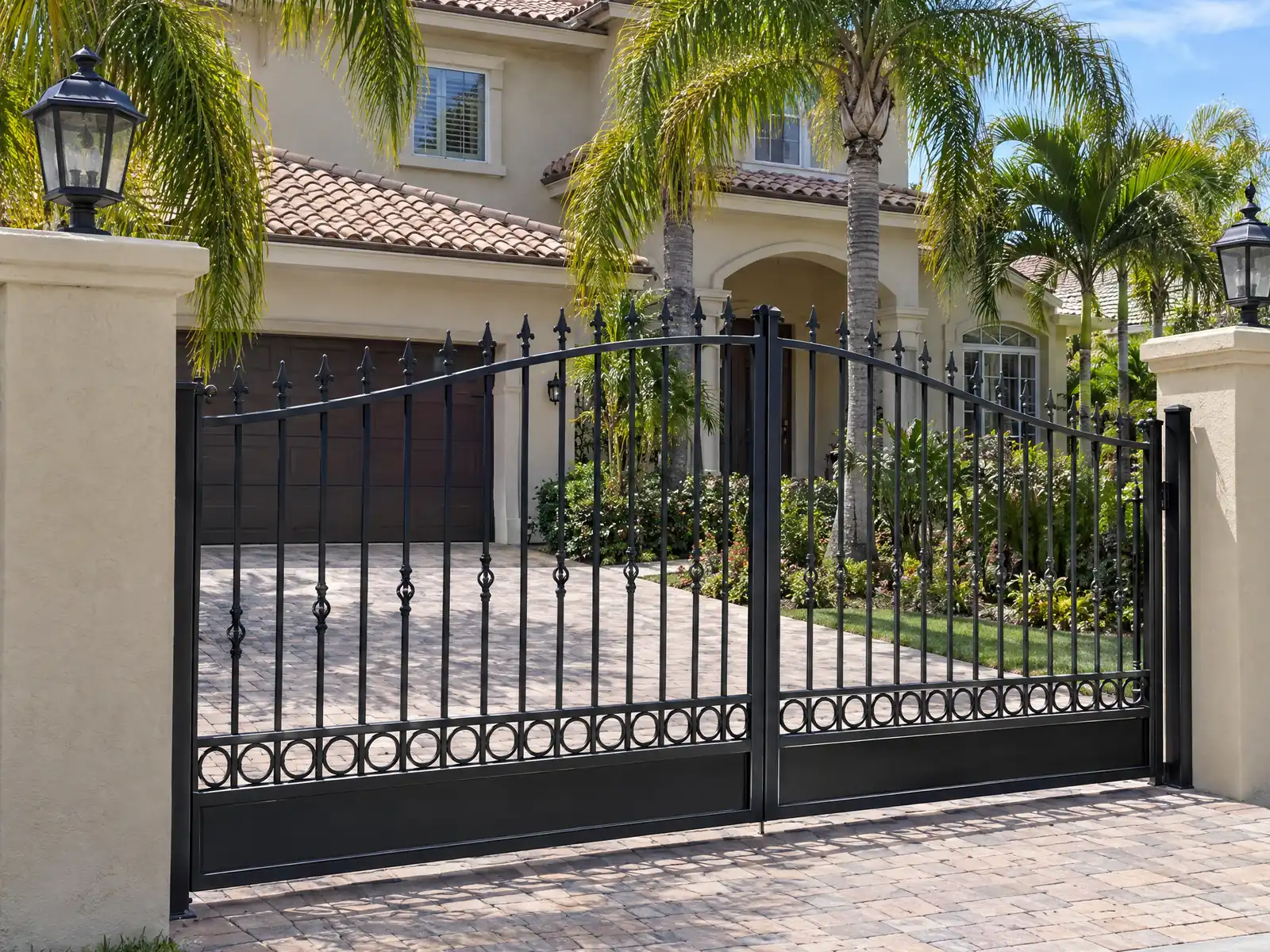
A fence in Glendale is a zoning question first and a carpentry question second. About 32 percent of the city's 75,907 housing units are detached houses, according to the Census Bureau's 2024 estimates, and the median owner-occupied home is valued at $1,182,800, so a boundary line is something owners protect. Add foothill streets where a fence often stands on or beside a retaining wall, and a straight run of boards on flat ground becomes a rarity.
The Municipal Code splits the city into zones and overlays, and each one answers the fence question differently. MDG Builders (CSLB #1040337) handles that research as the general contractor, writes the scope, coordinates the permit if one applies and schedules the crew, while a licensed fencing subcontractor builds. The fencing price page holds the sourced cost table. If the fence is part of a bigger exterior refresh, the Glendale roofing guide and Glendale painting guide cover the other two trades, and the neighboring fence guides are Pasadena and Los Angeles.
What Glendale's zoning code and building code say about fences
Where fencing permits come from in Glendale: City of Glendale Community Development Department, Building & Safety (Permit Services Center).
- In the ROS, R1R, R1 and multifamily residential zones, Glendale's setback rules allow fences and walls in the street front setback only in the Horse (H) overlay zone, which Chapter 30.21 governs. Retaining walls, planters and curbs up to 18 inches above grade are allowed in the street front setback.
- Municipal Code 30.21.040(E) lets a fence or wall in the street front or street side setback of an H overlay lot stand up to 4 feet (48 inches) high, on private property and at least 5 feet from the back of the curb, with landscaping between it and the street. Fences existing on April 19, 2005 may exceed 48 inches unless they use a prohibited material.
- In a North Glendale Fence Overlay (F) zone, Municipal Code 30.27.040 caps fences and gates in the street front and street side setbacks at 42 inches, requires them to sit at least 5 feet from the back of the curb, requires every 4 foot section to be at least 50 percent open, bans chain link, plain smooth block, painted block, barbed and razor wire, and forbids fences across a driveway. Ordinance 6027 amended the section on May 14, 2024.
- Boundary line fences and freestanding non-retaining walls may sit along interior property lines or within the interior setback in the ROS, R1R, R1 and multifamily zones, but not in the street setback (Municipal Code 30.11.070.C.1.a).
- Municipal Code 30.30.010 bans electrically charged, sharp-edged, barbed wire, razor wire, chicken wire and fiberglass fences and walls in the ROS, R1, R1R, R-3050, R-2250, R-1650, R-1250, DSP, IMU, IMU-R, SFMU and TOD zones. In ROS, R1R and R1 the approved materials are wood, masonry, decorative metal or other decorative materials the director approves, and chain link is allowed only if vegetation screens it from neighbors and it is not visible from the public street.
- In the ROS, R1R and R1 zones, fences and walls over three feet high are subject to Design Review under Chapter 30.47 (30.30.010.A.2), and 30.47.020.C names 'any fence or wall of more than three feet of exposed height visible from the public street or sidewalk'. The same chapter's exemption 30.47.020.G.4.a also exempts new fences and walls of permitted materials compatible with the buildings, so ask Planning which path applies to a given lot.
- For retaining walls in the ROS and R1R zones, 30.30.010.B limits exposed height to 5 feet (plus 2 feet if faced with decorative masonry or stone and approved by the director) when the toe is within 15 feet of a street property line, and to 3 feet within 5 feet of an interior property line, with up to two or three successive walls at least 5 feet apart on slopes no steeper than 2:1. In the R1 zone, retaining walls below a downslope building wall are limited to 5 feet.
- In the multifamily zones R-3050 through R-1250, 30.11.070.C.3.h requires any part of a wall or fence above 6.5 feet over adjacent ground to be at least 50 percent open.
Can I put a fence in my front yard in Glendale?
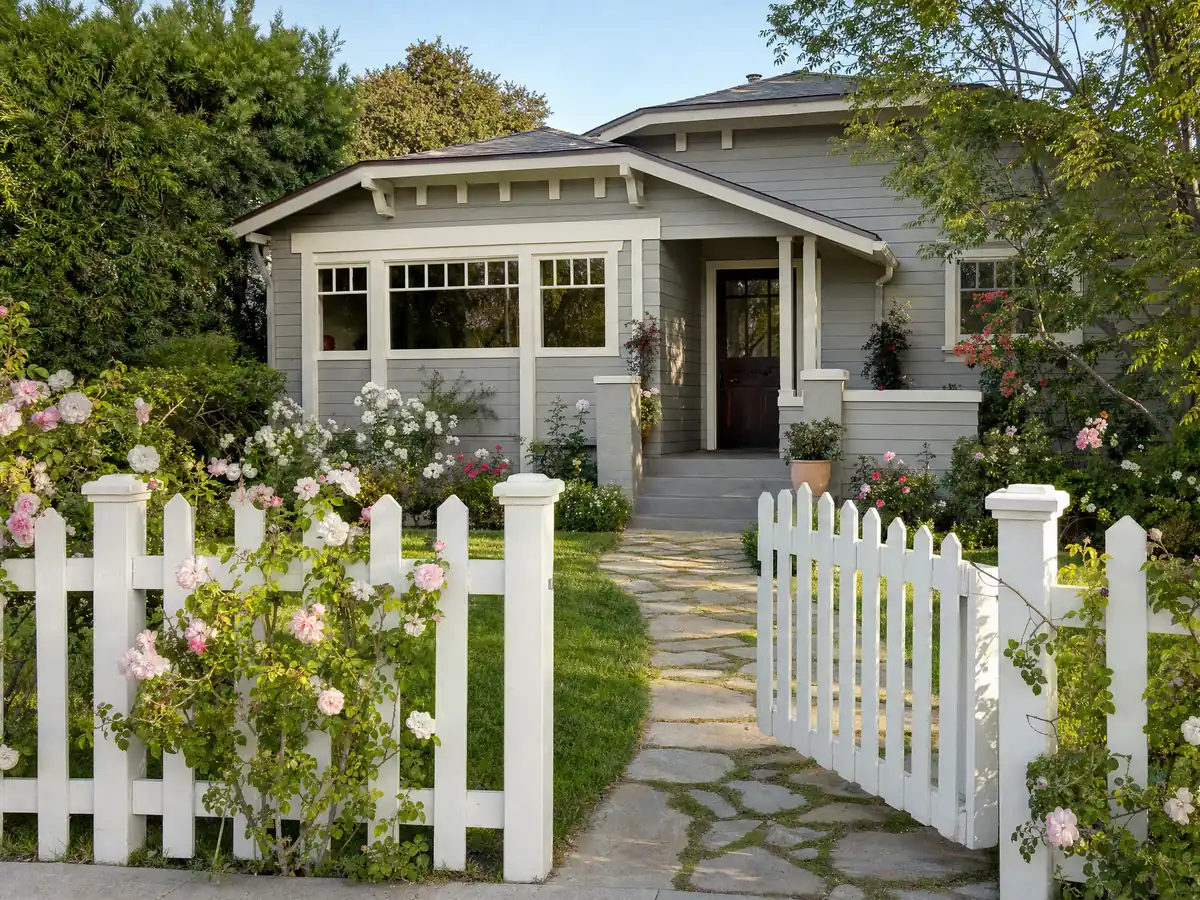
On most residential lots, no. In the ROS, R1R, R1 and multifamily zones, Glendale's setback rules in Municipal Code chapter 30.11 allow a fence or wall in the street front setback only in the Horse (H) overlay zone, which Chapter 30.21 governs. The street setback does allow a retaining wall, planter or curb up to 18 inches above grade, and boundary fences and freestanding walls may run along interior property lines or sit in the interior setback.
Two overlays change the answer:
We could not find a map showing which streets carry the F or H overlay, so ask Planning to confirm the overlay for your address before you buy materials.
- North Glendale Fence Overlay (F), section 30.27.040: fences and gates in the street front and street side setbacks up to 42 inches, at least 5 feet back from the curb, every 4 foot section at least 50 percent open, and no chain link, plain smooth block, painted block, barbed or razor wire, or fence across a driveway. Ordinance 6027 amended these rules on May 14, 2024.
- Horse overlay (H), section 30.21.040(E): a fence or wall up to 4 feet, or 48 inches, in the street front or street side setback, on private property and at least 5 feet from the back of the curb, with landscaping between it and the street. A fence that already stood on April 19, 2005 may be taller unless it uses a prohibited material.
The front yard answer in one line: no fence unless the lot carries the F or H overlay, and then 42 or 48 inches, set 5 feet back from the curb.
Does fence installation in Glendale need a building permit or design review?
The building permit question starts with the state list of work exempt from permits, which clears fences not over 7 feet and retaining walls not over 4 feet measured from the bottom of the footing to the top of the wall, unless the wall carries a surcharge. We found no Glendale amendment to that list in Ordinance 6043, but zoning still applies to an exempt fence. One competitor says a permit is needed next to a slope or a public sidewalk, and we could not confirm that.
Design Review is a separate check. In the ROS, R1R and R1 zones, section 30.30.010 sends fences and walls over three feet high to Design Review under Chapter 30.47, and 30.47.020.C names any fence or wall of more than three feet of exposed height visible from the street or sidewalk. Yet section 30.47.020.G.4.a exempts new fences of permitted materials that are compatible with the buildings. The code does not say which one controls on a given lot, so ask Planning which path applies and keep the answer in writing.
We found no general height cap for side and rear fences in the sections we read. The one numeric rule there is for the multifamily zones, where any part of a wall or fence more than 6.5 feet above adjacent ground must be at least 50 percent open.
What are the rules for fences and retaining walls on a Glendale hillside lot?
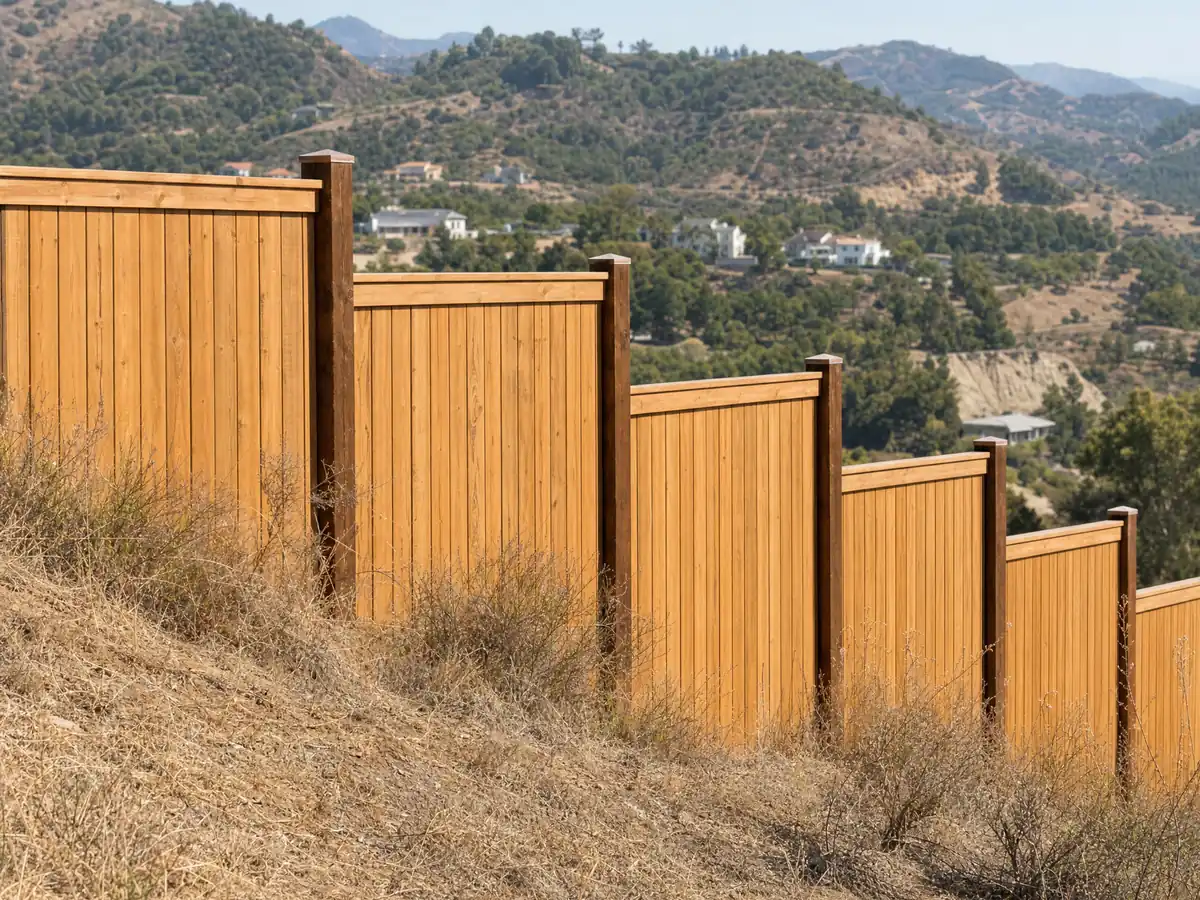
Slopes change which rule counts. Chapter 15.12 of the Municipal Code governs grading in hillside areas, and the zoning code limits retaining walls by zone:
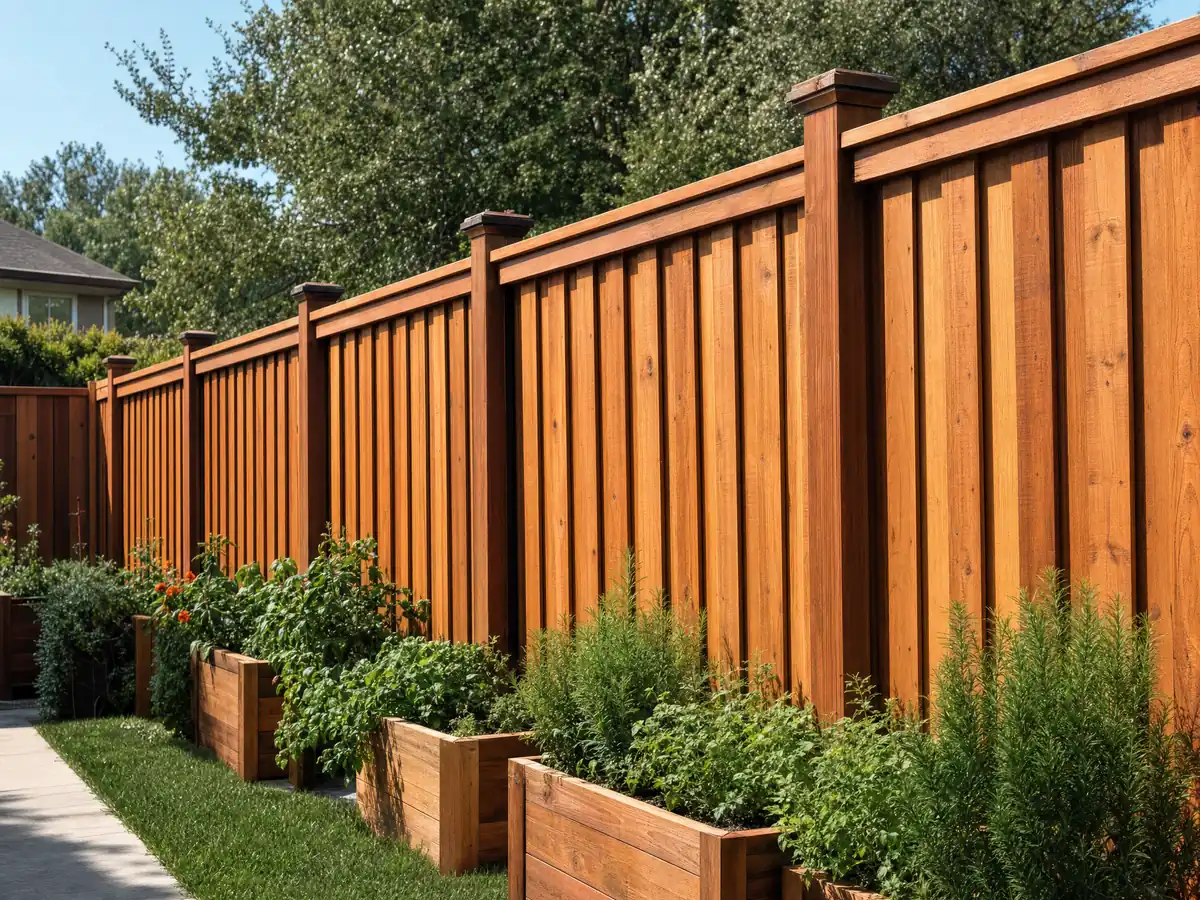
A fence on top of a wall is where owners get surprised. The state exemptions measure fences and retaining walls separately, and we did not find a Glendale rule that adds them together, so ask Planning whether the combined height is reviewed before you design a wall with a fence above it.
Wind is the other hillside question. The National Weather Service office in Los Angeles forecast gusts of 50 to 70 miles per hour for the foothills in October 2026, and we found no Glendale rule that sets post depth or panel openness for wind. Ask the contractor how deep the posts are set, what the footings are made of and whether panels are solid or slatted, and get the answers in the scope.
- In the ROS and R1R zones, section 30.30.010.B limits a retaining wall to 5 feet of exposed height when its toe sits within 15 feet of a street property line, with 2 more feet allowed if it is faced with decorative masonry or stone and the director approves.
- Within 5 feet of an interior property line the limit drops to 3 feet.
- On slopes no steeper than 2:1, two or three successive walls are allowed if they stand at least 5 feet apart.
- In the R1 zone, a retaining wall below a downslope building wall is limited to 5 feet.
Fence installation around a Glendale pool: the 60 inch barrier rule
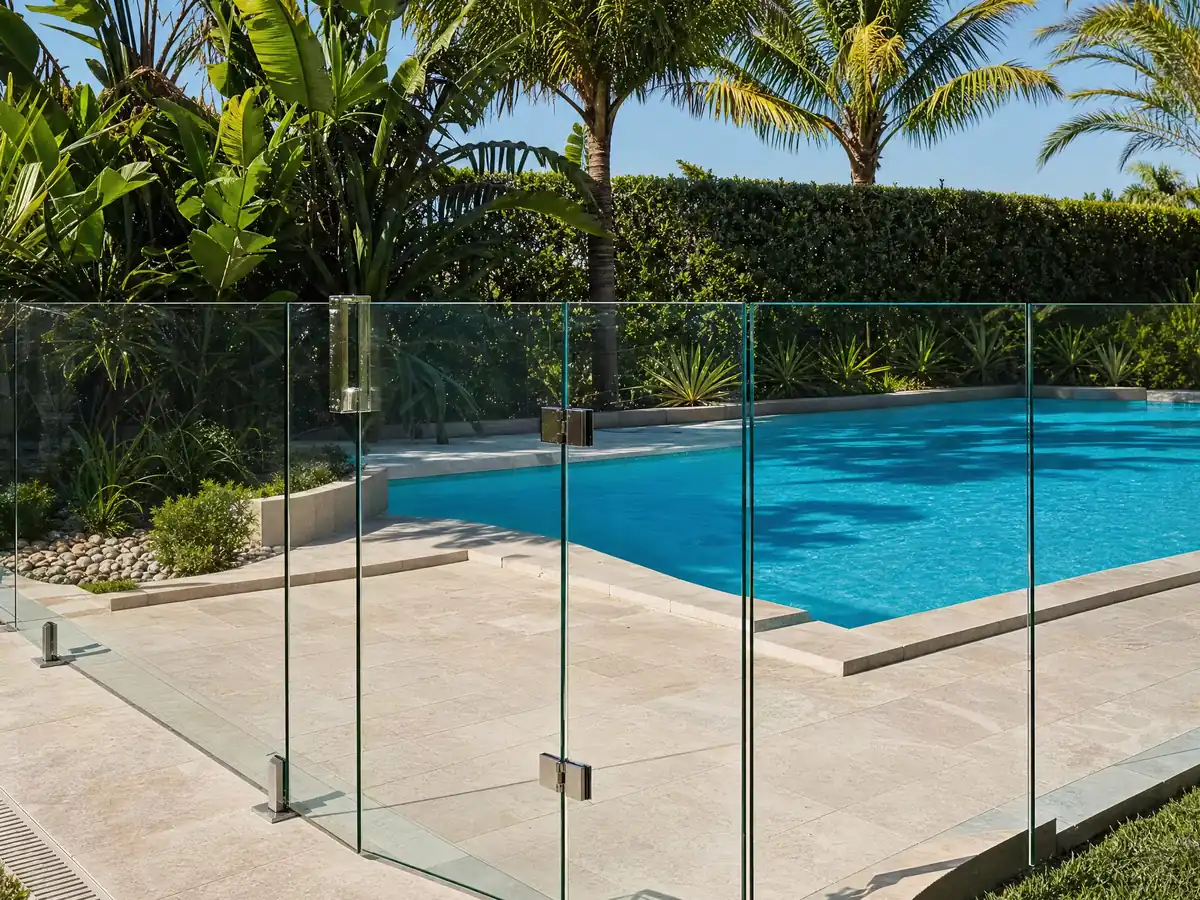
A pool barrier follows a stricter standard than a yard fence, and it is written into Glendale's own code. Ordinance 6043 amends Building Code 3102, with Health and Safety Code 115923, to require:
Some third-party pages print 48 inches for Glendale, and the amended text says 60. A new or remodeled pool or spa at a single-family home also needs at least two of seven listed safety features, so the fence is only one part of the approval. If you are planning the pool and the fence together, have the pool contractor and the fence builder read the same page of the ordinance.
- A barrier at least 60 inches high
- No more than 2 inches of clearance under it
- Openings that do not pass a 4 inch sphere, and a surface without handholds or footholds
- Gates that open away from the pool, self-close and self-latch, with the latch at least 60 inches above the ground
Who pays for a shared fence in Glendale, and what changes in a historic district?
California Civil Code 841 presumes that adjoining owners share equally in the reasonable cost of building, maintaining or replacing a fence on the line between them, unless they agreed otherwise in writing. A neighbor can rebut the presumption by showing equal sharing would be unjust.
Before you incur costs, give each affected neighbor 30 days' written notice that states the presumption, the problem, your proposed fix, estimated costs, a cost-sharing proposal and a timeline. Send the notice before you sign, and keep proof of delivery.
Historic districts add a review that has nothing to do with the building permit. In Royal Boulevard, Ard Eevin Highlands, Cottage Grove, Brockmont Park and Rossmoyne, the code treats fences as objects, and constructing or removing a fence, wall or hardscape needs director review and approval even when no building permit is required. The routine maintenance exemption covers landscape materials, not fences. A front fence in one of those districts is therefore a request to Planning before it is a quote from a fence builder.
How much does fence installation cost in Glendale, and which materials are allowed?
We found no Glendale fence survey and print no Glendale price. The planning ranges for Los Angeles come from Angi, HomeGuide, Thumbtack and Fixr: $25 to $55 per linear foot for a 6 foot wood or vinyl privacy fence, $12 to $30 for chain link and $35 to $85 for aluminum or ornamental iron, with a typical 100 foot backyard run at $2,500 to $5,500. Federal wage data for May 2025 lists fence erectors in the Los Angeles area at a mean $28.00 an hour. Block walls, horizontal slat fences, gates with openers and hillside lots have no independent price, so the written proposal sets them.
Glendale's rules trim the material list. In the ROS, R1R and R1 zones the code bans electrically charged, sharp-edged, barbed wire, razor wire, chicken wire and fiberglass fences, and approves wood, masonry, decorative metal and other decorative materials the director accepts. Chain link is the cheapest per foot, yet it is banned in the F overlay and allowed in those zones only when vegetation screens it from neighbors and it cannot be seen from the public street.
Wood is the common choice, and the University of California's pest program says drywood termites are most prevalent in southern California and infest fences, so ask about termite-resistant wood or concrete footers where wood meets soil.
How do I hire a fence company in Glendale?
CSLB defines class C-13 Fencing as constructing, erecting, altering or repairing fences, corrals, runs, railings and gates, and it excludes masonry walls, which belong to a masonry license. A fence job that needs a permit can never fall under the $1,000 unlicensed work limit. Read how to check a contractor's license before you sign.
On an MDG job, ask for the fencing subcontractor's license number and certificate of insurance, as explained in our piece on how general contractors use subcontractors. Then put these questions to every bidder:
- What is the CSLB license number, and does the record check out?
- Is there proof of insurance, and a written contract that follows Business and Professions Code 7159?
- Who handles the neighbor notice and any permit or Design Review request?
- How do the post depth, footing material and panel openness suit a windy lot?
- Does the written scope list footage, height, gates and removal of the old fence?
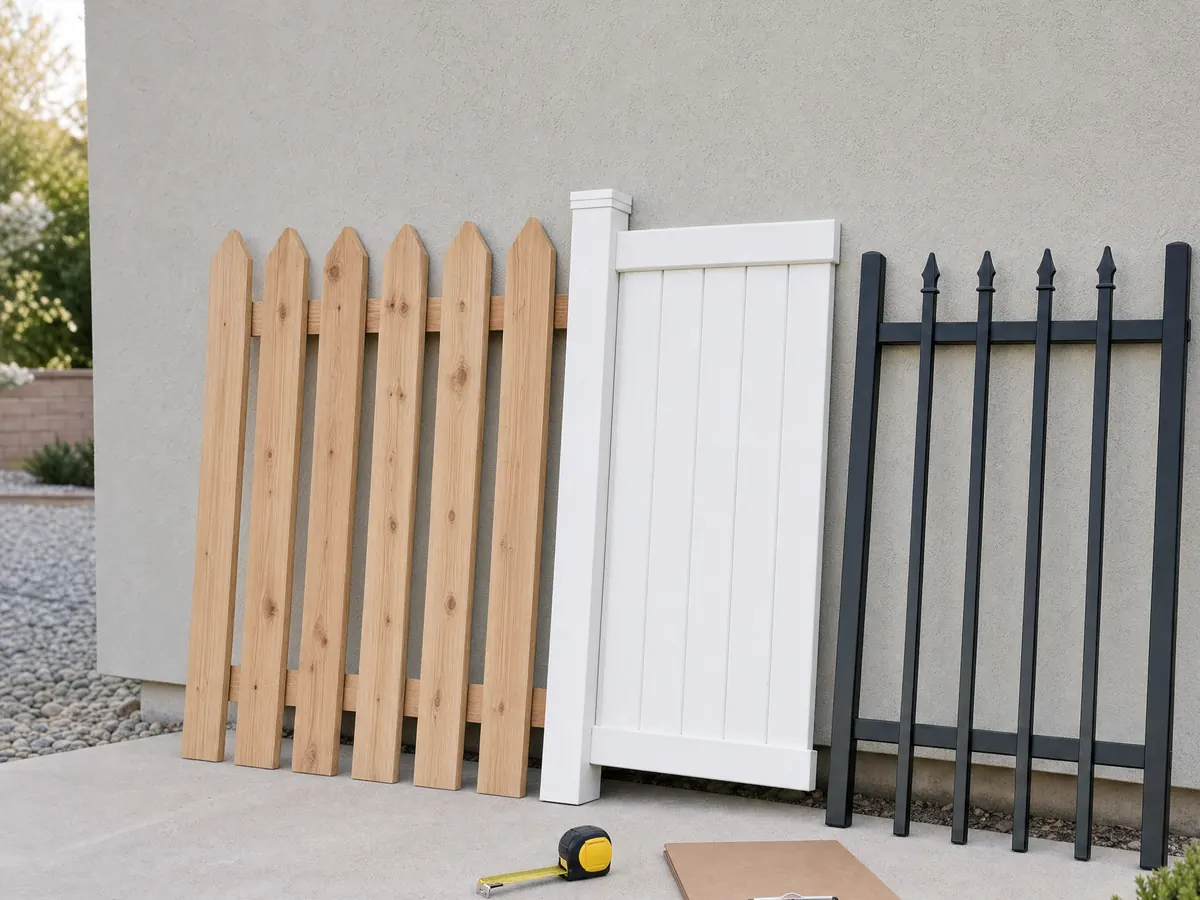
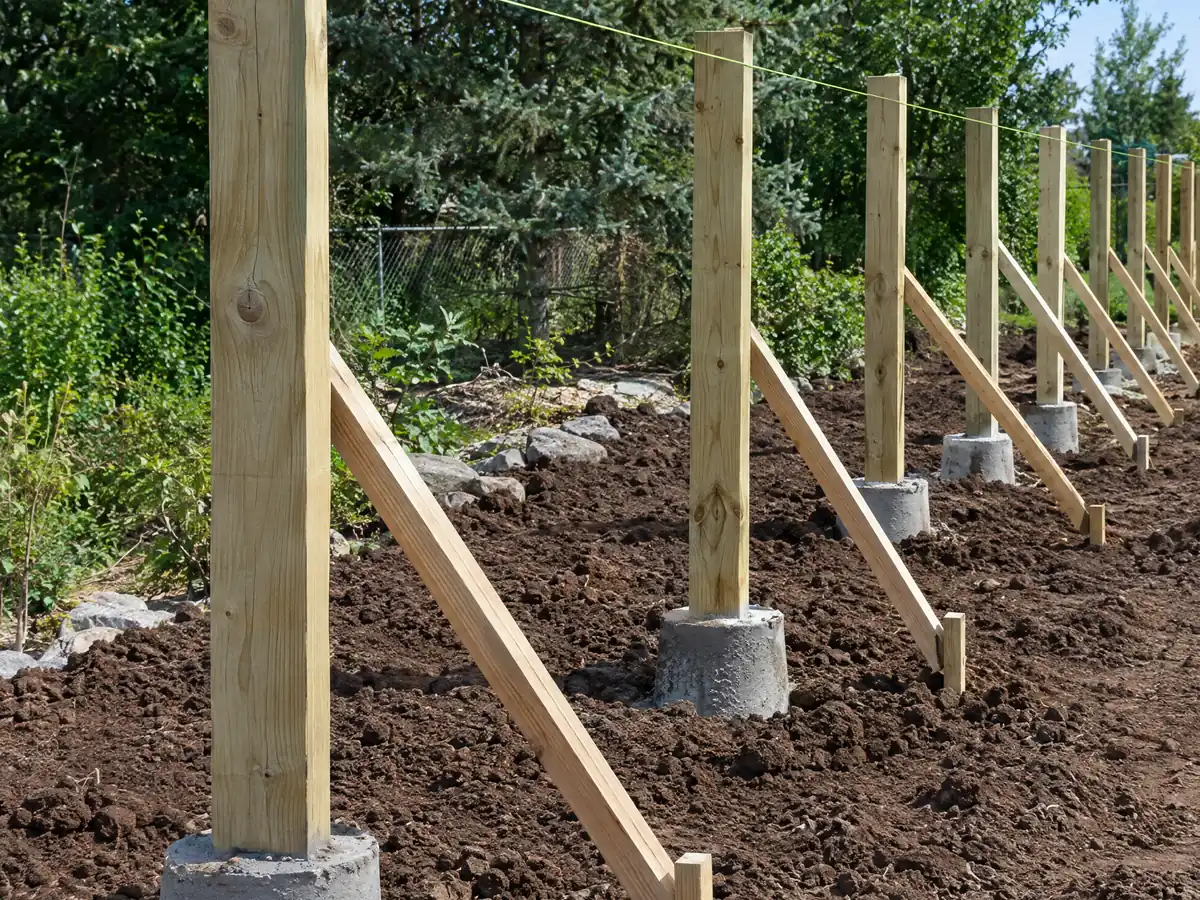
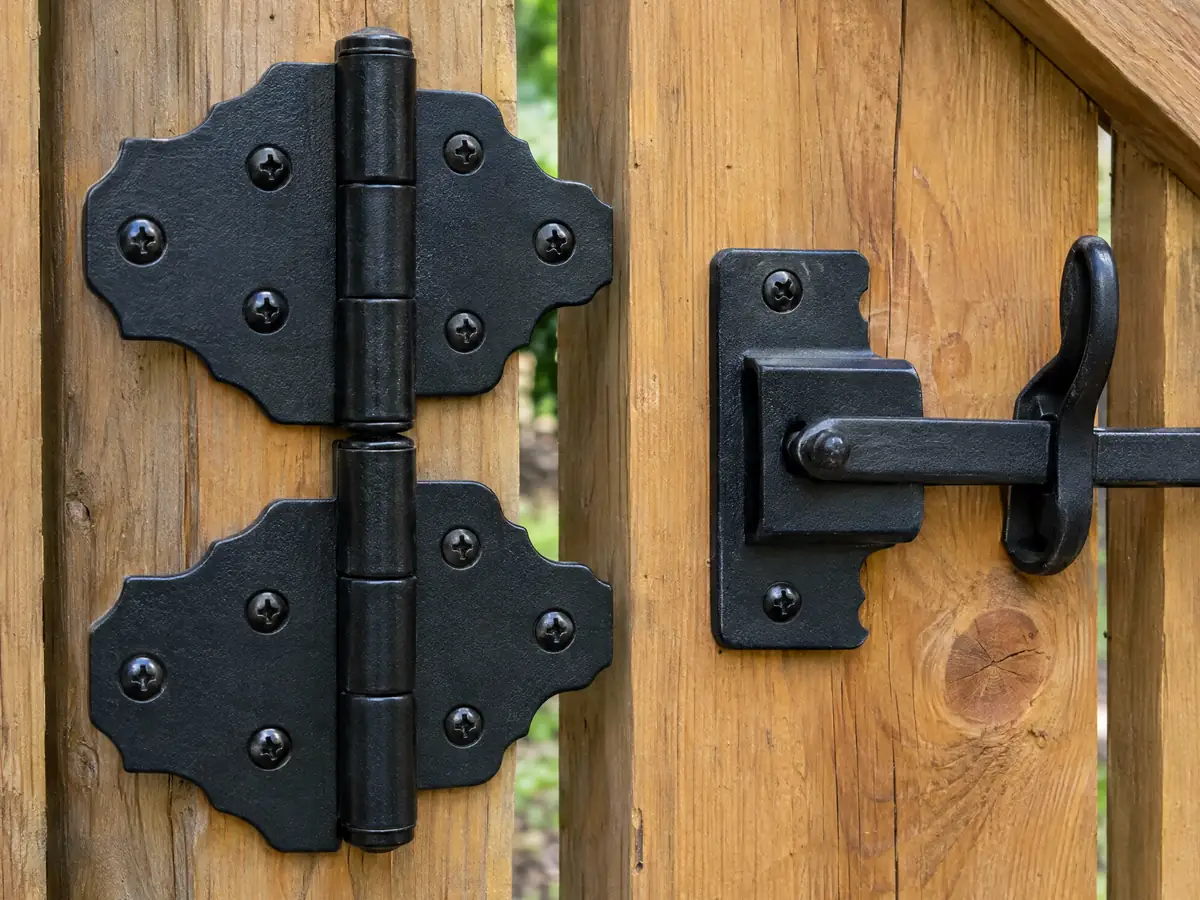
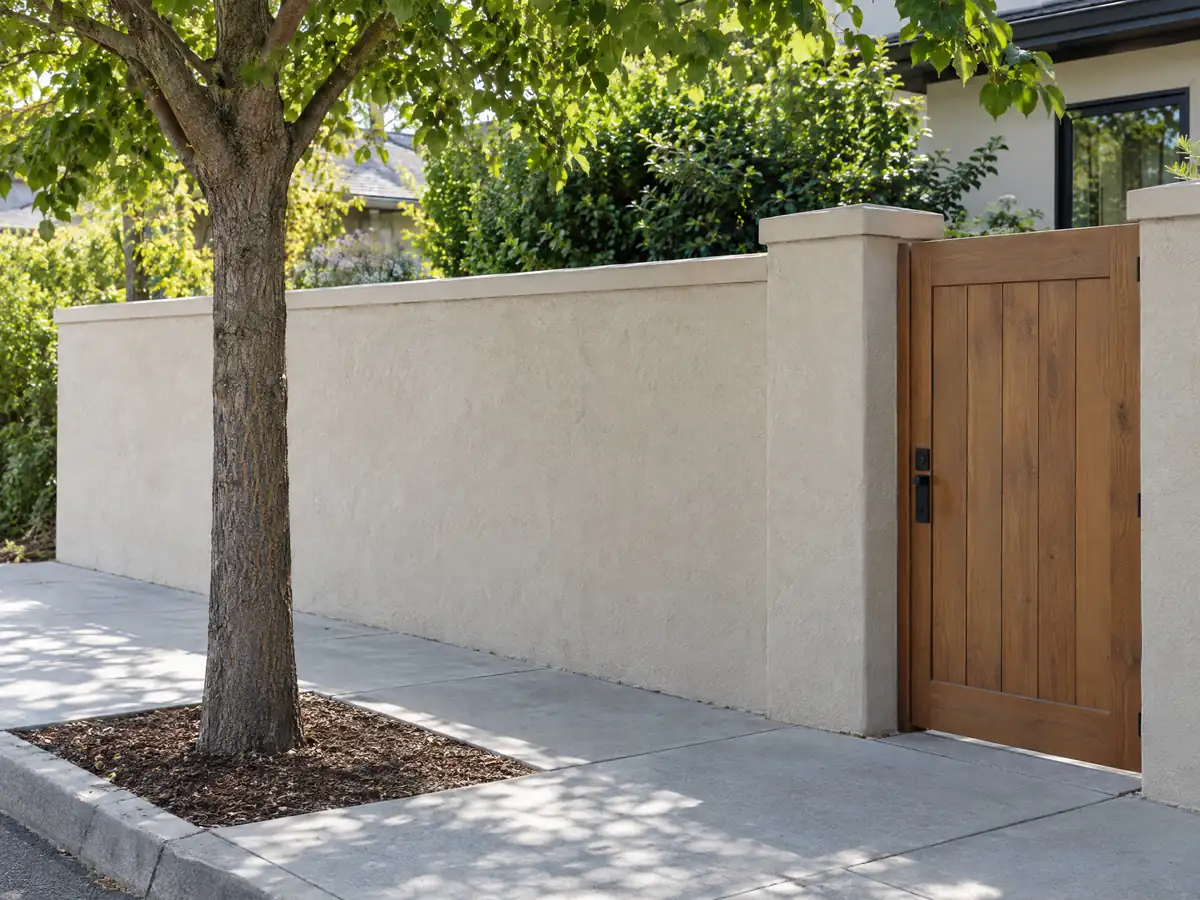
Fence and gate photos from Glendale and nearby communities
Six fence scenes tied to Glendale neighborhoods and to nearby communities such as Eagle Rock and La Crescenta-Montrose, from wood privacy runs to metal pool barriers.
Where the fence numbers come from
Every per-foot figure we use for Glendale comes from Los Angeles sources, and each one is named in the table on the fencing cost page. Permit fees are not in those numbers. Because the sources disagree at the low end, treat them as a planning range and ask for a written, measured proposal.
| What it covers | Typical range |
|---|---|
| Wood or vinyl privacy fence, 6 feet | $25 to $55 per linear foot |
| Chain-link | $12 to $30 per linear foot |
| Aluminum or ornamental iron | $35 to $85 per linear foot |
| Typical 100-foot backyard run | $2,500 to $5,500 total |
| Block walls, horizontal slat fences, gates and openers, hillside lots | Set by the written proposal |
Glendale fence questions, answered
How much should I pay for a fence installation in Glendale?
Use the Los Angeles planning ranges and a measured proposal. A 6 foot wood or vinyl privacy fence runs $25 to $55 per linear foot, chain link $12 to $30 and aluminum or ornamental iron $35 to $85, according to Angi, HomeGuide, Thumbtack and Fixr. Glendale has no published fence survey, and permit fees are extra.
How much does 200 ft of fencing cost?
Multiply your footage by the per-foot range for the material, then add gates, removal of the old fence and any permit. Our sourced example is a typical 100 foot backyard run at $2,500 to $5,500. Hillside lots, block walls, slat designs and gate openers have no independent price, so they are quoted from a site visit.
What are the new fence rules in California in 2026?
The 2026 change we can document is local: Glendale's Ordinance 6043 took effect January 1, 2026 and keeps the 60 inch pool barrier rule. A proposed state ember-resistant Zone 0 rule near houses was unsettled when we checked, so we did not rely on it. Ask Building and Safety before attaching a wood fence to a house.
Do I need a permit to build a fence in Glendale?
Often not for the building permit, but zoning still applies. The state exempt list clears fences up to 7 feet and retaining walls up to 4 feet, and we found no Glendale amendment. Design Review, overlay limits, pool barriers and historic districts can still require approval, so confirm your lot with Planning.
Does my neighbor have to pay for half the fence in California?
Usually the law presumes so. Civil Code 841 says adjoining owners share the reasonable cost of a fence on their line equally unless they agreed otherwise, and a neighbor can rebut that. You must give 30 days' written notice before incurring costs. Replacing a shared fence without that notice leaves the cost-sharing in doubt.
What if I don't get a permit to build a fence in Glendale?
We could not read a Glendale penalty schedule, so we will not quote one. The code does say a permit issued in a historic district without required design review is void. Build to the height, setback and material limits above, keep every approval in writing, and ask Building and Safety what enforcement applies.
What is the cheapest fence to install in Glendale?
Chain link has the lowest sourced price at $12 to $30 per linear foot, but Glendale limits it. The F overlay bans it, and in the single-family zones it must be screened by vegetation and hidden from the street. Wood or vinyl privacy fencing is the next lowest sourced option, at $25 to $55 per foot for 6 foot fencing.
What is the best time to install a fence in Glendale?
Dry months are easier on concrete and crews. NOAA's normals show 11.37 of Glendale's 13.91 inches of annual rain falling from December through March and almost none in July and August. We found no sourced price difference by season, so choose the date by the permit and neighbor notice timeline, not by a rumor.
How tall can a fence be in Glendale?
It depends on where it stands. The street setback allows 42 inches in an F overlay and 48 inches in an H overlay, and Design Review is triggered above three feet in the ROS, R1R and R1 zones. Pool barriers need at least 60 inches. We found no general side and rear maximum, so ask Planning.
How do I choose a fence company or fence contractor in Glendale?
Check the CSLB license first: fencing is class C-13, which excludes masonry walls. Ask for a written contract that follows Business and Professions Code 7159, proof of insurance and whether the contractor will handle the neighbor notice and any permit. Work that needs a permit can never be done under the $1,000 unlicensed limit.
Plan your fence project in Glendale
Send the address, the length you want to enclose and whether any part is front yard, hillside or beside a pool. We check the overlay and review questions before we call back.