
Concrete Companyin Walnut, CA
A concrete company in Walnut checks trees and the front yard before ordering a truck: native oaks and California Black Walnuts keep a root zone of 15 feet or more, and an R-1 front yard may be only 50 percent paved. Flat walks and driveways are exempt on the state model list; Walnut's own list was not read.
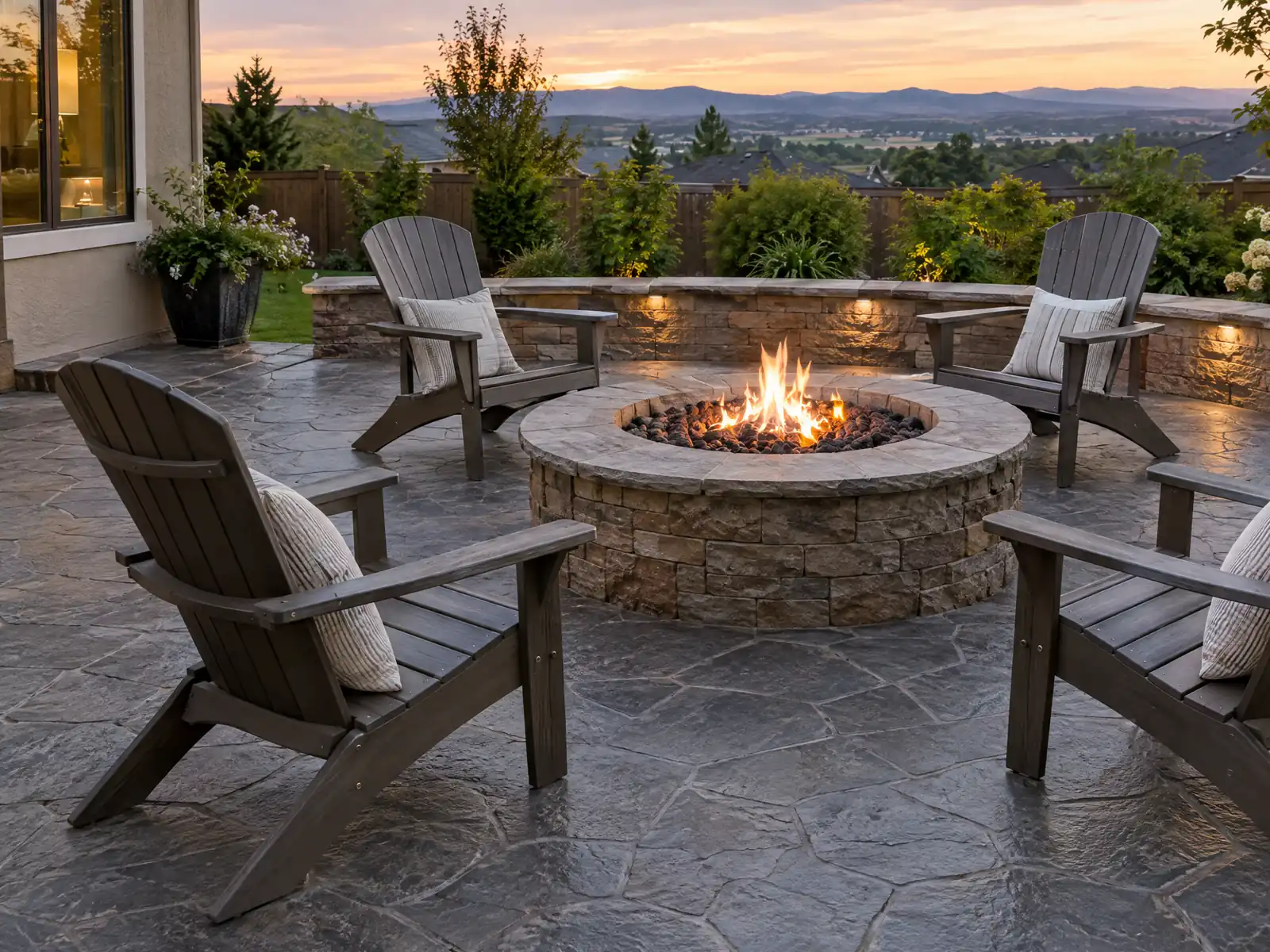
Walnut was farmland before it was a suburb. The General Plan says the City incorporated on January 19, 1959 with 934 residents, that the first suburban neighborhoods of the 1950s clustered on the southwest hillsides around Gartel Drive and Fuerte Drive, and that grading in the 1980s made steeper ground buildable. Census estimates for 2020 to 2024 count 9,230 homes, 4,419 of them from the 1980s, so a driveway original to a house is likely 37 to 46 years old, and a 1950s walk is between 67 and 76.
MDG Builders, CSLB #1040337, is a general contractor in Tarzana. We draw the scope, ask the Building & Safety Division what applies and bring in a licensed concrete subcontractor to form, pour and finish. Finishes and materials are on the concrete page, and the Walnut overview lists the other trades we manage here.
What Walnut's Building & Safety Division, Planning Division and Municipal Code say about concrete work
Where concrete permits come from in Walnut: City of Walnut Community Development Department, Building & Safety Division.
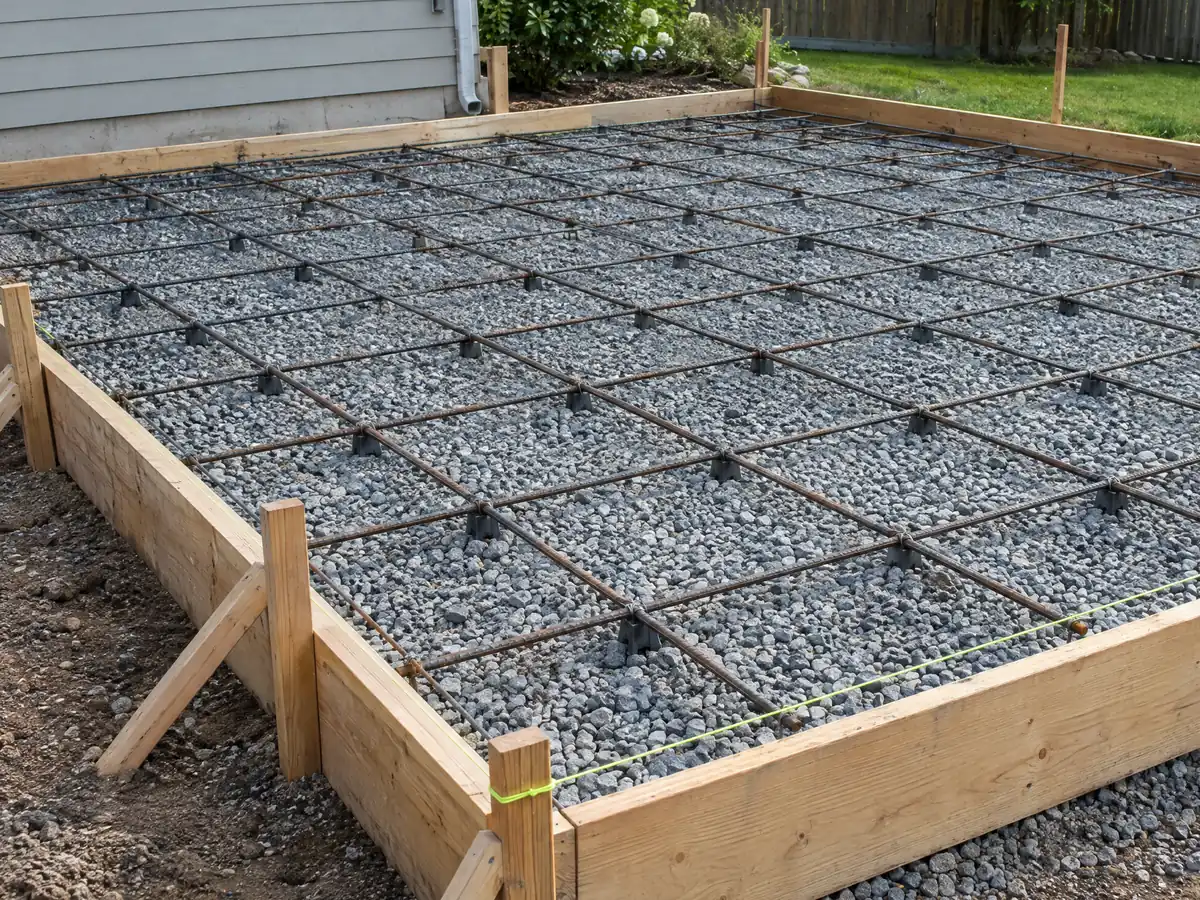
- Walnut's amended Building Code (Municipal Code 2.04.030(J), Section 1809.4) treats foundations as sitting on expansive soil unless a registered geotechnical engineer says otherwise. Without an approved alternative, exterior footings go at least 24 inches below grade (18 inches interior), foundations need two continuous 1/2 inch bars near the top and two near the bottom, and slabs need a 4 inch coarse aggregate fill or moisture barrier, at least 3-1/2 inches of concrete, welded wire mesh or 3/8 inch bars at 24 inches or less, and soil saturated to 18 inches before the pour.
- Walnut's R-1 zone limits walkways, parking, driveways and other impervious surfaces to 50 percent of the front yard (Municipal Code 6.12.050(F)), with the garage access area up to 25 feet wide excluded from the calculation, and the Planning Commission may grant exceptions through Chapter 6.84.
- Concrete work near a protected oak or California Black Walnut is regulated: trenching, excavating or paving inside the protected zone (5 feet outside the dripline to the trunk, never under 15 feet from the trunk) counts as damage, roots over 1 inch need City approval to cut, and 5 foot chain link tree protection fencing goes up at the outer edge of the zone before grading.
- Walnut's grading section says final grades that vary more than 3 feet at the periphery or 10 feet in the interior from an approved tentative map need Planning Commission approval, and walls, decks and landscaping may not block or divert drainage.
- The state model list of permit-exempt work (R105.2 as excerpted by the City of Albany) exempts sidewalks and driveways not more than 30 inches above grade and unattached decks of 200 square feet or less that are not more than 30 inches above grade and do not serve a required exit door. Walnut's own R105.2 was not read, so ask Building and Safety, and note that Walnut's amended code (2.04.030(J)) controls slab and footing design on expansive soil.
- CSLB defines the C-8 Concrete classification as a contractor who forms, pours, places, finishes and installs specified mass, pavement, flat and other concrete work.
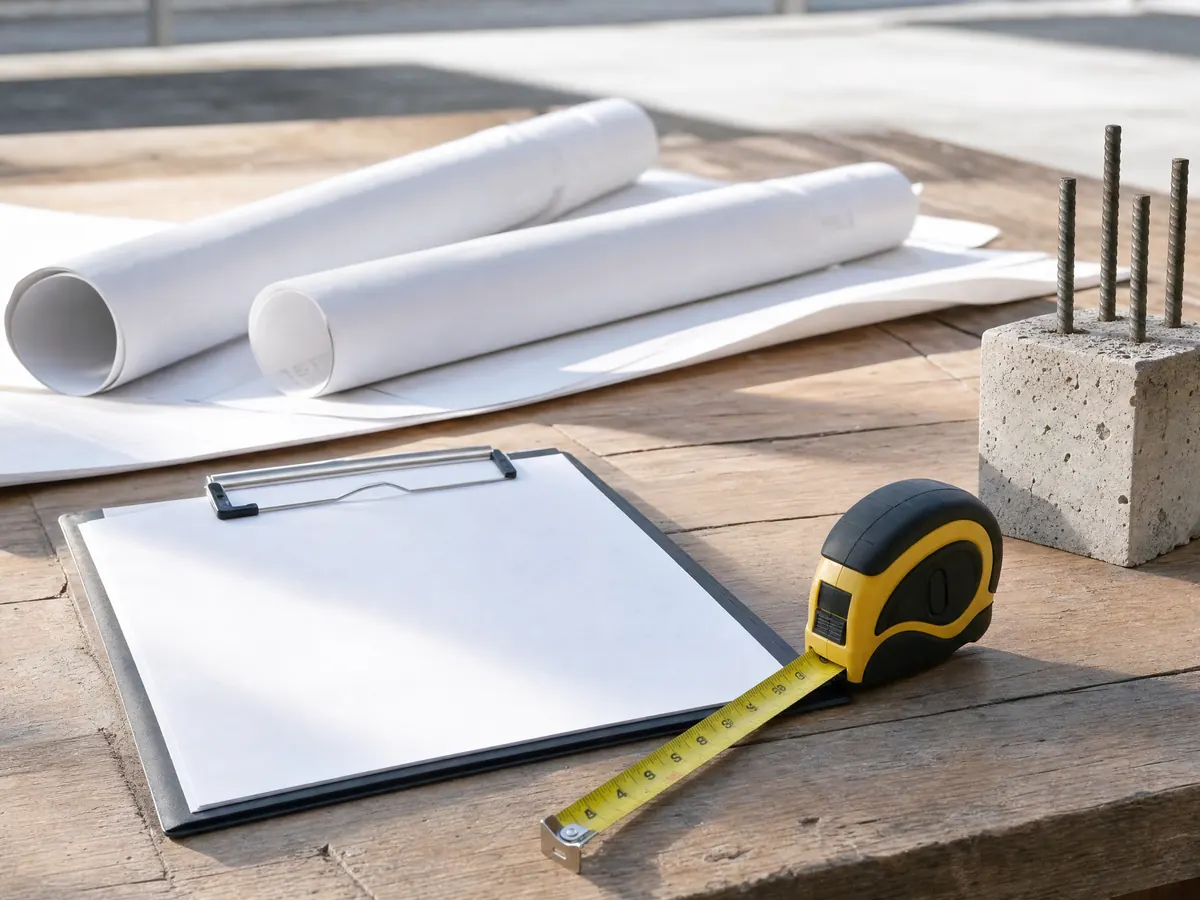
Can you pour concrete near an oak or California Black Walnut tree in Walnut?
Often yes, but not freely. Walnut's tree article (Municipal Code 6.52.240 to 6.52.370, per the GoCodebook mirror) protects every native oak and California Black Walnut with a trunk circumference of 6 inches or more, measured 4.5 feet up. The protected zone runs from 5 feet outside the dripline to the trunk and is never smaller than 15 feet from the trunk. Trenching, excavating or paving inside it counts as damage, and cutting, pruning, removing or encroaching takes a tree permit.
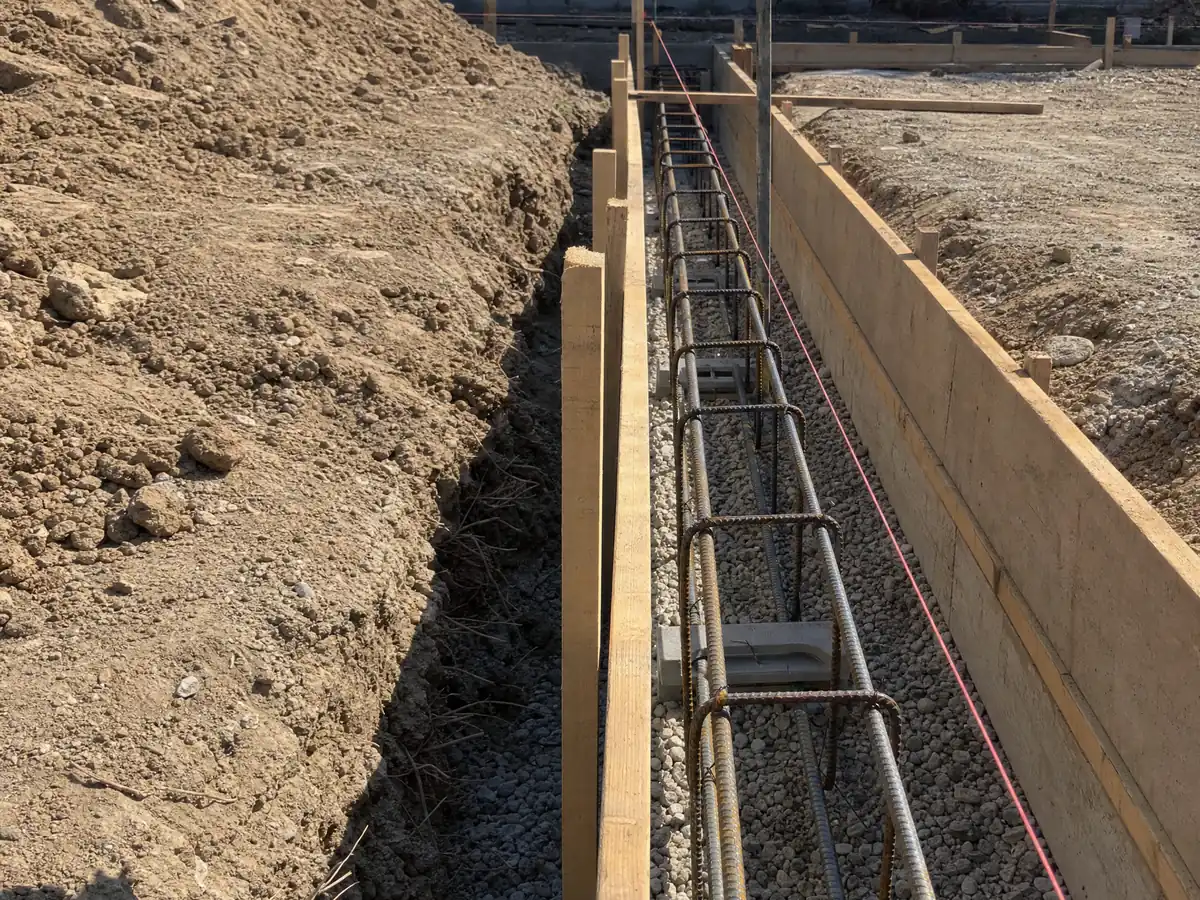
The work rules are what slow a crew. Under the tree there are hand tools only, the owner's tree consultant supervises, the City gets 48 hours of written notice, any root over 1 inch needs City approval to cut, footings must bridge roots and 5 foot chain link protection goes up at the edge of the zone before grading. Only one tree permit is issued per site in any 12 months.
Developed lots get one break: removing a tree on developed property is exempt unless another entitlement needs Planning Commission action. That exemption speaks to removal, so do not read it as permission to pave inside the zone. Ask Planning before a trench is dug or a form is set, and have the zone drawn on the site plan.
How much of a Walnut front yard can be concrete?
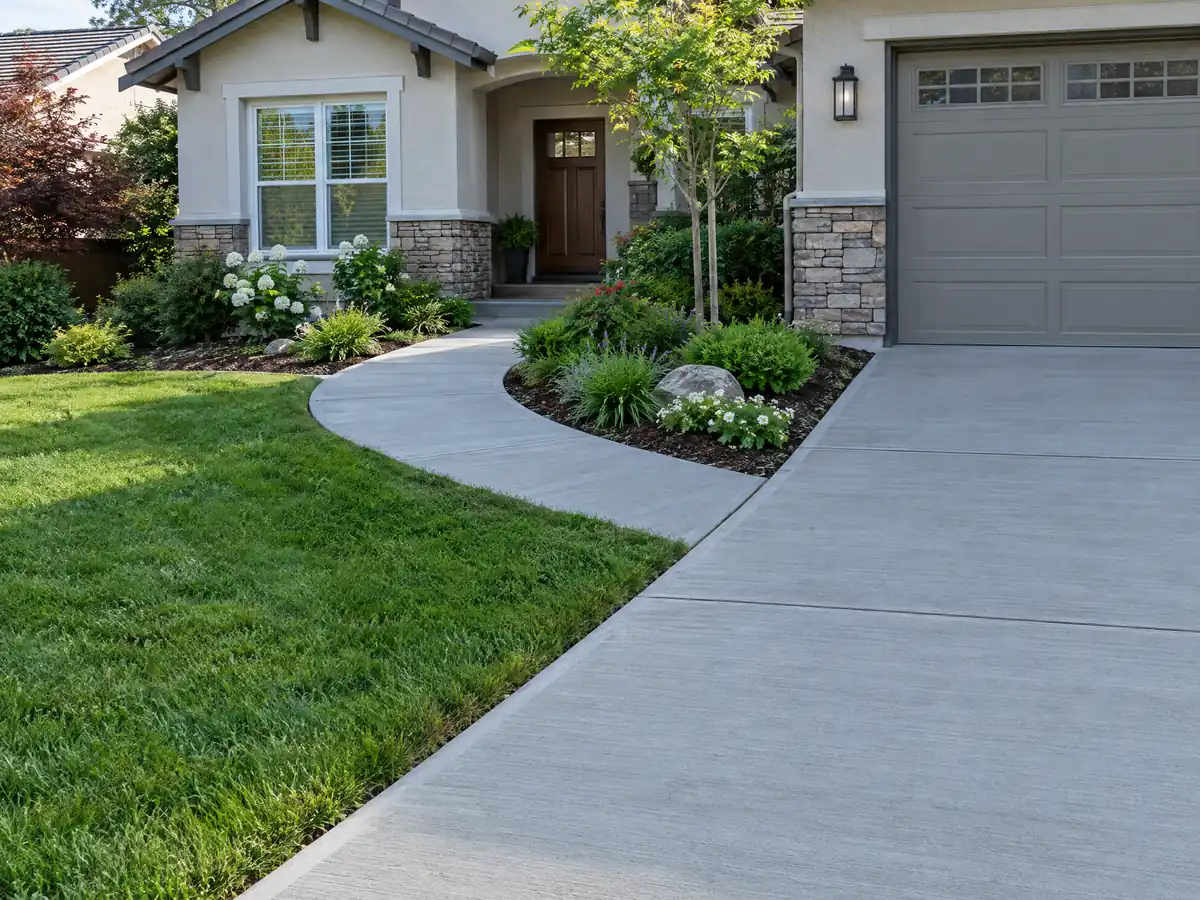
Half. In the R-1 zone, walkways, parking areas, driveways and other impervious surfaces may cover no more than 50 percent of the front yard (Municipal Code 6.12.050(F)), and the garage access area, up to 25 feet wide, is left out of the math. The Planning Commission can grant exceptions through the site plan chapter, 6.84.
An R-1 front yard is 20 feet deep, 25 feet when the garage faces the street, and 30 feet for homes of 4,500 square feet or more, so the arithmetic changes with the house. Measure the yard, subtract the garage apron, add every walkway, widened curb cut and slab beside a planter, and compare the total with half. A pour that looks like a small side path can tip a lot over the line.
We found no Walnut rule for the apron at the curb. That strip is public right of way, so ask Public Works or Building & Safety who permits it before any demolition starts.
What does Walnut's expansive soil rule change about a patio or driveway slab?
The code does not treat Walnut dirt as neutral. Section 1809.4 as amended (Municipal Code 2.04.030(J)) presumes foundations rest on expansive soil unless a registered geotechnical engineer reports otherwise. Where no engineer's alternative is approved, the text calls for exterior footings 24 inches deep (18 inside), two continuous 1/2 inch bars high and two low in a foundation, and a slab at least 3-1/2 inches thick over a 4 inch bed of coarse aggregate or a moisture barrier, reinforced with welded wire mesh or 3/8 inch bars at no more than 24 inches apart, on soil soaked to 18 inches first.
That language governs foundation slabs. Whether Building & Safety applies the same specification to a free-standing patio or a flat driveway is a counter question. Ask a crew to state thickness, base and reinforcing in the proposal and compare them with the code text.
Clay is not the only mover. The General Plan names the San Jose Fault along the northern edge of the city and landslides in the San Jose Hills as hazards, and a pad cut or filled during the 1980s grading may deserve an engineer's eye. Photograph any crack that widens, with the date and a coin beside it.
Do you need a permit to pour a patio, walkway or driveway in Walnut?
The model code says ordinary flatwork is exempt, and Walnut's own list is the gap. R105.2, as the City of Albany reproduces it from the 2025 code, exempts sidewalks and driveways not more than 30 inches above adjacent grade. Walnut adopts the 2026 Los Angeles County Residential Code, and that edition's R105.2 was not read. The City's ecode360 site blocked our tool and the GoCodebook mirror is a third party, so confirm the exemption before relying on it.
Planning can matter even when Building does not. Walnut's grading rules bar walls, decks and landscaping from blocking or diverting drainage, and a change of 5 feet or more in elevation outside a reviewed project needs Planning Commission approval, so a patio with a stepped retaining edge can leave the exempt column.
One state rule applies either way. The $1,000 limit in Business and Professions Code 7048 does not cover work that needs a permit, so any permitted pour needs a licensed contractor. Fee tables were not readable; Municipal Code 2.04.060 sets building fees at double the County's.
How tall can a retaining wall on a Walnut hillside lot be before the City steps in?
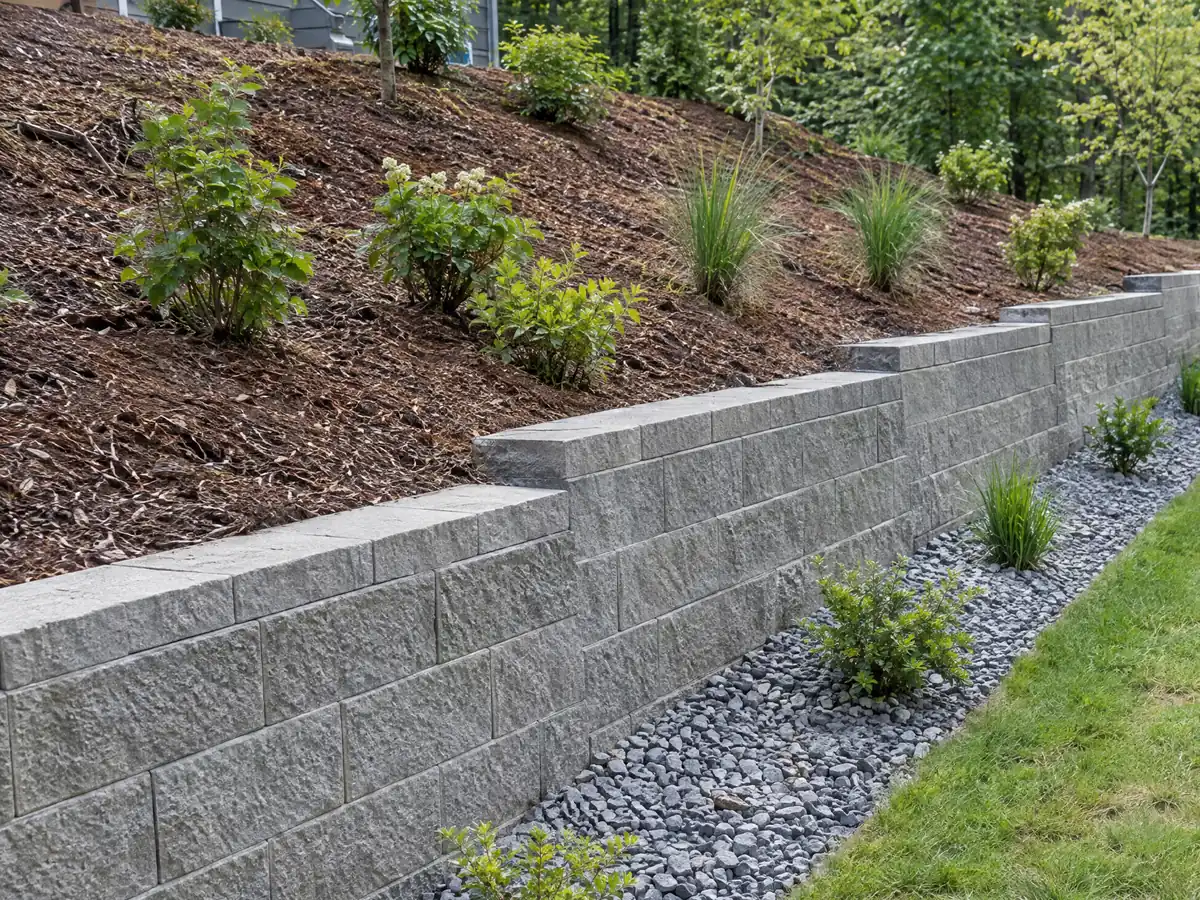
Four feet is the figure on the state model list, and it is not a Walnut number. R105.2 exempts retaining walls not over 4 feet from the bottom of the footing to the top unless they hold a surcharge, such as a driveway or a sloped yard above. Walnut adds hillside limits of its own: cut or fill slopes over 30 feet vertical need a Planning Commission exception, and the City inspects slopes annually.
The steepest ground is Buzzards Peak at 1,375 feet, and areas such as Timberline (Specific Plan #1, 636 acres) follow their own standards. Poured walls fall under CSLB's C-8 class and block walls under C-29, which is our reading of the class lists and not a CSLB statement, so the proposal should name the license class of whoever builds the wall.
Drainage is the real cost of a wall. Municipal Code 2.04.040(E)(2) bars walls from diverting drainage, FEMA mapping puts much of the northern and eastern city near the San Jose Hills in Zone D, and the General Plan describes ponding in low spots. Ask where the water goes once the wall is done, and have weep holes, drain rock and an outlet listed as line items.
Should the original concrete in Walnut's oldest neighborhoods be repaired or replaced?
Only 328 of Walnut's 9,230 homes predate 1960, and 251 of those date from the 1950s, so original flatwork of that age is rare and worth a look before it is demolished. Leveling a heaved panel, grinding a trip edge or patching a corner costs less than a tear-out, and a crew should say which cracks are cosmetic and which are moving.
Heat is the other stress. NOAA's 1991 to 2020 normals for the Pomona Fairplex station average 70.5 days a year above 90 F, 10.7 above 100 F and 2.7 nights at or below freezing. Ask how a crew handles a pour on a 100 degree afternoon, and what it does about shade, wetting and curing. We found no Walnut rule on pour temperatures.
Sidewalks and curbs raise an owner question. Who maintains the walk in front of a Walnut home was not stated in the City pages or code chapters we opened, so ask Public Works before repairing or removing it.
What does concrete work cost in Walnut, and what license should the crew hold?
We found no Walnut concrete price study with a stated method, so these are Los Angeles figures, rated medium for plain flatwork and lower for decorative work and driveways with grading. Angi's 2026 Los Angeles pages give $4 to $13 per square foot for a patio (average $5,248), $15 to $30 for a stamped patio and $8 to $20 for a driveway, with 200 square feet of driveway about $2,500. Our planning range is $8 to $14 per square foot for a typical patio, walk or slab of 300 square feet or more, and $9 to $20 for a driveway replacement that includes demolition.
Small jobs run higher per foot because of minimum charges, and retaining walls are priced by height and drainage, so no per-foot wall figure is printed. The federal wage survey puts cement masons in the Los Angeles area at a mean of $33.67 an hour as of May 2025, a floor under any labor line.
CSLB's C-8 class covers forming, pouring, placing and finishing concrete work. Ask for demolition, haul-off, base, reinforcing, finish, permits and any tree-consultant fee on separate lines, and read how general contractors use subcontractors before you sign.
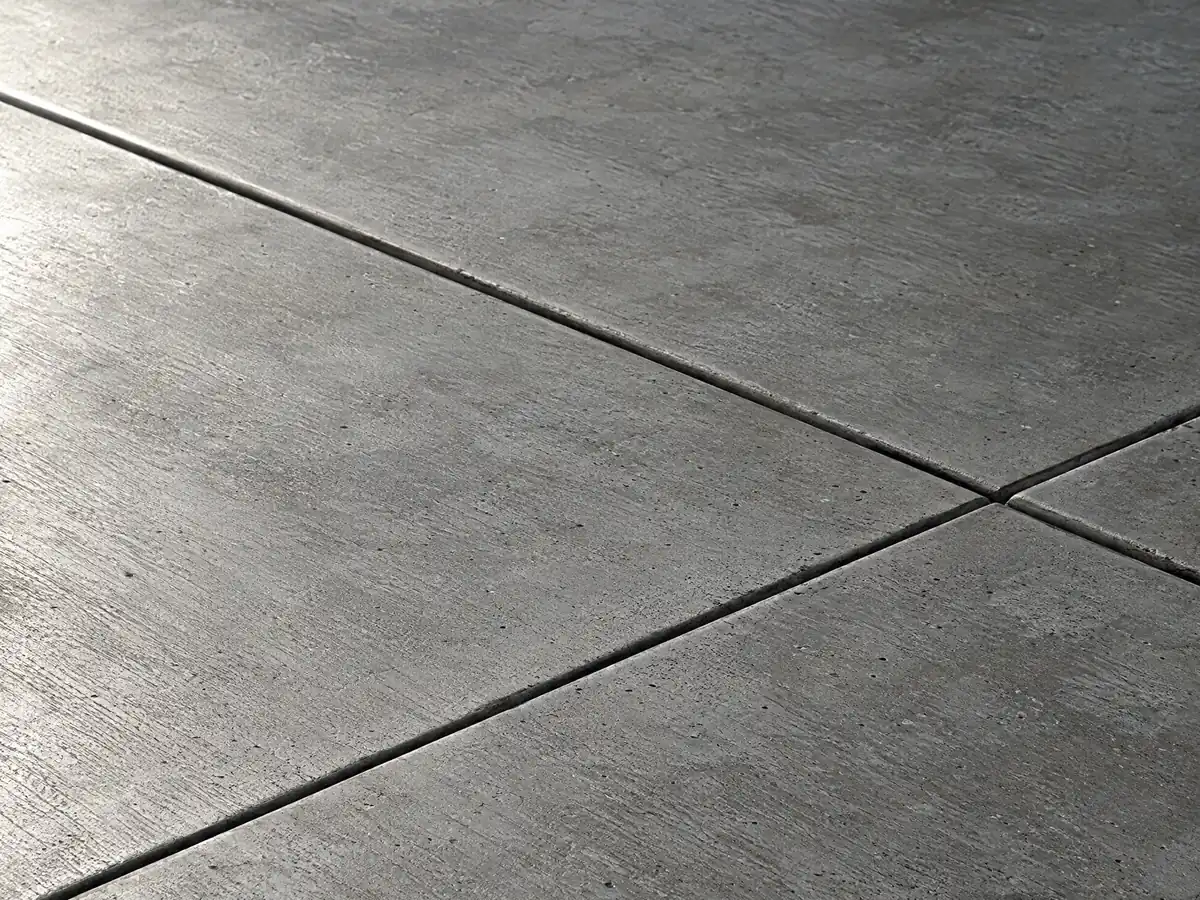
Concrete photos from Walnut and nearby communities
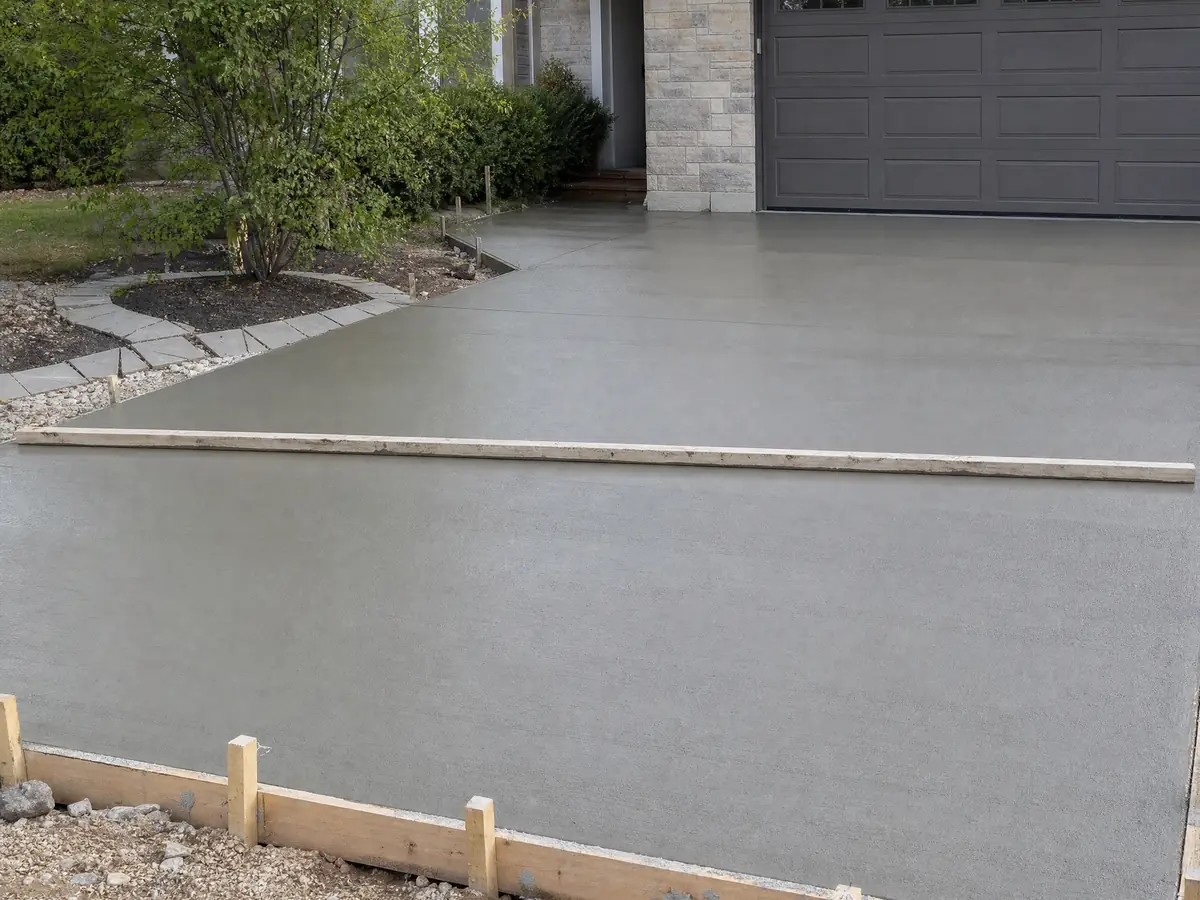
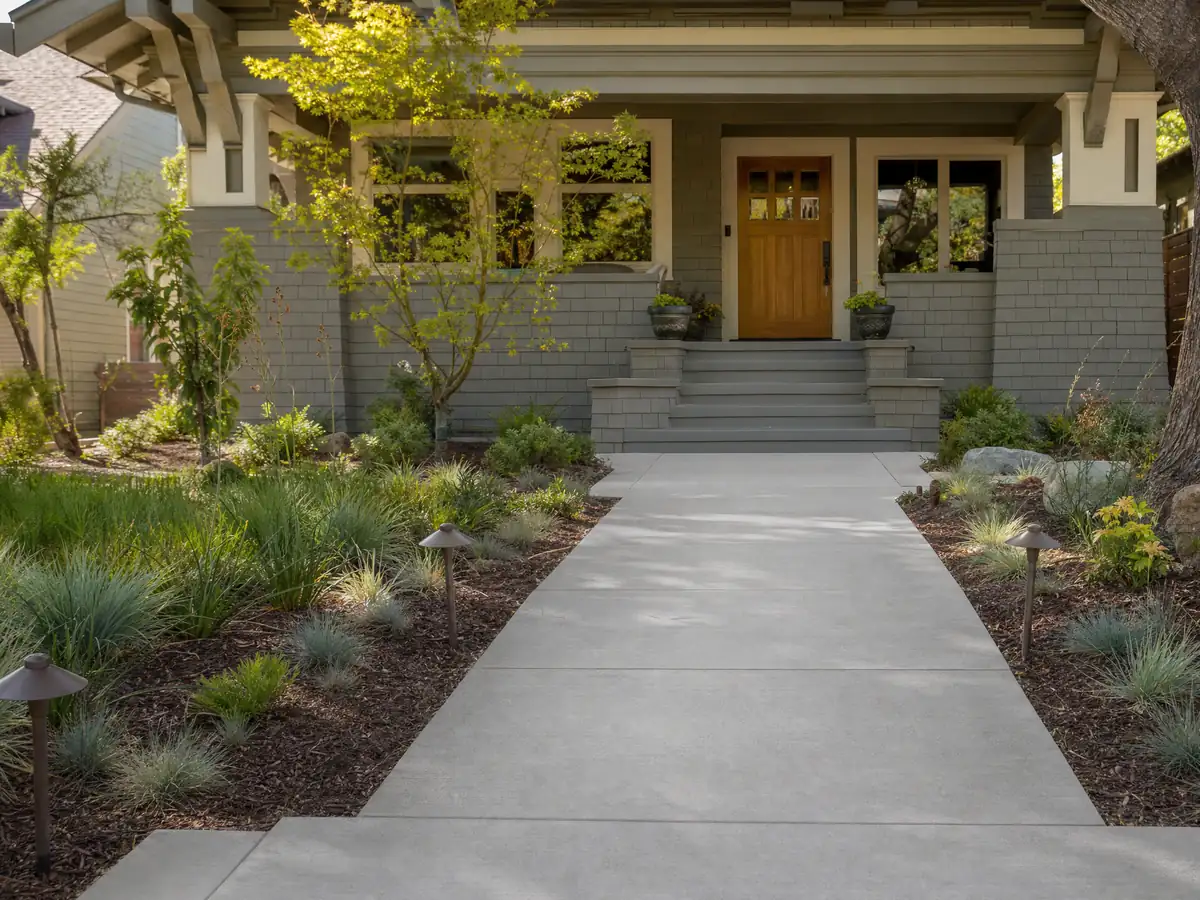
Forms, rebar, walks, patios and driveways from Walnut and the towns around it, shown at the stages that matter. Tap any photo to enlarge it.
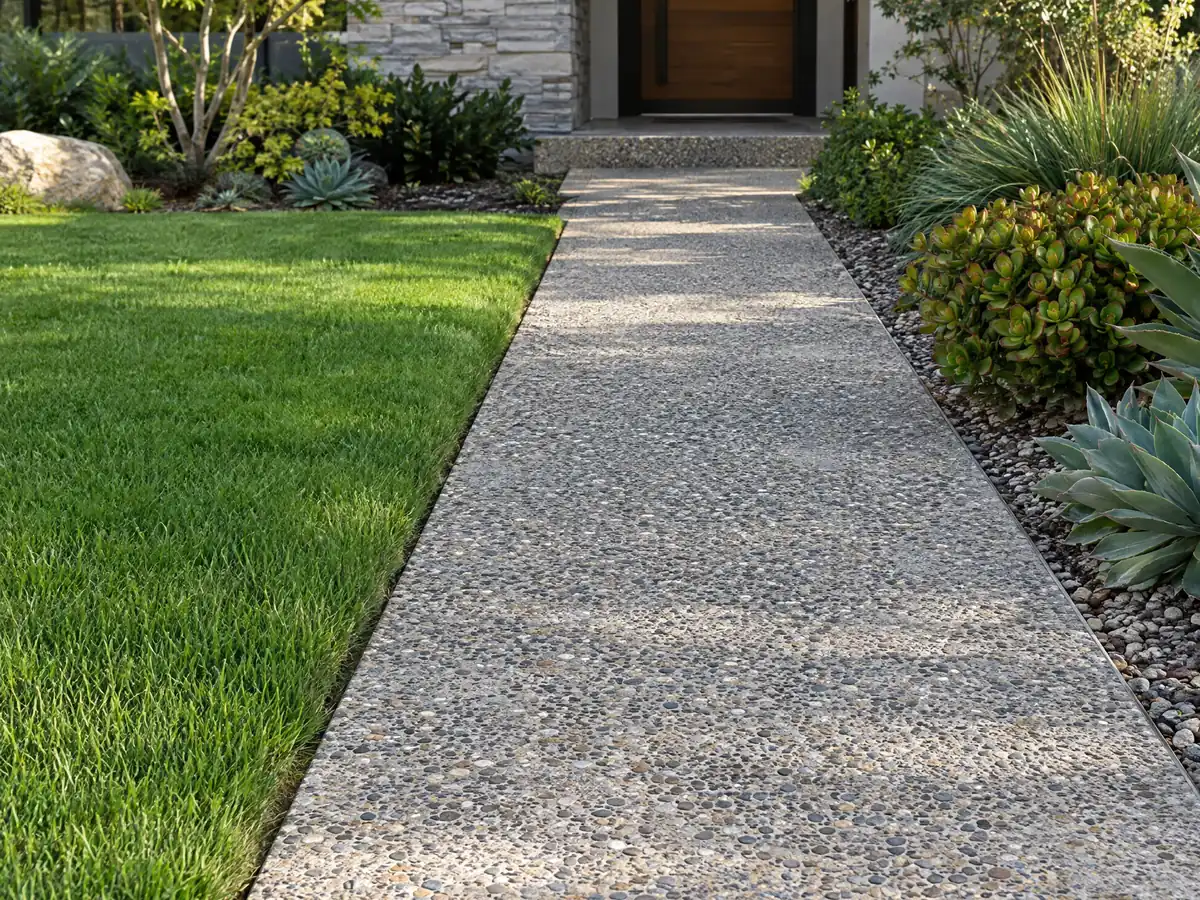
What concrete costs around Walnut
Dollar figures here are Los Angeles planning ranges from our concrete page, not a Walnut bid, and the proposal should show demolition, base, reinforcing and any tree work on their own lines. The same lot may also need flooring in Walnut or decks in Walnut. Neighboring cities to compare: concrete work in Diamond Bar, concrete in West Covina, concrete in Covina and concrete in Los Angeles. To check a number first, use our license check guide.
| What it covers | Typical range |
|---|---|
| Patio, walkway or slab, broom finish, 300 sq ft or more | $8 to $14 per square foot |
| Decorative: stained, stamped or exposed aggregate | $15 to $30 per square foot |
| Driveway replacement, with demolition of the old slab | $9 to $20 per square foot |
| 20 by 20 foot plain patio (400 sq ft) | About $3,200 to $5,600 |
| 20 by 20 foot decorative patio (400 sq ft) | About $6,000 to $12,000 |
| Small jobs under 300 sq ft | Usually above the per-foot range |
| Retaining walls | Set by the written proposal |
Walnut concrete questions, answered
Can I pour a concrete patio without a permit in Walnut?
Possibly, since the state model list exempts sidewalks and driveways not more than 30 inches above grade, but patio slabs are not named there and Walnut's own exemption list was not read, so ask Building & Safety. Zoning limits still apply: 50 percent of the front yard, tree root zones and drainage. A permit of any kind rules out the $1,000 unlicensed work exception.
Can I expand my driveway without a permit in Walnut?
A wider driveway is limited first by zoning: in an R-1 zone, walkways, parking and driveways together may cover no more than 50 percent of the front yard, with the garage access area up to 25 feet wide left out. The model list exempts flat driveways, but Walnut's list was not read, so ask whether the curb apron needs a separate approval.
What is the maximum height of a retaining wall without a permit in Walnut?
Four feet from the bottom of the footing is the state model figure, unless the wall holds a surcharge such as a driveway or slope above, but Walnut's own list was not read. Walnut separately limits cut or fill slopes over 30 feet vertical and bars walls from diverting drainage, so confirm with Building & Safety before digging.
How much should a 20x20 concrete patio cost in Walnut?
Angi's 2026 Los Angeles page gives $1,600 to $5,200 for a 20 by 20 foot patio, while our planning range of $8 to $14 per square foot comes to $3,200 to $5,600 for 400 square feet. Stamped, stained or exposed aggregate finishes cost more, and demolition and tree work are separate lines. These are Los Angeles ranges, not a Walnut bid.
How much does a concrete driveway cost in Walnut?
Angi's 2026 Los Angeles page gives $8 to $20 per square foot, with 200 square feet about $2,500. A replacement that includes demolition sits at the expensive end, and grading or a retaining edge changes the number again. Walnut permit fees were not readable, so none are printed here.
Is 4 inches of concrete thick enough for a driveway in Walnut?
Four inches is the figure most often quoted, but we found no code citation for it, so treat it as practice and ask the crew to state thickness, base and reinforcing in writing. Walnut's code sets 3-1/2 inches as the minimum for garage floors and foundation slabs, and that is a floor for those uses, not a driveway specification.
How much does a stamped concrete patio cost in Walnut?
Angi's July 2026 Los Angeles page gives $15 to $30 per square foot for stamped concrete, with an average project of $5,948 within a range of $2,915 to $8,982. HomeGuide's $9 to $30 is wider and shows no method. Pattern, color and sealing drive the price, so ask for the finish specification.
Can I pour concrete near an oak or black walnut tree in Walnut?
Only with care, because Walnut protects native oaks and California Black Walnuts of 6 inches circumference or more, with a protected zone at least 15 feet from the trunk. Paving, trenching or excavating inside it is damage under the tree article, and roots over 1 inch need City approval to cut. Ask Planning before a form is set.
Who pays to fix a cracked sidewalk or lifted slab in front of a Walnut home?
We could not confirm it from the sources read. The City pages and code chapters we opened do not say who maintains the sidewalk in front of a Walnut home, so ask Public Works before repairing or removing it. A slab inside your own property line, such as a patio or driveway, is the owner's to maintain.
What license does a concrete company need in Walnut?
CSLB's C-8 class covers forming, pouring, placing and finishing concrete, and block walls fall under C-29. Any job that needs a permit must go to a licensed contractor even under $1,000. Walnut's contractor business license rules were not read, so ask the City, and look up the license on the CSLB site first.
Tell us what you want poured and where the trees are
Describe the size, what is there now and whether an oak or black walnut stands near the work. The front yard math and the root zone question come with us to the first visit.