
Flooring Installationin Walnut, CA
Flooring installation in Walnut mostly turns on the slab and the age of the house: 47.9 percent of homes went up in the 1980s, many on graded hillsides, and the City's code presumes expansive soil under foundations. Finish floors are exempt on the state model list, but Walnut's own list was not read, so ask Building & Safety.
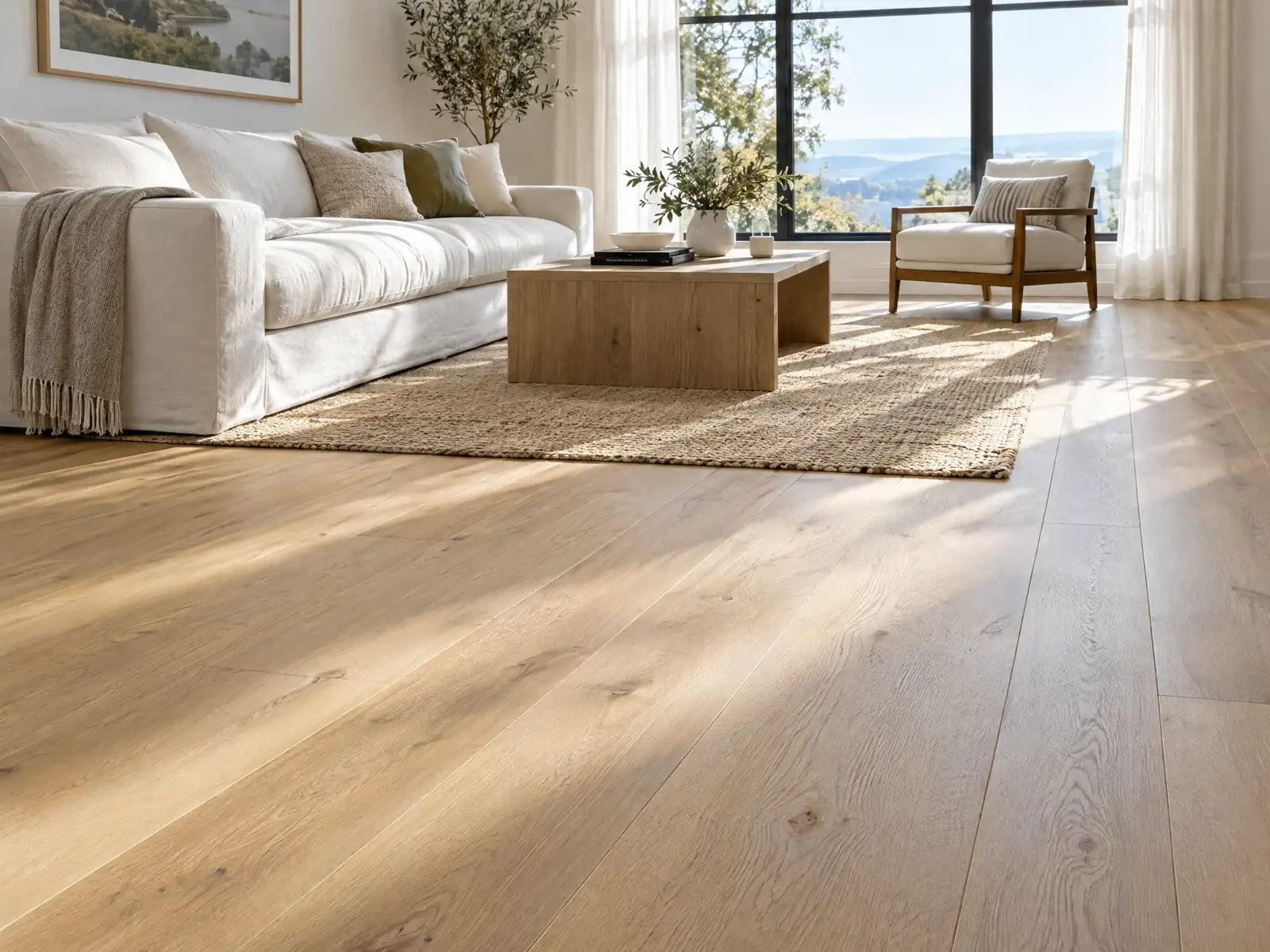
Walnut was incorporated on January 19, 1959 by local farmers who wanted to keep a rural way of life, and it had 934 residents that year. The City's 2018 General Plan says the population was 8,561 in 1978 with 76 percent of the land still undeveloped, and that grading in the 1980s then made the hillsides buildable. Census estimates for 2020 to 2024 count 9,230 homes, 4,419 of them (47.9 percent) from 1980 to 1989, so a floor original to one of those houses is somewhere between 37 and 46 years old.
MDG Builders, CSLB #1040337, is a Tarzana general contractor. We write the scope, put the permit questions to the Building & Safety Division and hire a licensed flooring or tile subcontractor to do the installing. Materials and prices are laid out on the flooring page, and the Walnut overview lists every other trade we manage in the city.
What Walnut's Building & Safety Division, Planning Division and Municipal Code say about flooring work
Where flooring permits come from in Walnut: City of Walnut Community Development Department, Building & Safety Division.
- Walnut's amended Building Code (Municipal Code 2.04.030(F)) requires parking floor surfaces in private garages and carports to be concrete at least 3-1/2 inches thick or an equivalent hard, nonabsorbent, noncombustible surface approved by the Building Official, sloped toward drains or the main vehicle entry. Carports must be open on at least two sides or they are treated as garages, so a garage floor coating must sit on a compliant slab.
- Walnut's expansive soil presumption (Municipal Code 2.04.030(J)) specifies slab thickness, mesh or rebar and moisture barrier or aggregate beneath interior slabs unless a geotechnical engineer specifies otherwise, which matters when a slab is cracked or heaving under new flooring.
- The state model list of permit-exempt work (R105.2 as excerpted by the City of Albany) includes tiling, carpeting, cabinets, counter tops and similar finish work, so replacing flooring finishes is generally not a permit item under the model code, but moving plumbing or electrical is. Walnut's R105.2 was not read, so confirm.
- Walnut's kitchen handout says no permit is required to replace appliances, but permits may be required if receptacles are moved or added, and lists major changes regulated by the Energy Code as needing a contractor and City permits.
Do you need a permit to replace flooring in Walnut?
Probably not for the finish alone, though Walnut's own exemption list was not found. The state model list in Residential Code section R105.2 exempts tiling, carpeting, cabinets and similar finish work, and the copy we could read is the City of Albany's. Walnut adopts the 2026 Los Angeles County Residential Code with its own amendments, so the County's R105.2 as Walnut adopts it is the text that governs, and only the counter can confirm it.
The City's official code site refused our fetch tool, so the code language on this page comes from GoCodebook, a third-party mirror dated October 2026 that says it is not a substitute for official publications. Confirm every section number with the City. Moving plumbing, adding receptacles or changing a fixed light fixture while the floor is open is different: Walnut's kitchen and electricity handouts say those changes can need permits.
Community Development answers at (909) 595-7543, extension 400, City Hall is open Monday to Thursday and closed Fridays, and inspections are booked by voicemail at (909) 598-5241. No fee table was readable, so we print no fee figure, only that Municipal Code 2.04.060 sets Walnut's building fees at twice the County's.
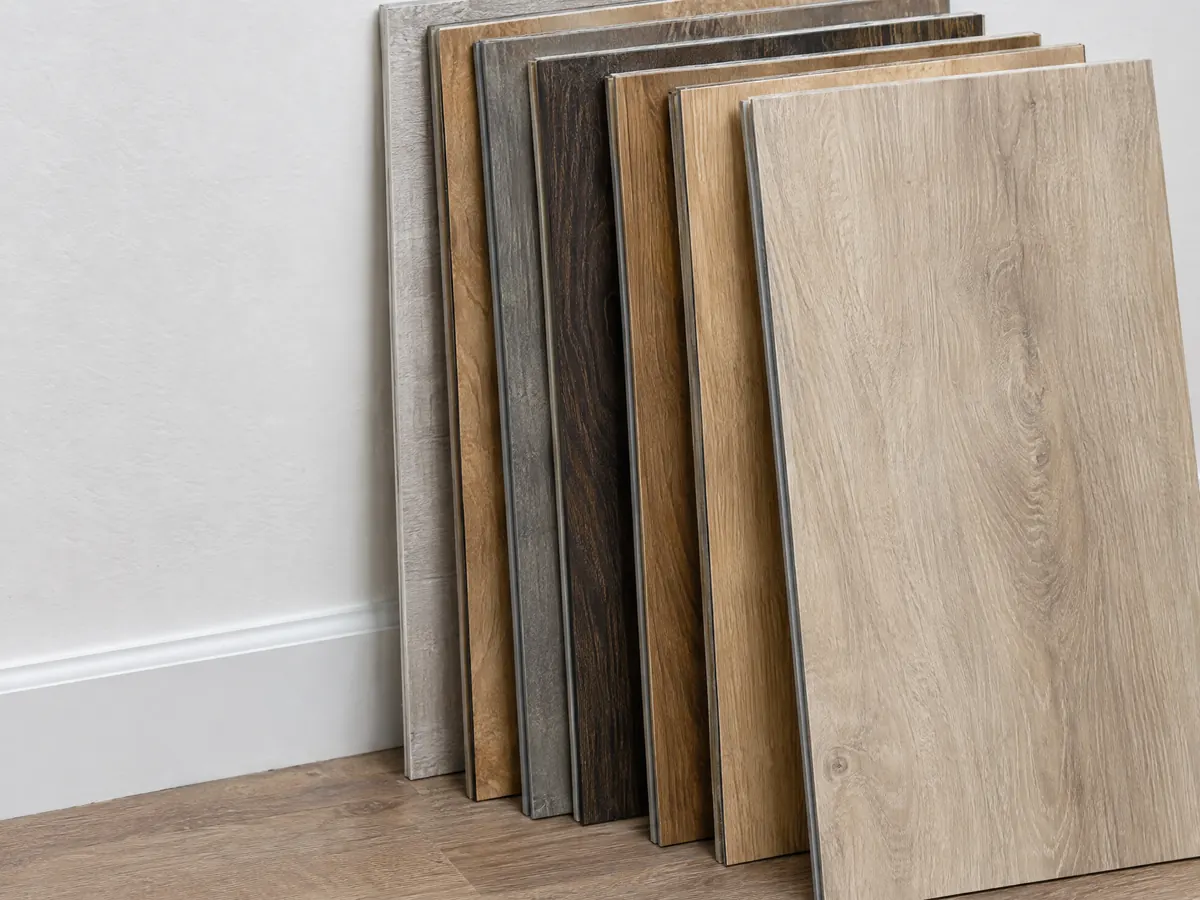
Is there asbestos or lead paint to worry about under a floor in a Walnut home?
It depends on the decade. About 38.4 percent of Walnut's homes, 3,546 of 9,230, predate 1980, including 1,892 from the 1970s, 1,326 from the 1960s and 251 from the 1950s. OSHA's construction asbestos rule treats asphalt and vinyl flooring installed no later than 1980 as presumed asbestos material until a test says otherwise, which is why no careful crew dry sands, rips or scrapes old sheet goods and tile mastic.
A floor original to a house built after 1980 falls outside that presumption, but a house remodeled in the 1990s or later can still carry a vinyl layer of unknown age, and a lab sample costs little beside a stopped job. Ask for the result in writing, and have the proposal say who removes a layer that tests positive and who pays.
Lead is the other check. EPA's Renovation, Repair and Painting rule covers paid work that disturbs paint in homes built before 1978, so baseboards and door casings pulled for a new floor count. For a house from the 1970s or earlier, compare the year built to that line.
- Was a sample of the old tile and mastic sent to a lab?
- Who removes and disposes of a layer that tests positive?
- Is the crew certified for lead-safe work on baseboards?
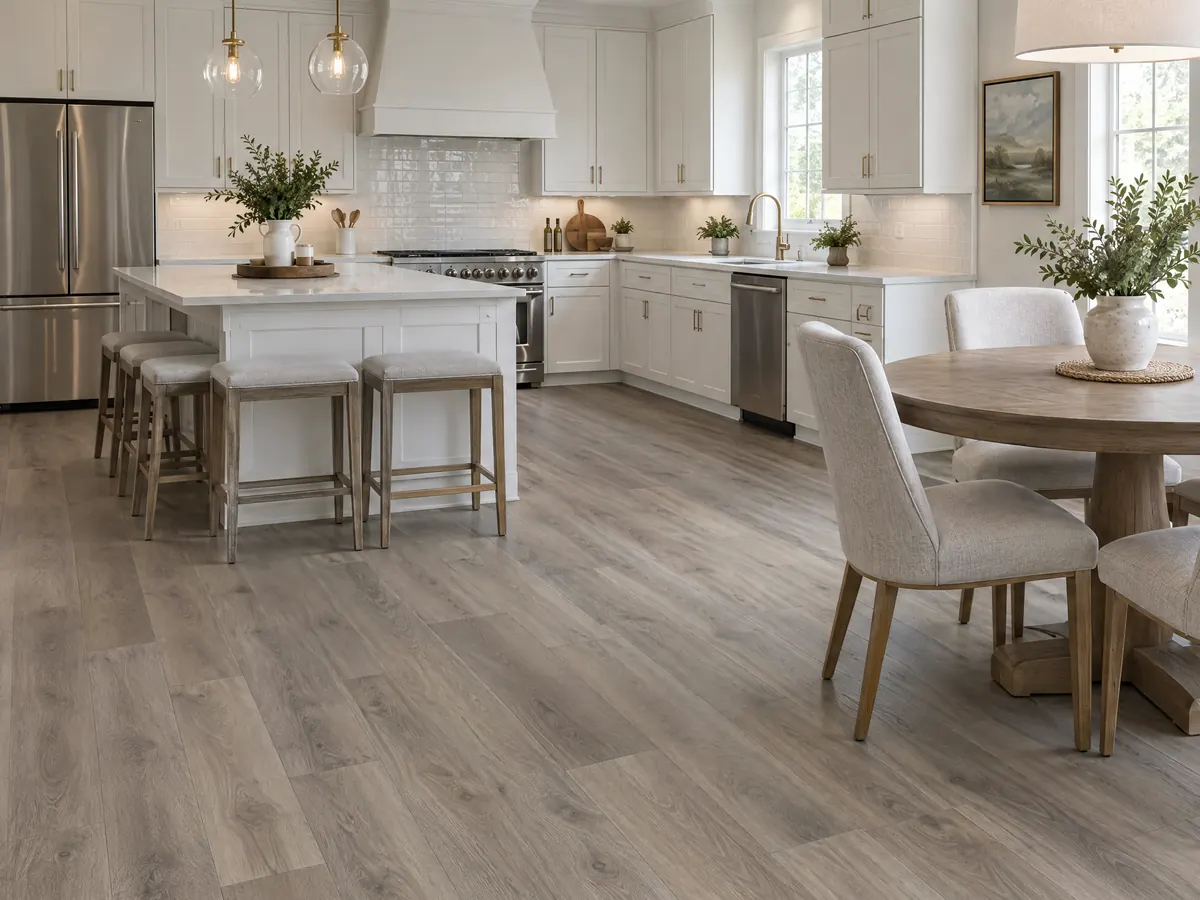
Why does moisture come up through a concrete slab in Walnut, and what does the soil rule add?
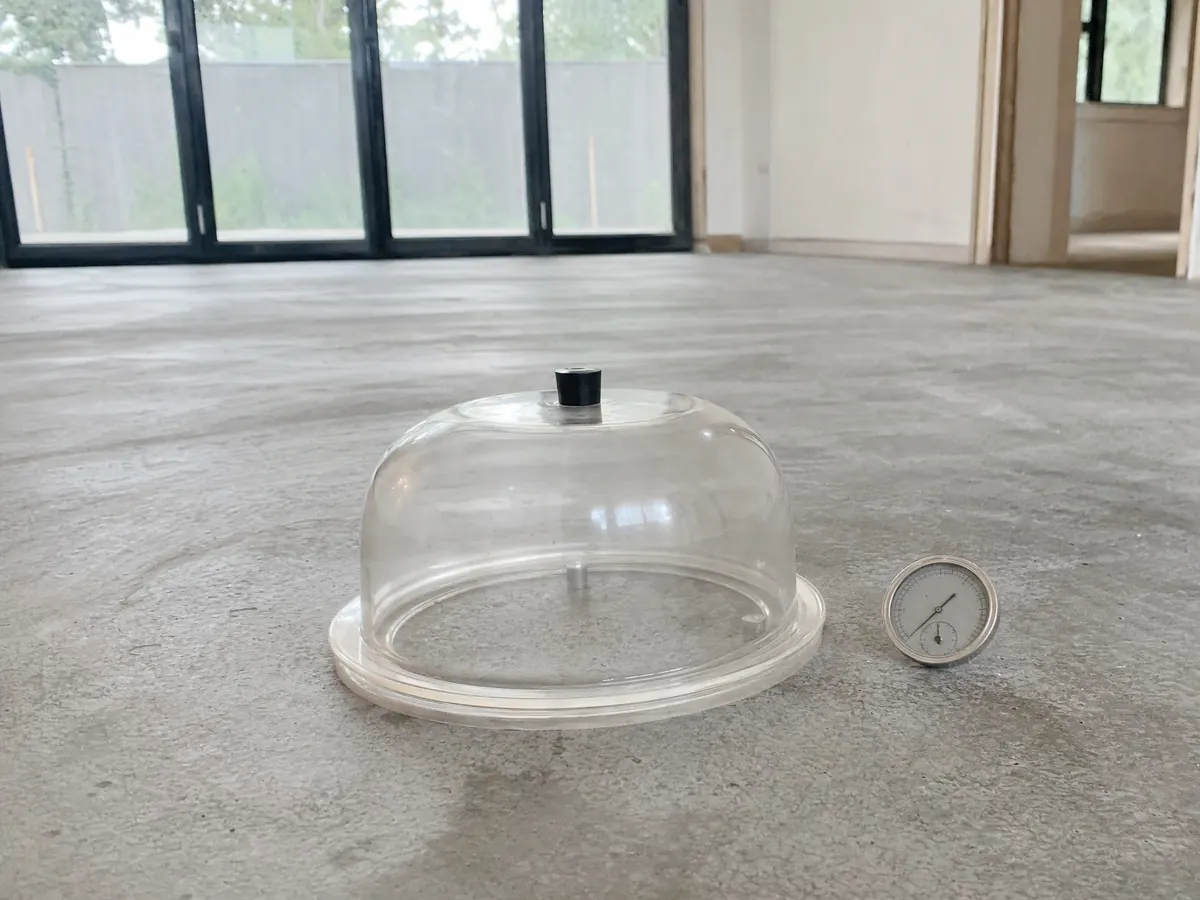
Walnut's amended Building Code (Municipal Code 2.04.030(J), per the mirror) assumes foundations rest on expansive soil unless a registered geotechnical engineer says otherwise. That presumption is why the text calls for slabs at least 3-1/2 inches thick over coarse aggregate or a moisture barrier, on ground soaked to 18 inches before the pour. Clay that swells wet and shrinks dry explains hairline cracks, so an installer should mark each one and check whether one side sits higher before anything rigid goes over it.
Moisture needs its own test. ASTM F2170 reads relative humidity inside drilled holes and F1869 weighs vapor released under a calcium chloride dish. Neither sets a pass mark, so ask for the readings beside the limit that the plank, vinyl or adhesive maker publishes.
Rain is a poor guide. The Pomona Fairplex station, about 6 miles northeast of central Walnut, averages 14.47 inches a year in NOAA's 1991 to 2020 normals, 11.47 of it from December through March and 0.06 inch or less in any summer month. The General Plan describes ponding in low spots, so probe near exterior walls, planters and downspouts.
Can you coat or tile a garage floor in Walnut?
Yes, if the slab underneath meets the City's garage rule. Walnut's amended Building Code (2.04.030(F), mirror text) wants the parking surface of a private garage or carport to be concrete at least 3-1/2 inches thick, or an equivalent hard, nonabsorbent, noncombustible surface the Building Official approves, sloped toward a drain or the main vehicle entry. A carport open on fewer than two sides is treated as a garage.
That puts the questions in a useful order. Is the slab sound, does it still slope toward the door and what does the crack pattern look like? A coating or tile that holds water against a floor that drains the wrong way improves the look and leaves the problem. Prep method, crack repair and hot-tire resistance belong in the subcontractor's written scope, not in a verbal promise.
Can old hardwood in a 1950s Walnut home be refinished, and does the historic register matter?
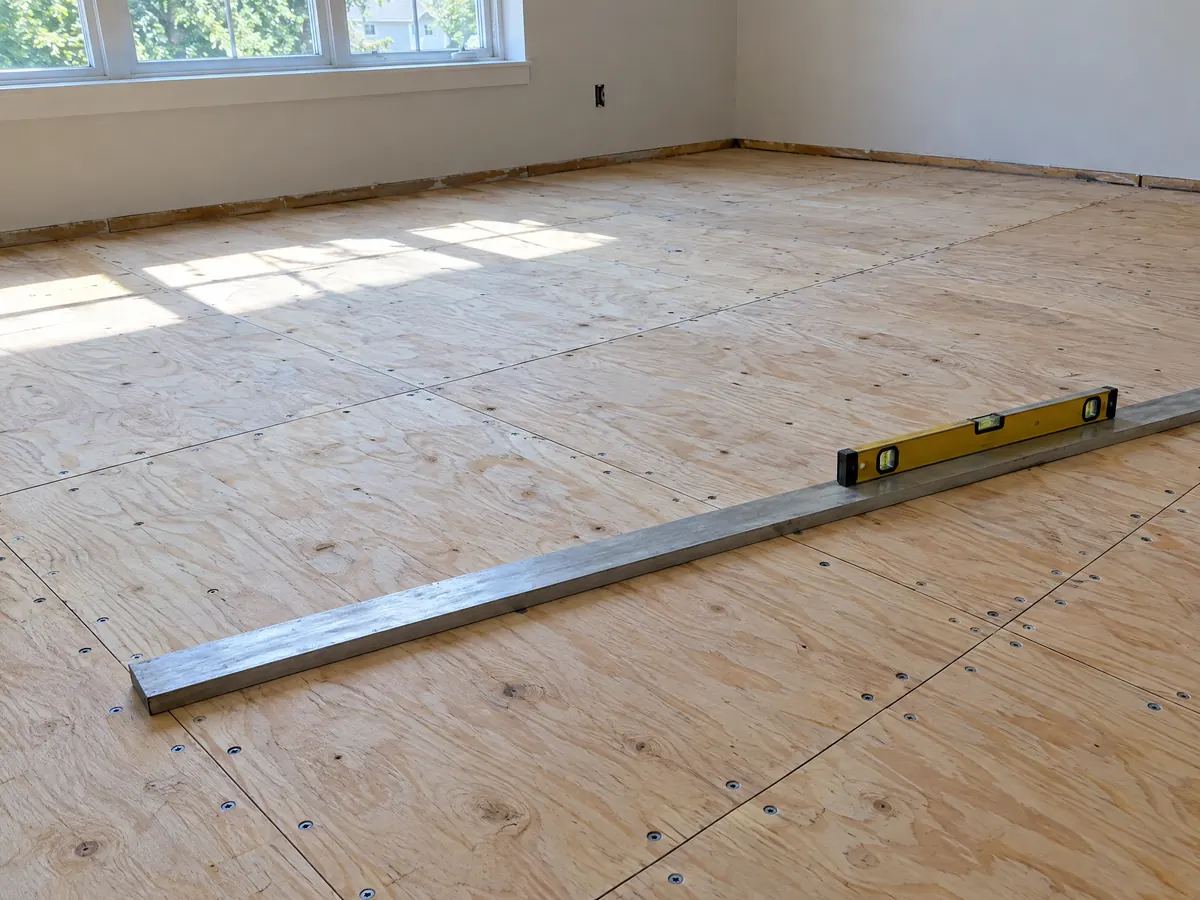
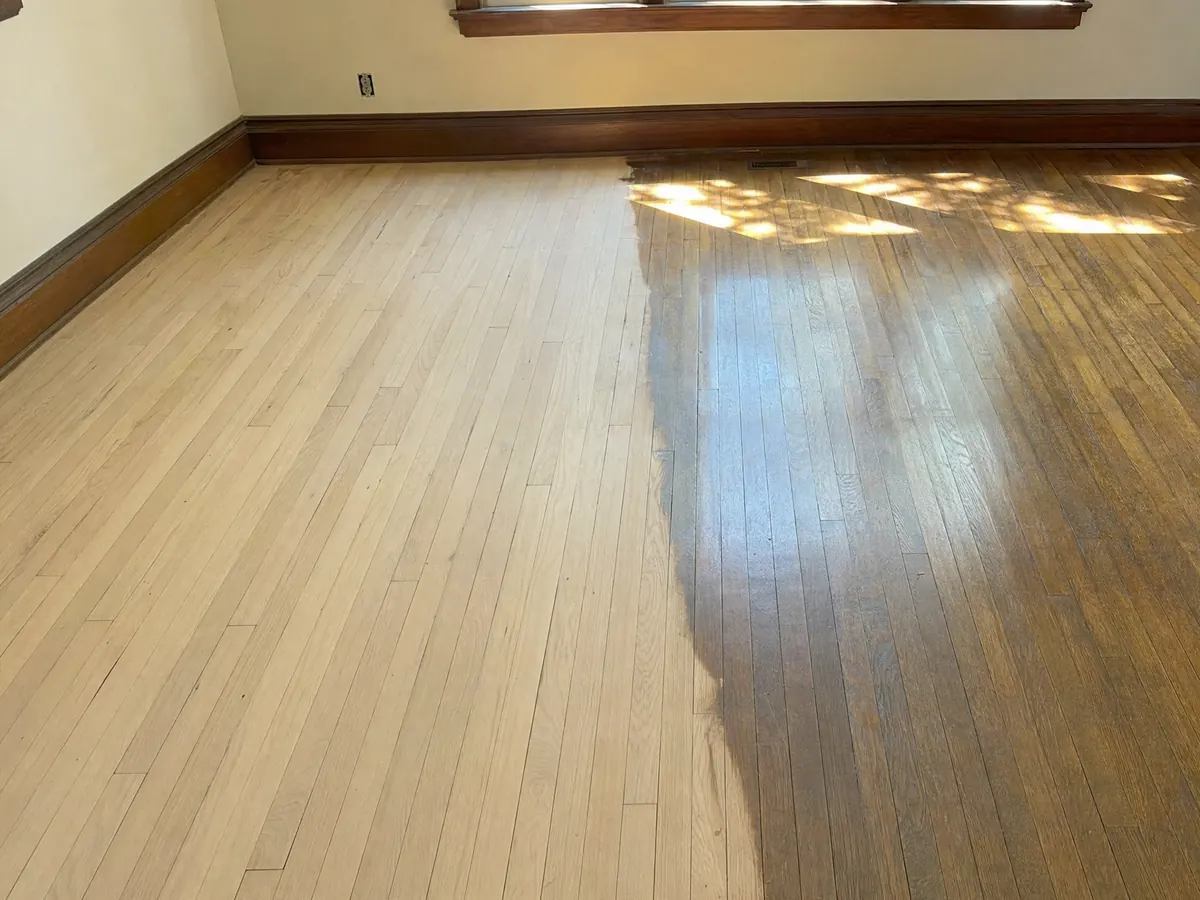
The oldest tract homes sit where the General Plan puts Walnut's first suburban neighborhoods, on the southwest hillsides around Gartel Drive and Fuerte Drive, with Collegewood and Walnut Heights growing along Grand Avenue. Only 328 of the city's homes, 3.6 percent, predate 1960. A floor register or a cut edge shows whether enough wood stands above the tongue to sand, and refinishing runs $4 to $8 per square foot on Angi's July 2026 Los Angeles page against $12 to $22 for new solid hardwood, both medium to low in confidence. Our flooring cost guide sets the two side by side.
The historic register rarely touches a floor. Chapter 6.104 lets an owner nominate a resource to a register kept by the City Clerk, sends exterior alterations to a designated resource through site plan and architectural review and allows ordinary maintenance and repair. The General Plan's list of historic sites includes the 1883 William R. Rowland adobe ranch home at Lemon Creek Park, but the register page we read names no designated homes, so ask Planning before assuming either way.
Who has to approve new flooring in a Walnut rental, townhome or HOA community?
The owner or association comes first. Renters occupy 1,405 of Walnut's 8,665 occupied homes, 16.2 percent, and 94.7 percent of all units are single-family houses, so most floor jobs belong to the person living there. Where a landlord or board is involved, a tenant needs written consent before material is ordered, and an association's governing documents control hard flooring. Civil Code section 4765 sets how a board must answer a change request.
Attached homes are scarce here: 198 single-family attached units and 241 units in buildings of five or more. We found no Walnut rule on underlayment or sound transmission, and an association's test standard is its own, so ask the board for it in writing and keep the answer in the job file.
What does a flooring contractor charge in Walnut, and what license applies?
No Walnut price study with a stated method turned up, so these are Los Angeles figures from Angi's July 2026 pages, which we rate medium to low in confidence. Installer labor runs $3 to $9 per square foot and the all-in installed range for flooring is $12 to $16, with engineered hardwood at $10 to $18 and solid hardwood at $12 to $22. A laminate project averages $3,626 within a range of $2,033 to $5,344, and removing old flooring adds $455 to $685 per 200 square feet.
CSLB's C-15 class covers carpet, resilient flooring and wood floors, with ceramic tile in C-54. Under CSLB bulletin 24-07 a job that needs any permit must go to a licensed contractor even below $1,000, and a home improvement down payment is capped at $1,000 or 10 percent of the price, whichever is less. The license check guide shows how to look a number up.
Walnut's contractor business license rules were not read, so ask the City whether one is required for permitted work.
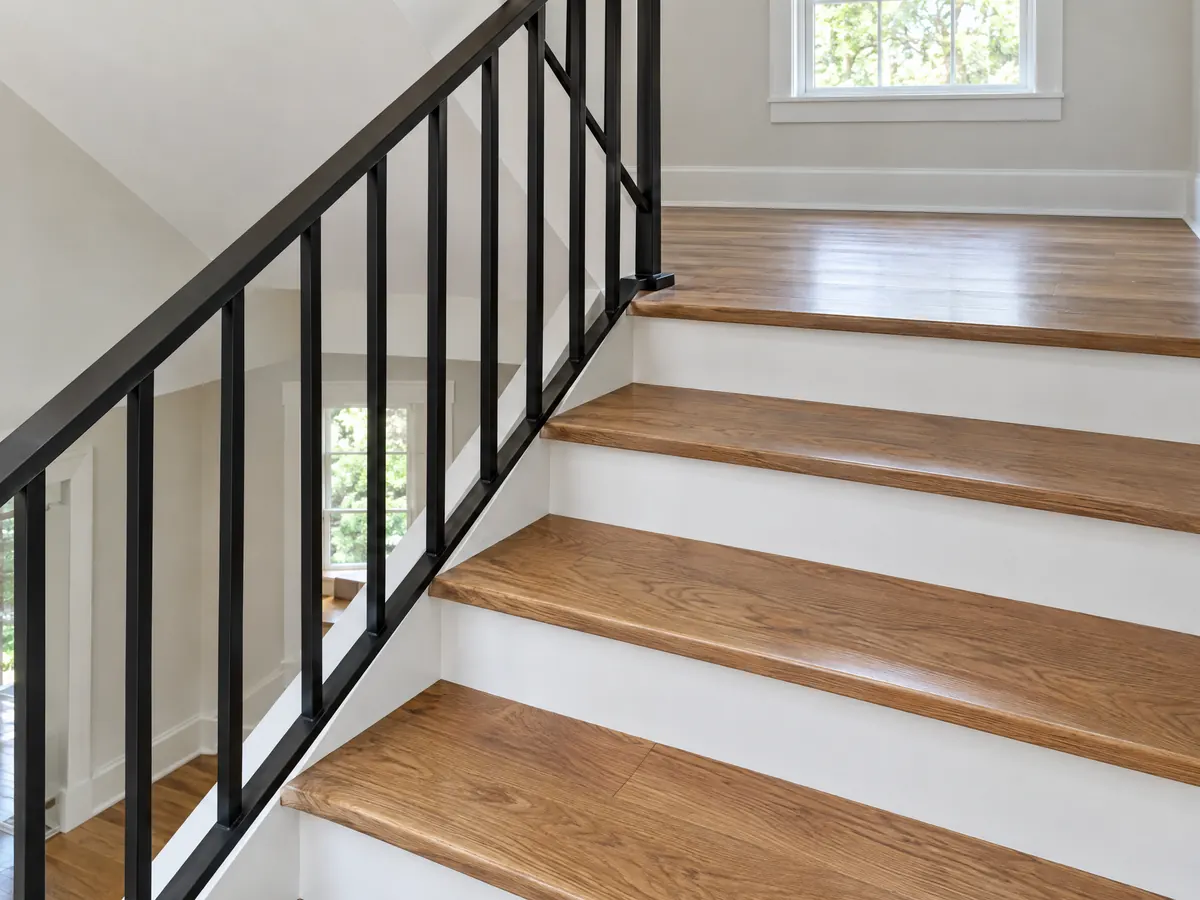
Flooring photos from Walnut and nearby communities
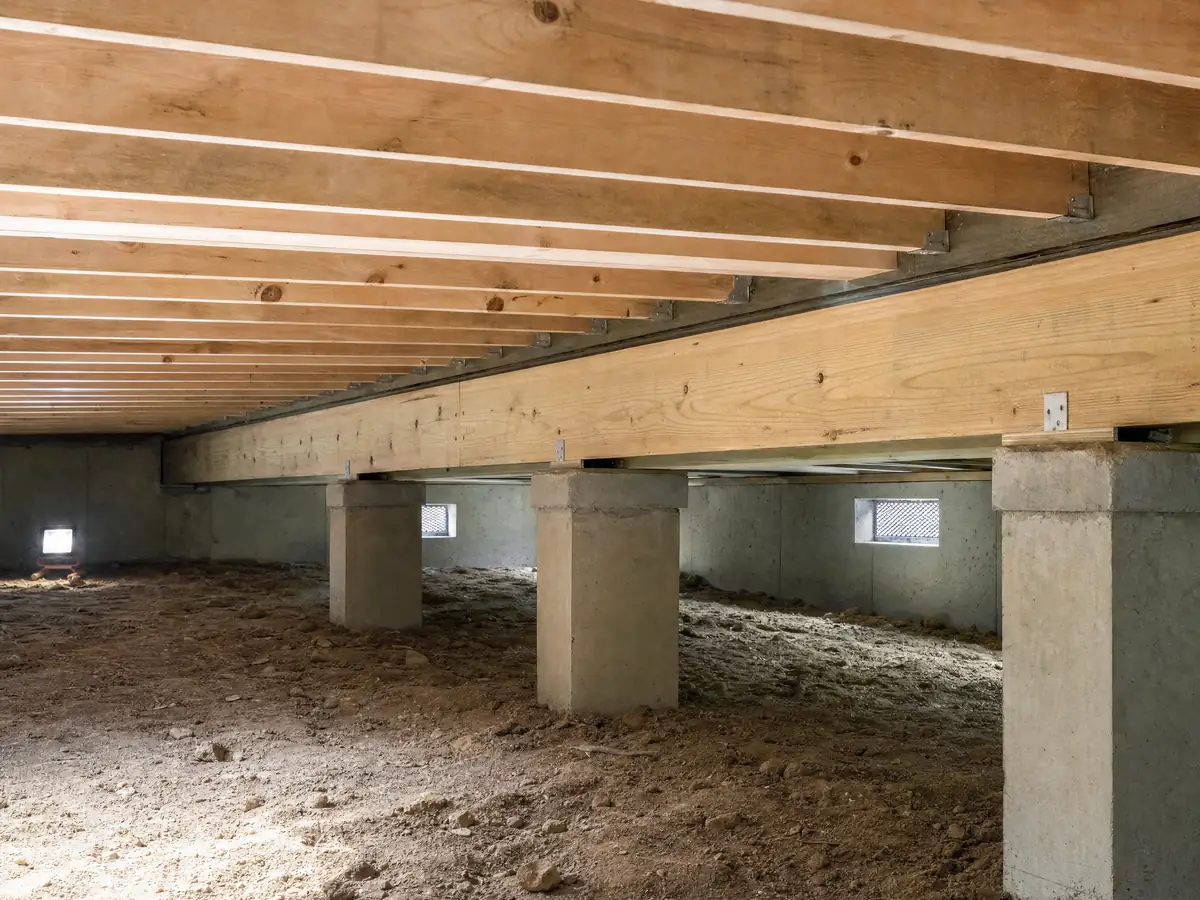
Slab prep, plank samples, tile and refinished oak from Walnut and the towns around it, shown at the stages that matter. Tap any photo to enlarge it.
What flooring costs around Walnut
Dollar figures here are Los Angeles planning ranges from our flooring page, not a Walnut bid, and a written proposal should price demolition, moisture testing, subfloor work and stairs on their own lines. The same property may also need concrete work in Walnut or decks in Walnut. Neighboring cities to compare: flooring in Diamond Bar, flooring in West Covina, flooring in Pomona and flooring in Los Angeles.
| What it covers | Typical range |
|---|---|
| Installation labor only | $3 to $9 per sq ft |
| Solid hardwood, installed | $12 to $22 per sq ft |
| Engineered hardwood, installed | $10 to $18 per sq ft |
| Refinishing existing hardwood | $4 to $8 per sq ft |
| Laminate, whole project | $2,000 to $5,500 |
| Hardwood, whole project | $3,153 to $8,496 |
| Removing the old floor | $455 to $685 per 200 sq ft |
| Tile | No sourced Los Angeles range |
Walnut flooring questions, answered
Do I need a permit to replace flooring in Walnut?
Probably not for the finish alone, since the state model list exempts tiling, carpeting and similar finish work, but Walnut's own exemption list was not found, so confirm with Building & Safety. Moving plumbing, adding receptacles or changing a fixed light fixture while the floor is open can need permits under the City's handouts, and structural subfloor repair is a counter question.
How much does it cost to have flooring professionally installed in Walnut?
Installer labor runs $3 to $9 per square foot on Angi's July 2026 Los Angeles pages, and the all-in installed range for flooring is $12 to $16, though we found no Walnut study and rate these medium to low in confidence. Material choice moves the total most, and demolition, testing and subfloor repair belong on separate lines.
How much does it cost to refloor a 2000 sq. ft. house in Walnut?
Labor alone at $3 to $9 per square foot comes to $6,000 to $18,000 for 2,000 square feet, and engineered hardwood at Angi's $10 to $18 installed range would reach $20,000 to $36,000 for the whole house. Both figures are multiplied Los Angeles ranges, not bids, so a visit to the house sets the real number.
Can you put flooring over a concrete slab in Walnut?
Yes, once the slab has been tested and prepared. The flooring or adhesive maker sets the moisture limit, so the installer should read ASTM F2170 probes or run an F1869 calcium chloride test, then fill cracks and flatten the surface. Walnut's code presumes expansive soil under foundations, so mark every crack and check for height differences first.
Why does moisture come through a concrete floor in Walnut?
Concrete is porous, so vapor rises out of the ground beneath it. Rain is a weak guide here, since the Pomona Fairplex station logs 0.06 inch or less in each summer month, yet a slab can still read damp then. Planters, downspouts and ponding beside a wall raise readings in spots, so test in several places.
Is there asbestos under old vinyl flooring in Walnut homes built before 1980?
Possibly, and only a lab test can tell. OSHA presumes asphalt and vinyl flooring installed no later than 1980 contains asbestos until tested, and 3,546 of Walnut's 9,230 homes, 38.4 percent, predate 1980. Send a sample before any sanding, ripping or dry scraping, and ask who removes a layer that tests positive.
Can I refinish hardwood floors instead of replacing them in Walnut?
Often, if enough wood stands above the tongue to sand, which a floor register or cut edge shows. Angi's July 2026 Los Angeles page puts refinishing at $4 to $8 per square foot and new solid hardwood at $12 to $22 installed, both medium to low in confidence. Only 328 Walnut homes predate 1960, so check what your own house has.
Can you coat or tile a garage floor in Walnut?
Yes, once the slab meets the City's garage rule: concrete at least 3-1/2 inches thick or an equivalent hard, nonabsorbent, noncombustible surface, sloped toward a drain or the vehicle entry. Check the slab first, because a coating over a floor that drains the wrong way hides the problem and does not fix it.
Can I put new flooring in a Walnut rental, townhome or HOA community?
Only with written approval from the owner or association. A tenant needs the landlord's consent, and a condo board's documents control hard flooring, with Civil Code section 4765 setting how a board must respond to a change request. Only 16.2 percent of Walnut's occupied homes are rented, so many jobs need no landlord at all.
What license does a flooring contractor need in Walnut?
Carpet, resilient flooring and wood floors fall under CSLB's C-15 class, and ceramic tile under C-54. Work that needs a permit must go to a licensed contractor even under $1,000, and Walnut's contractor business license rules were not read, so ask the City. Look the number up on the CSLB site before accepting a quote.
Tell us which rooms and what is under your feet now
List the rooms, say whether the house sits on a slab or a raised floor if you know, and mention any old vinyl you suspect is original. The moisture and asbestos questions come with us to the first visit.