
Flooring Installationin San Dimas, CA
Flooring installation in San Dimas is a permit question first: the City's guides exempt carpeting and painting as finish work but say nothing about hardwood, tile or vinyl, so ask Building and Safety. With 63.3 percent of homes built before 1980, test old vinyl and the slab before any new floor goes down.
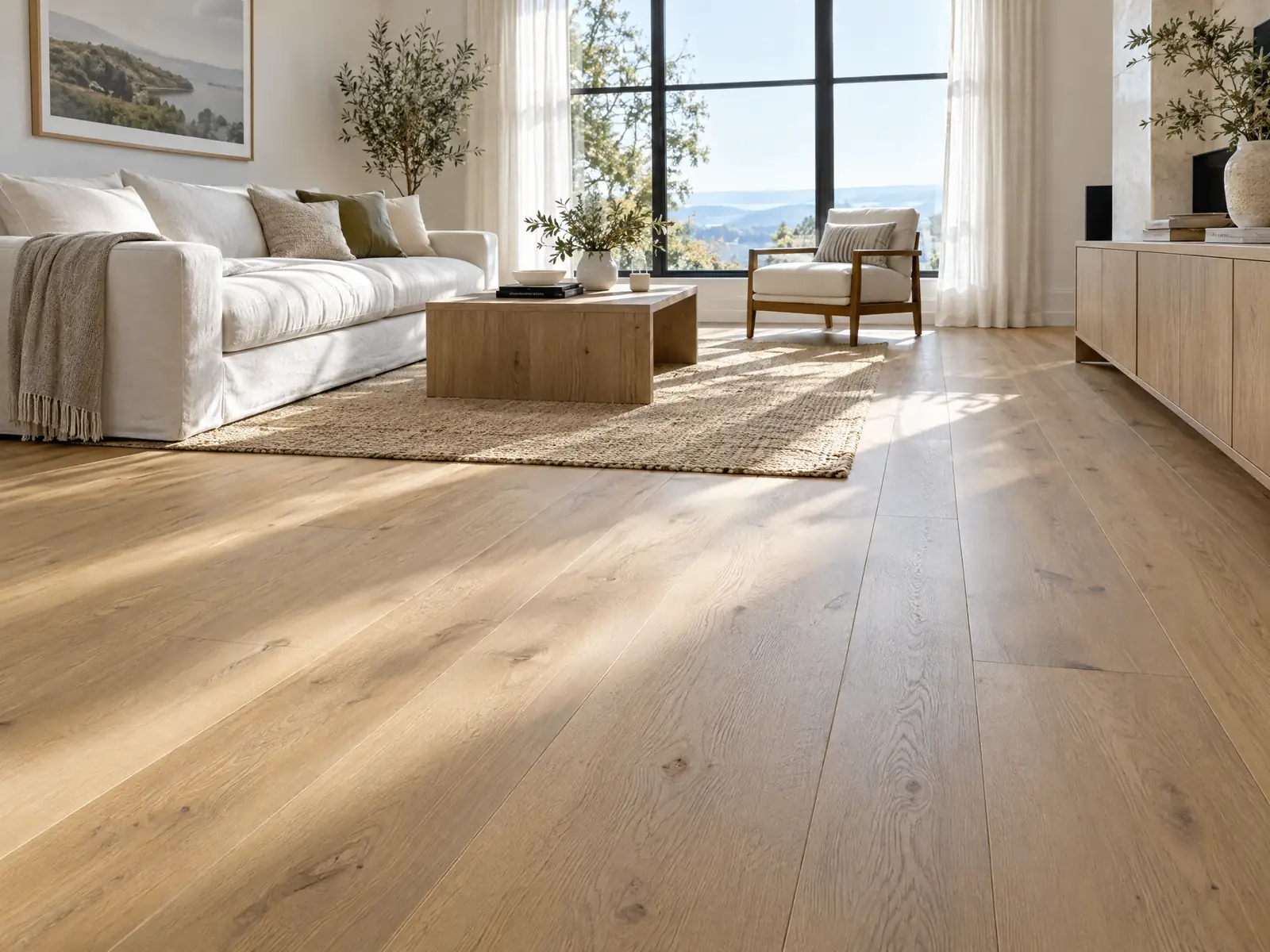
San Dimas began as a railroad stop. The Santa Fe opened the town in 1887, citrus groves and packing houses followed, and the last packing house closed in 1963, three years after the city incorporated on August 4, 1960 as the 70th city in Los Angeles County. Most floors in town were laid after that. Census estimates for 2020 to 2024 count 12,370 homes, the 1970s were the biggest building decade at 32.2 percent, the 1980s followed at 21.2 percent, and 15.0 percent date from before 1960.
MDG Builders, CSLB #1040337, is a Tarzana general contractor: we write the scope, carry the permit questions to San Dimas Building and Safety and schedule a licensed flooring or tile subcontractor for the install. Materials and ranges are on the flooring page, and the San Dimas overview lists the other trades we manage here.
What San Dimas Building and Safety, Planning and the Town Core guidelines say about flooring work
Where flooring permits come from in San Dimas: City of San Dimas Community Development Department, Building and Safety Division.
- San Dimas's Homeowner's Guide lists finish work including carpeting, wall papering and painting as exempt from a building permit, and the city's web page lists carpeting among cosmetic work that needs no permit; the city pages I opened do not address hardwood, tile or other flooring.
- CSLB defines the C-15 Flooring and Floor Covering classification as preparing any surface for flooring and installing floor coverings including carpet, resilient sheet and tile and wood floors, excluding ceramic tile.
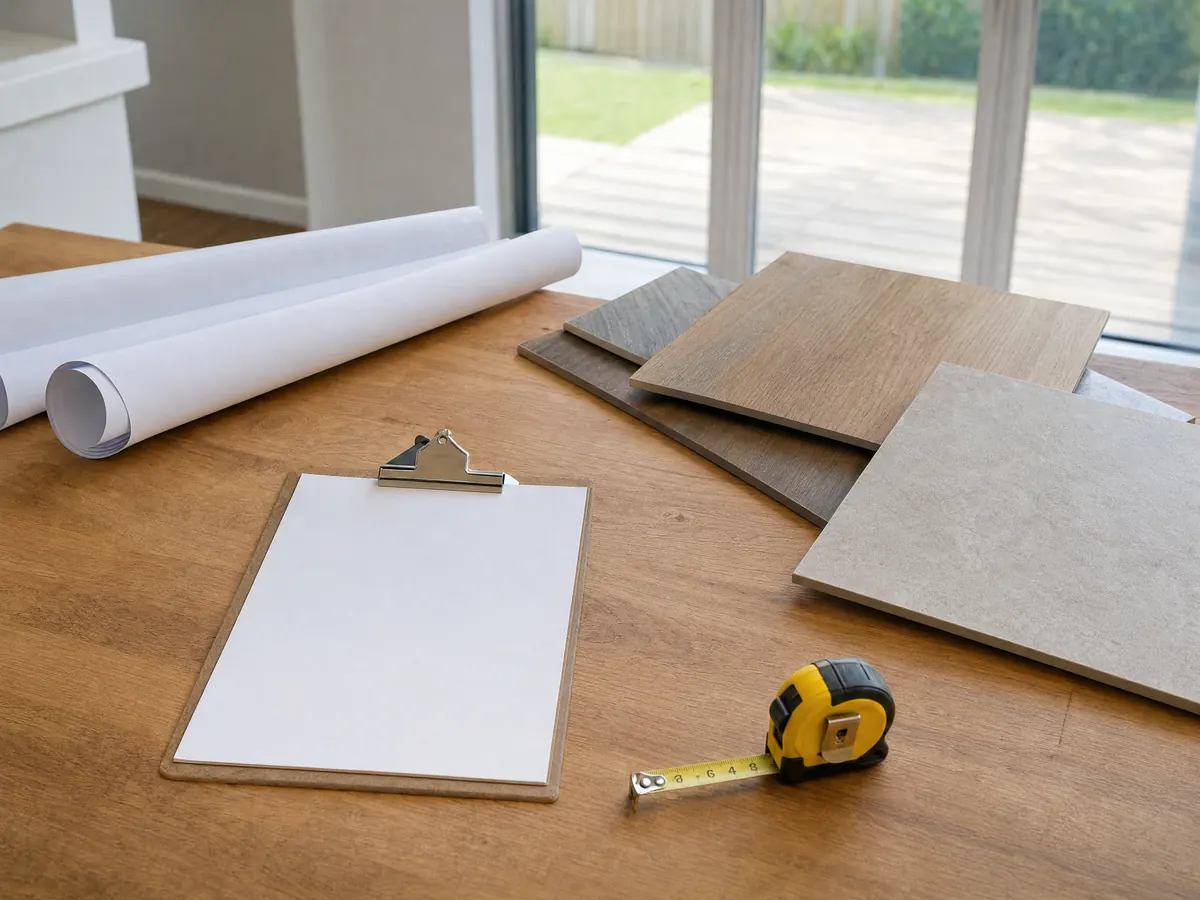
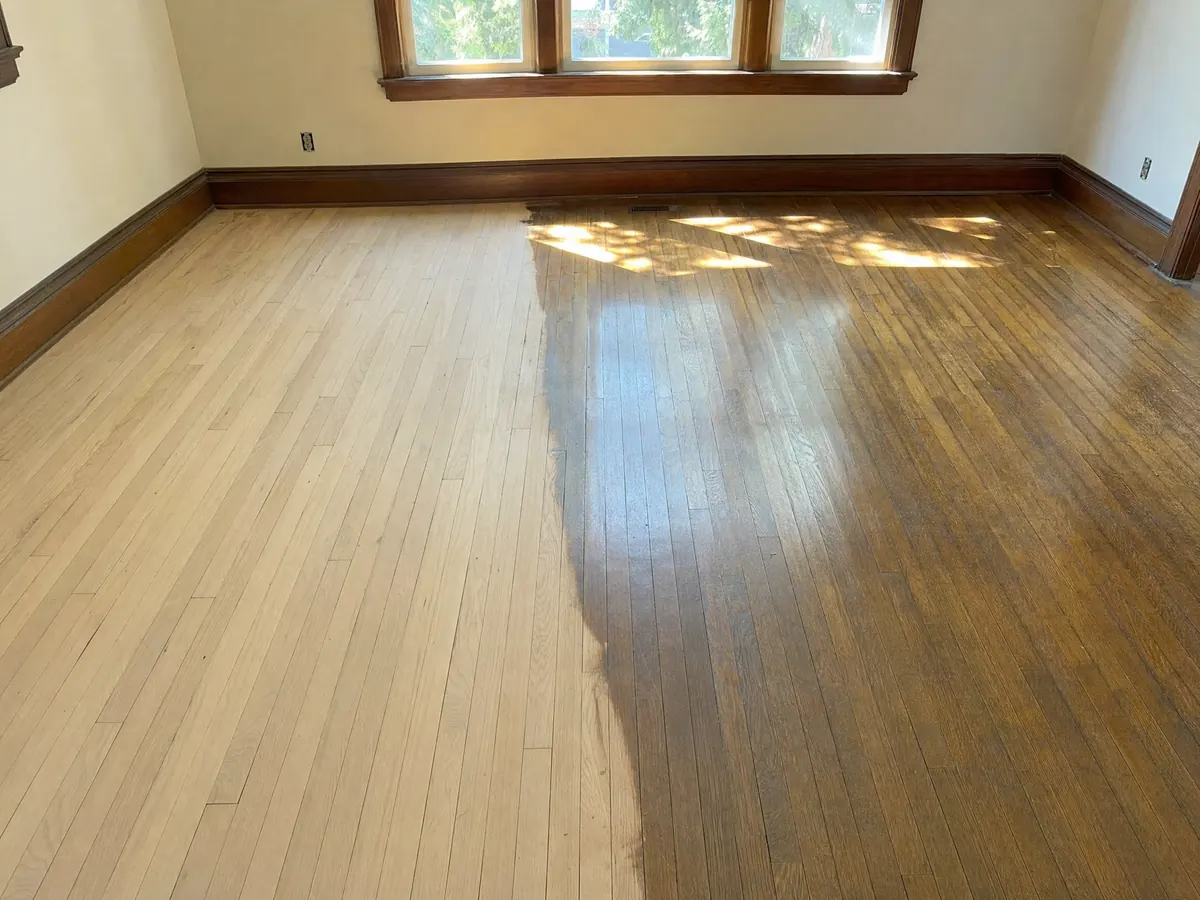
Can old oak floors be refinished in a San Dimas house near the Town Core?
Often, if enough wood stands above the tongue, and a floor register or a cut edge is the quickest way to judge that. The area around historic downtown has Town Core Design Guidelines that City Council adopted in 1993, and a 1991 survey found more than 320 significant structures there, so a carpeted room in an older house may hide boards worth saving.
San Dimas has no historic preservation ordinance, according to the LA Conservancy. It relies on design review of surveyed buildings and offers the Mills Act property tax program instead. The Town Core guideline PDFs are scanned images we could not read, so we cannot say what they require, and an interior refinish is not an exterior change, but we could not confirm that from the City. If the house sits near Bonita Avenue, ask Planning at (909) 394-6250 before sanding.
Our flooring cost guide sets refinishing beside replacement so the two can be compared.
Do you need a permit to replace flooring in San Dimas?
Carpet and paint are the safe answers; everything else is a question for the counter. The City's Homeowner's Guide lists carpeting, wall papering and painting as finish work that needs no building permit, and its web page lists carpeting among cosmetic work, but none of the pages we opened mention hardwood, tile, vinyl or laminate.
A floor job often drags other work in with it. The City's permit list names electrical, plumbing and mechanical changes and wall openings, so moving a dishwasher line or cutting a wall for a wider doorway needs a permit even when the planks do not. One-trade jobs can go on a Single Trade Permit, and larger ones use a Combination Permit that covers every trade at once.
The City's own material disagrees about counter hours. The department page lists Monday through Thursday 7:30 a.m. to 5:30 p.m. and Friday 7:30 a.m. to 4:30 p.m., while the older Homeowner's Guide gives Friday as 8 to 5, so call (909) 394-6260 before driving over.
How do you test a 1970s San Dimas slab before putting wood or vinyl on it?
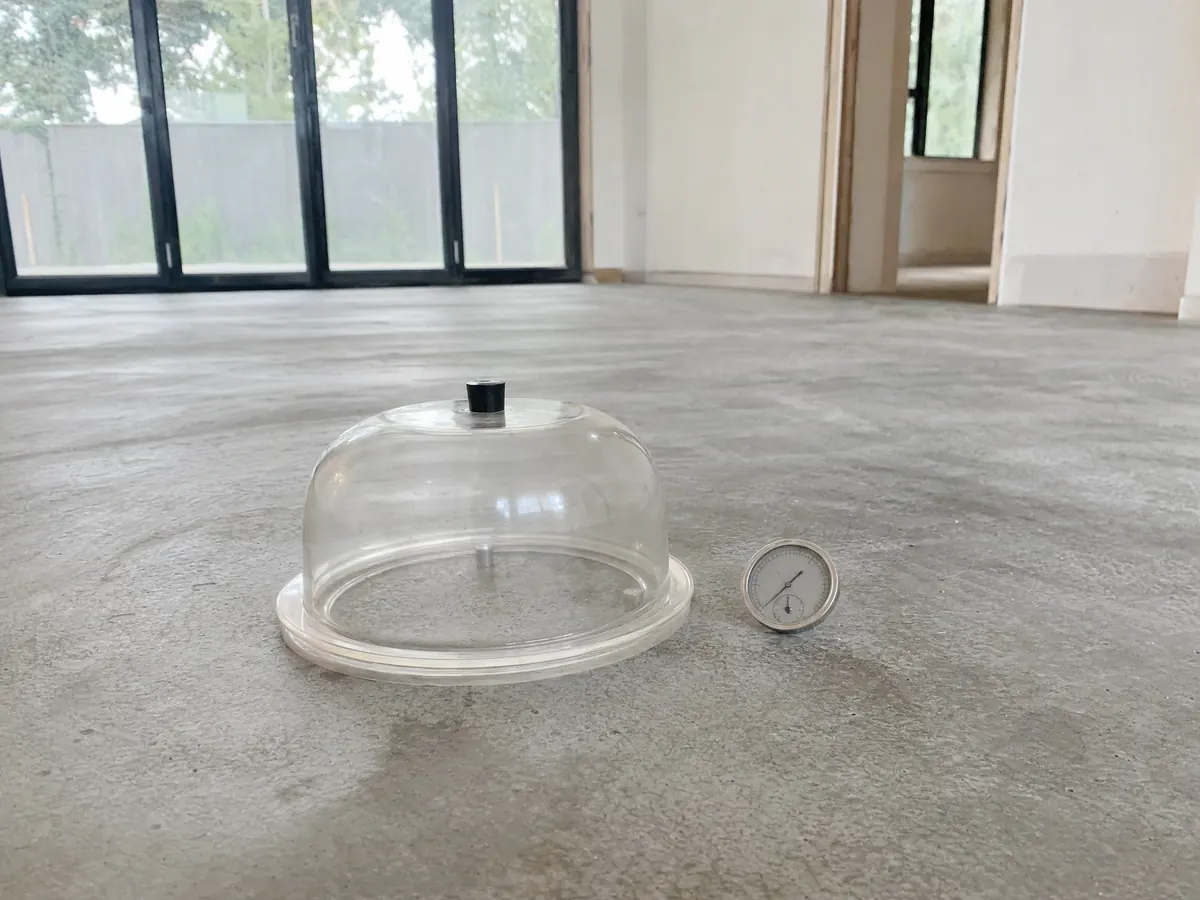
With a moisture reading written beside the limit the flooring maker publishes. ASTM F2170 measures humidity inside holes drilled into the slab and ASTM F1869 weighs vapor collected under a calcium chloride dish; the standards describe the method, and the plank or adhesive maker sets the pass mark. A slab poured in the 1970s is more than 45 years old, so mark every crack and every patched plumbing trench first.
Rain explains little. NOAA's 1991 to 2020 normals for the Pomona/Fairplex station, about 3.0 miles from central San Dimas, record 14.47 inches a year and 11.47 of them from December through March, yet a slab can read wet in August beside a leaking line or an overwatered planter. We did not verify flood or liquefaction status for San Dimas lots, so a probe reading tells you more than a map does.
The Homeowner's Guide says San Dimas lies in an area of substantial earthquake activity and requires a geotechnical report for new homes, substantial additions and retaining walls over 6 feet. Nothing we read ties that report to a floor replacement, but an addition that arrives with new floors would carry it.
Could there be asbestos or lead under old flooring in a San Dimas home built before 1980?
Yes, it is possible, and only a lab result settles it. The Census estimates put 7,826 of the city's 12,370 homes (63.3 percent) before 1980, so vinyl tile, sheet goods and black adhesive from the 1970s may lie under a newer layer. The age bins cannot isolate homes built before 1978, which matters for lead, so read the figure as a reason to test and not as a finding.
Ask for the sample result in writing before a start date is set, and have the proposal name who removes a layer that tests positive and who pays. A careful crew does not dry sand, rip up sheet goods or scrape old glue dry before that result is in.
Lead is the second question when baseboards and door casings come off. EPA's Renovation, Repair and Painting rule covers paid work that disturbs paint in homes built before 1978; EPA's pages would not load for us, so ask the contractor for the firm's lead-safe certification instead of relying on our summary.
- Was a sample of the old tile and adhesive sent to a lab?
- Who removes a layer that tests positive, and who pays?
- Is the crew certified for lead-safe work on baseboards?
Who approves new flooring in a San Dimas rental, condo or mobile home?
The owner or the association comes first. The Census estimates count 3,327 of 12,071 occupied homes (27.6 percent) as renter-occupied, 15.5 percent of units sit in buildings of five or more units and 1,070 homes (8.6 percent) are mobile homes, so many floor jobs start with a landlord, a board or a park and not with the person living there.
A tenant needs the landlord's written consent before material is ordered. A condo board's documents control hard floors above a neighbor, and Civil Code section 4765 sets how a board must answer a change request. For a mobile home we found no San Dimas rule, so ask the park and have the installer look at the floor structure before quoting, since it is framed differently from a slab.
How do you check the raised wood floor of an older San Dimas house?
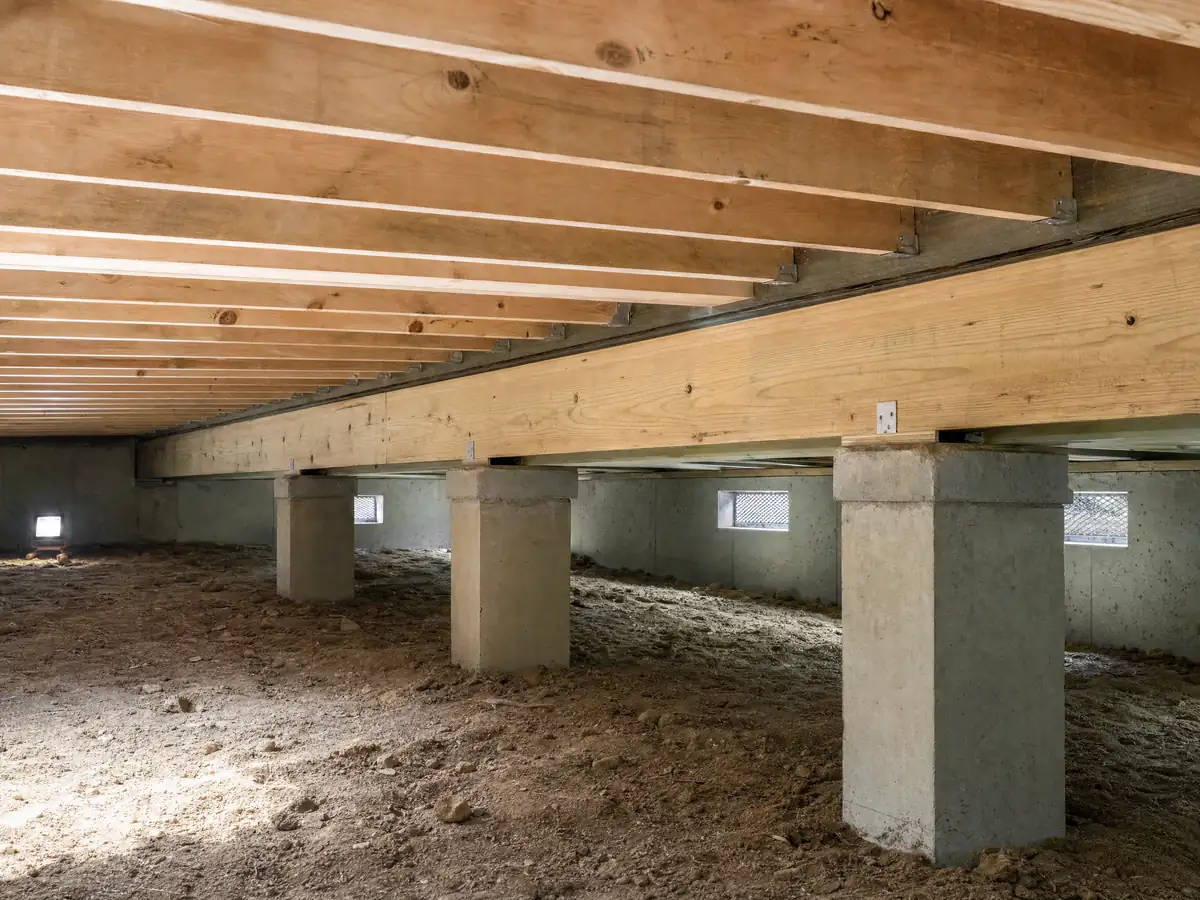
Look from below before ordering anything. We found no count of San Dimas homes on raised floors rather than slabs, so check which one you have. About 15.0 percent of homes (1,850) date from before 1960, the group most likely to include wood floors over a crawlspace, and stains under a bath, sag near a heavy wall, insect damage or soft spots each change the scope.
Any subfloor or framing repair should be its own proposal line with a unit price and before and after photos of the crawlspace. That is where permit questions stop being theoretical. The City's design-professional handout says plans for structural alterations, additions and new buildings must be stamped by a California architect or engineer, with an exception under Business and Professions Code 5537 for conventionally framed one- and two-story single-family homes and their garages. It still cites the 2019 codes, so ask the counter which edition applies.
A permit also has a clock: the holder must begin work and pass an inspection within 180 days of issuance and then keep an approved inspection on the books at least every 180 days.
What does a flooring contractor charge in San Dimas, and what license applies?
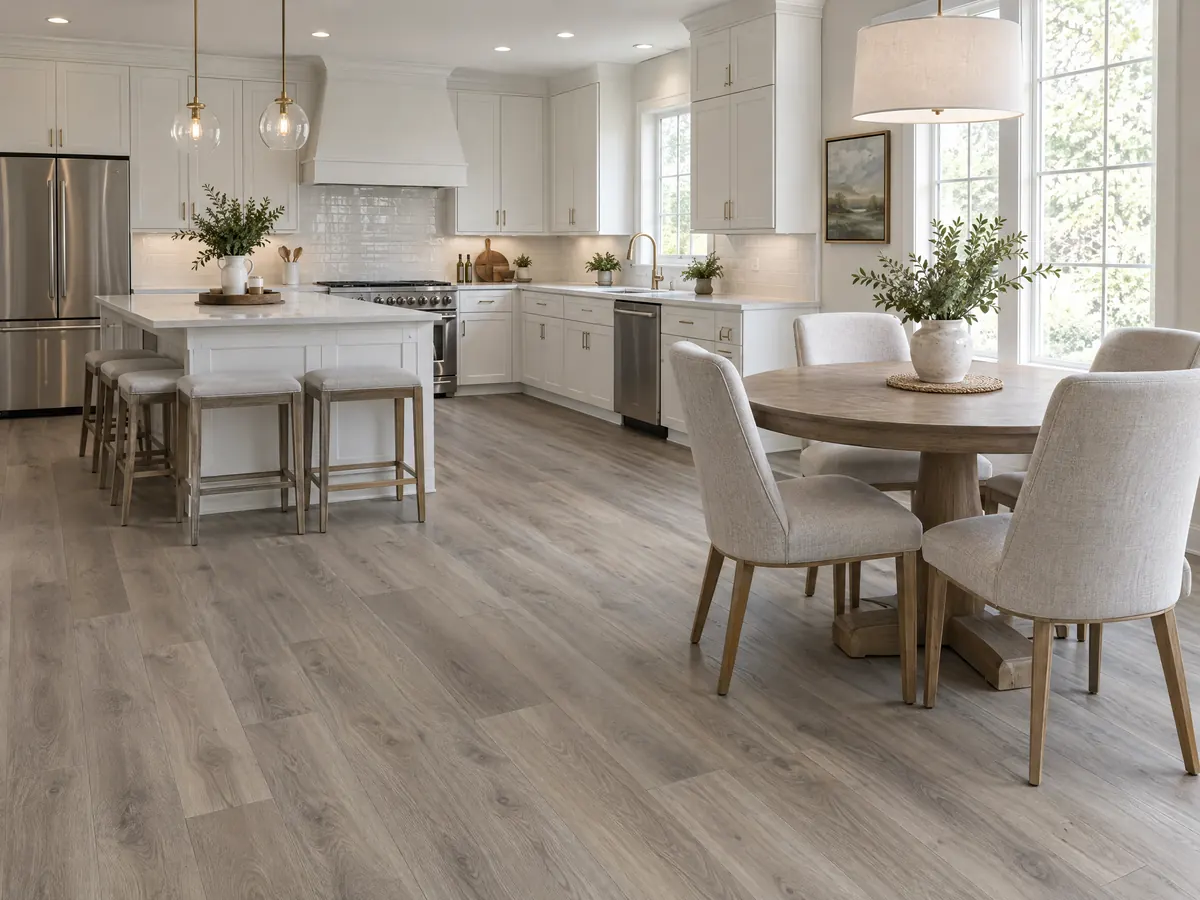
No San Dimas price study with a stated method turned up, so these are Los Angeles figures from Angi's 2026 pages, which we rate medium to low in confidence. For installer labor Angi lists $3 to $9 per square foot, and its installed ranges are $10 to $18 for engineered hardwood and $12 to $22 for solid, with refinishing at $4 to $8. Across a 1,500 square foot floor plan the engineered range multiplies to $15,000 to $27,000 before demolition, subfloor repair and stairs.
CSLB's C-15 class covers preparing a surface and installing carpet, resilient flooring and wood floors, excluding ceramic tile, which belongs to a tile license. To pull a San Dimas permit a contractor shows a current state license, a current City business license and proof of workers' compensation. The state's $1,000 minor-work limit does not apply to a job that needs a permit or uses a hired worker, per CSLB bulletin 24-07. Our license check guide shows how to look a number up.
Permitted jobs follow the City's hours: Monday through Friday from 7 a.m. to dusk, Saturday from 8 a.m. to dusk, and no work on Sundays and holidays.
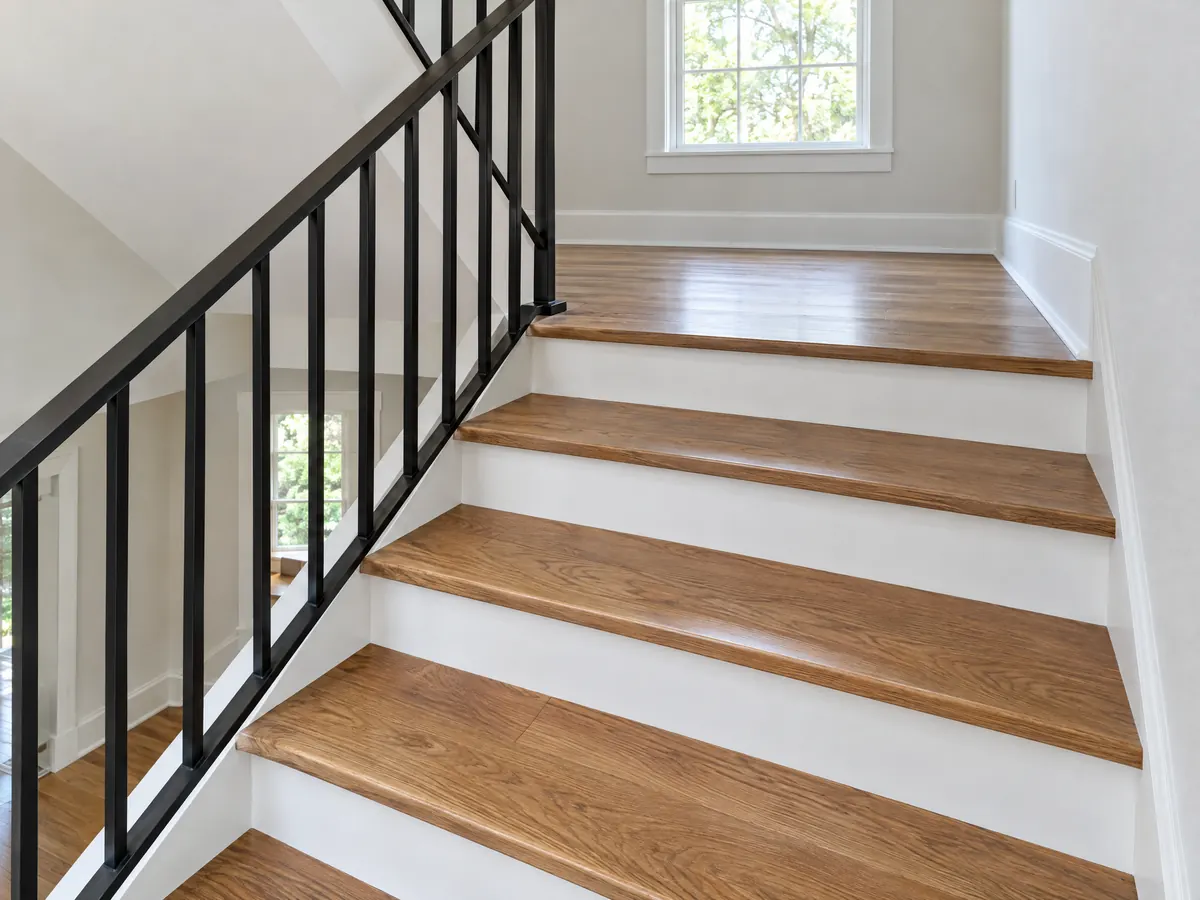
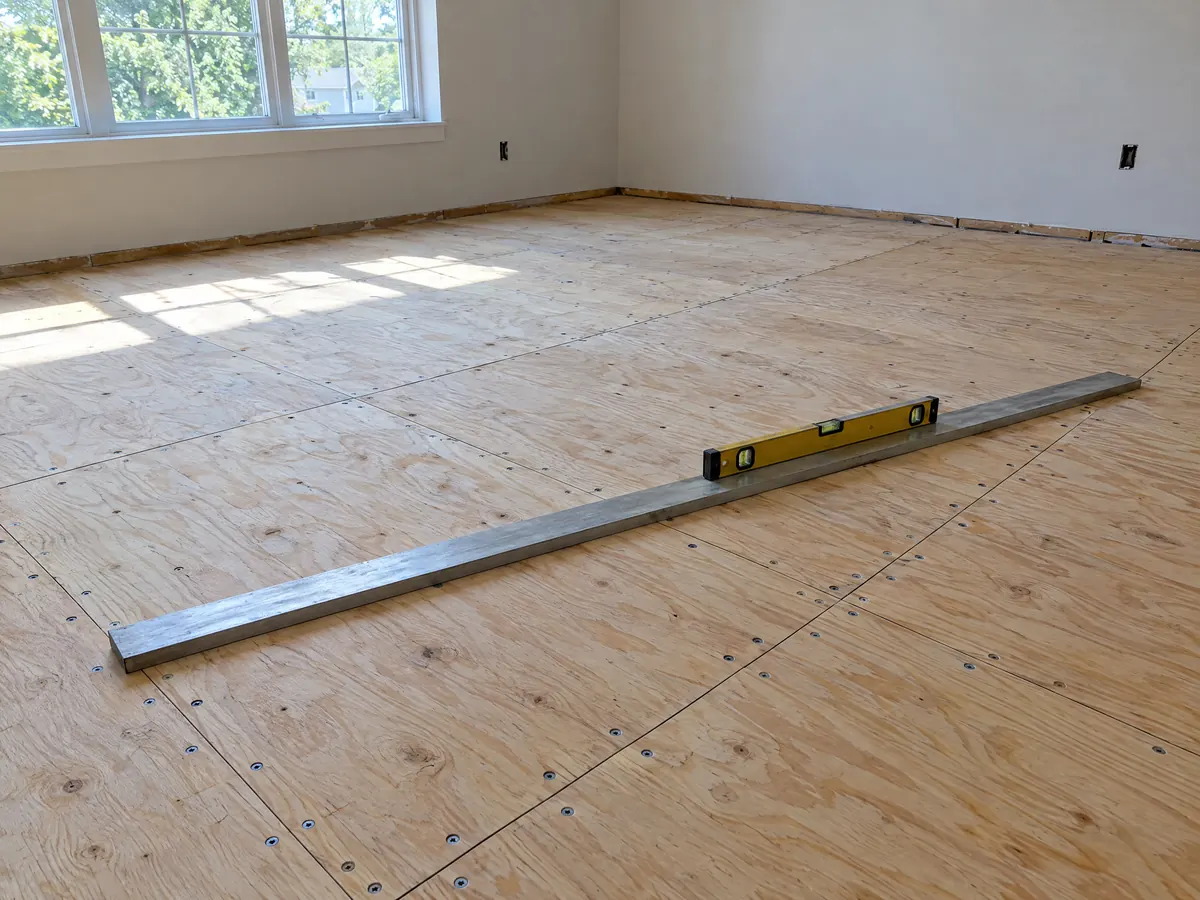
Flooring photos from San Dimas and nearby communities
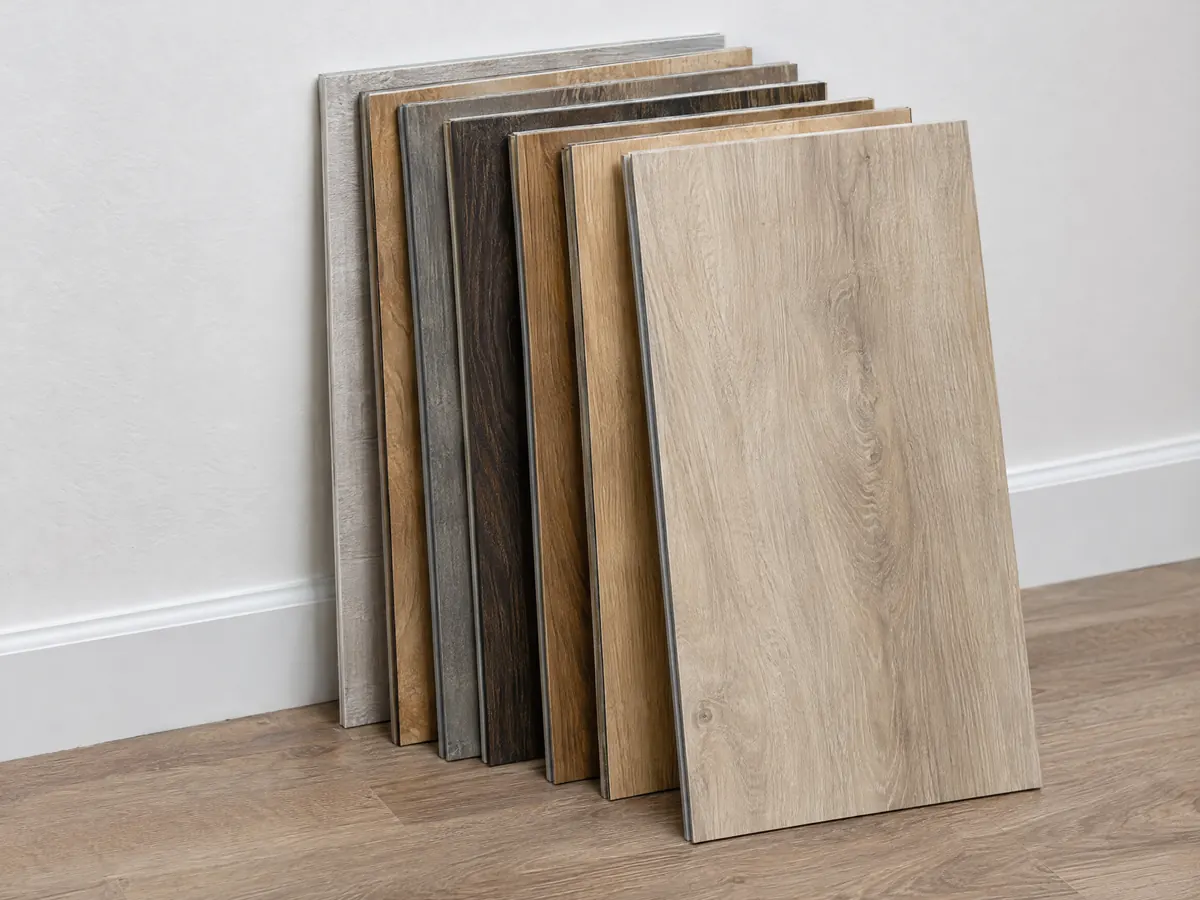
Subfloors, plank samples, finished oak and tile from San Dimas and nearby towns, shown at the stages that matter. Tap any photo to enlarge it.
What flooring costs around San Dimas
Dollar figures on this page are Los Angeles planning ranges from our flooring page, not a San Dimas bid, and a written proposal should list demolition, testing, subfloor work and stairs on separate lines. Pair the floor with concrete work in San Dimas or decks in San Dimas. Neighboring comparisons are flooring in Glendora, flooring in Covina, flooring in Pomona, flooring in Claremont and flooring in Los Angeles.
| What it covers | Typical range |
|---|---|
| Installation labor only | $3 to $9 per sq ft |
| Solid hardwood, installed | $12 to $22 per sq ft |
| Engineered hardwood, installed | $10 to $18 per sq ft |
| Refinishing existing hardwood | $4 to $8 per sq ft |
| Laminate, whole project | $2,000 to $5,500 |
| Hardwood, whole project | $3,153 to $8,496 |
| Removing the old floor | $455 to $685 per 200 sq ft |
| Tile | No sourced Los Angeles range |
San Dimas flooring questions, answered
Do I need a permit to replace flooring in San Dimas?
Carpet does not need one, because the City lists carpeting as finish work. Hardwood, tile, vinyl and laminate are not addressed in the pages we read, so ask Building and Safety. Electrical, plumbing or mechanical changes and wall openings made during the job do need a permit.
How much does it cost to have flooring professionally installed in San Dimas?
Angi's 2026 Los Angeles pages put installer labor at $3 to $9 per square foot, with engineered hardwood at $10 to $18 installed and solid hardwood at $12 to $22. We found no San Dimas study and rate these medium to low in confidence. Demolition, subfloor repair and stairs are priced separately.
How much does it cost to refloor a 2,000 square feet house in San Dimas?
Labor alone multiplies to $6,000 to $18,000 for 2,000 square feet at Angi's $3 to $9 range. Engineered hardwood at $10 to $18 installed would run $20,000 to $36,000 for the whole house. These are multiplied Los Angeles ranges and not a bid, so a visit to the house sets the real number.
Can you put flooring over a concrete slab or concrete floor in San Dimas?
Yes, once the slab has been tested and prepared. Whoever makes the plank or the glue sets the moisture limit, so the installer should drill for ASTM F2170 readings or run an F1869 calcium chloride test, then patch cracks and level the surface. Get the numbers in writing before anything is ordered.
Why does moisture come through a concrete floor in San Dimas?
Soil vapor rises through concrete because the slab is porous, and leaks, planters or downspouts beside a wall add to it. San Dimas gets about 14.5 inches of rain a year, almost all from December through March, yet a slab can still test wet in summer. Only a probe or calcium chloride test gives the number.
Is there asbestos under old vinyl flooring in San Dimas homes built before 1980?
Possibly, and no one can tell by eye. About 63.3 percent of San Dimas homes were built before 1980, so old vinyl tile and its adhesive may be underneath. Send a lab sample before any sanding, ripping or dry scraping, and put in writing who removes a layer that tests positive.
Can I refinish hardwood floors instead of replacing them in San Dimas?
Often, when enough wood sits above the tongue for a sander, and a register opening or cut edge will show it. Angi's 2026 Los Angeles figures run $4 to $8 per square foot to refinish and $12 to $22 for new solid hardwood. If the house is near the Town Core, ask Planning whether any review applies.
Can I put new flooring in a San Dimas rental or condo?
Only with the owner's or association's written approval. A tenant needs the landlord's consent, and a condo board's governing documents decide whether hard floors are allowed above a neighbor. About 27.6 percent of San Dimas occupied homes are renter-occupied, so ask for approval before any material is ordered.
What does a flooring contractor need to be licensed for in San Dimas?
Carpet, resilient flooring and wood floors fall under CSLB's C-15 class, and ceramic tile is a separate license. To pull a permit the contractor also needs a current City of San Dimas business license and proof of workers' compensation. Look the state license up on the CSLB site before accepting a quote.
Tell us the rooms, the floor today and the year of the house
Share which rooms you want done, whether you think the house sits on a slab or a raised floor and any old vinyl or oak you know is original. The slab test and the asbestos question come with us to the first visit.