
Flooring Installationin Covina, CA
Flooring installation in Covina usually needs no building permit when only carpet, tile or similar finish flooring changes, because the City's code lists that work as exempt; plumbing, framing or electrical changes made while the floor is open do need one. About 76 percent of homes predate 1980, so test old vinyl, adhesive and painted trim first.
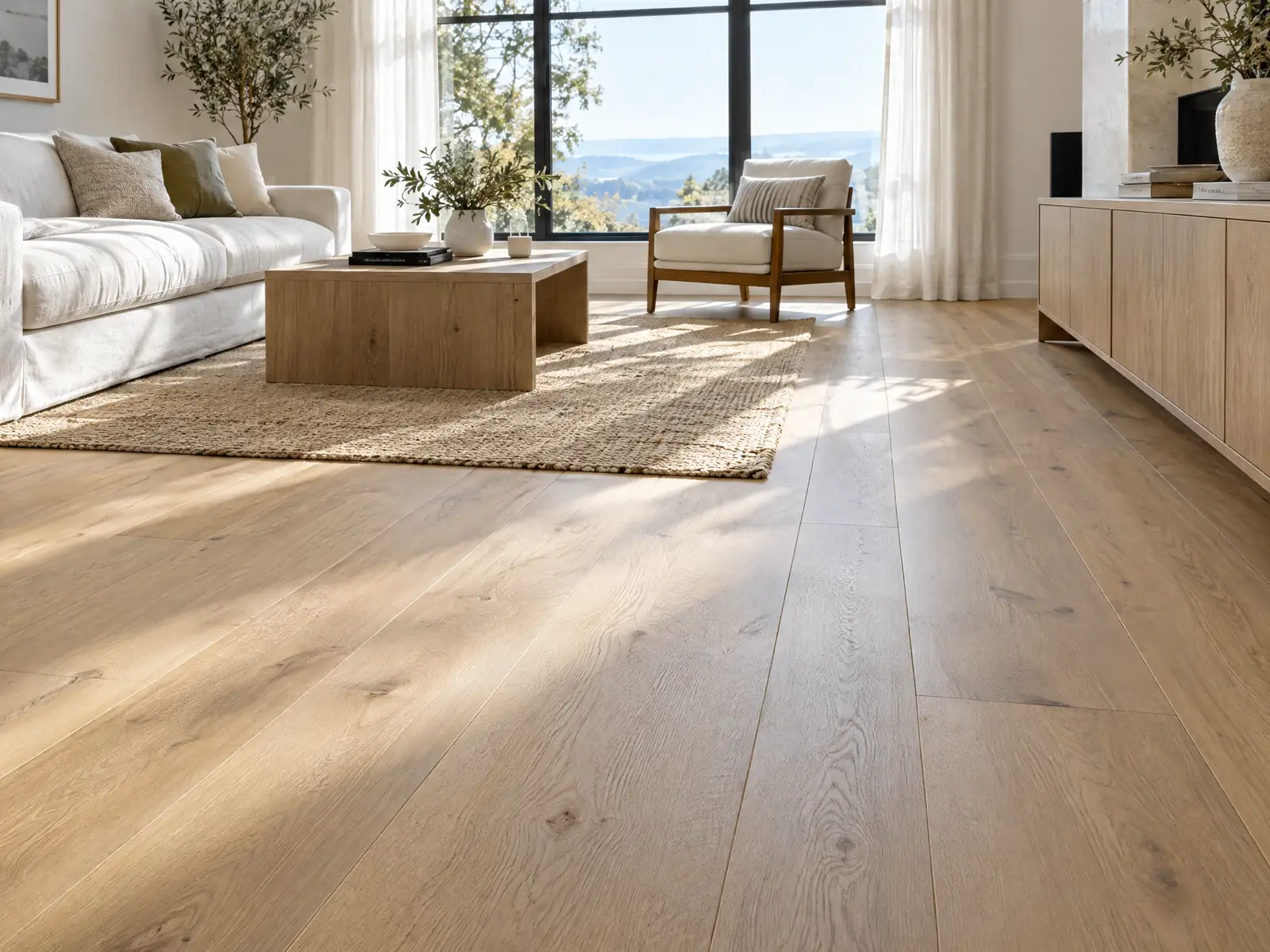
Covina began as a citrus railroad town, founded in the 1880s (Wikipedia gives 1884) and incorporated in 1901, yet most of the floors in town went in much later. Census Bureau estimates for 2020 to 2024 put about 33.2 percent of the city's homes in the 1950s and 23.9 percent in the 1960s, so roughly 76.2 percent were built before 1980. A floor job here usually starts by lifting something that is older than the owner.
MDG Builders is a Tarzana general contractor, CSLB #1040337. We write the scope, put the permit questions to the Covina Building and Safety Division and schedule the work, while a licensed flooring or tile subcontractor lays the floor itself. Materials and pricing sources are on our flooring page, and the Covina overview lists the other trades we manage in the city.
What Covina's Building and Safety Division and its municipal code say about flooring
Where flooring permits come from in Covina: City of Covina Community Development Department, Building and Safety Division.
- Carpeting, tiling and similar finish work are exempt from a Covina building permit, but a shower or tub enclosure replacement and any change to plumbing, wall framing or electrical is not, and Planning approval is flagged on the City's no-permit list.
- CSLB separates the C-15 Flooring and Floor Covering classification (carpet, sheet vinyl, resilient tile, wood and other flooring, excluding ceramic tile) from the C-54 Ceramic and Mosaic Tile classification (glazed wall, ceramic, mosaic, quarry, paver, glass mosaic and stone tile).
- CSLB's C-54 classification covers installing glazed wall, ceramic, mosaic, quarry, paver, glass mosaic and stone tile, including thin tile imitating brick or stone for indoor tubs, showers and flat surfaces.
- In a pre-1980 Covina house (about 76.2 percent of units) a floor job that also disturbs painted trim, windows or walls falls under EPA's lead-safe rule above 6 square feet per room indoors, and replacing windows is always covered.
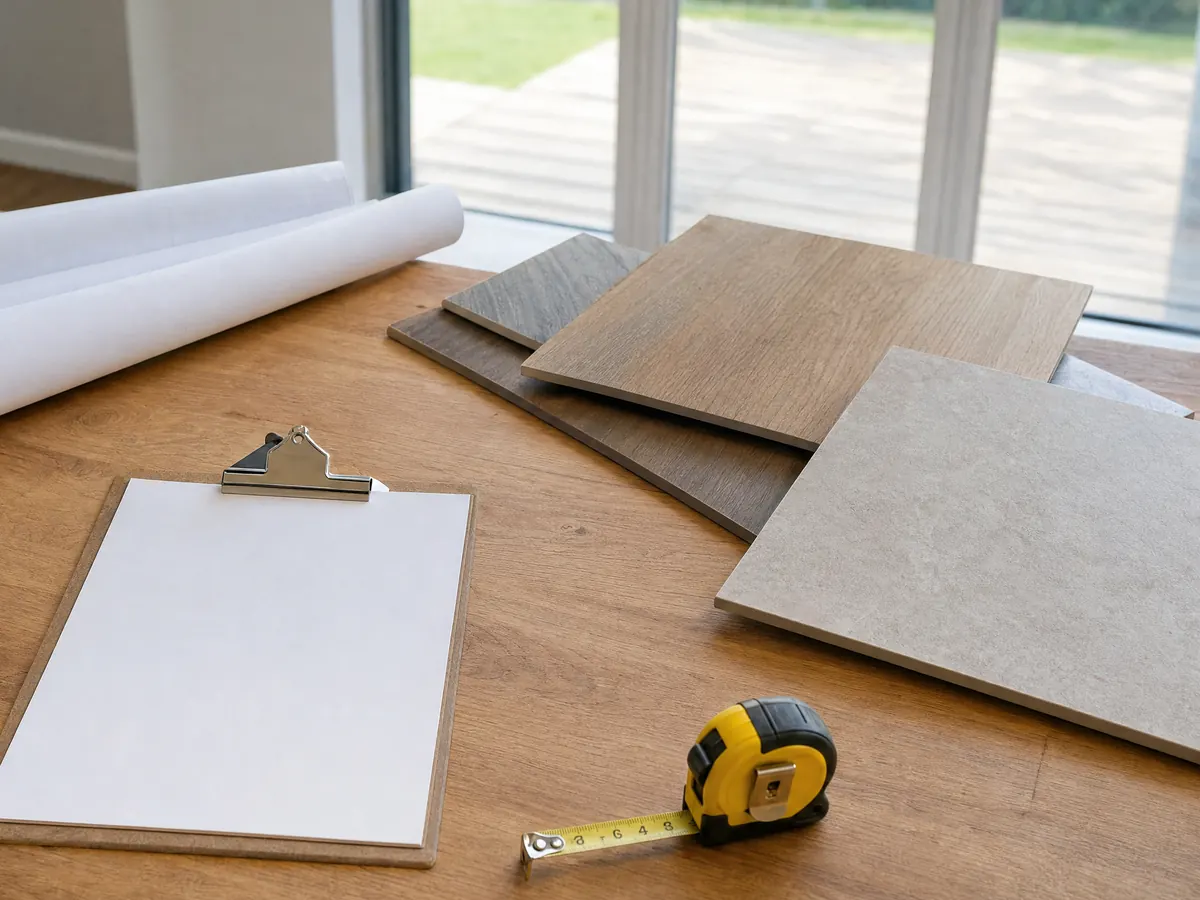
What is under the carpet in a 1950s Covina tract house?
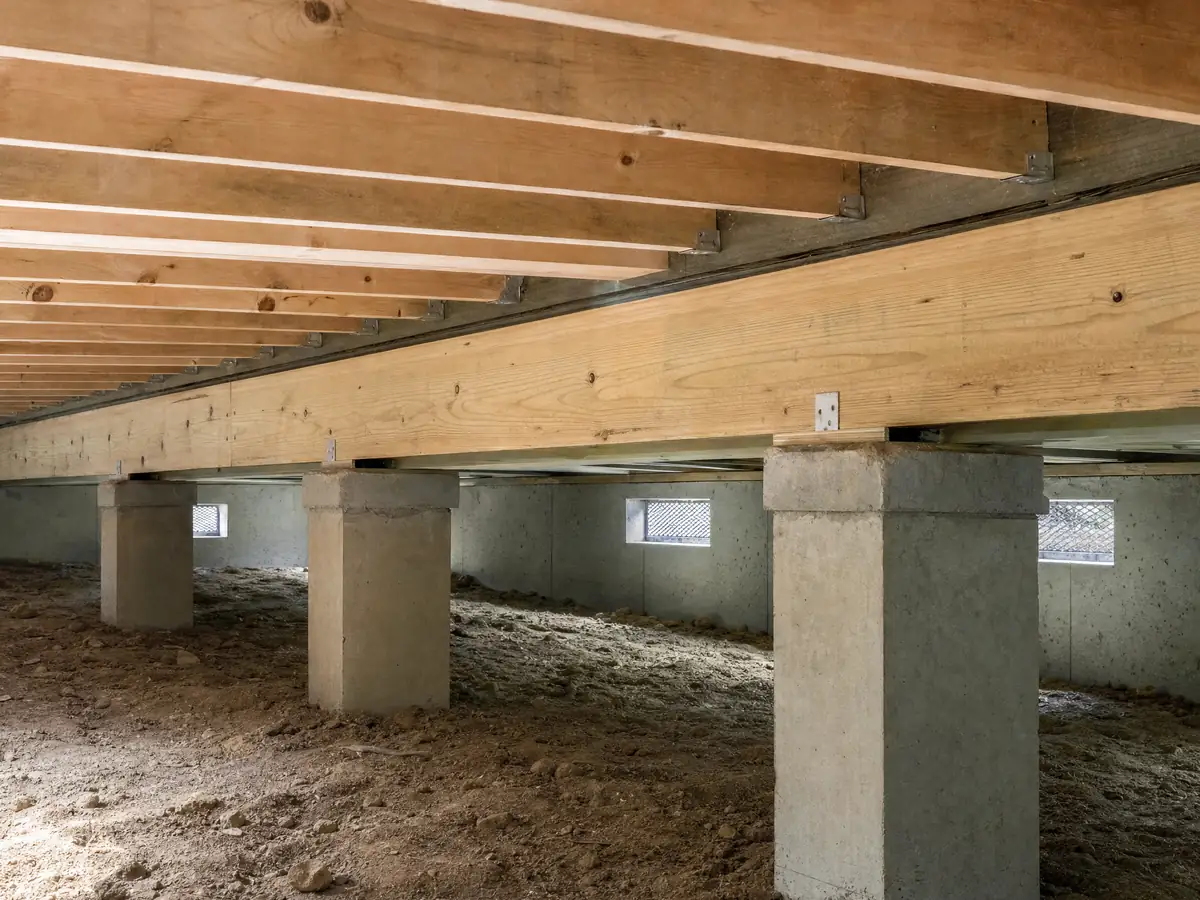
Usually something older than the owner, and we cannot say whether it sits on a slab or a raised floor. The Census Bureau counts an estimated 16,978 housing units in Covina, and 52.7 percent are single-family detached houses, but we found no source that splits them by foundation type. A slab and a crawlspace call for different tests, so the first question at every visit is what the house stands on.
Wikipedia's account is that orange and lemon groves gave way to postwar subdivisions, after a town that claimed by 1907 to be the third-largest orange shipping point in the world. The Census figures show the result: 38.6 percent of units predate 1960, and only about 11.2 percent have been built since 1990. Houses of that age can carry thin strip oak, vinyl tile, sheet goods bonded with black mastic, and board or plywood subfloors under whatever is on top now.
- Is the house built on a slab or over a crawlspace?
- Has any layer of flooring already been covered rather than removed?
- Are the baseboards and door casings painted?
Must a Covina floor job be tested for lead or asbestos first?
Often yes for lead, and it is worth testing old resilient flooring either way. EPA's lead-safe renovation rule covers paid work that disturbs paint in housing built before 1978, for any business including sole proprietors and general contractors, and minor repair is exempt only up to 6 square feet per room indoors. A floor job counts when baseboards, casings or walls get disturbed. Our Census data stop at 1980, so we can say about 76.2 percent of Covina homes predate that year but cannot give a pre-1978 share.
Asbestos is a separate question. OSHA's construction standard presumes that resilient flooring, its backing and its adhesive contain asbestos unless testing shows otherwise, and it extends the presumption to vinyl and asphalt flooring installed by 1980. The rule binds employers rather than homeowners, but it tells you how a careful crew behaves: no dry sanding, and leftover adhesive kept wet while it is scraped.
Send a sample to an accredited lab before the install date is fixed, and have the proposal name who removes any layer that tests positive. Lab turnaround adds days to the schedule, so book it at the first visit instead of the week the new material arrives.
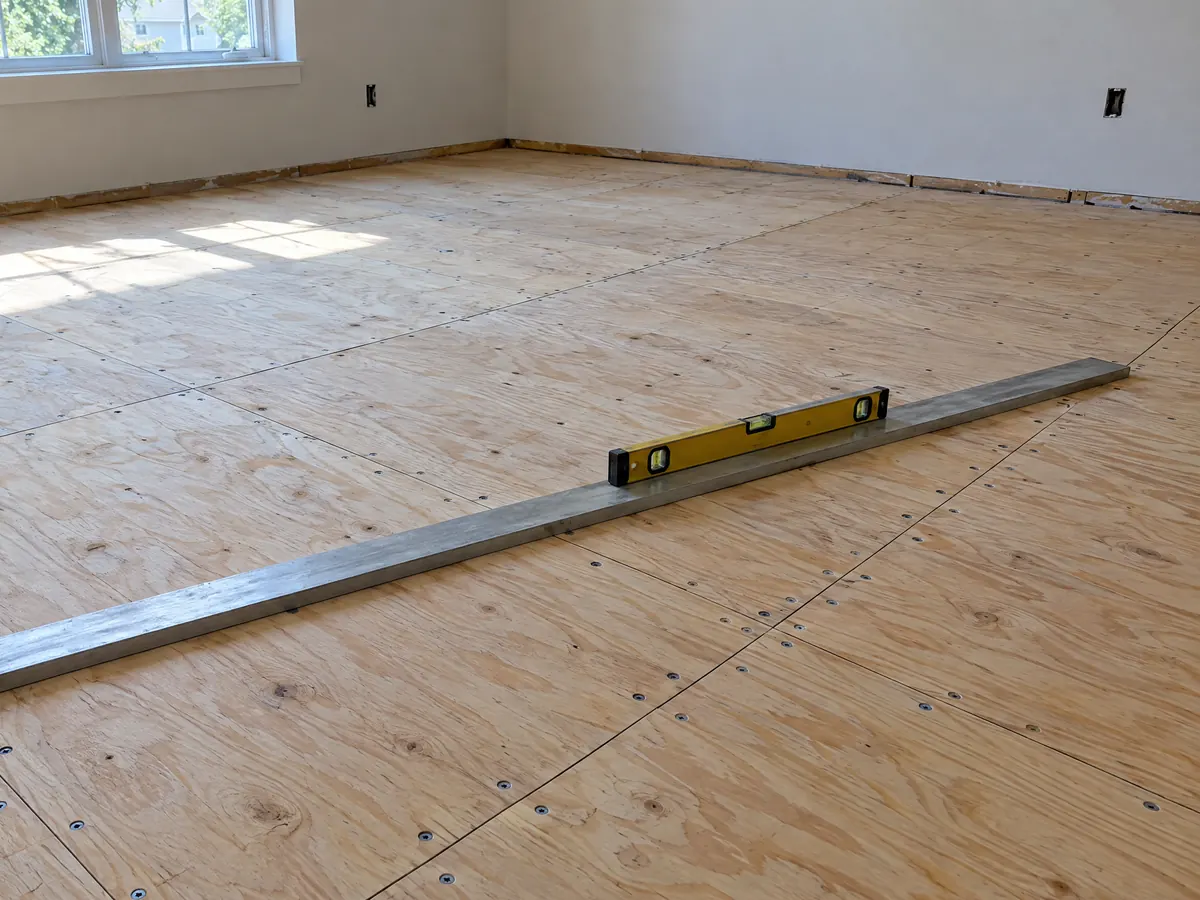
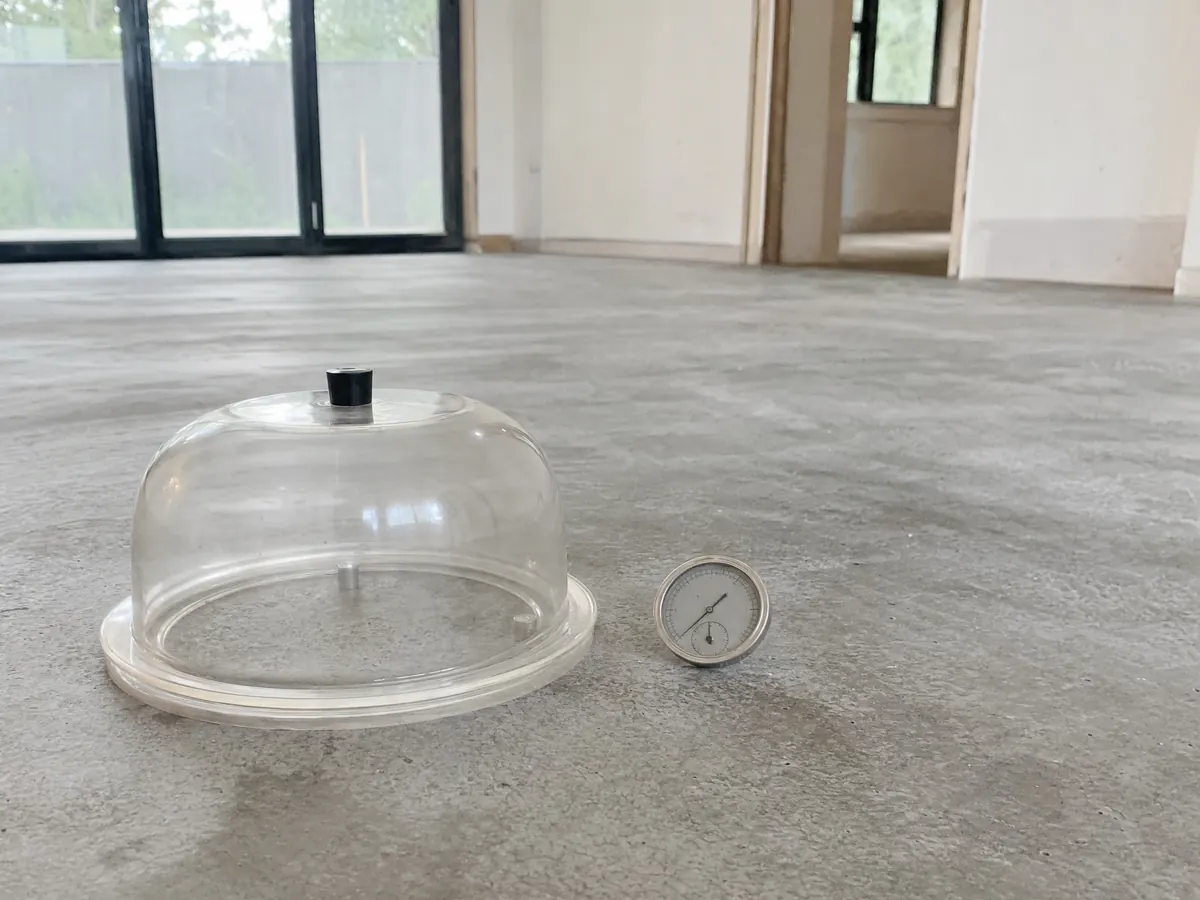
How do you test a Covina slab for moisture before wood or vinyl goes down?
Two ASTM methods dominate. F2170 measures relative humidity inside the concrete with probes, F1869 weighs the water vapor a calcium chloride kit collects at the surface, and neither standard sets the pass mark: that limit is printed by the flooring and adhesive makers. Ask for the readings on paper, with the product limit beside them.
For wood over concrete, the National Wood Flooring Association's concrete subfloor guide urges a vapor retarder rated 0.13 perms or less, and names 6 mil polyethylene sheet as one example.
Weather explains less than people expect. NOAA's 1991 to 2020 normals for the Covina City Yard station show 16.74 inches of rain a year, 13.47 of them from December through March and about 0.34 inch from June through September, yet vapor still rises from the soil under a slab in July. A leaking hose bib, sprinklers aimed at the wall or a downspout that empties beside the footing can raise one corner's readings, so point those out before testing.
- Where will the probes go, including near exterior walls?
- Which manufacturer limit will the readings be compared against?
- Is a vapor retarder part of the price?
Can original oak floors in an older Covina house be refinished, and does anyone review it?
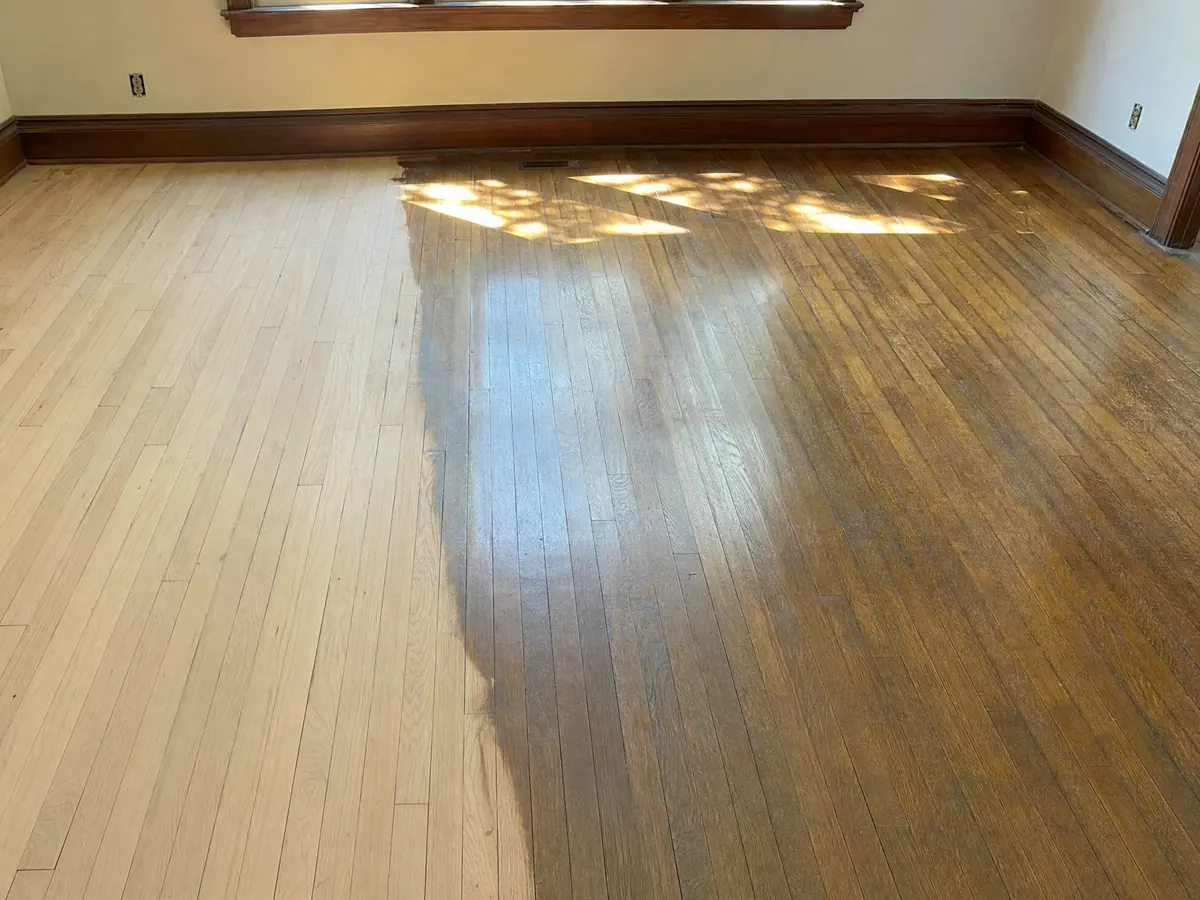
Often, when enough wood remains above the tongue, and a sander can judge that from a floor register or an exposed edge. Covina's historic review is voluntary: chapter 17.81 of the municipal code reaches only a Historic Landmark or Structure of Merit that the City Council designates with the owner's consent. The Los Angeles Conservancy's Covina page says the City had designated none when it was written, and its only survey, from 2007, covers the Town Center. Planning at (626) 384-5450 can give you the current list.
In practice, an interior floor in most Covina houses faces no historic review. A designated property would need a Historic Structure Modification Certificate for alterations, with like-for-like replacement of an element treated as a minor administrative item.
Refinishing also costs less than replacing. Angi's 2026 Los Angeles pages list $4 to $8 per square foot for refinishing and $12 to $22 installed for new solid hardwood, figures we rate medium to low in confidence, and our flooring cost guide compares the two paths.
Who approves new hard flooring in a Covina condo, apartment or rental?
The owner or the association, before the City. Census estimates show 41.2 percent of Covina's occupied homes are renter-occupied and 25.7 percent of units sit in buildings of five or more units, so many floor jobs start with a landlord or a board. A tenant needs the owner's written consent, and under the City's permit rules a tenant cannot pull a permit unless authorized as an agent, with a notarized owner authorization or a letter on a contractor's letterhead.
In a condominium or townhome, the City asks for a letter of authorization from the HOA president when work touches a common area, and the governing documents decide the rest. California Civil Code section 4765 governs how an association must answer an owner's change request.
Before ordering material, get the approval in writing, with the required underlayment, work hours, elevator or stair rules and debris staging. Sources disagree on sound ratings for hard floors above another unit, so we print no number: the association's documents and a field test control.
Does flooring installation in Covina need a building permit or an inspection?
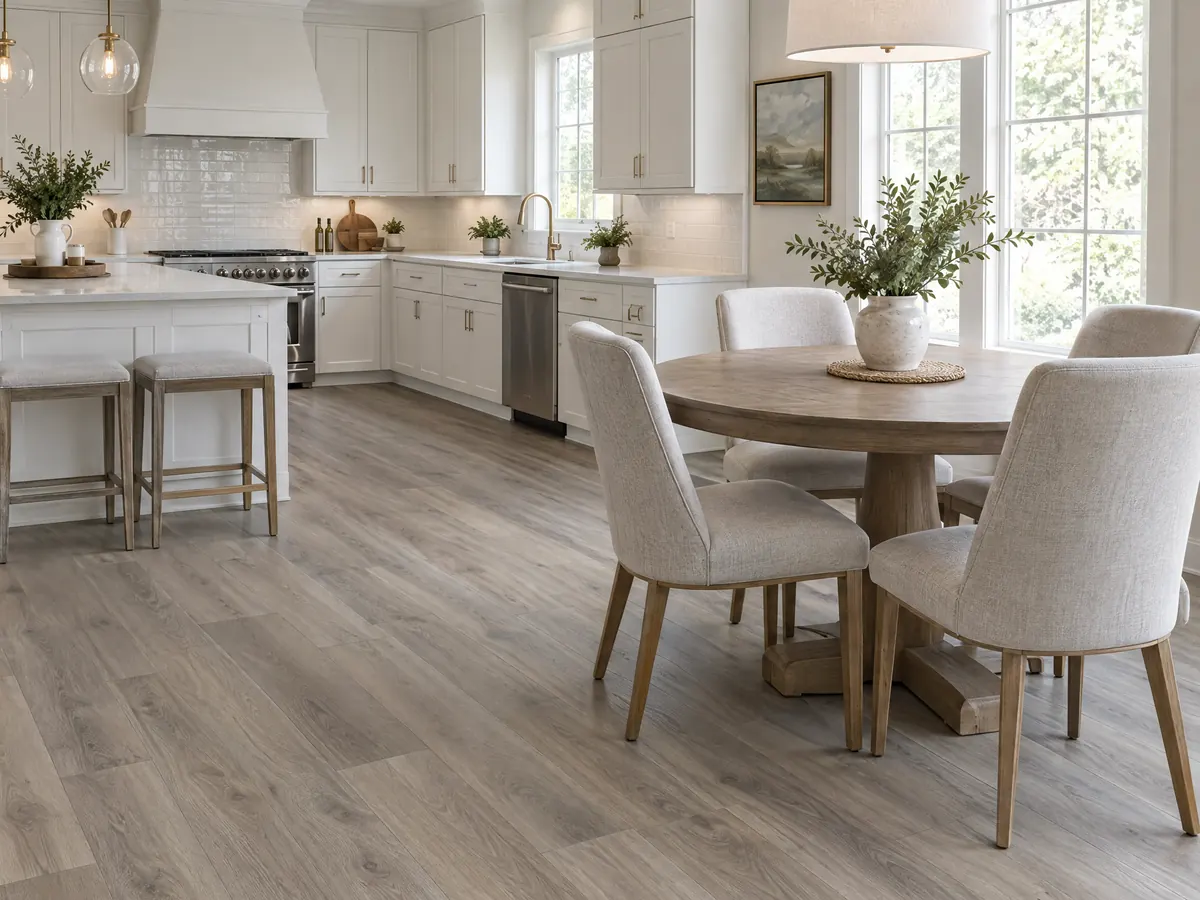
Usually not for finish flooring alone. Covina's amended Residential Code, section R105.2 in chapter 14.05, lists carpeting, tiling and similar finish work among permit-exempt items, and the City's permit handout attaches a note that Planning approval can still apply to items on its no-permit list. We read the code on the gocodebook.com mirror, 2026-10 edition, so check the wording with the City before relying on it.
The exemption ends where the job touches something else. Replacing a shower or tub enclosure, moving plumbing, changing wall framing or altering electrical all need permits, and a toilet shifted to fit a new tile layout is the usual trip wire. A contractor pulling a permit shows photo ID, a current City of Covina business license, the state license and proof of workers' compensation.
Check the jurisdiction as well. A Covina mailing address numbered above 2999, or a property south of the 10 Freeway, may sit in unincorporated Los Angeles County, and the City's address checker settles it. Building and Safety, at (626) 384-5460, takes paper plan check at the counter Monday to Thursday and quotes 4 to 6 weeks for a first review.
What does a flooring contractor in Covina charge, and which license applies?
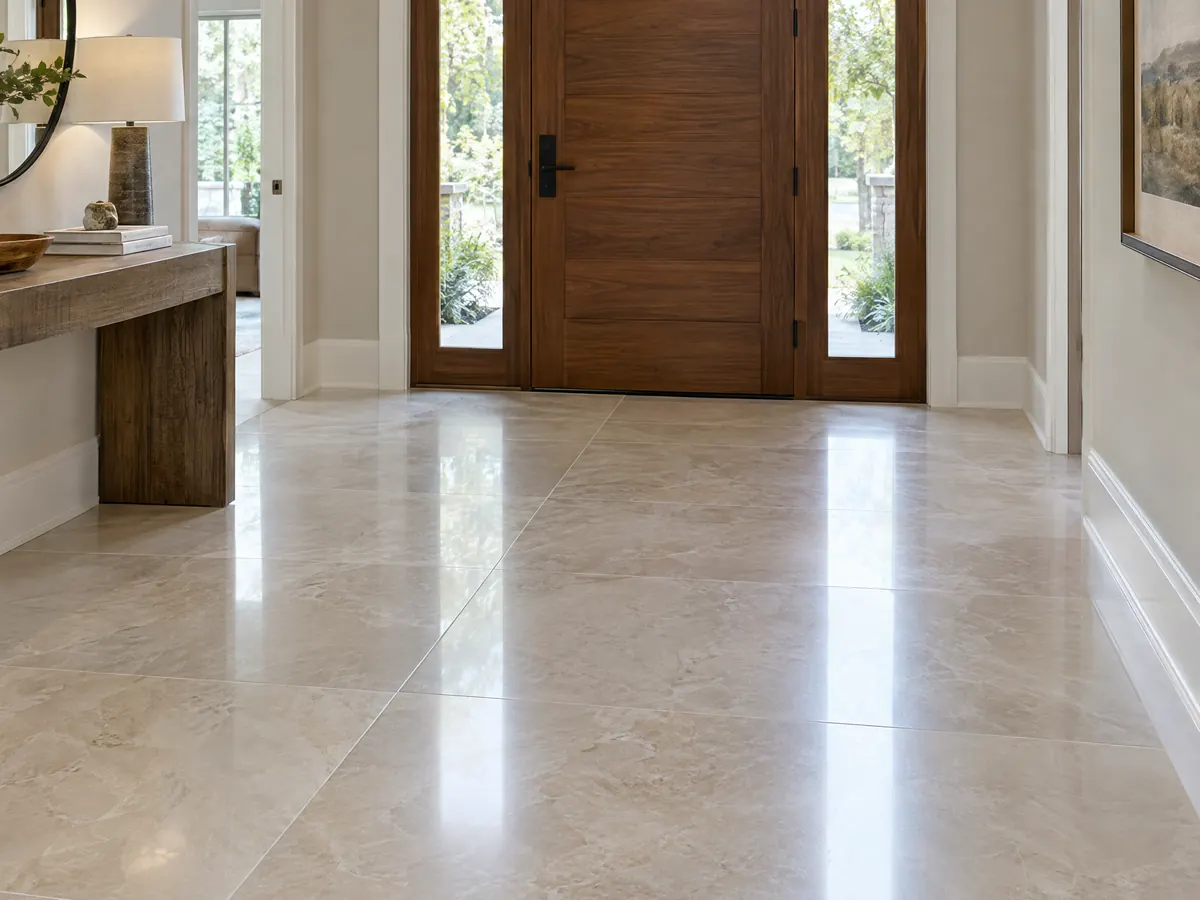
No Covina price study turned up, so we use Angi's 2026 Los Angeles pages and rate them medium to low in confidence because Angi shows no method. Installer labor runs $3 to $9 per square foot, engineered hardwood $10 to $18 installed and solid hardwood $12 to $22, and Angi's laminate page puts old-floor removal at $455 to $685 per 200 square feet. A typical Los Angeles flooring project averaged $4,011, with most between $2,134 and $6,197.
Take a 600 square foot living and dining area. Labor alone would multiply out to $1,800 to $5,400, engineered hardwood to $6,000 to $10,800 and solid hardwood to $7,200 to $13,200, which is arithmetic and not a quote. Subfloor repair, asbestos testing, stairs and a moisture barrier sit outside those ranges and belong on their own proposal lines. Federal wage data for May 2025 show floor layers in the Los Angeles area averaging $33.48 an hour, a wage and not a billing rate.
CSLB's C-15 class covers carpet, resilient flooring and wood floors, and tile belongs to C-54. Ask for the license number before the quote and look it up on the CSLB site.
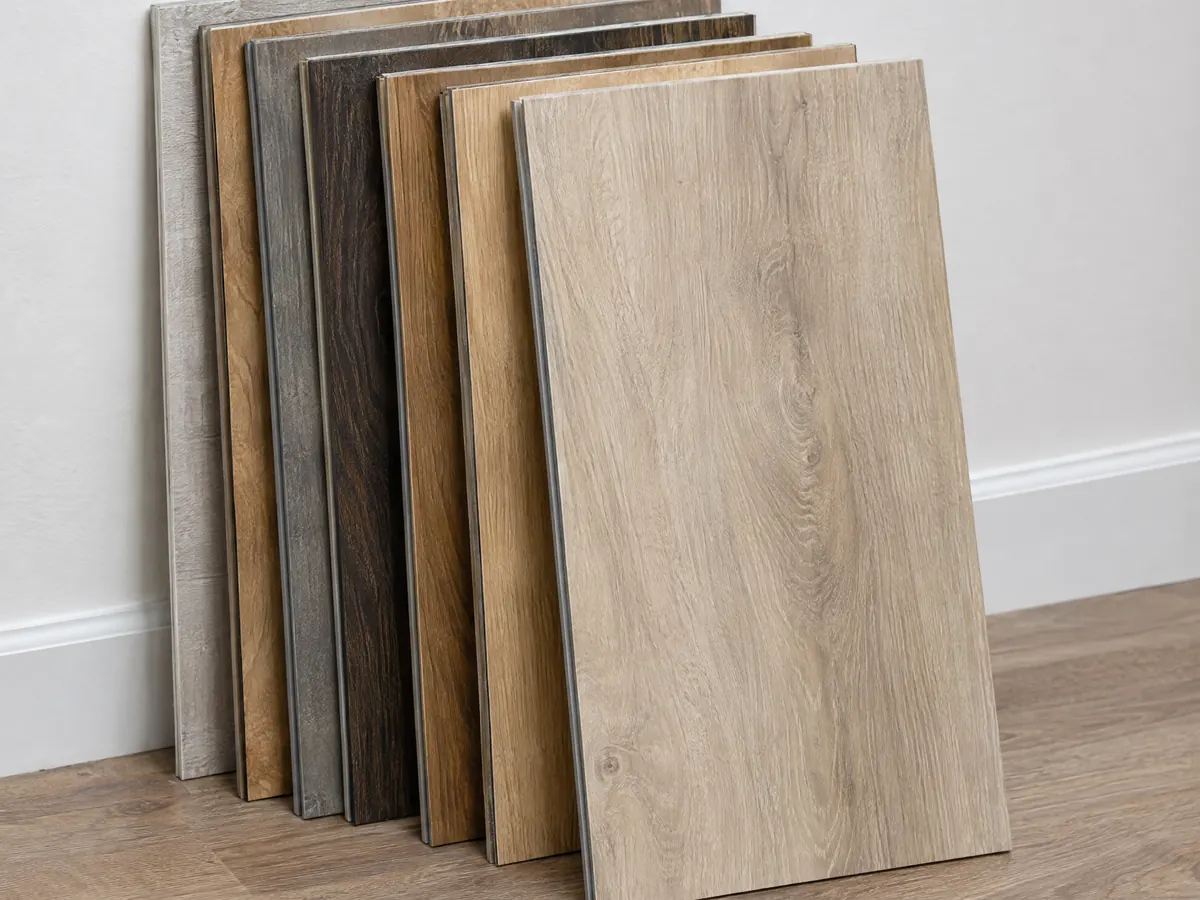
Flooring photos from Covina and nearby communities
Subfloors, planks and tile from Covina and nearby towns, including slab testing and prep. Tap any photo to enlarge it.
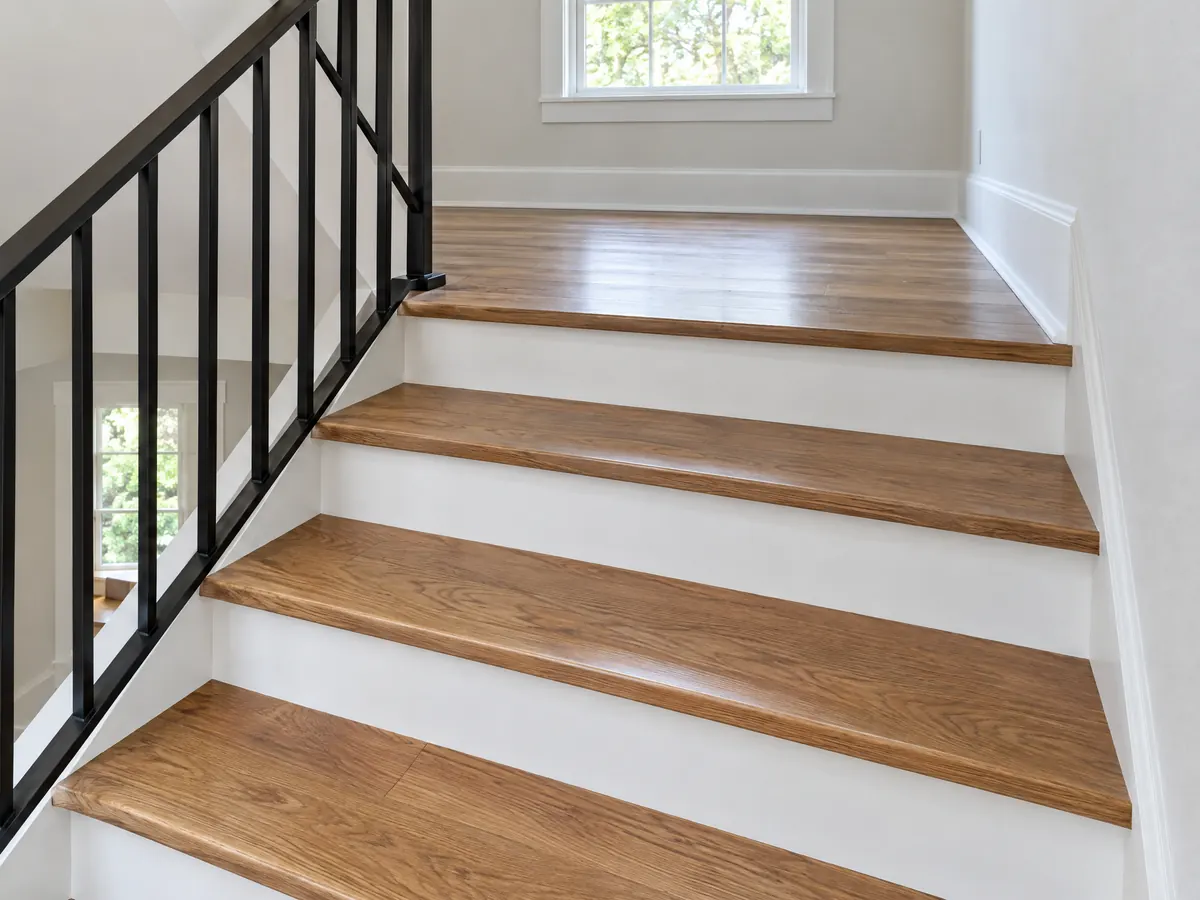
What flooring costs around Covina
The dollar figures above are Los Angeles planning ranges from our flooring page and not a Covina bid, and the license check guide shows how to verify a bidder. Comparison pages: flooring installation in Los Angeles, flooring in West Covina, flooring in Baldwin Park, flooring in Pomona, concrete work in Covina and decks in Covina.
| What it covers | Typical range |
|---|---|
| Installation labor only | $3 to $9 per sq ft |
| Solid hardwood, installed | $12 to $22 per sq ft |
| Engineered hardwood, installed | $10 to $18 per sq ft |
| Refinishing existing hardwood | $4 to $8 per sq ft |
| Laminate, whole project | $2,000 to $5,500 |
| Hardwood, whole project | $3,153 to $8,496 |
| Removing the old floor | $455 to $685 per 200 sq ft |
| Tile | No sourced Los Angeles range |
Covina flooring questions, answered
Do you need a permit to replace flooring in Covina?
Usually not for carpet, tile or similar finish flooring, which Covina's amended Residential Code lists as exempt, though the City flags that Planning approval can still apply. Moving plumbing, changing wall framing, replacing a shower enclosure or repairing floor framing needs a permit. Call Building and Safety at (626) 384-5460 with your exact scope.
How much does it cost to have flooring professionally installed in Covina?
Plan on $3 to $9 per square foot for installer labor, from Angi's 2026 Los Angeles pages, plus material: engineered hardwood is $10 to $18 installed and solid hardwood $12 to $22. No Covina study turned up, and we rate these medium to low in confidence. Tear-out, subfloor work and testing are billed separately.
Can you put flooring over concrete in Covina houses?
Yes, once the slab has been tested and prepared. Wood, vinyl and adhesives each carry a moisture limit from their maker, so the installer should take ASTM F2170 probe readings or run an ASTM F1869 calcium chloride kit and flatten any low spots. A vapor retarder may be needed, depending on the product.
Why does moisture come through a concrete floor in a Covina house?
Water vapor rises from the soil, and concrete is porous. Covina gets about 16.74 inches of rain a year, mostly from December through March, but the ground under a slab stays damp in summer. Leaks, planters and downspouts near a wall raise readings in spots. A probe or calcium chloride test gives the number.
Do flooring contractors need a license in Covina?
Yes, for most jobs. C-15 covers carpet, resilient flooring and wood, and C-54 covers tile. An unlicensed person may take only a job of $1,000 or less including materials, with no permit and no hired workers. When pulling a permit, the City also asks for a current Covina business license and proof of workers' compensation.
Is refinishing hardwood floors worth it in an older Covina home?
Often, if the boards are thick enough to sand. Angi's Los Angeles pages from 2026 list refinishing at $4 to $8 per square foot, well under new solid hardwood at $12 to $22 installed, and we rate those figures medium to low in confidence. Check the thickness at a floor register before deciding.
Is there asbestos or lead under old flooring in a Covina house built before 1980?
Possibly, and only testing can tell. About 76.2 percent of Covina homes predate 1980. OSHA presumes old resilient flooring and its adhesive contain asbestos, and EPA's lead rule covers paid work that disturbs paint in pre-1978 housing, which includes baseboards and casings. Test before anything is sanded, ripped up or scraped.
Can I install hard flooring in a Covina condo or apartment?
Only with approval from your association or landlord. In a condo, the association's governing documents decide hard flooring above a neighbor, and Civil Code section 4765 covers how a board must respond to your request. For a permit job touching a common area, Covina also wants a letter from the HOA president. Get written approval before ordering.
Does a Covina mailing address always mean the City's building counter?
No. The City says addresses numbered above 2999, and properties south of the 10 Freeway with a Covina mailing address, may be in unincorporated Los Angeles County, and those projects go to a county office. Covina publishes an address jurisdiction checker on its website, so use it before you plan a permit.
How do I know if my subfloor is bad before flooring installation in Covina?
On a raised floor, look from the crawlspace first. Stains under a bath or kitchen, sag near a heavy wall, insect damage and soft spots underfoot all point to repairs. We found no verified price for subfloor repair, so it should appear as its own line, and structural repair is a question for the Building Division.
Tell us about the floors in your Covina home
Share the rooms, whether the house stands on a slab or a raised floor and roughly when it was built, and we will bring the right tests to the visit.