
Fence Companyin Covina, CA
A fence company in Covina starts with Planning, because the City requires a wall and fence approval for every fence and wall. Front yard walls stop at 4 feet if solid or 5 feet if half open, and chain-link is banned. Whether a building permit also applies depends on which City document you read, so confirm at the counter.
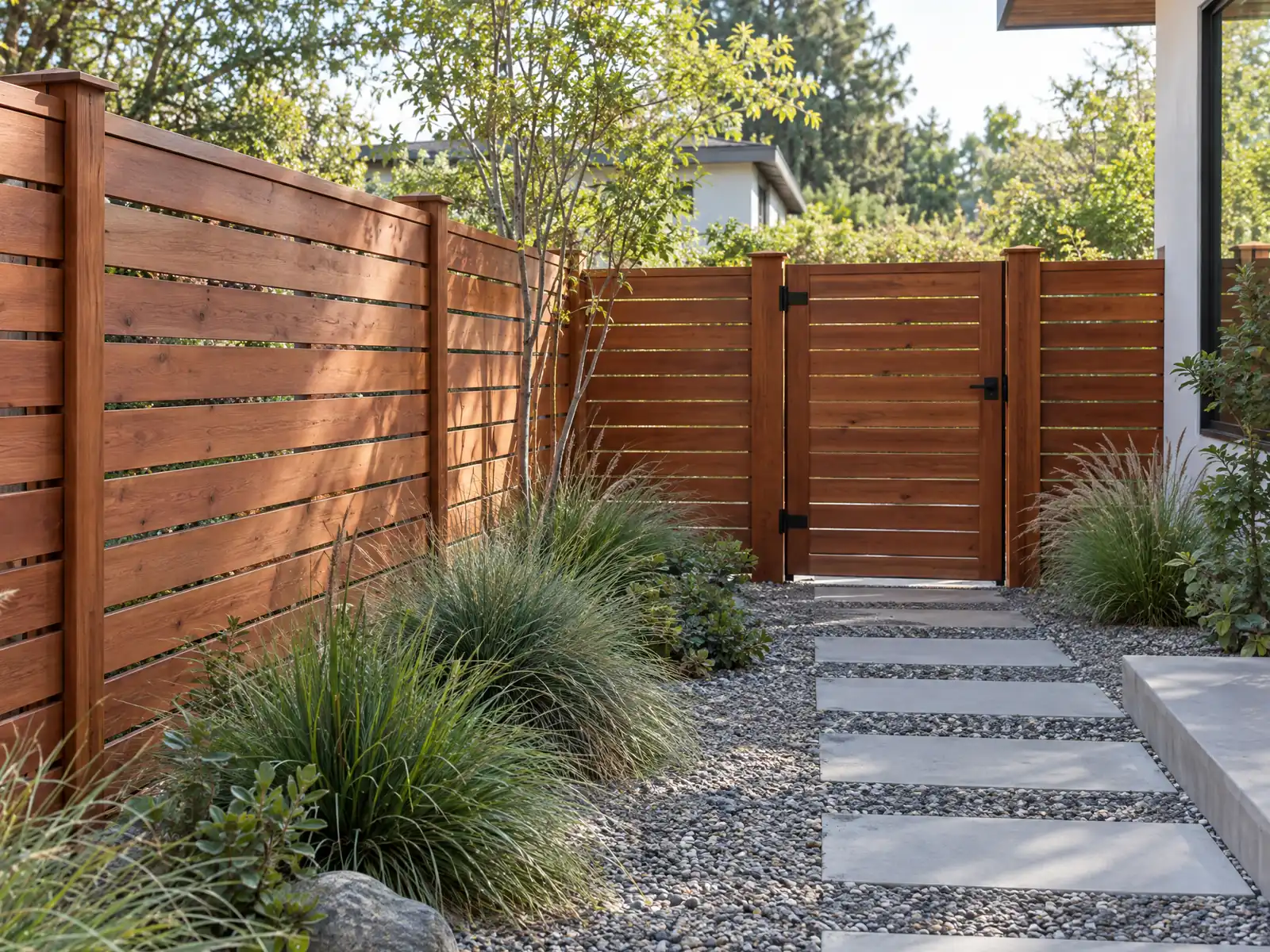
Covina's lots were laid out for citrus before they were laid out for fences. Wikipedia says the city was incorporated in 1901 and was a leading orange shipping point by 1907, and the postwar subdivisions that followed filled most of its blocks. The Census Bureau's 2024 five-year estimates count 8,946 detached houses among 16,978 housing units, about 52.7 percent, and about 76 percent of all units predate 1980. Most lot lines here were drawn by tract builders decades ago, so a replacement fence often follows a line that has not been measured since.
The code is more detailed than most owners expect: a Planning permit for every wall, set front yard heights, a banned material and a protected oak rule. MDG Builders (CSLB #1040337) prepares the Planning and Building submittals and keeps the schedule, while a licensed fence subcontractor builds wood, vinyl and metal runs and a licensed masonry subcontractor builds block walls, because CSLB's C-13 fencing class excludes masonry. Prices and sources are on our fencing page, and the Covina overview shows the other trades we handle in the city.
What Covina's walls and fences chapter, Planning and Building say about fences
Where fencing permits come from in Covina: City of Covina Community Development Department, Building and Safety Division.
- Covina's walls and fences chapter (17.71) sets front-yard limits of 4 feet for solid walls, or 5 feet if at least 50 percent of the wall face is see-through (tubular steel, wrought iron, wood or vinyl pickets). Along rear and interior side property lines outside the front yard setback, walls and fences may reach 8 feet with a wall and fence permit and building permit, and those 6 feet or lower get administrative approval. Height is measured from finish grade at the base, or from the midpoint between the two lots' lowest grades where they differ.
- The City's Planning FAQ summarizes the same rule as a 5 foot maximum in the front yard and 8 feet in side and rear yards, and says a Wall and Fence approval from Planning is required for every wall and fence regardless of height or location, followed by a building permit from the Building Official. The code text says 4 feet solid and 5 feet open in front setbacks, so use the code figures and ask Planning about the FAQ's looser wording.
- Chapter 17.71 says a wall and fence permit (Planning) and a building permit are required for all fences and walls regardless of height or location (17.71.030), yet section 17.71.020 says a building permit is needed only above six feet and the Planning page says free-standing walls over six feet need one. The City's block wall handout also says a building permit is required for all masonry block and retaining walls and for wood, wrought iron or similar fences. The wording is not consistent, so confirm with Building at (626) 384-5460 before telling a customer no permit is needed.
- On corner lots Covina allows fences and walls up to 5 feet in the front setback and 8 feet along rear lines outside it, with a wall and fence permit and building permit; on reversed corner lots the side yard wall may reach 8 feet but must be set back at least 5 feet from the street, and that 5 feet must be landscaped with trees and shrubs.
- Fences and walls along a side street may sit on the property line but all footings must be inside it; where a driveway meets a street the fence or wall must be set back 10 feet from the driveway at a 45 degree angle, and the corner cut-back area must keep structures and plants to 3 feet or lower for visibility.
- Chain-link fences are prohibited in Covina's residential zones. Acceptable materials are wood, vinyl, concrete block, stucco-covered block, brick, stone and textile; concrete block walls must be covered with stucco; secondhand or castoff materials, tarps, netting, bamboo, plywood and untreated wood are not allowed.
- To replace an existing Covina fence or wall in the same place, even at the same height, the owner must submit plans for plan check, follow the same height limits, and use materials compatible in design with fences on adjacent properties; to add height, the new material must be compatible with the existing wall.
- Covina's block wall handout (Handout #18, effective 1/1/2026) requires Planning and Engineering review first, a dimensioned plot plan, a site survey by a licensed land surveyor or civil engineer proving the wall sits entirely on the owner's lot, a shared-wall consent form signed by all parties, and decorative block or stucco matching the house on any wall visible from a public street.
How tall can a fence be in my Covina front yard?
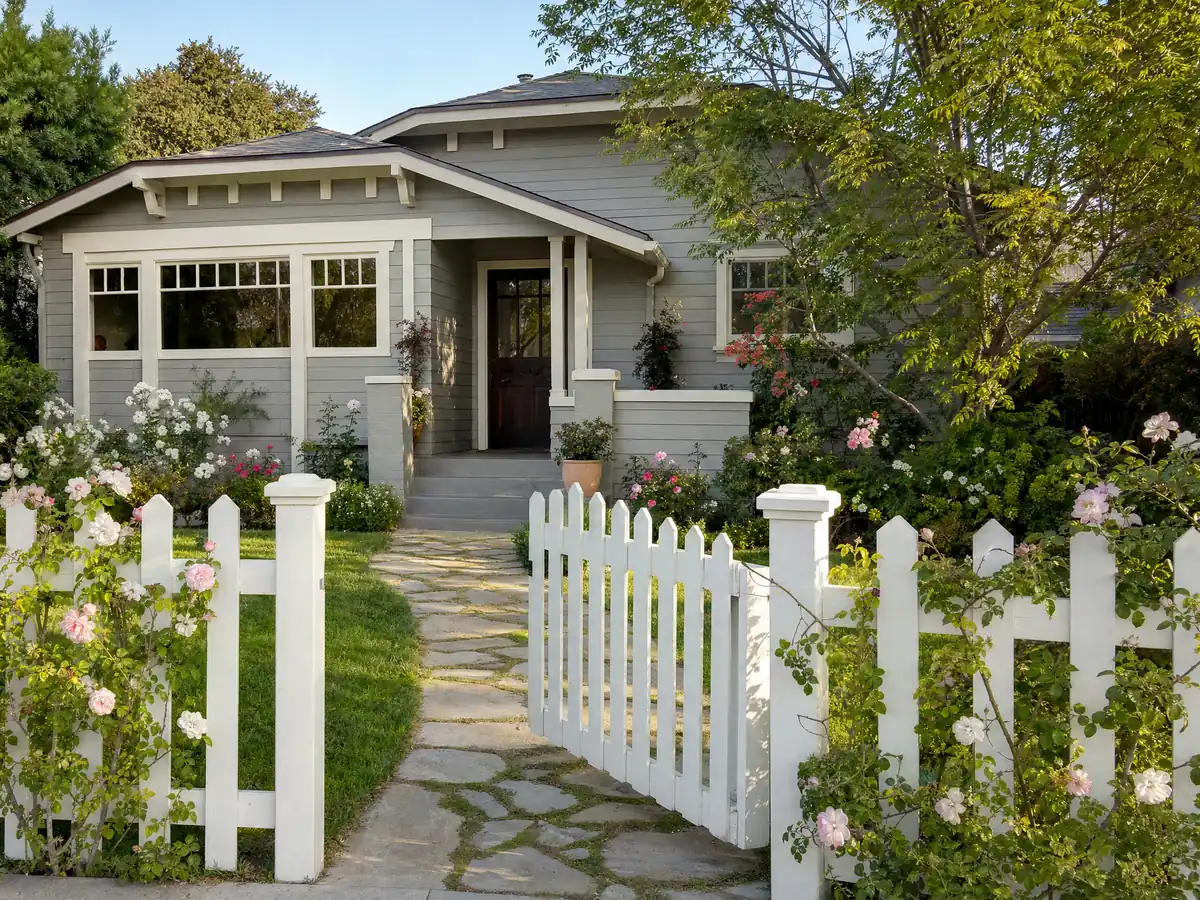
Chapter 17.71 of the Municipal Code sets two numbers for a front yard: 4 feet if the wall is solid, and 5 feet if at least half of the wall face is see-through, such as tubular steel, wrought iron, or wood or vinyl pickets. Height is measured from finish grade at the base, or from the midpoint between the two lots' lowest grades where they differ. We read the code on the gocodebook.com mirror (2026-10 edition), not on the City's own code site, so confirm the figures with the City.
The City's sources do not agree on this one. Planning's FAQ summarizes the front yard limit as 5 feet maximum, which is looser than the code's 4 feet for a solid wall. We build to the code figures and ask the Planning counter at (626) 384-5450 which one governs a given lot before we price a front wall. A picket or tubular steel design at 5 feet is the safer choice either way, because it fits under both readings.
Corner lots have their own numbers: up to 5 feet in the front setback and 8 feet along rear lines outside it. On a reversed corner lot the side yard wall may reach 8 feet but must sit at least 5 feet back from the street, and that 5 feet must be landscaped with trees and shrubs.
Ask Planning to confirm the front yard height in writing before a front wall or gate is priced.
Do I need a permit to build a fence or block wall in Covina?
Plan on two layers of approval. Planning issues a wall and fence permit for every wall and fence regardless of height or location, according to chapter 17.71 and the Planning FAQ, and the building permit question follows. The City's Building page also lists walls and fences among the projects that need a Planning Approval Clearance before Building will accept plans, so a short fence does not skip the first step.
On the building permit, the City contradicts itself. Section 17.71.030 says both permits are required for all fences and walls regardless of height. Section 17.71.020 says a building permit is needed only above 6 feet, and Planning's page says free-standing walls over 6 feet need one. The block wall handout says a building permit is required for all masonry block and retaining walls and for wood, wrought iron or similar fences.
Call Building and Safety at (626) 384-5460 and get an answer for your height and material before you sign anything, and be wary of anyone who says no permit is needed. Replacing a fence in the same place, even at the same height, still means submitting plans for plan check. The City takes paper plans at the counter with no electronic submittal, and it gives 4 to 6 weeks as the usual first-submittal plan check time.
What is the maximum height for a backyard fence in Covina?
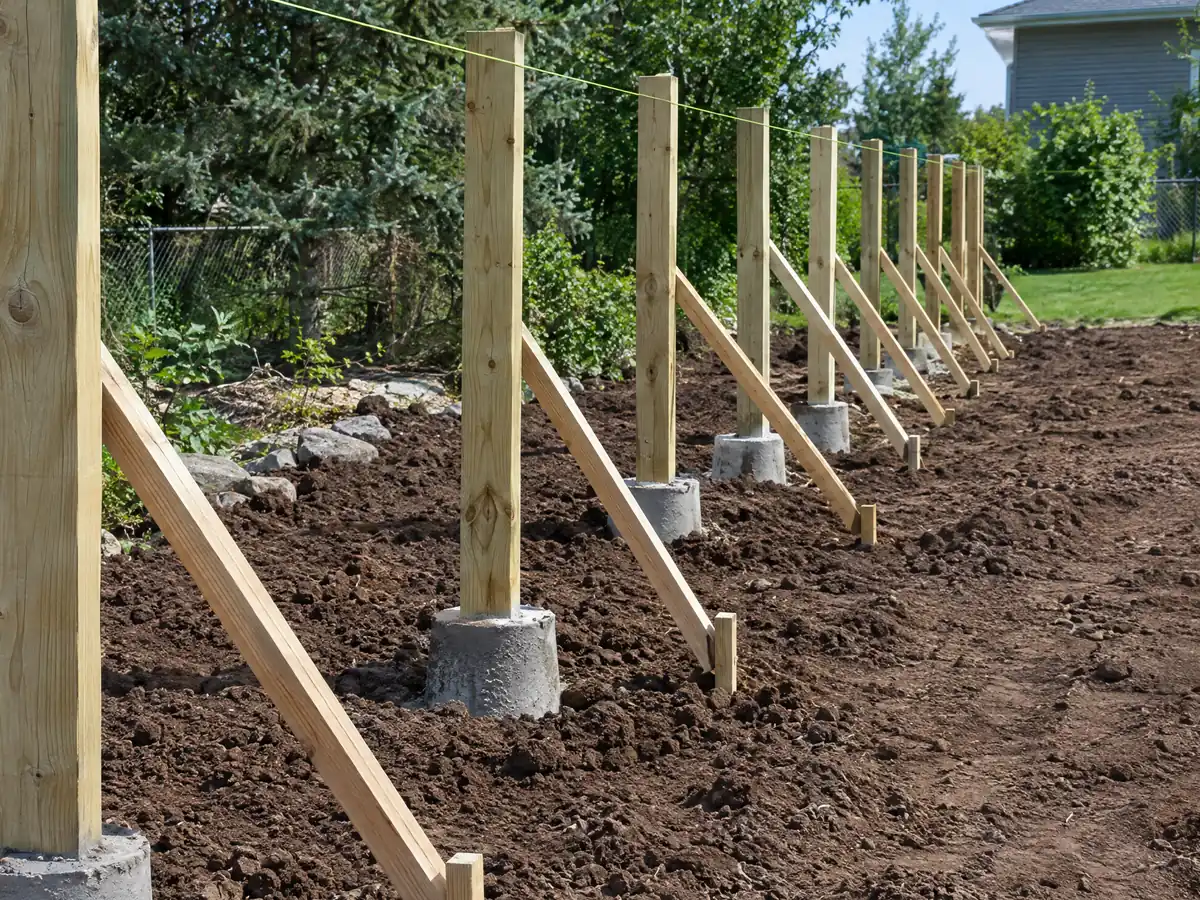
Along rear and interior side property lines outside the front yard setback, walls and fences may reach 8 feet with a wall and fence permit and a building permit, and those 6 feet or lower get administrative approval. The Planning FAQ gives the same 8 foot figure for side and rear yards. A 7 foot privacy fence is therefore a legal height here, and a 6 foot fence is the faster approval.
Slopes get a rule of their own in section 17.71.120. A fence or wall between 5 and 6 feet tall may stand at the top of a slope when the slope is the line between two separately owned lots, the drop from top to toe is 6 feet or more and the slope is 2 horizontal to 1 vertical or steeper. Anything higher than 8 feet must be terraced with a bench at least 3 feet wide.
A swimming pool must be fully enclosed by a fence or wall at least 5 feet tall with self-closing gates. A pool may not sit in a required front yard or within 5 feet of a side or rear line, so check setbacks on the survey before the pool fence is designed.
What does Covina require for a block wall, and who signs for a shared one?
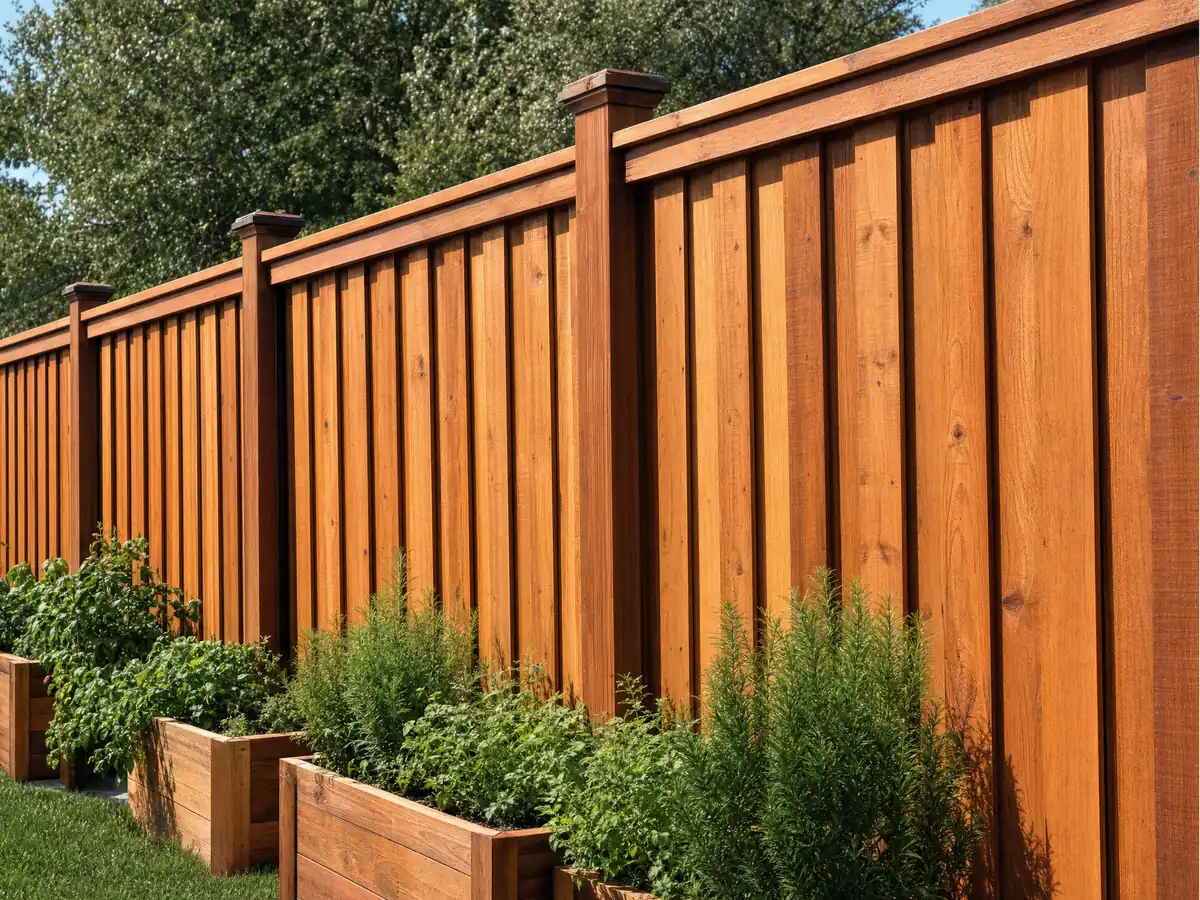
Handout #18 (effective January 1, 2026) front-loads the paperwork. It asks for Planning and Engineering review first, a dimensioned plot plan, a site survey by a licensed land surveyor or civil engineer proving that the wall sits entirely on the owner's lot, and a shared-wall consent form signed by every party. Concrete block walls must be covered with stucco, and a wall visible from a public street needs decorative block or stucco matching the house.
The engineering minimums under the 2025 California Building Code are 3,000 psi concrete, grade N block at least 6 inches thick and horizontal bond beam reinforcement in the second course from the top. Walls over 6 feet add foundation, pre-grout and final inspections. Pilasters may be 18 inches wide at most, may rise 9 inches above the wall for lights or finials, must be spaced at least 10 feet apart and are prohibited on front yard walls.
Retaining walls follow another line. The amended residential code requires a permit above 3 feet from footing to top unless the wall holds a surcharge, and Planning asks for structural plans for any retaining wall, so treat 3 feet as the working line and confirm it at the counter. Block and retaining walls are masonry work under CSLB class C-29.
What fence materials are allowed in Covina, and is chain-link really banned?
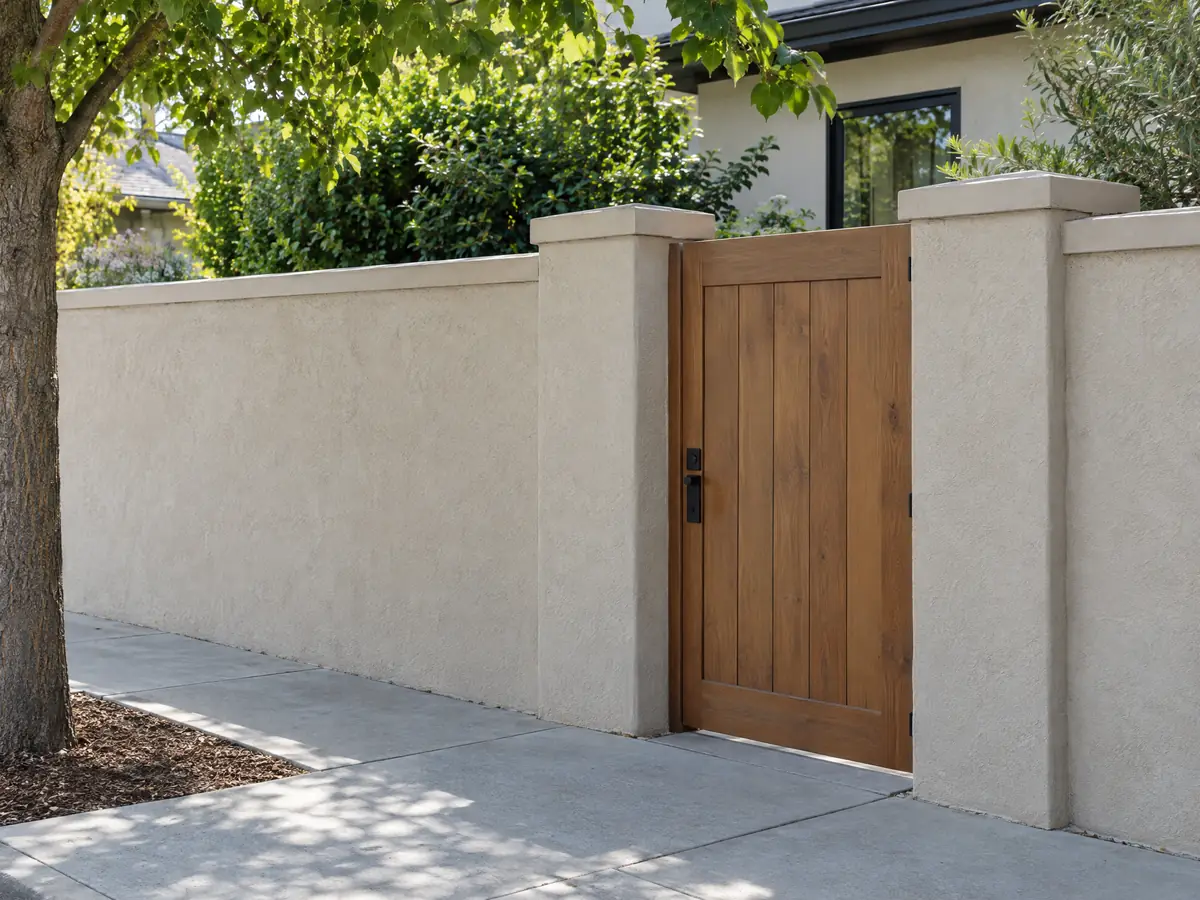
Yes, chain-link is banned in Covina's residential zones. The acceptable list is wood, vinyl, concrete block, stucco-covered block, brick, stone and textile. Secondhand or castoff materials, tarps, netting, bamboo, plywood and untreated wood are not allowed. Tubular steel and wrought iron are named in the code as the open designs that qualify for the taller 5 foot front yard limit.
That leaves a short list of real choices. Wood has the lowest first cost, vinyl trades a higher price for less upkeep, and metal pickets are the route to 5 feet at the front of a lot. UC IPM reports that drywood termites are most prevalent in southern California and infest fences, so keep wood off the soil or set posts in concrete footings.
A replacement has to match its neighbors. Materials must be compatible in design with the fences on adjacent properties, and where height is added the new material must be compatible with the existing wall. Wood, vinyl and metal fences are C-13 work, which CSLB defines as building and repairing all types of fences, corrals, railings, guardrails and gates, excluding masonry.
Can I dig fence post holes near a protected oak in Covina?
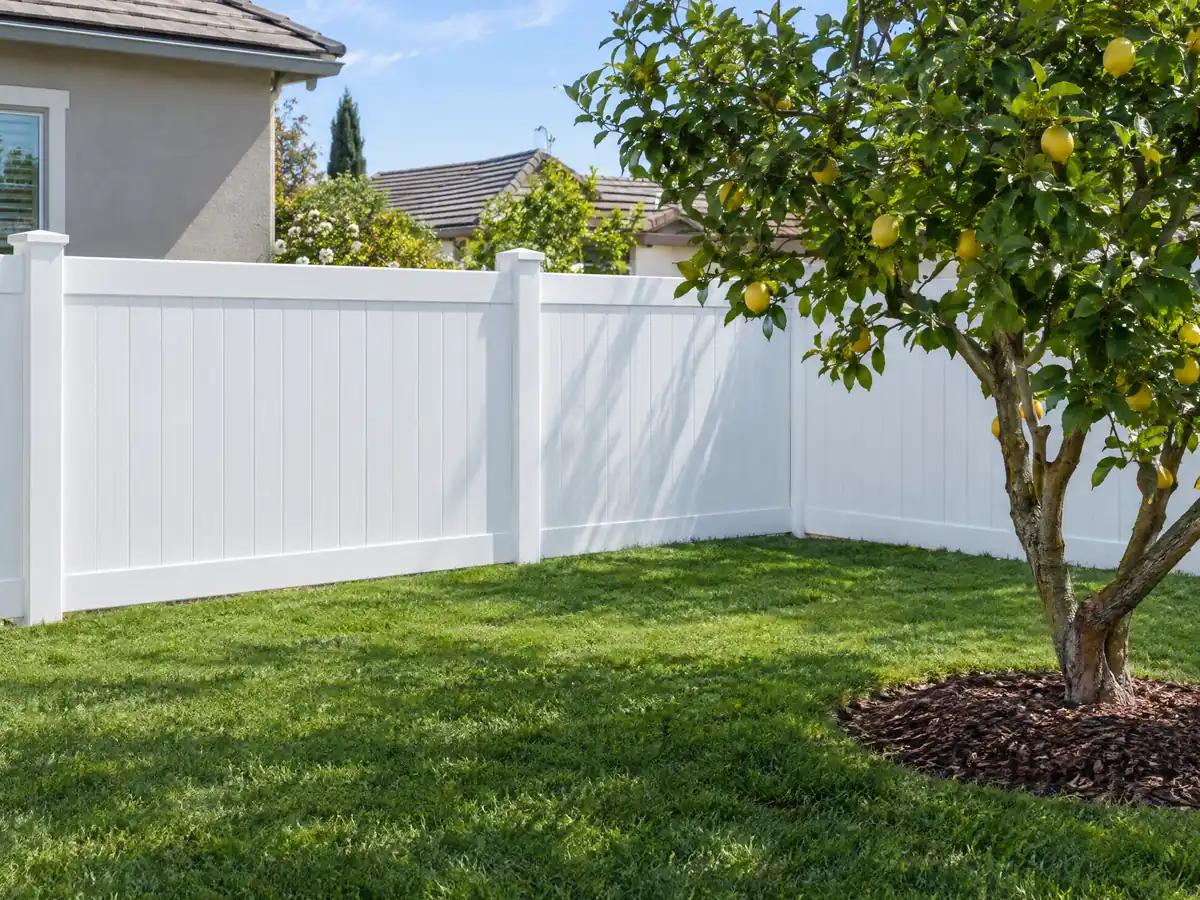
Possibly, with a permit. Covina protects every oak (Quercus) with a trunk diameter of 10 inches or more at 4.5 feet, or 22 inches combined for a multi-trunk oak. No one may damage a heritage tree without a tree preservation permit, and the code's definition of damage includes paving, trenching, excavating, changing grade or running equipment inside the dripline.
On a plain reading, a post hole is an excavation, so a fence line that crosses a protected oak's dripline deserves a call to Planning before the first hole is dug. The same goes for a block wall footing or a trench for an electric gate. A violation is a misdemeanor, counted per tree. Street trees are separate: it is unlawful to trim, remove or injure one in the public right-of-way without a Public Works permit.
Walk the line before the quote. Mark every oak on or next to the fence line, measure each trunk at 4.5 feet and give the contractor those numbers. Shifting a run a few feet to stay outside a dripline is a design option worth pricing against a permit application and its wait.
How much does fence installation cost in Covina, and how do I choose a fence company?
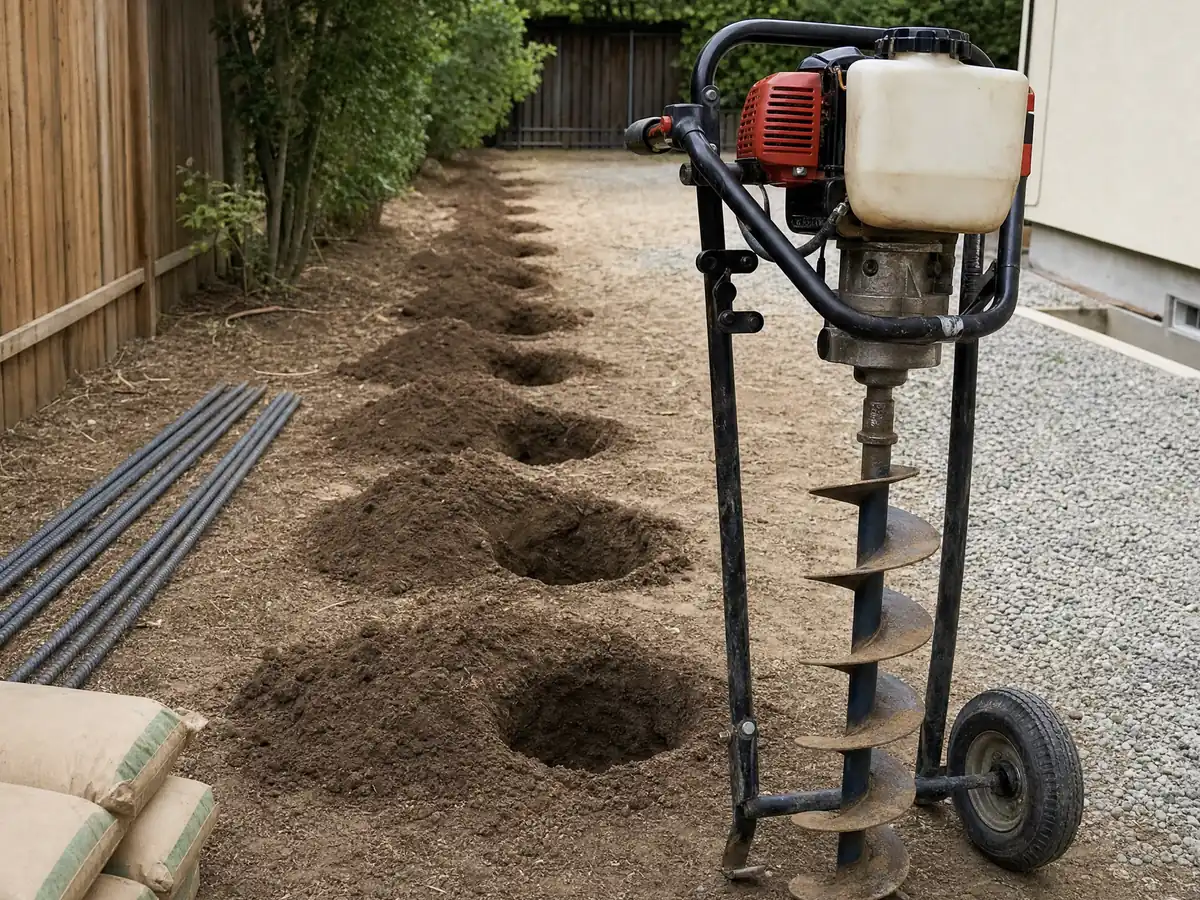
We found no Covina price survey, so these are Los Angeles benchmarks. Our sourced range for a 6 foot wood or vinyl privacy fence is about $25 to $55 per linear foot installed, and about $35 to $85 for aluminum or ornamental iron, which puts a 100 foot backyard run at roughly $2,500 to $5,500. The inputs include Angi's August 2026 Los Angeles page ($15 to $60 per foot, $29 average, 100 feet at $2,100 to $2,350), HomeGuide and Thumbtack, and fence erectors average $28.00 an hour in the Los Angeles metro area in the Bureau of Labor Statistics May 2025 data. We print no block wall price because we found no independent per-foot source.
Permit fees are not in those numbers, and we print none. Ask for a written proposal that lists length, height, material, gate count, removal of the old fence and the permit steps as separate lines. Look up the CSLB license of the fence contractor, and a second license for a masonry contractor if block is involved. California law caps a home improvement down payment at $1,000 or 10 percent of the price, whichever is less.
Ask any contractor, including us, for each subcontractor's license number and certificate of insurance before the contract is signed. Our guide to checking a contractor license shows what the CSLB record contains.
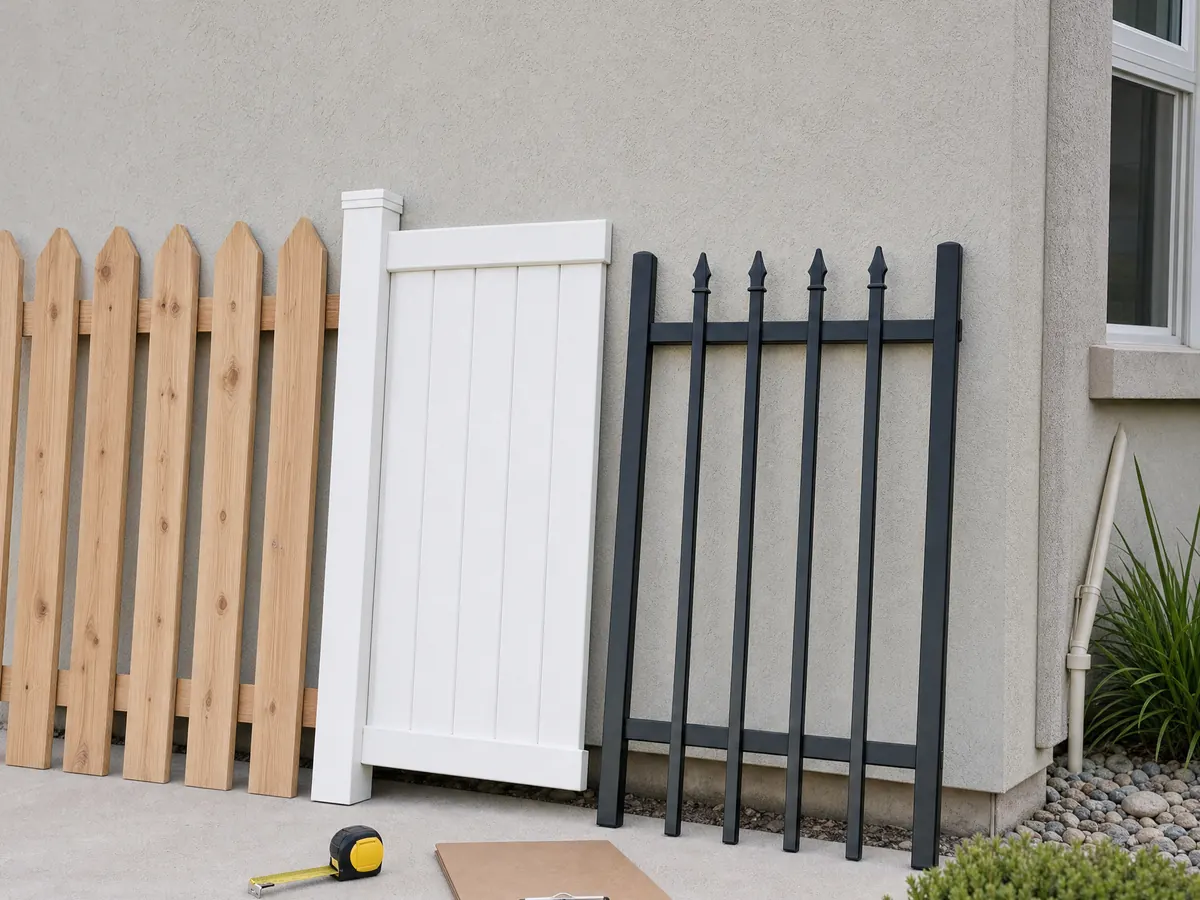
Fence and wall photos from Covina and nearby communities
Six fence scenes tied to Covina streets, including Old Town and Cypress Park, and to nearby communities such as Glendora and San Dimas, from picket fronts to block walls and metal pool barriers.
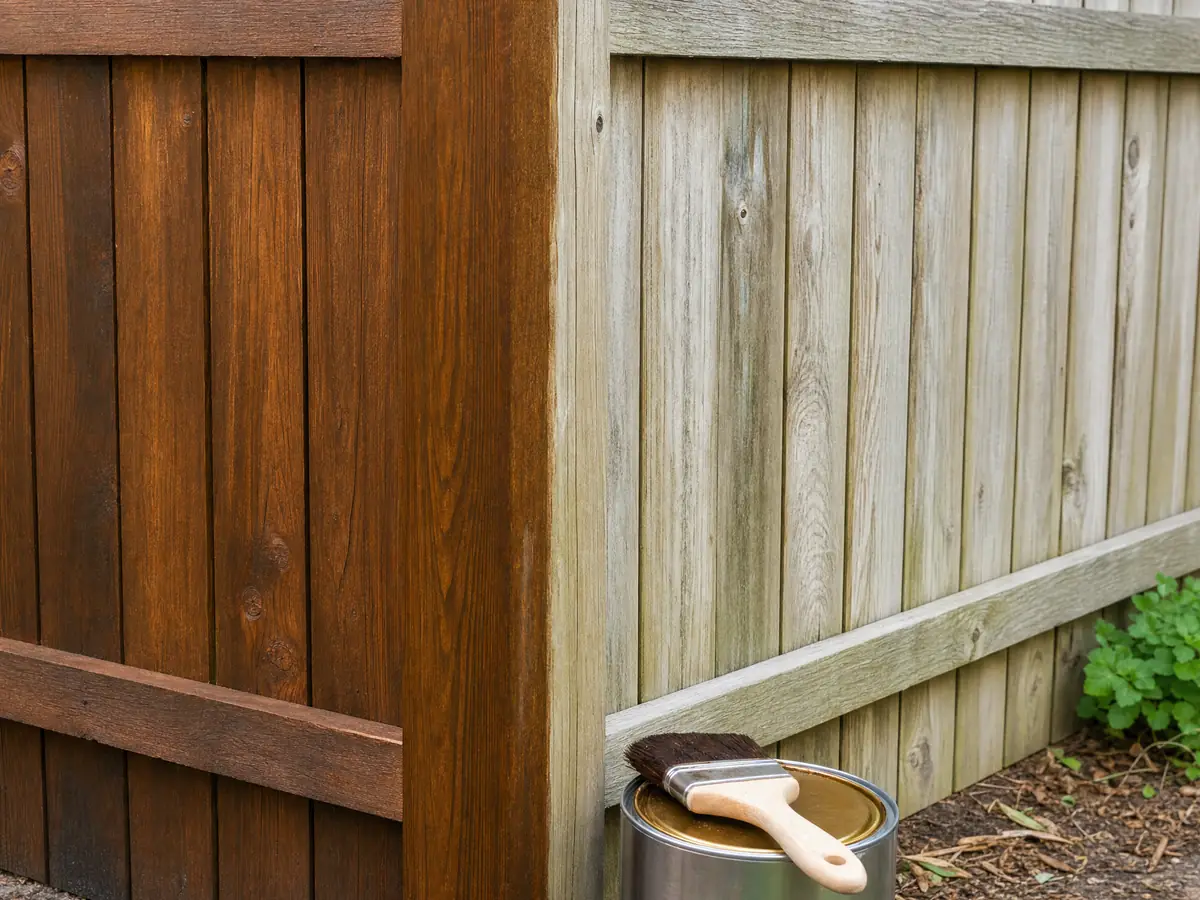
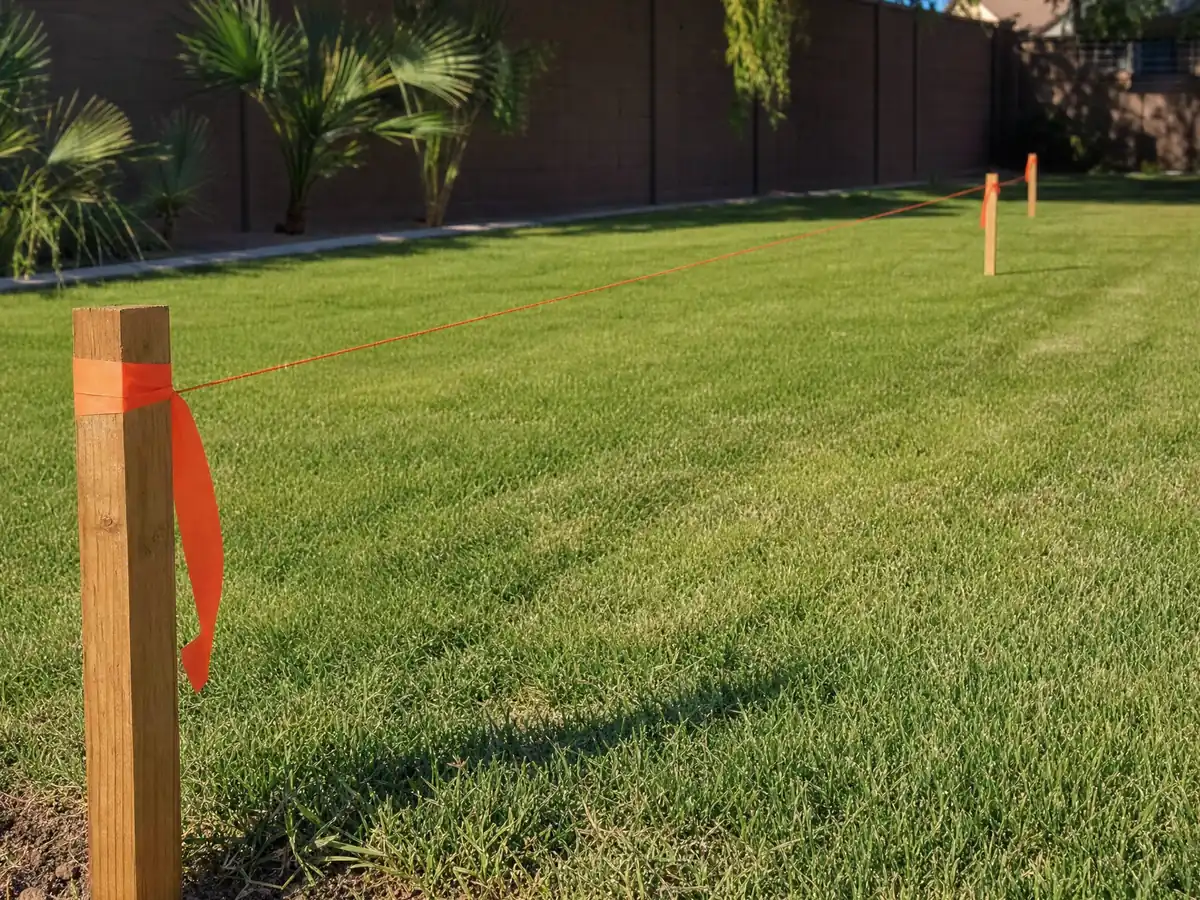
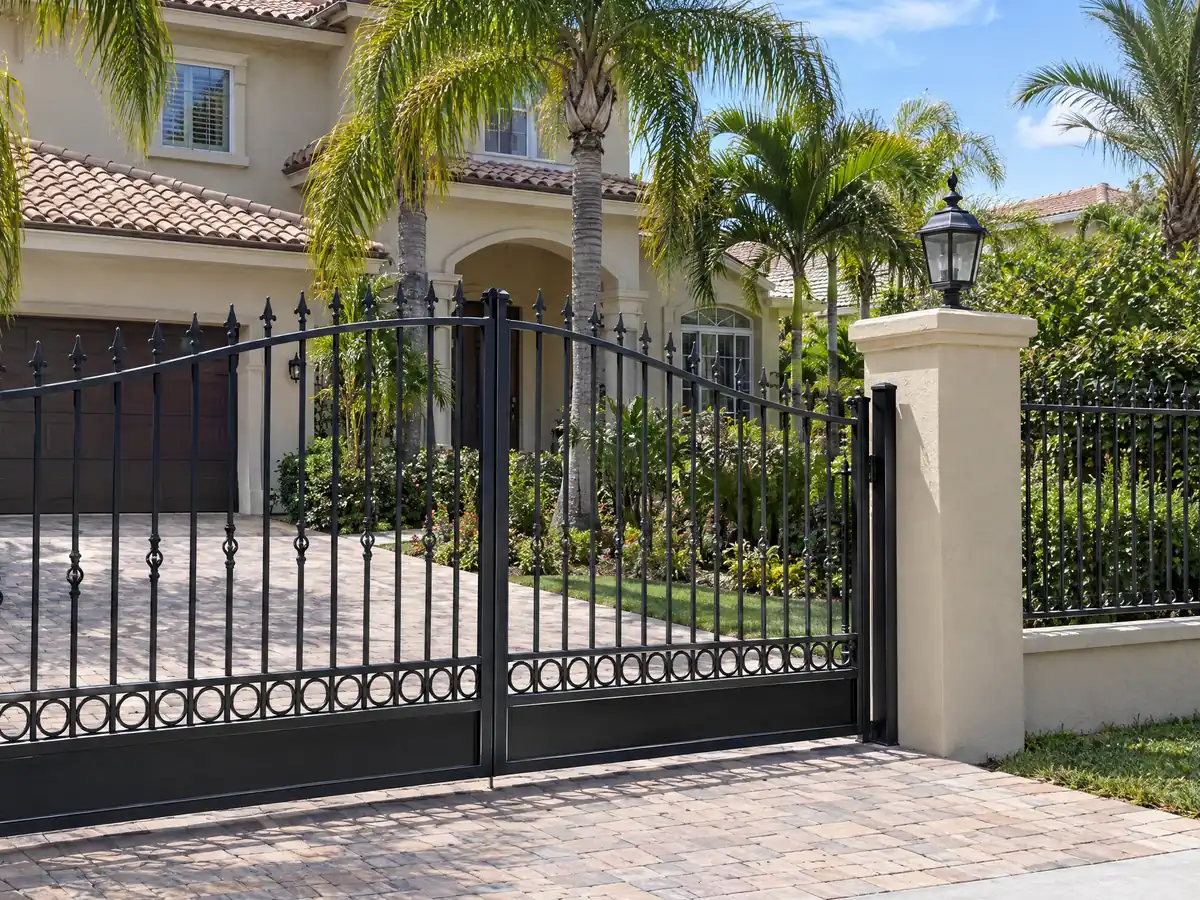
Where the fence numbers come from
All of the dollar figures above are Los Angeles benchmarks, and each source with its date sits in the table on our fencing price page. The sources disagree at the low end, so treat the range as a planning number and a measured written proposal as the real price. For who stands behind each trade on a job, read how general contractors use subcontractors. A new fence often goes in with other exterior work, and the Covina guides for those are the roofing page, the painting page and the kitchen remodeling page. Other cities draw different lines, as West Covina, Baldwin Park, Pomona and Los Angeles and Pasadena show.
| What it covers | Typical range |
|---|---|
| Wood or vinyl privacy fence, 6 feet | $25 to $55 per linear foot |
| Chain-link | $12 to $30 per linear foot |
| Aluminum or ornamental iron | $35 to $85 per linear foot |
| Typical 100-foot backyard run | $2,500 to $5,500 total |
| Block walls, horizontal slat fences, gates and openers, hillside lots | Set by the written proposal |
Covina fence questions, answered
Do I need a permit to build a fence or block wall in Covina?
Yes, at least a Planning wall and fence approval, which the City requires for every wall and fence regardless of height. The building permit rule is stated inconsistently: one code section says all fences, another says only above 6 feet. Call Building and Safety at (626) 384-5460 before you start.
How tall can my front fence be in Covina?
The code says 4 feet if solid, or 5 feet if at least half of the wall face is see-through. Planning's FAQ summarizes it as 5 feet maximum, so the City's own sources differ. Build to the code figure unless Planning confirms otherwise, and choose an open picket or tubular steel design for the 5 foot limit.
What happens if I don't have a permit for a fence in Covina?
You can be required to legalize it. Covina's code bars anyone from keeping an unpermitted structure, and legalizing one means pulling all permits, meeting current code and paying a special investigation fee at the City's hourly code-enforcement rate. Starting before a permit also adds a fee, and a violation is a misdemeanor.
Does your neighbor have to pay for half the fence in Covina?
Usually the cost is shared. California Civil Code 841 presumes neighbors split the reasonable cost of a boundary fence equally unless they agree otherwise in writing, and you must give 30 days' written notice with the problem, solution, estimated cost and timeline. A shared block wall also needs a signed consent form.
Can I put up a 7ft fence in Covina?
Yes along a rear or interior side line outside the front yard setback, where Covina allows up to 8 feet with a wall and fence permit and a building permit. In the front yard the limit is 4 feet solid or 5 feet half open. Corner lots follow separate numbers.
Is chain-link allowed for a fence in Covina?
No. Covina prohibits chain-link fences in residential zones. The code allows wood, vinyl, concrete block, stucco-covered block, brick, stone and textile, and it bars tarps, netting, bamboo, plywood and untreated wood. Concrete block walls must be covered with stucco.
How much does fence installation cost for 100 feet in Covina?
We found no Covina survey, so we use Los Angeles benchmarks. Our sourced range is about $25 to $55 per linear foot for a wood or vinyl privacy fence, which puts 100 feet at roughly $2,500 to $5,500 before permit fees. A measured written proposal is the real price.
Can I install my own backyard fence in Covina?
An owner can apply for the permit, with photo ID and the City's Notice to Property Owner form, but the Planning approval, height limits and material rules still apply. A tenant cannot pull a permit unless authorized as an agent. Block walls need a survey and, over 6 feet, extra inspections.
Can I dig fence post holes near an oak tree in Covina?
Not inside the dripline of a protected oak without checking first. Covina protects oaks 10 inches or more across at 4.5 feet, and excavating or trenching inside the dripline counts as damage that needs a tree preservation permit. Ask Planning how it treats post holes before you dig.
Plan your fence in Covina
Tell us the address, how much length you want to enclose and whether any of it faces the street, crosses a slope or passes an oak. We sort out the height and permit questions before we call back.