
Flooring Installationin West Covina, CA
Flooring installation in West Covina does not need a building permit for tile, carpet, laminate or vinyl, according to the City's own FAQ. The real risks are age and what lies below: about 76.6 percent of homes predate 1980, so old vinyl tile and its adhesive should be tested for asbestos and the slab checked for moisture first.
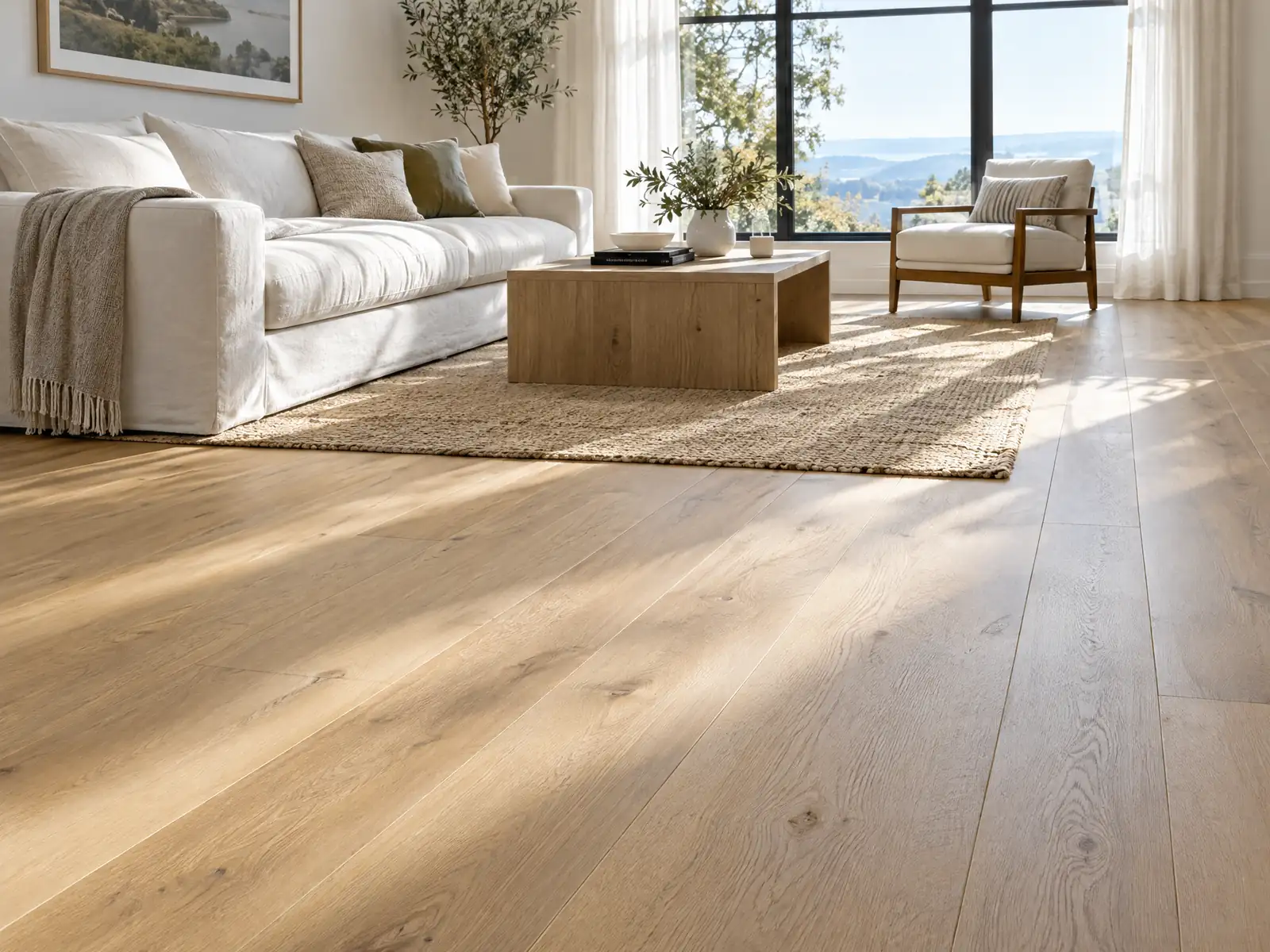
West Covina grew up in a single decade. The city incorporated in 1923, counted 4,499 people in 1950 and 50,645 in 1960 as walnut and orange groves gave way to tract streets. Census Bureau estimates for 2024 say 35.3 percent of its 34,287 homes went up in the 1950s alone and 76.6 percent were built before 1980, so most floors here have been recovered at least once, over subfloors and slabs laid in the postwar rush.
Our firm, MDG Builders (CSLB #1040337), is a general contractor based in Tarzana. We write the scope, settle the permit question with the West Covina Building Division and schedule the crews, while a licensed flooring or tile subcontractor lays the floor, and you may ask for that firm's license number and certificate of insurance. Material choices and labor ranges are on the flooring page, and the West Covina overview lists the other trades we manage in town.
What the West Covina Building Division and the state rules say about flooring work
Where flooring permits come from in West Covina: City of West Covina Community Development Department, Building Division.
- Flooring (tile, carpet, laminate, vinyl) is on the City FAQ's no-permit list, and tiling and carpeting are exempt finish work in the Building Division handout where accessibility rules do not apply. Moving plumbing or electrical for a new layout, or an interior remodel, is a different permit.
Sources for these rules
Does flooring installation in West Covina need a building permit?
No, for ordinary finish flooring. The City's frequently asked questions page puts tile, carpet, laminate and vinyl on its list of work that needs no building permit, and the Building Division's exemption handout treats tiling and carpeting as exempt finish work wherever disabled access rules do not apply. The same handout carries a warning worth reading twice: a plumbing, electrical or mechanical permit tied to an exempt job may still be required.
That caveat decides most real jobs. Moving a toilet to suit a new tile layout, adding in-floor heat or opening the floor to repair joists turns a no-permit job into a permit job. An interior remodel with no exterior changes also sits on the Planning Zoning Clearance form, which listed a flat $92.66 when it was updated in January 2026. Permit applications go through the One Stop Building Permit Center portal, not email, and the counter in City Hall Room 215 is open Monday through Thursday, 7:30 a.m. to 5:30 p.m.
Call 626-939-8425 with your exact scope. We found no City threshold for stair treads or subfloor replacement, so those go to the counter before demolition starts.
- Is any plumbing, gas or wiring moving while the floor is open?
- Does the job include stairs, a landing or a doorway threshold?
- Who pulls the permit if one turns out to be needed?
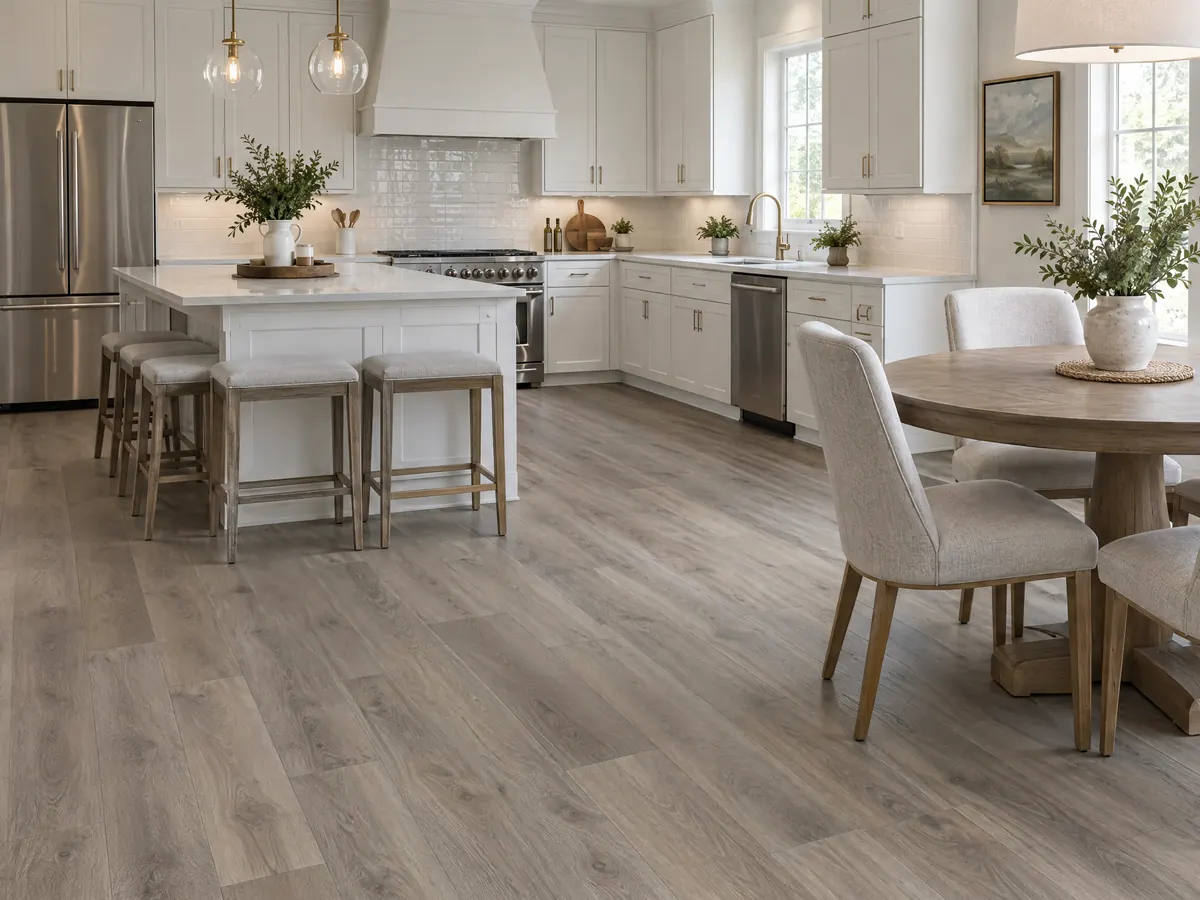
Could the old vinyl tile or black adhesive under a West Covina floor contain asbestos?
It could, and only a lab report settles it. With 76.6 percent of the city's homes built before 1980 and 40.4 percent before 1960, the vinyl tile, sheet goods and black adhesive of the postwar years are likely to sit beneath newer flooring in many houses. OSHA's construction asbestos standard presumes resilient flooring, its backing and its adhesive contain asbestos unless testing shows otherwise, and applies the same presumption to asphalt and vinyl flooring installed by 1980.
That standard also bars sanding such flooring and ripping up resilient sheet, and it calls for wet methods when leftover adhesive is scraped. It binds employers rather than homeowners, but it tells you what a careful crew will refuse to do. Ask for the sample result in writing before signing, and have the proposal name who removes a layer that tests positive.
Paint is the second question. EPA's Renovation, Repair and Painting rule covers paid work that disturbs painted surfaces in housing built before 1978, which takes in baseboards and door casings pulled for a new floor. A 1950s ranch house can raise both questions on one morning, so book the testing before the install date is fixed.
Who can haul away old flooring from a West Covina job, and when can crews work?
Usually the City's franchised hauler. West Covina holds an exclusive franchise with Athens Services for construction waste and recyclables, and the Building Division's bin handout, revised in September 2017, says roll-off bins from any other vendor on a residential property, street or alley may be impounded, with a stated fine of $500 for a first offense and $1,000 after that. Broken tile, underlayment and old carpet pile up faster than most owners expect, so ask which bin company the price assumes.
Hours matter as well. The City FAQ allows construction work between 7:00 a.m. and 8:00 p.m. and prohibits noisy activity above normal ambient levels outside those hours unless a special permit is approved. Tract lots sit close together, and a tile saw or floor grinder carries to the next yard, so we plan the loudest steps for mid-morning.
The Building Division also lists Waste Management Plan and Waste Diversion forms with its applications. A job that needs a permit may carry that paperwork, so ask whether your scope triggers it before the first box of tile comes out.
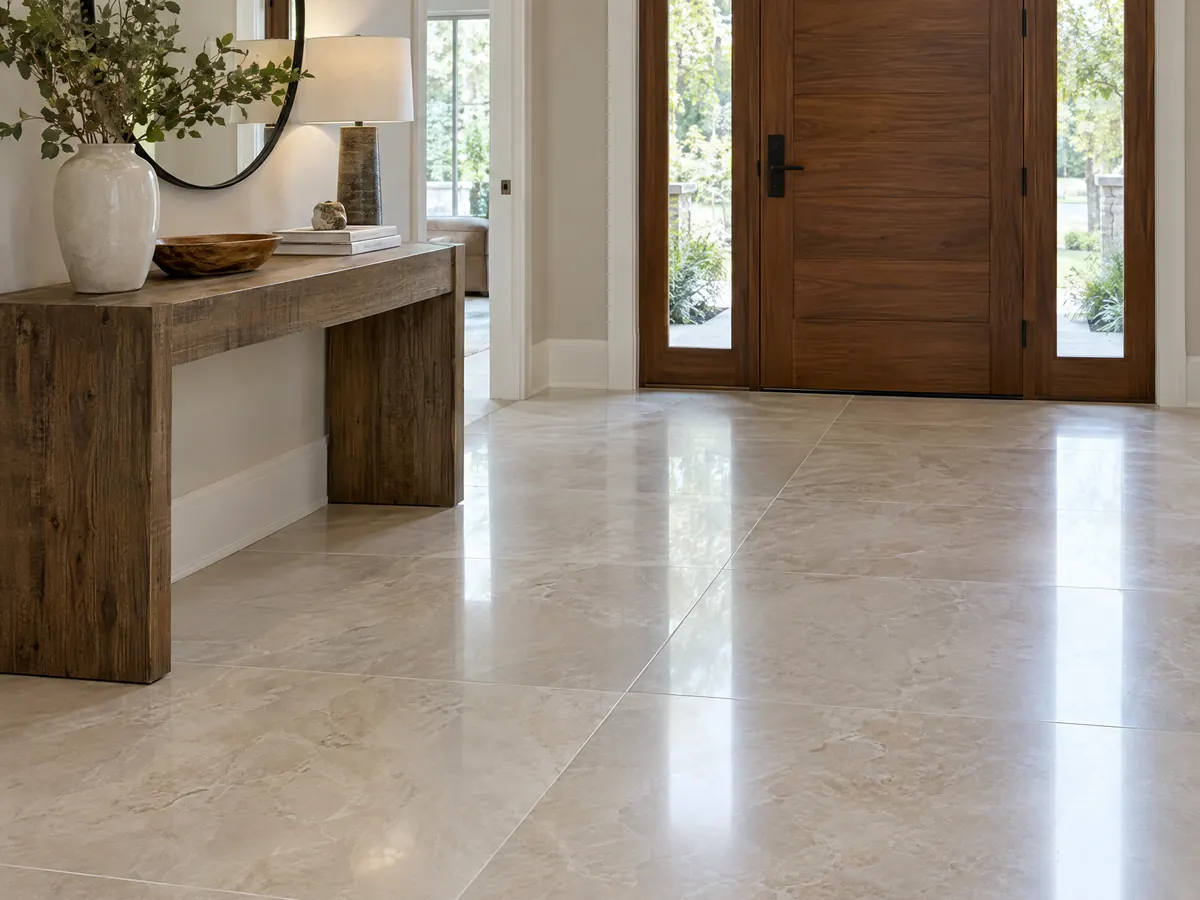
How is a West Covina concrete slab tested for moisture before new flooring goes down?
With probes or a chemical kit, not by touch. ASTM F2170 reads relative humidity from probes sunk into the concrete, and ASTM F1869 uses a calcium chloride dish; the flooring and adhesive makers set the pass mark, not the standards. The National Wood Flooring Association's concrete subfloor guide recommends, in strong terms, a vapor retarder rated 0.13 perms or less, with 6 mil polyethylene as the example.
Rainfall explains little. The Covina City Yard station, about 3 miles away, recorded 16.74 inches a year in NOAA's 1991 to 2020 normals, with roughly 80 percent from December through March, and the City's profile says about 15 inches. Vapor still rises from the soil in July. A leaking hose bib, sprinkler heads set against the wall or a downspout that empties beside the foundation raises readings in one spot, so point them out.
A house on a raised wood floor needs a different check from the crawlspace: stains under baths and kitchens, soft spots, sag near heavy walls. We found no source counting how many West Covina houses sit on slabs, so the first question on every visit is which type you have.
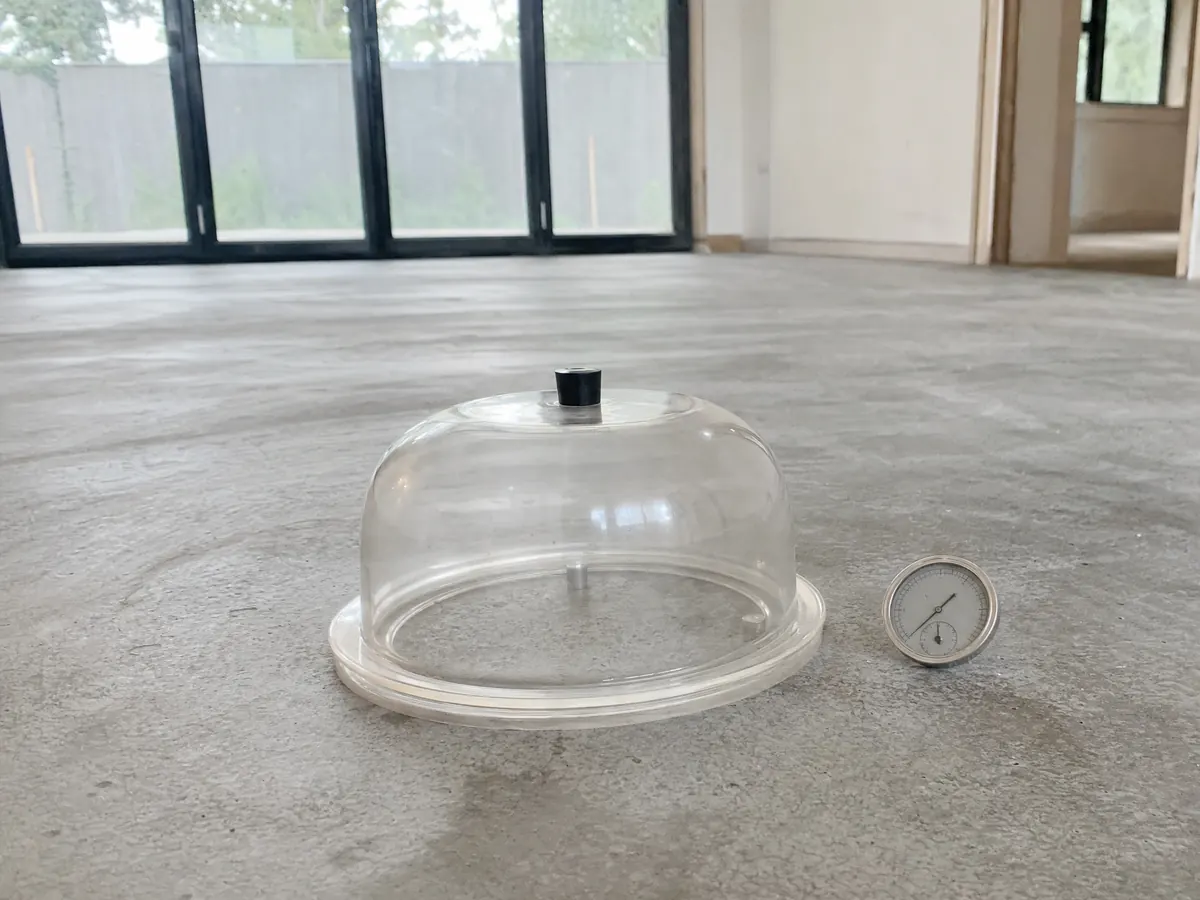
Can original oak floors in a pre-1946 West Covina house be refinished?
Usually, if enough wood stands above the tongue, and that is a question for a floor sander more than a code. The local question is whether the house falls under any review. The City's 2006 survey started from a list of about 300 houses built before 1946, recommended 32 properties for protection and nomination, and named Sunkist Village, George Meeker's 1941 subdivision of affordable homes on large lots, as the only clear potential historic district. No designated district was confirmed.
The City's Historic Preservation page says incentives would follow once an ordinance is drafted, and it links a municipal code chapter our tools could not open. So we will not tell you that an interior floor is exempt or covered. Call Planning at 626-939-8422 before original boards leave a pre-1946 house, and have the address ready.
Homestead-era Craftsman and Foursquare houses are where fir or oak under carpet is most likely. Check board thickness at a register opening before choosing a path; a floor with wood left to sand usually costs less to revive than new plank, and the flooring cost guide compares the two.
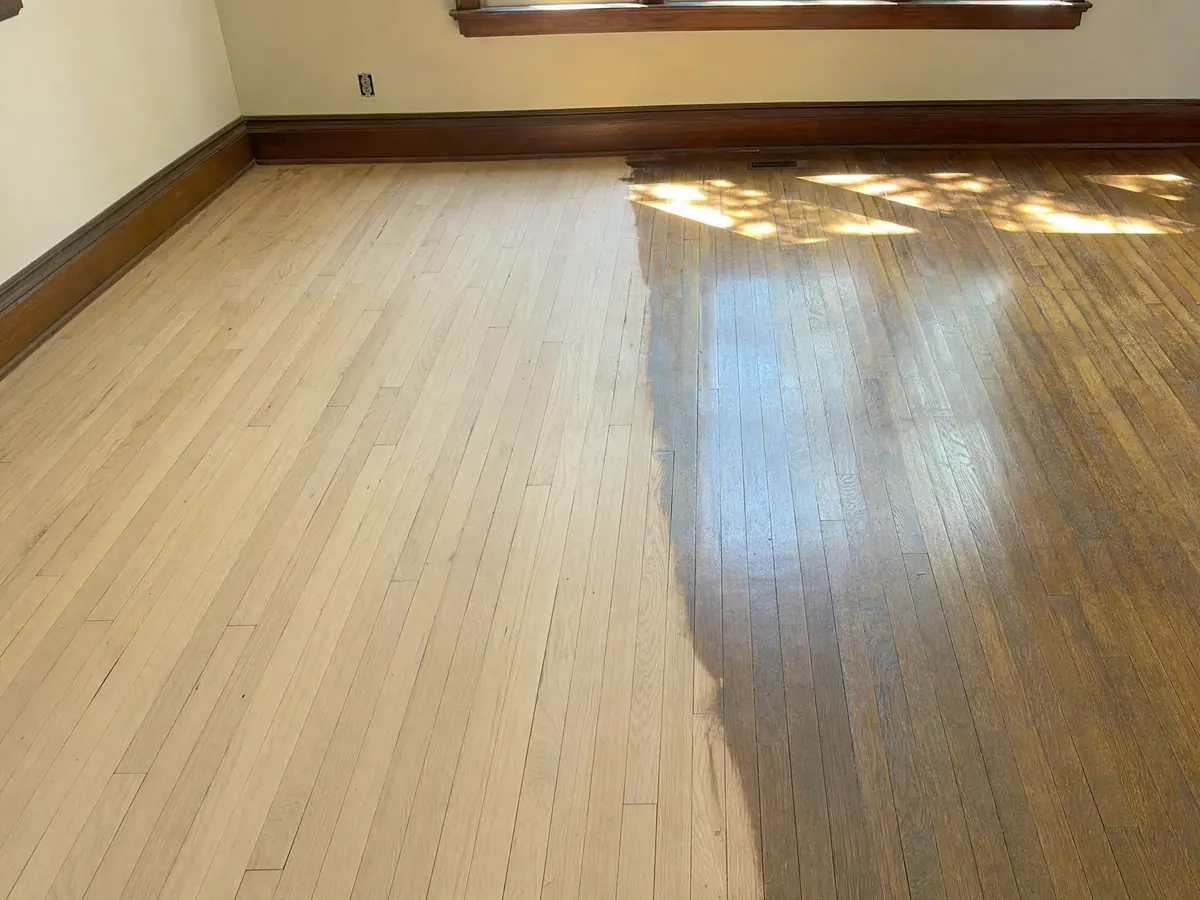
Who approves new hard flooring in a West Covina condo, apartment or rental?
The owner or the association, before the City. The Census Bureau's 2024 estimates put 39.7 percent of West Covina households in rentals and 21.6 percent of homes in buildings of five or more units, so a large share of floor jobs start with a landlord or a board. A tenant needs the owner's written consent first, and the City says a tenant cannot pull a permit unless acting as the owner's or contractor's agent.
In a condo or townhome the governing documents decide. California Civil Code section 4765 covers how an association must handle an owner's change request. The City's Development Code applies whether it is stricter or looser than a private agreement and does not override it, and West Covina keeps a Planned Residential Development overlay whose rules sit on top of CC&Rs, so the association can add limits beyond the City's.
Before ordering, get the approval in writing, with the required underlayment, work hours, stair or elevator rules and where debris may be staged. Sources disagree on sound ratings for hard floors over another unit, so we print no number; the association's documents and a field test control.
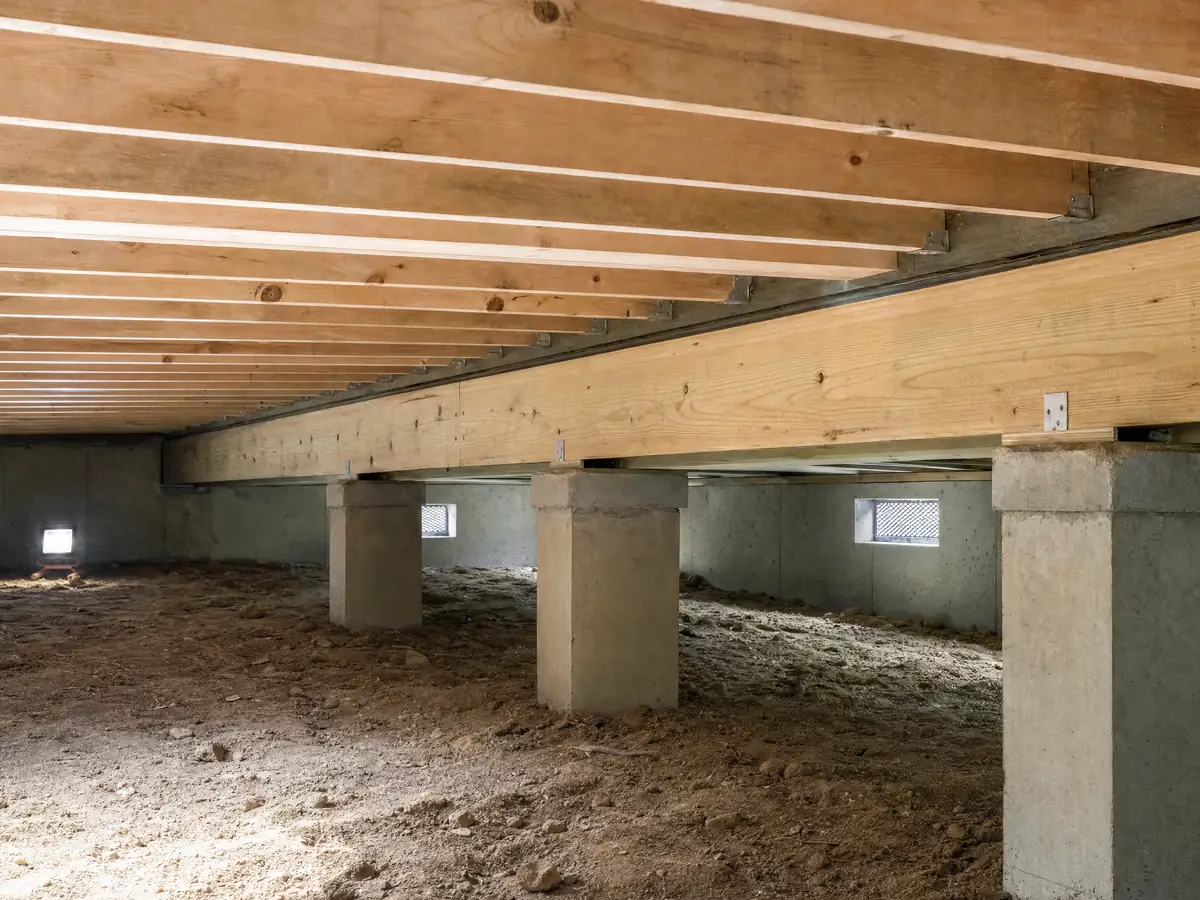
What does a flooring contractor in West Covina charge, and what license must the firm hold?
No West Covina price study turned up, so we use Angi's 2026 Los Angeles pages and rate them medium to low in confidence, since Angi does not show its method. Angi puts an average flooring installation project at $4,011, with most between $2,134 and $6,197, and installer labor at $3 to $9 per square foot. Installed solid hardwood runs $12 to $22 a square foot, engineered $10 to $18 and refinishing $4 to $8, and Angi's laminate page lists old-floor removal at $455 to $685 per 200 square feet.
None of those ranges covers subfloor repair, asbestos testing, stairs or a moisture barrier, so each deserves its own line on the proposal. BLS data for May 2025 show floor layers in the Los Angeles-Long Beach-Anaheim area averaging $33.48 an hour; that is a wage, not a billing rate. A 1,500 square foot floor of engineered hardwood multiplies out to $15,000 to $27,000 at Angi's installed range, which is arithmetic, not a quote.
On licensing, CSLB's C-15 classification covers carpet, resilient flooring and wood floors, while tile belongs to C-54. An undated City handout also lists a current West Covina business license, stated as $16 a year and expiring each June 30, along with the state license card and workers' compensation proof when a permit is issued. Ask for the license number before the quote.
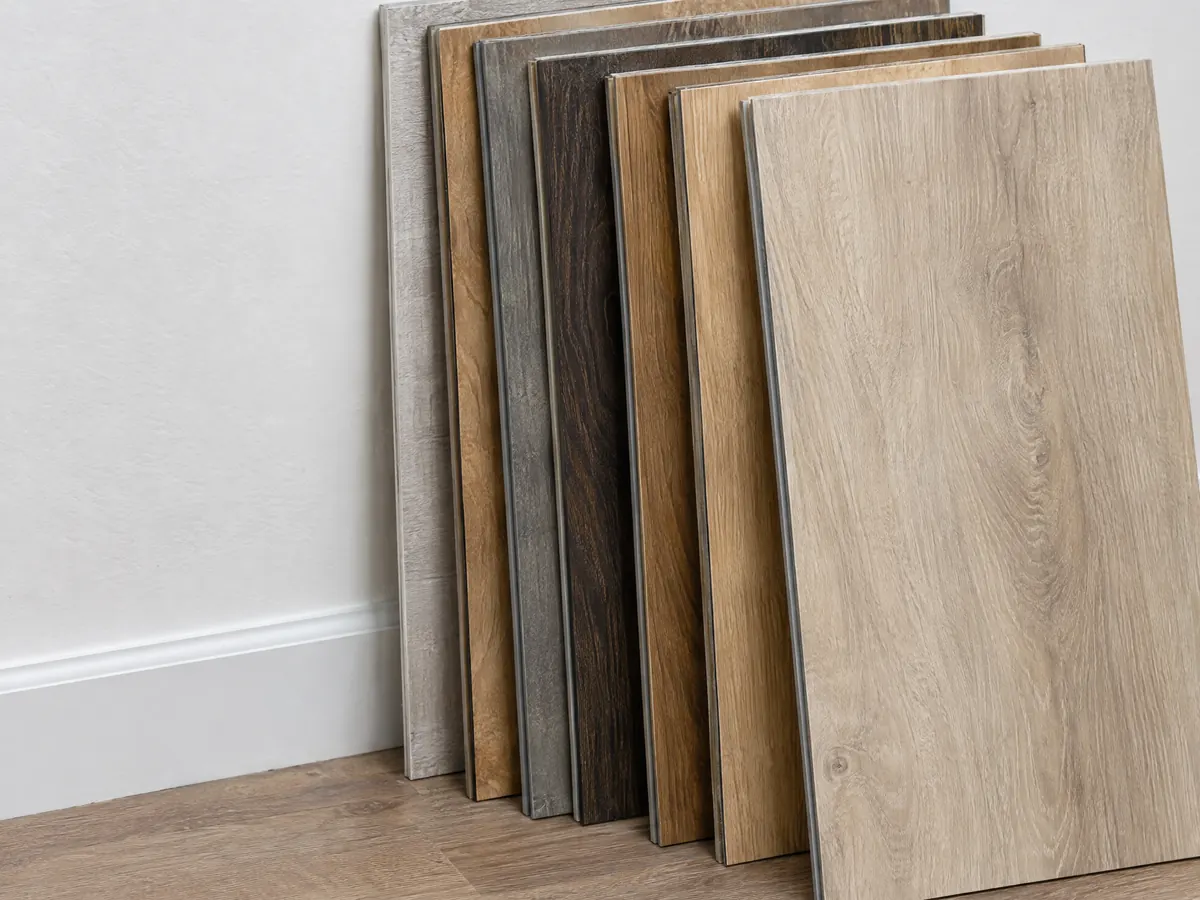
Flooring photos from West Covina and nearby communities
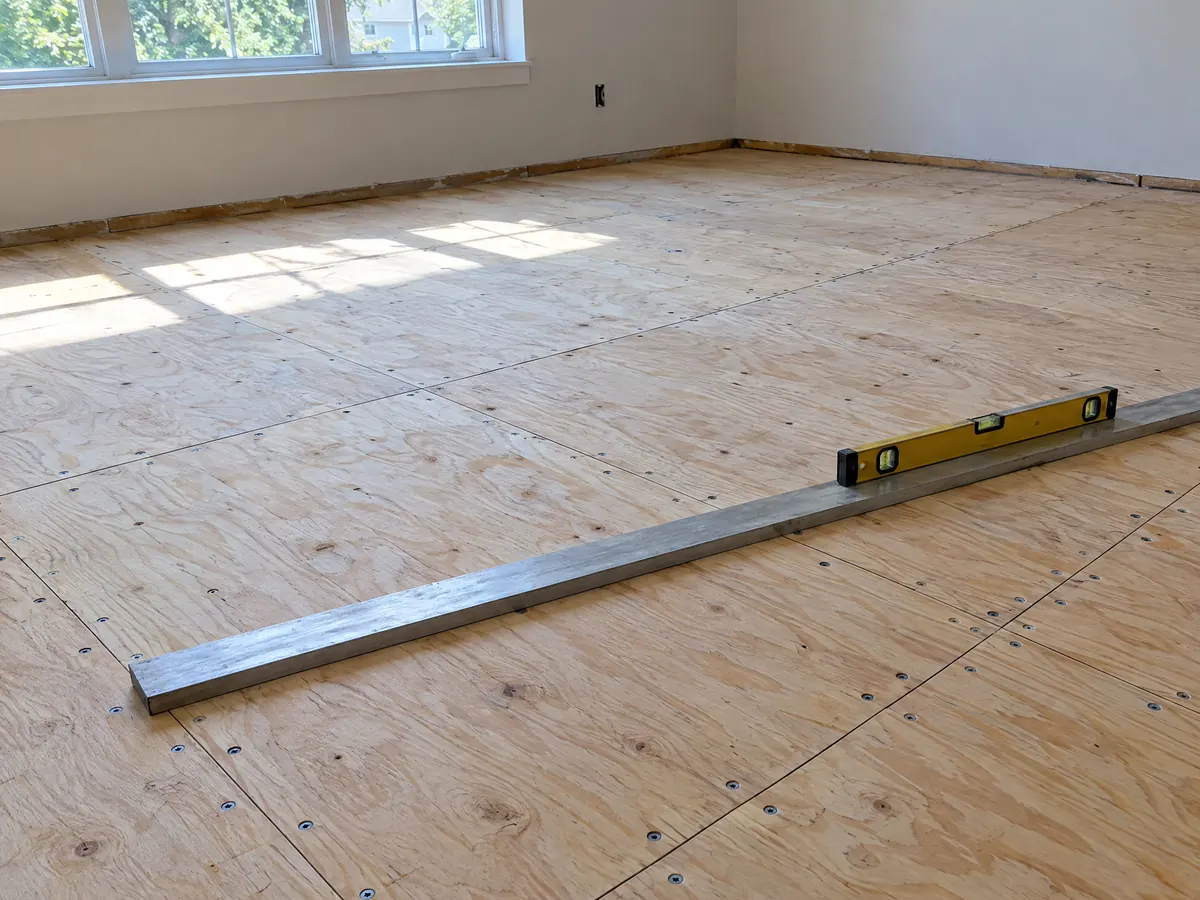
Floors from West Covina and nearby towns, shown at the stages that matter: bare subfloor, plank samples, finished oak and tile. Tap any photo to enlarge it.
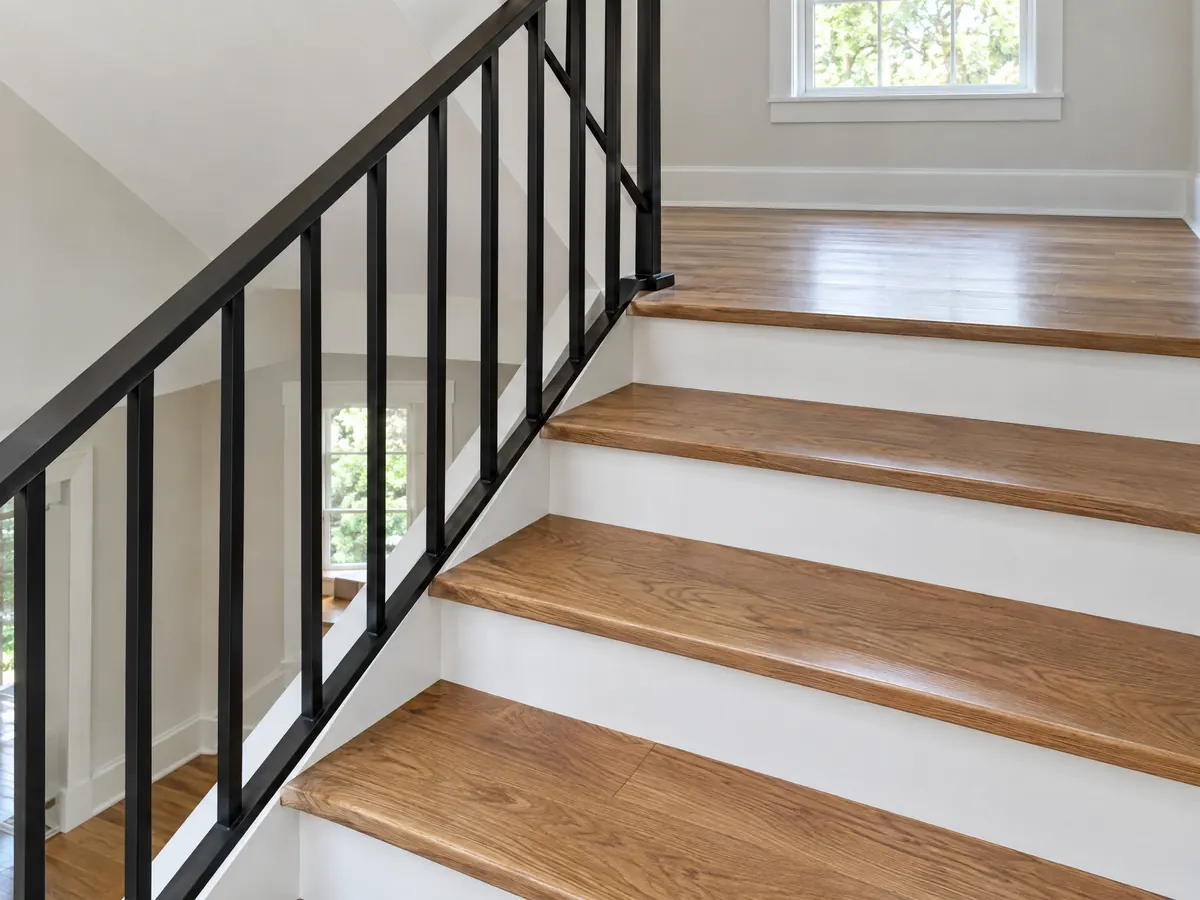
What flooring costs around West Covina
The numbers above are Los Angeles ranges from our flooring page, so treat them as planning figures and not as a West Covina bid; the license check guide walks through verifying a bidder. A written proposal should list demolition, subfloor work, testing and stairs on their own lines. Comparison pages: flooring installation in Los Angeles, flooring in Glendale, flooring in Pasadena, flooring in Pomona, concrete work in West Covina and decks in West Covina.
| What it covers | Typical range |
|---|---|
| Installation labor only | $3 to $9 per sq ft |
| Solid hardwood, installed | $12 to $22 per sq ft |
| Engineered hardwood, installed | $10 to $18 per sq ft |
| Refinishing existing hardwood | $4 to $8 per sq ft |
| Laminate, whole project | $2,000 to $5,500 |
| Hardwood, whole project | $3,153 to $8,496 |
| Removing the old floor | $455 to $685 per 200 sq ft |
| Tile | No sourced Los Angeles range |
Other work we manage in West Covina
West Covina flooring questions, answered
Do I need a permit to replace flooring in West Covina?
No, not for tile, carpet, laminate or vinyl. The City's FAQ lists flooring among work that needs no building permit, and its exemption handout treats tiling and carpeting as exempt finish work. New plumbing, gas, wiring or structural repairs under the floor are different and can need their own permits, so call the Building Division at 626-939-8425 about your exact scope.
How much does it cost to have flooring professionally installed in West Covina?
Plan on $3 to $9 per square foot for installer labor, based on Angi's 2026 Los Angeles pages, plus the material: engineered hardwood runs $10 to $18 installed and solid hardwood $12 to $22. No West Covina study turned up, and we rate these medium to low in confidence. Tear-out, subfloor work and asbestos testing are billed separately.
How much does it cost to install 1,000 square feet of hardwood flooring in West Covina?
Angi's 2026 Los Angeles pages imply $12,000 to $22,000 for 1,000 square feet of installed solid hardwood and $10,000 to $18,000 for engineered. Treat that as multiplication on a medium to low confidence source, not an estimate. Stairs, tear-out and slab or subfloor repair come on top, and a site visit sets the real price.
How much does it cost to refloor a 2,000 square foot house in West Covina?
Installer labor of $3 to $9 per square foot works out to $6,000 to $18,000 for 2,000 square feet, before material and demolition. Engineered hardwood at Angi's Los Angeles installed range would be about $20,000 to $36,000 for the whole house. These are multiplied sourced ranges, and only a walk through the house sets a price.
Can you put flooring over concrete in West Covina?
Yes, once the slab has been tested and prepared. Wood, vinyl and adhesive each carry a moisture limit from their manufacturer, so the installer should take ASTM F2170 probe readings or run an ASTM F1869 calcium chloride test, then flatten the surface. A vapor retarder may be needed under or over the slab, depending on the product.
Why does moisture come through a concrete floor in West Covina?
Water vapor rises from the soil beneath and concrete is porous. West Covina's 15 to 17 inches of yearly rain mostly arrive from December through March, yet the ground under a slab stays damp through summer. Leaks, planters and downspouts near the wall raise readings in spots. A probe or calcium chloride test, not the calendar, gives the number.
Is there asbestos under old vinyl flooring in a West Covina house built before 1980?
Possibly, and no one can tell by eye. OSHA presumes resilient flooring, its backing and adhesive contain asbestos unless testing shows otherwise, and treats vinyl and asphalt flooring installed by 1980 the same way. About 76.6 percent of West Covina homes predate 1980. Send a lab sample before any sanding, ripping or scraping.
Can I install hard flooring in a West Covina condo or apartment?
Only with approval from your association or landlord. Condo governing documents control hard flooring over another unit, and Civil Code section 4765 covers how an association must answer a change request. Get written approval first, including the underlayment, work hours and debris rules. A renter needs the owner's written consent, since a tenant cannot pull a permit alone.
Do original floors in a pre-1946 West Covina house need City approval to refinish?
We found no rule naming interior floors, and no designated historic district was confirmed. The City's survey flagged Sunkist Village as a potential district, and its Historic Preservation chapter in the municipal code was unreadable to us. Call Planning at 626-939-8422 with the address before original boards are removed.
What license does a flooring contractor need in West Covina?
C-15 covers carpet, resilient flooring and wood floors, and C-54 covers tile. The license can be skipped only on a job of $1,000 or less including materials that needs no permit and no hired workers. Contractors also show the City a current business license when a permit is pulled. Look the number up on the CSLB site, and keep any down payment to $1,000 or 10 percent of the price, whichever is less.
Tell us the rooms, the year and what is on the floor now
Send the street, whether you think the house sits on a slab or a raised floor, and any flooring you know is original. We bring the moisture and asbestos questions to the first visit.