
House Paintingin West Covina, CA
House painting in West Covina needs no building permit for ordinary interior or exterior work, according to the City's own FAQ. Three things can still change the job: EPA lead-safe rules for homes built before 1978, which covers most of the city, planning or association approvals, and South Coast low-VOC limits on the paint itself.
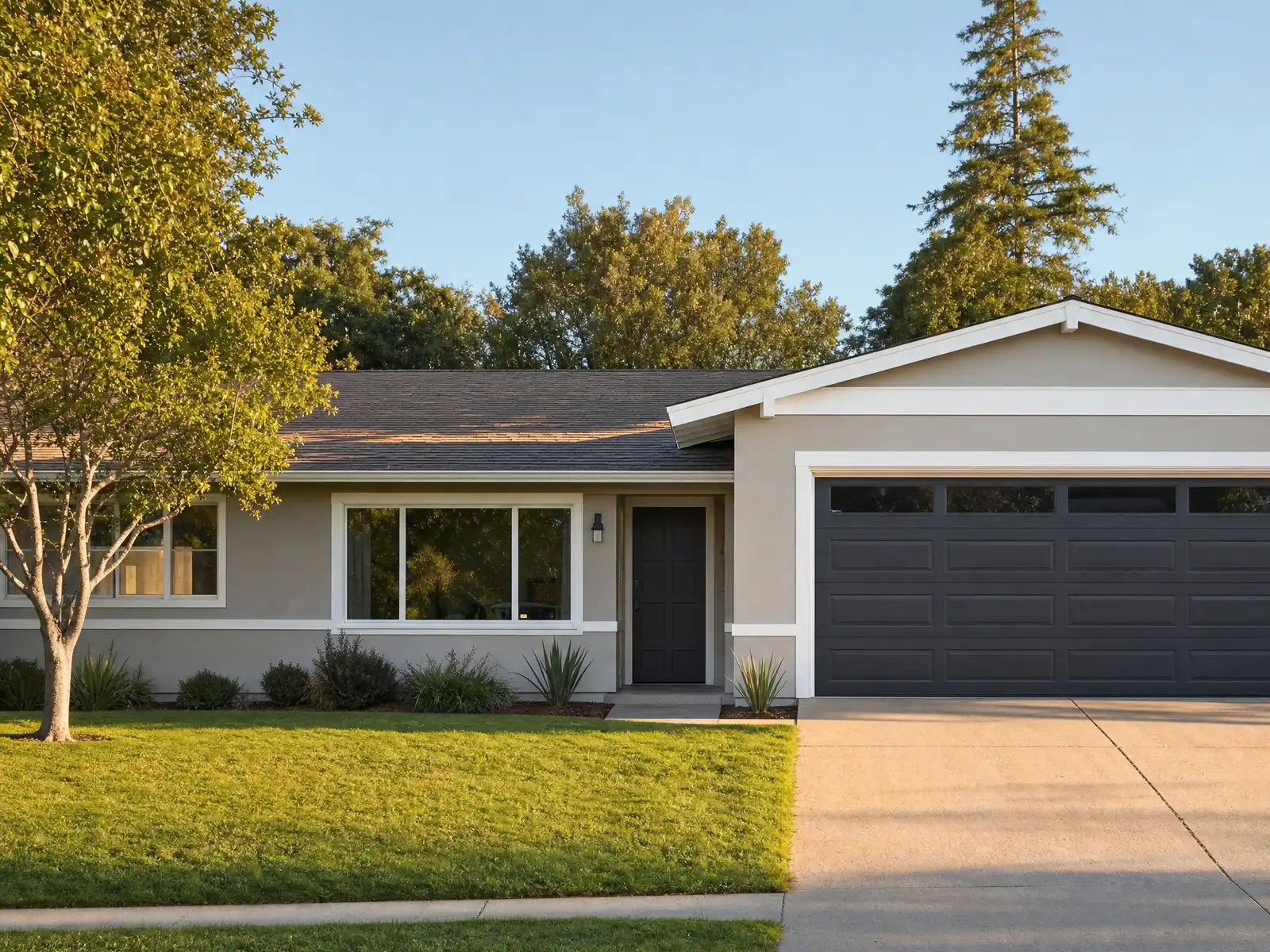
Painting a house in West Covina usually means painting a postwar tract home. The ACS 2024 five-year tables put 35.3 percent of the city's 34,287 housing units in the 1950s, 40.4 percent before 1960 and 76.6 percent before 1980, so most of the paint on local walls first went on before the 1978 cutoff that EPA's lead rule uses. The history is recent by Southern California standards: the city incorporated in 1923, Sunkist Village opened in 1941 and the population jumped from 4,499 in 1950 to 50,645 in 1960.
The sun does the other half of the damage. NOAA's 1991 to 2020 normals at the Pomona/Fairplex station show an average August high of 92.4 degrees F, with 70.5 days a year at or above 90 and 10.7 at or above 100, which punishes west and south walls. MDG Builders (CSLB #1040337) writes the scope, checks the lead and approval questions for the house and schedules the job, while a licensed C-33 painting subcontractor prepares and paints. The painting price page has the sourced cost table, the West Covina overview lists our other trades here, and the Pasadena painting guide covers a city with historic districts.
What West Covina's City rules, EPA and the air district say about paint
Where painting permits come from in West Covina: City of West Covina Community Development Department, Building Division.
- Painting, papering, tiling, carpeting, cabinets, counter tops and similar finish work are exempt from a building permit where disabled access requirements do not apply (exemption item 20), and the FAQ lists interior and exterior painting as not needing a building permit. The handout still says Planning approval can apply to an exempt project.
Sources for these rules
Do I need a permit for house painting in West Covina?
Not for the painting itself. The City's frequently asked questions page lists painting, interior or exterior, among the work that needs no building permit, and the Building Division's exemption handout clears painting, papering, tiling, carpeting, cabinets and counter tops as finish work where disabled-access rules do not apply.
The same handout carries a warning. A project exempt from the Building Division can still need Planning Division approval, because Planning may set location, height and design limits, and electrical, plumbing or mechanical work tied to an exempt job may still need permits. We found no exterior color review rule in the Development Code text we read, but the Municipal Code on Municode was blocked to our tools, so call Planning at 626-939-8422 if the house is unusual.
Painting becomes more than painting when it travels with window replacement, structural stucco repair or new siding, and changes to window or door sizes are on the City's permit list. If the roof is also on the list, read the West Covina roofing guide, since scaffold and tear-off schedules overlap.
Does a West Covina house built in the 1950s need a lead-safe painter?
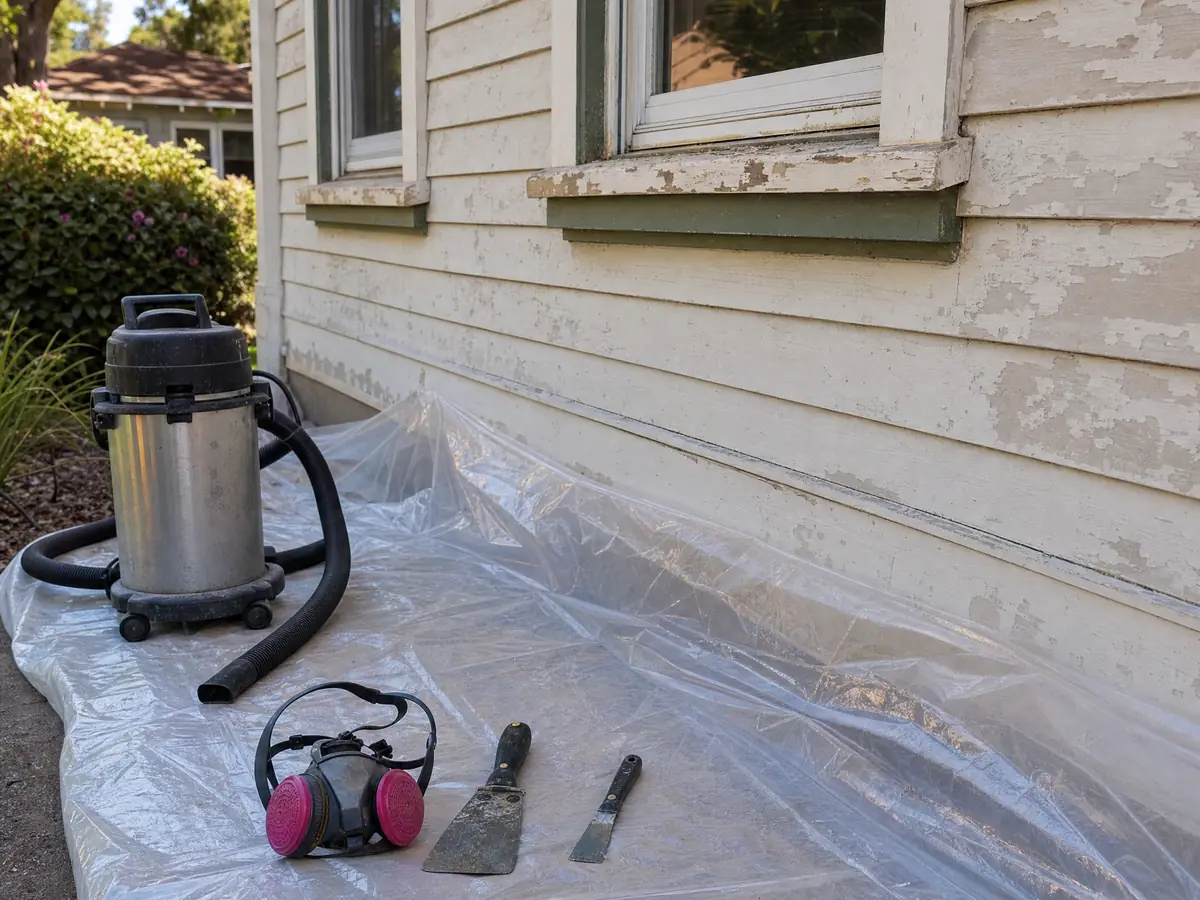
If a paid contractor disturbs painted surfaces in a house built before 1978, EPA's Renovation, Repair and Painting rule applies: the firm must be EPA certified and follow lead-safe work practices, and EPA says that includes sole proprietors. California is not on EPA's list of states running their own program, so EPA enforces the rule here. The text is 40 CFR Part 745, Subpart E, and EPA keeps a page for contractors that walks through it.
The exceptions are small. Minor repair and maintenance means 6 square feet or less of painted surface per room indoors, or 20 square feet or less outdoors, with no window replacement or demolition, and work in the same room within 30 days is added together. A written determination by a certified inspector, or a certified renovator's negative test-kit result on each affected component, takes the job out of the rule. Open-flame burning, high-speed sanding or blasting without a shroud and HEPA vacuum, and heat guns at 1,100 degrees F or higher are banned practices.
With 76.6 percent of local units built before 1980 and 40.4 percent before 1960, assume lead is present until a test says otherwise. Ask any bidder:
- Can you show the firm's EPA certification?
- Will each painted surface be tested, or will the whole house be treated as lead-containing?
- How is the work area contained, and where do dust and paint chips go?
- How is cleanup verified before we move back in?
What kind of paint job is a 1950s West Covina tract house?
The housing numbers describe a particular kind of house. West Covina went from 4,499 residents in 1950 to 50,645 in 1960, helped by the San Bernardino Freeway in 1955 and the West Covina Center and Eastland Center shopping areas, so 12,110 of its 34,287 housing units date from the 1950s and 64.4 percent of all units are detached houses. One-story houses are simpler to scaffold, and Angi's Los Angeles page adds about 50 percent for each added story.
We have no West Covina count of stucco against wood siding, so a photo of your own walls matters more than the era. Ask the painter to list every surface on the proposal: stucco, wood siding, fascia, eaves, garage door, block walls and fences, because each takes a different prep and primer.
Sunkist Village, George Meeker's 1941 tract of affordable homes on large yards south of what is now I-10, is the oldest of the big tracts. Prewar and early postwar houses there can carry several generations of paint on wood trim, which is where scraping and priming hours go.
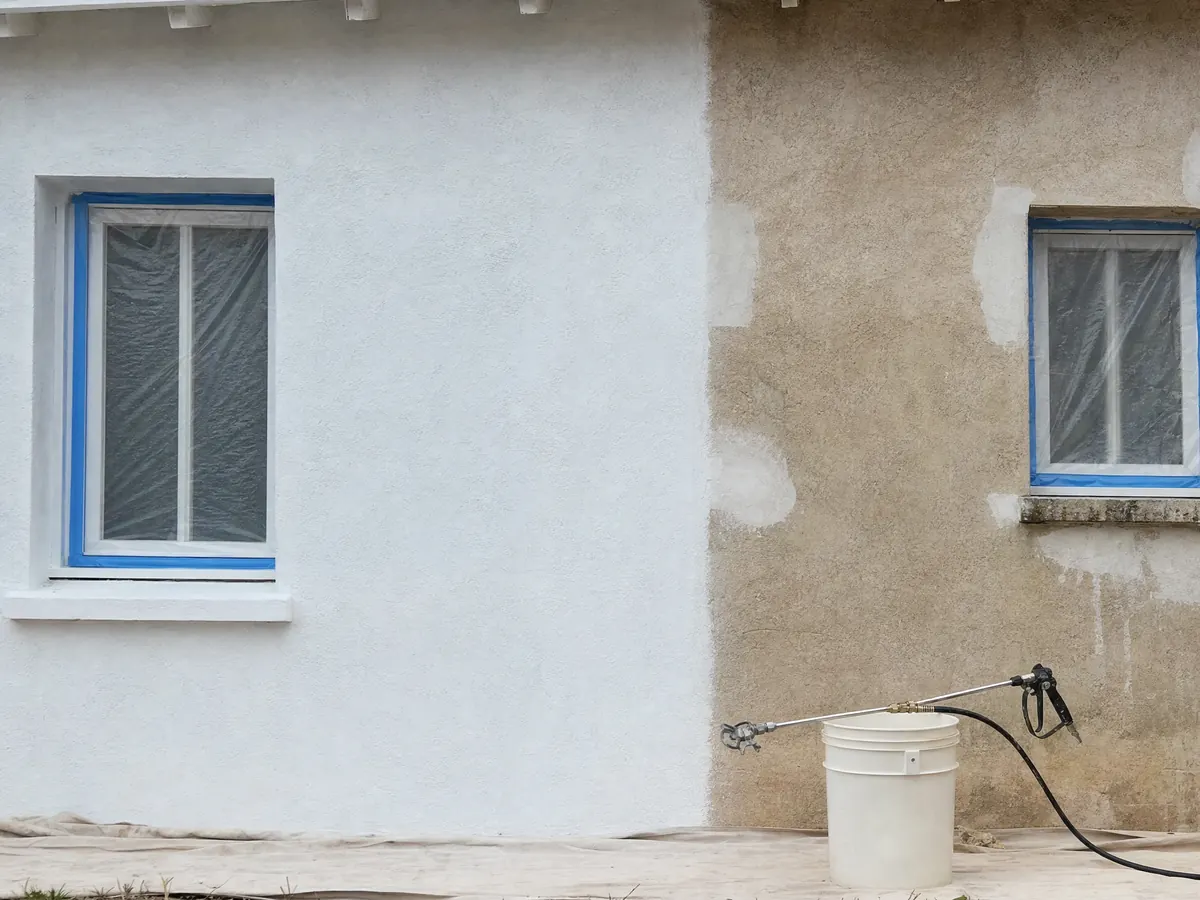
Can you paint stucco, and how does West Covina's heat change the schedule?
Yes, stucco takes paint, but preparation decides how long the coat lasts. Angi's Los Angeles page says stucco costs more to paint because of specialized prep, and Houzz threads advise checking whether the stucco was ever painted, since integral-color stucco sealed with the wrong coating can trap moisture. Use a masonry-rated primer and topcoat. Stucco repair belongs to CSLB class C-35, Lathing and Plastering, which MDG does not hold, so a crack repair is its own line item with its own subcontractor.
Heat and rain set the calendar. The Pomona/Fairplex station averages 92.4 degrees F in August and 67.9 in January, and the Covina City Yard gauge puts 13.47 of its 16.74 inches of yearly rain from December through March, so late spring and early fall give the widest window for exterior coats. Follow the label's temperature range and ask how the crew keeps west walls out of the afternoon sun. We found no sourced cure time for a fresh stucco patch, so ask the plaster subcontractor.
The air district matters too. South Coast AQMD Rule 1113 limits VOCs in architectural coatings, and the limits we could read are 50 grams per liter for nonflat coatings and 100 for primers, sealers and undercoaters. The flat coating limit did not extract cleanly from our copy and later amendments were not checked, so ask the supplier for the product's current VOC value.
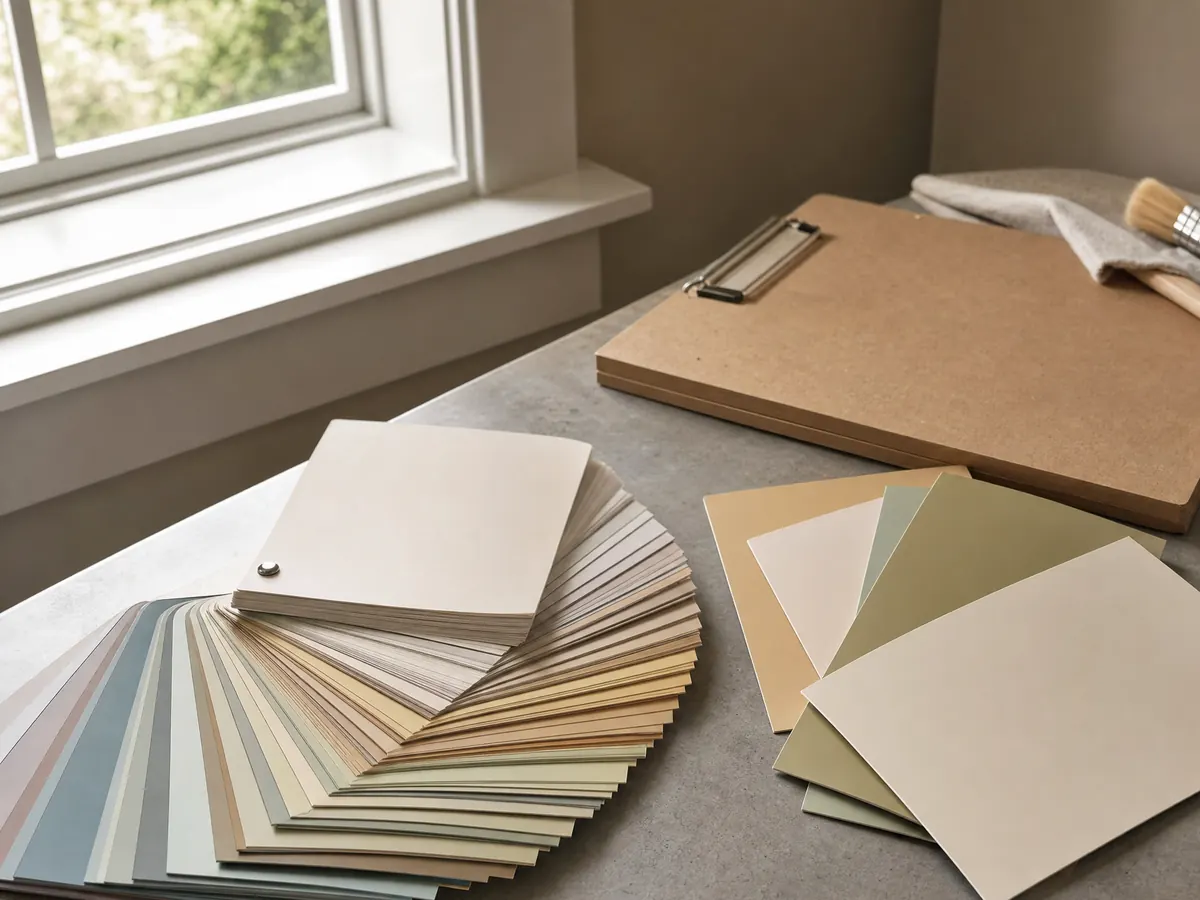
Do historic surveys or HOA rules limit paint colors in West Covina?
No designated historic district turned up in the sources we could read, but the City has looked. Its 2006 survey started from a list of about 300 houses built before 1946, found Sunkist Village to be the only clear potential historic district and lists 32 properties recommended for protection and nomination. The Historic Preservation page says incentives would follow an ordinance, and it links a Municode chapter we could not open, so whether any exterior review applies to a particular pre-1946 house is unconfirmed.
Ask Planning at 626-939-8422 before choosing colors on a house built before 1946, and ask for the answer in writing. The survey's examples include homestead-era Craftsman, Foursquare and Queen Anne houses, the kind of building where original trim colors and wood details are worth keeping.
Private rules are the more common limit. The Development Code applies to every land use without overriding CC&Rs, and the City keeps a Planned Residential Development overlay, so an association may require approval for exterior colors even where the City does not. Get the board's decision in writing before paint is ordered.
Ask first, in writing: for a pre-1946 house that means Planning, and for a tract with CC&Rs it means the board.
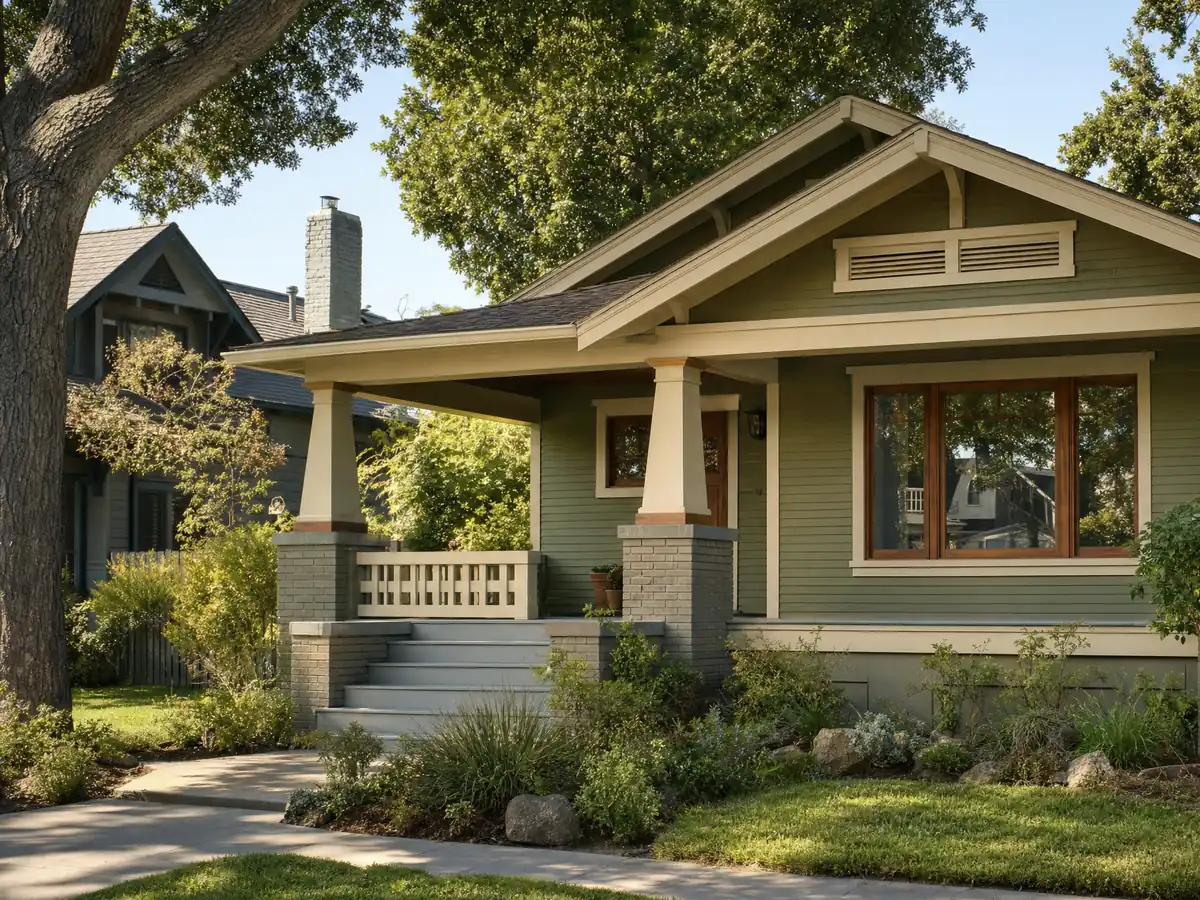
How much does a painting company charge to paint a house in West Covina?
No survey prices West Covina paint jobs, so this page prints no West Covina figure. Angi's Los Angeles page, updated November 13, 2025, puts a whole-house exterior at $2,947 to $6,484, average $4,692, or $2.20 to $5.90 per square foot of home. Angi's August 2026 interior page runs $2 to $6 per square foot of floor area and adds $0.50 to $0.75 per square foot for patching in older homes. Angi's method is unpublished, which is why we call these figures medium to low confidence.
Two things distort comparisons. Angi measures the home or the floor area, while HomeGuide's national page prices paintable wall surface at $1 to $3 per square foot, so the units differ. The Bureau of Labor Statistics reports a mean wage of $29.71 an hour for painters in the Los Angeles area for May 2025, which is pay, not a company's billing rate. Remodeling magazine's Cost vs. Value report lists no painting project for Los Angeles, so we have no resale figure to quote.
Sun and stains add specifics: Angi lists UV-resistant paint at $10 to $20 more per gallon and stain-blocking primer at $20 to $40 more per gallon, which matter on sun-baked west walls and stained ceilings.
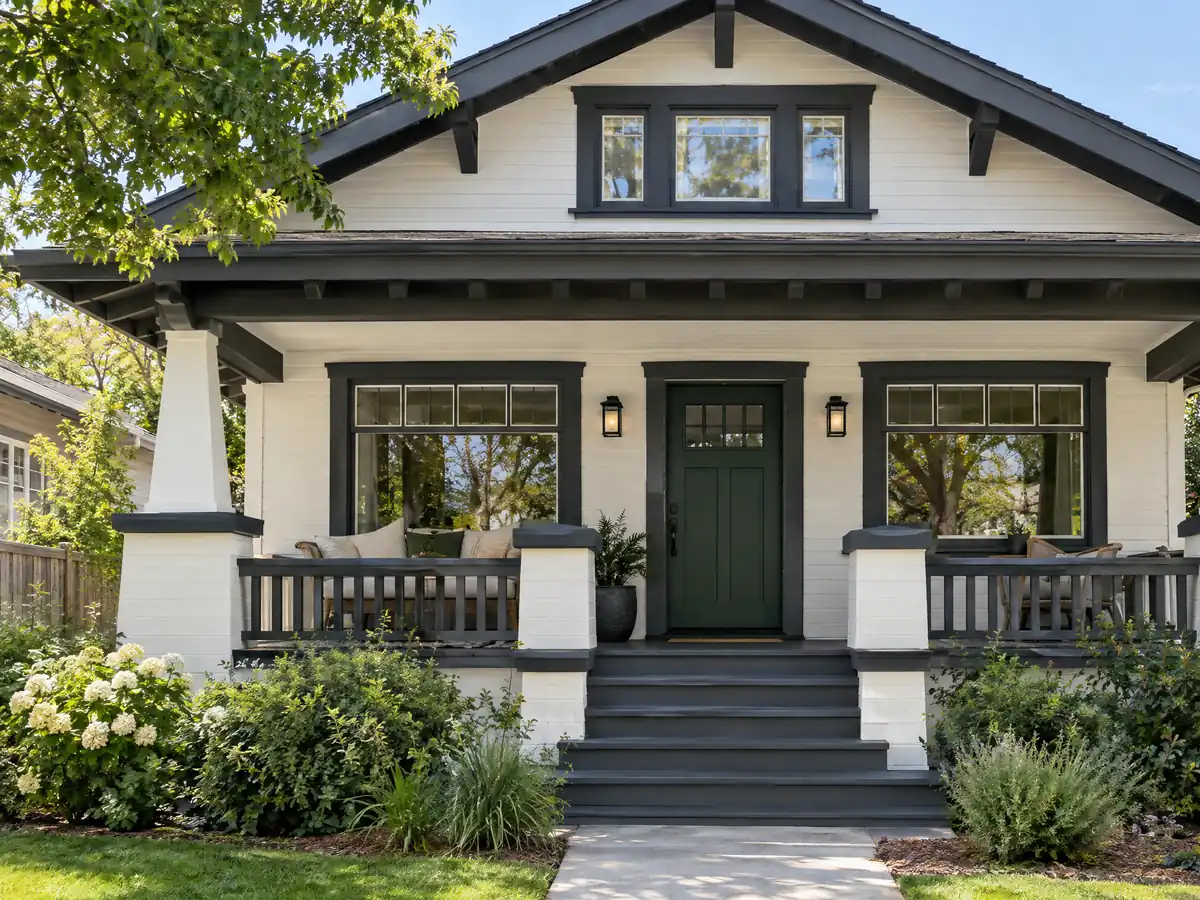
How do I choose a painting company in West Covina and read the quote?
Painting is CSLB class C-33, which covers preparing surfaces and applying paints, wallcoverings, stains and similar finishes to decorate, protect, fireproof or waterproof buildings. Check the number with our license checking guide. California's unlicensed-work limit is $1,000 for labor and materials combined, and it does not apply when a permit is required or a worker is hired.
Business and Professions Code 7159 requires a written contract for work above $500, limits the down payment to $1,000 or 10 percent, whichever is less, and includes a box stating whether subcontractors will be used. On an MDG job, ask for the painting subcontractor's license number and certificate of insurance; how general contractors use subcontractors explains who answers for what.
A fair quote is measured, not guessed. Compare proposals line by line on:
- Surfaces and square footage, and how each was measured
- Prep, patching, caulk and primer as separate lines
- Product, coats, sheen and colors
- Lead-safe setup if the house was built before 1978
- Start and finish dates, and what a rain day does to them
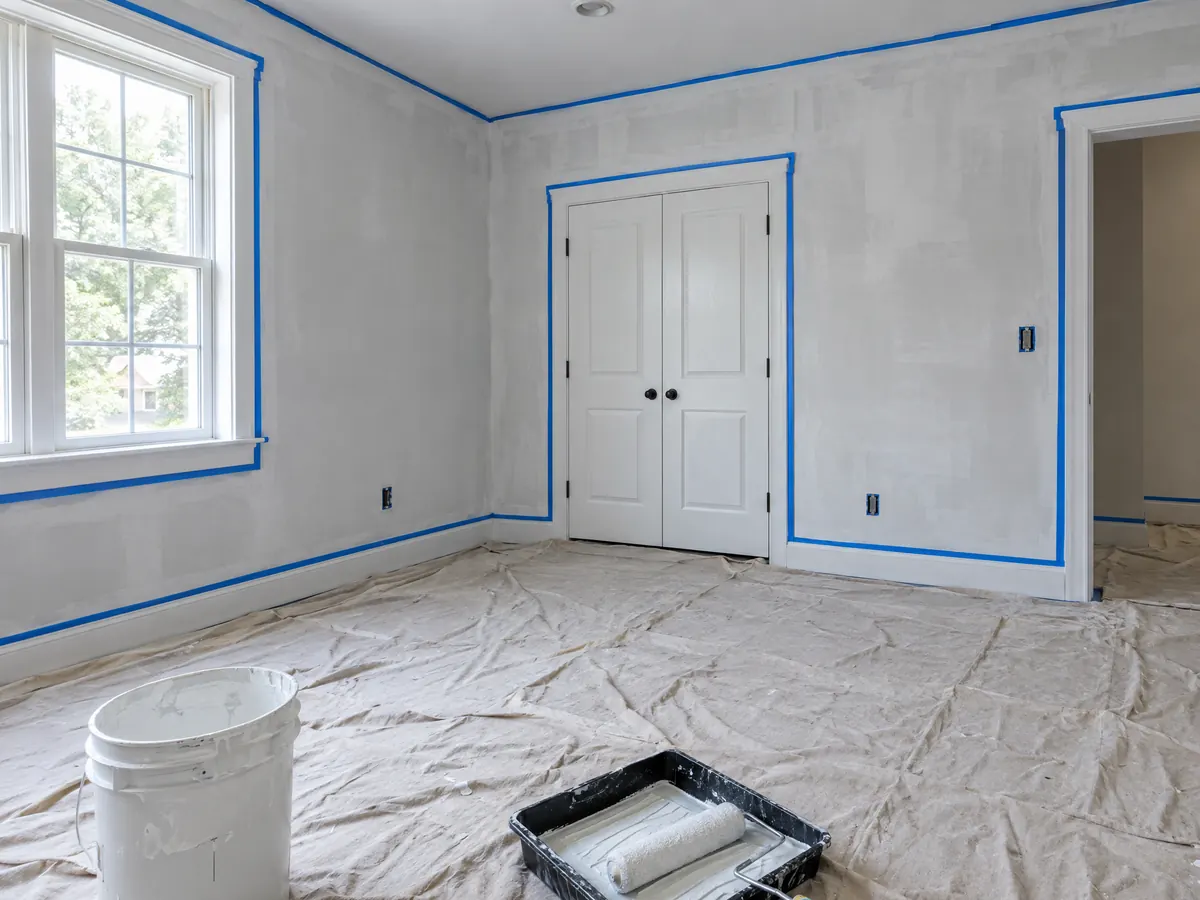
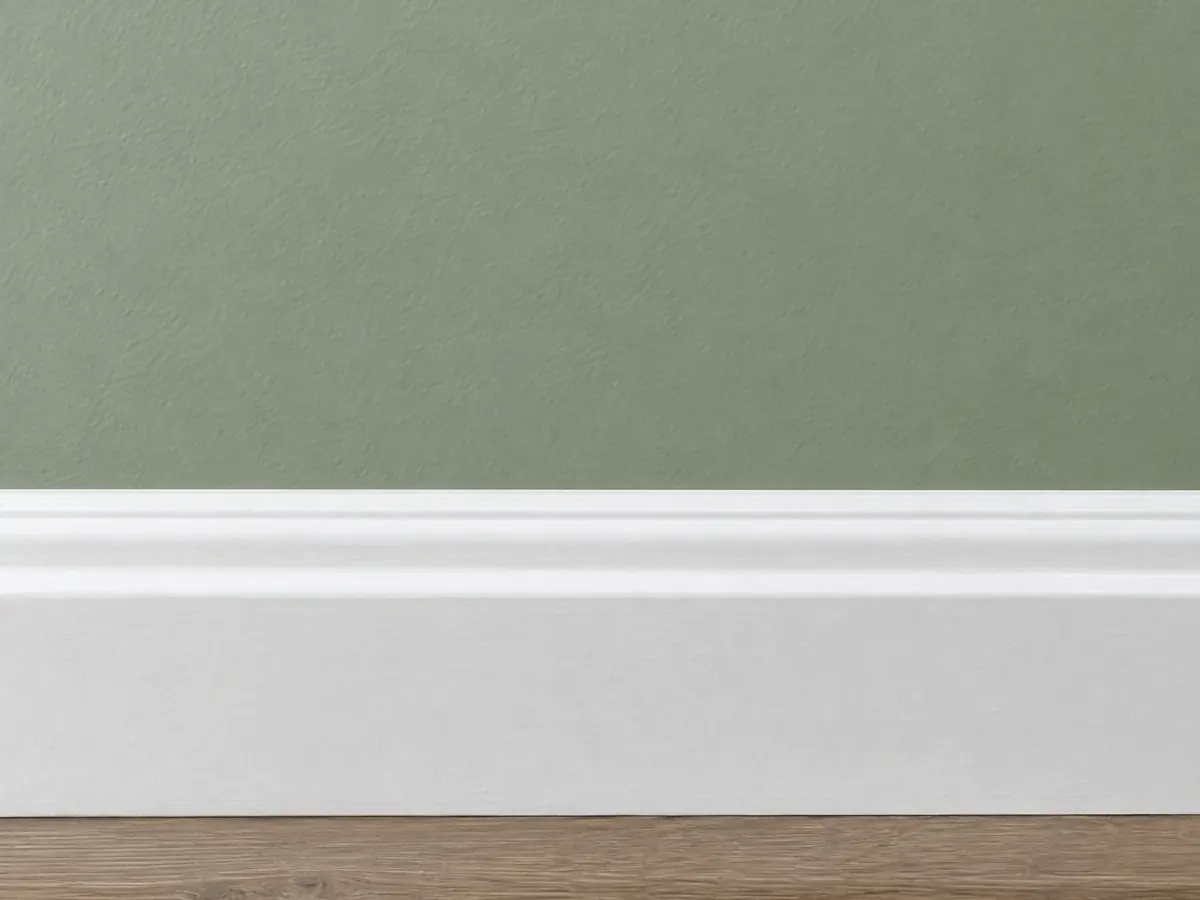
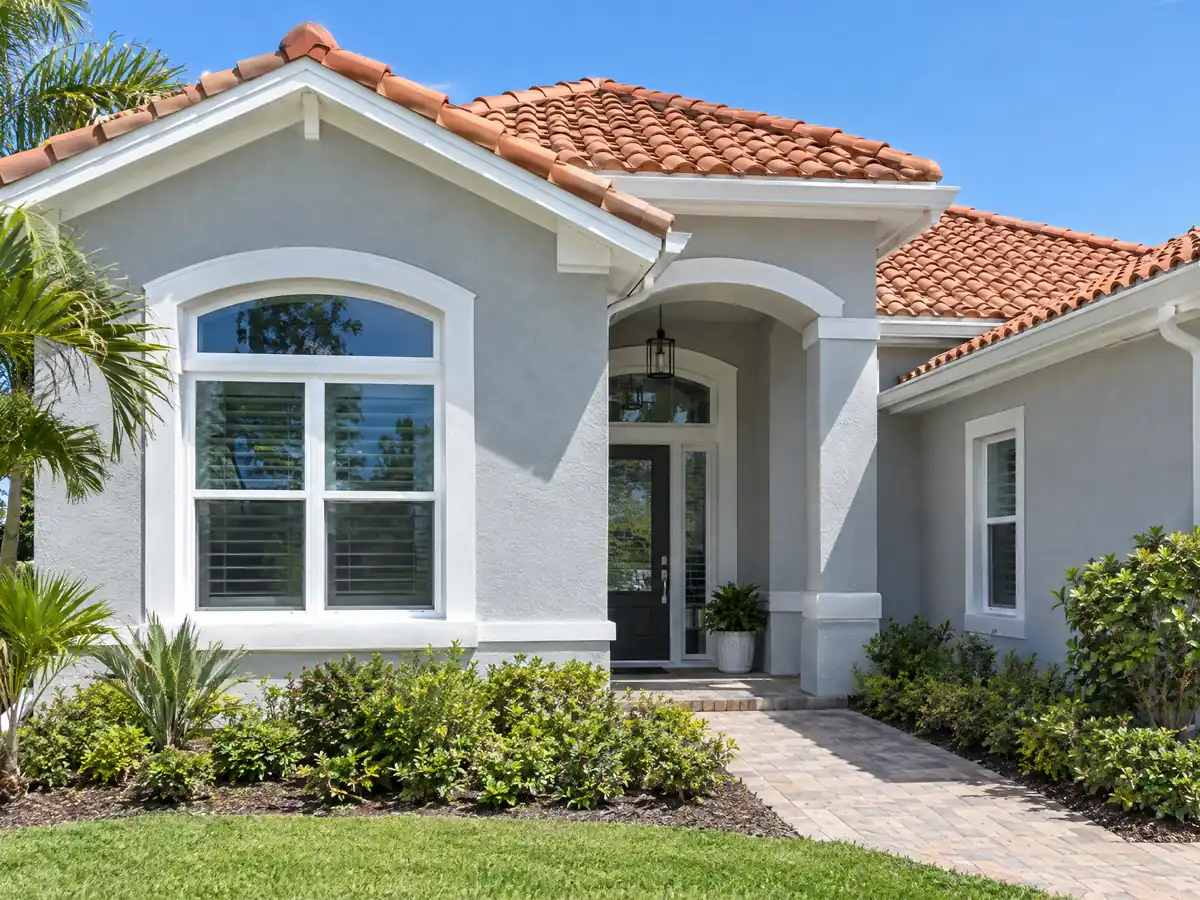
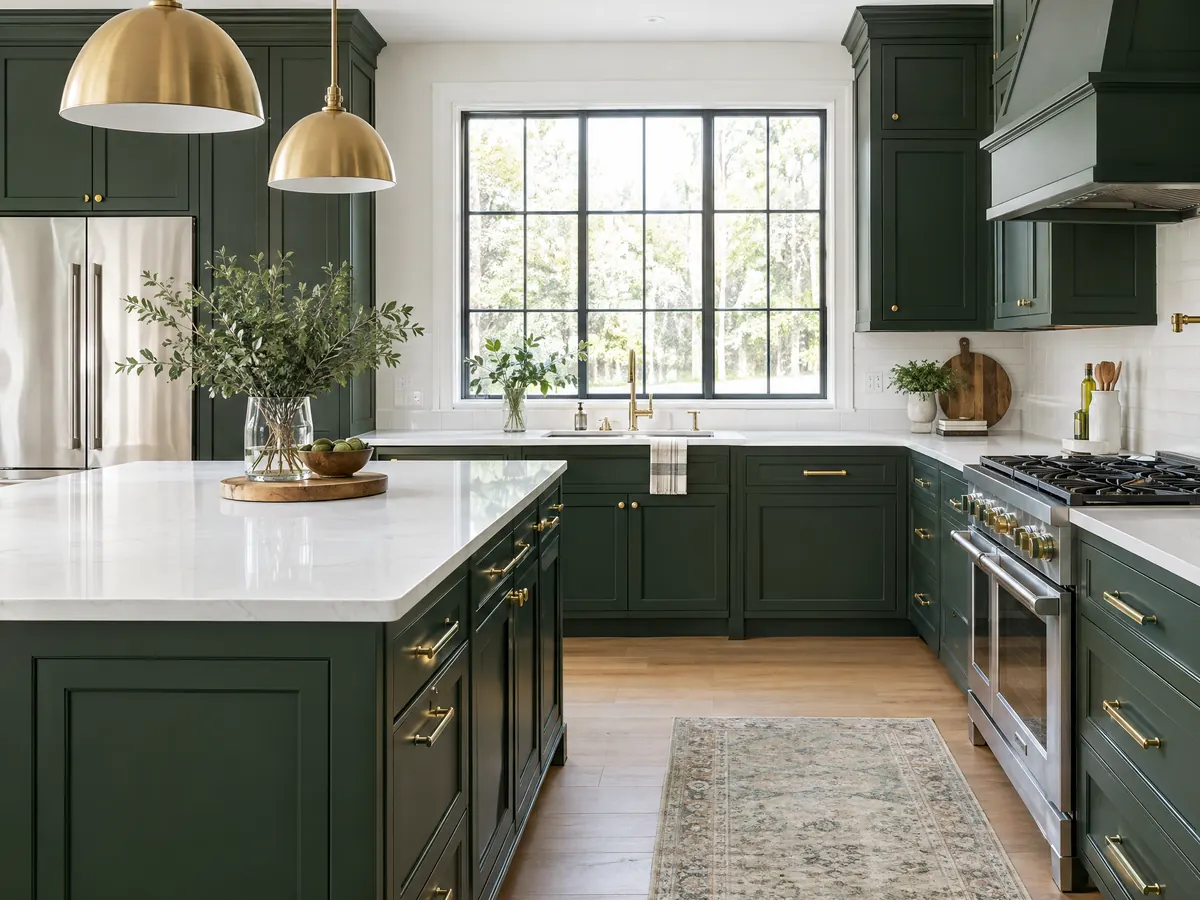
Painting photos from West Covina and nearby communities
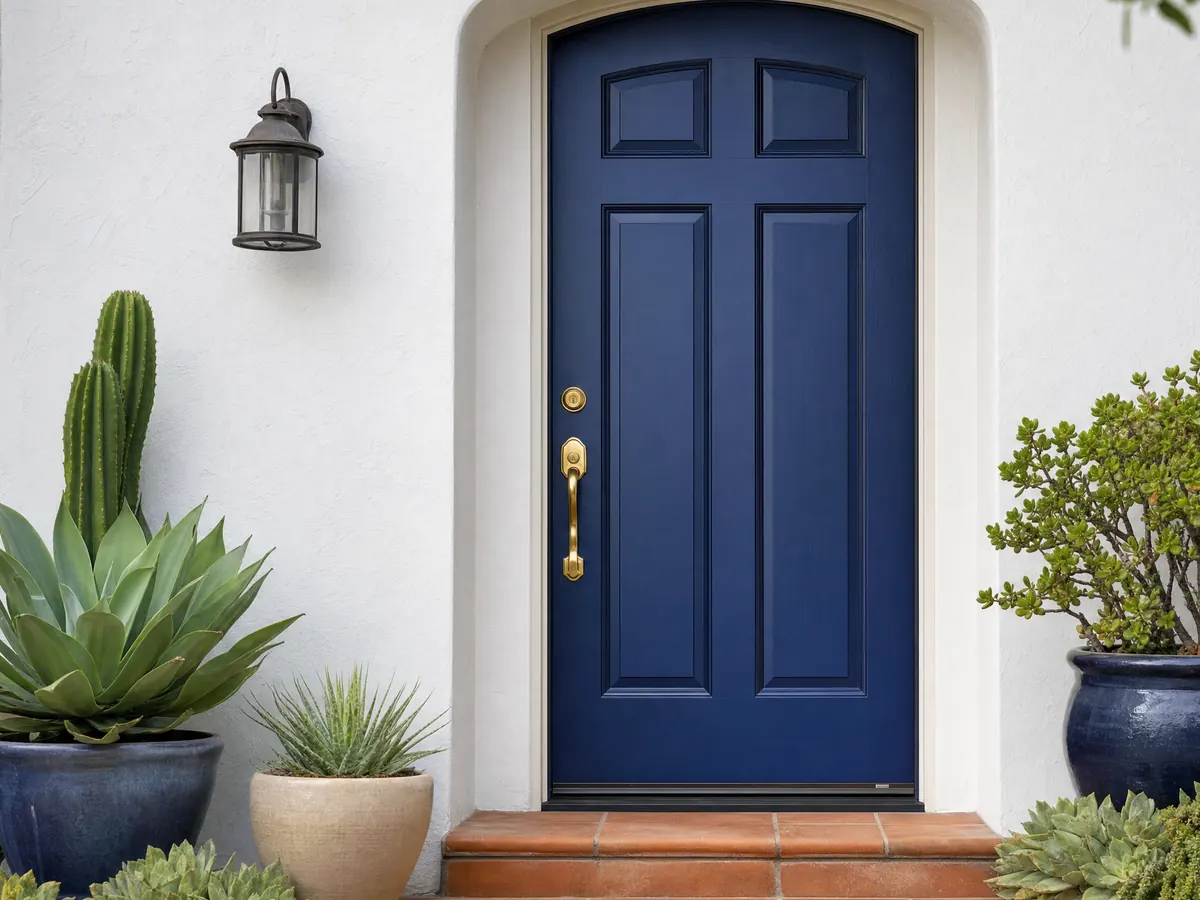
Painting scenes tied to West Covina streets and to nearby communities such as Covina and Walnut, from stucco exteriors to trim and entry details.
Where the paint numbers come from
West Covina has no paint cost survey of its own, so the Angi figures for Los Angeles are the nearest independent data, and they are listed with their method note on our painting cost page. Lead-safe setup, stucco repair and any association review are scope items to price separately. A new fence often goes in with a repaint, and the West Covina fence guide explains the height limits first. Nearby Pomona has its own lead and tract-home notes.
| What it covers | Typical range |
|---|---|
| Exterior, whole house | $2,947 to $6,484 |
| Exterior, per square foot of home | $2.20 to $5.90 |
| Interior, per square foot of floor area | $2 to $6 |
| Interior, Angi's Los Angeles project range | $1,282 to $3,784 |
| Extra prep in older homes | $0.50 to $0.75 per sq ft more |
| UV-resistant paint | $10 to $20 more per gallon |
Other work we manage in West Covina
West Covina painting questions, answered
How much does it cost to paint the exterior of a 1,500 sq ft house in West Covina?
Angi's Los Angeles table gives $2,225 to $5,925 for a 1,000 square foot home and $4,450 to $11,850 for 2,000, so a 1,500 square foot house falls roughly between them. Its range is $2.20 to $5.90 per square foot, with about 50 percent more per added story. Stucco prep and trim condition move the number.
How much does it cost to paint the interior of a 1,500 sq ft house?
Multiplying Angi's Los Angeles $2 to $6 per square foot of floor area by 1,500 gives about $3,000 to $9,000, before $0.50 to $0.75 per square foot of extra prep in an older home. Ceiling height, trim, color count and wall repair change it, and every quote should state the unit it uses.
Is $50 an hour good for a painter?
It depends on what the rate covers. The Bureau of Labor Statistics lists a mean wage of $29.71 an hour for Los Angeles area painters in May 2025, which is pay, not a billing rate. A written scope with area, coats, repairs and lead-safe setup tells you more than an hourly figure.
What time of year is best to paint a house in West Covina?
Late spring and early fall suit exterior work in our view, because winter rain is heavy and summer walls get hot. The Covina City Yard gauge records 13.47 of 16.74 inches of rain from December through March, and Pomona/Fairplex reaches 92.4 degrees F in August. We found no sourced price difference by season.
Does interior painting need a permit or lead-safe work in West Covina?
No building permit for ordinary painting, according to the City FAQ. Lead-safe rules still apply indoors when a paid contractor disturbs more than 6 square feet of painted surface per room in a house built before 1978. That is 76.6 percent of the city's housing units on the ACS estimates, so ask for EPA certification.
Do I need a permit to paint the outside of my house in West Covina?
Not a building permit. The City FAQ lists exterior painting as exempt, and the Building Division handout calls painting exempt finish work. The handout does add that Planning may still set design limits, and a homeowners association can require approval, so check both before buying paint for a visible wall.
Can stucco be painted?
Yes, with the right preparation. Wash it, repair cracks, check whether it was ever painted, and use a masonry-rated primer and topcoat. Stucco repair is a separate license class, C-35, so a crack repair is usually its own line item. We found no sourced cure time for fresh patches, so ask the plaster subcontractor.
How long does exterior painting take?
Preparation takes longer than the coats. Cleaning, scraping, patching, priming and drying time set the pace, and a house built before 1978 adds lead-safe containment and cleanup. We found no sourced duration for West Covina, so the written proposal should give start and finish dates and say what a rain day does to them.
What should I ask a painting company in West Covina before hiring house painters?
Ask for the CSLB C-33 license number, EPA lead-safe certification for older homes, a written scope naming product, coats and prep, and proof of insurance. Also ask whether the house needs Planning or association approval. Under the unlicensed-work limit a painter may work without a license only below $1,000 and with no workers hired.
Plan your painting project in West Covina
Send the address, the year the house was built and whether it sits in a homeowners association. We check the lead and approval questions before we call back.