
Flooring Installationin Claremont, CA
Flooring installation in Claremont rarely needs a building permit for the floor itself, but the City's permit page names only carpet as exempt, so confirm any other finish with the Building Division. Older Craftsman and Spanish Revival houses add real questions: about 37.6 percent of homes predate 1960, and many still hide original oak.
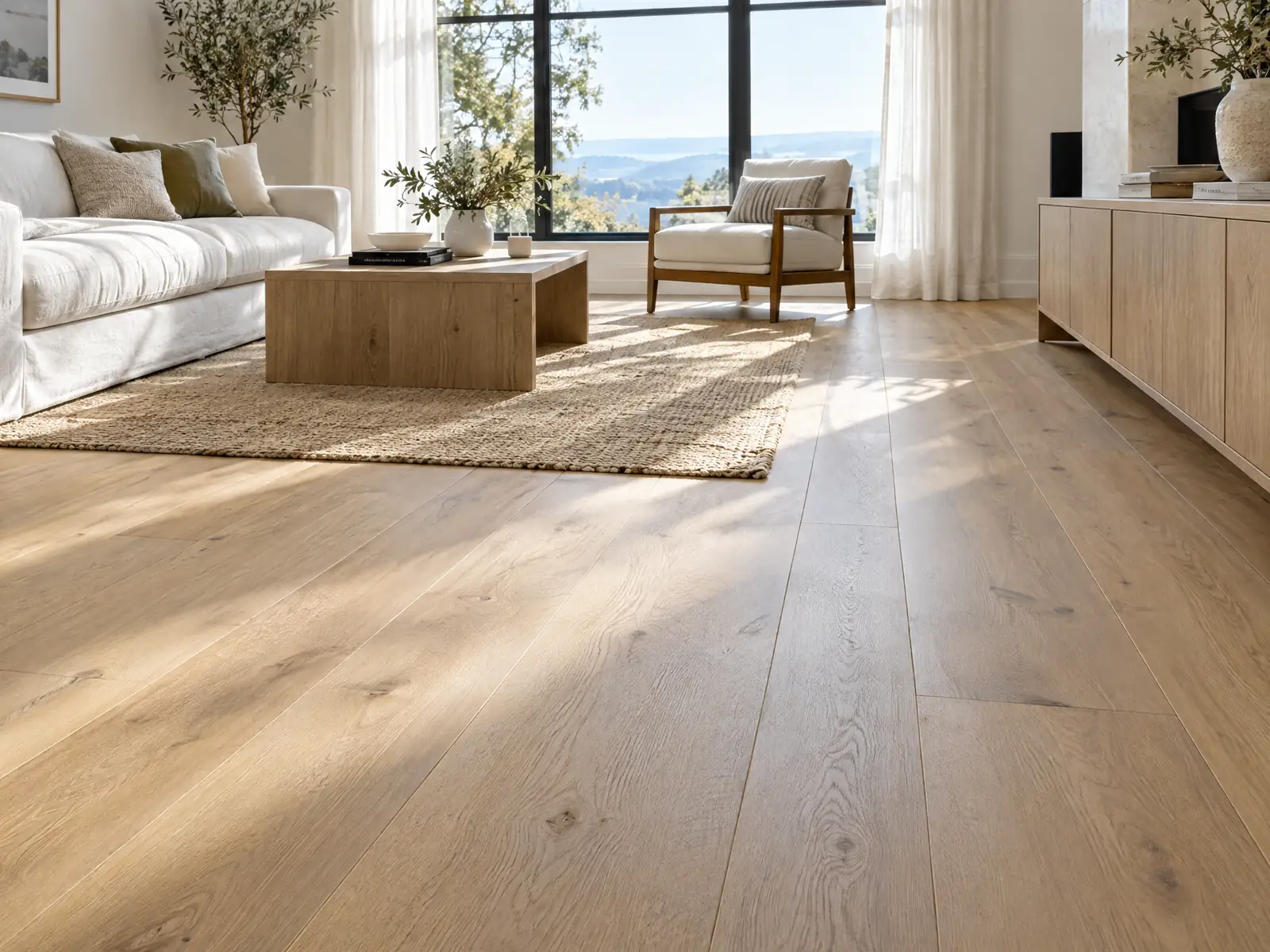
Claremont's floors follow the town's growth. Pomona College moved here in early 1890, the city incorporated on October 3, 1907 with 1,114 residents counted in 1910, and the population passed 12,000 by 1960. Census ACS 2024 five-year estimates put 8.8 percent of homes in the 1939-or-earlier group and 16.0 percent before 1950. That is about 37.6 percent built before 1960, and the median owner-occupied home is valued at $897,000 in the 2024 five-year estimate, so owners tend to care what is under the carpet.
MDG Builders, CSLB #1040337, is a general contractor in Tarzana. We write the scope and ask the Claremont Building Division the permit questions, and a licensed flooring or tile subcontractor lays the floor, with that firm's license number available to you on request. Materials and labor ranges are on our flooring page, and the Claremont overview shows the other trades we manage here.
What Claremont's City pages and code say about flooring work
Where flooring permits come from in Claremont: City of Claremont Community Development Department, Building Division.
- The City of Claremont lists carpeting as exempt from permit. The page does not address hardwood, tile, vinyl, concrete or other flooring, so flooring beyond carpet should be checked with the Building Division.
- CSLB defines the C-15 Flooring and Floor Covering classification as a contractor who prepares surfaces for flooring and installs carpet, resilient sheet goods, resilient tile, wood floors and any other flooring materials, except ceramic tile.
Sources for these rules
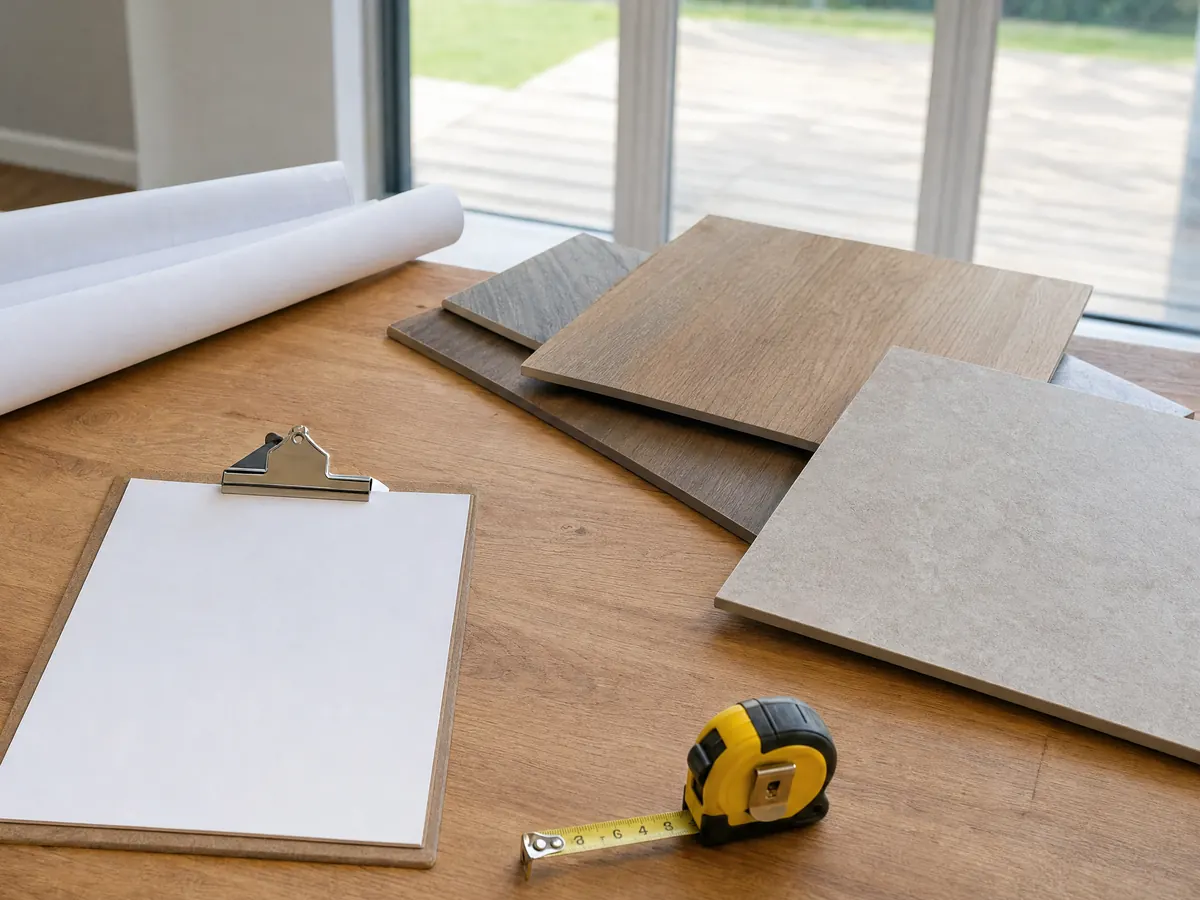
Can you refinish original oak floors in a Claremont Craftsman or historic district house?
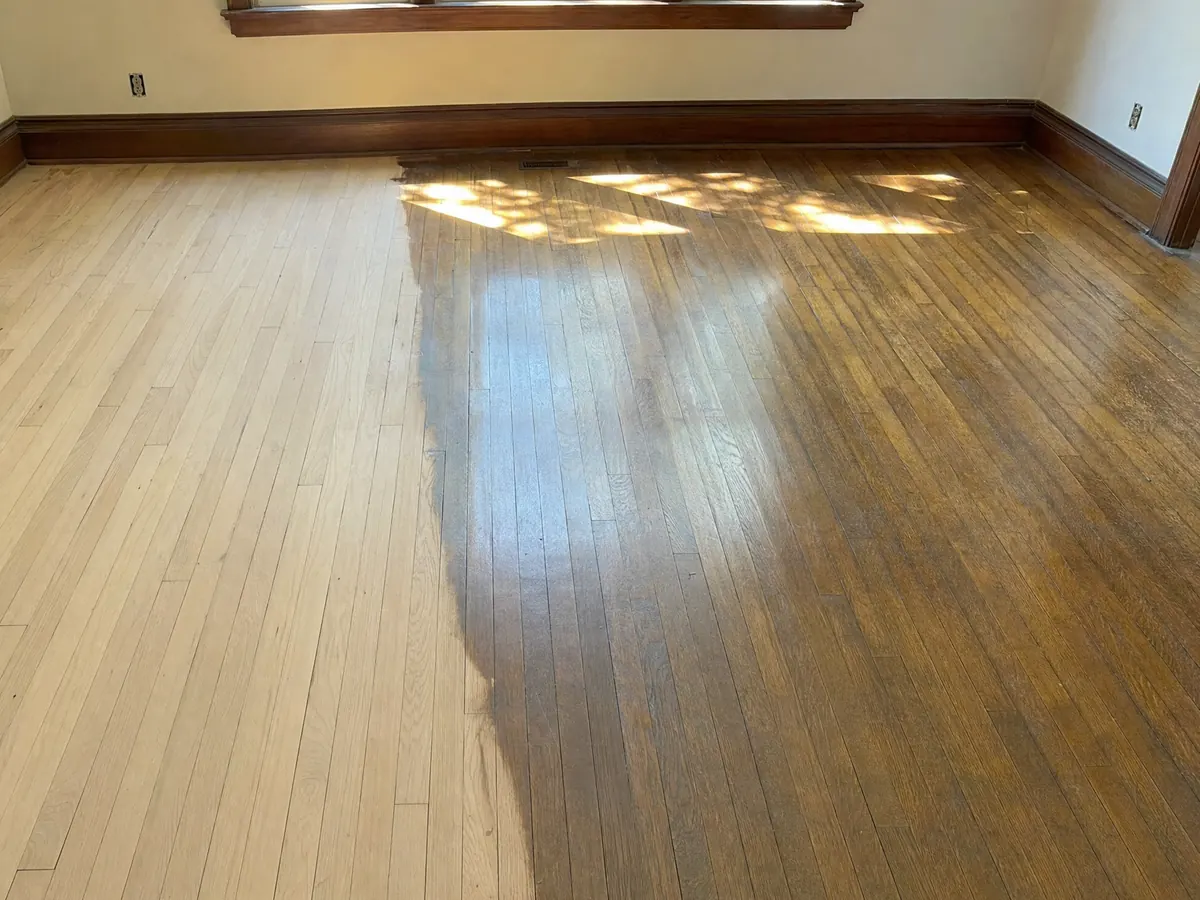
Often yes, and the first step is a question to Planning. A Claremont Courier history describes the older neighborhoods as mostly Craftsman houses built from pattern books by merchant builders, with a 1903 Greene and Greene house at Eighth Street and College Avenue and Spanish Revival landmarks such as the Garner House. The Historical Claremont and Arbol Verde districts send exterior changes through architectural review, and the code's list of staff-level approvals for historic properties names re-roofs, siding, windows, doors and small rear additions. We read nothing there that names interior floors. Bring a photo of the boards, the room dimensions and the finish you plan to use, so the answer you get applies to your project and not to a general case.
The same chapter exempts ordinary maintenance and repair that needs no building permit from the Certificate of Appropriateness process. Whether a full sand and refinish counts as maintenance is Planning's call, so call or email Claremont Planning before the first board comes up. We read the code on a third-party mirror, gocodebook, so confirm the citation with the City.
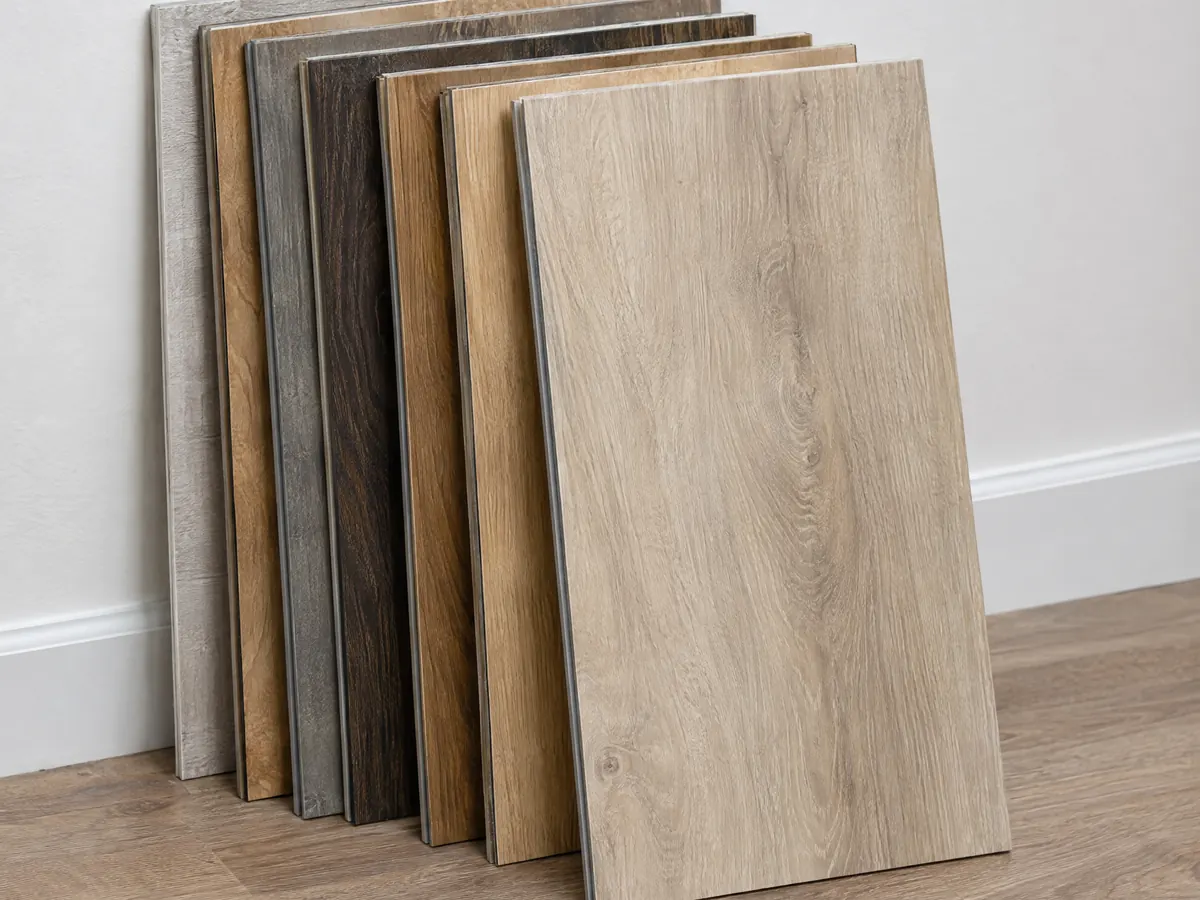
Before replacing anything, look at a floor register or a cut edge. Boards with wood left above the tongue can be sanded, and Angi's 2026 Los Angeles figures put refinishing at $4 to $8 a square foot against $12 to $22 installed for new solid hardwood. Our flooring cost guide compares the paths.
Could the old vinyl tile or sheet flooring in a Claremont house contain asbestos?
It might, and a lab report is the only way to know. Claremont has a large block of older houses, since 37.6 percent of the stock was built before 1960. The same estimates put 75.1 percent of homes before 1980, and that 1980 cutoff is a proxy for the 1978 lead-paint ban, not an exact count.
OSHA's construction asbestos standard is written for employers, but it shows what a careful crew does. It treats vinyl and asphalt flooring installed no later than 1980 as asbestos-containing, assumes resilient flooring with its mastic and backing is asbestos-containing until an industrial hygienist says otherwise, forbids sanding that flooring or ripping up resilient sheet, and requires wet methods to scrape leftover adhesive.
Paint is the second test. EPA's lead-safe renovation rule covers paid work that disturbs paint in housing built before 1978, and baseboards and door casings are painted surfaces that a floor job often disturbs. Ask any bidder for an EPA certification number and the lab result before demolition starts. A positive result does not end the job. It changes who removes the layer and how dust is contained, and the proposal should name both.
Does flooring installation in Claremont need a permit?
For carpet, the City says no. Its "When do I need a permit?" page lists carpeting, painting, wallpapering, cabinets and interior trim as cosmetic work without a permit, and it calls itself not all-inclusive. It says nothing about hardwood, tile, vinyl or other flooring, so we cannot give you a yes or no for those from a source.
One more wrinkle is in the code. Claremont's local amendment deletes several items from the state permit-exempt list, and the mirror text we read did not let us tell which finish items survive. The practical rule: ask the Building Division by phone at (909) 399-5471 or at buildingapplications@claremontca.gov, with your exact scope, and keep the answer.
Things the City does list as permit work show up in floor jobs often: plumbing and water heater work, electrical panel changes or new circuits, and any change that adds or removes a wall, window or door. Structural subfloor or joist repair is a separate question, and a permitted job needs a licensed contractor even when it costs under $1,000. Building code violations in Claremont can be charged as misdemeanors or infractions, so a written answer from the City protects you better than a verbal assurance from an installer.
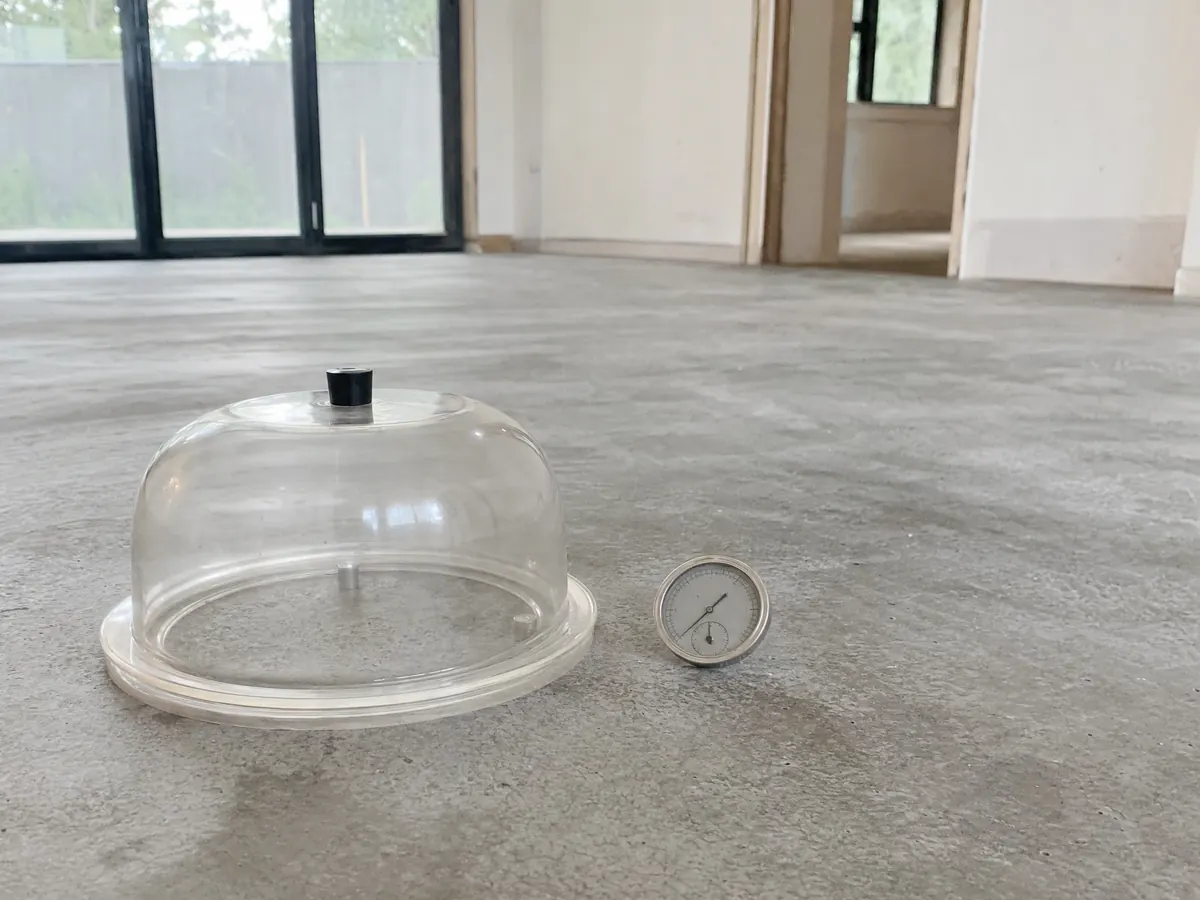
Why does moisture come through a Claremont concrete slab, and does a foothill lot change the test?
Moisture reaches a slab from the soil, and the season does not decide it. NOAA's 1991 to 2020 normals for the Pomona/Fairplex station, about 4.2 miles southwest, show 14.47 inches of rain a year, 11.47 of them from December through March, and almost none in July through September. That station sits on the valley floor at about 1,000 feet, while Claremont is at 1,168 feet, so the foothill streets north of Foothill Boulevard can behave differently.
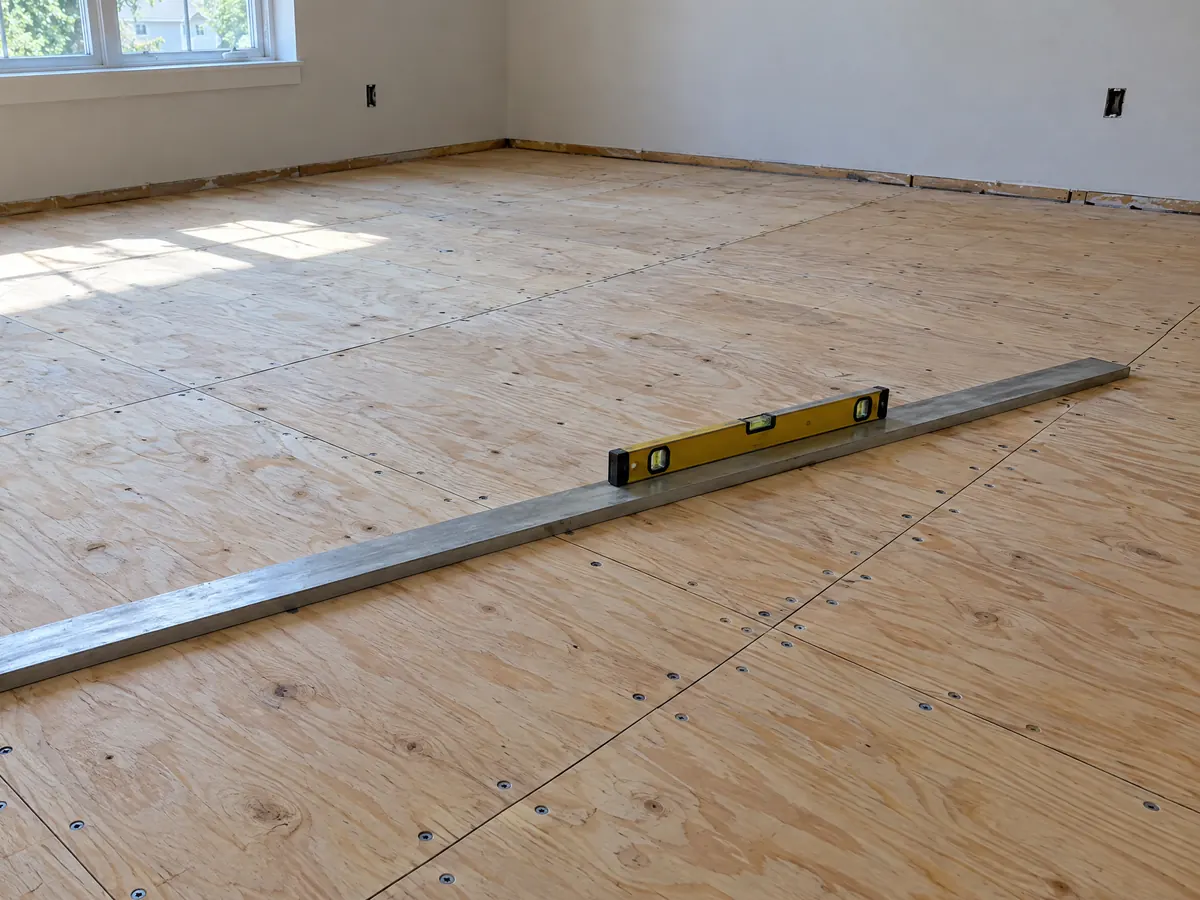
Hillsides cover 33 percent of Claremont, and a house cut into a slope often has soil pressed against its uphill wall. Ask where the probes will go, and make sure some sit near that wall, near planters and near old plumbing. The two usual tests are ASTM F2170, which reads relative humidity from probes in the concrete, and ASTM F1869, a calcium chloride test. The flooring maker sets the pass mark, and the National Wood Flooring Association's concrete subfloor guide strongly recommends a vapor retarder of 0.13 perms or less, such as 6 mil polyethylene.
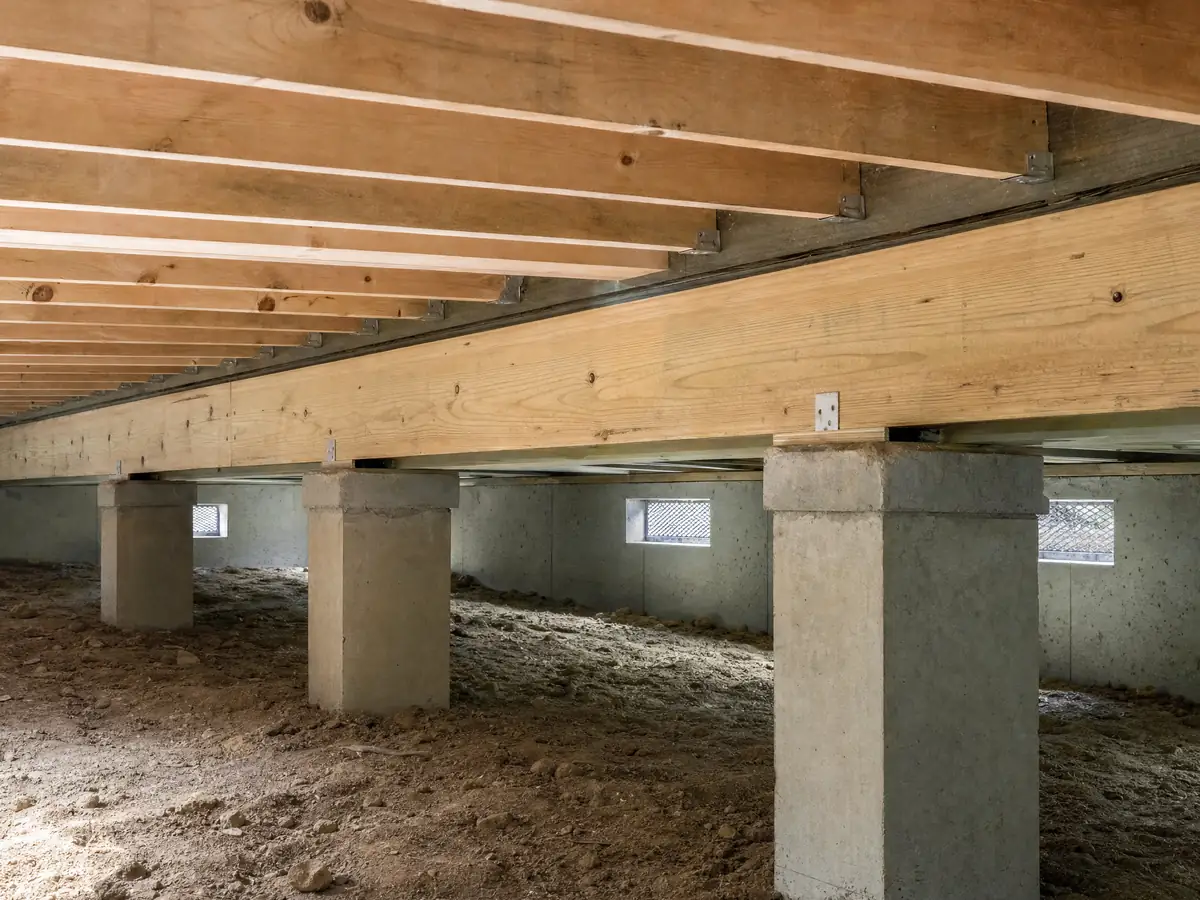
A raised wood floor is checked from the crawlspace instead. Water stains under a bath, sagging near a heavy wall and soft spots underfoot all change the scope.
- Which spots on the slab get probes, and how many?
- Will I get each reading in writing next to the product's limit?
- What happens to the schedule if the slab fails?
Who approves new hard flooring in a Claremont condo, apartment or rental?
Often a landlord or an association, not the City. Census ACS 2024 five-year estimates report that 36.8 percent of occupied Claremont homes are renter-occupied and that 21.9 percent of units are in buildings of two or more units, with 16.4 percent in buildings of five or more. A tenant needs the owner's written consent before anything is torn out.
For a condo or townhome owner, the governing documents come first. California Civil Code section 4765 sets out how an association must treat an owner's request to change a unit, with a written decision and a route to reconsideration. The Davis-Stirling guide to hardwood floors says the association's documents and field sound tests govern hard floors over another unit. Published sound ratings conflict, so we print no number.
Get the approval in writing, with underlayment, work hours and elevator or stair rules spelled out. If the new floor changes the height at a doorway or a stair landing, show it to the Building Division too. Ask the association for its flooring rule sheet at the start, because its underlayment and sound requirements, if it has any, set both the material and the schedule.
How much does flooring installation cost in Claremont, and what license must a flooring contractor hold?
We found no Claremont price study that states its method. The numbers here are Angi's 2026 Los Angeles figures, which we rate medium to low in confidence because Angi does not publish how it gets them: installation labor of about $3 to $9 a square foot, engineered hardwood at $10 to $18 installed, solid hardwood at $12 to $22 and refinishing at $4 to $8. Multiplying is simple arithmetic, not a quote: 1,000 square feet of solid hardwood is roughly $12,000 to $22,000.
Old-floor removal, subfloor repair, stairs, lab tests and moisture barriers sit outside those ranges. The Bureau of Labor Statistics reports a mean wage of $33.48 an hour for floor layers in the Los Angeles-Long Beach-Anaheim area in May 2025, which is a wage floor for a labor line, not a billing rate.
CSLB's C-15 flooring classification covers carpet, resilient flooring and wood floors but excludes ceramic tile, which falls under a tile class. Ask for the license number before the quote. Ask each bidder to separate demolition, disposal, subfloor repair, material and labor, so two proposals can be compared line by line.
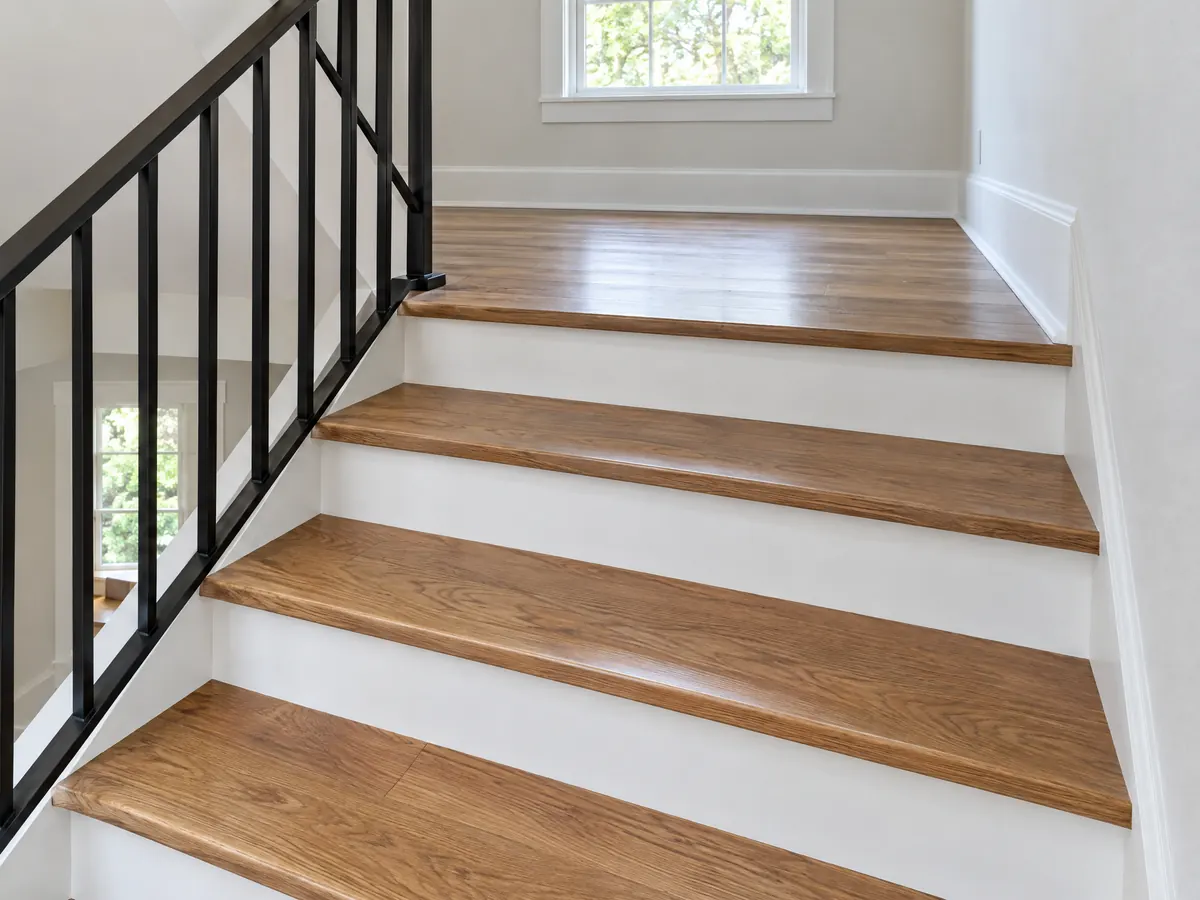
Flooring photos from Claremont and nearby communities
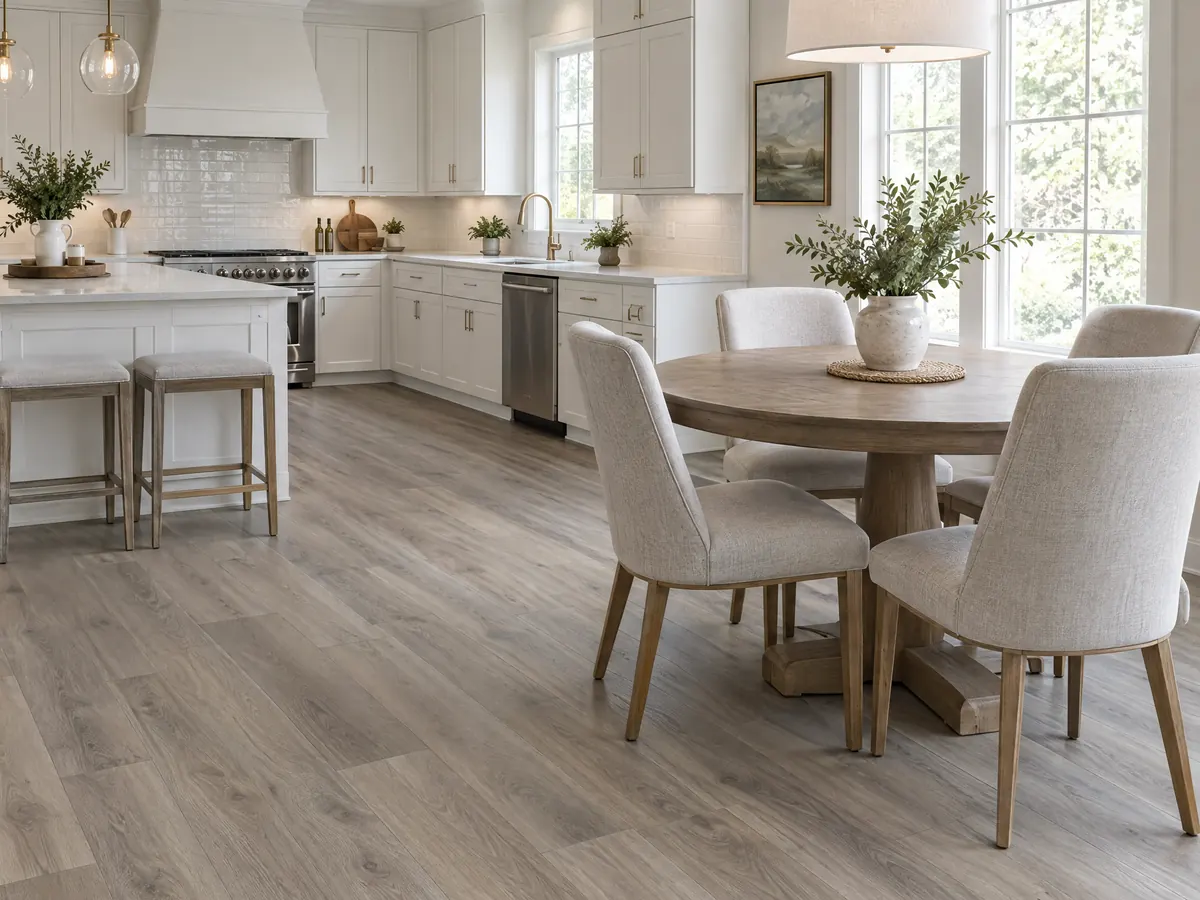
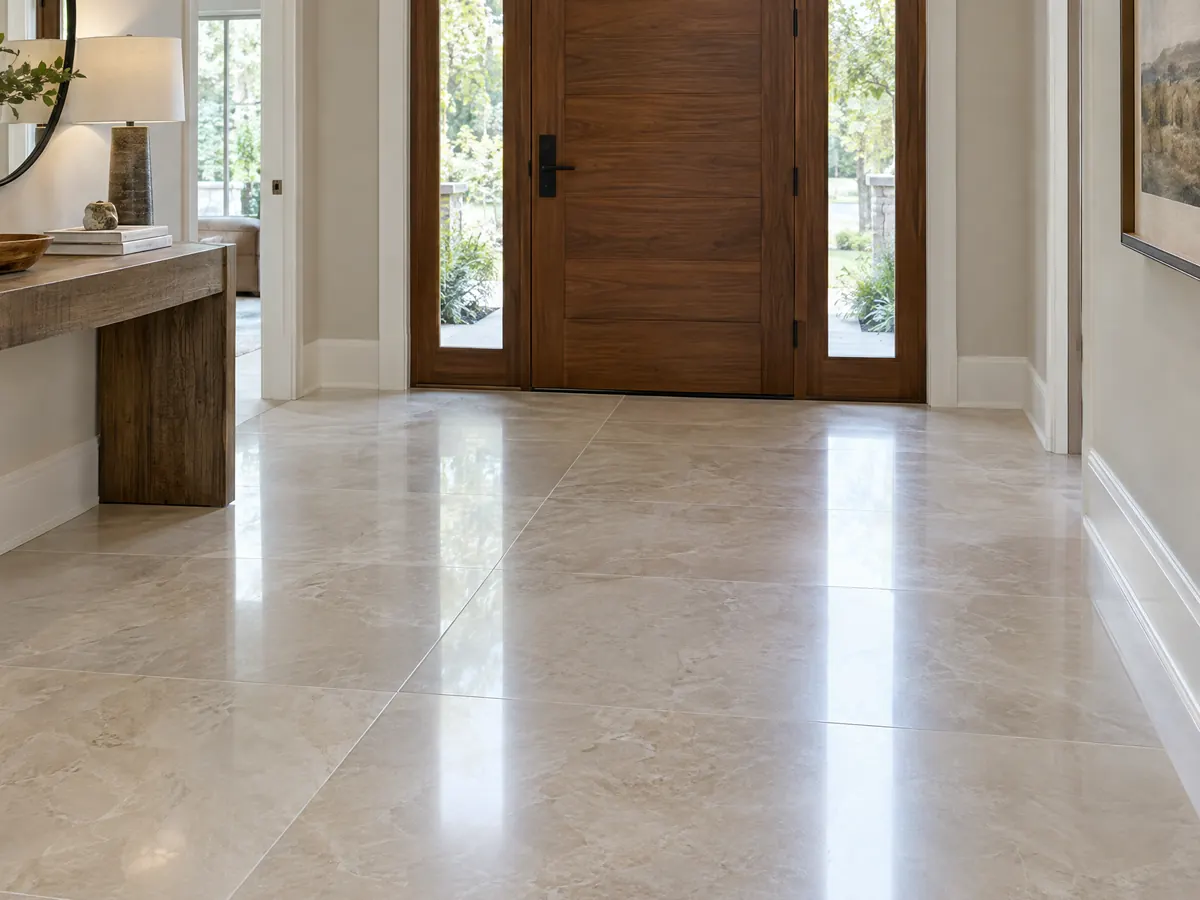
Six photos of floors around Claremont and its neighbors, from original oak and subfloors to new planks and tile. Tap a photo to enlarge it.
What flooring costs around Claremont
Prices here are the Los Angeles ranges on our flooring page, not a Claremont quote, and the license check guide shows how to verify a bidder. Subfloor work, lab tests and stairs are separate lines in a proposal. Nearby pages: flooring installation in Los Angeles, flooring in Pomona, flooring in Glendale, flooring in Pasadena, concrete work in Claremont and decks in Claremont.
| What it covers | Typical range |
|---|---|
| Installation labor only | $3 to $9 per sq ft |
| Solid hardwood, installed | $12 to $22 per sq ft |
| Engineered hardwood, installed | $10 to $18 per sq ft |
| Refinishing existing hardwood | $4 to $8 per sq ft |
| Laminate, whole project | $2,000 to $5,500 |
| Hardwood, whole project | $3,153 to $8,496 |
| Removing the old floor | $455 to $685 per 200 sq ft |
| Tile | No sourced Los Angeles range |
Claremont flooring questions, answered
Do I need a permit to replace flooring in Claremont?
For carpet, no: the City lists it as cosmetic work. For hardwood, tile or vinyl we found no City statement either way, and the City's code trims the state exempt list in ways we could not fully read. Ask the Building Division with your exact scope. Moving plumbing, wiring or structural subfloor while the floor is open is a separate permit question.
How much does it cost to have flooring professionally installed in Claremont?
Angi's 2026 Los Angeles figures show labor of about $3 to $9 per square foot, engineered hardwood at $10 to $18 installed and solid hardwood at $12 to $22. We found no Claremont study and rate these medium to low in confidence. Removal, subfloor repair and lab tests come on top.
How much does it cost to install 1,000 square feet of hardwood flooring in Claremont?
About $12,000 to $22,000 for solid hardwood and $10,000 to $18,000 for engineered, found by multiplying Angi's 2026 Los Angeles installed ranges. This is arithmetic on a medium to low confidence source, not a quote. Stairs, old-floor removal and slab or subfloor work are separate lines.
How much does it cost to refloor a 2,000 square foot house in Claremont?
Labor alone at $3 to $9 per square foot comes to roughly $6,000 to $18,000, before material and removal. Solid hardwood at Angi's Los Angeles installed range would run about $24,000 to $44,000 for the whole house. Those are multiplied ranges, and a site visit sets the real number.
Can you put flooring over concrete in Claremont?
Yes, after the slab is tested and prepared. Wood, vinyl and adhesives each have a maker's moisture limit, so the installer should take readings with ASTM F2170 probes or an ASTM F1869 calcium chloride test, then flatten the surface. A vapor retarder may be needed under the slab or over it, depending on the product.
Why does moisture come through a concrete floor in Claremont?
Water vapor rises from the soil beneath the slab, and concrete is porous. Claremont-area rainfall is about 14.47 inches a year, mostly December through March, but a dry summer does not dry the ground below. Leaks, planters and slope drainage near the house add to it, so only a test gives the real level.
Is there asbestos under old flooring in a Claremont house?
Possibly, and looking will not settle it. Federal worker rules assume old resilient flooring and its adhesive contain asbestos until tested, and vinyl or asphalt flooring laid by 1980 is presumed the same way. About 37.6 percent of Claremont homes predate 1960, so send a lab sample before anyone sands, rips up or scrapes.
Can I install hard flooring in a Claremont condo?
Only with your association's approval. Condo governing documents and sound rules control hard floors over another unit, and Civil Code section 4765 governs how an association must answer a change request. Get written approval first, with underlayment, work hours and access rules. Renters need the owner's written consent before any work.
Do original floors in Claremont's historic districts need City approval to refinish?
We could not find a rule that names interior floors. Claremont's Historical Claremont and Arbol Verde districts review exterior changes, and ordinary maintenance needing no building permit is exempt from the Certificate of Appropriateness. Ask Planning whether a full refinish counts as maintenance before work starts.
What license does a flooring contractor need in Claremont?
A C-15 flooring license for carpet, resilient flooring and wood floors, or the tile class for ceramic and stone, unless the whole job is $1,000 or less in labor and materials and needs no permit or hired workers. Check the number on the CSLB website. A down payment is capped at $1,000 or 10 percent, whichever is less.
Tell us the rooms and the year the house was built
Give us the street, the rooms, whether the floor sits on a slab or a raised frame and what covers it today. We bring the right tests to the first visit.