
Fence Companyin Walnut, CA
A fence company in Walnut works to the R-1 limits: 3 feet in a front yard and 6 feet in side and rear yards, with a clear 15 foot triangle at corners. Fence installation near a protected oak or black walnut needs a tree check first. We could not read Walnut's own permit-exempt list, so confirm before building.
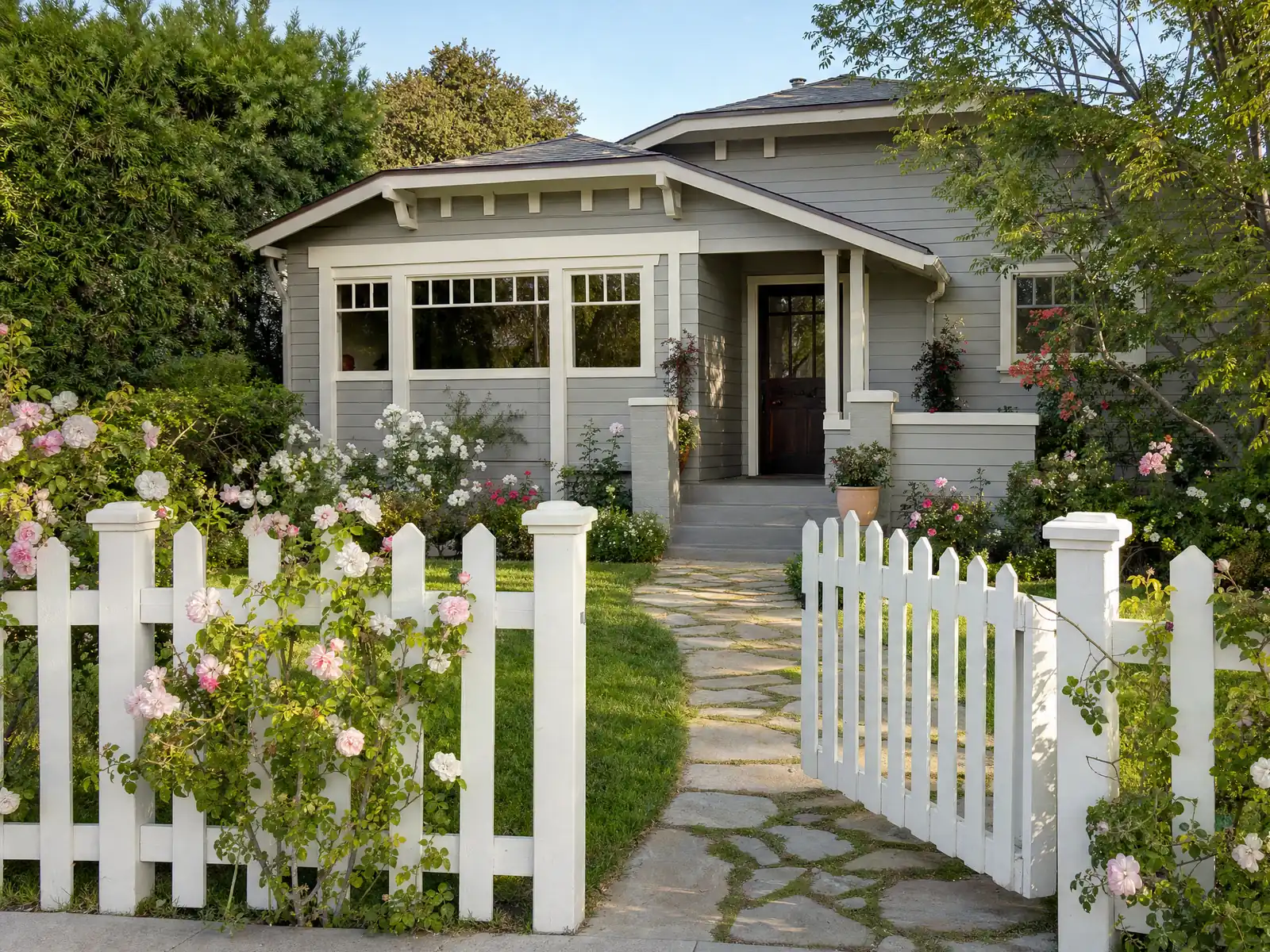
Walnut began as farmland, and its 1959 incorporation was driven by farmers who wanted to keep a rural way of life. That streak survives in the zoning: an R-1 Rural Overlay lets owners keep horses behind fences that a development review board approves, though the City's zoning map is an image file we could not read, so we cannot say which streets carry it. The rest of the city is mostly detached houses on graded lots, 8,737 of 9,230 homes in the Census Bureau's 2024 five-year estimates.
On a fence job, MDG Builders (CSLB #1040337) is the general contractor: we measure the lot, handle the City's questions and sequence the work, and licensed subcontractors build it, a C-13 fencing contractor for wood, vinyl and iron and a masonry contractor for block. Our fencing page holds the sourced prices, the Walnut overview lists the other trades, and neighboring cities set their own limits, as the guides for Diamond Bar and Pomona show.
What Walnut's zoning and building codes say about fences and walls
Where fencing permits come from in Walnut: City of Walnut Community Development Department, Building & Safety Division.
- In Walnut's R-1 zone (Municipal Code 6.12.050(C)(4)), a front yard fence or wall may be no higher than 3 feet measured on the street side, and a side or rear yard fence or wall may be no higher than 6 feet. Where a retaining wall brings the grade-side height above 6 feet, the portion above must be open-work (no more than 50 percent solid).
- Municipal Code 6.08.110 lets a wall, fence or hedge up to 3 feet stand on any part of a residential lot, up to 6 feet anywhere behind the required front setback on an interior lot, and up to 6 feet anywhere except the required front yard on a corner lot. A 42 inch protective fence is allowed on top of a retaining wall that holds fill, and the Planning Commission may approve higher walls, fences or hedges through site plan and architectural review.
- Corner and reversed corner lots in Walnut must keep a 15 foot vision triangle clear (Municipal Code 6.08.090): no tree is allowed in it and nothing above 42 inches, which caps fence and wall height at the corner.
- The state model list of permit-exempt work (Residential Code R105.2 as excerpted by the City of Albany from the 2025 code) exempts fences not over 7 feet high and retaining walls not over 4 feet measured from the bottom of the footing, unless they support a surcharge. Walnut adopts the Los Angeles County Residential Code, whose R105.2 was not read, and zoning review still applies, so confirm with Walnut Building and Safety before building.
- Walnut's grading standards say fences, walls, decks, structures and landscaping may not block or improperly divert drainage (Municipal Code 2.04.040(E)(2)), which matters on the hillside lots where the City runs annual slope inspections.
- In the R-1 Rural Overlay ('A') zone, pens, corrals, fences and sheds for permitted animals need development review board approval with a scaled site plan and a description of materials, fences and walls that contain animals may be approved inside the building setback area, animal housing must be 35 feet from any habitable building, and the review fee is $25 (or $5 for the small-animal categories).
- Fence posts, footings and trenching near a protected oak or California Black Walnut count as encroachment or damage under the tree article (roots over 1 inch need City approval to cut and footings must bridge roots), so a new fence line that passes within the protected zone needs a tree permit review first.
- The Los Angeles County Fire Code amendment adopted by Walnut lets the fire chief require flammable vegetation and combustible growth cleared at least 10 feet on each side of roadways and combustible fences (Section 325.10), so wood fences along hillside roads can trigger clearance orders.
Sources for these rules
- gocodebook.com: chapter 6.12 r 1 one family residential zone
- gocodebook.com: chapter 6.08 zoning provisions in general
- albanyca.gov: work exempt from permit 2025 cbc
- gocodebook.com: chapter 2.04 county building codes
- gocodebook.com: chapter 6.16 r 1 rural overlay zone
- gocodebook.com: article v oak walnut tree preservation
- gocodebook.com: chapter 3.16 fire prevention
How tall can a fence be in a Walnut front, side or rear yard?
In the R-1 zone, Municipal Code 6.12.050(C)(4) caps a front yard fence or wall at 3 feet, measured on the street side, and a side or rear yard fence or wall at 6 feet. The general zoning chapter, 6.08.110, says much the same for any residential lot: a wall, fence or hedge up to 3 feet on any part of the lot, and up to 6 feet behind the required front setback on an interior lot. A solid privacy fence at the sidewalk is out, and a low open fence or a trimmed hedge is the usual front answer.
Taller work needs approval. The Planning Commission may approve higher walls, fences or hedges through site plan and architectural review. A 42 inch protective fence is allowed on top of a retaining wall that holds fill, and where a retaining wall lifts the grade-side height past 6 feet, the part above that line must be open-work, no more than 50 percent solid.
Measure from the grade on the side people walk on, and ask Planning which side counts when a lot slopes.
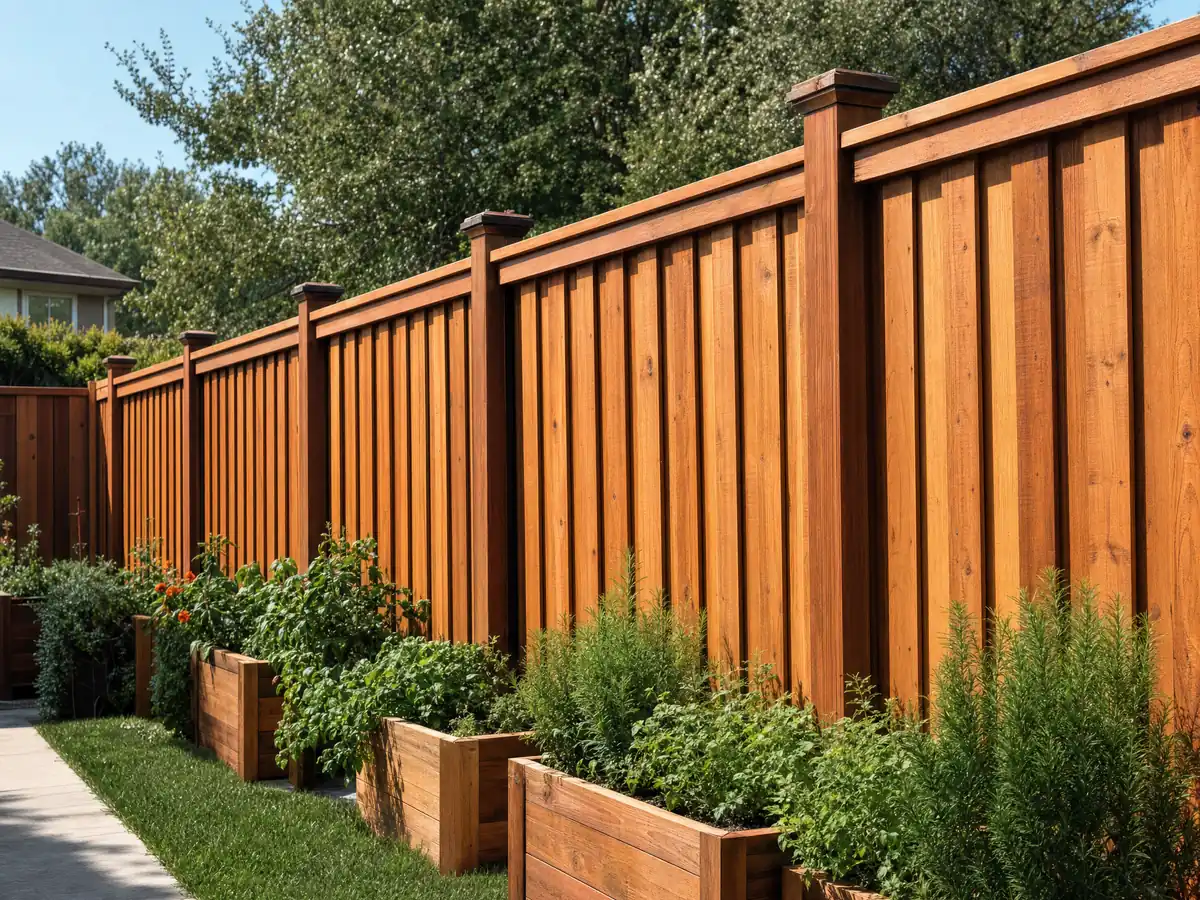
What is the 15 foot vision triangle on a Walnut corner lot?
Corner and reversed corner lots must keep a 15 foot vision triangle clear under Municipal Code 6.08.090. No tree may stand in it and nothing may rise above 42 inches, which caps a fence or wall at the corner. Elsewhere on a corner lot, Section 6.08.110 allows up to 6 feet anywhere except the required front yard.
Ask the fence contractor to stake the triangle against the survey before panels are ordered. A run that crosses it has to be cut back later, and a gate that opens toward the street can land inside it.
Do I need a permit for fence installation in Walnut?
Possibly, and we could not settle it from Walnut's own text. The state model list of permit-exempt work, as printed in the City of Albany's 2025 handout, exempts fences not over 7 feet and retaining walls not over 4 feet measured from the bottom of the footing, unless they carry a surcharge. Walnut adopts the Los Angeles County Residential Code, and we did not read that code's exemption list, so treat the model numbers as a starting point rather than Walnut's list.
Zoning applies either way. A 7 foot fence can clear the building exemption and still break the R-1 limit of 6 feet on a side or rear line. Fees on permits Walnut does issue are set at twice the County amount under Municipal Code 2.04.060, and we found no table to quote. A permit of any kind also removes the state's $1,000 unlicensed-work exemption, so permitted fence work needs a licensed contractor.
Call the Building and Safety Division, which is open Monday through Thursday from 7 a.m. to 6 p.m. and closed Fridays, or Community Development at (909) 595-7543 ext. 400. Ask about height, footings and any retaining wall, and get the answer in writing.
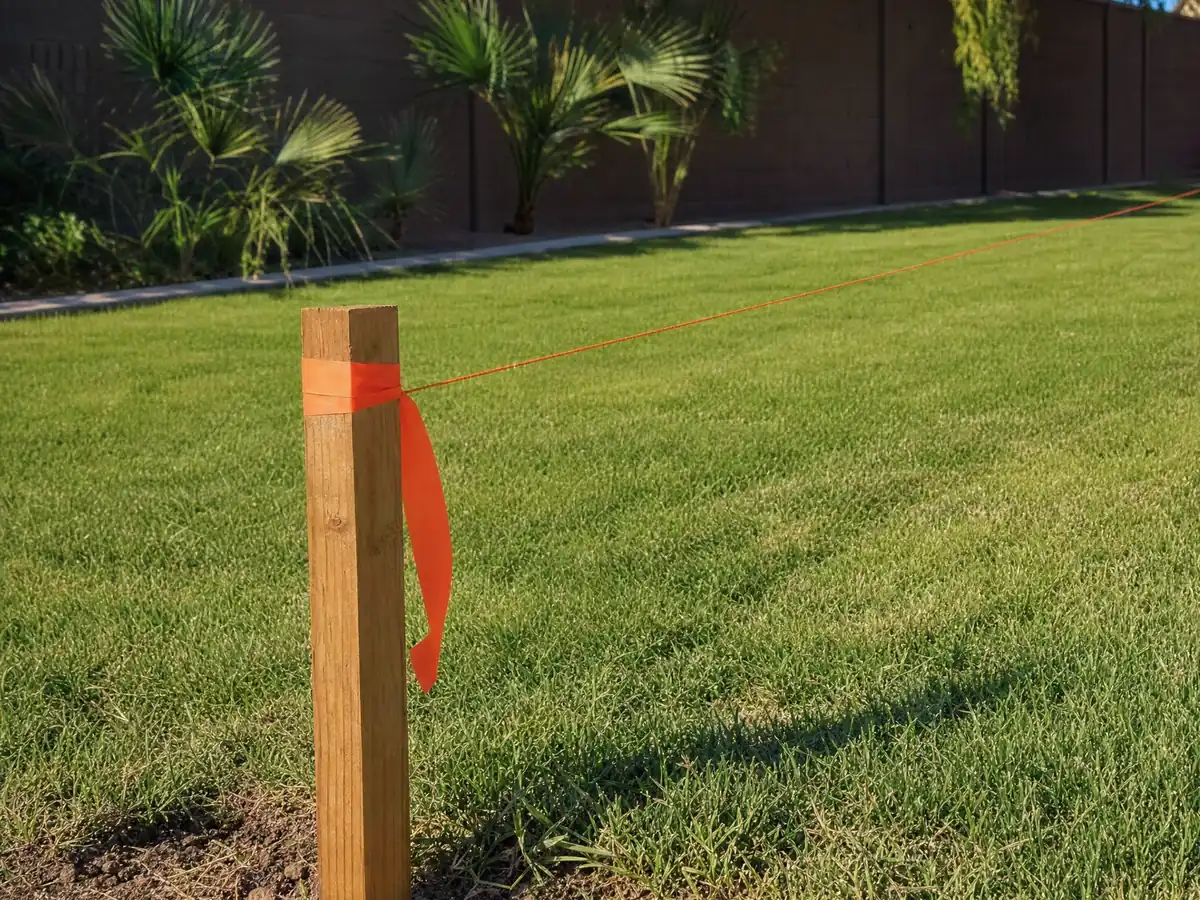
Can I dig fence post holes near a protected oak or black walnut in Walnut?
Only after a check. The City's tree article covers native oaks and California Black Walnuts with a trunk circumference of 6 inches or more at 4.5 feet, and its protected zone runs from 5 feet outside the dripline to the trunk, never less than 15 feet from it. Trenching or excavating inside that zone counts as damage, and encroachment includes grading, dumping, storing materials and building structures there.
A fence line that crosses the zone comes with conditions: work supervised by the applicant's tree consultant, hand tools only under the tree, 48 hours written notice, City approval to cut any root over 1 inch and footings that bridge roots. Penalties include misdemeanor charges, stop work orders and restitution. Only one tree permit is issued per site in any 12 months, so ask for the fence, a patio and any other work near the tree in a single request.
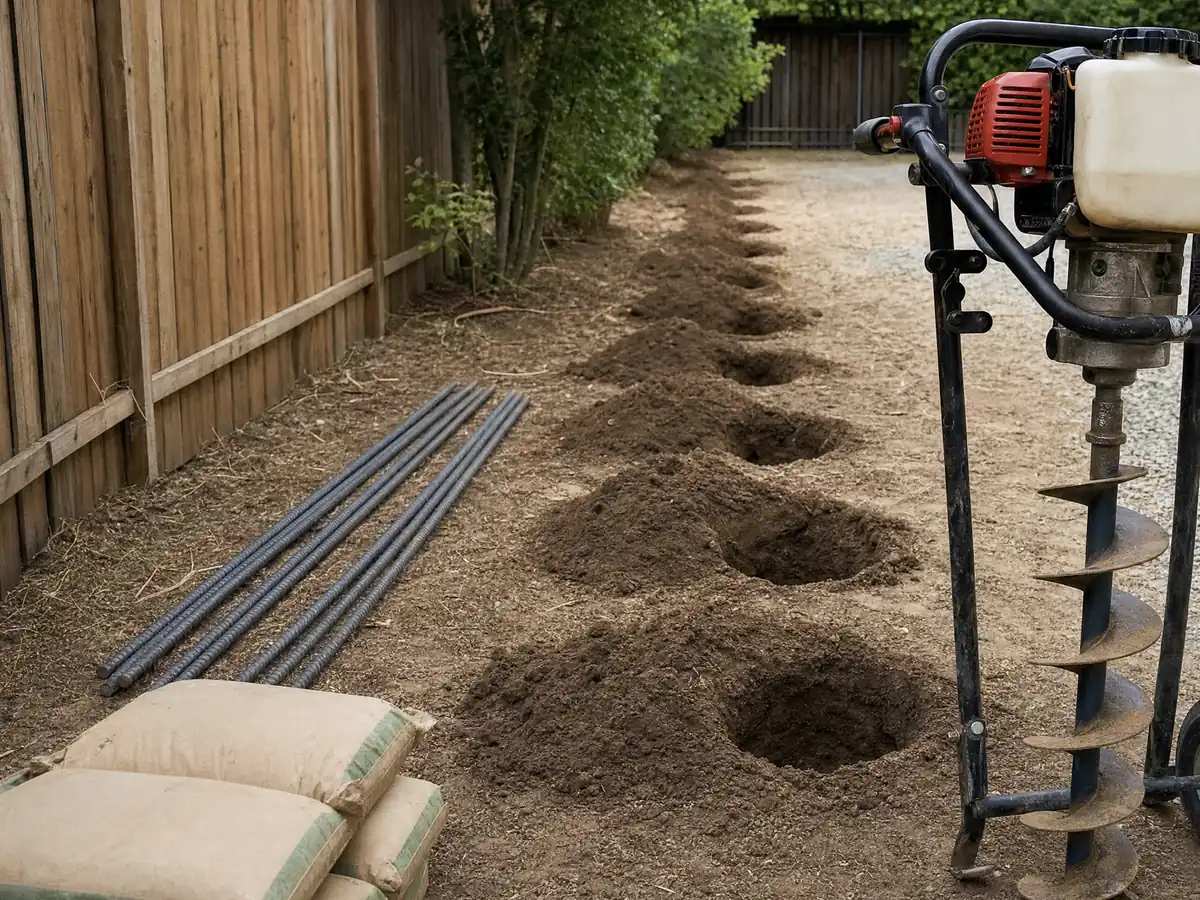
What do hillside lots and wildfire rules change for a Walnut fence?
Grading rules reach fences. Municipal Code 2.04.040(E)(2) says fences, walls, decks, structures and landscaping may not block or improperly divert drainage, and the City may inspect slopes annually. A cut or fill slope cannot exceed 30 feet of vertical height without a Planning Commission exception, and an elevation change of 5 feet or more outside an already-reviewed project needs Planning Commission approval. The steepest ground in the city is Buzzards Peak, at 1,375 feet.
Fire adds a second layer. The Walnut amendment to Fire Code Section 325.10 lets the fire chief require flammable vegetation and combustible growth cleared at least 10 feet on each side of public or private roadways and combustible fences. A wood fence along a hillside road can therefore bring a clearance order. Whether your parcel sits in a mapped fire zone is a per-address question for the Building Official.
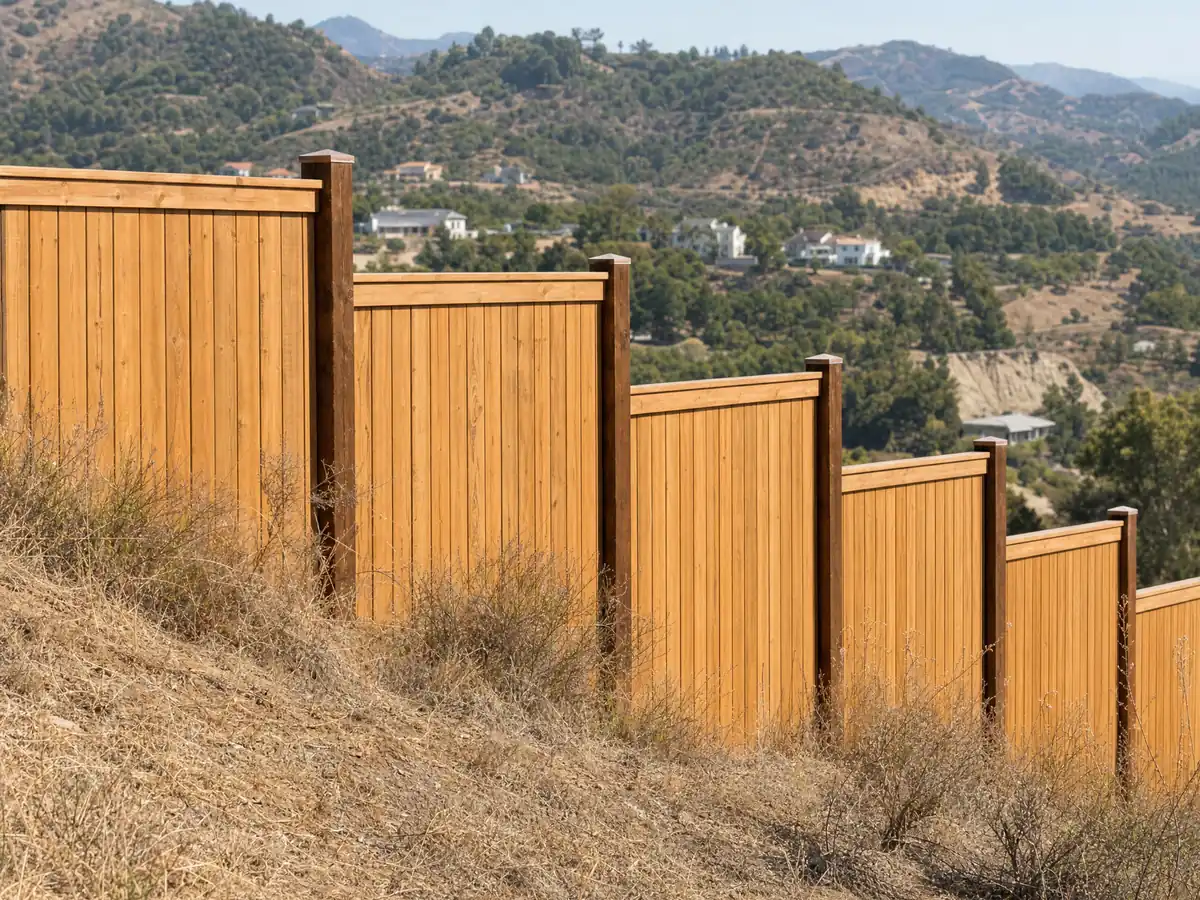
What fence does a Walnut swimming pool need, and can I fence a horse corral?
Walnut's amended Building Code, 2.04.030(I), requires any new private pool built under a construction permit to have an enclosure plus at least two of seven listed safety features. They include a barrier, a removable mesh fence meeting ASTM F2286 with a self-closing, self-latching gate, an ASTM F1346 safety cover, exit alarms, and self-closing doors with release mechanisms at least 54 inches above the floor.
In the R-1 Rural Overlay, pens, corrals, fences and sheds for permitted animals need development review board approval, with a scaled site plan and a description of materials. Fences and walls that contain animals may be approved inside the building setback, animal housing must stand 35 feet from any habitable building, and the review fee is $25, or $5 for the small-animal categories. We could not map where the overlay applies, so ask Planning whether your lot carries it.
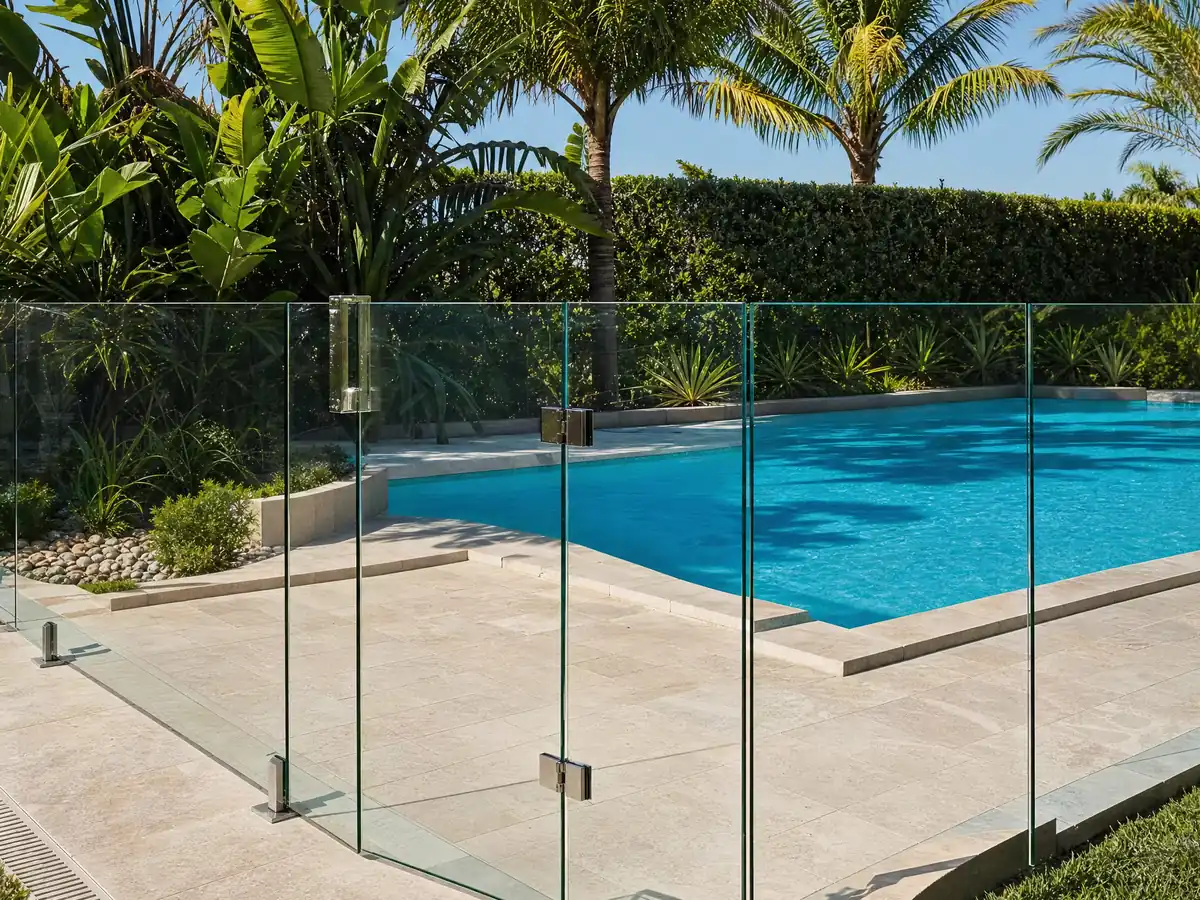
How much does fence installation cost in Walnut, and who pays for a shared fence?
No Walnut price survey turned up, so we use Los Angeles and national sources. Angi's Los Angeles page, dated August 4, 2026, gives an average job of $3,051, a $15 to $60 range per foot and $2,100 to $2,350 for 100 feet. Angi's national page, updated October 13, 2026, lists wood at $10 to $45 per foot, vinyl at $15 to $40, chain link at $8 to $40 and wrought iron at $25 to $55, and HomeGuide and Thumbtack land in the same band. From these we plan wood or vinyl privacy fencing at roughly $25 to $55 per foot installed, about $2,500 to $5,500 for a 100 foot back run. No independent source prices a reinforced block wall, so we print no number for one.
California Civil Code 841 presumes that neighbors share the cost of a boundary fence equally and asks for 30 days written notice before you incur costs, though the presumption can be rebutted. CSLB class C-13 covers fences and excludes masonry walls, which fall to a masonry contractor, class C-29. For the contract, Business and Professions Code 7159.5 caps a down payment at $1,000 or 10 percent, whichever is less, and our guide to checking a contractor license shows how to verify each license before you sign.
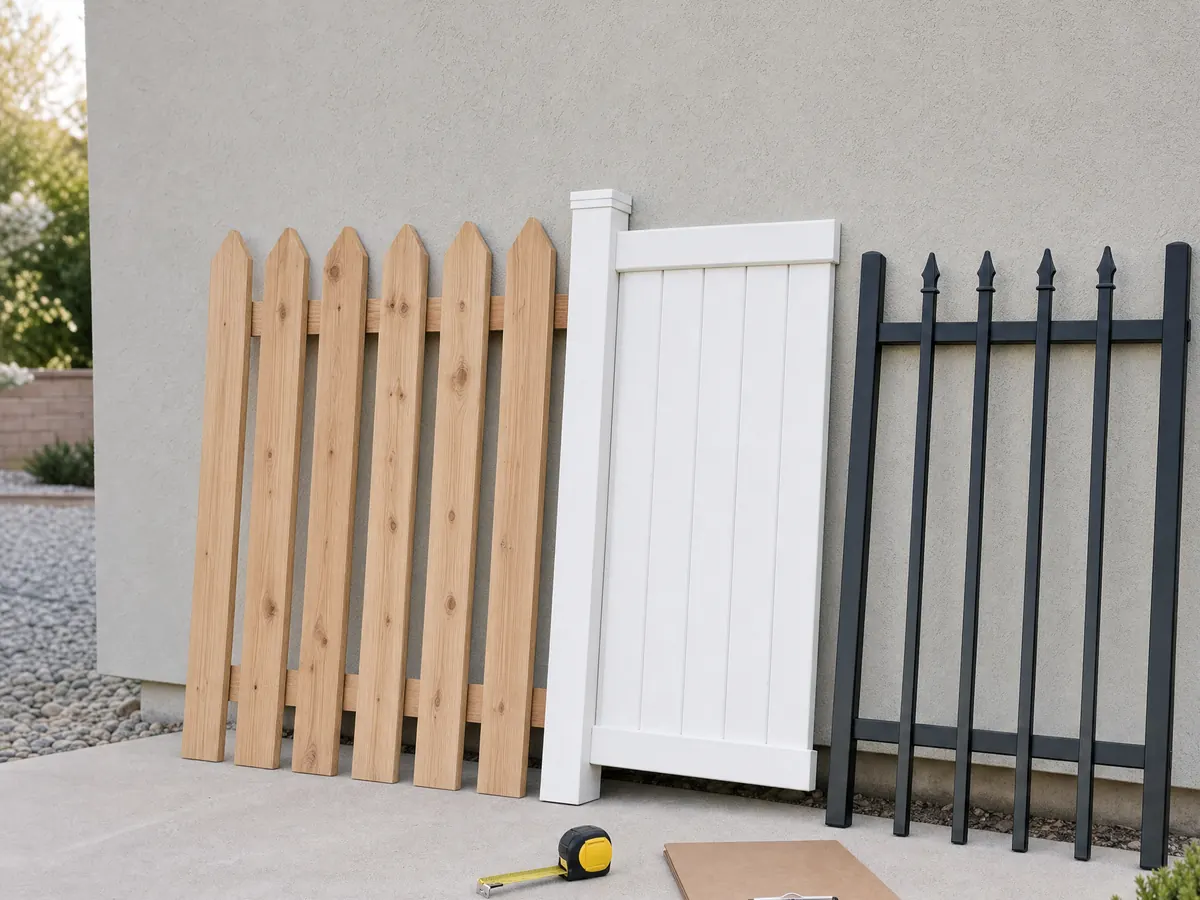
Fence photos from Walnut and nearby communities
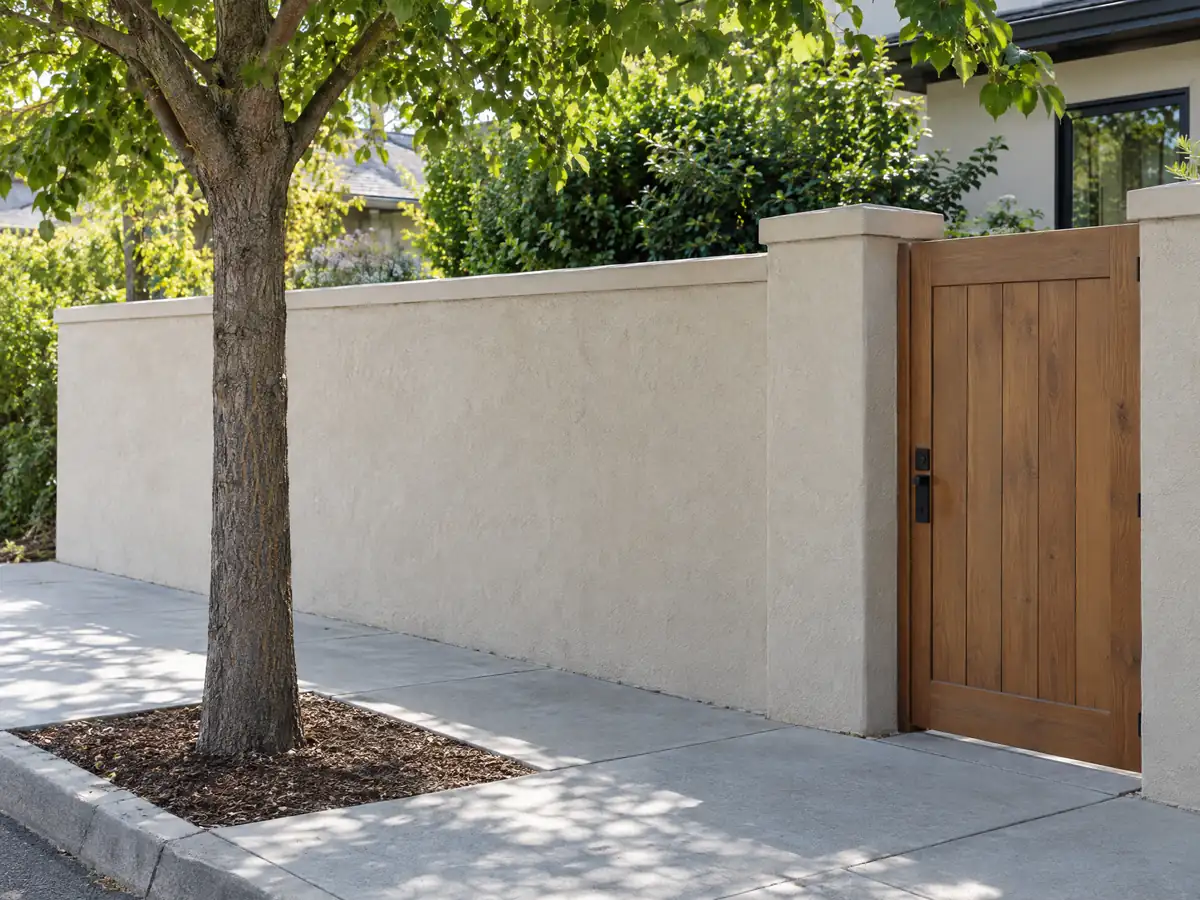
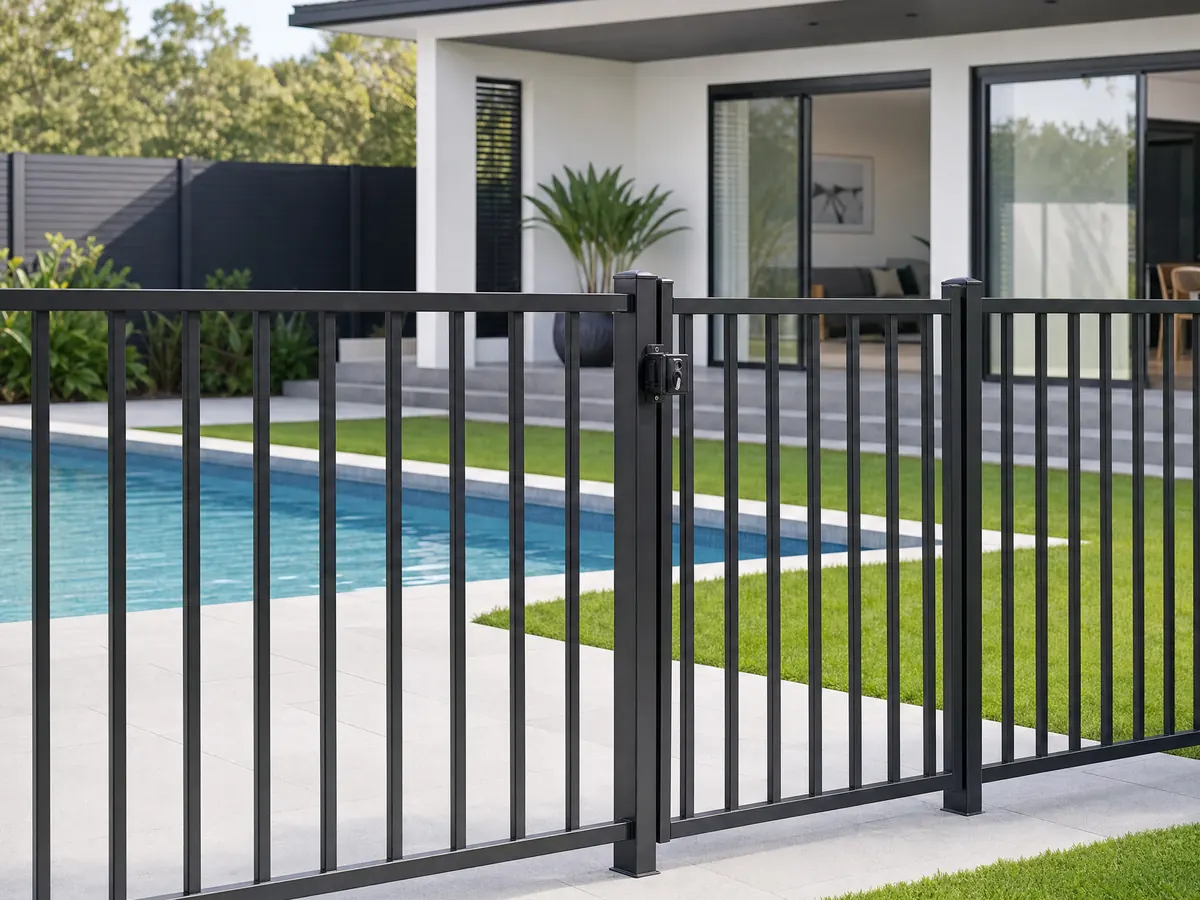
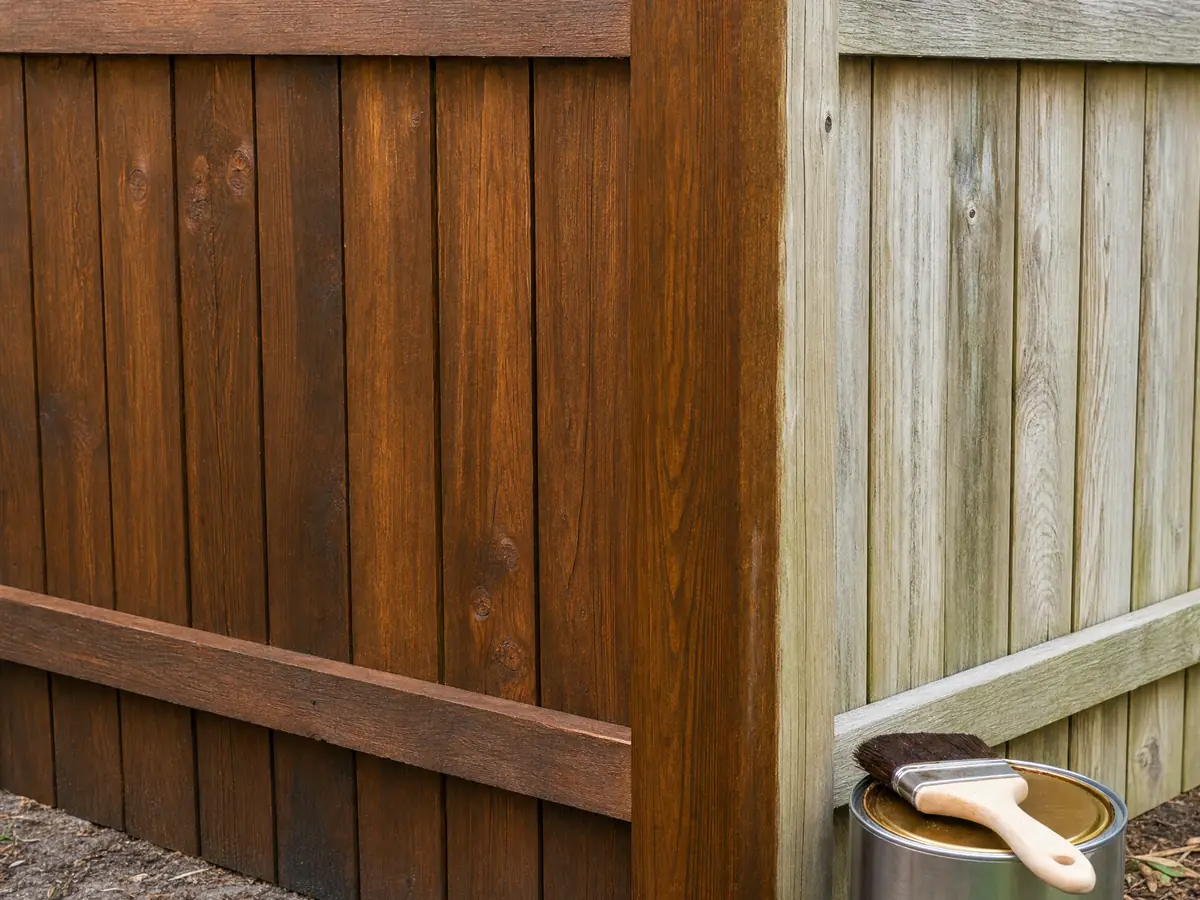
Seven fencing scenes tied to Walnut streets and to nearby places such as Diamond Bar, Rowland Heights and San Dimas, from open front fences to solid back runs, hillside steps and pool barriers.
Where these Walnut fence figures come from
The sources and dates behind each fence price are in the table on our fencing cost page, and how general contractors use subcontractors explains which trade builds which part. A fence often goes up alongside other work, and the Walnut rules for it are on the roofing page, the painting page and the kitchen remodeling page. To see a city with a different front yard limit, read the fencing guides for San Dimas and Glendale.
| What it covers | Typical range |
|---|---|
| Wood or vinyl privacy fence, 6 feet | $25 to $55 per linear foot |
| Chain-link | $12 to $30 per linear foot |
| Aluminum or ornamental iron | $35 to $85 per linear foot |
| Typical 100-foot backyard run | $2,500 to $5,500 total |
| Block walls, horizontal slat fences, gates and openers, hillside lots | Set by the written proposal |
Walnut fence questions, answered
How much does it cost to have 100 feet of fence installed in Walnut?
Roughly $2,100 to $5,500 depending on material. Angi's Los Angeles page shows $2,100 to $2,350 for 100 feet of the basic fence it prices, and our planning range for wood or vinyl privacy fencing is $25 to $55 per foot. Posts on a slope, gates, old fence removal and tree work all add to a measured written proposal.
Do I need a permit to build a fence in Walnut?
Ask before you build. The state model list exempts fences up to 7 feet and retaining walls up to 4 feet, but we did not read Walnut's own exemption list, and zoning limits still apply. Call Building and Safety, describe the height and any retaining wall, and get the answer in writing.
Can I put up a 7 foot fence in Walnut?
Not on an ordinary R-1 lot without approval. Walnut caps side and rear yard fences at 6 feet and front yard fences at 3 feet, and the Planning Commission may approve taller walls or fences through site plan and architectural review. The state's 7 foot building exemption does not override those zoning limits.
Can I put a privacy fence in my front yard in Walnut?
Not a solid one at the street. A front yard fence or wall in the R-1 zone is limited to 3 feet, and a corner lot must keep a 15 foot vision triangle clear with nothing above 42 inches. An open design or a trimmed hedge is the practical front-yard answer.
Does my neighbor have to pay for half the fence in California?
Usually the law presumes so. California Civil Code 841 treats a boundary fence as a shared expense and asks for 30 days written notice before you incur costs, but a neighbor can rebut the presumption. A fence built wholly inside your own lot is yours to fund, so settle the property line and the notice before the contractor starts.
Is it cheaper to install a wood or vinyl fence?
Wood usually costs less up front. Angi's national page lists wood at $10 to $45 per foot and vinyl at $15 to $40, while HomeGuide puts vinyl higher than wood at $30 to $60 against $20 to $50. The sources overlap, so the board style, height, posts and gates in your own proposal matter more than the material label.
What is the maximum height of a retaining wall without a permit in Walnut?
The state model list exempts retaining walls up to 4 feet from the bottom of the footing, unless they support a surcharge, but we did not read Walnut's own list. Walnut's grading rules add limits: no drainage blocked, and slopes over 30 feet need a Planning Commission exception. Confirm with Building and Safety first.
Can I build a fence near an oak tree in Walnut?
Only after checking the tree rules. Posts, footings and trenching inside the protected zone of a native oak or California Black Walnut count as damage or encroachment, roots over 1 inch need City approval to cut and footings must bridge roots. A tree permit review comes before the fence line is set.
What fence do I need around a pool in Walnut?
An enclosure, plus at least two of seven listed safety features on any new pool built under a construction permit. The list includes a barrier, a removable mesh fence meeting ASTM F2286 with a self-closing, self-latching gate, a safety cover, exit alarms and self-closing doors. Building and Safety confirms which two your plan uses.
Can I build a horse fence or corral in Walnut?
Only where the R-1 Rural Overlay applies, and only with approval. Pens, corrals and animal fences need development review board approval with a scaled site plan, animal housing must stand 35 feet from any habitable building, and the review fee is $25 or $5 for small animals. Ask Planning whether your lot is in the overlay.
Get a fence plan for your Walnut lot
Send the street, whether the fence is front, side or rear and whether you are on a corner or near an oak. We check the height limits and the tree rules before we call back.