
Fence Companyin Diamond Bar, CA
A fence company in Diamond Bar builds to 42 inches in front and street side yards and 6 feet in rear and interior side yards, with 30 inches for solid fences near corners. The City's pages disagree on permits: one lists fences among building permit work, another says only a $115.00 Zoning Clearance. Ask Building and Safety before ordering.
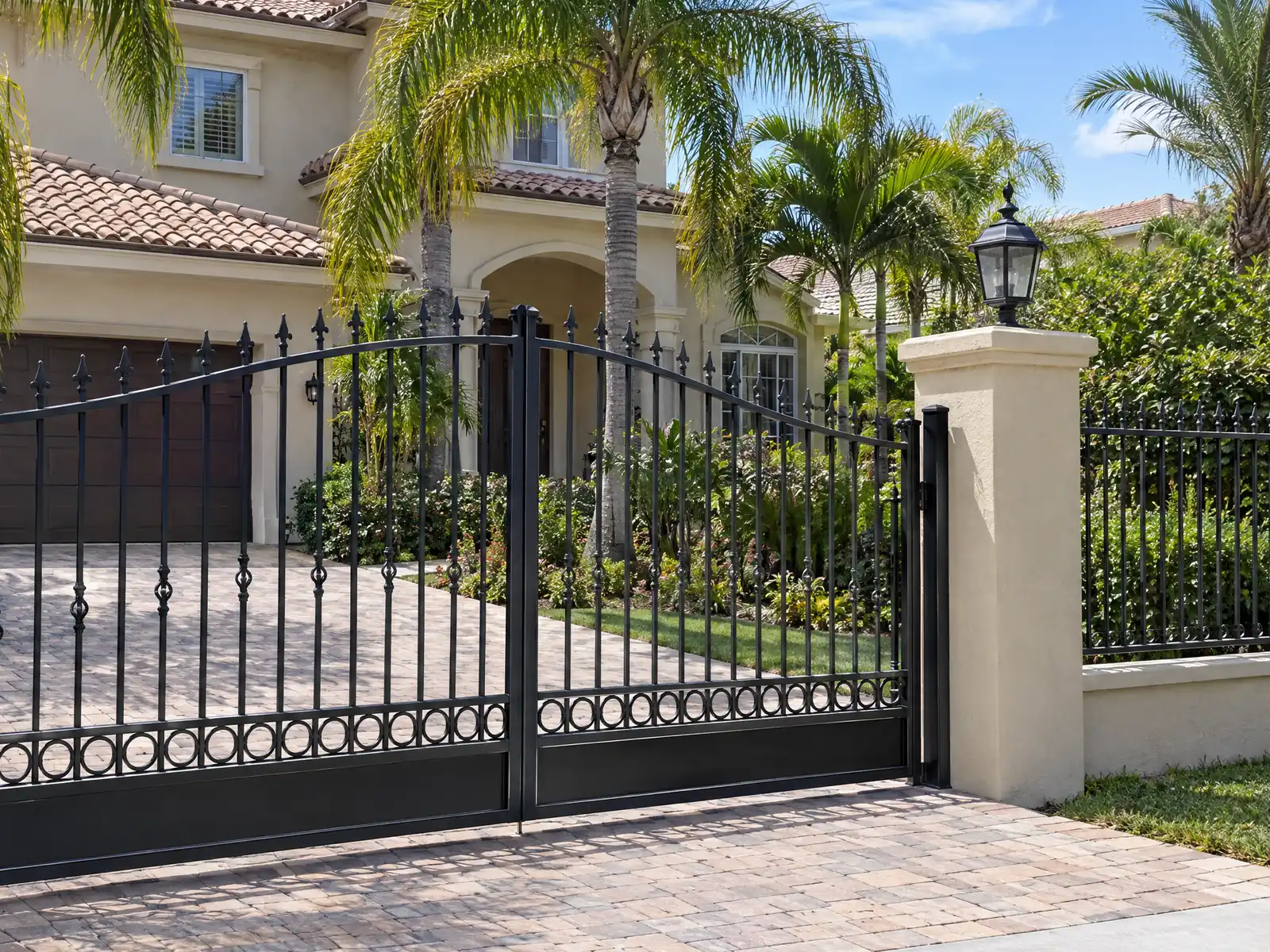
Fences in Diamond Bar are shaped by how the city was laid out. Christiana Oil and Capital Oil bought the old Diamond Bar Ranch in 1956 and planned a community in one piece, and the lots filled in during the 1960s, 1970s and 1980s. The ACS 2024 five-year tables count 18,969 homes, 69.7 percent of them detached houses, 12.2 percent attached and 10.1 percent in buildings of five or more units, so a fence here often stands beside a neighbor, a slope or a shared wall. Many lots sit on canyon hillsides, and the Development Code has a whole chapter on them.
The City's own pages do not agree on the permit question, and that is the first thing to settle. MDG Builders (CSLB #1040337) is the general contractor: we read the heights and the hillside chapter for your lot, ask the Building and Safety Division what applies, write the scope and schedule a licensed fencing subcontractor to build. Prices are on our fencing page, the Diamond Bar overview lists our other trades here, and Pomona next door has different limits.
What Diamond Bar's Development Code and building rules say about fences
Where fencing permits come from in Diamond Bar: City of Diamond Bar Community Development Department, Building and Safety Division.
- Municode 22.20.030 sets fence, hedge and wall heights at 42 inches in front and street side yards and 6 feet in rear and interior side yards (the director may approve up to 8 feet to enclose or screen areas at the rear of a parcel), and 30 inches if solid within the traffic safety sight area at intersections of streets, alleys and driveways (otherwise full height only if 75 percent open).
- The City FAQ says freestanding walls and fences in street-facing setbacks are limited to 42 inches and side and rear yards to 6 feet, masonry walls visible from the street must be decorative (split-faced block or stucco matching the home), chain link is prohibited in the front yard, and no building permit is required but an over-the-counter Zoning Clearance is, with a site plan and, for shared property lines, the neighbor's signature on the Fence, Wall & Hedges Signature form.
- The City's Building Permits page lists fences among the structures that need building permits, which differs from the FAQ's statement that no building permit is required, so confirm with Building and Safety at 909-839-7020; the FY 2026-27 Planning schedule charges $115.00 for the Zoning Clearance (Tier 1) that covers fences and walls.
- Barbed wire and razor wire are prohibited in any fence or wall, and chain link is not allowed on residentially zoned property in a required yard adjacent to a street (Municode 22.20.080).
- Retaining walls may not exceed 6 feet measured from finished grade at the base (the director may approve 1 more foot for topography); a retaining wall protecting a cut may be topped by a fence of the height otherwise allowed, an open-work safety fence of up to 42 inches may top any retaining wall, and a wall or fence next to a fill retaining wall must be set back 1 foot for each foot of height (22.20.040).
- Retaining walls up to 42 inches are exempt from setback requirements and up to 6 feet may sit in a required setback if the exposed face faces into the parcel (22.16.090(3)(e)(7)); on a reverse corner lot, fences over 42 inches up to 6 feet follow the Table 2-4 setbacks, which the director may reduce from 10 to 5 feet if sight lines stay clear (22.16.090(3)(e)(8)).
- Where adjacent parcels differ in grade by less than 2 feet the fence height is measured from the finished grade on the higher parcel, the director decides when the difference is 2 feet or more, and height may vary 6 inches as long as the average stays within the maximum (22.20.050).
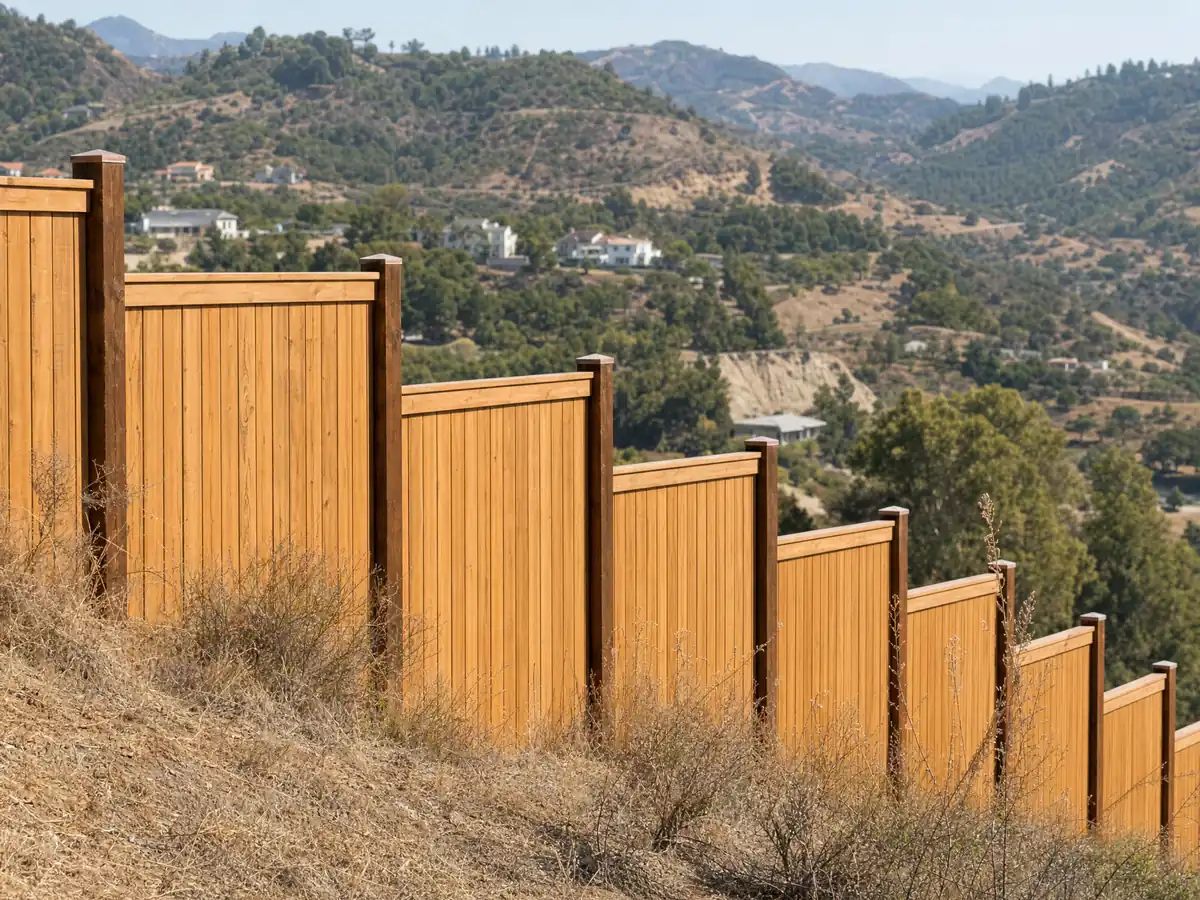
- In hillside areas, walls and fences up to 6 feet visible from roadways or public rights-of-way must be visually open and non-opaque (the director may waive this for noise-impacted sites), while privacy walls up to 6 feet are allowed next to structures in materials and colors compatible with the home (22.22.130).
How tall can a fence be in a Diamond Bar front yard, side yard or backyard?
Municipal Code 22.20.030 sets the numbers. Fences, hedges and walls may be 42 inches in front yards and street side yards, and 6 feet in rear and interior side yards. The director may approve up to 8 feet to enclose or screen areas at the rear of a parcel. Within the traffic safety sight area at an intersection of streets, alleys and driveways, a solid fence is held to 30 inches, and a fence may stand full height only if it is 75 percent open.
Material rules matter in the front. The City's planning FAQ says chain link is prohibited in the front yard, and Municipal Code 22.20.080 bars chain link in any required yard next to a street. A masonry wall visible from the street must be decorative, meaning split-faced block or stucco that matches the house. Barbed wire and razor wire are prohibited in any fence or wall.
A corner lot with a reverse corner has its own setback test, so give the surveyor and the planner the corner before you pick a style.
Front and street side: 42 inches. Rear and interior side: 6 feet. Sight corners: 30 inches if solid.
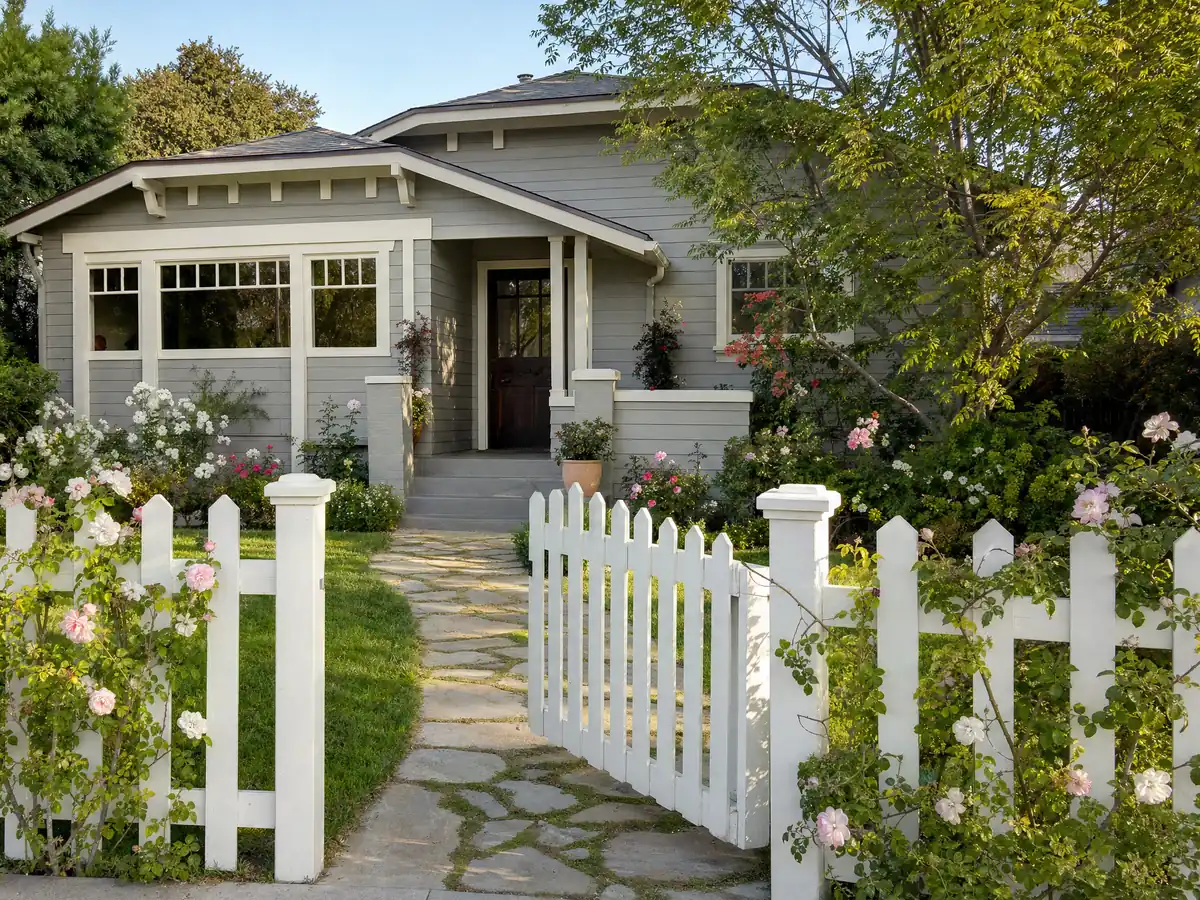
Does a Diamond Bar fence need a building permit, or only a Zoning Clearance?
The City answers twice. Its Building Permits page lists fences among the structures that need building permits, with no exemptions listed. The planning FAQ says a freestanding fence or wall needs no building permit, only an over-the-counter Zoning Clearance with a site plan and, on a shared property line, the neighbor's signature on the Fence, Wall and Hedges Signature form. The 2026-27 schedule prices that Zoning Clearance at $115.00. We cannot choose between the two readings, so call 909-839-7020 with the height and material.
The base California Building Code list of permit-exempt work was blocked to our tools, and we never call a fence exempt. The City's own amendment restates a short list, including retaining walls up to 3 feet from the bottom of the footing to the top of the wall that carry no surcharge. Permit and plan check for work done without a permit are charged at double fees, so ask first.
Pools are a separate case. Municipal Code 22.20.070 says pools and spas must be fenced under the building code, and Health and Safety Code 115922 requires at least two of seven drowning-prevention features when a permit issues for a new or remodeled pool. We did not read the barrier height in section 115923, so we print none.
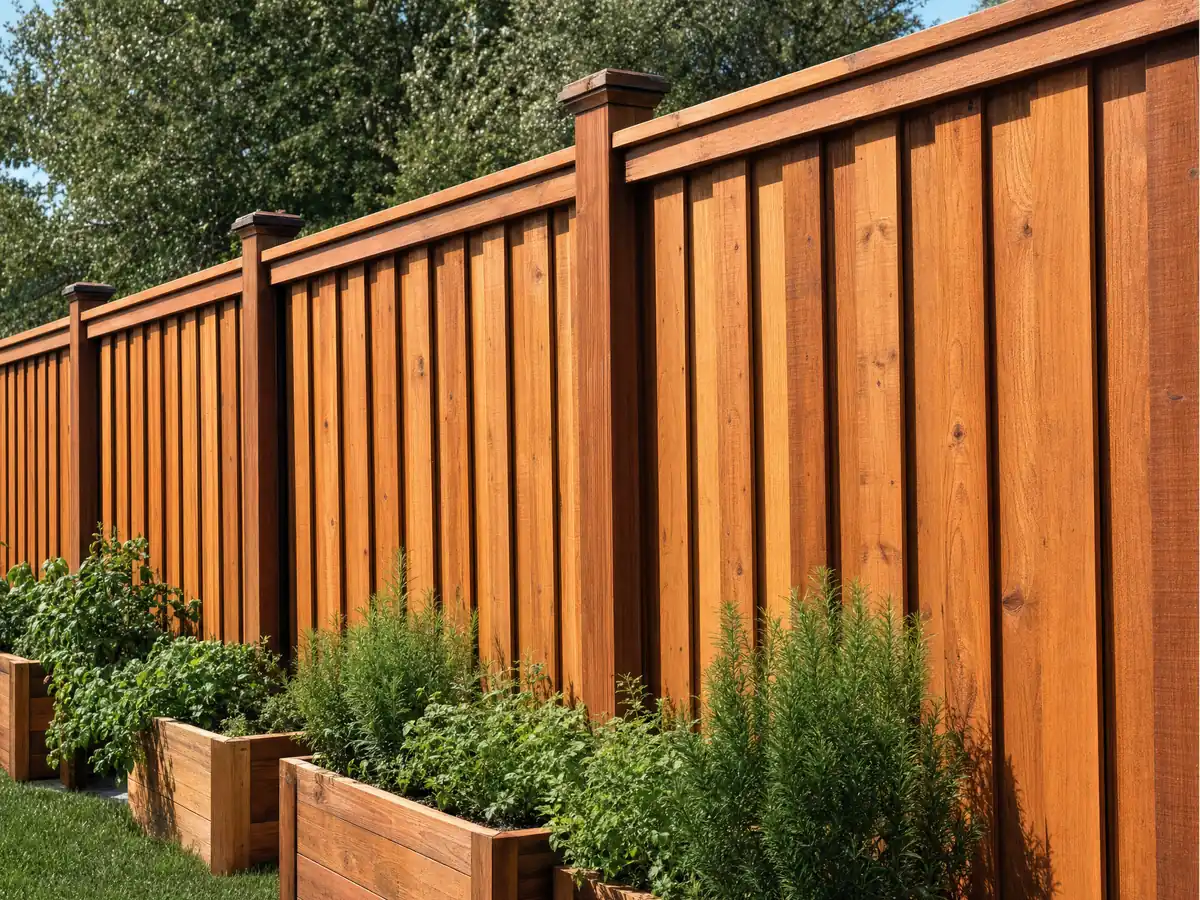
What are the fence and retaining wall rules on a Diamond Bar hillside lot?
In areas under the hillside chapter, a wall or fence up to 6 feet that can be seen from a road or public right-of-way must be visually open and non-opaque, though the director may waive that for noise-impacted sites. Privacy walls up to 6 feet are allowed next to structures in materials and colors compatible with the house (22.22.130). We did not open the City's steep slope map or zoning map, so we name no street. Planning at 909-839-7030 can say whether your lot is covered.
Retaining walls have their own caps under 22.20.040. A wall may not exceed 6 feet measured from finished grade at its base, with one more foot allowed by the director for topography. A wall protecting a cut may carry a fence of the height otherwise allowed, an open-work safety fence of up to 42 inches may top any retaining wall, and a fence beside a fill retaining wall must be set back one foot for each foot of height.
Grading starts earlier than most people expect. Public Works requires approval and a permit for grading of 51 cubic yards or more, and the fee schedule lists a $2,500 deposit for geotechnical and geological reports on grading and construction in a Restricted Use Area, which the General Plan says are usually back slopes in the subdivisions of The Country.
Do flood zones, protected trees or expansive soil limit a fence in Diamond Bar?
Three local layers sit under the fence line. City Building Code section 1612.5 bars structures, walls and fences included, in areas the City Engineer finds subject to flood hazard unless an engineered solution is provided. The General Plan places the only FEMA 100-year flood zone inside city limits near Brea Canyon Road and Lycoming Street along the Reed Canyon Channel. The County flood layer returned 0 of 420 sample points, but a point grid would miss a channel that narrow.
Native oak, walnut, sycamore and willow trees 8 inches or more across at breast height are protected under chapter 22.38, and removing, relocating or heavily pruning one takes a tree permit, listed at $1,388.00 plus a $2,500.00 deposit. Native trees on lots of one-half acre or less are exempt. Post holes near roots count as work in the protection zone, so mark the trees before the auger arrives.
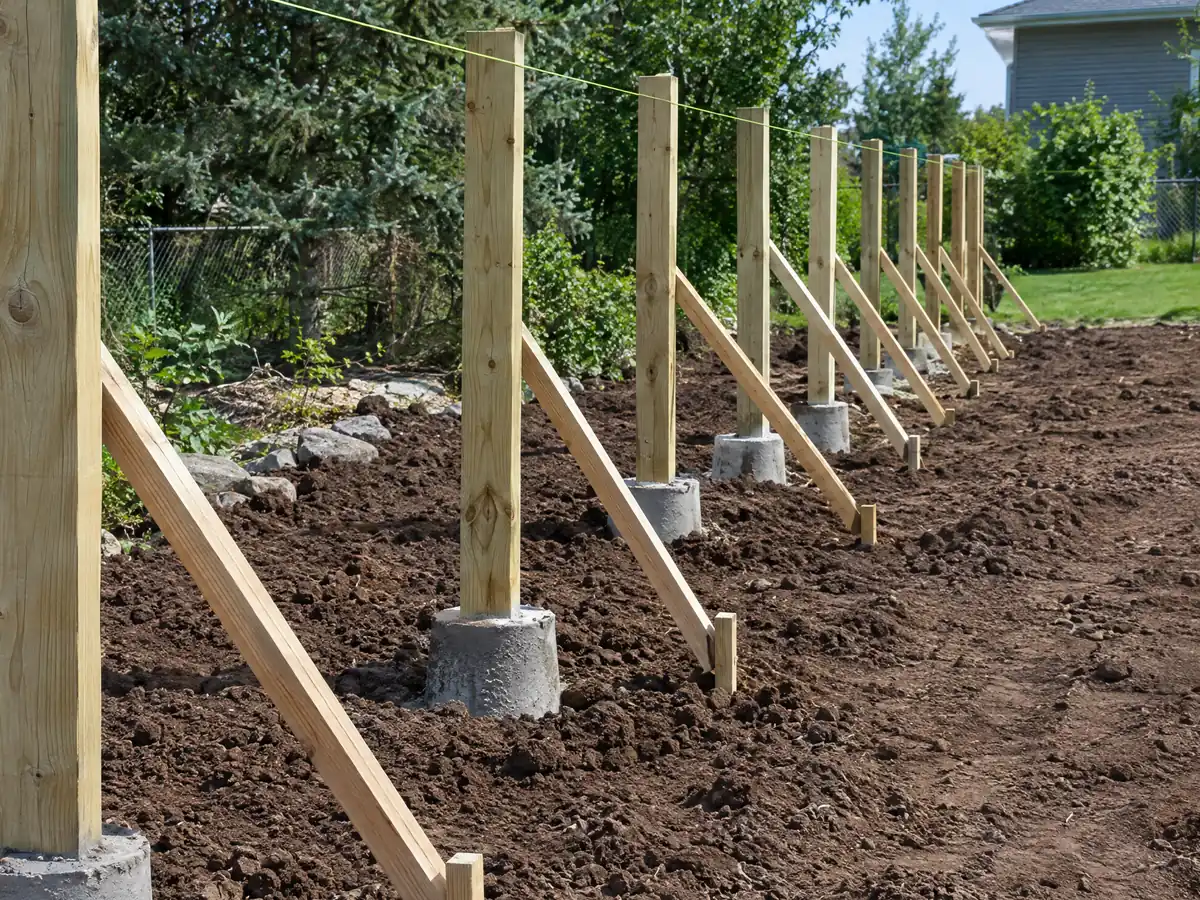
The City's Residential Code amendment treats foundations as sitting on expansive soil unless a geotechnical engineer says otherwise, and the General Plan calls expansive soil pervasive. That rule is written for foundations, not fences, so ask each bidder how deep the posts go and what holds them.
Who pays for a shared fence in Diamond Bar, and what do planned communities add?
California Civil Code 841 presumes that adjoining owners share equally the reasonable cost of a fence on their common line unless they agreed otherwise, and a neighbor can try to rebut it. Give each affected neighbor 30 days' written notice before incurring cost, with the problem, the proposed fix, the estimate and a cost-sharing proposal. Section 841.4 treats a fence built unnecessarily more than 10 feet high to annoy a neighbor as a private nuisance.
Two Diamond Bar rules shape the boundary. Under 22.20.050, where adjacent parcels differ in grade by less than 2 feet, fence height is measured from the finished grade on the higher parcel, and the director decides when the difference is 2 feet or more. Solid 6 foot masonry walls are required on a boundary between a non-residential and a residential district and between a multifamily and a single-family zone.
A city planned as tracts and communities from the 1950s on often carries private rules too, which we could not read for any street. California Civil Code 4765 asks associations to follow a reasonable procedure and give written decisions, so ask your board for one before the fence is ordered.
How much does fence installation cost in Diamond Bar, and which material lasts?
No survey prices Diamond Bar fences, so we use Los Angeles benchmarks from Angi, HomeGuide, Thumbtack and Fixr. Our planning ranges are about $25 to $55 per linear foot for a 6 foot wood or vinyl privacy fence, $12 to $30 for chain link where it is allowed and $35 to $85 for aluminum or ornamental iron, which puts a 100 foot backyard run near $2,500 to $5,500. Add the $115.00 Zoning Clearance and any permit. The Bureau of Labor Statistics reports a mean $28.00 an hour for fence erectors in the Los Angeles metro for May 2025, which is wages, not a bill.
Block walls, horizontal slat designs, gates with openers and hillside runs have no independent price, so a measured written proposal sets them.
Wood is the common choice. The University of California's pest program reports that drywood termites are most prevalent in southern California and infest fences, so ask whether posts are termite-resistant or set on concrete. The National Weather Service office for Los Angeles forecast foothill gusts of 50 to 70 miles per hour in October 2026, so ask how solid panels are braced.
How do I hire a fence company in Diamond Bar for fence installation?
Fences are CSLB class C-13, which excludes masonry walls; those belong to C-29 Masonry. Check the number in the CSLB record using our contractor license guide. California limits unlicensed work to $1,000 for labor and materials, and not at all when a permit is required, so a permitted fence is never a handyman job.
On an MDG project the fence builder is a separate subcontractor, and you can ask for its license number and certificate of insurance before you sign; how general contractors use subcontractors explains the split. Business and Professions Code 7159 requires a written contract and limits the deposit to $1,000 or 10 percent, whichever is less. A good fence proposal answers:
- Which fence height and type, measured in linear feet for each run
- Who files the Zoning Clearance or permit and who sends the neighbor notice
- Post depth, footing type and whether panels are solid or slatted
- Gates, hardware, old fence removal and haul-away on separate lines
- Start and finish dates and what rain does to them
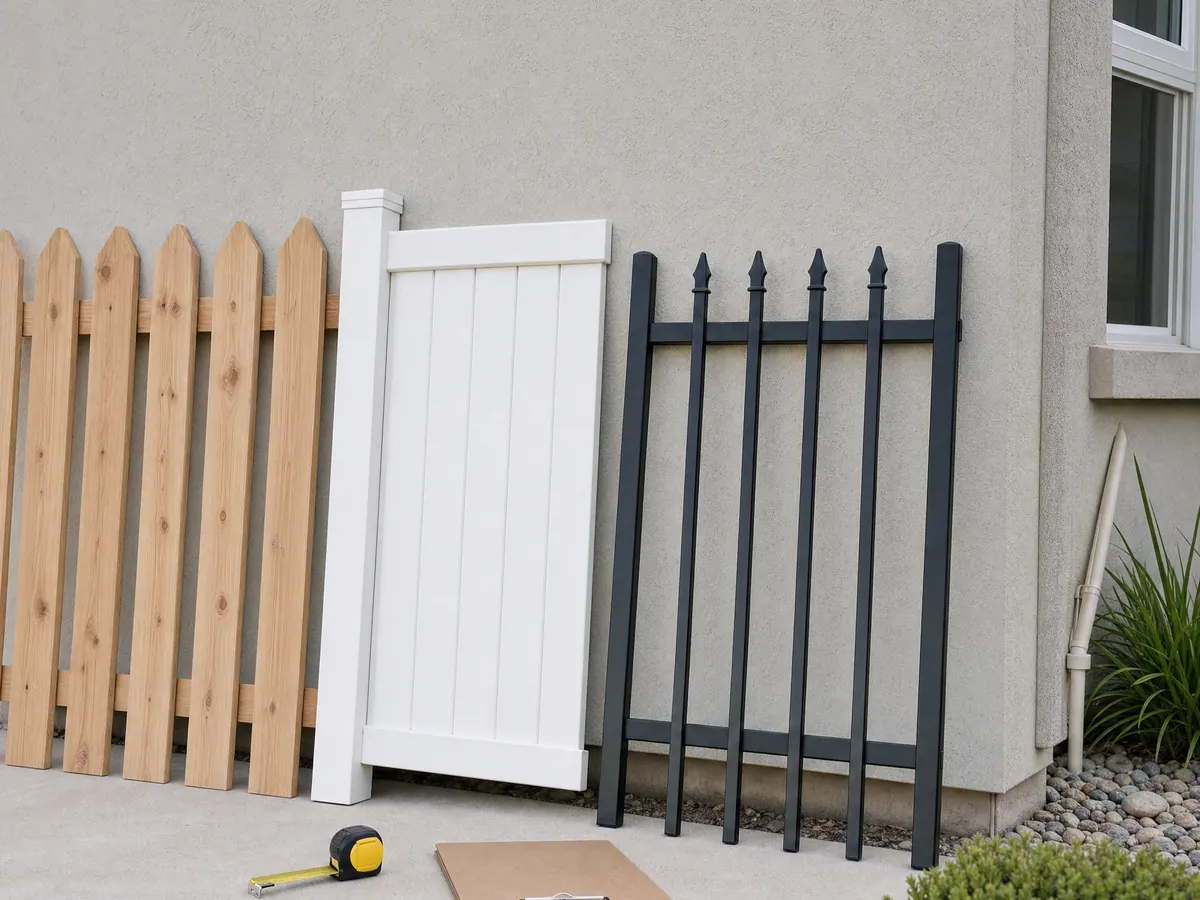
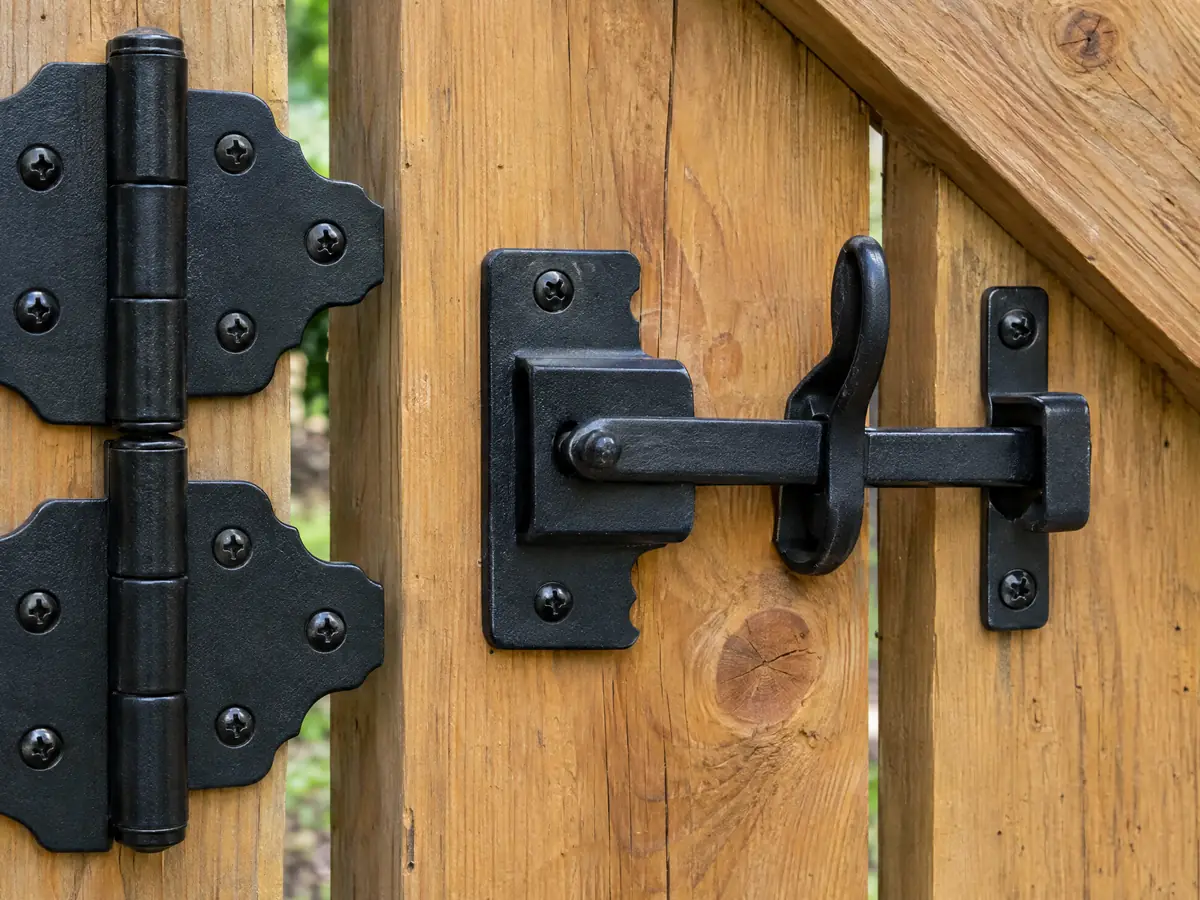
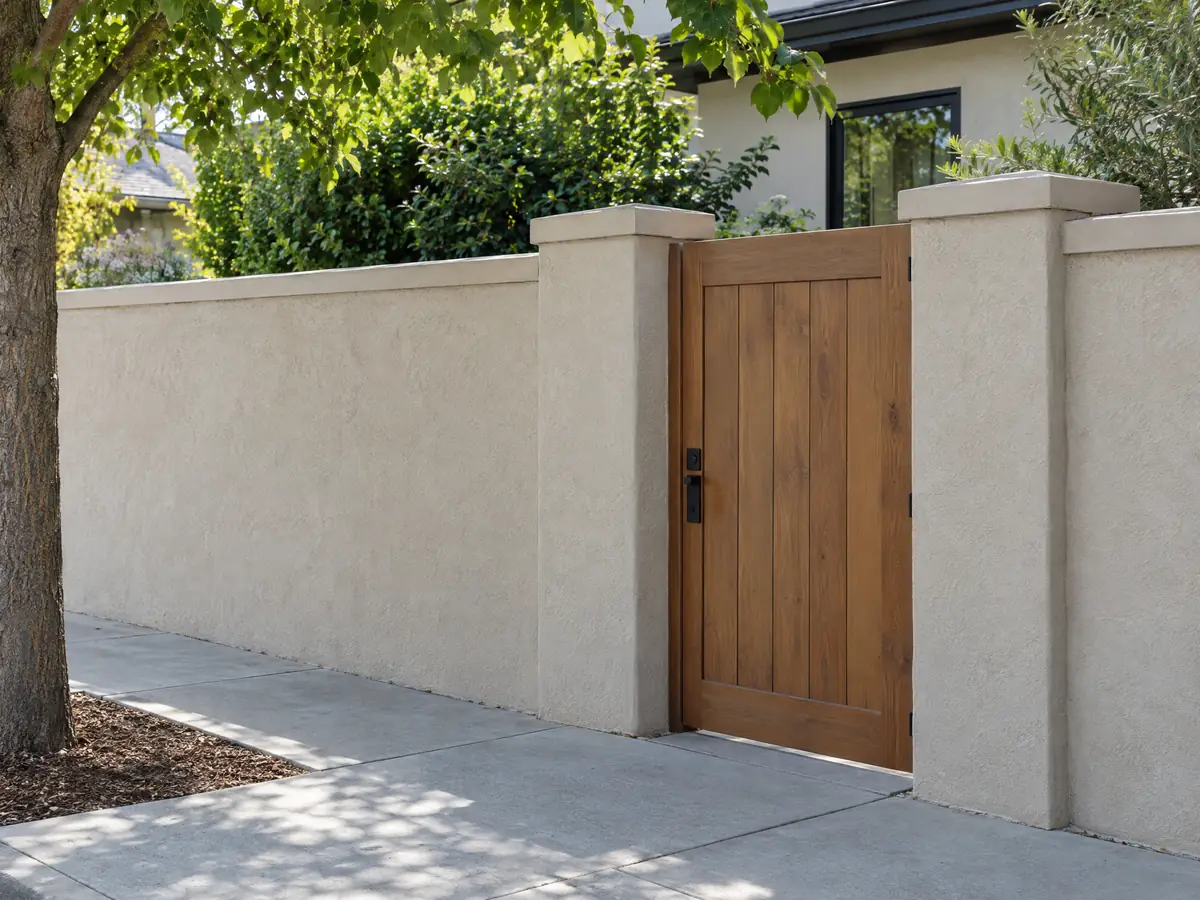
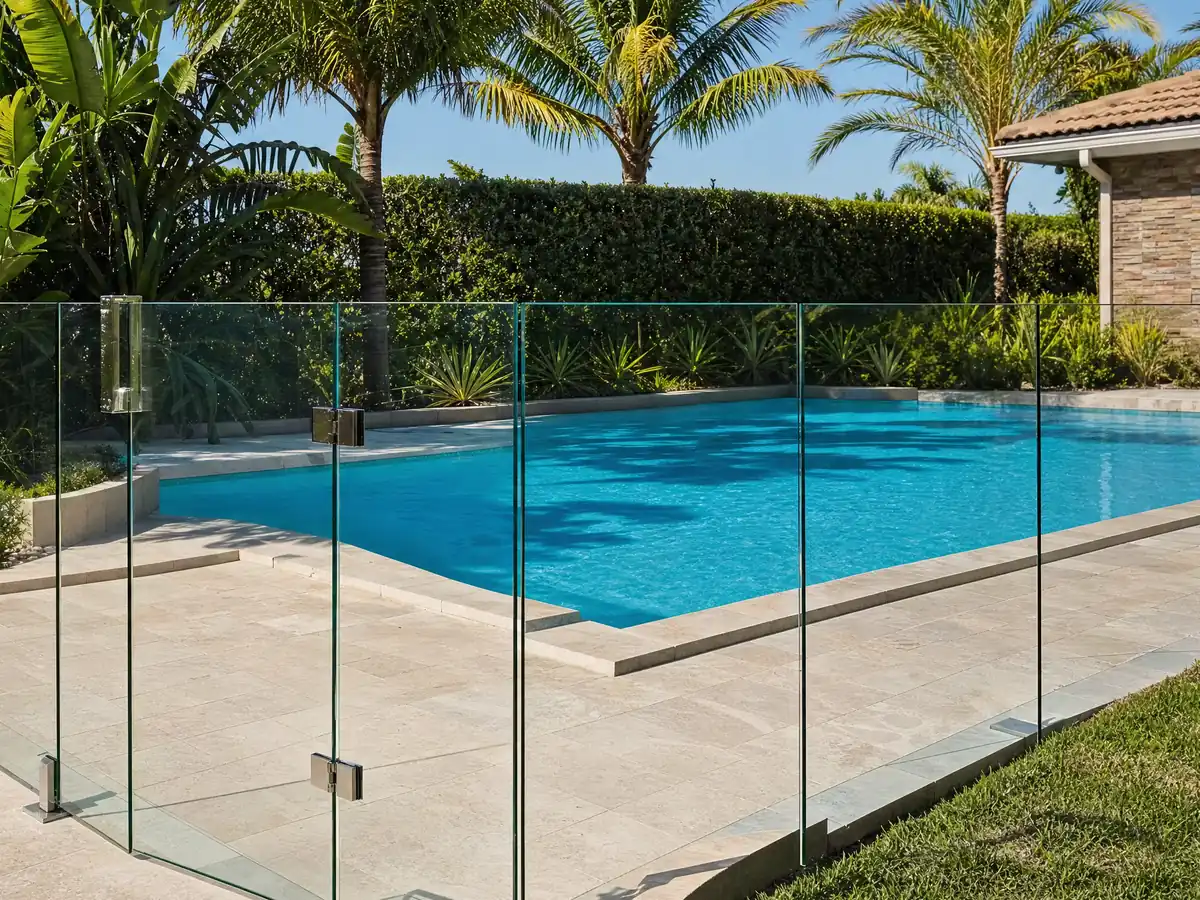
Fence and gate photos from Diamond Bar and nearby communities
Six fence scenes tied to Diamond Bar neighborhoods and to nearby communities such as Walnut and Chino Hills, from wood privacy runs to stepped hillside panels.
Where the fence numbers come from
Every per-foot figure on this page is a Los Angeles benchmark with its source named in the table on the fencing cost page, and permit or clearance fees are extra. Diamond Bar's sister guides cover the roofing rules, the painting rules and the kitchen remodeling rules, and other cities set different heights, as West Covina and Glendale show.
| What it covers | Typical range |
|---|---|
| Wood or vinyl privacy fence, 6 feet | $25 to $55 per linear foot |
| Chain-link | $12 to $30 per linear foot |
| Aluminum or ornamental iron | $35 to $85 per linear foot |
| Typical 100-foot backyard run | $2,500 to $5,500 total |
| Block walls, horizontal slat fences, gates and openers, hillside lots | Set by the written proposal |
Other work we manage in Diamond Bar
Diamond Bar fence questions, answered
Do I need a permit to build a fence in Diamond Bar?
The City says both things. Its Building Permits page lists fences among structures needing building permits, while its planning FAQ says no building permit, only a $115.00 Zoning Clearance. We cannot reconcile them and never call a fence exempt, so phone Building and Safety at 909-839-7020 with your height and material before you order.
How tall can my front fence be in Diamond Bar?
Forty-two inches in the front yard and the street side yard, under Municipal Code 22.20.030. Near an intersection a solid fence is held to 30 inches in the sight area, and a taller fence there must be 75 percent open. Chain link is not allowed in a required yard next to a street.
Can I put up a 7ft fence in Diamond Bar?
Not as a matter of course. The limit in rear and interior side yards is 6 feet, and the director may approve up to 8 feet to enclose or screen areas at the rear of a parcel. Ask for that approval in writing, and ask Building and Safety whether a permit also applies.
Can I put a privacy fence up in my front yard?
Only a low one. Front yards are limited to 42 inches, so a 6 foot solid privacy fence is not allowed there, and a fence in the street-facing setback cannot be chain link. A masonry wall that shows from the street must be decorative, and hillside lots add a visually open rule.
What is the maximum height of a retaining wall without a permit in Diamond Bar?
The City's amendment restates an exemption for retaining walls up to 3 feet from the bottom of the footing to the top of the wall, with no surcharge. Taller walls fall outside that exemption, and zoning caps a wall at 6 feet from finished grade, plus a possible foot for topography.
How much does it cost to have 100 feet of fence installed?
Our Los Angeles planning range for a 6 foot wood or vinyl privacy fence is $25 to $55 per linear foot, which puts 100 feet near $2,500 to $5,500. That rests on Angi, HomeGuide, Thumbtack and Fixr. Gates, removal of an old fence, hillside work and the $115.00 Zoning Clearance come extra.
Does my neighbor have to pay for half the fence in California?
Usually the law presumes so. Civil Code 841 treats adjoining owners as equal sharers of a reasonable fence on their line unless they agreed otherwise, and a neighbor may rebut it. Send 30 days' written notice before spending money, and keep proof of delivery. Diamond Bar also asks for the neighbor's signature on shared-line clearances.
What happens if I don't get a permit for a fence in Diamond Bar?
The fee schedule says permit and plan check for work done without a permit are charged at double fees. We could not read a stop-work or fine schedule, so we quote none. Given that the City's pages differ, call Building and Safety first and keep the answer in writing.
Is it cheaper to install a wood or vinyl fence?
Wood is usually cheaper up front. On Angi's Los Angeles page a typical wood job runs $1,600 to $2,500 against $1,850 to $3,400 for vinyl, and HomeGuide quotes $20 to $50 per foot for wood and $30 to $60 for vinyl. Vinyl avoids termites, while wood can be restained and repaired by section.
How do I choose a fence company in Diamond Bar?
Look up the CSLB record first: fences are class C-13, and masonry walls are a different class. Ask for the written contract Business and Professions Code 7159 requires, proof of insurance, and who files the Zoning Clearance and sends the neighbor notice. A fence that needs a permit is never covered by the unlicensed-work limit.
Plan your fence project in Diamond Bar
Send the address, the footage you want to enclose and whether any run is front yard, hillside or beside a pool. We check the height, hillside and flood questions before we call you back.