
Kitchen Remodelingin Pomona, CA
Kitchen remodeling in Pomona needs no building permit for cabinets, counters, paint and flooring, but moving a sink, range or wall does, because plumbing, gas and electrical changes are not exempt. A kitchen renovation in one of the six historic districts adds Planning review, and every remodel must meet the 50 percent waste recycling rule.
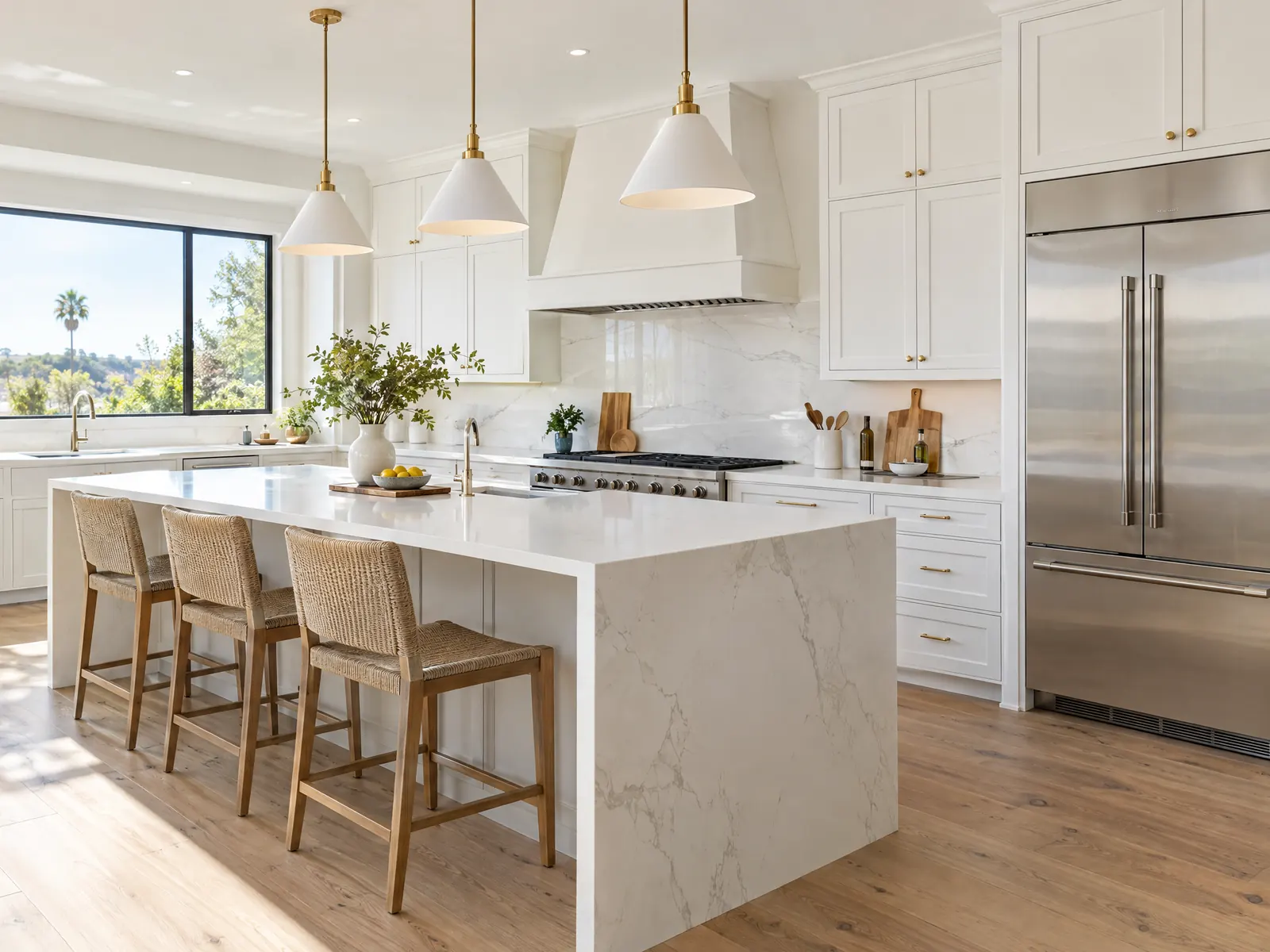
Pomona kitchens belong to very different houses. The city was incorporated in 1888, and the Census Bureau's 2024 estimates put about 11.8 percent of its 44,805 housing units at 1939 or earlier, about 21.9 percent in the 1950s and about 65.7 percent before 1980. The median owner-occupied home is valued at $636,700, and 47.9 percent of occupied units are rented, so the kitchen in question may belong to a landlord. These are one-year estimates with wide margins, so read them as rough.
A kitchen job here is mostly about what the house has already done: old wiring, old pipes, a wall that may or may not carry the roof. MDG Builders (CSLB #1040337) draws the plan, handles the permit and keeps the calendar as general contractor, while licensed electricians, plumbers, cabinet installers and stone fabricators do the hands-on work. Costs and the build sequence are on our kitchen remodeling page, and the Pomona overview lists the other trades we manage here.
What Pomona's codes say about kitchen work
Where kitchen remodeling permits come from in Pomona: City of Pomona Development Services Department, Building and Safety Division.
- Cabinets, counter tops, painting and flooring are on the state permit-exempt list, but moving or replacing plumbing, gas and electrical in a kitchen is not. The exempt plumbing items are limited to stopping leaks, clearing stoppages and reinstalling water closets, and the exempt electrical items are minor (listed temporary lighting, receptacle reinstallation, like-for-like branch circuit breaker replacement, equipment under 25 volts), so a layout change needs a Pomona building permit. Pomona's 50 percent construction waste diversion rule also applies to remodels.
Sources for these rules
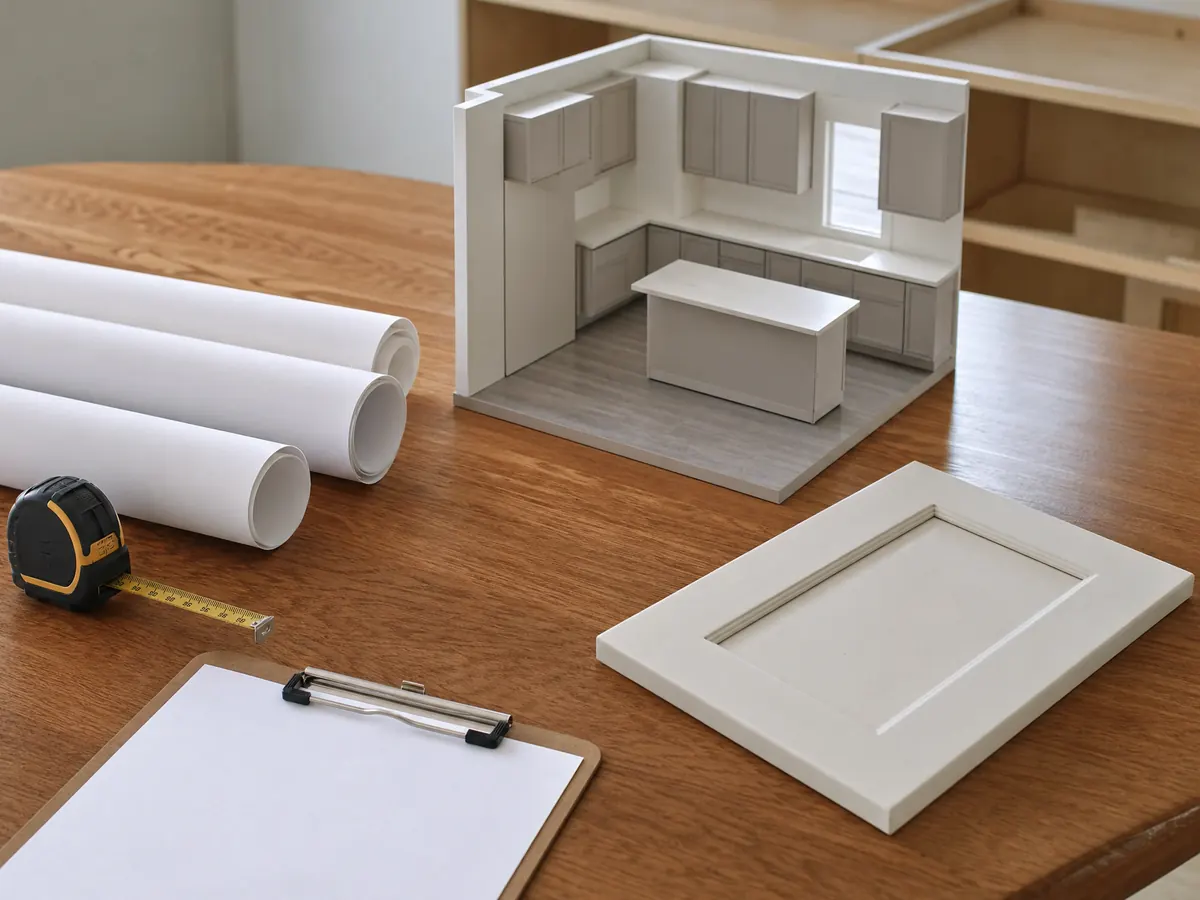
Do you need a permit for a kitchen remodel in Pomona?
For finish work, no; for a new layout, yes. Cabinets, counter tops, painting and flooring are on the state's permit-exempt list (R105.2), and Pomona's Article II adopts the 2025 California codes without a local change to that list. Moving or replacing plumbing, gas or electrical lines is not exempt.
The exemptions for those trades are narrow. The plumbing items cover stopping leaks, clearing stoppages and reinstalling water closets, and the electrical items cover minor things such as receptacle reinstallation and like-for-like breaker replacement. A new range circuit, a relocated sink or a gas line to an island therefore needs a permit from Building and Safety.
Pomona publishes no permit fee in its code text, because fees are set by council resolution, and the City's website refused our requests, so we print no fee, plan-check time or counter requirement. Ask for the fee as its own line in the proposal. Our guide to kitchen remodel permits covers Los Angeles, but it shows how a permit file moves from application to final.
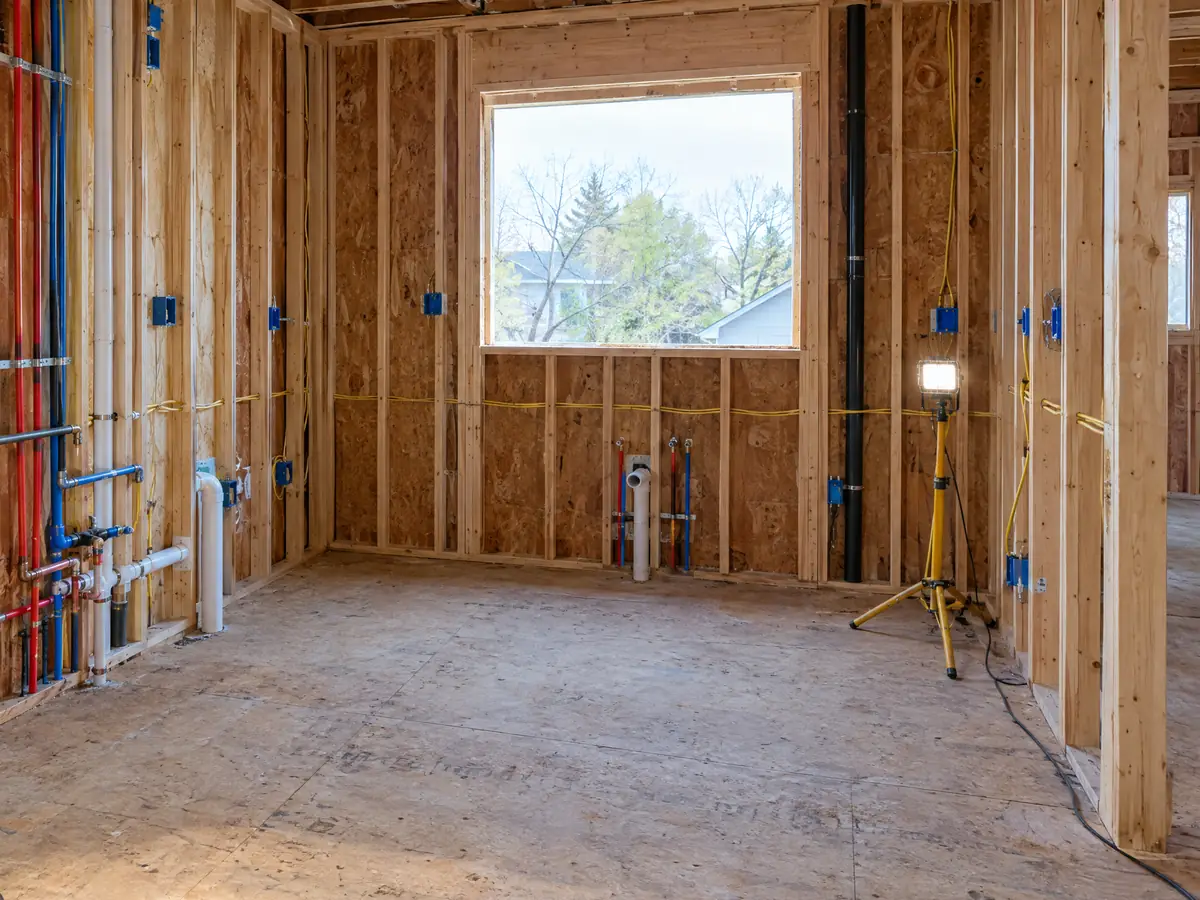
What does a Pomona kitchen hide behind the walls, by era?
It depends on the decade. About 17.9 percent of Pomona's units date from before 1950 and about 39.8 percent from before 1960, which puts a large share of the city's kitchens in houses where the original wiring and pipes have either been replaced once or are still in the walls. Demolition is partly an investigation, and the sink base and the range wall are where it usually pays off.
Ask for the unknowns in writing before the walls open: what happens if the electrician finds an undersized panel or wiring that cannot feed new appliance circuits, if the plumber finds old supply or drain pipe that will not take a clean connection, or if the wallboard tests positive for lead paint. Those are pricing questions to settle with a unit price or an allowance, not surprises for week two.
Lead is the one with a federal rule. A paid remodeler disturbing paint in a house built before 1978 must be EPA lead-safe certified, which reaches many of the 65.7 percent of Pomona units built before 1980. EPA's contractor page explains the rule.
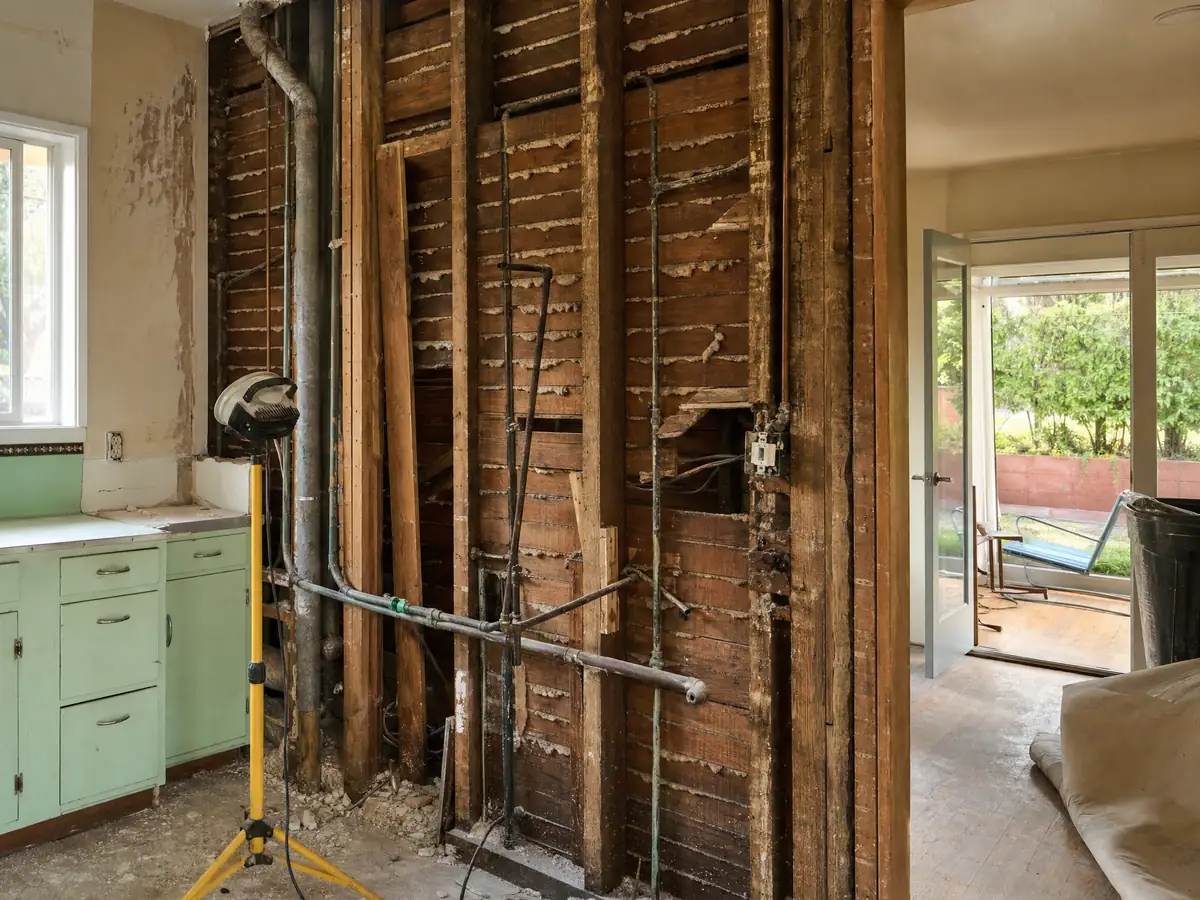
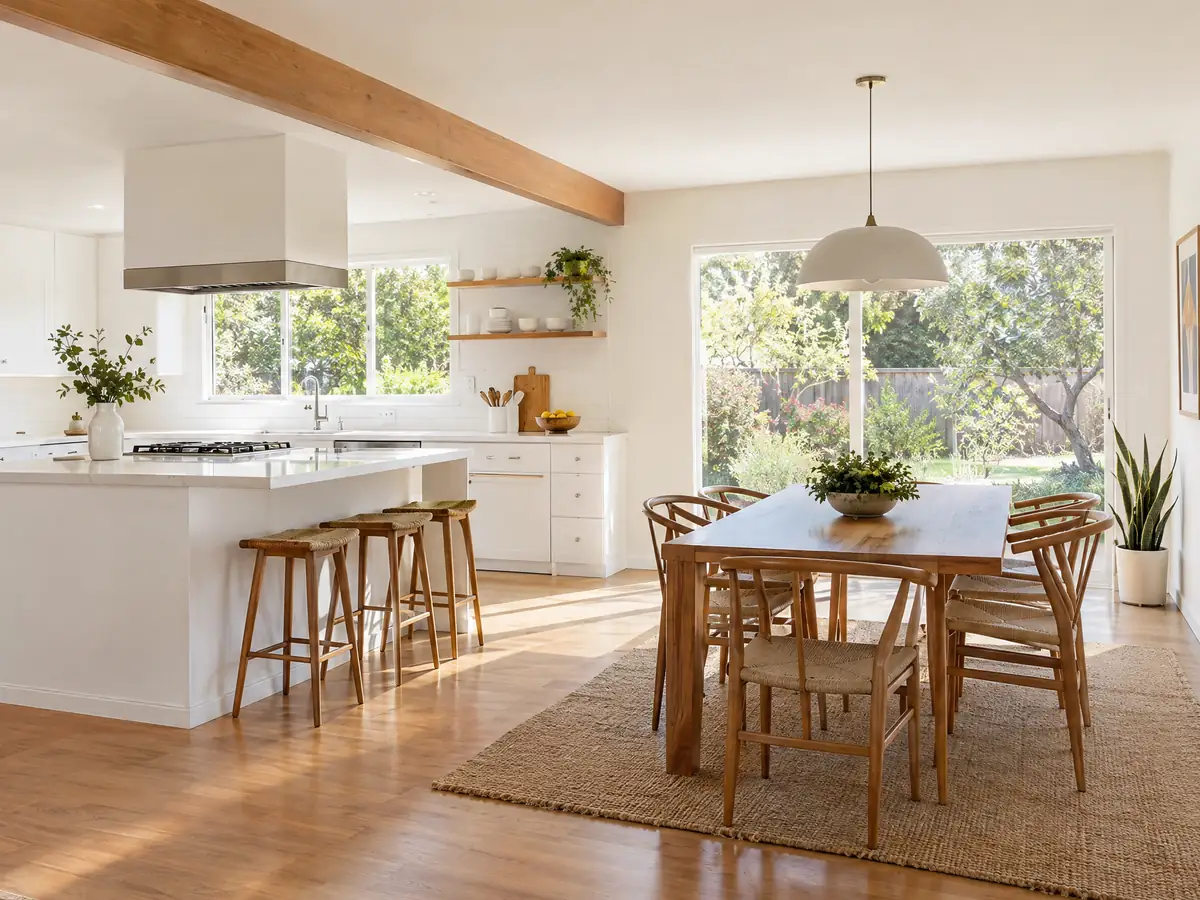
Opening a 1950s Pomona ranch kitchen to the living room
Pomona's freeway-era tract homes are the likeliest candidates. A 2012 historic resources report quoted in Metro's 2020 cultural resources appendix says farmland was converted to tract housing after World War II, that the 1954 opening of Interstate 10 attracted middle-class commuters to central Los Angeles, and that a branch of Cal Poly opened on the Kellogg Ranch in 1956. The city grew 89.7 percent in the 1950s, to 67,157 people by 1960.
A closed kitchen with a wall to the living room is the usual starting point for that request. Whether the wall is bearing is a structural question, answered in the attic and the crawlspace and not by knocking. Taking out a bearing wall means a beam, an engineer's calculation and a building permit, since structural work is outside the exempt list. We found no Pomona handout on kitchen plan check, so ask the department whether your scope goes to counter review or full plan check.
Settle who pays for the beam and the engineer in the proposal, before the wall comes down.
Kitchen renovation in a Pomona historic district: what gets reviewed?
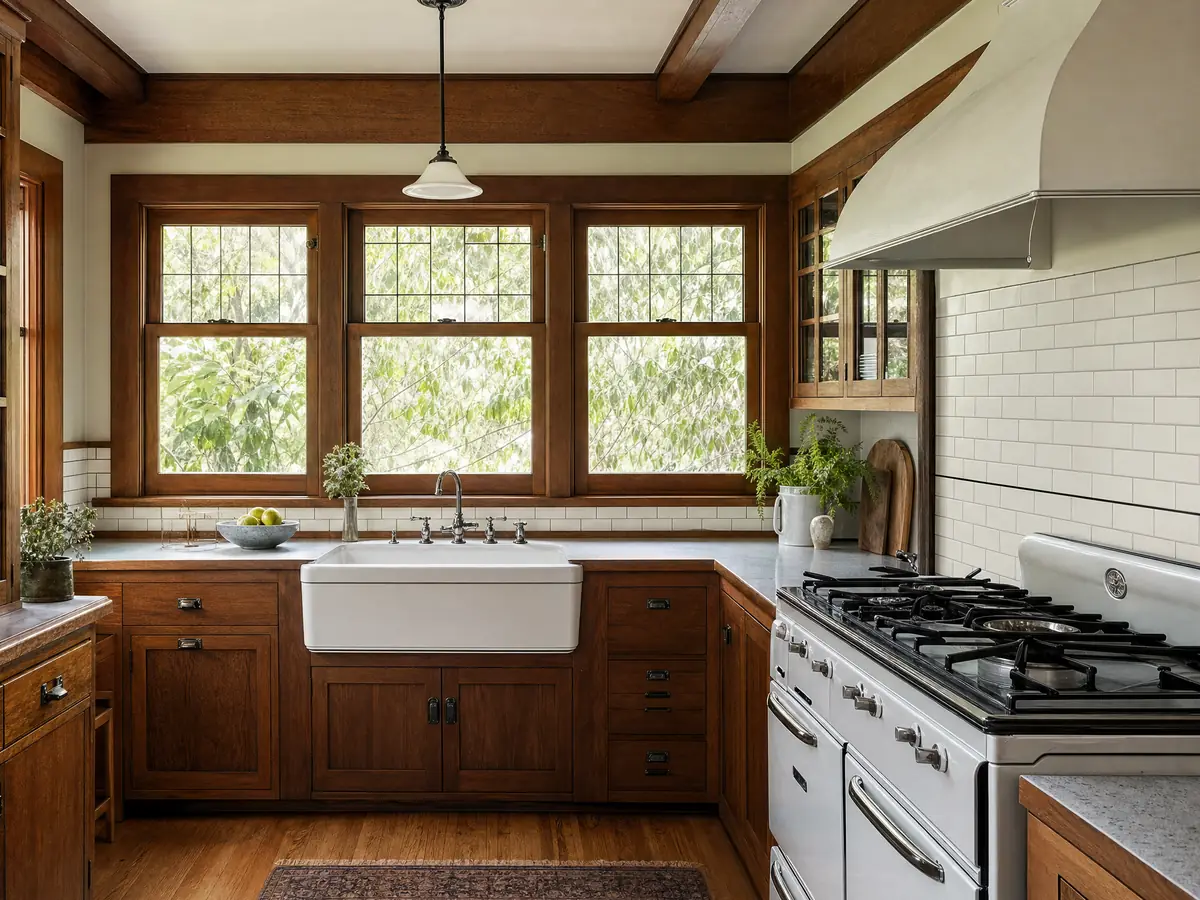
Six districts carry the -H overlay: Hacienda Park, Lincoln Park, Wilton Heights, Edison, Civic Center and Landmark Quarter. In them, no building or demolition permit for a historical resource issues until the required Certificate of Appropriateness is approved. Most of the 821 structures in Lincoln Park date from the 1890s to the 1940s.
What the code text does not say is whether a purely interior kitchen remodel needs that certificate. Its examples of Minor Work do not mention interiors, so ask Planning before filing. The parts that show from the street, such as a new window over the sink or a vent through a front wall, are the likelier trigger, because any exterior change to character-defining features is an alteration. A kitchen bump-out is an addition, and additions to historic resources go to the Historic Preservation Commission as a Major Certificate, with the building permit waiting on the approval.
Owners of contributing houses can also look at Pomona's Mills Act program, which offers property tax contracts under Government Code sections 50280 to 50289.
What does Pomona's 50 percent recycling rule mean for kitchen demolition?
Pomona's construction and demolition waste rule applies to remodels, not only new buildings. It requires at least 50 percent of the waste from every demolition, remodeling and construction project to be diverted by recycling or reuse, with separate reports for the demolition and construction parts. The text is in division 7 of the waste chapter.
Before demolition, the structure must first be made available for deconstruction, salvage and recovery, and the owner, the general contractor and all subcontractors share the duty to recover the maximum feasible amount of salvageable material. The code's list includes windows, doors, fixtures, toilets, sinks, bathtubs, appliances and wallboard, so an old kitchen's sink, appliances and wallboard count. When a permitted project sends waste to landfill, the city can require a cash deposit between $1,000 and $15,000, returned in proportion to the proven diversion. That text dates from 2003, so confirm the amount.
In practice this is a line item: who hauls, where the load is weighed and who files the report. Ask for it in the proposal, because the deposit is returned only in proportion to what is proven.
Kitchen renovation in a Pomona rental, duplex or condo
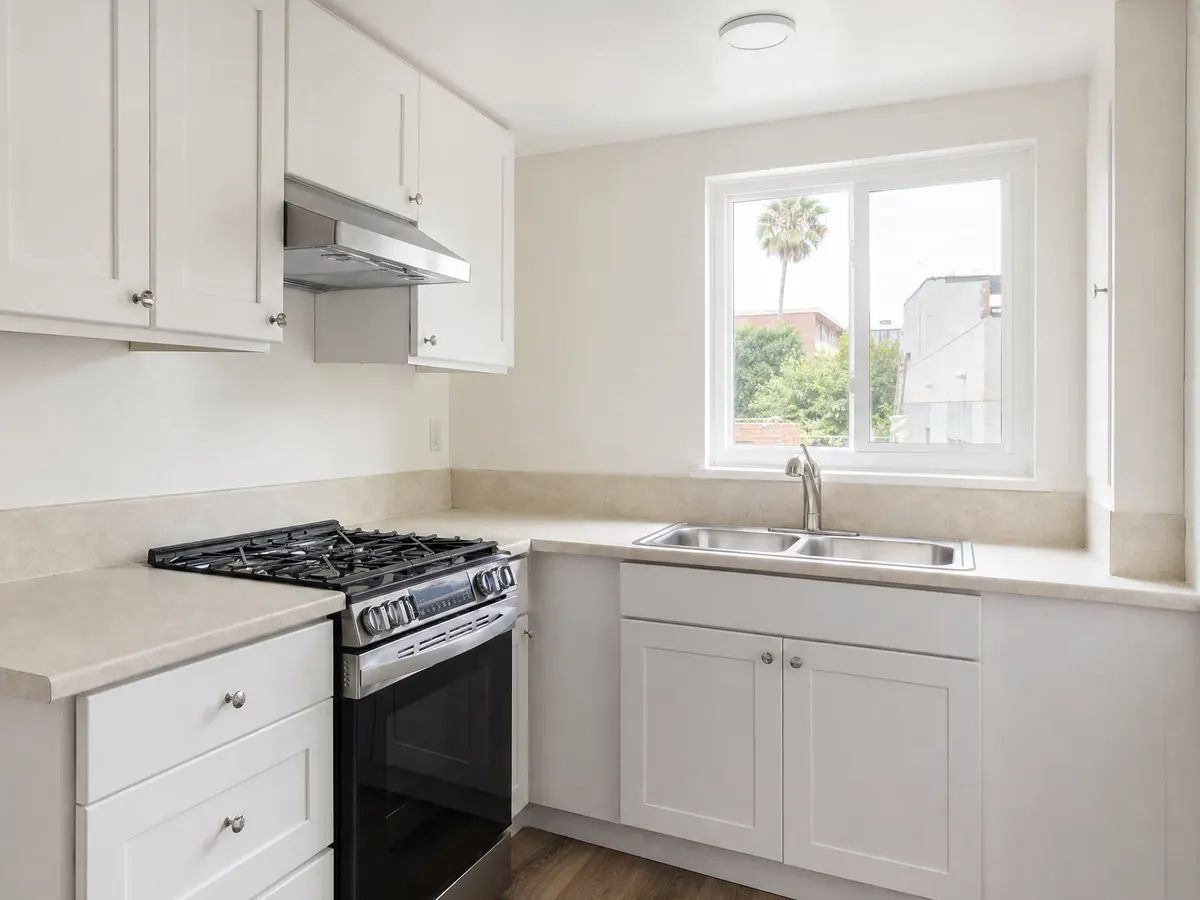
About 47.9 percent of Pomona's occupied homes are rented, and about 19.5 percent of its units sit in buildings of five or more units. A kitchen in those buildings is usually decided by an owner or an association, not by the person who cooks in it.
The permit logic does not change: finish work is exempt, and plumbing, gas and electrical changes are not. What changes is who signs. We did not research Pomona's tenant rules or any association rules, so before a start date is set, ask the owner about written notice to tenants and ask the association whether plumbing work and water shutoffs need its approval. If the unit is occupied, write the kitchen scope and the living arrangements together: where residents will cook, when water and gas go off and how dust is kept out of the rest of the unit.
How much does kitchen renovation cost in Pomona?
We found no Pomona kitchen survey, so our tiers are regional: about $25,000 to $45,000 for a same-layout refresh, $45,000 to $90,000 for a full remodel in the same footprint, and $90,000 to $170,000 and up for upscale or layout-changing work. They rest on Remodeling magazine's 2025 Cost vs. Value report for Los Angeles, which prices a minor kitchen at $29,765, a major midrange kitchen at $86,214 and a major upscale kitchen at $171,369.
Other published figures run lower because they include small jobs. Thumbtack's Los Angeles page shows $12,471 to $40,909. Cabinets, counters, appliances and whether plumbing and gas move explain most of the spread, along with whatever the walls reveal once they are open. Permit fees and the recycling deposit are not in these numbers, and we state no return on investment here, since the Cost vs. Value resale figures are Los Angeles numbers.

Kitchen details from Pomona and nearby communities
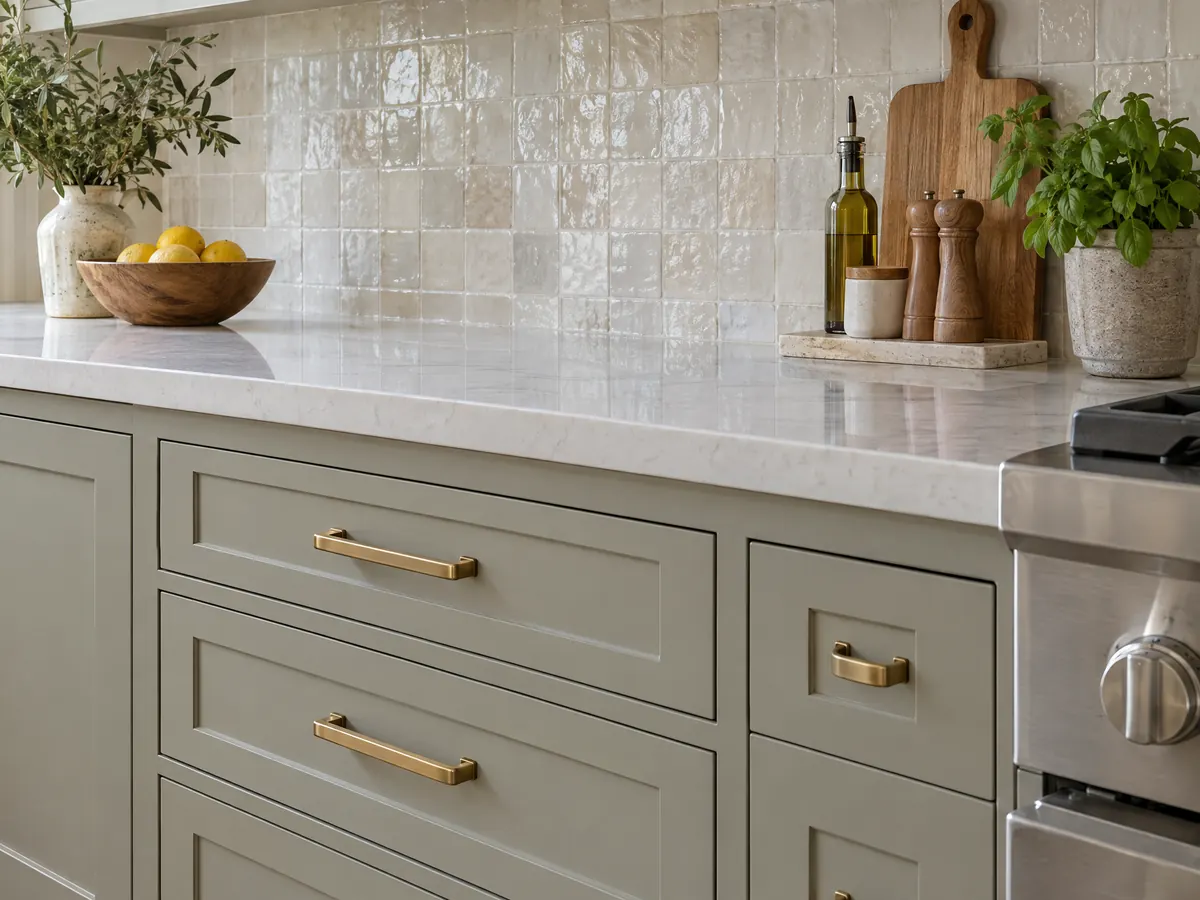
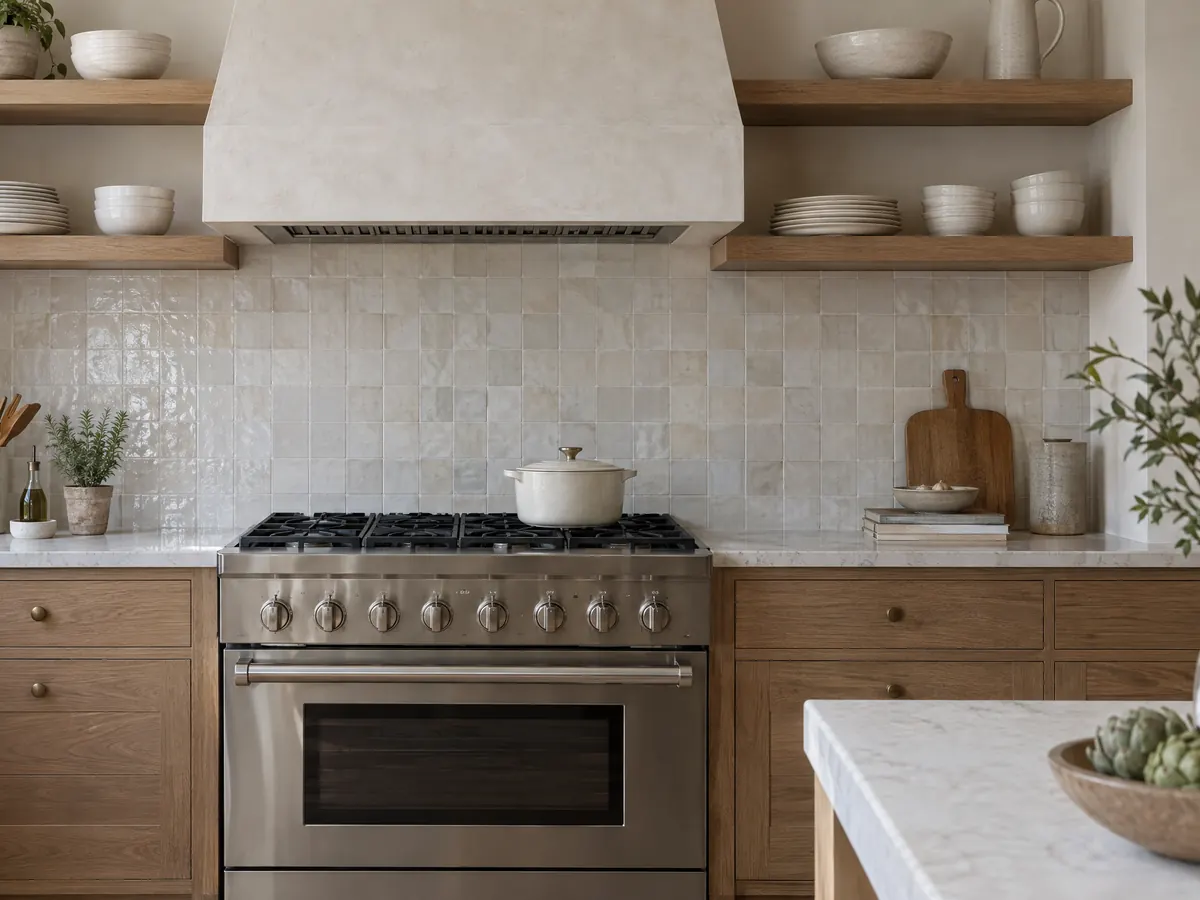
Six kitchen scenes tied to Pomona neighborhoods such as Lincoln Park and Phillips Ranch and to nearby communities like Claremont and Diamond Bar, from framing and cabinets to finished rooms.
What kitchen remodeling costs around Pomona
Our kitchen remodeling page carries the sourced table and the method, and the kitchen remodel cost guide walks through the three tiers. A kitchen rarely travels alone, so see bathroom remodeling in Los Angeles, flooring installation in Los Angeles and window replacement in Los Angeles for the steps those trades follow. Planning the same kitchen elsewhere? Compare the Glendale building overview and the Pasadena building overview before you reuse any of this.
| What it covers | Typical range |
|---|---|
| Refresh in the same layout: new counters, sink, lighting, hardware, paint and limited cabinet work | $25,000 to $45,000 |
| Full remodel in the same layout: new cabinets, counters, appliances, flooring and lighting | $45,000 to $90,000 |
| Upscale remodel or layout change: custom cabinets, premium appliances, a moved wall, relocated plumbing or gas | $90,000 to $170,000 and up |
Pomona kitchen remodel questions, answered
Do I need a permit for a kitchen remodel in Pomona?
For a layout change, yes. Cabinets, counter tops, painting and flooring are on the state's permit-exempt list, but moving or replacing plumbing, gas or electrical lines is not. Pomona's code lists no local change to that list. The City's website refused our requests, so confirm your scope with Building and Safety before ordering.
Do I need a permit to replace kitchen cabinets and counters in Pomona?
Not by themselves. Cabinets and counter tops are named on the state's exempt list, and we found no Pomona amendment removing them. The permit question returns the moment a sink, range or gas line moves with them. In a historic district, also ask Planning whether the work shows from outside.
How much does a kitchen remodel cost in California?
Regional planning tiers run about $25,000 to $45,000 for a same-layout refresh, $45,000 to $90,000 for a full remodel and $90,000 to $170,000 and up for upscale or layout-changing work, anchored to the 2025 Cost vs. Value report for Los Angeles. We found no Pomona survey, so the written proposal sets the real price.
How long will a kitchen remodel take?
We found no sourced Pomona duration, so the written schedule is the answer. Three things set it: permit review if plumbing, gas or electrical change, cabinet and appliance lead times, and what the open walls reveal. Ask the contractor to date each phase and to name the inspections that must pass before walls close.
What order should you remodel a kitchen in?
Demolition comes first, then framing and rough plumbing, gas and electrical, which are inspected before the walls close. After that come insulation and drywall, flooring, cabinets, counter templates and installation, backsplash, final plumbing and electrical connections, and the final inspection. Painting fits between drywall and cabinets or after them, depending on the crew.
Should I move out during a kitchen remodel?
Not necessarily, but plan for weeks without a working kitchen, with dust and days when water or gas is off. Many households set up a temporary kitchen with a microwave and a small sink elsewhere in the house. If the home has a pre-1978 paint history, ask how the lead-safe containment will protect the rest of the rooms.
What is the difference between kitchen renovation and kitchen remodeling?
People use the terms interchangeably, and no Pomona or California rule turns on the word. Renovation usually means updating what is there, such as new cabinets and counters in the same layout, while remodeling suggests changing the layout. The permit depends on what you change, not the label: finish work is exempt, plumbing and gas moves are not.
How much deposit can a kitchen contractor ask for?
No more than $1,000 or 10 percent of the contract price, whichever is less, under Business and Professions Code 7159, which applies statewide. Payments after that must follow work completed. Ask for each change in writing and for a lien release when you pay, and be cautious of a contractor who asks for half up front.
Does a kitchen renovation in a Pomona historic district need approval?
Exterior-visible changes do, because any exterior change to character-defining features is an alteration reviewed by Planning. Whether a purely interior kitchen needs a Certificate of Appropriateness is not answered in the code text we read, so ask Planning before filing. An addition to a historic house goes to the Historic Preservation Commission.
What happens to the old kitchen's waste under Pomona's recycling rule?
At least 50 percent of the waste from a remodel must be diverted by recycling or reuse, and the owner, general contractor and subcontractors share the duty. The code names sinks, appliances, fixtures and wallboard among salvageable materials. A deposit of $1,000 to $15,000 may be required if waste goes to landfill, so ask what applies now.
Describe your Pomona kitchen
Tell us the neighborhood, the year the house was built and whether the kitchen is in a historic district or a rental, and we will plan the site visit around the permit path.