
Flooring Installationin Riverside, CA
Flooring installation in Riverside needs no building permit for the floor covering itself, because the City's exemption list names carpeting, tiling and similar finish work, but structural, plumbing, electrical and fire-rated work still does. About 57 percent of the city's homes predate 1980, so test old adhesives and slabs before anything is sanded or pulled.
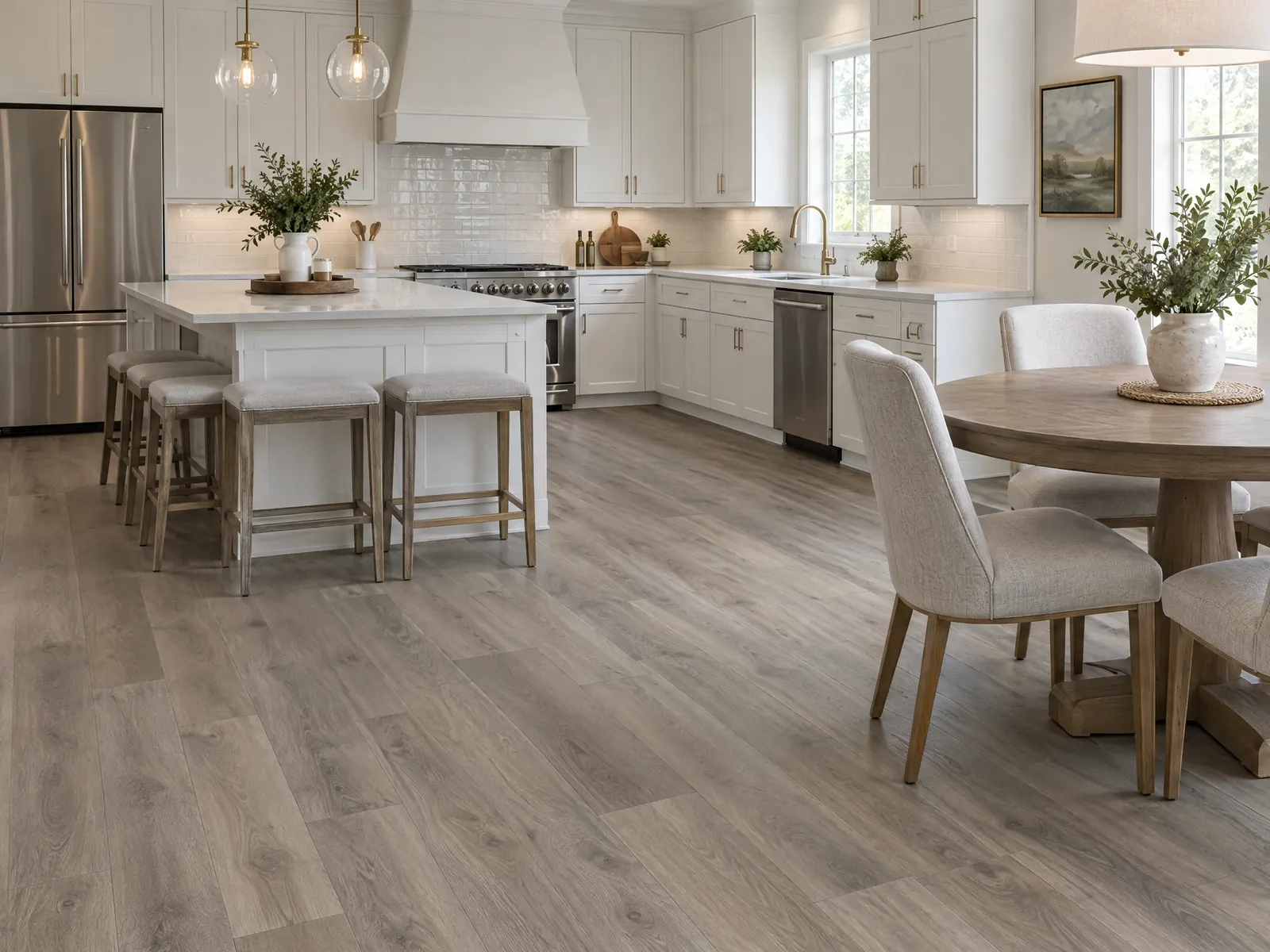
Riverside dates itself to 1870, when John W. North and a group of Easterners founded a colony on former Spanish rancho land, according to the City's history page. Citrus made the town rich, and the Census Bureau's 2024 estimates now count 107,868 homes, about 48 percent of them (52,227) built between 1950 and 1979, so most floors here sit on postwar slabs or raised wood framing, with older plank floors in the core.
MDG Builders (CSLB #1040337) is a general contractor in Tarzana. On a Riverside floor we write the scope, put the permit questions to the City's Building & Safety Division and keep the schedule, while licensed flooring and tile subcontractors lay the material. The flooring page covers products, and the Riverside overview lists the other trades we manage in the city.
What Riverside's Building & Safety Division, Title 20 historic review and state law say about flooring work
Where flooring permits come from in Riverside: City of Riverside Community & Economic Development Department, Building & Safety Division.
- Carpeting and tiling are listed as permit-exempt finish work (Bulletin 140, item 2.6), so replacing floor finishes in Riverside does not need a building permit unless structural, plumbing, electrical or fire-rated work is involved.
- Slab moisture in garage conversions: the City's Drawing 249 notes require at least a 10-mil vapor barrier under an existing slab on grade when a garage becomes a dwelling; if none exists, an epoxy coating per ESR 2785 or equal, or a new 10-mil barrier with a topping slab, is the City's stated alternative.
- Floor coatings: SCAQMD Rule 1113 defines floor coatings as opaque coatings formulated for or applied to floors, including clear coatings for concrete flooring, and lists a 50 g/L VOC limit for the category.
- Renovation and asbestos: SCAQMD Rule 1403 applies to owners and operators of any demolition or renovation that disturbs asbestos-containing material, and the City's plan-check note C129 requires proof of SCAQMD notification (or a signed declaration) before any demolition or renovation permit is issued.
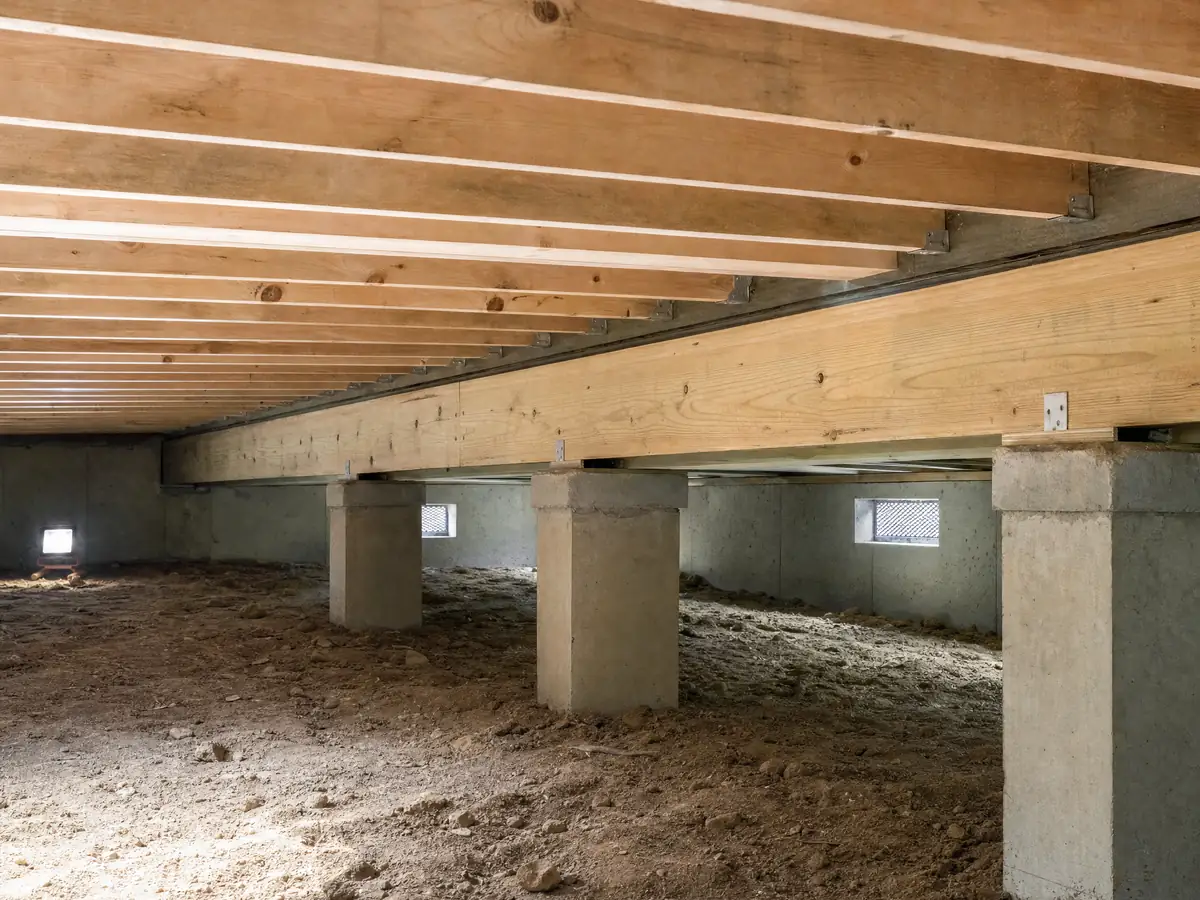
What is under the floors of a Riverside house built before the 1950s?
Often raised wood framing with a termite history. The City's Wood Streets page says the area was orange groves until 1913, when fill in the Tequesquite Arroyo let Magnolia Avenue reach Downtown, and that nearly all its homes predate World War II, while the Eastside page says most of its homes predate the 1950s. The Census Bureau counts 5,521 homes from 1939 or earlier and 27,432 from before 1960, about a quarter of all units.
Look at the framing before choosing the finish. The City's Local Design Criteria rate termite infestation 'Very Heavy', so when old boards come up, ask the crew to photograph joists, sills and the soil below and to stop if they find damage. Replacing rotted framing is not finish work, and the City's exemption never covers structural repairs, so describe what you found to Building & Safety before a subfloor goes back down.
Painted trim comes up with the floor. The Census table cannot separate 1978 from 1979, so we cannot say how many Riverside homes fall under EPA's pre-1978 rule, but pulled baseboards and door casings in a house this old are painted surfaces, and paid work that disturbs them falls under EPA's lead-safe renovation rule.
What do Riverside's 1950s to 1970s tract floors hide?
Layers, and sometimes asbestos. Wikipedia's census table shows Riverside growing from 46,764 residents in 1950 to 84,332 in 1960 and 140,089 in 1970, and the ACS counts 18,023 homes from the 1950s, 13,286 from the 1960s and 20,918 from the 1970s. Houses of that age can carry carpet over sheet vinyl over resilient tile, and the black mastic under old tile can contain asbestos that nobody can identify by eye.
Test before anything is sanded or ripped. SCAQMD Rule 1403 applies to owners and operators of any renovation that disturbs asbestos-containing material, and the City's plan-check note C129 asks for proof of SCAQMD notification before a demolition or renovation permit issues. Flooring alone usually needs no permit here, so the burden falls on the proposal: have it say who takes the sample, who removes a layer that tests positive and who pays.
Neighborhoods differ. Arlanza grew from Camp Anza, where the Army bought 1,250 acres in 1942, and was annexed in 1961 with converted barracks and tract homes, Canyon Crest came together through six annexations between 1959 and 1986, and the City dates Alessandro Heights homes to the 1980s. A floor plan that fits one district may not describe the next, so open the floor and look.
Does moisture come up through a Riverside slab, and how hot does it get?
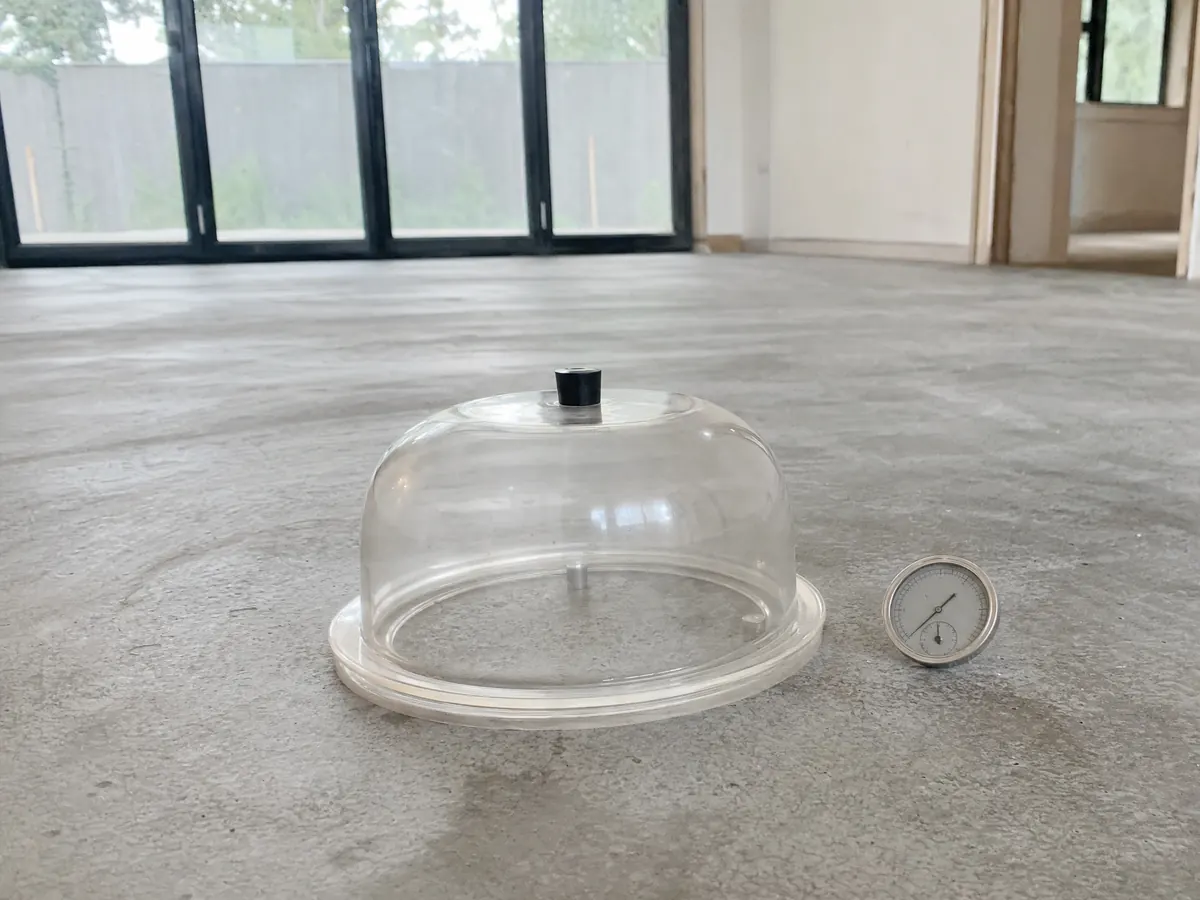
It can, even though summers are bone dry. NOAA's 1991 to 2020 normals for Riverside Fire Station 3 add up to 10.02 inches of rain a year, 7.64 of them from December through March and only 0.12 and 0.13 inch in July and August. Winter water, irrigation and downspouts wet the soil, and vapor then rises through the slab. ASTM F2170 humidity probes and the ASTM F1869 calcium chloride dish give readings, but the pass mark comes from the maker of the plank, vinyl or adhesive.
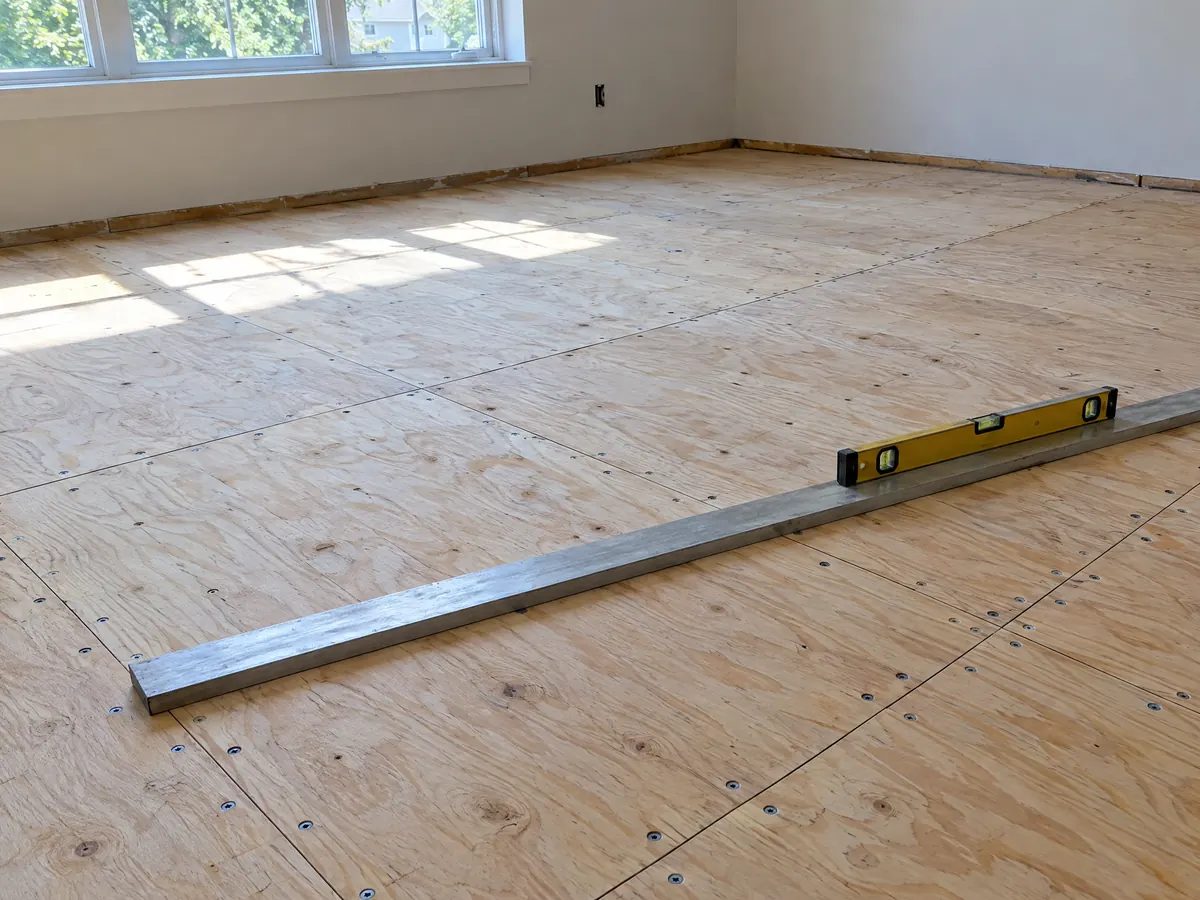
The soil under the slab varies by district. The City's Public Safety Element says soils with high shrink-swell potential occur mainly west of Riverside Municipal Airport and in the Lake Mathews drainage but can be found throughout the city, and it names four primary liquefaction areas, among them the Santa Ana River corridor and a broad area south and west of the airport. A slab that has moved leaves cracks and uneven spots, so check flatness before boards are ordered.
Heat sets the other rule. Fire Station 3 shows an August average high of 96.8 F, about 110 days a year at or above 90 F and about 28 at or above 100 F. We found no Riverside source on how heat affects particular products, so ask the installer when the air conditioning must be running and follow the manufacturer's installation sheet.
What floor goes in a garage converted to an ADU in Riverside?
The City's own drawing sets the minimum. Drawing 249, the prescriptive garage-to-ADU shear wall design, notes that an existing slab on grade must have at least a 10-mil vapor barrier verified in the field. If there is none, its stated alternatives are an epoxy coating per ESR 2785 or equal, or a new 10-mil barrier covered by a topping slab. That is why a converted garage is a moisture decision before it is a finish decision.
The ADU rules around it sit in Riverside Municipal Code 19.442.030, read in GoCodebook's third-party copy of the code, so confirm with the City: an attached ADU is capped at the lesser of 50 percent of the home or 1,200 square feet, and converting existing space needs no added setback. Dwell Riverside, the City's ADU program, offers four pre-reviewed plans of 746, 800, 1,020 and 1,200 square feet, and Bulletin 137 gives a City standard ADU a 10 working day plan check.
Finish choices follow the slab. Ask whether the maker of the plank, vinyl or tile accepts an epoxy-coated slab under its warranty. Our garage conversion permit guide lays out the sequence in Los Angeles, which differs from Riverside's, so use it for the order of steps only.
Do you need a permit to replace flooring in Riverside?
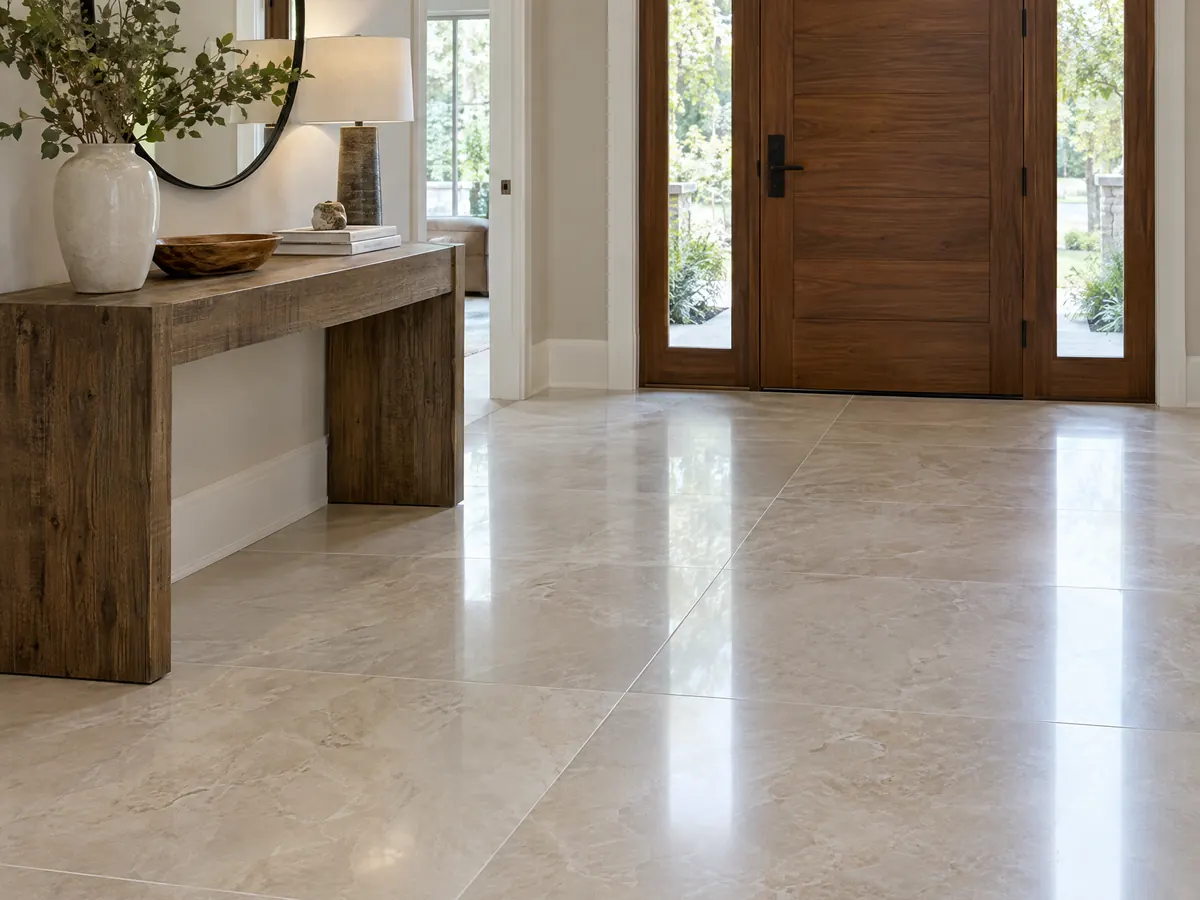
Usually not for the floor covering. Bulletin 140, the City's list of work exempt from building permits (issued August 4, 2026), names carpeting, tiling and similar finish work under item 2.6, and the Permits page says the same. The exemption never reaches electrical, plumbing, structural or fire-rated work, so radiant heat, moved plumbing, a new circuit or a repaired joist is a permit question of its own.
Permits that are needed move quickly. Bulletin 137 puts residential kitchen and bath remodels, which often include new floors, in Tier 0 with a 5 working day first review, and the Permits page says a contractor must show a valid California license, hold a current City of Riverside business license and present a workers' compensation certificate at issuance. A remodel equal to 50 percent or more of the existing floor area triggers sprinklers under RMC 16.08.145, so a whole-house floor job bundled with wall changes deserves a call first.
Hours come from the noise code. RMC 7.35.020.G exempts construction from the noise rules only when a required permit is held and work stays between 7 a.m. and 7 p.m. on weekdays and 8 a.m. and 5 p.m. on Saturdays, with none on Sundays or federal holidays, and minor residential maintenance is exempt from 7 a.m. to 10 p.m. That text is from GoCodebook's mirror, not the City's own site, so confirm it.
Can you refinish old floors in a Riverside historic district?
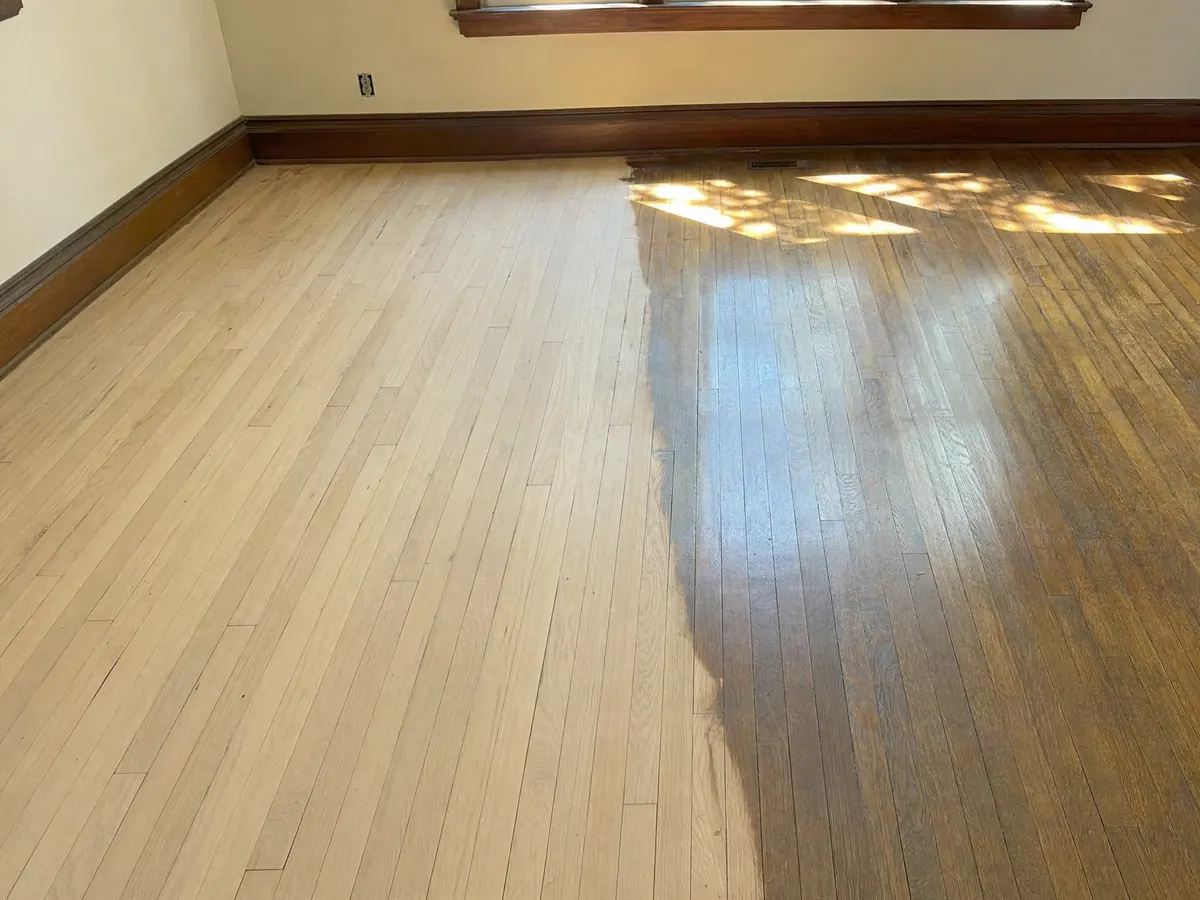
Probably, but the City's historic rules speak about exteriors. Title 20 requires a Certificate of Appropriateness before anyone alters or changes the appearance of a designated cultural resource or any element of a Historic District, and the pages we read describe exterior changes. We found no sentence on interior boards, so ask Planning before refinishing a landmark's floor, and treat porch floors, thresholds and door sills as exterior features that are reviewed.
Design guidelines exist for four districts, Heritage Square, Mt. Rubidoux, North Hill and Palm Heights, and the City's history page also names the Downtown Mission Inn Historic District. The Wood Streets page does not say that neighborhood is a historic district, so do not assume it is. An administrative Certificate of Appropriateness review takes a 30 day completeness review plus a 30 day written determination, and a Cultural Heritage Board case usually takes 6 to 8 weeks.
Whether to refinish is a thickness question. Look at the wear layer through a floor register, then compare refinishing at $4 to $8 per square foot on Angi's Los Angeles pages with $12 to $22 for new solid hardwood.
What does a flooring contractor charge in Riverside, and who needs which license?
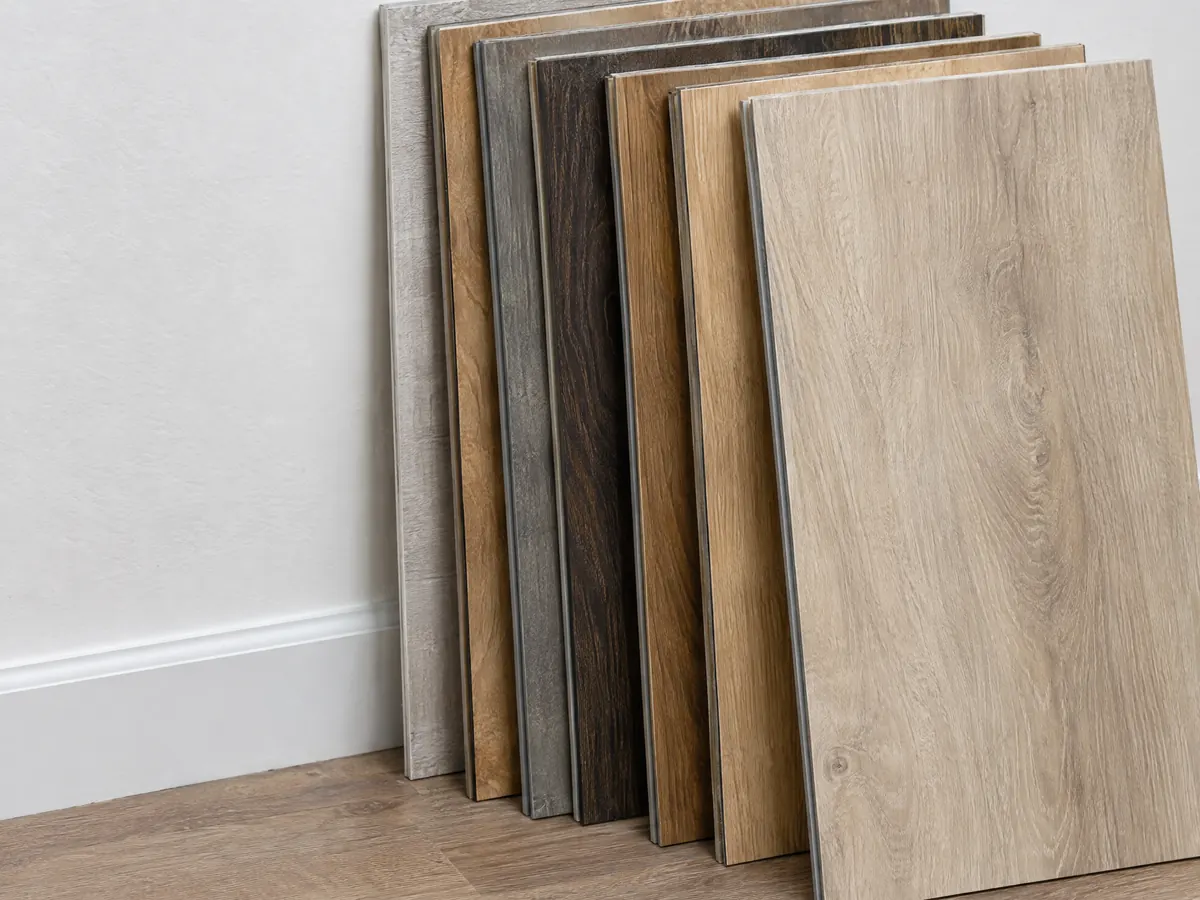
No Riverside price study with a stated method turned up, so the anchor is Angi's Los Angeles pages, which we rate medium to low in confidence. Its July 8, 2026 flooring page puts labor at $3 to $9 a square foot, engineered hardwood at $10 to $18 installed and solid hardwood at $12 to $22, and its September 15, 2026 laminate page lists $455 to $685 to remove an old floor from 200 square feet. Federal wage data show a $33.48 mean hourly wage for floor layers in the Los Angeles metro area in May 2025. Riverside bids may differ.
Make the proposal itemize demolition, moisture testing, leveling, stairs and transitions. Business and Professions Code 7159.5 limits a home improvement down payment to $1,000 or 10 percent of the price, whichever is less, and any job that needs a permit needs a licensed contractor.
CSLB assigns carpet, resilient sheet goods and wood floors to its C-15 class, and ceramic tile to C-54. Our license check guide shows how to read a CSLB record, and the City adds its own business license.
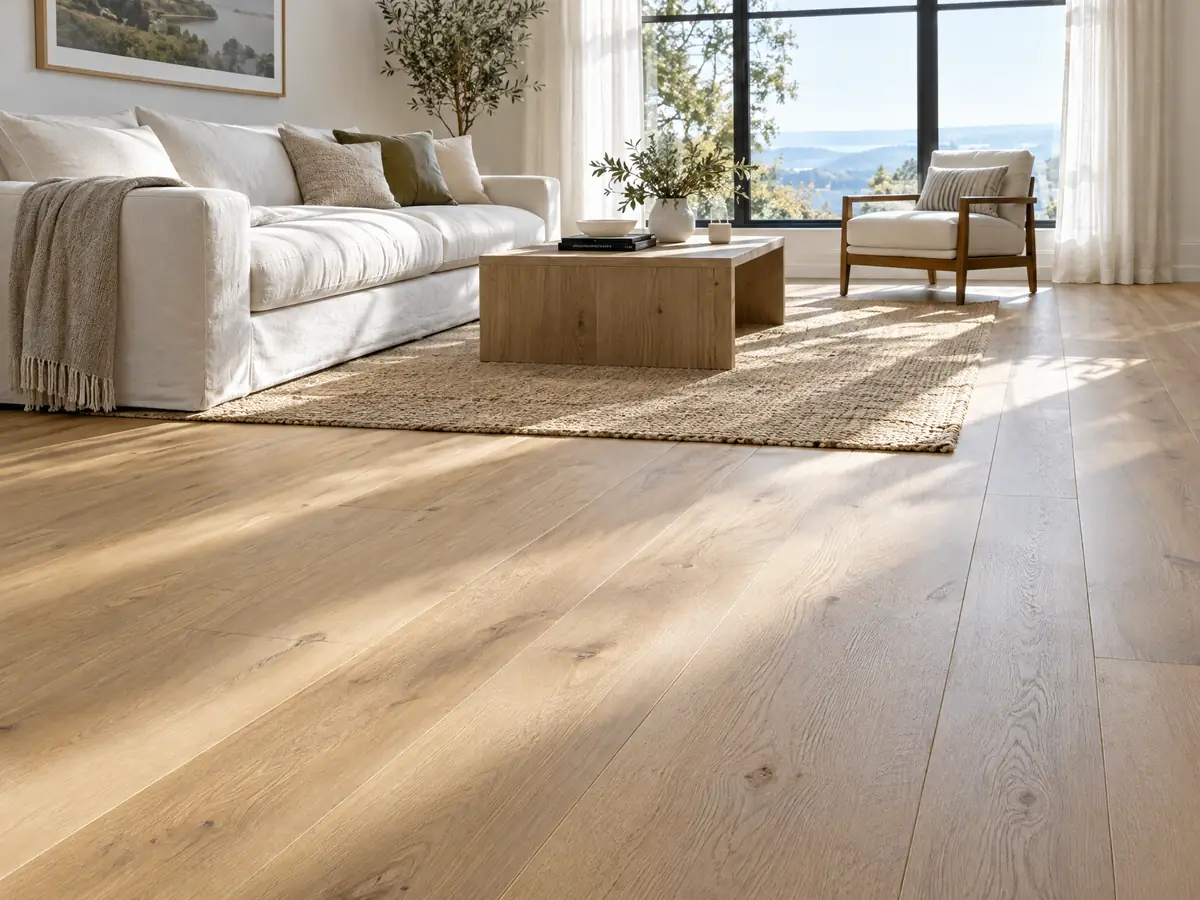
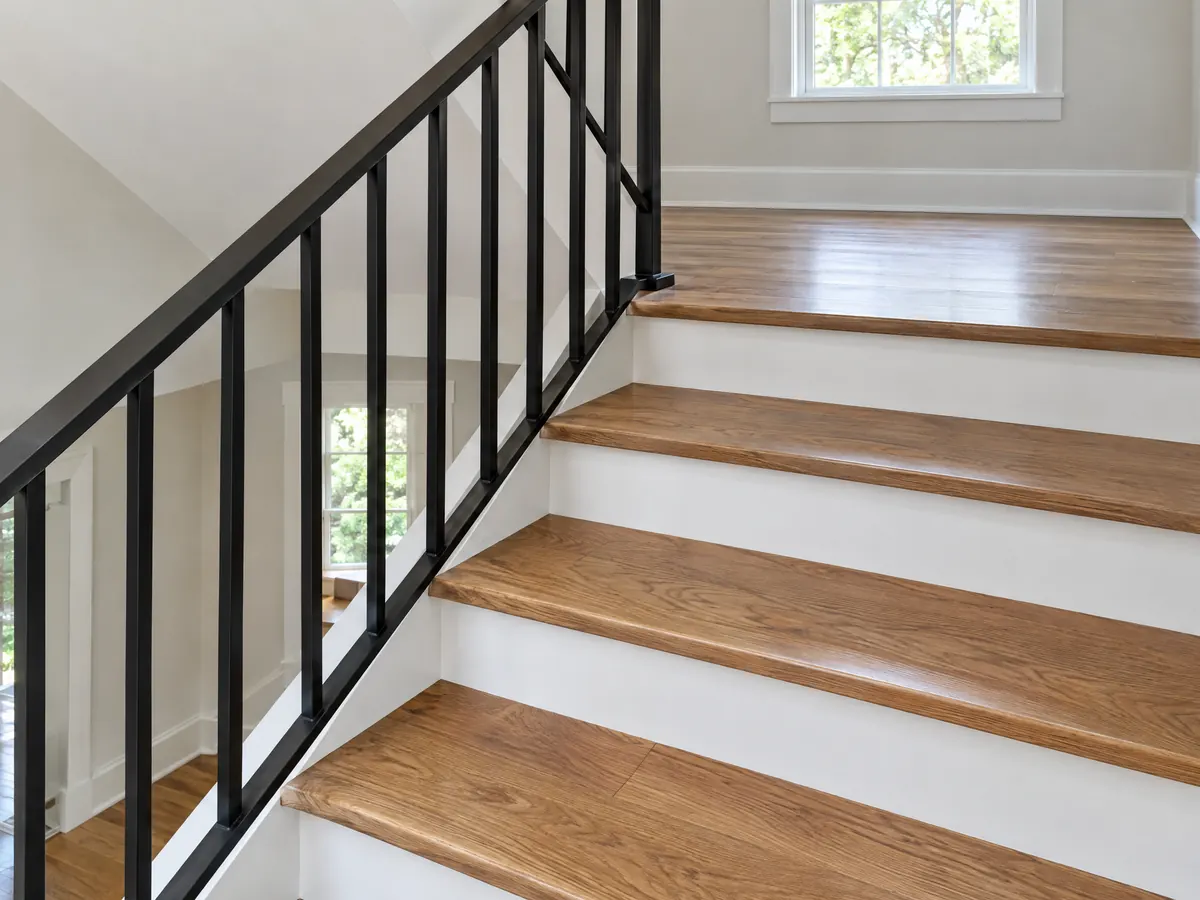
Flooring photos from Riverside and nearby communities
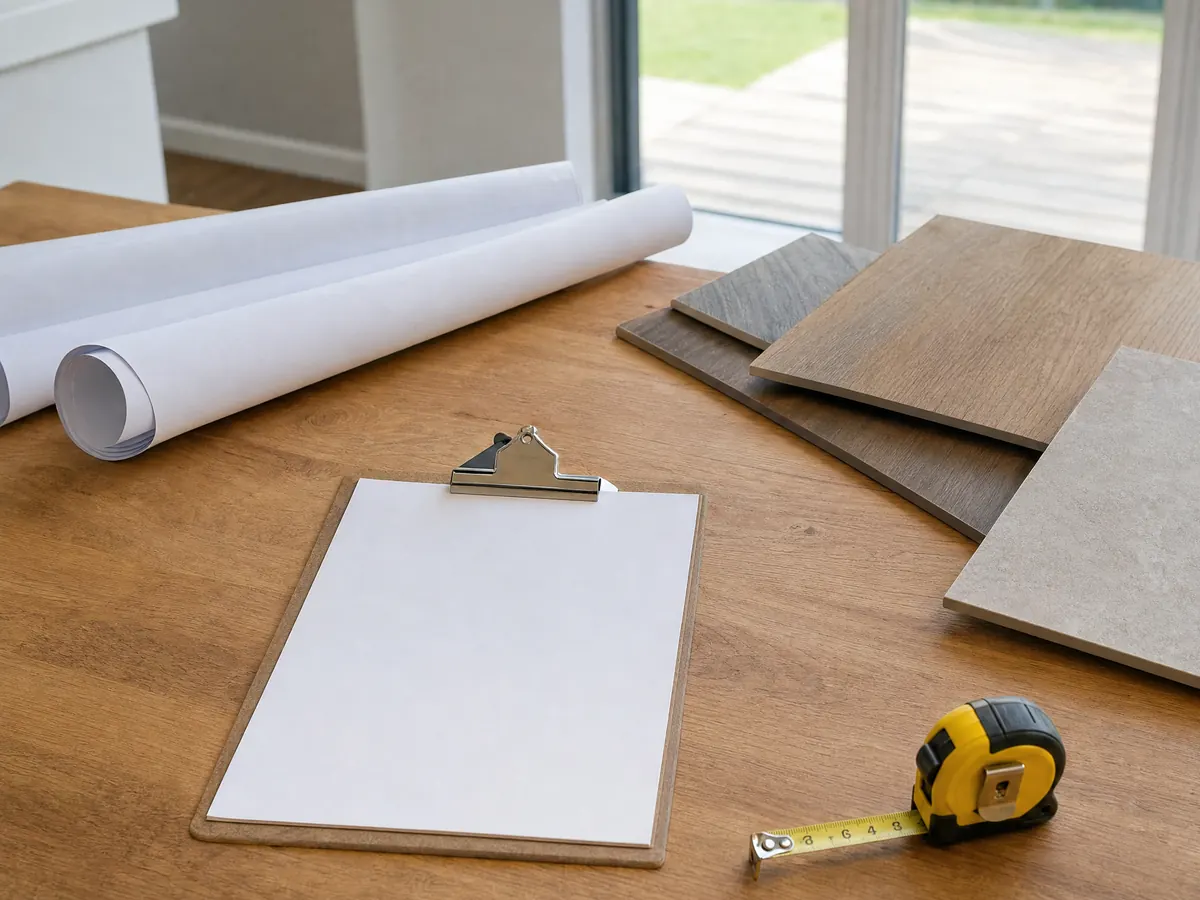
Plank samples, moisture tests, tile and finished rooms from Riverside and the neighborhoods around it, shown at the steps where the decisions get made. Tap any photo to enlarge it.
What flooring costs around Riverside
Dollar figures here are Los Angeles planning ranges from our flooring page, not a Riverside bid, and demolition, drying, testing and subfloor repair should be separate lines on the written proposal. The same property may need concrete work in Riverside or decks in Riverside. For neighbors, read flooring in Corona, flooring in Menifee and flooring in Pomona, and flooring in Los Angeles for the big-city benchmark. Our flooring cost guide sets refinishing beside replacement, and the subcontractor guide shows who lays which layer.
| What it covers | Typical range |
|---|---|
| Installation labor only | $3 to $9 per sq ft |
| Solid hardwood, installed | $12 to $22 per sq ft |
| Engineered hardwood, installed | $10 to $18 per sq ft |
| Refinishing existing hardwood | $4 to $8 per sq ft |
| Laminate, whole project | $2,000 to $5,500 |
| Hardwood, whole project | $3,153 to $8,496 |
| Removing the old floor | $455 to $685 per 200 sq ft |
| Tile | No sourced Los Angeles range |
Riverside flooring questions, answered
Do I need a permit to replace flooring in Riverside?
No, not for the floor covering itself, because the City's Bulletin 140 lists carpeting, tiling and similar finish work as exempt. The exemption never covers structural, plumbing, electrical or fire-rated work, so a repaired joist, moved plumbing or radiant heat can still need a permit. Call Building & Safety with the scope if anything beyond the finish is involved.
How much does it cost to have flooring professionally installed?
Angi's Los Angeles page, updated July 8, 2026, shows labor at $3 to $9 a square foot, engineered hardwood at $10 to $18 installed and solid hardwood at $12 to $22. We found no Riverside study that states its method, so these are medium to low confidence. Demolition, leveling and stairs usually appear as separate lines.
How much to refloor a 2000 sq. ft house?
At Angi's Los Angeles rates, 2,000 square feet costs $6,000 to $18,000 in labor alone, $20,000 to $36,000 for engineered hardwood installed and $24,000 to $44,000 for solid hardwood installed. These are Los Angeles ranges, not a Riverside bid, and stairs, removal and subfloor repair change the total.
Can you put flooring over concrete?
Yes, once the slab has been tested and prepared. The flooring or adhesive maker sets the moisture limit, so the installer should read ASTM F2170 probes or set an F1869 dish before patching and leveling. With 57 percent of Riverside homes built before 1980, old adhesive on a slab may also need a lab check first.
Why does moisture come through a concrete floor?
Water vapor rises from the soil under the slab, and winter rain, irrigation and downspouts keep that soil damp. Riverside gets about 10 inches of rain a year at Fire Station 3, almost all of it from December through March, so a dry August says little. A slab test gives the real reading.
Is there asbestos under old vinyl flooring in Riverside homes built before 1980?
Possibly, and it cannot be seen. Old resilient tile, sheet vinyl and mastic are the usual suspects, and the ACS counts 61,636 Riverside homes built before 1980. Send a sample to a lab before any layer is sanded, and have the proposal say who removes and pays for a layer that tests positive.
Can I refinish hardwood floors instead of replacing them in an older Riverside home?
Often, when the wear layer can take another sanding, which a floor register or a cut edge will show. Angi's Los Angeles pages put a refinish at $4 to $8 per square foot, while new solid hardwood is $12 to $22 installed. If the house is a designated landmark, ask Planning first.
What floor can go over the slab of a garage converted to an ADU?
That depends on the slab's moisture protection. The City's Drawing 249 requires at least a 10-mil vapor barrier under the existing slab, or an epoxy coating per ESR 2785 or a new barrier with a topping slab if there is none. Ask the floor's maker whether its warranty accepts the coated slab.
What license does a flooring contractor need in Riverside?
A flooring contractor needs a current California license, usually C-15 for carpet, resilient flooring and wood or C-54 for ceramic and stone tile, plus a City of Riverside business license and a workers' compensation certificate when a permit issues. Check the number on the CSLB site and ask each subcontractor for a license and certificate of insurance.
Tell us the age of the house, the rooms and what is under the floor now
Say whether it is a pre-war house, a tract home, a rental or a garage conversion, which rooms you want done and what the floor is now. The slab test, old adhesive and permit questions come with us to the first visit.