
Concrete Companyin Moreno Valley, CA
A concrete company in Moreno Valley works around a published conflict: the City's ADU guidebook says moving 50 cubic feet of soil calls for a grading plan, while the grading code exempts 50 cubic yards, 27 times more. Patio slabs need no permit, but patio covers do, and so do walls over 3 feet. Ask Land Development.
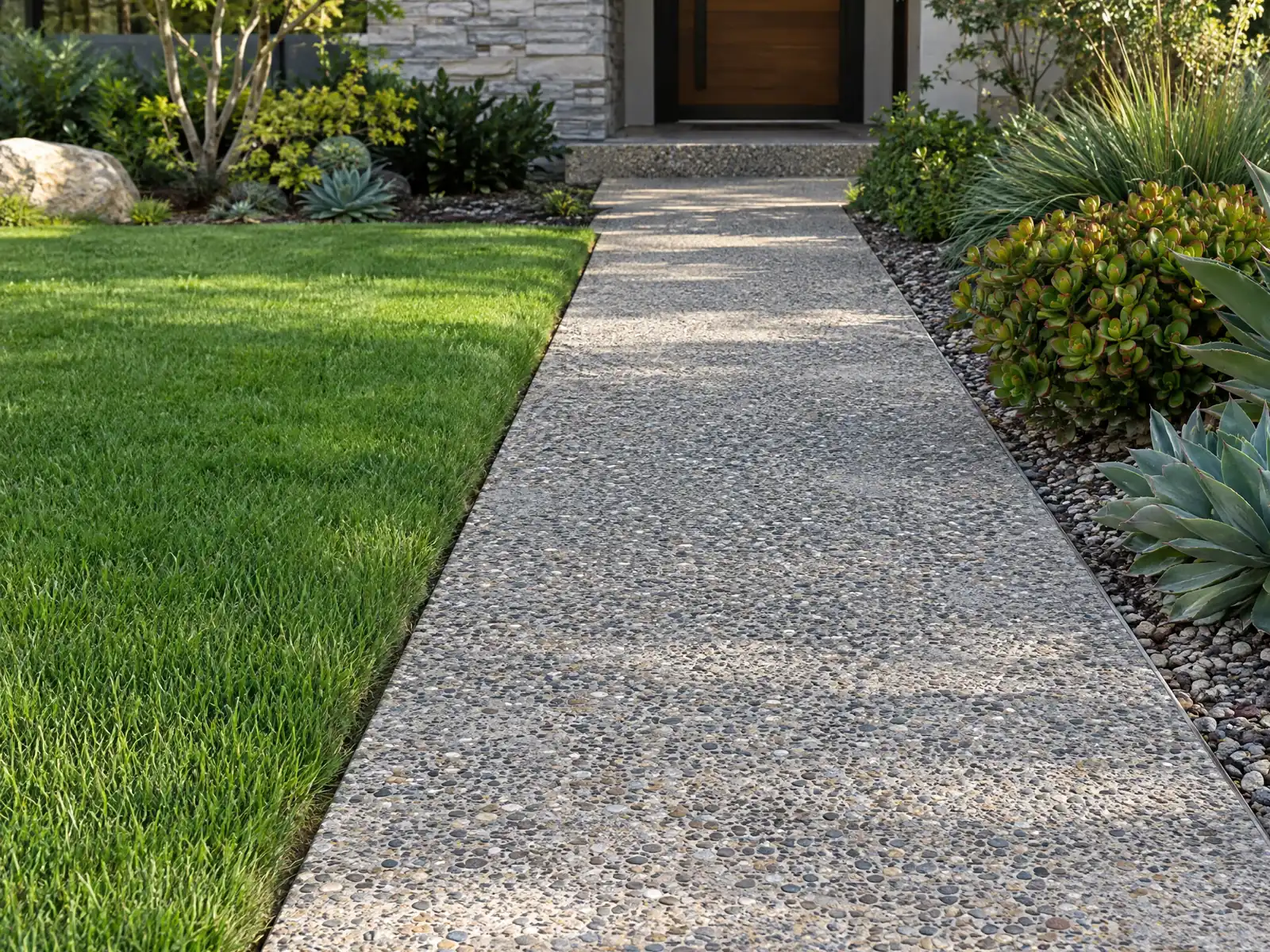
Moreno Valley's concrete has a recent past. The City incorporated on December 3, 1984, and its own Safety Element says Sunnymead Ranch Lake and its earthen dam were built in 1985 for a planned community association, the same decade that produced 39.7 percent of today's homes (23,596 of 59,400 in the ACS 2024 estimates). A driveway or patio poured with one of those houses has now seen 35 to 45 years of valley heat, and March AFB averages 100.0 days a year at or above 90 F.
MDG Builders, CSLB #1040337, is a Tarzana general contractor, not a pour crew. We write the scope, take the grading and permit questions to Moreno Valley's Building and Safety Division and hire a licensed concrete subcontractor to form, pour and finish. Mixes and finishes are on the concrete page, and the Moreno Valley overview lists the other trades we run in the city.
What Moreno Valley's Land Development, Building and Safety and South Coast AQMD say about concrete work
Where concrete permits come from in Moreno Valley: City of Moreno Valley Community Development Department, Building and Safety Division.
- Moreno Valley's permit FAQ says no permit is required for a patio slab but a permit is required for every attached or freestanding patio cover, and that a retaining or block wall needs a permit if it is higher than 3 feet from top of footing.
- The California Residential Code's exempt list (Section R105.2, third-party mirror) also names sidewalks and driveways, and Moreno Valley amends only the fence item.
- Moreno Valley's grading chapter (Section 8.21.020, third-party mirror) exempts only small jobs from a grading permit: excavation of 1,000 square feet or 50 cubic yards that is under 2 feet deep, and fills under 1 foot (or under 3 feet if they support no structures) within the same area or volume limit. Pavement over 5,000 square feet on natural grade for a private road or driveway needs a grading permit unless waived, while resurfacing or maintenance is exempt.
- Where expansive soil (expansion index above 20) is within 4 feet of finish grade under a building area, Moreno Valley's grading code (Section 8.21.130, third-party mirror) requires removal to 4 feet and replacement with compacted non-expansive soil, or a soil engineer's foundation and slab recommendations.
- The General Plan Safety Element says Moreno Valley's soils are mapped as coarse Hanford or Cieneba soils, sandy loam (Ramona, Greenfield) and rockland, rates most of the city low or moderate liquefaction potential, high in small western and southern areas and very high along a small part of the southern border, and requires geotechnical reports in high liquefaction areas.
- Moreno Valley's design frost line depth is 12 inches, ground snow load is zero and seismic design category is D2 or E (Section 8.23.050, third-party mirror), so footings are driven by soil and seismic design rather than frost.
- The City lets the city engineer approve permeable surfaces (pervious concrete, permeable pavement, pavers, porous asphalt) in low flow traffic areas and other paved areas (Section 8.21.150, third-party mirror).
- Moreno Valley requires an encroachment permit for work in the City right-of-way, and the City's address request instructions say an additional driveway needs a Land Development permit first (Land Development 951.413.3120).
Does 50 cubic feet or 50 cubic yards trigger a grading permit in Moreno Valley?
Two City documents give different answers, and the gap is a factor of 27. The ADU guidebook says a grading and erosion control plan goes to Land Development if you move 50 cubic feet of soil or raise the foundation a foot. The grading chapter of the municipal code, which we read on a third-party mirror because the City's official code host returned an access error, exempts excavation of 1,000 square feet or 50 cubic yards that is under 2 feet deep.
Fills are exempt under 1 foot, or under 3 feet when they support no structures, within the same area or volume limit. To see what is at stake, a 20 by 20 foot patio dug 8 inches deep for a 4 inch slab on 4 inches of base is about 267 cubic feet, over five times the guidebook's number and under 10 cubic yards. Pavement over 5,000 square feet on natural grade for a private road or driveway needs a grading permit unless waived, while resurfacing and maintenance are exempt.
We do not pick a winner. The guidebook is written for ADUs and the code is the law, but the contradiction is the City's to resolve, and Land Development at 951.413.3120 or landdevelopment@moval.org is the office to settle it in writing before an excavator arrives. For an ADU pad the guidebook also asks for a pad certification and a soils compaction report ahead of the building permit.
Keep the written answer from Land Development with the proposal, and have the crew price any soil export as its own line.
Do you need a permit for a patio slab, driveway or walkway in Moreno Valley?
A plain slab usually does not, but the cover over it does. The City's permit FAQ says no permit is required for a patio slab while every attached or freestanding patio cover needs one, and the California Residential Code's exempt list, Section R105.2, also names sidewalks and driveways, which Moreno Valley leaves unamended apart from fences.
The public side is different. Moreno Valley requires an encroachment permit for work in the City right-of-way, and its address request instructions say an additional driveway needs a Land Development permit first. The city engineer may also approve permeable surfaces such as pervious concrete, permeable pavers and porous asphalt in low-traffic paved areas (Section 8.21.150, mirror).
Two smaller rules ride along on permitted jobs. A waste management plan with estimated tonnage and haulers must be approved before a building or demolition permit issues, and at least 50 percent of the debris must be kept out of the landfill (Sections 8.80.020 and 8.80.030). The City also has a Stephens' Kangaroo Rat habitat chapter with a per-acre fee for development permits inside its plan area, and remodels and additions on the same parcel are exempt; we could not read the plan map, so we cannot say which parcels fall inside it.
How do sandy soils, expansive clay and flood zones change a Moreno Valley slab?
They decide the base and the footing more than the mix does. The Safety Element describes coarse Hanford and Cieneba soils, sandy loam (Ramona, Greenfield) and rockland, rates most of the city low or moderate for liquefaction, marks small western and southern areas high and a small part of the southern border very high, and requires geotechnical reports in high-risk areas.
Clay is a separate question. Under Section 8.21.130, where soil with an expansion index above 20 lies within 4 feet of finish grade under a building area, the code requires removing it to 4 feet and replacing it with compacted non-expansive soil, or following a soil engineer's foundation and slab recommendations. The adopted design criteria add a 12 inch frost line, no snow load and seismic design category D2 or E, so footings answer to soil and earthquakes, not frost.
Water is the other driver. The City adopts FEMA's August 28, 2008 flood study, and its Safety Element names spots that flood about every two years, among them areas near Heacock Channel, Hubbard Street and Dunlavy Court, Kitching Street and Ivy Lane, and Lawless Road and Pigeon Pass Street. Ask any crew where the slab will shed water, and whether the lot sits near one of those places.
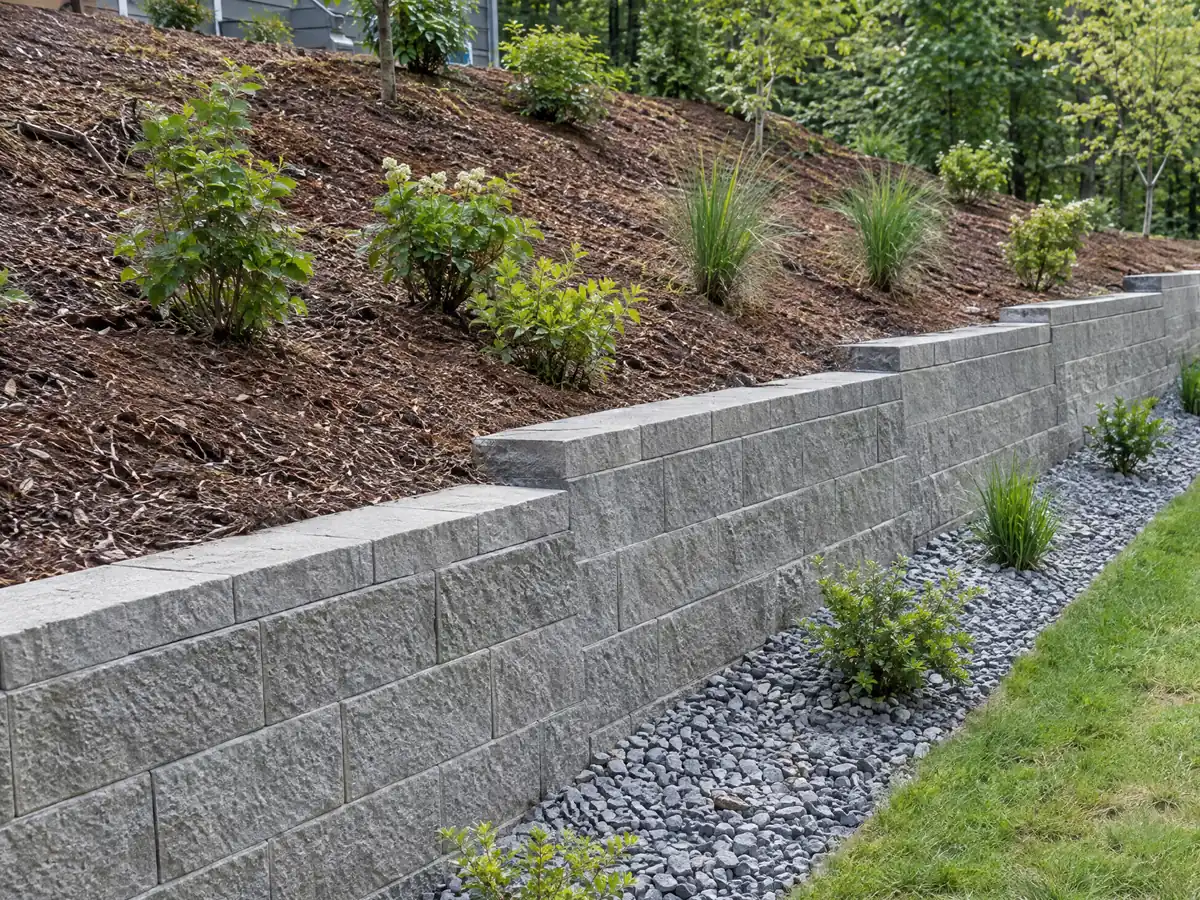
How tall can a retaining or block wall be in Moreno Valley before it needs a permit?
Higher than 3 feet from the top of the footing needs a permit, according to the City's permit FAQ. Moreno Valley's amended codes exempt a block wall under 3 feet, or one under 3 feet topped with wood, vinyl, wrought iron or chain link up to 6 feet in total. The City's block wall handout, revised January 2014, adds that Planning approves the structure before a building permit and wants a site plan showing slopes, drainage and distances to property lines.
Zoning sets height too. Section 9.08.070 caps side and rear fences and walls at 6 feet, allows 8 feet where the grade difference between sites warrants it, limits a retaining wall on the line between two residential lots to 3 feet and holds a retaining wall plus fence to 8 feet of solid surface. In a front yard a solid wall stops at 3 feet, and a wall at least 75 percent open above 3 feet may reach 6.
License class matters. CSLB lists block walls under masonry, C-29, and its fencing class excludes masonry walls, so ask who holds the license for a block wall before the proposal is signed. The zoning text comes from a third-party copy, so confirm heights with Planning.
What do heat, wind and dust rules mean for a Moreno Valley pour?
The valley gives a crew three problems: heat, wind and winter rain. March AFB averages 21.2 days a year at or above 100 F, rain falls mostly from December through March, and the General Plan Safety Element says Santa Ana winds between October and March can blow up to 100 miles per hour. We found no City curing rule, so ask how the crew handles a hot, windy placement and a rain forecast, and how a fresh slab is protected.
Dust is regulated. South Coast AQMD Rule 403 applies to any activity or man-made condition capable of generating fugitive dust, and its definitions place the non-desert parts of Riverside County in the South Coast Air Basin. Breaking out an old driveway, cutting a slab or stockpiling base rock all qualify, so ask what the crew does about watering and track-out.
Old concrete has to go somewhere. Demolition debris on a permitted job counts toward the City's 50 percent diversion requirement, so put the haul-off plan in the proposal and ask the hauler what happens to broken slab.
What does concrete work cost near Moreno Valley, and which license applies?
No Moreno Valley concrete study turned up, so the figures come from Angi's Los Angeles pages, which draw on customer surveys and pro data and may not match Inland bids. Angi puts patios at $4 to $13 per square foot, with a $5,248 average and a 20 by 20 foot slab at $1,600 to $5,200, stamped work at $15 to $30 and driveways at $8 to $20 with a $7,270 average. HomeGuide's $4 to $12 patio range overlaps, so we treat plain flatwork as medium confidence.
Retaining walls average $7,140 on Angi's page across a $2,674 to $11,842 spread, which is why we print no per-foot wall price. Federal data put Los Angeles-area cement masons at a $33.67 mean hourly wage in May 2025, a wage and not a billing rate. Small jobs run above per-foot averages because of minimum charges, and demolition, base rock, rebar, haul-off, pad testing and any right-of-way permit belong on separate lines.
CSLB's C-8 class covers forming, pouring, placing and finishing concrete, and C-29 covers block walls. California allows unlicensed work only under $1,000 including materials, and not when a permit is needed (Business and Professions Code 7048), while a down payment is capped at $1,000 or 10 percent by section 7159.5. Our subcontractor guide explains who pours and who manages.
Concrete photos from Moreno Valley and nearby communities
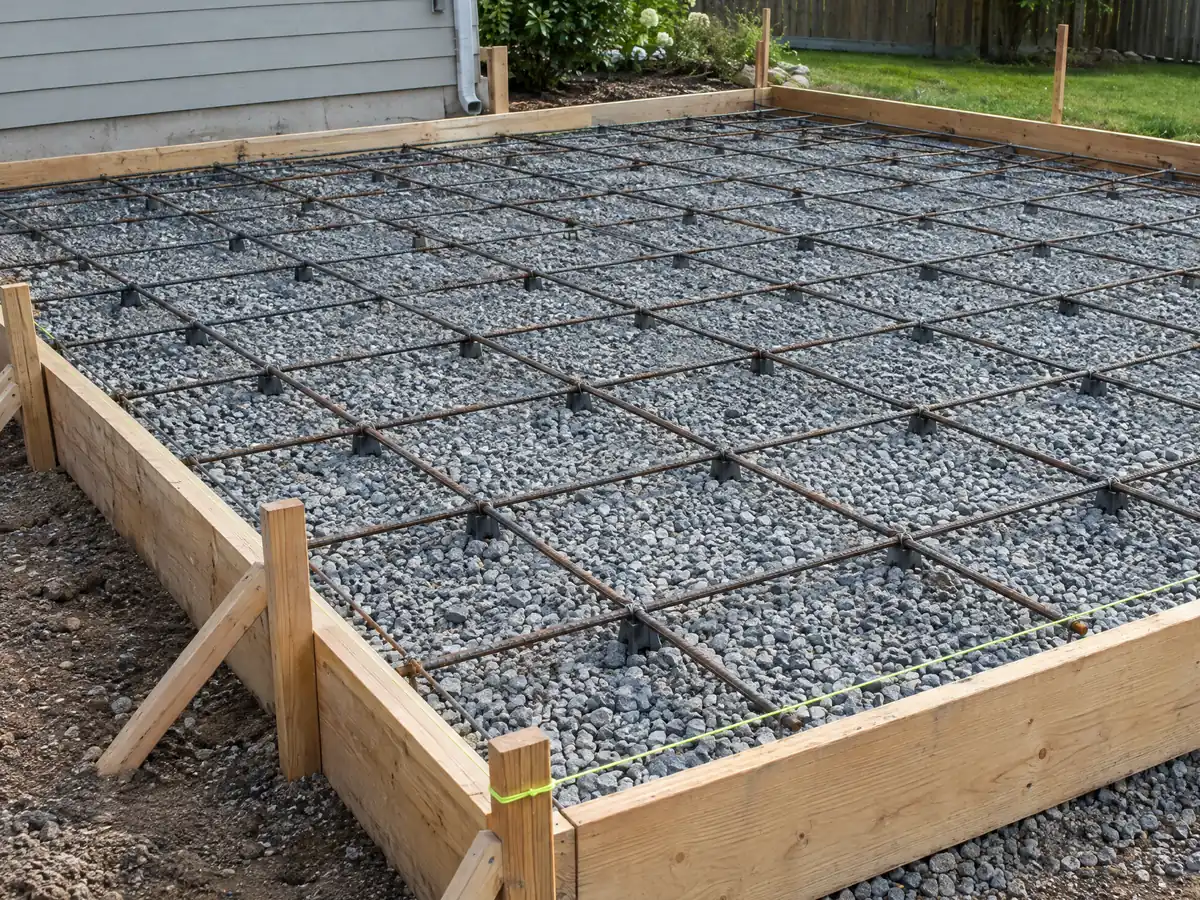
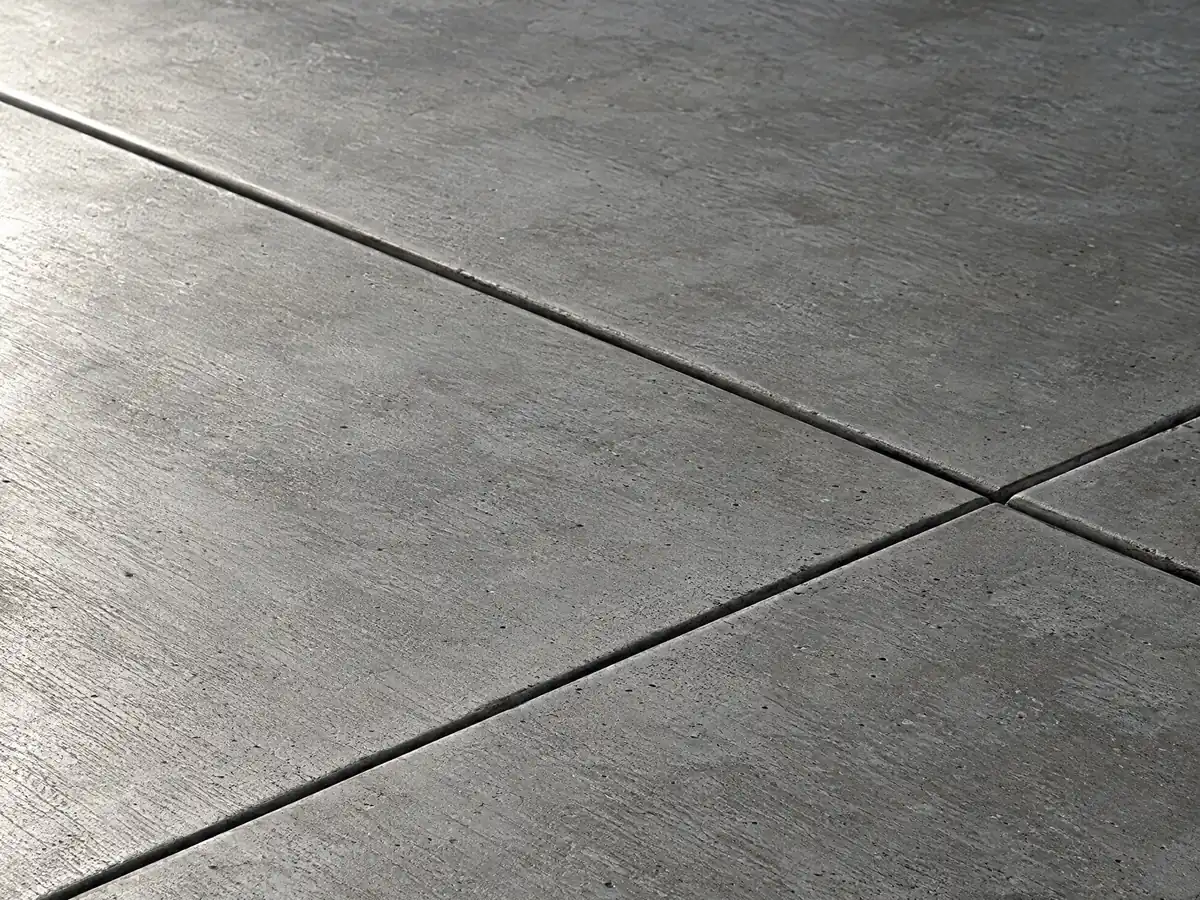
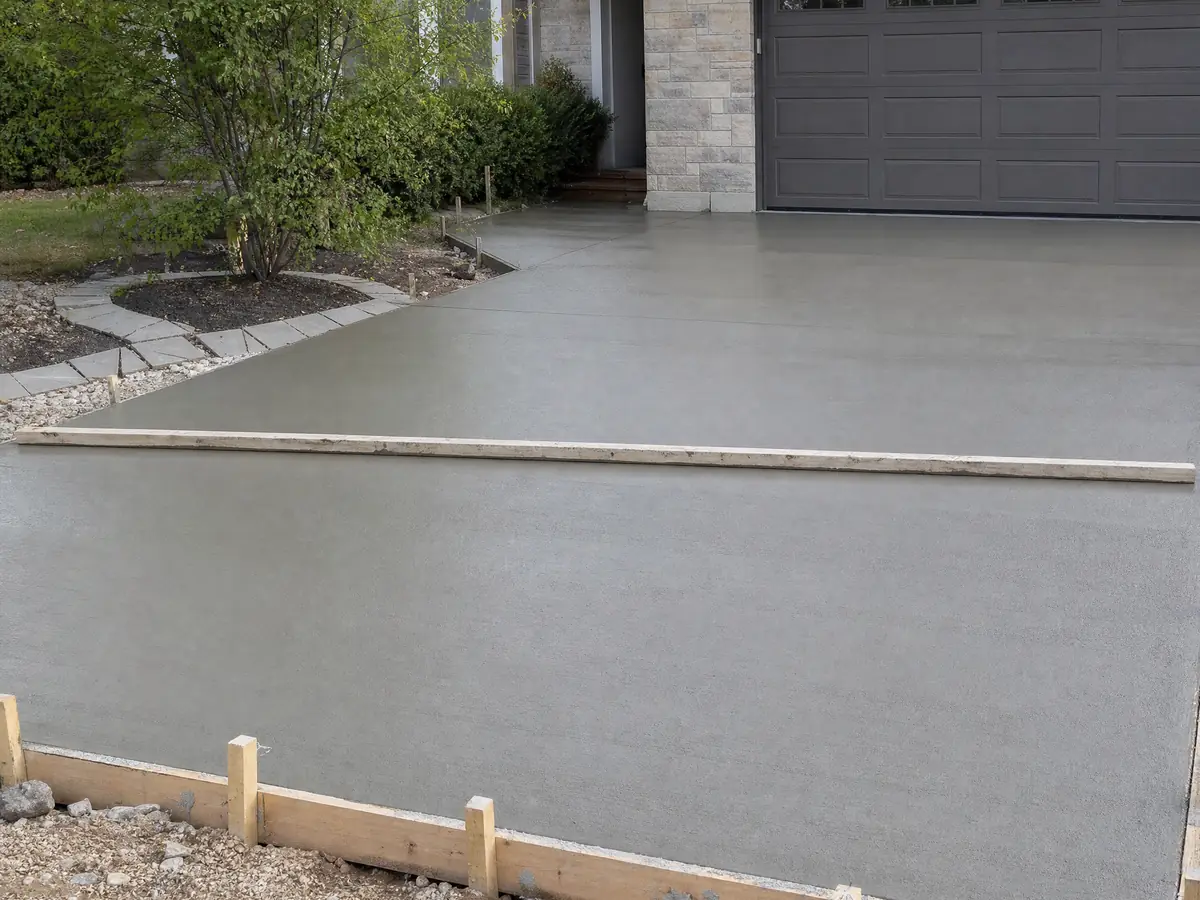
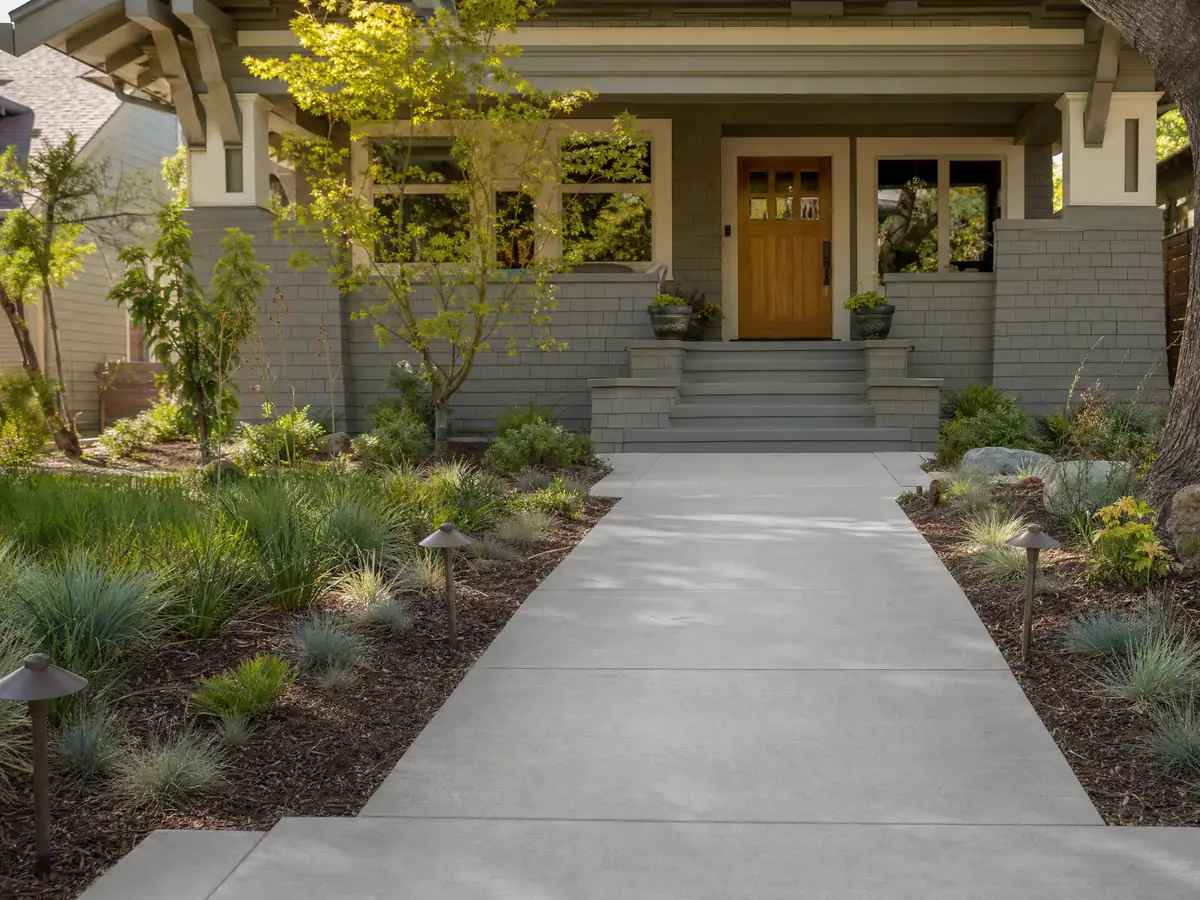
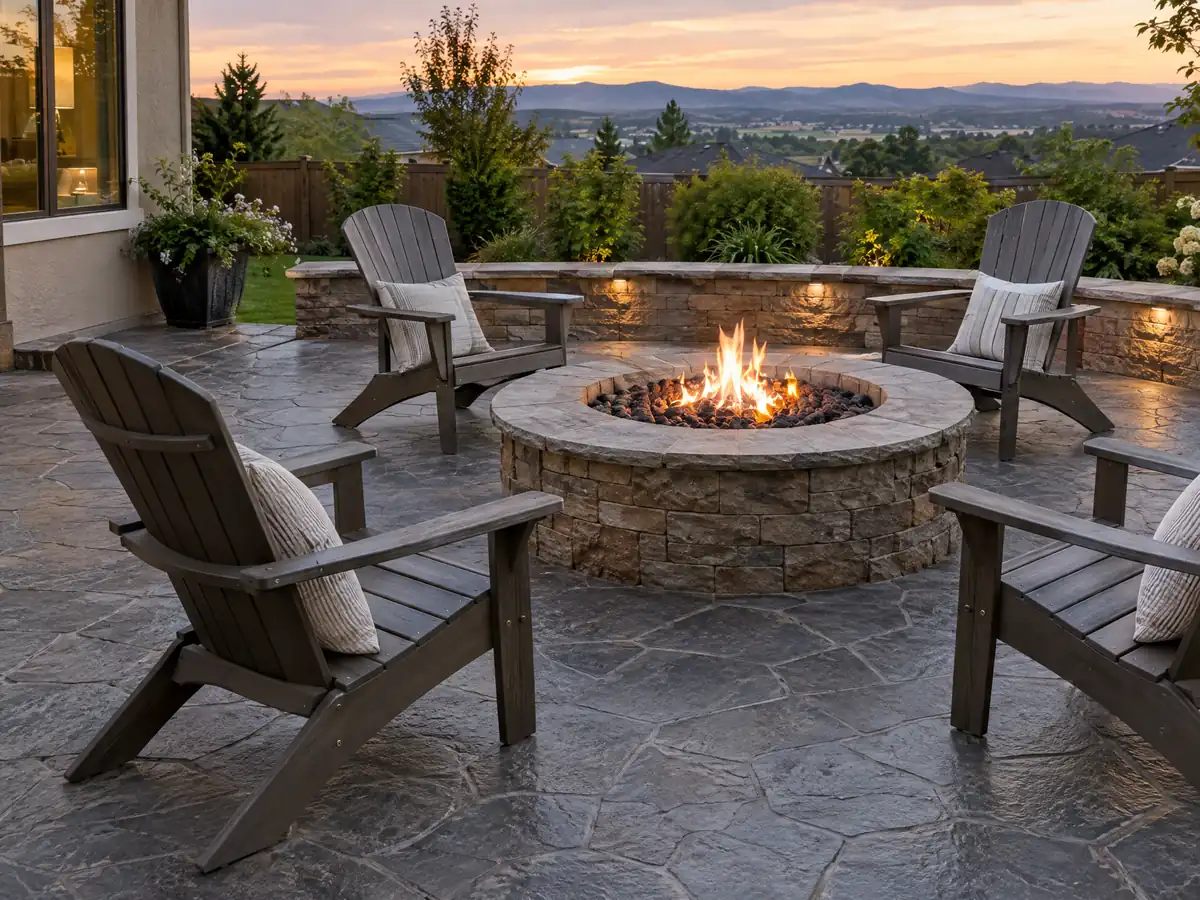
Forms, flatwork, walls and finished walks from Moreno Valley and the cities around it, shown at the stages that matter. Tap any photo to enlarge it.
What concrete costs around Moreno Valley
These are Los Angeles planning ranges from our concrete page, not a Moreno Valley bid, so ask for demolition, base, pad testing and any right-of-way permit as separate lines. A slab that becomes a floor is covered in flooring in Moreno Valley, and a slab that carries a cover is covered on the Moreno Valley deck page. Compare concrete in Pomona, concrete in Claremont and concrete in La Verne, and concrete in Los Angeles for the big-city benchmark. Our license check guide shows how to read a CSLB record before anyone signs.
| What it covers | Typical range |
|---|---|
| Patio, walkway or slab, broom finish, 300 sq ft or more | $8 to $14 per square foot |
| Decorative: stained, stamped or exposed aggregate | $15 to $30 per square foot |
| Driveway replacement, with demolition of the old slab | $9 to $20 per square foot |
| 20 by 20 foot plain patio (400 sq ft) | About $3,200 to $5,600 |
| 20 by 20 foot decorative patio (400 sq ft) | About $6,000 to $12,000 |
| Small jobs under 300 sq ft | Usually above the per-foot range |
| Retaining walls | Set by the written proposal |
Other work we manage in Moreno Valley
Moreno Valley concrete questions, answered
Do I need a permit to pour a concrete patio in Moreno Valley?
Not for the slab itself. The City's permit FAQ says no permit is required for a patio slab, but every attached or freestanding patio cover needs one, and so does a wall higher than 3 feet from the top of the footing. Work that touches the City right-of-way needs an encroachment permit, so call Building and Safety at 951.413.3350.
Does moving 50 cubic feet of soil need a grading permit in Moreno Valley?
The City's own documents conflict. The ADU guidebook asks for a grading plan at 50 cubic feet, while the grading code exempts excavation up to 50 cubic yards, which is 27 times larger. We read the code on a third-party mirror, so confirm in writing with Land Development at 951.413.3120 before digging.
What is the maximum height of a retaining wall without a permit in Moreno Valley?
Three feet, measured from the top of the footing; anything higher needs a permit under the City's FAQ. Zoning separately limits a retaining wall on a line between two residential lots to 3 feet, and a wall plus fence to 8 feet of solid surface. Planning wants a site plan showing slopes and drainage.
Can I expand my driveway without a permit in Moreno Valley?
Not freely. The state exempt list names driveways, but the City says an additional driveway needs a Land Development permit first and work in the right-of-way needs an encroachment permit. We found no paving width rule, and pavement over 5,000 square feet on natural grade can trigger grading, so ask before widening.
How much should a 20x20 concrete patio cost in Moreno Valley?
Angi's 2026 Los Angeles page gives $1,600 to $5,200 for a 20 by 20 foot patio, inside a $4 to $13 per square foot range. We found no Moreno Valley study, so treat it as a planning range. Tear-out, base rock, finish and a contractor's minimum charge all shift the total, and only a site visit fixes the price.
How much do contractors charge for concrete work in Moreno Valley?
On Angi's 2026 Los Angeles pages a plain patio runs $4 to $13 per square foot, a driveway $8 to $20 and stamped work $15 to $30, with small jobs costing more per foot. We found no Moreno Valley study, so read these as planning ranges and not a bid from any crew.
Is 4 inches of concrete thick enough for a driveway?
Four inches is common residential practice, not a Moreno Valley code number we could cite. Heavy trucks or soft soil can call for more, and expansive soil within 4 feet of grade may require removal or a soil engineer's slab design under Section 8.21.130. Ask the proposal to state thickness, base depth and joint spacing.
Does a Moreno Valley slab need a soils report?
Not by anything we read for a plain patio. The Safety Element requires geotechnical reports in high liquefaction areas, and the grading code asks for removal or engineering where expansive soil sits within 4 feet of grade under a building area. Ask Building and Safety whether your address falls in one of those cases.
What license does a concrete company need in Moreno Valley?
Concrete work falls under CSLB's C-8 class, and block walls are masonry, C-29. California allows unlicensed work only up to $1,000, and not at all when a permit is needed. Look the license up on the CSLB site and ask for a certificate of insurance before accepting any quote for concrete work.
Describe the pour, the lot and what is there now
Say how big the slab or wall is, whether the lot is flat or sloped and what stands there today, such as a cracked drive or bare dirt. The grading question, soil questions and permit steps go with us to the first visit.