
Concrete Companyin Redlands, CA
A concrete company in Redlands has several approvals to sort out: the City publishes no exempt list for patio slabs, walls over 3 feet need a permit, sidewalks and aprons in the public right of way go through Municipal Utilities & Engineering, and flood-zone homes need floors 2 feet above base flood elevation. Call the permit center first.
Redlands' concrete follows its citrus past. The Housing Element's population table climbs from 18,429 in 1950 to 36,355 in 1970 as former groves were subdivided, and the Census Bureau's 2024 estimates credit the 1960s, 1970s and 1980s with about 52 percent of the city's 27,483 homes. Many driveways, walks and block walls are therefore 40 to 60 years old, and the 1819 Mission Zanja, a designated landmark, still carries storm water through the middle of town.
MDG Builders, CSLB #1040337, is a general contractor in Tarzana. On a Redlands pour we draw the scope, take the permit and slope questions to Building & Safety and bring in a licensed concrete subcontractor to form, place and finish. The concrete page explains finishes, and the Redlands overview lists the rest, including flooring in Redlands and decks in Redlands, which often share a slab.
What Redlands' Building & Safety Division, Engineering, South Coast AQMD and the hillside code say about concrete work
Where concrete permits come from in Redlands: City of Redlands Development Services Department, Building & Safety Division.
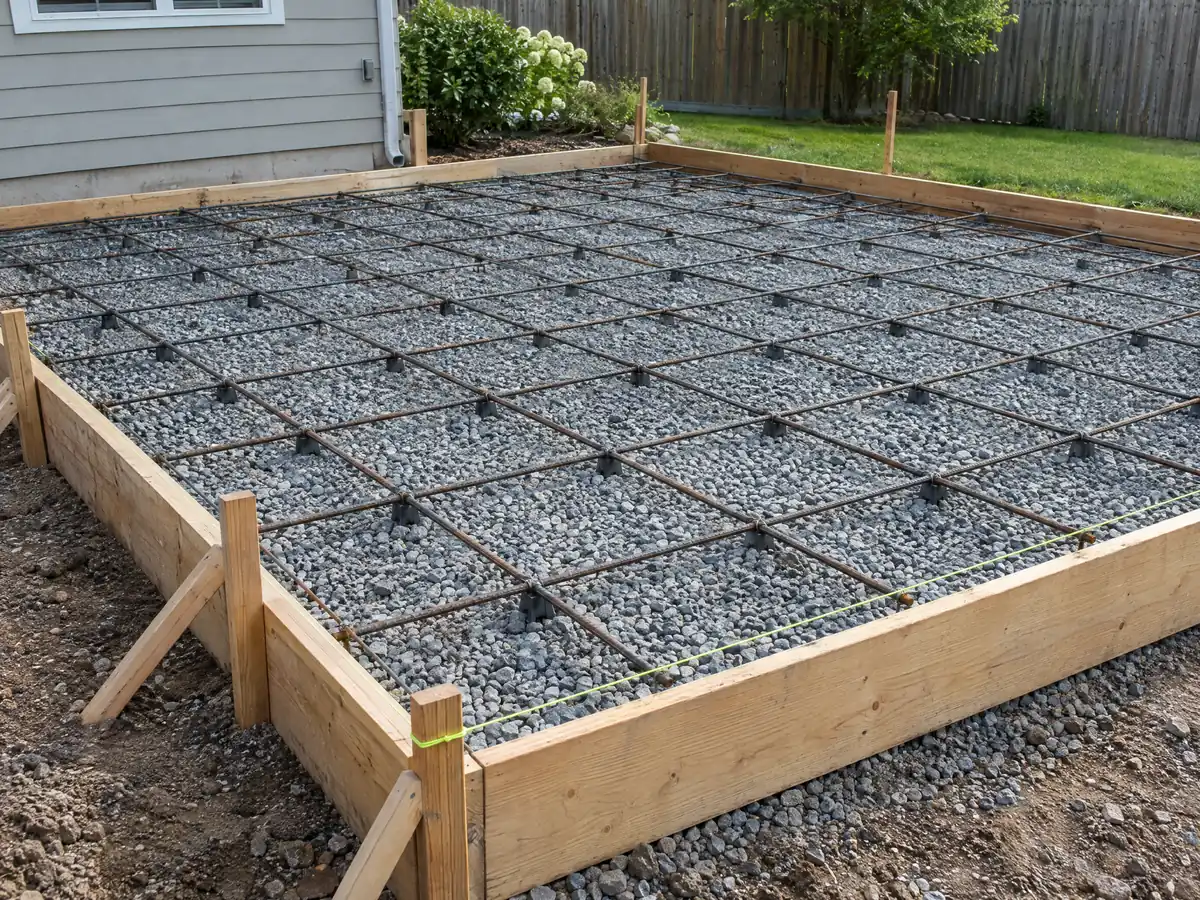
- Grading and flatwork: the Residential Plan Check handout requires a separate grading permit when more than 50 cubic yards is moved, fill is 1 foot or more, or a cut is 2 feet or more (Municipal Code 15.04.070 words the exemption as fill under 1 foot, a cut under 3 feet or not over 50 cubic yards), and the fee study prices grading by volume, starting at $221 full cost for 0 to 100 cubic yards (current $191.55).
- Lot drainage and dust (Municipal Code 15.04.070, GoCodebook mirror): single-family lots should drain directly to a street; off-site flow may pass through only one other lot with a drainage easement and a lined swale or reinforced concrete pipe of at least 12 inches sized for twice the 100-year storm runoff; the permittee must control erosion, mud and debris, and install a dust control sign and contact information before the permit issues.
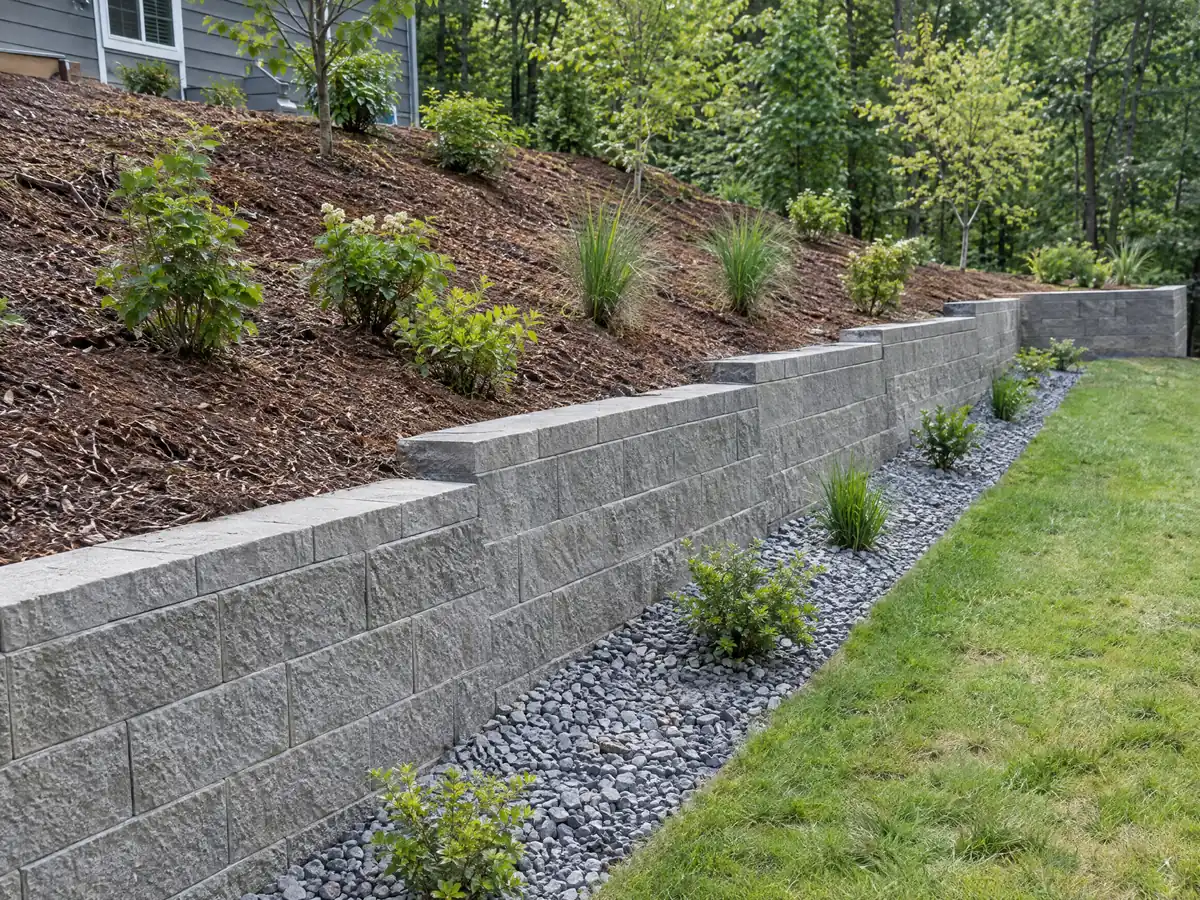
- Retaining walls and masonry: concrete or masonry walls over 3 feet and retaining walls over 3 feet need a permit (fee study: $439 for the first 50 linear feet of concrete or masonry retaining wall at full cost, $512 for a special-design wall 3 to 10 feet high), and the City's Planning Permits page routes taller or exception walls through a Minor Exception Permit.
- Dust and washout: South Coast AQMD Rule 403 applies to concrete demolition, grading and open stockpiles in Redlands, and the City's storm water program inspects construction sites for runoff, so concrete washout and slurry cannot go to the street.
- The One Stop Permit Center routes engineering permits and inspections to Municipal Utilities & Engineering (Engineering inspections at 909-798-7597 ext. 6); the pages read do not list which driveway, curb or flatwork items need an engineering permit and publish no flatwork exemption, so ask Engineering before pouring anything that touches the public right of way.
Can I pour a concrete patio or walkway in Redlands without a permit?
We could not confirm it for a ground-level slab. The City's Do I Need a Permit handout, from 2019 and not exhaustive, lists new buildings, additions, patio covers, masonry or concrete walls over 3 feet and new landscaping of 500 to 2,500 square feet, and it names no flatwork. The pages we read publish no exempt list for slabs, walks or driveways, and the State line we know from the 2022 California Building Code, sidewalks and driveways not more than 30 inches above adjacent grade, was not checked against the 2025 edition that Redlands enforces.
Anything in the public right of way is Engineering's business. The One Stop Permit Center routes engineering permits and inspections to Municipal Utilities & Engineering, which schedules inspections at 909-798-7597 ext. 6, and the pages we read do not list which driveway, curb or flatwork items need an engineering permit. Ask before pouring anything that touches the sidewalk, the apron or the curb.
Who signs matters too. The City lets the owner pull a permit with ID, or a licensed contractor with a state license number and a workers' compensation certificate, and an owner's representative needs a notarized Authorized Agent Letter. Municipal Code 15.04.060, in the GoCodebook mirror, bars crews from using public streets and alleys without clearance from the City Engineer, so ask whether the truck and the pump need it.
Do Redlands' hillside district and grading rules apply to a slab or footing?
They can, because the district starts at a 15 percent slope. The HD Hillside Development District in Municipal Code 18.138 covers any parcel averaging a 15 percent slope or with any slope of 15 percent or more, and it requires a slope plan certified by an engineer before clearing, grading or a building permit. Slopes over 100 feet long or 10 feet high must be landformed, and Code 16.04 has the City calculate the average cross slope before an application is complete. We read both chapters in GoCodebook's third-party mirror and did not check any address.
The grading line is stated two ways. The Residential Plan Check handout asks for a separate grading permit when more than 50 cubic yards moves, when fill reaches 1 foot or when a cut reaches 2 feet, while Municipal Code 15.04.070 exempts fill under 1 foot, a cut under 3 feet or earthwork of 50 cubic yards or less. A cut between 2 and 3 feet is where the two disagree, so get the counter's answer in writing. The code also wants a dust control sign and contact information posted before a grading permit issues.
Soil reports follow size, not slope alone. Municipal Code 15.06.050 requires a geotechnical report for new construction or additions above 50 percent of the original structure, and the City's Structure Design Criteria handout assumes presumptive soil bearing of 1,500 pounds per square foot and seismic design category D, or E where a residential SDS exceeds 1.25.
How high must a slab sit in a Redlands flood zone, and where must the water go?
A home's lowest floor must sit 2 feet above base flood elevation. Municipal Code 15.32 sets that height for residential construction in zones AE and AH, an addition or remodel reaching 50 percent of the structure's market value counts as a substantial improvement that triggers the chapter, and Code 18.136 adds an FP Floodplain District. The Santa Ana River and Mill Creek spill from a braided wash more than 1.5 miles wide about 5 miles northeast of the city, and the 2021 Local Hazard Mitigation Plan lists flooding on Orange and Alabama Streets in eight years between 1965 and 1995.
Drainage has its own rule. Municipal Code 15.04.070 says single-family lots should drain directly to a street, and off-site flow may cross only one other lot, with a drainage easement and a lined swale or reinforced concrete pipe of at least 12 inches sized for twice the 100-year storm runoff. The permit holder must also control erosion, mud and debris. Slope a new patio away from the neighbor's wall and toward the street or a lined path.
The Zanja is local knowledge. The Mission Zanja, a landmark and National Register listing running from the 2800 block of Mentone Boulevard to the west edge of Sylvan Park, drains much of the city and the Plan calls it a serious threat in big storms. The City's building page links FEMA's maps, the October 30, 2025 Flood Insurance Study and a Substantial Improvement Worksheet, and those maps, not our reading, show which parcels sit in a zone.
How tall can a retaining wall, block wall or flagpole be in Redlands before it needs a permit?
Three feet keeps appearing, and the City measures it two ways. Municipal Code 15.04.020, read in GoCodebook's mirror, exempts masonry or concrete fences up to 3 feet from the lowest adjacent grade and retaining walls up to 3 feet from the top of the footing, unless they carry a surcharge or impound flammable liquids, while the City's 2019 handout measures retaining walls from the lowest adjacent grade. A wall that rises 3 feet above the ground can stand taller than 3 feet from its footing, which is where the two answers split. The 2022 State text we read says 4 feet, so confirm the Redlands wording.
Flagpoles show the same split. The 2019 handout asks for a permit for a flagpole over 20 feet, while Municipal Code 15.04.020 says one up to 30 feet is exempt, and the footing for a tall pole is concrete you will pour either way. Ask which number the counter uses and get it in writing.
Zoning adds heights. Municipal Code 18.168.020 allows open fences up to 4 feet in a required front yard, no other fence or wall over 3 feet there and up to 6 feet along side and rear lines, and it requires a 6 foot fence or wall at the top of a slope where the top line separates owners. Taller walls need a Minor Exception Permit, and a wall that crosses a property line needs the neighbor's signature. Poured walls fall under CSLB's C-8 class and block walls under C-29 masonry.
Does a historic district or an old citrus grove change a concrete job in Redlands?
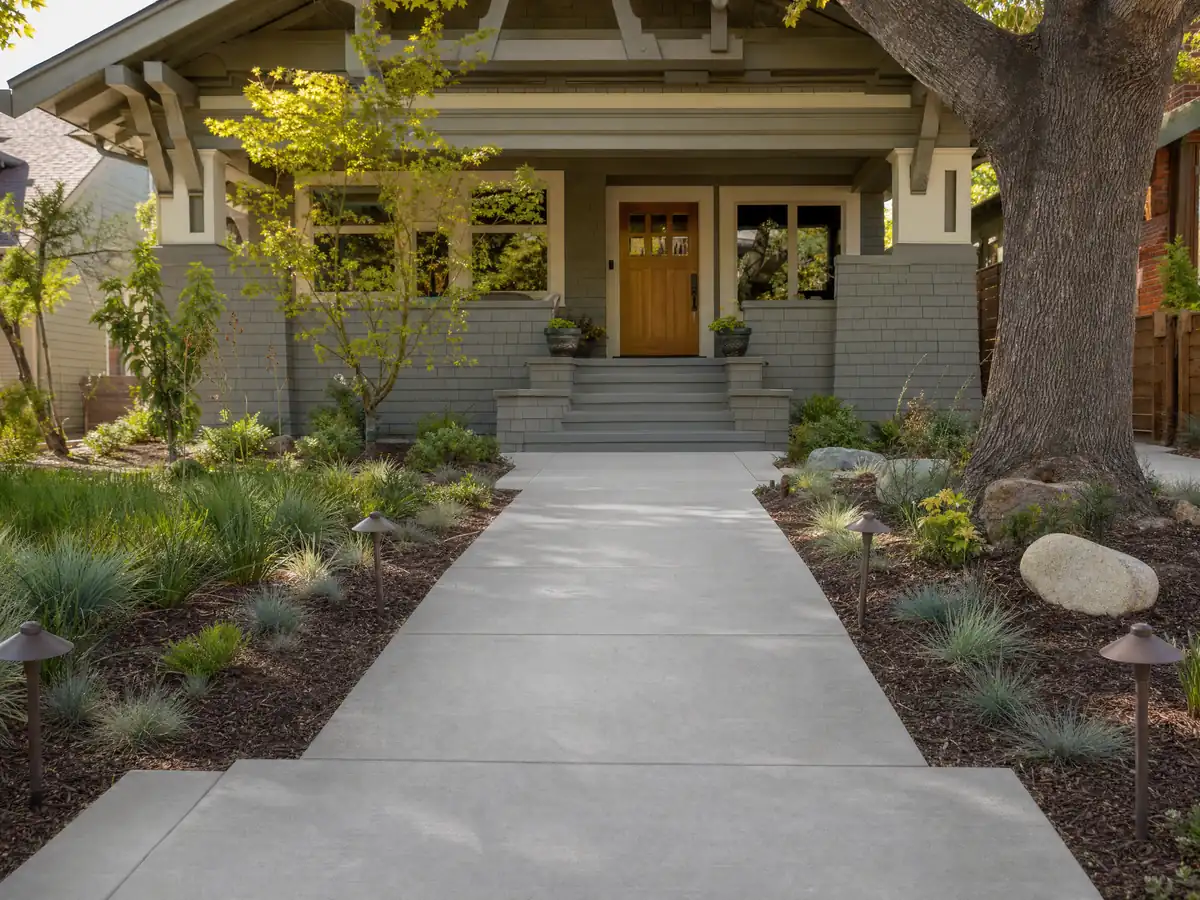
In the eight local historic districts it can. A Certificate of Appropriateness is required for exterior alterations to a designated resource and for new construction on its site, and the City's checklist lists new fences or walls as a minor item that staff approve. A district sidewalk, driveway or patio is not named on the lists we read, so ask Planning at (909) 798-7555 ext. 1 before breaking out an old walk or adding a wall. Demolition of any structure 50 years or older goes to the Historic and Scenic Preservation Commission with a CEQA initial study.
North Redlands has the age without the review. The Housing Element notes many homes over 50 years old there and no historic districts, so a 1960s driveway comes out under the ordinary permit rules, and a contractor demolishing a structure with it still faces the asbestos survey duty in Rule 1403.
Citrus is part of the culture. The City owns 16 groves covering 184 acres through its Citrus Division, a five-member Citrus Preservation Commission advises the Council under Municipal Code 2.64, and the Housing Element says few protections exist for privately owned groves. California's Huanglongbing citrus quarantine area includes all of San Bernardino County, so clearing that involves citrus trees deserves a question before any trimmings leave the lot. Forms beside an old tree are a root question for an arborist.
Do Rule 403, storm water rules and Redlands heat and wind change how concrete is poured?
Yes, in three ways. South Coast AQMD Rule 403 bars dust from an active operation or open pile from staying visible past the property line or exceeding 20 percent opacity, and Redlands backs it with its permits, since the building code lets the City suspend a permit when dust exceeds standards. Concrete cutting, slab demolition and soil stockpiles all count, so ask how the crew wets the site.
Washout is a storm water matter. The City inspects construction sites under a Santa Ana Regional Water Quality Control Board permit and warns that street runoff reaches the Santa Ana River untreated, so slurry and rinse water cannot go to the gutter or a catch basin. Ask where the truck rinses, whether the crew brings a washout bin and who cleans the curb afterward.
Weather sets the calendar. The Local Hazard Mitigation Plan says winds can gust to 30 to 40 mph throughout the year, and NOAA's 1991 to 2020 normals for Redlands show August highs averaging 96.2 F, about 104 days a year at or above 90 F and about 26 at or above 100 F. The City publishes no frost depth, so none is stated here. Ask how the slab is shaded, dampened and cured in August. Sealers fall under Rule 1113, which counts clear coatings on concrete floors as floor coatings.
What does concrete work cost in Redlands, and what license does a concrete company need?
No Redlands price study with a stated method turned up, so we lean on Angi's Los Angeles pages: $4 to $13 per square foot for a patio (August 4, 2026), $15 to $30 for stamped (July 20, 2026) and $8 to $20 for a driveway (May 5, 2026). Federal wage data (BLS, May 2025) put cement masons in the Los Angeles area at a mean of $33.67 an hour. Inland Empire bids may differ.
Our own Los Angeles planning figures are $8 to $14 per square foot for plain flatwork of 300 square feet or more, $15 to $30 for stained, stamped or exposed aggregate and $9 to $20 for driveway replacement with demolition, which puts a plain 20 by 20 foot slab at about $3,200 to $5,600. In Redlands, ask for demolition, haul-off, any engineering permit, a soil report and wall engineering as separate lines. Small jobs run above the per-foot averages because of minimum charges, and a retaining wall waits for a site visit because height, drainage and engineering set its price.
A concrete job that needs a permit needs a licensed contractor, because the State's $1,000 limit for unlicensed work ends once a permit is required, and Business and Professions Code 7159.5 caps a down payment at $1,000 or 10 percent, whichever is less. Our license check guide shows how to verify a number.
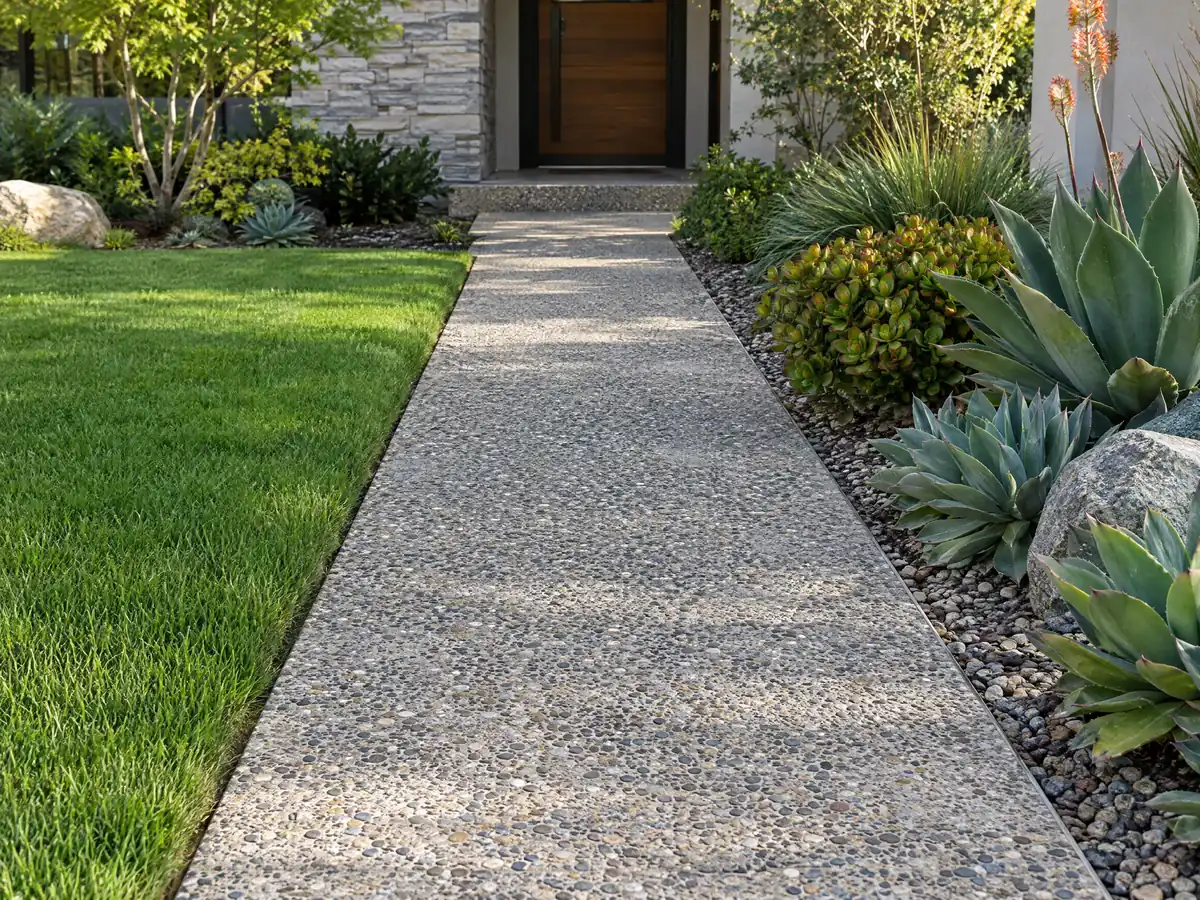
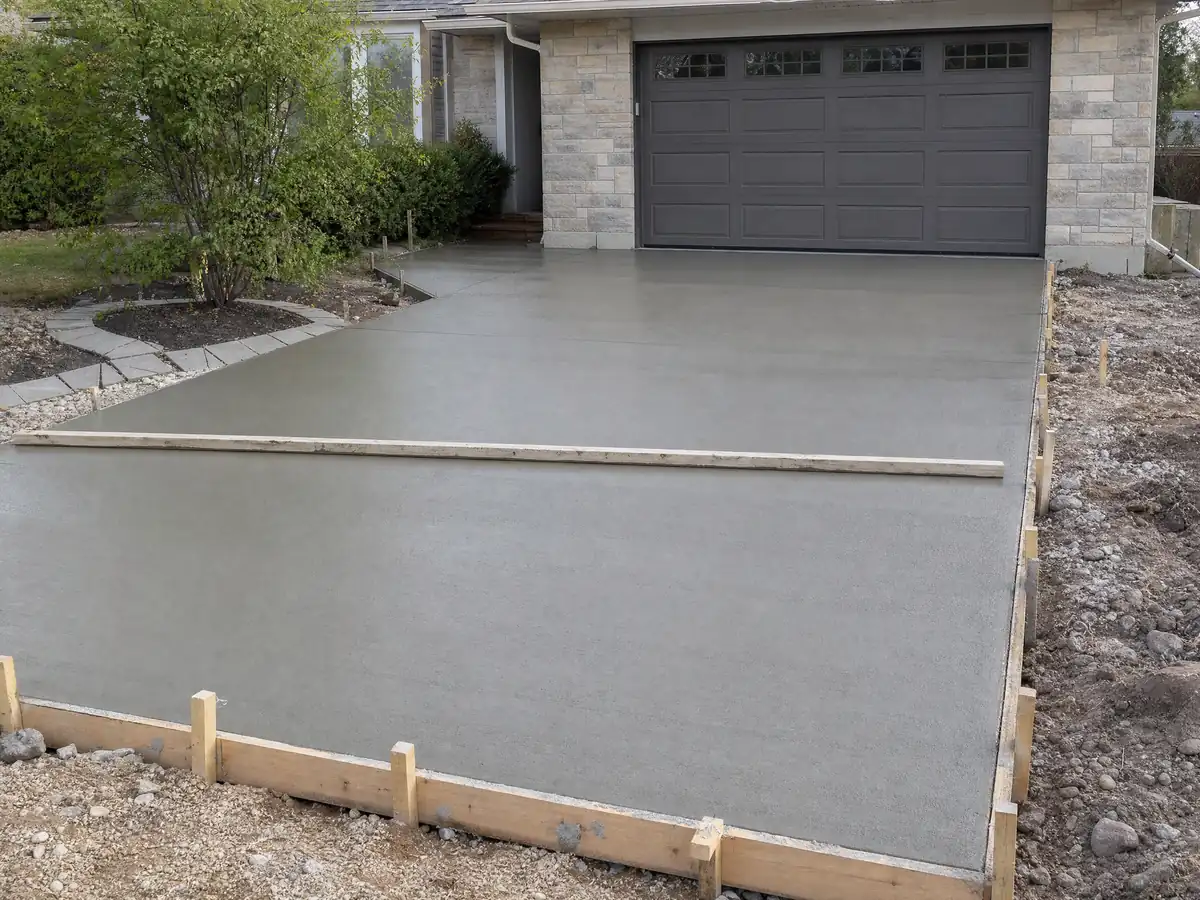
Concrete photos from Redlands and nearby communities
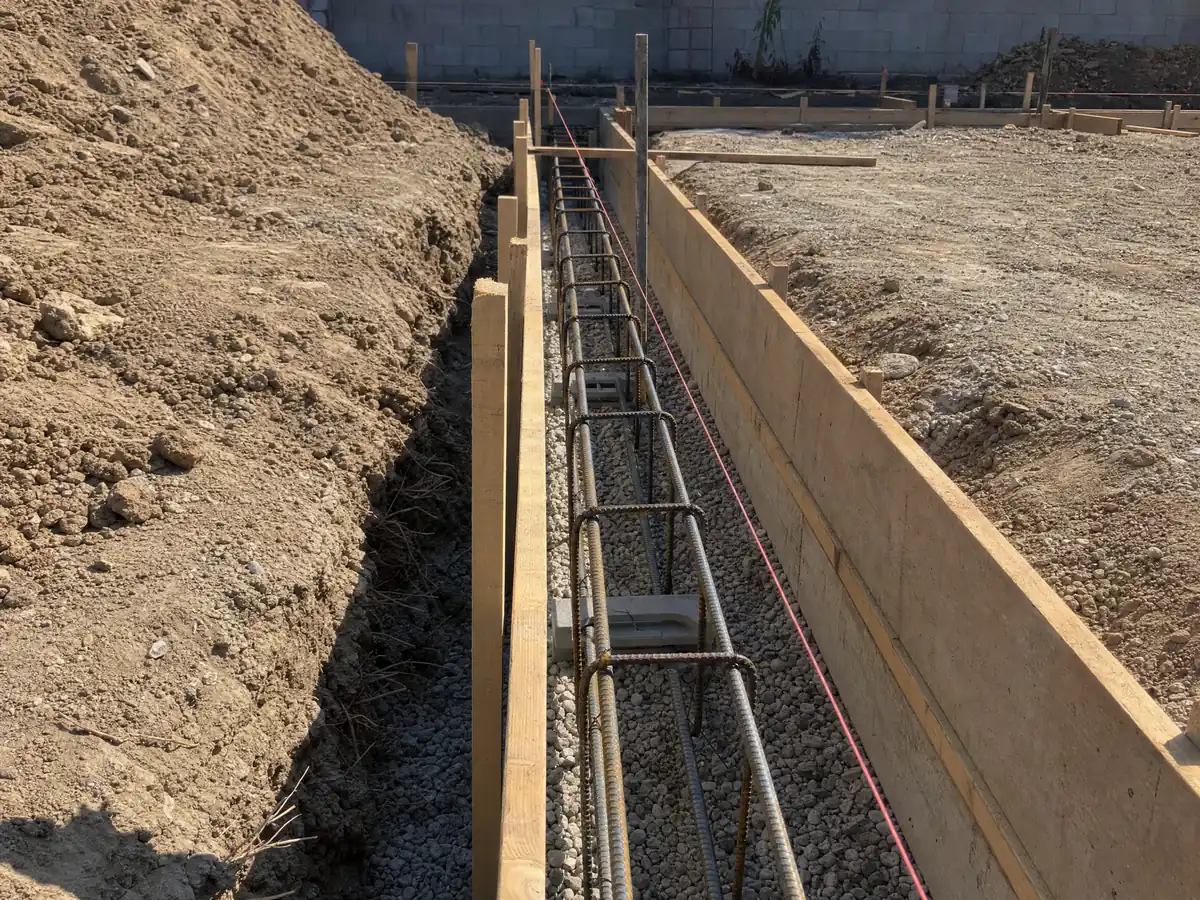
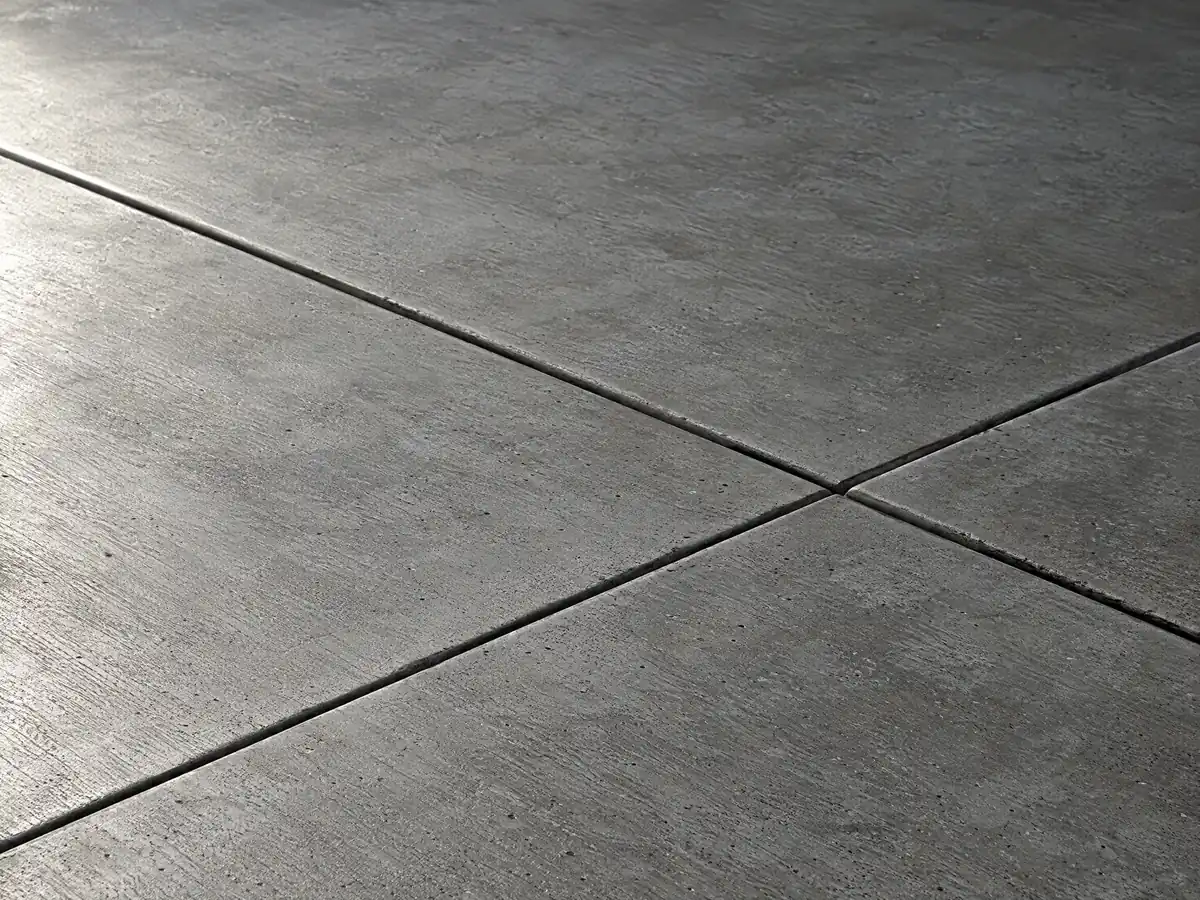
Forms, rebar, finished flatwork and block walls from Redlands and the communities around it, shown at the steps where the permit lines matter. Tap any photo to enlarge it.
What concrete costs around Redlands
The dollar figures on this page are Los Angeles planning ranges from our concrete page, not a Redlands bid, so the written proposal should show demolition, haul-off, base, rebar, engineering and any right of way permit as separate lines. To compare Inland Empire cities, read concrete in San Bernardino, concrete in Fontana and concrete in Ontario, with concrete in Los Angeles as the big-city benchmark. The subcontractor guide explains who forms and who finishes, and the flooring cost guide covers what can sit on top of a slab.
| What it covers | Typical range |
|---|---|
| Patio, walkway or slab, broom finish, 300 sq ft or more | $8 to $14 per square foot |
| Decorative: stained, stamped or exposed aggregate | $15 to $30 per square foot |
| Driveway replacement, with demolition of the old slab | $9 to $20 per square foot |
| 20 by 20 foot plain patio (400 sq ft) | About $3,200 to $5,600 |
| 20 by 20 foot decorative patio (400 sq ft) | About $6,000 to $12,000 |
| Small jobs under 300 sq ft | Usually above the per-foot range |
| Retaining walls | Set by the written proposal |
Redlands concrete questions, answered
Can I pour a concrete patio without a permit?
We could not confirm it for Redlands. The City's permit handout names no flatwork and the pages we read publish no exempt list for slabs, walks or driveways. Call the One Stop Permit Center at 909-798-7536 with your dimensions before forming, and ask Engineering at 909-798-7597 ext. 6 if anything touches the sidewalk or curb.
How much should a 20x20 concrete patio cost?
A 20 by 20 foot patio covers 400 square feet, which at our $8 to $14 Los Angeles planning range is $3,200 to $5,600, while Angi's Los Angeles patio page shows $1,600 to $5,200 for the same size. Neither number is a Redlands bid. Stamped or exposed aggregate at $15 to $30 pushes it higher, and haul-off adds to the bill when an old slab comes out.
How much does a 300 sq ft stamped concrete patio cost?
Angi's July 20, 2026 stamped concrete page for Los Angeles shows $15 to $30 per square foot, so 300 square feet runs $4,500 to $9,000, and the page's overall average is $5,948. That is a Los Angeles range, not a Redlands bid, and small jobs often price above the average because of minimum charges.
Can I expand my driveway without a permit?
Probably not without a call. Work on the apron, sidewalk or curb in the public right of way goes through Municipal Utilities & Engineering, and the pages we read do not say which driveway items are exempt. Zoning for your lot is on the City's zone map, since many lots sit in a specific plan with no Title 18 zoning.
What is the maximum height of a retaining wall without a permit in California?
The 2022 California Building Code text we read exempts retaining walls up to 4 feet from footing bottom to top unless they carry a surcharge. Redlands' amended code, read in a third-party mirror, says 3 feet from the top of the footing, and the City's 2019 handout measures from the lowest adjacent grade. Confirm which applies to your wall.
Is 4 inches of concrete thick enough for a driveway?
Four inches is a common figure for walks and patios, but we found no Redlands code number for driveway thickness, and the sources we read treat thickness, base and joint spacing as industry practice. Vehicle weight and soil matter, so have the concrete subcontractor put the thickness, base and steel into the written proposal.
Do I need a grading permit to pour concrete in Redlands?
Not for small jobs, but the City states the line two ways. Its plan check handout asks for a grading permit at more than 50 cubic yards, fill of 1 foot or more or a cut of 2 feet or more, while Municipal Code 15.04.070 exempts a cut under 3 feet. On a 15 percent slope the Hillside District adds an engineer's slope plan.
How high above the flood level must a new slab sit in Redlands?
For a home in zone AE or AH, the lowest floor must be 2 feet above base flood elevation under Municipal Code 15.32, read in a third-party mirror. A remodel or addition costing 50 percent of the structure's market value triggers the same chapter. The City's FEMA map links show which parcels are in a zone.
Does concrete dust or washout break any Redlands rules?
It can. Rule 403 bars dust that stays visible past the property line or exceeds 20 percent opacity, and the City can suspend a permit when dust passes the standard. Redlands' storm water program also bars paint, oil and similar pollutants from gutters and catch basins, so slurry and rinse water need a washout bin.
What license does a concrete company need in Redlands?
Poured concrete work falls under CSLB's C-8 class, and block walls under C-29 masonry. Check the number on the CSLB site and ask each subcontractor for a license number and certificate of insurance. A Redlands permit application asks the contractor for a state license number and a workers' compensation certificate.
Tell us what you want poured, its size and whether the lot slopes
Describe the patio, driveway, walk or wall, the rough size and whether the lot is flat, on a hillside or in a flood zone. Wall height, grading and right of way questions come with us to the first visit.