
Concrete Companyin San Bernardino, CA
A concrete company in San Bernardino can pour sidewalks and driveways up to 30 inches above grade without a building permit, but walls are different: concrete or masonry fences over 3 feet above grade need one, and the City's web page and its code disagree on whether the fence exemption stops at 6 or 7 feet.
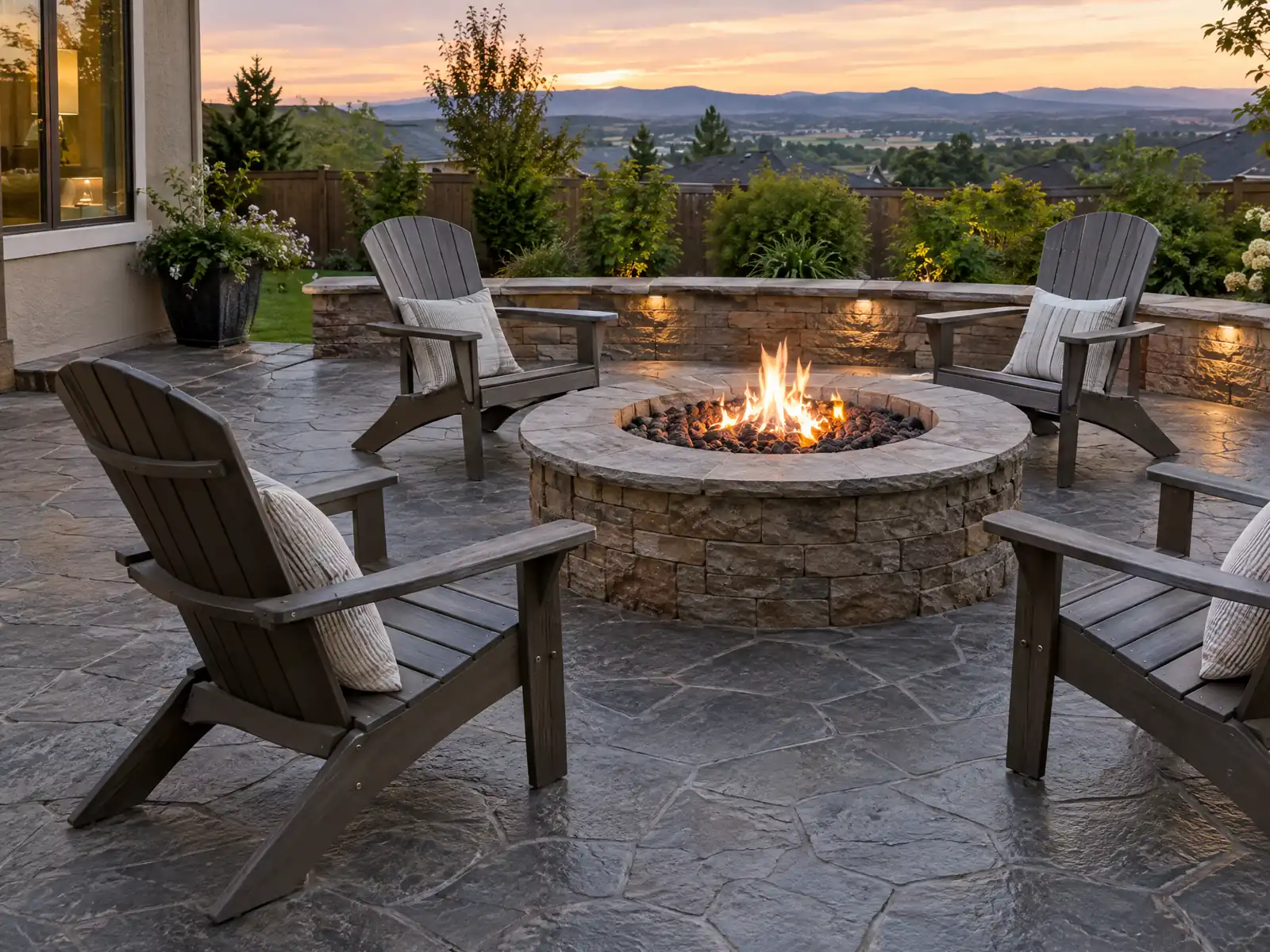
San Bernardino's concrete is mostly postwar. The Census Bureau's 2024 estimates credit the 1950s with 14,038 of the city's 68,594 homes and the 1960s and 1970s with another 17,621, and the City's Housing Element says at least half of the housing stock is 50 years old or older. Driveways, walks and patio slabs from those tracts are now at or past retirement age, and the Housing Element estimates that up to 20 percent of homes need moderate repair.
MDG Builders, CSLB #1040337, is a Tarzana general contractor. For a San Bernardino pour we define the scope, put the wall, apron and grading questions to the Building & Safety Division and hire a licensed concrete subcontractor to form, place and finish the work. The concrete page explains finishes, the San Bernardino overview lists our other trades here, and flooring in San Bernardino covers what goes over an interior slab.
What San Bernardino's Building & Safety Division, Public Works, South Coast AQMD and state law say about concrete work
Where concrete permits come from in San Bernardino: City of San Bernardino Community Development & Housing Department, Building & Safety Division.
- Permit exemption for flatwork: sidewalks and driveways not more than 30 inches above grade, not over a basement or story below and not part of an accessible route are exempt from a building permit, as are retaining walls not over 4 feet measured from the bottom of the footing to the top of the wall (unless supporting a surcharge) and decks of 200 square feet or less that are not attached to the dwelling.
- Driveway geometry (Municipal Code 15.04.230): a driveway to a residential garage more than 30 feet long must run at least 20 feet from the garage on a maximum 5 percent grade, a shorter driveway may be 8 percent for 20 feet, no portion may exceed 20 percent and grade breaks must not make a car drag; the foothill overlay uses a tighter 15 percent cap unless the Fire Chief and City Engineer approve. (read in GoCodebook's mirror, text as of 2026-10-04)
- Work in the public right of way goes through Public Works Engineering rather than the Building & Safety counter: its page lists excavation, lane closure and temporary encroachment among right-of-way permits (driveway approaches are not named, so confirm), and the Engineering resources page notes special pavement cut requirements on moratorium streets; on-site parking and circulation improvements need a Building Official on-site improvement permit (Municipal Code 15.04.130).
- Soils and water: much of the City sits over the Bunker Hill Groundwater Basin with a historically high water table (the former Urbita Springs lake is now the Inland Center Mall site), the 2024 Local Hazard Mitigation Plan says downtown is in a high liquefaction susceptibility zone and nearly the entire southern part of the City is susceptible, and the swimming pool code lets the Building Official require a soils engineer's review of pool plans (15.48.070).
- Dust and washout: South Coast AQMD Rule 403 applies to concrete demolition, grading and open stockpiles on San Bernardino sites, and Municipal Code 15.04.210 requires grading permittees to keep earth off streets and neighbors' property and to remove deposited material within 24 hours of written notice or the City may clean it up and charge the permittee.
Is a San Bernardino block wall exempt up to 6 feet, or 7?
Neither number helps a block wall. Municipal Code 15.04.070, read in GoCodebook's third-party copy of the code, exempts fences not over 6 feet high from a building permit but pulls concrete and masonry fences more than 3 feet above grade back in, to be built to a standard design or an engineered one. The City's own Building & Safety page summarizes the exemption as 7 feet except masonry. The sources disagree on the height and agree on the masonry exception.
Treat 6 feet as the ceiling and 3 feet as the line for block. We use the code's figure because it is the legal text, and we suggest asking the Building Division which one it applies, since a mirror can lag the City's own copy. A block or poured wall that rises 3 feet 6 inches above grade is a permit job however the height question resolves.
Planning stands in front of the building permit. The City's page says that even when a fence is exempt, the Planning Division must approve every fence and wall plan for zoning compliance. Barbed, razor and concertina wire fences need a Fence Permit and are allowed only in non-residential zones, and electric fences are limited to those zones too, so a house lot gets neither.
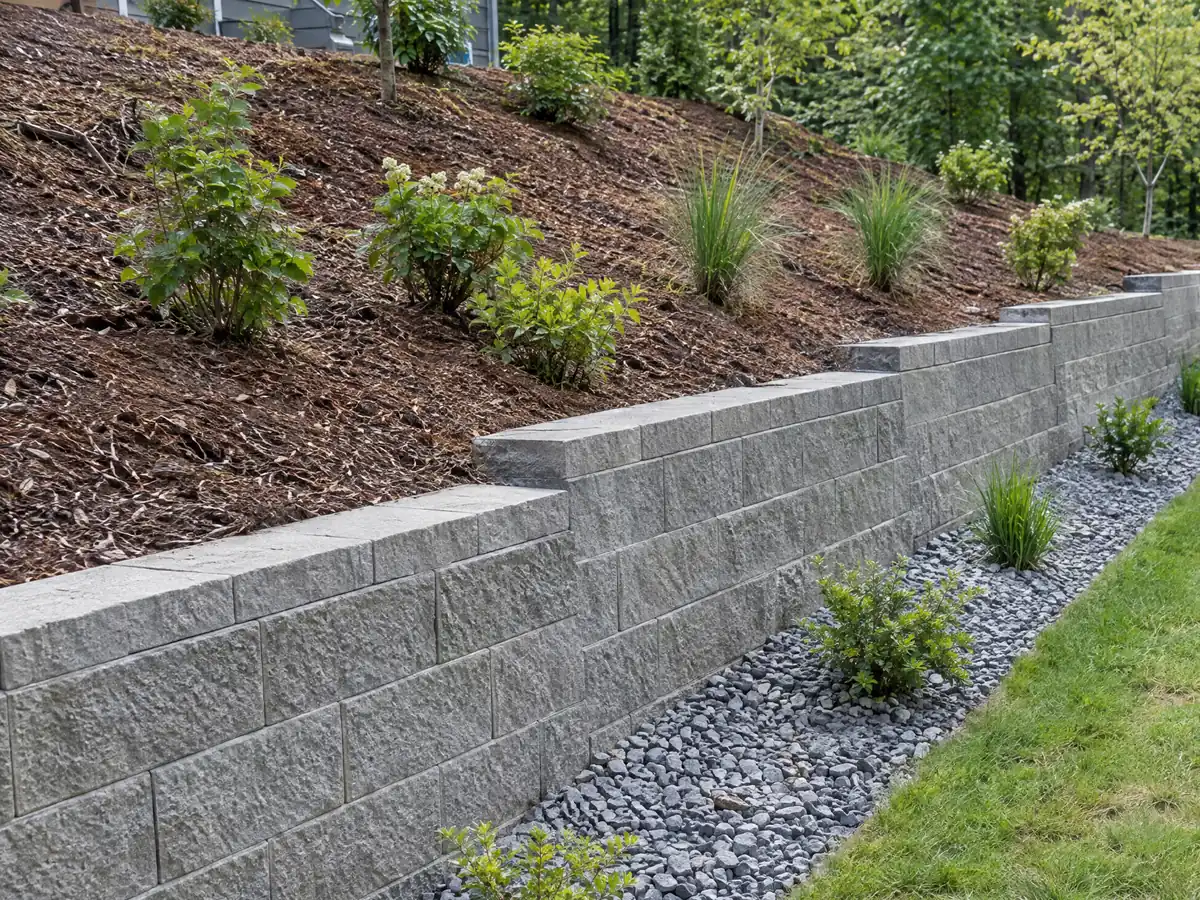
How tall can a wall be in a San Bernardino front yard, and when does a retaining wall need a permit?
In a front or street-side yard the limit is 3 feet if solid and 4 feet if open enough to pass 90 percent of light. That is Development Code 19.20.030(8), whose table also lists 6 feet outside required yards and 8 feet where a lot abuts a non-residential district, although the City's PDF scrambles those rows, so confirm them with Planning. Traffic sight areas at driveways and corners are held to 2 feet 6 inches.
Retaining walls have their own lines. The permit exemption covers walls not over 4 feet from the bottom of the footing to the top of the wall, unless they support a surcharge, and Municipal Code 15.04.240 puts slopes on the downhill lot unless the City Engineer waives it. A wall that holds up a neighbor's yard is a conversation, not a form.
Hillside lots add more. In the Hillside Management overlay, Table 20.01 lists retaining walls at 3 feet 6 inches on the uphill side, 8 feet on the down slope and 5 feet for lots sloping with the street, and asks for natural, indigenous materials facing streets and driveways, though the PDF layout is scrambled. Where the Foothill Fire Zones overlay applies, fences and walls must be noncombustible, which poured concrete and block are, but the Building Division accepts the design.
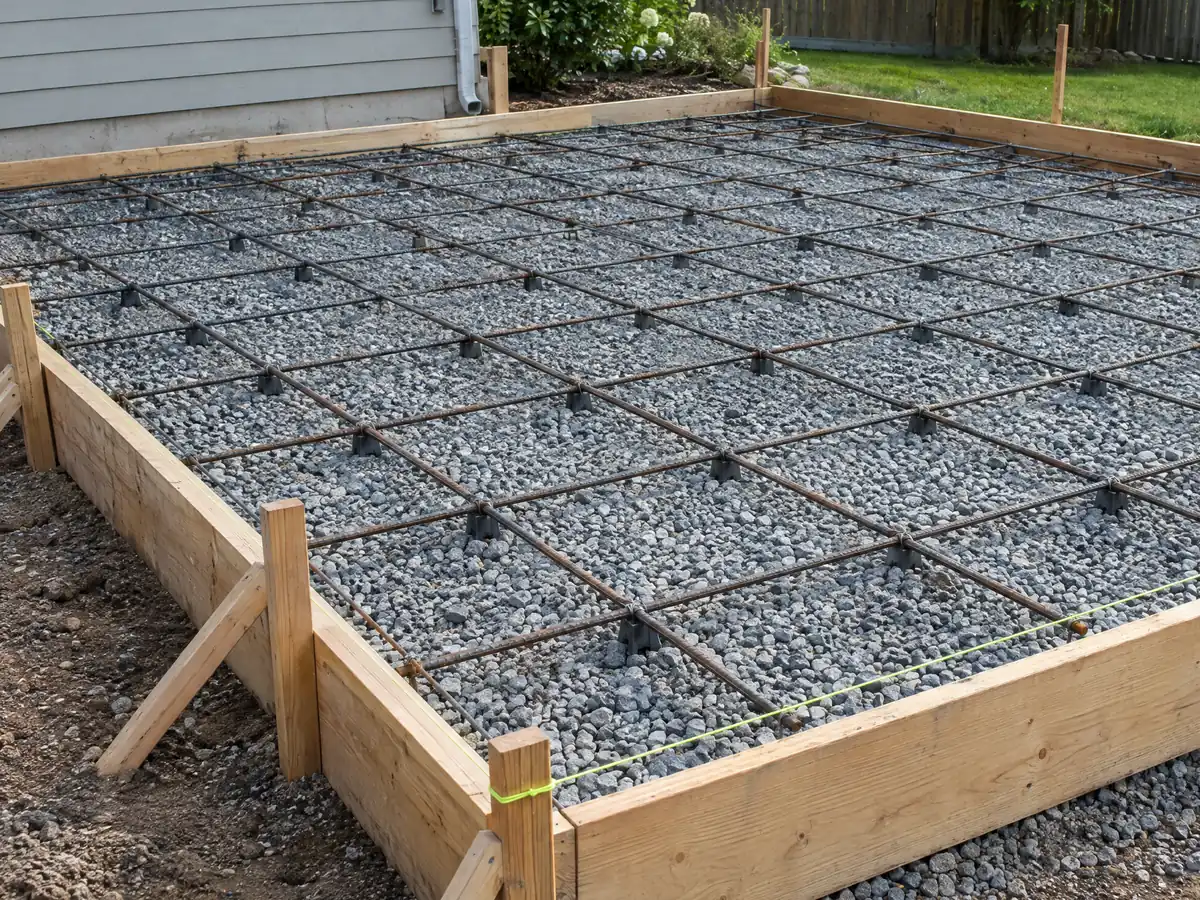
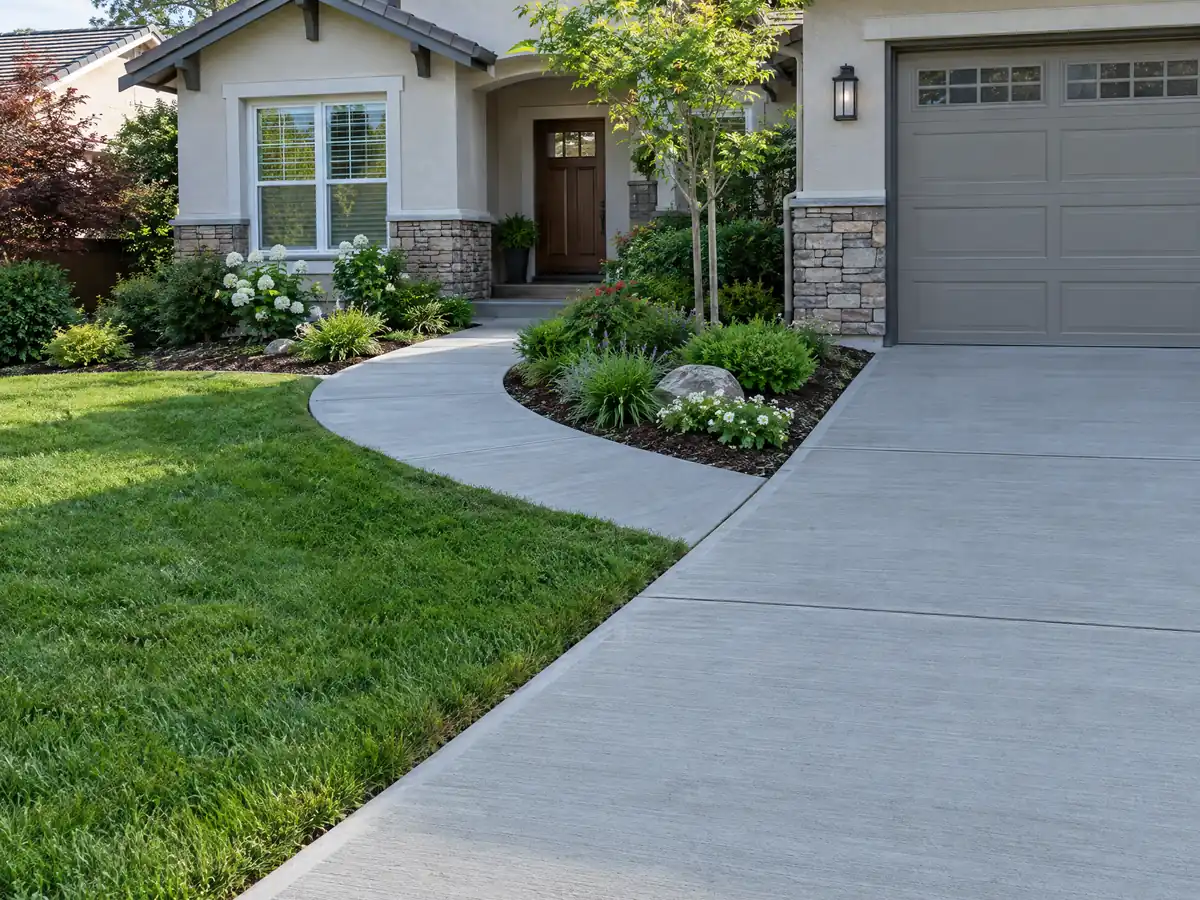
Can you pour a patio, walkway or driveway in San Bernardino without a permit, and who owns the street side?
Walks and driveways usually can go without a building permit. The City's exempt list covers sidewalks and driveways not more than 30 inches above grade, not over a basement or a story below and not part of an accessible route. A slab-on-grade patio is not named there, so ask before assuming, and remember that accessory structures such as a patio cover need development review.
Driveway grades are written into the code. Municipal Code 15.04.230, read in GoCodebook's mirror, wants a driveway to a garage more than 30 feet away to run at least 20 feet from the garage at no more than 5 percent, lets a shorter one reach 8 percent for 20 feet, caps any portion at 20 percent and forbids grade breaks where a car drags. The foothill overlay tightens the cap to 15 percent unless the Fire Chief and City Engineer approve, and on-site parking and circulation work needs an on-site improvement permit under 15.04.130.
The apron and curb sit in the public right-of-way, which Public Works Engineering handles at its own counter, not at Building & Safety. Its page lists excavation, lane closure and temporary encroachment permits and does not name driveway approaches, so confirm, and its resources include a street moratorium document with special pavement-cut rules on moratorium streets.
Do San Bernardino's groundwater, liquefaction zones and faults change how a slab is built?
They change what you ask more than what you pour. Much of the city sits over the Bunker Hill Groundwater Basin with a historically high water table, and the former Urbita Springs lake is now the Inland Center Mall site. The 2024 Local Hazard Mitigation Plan puts downtown in the high liquefaction susceptibility zone and calls almost the entire southern part of the city susceptible, though it records no instance of liquefaction in the City.
A liquefaction report is required only for listed building types. Municipal Code 15.08 asks a registered civil engineer for a report and mitigation on essential facilities, large assembly rooms, buildings over two stories and certain other occupancies, or on structural modification over 25 percent of the building area, in mapped high-susceptibility areas. A backyard slab is not on that list, but the code lets the City ask for a report on other new development, and permits are denied without a required one.
Two faults cross the picture. The Plan names the San Andreas Fault, along the southern base of the mountains through the northeast of the city and capable of roughly magnitude 6.7 to 8.0, and the San Jacinto Fault, with a slip rate of 7 to 17 millimeters a year, both with State Alquist-Priolo zones. It places the San Jacinto zone in the eastern and southwestern parts of the city, so check an address on the State maps.
What changes when a pour or a grading cut sits on a foothill or hillside lot?
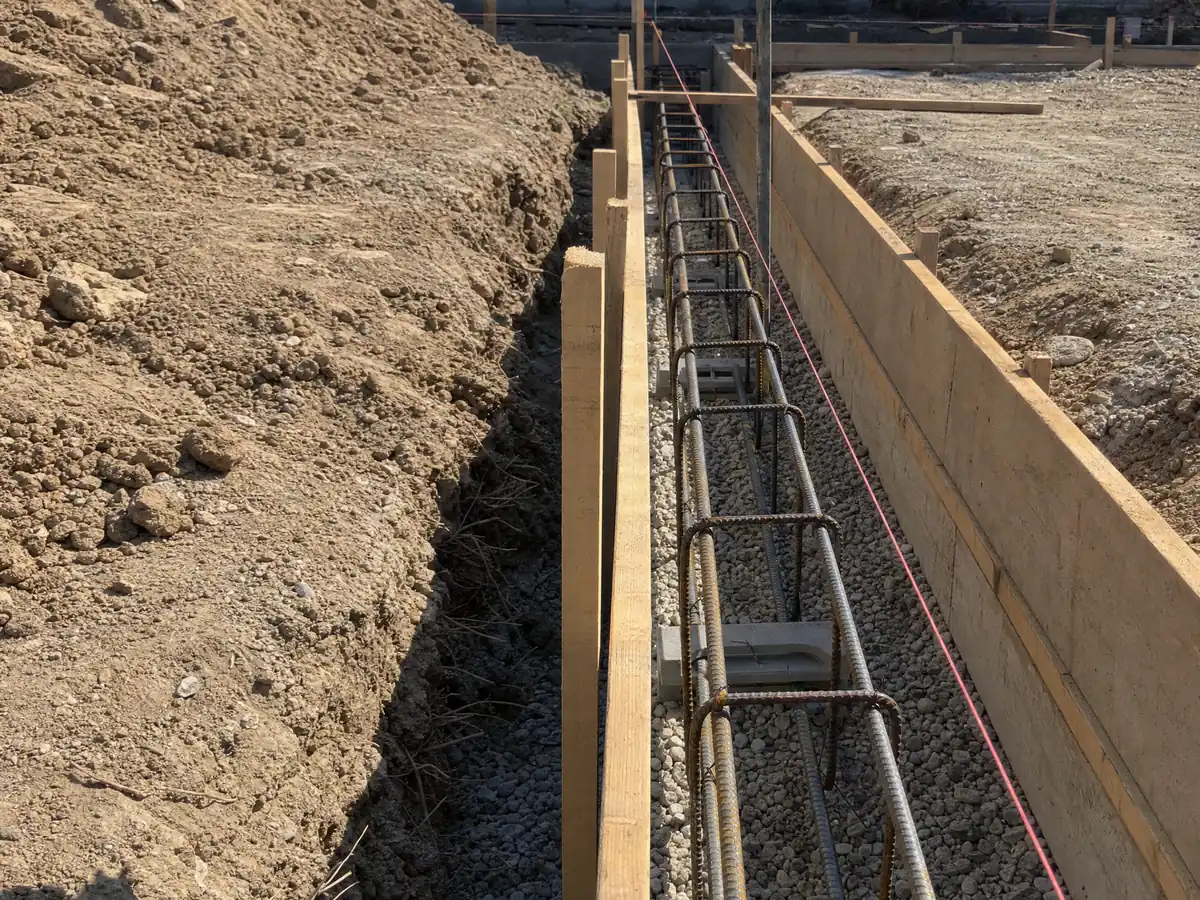
Grading rules apply first. Municipal Code 15.04.140 requires a registered civil engineer's grading plan and a grading permit for more than 50 cubic yards, 15.04.190 asks for a surety bond or cash security before the permit issues, and 15.04.210 says grading of 50 cubic yards or more must be done or supervised by a qualified person such as a licensed contractor, geologist or engineer. Development Code 19.15 adds erosion and drainage plans by a licensed civil engineer for new foothill projects.
The foothill stack sorts lots by slope. Development Code 19.15 calls slopes of 30 percent or more Fire Zone A, 15 to 30 percent Zone B and 0 to 15 percent Zone C, and the overlay bars exposed wood on exterior walls and fences in Zones A and B and in Zone C where it abuts wildlands. Block and poured walls do not burn, which is why they come up often there.
The Hillside Management overlay, Development Code 19.17, covers slopes of 15 percent or more, caps density by slope and requires a Conditional Use Permit for most uses, while an in-fill single-family home on an existing lot of record needs a Development Permit instead. Fire protection is provided by the San Bernardino County Fire District, not a City department, so ask the counter whether a plan routes to the District, whose Fire Marshal line is 909-386-8400.
What do dust, washout, tree and noise rules mean for a pour in San Bernardino?
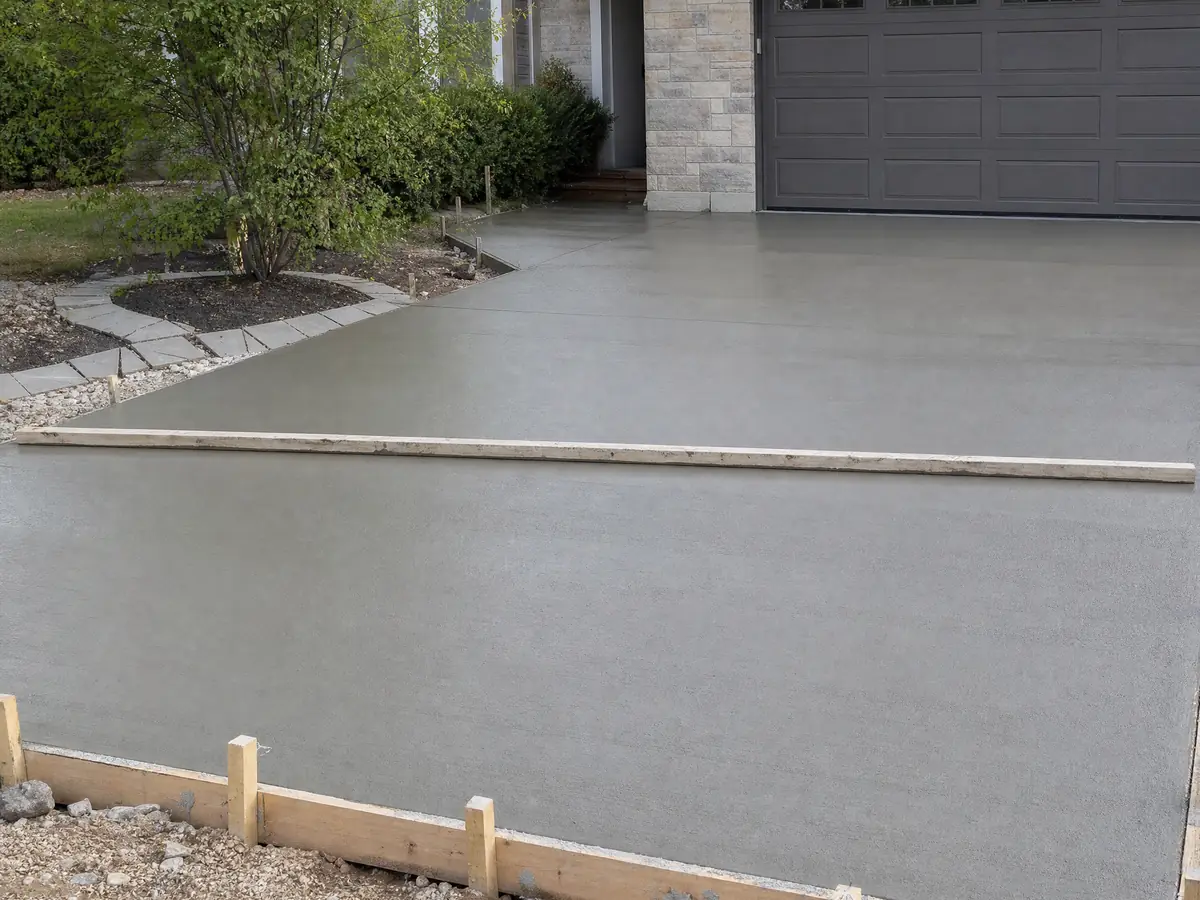
Dust is the first rule. South Coast AQMD Rule 403, text posted as amended June 3, 2005, bars dust from an active operation, storage pile or disturbed surface that stays visible past the property line or exceeds 20 percent opacity, so concrete demolition, trenching and grading need watering or covers. Municipal Code 15.04.210 adds that a grading permittee must keep earth off streets and neighbors' land and remove deposited material within 24 hours of written notice or the City may clean it up and bill the permittee.
Construction work is limited to 7:00 a.m. through 8:00 p.m. under Municipal Code 8.54.070, with domestic power tools held to 8:00 a.m. to 8:00 p.m. in residential zones and loud tools such as pneumatic hammers and power saws barred from 10:00 p.m. to 8:00 a.m. without approval (GoCodebook's copy, so confirm). A break-out crew with a jackhammer should plan on the daytime window, and we ask the subcontractor how slurry and washout water will be contained before the first truck arrives.
Trees count too. Municipal Code 15.34.020 requires a City permit to remove more than five trees in any 36-month period from a development site or parcel, and the Planning Official may deny removal that harms the environment. A patio or driveway plan that needs a row of trees gone should check that count first.
How much does concrete work cost in San Bernardino, and who needs which license?
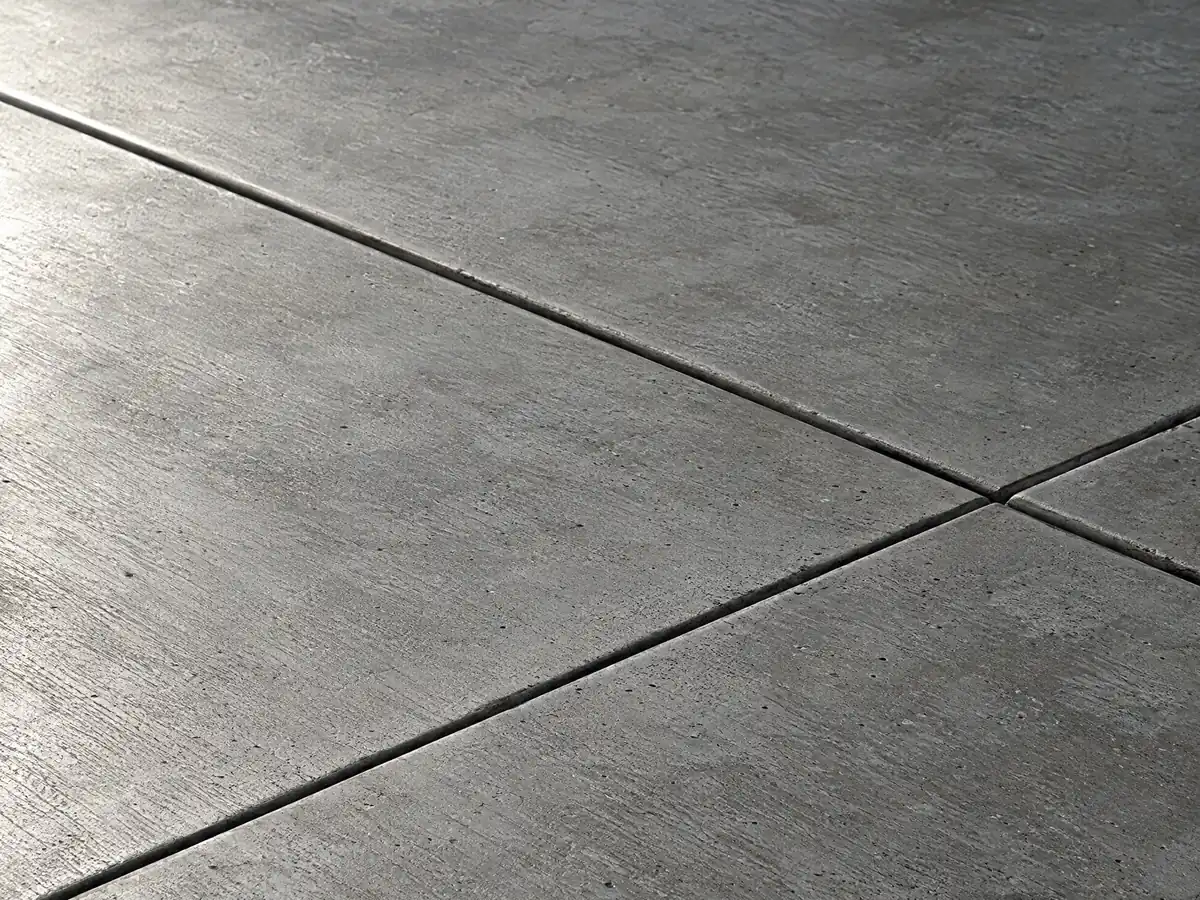
No San Bernardino concrete study with a stated method turned up, so we lean on Angi's Los Angeles pages, which we rate medium confidence for plain flatwork and lower for walls and graded driveways. Angi's August 4, 2026 patio page shows $4 to $13 per square foot and $1,600 to $5,200 for a 20 by 20 slab, its driveway page of May 5, 2026 shows $8 to $20, and its stamped page of July 20, 2026 shows $15 to $30.
Our planning range, drawn from those pages and HomeGuide's, is $8 to $14 per square foot for a 4 inch broom-finish slab of 300 square feet or more on a flat, reachable lot, with small jobs higher because of minimum charges. Cement masons averaged $33.67 an hour in the Los Angeles metro area in May 2025 in federal wage data. Retaining walls are priced by height, drainage and engineering, so we print no per-foot figure for them.
License follows the material. CSLB's C-8 class covers forming, pouring, placing and finishing mass, pavement and flat concrete work, its C-29 class covers concrete block walls for structures and fences, and rebar-only placement is a separate class. Business and Professions Code 7048 allows unlicensed work only under $1,000 including materials and never where a permit is required, so a wall or an apron is poured under a license. Our license check guide shows how to read a CSLB record.
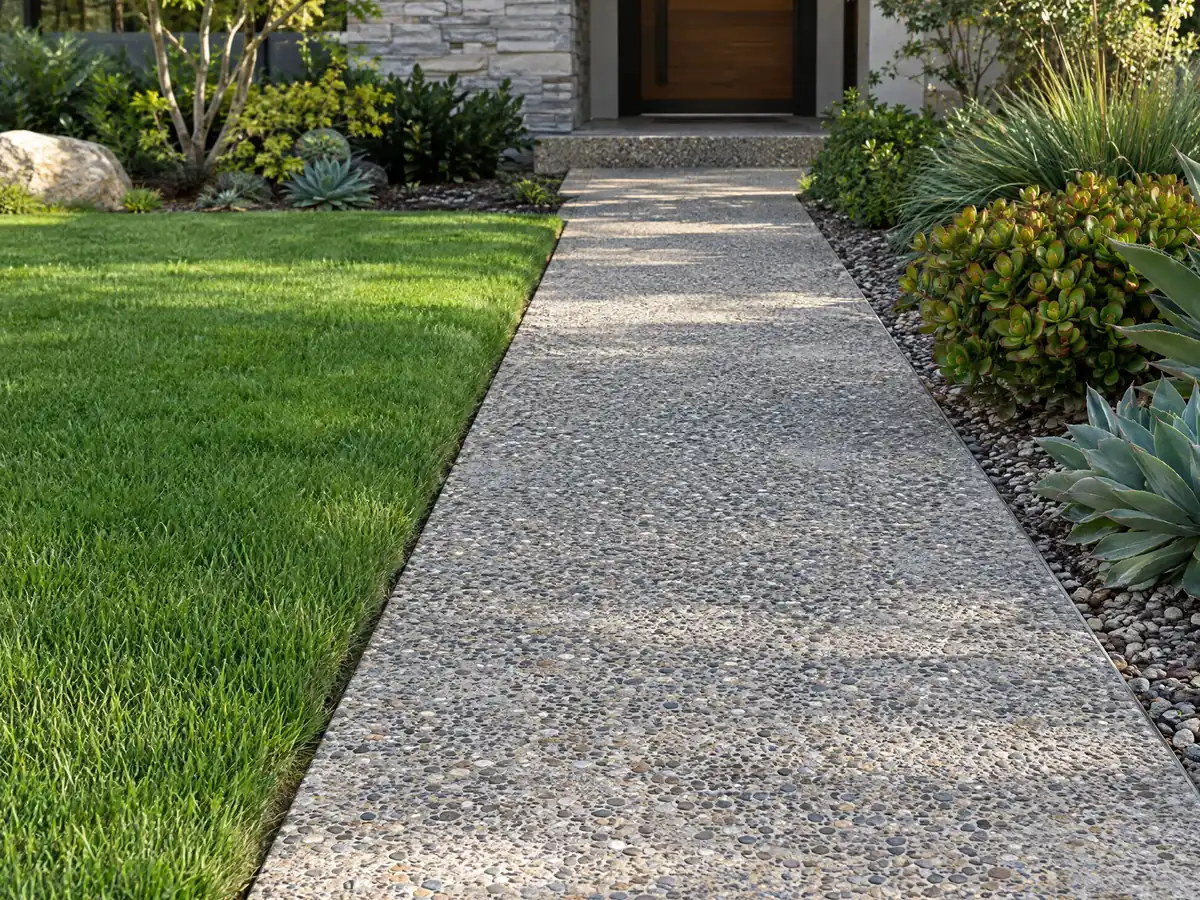
Concrete photos from San Bernardino and nearby communities
Footings, rebar, screeded slabs and finished walks and patios from San Bernardino and the neighborhoods around it, shown at the steps where the rules bite. Tap any photo to enlarge it.
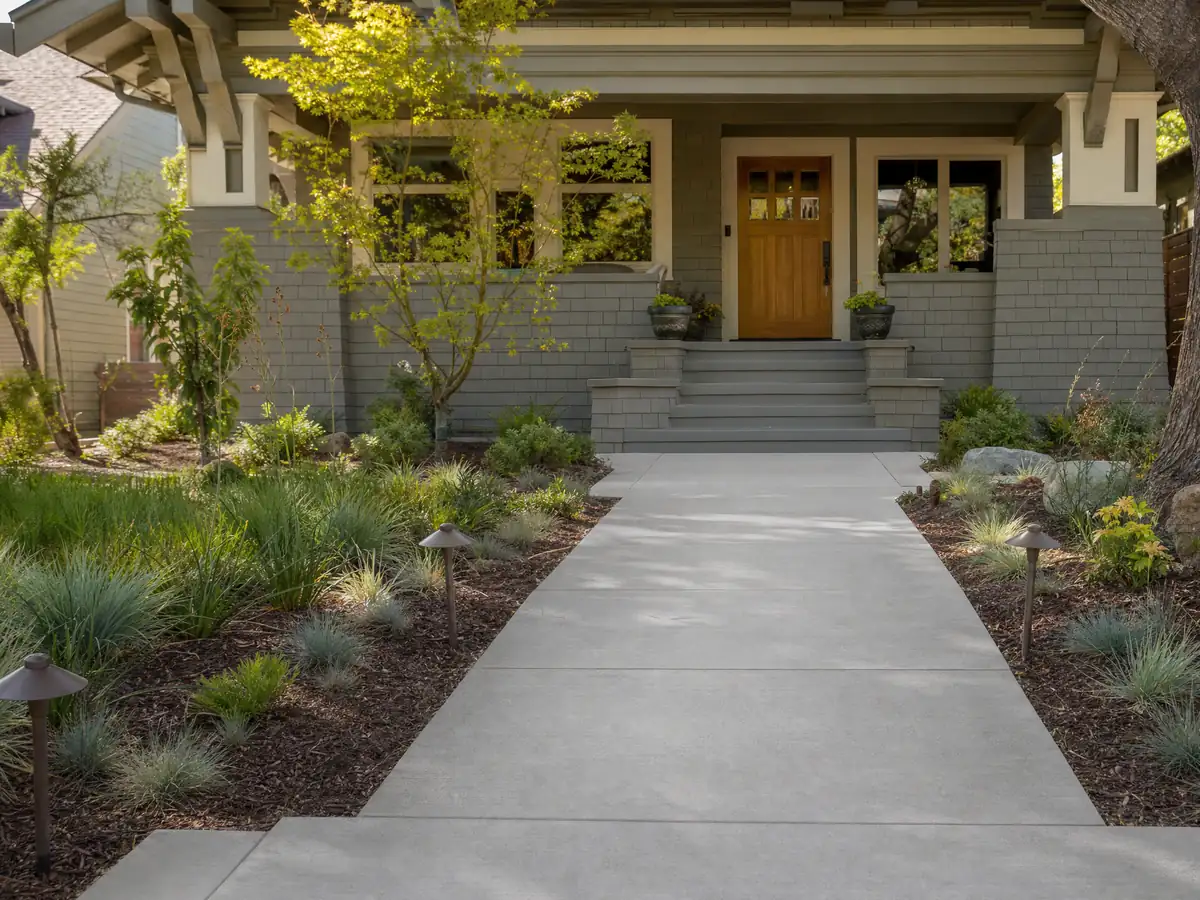
What concrete costs around San Bernardino
Dollar figures on this page are Los Angeles planning ranges, not a San Bernardino bid, so ask for demolition, haul-off, rebar, drainage and any wall or grading permit as separate proposal lines. For neighboring valleys, read concrete in Riverside, concrete in Corona and concrete in Pomona, with concrete in Los Angeles as the big-city benchmark. A patio or driveway often travels with a deck in San Bernardino. The subcontractor guide explains who forms a slab and who finishes it, and the flooring cost guide prices the surfaces that go on top.
| What it covers | Typical range |
|---|---|
| Patio, walkway or slab, broom finish, 300 sq ft or more | $8 to $14 per square foot |
| Decorative: stained, stamped or exposed aggregate | $15 to $30 per square foot |
| Driveway replacement, with demolition of the old slab | $9 to $20 per square foot |
| 20 by 20 foot plain patio (400 sq ft) | About $3,200 to $5,600 |
| 20 by 20 foot decorative patio (400 sq ft) | About $6,000 to $12,000 |
| Small jobs under 300 sq ft | Usually above the per-foot range |
| Retaining walls | Set by the written proposal |
Other work we manage in San Bernardino
San Bernardino concrete questions, answered
Can I pour a concrete patio without a permit?
Possibly, but the City's exempt list names sidewalks and driveways up to 30 inches above grade, not a ground-level patio slab, so ask Building & Safety before assuming. A patio cover, wall or anything attached to the house is a separate question and needs development review. Call the counter with the size, the height above grade and the lot slope.
How much should a 20x20 concrete patio cost?
Angi's Los Angeles patio page, updated August 4, 2026, shows $1,600 to $5,200 for a 20 by 20 slab, or $4 to $13 per square foot. We found no San Bernardino study that states its method, so these are medium confidence, and stamped or colored finishes at $15 to $30 per square foot push the total much higher.
Can I expand my driveway without a permit?
Probably not without checking. Sidewalks and driveways up to 30 inches above grade are exempt from a building permit, but parking and circulation work needs an on-site improvement permit under Municipal Code 15.04.130, and any change to the apron is right-of-way work for Public Works Engineering. Zoning limits and driveway grades still apply.
What is the maximum height of a retaining wall without a permit in California?
Four feet, measured from the bottom of the footing to the top of the wall, unless the wall supports a surcharge such as a driveway, a pool or a structure. San Bernardino's building page lists the same 4 foot exemption. A wall that holds a slope onto the neighbor's lot also draws the City Engineer's attention.
Is 4 inches of concrete thick enough for a driveway?
It is a common thickness for light-duty slabs, but we found no San Bernardino rule that sets driveway thickness, so the subcontractor's written spec controls. Ask for slab thickness, base, reinforcing and joint spacing on the proposal, and for heavier trucks or a foothill grade, ask whether an engineer should size the slab.
How tall can a fence or block wall be in a San Bernardino front yard?
Three feet if it is solid and four feet if it is open enough to pass 90 percent of light, under Development Code 19.20.030(8). Sight areas at driveways and corners are limited to 2 feet 6 inches. Planning must approve every fence and wall plan even when the building permit is exempt.
Is the fence permit exemption 6 feet or 7 feet in San Bernardino?
The municipal code says 6 feet, and the City's building page summarizes it as 7 feet, so ask the Building Division which one applies. Both exclude masonry, and the code requires a permit for concrete or masonry fences more than 3 feet above grade. Planning approval is required either way.
Does San Bernardino's soil crack concrete slabs?
We found no San Bernardino source that ties slab cracks to a soil type. The City does sit partly over a high water table and a mapped liquefaction area, and cracks also come from joints, curing and base preparation. Ask for control joints, a compacted base and a soils engineer's note on a hillside or low-lying lot.
What license does a concrete company need for concrete work in San Bernardino?
A concrete company needs a current California license, usually C-8 for flatwork or C-29 for block walls, and a City of San Bernardino business license to pull permits. Unlicensed work is allowed only under $1,000 including materials and never where a permit is required. Check the number on the CSLB site.
Tell us the lot, the size of the slab and any walls or slopes
Describe what you want poured, roughly how large it is, whether the yard is flat or sloped and whether it touches a wall, the curb or the sidewalk. The wall, apron and grading questions travel with us to the first visit.