
Concrete Companyin Corona, CA
A concrete company in Corona can pour most ground-level patios, walks and driveways without a building permit when they sit 30 inches or lower and are not an accessible route. A retaining wall over 2 feet needs a permit, and so does a masonry wall over 3 feet. Moving over 100 cubic yards of earth adds a grading permit.
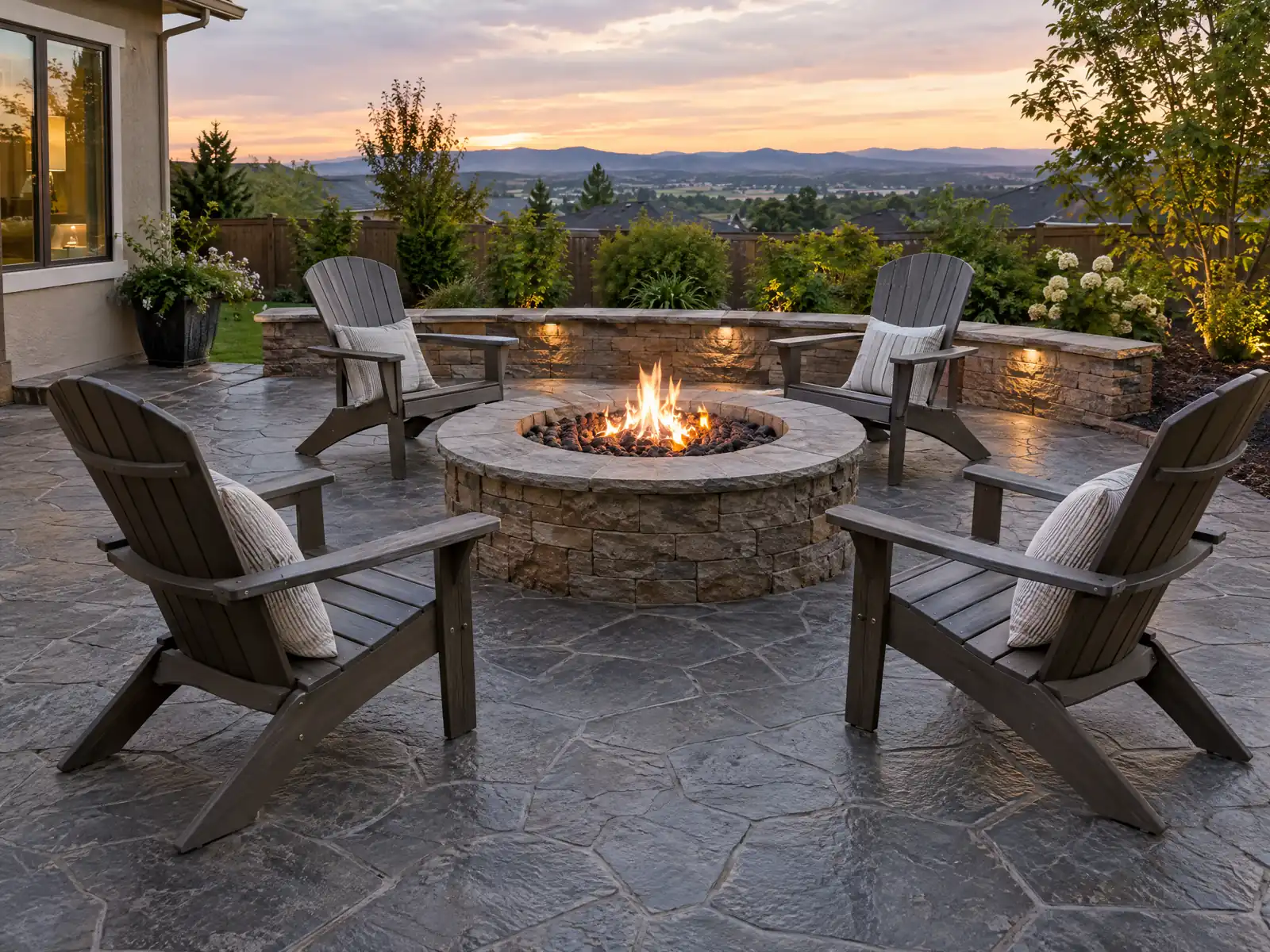
Concrete shaped Corona's modern outline. According to the City Library's history, Prado Dam construction began in 1939 after the March 1938 floods, Highway 91 was built through town in 1962 and I-15 was finished through Corona in 1989. The 1980s and 1990s tract boom then added most of the city's 52,505 homes (27,400 of them, about 52 percent, date from 1980 through 1999 in the Census Bureau's 2024 estimates), so many driveways, patio slabs and block walls between lots are now 27 to 46 years old.
MDG Builders, CSLB #1040337, is a Tarzana general contractor that designs, permits and manages instead of pouring itself. For a Corona job we write the scope, take the permit and grading questions to Corona's Building Division and send a licensed concrete subcontractor to form, place and finish. The concrete page explains finishes, and the Corona overview lists the other trades we manage in the city.
What Corona's Building Division, Development Services and the grading and floodplain codes say about concrete work
Where concrete permits come from in Corona: City of Corona Building Division (Planning and Development Department).
- Corona exempts platforms, walks and driveways not more than 30 inches above adjacent grade, not over a basement or story below and not part of an accessible route from a building permit; concrete retaining walls over 2 feet, and any wall supporting a surcharge, need a permit, and fences or masonry walls over 3 feet need one too.
- Grading rules affect concrete flatwork in Corona: a grading permit is required for placing or removing more than 100 cubic yards of earth and for more than 6,000 square feet of pavement surfacing on natural grade for a private road or driveway, unless the City Engineer waives it; the Development Services construction permit page lists a contractor's license, City business license, insurance certificate and an underground service alert ticket as prerequisites.
- Corona publishes City standard retaining wall (5 ft 4 in maximum), garden block wall and combination wall drawings, and its Table B fee schedule prices fences, masonry walls and retaining walls per 100 lineal feet; the same page of construction standards lists a ledger board advisory and access to backwater valves.
- Corona's flood-prone parcels carry FP-1, FP-2 and FP-3 floodplain combining zones in the zoning code and the City cites Title 18 Floodplain Management and a 2024 Riverside County flood insurance study in its Residential Code table; the Public Works counter (951-736-2259) will tell owners whether a property is in a flood zone and can sometimes issue an elevation certificate for a fee.
- Corona's Residential Code table (third-party mirror) lists frost line depth 12 inches, ground snow load zero and termite damage very heavy.
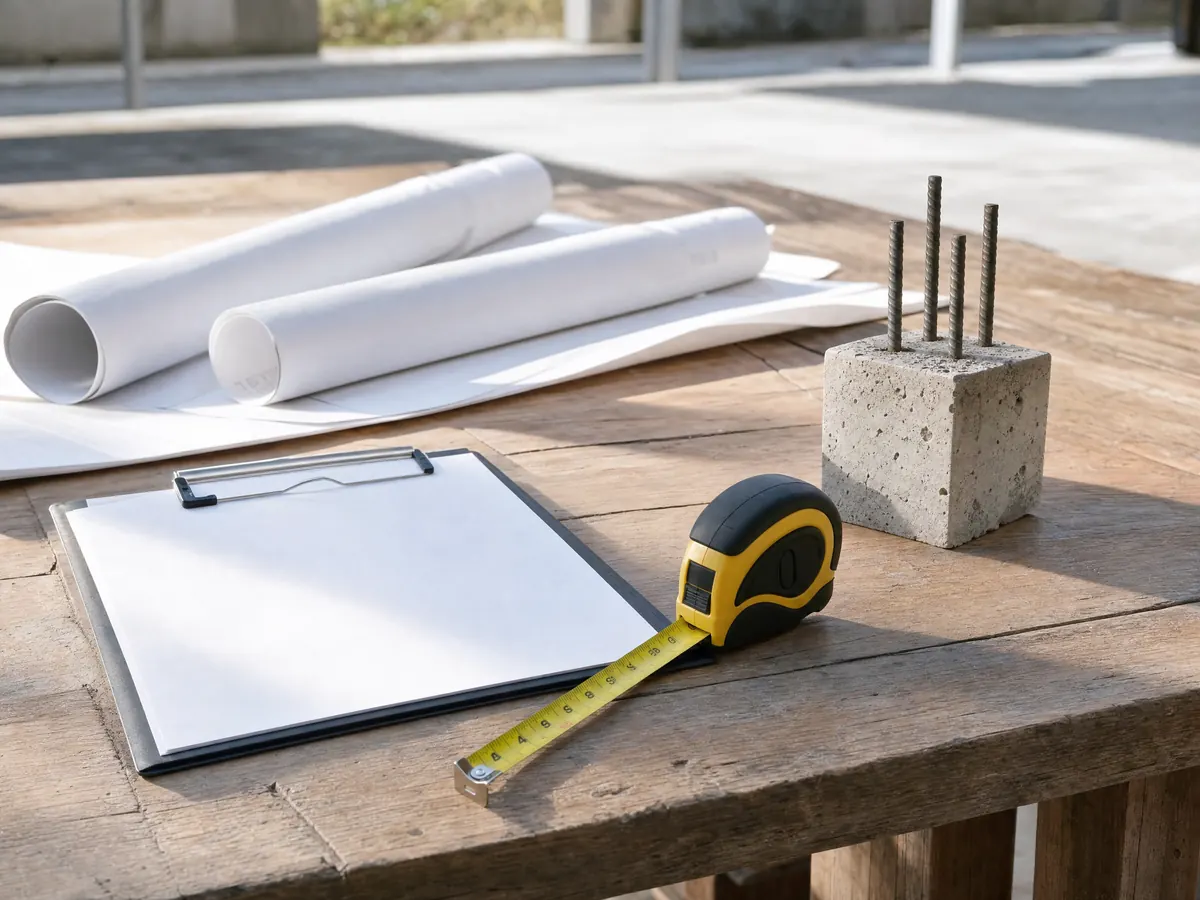
Can you pour a concrete patio or walk in Corona without a permit?
Often yes. Corona's exempt-work list in Title 15, read on the gocodebook.com mirror of the Municipal Code, so confirm it with the City, frees platforms, walks and driveways that are not more than 30 inches above adjacent grade, not over a basement or story below and not part of an accessible route. A patio slab poured at ground level on a flat lot fits that wording. The list does not mention patio slabs by name, so we describe the project to the Building Division at 951-736-2250 before the forms go in.
Walls and covers change the answer. The same section makes a fence or masonry wall over 3 feet a permit item, and the City's room-addition handout says patio covers, pools and fencing take their own permits even when the slab itself does not. A City standard block wall and a fence permit are on the over-the-counter list, which means no plan check wait.
Applications go through the eTRAKiT portal. The Development Services page lists a state contractor's license, a City business license, a certificate of insurance and an Underground Service Alert ticket as the prerequisites for a construction permit, and City Hall is open Monday to Thursday 7 AM to 6 PM and closed Friday.
How tall can a retaining wall be in Corona before it needs a permit?
Two feet, which is stricter than the model code. The mirror's exempt list frees retaining walls up to 2 feet, measured from the top of the footing, that do not support a surcharge, while the 2022 California Building Code's model exemption reaches 4 feet. A 3 foot wall that needs no permit in another city needs one here, and any wall carrying a surcharge such as a driveway or a slope above needs review at any height.
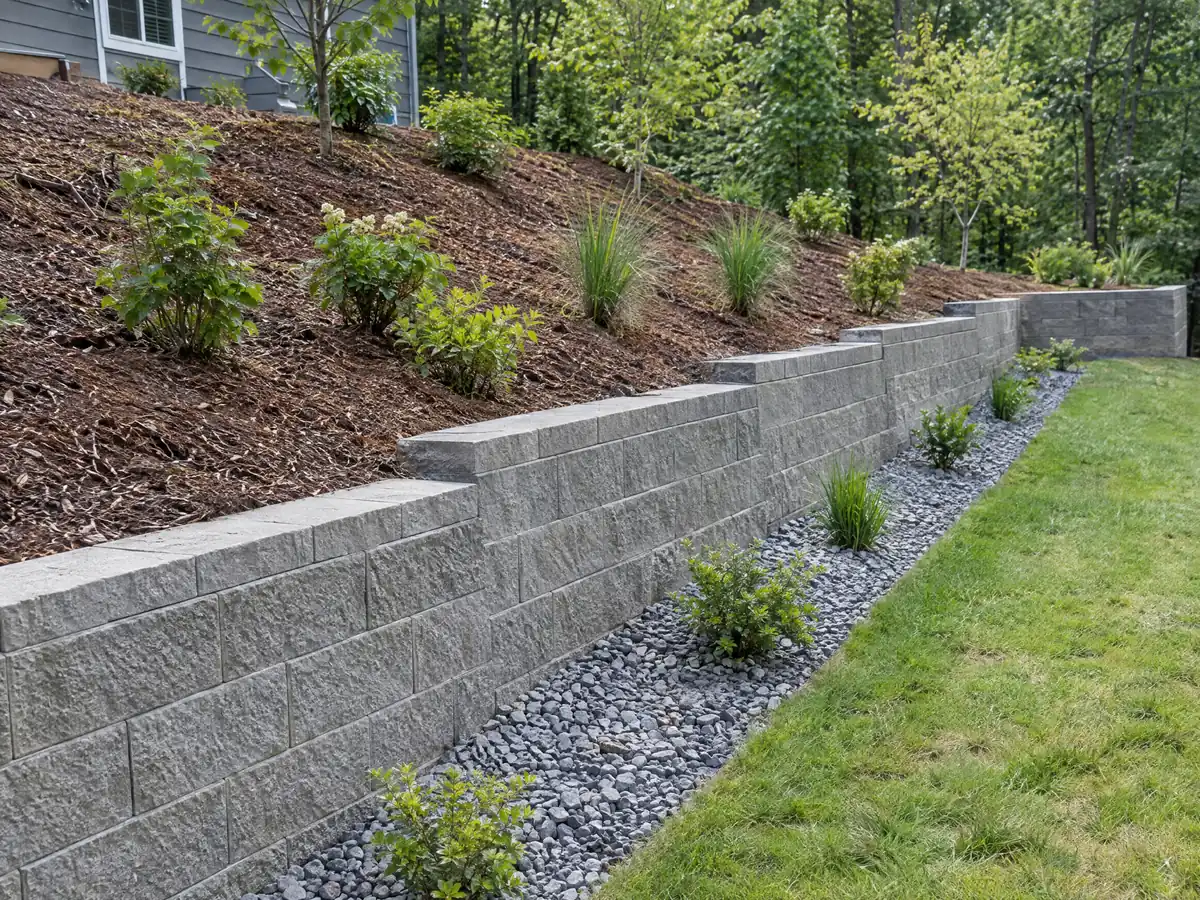
The City publishes standard drawings: a retaining wall standard with a 5 ft 4 in maximum, a garden block wall, a pilaster detail, and a combination wall with a block wall up to 7 feet over a retaining wall up to 2 feet. A City standard block wall is on the over-the-counter list, and a special design wall goes through plan check. Table B prices fences, masonry walls and retaining walls per 100 lineal feet, though we did not read the amounts.
CSLB's C-29 class describes concrete block for walls on structures and fences, and poured walls sit with concrete work. Which class fits a given wall is a licensing question, so ask each proposal to name the license class and number.
- Does the wall carry a surcharge such as a driveway or slope?
- Is it a City standard drawing or a special design?
What changes for concrete on a Corona hillside lot or in the Santa Ana foothills?
Slope triggers review. Municipal Code Chapter 17.59 creates a Hillside District for any parcel with a natural slope of 15 percent or more, its standards override the base zone, staff review all plans and the Fire Chief can require fire access easements and fuel modification plans. The grading code draws a different line: it defines a hillside site as a natural slope of 10 percent or more, so a lot can count as a grading hillside without being in the Hillside District.
Soil and shaking are on the City's list too. Its design parameters call for seismic design category D or E, plan check asks for soils reports and the Residential Code table sets a 12 inch frost line depth, so footings are sized for soil and earthquake loads, not for freezing. We did not read a Corona rule that sends a backyard slab to soils review, so ask whether the footing carries a wall or a building.
Fire adds a layer. The Council adopted the State Fire Marshal's March 24, 2025 map showing moderate, high and very high zones, and we could not confirm which streets fall in which zone, so use the City's address lookup on its fire hazard severity zone page before assuming a hillside lot is outside one.
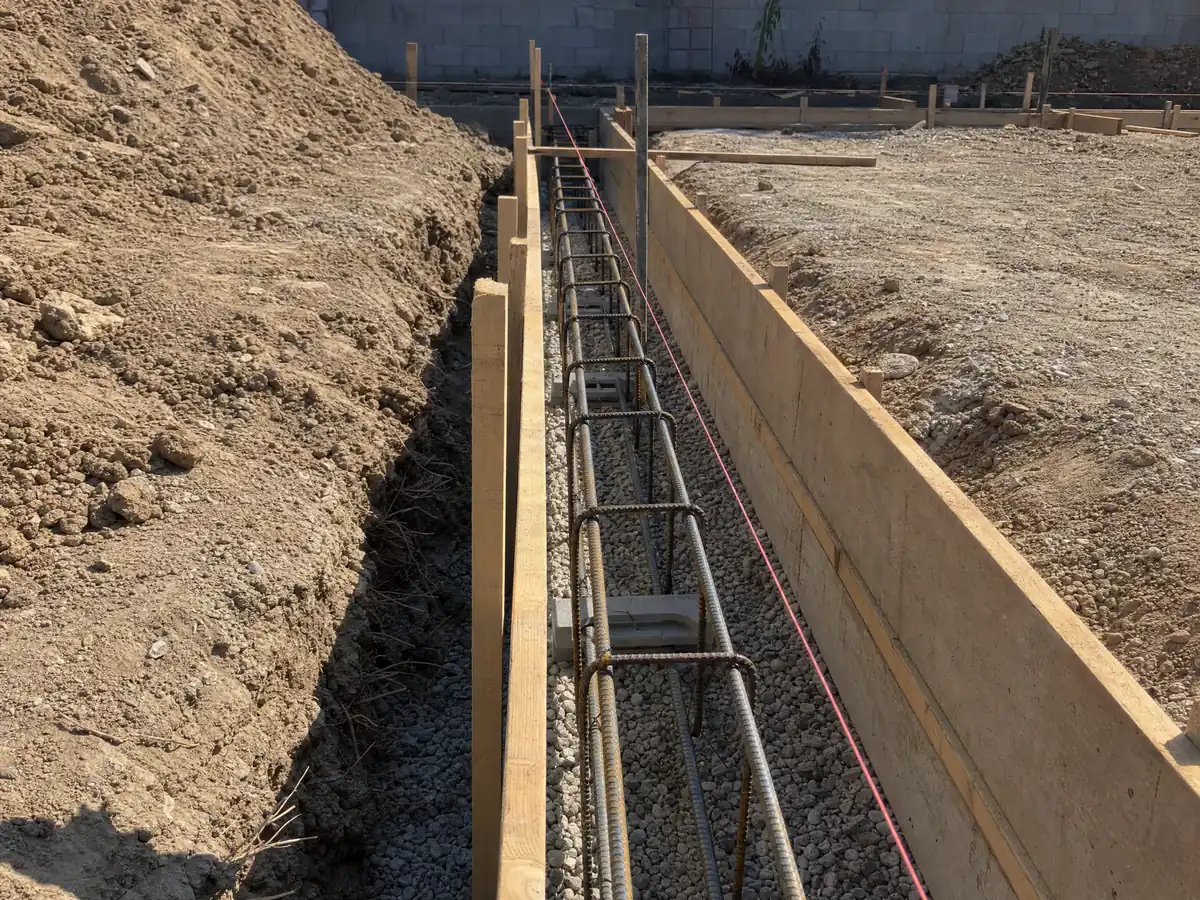
Do you need a grading permit to pour a long driveway or move dirt in Corona?
Sometimes. The grading code, Chapter 15.36 on the mirror, requires a permit to place or remove more than 100 cubic yards of earth and for more than 6,000 square feet of pavement on natural grade for a private road or driveway, unless the City Engineer waives it. Footing and basement excavation under a building permit and small cuts or fills are exempt. Development Services reviews grading apart from the building plan and answers at 951-736-2259.
A new apron or curb cut reaches into the public right of way. The room-addition handout says encroachment permits may apply and that public improvements under Chapter 15.48 can be required with an addition, agreed in writing before the permit issues. Ask before anyone breaks a curb.
Some parcels carry the FP-1, FP-2 or FP-3 floodplain combining zones in the zoning code, and the City cites Title 18 Floodplain Management and a 2024 Riverside County flood insurance study. The counter at the same number can say whether a property is in a flood zone and sometimes issues an elevation certificate for a fee.
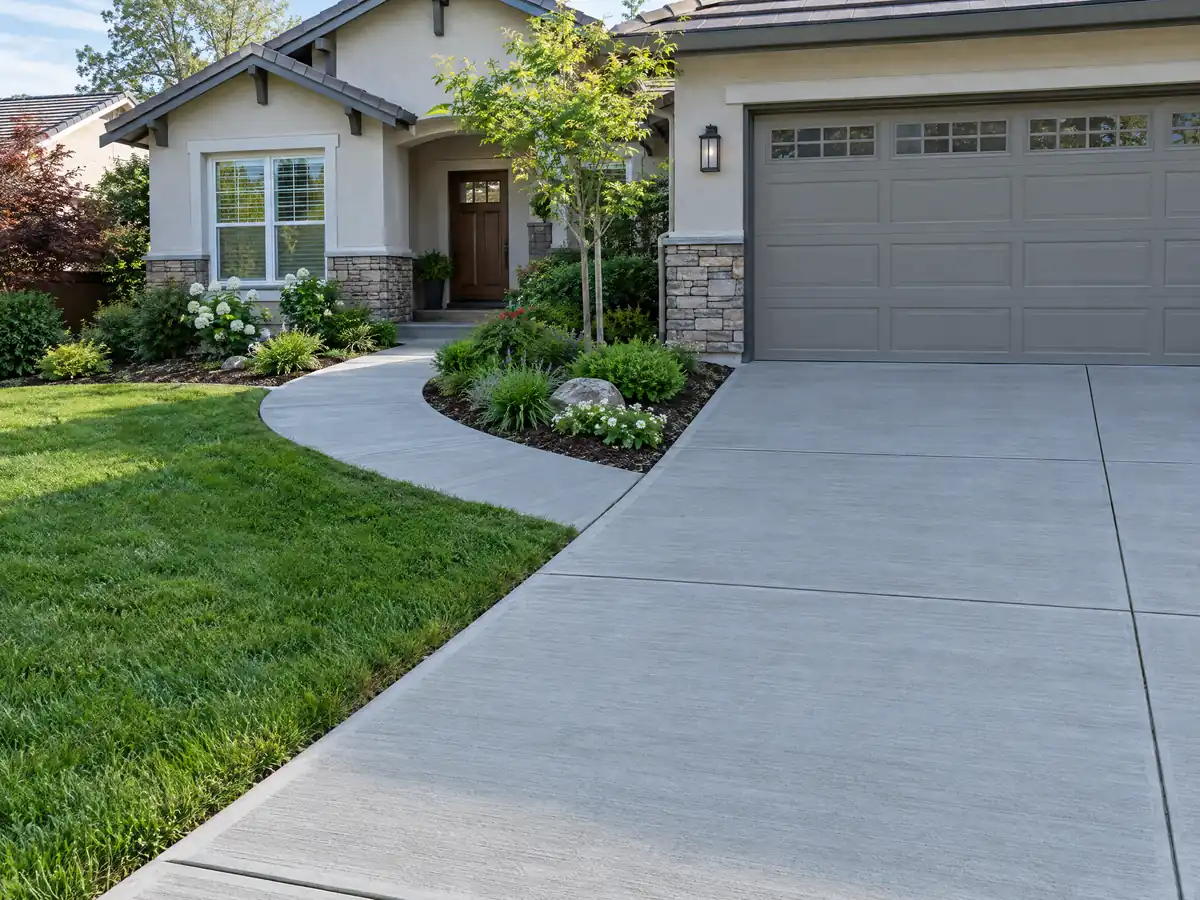
Does concrete work near the Circle or Grand Boulevard need special approval?
Possibly, if it touches the public right of way. The National Register nomination for the Grand Boulevard Historic District describes a circle 1 mile in diameter and about 3 miles around, with a 100 foot right of way, and places its contributing features (roadway, curbs, parkways, street trees, streetlights, sidewalks) inside that right of way. A private patio behind a house is not part of that, but a sidewalk, curb or driveway apron at the lot edge may be, so call Development Services before breaking anything.
Chapter 17.63 covers listed resources. Altering, relocating or demolishing a Corona Register landmark, structure of merit or district property needs plan review, with the City's Design Guidelines for Historic Buildings (12/27/2018) or the Secretary of the Interior's Standards as the test. We did not find which neighborhoods are designated, so ask the Planning Division at 951-736-2262 about a particular address.
Downtown Corona sits under the Downtown Corona Revitalization Specific Plan (SP98-01), one of more than 30 specific plans on the City's list, and the City says specific plans in most cases supersede the original zoning of their land.
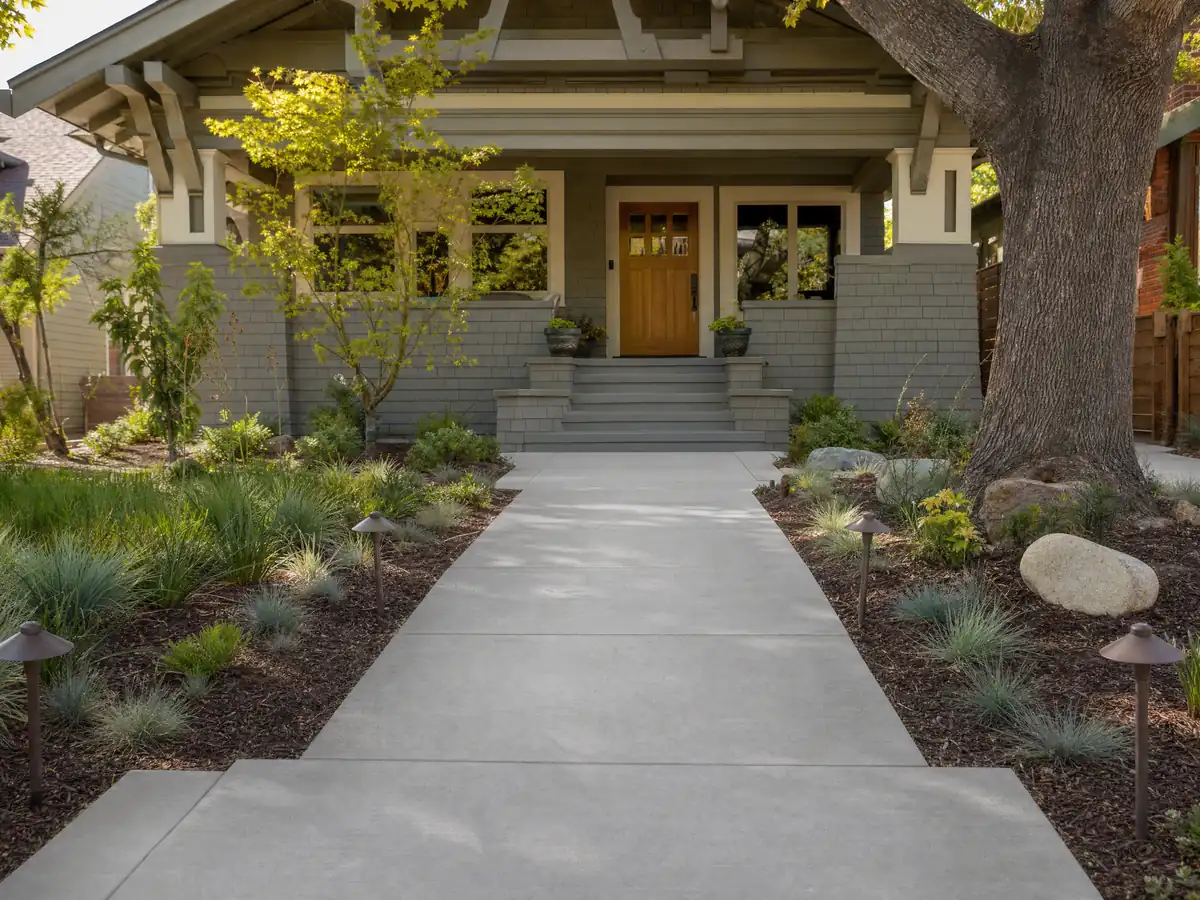
Why does concrete crack in Corona, and does the summer heat matter when you pour?
Soil, joints, curing and weather share the blame. Chino Airport, the nearest NOAA normals station at about 8.8 miles, averages 99.0 days a year at or above 90 F, 23.3 at or above 100 F and 11.4 below 32 F, with an August high of 96.3 F. Riverside Municipal Airport counts 100.5, 21.7 and 3.5 days and an August high of 94.9 F. Corona has no normals file of its own.
Those numbers make shade, dampening and a sensible start time part of the plan for an afternoon pour, which is common practice because we read no Corona curing rule. Rain arrives almost entirely in winter, 7.97 inches of Chino's 9.98 from December through March, so a summer pour rarely meets a storm and a January pour might.
Thickness, mesh and joint spacing are industry practice in the sources we read, not a Corona code number. Ask the subcontractor to put the slab thickness, base, reinforcement and control joint layout in writing, and to say how the slab will be cured.
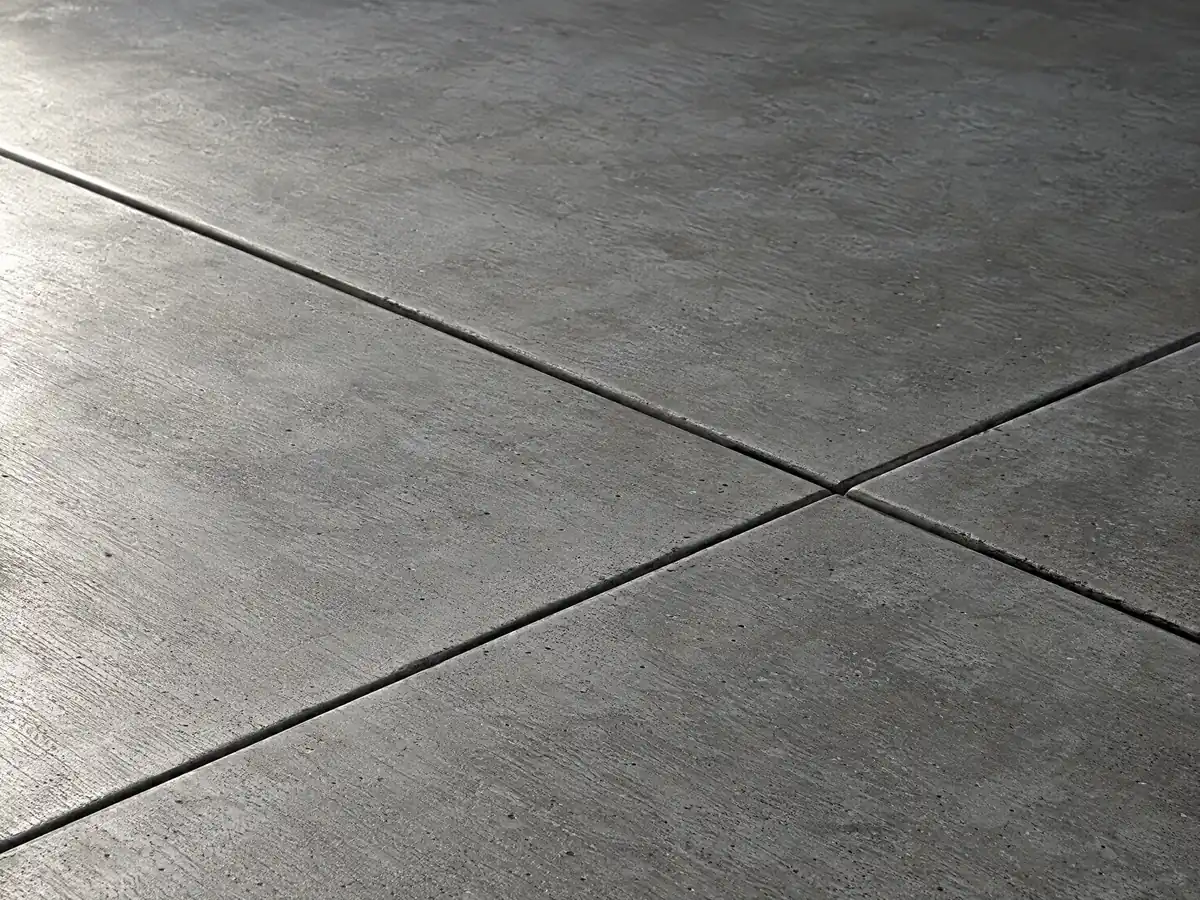
How much does concrete work cost in Corona, and what license does a concrete company need?
We found no Corona price study that shows its method, so the anchors are Angi's Los Angeles pages, which may differ from Riverside County bids. Its August 4, 2026 patio page shows $4 to $13 per square foot with an average of $5,248, its July 20, 2026 stamped page shows $15 to $30 and its May 5, 2026 driveway page shows $8 to $20 with an average of $7,270. For a 20 by 20 slab the same page gives $1,600 to $5,200.
Our own planning ranges run $8 to $14 a square foot for patios, walks and slabs from 300 square feet up, $15 to $30 for stained, stamped or exposed aggregate and $9 to $20 for a driveway replaced with the old slab demolished. Small jobs run above those numbers because of minimum charges, and retaining walls are priced after a site visit. For labor, the Bureau of Labor Statistics put cement masons in the Los Angeles-Long Beach-Anaheim area at a mean $33.67 an hour in May 2025.
Pouring and finishing flat and other concrete is the work of CSLB's C-8 class. Business and Professions Code 7159.5 caps a home improvement down payment at $1,000 or 10 percent, and our license check guide shows how to read a CSLB record.
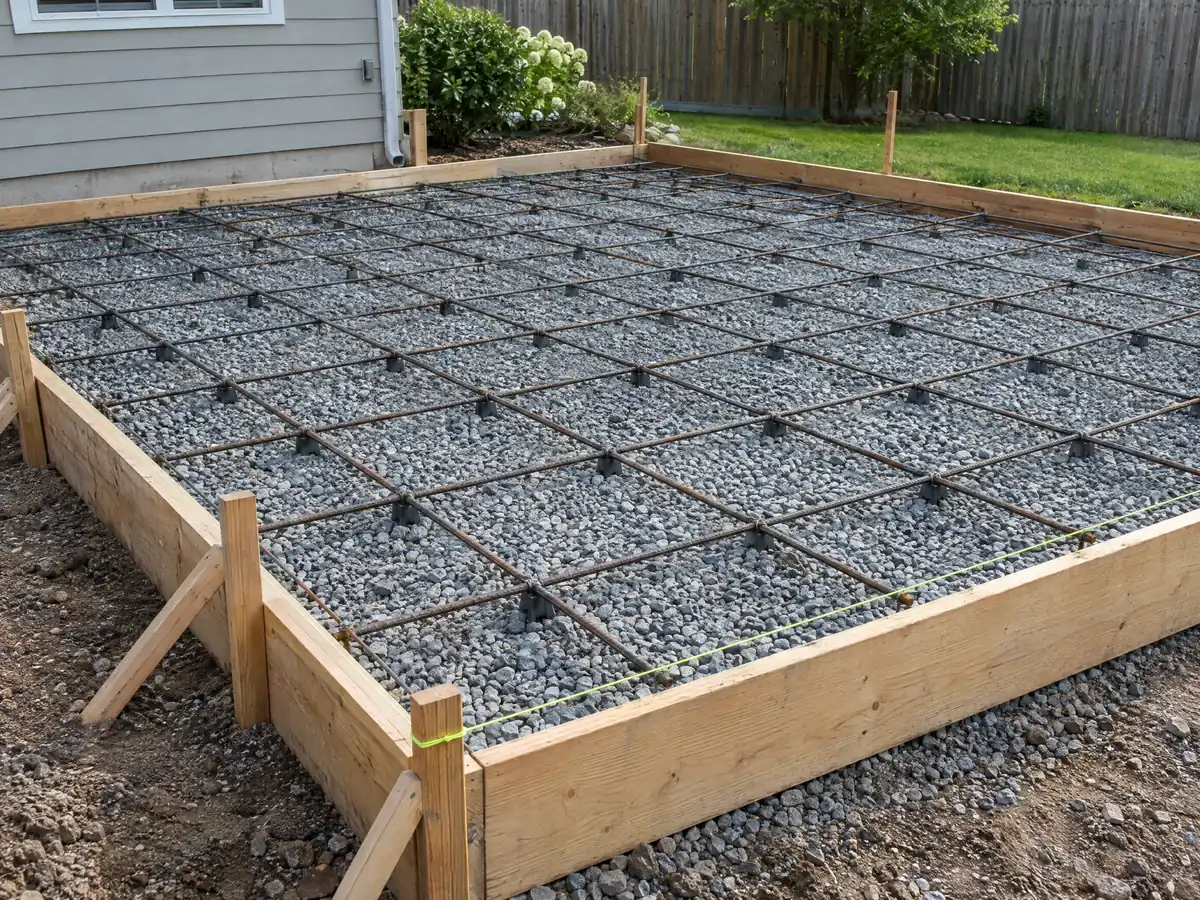
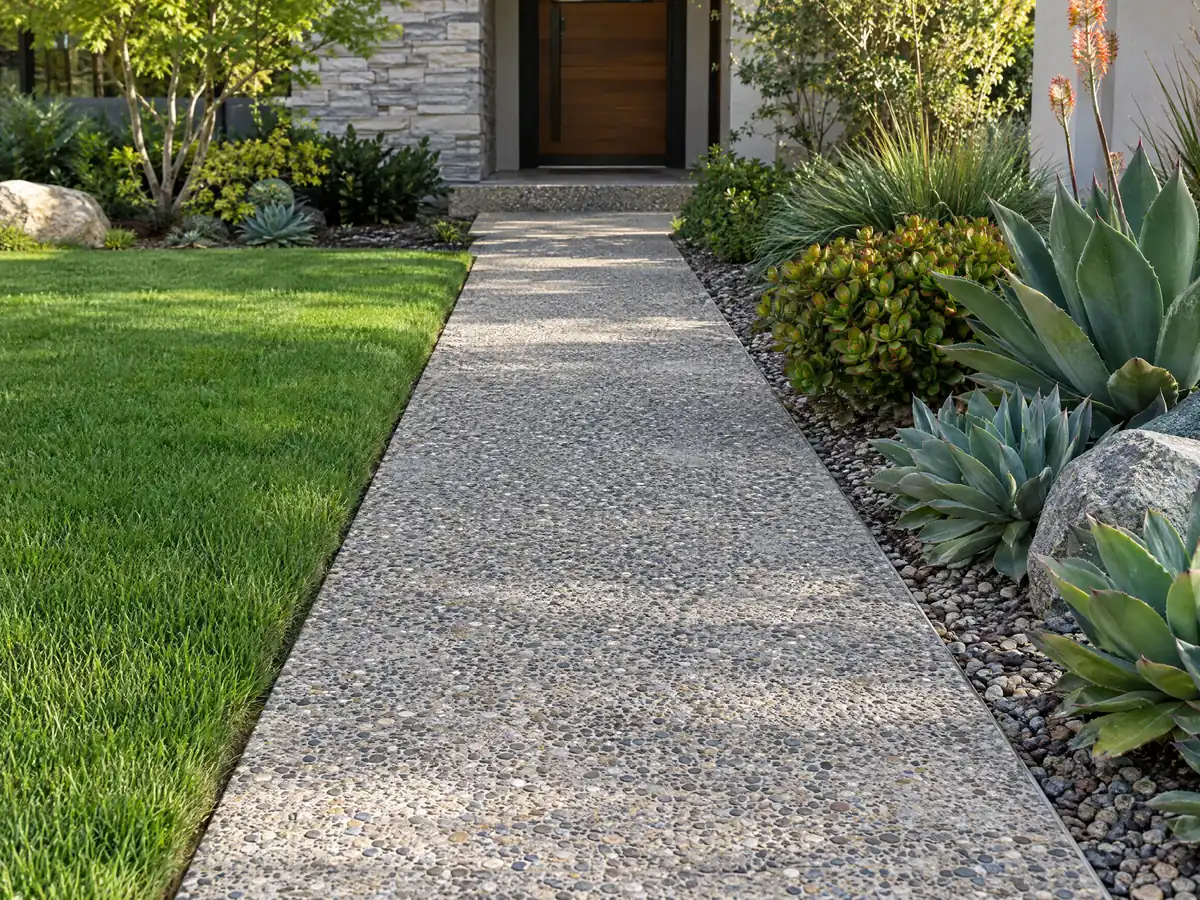
Concrete photos from Corona and nearby communities
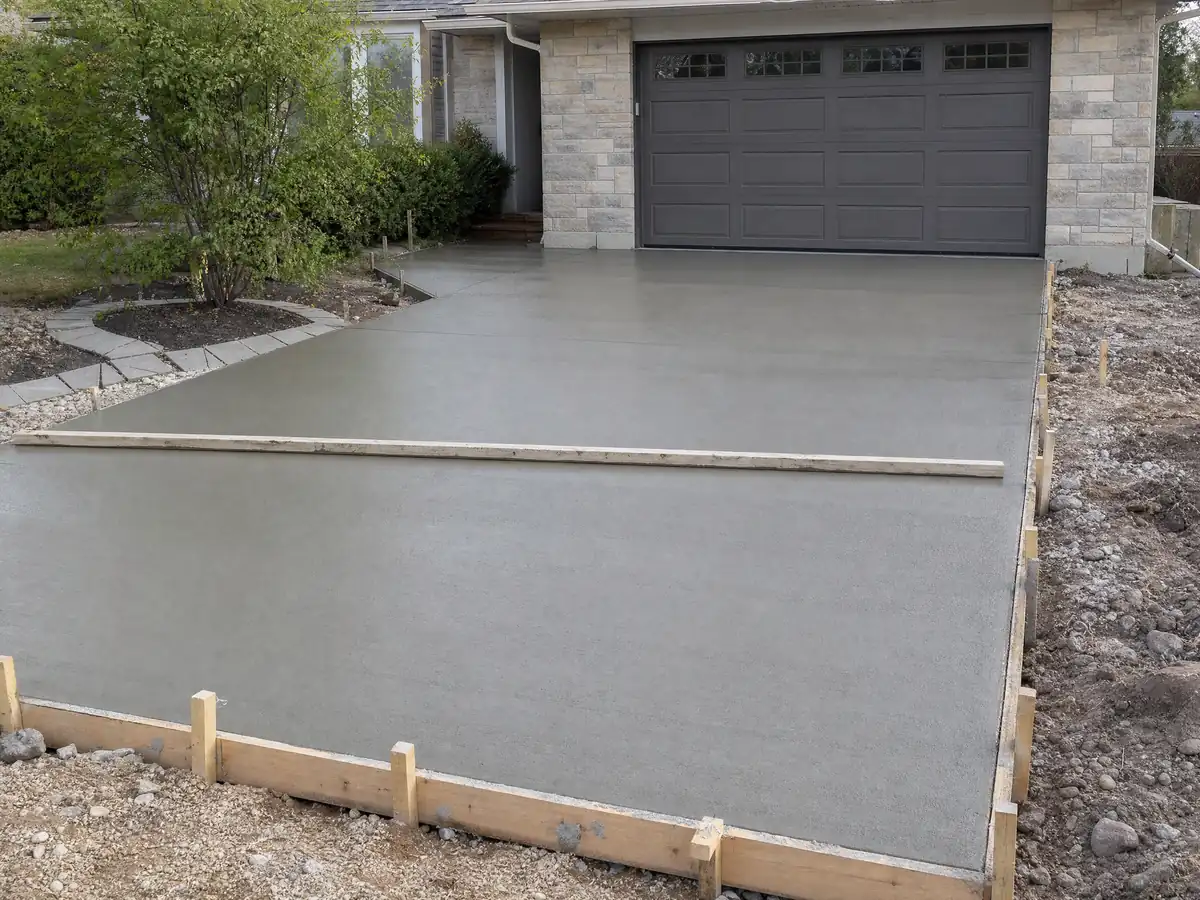
Forms, rebar, finished flatwork and block walls from Corona and the neighborhoods around it, shown at the steps where the permit lines matter. Tap any photo to enlarge it.
What concrete costs around Corona
Dollar figures here are Los Angeles planning ranges from our concrete page, not a Corona bid, and the written proposal should show demolition, base, rebar, engineering and any right of way permit on separate lines. The same property may need flooring in Corona or decks in Corona. For comparison, read concrete in Yorba Linda, concrete work in Pomona and concrete in Diamond Bar, and concrete in Los Angeles for the big-city benchmark. The subcontractor guide explains who forms and who finishes, and the flooring cost guide covers what can go on top of a slab.
| What it covers | Typical range |
|---|---|
| Patio, walkway or slab, broom finish, 300 sq ft or more | $8 to $14 per square foot |
| Decorative: stained, stamped or exposed aggregate | $15 to $30 per square foot |
| Driveway replacement, with demolition of the old slab | $9 to $20 per square foot |
| 20 by 20 foot plain patio (400 sq ft) | About $3,200 to $5,600 |
| 20 by 20 foot decorative patio (400 sq ft) | About $6,000 to $12,000 |
| Small jobs under 300 sq ft | Usually above the per-foot range |
| Retaining walls | Set by the written proposal |
Corona concrete questions, answered
Can I pour a concrete patio without a permit?
In Corona, often yes: the exempt-work list frees walks, platforms and driveways that are 30 inches or lower above grade, not over a basement and not an accessible route. Our text came from a third-party code mirror, and patio slabs are not named, so call the Building Division at 951-736-2250 with your dimensions first.
How much should a 20x20 concrete patio cost?
Twenty by twenty feet is 400 square feet, so our $8 to $14 planning range gives $3,200 to $5,600, while Angi's Los Angeles patio page lists $1,600 to $5,200 for a slab that size. Neither is a Corona bid, and stamped or exposed aggregate finishes at $15 to $30 raise the total sharply.
Can I expand my driveway without a permit?
Possibly, but check three things. A driveway 30 inches or lower is on the exempt list, more than 6,000 square feet of pavement on natural grade needs a grading permit, and a new curb cut or apron touches the public right of way. We did not read Corona's front yard paving limits, so ask Planning before you widen.
What is the maximum height of a retaining wall without a permit in California?
The state model code exempts walls up to 4 feet from the bottom of the footing to the top unless they carry a surcharge, but Corona's exempt list stops at 2 feet measured from the top of the footing. A wall over 2 feet, or any wall under a surcharge, needs a permit. Confirm the wording with the City.
Is 4 inches of concrete thick enough for a driveway?
Four inches is common for patios and walks, but we found no Corona code number for driveway thickness, and the sources we read treat thickness and joint spacing as industry practice. Vehicles, soil and base matter. Ask the concrete subcontractor to write the thickness, base and reinforcement into the proposal.
How much does a 300 sq ft stamped concrete patio cost?
At the $15 to $30 per square foot range on Angi's July 2026 stamped page for Los Angeles, 300 square feet comes to $4,500 to $9,000. Angi's page averages $5,948 overall. Those are Los Angeles ranges, not a Corona bid, and small jobs run above average because of minimum charges.
Do I need a grading permit to pour concrete in Corona?
Only on larger jobs: Corona requires one to move more than 100 cubic yards of earth or to pave more than 6,000 square feet of private driveway on natural grade, unless the City Engineer waives it. Footing excavation under a building permit is exempt. Development Services at 951-736-2259 reviews grading separately.
Does concrete work near the Circle in Corona need City approval?
It can, when the work touches the public right of way, because the Grand Boulevard Historic District's contributing features include curbs, parkways and sidewalks. A private slab behind the house usually does not. Listed historic properties follow Chapter 17.63, and Planning at 951-736-2262 can say whether an address is listed.
What license does a concrete company need in Corona?
A concrete company needs a California license in the C-8 concrete class, and Corona's permit prerequisites also include a City business license, a certificate of insurance and an Underground Service Alert ticket. Check the number on the CSLB site and ask each subcontractor for a license number and a certificate of insurance.
Tell us what you want poured, its size and the lot type
Describe the patio, driveway, walk or wall, the rough size and whether the lot is flat, hillside, near the Circle or in a flood zone. Grading, wall height and right of way questions come with us to the first visit.