
Fence Companyin Corona, CA
A fence company in Corona works with two numbers: zoning lets a side or rear fence reach 7 feet, yet the City requires a building permit for any fence over 3 feet. Front yards stop at 4 feet, or 5 feet for open wrought iron, and pool barriers must be 5 to 7 feet high.
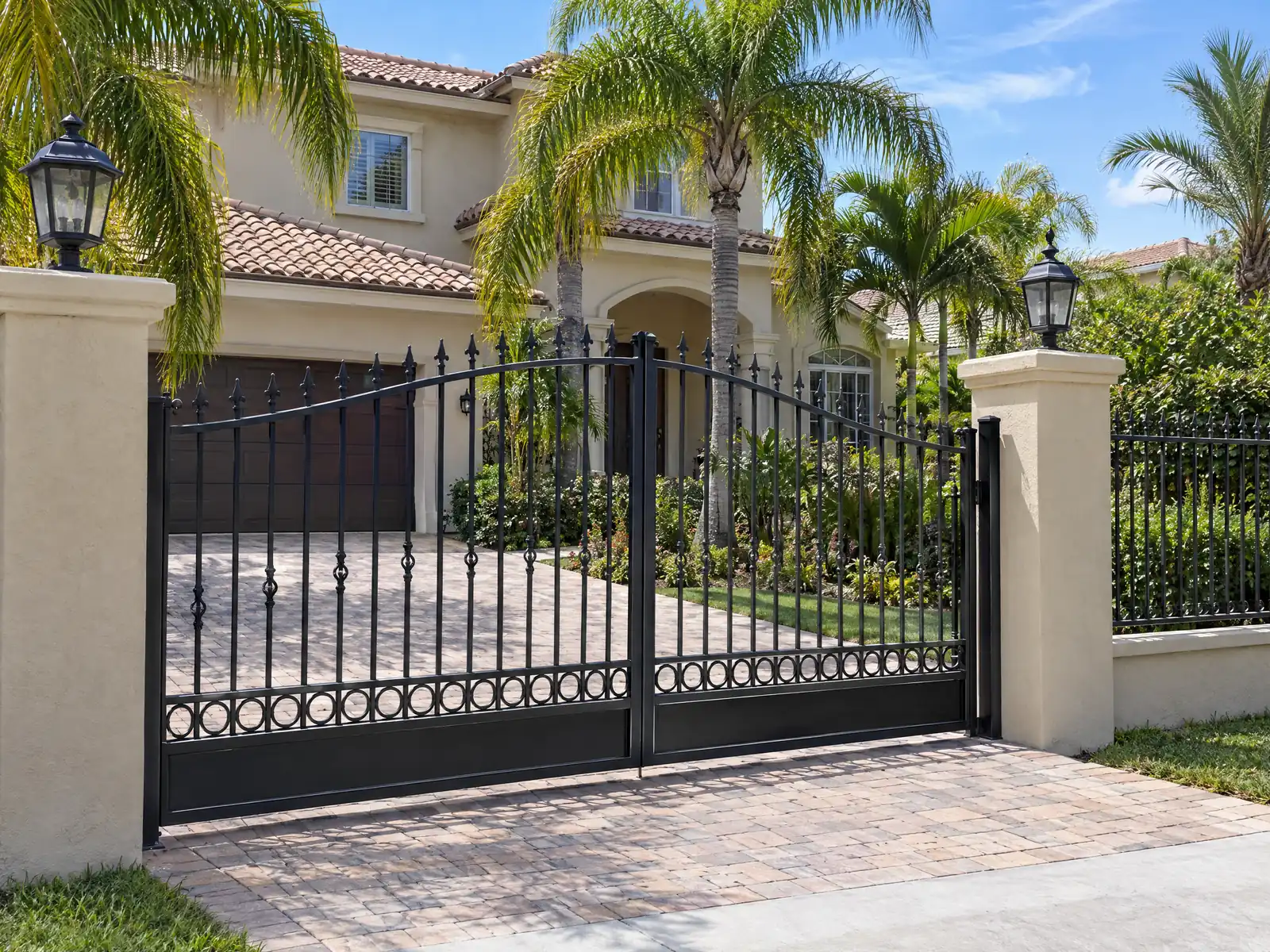
Corona's fences stand on two kinds of ground. The old street grid inside H. C. Kellogg's circular boulevard dates to 1886, and the rest is tract land built as the population climbed 110 percent between 1980 and 1989. Census Bureau ACS 2024 one-year estimates count 33,741 single-family detached homes, 64.3 percent of 52,505 units, plus 3,012 attached, and 37.9 percent of occupied homes are rented, so many fences stand on a landlord's lot. The city also has 1,768 mobile homes, and work inside a park follows the park's rules as well as the City's.
For a fence project, MDG Builders (CSLB #1040337) plans the job, reads the City's rules before pricing and runs the schedule, while a licensed C-13 fencing subcontractor sets the posts and a masonry-licensed subcontractor handles any block. Start with the fencing page for sourced prices and the Corona overview for every trade, then compare the guides for Yorba Linda and Pomona. The City's Building Division and Planning Division hold the permit and zoning answers.
What Corona's fence ordinance, permit list and standard drawings say about fences
Where fencing permits come from in Corona: City of Corona Building Division (Planning and Development Department).
- Corona requires a building permit for any fence over 3 feet high, whatever the material (wood, vinyl, metal, chain link, wrought iron, masonry), and for retaining walls over 2 feet measured from the top of the footing; fences not over 3 feet and retaining walls up to 2 feet (not supporting a surcharge) are exempt. This is stricter than the zoning height limit, so a fence that passes zoning can still need a permit.
- Corona Municipal Code 17.70.050 (Ordinance 3431, adopted September 2, 2026 and effective October 2, 2026 per the City's Design Guidelines page) lets a residential fence, wall or hedge run up to 7 feet along side and rear lot lines behind the front yard setback, with entry and vehicle gates behind the setback up to 8 feet; height is measured from the highest ground elevation on either side.
- In a Corona residential front yard setback, fences, walls and gates may not exceed 4 feet; all-wrought-iron or tubular steel fencing with bars at least 4 inches apart may reach 5 feet, masonry up to 4 feet topped with vertical bars may reach 5 feet total, and pilasters up to 5 feet (6 feet with ornaments) must be at least 8 feet apart. Chain link, wire mesh, corrugated metal and wood are prohibited in the front setback except a wood picket fence with pickets at least 3 inches apart and painted or sealed.
- Corona's fence ordinance prohibits smooth precision block in the front yard setback unless it has an exterior texture such as stucco, requires block walls facing a street or highway to be decorative, textured or coated, and prohibits chain link on side and rear yards that abut a street, highway, park, school, greenbelt or common area.
- At corners Corona limits fences, walls and landscaping to 3 feet in the corner cut-off visibility area, requires fences and hedges on corner lots with a side-yard driveway to inset at a 45 degree angle 15 feet each side of the driveway, and limits the fence on a reverse corner lot triangle (20 feet on each leg) to 3 feet above the adjacent sidewalk or driveway.
- Swimming pool enclosures in Corona must be at least 5 feet high and no more than 7 feet, with self-latching gates at least 5 feet high and a latch height per the California Building Code, and the fence must be inspected and approved before water is allowed in the pool; a private pool permit at a single family home is on the over-the-counter list.
- For heritage properties and historic landmarks, districts or structures of merit, Corona's Planning Director may substitute the fence and wall design and materials standards in the City's Design Guidelines for Historic Buildings for the standard fence rules; walls of the Main Street frontage have special street-side setbacks under CMC 17.86.020.
- Corona publishes City standard drawings for block walls: a garden wall standard, a pilaster detail, a retaining wall standard (5 ft 4 in maximum) and a combination wall standard (7 ft maximum block wall over a 2 ft maximum retaining wall); a City standard block wall and a fence permit are on the over-the-counter list, and a special design wall goes through plan check.
Does a Corona fence need a building permit when zoning allows 7 feet?
Yes, once it is over 3 feet. The City's building code amendments require a permit for any fence above 3 feet, whatever it is made of: wood, vinyl, metal, chain link, wrought iron or masonry. Fences of 3 feet or less are exempt. That rule is stricter than zoning, so a 6 or 7 foot fence that passes the height limit still needs a permit. The permit text is from the gocodebook.com mirror, a third-party copy, so confirm it with the Building Division at 951-736-2250.
Zoning is the second test. Municipal Code 17.70.050, as amended by Ordinance 3431 (adopted September 2, 2026 and effective October 2, 2026, per the City's Design Guidelines page), lets a residential fence, wall or hedge reach 7 feet along side and rear lot lines behind the front yard setback, and entry and vehicle gates reach 8 feet behind it. Height is measured from the highest ground elevation on either side of the line, so a fence on a retained slope can count taller than it looks. A fence permit is on the City's over-the-counter list, and the City asks callers to confirm that a specific job qualifies.
Get the permit number before the first post is set and keep the final height on the proposal.
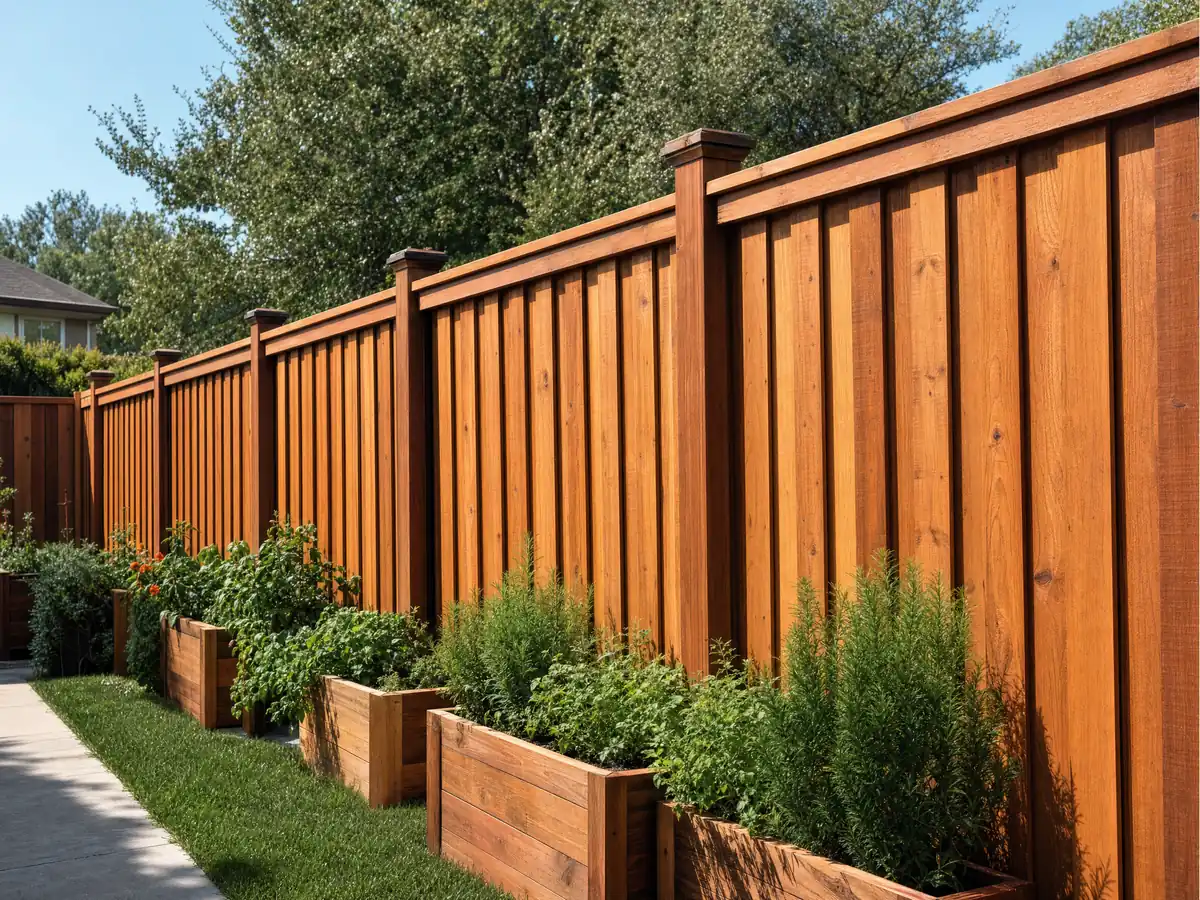
What fence can go in a Corona front yard: wrought iron, a wood picket or block?
Corona keeps front yards low. In a residential front yard setback, fences, walls and gates may not exceed 4 feet. All-wrought-iron or tubular steel fencing with bars at least 4 inches apart may reach 5 feet, and masonry up to 4 feet topped with vertical bars may reach 5 feet overall. Pilasters may rise to 5 feet, or 6 feet with ornaments, but they must be at least 8 feet apart.
Materials are limited as well. Chain link, wire mesh, corrugated metal and wood are prohibited in the front setback, with one exception: a wood picket fence whose pickets are at least 3 inches apart and that is painted or sealed. Smooth precision block is not allowed there unless it has an exterior texture such as stucco. These rules took effect on October 2, 2026, so a front fence quoted before that date should be checked against them.
Ask the City where the front yard setback line falls on your lot before you pick a style.
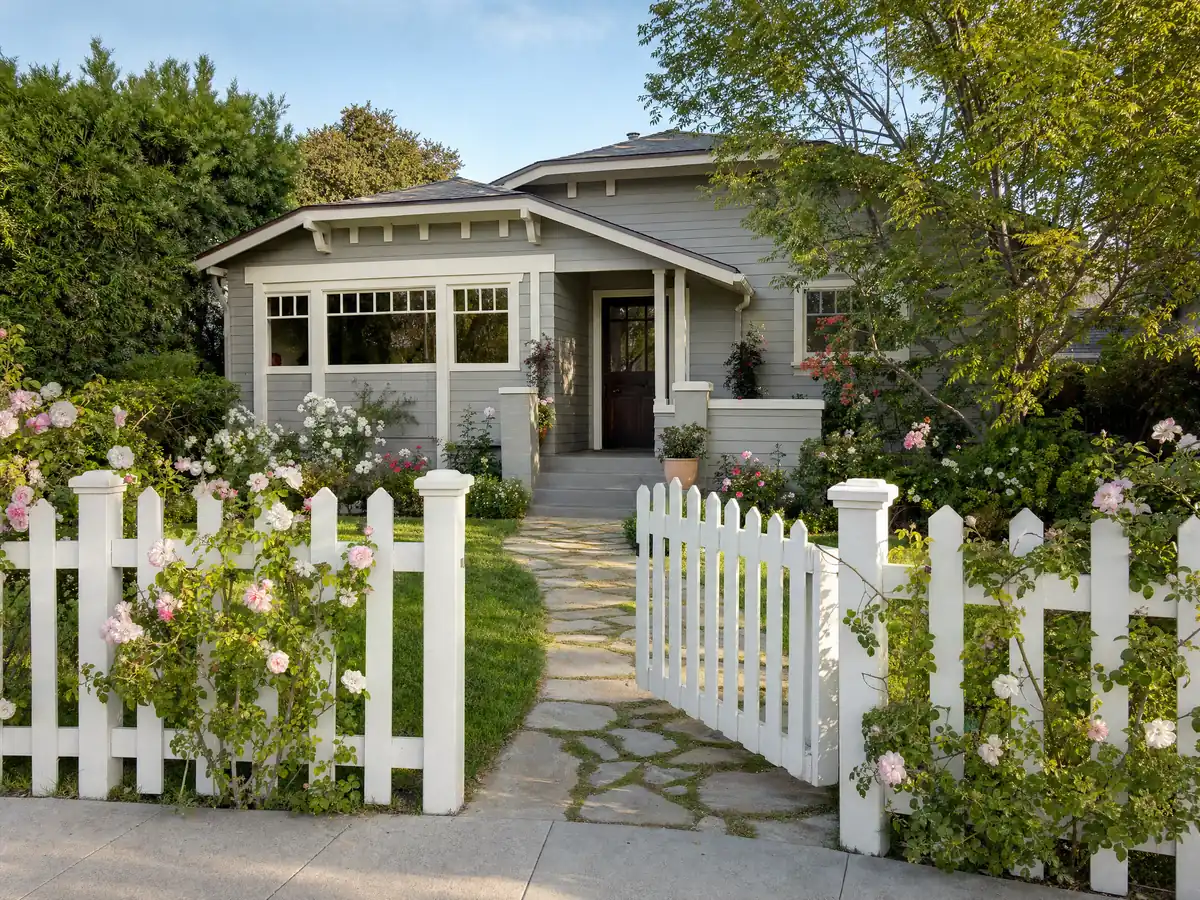
What do Corona's standard block wall drawings cover, and who builds the wall?
The City publishes standard drawings for a garden block wall, a pilaster detail, a retaining wall up to 5 feet 4 inches and a combination wall, which is a block wall up to 7 feet over a retaining wall up to 2 feet. A City standard block wall is an over-the-counter permit, while a special design wall goes through plan check. We could not read the garden wall drawing cleanly, so the City's page is the place to check the details.
A block wall that faces a street or highway must be decorative, textured or coated, and chain link is not allowed on a side or rear yard that abuts a street, highway, park, school, greenbelt or common area. Masonry is also a different trade from fencing: the Contractors State License Board lists class C-13 as excluding masonry walls, which belong to class C-29. Ask who holds the masonry license on any block run, since the fence crew may not.
Ask whether the quote uses a City standard drawing or a special design before comparing bids.
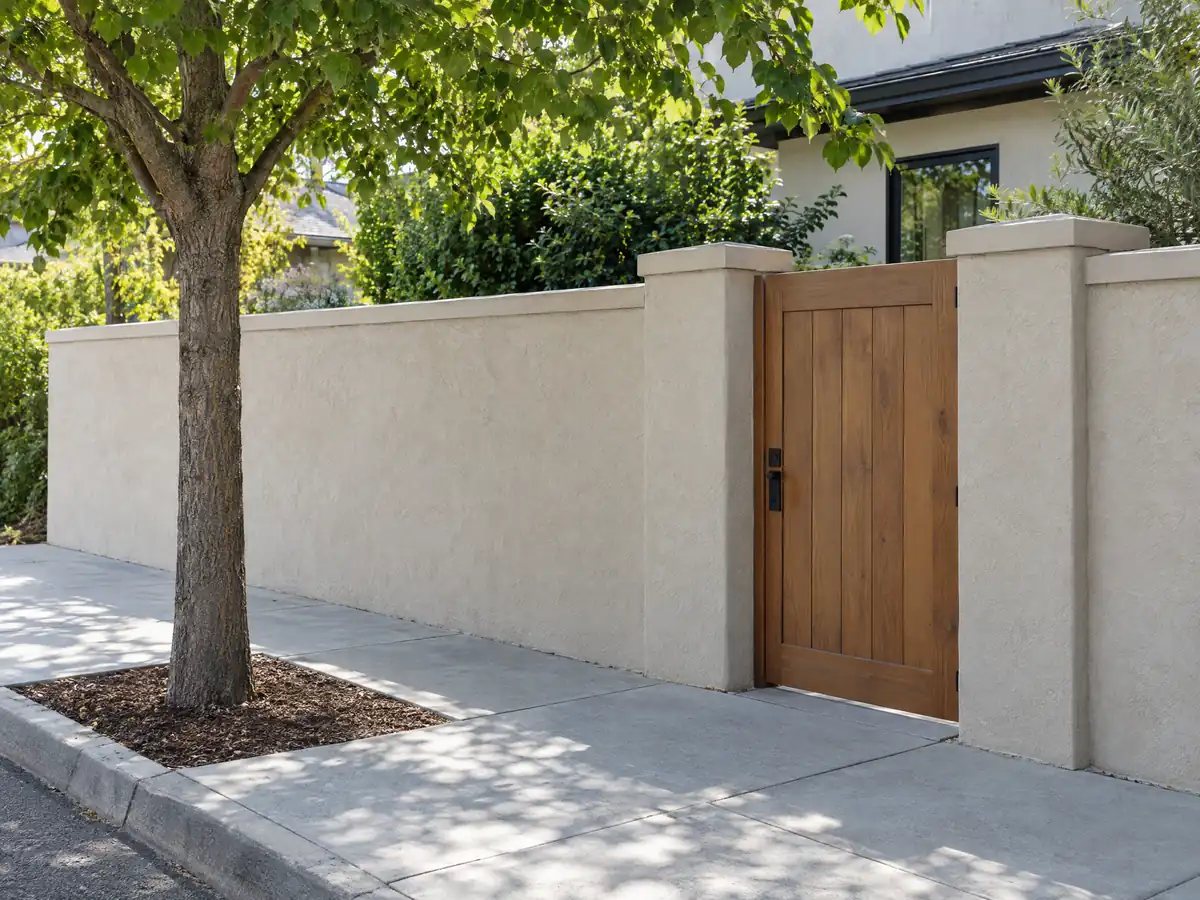
How do corner lots, driveways, gates and pool barriers change a Corona fence?
Corners are tighter. Fences, walls and landscaping in the corner cut-off visibility area are limited to 3 feet. A corner lot with a side-yard driveway must inset fences and hedges at a 45 degree angle 15 feet each side of the driveway, and a reverse corner lot triangle with 20 foot legs is limited to 3 feet above the adjacent sidewalk or driveway.
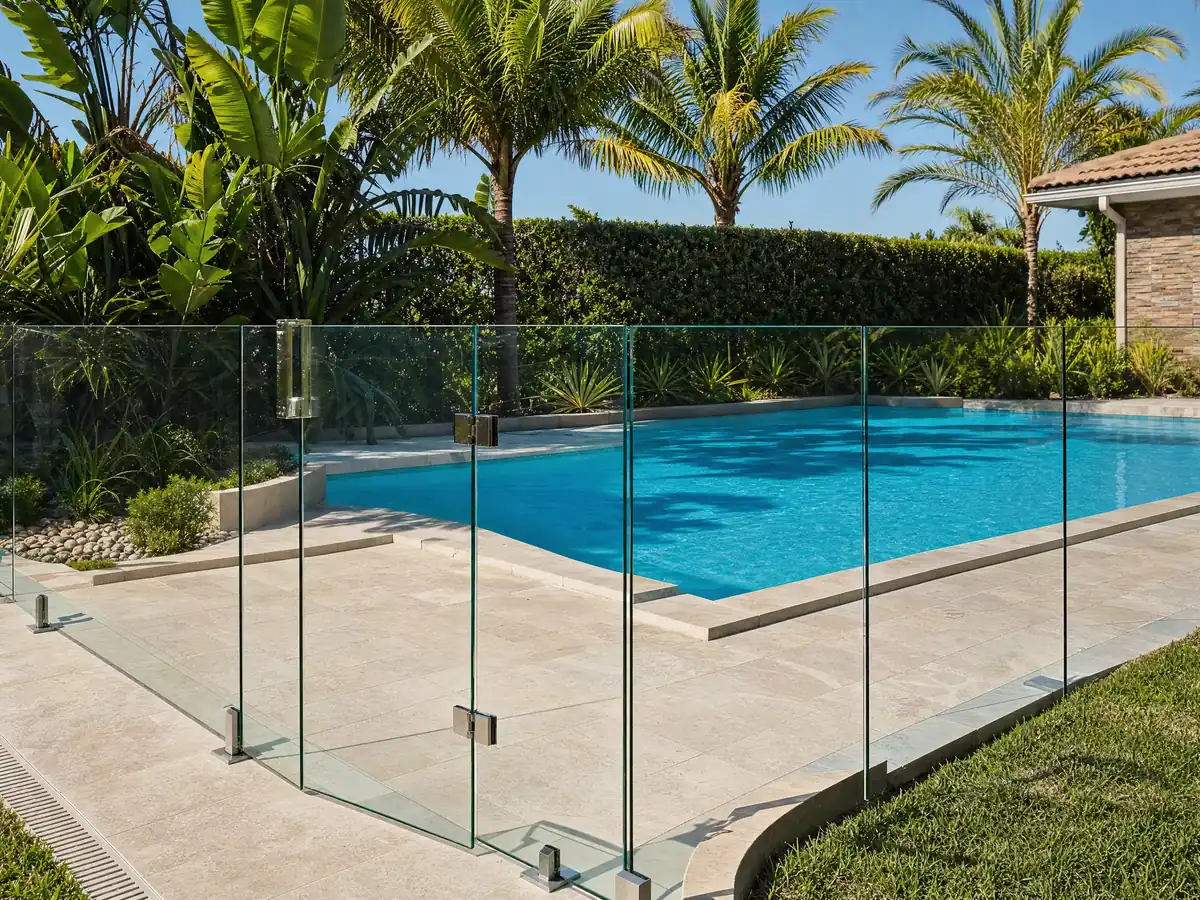
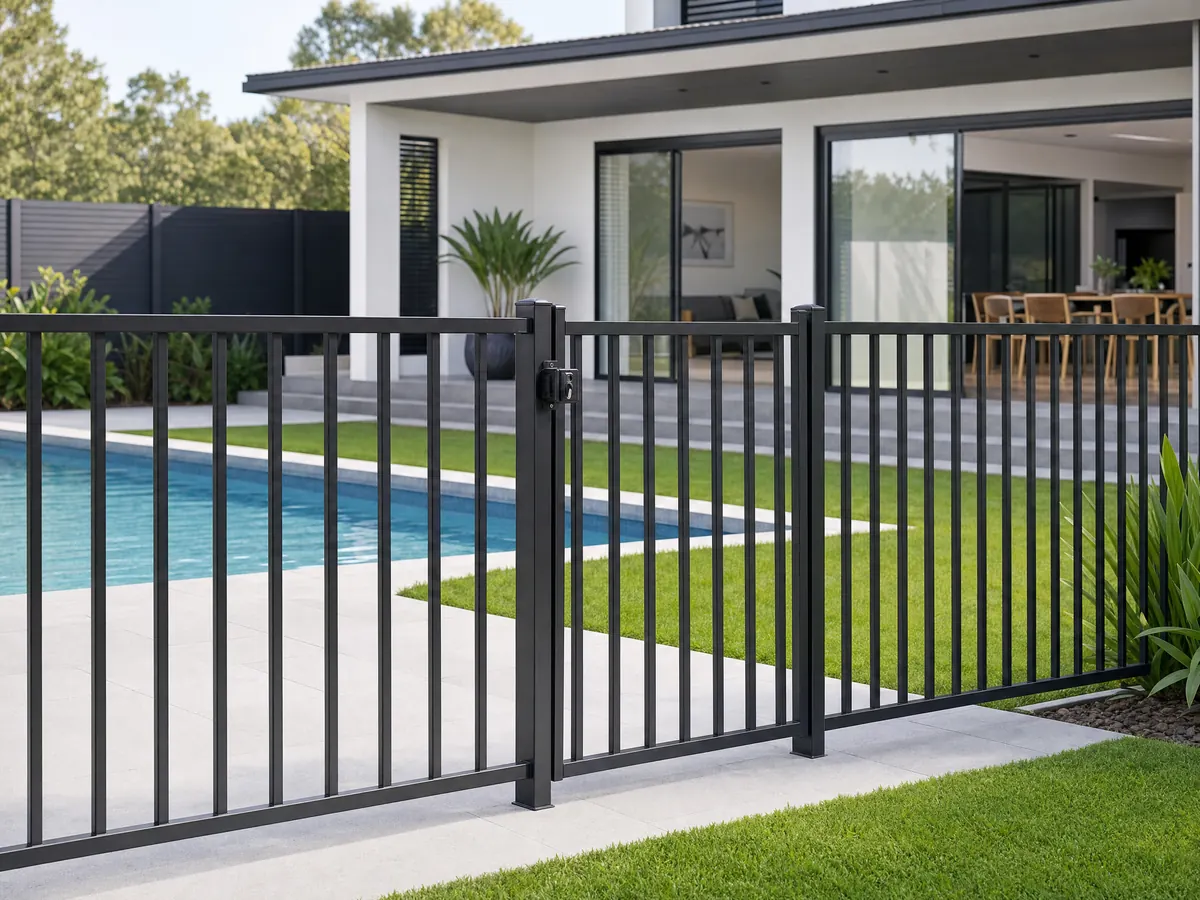
A swimming pool enclosure must be at least 5 feet and no more than 7 feet high, with self-latching gates at least 5 feet high and a latch height set by the California Building Code, and the fence must be inspected and approved before water goes in the pool. A private pool permit at a single-family home is on the over-the-counter list. Gates behind the front setback may reach 8 feet, so a tall driveway gate is a zoning question and a permit question at the same time.
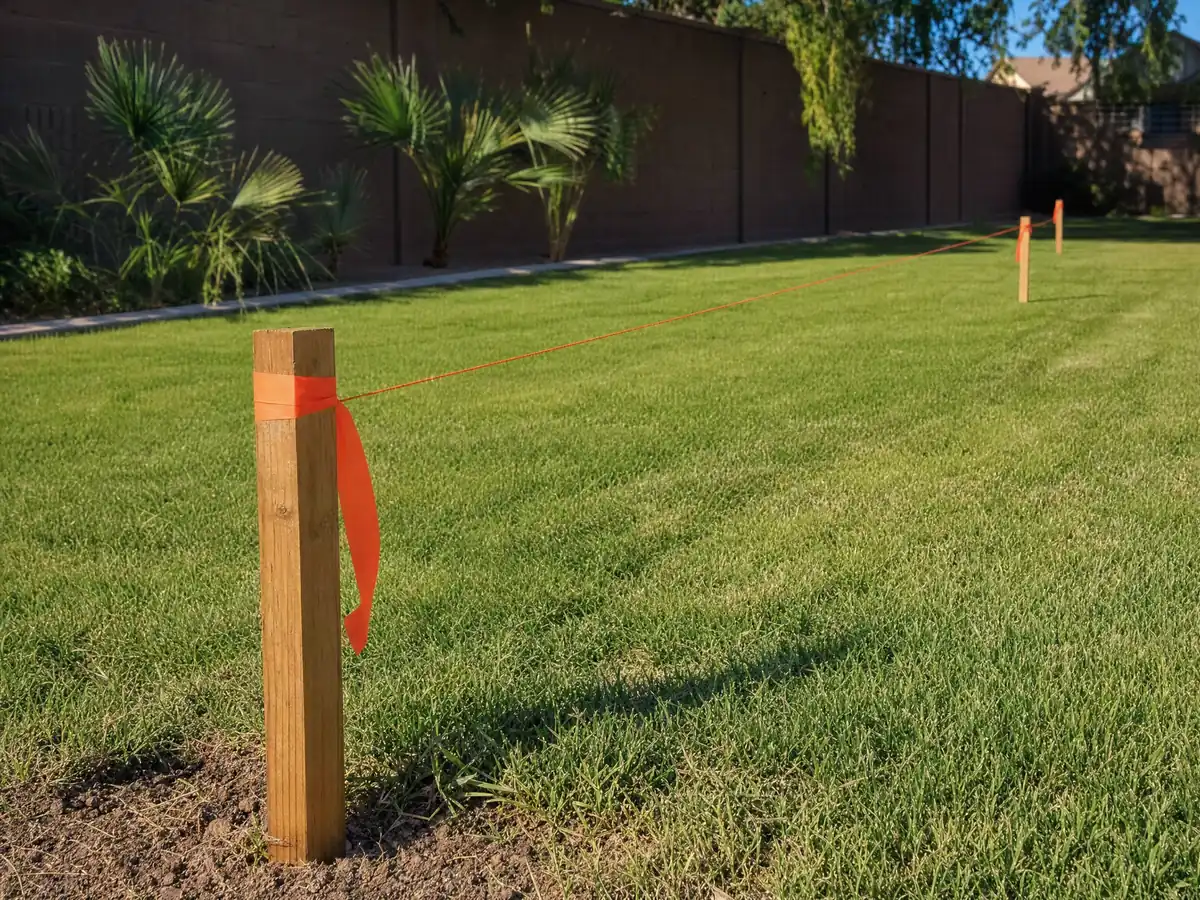
Ask for a drawing that shows the corner cut-off and the driveway inset before the line is staked.
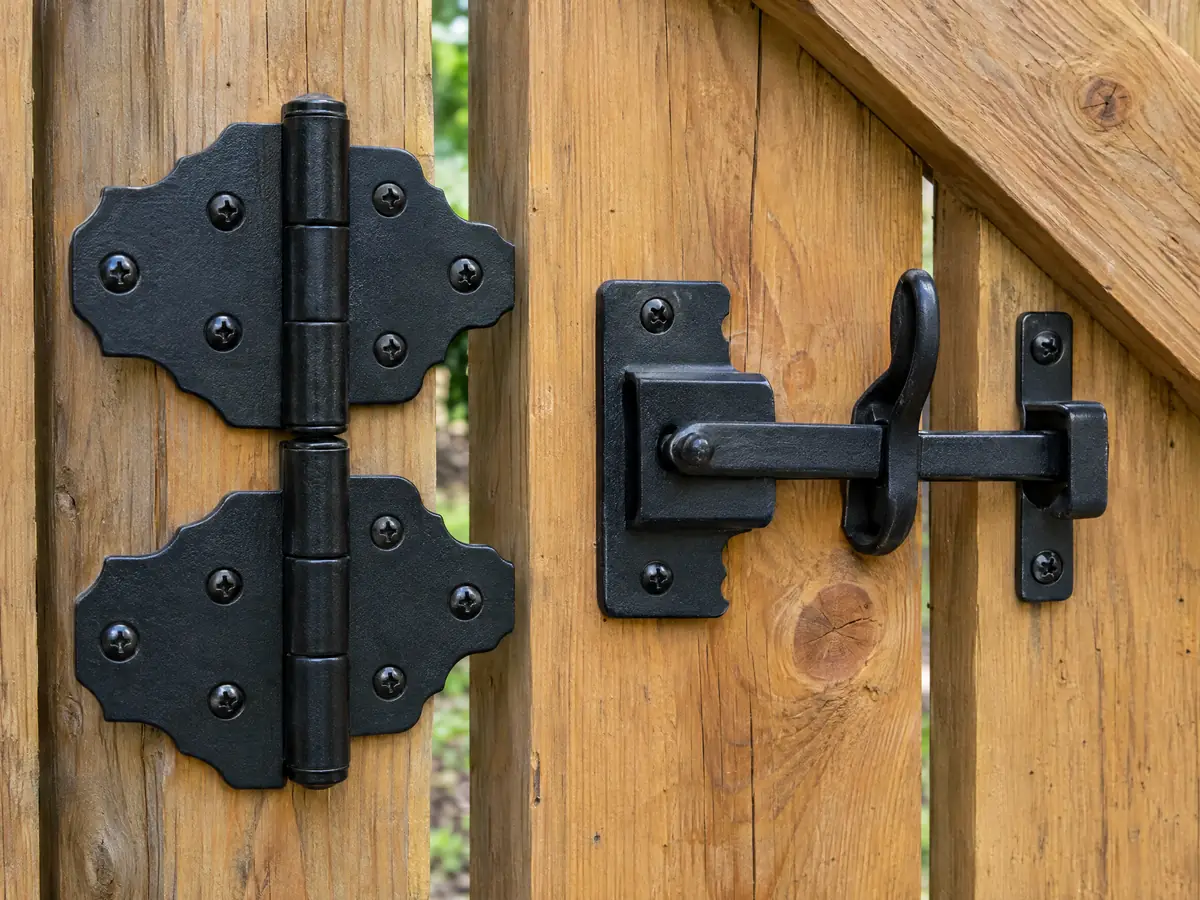
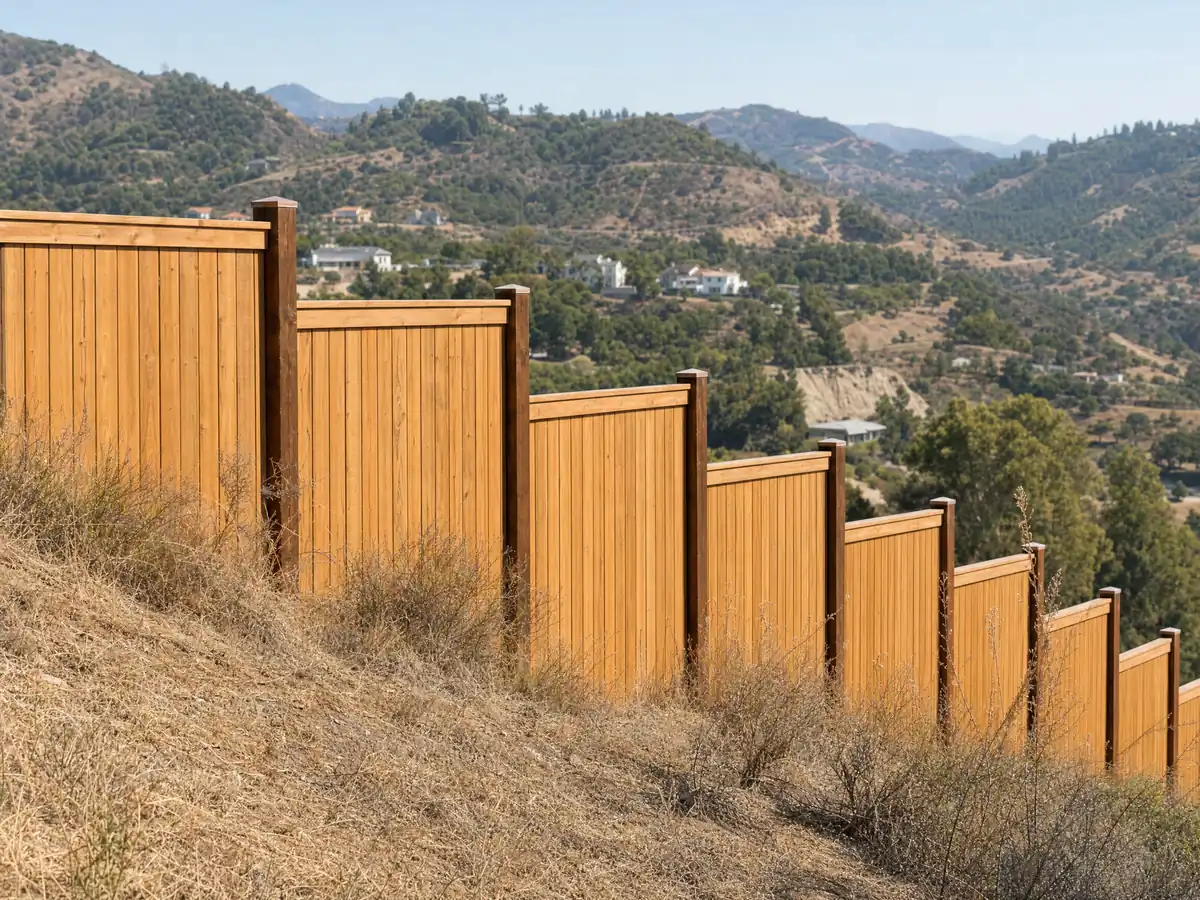
Do I need a permit for a retaining wall or a fence on a hillside lot in Corona?
A retaining wall needs a permit when it is over 2 feet, measured from the top of the footing, or when it supports a surcharge, and walls up to 2 feet without a surcharge are exempt. The Hillside District covers parcels with a natural slope of 15 percent or more: hillside standards override the base zone, staff review all plans, and the Fire Chief can require fire access easements and fuel modification plans. The grading code draws its own hillside line at 10 percent and requires a grading permit for moving more than 100 cubic yards of earth.
Soils shape the posts. Plan check requires soils reports, and the City's design table lists termite damage as very heavy, a 12 inch frost line, a 95 mph wind design speed and topographic wind effects for Sierra Del Oro. None of that sets a post depth for a fence, so ask the builder to write footing depth, post material and bracing into the proposal. UC IPM says drywood termites infest fences and decks in southern California and suggests termite-resistant wood or concrete footers where wood meets soil.
Ask for the footing depth and post material as separate lines on the proposal.
Does a fence near the Circle or on a historic Corona property follow different rules?
For heritage properties and for historic landmarks, districts or structures of merit, the Planning Director may substitute the fence and wall standards in the City's Design Guidelines for Historic Buildings for the ordinary fence rules. Walls on the Main Street frontage have special street-side setbacks under Municipal Code 17.86.020. Chapter 17.63 creates the Corona Register of landmarks, structures of merit, markers and districts, and alterations to a listed resource go to plan review.
The Circle is its own case. Grand Boulevard, about 3 miles around and 100 feet wide, is a National Register historic district whose contributing features, the roadway, curbs, parkways, street trees, streetlights and sidewalks, sit inside the right of way. That is the public street, not your yard, but the pages we read do not say which neighborhoods are Corona Register districts, and the City's 2018 historic guidelines are a scan we could not read. Ask Planning at 951-736-2262 whether your address is listed before you design a front fence.
Get the Planning answer in writing before ordering gates or custom pickets.
How much does fence installation cost in Corona, and who pays when the fence is shared?
We found no Corona price survey, so the sources we trust cover Los Angeles and the nation. Angi's Los Angeles page, updated August 4, 2026, shows an average job of $3,051 within $1,734 to $4,422 and $15 to $60 a linear foot, and Thumbtack's national page, updated July 1, 2026, lists $23 to $57 a foot across materials. Our planning range for a 6 foot wood or vinyl privacy fence runs $25 to $55 a linear foot installed. The Bureau of Labor Statistics put the mean fence erector wage in the Los Angeles-Long Beach-Anaheim area at $28.00 an hour in May 2025, a check on labor only. Block walls have no solid regional price source, so we print no per-foot figure for them.
A quote should state length, height, material, post spacing, footing depth, gates, old-fence haul-away and who pulls the permit. Business and Professions Code 7159.5 caps a down payment at $1,000 or 10 percent of the price, whichever is less, and the state's $1,000 minor-work limit never applies when a permit is needed. For a shared line, Civil Code 841 presumes the neighbors split the cost equally and calls for 30 days' written notice before costs are incurred. For who answers to whom on a fence crew, see how general contractors use subcontractors, and run each license through our contractor license guide.
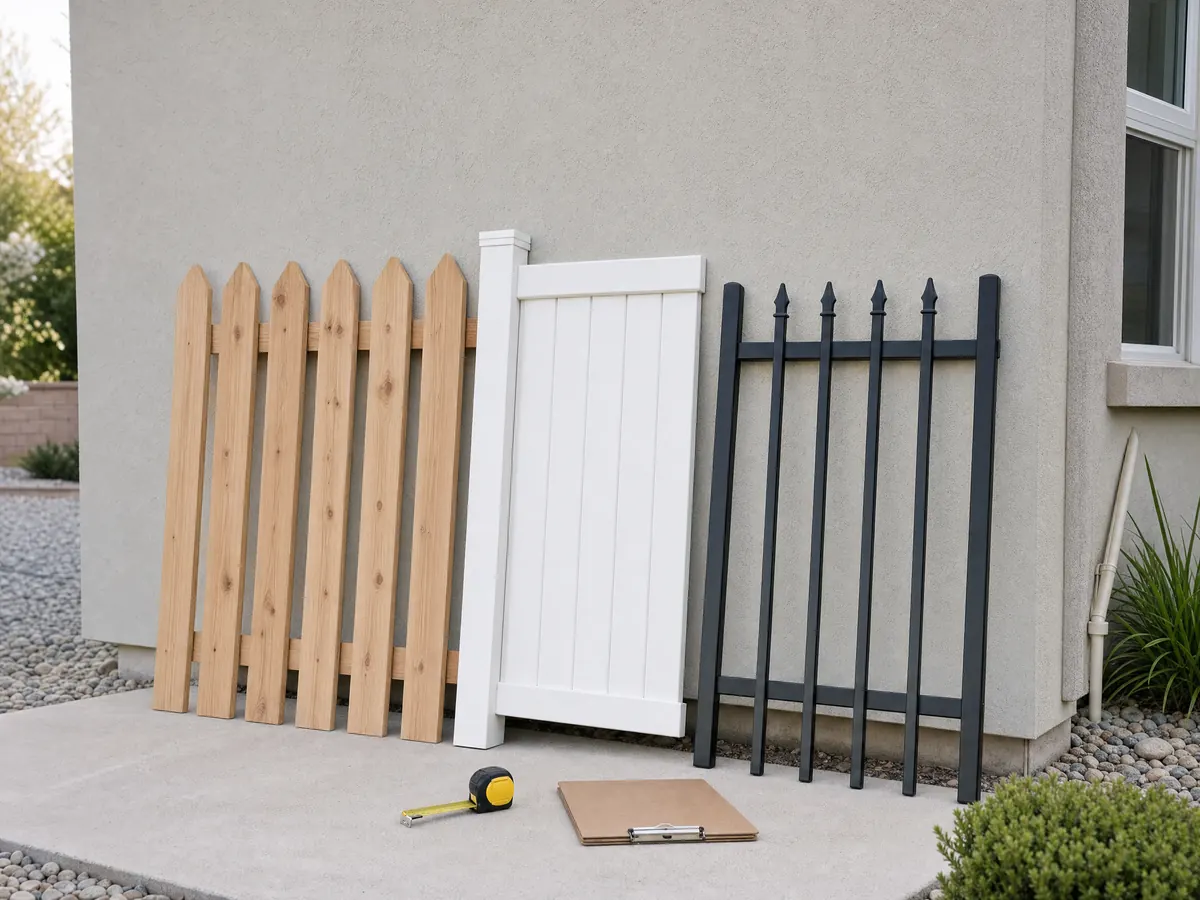
Fence photos from Corona and nearby communities
Fence scenes tied to Corona places such as the Circle, Sierra Del Oro and Corona Hills, and to nearby communities such as Norco and Riverside, from slatted privacy runs and slope steps to gates and block walls.
Where these Corona fence figures come from
Per-foot ranges by material, with their sources and dates, are in the table on our fencing price page. A new fence often follows or precedes other exterior work, and the Corona rules for those jobs are on the roofing page, the painting page and the kitchen remodeling page. For a Los Angeles County wall rulebook to compare with Corona's, see the fencing guide for Pasadena.
| What it covers | Typical range |
|---|---|
| Wood or vinyl privacy fence, 6 feet | $25 to $55 per linear foot |
| Chain-link | $12 to $30 per linear foot |
| Aluminum or ornamental iron | $35 to $85 per linear foot |
| Typical 100-foot backyard run | $2,500 to $5,500 total |
| Block walls, horizontal slat fences, gates and openers, hillside lots | Set by the written proposal |
Corona fence questions, answered
Do I need a permit to build a fence in Corona?
Yes, for any fence over 3 feet, whatever the material. Fences of 3 feet or less are exempt, and a fence permit is on the City's over-the-counter list. Zoning allows more height than the permit threshold, so a 6 or 7 foot fence passes zoning and still needs the permit. Call the Building Division at 951-736-2250 to confirm your job.
What is the maximum height for a backyard fence in Corona?
Seven feet along side and rear lot lines behind the front yard setback, under Municipal Code 17.70.050 as amended by Ordinance 3431, effective October 2, 2026. Height is measured from the highest ground elevation on either side of the line, and a fence over 3 feet needs a building permit.
Can I put up a 7ft fence in Corona?
Yes, along side and rear lot lines behind the front yard setback, and gates there may reach 8 feet. In the front setback the limit is 4 feet. Any fence over 3 feet needs a building permit, so a 7 foot fence is a permit job even though zoning allows it.
Can I put a privacy fence up in my front yard in Corona?
Not a solid one. Front setback fences are capped at 4 feet, or 5 feet for all-wrought-iron or tubular steel with bars at least 4 inches apart, and wood is prohibited there except a painted or sealed picket fence with pickets at least 3 inches apart. Chain link, wire mesh and corrugated metal are also banned in the front setback.
How much does fence installation cost in Corona?
For a 6 foot wood or vinyl privacy fence we plan on $25 to $55 per linear foot installed. Angi's Los Angeles page shows an average job of $3,051 and Thumbtack's national page $23 to $57 a foot. We found no Corona survey, so a measured written quote sets the real price.
How much does it cost to have 100 feet of fence installed?
Roughly $2,500 to $5,500 at our planning range of $25 to $55 a linear foot, which is multiplication and not a quote. Angi's Los Angeles page shows a 100 foot row of $2,100 to $2,350. Gates, slopes, old-fence removal and block sections change the total, so measure the line first.
Does your neighbor have to pay for half the fence in California?
Usually the law presumes so for a boundary fence. California Civil Code 841 treats adjoining owners as sharing the cost equally and requires 30 days' written notice before one owner incurs costs, and the presumption can be rebutted. Send a written notice with the quote before any work starts.
What is the maximum height of a retaining wall without a permit in Corona?
Two feet, measured from the top of the footing, as long as the wall supports no surcharge. Corona's building code amendments, read on a third-party mirror, require a permit above that. The City's retaining wall standard drawing tops out at 5 feet 4 inches, so a taller wall needs a special design.
How tall does a pool fence have to be in Corona?
At least 5 feet and no more than 7 feet. Gates must be self-latching and at least 5 feet high, with a latch height set by the California Building Code, and the fence must pass inspection before water goes in the pool. A private pool permit at a single-family home is an over-the-counter item.
What license does a fence installer need in California?
A C-13 Fencing license covers fences, railings and gates but excludes masonry walls, which fall under class C-29. The state's $1,000 unlicensed limit never applies when a permit is needed. MDG (CSLB #1040337) manages the job and uses licensed subcontractors, whose numbers you can ask for.
Tell us about your Corona fence
Give us your street, the height you want, whether the fence faces a street, a slope or a pool, and who shares the line. We check the front setback and the permit threshold before we visit.