
Kitchen Remodelingin Corona, CA
Kitchen remodeling in Corona needs no building permit for cabinets, countertops and painting, but moving or replacing concealed drain, water or vent pipe is permitted work. The City prints 10 business days for a first plan review and 5 for later rounds, and its common corrections include alarms, combustion air and attic access.
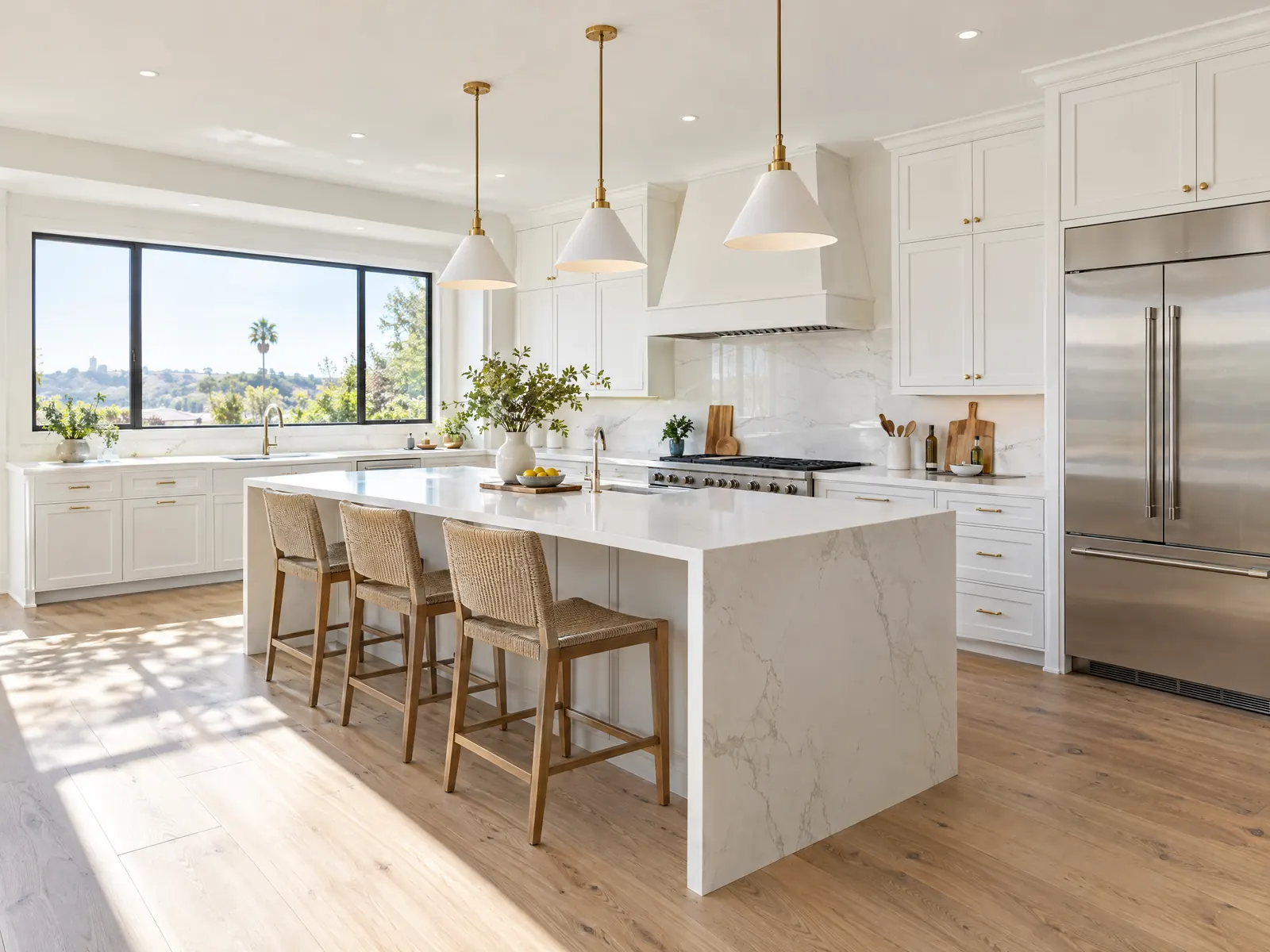
Most Corona kitchens belong to the tract boom. ACS 2024 one-year estimates count 52,505 housing units, 64.3 percent single-family detached and 21.3 percent in buildings of five or more units, with about 52 percent built from 1980 through 1999, so the houses are 27 to 46 years old. The median owner-occupied home is worth $746,500 and 37.9 percent of occupied homes are rented. The older core is smaller: 1,118 units date to 1939 or earlier, in a town laid out in 1886 and incorporated in 1896.
On a kitchen job, MDG Builders (CSLB #1040337) draws the plan, asks the counter which review fits and sequences the licensed plumbers, electricians, cabinet installers and tile setters who work in the room. Our kitchen remodeling page holds the sourced cost tiers, the Corona overview lists every trade we manage here, and the guides for Yorba Linda and Pomona show how two cities in other counties route kitchens. Corona's Building Division issues the permits. Municipal Code text below comes from a third-party mirror, so confirm each section with the City.
What Corona's exempt list, plan check handouts and fire sheets say about kitchens
Where kitchen remodeling permits come from in Corona: City of Corona Building Division (Planning and Development Department).
- Corona exempts cabinets, countertops, painting and similar finish work from a building permit, but water-conserving plumbing fixtures are exempt only when installed as replacements for existing fixtures; replacing or rearranging concealed drain, water or vent pipe is new work needing a permit and inspection, and a water repipe and an electrical panel upgrade are over-the-counter permits.
- Corona's plan check FAQ lists smoke and carbon monoxide alarms as a commonly missed item: existing dwellings undergoing alteration, addition or repair must have alarms shown on the plans, hardwired and interconnected where the work removes wall or ceiling finishes or where attic or crawlspace access exists; the City also publishes a Smoke/CO Alarm Verification Form.
- Corona's FAQ also flags combustion air for gas furnaces, water heaters and dryers (openings calculated from room size and BTU rating) and a 22 by 30 inch attic access where the attic clear height exceeds 30 inches as frequent plan check corrections, and the City requires a CPVC and PEX piping certification form among its general forms.
Do I need a permit to replace kitchen cabinets and countertops in Corona?
No. Corona's exempt-work list says no building permit is needed for cabinets, countertops, painting, papering, tiling, carpeting and similar finish work, and adds that the exemption does not allow work that violates another code. The City's official code site returned an error, so we read the list on the gocodebook.com mirror, a third-party copy, and the Building Division at 951-736-2250 should confirm it.
Fixtures are narrower. Water-conserving plumbing fixtures are exempt only when they replace existing fixtures, and replacing or rearranging concealed drain, water or vent pipe is new work that needs a permit and an inspection. A sink moved to a new wall therefore changes the answer. A water repipe and an electrical panel upgrade are both over-the-counter permits, and we found no Corona rule on added circuits, so ask the counter about those.
List everything that moves, plumbing and walls first, on the proposal before the permit question is asked.
What does Corona plan check flag most often on a kitchen job?
The City's own FAQ names the repeat offenders. Smoke and carbon monoxide alarms top the list: when an alteration, addition or repair removes wall or ceiling finishes, or attic or crawlspace access exists, alarms must be shown on the plans and be hardwired and interconnected, and the City publishes a Smoke/CO Alarm Verification Form. A kitchen opened to the studs fits that trigger.
Combustion air is next, since gas furnaces, water heaters and dryers need openings calculated from room size and BTU rating. A 22 by 30 inch attic access is required where the attic clear height is more than 30 inches. The City also lists a CPVC and PEX piping certification form among its general forms, so new water lines carry paperwork.
- Alarms shown on the plans
- Combustion air openings
- 22 by 30 inch attic access
- CPVC and PEX certification form
Ask the designer to check these four items before the plans go in.
How does a Corona kitchen permit work: eTRAKiT, 10 day reviews and noise hours?
Applications, plan check status, payments and inspection requests run through eTRAKiT, plan review runs through ProjectDox, and plans cannot be mailed in. The printed review times are 10 business days for a first submittal and 5 for later ones, with up to 3 more business days to prepare the permit after approval, and the prescreen can take up to 5 days before the clock starts. Over-the-counter permits skip that queue, and City Hall is closed on Fridays.
A permit expires 12 months after issue unless approved inspections keep it active, each one extending it 180 days, and a plan check expires 180 days after submittal unless resubmittals keep it alive. Construction noise is barred from 8:00 p.m. to 7:00 a.m. Monday through Saturday and from 6:00 p.m. to 10:00 a.m. on Sundays and federal holidays, counting delivery vehicles, and the Building Official can suspend a permit for violations. The application packet includes the Construction Permit Application with a contractor or owner-builder declaration and a workers' compensation declaration, a Declarations Prior to Permit Issuance form and a Disability Access Requirements sheet.
Schedule demolition and cabinet deliveries inside the noise window and tell the crew about it.
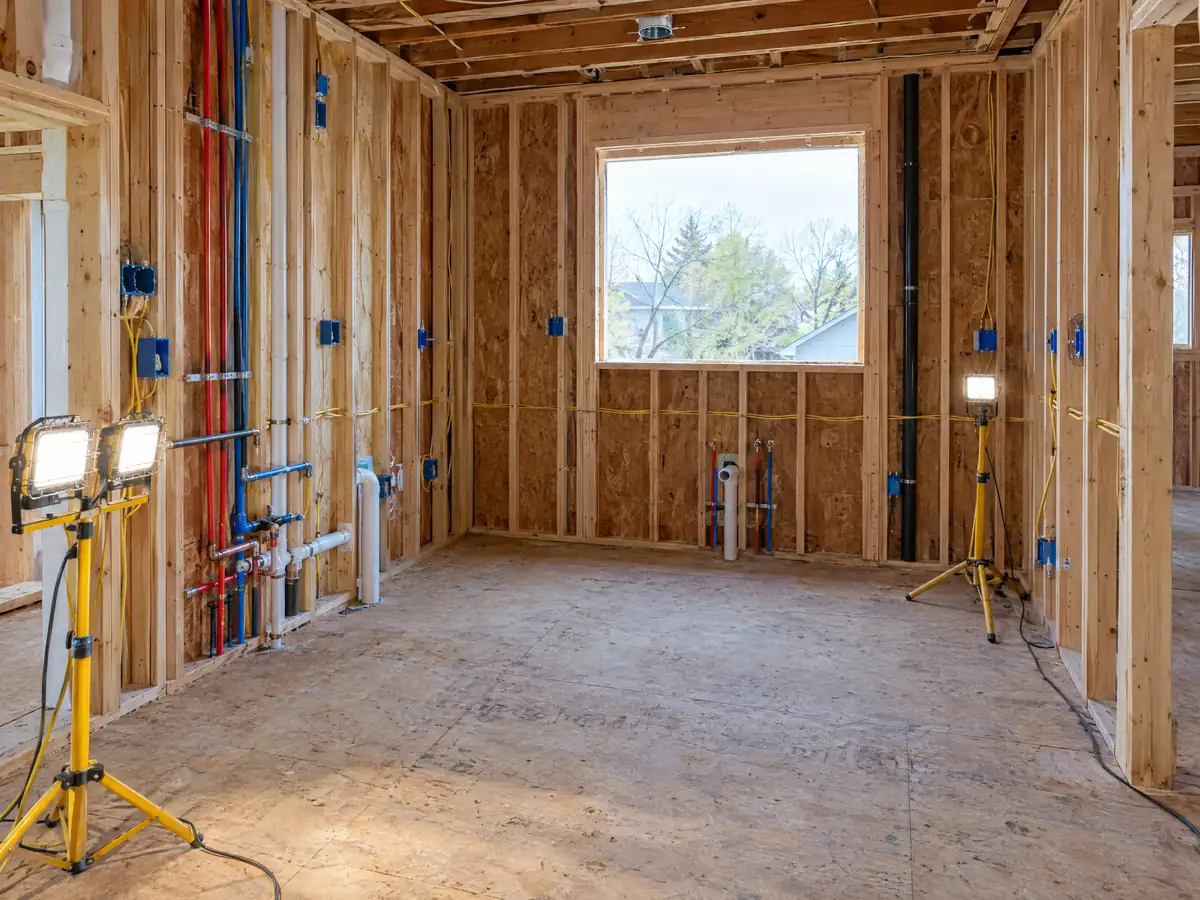
Can I take out a kitchen wall in a Corona house from the 1980s or 1990s?
Possibly, but it is permit work. The exempt list names finish work only, so removing or moving a wall is not on it. Corona's design parameters call for seismic design category D or E, and plan check asks for soils reports, so an engineer should confirm which walls carry load before anyone cuts.
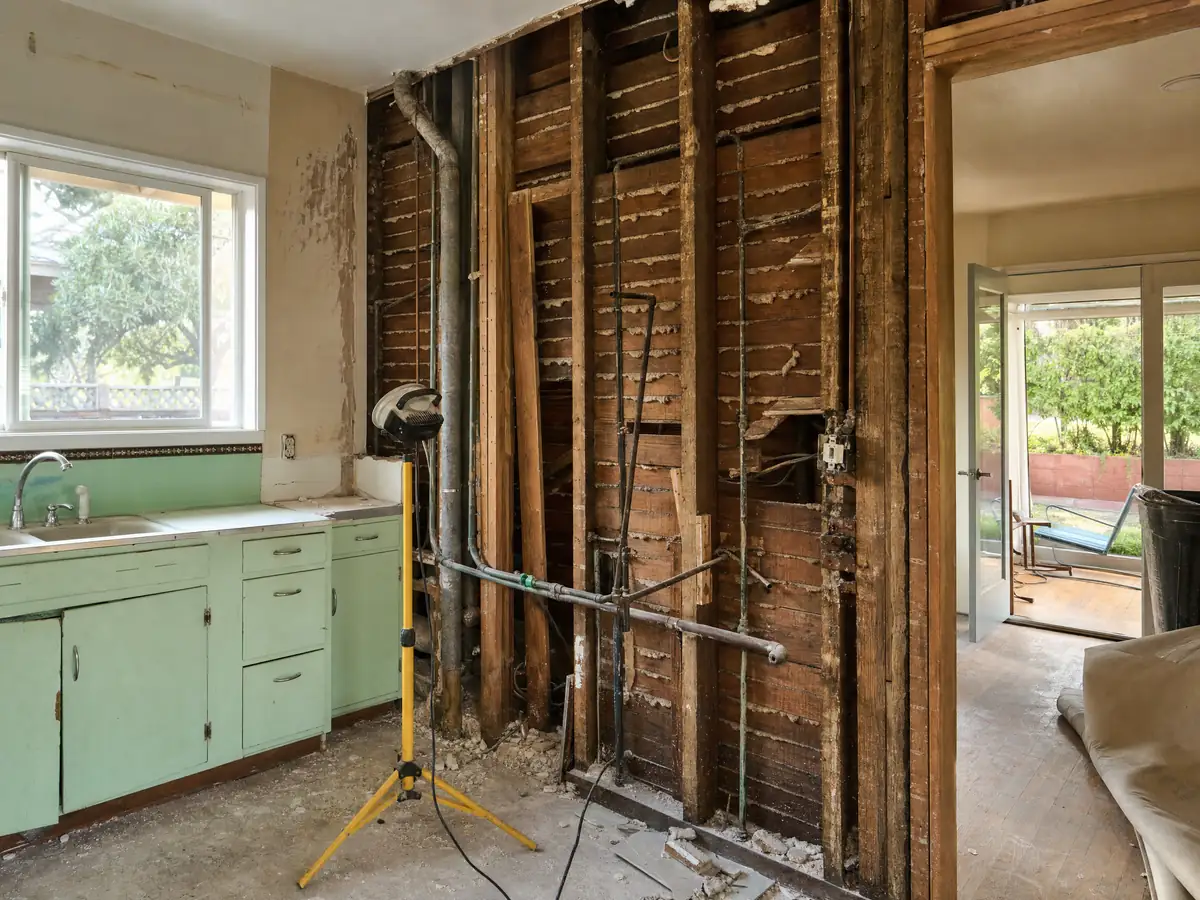
Opening a wall in an older Corona house can also reveal termite damage, which the City's code table rates as very heavy. Wires, pipes and vents inside the wall may be out of date, and a remodel that opens finishes triggers the alarm rules above. Ask for a contingency allowance in the proposal for what the wall reveals. Say which gas appliances share the kitchen's walls or attic, because combustion air openings and the attic hatch are checked again when the layout changes.
Ask for the engineer's letter before the wall comes out, not after.
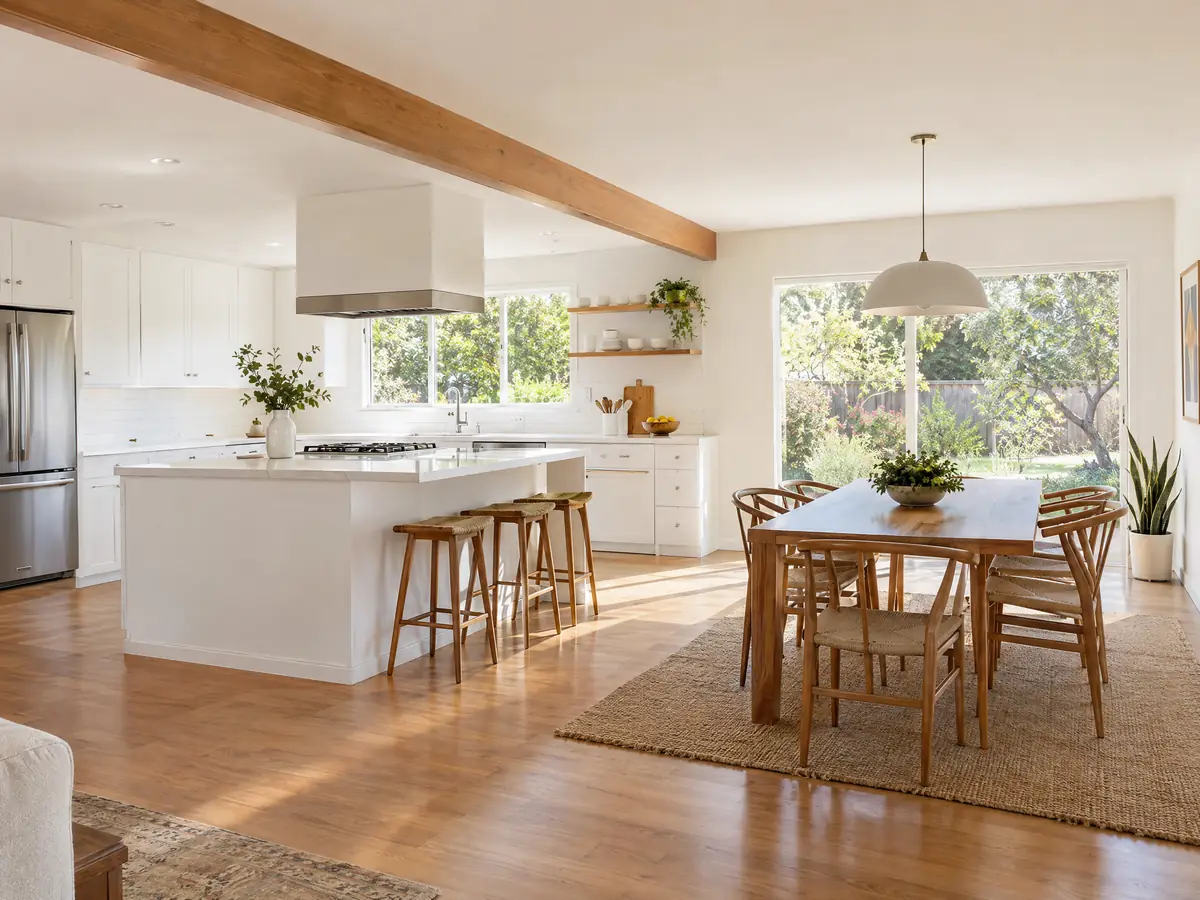
What if the kitchen grows into the yard or sits on a Corona hillside lot?
A bump-out becomes an addition. Corona's room addition list asks for five sets of plans, a title sheet that states the Fire Hazard Severity Zone, Fuel Modification Zone and Flood Zone, two sets of Title 24 energy calculations, structural and truss calculations and soils reports. The handout adds that patio covers, pools and fencing need separate permits, that public improvements under Chapter 15.48 may be required with an addition, and that grading and encroachment permits can also apply.
Hillsides add layers. In the Hillside District, which covers any parcel with a natural slope of 15 percent or more, hillside standards override the base zone and staff review all plans, and the Fire Chief can require fire access easements and fuel modification plans. A grading permit is needed for moving more than 100 cubic yards of earth. The zoning code has FP-1, FP-2 and FP-3 floodplain zones, and the Public Works counter at 951-736-2259 answers flood zone questions. Waste Management must haul the construction and demolition waste under the City's franchise, and school fees go to the Corona-Norco Unified School District.
Ask the Building Division for the zone answers before drawing the new footprint.
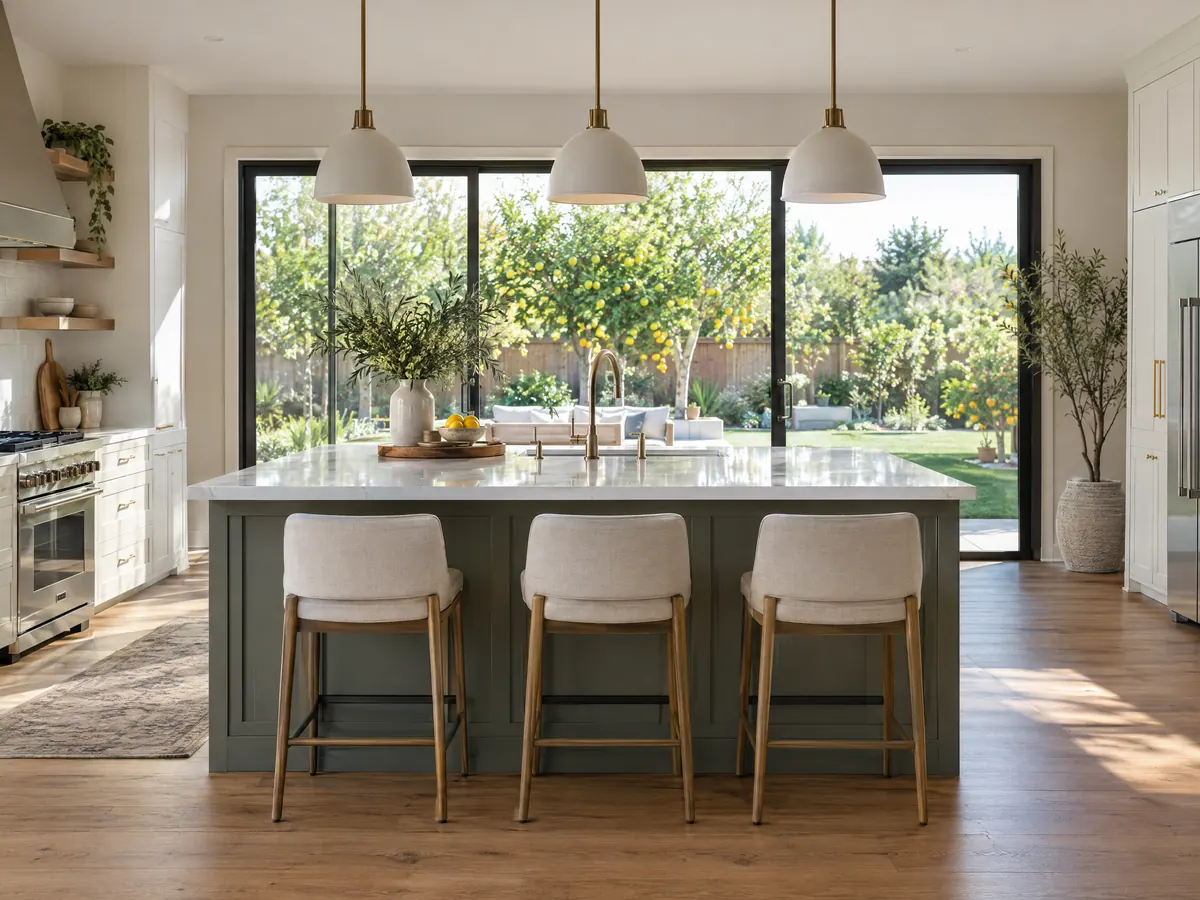
Does a kitchen remodel in an older home near the Circle need historic review?
Only if the house is a listed resource, and then the question is how far the review reaches. Chapter 17.63 creates the Corona Register of landmarks, structures of merit, markers and districts and says no one may alter a listed resource without plan review: major alterations go to the Historic Preservation Board and minor ones to the Planning Director. The chapter's definition of alteration names exterior features such as paint color and surface texture, and we found no text on interior kitchens, so ask Planning.
The Circle, Grand Boulevard, is a National Register district with 158 contributing resources, and its listed features sit in the street right of way. The pages we read name no Corona Register districts, and the City's 2018 Design Guidelines for Historic Buildings is an image-only scan. ACS counts 7,877 units built before 1970, so older kitchens are not rare. Planning answers at 951-736-2262.
Get Planning's answer on your address in writing before you commit to a design.
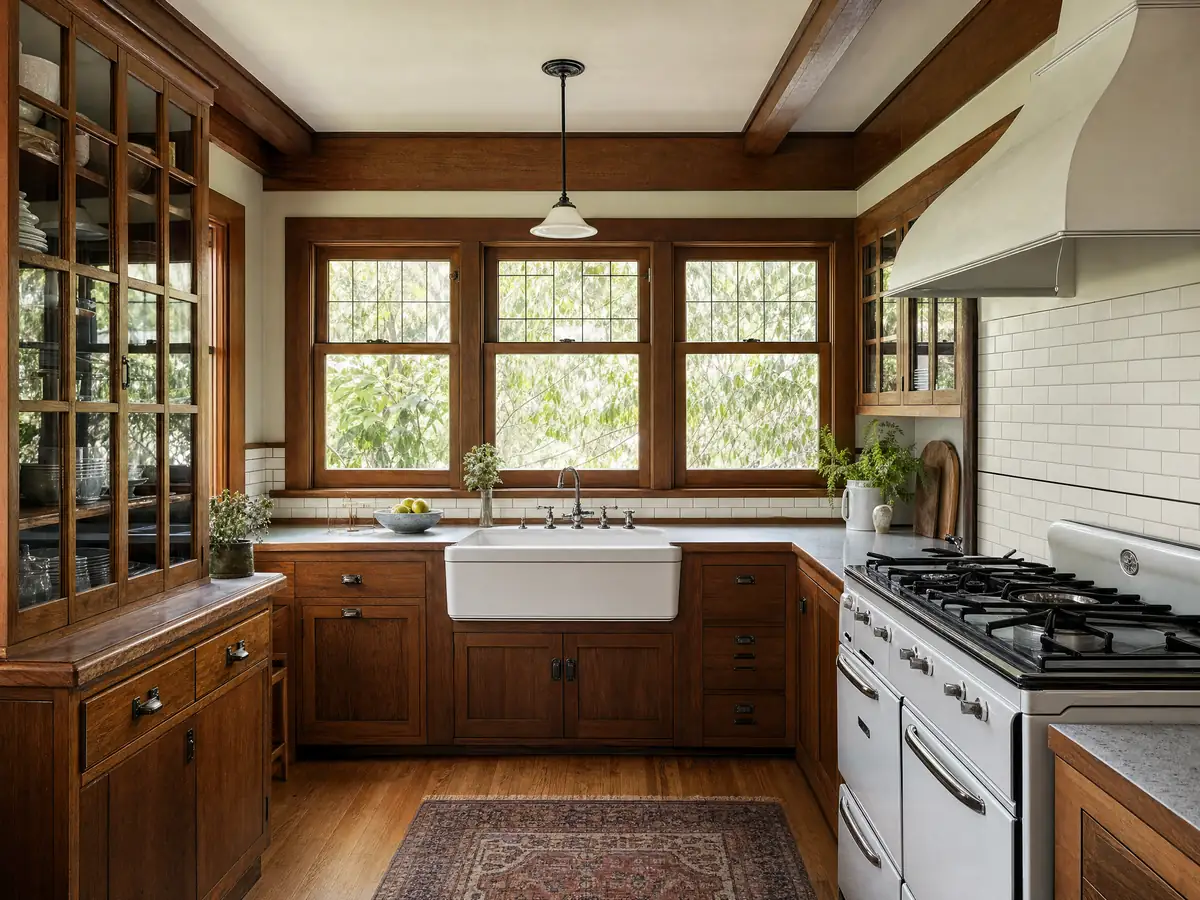
How much does kitchen renovation cost in Corona, and who should I hire?
We found no Corona kitchen survey, so these figures come from Los Angeles and an Inland Empire bid will differ. Remodeling magazine's Cost vs. Value 2025 report gives $29,765 for a minor midrange kitchen, $86,214 for a major midrange remodel and $171,369 for a major upscale one. Thumbtack's Los Angeles range, updated July 13, 2026, is $12,471 to $40,909 and includes small jobs, and the Houzz 2026 national study found a $24,000 median across all kitchens. Our planning tiers are about $25,000 to $45,000 for a same-layout refresh, $45,000 to $90,000 for a full remodel and $90,000 to $170,000 or more for upscale work or a new layout.
Several license classes meet in one kitchen: C-6 for cabinets and finish carpentry, C-36 plumbing, C-10 electrical, C-54 tile and C-9 drywall. Corona's permit items include a state contractor's license, a City business license and a certificate of insurance. Business and Professions Code 7159 limits a down payment to $1,000 or 10 percent of the price, whichever is less. Read the kitchen remodel cost guide, compare the Los Angeles permit guide, and check each license with our contractor license guide.
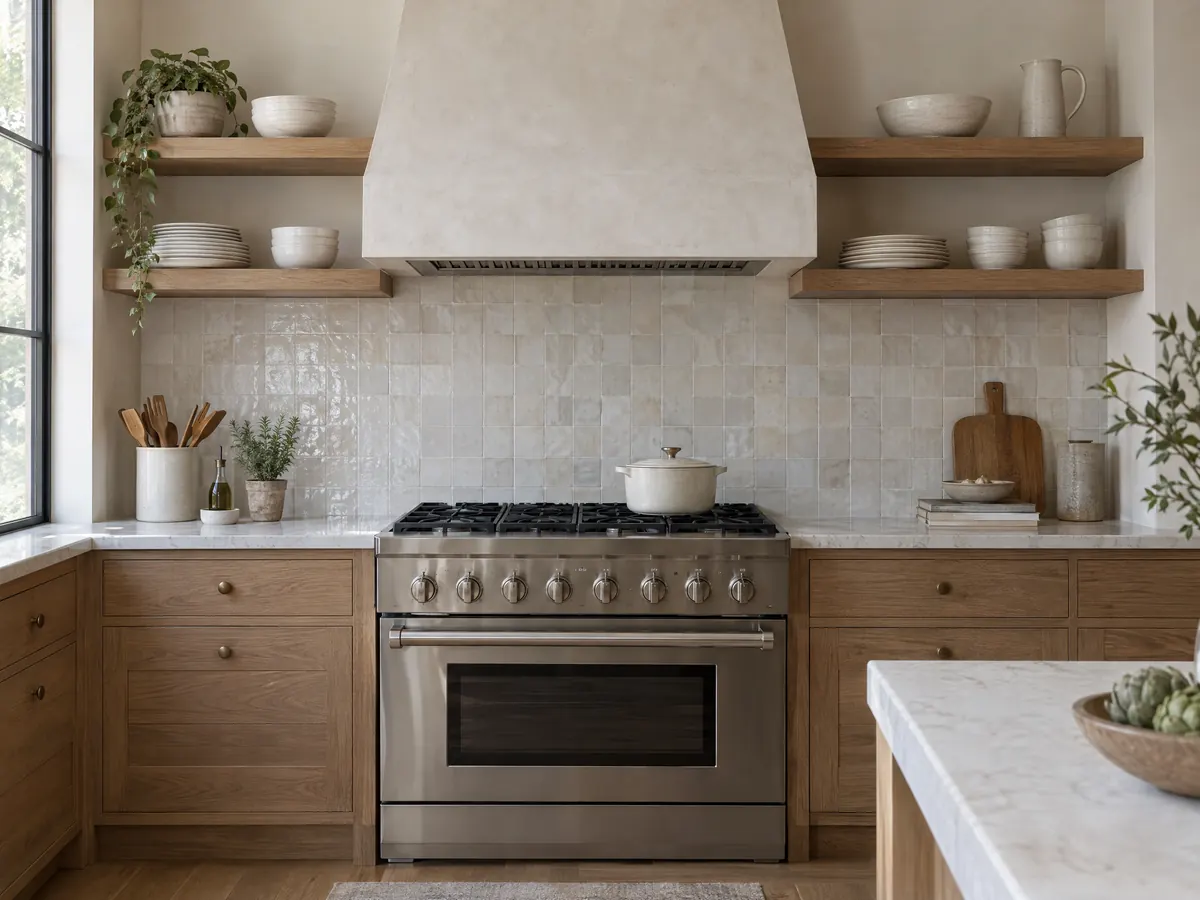
Kitchen photos from Corona and nearby communities
Kitchen scenes tied to Corona places such as the Circle, Sierra Del Oro and Corona Hills, and to nearby communities such as Norco and Riverside, from opened walls and framing to finished islands.
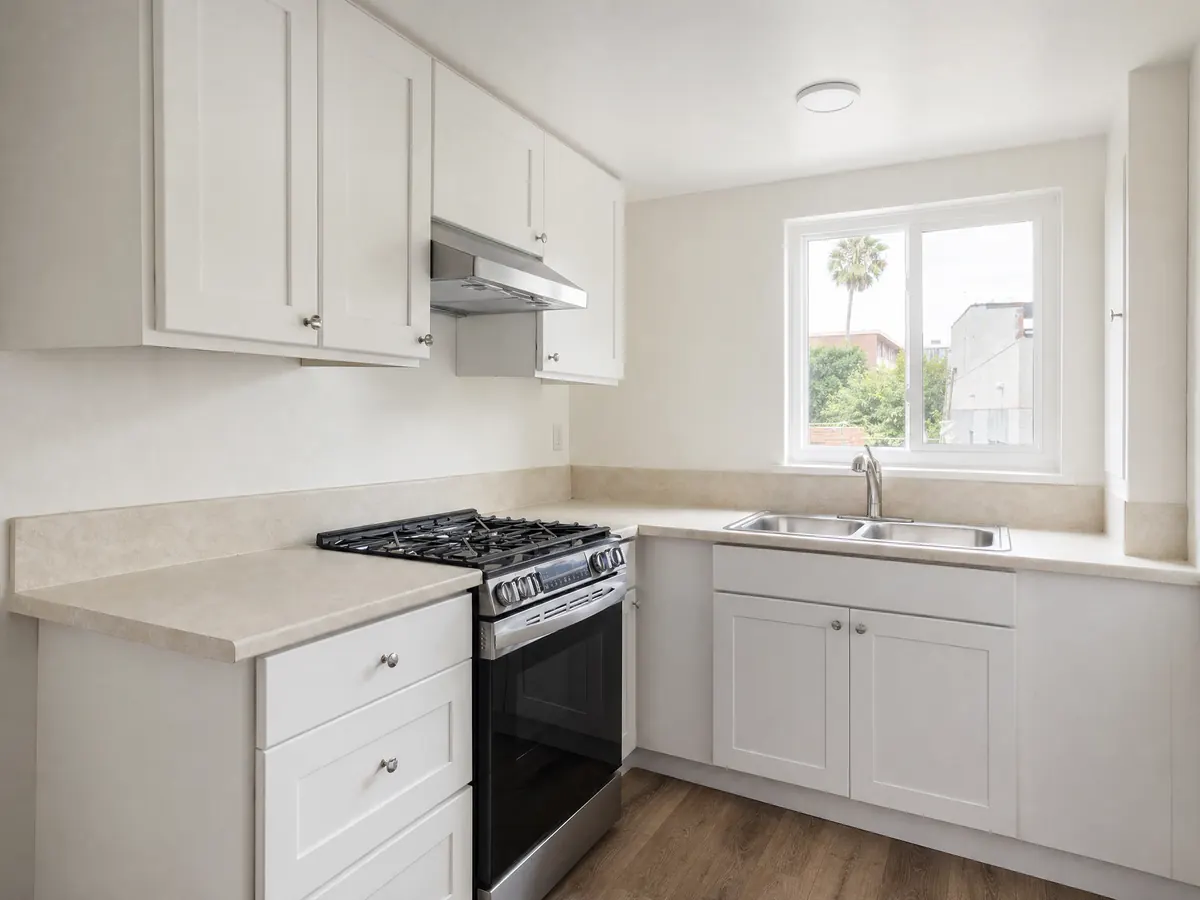
Where these Corona kitchen figures come from
Every cost tier, with its survey and date, is on the kitchen remodeling page. Kitchens often come with wider projects, and the Corona rules for the exterior jobs are on the roofing page, the fencing page and the painting page. To compare a Los Angeles kitchen, read the guide for Los Angeles.
| What it covers | Typical range |
|---|---|
| Refresh in the same layout: new counters, sink, lighting, hardware, paint and limited cabinet work | $25,000 to $45,000 |
| Full remodel in the same layout: new cabinets, counters, appliances, flooring and lighting | $45,000 to $90,000 |
| Upscale remodel or layout change: custom cabinets, premium appliances, a moved wall, relocated plumbing or gas | $90,000 to $170,000 and up |
Corona kitchen remodeling questions, answered
Do I need a permit for a kitchen remodel in Corona?
It depends on what moves. Cabinets, countertops, painting and similar finish work are exempt, but replacing or rearranging concealed drain, water or vent pipe needs a permit and an inspection, and a wall change is not finish work either. Call the Building Division at 951-736-2250 with your scope before work starts.
Do I need building permits for changing kitchen cabinets and countertops?
No, not in Corona. The exempt-work list names cabinets, countertops, painting, papering, tiling and carpeting as finish work that needs no building permit, though the exemption does not allow work that violates another code. We read the list on a third-party mirror, so confirm it with the City.
Does adding a sink and stove to a room require a permit?
Yes, in Corona a new sink means new drain, water and vent pipe, which is permitted work with an inspection. We found no Corona page on gas piping or added circuits, so ask the Building Division at 951-736-2250 how it reviews a second sink and a range. Alarms may also have to be hardwired.
How much is a kitchen remodel permit in Corona?
We cannot give the total. The City's miscellaneous fee table, effective October 4, 2026, sets a $164 minimum building fee, and the City publishes a fee estimator and separate electrical, mechanical and plumbing schedules that we did not read. Use the estimator or ask the counter for your scope.
What is a realistic budget for a kitchen remodel?
In Los Angeles data, about $25,000 to $45,000 buys a refresh in the same layout and $45,000 to $90,000 a full remodel with new cabinets, counters and appliances, while upscale or layout changes run $90,000 to $170,000 or more. We found no Corona survey, so a written proposal sets the real figure.
Can you remodel a kitchen for under $30,000?
Yes, in the same layout. The Los Angeles minor midrange kitchen in Cost vs. Value 2025 costs $29,765, and Thumbtack's range for the city starts near $12,471. Keeping the sink, range and walls where they are keeps the work on the exempt side of Corona's list. Cabinet and appliance choices decide the rest.
How long does a kitchen remodel permit take in Corona?
The City prints 10 business days for a first plan review and 5 for later ones, plus up to 3 business days to prepare the permit after approval and a prescreen of up to 5 days. Over-the-counter permits skip plan check, and inspections can be scheduled online Monday through Thursday because City Hall is closed on Fridays.
Will Title 24 apply to my kitchen remodel?
Probably in part. Corona plan check sets climate zone 10, and room additions carry Title 24 energy calculations. The 2025 Energy Code's kitchen items include local exhaust, field-verified range hood airflow, wall dimmers and separate under-cabinet lighting controls, but we did not confirm which apply to alterations. Ask your designer.
Is a kitchen renovation different from a kitchen remodel?
Not under Corona's permit rules. The exempt list turns on what the work touches, not on the word used, so cabinets and finishes are exempt while moved pipes and wall changes are not. Contractors often use renovation for updating and remodel for changing the layout, but no code line separates them.
Can I use my kitchen during the remodel?
Usually not during demolition and plumbing work, and you should plan a temporary setup. Corona's noise rule limits construction to 7:00 a.m. to 8:00 p.m. Monday through Saturday, and later starts on Sundays. Ask the contractor for a day-by-day schedule that shows when the sink and range are off.
Describe your Corona kitchen
Tell us your neighborhood, the age of the house, whether the sink, the range or a wall will move and whether you want to build out into the yard. We check the permit route and any hillside or historic step before we call back.