
Roof Repairin Corona, CA
Roof repair in Corona becomes a Class A job once the work reaches 50 percent of the roof in a year, because the City's code amendments require Class A citywide. A re-roof is an over-the-counter permit, and a March 24, 2025 fire map adds hazard-zone roof rules on mapped parcels.
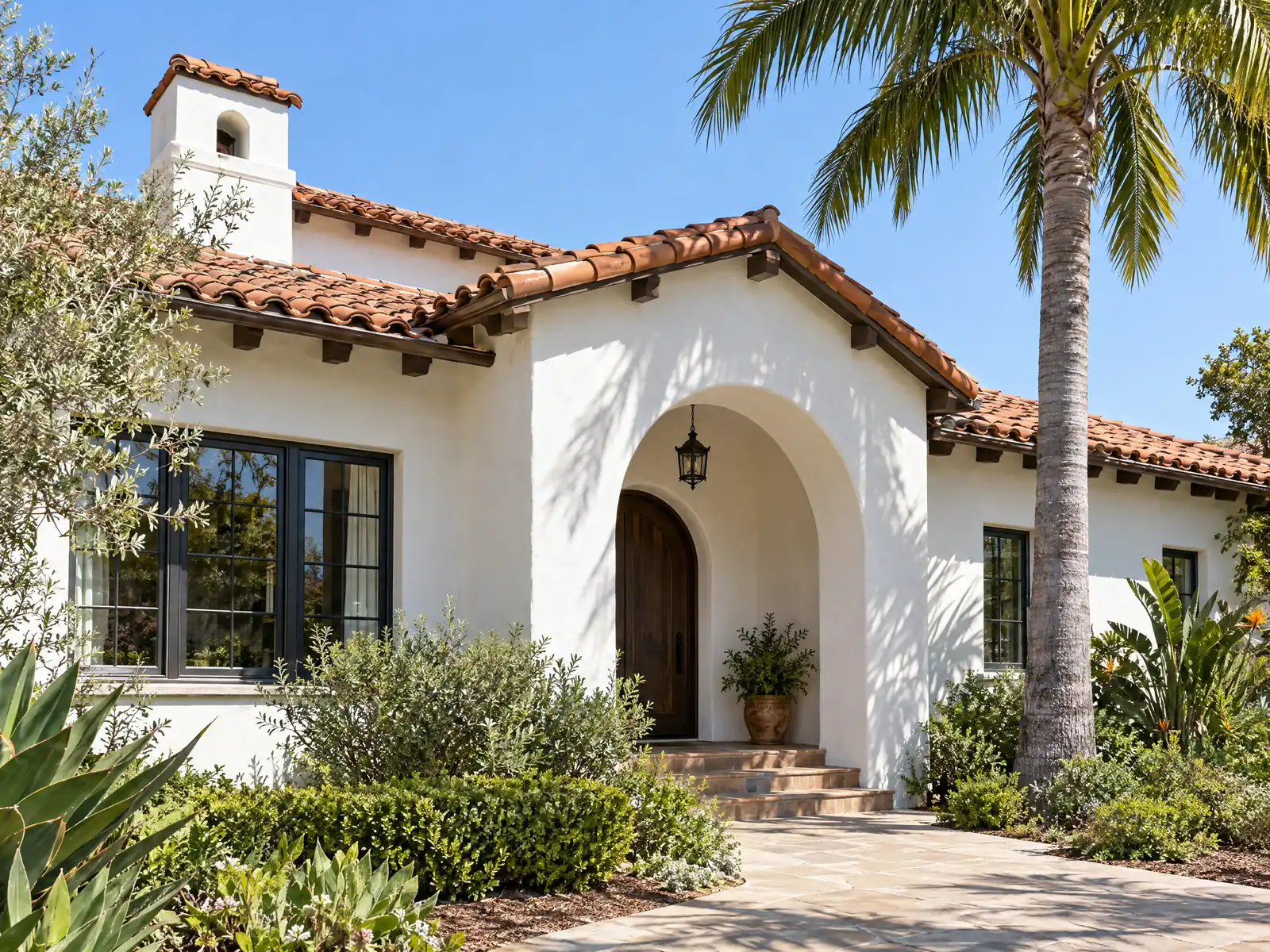
Corona began as a citrus colony. The City Library's history says investors bought 12,000 acres from the Yorba family in 1886 and hired engineer H. C. Kellogg, whose Grand Boulevard circle still frames downtown, and that the town incorporated on July 13, 1896 and was calling itself the Lemon Capital of the World by 1916. The roofs that matter today came later. Census Bureau ACS 2024 one-year estimates count 52,505 housing units, about 52 percent built from 1980 through 1999, 24 percent before 1980, with a median owner-occupied value of $746,500. Houses of that age have probably been reroofed at least once, though we found no source counting how many.
On a roofing job, MDG Builders (CSLB #1040337) acts as the general contractor: we write the scope, deal with the permit counter and hold the calendar, and a licensed C-39 roofing subcontractor does the tear-off and the new covering. Our roofing page holds the sourced prices, the Corona overview lists every trade we manage here, and the guides for Yorba Linda and Pomona show how two cities in other counties handle the same work. Corona issues its own permits through the City's Building Division. Municipal Code text below comes from a third-party mirror, so confirm each section with the City before you rely on it.
What Corona's reroof rules, fire sheets and housing records say about roofs
Where roofing permits come from in Corona: City of Corona Building Division (Planning and Development Department).
- Class A roof covering is required citywide in Corona, not only in hazard zones: the City's code amendments (CBC 1505.1.3 and CRC R902.1.3, third-party mirror) require Class A for any new building, for re-roofing when 50 percent or more of the existing roof is replaced or overlaid within a 1-year period, and for room additions where the new roof area exceeds 50 percent of the existing roof area.
- In fire hazard severity zones Corona's Building Division sheet requires all new roofing to be at least Class A, bans wood shakes and shingles, requires roof valley flashing of 26 gauge corrosion-resistant metal over at least one layer of 72 lb mineral-surfaced cap sheet, requires barrel tiles to be fire stopped, requires gutters that prevent leaf and debris build-up, and says paints, coatings and stains are not an approved method of fire protection.
- Corona's hazard-zone sheet says attic vents must be ASTM E2886 listed or covered with corrosion-resistant noncombustible material with 1/16 to 1/8 inch openings, and vent openings through blocking are not permitted in open eaves; the same sheet says that when more than 50 percent of the roof, exterior windows and doors, or wall covering is replaced within one year, the rest must be upgraded to the hazard-zone standard.
- Corona's Applicability of Fire Hazard Severity Zone Requirements flow chart ties roofing and attic-vent upgrades on existing buildings to the permit date of the existing structure (it names July 1, 2008 and December 1, 2005) and to whether more than 50 percent of the roof covering is replaced in any one-year period; the sheet says a fuel modification plan may also apply and tells owners to call Corona Fire at 951-736-2220.
- A reroof is on Corona's over-the-counter permit list (no plan check wait), while solar roof work has its own expedited track: central inverter, microinverter, solar water heating and solar pool heating packages submitted through eTRAKiT, a Symbium solar permit option, and a requirement for separate electric utility approval before work begins.
- Roofing on Corona's western and southern edges can fall in a mapped fire hazard zone: the City adopted a State Fire Marshal 'Local Responsibility Area - Fire Hazard Severity Zones' map dated March 24, 2025 (moderate, high and very high) by Ordinance 3418, and the Building Official enforces CBC Chapter 7A and CRC R337 on mapped parcels; plan sets must list the Fire Hazard Severity Zone and Fuel Modification Zone on the title sheet.
Sources for these rules
- gocodebook.com: chapter 15.04 building code
- cdn.prod.website-files.com: 65c169329520aa17e976d84f 115548313bd193f54c0e620c07752f10 FH
- cdn.prod.website-files.com: 67fd654c041c6f6d1e7d7781 Applicability%20of%20Fire%20Hazard%
- cdn.prod.website-files.com: 680141e33cf4f5a6d6b0b3d3 Building%20Plan%20Check%20FAQ
- gocodebook.com: chapter 15.16 fire hazard severity zones

Does Corona require a Class A roof even outside a fire hazard zone?
Yes, according to the City's code amendments, which apply the rule citywide. The amended sections (CBC 1505.1.3 and CRC R902.1.3) call for a Class A covering on any new building, on a re-roof that replaces or overlays 50 percent or more of the existing roof within one year, and on a room addition whose new roof area is more than half the existing roof. The City's official code site refused our request, so we read the text on the gocodebook.com mirror, a third-party copy, and the section numbers should be confirmed with the Building Division.
The 50 percent line shows up a second time on hazard-zone parcels. The Building Division's sheet says that when more than 50 percent of the roof, the exterior windows and doors, or the wall covering is replaced within one year, the rest must be brought up to the hazard-zone standard. The City's flow chart ties roof and attic-vent upgrades on an existing building to its original permit date, naming July 1, 2008 and December 1, 2005, and says a fuel modification plan may also apply. Corona Fire answers those questions at 951-736-2220.
Class A is the top rating in the fire test for roof assemblies, so ask the roofer to name the whole system, covering plus underlayment, and to hand over the listing.
Put the roof class and the product listing on the proposal so the inspector and the roofer read the same line.
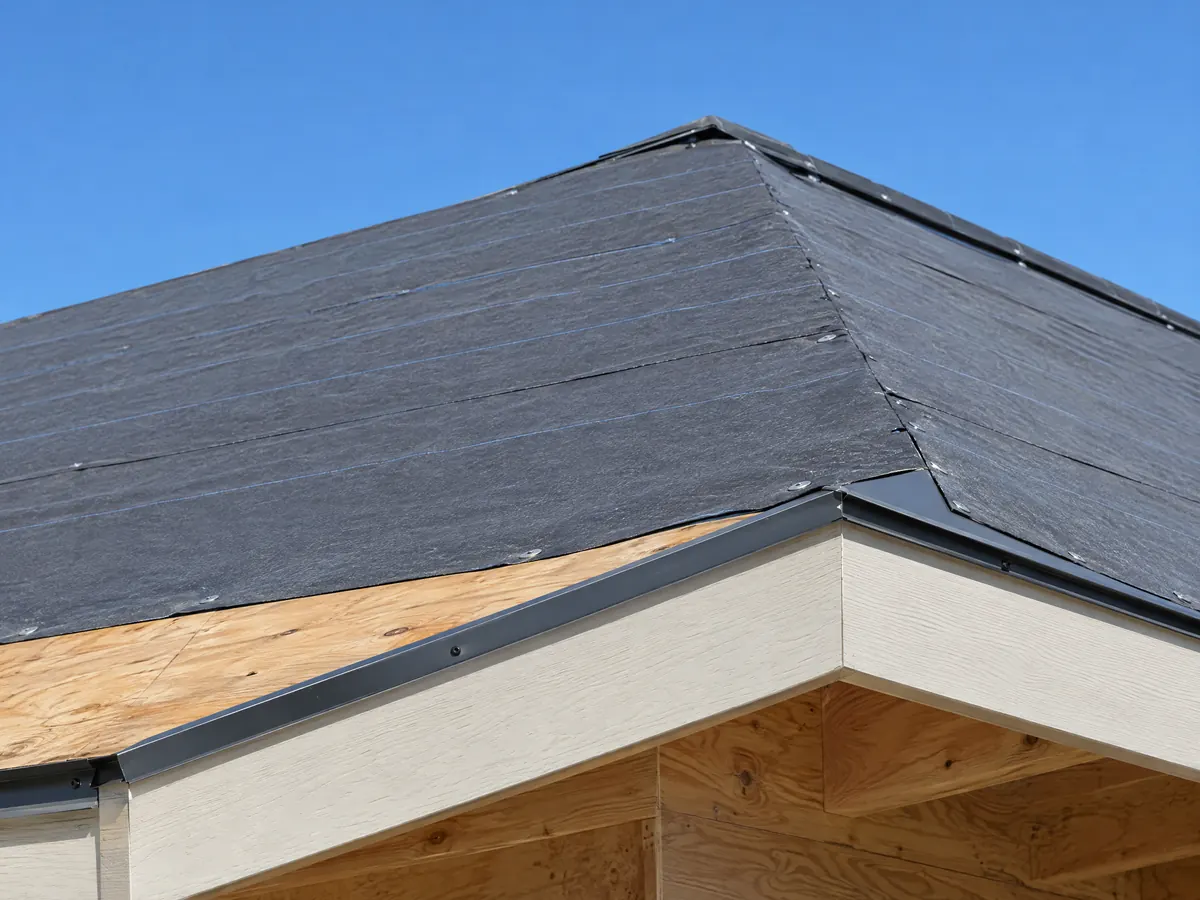
Does roof repair or a re-roof need a permit in Corona, and can it be done over the counter?
A re-roof is permit work, and it is one of the faster kinds. Corona's Plan Check FAQ lists reroof among the permits issued over the counter, beside window replacements, water heater changeouts, panel upgrades and fences, so no plan check queue applies, though the City asks you to phone first to confirm that your job qualifies. The pages we read say nothing about small patches, so the Building Division at 951-736-2250 is the place to learn where a repair ends and a re-roof begins.
Applications, payments and inspection requests run through the eTRAKiT portal, and plans cannot be mailed in. The Development Services page lists a state contractor's license, a City business license and a certificate of insurance among a contractor's items, while an owner who signs as the builder files an Owner-Builder Disclosure Form. A permit expires 12 months after issue unless approved inspections keep it alive, each one adding 180 days. The City's miscellaneous fee table, effective October 4, 2026, sets a $164 minimum building fee, but we did not read the reroof line, so the real fee is a counter question.
Ask for the permit number and the steps for requesting an inspection in writing before the dumpster arrives.
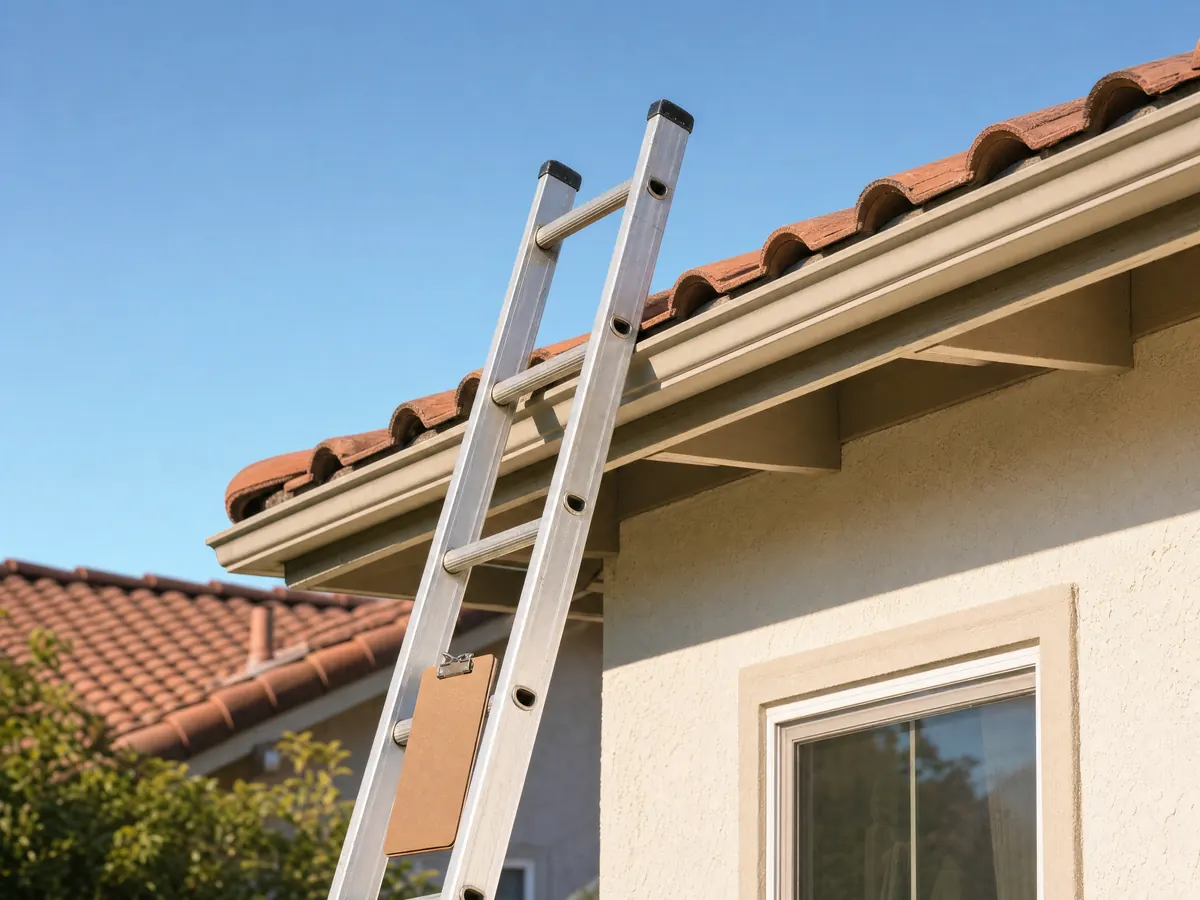
How old are Corona's roofs likely to be, and what does the Inland Empire sun do to them?
ACS counts 13,749 units from the 1980s and 13,651 from the 1990s, so roughly 27,400 homes are 27 to 46 years old, while 12,695 predate 1980 and 1,118 date to 1939 or earlier. We found no Corona roof survey and no sourced lifespan, so we print no number of years. Condition decides repair or replacement: damage in one spot over a sound deck points to a repair, and failure across whole slopes points to a new roof.
Heat is the local stress. Corona's own NOAA stations have no 1991 to 2020 normals, so we use the nearest ones. Chino Airport, 8.8 miles northwest, averages 99.0 days at or above 90 F, 23.3 days at or above 100 F and 9.98 inches of rain, 7.97 of them from December through March, with 0.08 and 0.01 inch in July and August. Riverside Municipal Airport, 9.6 miles northeast, shows 100.5 and 21.7 days. The City's plan check page sets roof drainage at 2 inches of rain per hour, and its Residential Code table lists a 95 mph wind design speed with topographic wind effects for Sierra Del Oro.
- Stains or damp insulation under the deck
- Cracked, slipped or bare covering
- Failed flashing at chimneys, walls and vents
- Soft or flexing deck boards
Ask for deck replacement as its own priced line so a patch cannot quietly grow.
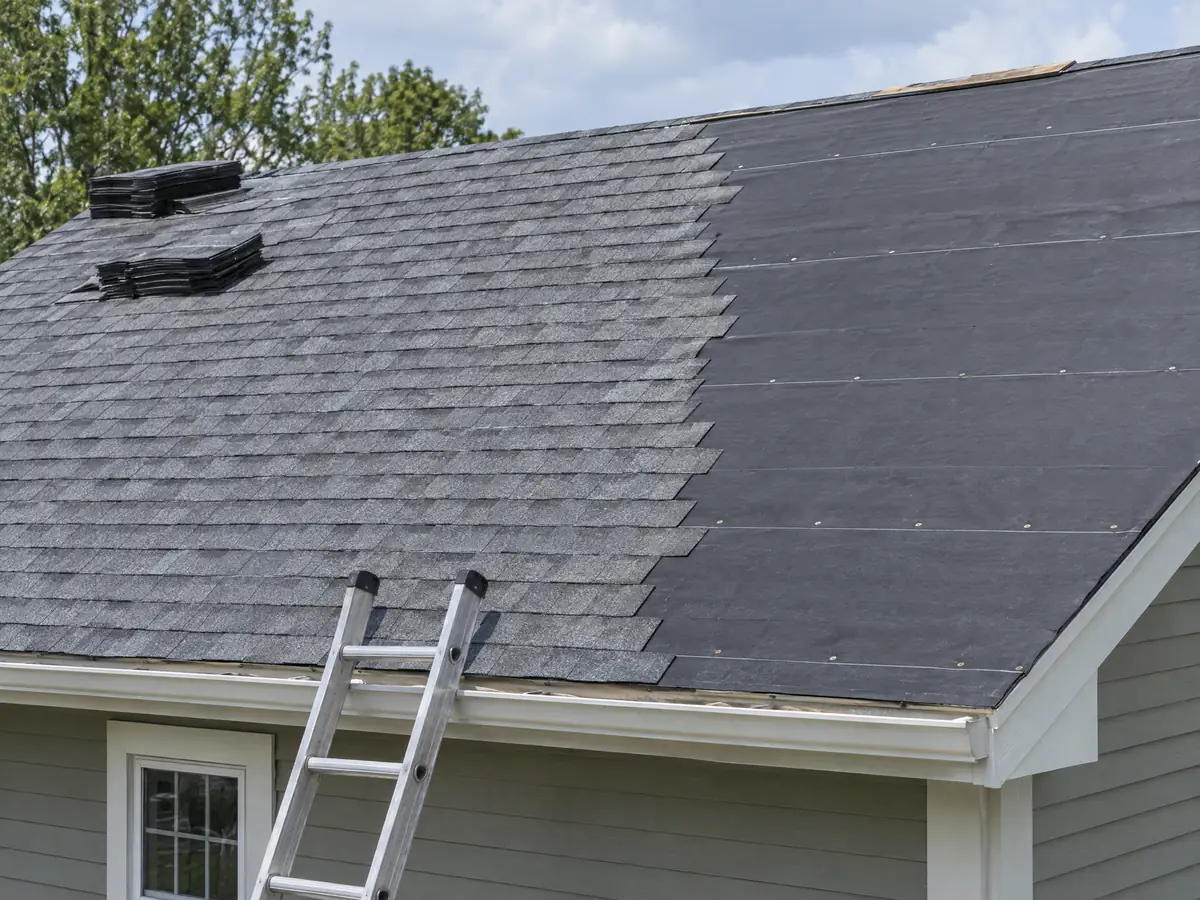
Is my Corona roof in a fire hazard severity zone, and what does the roof have to be?
We cannot tell you for your street. The Council adopted a State Fire Marshal Local Responsibility Area map dated March 24, 2025 by Ordinance 3418, showing moderate, high and very high zones, and the City offers an address lookup that we did not open, so we place no neighborhood in a zone. The Community Wildfire Protection Plan names Crown Villa, Dean Homes, Fresno Canyon, Joseph Canyon, Main Street Canyon, Sierra Bella and Skyline as threat areas, which is a list of names and not a zone ruling. The Fire Department's undated page, which may predate the 2025 map, counts about 3,000 structures in the very high zone.
On a mapped parcel the sheet requires at least Class A roofing, bans wood shakes and shingles, and calls for valley flashing of 26 gauge corrosion-resistant metal over at least one layer of 72 lb mineral-surfaced cap sheet. Barrel tiles must be fire stopped, gutters must resist leaf and debris build-up, and attic vents must be ASTM E2886 listed or covered with noncombustible mesh with 1/16 to 1/8 inch openings. Paint and coatings do not count as fire protection.
Put the zone answer from Corona Fire or the Building Division in the contract, not just in an email.
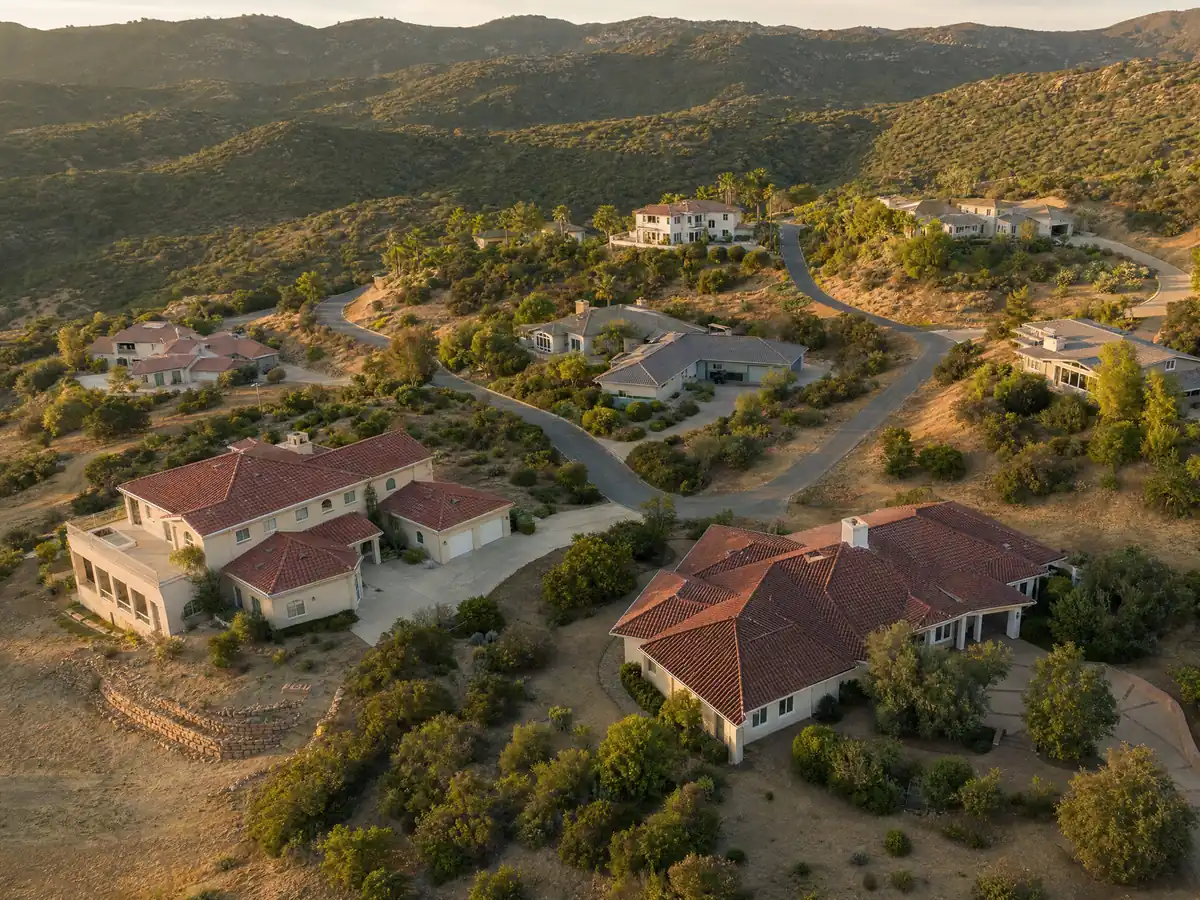
Does a re-roof on an older home near the Circle need City review?
Possibly, if the house is a listed resource. Chapter 17.63 of the zoning code creates the Corona Register of landmarks, structures of merit, markers and districts and says a listed resource cannot be altered without plan review, with major alterations going to the Historic Preservation Board. On the mirror copy, painting and re-roofing consistent with the architectural style and period count as a minor alteration that the Planning Director approves for Corona Register resources.
The Circle is a separate layer. Grand Boulevard, about 3 miles around, is a National Register historic district that Wikipedia dates to 2011, with 158 contributing and 89 noncontributing resources and a period of significance of 1886 to 1928. The pages we read do not say which neighborhoods are Corona Register districts, and the City's 2018 historic guidelines are a scan we could not read. Ask Planning at 951-736-2262 whether your address is listed before you choose a roofing material.
Get the Planning answer in writing and keep it with the contract.
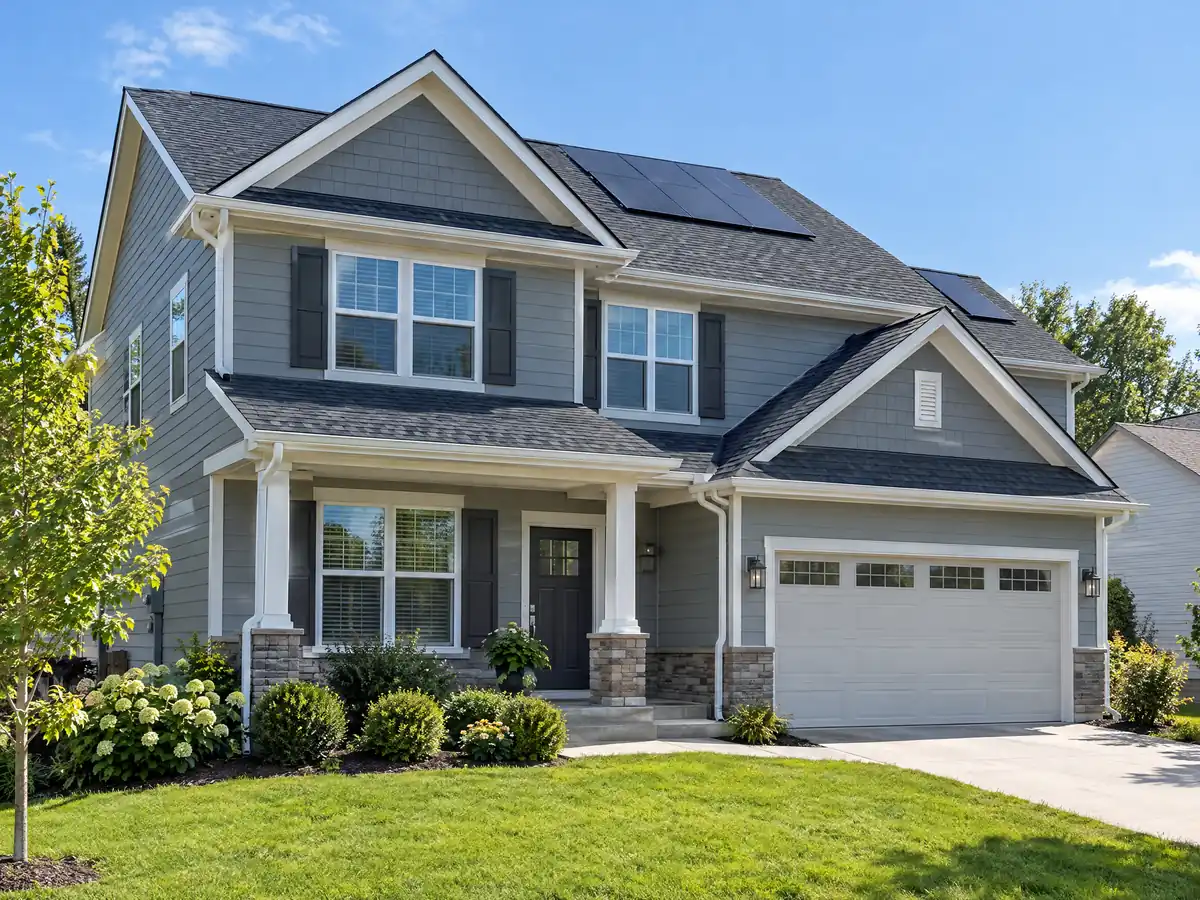
Corona runs its own electric utility, so how does solar change a roof replacement?
Part of the city takes power from the City's Corona Utilities Department and the rest from Southern California Edison, and the City's handouts say to verify your service zone before plans are drawn. Solar has its own expedited track: central inverter, microinverter, solar water heating and solar pool heating packages go through eTRAKiT, a Symbium solar permit option exists, and the electric utility must approve before work begins. The City's utility does not allow a Tesla Backup Switch or similar device on the meter.
Panels over a new roof often have to come off and go back on. Angi's Los Angeles guide puts removing and reinstalling panels at $500 to $1,000, an extra that is easy to miss on a first quote. The roofing permit and the solar permit are separate applications, so ask who files each one, which inspection comes first and whether the panel crew is booked before the tear-off day.
Confirm your electric utility before the roofer or the solar company files anything.
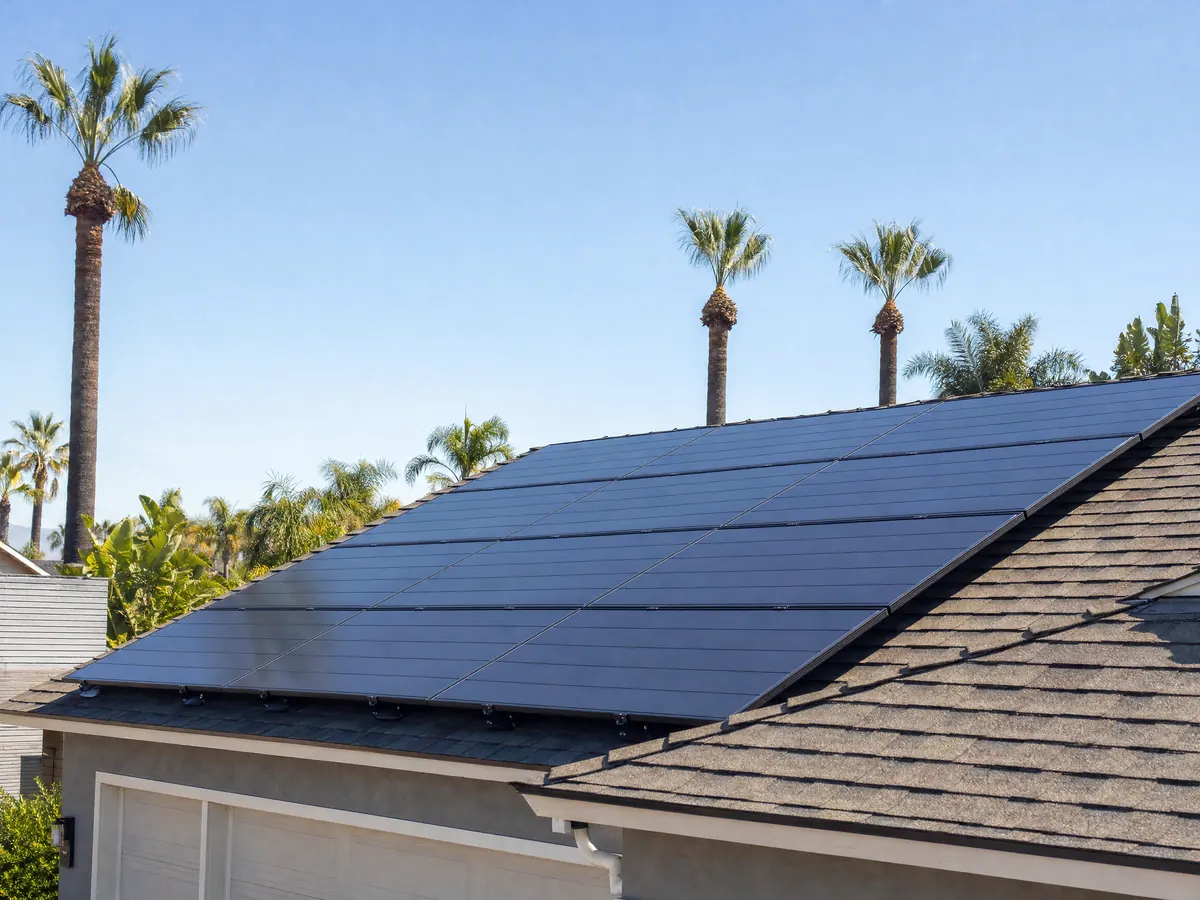
How much does roof replacement cost in Corona, and how do I hire a roofer?
We found no Corona price survey, so the numbers below are Los Angeles figures and an Inland Empire bid can land elsewhere. Angi's Los Angeles guide, updated July 31, 2026, shows a typical range of $10,256 to $24,963 around an average of $17,271, with asphalt at $4 to $12, tile at $7 to $15 and metal at $7 to $16 a square foot, and tear-off at $1,000 to $3,000. Remodeling magazine's Cost vs. Value 2025 report gives $36,417 for a reference Los Angeles asphalt roof and $62,069 for metal without stating the roof size, which is why it sits so far above Angi. Our planning ranges for a typical house are $10,000 to $25,000 in asphalt, $15,000 to $37,000 in tile and from about $20,000 in metal.
Roofing is CSLB class C-39. Business and Professions Code 7159 requires a signed written contract, limits a down payment to $1,000 or 10 percent of the price, whichever is less, and carries a box stating whether subcontractors will be used. A permit also rules out the state's $1,000 minor-work exemption, so a permitted Corona re-roof needs a licensed contractor at any price. Check the license with our contractor license guide and read how general contractors use subcontractors for who answers to whom.
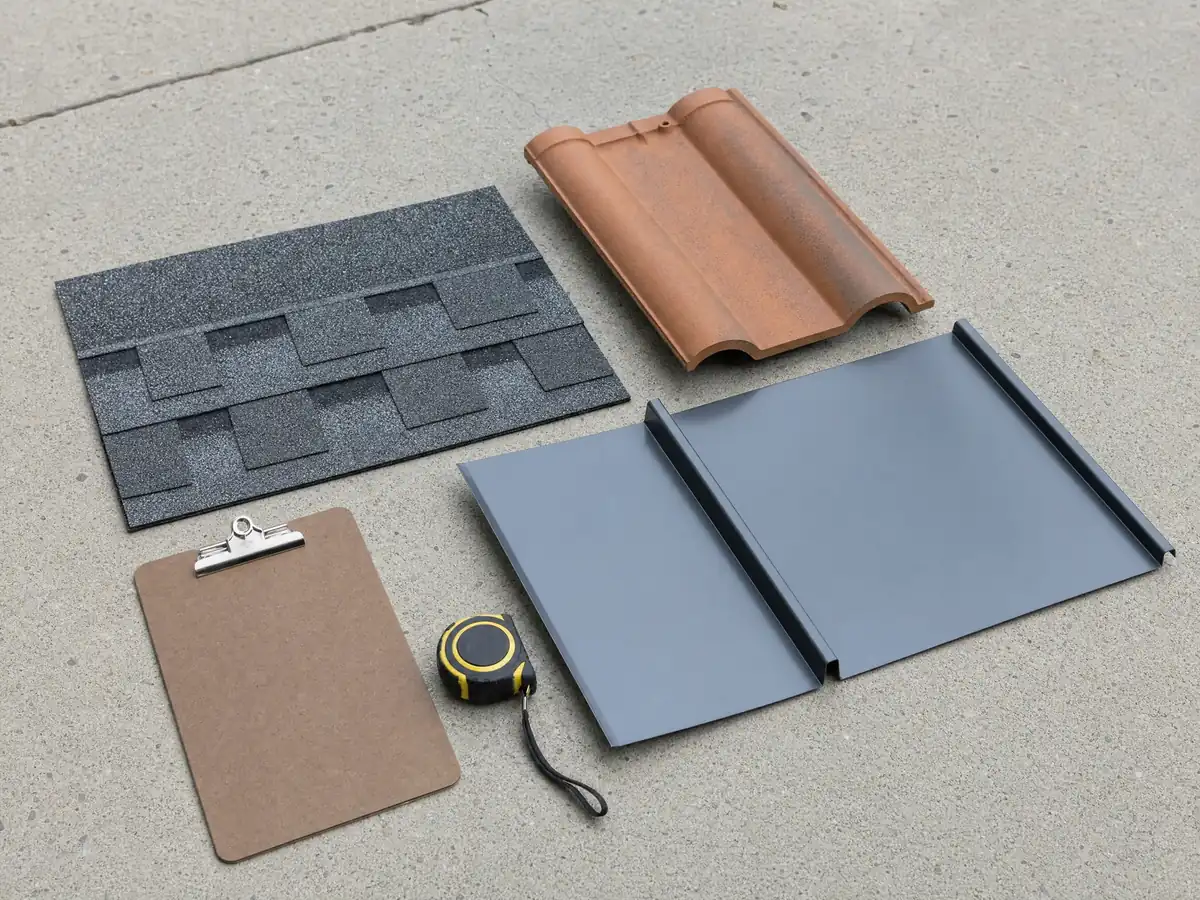
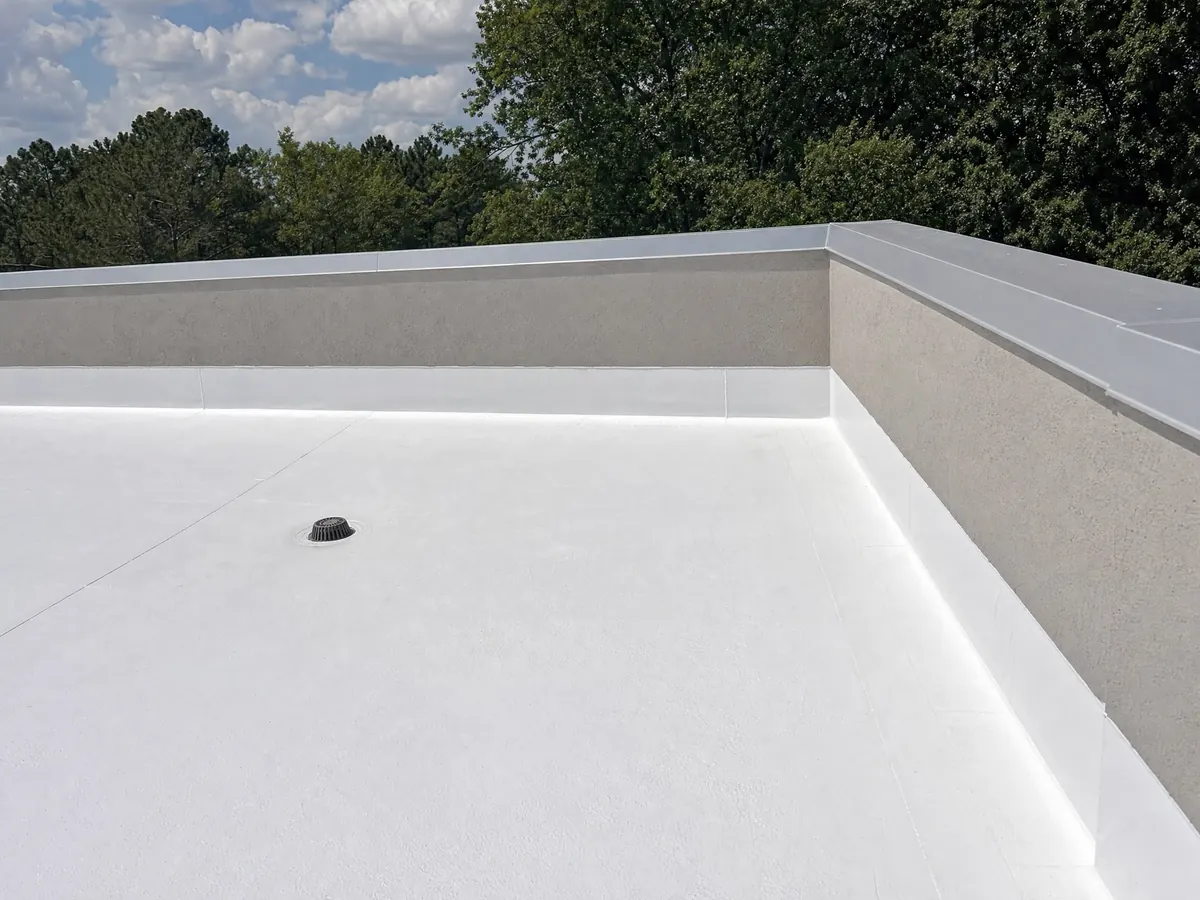
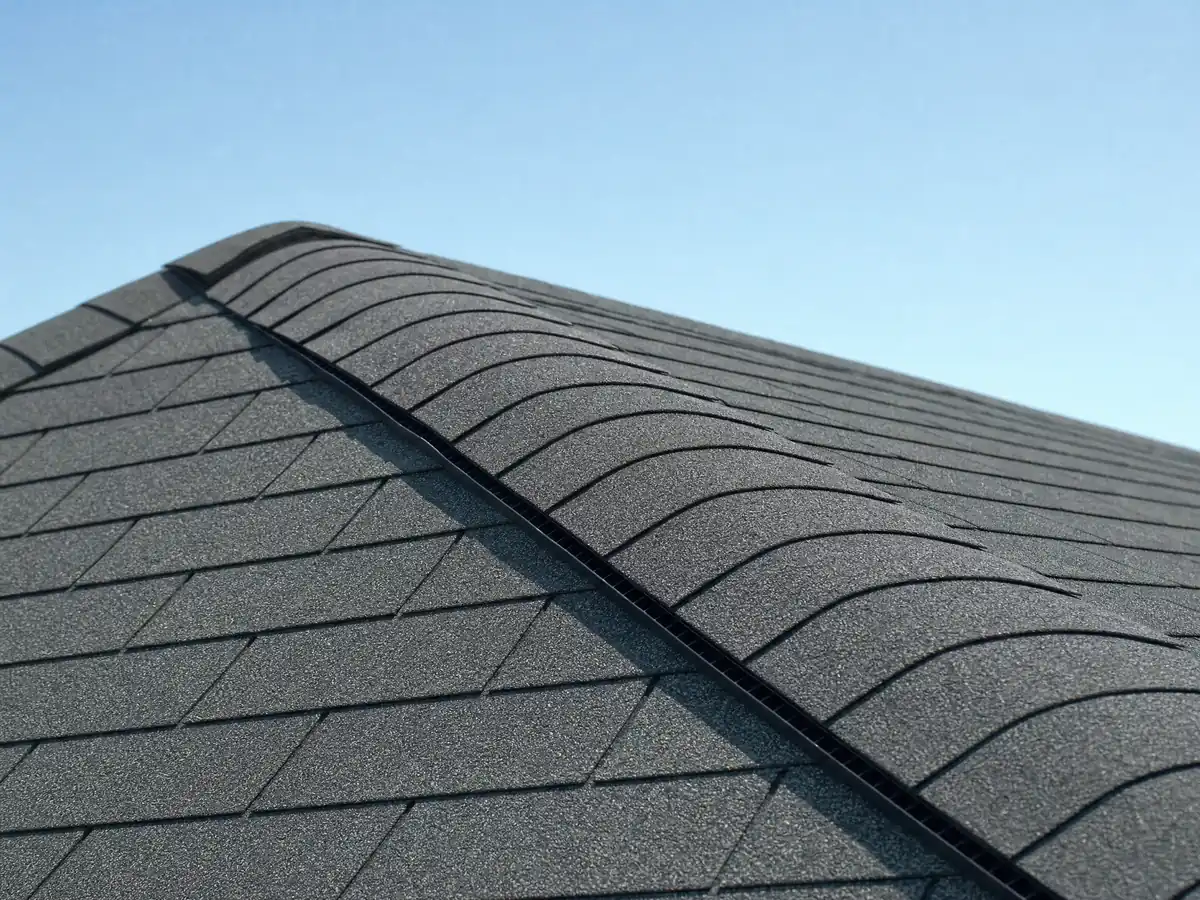
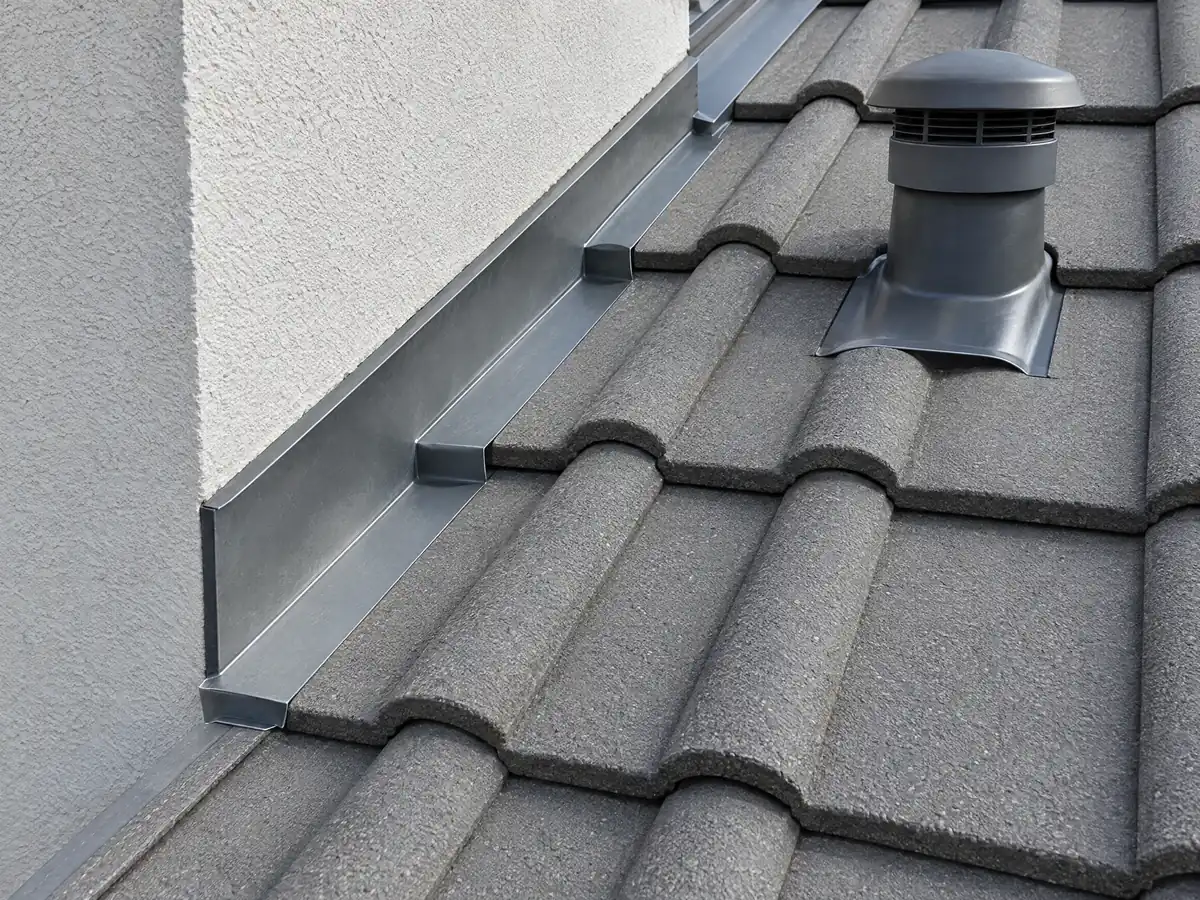
Roofing photos from Corona and nearby communities
Roofing scenes tied to Corona places such as the Circle, Sierra Del Oro and Corona Hills, and to nearby communities such as Norco and Riverside, from tear-offs and underlayment to flashing and solar reset work.
Where these Corona roof figures come from
The table on our roofing page lists each price with its source and date, and the California roofing cost guide explains how Angi and Cost vs. Value can sit this far apart. Roof work often leads to other exterior jobs, and the Corona rules for them are on the fencing page, the painting page and the kitchen remodeling page. For a Los Angeles County rulebook to set beside Corona's, read the roofing guide for Pasadena.
| What it covers | Typical range |
|---|---|
| Asphalt shingle, typical single-family roof | $10,000 to $25,000 |
| Concrete or clay tile | $7 to $15 per sq ft |
| Metal | $7 to $16 per sq ft |
| Remodeling Cost vs. Value 2025, Los Angeles | Asphalt $36,417. metal $62,069. |
| Extras | Tear-off $1,000 to $3,000. solar detach and reset $500 to $1,000. |
Corona roofing questions, answered
Do I need a permit to replace my roof in Corona?
Yes. A re-roof is on the City's over-the-counter permit list, so it needs a building permit but no plan check wait. Apply through eTRAKiT and phone the Building Division at 951-736-2250 to confirm that your job qualifies. The permit expires 12 months after issue unless approved inspections keep it active.
Do I need a permit for roof repair in Corona?
We could not confirm it. The pages we read list a reroof as an over-the-counter permit but say nothing about small patches, so call the Building Division at 951-736-2250 before work starts. Class A applies once 50 percent or more of the roof is replaced in a year, and a patch that uncovers bad deck boards should be raised with the counter.
Does Corona require a Class A roof?
Yes, citywide. The City's code amendments require Class A for any new building, for a re-roof that replaces or overlays 50 percent or more of the roof within a year and for an addition whose new roof area is more than half the existing roof. We read that text on a third-party mirror, so confirm it with the Building Division.
Is my Corona roof in a fire hazard zone?
We cannot say for your lot. The Council adopted a State Fire Marshal map dated March 24, 2025 by Ordinance 3418, showing moderate, high and very high zones, and the City offers an address lookup that we did not open. Call Corona Fire at 951-736-2220 or the Building Division, and put the answer in the contract.
How much does it cost to replace a roof in Corona?
It depends on roof area and covering, not house size. In Angi's Los Angeles figures asphalt runs $4 to $12 a square foot, tile $7 to $15 and metal $7 to $16, and Remodeling's Cost vs. Value 2025 report puts its reference Los Angeles asphalt roof at $36,417. We found no Corona survey, so only a measured proposal is a real price.
How much should a 2000 sq ft roof cost?
Angi's Los Angeles average of $8.60 a square foot would make 2,000 square feet of roof about $17,200, though that is multiplication and not a quote. At the asphalt range of $4 to $12 the span is $8,000 to $24,000. Roof area is not floor area, and pitch, tear-off and deck repair shift the total.
What is the 25% rule for roofing?
We found no Corona or state code section by that name. The percentage that matters in Corona is 50: a re-roof that replaces or overlays 50 percent or more of the roof in a year must be Class A, and in a hazard zone replacing more than 50 percent triggers upgrades to the rest. Ask the counter how it measures roof area.
Do solar panels need a separate permit when I replace my roof in Corona?
Yes. Solar is its own permit, filed through eTRAKiT on the City's expedited track or through its Symbium option, and the electric utility must approve before work starts. Part of Corona is on the City's own utility, which does not allow a Tesla Backup Switch on the meter. Angi puts panel removal and reinstallation at $500 to $1,000.
What is the best time of year to replace a roof?
Late spring through early autumn is the driest stretch, though the heat is the trade-off. Chino Airport, a nearby station with normals, averages 9.98 inches of rain a year, 7.97 of them from December through March, 0.08 and 0.01 inch in July and August, and 23.3 days at or above 100 F. Treat it as a guide, not a forecast.
How do I check a roofing contractor's license in California?
Search the license number on the Contractors State License Board site, confirm that class C-39 roofing is active and check that the name on the card matches the contract. Corona's permit items also include a City business license and a certificate of insurance. Our contractor license guide walks through each step.
Ask for a roof inspection in Corona
Send the street, the age of the house, the roof covering and any leaks you have seen. Before we call back we check the Class A rule, the fire map and which electric utility serves your address.