
Roof Repairin Chino Hills, CA
Replacing a whole roof plane in Chino Hills needs a building permit, patching a few damaged tiles does not, and replacing sheathing always does. Every regulated roof must be Class A citywide, though repairs of 25 percent or less of the roof in 12 months may match the existing covering. Check your fire zone first.
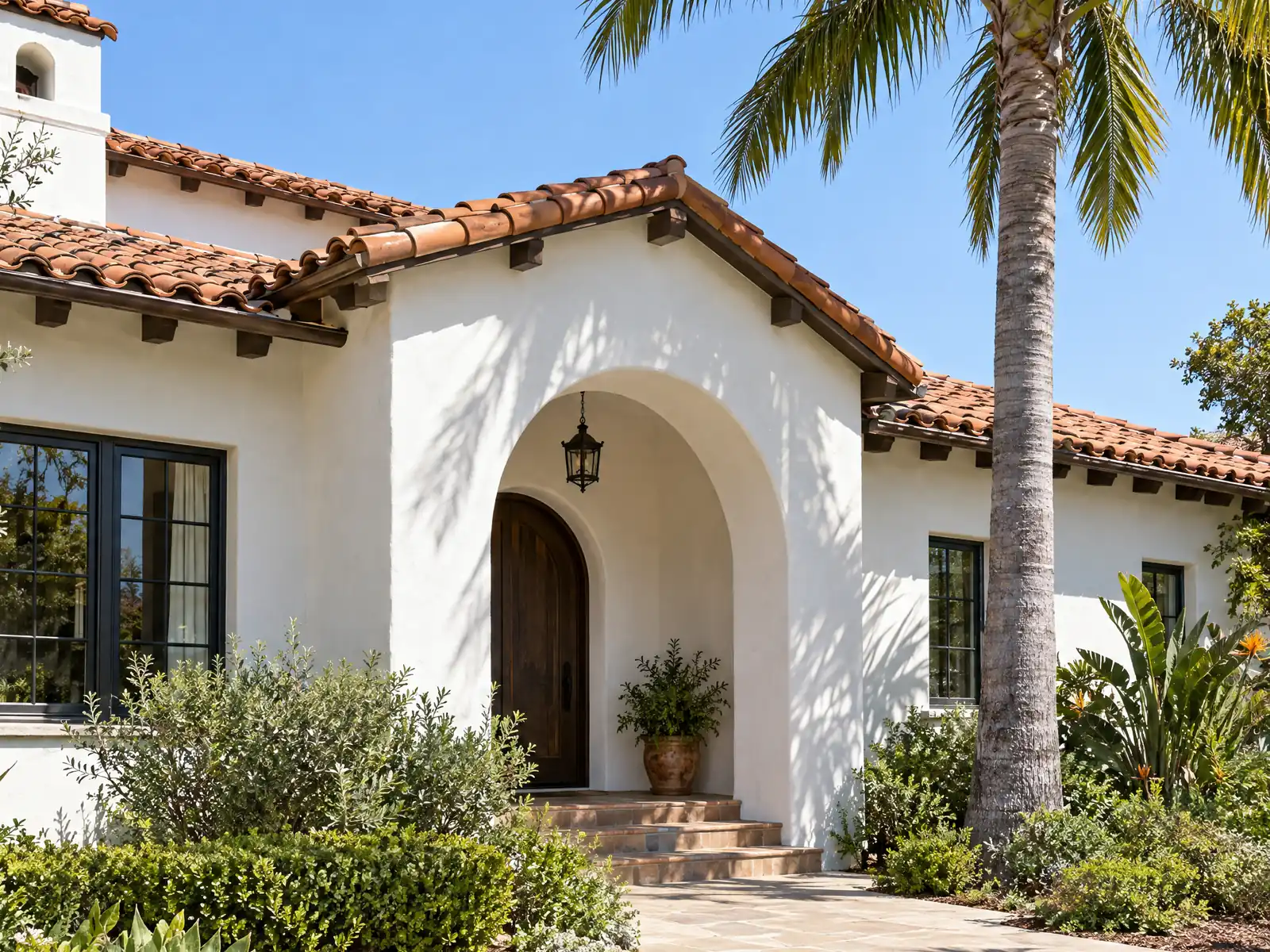
Chino Hills stayed cattle country for a century because hills made tract building costly. Gird bought Rancho Santa Ana del Chino in 1874, Boys Republic arrived in 1909, and the County's Chino Hills Specific Plan, started in 1979 and approved by 1982, set up the planned communities that followed. The City incorporated on December 1, 1991. Census Bureau ACS 2024 one-year estimates count 24,121 housing units, and about 53.5 percent (12,903) went up from 1980 through 1999, so most roofs here began 25 to 45 years ago, though we found no count of how many have been replaced. Only 19.7 percent of units (4,762) predate 1980.
For a roof, MDG Builders (CSLB #1040337) works as the general contractor: we write the scope, run the permit and hold the schedule, while a licensed C-39 roofing subcontractor does the tear-off and the new covering. Our roofing page carries the sourced prices, the Chino Hills overview lists every trade we manage here, and three neighbors write their own roof rules: Diamond Bar in Los Angeles County, Yorba Linda in Orange County and Corona in Riverside County. The City's Building and Safety Division issues the permit, and fire review is a separate step. Municode answered our researcher with a Cloudflare 403 error, so section numbers below come from GoCodebook, a third-party mirror, and each should be confirmed with the City before you rely on it.
What Chino Hills' re-roof interpretation, Ordinance 427 and Fire Hazard Overlay say about roofs
Where roofing permits come from in Chino Hills: City of Chino Hills Building and Safety Division (Community Development Department).
- Re-roofing needs a permit in Chino Hills, and the City's interpretation is specific: patching or replacing only a specific damaged area of covering, tile or underlayment is a repair that needs no permit, but replacing or repairing an entire roof plane is a partial re-roof that requires a building permit, and any time roof sheathing is replaced a re-roof permit is required.
- Class A roofing is required citywide: CBC 1505.1 and CRC R902.1 as amended by Ordinance 427 say the roof covering on any regulated structure shall be Class A, except that repairs and additions replacing or installing no more than 25 percent of the total roof area in any 12-month period may use material matching the existing roof.
- Rooftop solar needs its own photovoltaic permit: owners or installers may use the voluntary SolarApp+ automated plan review, must separately obtain Chino Valley Fire District approval, and need a signed Smoke and Carbon Monoxide form, the SolarApp+ approval packet and the Fire District-approved plans before the permit issues; plan revisions need District, SolarApp+ and Building and Safety approval.
- In the Fire Hazard Overlay District and under CHMC 16.06.160 (third-party mirror) ember screens are required on any gap leading into the roof space or attic, and on evaporative coolers, for new construction and additions of 50 percent or more.
- The City's wildfire page tells owners to inspect shingles and roof tiles and replace or repair loose or missing pieces to stop ember entry, to cover exterior attic vents with metal wire mesh no larger than 1/8 inch, and to enclose under-eave and soffit vents with metal mesh; it also links a low-cost retrofit list.
- In the hillside adaptive areas (Carbon Canyon Road corridor, Canon Lane, Sleepy Hollow and mapped ridgelines, CHMC 16.08.060, third-party mirror) roof colors should be earth tones, so a roof color change in those areas is a design question as well as a building permit.

Does fixing part of a Chino Hills roof need a permit, or only a full roof replacement?
It depends on how much of the roof you touch. The City's exempt-work handout, revised August 5, 2026, treats patching or replacing only a specific damaged area of covering, tile or underlayment as a repair with no permit. Replacing or repairing an entire roof plane counts as a partial re-roof and needs a building permit, and any time roof sheathing is replaced a re-roof permit is required.
That line is easy to cross by accident. Three slipped tiles over a bedroom are a repair, but a rotted patch of deck found under them turns the job into permit work the moment boards come off. Ask the roofer to price deck repair as its own line and to say who pulls the permit if it turns out to be needed. Applications, plan review and inspection requests all run through the Virtual Development Services portal, and next-day inspections must be requested by 2:00 p.m. The City asks for a Smoke Detector and Carbon Monoxide form on residential projects valued at $1,000 or more, so ask whether a re-roof counts.
Ask for the permit plan in writing before the first tile comes off.
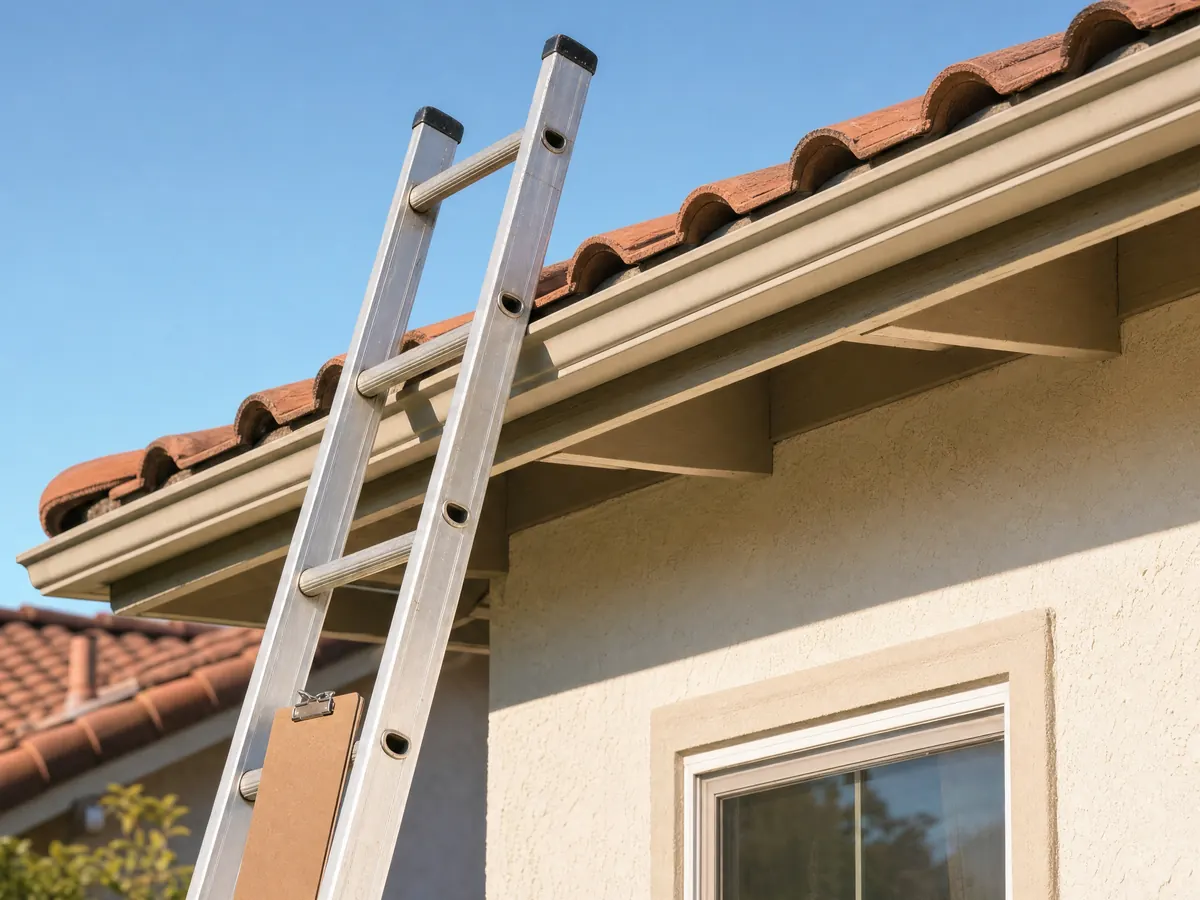
Does Chino Hills require a Class A roof, and what is the 25 percent exception?
Yes, citywide. Ordinance 427, adopted with the 2025 California codes (the City's posted copy is dated December 5, 2025), amends Building Code section 1505.1 and Residential Code section R902.1 so the roof covering on any regulated structure must be Class A. The rule is not limited to a mapped fire zone: the amendment reaches every regulated structure in the city.
The exception answers the common question about a 25 percent rule. Repairs and additions that replace or install no more than 25 percent of the total roof area in any 12-month period may use material matching the existing roof. A small repair that matches an older covering is therefore allowed, while replacing more than a quarter of the roof inside a year must be Class A. The clock runs for 12 months, so two separate repairs can add up. Before you accept a 'matching' repair, ask the roofer to total the area replaced over the past year, storm patches included.
Have each repair's replaced area, in square feet, written into the proposal.
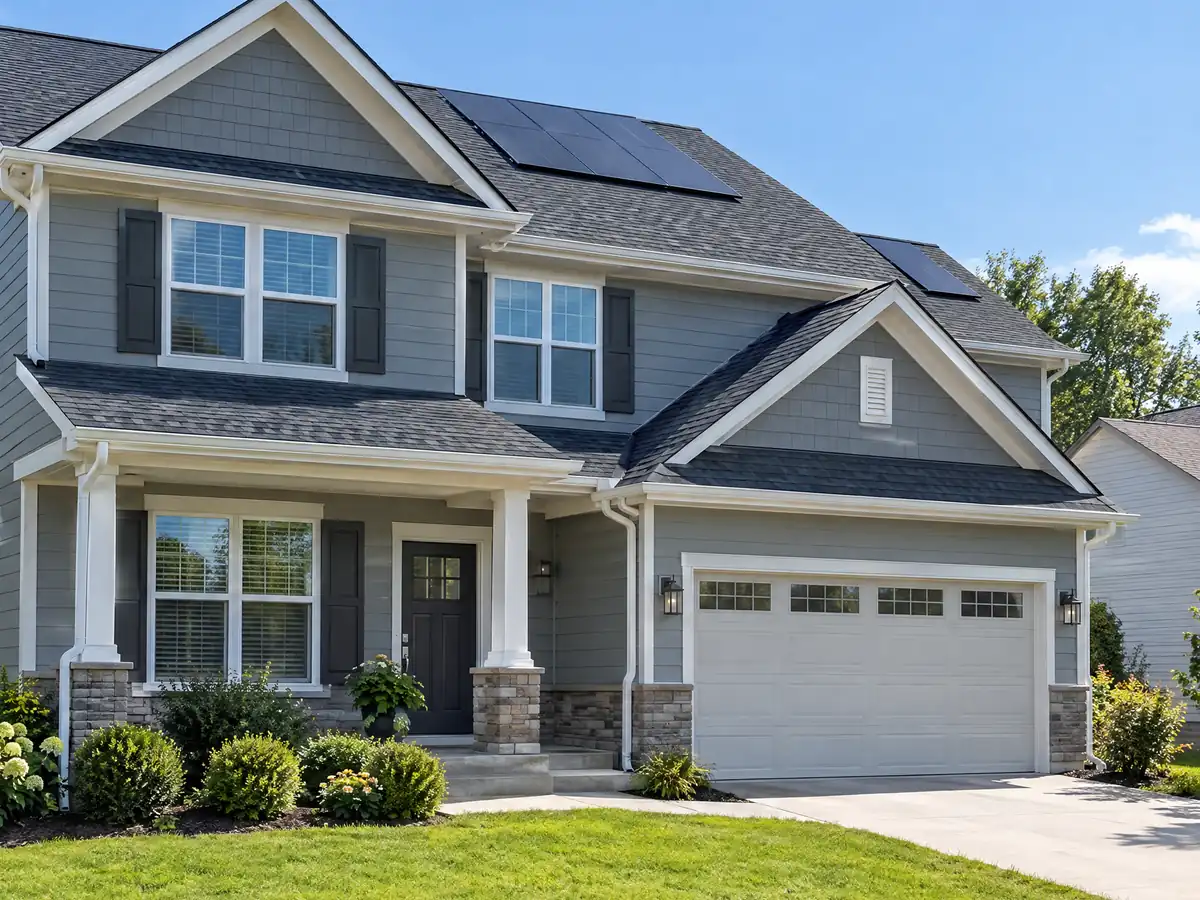
Is my Chino Hills roof in the Fire Hazard Overlay, and what do ember screens add?
Probably, though we cannot place your lot. The General Plan's Safety Element, adopted June 10, 2025, says about 75 percent of Chino Hills lies in the City's Fire Hazard Overlay District and that most of the city falls in the very high fire hazard severity zone. Chino Valley Fire District adopted Ordinance 2025-01, effective September 1, 2025, for the State Fire Marshal's March 24, 2025 map. The ordinance was published as a street map without a readable zone list, so check your address on the District's map page. In the high and very high zones, new construction and additions follow wildland urban interface building standards.
The overlay chapter in the mirror (CHMC 16.22) applies to all new construction and to additions that grow a structure by 50 percent or more, and it asks for Section 7A construction and 30 feet of clear space between structures on separate lots. Citywide, CHMC 16.06.160 requires ember screens on gaps leading into the attic and on evaporative coolers for new work and 50 percent additions. For existing houses the City's wildfire page says to replace loose or missing tiles and shingles and to cover attic vents with metal mesh no larger than 1/8 inch. The October 2020 Blue Ridge Fire burned about 14,000 acres, mostly inside the city and the State Park.
Keep a printout of the fire map result for your address in the permit file.
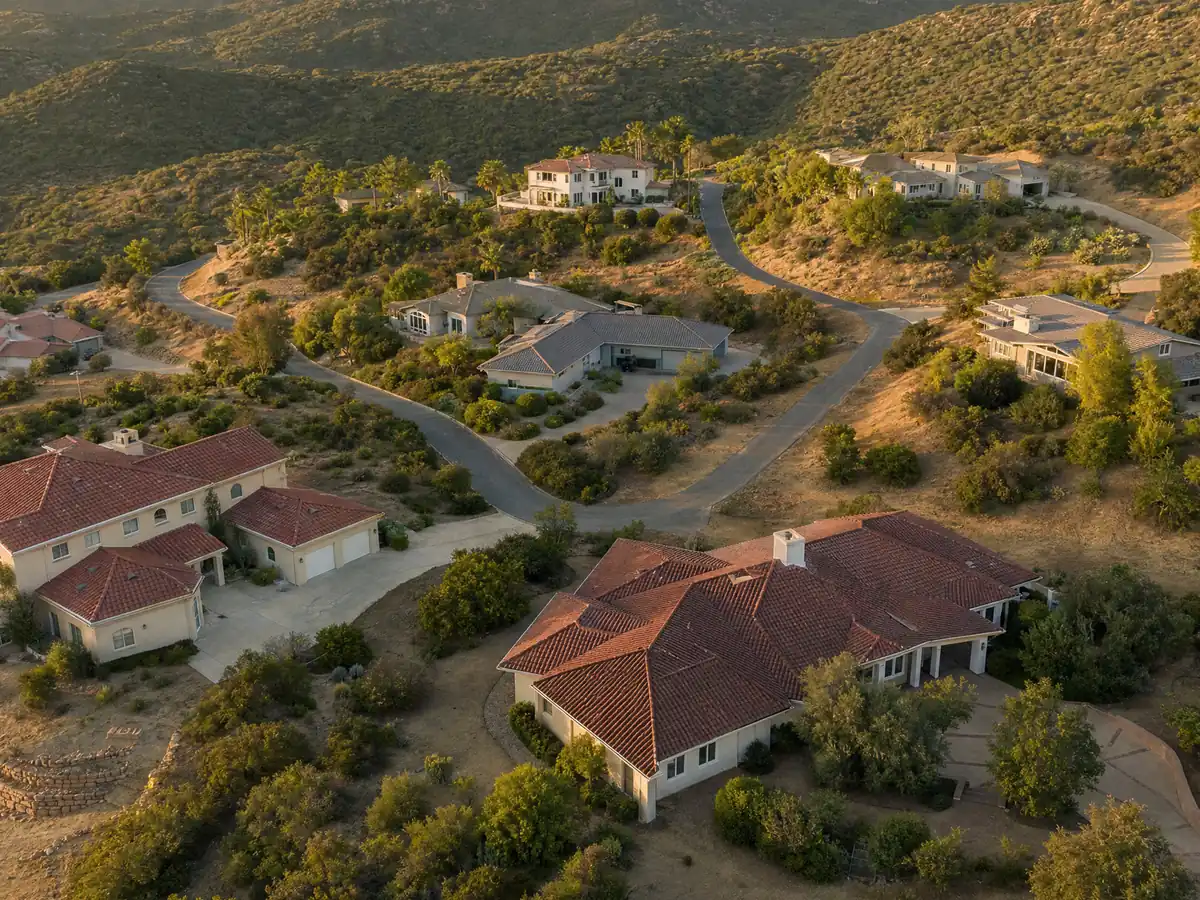
Do hillside rules, roof colors or the Carbon Canyon truck limit affect a Chino Hills reroof?
They can, in the canyon and ridge areas. The hillside architectural guidelines (CHMC 16.08.060, in the mirror) apply to mapped ridgelines and knolls, land within 600 feet of the centerline of Carbon Canyon Road, the Canon Lane tracts and the Sleepy Hollow tracts, and they say roof colors should be earth tones there. A color change is then a design question as well as a permit one, so show the City the sample. Elsewhere your HOA may have a say: the City's custom home form asks for an HOA letter, but we found no list of which tracts have HOAs or what they require.
Delivery is the other canyon issue. Carbon Canyon Road is a state highway the City does not permit, and since May 2024 vehicles with more than four axles have been barred from it and the S-curves under Ordinance 389 and Caltrans approval. Caltrans said at a June 2026 hearing it may drop the restriction, and the City sent a letter in September 2026 seeking a permanent one, so the rule may move. Ask the supplier how many axles its delivery truck has. Resident decals for emergency closures cover motor vehicles only, not trailers.
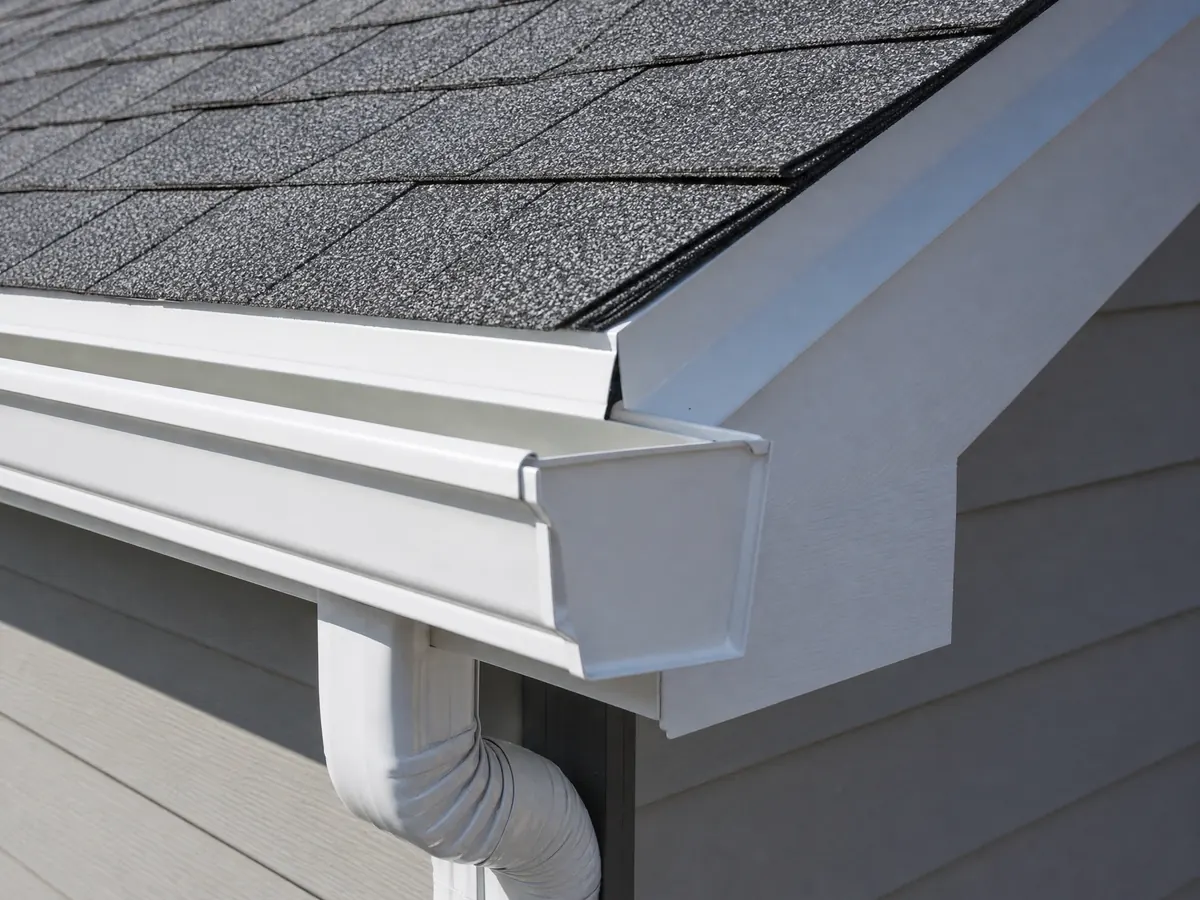
How old are Chino Hills roofs, and what shows up first on a 1980s or 1990s roof?
ACS 2024 counts 7,369 homes from the 1980s and 5,534 from the 1990s, against 3,128 from the 2000s and 2,849 from the 2010s. The Housing Element says about 53 percent of all housing is 30 years or older and commonly needs roofs, plaster and stucco. Its late-2021 survey of 2,189 homes in Los Serranos and Bayberry rated 96.6 percent sound, and the 72 homes needing minor repair listed stucco, eave paint and roof tiles. We found no local roof lifespan study, so we print no service life.
The oldest roofs are in Los Serranos and the Sleepy Hollow area of Carbon Canyon, where the Housing Element says most pre-1970 homes sit. Sleepy Hollow opened in 1922 as a weekend resort of cabins, and by 1928 it counted about 90 of them; after World War II they turned into year-round homes. Those roofs have likely been replaced, but the framing under them is often original. In any house built before 1980, ask whether old layers were tested before tear-off; EPA's lead rule covers paid work that disturbs paint in homes built before 1978, and ACS cannot separate 1978 from 1979.
- Brown stains on ceilings after rain
- Cracked, slipped or missing tiles and shingles
- Loose flashing at walls, vents and valleys
- Soft or bouncing deck boards underfoot
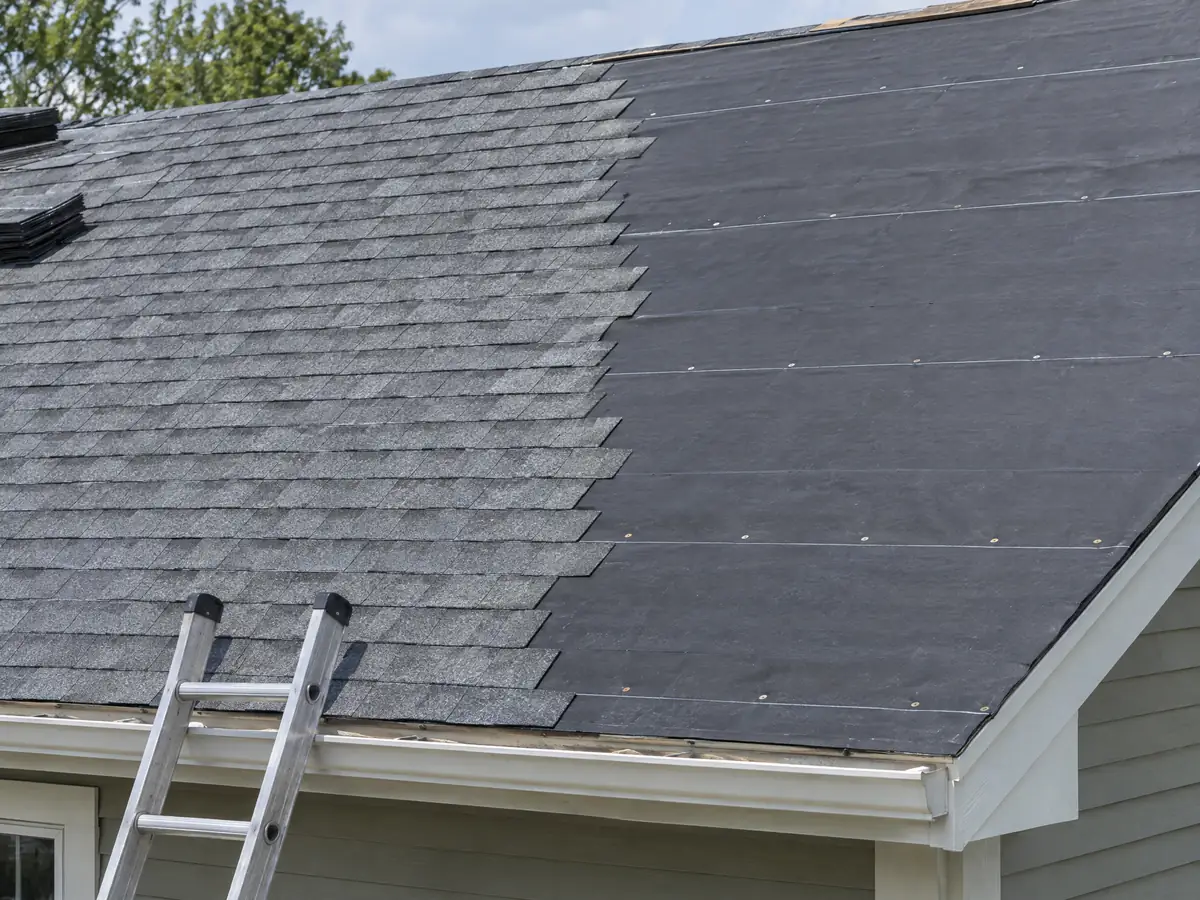
Do rooftop solar and recycling rules add steps to a Chino Hills roof replacement?
Solar does. Rooftop photovoltaic work needs its own permit. Owners or installers may use the voluntary SolarApp+ automated review, must separately win Chino Valley Fire District approval, and need a signed Smoke and Carbon Monoxide form, the SolarApp+ approval packet and District-approved plans before the permit issues. If panels come off and go back on during a re-roof, ask who handles the paperwork, because plan revisions need approval from the District, SolarApp+ and Building and Safety.
Debris has two sets of numbers. The permit page says the Construction and Demolition Recycling Waste Management Plan form applies to residential projects of 500 square feet or more, while Ordinance 395 (CHMC 13.40) and the City's application set a 65 percent reuse target for new construction of 1,000 square feet or more, alterations valued at $200,000 or more and demolition of 500 square feet or more. A re-roof could fall under the first line and not the second, so ask Building and Safety. Covered debris goes to the franchise hauler, Waste Management, or is self-hauled.
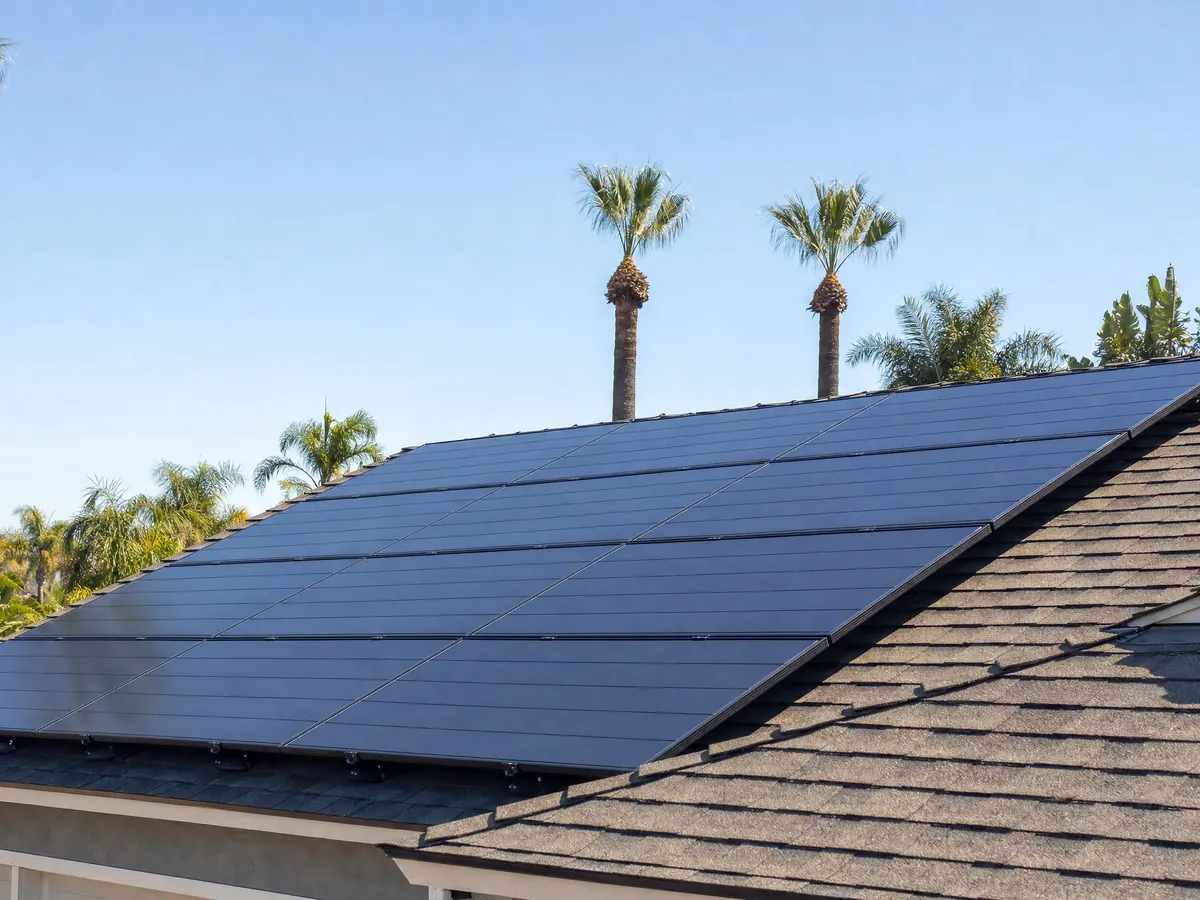
How much does roof replacement cost in Chino Hills, and who should I hire?
We found no Chino Hills price survey, so the figures come from Los Angeles and an Inland Empire bid can differ. Angi's Los Angeles page, updated July 31, 2026, reports a $17,271 average and a $10,256 to $24,963 typical range, with asphalt at $4 to $12 a square foot, tile at $7 to $15 and metal at $7 to $16; tear-off adds $1,000 to $3,000 and solar detach and reset $500 to $1,000. Remodeling magazine's Cost vs. Value 2025 prices a reference Los Angeles asphalt roof at $36,417 and a metal roof at $62,069 without publishing the roof size, which is why the sources sit far apart. We plan on about $10,000 to $25,000 for asphalt, $15,000 to $37,000 for tile and $20,000 and up for metal, deck repair extra. The median owner-occupied home here is valued at $890,200 (ACS 2024).
Roofing is CSLB class C-39. California's home improvement contract statute, Business and Professions Code 7159, requires a written contract and caps the down payment at $1,000 or 10 percent of the price, whichever is less. Our license guide shows how to look up a license, and how general contractors use subcontractors explains who answers to whom on a managed job.
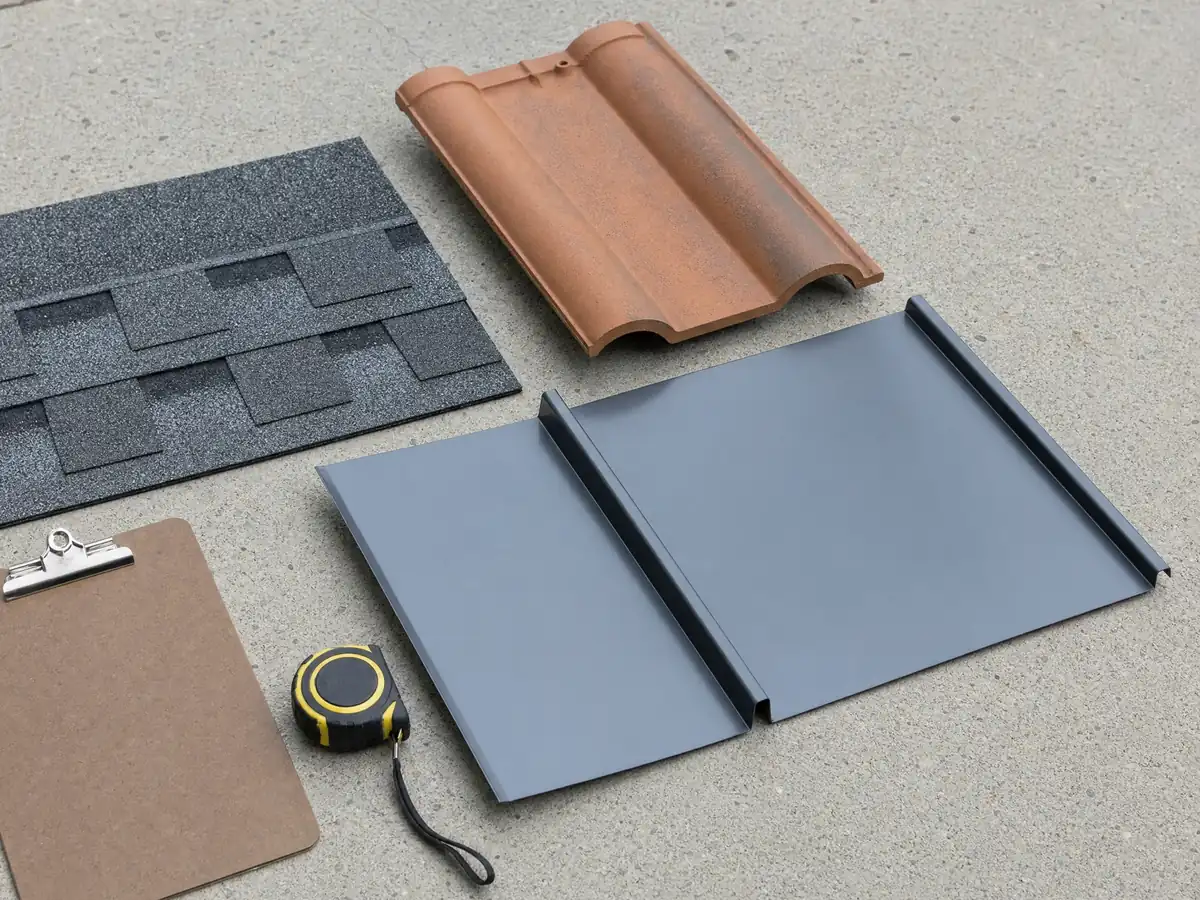
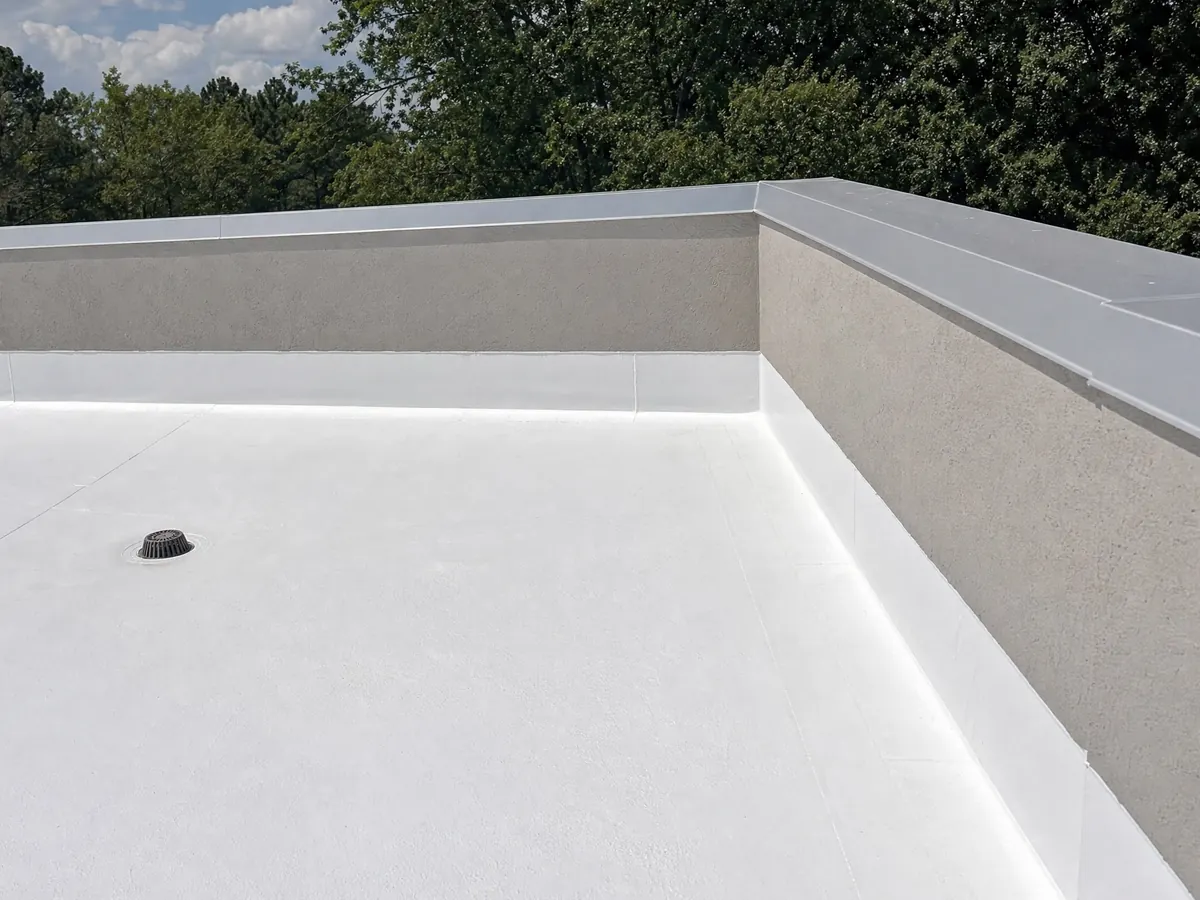
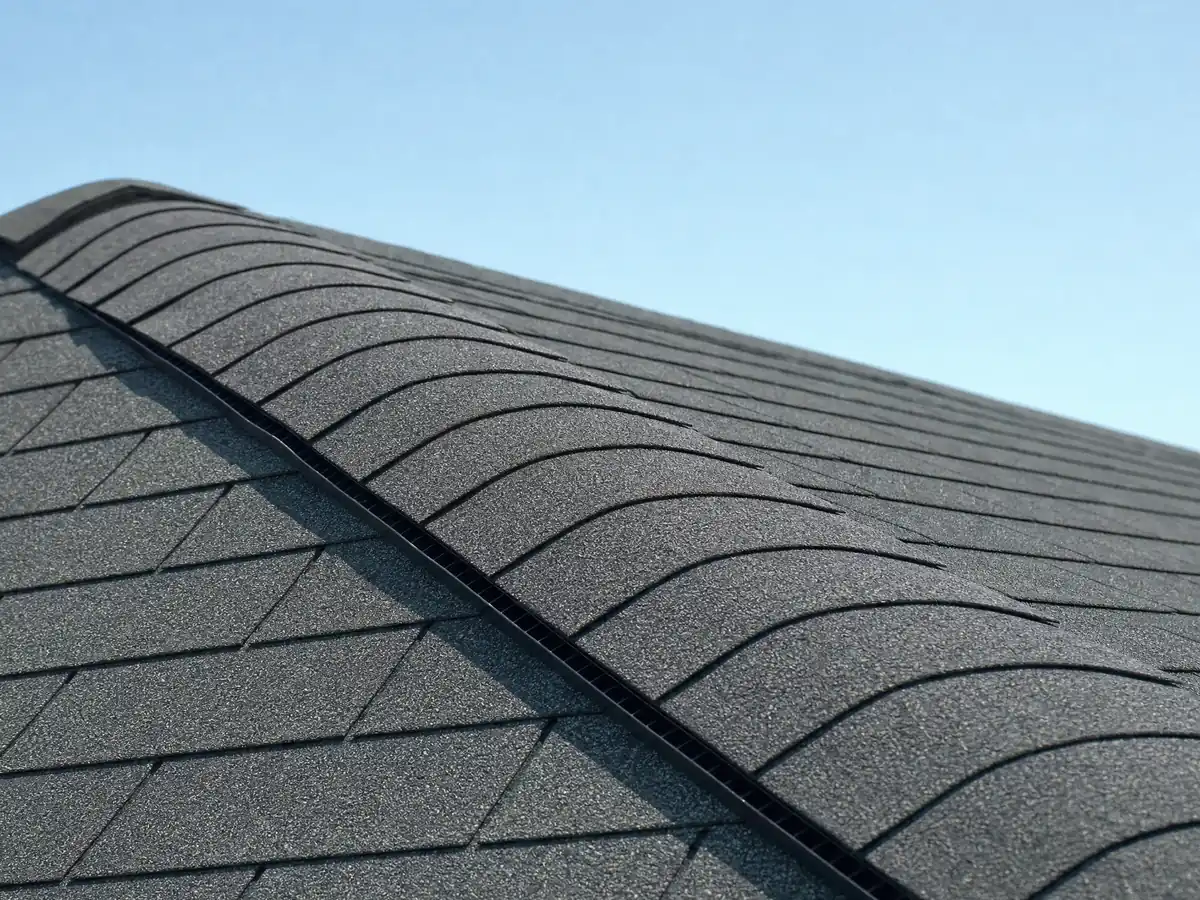
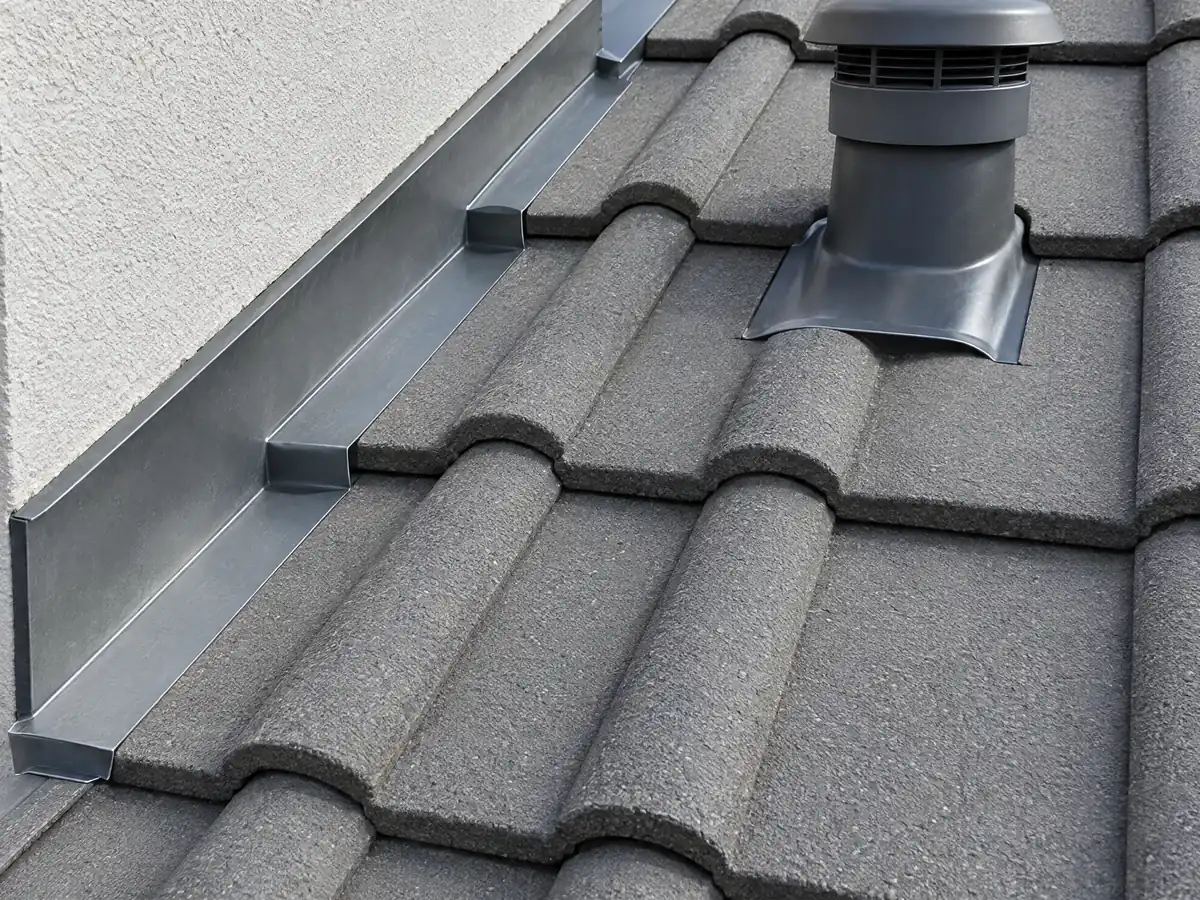
Roofing photos from Chino Hills and nearby communities
Roofing scenes tied to Chino Hills places such as Los Serranos, The Oaks, Woodview and Butterfield Ranch, and to nearby communities such as Chino, Yorba Linda and Diamond Bar, from tear-offs and underlayment to tile flashing and finished ridges.
Where these Chino Hills roof figures come from
Every roofing price, with its source and date, is in the table on the roofing page, and the California roofing cost guide explains why a fixed reference roof and a survey average can differ by a factor of two. After a re-roof, owners here often turn to the outside of the lot, and the Chino Hills rules for that are on the fencing page, the painting page and the kitchen remodeling page. For a Los Angeles County neighbor to read beside this guide, try Pomona.
| What it covers | Typical range |
|---|---|
| Asphalt shingle, typical single-family roof | $10,000 to $25,000 |
| Concrete or clay tile | $7 to $15 per sq ft |
| Metal | $7 to $16 per sq ft |
| Remodeling Cost vs. Value 2025, Los Angeles | Asphalt $36,417. metal $62,069. |
| Extras | Tear-off $1,000 to $3,000. solar detach and reset $500 to $1,000. |
Other work we manage in Chino Hills
Chino Hills roofing questions, answered
Do I need a permit to replace my roof in Chino Hills?
Yes for a replacement. The City treats replacing or repairing an entire roof plane as a partial re-roof that needs a building permit, and any job that replaces roof sheathing needs one too. Patching only a specific damaged area of covering, tile or underlayment is a repair with no permit. Call Building and Safety at 909-364-2780 if your job sits near that line.
What is the 25 percent rule for roof repairs in Chino Hills?
Ordinance 427 lets repairs and additions that replace or install no more than 25 percent of the total roof area in any 12-month period use material matching the existing roof, even when that roof is not Class A. Past 25 percent, the new covering must be Class A. We found no separate 25 percent permit rule.
Does Chino Hills require a Class A roof?
Yes, on every regulated structure in the city, not only in fire zones. Ordinance 427 amends Building Code section 1505.1 and Residential Code section R902.1 to require Class A roof coverings, with the 25 percent repair exception. Ember screens on attic gaps are also required for new construction and additions of 50 percent or more.
How much does it cost to reroof a house in Chino Hills?
We found no Chino Hills survey. Angi's Los Angeles page, updated July 31, 2026, shows a $10,256 to $24,963 typical range, and we plan on $10,000 to $25,000 for asphalt, $15,000 to $37,000 for tile and $20,000 and up for metal. Roof size, deck repair and solar removal move the number, and a written proposal sets the real price.
Is my Chino Hills roof in a very high fire hazard zone?
We cannot tell from the pages we read. The General Plan says about 75 percent of the city is in the Fire Hazard Overlay and that most of it falls in the very high zone, but the street-level zone list exists only as a map. Check your address on Chino Valley Fire District's Fire Hazard Severity Zone Map page, or email firemarshal@chofire.org.
What is the best time of year to replace a roof in Chino Hills?
Summer is the driest window, though also the hottest. NOAA's Chino Airport normals show 9.98 inches of rain a year, only 0.08, 0.01 and 0.06 inch in July, August and September, and 99 days a year at or above 90 F. Hill sites run cooler and windier than the airport, and Santa Ana gusts reach 60 to 75 miles per hour, so ask how the crew tarps an open roof.
Do I need a separate permit to put solar panels back on a new roof in Chino Hills?
Yes, rooftop solar has its own photovoltaic permit. The City allows the voluntary SolarApp+ automated review but also requires Chino Valley Fire District approval and a signed Smoke and Carbon Monoxide form before it issues the permit. Ask whether the roofer or the solar installer files it, because plan revisions need approval from both the District and Building and Safety.
Who hauls away old roofing in Chino Hills?
For projects covered by the recycling rules, debris goes to the City's franchise hauler, Waste Management, or is self-hauled. Covered projects must reuse or recycle at least 65 percent of the waste and file a plan before the permit issues. Whether a re-roof is covered is unclear, because two City documents give different thresholds, so ask Building and Safety.
Can a general contractor do roofing in California?
A general contractor can run a roof job by hiring a licensed roofing subcontractor, and that is how MDG works. We have not confirmed whether a general building license alone covers a roofing-only contract, so a C-39 roofer does the roof work on our jobs. Ask to see the roofer's license number and certificate of insurance before work starts.
How do I check a roofing contractor's license in California?
Look up the license number on the Contractors State License Board website, confirm that class C-39 Roofing shows as active, then match the business name to your contract. Chino Valley Fire District also asks plan submitters to keep a current state contractor license on file. Our license guide walks through the lookup.
Ask for a roof inspection in Chino Hills
Tell us your neighborhood, the roof covering, roughly when the house went up and where water shows. We check the fire map, the Class A rule and the permit route for that address before calling you back.