
Deck Builderin Chino Hills, CA
A deck builder in Chino Hills starts with fire, because about 75 percent of the city lies in the City's Fire Hazard Overlay District. A deck of 200 square feet or less, no higher than 30 inches, detached from the house and not serving an exit door needs no building permit. Attached decks, second-story decks and patio covers do.
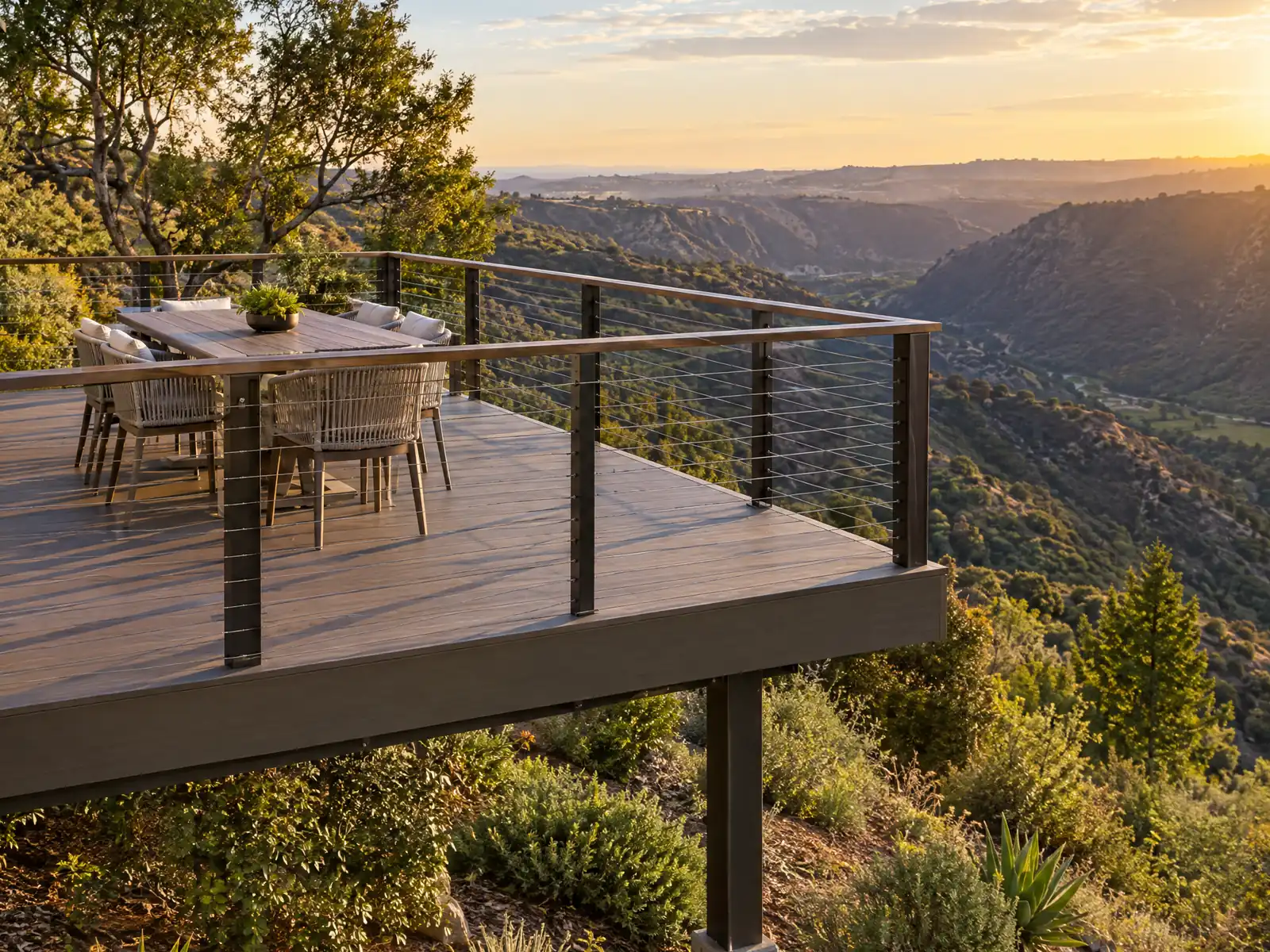
Chino Hills is a city of houses with backyards. The 2024 Census estimates count 17,065 single-family detached homes, about 70.7 percent of 24,121 units, and 12,903 homes date from 1980 through 1999, so a typical deck here is a retrofit onto a house that came with a slab patio, or a wood deck that is now 25 to 45 years old. Fire shapes the rules as well: the October 2020 Blue Ridge Fire burned about 14,000 acres, mostly inside the city and Chino Hills State Park.
MDG Builders (CSLB #1040337) is a general contractor out of Tarzana. For a Chino Hills deck we plan the job, bring the permit and fire questions to Building and Safety and the Fire District, and hire a licensed carpentry subcontractor to frame it. The decks page covers materials, and the Chino Hills overview lists the other trades we coordinate.
What Chino Hills' Building and Safety Division, Chino Valley Fire District, Development Code and state law say about decks
Where decks permits come from in Chino Hills: City of Chino Hills Building and Safety Division (Community Development Department).
- Decks: the City's exempt-work handout excludes only decks accessory to a house that are 200 square feet or less, no more than 30 inches above grade at any point, not attached to a dwelling and not serving a required exit door; the permit page lists second-story decks, balconies and patio covers as permit items.
- Patio cover setback under zoning is measured from the posts to the property line, and eaves may project at most one foot beyond the permissible projection for the posts (Table 10-1 note, CHMC 16.06.070, third-party mirror); the City's permit page lists patio covers as a permit item.
- Zoning table note (CHMC 16.06.070, third-party mirror): when a deck sits within a required setback, it 'shall be at a height of thirty (30) inches above adjacent grade'.
- Wildfire guidance on the City's wildfire page: clear leaves and debris from decks and porches, remove dead vegetation and other items under a deck or porch and within 10 feet of the house, screen or box in the area under patios and decks with wire mesh, keep firewood and propane 30 feet from the foundation, and move deck furniture and cushions away from the house when a fire threatens.
- Under the Fire Hazard Overlay District (CHMC 16.22.020 and 16.22.030, third-party mirror), additions that increase a structure by 50 percent or more must meet Section 7A of the Building Code and the 30-foot separation from structures on adjoining lots, which governs attached decks and covered patios built as part of a large addition.
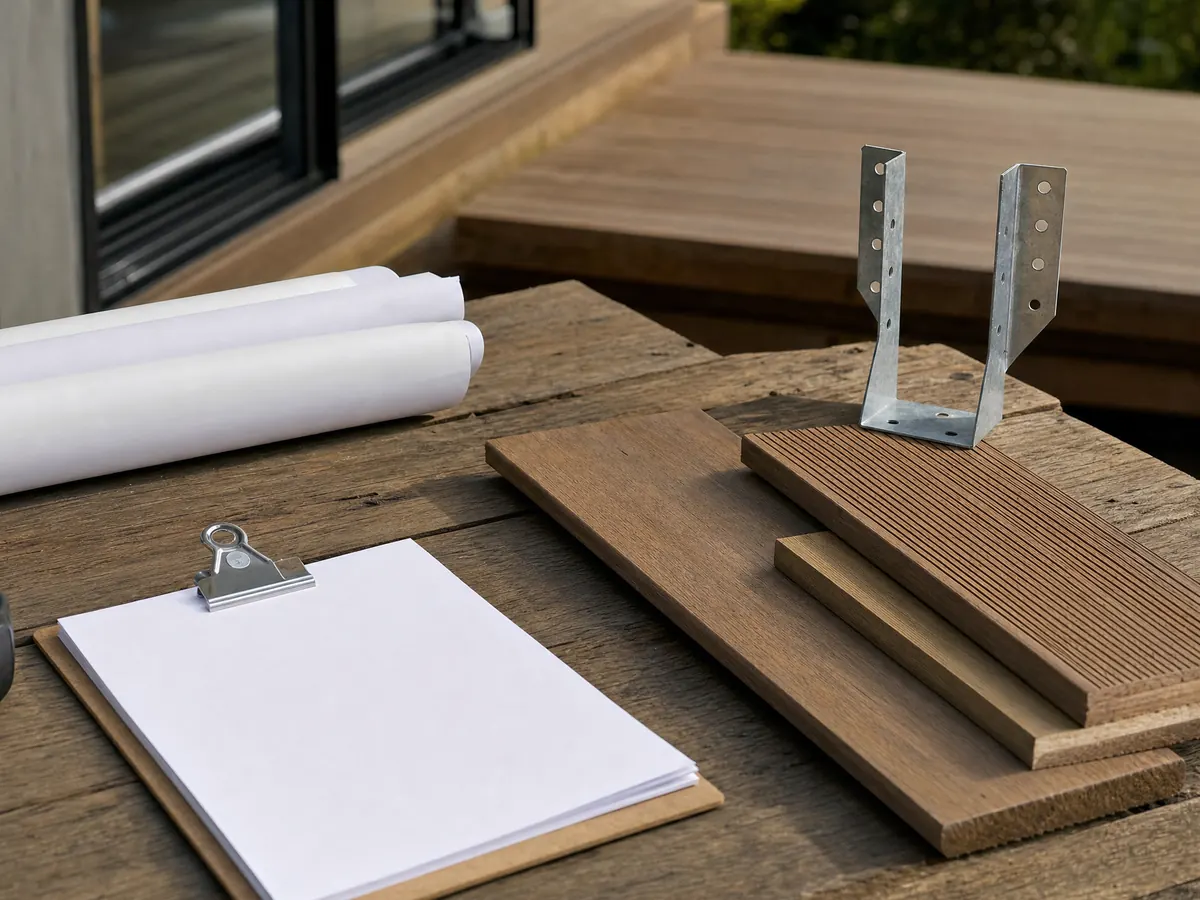
Does a Chino Hills deck have to be built for wildfire?
In most of the city, in some form. The General Plan's Safety Element says about 75 percent of Chino Hills lies in the City's Fire Hazard Overlay District, covering Chino Hills State Park, the Tres Hermanos area, the Carbon Canyon area and the south generally west of Butterfield Ranch Road and south of Soquel Canyon Parkway, and that most of the city falls in the very high fire hazard severity zone. Under CHMC Chapter 16.22, read in a third-party mirror, new construction and additions of 50 percent or more in the overlay must meet Section 7A of the Building Code.
Chino Valley Fire District adopted Ordinance 2025-01, effective September 1, 2025, for the State Fire Marshal's March 24, 2025 zone recommendations. In the high and very high zones, owners keep defensible space, disclose the hazard at sale and build new work to wildland urban interface standards. We could not read which streets fall in which zone, so check an address on the District's zone map page or write firemarshal@chofire.org.
Boards are a materials question. The 2022 California Residential Code, section R337.9.3, allows decking surfaces tested to ASTM E2632 or E2726, ignition-resistant, fire-retardant-treated or noncombustible in wildland urban interface areas, and a UC Extension summary said some tested composites missed the ignition-resistant definition, so confirm any product against the State Fire Marshal's listing.
Do you need a permit to build a deck in Chino Hills, and when is it exempt?
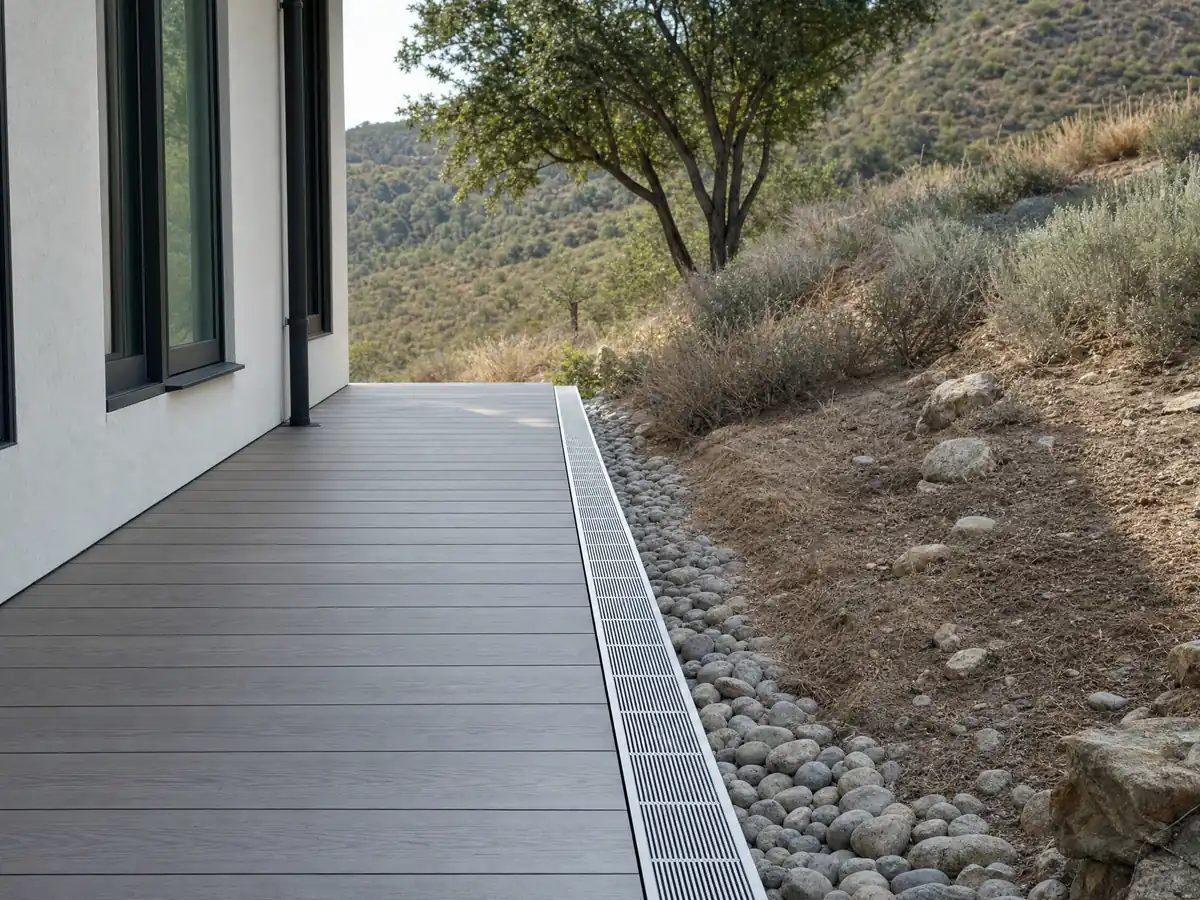
Only for a small, low, freestanding deck. The City's exempt-work handout, revised August 5, 2026, excludes decks accessory to a house that are 200 square feet or less, no more than 30 inches above grade at any point, not attached to a dwelling and not serving a required exit door. The City's permit page lists second-story decks, balconies and patio covers as permit items, so a deck bolted to the house or built high on a slope is permit work.
Zoning has its own height line. A table note in the development code, as the mirror shows it, holds a deck inside a required setback to 30 inches above adjacent grade, so even an exempt deck near a property line can be limited. Exempt work must still meet the Fire Code and the Wildland Urban Interface Code, and an exemption never authorizes a violation of another law.
A permitted deck goes through the Virtual Development Services portal, a Smoke Detector and Carbon Monoxide form comes before issuance on residential projects valued at $1,000 or more, and next-day inspections must be requested by 2:00 p.m. Under Business and Professions Code 7048, the $1,000 no-license limit never covers a job that requires a permit. The City's fee schedule is a scanned image we could not read, so we quote no deck permit fee.
What do patio covers, pergolas and pool decks need in Chino Hills?
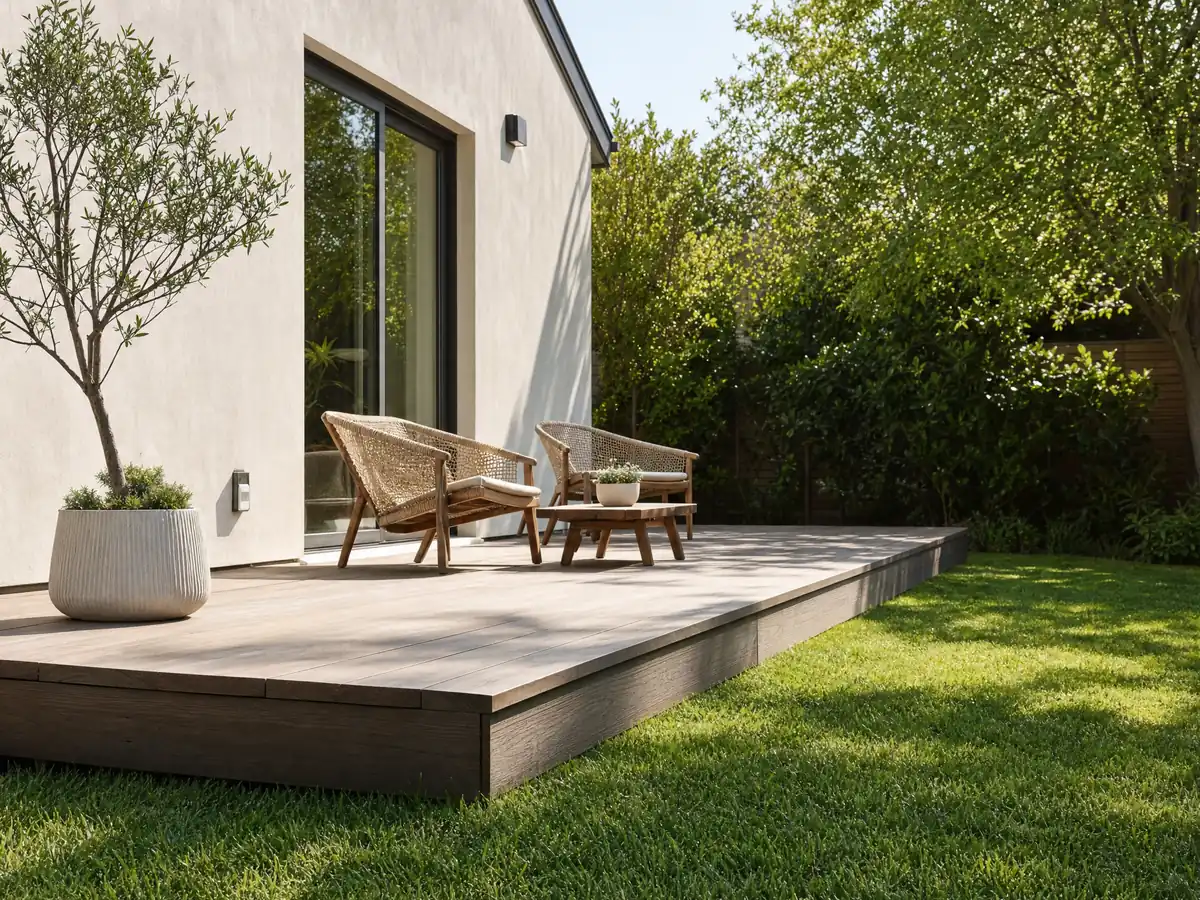
A permit, and a roof that burns slowly. The City lists patio covers as permit items, and zoning measures a cover's setback from the posts to the property line, with eaves allowed to project at most one foot beyond the projection allowed for the posts. The setback table came through garbled in our copy, so ask Planning for the number on your lot.
Roofs are held to Class A citywide. Ordinance 427 amends CBC 1505.1 and CRC R902.1 so that the roof covering on any regulated structure shall be Class A, with an exception for repairs and additions replacing no more than 25 percent of the roof area in 12 months, which may match the existing roof. Ask the plan checker whether a solid patio cover or an open pergola falls under it.
Fire separation shapes placement. Citywide, new construction and additions of 50 percent or more keep 10 feet between structures unless one is entirely noncombustible or a common wall joins them, ember screens go on any gap into the attic and on evaporative coolers, and the Fire Hazard Overlay asks for 30 feet between structures on separate lots. Pools add barrier rules from Ordinance 427: at least 48 inches above grade, no more than 2 inches of clearance beneath and openings that stop a 4-inch sphere.
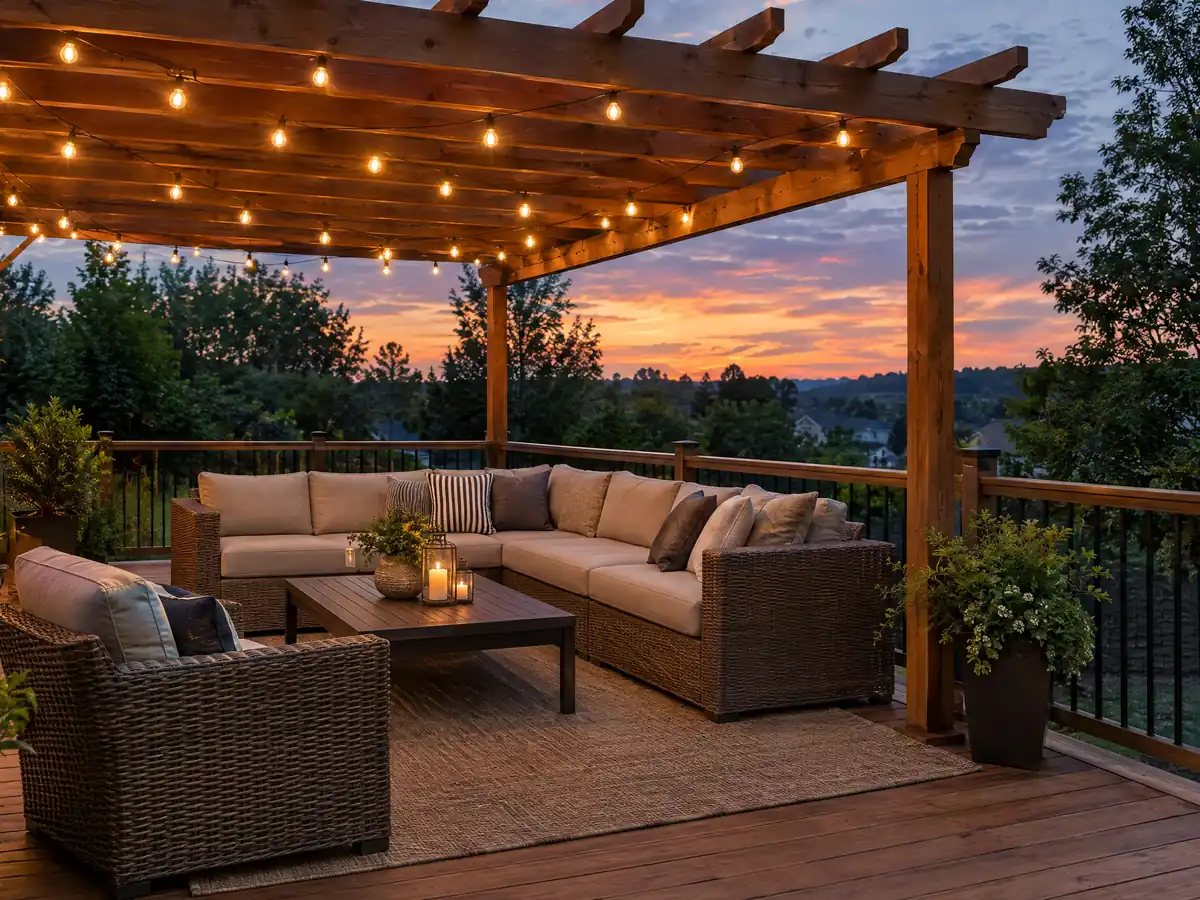
How are ledgers, guards, wind and footings handled on Chino Hills decks?
The state residential code sets the details. Under R312.1 of the 2022 edition, a guard is required wherever the walking surface sits more than 30 inches above grade within 36 inches of the edge, it must stand at least 42 inches tall, and no opening may pass a 4 inch sphere. R507.9.1 wants a pressure-treated ledger of at least 2 by 8, flashed, fastened with hot-dipped galvanized or stainless hardware and never fixed to masonry veneer, and R507.9.2 asks for two 1,500 pound hold-down devices within 24 inches of each end of the deck, or four 750 pound devices. Chino Hills adopted the 2025 edition by Ordinance 427, so confirm the numbers.
Wind belongs in the plan. The General Plan says Santa Ana winds of 25 to 40 miles per hour, with gusts of 60 to 75, are part of the local climate, hot and dry, and Ordinance 427 lists them among its reasons for local amendments. We did not find the design wind speed or the seismic design category in a source we could open, so ask which numbers the plan checker will use for posts and hold-downs.
Footings are sized by load and soil. The General Plan says clay-rich hill soils can swell or settle, so the depth, diameter and engineering of each post footing belong on the plans. A hot tub or a crowd of guests changes the load, and a second-story deck or balcony adds engineering that a ground-level deck does not.
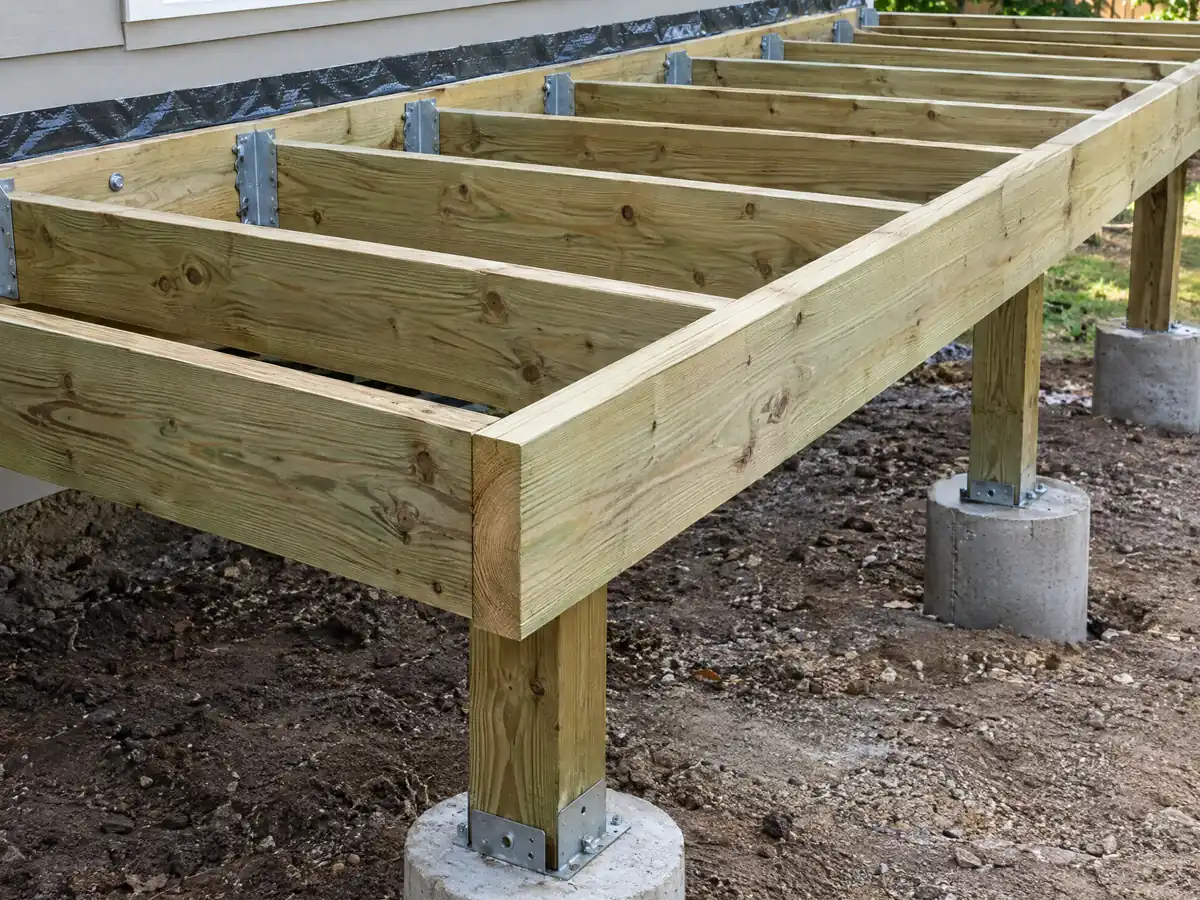
How do hillsides, clay soils and Carbon Canyon change deck footings and approvals?
They add a study before the carpentry. About 71 percent of Chino Hills is sloping hillside, canyon or floodplain, and a parcel with a natural slope of 15 percent proposed for development needs a Building Envelope Study on the design review elevations, as do the tracts along the 600-foot Carbon Canyon Road corridor. The hillside standards bar terracing to flat pads where the natural slope exceeds 15 percent and hold retaining walls for yard space to 36 inches above natural grade.
Ground and faults add the geotechnical layer. The General Plan says soils from clay-rich Puente Formation layers can be highly expansive and describes an Alquist-Priolo zone for the Chino Fault established May 1, 2003. A registered geologist's study goes with permits in the Geologic Hazard Overlay, though alterations or additions of up to 50 percent of the existing structure are exempt, and the City's addition checklist asks for a foundation plan that follows its requirements or a soils report.
Trees and open space come with the lot. Native sycamore, live oak, black walnut and coastal scrub oak of 4 inches or more are protected on developed lots inside the Fire Hazard Overlay, a tree permit and arborist plan come before a permit that would destroy one, and removing more than 25 percent of the canopy counts as destroying. The City owns about 3,000 acres of open space that neighbors have built onto, so confirm the line with Neighborhood Services at 909-364-2714.
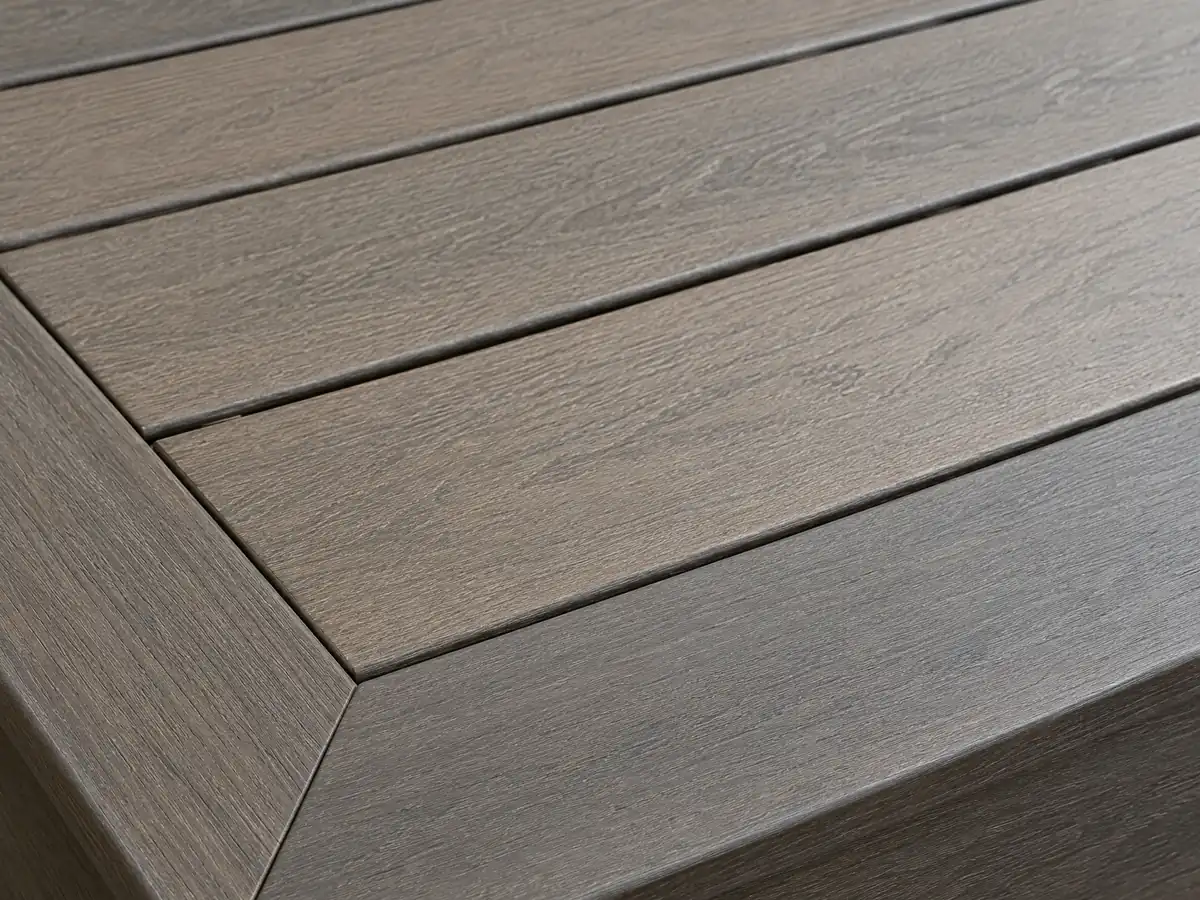
Can you do deck repair in Chino Hills without a permit?
Possibly for swapped boards, but we found no City sentence that says so. The City asks owners to read its permit page and the exempt list first and to call Building and Safety if unsure, so photograph the damage and send it before a crew arrives. We treat new framing, a new ledger, stairs, a taller guard or a larger footprint as permit work, and an attached or second-story deck is permit work from the start.
Age explains most repairs. About 53.5 percent of Chino Hills homes date from 1980 through 1999, so many decks have 25 to 45 years of sun and irrigation on the posts and ledger. UC Integrated Pest Management says drywood termites are most prevalent in southern California and infest decks and fences, which is a reason to probe posts at grade, stair stringers and the ledger before choosing between patching and rebuilding.
A repair near the house follows the fire guidance: the City's wildfire page tells owners to clear debris from the deck and to screen or box in the area under it with wire mesh. Finishes carry an air-quality rule, since Chino Hills sits inside the South Coast Air Quality Management District and Rule 1113 limits volatile organic compounds in coatings, so ask for the stain's VOC rating and keep the label. The Census table cannot isolate 1978, so we give no pre-1978 count; ask about lead-safe practice before painted rails are scraped.
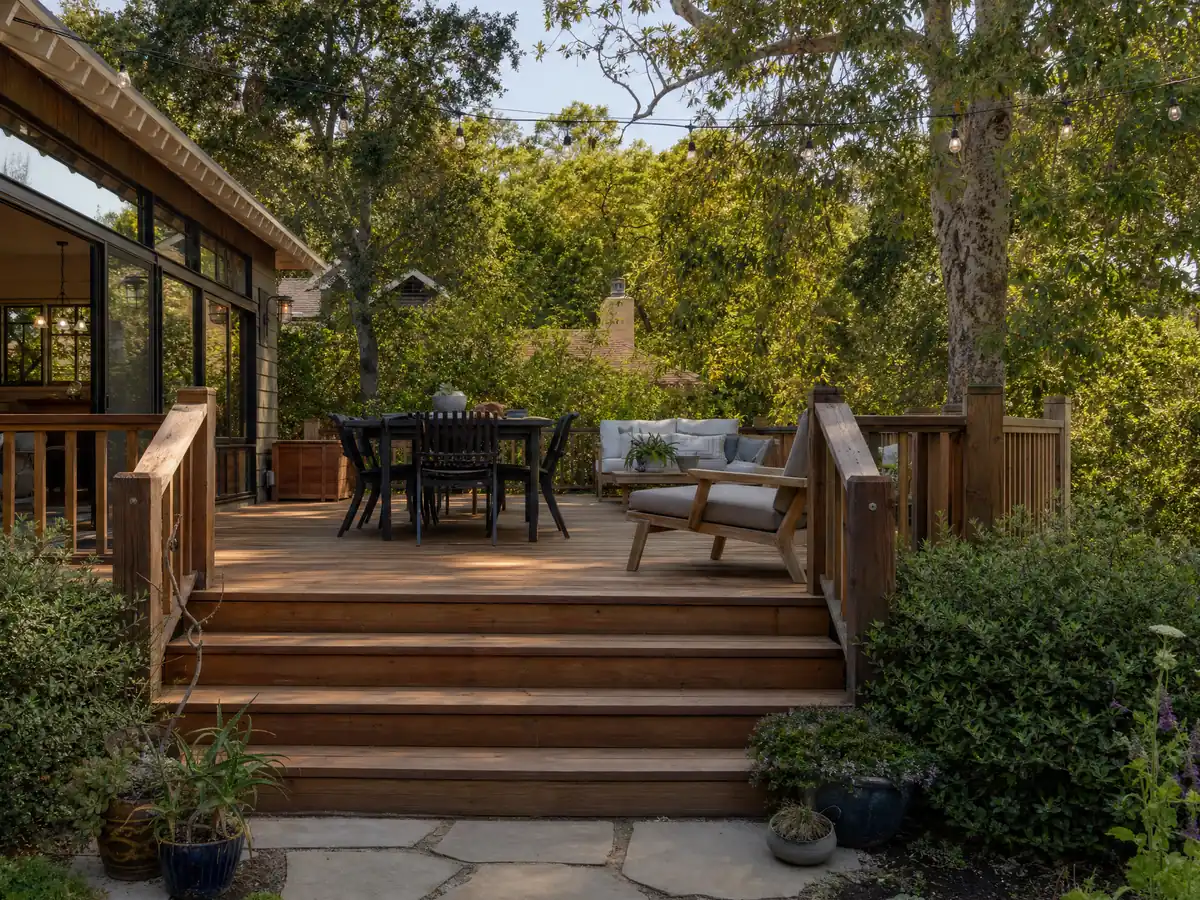
What does a deck builder charge in Chino Hills, wood or composite?
We found no Chino Hills deck price study, so the anchor is Remodeling magazine's 2025 Cost vs. Value report for Los Angeles. Its test deck is 16 by 20 feet with a built-in bench and planter, three steps and full railing; in pressure-treated wood it costs $18,419 and returns 99.6 percent at resale, and in composite it costs $26,872 and returns 73.9 percent. On Angi's Los Angeles page, updated October 28, 2025, the average deck is $13,570 within a $6,335 to $20,871 range. Resale figures belong to Los Angeles and may not carry to the Inland Empire.
Our planning figures are $45 to $75 a square foot for pressure-treated wood and $65 to $110 for composite, so a 16 by 20 deck runs about $14,500 to $24,000 in wood and $21,000 to $35,000 in composite before permits and engineering. We found no independent price for hillside, fire-overlay or engineered decks, so those are quoted after a site visit. The federal May 2025 wage survey puts the mean carpenter wage in the Los Angeles metro area at $37.79 an hour, a pay rate and not a bid.
A deck is framing and rough carpentry under CSLB's C-5 class, so a general building contractor can take the job and hire the framer, and any job that needs a permit calls for a contractor license at any price. Under Business and Professions Code 7159.5, a home improvement down payment tops out at $1,000 or 10 percent of the price, whichever is less. Our license check guide shows how to verify a number.
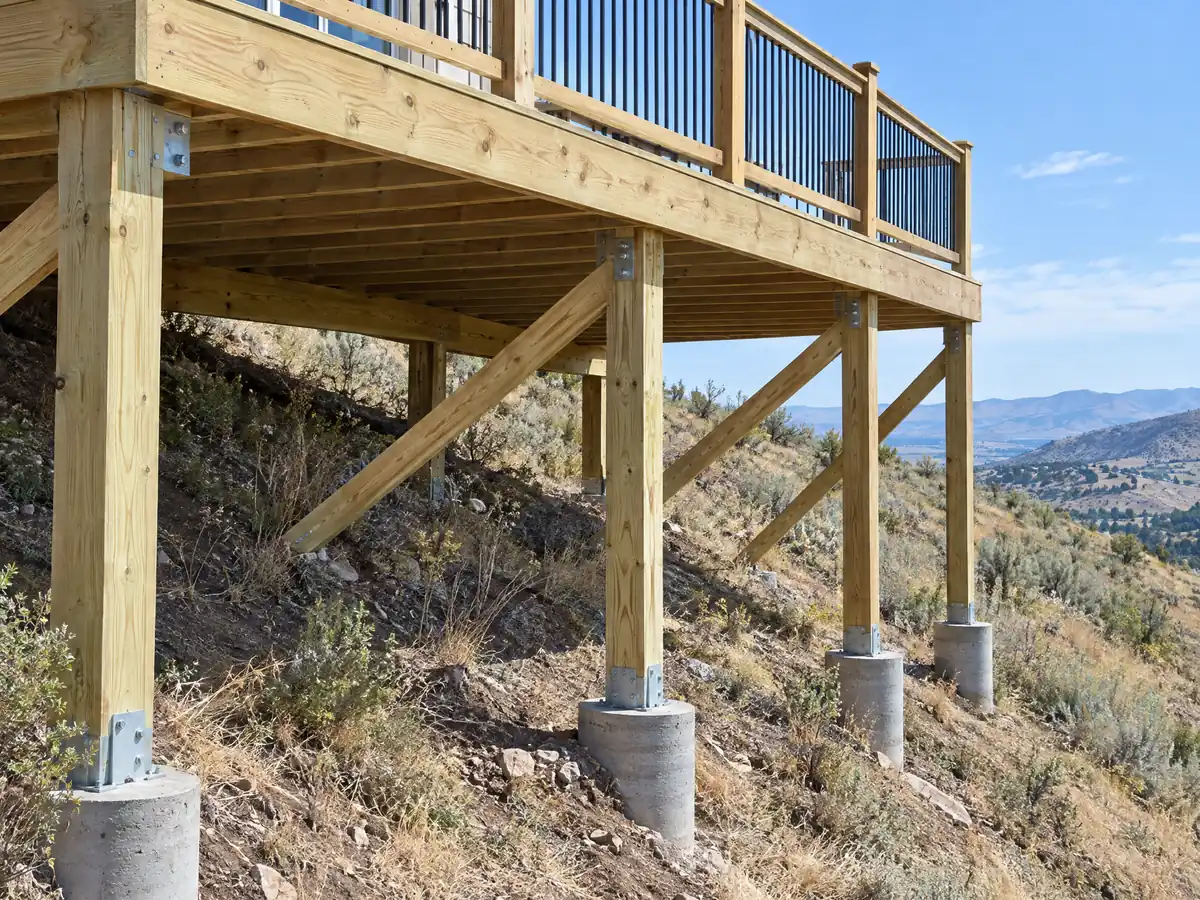
Deck photos from Chino Hills and nearby communities
Ledgers, footings, framing and finished decks and patio covers from Chino Hills and the communities around it, shown at the steps where the fire and permit rules apply. Tap any photo to enlarge it.
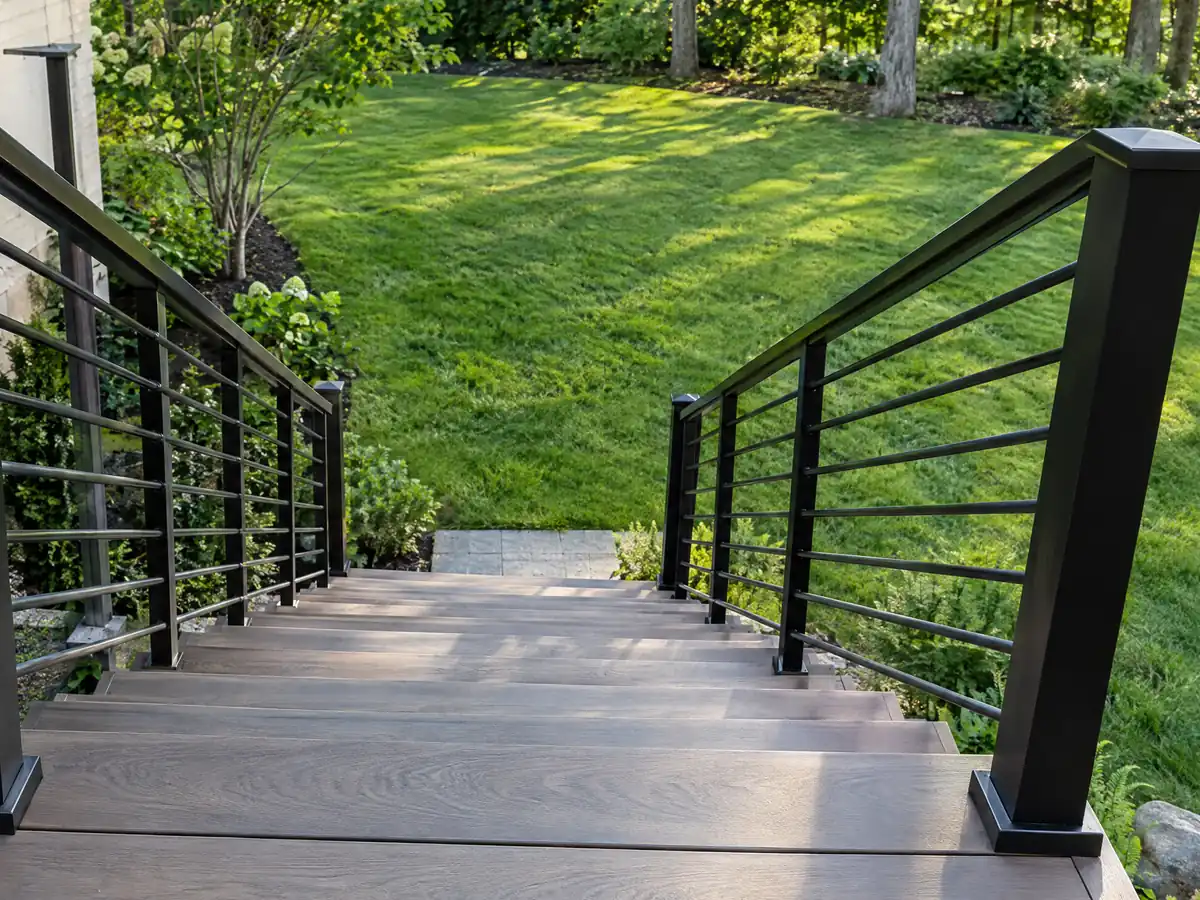
What decks costs around Chino Hills
These are Los Angeles planning ranges from our decks page, not a Chino Hills bid, so permits, engineering, soil work and any Fire District review should sit on their own lines. The same property may need flooring in Chino Hills or concrete work in Chino Hills. Nearby, read decks in Yorba Linda, decks in Diamond Bar and decks in Pomona, with decks in Los Angeles as the benchmark. The subcontractor guide explains who frames and who finishes.
| What it covers | Typical range |
|---|---|
| Pressure-treated wood deck | $45 to $75 per square foot |
| Composite deck | $65 to $110 per square foot |
| 16 by 20 foot wood deck (320 sq ft) | About $14,500 to $24,000 |
| 16 by 20 foot composite deck | About $21,000 to $35,000 |
| Hillside, second-story, rooftop and ipe decks | Priced by site visit |
| Permits and engineering | Quoted as separate lines |
Other work we manage in Chino Hills
Chino Hills deck questions, answered
Can I build a deck without a permit in California?
Only a small one. In Chino Hills, a deck of 200 square feet or less, no more than 30 inches above grade at any point, not attached to a dwelling and not serving an exit door is on the City's exempt list. Anything attached, taller, larger, second-story or covered needs a permit, and exempt work must still meet the fire rules.
What is the largest deck without a permit?
In Chino Hills it is 200 square feet, and only if the deck is also no higher than 30 inches above grade at any point, detached from the house and not serving a required exit door. Zoning can still limit a deck inside a required setback. A larger deck, even a low one, falls outside the exemption.
How much should a 16x20 deck cost?
On our Los Angeles planning basis, 320 square feet runs about $14,500 to $24,000 in pressure-treated wood and $21,000 to $35,000 in composite, before permits and engineering. Remodeling's 2025 Cost vs. Value report prices a fuller 16 by 20 deck with bench, planter, steps and rail at $18,419 in wood and $26,872 in composite. No Chino Hills study turned up.
Is it cheaper to build a wood deck or composite deck?
Wood costs less up front. Cost vs. Value 2025 for Los Angeles shows $18,419 for wood against $26,872 for composite on the same 16 by 20 deck, while wood returned 99.6 percent at resale and composite 73.9 percent. In the Chino Hills fire overlay, check that the boards you pick meet the ignition-resistant rules.
Is railing height 36 or 42 for decks?
The California Residential Code asks for 42 inches on a deck guard, not 36, wherever the walking surface is more than 30 inches above grade within 36 inches of the edge, and openings must stop a 4 inch sphere. Chino Hills adopted the 2025 edition by Ordinance 427 and our figures come from the 2022 text, so confirm with Building and Safety.
How high can a deck be without a railing in California?
A guard is required once the walking surface is more than 30 inches above grade within 36 inches of the edge, under R312.1.1 of the 2022 California Residential Code. That is the same 30 inch line that limits the Chino Hills permit exemption, so a small, detached deck low enough to skip a railing is usually low enough to skip a permit.
Does a deck in Chino Hills' Fire Hazard Overlay need special decking?
Likely, if the deck is new construction or part of an addition of 50 percent or more, because those projects must meet Section 7A. The state code lists allowed decking surfaces for wildland urban interface areas, including ignition-resistant and noncombustible materials. We could not read which streets are in which zone, so ask Chino Valley Fire District at 909-902-5280, option 2.
Can I repair a deck in Chino Hills without a permit?
Replacing a few boards probably does not, but we found no City sentence that confirms it, so send photos to Building and Safety first. New framing, a new ledger, stairs, a taller guard or a bigger footprint are permit work. Fire rules still apply near the house, and drywood termites are common in Southern California decks.
Do patio covers in Chino Hills need Class A roofing?
Chino Hills requires Class A roof coverings on any regulated structure citywide, with repairs or additions of no more than 25 percent of the roof area in 12 months allowed to match the existing roof. Whether a pergola or slatted cover counts as a regulated structure is a question for the plan checker, and the City lists patio covers as permit items.
What license does a deck builder need in Chino Hills?
A deck is framing and rough carpentry, which is the C-5 class at CSLB, and a general building contractor can take the job and hire a licensed framer. Any job that needs a permit calls for a licensed contractor at any price. Look the number up on the CSLB site and ask each subcontractor for its license number and proof of insurance.
Tell us the deck height, the slope and what you want built
Say how high the deck will sit, whether it touches the house, whether the lot is flat, sloped or in Carbon Canyon, and whether you want a repair or something new. We bring the permit, fire and soil questions to the first visit.