
Deck Builderin Chino, CA
A deck builder in Chino can skip a permit only for a detached deck of 200 square feet or less, no more than 30 inches above grade, that does not serve an exit door. Patio covers have their own setbacks, pools need a 60 inch barrier, and CAL FIRE's 2025 fire zones reach only a southern Prado Basin strip.
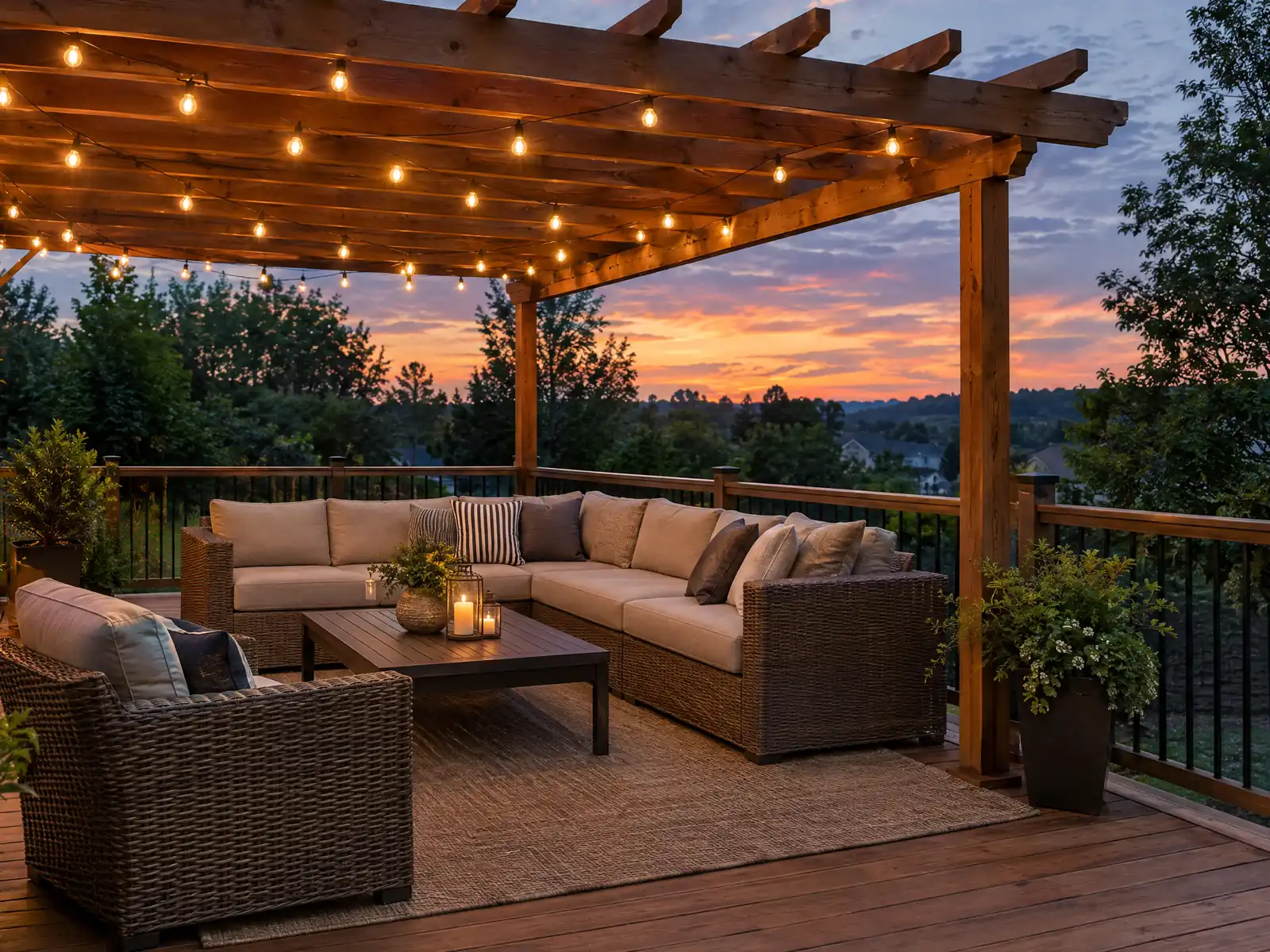
Chino's backyards belong to a house-and-yard city. About 67.6 percent of the 28,188 homes counted in the Census Bureau's 2024 estimates are single-family detached, the 1970s built 5,970 of them, and 10,608 homes in all predate 1980, so a great many rear decks, porches and patio covers are 35 years old or more. Add the City's Very Heavy termite rating and wood that old deserves a probe before anyone quotes a repair.
MDG Builders (CSLB #1040337) is a general contractor in Tarzana. We draw the scope, take the permit questions to the City of Chino Building Division and schedule licensed framing subcontractors, which keeps us out of the field. The decks page covers materials, and the Chino overview lists the other trades we manage in the city.
What Chino's Building Division, the Chino Valley Independent Fire District and state code say about decks and patio covers
Where decks permits come from in Chino: City of Chino Development Services Department, Building Division.
- Exemption: the CRC list exempts decks not exceeding 200 square feet that are no more than 30 inches above grade at any point, are not attached to a dwelling and do not serve the required exit door, and platforms, decks, walks and driveways not more than 30 inches above grade and not over a basement or story below; the CBC list exempts shade cloth structures for nursery or agricultural use and swings and playground equipment.
- Patio covers (Table 20.11-6): 5 feet rear, interior side and street side setbacks in single-family zones, front same as the main building, coverage limited to 50 percent of the rear yard, 14 feet high; lattice and non-solid covers that are at least 50 percent open do not count toward lot coverage; patio enclosures need 10 feet rear, 5 or 10 feet side and 15 feet street side setbacks and a 10-foot clear access to the rear yard along one side in single-family zones other than RD 8.
- Aluminum patios (City handout): plans go in online with an estimated five-week plan check; enclosed patios need at least 65 percent openings for light and ventilation on the longest wall and one other wall, may not hold carports, garages, storage or habitable rooms and cannot be heated or cooled, are allowed only at ground floor and 12 feet high without calculations, need a slab at least 3-1/2 inches thick, GFCI receptacles and a switched light at doors, and safety glazing in hazardous locations; the City also publishes a Patio Cover Standard with prescriptive framing and footing tables.
- Wood and footing conditions: Chino's Table R301.2(1) rates termite damage Very Heavy and gives a frost line depth of 12 to 24 inches, and new decks may be a fire concern in fire hazard zones where WUI building standards apply to new construction and additions (District fire hazard page).
- Pool decks and barriers: the City's pool barrier rules (15.04.059 to 15.04.063) and Swimming Pool Barrier Standard (Rev. 01/2022) require door alarms or other approved features on doors with direct pool access, a self-closing, self-latching garage-to-pool door with the latch at least 54 inches above the threshold, and barrier inspection before plastering or filling.
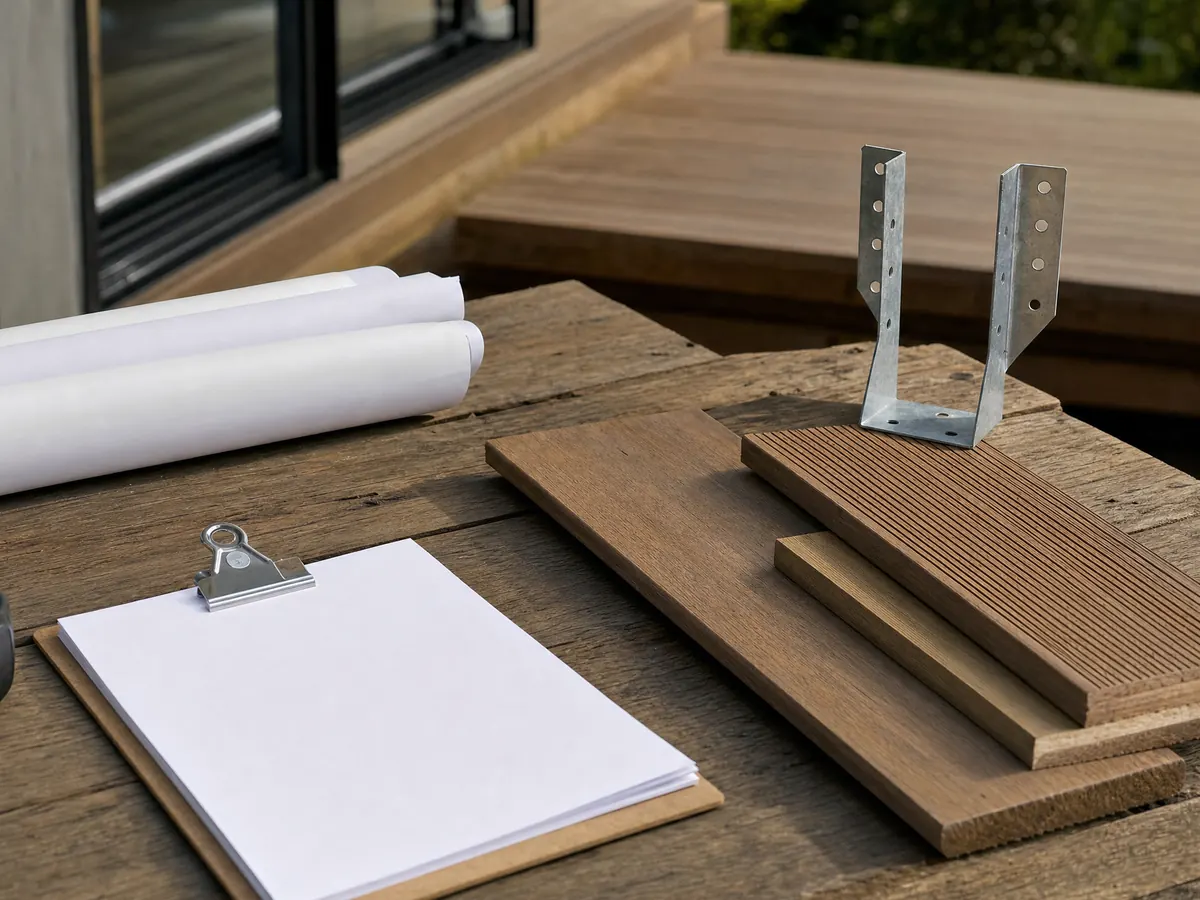
How close to the fence can a Chino patio cover go, and does the roof rule apply?
Five feet from the rear, interior side and street side lines in single-family zones. Table 20.11-6 sets the front setback the same as the main building, limits a cover to 50 percent of the rear yard and caps it at 14 feet high. Lattice and other non-solid covers that are at least 50 percent open do not count toward lot coverage, and an enclosure needs 10 feet at the rear, 5 or 10 feet on the sides and 15 feet on a street side, plus a 10-foot clear path to the rear yard along one side outside RD 8.
Aluminum covers have a City handout. The Aluminum Patio Handout says plans go in online with an estimated five-week plan check. An enclosed patio needs at least 65 percent openings on its longest wall and one other, may hold no carport, garage, storage or habitable room, cannot be heated or cooled, and without calculations is limited to the ground floor and 12 feet high. It needs a slab at least 3-1/2 inches thick. The City also publishes a Patio Cover Standard with prescriptive framing and footing tables.
Chino's roof rule is separate. Municipal Code 20.17.040(I) requires Class A clay or concrete tile on new homes and a replacement roof equal to or better than the old one. We did not find whether it reaches an attached cover, so ask Planning at 909-334-3253 when a cover ties into a tile roof.
Do you need a permit to build a deck in Chino?
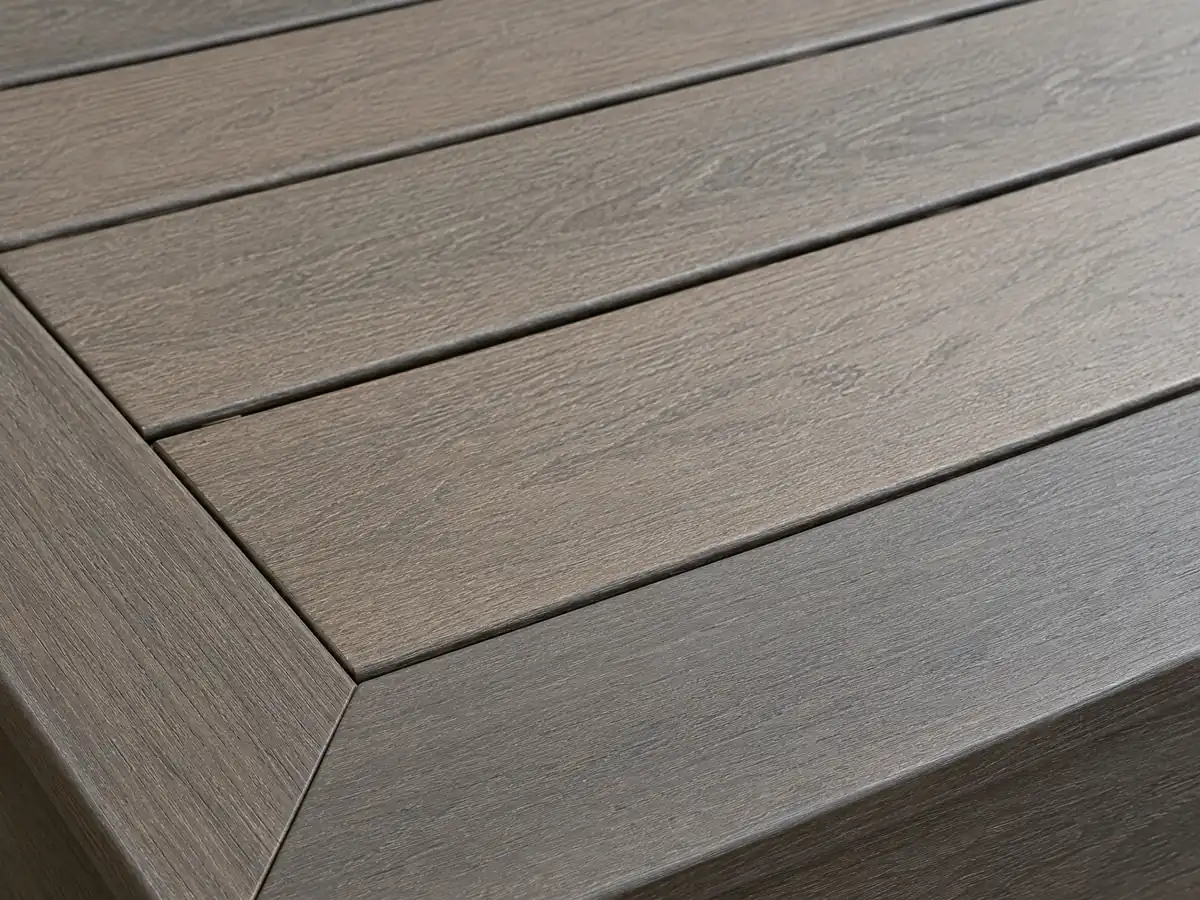
Usually, yes. The local exempt list in Municipal Code 15.06.030 covers a deck of up to 200 square feet that is no more than 30 inches above grade at any point, is not attached to a dwelling and does not serve the required exit door, and it separately lists platforms, decks, walks and driveways no more than 30 inches above grade and not over a basement or story below. A deck bolted to the house, a deck over 30 inches or a deck at the back door is outside that exemption. Our reading of the code comes from the gocodebook.com mirror, a third-party copy, so ask the City to confirm it.
A permit adds costs beyond its own fee. The schedule effective July 1, 2026 adds plan check at 75 percent of the permit fee, a technology fee of 7.5 percent, Art in Public Places at 0.1 percent of valuation and a General Plan update fee of 0.05 percent. Municipal Code 15.04.185 lets the Building Official charge double the permit cost for work started early, and the Building Division's FAQ, revised in January 2020, says a permit lapses 180 days after issuance or after work stops.
Call 909-334-3251 with the height, size and whether the deck touches the house. The Building Division FAQ says a sketch faxed to the counter is enough to learn whether a job is exempt.
How is a deck anchored to a Chino house, and how high must the guard be?
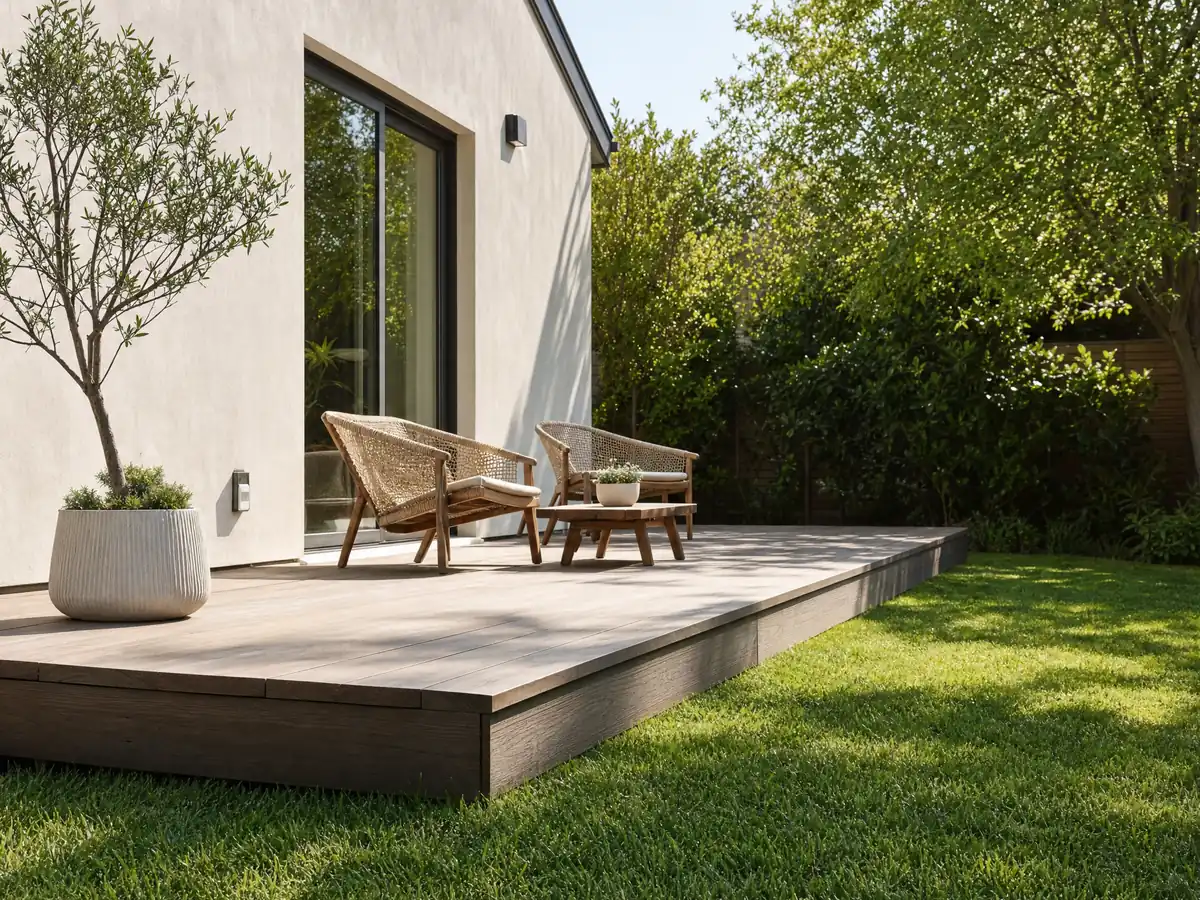
To the ledger, carefully. The 2022 California Residential Code text we read (section R507.9.1.1) wants a ledger of at least 2x8 pressure-treated lumber, bars concentrated loads from beams or girders onto it and bars attaching it to stone or masonry veneer. R507.9.1.3 asks for hot-dipped galvanized or stainless fasteners and a flashed ledger. Chino has moved to the 2025 code cycle, so the numbering may differ and the Building Division has the final say.
Shaking and wind get a second set of rules. R507.9.2 wants lateral hold-downs, either two 1,500 pound devices within 24 inches of each end or four 750 pound devices, and Chino lists seismic design category D2 or E, a 110 mph basic wind speed and Exposure C. The frost line is 12 to 24 inches in the City's table, and the soils report requirement on its design criteria sheet decides how footings are set.
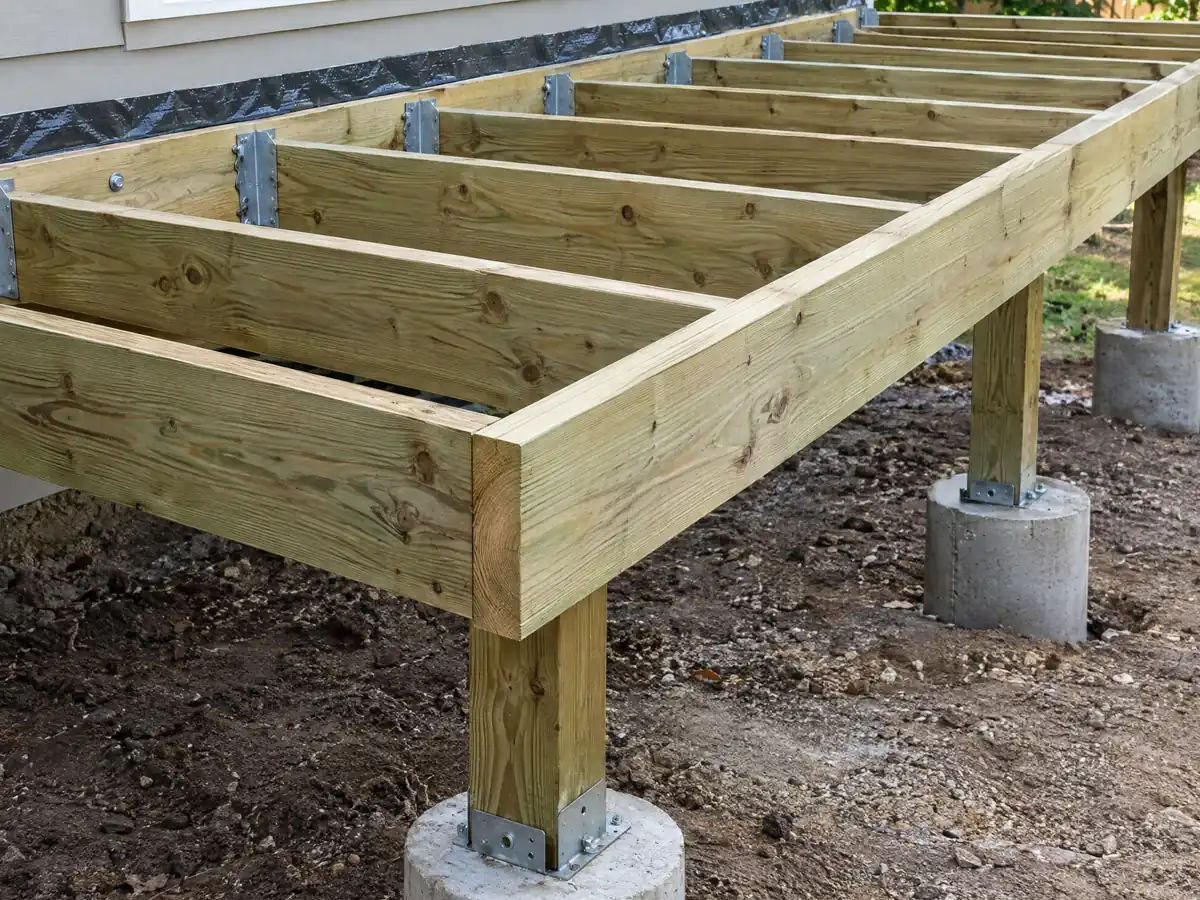
Guards are 42 inches. R312.1.1 requires one wherever the walking surface is more than 30 inches above grade within 36 inches of the edge, R312.1.2 sets the 42 inch minimum and R312.1.3 stops a 4-inch sphere from passing, which answers the 36 or 42 inch question for decks.
What fence and gate rules apply to a Chino pool deck?
Municipal Code 15.04.059 to 15.04.063 treat any structure that holds water more than 18 inches deep as a pool, including spas and hot tubs. The barrier must be at least 60 inches high, with no more than 2 inches of clearance at the bottom, or 4 inches over a solid surface, and no opening that a 4-inch sphere passes through. A gate can be no wider than 4 feet and has to swing away from the water, closing and latching by itself.
The house counts as part of the barrier. The City's Swimming Pool Barrier Standard (Rev. 01/2022) calls for door alarms or other approved features on doors with direct pool access, and for a garage-to-pool door that closes and latches itself with the latch at least 54 inches above the threshold. Barrier inspection happens before plastering or filling, so a pool deck schedule has to leave room for it.
Decks beside pools have extra traps: boards that overhang the barrier line, a gate swinging onto a landing and railings with horizontal rungs a child can climb. Ask the framing subcontractor to draw the barrier and the deck on one sketch before the first post goes in.
Can you repair a Chino deck without a permit, and what do termites change?
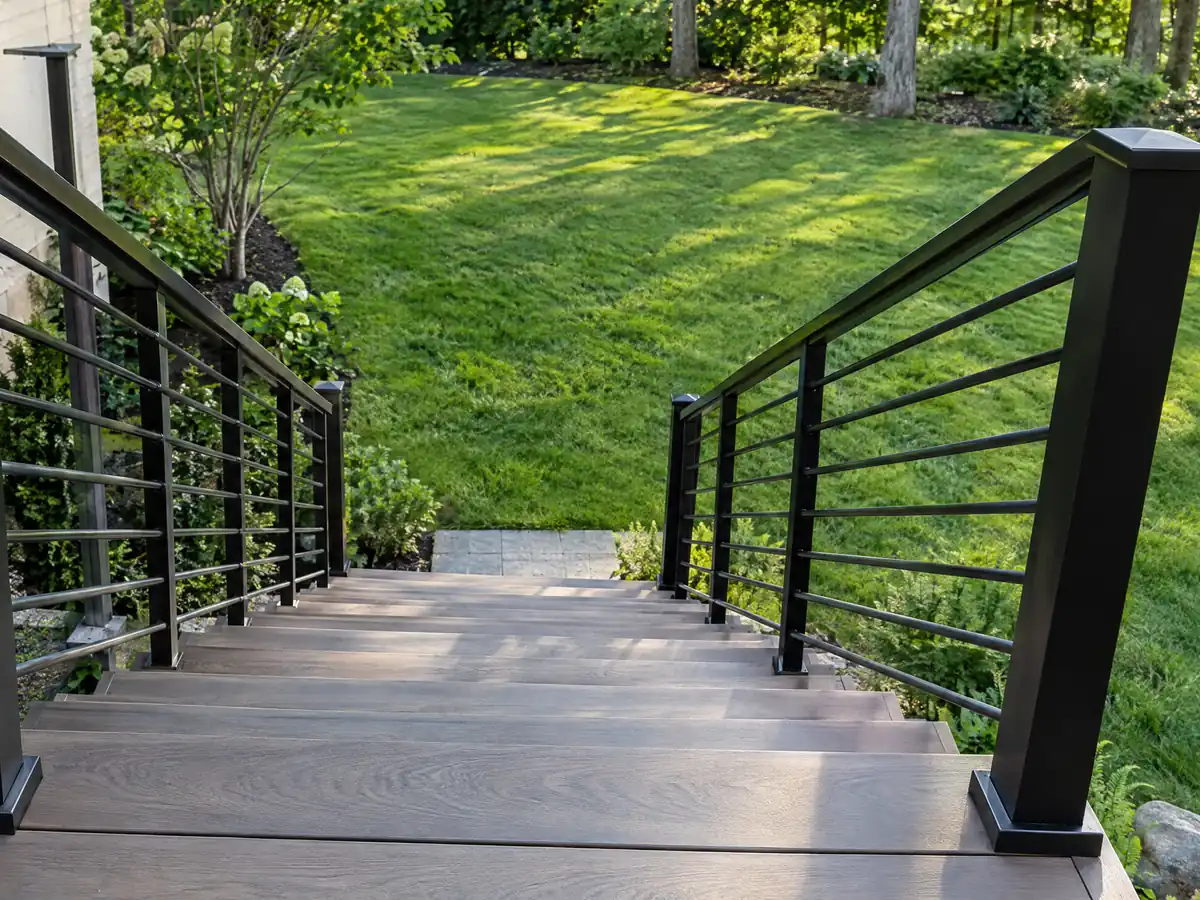
We found no repair exemption, so ask. The exempt lists we read describe new decks and platforms by size and height, and they say nothing about replacing boards, rails or stairs. Swapping a few boards in an existing deck is one kind of job, while rebuilding a ledger or footings is another, and the Building Division at 909-334-3251 can say which one yours is.
Termites are the usual reason an old deck fails. The City's table rates termite damage Very Heavy, and UC Integrated Pest Management says drywood termites are most common in southern California and attack decks and fences, so cut ends, posts near soil and stairs deserve a screwdriver test before anyone quotes boards. About 10,608 Chino homes predate 1980, which puts their original decks well past the age when untreated wood holds up.
Appearance is regulated too. Municipal Code 8.50.040 lists exposed raw building material visible from the street, and peeling paint over 5 percent of any single wall plane, as property nuisances, so a street-facing porch or stair left unfinished can draw a notice. In an HOA, Civil Code section 4765 gives an owner a written decision on an architectural request.
Is a Chino deck inside a fire hazard zone, and what does that change?
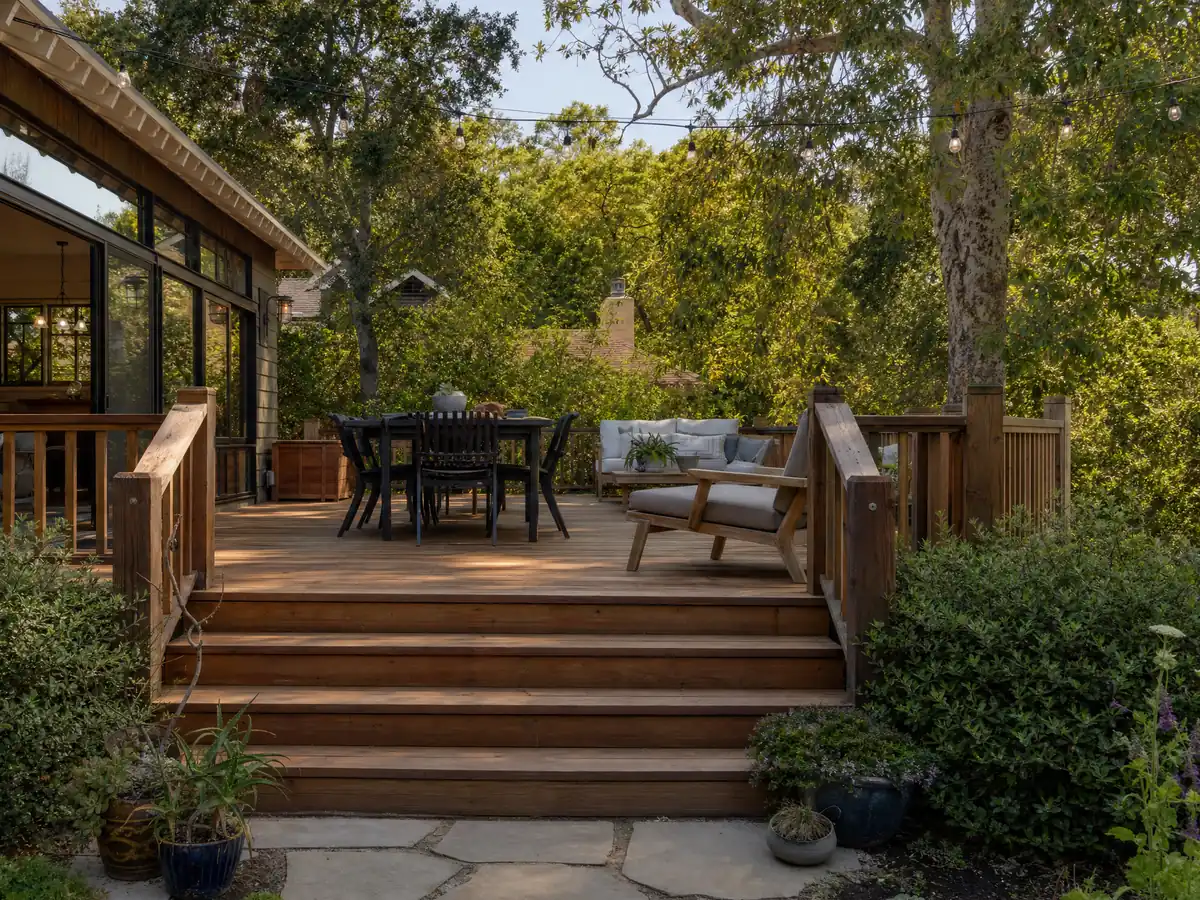
Only in the south, on our own overlay of the State's layer. The Chino Valley Independent Fire District adopted CAL FIRE's recommended zones for the areas it serves unchanged, by Ordinance 2025-01 effective September 1, 2025, and we computed the result by laying CAL FIRE's Phase 4 layer over the Census boundary of Chino. About 2.00 square miles of the city's 30.0 come out Very High, 0.29 High and 0.50 Moderate, all in a strip along the Prado Basin between roughly 33.924 and 33.962 N, while 24.09 are NonWildland and about 3.1 are not covered by the layer. City Hall, downtown, Ayala Park, College Park, the airport and The Preserve test as NonWildland, and the Yorba-Slaughter Adobe point tests Very High.
That is an estimate, not a parcel answer. The District's viewer is the authority, and firemarshal@chofire.org can check an address. The City's undated design sheet says High Fire Hazard Area: No, so it may predate the 2025 map. In a Very High zone, owners keep defensible space and make disclosures on sale, and new construction or additions must meet WUI building standards. High zone owners keep defensible space under Ordinance 2022-01, and Moderate zones have no legal requirement.
Municipal Code 15.31 adopts the 2025 California WUI Code with local changes, including a fire protection plan for new buildings in a WUI area or hazard zone and 100 feet of fuel modification around each structure in a development. State code section R337.9.3 lists the decking surfaces allowed there, so check any board against the State Fire Marshal's listing.
What does a deck builder charge in Chino, wood or composite?
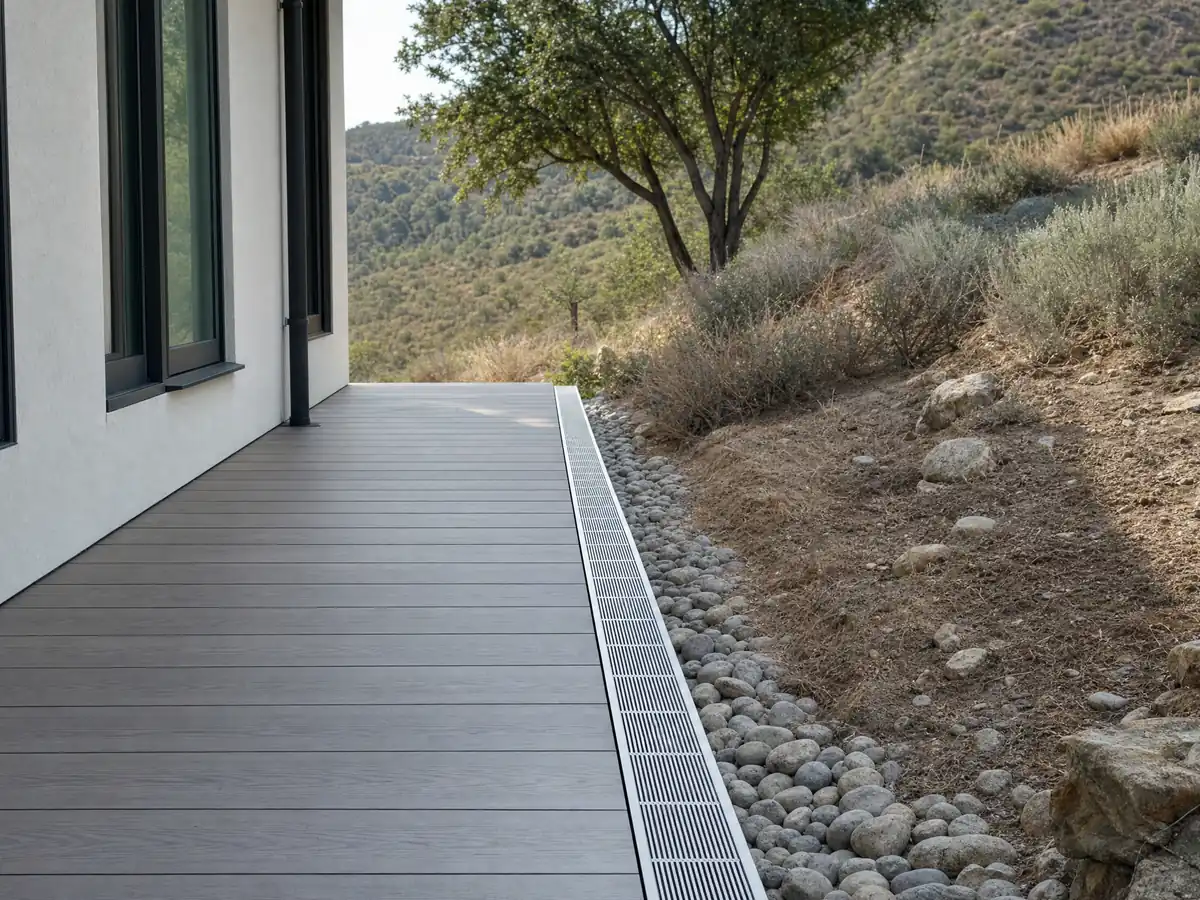
We found no Chino price study, so we lean on Los Angeles sources. Remodeling magazine's 2025 Cost vs. Value report prices a 16 by 20 foot deck with a bench, planter, three steps and full railing at $18,419 in wood and $26,872 in composite, recouping 99.6 percent of the wood cost at resale and 73.9 percent of the composite cost. Angi's Los Angeles page (October 28, 2025) averages $13,570, quotes $45 to $90 per square foot and lists permits at $500 to $3,000.
Our own Los Angeles planning ranges are $45 to $75 a square foot for pressure-treated wood, about $14,500 to $24,000 for a 16 by 20, and $65 to $110 for composite, about $21,000 to $35,000, with permits and engineering extra. Hillside, second-story and exotic hardwood decks have no independent price source, so they are priced by site visit, and a Chino deck near the Prado Basin might need a fire plan question answered first.
A framed deck is carpentry, and CSLB's C-5 class covers framing and rough carpentry. C-13 fencing covers railings, and which class CSLB assigns to composite surfacing is something we could not confirm, so ask. A home improvement down payment is capped at the lesser of $1,000 or 10 percent of the price under Business and Professions Code 7159.5.
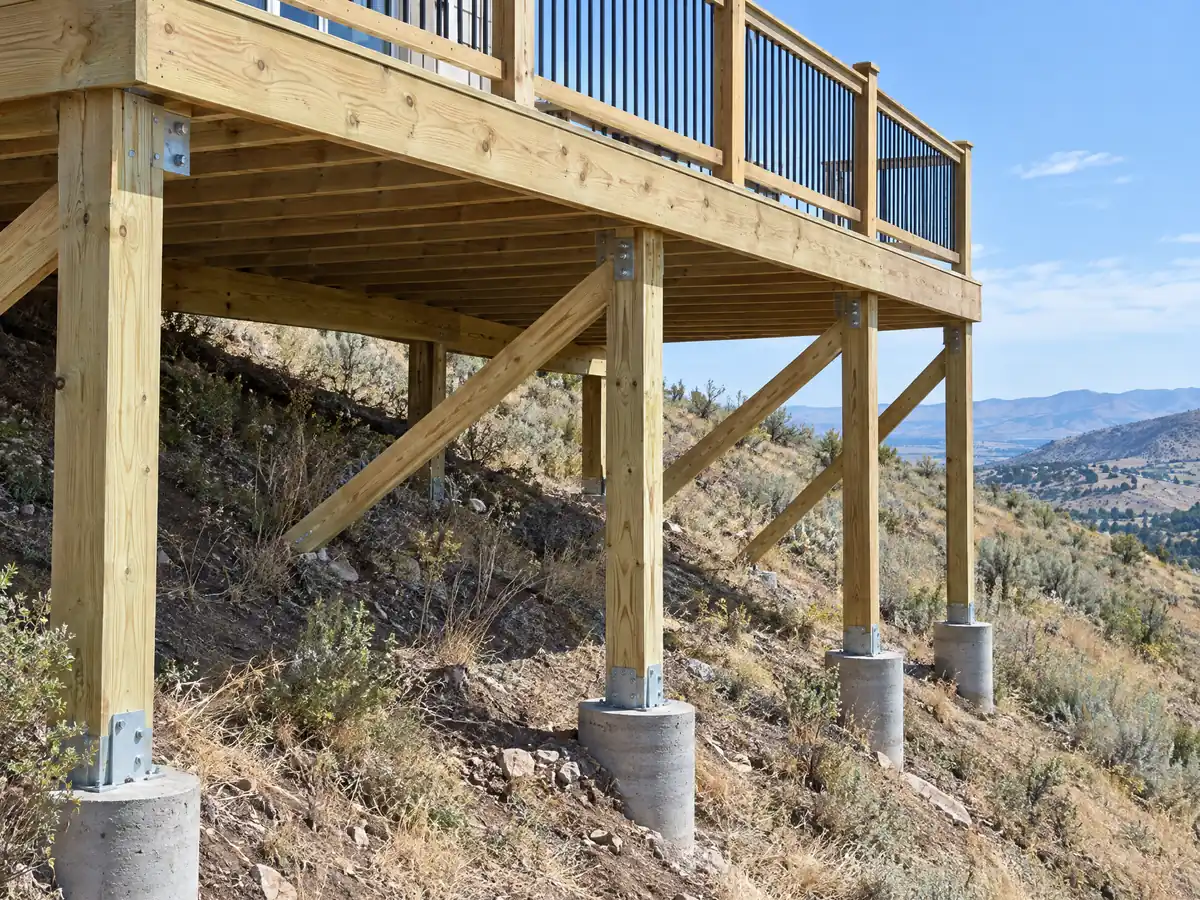
Deck photos from Chino and nearby communities
Posts, framing, railings, finished boards and patio covers from Chino and the communities around it, shown at the steps where the rules apply. Tap any photo to enlarge it.
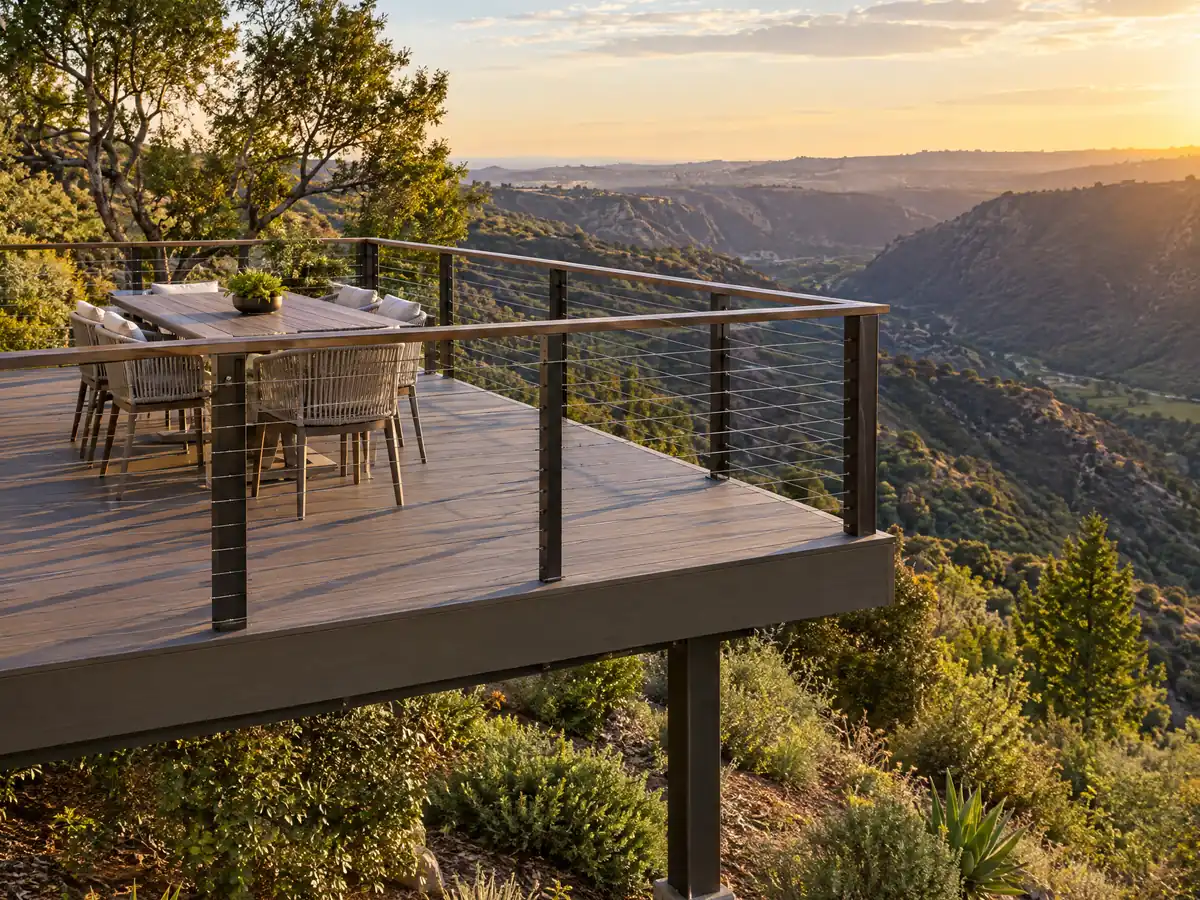
What decks costs around Chino
The dollar figures on this page are Los Angeles planning ranges from our decks page, not a Chino bid, so ask for permits, engineering, soils work and any fire plan review as separate lines. A new deck often goes with flooring in Chino or concrete in Chino. Neighbors to compare are decks in Ontario, decks in Eastvale, decks in Pomona and decks in Norco, with decks in Los Angeles as the big-city benchmark. The room addition or ADU guide helps when a deck might become a bigger project, and the subcontractor guide explains who frames and who finishes.
| What it covers | Typical range |
|---|---|
| Pressure-treated wood deck | $45 to $75 per square foot |
| Composite deck | $65 to $110 per square foot |
| 16 by 20 foot wood deck (320 sq ft) | About $14,500 to $24,000 |
| 16 by 20 foot composite deck | About $21,000 to $35,000 |
| Hillside, second-story, rooftop and ipe decks | Priced by site visit |
| Permits and engineering | Quoted as separate lines |
Chino deck questions, answered
Do you need a permit to build a deck in California?
Usually, yes. In Chino the exempt list covers only a detached deck of 200 square feet or less, no more than 30 inches above grade, not serving the required exit door, plus platforms and decks under 30 inches that are not over a story below. Call the Building Division at 909-334-3251 with your height, size and attachment.
How much should a 16x20 deck cost?
Our Los Angeles planning ranges give about $14,500 to $24,000 for pressure-treated wood and $21,000 to $35,000 for composite, with permits and engineering extra. Remodeling magazine's 2025 Cost vs. Value report, for a 16 by 20 deck with bench, planter, steps and railing, shows $18,419 in wood and $26,872 in composite. None of that is a Chino bid.
Is it cheaper to build a wood deck or composite deck?
Wood costs less to build. The Los Angeles Cost vs. Value figures are $18,419 for wood and $26,872 for composite, and wood recouped 99.6 percent at resale against 73.9 percent for composite. Chino's Very Heavy termite rating pushes wood toward treated lumber and good detailing, and composite has its own fire and heat questions.
Is railing height 36 or 42 for decks?
Forty-two inches. The 2022 California Residential Code text we read requires a guard where the walking surface is more than 30 inches above grade within 36 inches of the edge, sets the minimum at 42 inches and bars openings that pass a 4-inch sphere. The 36 inch figure in the question is the distance from the edge, not the guard height.
How high can a deck be without a railing in California?
Up to 30 inches above grade. Under the Residential Code text we read, a guard is required once the walking surface is more than 30 inches above grade within 36 inches of the edge. Chino's permit exemption uses the same 30 inch line, so a low deck can avoid both a guard and a permit if it is also detached and small.
What is the largest deck without a permit?
In Chino, 200 square feet, if it is no more than 30 inches above grade at any point, is not attached to a dwelling and does not serve the required exit door. Platforms and decks up to 30 inches and not over a basement or story below are listed separately. Confirm with the Building Division, since we read the code on a mirror.
Can I repair a deck in Chino without a permit?
We could not confirm it. The exempt lists we read describe new decks by size and height and are silent on repairs, so a few replaced boards and a rebuilt ledger may be treated differently. Call 909-334-3251 and describe the work. Termite-damaged posts and stairs are the likeliest to move a repair into permit territory.
Does a deck in Chino's fire hazard zone need special decking?
Where WUI building standards apply, yes. In a Very High zone, new construction and additions must meet them, and state code section R337.9.3 lists the allowed decking surfaces. By our overlay only a southern Prado Basin strip is mapped Moderate, High or Very High, so confirm your address with the Fire District's viewer.
What license does a deck builder need in Chino?
Framing and rough carpentry fall under CSLB's C-5 class, and a general building contractor can take a prime contract for them. Railings fall under C-13 fencing, and we could not confirm the class for composite surfacing. Check the number on the CSLB site and ask each subcontractor for a license number and certificate of insurance.
Tell us the height, the lot and whether a pool or cover is nearby
Say how high the deck will sit, whether it touches the house, whether you want a cover or a pool nearby and what condition the old wood is in. Fire map, termite and permit questions come with us to the first visit.