
Concrete Companyin Chino, CA
A concrete company in Chino works under farm-country rules: the City's methane handout asks former dairy sites for a 10 mil moisture barrier, front yard fences stop at 3 feet, and a driveway must be concrete and at least 20 feet long. Driveways and walks are permit-exempt, patio slabs are not named, and a 6 foot block wall is not.
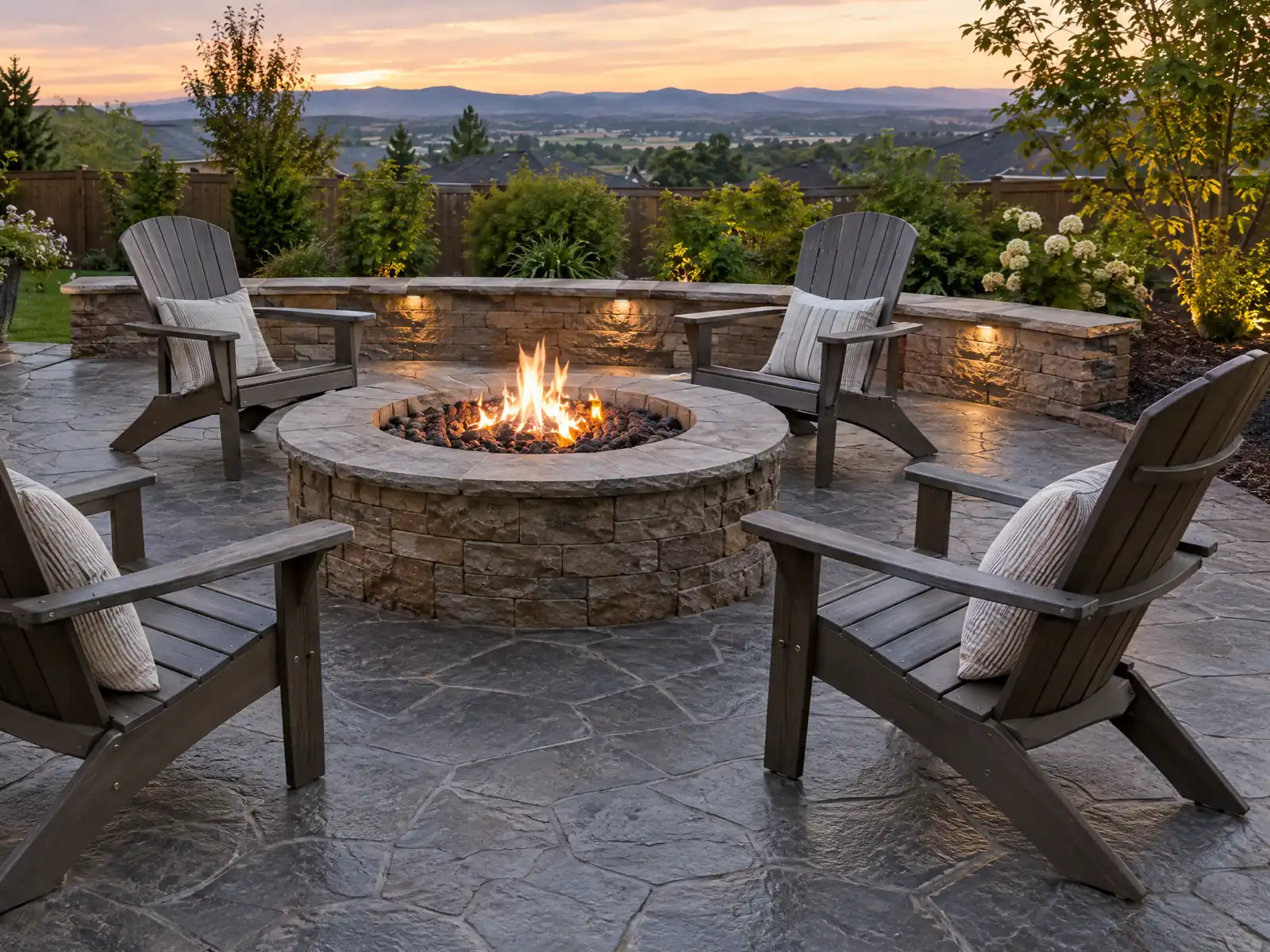
Chino's concrete sits on farm history. The Rancho Santa Ana del Chino grant dates to 1841, Richard Gird divided it into small ranches and a 640-acre town site in 1887, Chino incorporated in 1910, and herds moved in from Los Angeles and Orange counties from 1950. The Census Bureau's 2024 estimates credit the 1970s with 5,970 of Chino's 28,188 homes and the 1980s with 4,681, so many slabs, driveways and block walls are 40 to 55 years old, beside newer tracts on former dairy ground in The Preserve.
MDG Builders (CSLB #1040337) is a Tarzana general contractor that plans the scope, files the permit and runs the schedule while a licensed concrete subcontractor forms, places and finishes. In Chino we begin with the Building Division. The concrete page explains finishes, and the Chino overview lists the other trades we manage here.
What Chino's Building Division, City Engineer, South Coast AQMD and the water conservation code say about concrete work
Where concrete permits come from in Chino: City of Chino Development Services Department, Building Division.
- Permit exemptions for flatwork: the CRC list exempts driveways, sidewalks and walks that are not part of an accessible route, and platforms, decks, walks and driveways not more than 30 inches above grade and not over a basement or story below; the CBC list repeats the 30-inch rule; separate plumbing, electrical and mechanical permits may still apply and the exemption does not excuse other violations.
- Driveways: Municipal Code 20.17.040(B) requires each single-family lot to have a concrete (or equal, approved) driveway between the street or alley and the garage, with the design and section subject to City review, at least 20 feet long from the back of sidewalk to the garage opening on street-access lots and either 5 feet or less or 20 feet or more from the property line on alley-access lots; arterial-street lots need a circular or turnaround drive so cars exit forward.
- Front yard limits on paving: Table 20.04-3 requires front yard landscape coverage of at least 70 percent in RD 1 and RD 2, 60 percent in RD 4.5 and 50 percent in RD 8, and 8.50.040 treats vehicles parked on an unpaved surface and weeds growing through driveway cracks as nuisances, so widening a driveway is limited by the landscape minimum.
- Street trees and sidewalks: where there is a sidewalk, development must provide a six-foot easement behind it or 4 by 4 foot tree wells for street trees (12.16.110), and constructing sidewalk or filling ground so a street tree loses light, air or water is prohibited (12.16.250); grading needs a permit from the City Engineer under Appendix J as amended (15.04.191 and 15.04.192).
- Cleaning and runoff: Municipal Code 13.05.060 permanently prohibits washing down driveways, sidewalks, patios and other hard surfaces except to remove a safety or sanitary hazard, and separately prohibits irrigation water running off into a gutter, ditch, drain, driveway, sidewalk or street, which matters for pressure washing and rinse-off on residential jobs (the irrigation runoff ban is separate from the hard-surface wash-down ban).
- Dust and coatings: SCAQMD Rule 403 (fugitive dust, amended June 3, 2005) applies to grading, demolition and slab work in this air district, and Rule 1113 treats concrete-curing compounds, driveway sealers, floor coatings and concrete or masonry waterproofing sealers as separate coating categories with their own VOC limits in its Table of Standards.
- Slabs on former dairy or manure sites: the City's Methane Assessment and Mitigation handout requires a moisture barrier at least 10 mil thick with sealed utility penetrations as the minimum mitigation concept, special remediation where methane exceeds 15,000 ppm or the site was a waste burial site, pond or lowland, and a soils report that limits organics to 2 percent; post-grading testing may be waived only if the site was never a dairy, poultry or hog ranch, feed operation or manure stockpile or burial site.
- Soils and frost: Chino's design criteria sheet requires a soils report, and Table R301.2(1) gives a frost line depth of 12 to 24 inches and Very Heavy termite damage, which drives footing depth and the separation of wood from concrete.
Sources for these rules
- gocodebook.com: chapter 15.06 residential code
- gocodebook.com: chapter 20.17 design standards
- gocodebook.com: chapter 20.04 residential zoning districts
- gocodebook.com: chapter 12.16 street trees
- gocodebook.com: chapter 13.05 water conservation 1
- aqmd.gov: rule 403
- cityofchino.org: Methane PDF
- cityofchino.org: City of Chino Ordinance and Design Criteria PDF
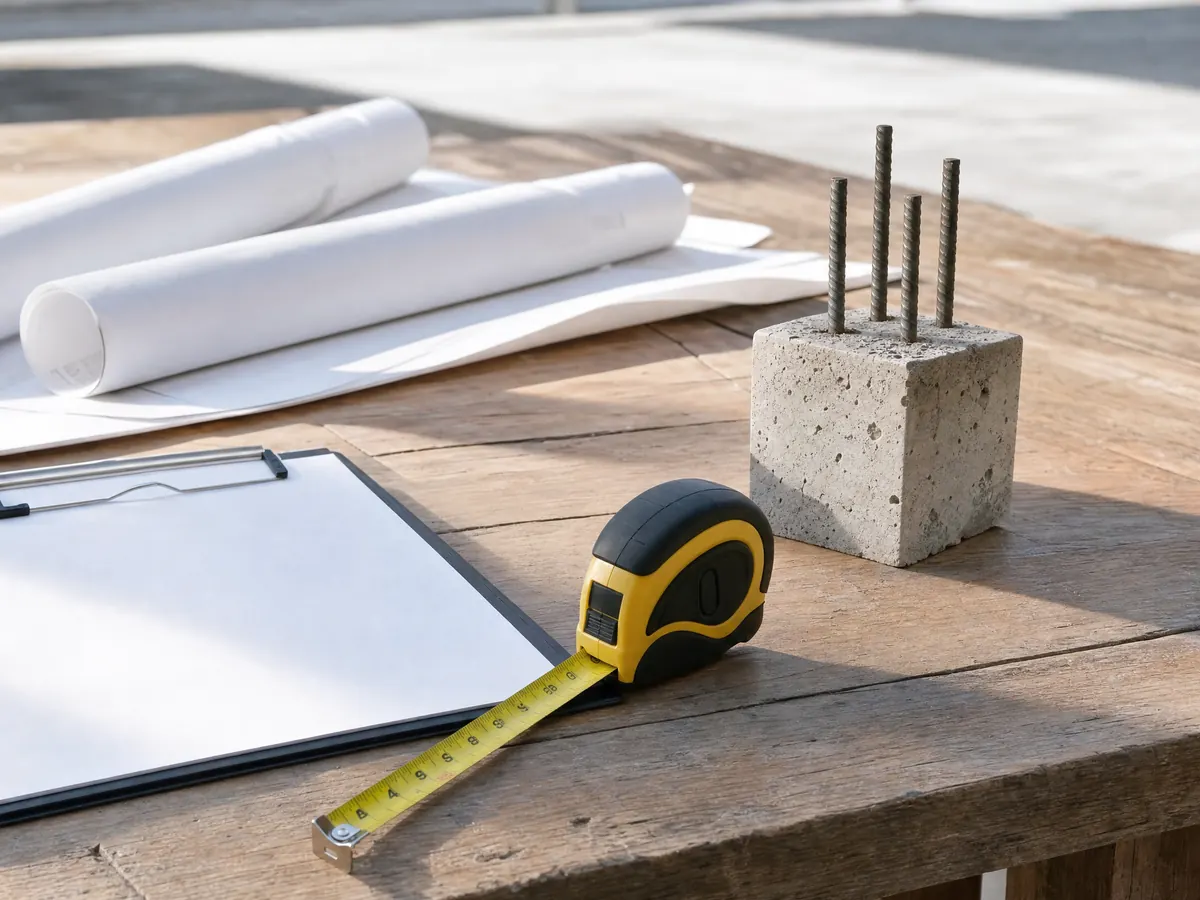
Do slabs and footings on former dairy land need special handling in Chino?
They can. The City's methane handout makes a Phase 1 history of the site part of the permit file: was it ever a dairy, poultry or hog ranch, a feed operation, a manure stockpile or burial site, or an agricultural pond. Post-grading testing may be waived only when the answer is no. Where methane is measured, the minimum is a moisture barrier at least 10 mil thick with sealed utility penetrations, and above 15,000 ppm, or on burial sites, ponds and lowlands, special remediation applies.
Soil numbers travel with it. The City's design criteria sheet requires a soils report and lists a maximum soil bearing pressure of 1,000 psf when one is provided, and the methane handout limits organics to 2 percent in that report. The Residential Code table gives a frost line of 12 to 24 inches and rates termite damage Very Heavy, which shapes footing depth and how wood is kept off concrete.
The scale explains the rules. The EPA's Santa Ana Region summary says the Chino Basin once held about 350 dairies and more than 300,000 cows, that dairies were down to 86 by 2015 and that the Dairy General Permit bars land application of manure in the basin. South Coast AQMD Rule 1127 governs livestock waste at dairies and manure processing, and it is not a building rule.
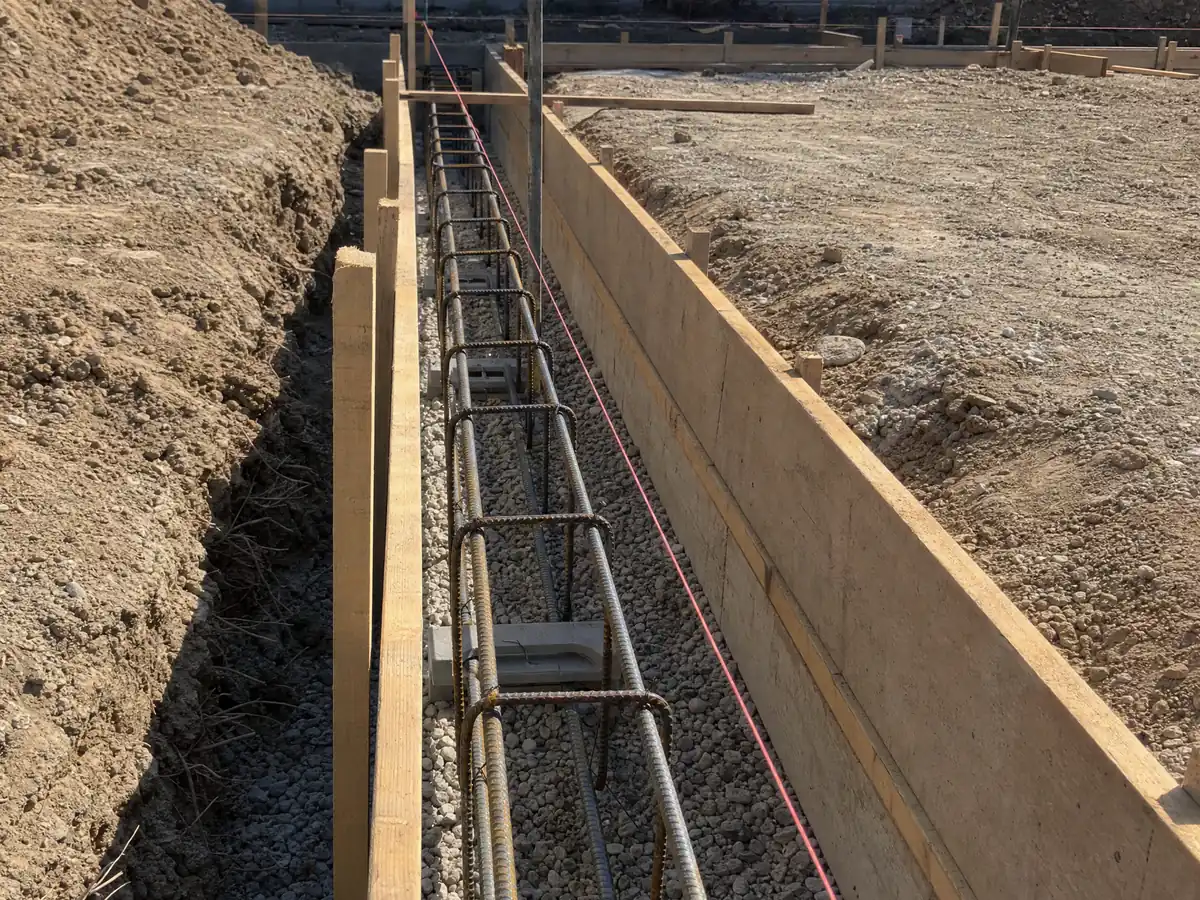
What happens when an old slab, driveway or patio comes out in Chino?
A lot of Chino's flatwork is middle-aged. Beyond the 1970s and 1980s blocks, the estimates count 2,272 homes from the 1960s and 1,403 from the 1950s, and the median home dates from 1987, so a breakout is more likely to meet cracked 1970s concrete than a modern slab. Weeds growing through driveway or walkway cracks are listed as a nuisance in Municipal Code 8.50.040, which gives an owner a reason to replace a failed apron.
Two air district rules sit nearby. Rule 403 covers fugitive dust from grading, demolition and slab work, and Rule 1403 applies when demolition or renovation disturbs asbestos-containing material, so a slab removed together with an old structure deserves a survey question. The City limits construction to 7 a.m. through 8 p.m. Monday to Saturday under Municipal Code 15.44.030, which suits an early start before the heat.
Broken concrete is debris, and the same section 8.50.040 bars construction debris from sitting in a yard longer than seven days unless a five-foot wall or opaque fence screens it. Ask the crew where the pile goes between breakout and haul, and have the proposal name the bin.
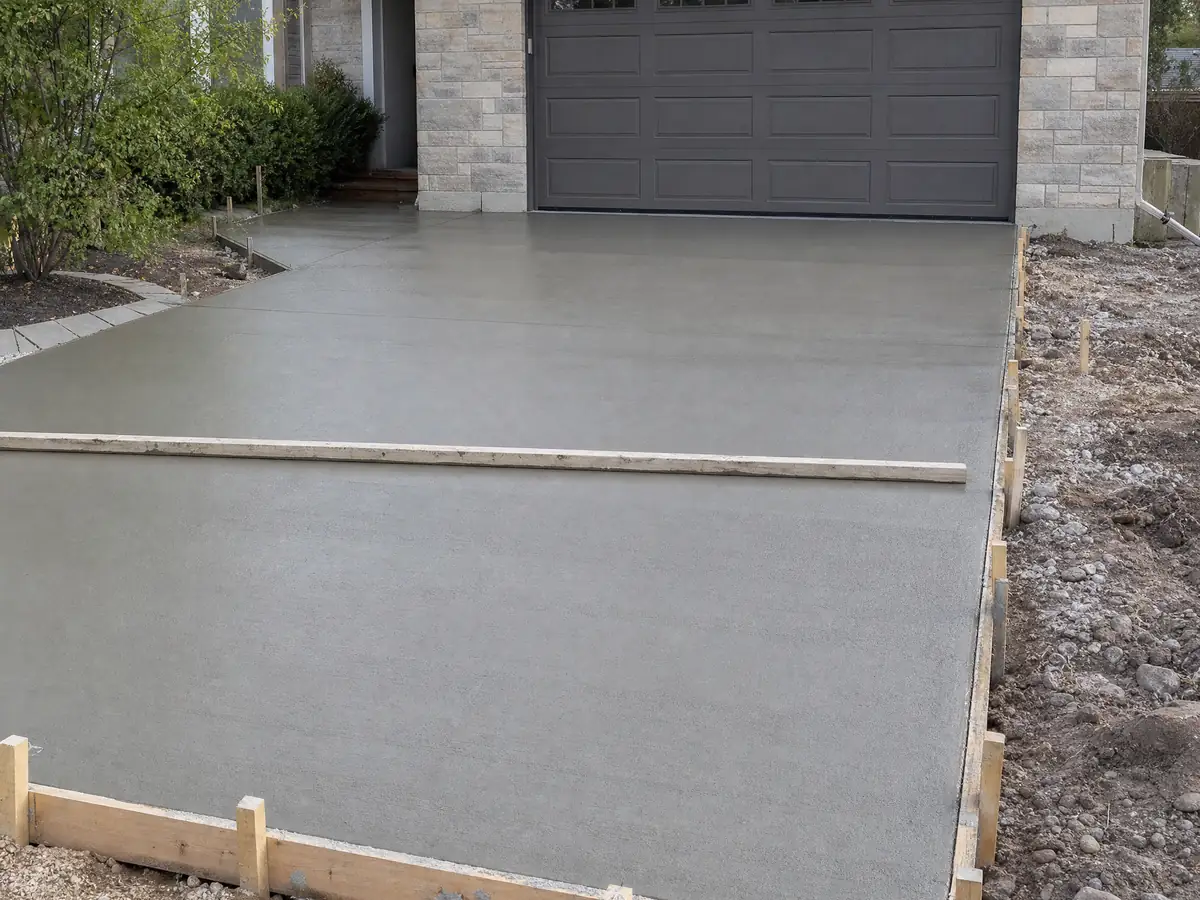
Can I pour a concrete patio, walkway or driveway in Chino without a permit?
Driveways and walks, yes. Patio slabs, we could not confirm. The Residential Code exemption list in 15.06.030 covers driveways, sidewalks and walks that are not part of an accessible route, plus platforms, decks, walks and driveways no more than 30 inches above grade and not over a basement or story below. A ground-level patio slab is not named, so send the Building Division a sketch or call 909-334-3251. The code text below comes from the gocodebook.com mirror, a third-party copy, so ask the City to confirm it.
Exempt still has limits. The exemption never authorizes work that breaks another City rule, separate plumbing, electrical or mechanical permits may still apply, and grading needs a permit from the City Engineer under Appendix J as amended (15.04.191 and 15.04.192). Starting a permit-required job early can bring a penalty of double the permit cost.
A permitted job is priced by valuation. The fee schedule effective July 1, 2026 lists $46.19 plus $9.24 per additional $1,000 for valuations between $2,001 and $25,000, with plan check at 75 percent of the permit fee.
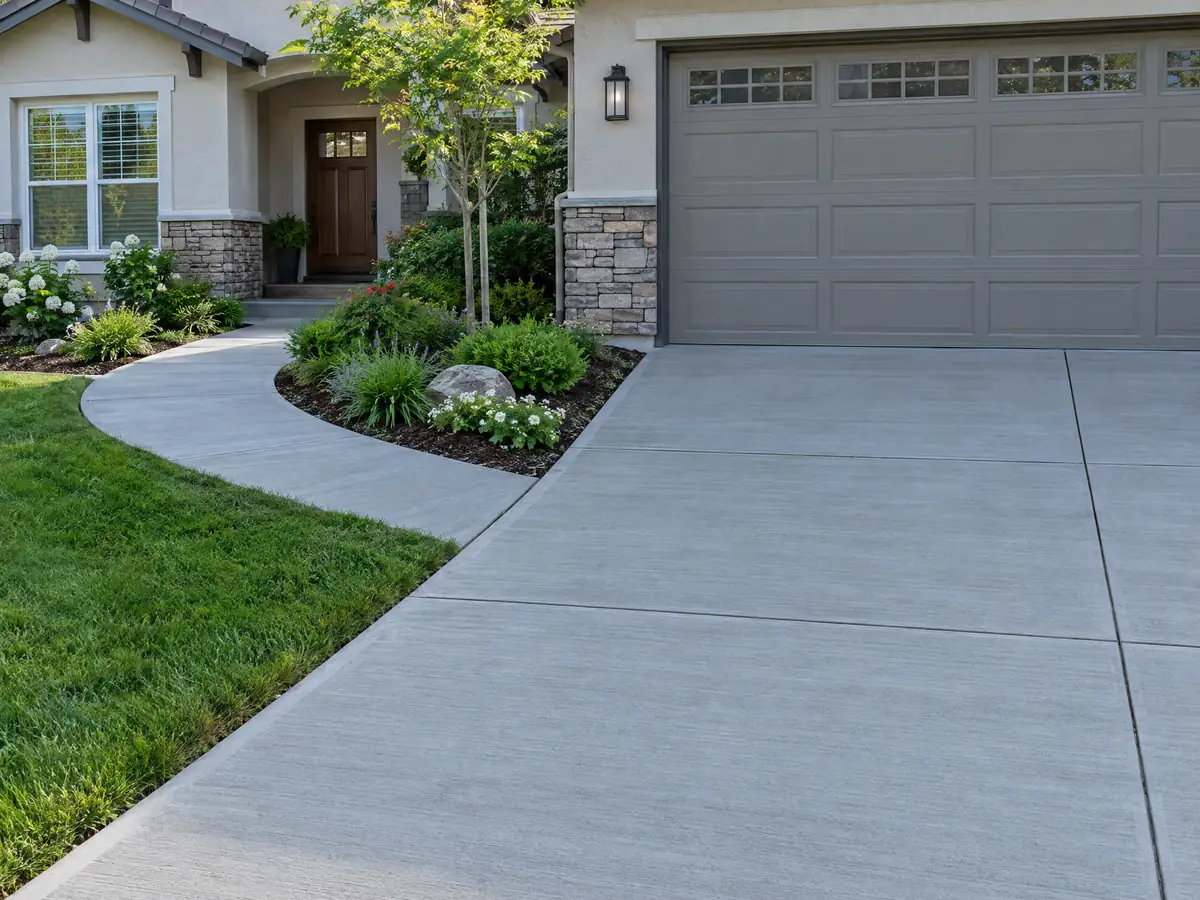
How long must a Chino driveway be, and how much of the front yard can be paved?
Municipal Code 20.17.040(B) requires every single-family lot to have a concrete driveway, or an approved equal, between the street or alley and the garage, with the design and section subject to City review. On a street-access lot it must be at least 20 feet long from the back of the sidewalk to the garage opening. On an alley-access lot the garage sits 5 feet or less from the property line, or 20 feet or more, and lots on arterial streets need a circular or turnaround drive so cars leave facing forward.
Paving competes with plants. Table 20.04-3 requires front yard landscape coverage of at least 70 percent in RD 1 and RD 2, 60 percent in RD 4.5 and 50 percent in RD 8, and 8.50.040 also treats vehicles parked on an unpaved surface as a nuisance. A wider driveway is therefore limited by the landscape minimum for your zone, which the zoning map shows.
The sidewalk side has rules as well. Where a sidewalk exists, the code asks for a six-foot easement behind it or 4 by 4 foot tree wells for street trees (12.16.110), and 12.16.250 prohibits building sidewalk or filling ground so that a street tree loses light, air or water. Ask the City before widening a driveway beside a mature street tree.
- Which zoning district is the lot in, and what is its landscape minimum?
- Does the lot face an arterial street?
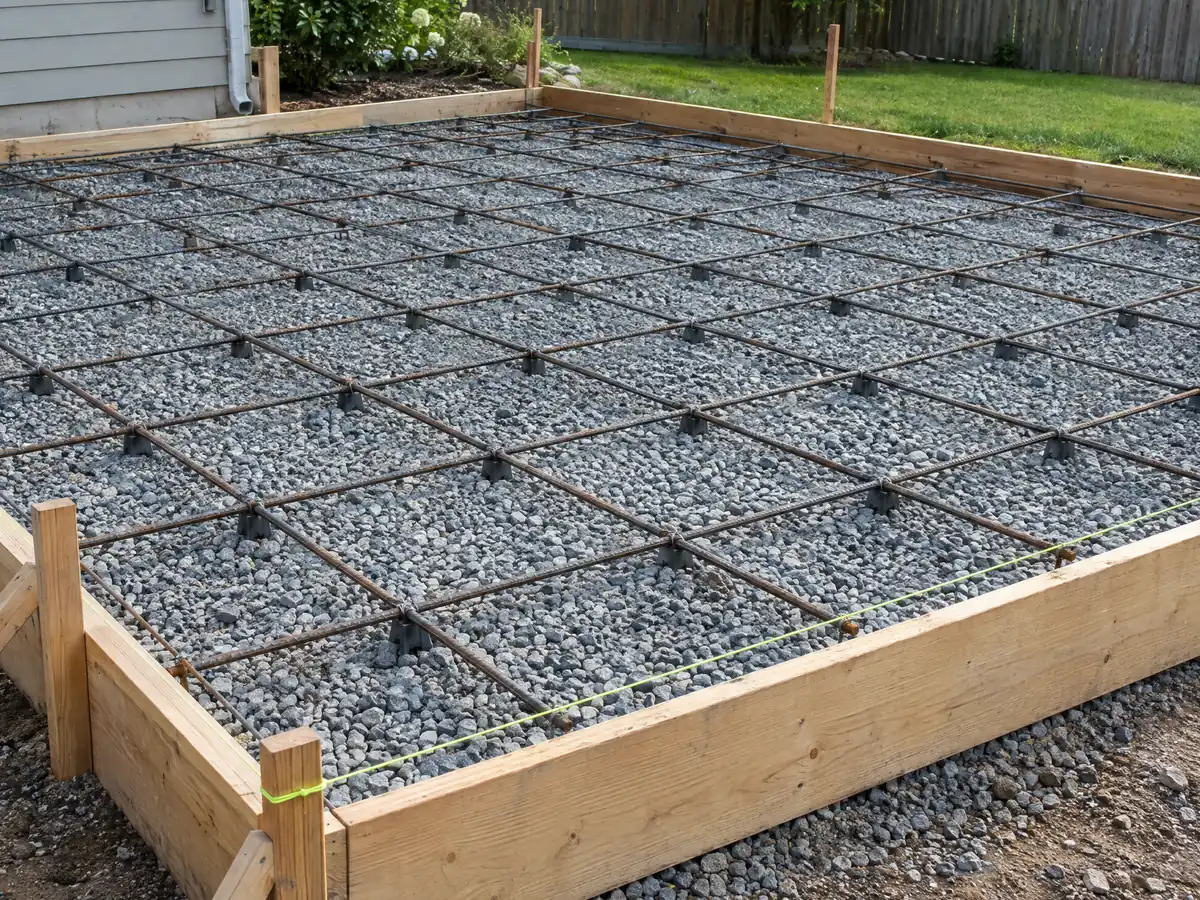
How tall can a front yard fence, block wall or retaining wall be in Chino?
Three feet in a required front yard, six feet at the property lines. Table 20.10-1 in Municipal Code 20.10.080 lets a front yard fence reach 4 feet only if it passes at least 90 percent of light, with pilasters up to 4 feet. The Director may approve more than 6 feet along an interior side or rear line when both neighbors agree and up to 8 feet along a subdivision perimeter, and chain-link or wire mesh is prohibited anywhere it can be seen from a street.
The permit exemption is lower than a 6 foot wall. The local lists in 15.04.180 and 15.06.030 exempt block walls and fences under 3 feet and retaining walls under 18 inches, so a standard 6 foot block wall is not exempt. The City's Block Wall Standard, dated February 5, 2015, lists three inspections: foundation excavation with steel in place, steel and pre-grout, and final before decorative caps. Footings on slopes need at least 5 feet to daylight.
Detail matters on a long wall. Masonry runs of 50 feet or more along a public right-of-way need offsets of 3 to 4 feet, and the Pilaster Standard limits spacing to 20 feet when infill fencing is attached. Poured walls fall under CSLB's C-8 class and block walls under C-29 masonry.
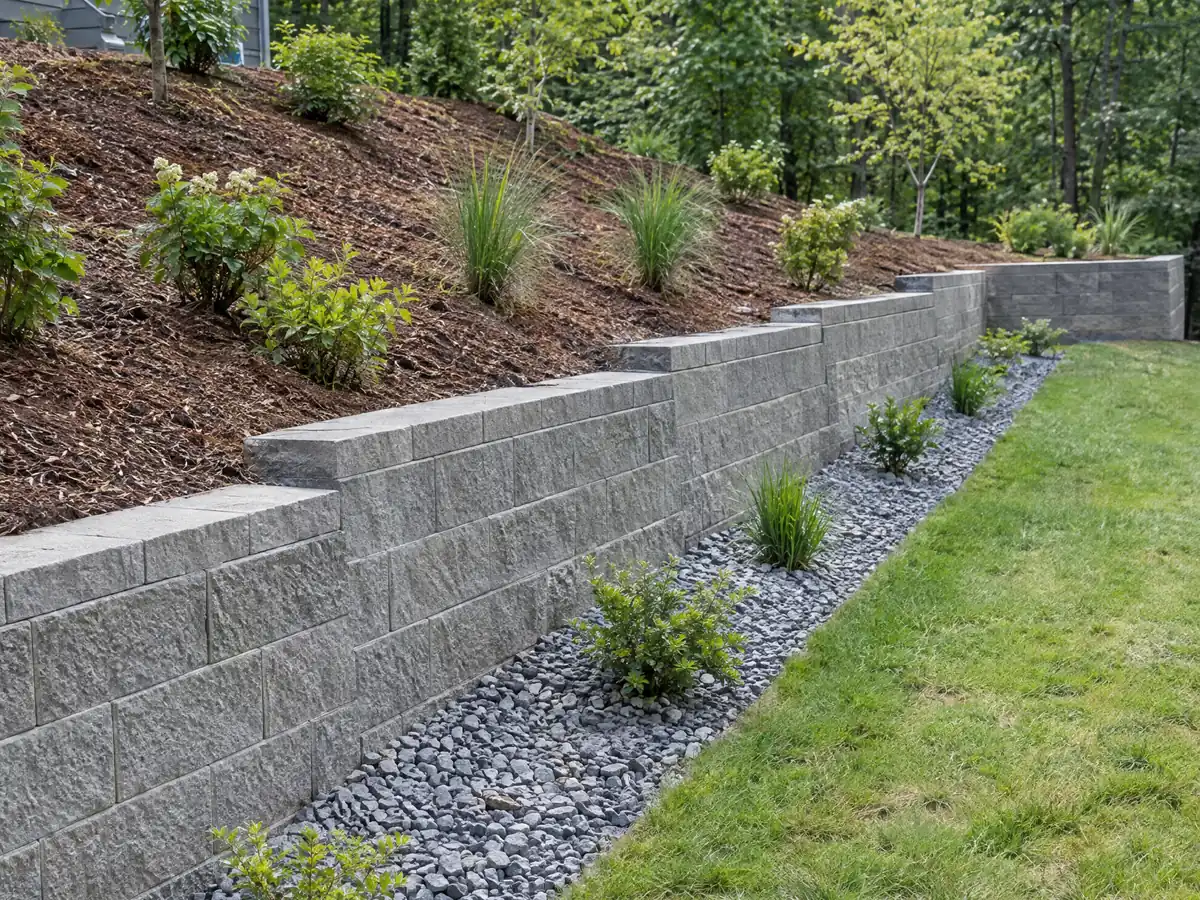
Do Chino's heat, water rules and sealer limits change how concrete is poured and cleaned?
Heat sets the pour calendar. NOAA's 1991 to 2020 normals for Chino Airport show August highs of 96.3 F, about 98.9 days a year at 90 F or hotter and about 23.3 days at 100 F or hotter, against only 9.98 inches of rain, so a summer pour needs shade, dampening and curing planned in advance. The City's own code findings cite Santa Ana winds with gusts of 90 miles per hour, which can dry a surface fast.
Cleanup has a legal limit. Municipal Code 13.05.060 permanently prohibits washing down driveways, sidewalks, patios and other hard surfaces except to remove a safety or sanitary hazard, and it separately bars irrigation water from running onto pavement, gutters and drains. Ask the crew how it will rinse tools and wash out without sending water to the street.
Sealers are coatings. South Coast AQMD Rule 1113 lists concrete-curing compounds, driveway sealers, floor coatings and concrete or masonry waterproofing sealers as separate categories with their own VOC limits in its Table of Standards. We could not read those numbers cleanly from the District's file, so ask for the product's VOC figure before it is applied.
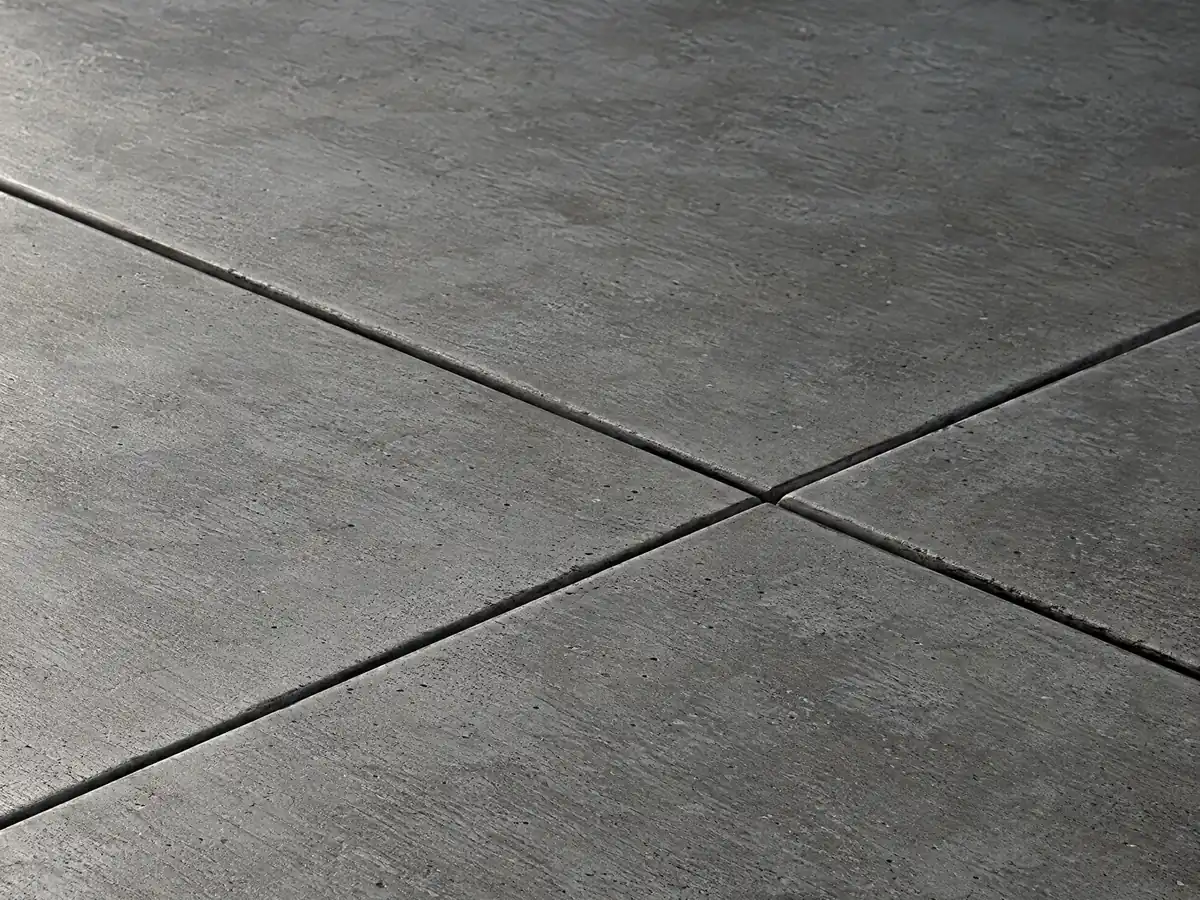
How much does concrete work cost in Chino, and what license does a concrete company need?
We found no Chino study with a stated method, so we use Angi's pages for Los Angeles: $4 to $13 a square foot for a patio (August 4, 2026), $15 to $30 for stamped concrete (July 20, 2026) and $8 to $20 for a driveway (May 5, 2026). Federal wage data (BLS, May 2025) list the mean wage of cement masons in the Los Angeles area at $33.67 an hour. Inland Empire bids can differ.
Our own Los Angeles planning figures are $8 to $14 a square foot for plain flatwork of 300 square feet or more, $15 to $30 for stained, stamped or exposed aggregate and $9 to $20 for a replaced driveway including demolition. A plain 20 by 20 slab lands near $3,200 to $5,600 on that scale. A retaining wall waits for a site visit because height, drainage and engineering drive the price, and in Chino a methane barrier or soils report would be a further line.
A job that needs a permit needs a licensed contractor, since the $1,000 limit for unlicensed work in Business and Professions Code 7048 ends once a permit is required. Our license check guide shows how to read a CSLB record.
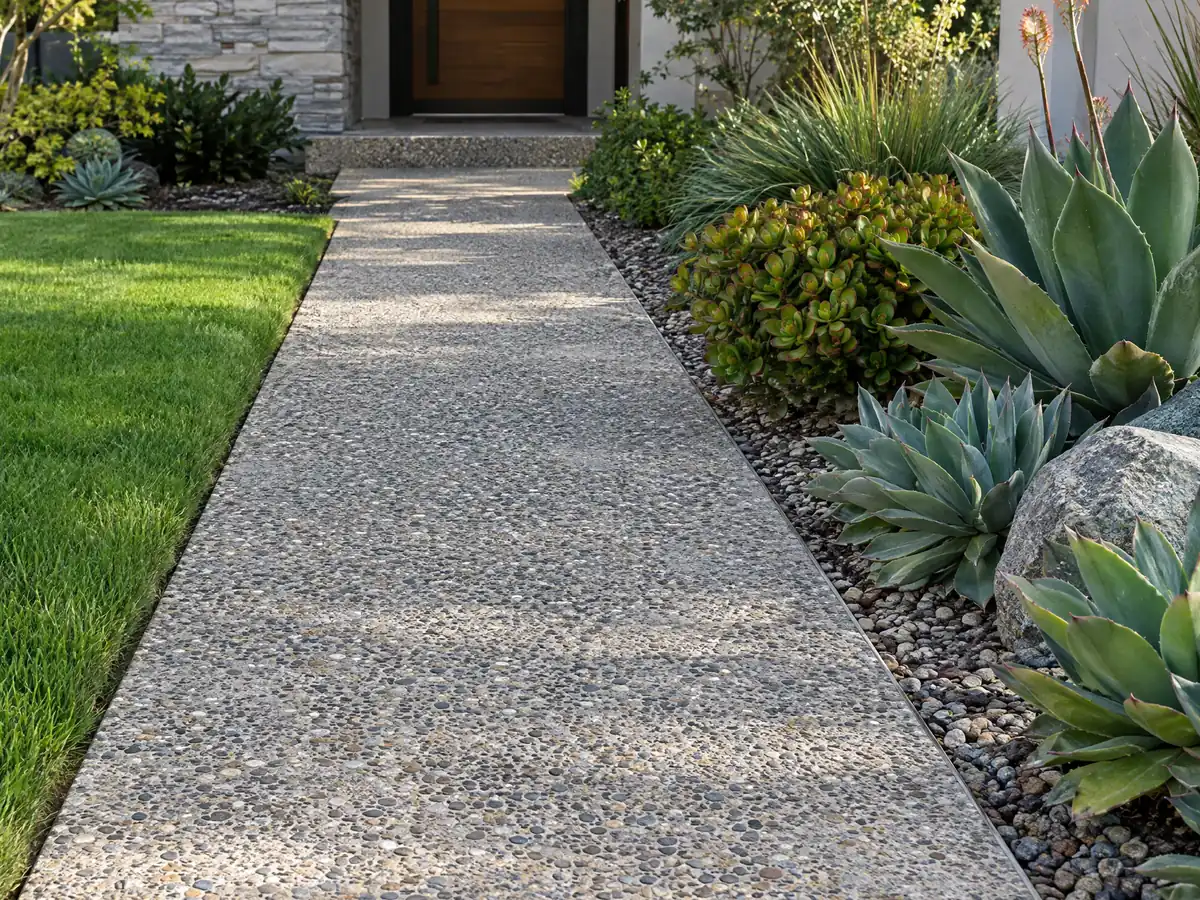
Concrete photos from Chino and nearby communities
Forms, rebar, finished flatwork and block walls from Chino and the communities around it, shown at the steps where the rules matter. Tap any photo to enlarge it.
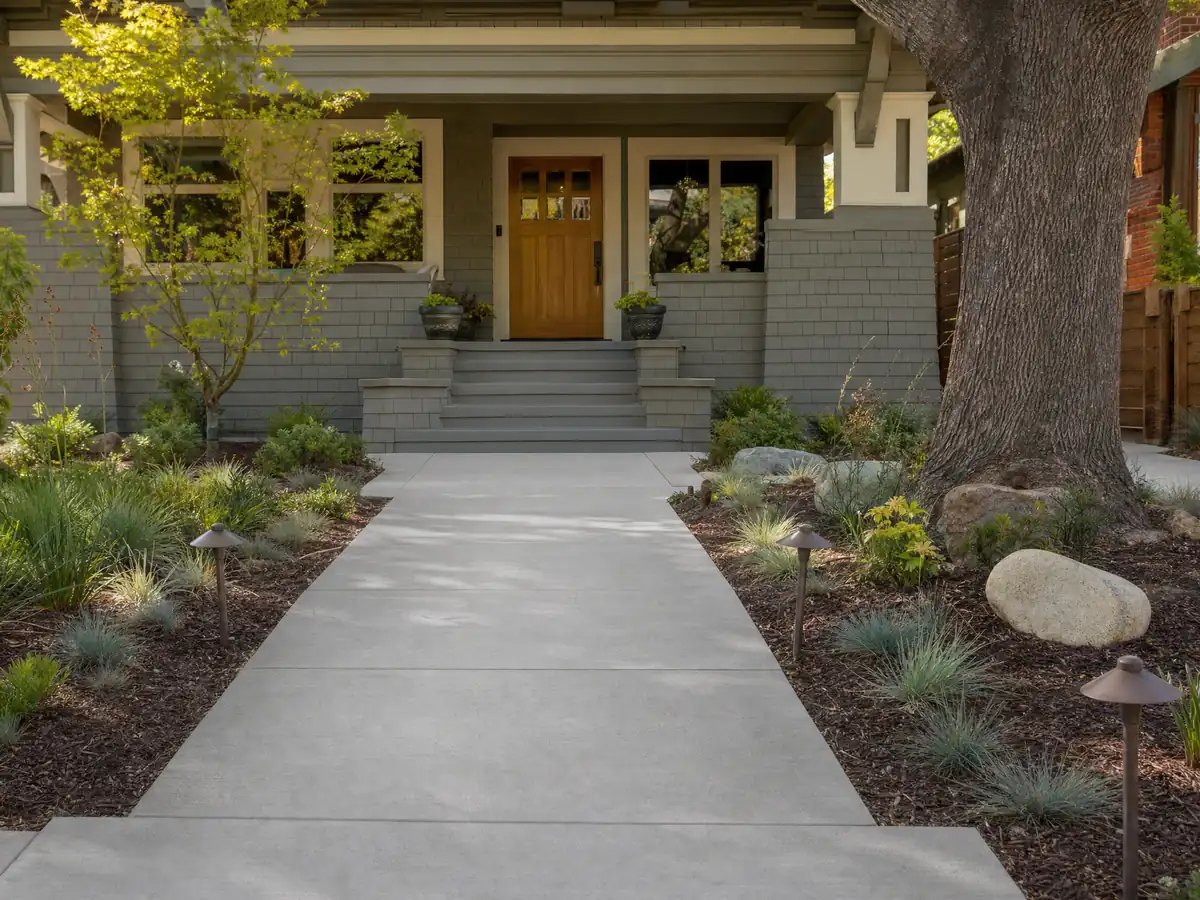
What concrete costs around Chino
The dollar figures on this page are Los Angeles planning ranges from our concrete page, not a Chino bid, so the written proposal should show demolition, haul-off, base, rebar, engineering and any methane barrier as separate lines. A new slab often goes with flooring in Chino or decks in Chino. Neighbors to compare are concrete in Ontario, concrete in Eastvale, concrete in Pomona and concrete in Norco, with concrete in Los Angeles as the big-city benchmark. The subcontractor guide covers who forms and who finishes, and the flooring cost guide covers what can go on top of a slab.
| What it covers | Typical range |
|---|---|
| Patio, walkway or slab, broom finish, 300 sq ft or more | $8 to $14 per square foot |
| Decorative: stained, stamped or exposed aggregate | $15 to $30 per square foot |
| Driveway replacement, with demolition of the old slab | $9 to $20 per square foot |
| 20 by 20 foot plain patio (400 sq ft) | About $3,200 to $5,600 |
| 20 by 20 foot decorative patio (400 sq ft) | About $6,000 to $12,000 |
| Small jobs under 300 sq ft | Usually above the per-foot range |
| Retaining walls | Set by the written proposal |
Chino concrete questions, answered
Can I pour a concrete patio without a permit?
We could not confirm it for Chino. The exempt lists name driveways, sidewalks and walks, and platforms or decks up to 30 inches above grade, but a ground-level patio slab appears on neither. Call the Building Division at 909-334-3251 with your dimensions and a sketch before forming, and confirm the third-party code text with the City.
How much should a 20x20 concrete patio cost?
A 20 by 20 patio covers 400 square feet, which is $3,200 to $5,600 on our $8 to $14 Los Angeles planning range, while Angi's Los Angeles patio page shows $1,600 to $5,200 for that size. Neither is a Chino bid. Decorative finishes, demolition of an old slab and a methane barrier would each add a line.
How much would a 20x20 stamped concrete patio cost?
At $15 to $30 per square foot on Angi's July 20, 2026 stamped concrete page for Los Angeles, 400 square feet comes to $6,000 to $12,000. That is a Los Angeles range, not a Chino quote. Pattern, color, sealer and the size of the pour change the number, and small jobs often price above average.
Can I expand my driveway without a permit?
Not safely without checking. Flat driveways are on the exempt list, but Chino's front yard landscape minimums run from 50 to 70 percent depending on zoning, a driveway must stay concrete and at least 20 feet long, and curb or sidewalk work needs City approval. Ask Planning at 909-334-3253 what your lot allows.
What is the maximum height of a retaining wall without a permit in California?
The model code text we read exempts retaining walls up to 4 feet unless they carry a surcharge, but Chino's local exempt lists stop at retaining walls under 18 inches. Anything taller, or any wall holding a slope or load, needs a permit. Confirm the wording with the Building Division, since we read it on a mirror.
Is 4 inches of concrete thick enough for a driveway?
Four inches is a common figure for walks and patios, but we found no Chino code number for driveway thickness, and the sources we read treat thickness, base and joint spacing as industry practice. Vehicle weight and soil matter, and the City reviews the driveway section. Put thickness, base and steel into the written proposal.
How tall can a fence be in a Chino front yard?
Three feet in a required front yard, or 4 feet if the fence passes at least 90 percent of light, under Municipal Code 20.10.080. Six feet is the limit at property lines elsewhere. Chain-link and wire mesh are prohibited where a street can see them, and a solid wall over the exempt height needs a permit.
Does former dairy land need special slab work in Chino?
It can. The City's methane handout asks for a Phase 1 history of dairy, poultry, hog and manure use, caps organics at 2 percent in soils reports and sets a moisture barrier of at least 10 mil with sealed penetrations as the minimum where methane is found. The Building Division must approve test reports and mitigation before a permit issues.
Can I pressure wash my driveway in Chino?
Generally no. Municipal Code 13.05.060 permanently prohibits washing down driveways, sidewalks, patios and other hard surfaces, except to remove a safety or sanitary hazard. Sweeping works, and a contractor should explain how it will handle wash water. Irrigation runoff onto pavement is banned separately, so check the sprinklers beside new concrete.
What license does a concrete company need in Chino?
A California contractor license in the C-8 concrete class, or C-29 masonry for block walls. Check the number on the CSLB site and ask each subcontractor for a license number and a certificate of insurance. A job that needs a permit also needs a licensed contractor, whatever its price.
Tell us what you want poured, its size and what was on the lot before
Describe the patio, driveway, walk or wall, the rough size and whether the lot was ever farm or dairy ground. Wall height, driveway length and the old slab's removal come with us to the first visit.