
Concrete Companyin Eastvale, CA
A concrete company in Eastvale pours driveways without a building permit, because sidewalks and driveways sit on the Municipal Code's exempt list, but zoning still requires concrete cement, caps paving at 50 percent of the required front or side yard and sets a 10 foot minimum width. Work in the street needs a separate excavation permit.
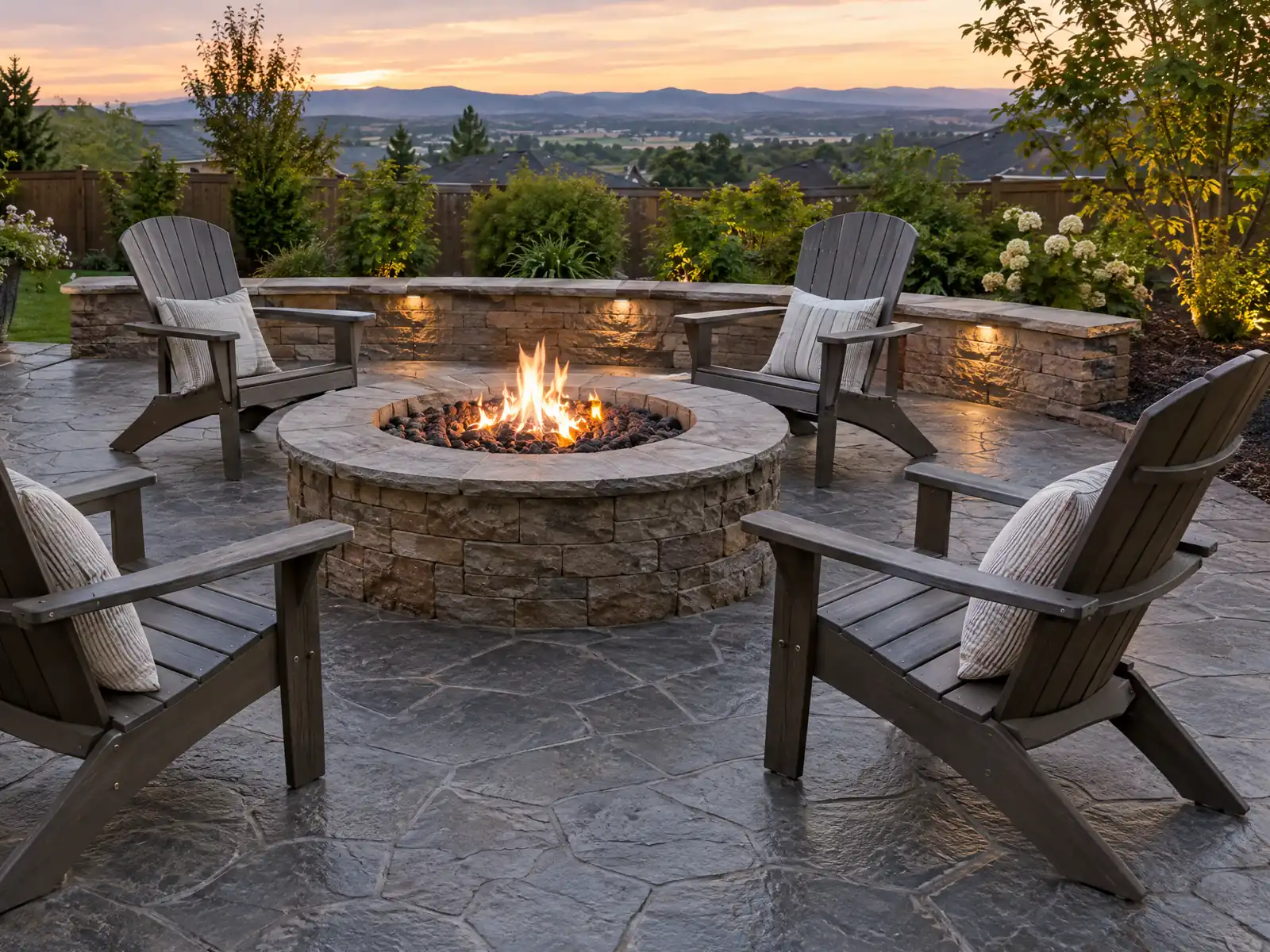
Eastvale concrete sits on dairy ground. The Housing Element says the city was predominantly dairy farms and agriculture until the late 1990s, and the big tracts that followed rose on former dairy properties of more than ten acres, such as the 309-home Sendero tract on 41 acres at Limonite and Harrison avenues and the 293-home Prado tract on a former calf ranch. The Census Bureau's 2024 estimates credit 2000 and later with about 92.7 percent of 18,484 homes, so most original driveways, walks and patio slabs are 26 years old or newer.
MDG Builders, CSLB #1040337, is a Tarzana general contractor that designs, permits and manages rather than pouring itself. On an Eastvale pour we write the scope, take the permit and zoning questions to Eastvale Building Safety and bring in a licensed concrete subcontractor to form, place and finish. The concrete page explains finishes, and the Eastvale overview lists the other trades we manage here.
What Eastvale Building Safety, Planning, the excavation permit and SCAQMD say about concrete work
Where concrete permits come from in Eastvale: City of Eastvale Community Development Department, Building Safety.
- Permit: sidewalks and driveways are on the Administrative Code's exempt list (Municipal Code 110.02.050(b)(7)), but exemption does not waive zoning, the right-of-way permit or the grading rules (read in GoCodebook's verbatim copy of the Eastvale Municipal Code, a third-party mirror last updated 2026-10-04, because the City's own website returned HTTP 403).
- Driveway and parking material (Municipal Code 120.05.080(d)(2)): vehicles may park only in a garage, carport, or on a driveway or improved parking area connected to the street by a driveway approach; the improved parking area and driveway must be concrete cement and may not cover more than 50 percent of the required front or side yard (existing improvements approved before the code are exempt) (read in GoCodebook's verbatim copy of the Eastvale Municipal Code, a third-party mirror last updated 2026-10-04, because the City's own website returned HTTP 403).
- Driveway design for private residences (Municipal Code 120.05.060): all vehicles must park on a paved surface, driveways and driveway approaches must be paved, the minimum driveway width is 10 feet, required parking may be in the rear yard only when an alley provides access, and structures, temporary canopies, tarps and similar coverings for vehicles are prohibited in the front setback (read in GoCodebook's verbatim copy of the Eastvale Municipal Code, a third-party mirror last updated 2026-10-04, because the City's own website returned HTTP 403).
- Driveway approaches, curbs and sidewalks in the public right-of-way require an excavation permit from the director (Municipal Code 12.08.030) (read in GoCodebook's verbatim copy of the Eastvale Municipal Code, a third-party mirror last updated 2026-10-04, because the City's own website returned HTTP 403).
- Yard rules: at least 50 percent of the required front and side yard must stay landscaped or covered with mulch, rock, bark or artificial turf of 1.5 inch pile or more, so a concrete front yard needs a zoning check (Municipal Code 120.05.080(d)(3)(a)(i)) (read in GoCodebook's verbatim copy of the Eastvale Municipal Code, a third-party mirror last updated 2026-10-04, because the City's own website returned HTTP 403).
- Soils: the County's Eastvale Area Plan says Eastvale, close to the Santa Ana River, has a high liquefaction potential because of shallow groundwater and relatively fine soils and sends builders to specialized building techniques and sound grading; very few scattered areas exceed a 15 percent slope (Eastvale Area Plan revised September 28, 2021, pp. 43 to 44)
- Dust and runoff: SCAQMD Rule 403 (fugitive dust, header amended June 3, 2005) covers on-site construction activity, and Municipal Code 14.12.060 to 14.12.080 bars pollutants, including wash water, from reaching streets and storm drains and encourages porous driveway materials and runoff directed to planted areas
If a driveway needs no permit in Eastvale, can it still break the zoning code?
Yes, and that is the trap in this city. Municipal Code 110.02.050(b)(7) exempts sidewalks and driveways from a building permit, and the section says no exemption authorizes work that violates another rule. Zoning is another rule. Under 120.05.080(d)(2), vehicles may park only in a garage, a carport or on a driveway or improved parking area linked to the street by a driveway approach, and that improved area must be concrete cement and may not cover more than 50 percent of the required front or side yard.
With no permit there is no plan check, so the first review may arrive as a code complaint, which the City takes through its Community Enhancement Team and the My Eastvale app. A second limit sits beside it: at least 50 percent of the required front and side yard must stay planted or be covered with mulch, rock, bark or artificial turf of 1.5 inch pile or more (120.05.080(d)(3)(a)(i)). Improvements approved before the code are exempt from the 50 percent paving cap, so ask when yours was built.
Section 120.05.060 adds that driveways and approaches must be paved, the minimum width is 10 feet and structures, canopies or tarps covering vehicles are barred from the front setback. Stormwater Chapter 14.12 pulls the other way, since it encourages porous driveway materials, and we found nothing that says whether a permeable product counts as concrete cement. Ask Planning at (951) 703-4460 before ordering anything but standard flatwork.
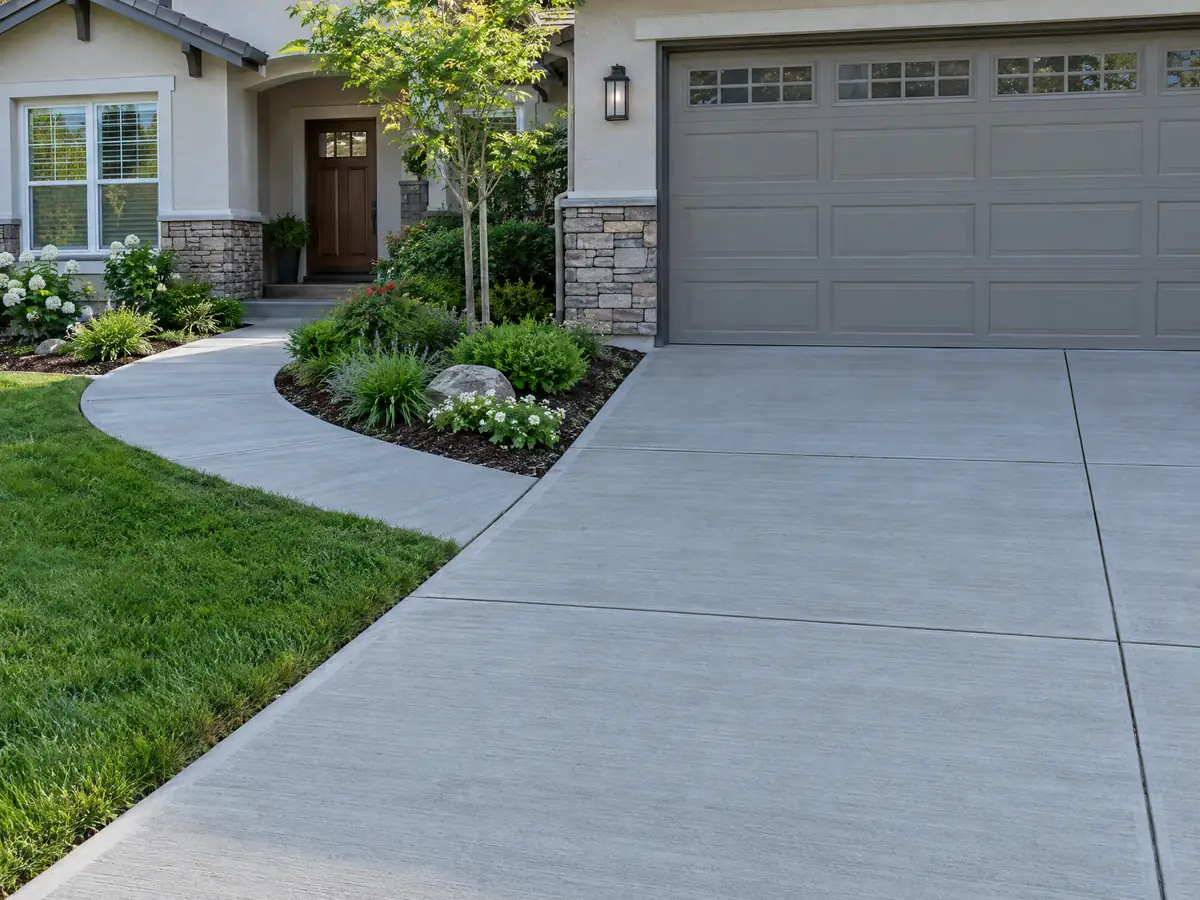
Who permits a new apron, curb cut or sidewalk panel in Eastvale?
The street itself is City property, and the permit is a different one. Municipal Code 12.08.030 makes it unlawful to excavate in, along or under any street or public place, or to place material or obstructions there, without an excavation permit from the director. An excavation without it is a nuisance subject to enforcement. A widened driveway approach, a replaced curb or a sidewalk panel sits on that side of the line even when the slab behind it needs nothing from Building Safety.
Grading is a third question. Sections 110.92.050 and 110.92.060 require a grading permit or a written exemption from the city engineer for every site, and the exemptions cover minor grading that will not redirect drainage and is of negligible hazard or touches 500 square feet or less, plus excavation of 50 cubic yards or less and under 2 feet deep, when the engineer exempts it in writing. Written is the word to hold on to.
Ask the subcontractor who pulls each permit and who stands behind the street work. We did not read the City's fee schedules or the excavation permit form, so we state no fee. Building Safety can be reached at 951.703.4450 and the FAQ says it is closed Fridays, though online submittals are taken at any hour through the Accela portal.
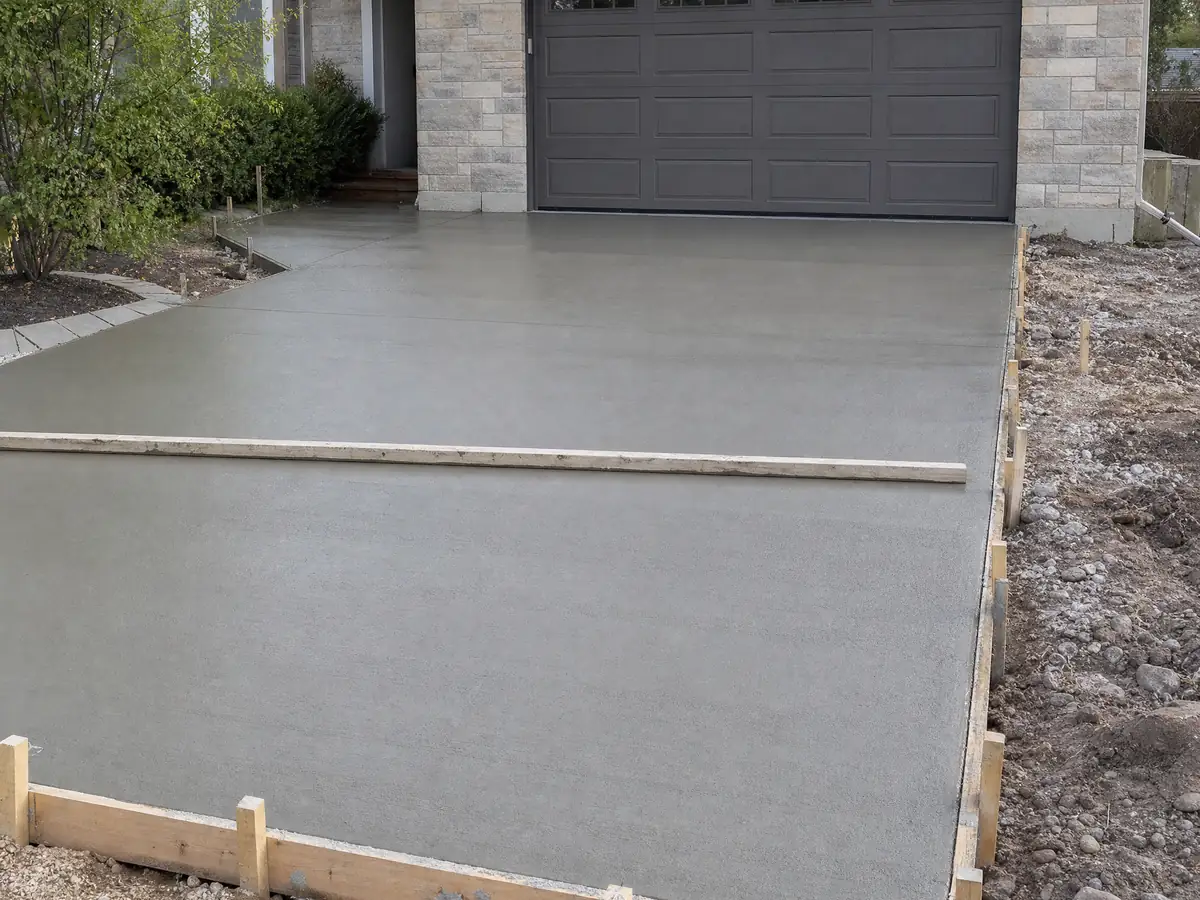
What do shallow groundwater and fine soils near the river mean for slabs and footings?
They make the ground the first design question. The County's Eastvale Area Plan, revised September 28, 2021, says the city's closeness to the Santa Ana River gives it a high liquefaction potential because of shallow groundwater and relatively fine soils, and it recommends specialized building techniques and sound grading. Very few scattered areas have slopes over 15 percent, so hillside rules matter less here than in most Inland Empire cities.
The same plan says there are no known seismic faults within the planning area, while the San Andreas and San Jacinto faults pose a significant threat. Municipal Code 110.60 applies the Alquist-Priolo Act only inside a State-mapped fault zone, and we did not confirm one inside Eastvale. A patio slab on a flat lot is a light load, but a footing for a wall, a patio cover or an addition is where to ask about soils and reinforcement.
Our soil statements come from that County document, not from a City report or a tract soils study. Ask the concrete subcontractor to write base, thickness, reinforcement and joint layout into the proposal, because we found no Eastvale code number for them. The Area Plan is County material, and whether the City's 2040 General Plan safety element says something different was not in what we opened.
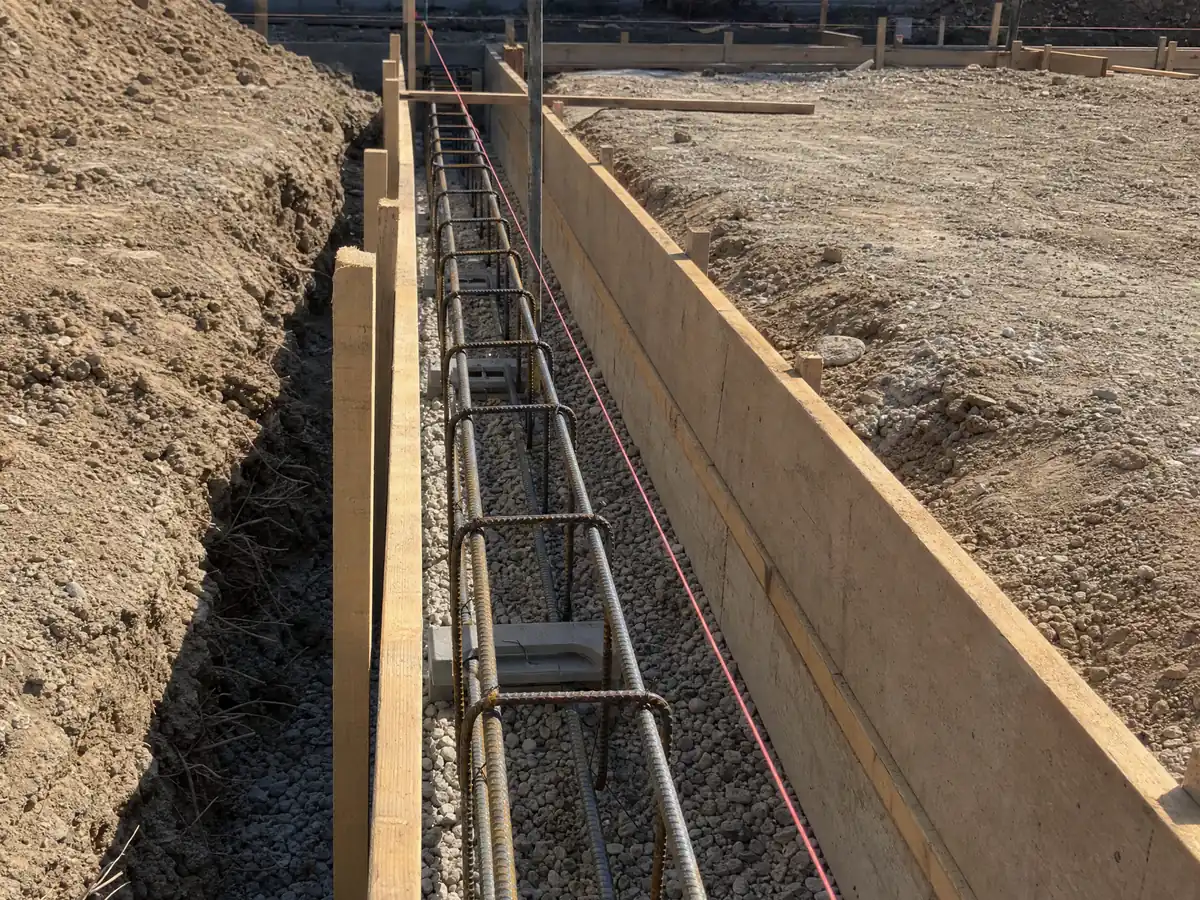
Can I pour a patio slab or add a cover in Eastvale without asking the City?
Ask, because the exempt list names sidewalks and driveways but not patio slabs on grade. It does exempt one-story detached accessory structures of 120 square feet or less, and the R-1 zone table shows no lot coverage limit, though planned residential developments take their setbacks, lot size and coverage from the approved project. Ask which zone the lot is in, because the City's Planning page links a GIS web app for that.
A cover over the slab is a building. Municipal Code 120.05.120 caps a patio cover at 9 feet in the required rear or street side yard, and where a street side yard is fully enclosed by a fence or wall of at least 5 feet the cover may sit 3 feet from that wall. Accessory structures together may not exceed 50 percent of the home's habitable floor area or 30 percent of the required rear yard, with patio covers excluded from the yard share.
The City publishes Patio Cover Standards, and its Wayback copy of the PDF was missing, so we read none of it. The code adopts CRC Appendix BF for covers. Homeowner associations add a second approval: Civil Code 4765 requires a written decision on an architectural request, and how much of Eastvale sits in HOA tracts was not in the sources we opened.
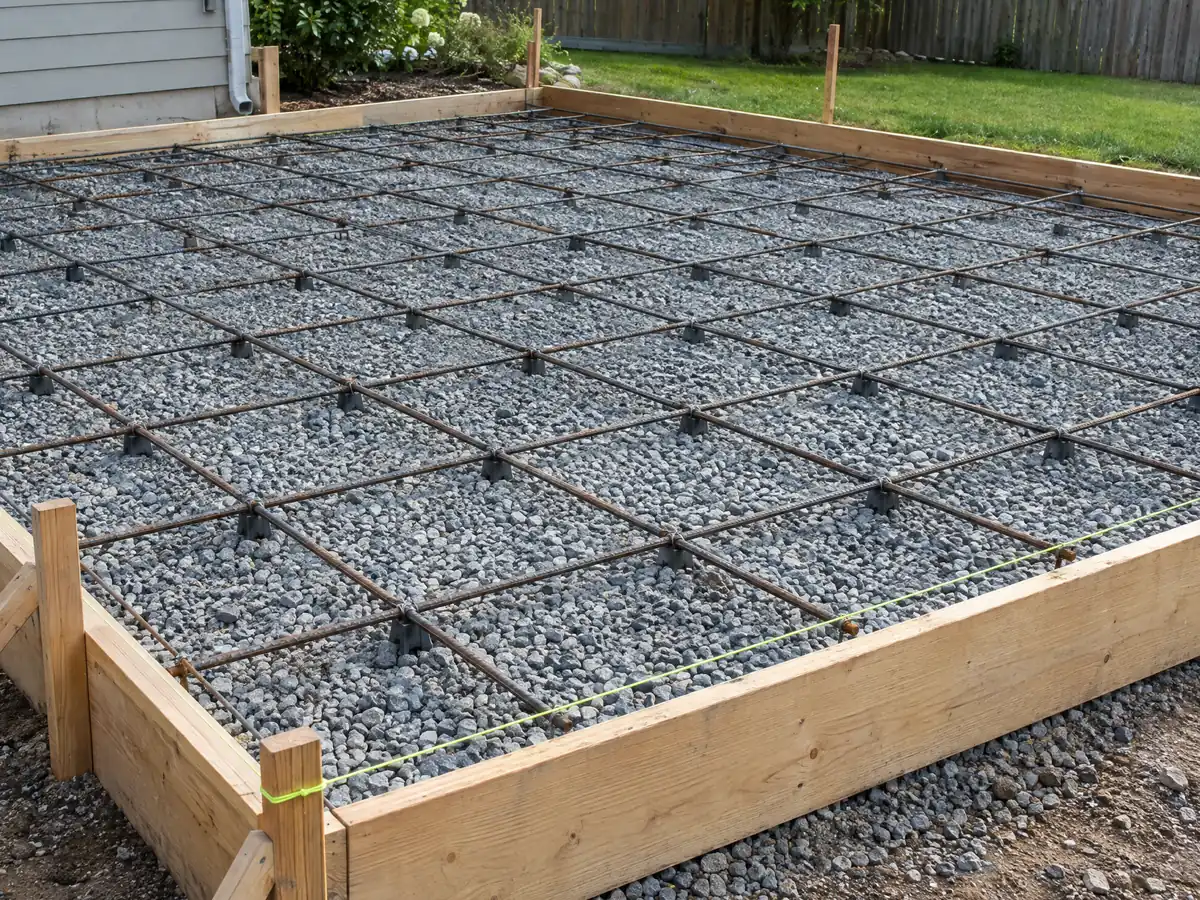
How tall can a block wall or retaining wall be in Eastvale?
Two lists give two different answers. For permits, Municipal Code 110.02.050(b) exempts fences not over 7 feet, masonry block walls 3 feet high and retaining walls not over 4 feet measured from the bottom of the footing to the top, unless they support a surcharge. For zoning, Table 5.3-1 caps fences at 4 feet in the required front yard, 6 feet in required rear and interior side yards and 6 feet in a street side yard, and 30 inches in the clear visibility area at intersections, streets, alleys and driveways.
The result is a gap in both directions. A 7 foot fence is exempt from a permit but breaks the 6 foot limit, and a 5 foot block wall is legal in a back yard but is not on the exempt list as we read it, so it likely needs a building permit. Retaining walls under 36 inches are exempt from development review. Height is measured from finished grade at the base, and grade may not be raised to gain height.
Where homes back onto industrial uses, Municipal Code 120.05.030(5) calls for a solid decorative masonry wall at least 6 feet high, finished on both sides, with a 5 foot landscape strip, unless the approving authority waives it. The City's Freestanding Block Wall Guidelines handout is an image-only PDF, so we could not read it and state nothing from it. CSLB sorts block walls under C-29 masonry.
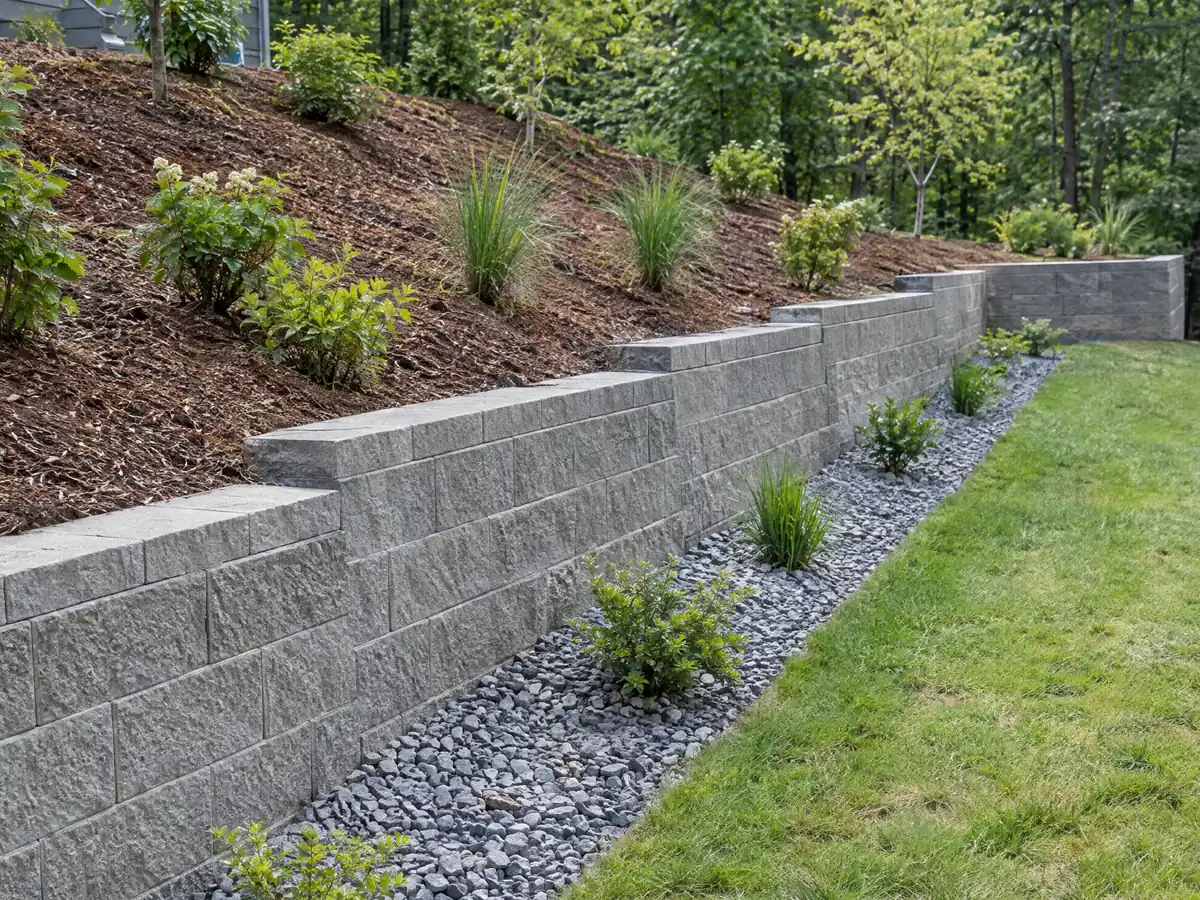
What do the dust, wash water and debris rules mean for a pour in Eastvale?
Eastvale lies inside the South Coast Air Quality Management District, and Rule 403 on fugitive dust covers on-site construction activity. The rule's header reads amended June 3, 2005, so ask the subcontractor how dust will be held down when an old driveway is broken out and hauled away. Washout is the City's side of the problem: Municipal Code 14.12.060 to 14.12.090 keep pollutants out of streets, gutters and storm drains, and a first violation is an infraction fined up to $100 that may be charged as a misdemeanor.
Only listed flows such as potable water flushing and foundation drains are allowed, and construction sites must follow the State's general permit. Plan a washout bin, not a hose to the gutter. Section 16.05.420 lets licensed contractors haul their own demolition debris without a self-haul permit if they follow the CALGreen disposal standards and use a CalRecycle-permitted facility whenever possible.
Under 110.01.030 an inspection, the final included, can be refused while rubbish has piled up around the site. Hours follow the City's FAQ of Monday through Saturday, 7:00 a.m. to 7:00 p.m., and the noise code lets exempt construction run only until 6:00 p.m. Concrete does not watch the clock, so ask how a late pour will be finished and where the truck chutes will be rinsed.
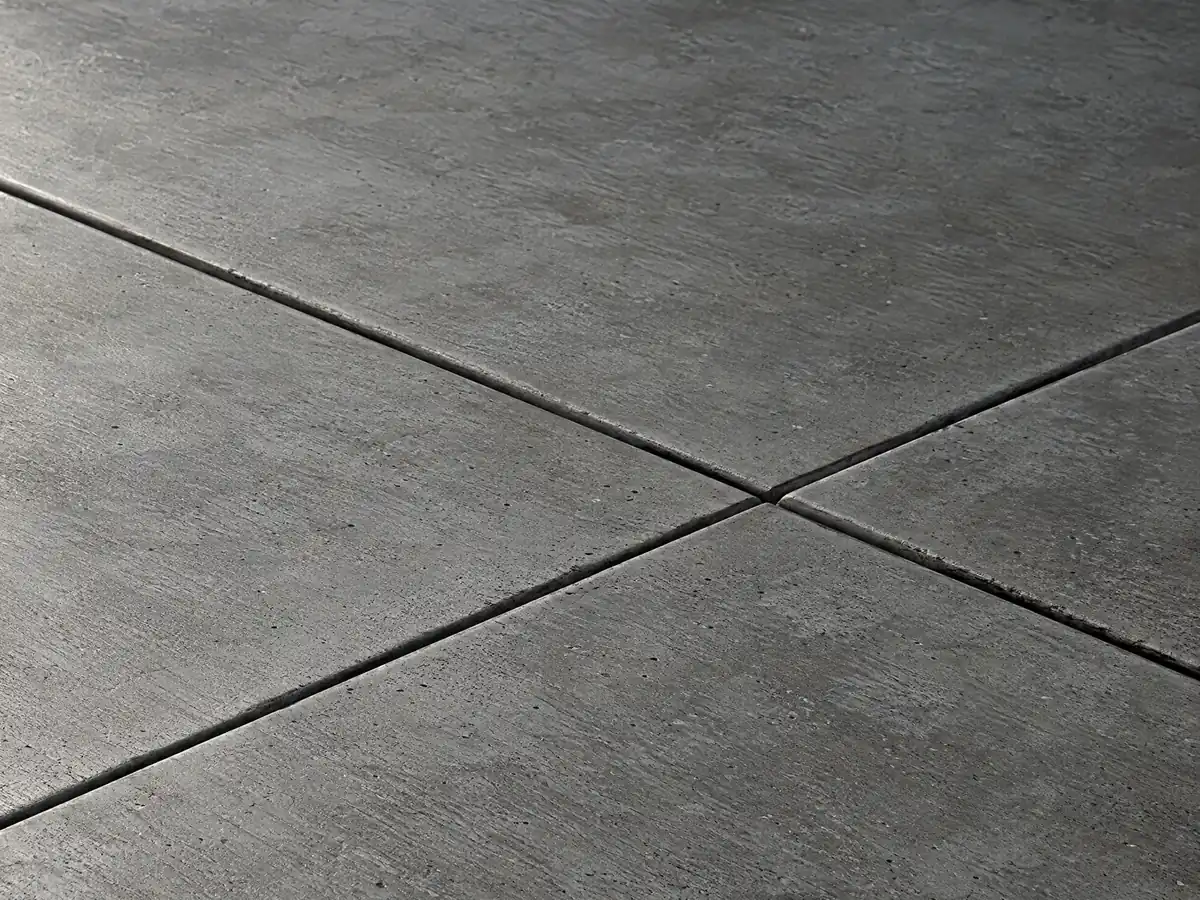
How much does concrete work cost in Eastvale, and who needs which license?
We found no Eastvale price study with a stated method, so the anchors are Angi's Los Angeles pages, and Inland Empire bids may differ. The August 4, 2026 patio page shows $4 to $13 per square foot with an average of $5,248, the July 20, 2026 stamped page shows $15 to $30 with an average of $5,948, and the May 5, 2026 driveway page shows $8 to $20 with an average of $7,270. A 20 by 20 foot patio runs $1,600 to $5,200 on the first.
Our planning ranges are $8 to $14 per square foot for patios, walks and slabs of 300 square feet or more, $15 to $30 for stained, stamped or exposed aggregate work and $9 to $20 for a driveway replaced with the old slab removed. Minimum charges push small jobs higher, and walls are priced after a site visit. The Bureau of Labor Statistics lists cement masons in the Los Angeles-Long Beach-Anaheim area at a mean $33.67 an hour in May 2025.
CSLB's C-8 class covers forming, pouring and finishing concrete, and block walls fall under C-29 masonry. Our license check guide shows how to read a CSLB record, and the subcontractor guide explains who forms and who finishes.
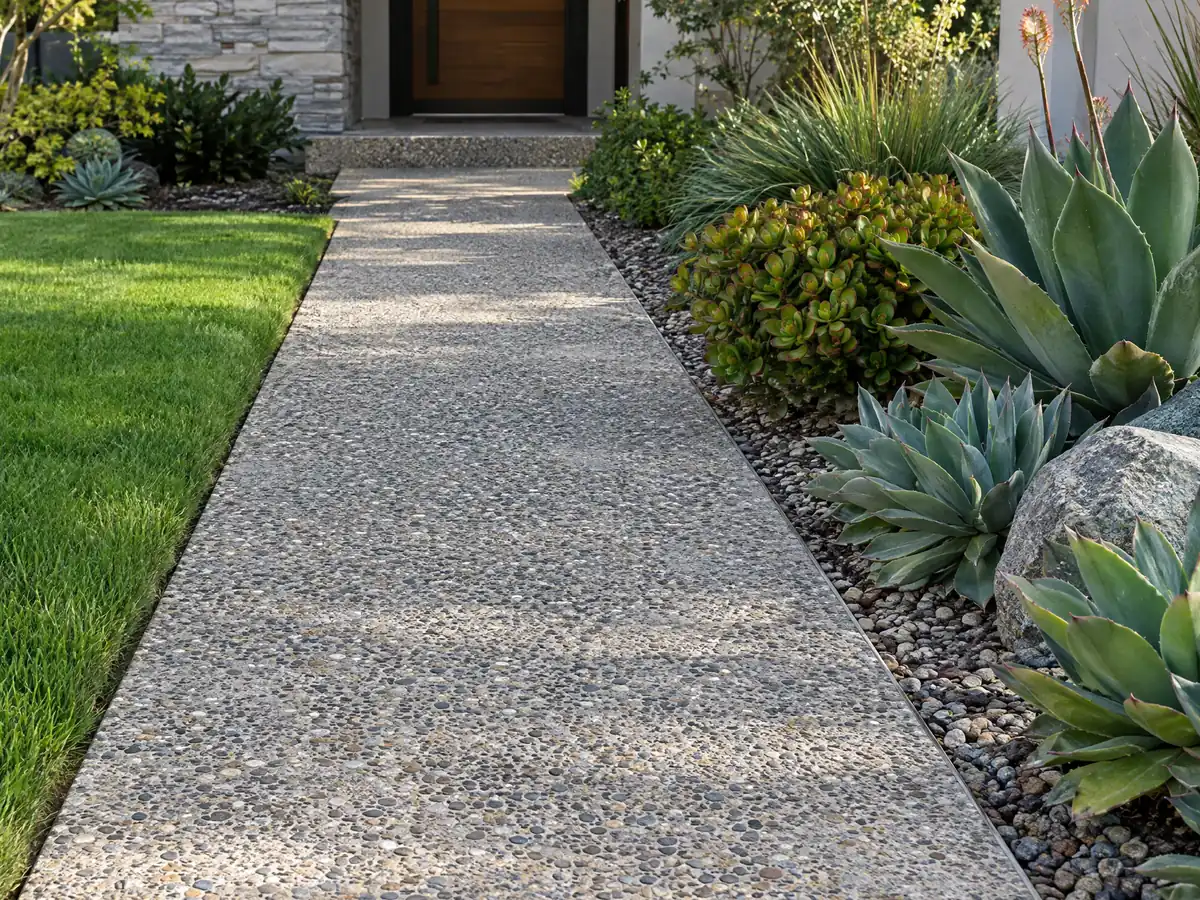
Concrete photos from Eastvale and nearby communities
Forms, rebar, finished flatwork and block walls from Eastvale and the Inland Empire neighborhoods around it, shown at the steps where the rules matter. Tap any photo to enlarge it.
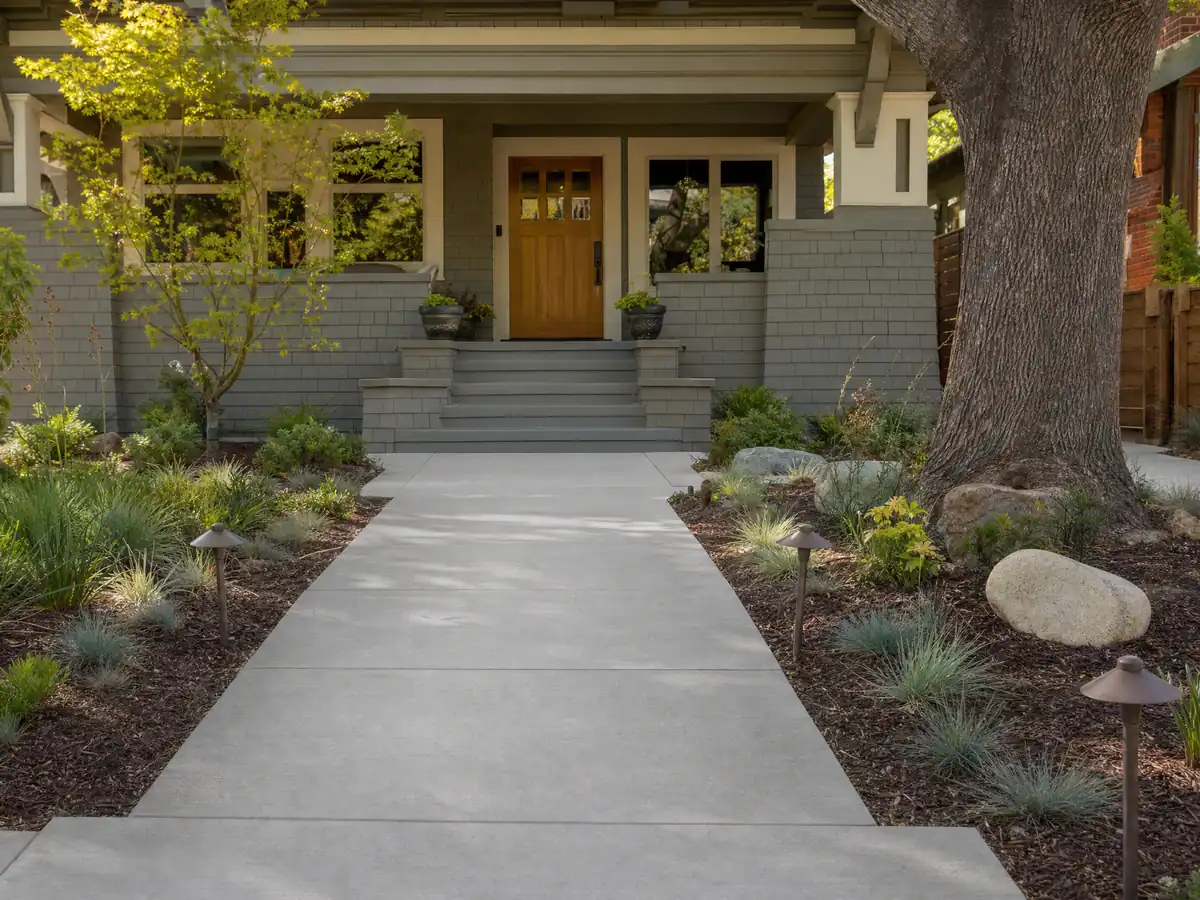
What concrete costs around Eastvale
Dollar figures here are Los Angeles ranges from our concrete page, so treat them as a starting point and not an Eastvale bid, and ask for demolition, base, rebar, any engineering and the street permit as separate lines. The same lot may need flooring in Eastvale or a deck builder in Eastvale. Across the county line, read concrete in Corona, concrete in Jurupa Valley and concrete in Riverside, with concrete in Los Angeles as the big-city benchmark. For what goes over a finished slab, the flooring cost guide is the next stop.
| What it covers | Typical range |
|---|---|
| Patio, walkway or slab, broom finish, 300 sq ft or more | $8 to $14 per square foot |
| Decorative: stained, stamped or exposed aggregate | $15 to $30 per square foot |
| Driveway replacement, with demolition of the old slab | $9 to $20 per square foot |
| 20 by 20 foot plain patio (400 sq ft) | About $3,200 to $5,600 |
| 20 by 20 foot decorative patio (400 sq ft) | About $6,000 to $12,000 |
| Small jobs under 300 sq ft | Usually above the per-foot range |
| Retaining walls | Set by the written proposal |
Eastvale concrete questions, answered
Can I pour a concrete patio without a permit?
Ask first, because Eastvale's exempt list names sidewalks and driveways but not patio slabs on grade. A cover over the slab is a building and needs a permit, and zoning limits it to 9 feet in the rear or street side yard. Call Building Safety at 951.703.4450 with the size, height and use.
Can I expand my driveway without a permit?
Eastvale exempts driveways from a building permit, but zoning still applies: the paving must be concrete cement and may not cover more than 50 percent of the required front or side yard. A new apron or curb cut in the street also needs an excavation permit from the director. Check Planning before widening anything.
How should a 20x20 concrete patio be priced?
A 20 by 20 patio covers 400 square feet. At our planning range of $8 to $14 per square foot that is $3,200 to $5,600, and Angi's Los Angeles patio page shows a wider $1,600 to $5,200. Stamped work at $15 to $30 per square foot costs more, and Eastvale bids will vary with access, base and finish.
What is the maximum height of a retaining wall without a permit in California?
Eastvale's Municipal Code exempts retaining walls up to 4 feet, measured from the bottom of the footing to the top, unless they support a surcharge, and walls under 36 inches are also exempt from development review. A wall that carries a driveway, a building or a slope above it may count as supporting a surcharge, so ask Building Safety.
Is 4 inches of concrete thick enough for a driveway?
No Eastvale rule sets it, so thickness is a design decision. Four inches is a common figure for walks and patios, but vehicles, soil and base change the answer for a driveway, and the County says Eastvale's fine soils and shallow groundwater near the river call for sound grading. Ask for thickness, mesh and joints in writing.
How much does a 300 sq ft stamped concrete patio cost?
Angi's stamped range for Los Angeles, dated July 20, 2026, is $15 to $30 per square foot, so 300 square feet comes to $4,500 to $9,000. The page's average project is $5,948. Inland Empire bids can differ, and minimum charges push small jobs above per-foot averages.
Do I need a permit for a block wall in Eastvale?
Possibly: the exempt list names masonry block walls 3 feet high, while zoning allows walls up to 6 feet behind the front yard. A taller block wall is not on the exempt list as we read it. The City's block wall handout is image-only and unread here, so ask Building Safety before forming footings.
Can I legally pave my whole front yard in Eastvale?
No, not as the code is written. The improved parking area and driveway may not cover more than 50 percent of the required front or side yard, and at least half of those yards must stay planted or be covered with mulch, rock, bark or artificial turf. Older improvements approved before the code are exempt.
What should concrete work in Eastvale include in the proposal?
Concrete work should be priced with demolition, base, thickness, reinforcement, joints, finish, the street permit and debris hauling on separate lines. Ask who pulls each permit and who handles washout, since a first stormwater violation is an infraction fined up to $100. Down payments stay at or under the lesser of $1,000 or 10 percent.
What license does a concrete company need in Eastvale?
A concrete company needs a California contractor license in the C-8 concrete class, and block walls fall under C-29 masonry. Any job that needs a permit needs a licensed contractor. Check the number on the CSLB site and ask each subcontractor for a license number and a certificate of insurance.
Tell us what you want poured, its size and where it sits on the lot
Describe the patio, driveway, walk or wall, the rough size and whether it touches the front yard, the street edge or a property line. Zoning, permit and wall-height questions go with us to the first visit.