
Fence Companyin Eastvale, CA
A fence company in Eastvale can build a fence of 7 feet or less without a building permit when it retains no earth, but zoning allows only 4 feet in the front yard and 6 feet in rear and side yards. Chain link is banned in front and street side yards, and corner visibility areas stop at 30 inches.
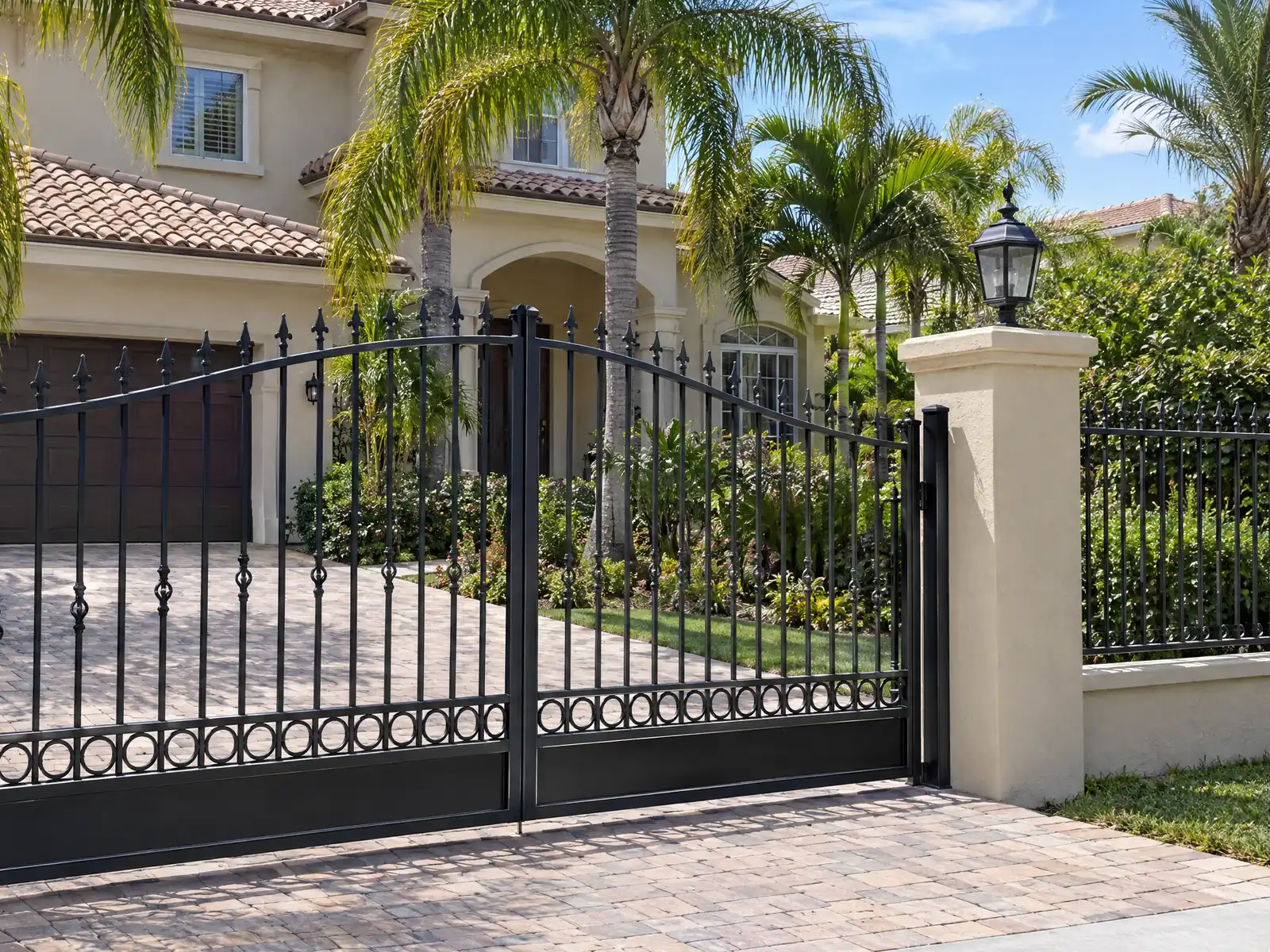
Eastvale fences mark out a city of tract lots cut from dairy ground. The City's Housing Element says the Chino Valley dairy area once held more than 400 dairies and more cows than people, that Eastvale stayed mostly dairy farms until the late 1990s, and that large tracts later rose on former dairy properties of more than ten acres. Wikipedia adds that the Fuller family ranch ran from 1889 to 1954 across almost half of today's city and that incorporation came on October 1, 2010, after a Measure A vote of 65.8 percent yes. ACS 2024 five-year estimates count 18,484 housing units, 87.7 percent of them single-family detached and 92.7 percent built in 2000 or later, so most fence jobs are a side gate, a backyard run or a wall between tract lots.
On a fence job, MDG Builders (CSLB #1040337) reads the zoning chapter before anything is priced, files what the City asks for and sequences the trades, and licensed subcontractors do the field work: a C-13 fencing contractor for wood, vinyl and metal and a masonry contractor for block, because C-13 excludes masonry walls. The fencing page lists our sourced prices, the Eastvale overview covers the other trades, and the guides for Corona and Jurupa Valley show how neighbors set their limits. The City's Planning Division answers zoning questions, and Building Safety issues permits. The City's website refused automated requests, so City pages were read in dated Wayback Machine copies and the Municipal Code on GoCodebook, a third-party mirror last updated October 4, 2026. Confirm each rule with Planning.
What Eastvale's building exemptions, Table 5.3-1 and neighborhood standards say about fences
Where fencing permits come from in Eastvale: City of Eastvale Community Development Department, Building Safety.
- Permit: a fence on a property line or elsewhere is exempt from a building permit if it is 7 feet or less (measured from footing bottom to top) and not retaining earth or supporting a surcharge, and the FAQ tells owners to check in with the Planning Division at (951) 703-4460 for zoning requirements (the live eastvaleca.gov site returned HTTP 403, so this is the Wayback Machine copy stamped 2026-04-11).
- Height limits (Municipal Code Table 5.3-1, 120.05.030): 4 feet in the required front yard, 6 feet in required rear and interior side yards, 6 feet in the required street side yard, and 30 inches within the clear visibility area at intersections, streets, alleys and driveways; height is measured from finished grade at the base of the fence and grade may not be altered to gain height; a fence over a wall may not exceed 6 feet from the wall base, and the approving authority can raise maximums in development review; residential privacy fences built to these standards are exempt from development review (a building permit may still be required) (read in GoCodebook's verbatim copy of the Eastvale Municipal Code, a third-party mirror last updated 2026-10-04, because the City's own website returned HTTP 403).
- Prohibited materials (Municipal Code 120.05.030(4)): barbed wire or electrified fencing, razor or concertina wire, and chain link in a front yard or street side yard; the neighborhood standards (120.05.080(d)(4)) also bar chain link in any yard visible from a public area on lots under one-half acre, bar adding razor wire, barbed wire, metal spikes, broken glass or readily flammable material, and require fences of materials and colors compatible with neighborhood architecture (read in GoCodebook's verbatim copy of the Eastvale Municipal Code, a third-party mirror last updated 2026-10-04, because the City's own website returned HTTP 403).
- Front-yard and corner limits (Municipal Code 120.05.080(d)(4)): any fence or wall in the front yard or within 30 feet of an intersection may not exceed 4 feet, a gate or its posts in view of a street may not exceed 120 percent of the fence height, no fence may block a street, intersection, sidewalk or right-of-way physically or visually, and fences must be kept free of graffiti, weeds and undergrowth; fences and walls that existed before the zoning code's effective date are exempt from the 4 foot front-yard rule (read in GoCodebook's verbatim copy of the Eastvale Municipal Code, a third-party mirror last updated 2026-10-04, because the City's own website returned HTTP 403).
- Walls and retaining walls: the building-permit exemption list in Municipal Code 110.02.050(b) covers masonry block walls 3 feet high and retaining walls up to 4 feet (footing bottom to wall top) unless they support a surcharge, while 120.05.030 exempts retaining walls under 36 inches from development review; the City's forms page lists a Freestanding Block Wall Guidelines handout (an image-only PDF, not readable here) (read in GoCodebook's verbatim copy of the Eastvale Municipal Code, a third-party mirror last updated 2026-10-04, because the City's own website returned HTTP 403).
- Screening walls between homes and industrial uses (Municipal Code 120.05.030(5)): when residential land adjoins industrial uses, a solid decorative masonry wall at least 6 feet high, finished on both sides, with a 5 foot landscape strip, is required unless the approving authority waives it; minor development review applies (read in GoCodebook's verbatim copy of the Eastvale Municipal Code, a third-party mirror last updated 2026-10-04, because the City's own website returned HTTP 403).
- Pool barriers: the FAQ sends pool barrier questions to Appendix AX of the California Residential Code and Health and Safety Code 115920 to 115929, and the adopted CRC chapter includes Appendix CI (Swimming Pool Safety Act); temporary-use and pool fences are exempt from the neighborhood fence standards (Municipal Code 120.05.080(d)(4)(f)) (the live eastvaleca.gov site returned HTTP 403, so this is the Wayback Machine copy stamped 2026-04-11).
How tall can a fence be in an Eastvale front yard, side yard or backyard?
Zoning sets the height by yard. Table 5.3-1 in Municipal Code 120.05.030 allows 4 feet in the required front yard, 6 feet in the required rear and interior side yards, 6 feet in the required street side yard and 30 inches inside the clear visibility area at intersections, streets, alleys and driveways. Height is measured from finished grade at the base of the fence, and grade may not be raised to gain height. A fence set on top of a wall may not exceed 6 feet measured from the base of the wall.
The neighborhood standards repeat the front limit and add to it. Section 120.05.080(d)(4) caps any fence or wall in the front yard, or within 30 feet of an intersection, at 4 feet, holds a gate or its posts in view of a street to 120 percent of the fence height and forbids a fence that blocks a street, sidewalk or right-of-way physically or visually. Fences that stood before the zoning code took effect are exempt from the 4 foot front rule. The approving authority can raise the maximums in development review, but a residential privacy fence built to the table is exempt from that review.
Ask Planning to mark the required front, side and street side yards on your survey before posts are staked.
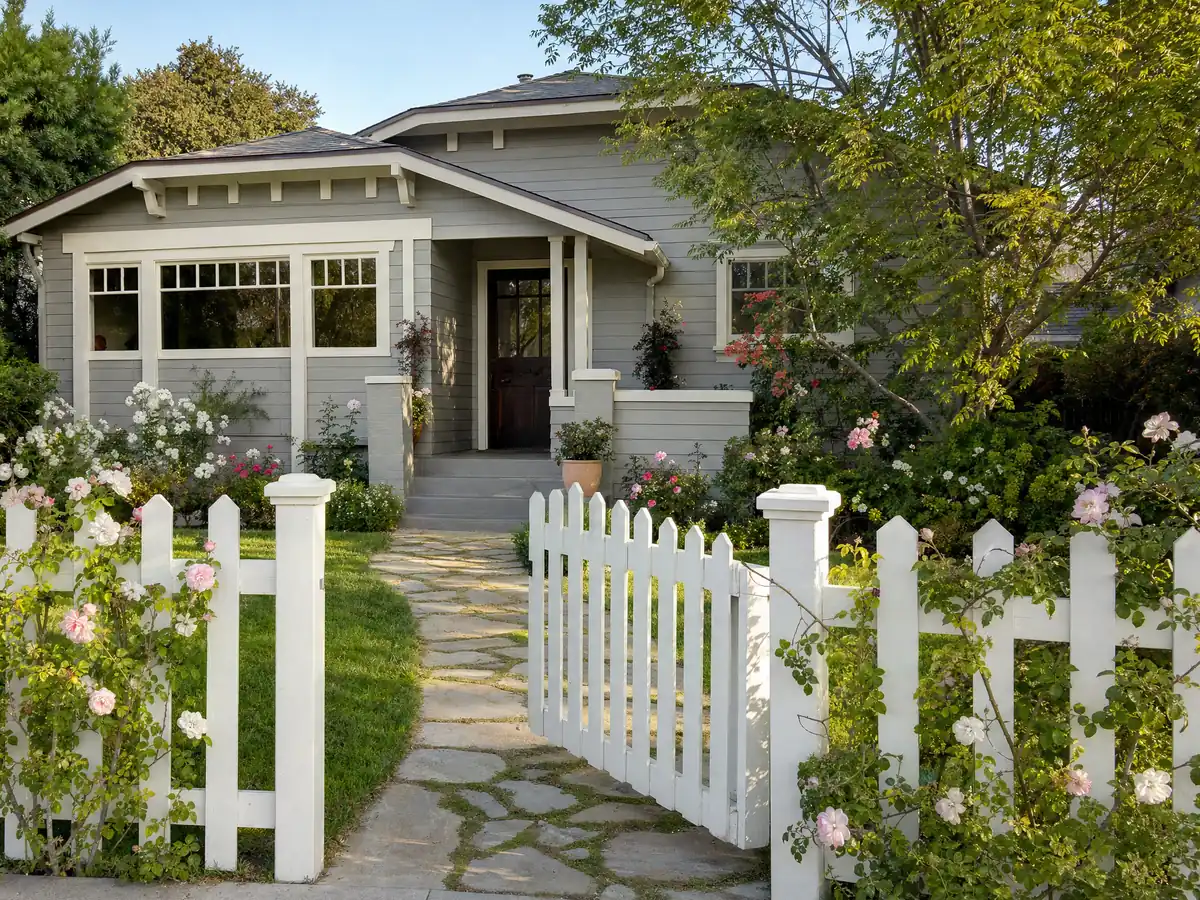
Why does the building code exempt a 7 foot fence when zoning stops at 6 feet?
Because the two chapters answer different questions. The exemption in Municipal Code 110.02.050(b) covers fences not over 7 feet, measured from the bottom of the footing to the top, that retain no earth and carry no surcharge, and the City's FAQ repeats it and sends owners to Planning at (951) 703-4460 for zoning. Zoning then caps the visible fence at 6 feet in rear and side yards and 4 feet in front. Because the exemption counts from the footing, a 6 foot fence on a footing a foot deep reaches the 7 foot line by that count. A fence can need no building permit and still be wrong for the lot.
Three things sit outside the exemption. A fence that retains earth or carries a surcharge is not covered. Work in the public right-of-way, such as a sidewalk panel or driveway approach beside the fence line, needs its own excavation permit under Municipal Code 12.08.030. And building without a required permit costs an investigation fee equal to the permit fee under 110.02.090(d). Complaints about fences go through the City's Community Enhancement Team and the My Eastvale app.
Put the fence height, the footing depth and the yard type on the written proposal.
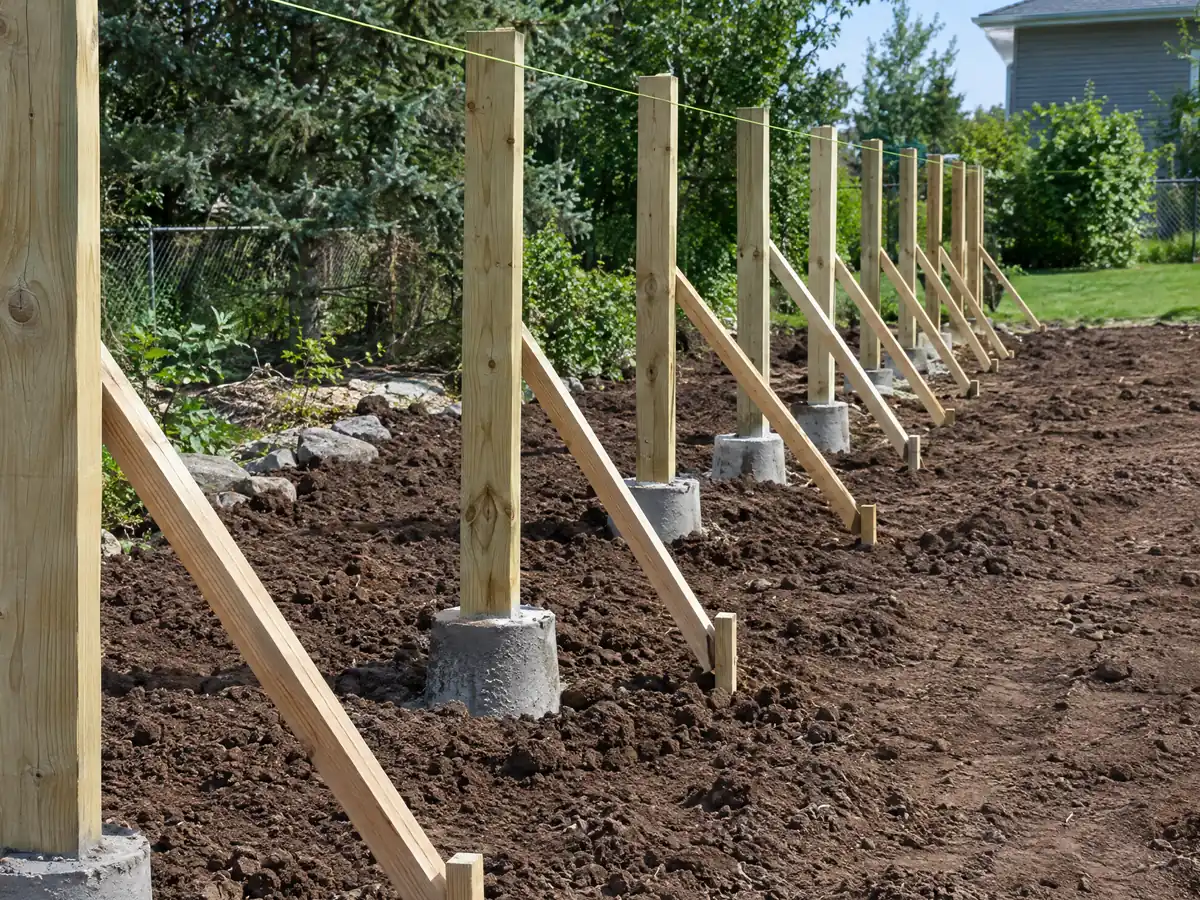
Can an Eastvale fence company install chain link, barbed wire or electrified fencing?
Not in the places people see. Municipal Code 120.05.030(4) prohibits barbed wire or electrified fencing, razor or concertina wire, and chain link in a front yard or street side yard. The neighborhood standards in 120.05.080(d)(4) go further: no chain link in any yard visible from a public area on lots under one-half acre, no added razor wire, barbed wire, metal spikes, broken glass or readily flammable material, and fence materials and colors compatible with neighborhood architecture. Fences must also be kept free of graffiti, weeds and undergrowth.
That leaves chain link for yards nobody passes and makes wood, vinyl and steel the working choices on most lots. The sections we read do not ban those three, but we found no approved-materials list, so ask Planning before ordering a style the neighbors do not already use. Color matters too: a fence painted well outside the tract's palette can draw the compatibility clause. Temporary-use fences and pool fences are exempt from these neighborhood standards.
Ask for the material and the stain or paint color to be named on the proposal.
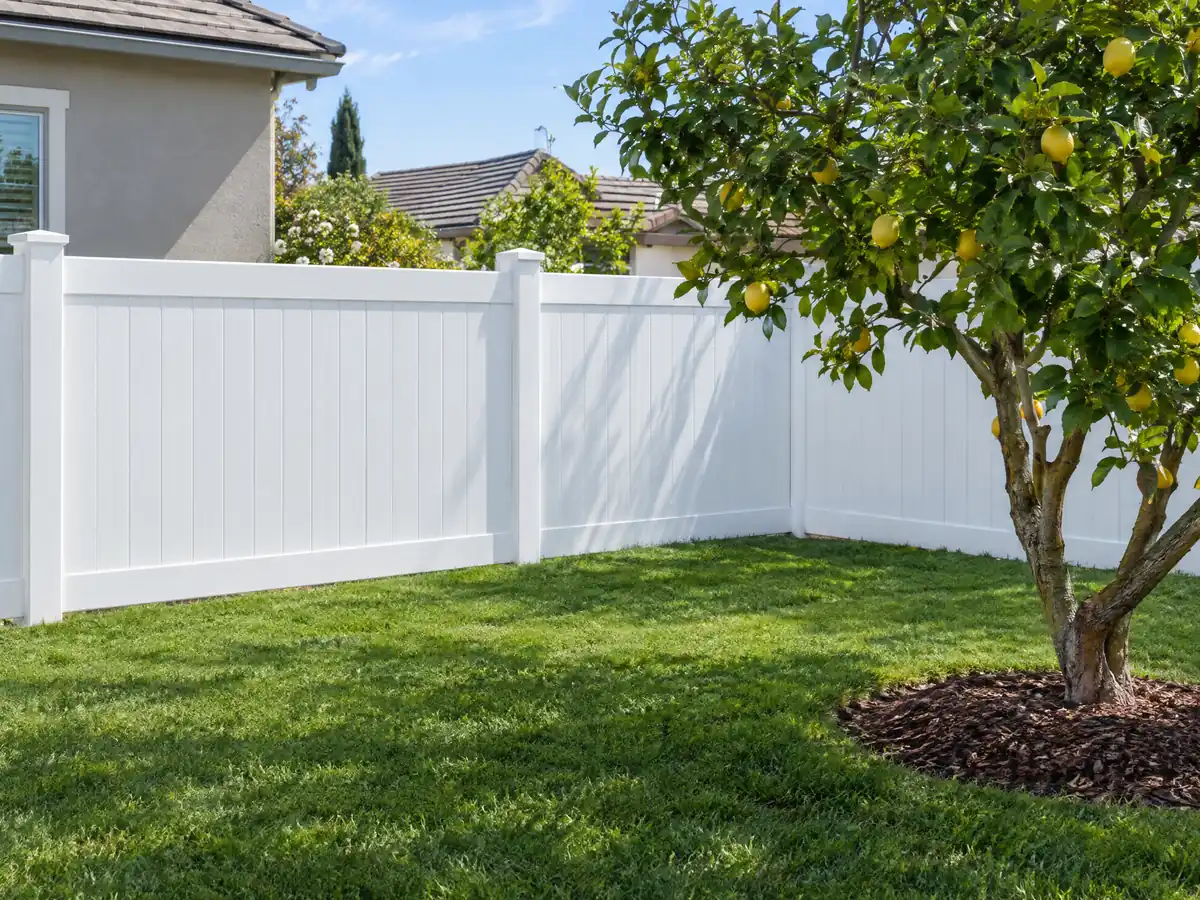
What changes on an Eastvale corner lot, at a driveway or at a gate?
A corner lot stacks three limits. The street side yard allows 6 feet in the table, yet any fence within 30 feet of the intersection stops at 4 feet under 120.05.080(d)(4), and the clear visibility area stops at 30 inches. By our reading the strictest line governs, so ask Planning to sketch all three on your lot before a panel layout is drawn. A tall solid fence that looks fine from the backyard may belong to the street side yard instead.
Gates add their own rules. The 120 percent limit means a gate or post in view of the street can stand a little taller than the fence, not much. The City's Fire Code amendments say new motorized gates need automatic openers for emergency vehicles, except at one- and two-family parcels, and require fire apparatus access roads at least 24 feet wide with 13 feet 6 inches of clearance. A motorized gate on a house lot is therefore outside the opener rule, but gates on other kinds of parcels may not be. Riverside County Fire enforces the Fire Code, out of City Stations 27 and 31.
Ask who supplies and wires a gate operator, because the fencing license does not settle it.
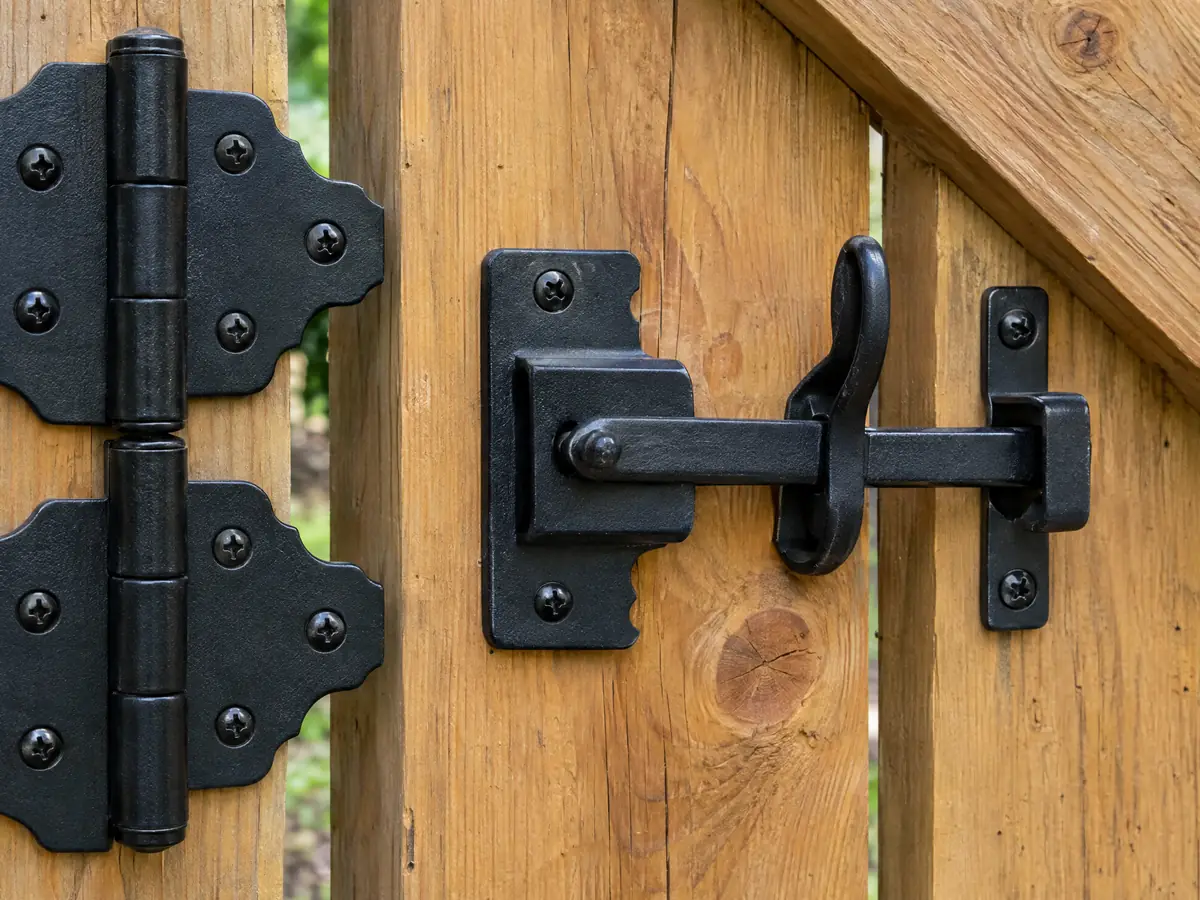
Do block walls, retaining walls and the screen walls beside warehouses follow different rules in Eastvale?
Yes. The exempt list in Municipal Code 110.02.050(b) covers masonry block walls 3 feet high and retaining walls up to 4 feet, measured from the bottom of the footing to the top, unless the wall supports a surcharge. Section 120.05.030 separately exempts retaining walls under 36 inches from development review. The City's Freestanding Block Wall Guidelines handout is an image-only PDF we could not read, so we print nothing from it. Masonry is class C-29 work with the Contractors State License Board, not C-13.
Next to industry the rule tightens. When residential land adjoins industrial uses, 120.05.030(5) calls for a solid decorative masonry wall at least 6 feet high, finished on both sides, with a 5 foot landscape strip, unless the approving authority waives it. That matters in a city whose top employers include an Amazon fulfillment center with 4,918 employees and a Walmart distribution center with 952, per the City's 2023 financial report as quoted by Wikipedia, and whose northwest corner lies inside the Chino Airport Influence Area, where Light Industrial is the designated use. We did not map which lots adjoin industrial land.
Ask Planning whether your back wall adjoins an industrial zone before choosing wood or block.
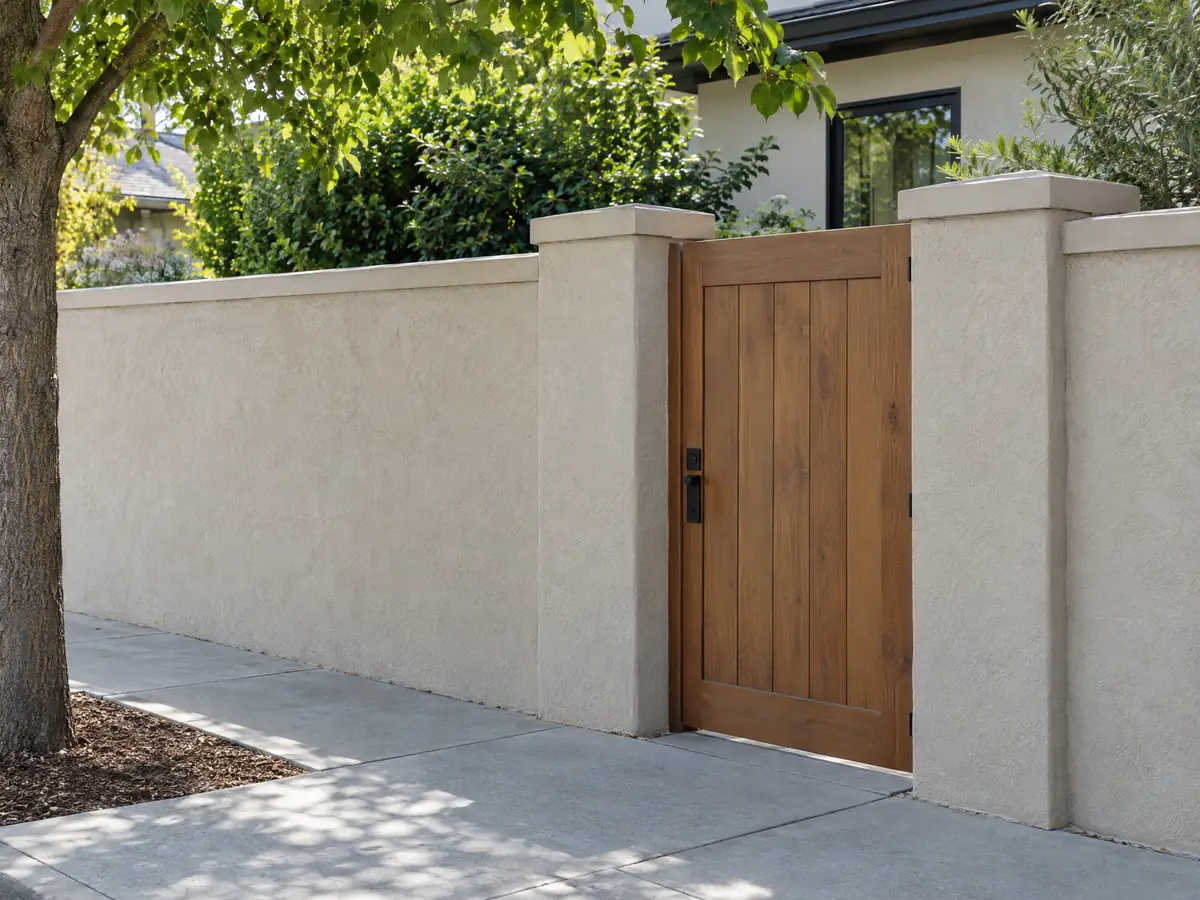
What does an Eastvale pool barrier have to meet, and does soil near the river change the posts?
Pool barriers follow the state pool safety rules. The City's FAQ points barrier questions to Appendix AX of the California Residential Code and to Health and Safety Code sections 115920 to 115929, and the adopted code list includes Appendix CI, the Swimming Pool Safety Act. We did not read the barrier height or latch details, so we print none. Municipal Code 120.05.120 keeps pools out of the required front and street side yards and allows them 3 feet from interior and rear property lines.
Soil is a river-edge question. The County's Eastvale Area Plan, County material rather than City law, says closeness to the Santa Ana River gives Eastvale a high liquefaction potential because of shallow groundwater and relatively fine soils, and it calls for specialized building techniques and sound grading. No source we read says what that means for fence posts, so ask a masonry contractor or an engineer about footing depth on a tall wall. Very few scattered areas pass a 15 percent slope, which makes stepped hillside fences rare here.
Ask for the barrier standard and the footing depth in writing before a pool or tall wall is bid.
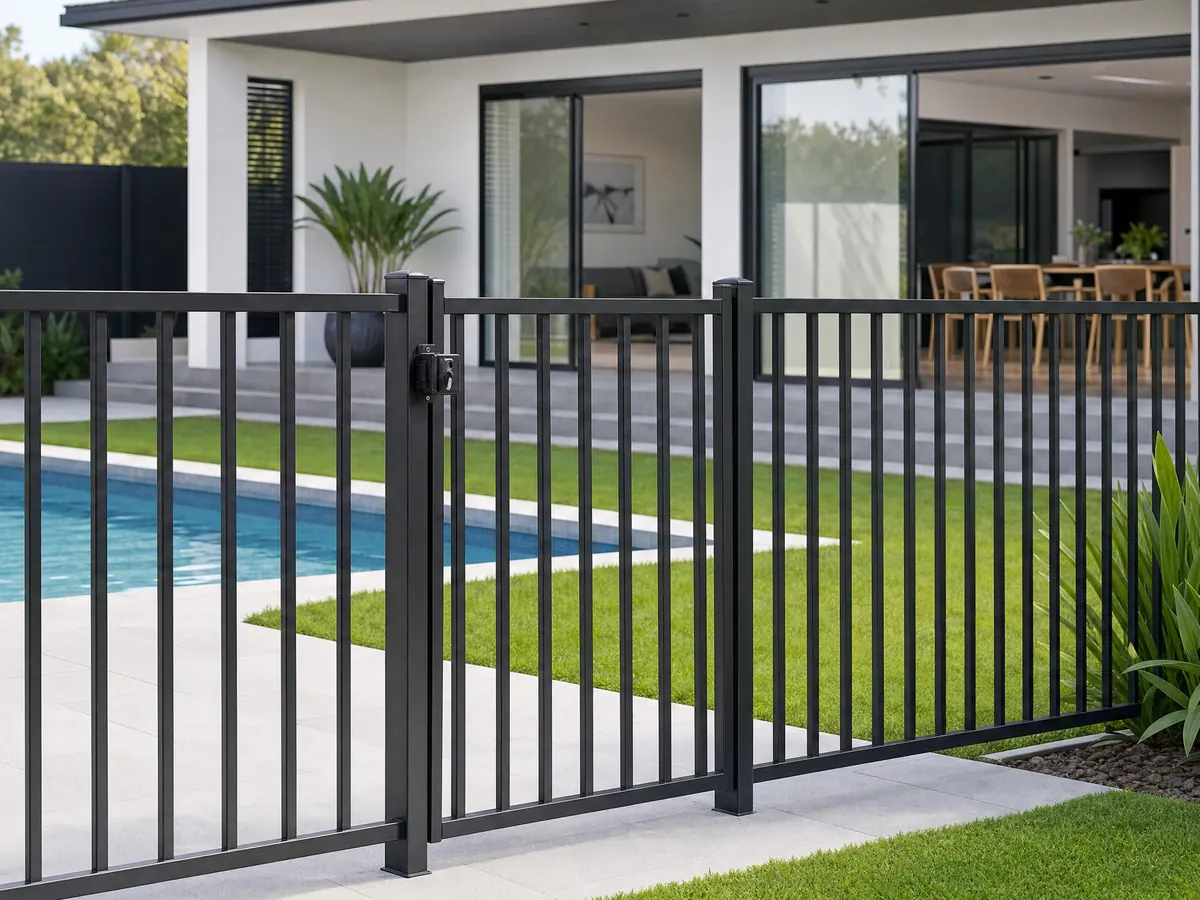
How much does fence installation cost in Eastvale, and who pays for a shared fence?
We found no Eastvale price survey, so these are Los Angeles figures. Angi's Los Angeles fence page, updated August 4, 2026, shows an average of $3,051 in a range of $1,734 to $4,422, about $29 a linear foot on average within $15 to $60, and $2,100 to $2,350 for 100 feet. Its own 100 foot row works out to roughly $21 to $24 a foot, which is why we quote a range. HomeGuide shows $20 to $60 a foot and Thumbtack $23 to $57. Federal wage data put fence erectors in the Los Angeles-Long Beach-Anaheim area at a mean $28.00 an hour in May 2025, a labor check, not a billing rate. We plan on $25 to $55 a foot installed for 6 foot wood or vinyl privacy, $35 to $85 for aluminum or ornamental iron and about $2,500 to $5,500 for a 100 foot backyard run. We found no independent Los Angeles per-foot price for block walls and print none.
California Civil Code 841 presumes that neighbors share the cost of a boundary fence that benefits both, and it asks for 30 days' written notice before one owner spends money. The presumption can be rebutted. Our license guide covers the license lookup for the fence and masonry subcontractors, and how general contractors use subcontractors shows how the two trades are sequenced.
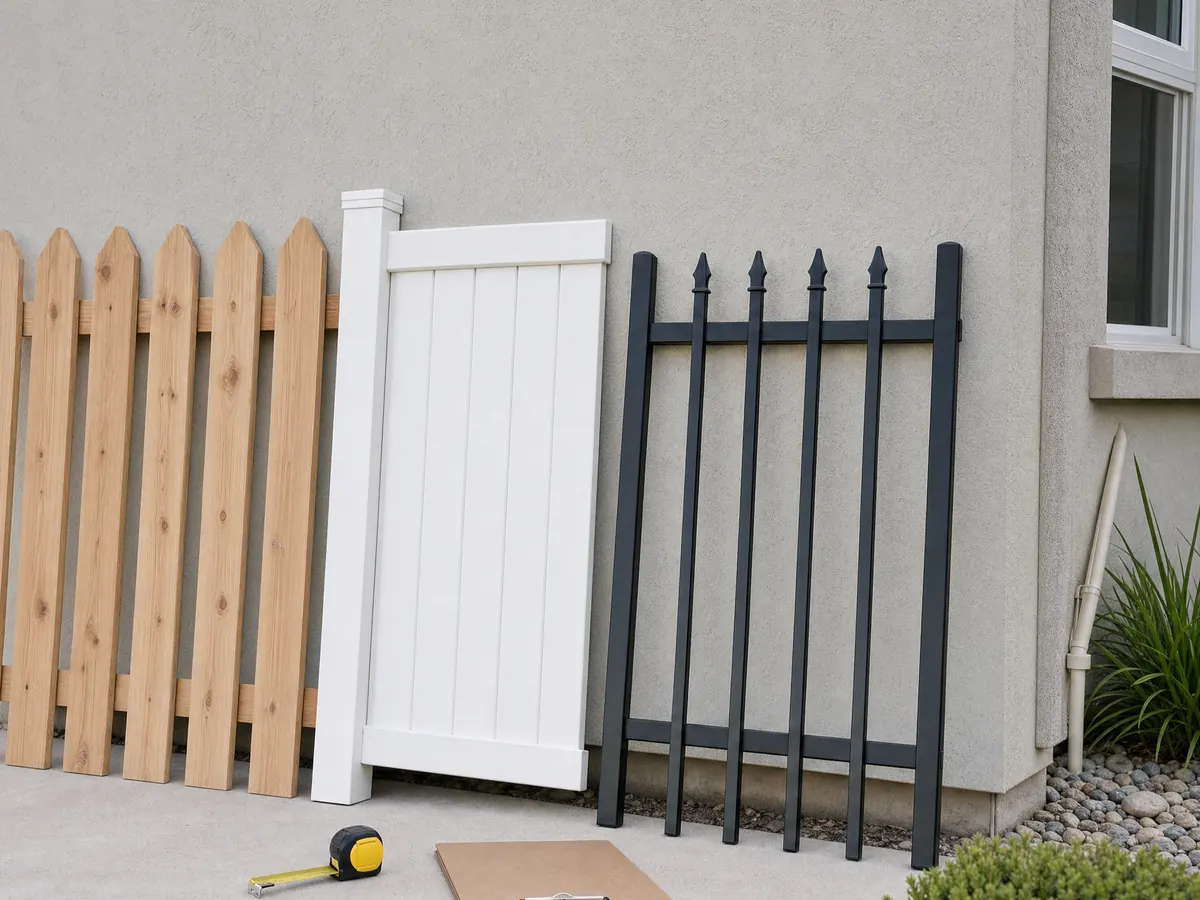
Fence photos from Eastvale and nearby communities
Fence scenes tied to Eastvale places such as Cloverdale Farms, Sendero, the Prado tract and the Santa Ana River Trail edge, and to nearby communities such as Norco, Mira Loma, Corona and Chino, from wood privacy runs and block walls to gates and pool barriers.
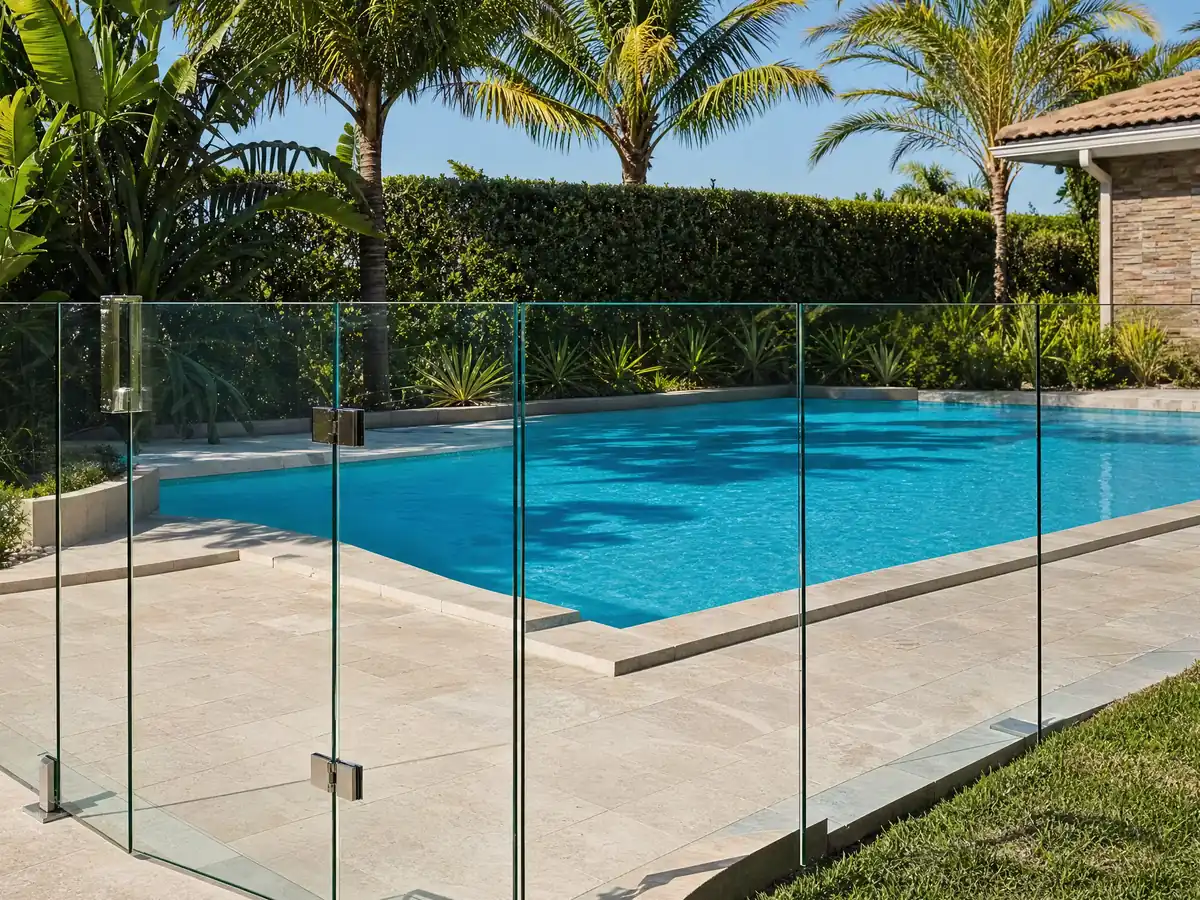
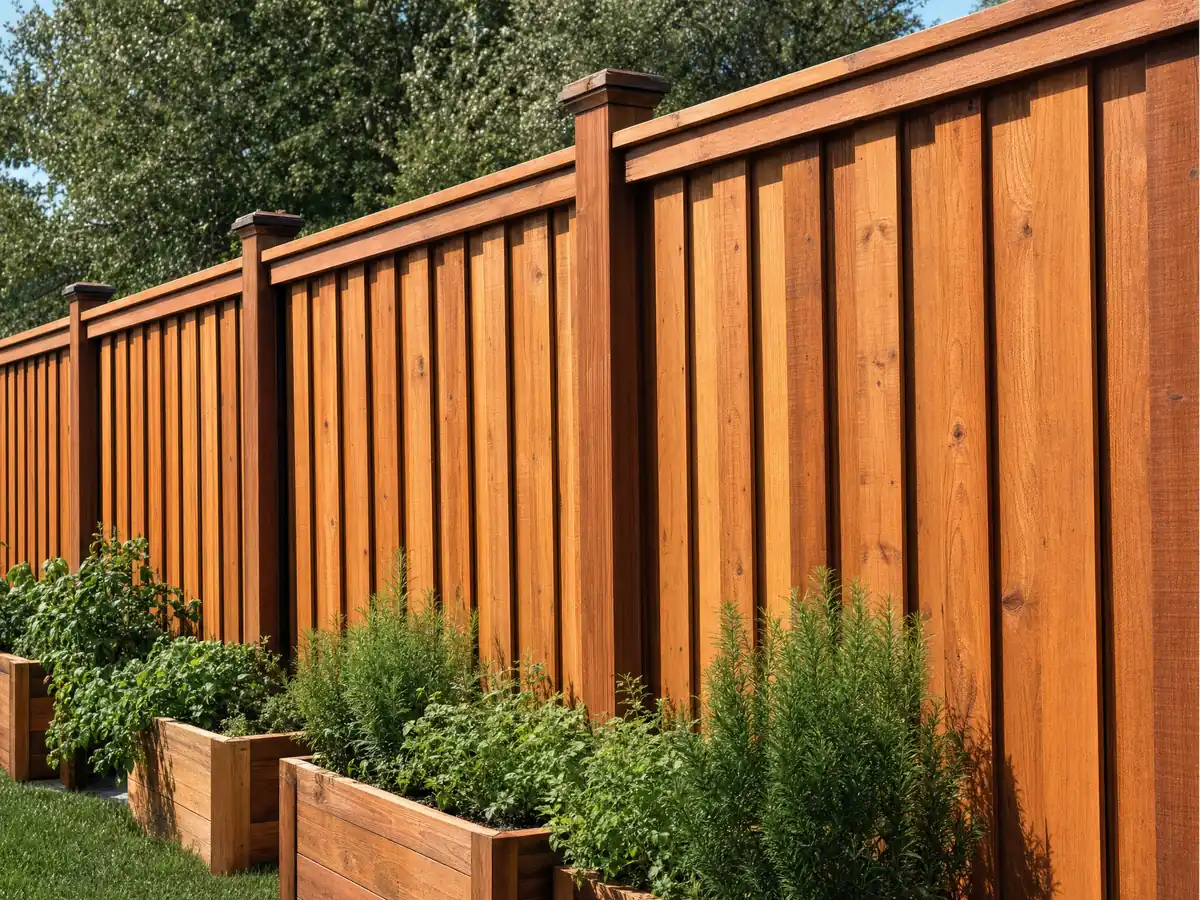
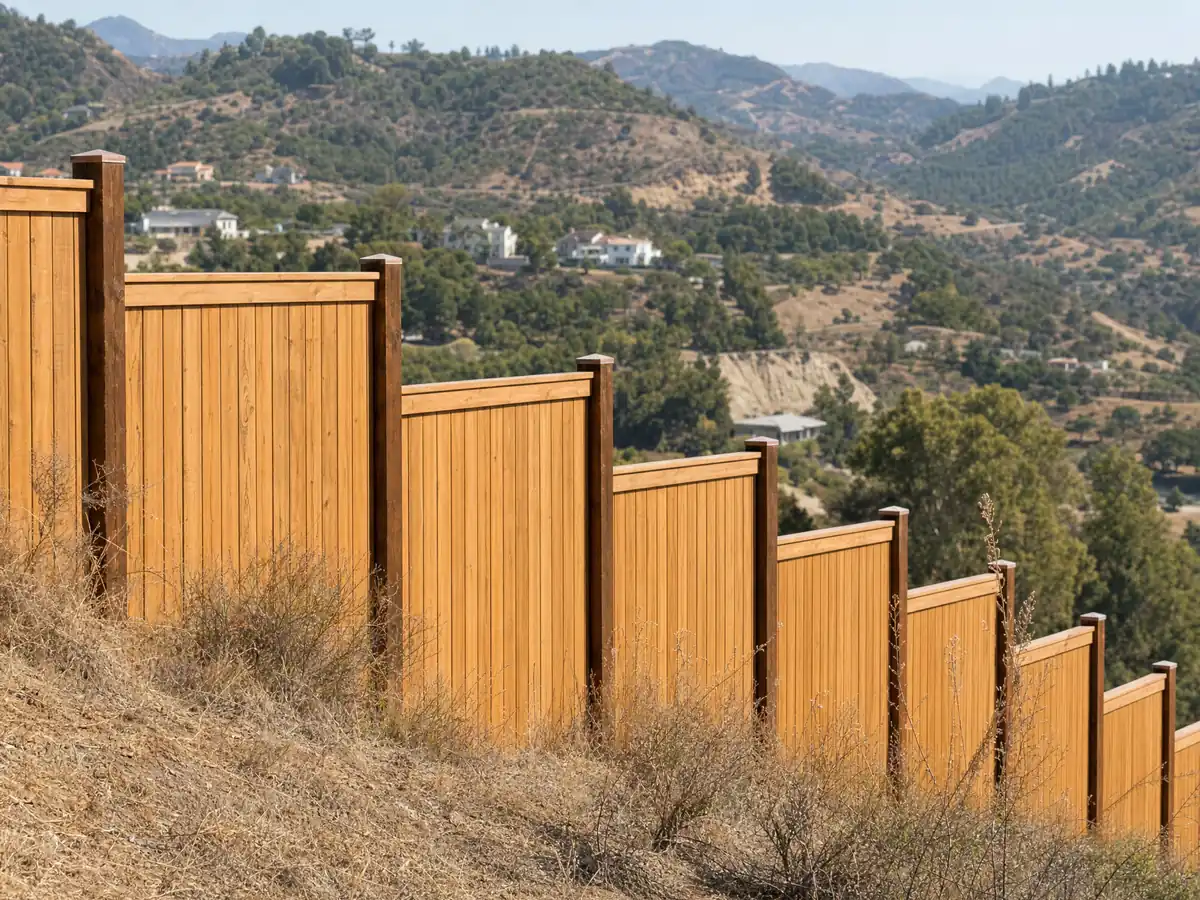
Where these Eastvale fence figures come from
The fencing page sets out each fence price with its source and date, along with the figures that disagree. A new fence often follows a roof job or a repaint, and the Eastvale rules for those are on the roofing page and the painting page. For a Riverside County city that sets heights by yard type, read the guide for Riverside.
| What it covers | Typical range |
|---|---|
| Wood or vinyl privacy fence, 6 feet | $25 to $55 per linear foot |
| Chain-link | $12 to $30 per linear foot |
| Aluminum or ornamental iron | $35 to $85 per linear foot |
| Typical 100-foot backyard run | $2,500 to $5,500 total |
| Block walls, horizontal slat fences, gates and openers, hillside lots | Set by the written proposal |
Eastvale fence questions, answered
Do I need a permit to build a fence in Eastvale?
Not for a fence of 7 feet or less, measured from the bottom of the footing to the top, that retains no earth. Municipal Code 110.02.050(b) exempts it from a building permit. Zoning still applies, so call Planning at (951) 703-4460 before building, and expect a permit for anything taller or for a fence that holds back soil.
How tall can a fence be in the front yard?
In Eastvale, 4 feet in the required front yard, and the same 4 feet within 30 feet of an intersection, with 30 inches inside the clear visibility area. A gate or post in view of a street can reach 120 percent of the fence height. Fences that existed before the zoning code took effect are exempt from the 4 foot front rule.
Can I put up a 7ft fence?
The building code allows it without a permit, but Eastvale zoning caps fences at 6 feet in required rear, interior side and street side yards and at 4 feet in front. The approving authority can raise the maximums in development review. Ask Planning before building a fence taller than 6 feet.
Is it cheaper to install a wood or vinyl fence?
Wood usually prices below vinyl. Angi's Los Angeles page lists wood at $1,600 to $2,500 and vinyl at $1,850 to $3,400, though HomeGuide and Thumbtack show the two overlapping heavily. We found no Eastvale survey, so compare written line items for posts, footings, gates and haul-away.
Can I put a privacy fence up in my front yard?
Only a low one. The front yard limit is 4 feet, chain link is banned there, and the fence must not block a street, sidewalk or right-of-way physically or visually. A solid 6 foot privacy fence belongs behind the required front yard, along the side or rear lines. Ask Planning where your front yard ends.
What happens if I don't have a permit for a fence?
If a permit was required, Municipal Code 110.02.090(d) charges an investigation fee equal to the permit fee, and the Building Official can post a stop work order. If the fence was exempt, no permit is missing, but a zoning violation can still be reported through the City's code enforcement channels.
Does your neighbor have to pay for half the fence in California?
Usually, yes. Civil Code 841 presumes adjoining owners share the cost of a boundary fence that benefits both, and it asks for 30 days' written notice before you incur costs. The presumption can be rebutted. Send the notice in writing with the quote attached and keep a copy.
Do you need a permit to build a block wall in Eastvale?
Not for a masonry block wall 3 feet high, which is on the City's exempt list. A taller wall needs a permit, and a block wall of any height still has to meet zoning. We could not read the City's Freestanding Block Wall Guidelines, so ask the counter for them. Masonry is C-29 work, not C-13.
What is the maximum height of a retaining wall without a permit?
In Eastvale, 4 feet measured from the bottom of the footing to the top of the wall, unless it supports a surcharge such as a driveway or a building. Zoning separately exempts retaining walls under 36 inches from development review. A fence on top of a wall may not exceed 6 feet from the wall base.
What pool fence requirements apply in Eastvale?
The City's FAQ points to Appendix AX of the California Residential Code and Health and Safety Code sections 115920 to 115929, and the adopted code list includes the Swimming Pool Safety Act appendix. We did not read the height or latch details, so ask the Building Safety counter for the current barrier standard.
Ask for a fence estimate in Eastvale
Tell us the street, which yards the fence touches, the height you want and whether a neighbor, a warehouse or a pool is involved. Before we call back we check the yard type, the 4 foot and 30 inch lines at corners and any wall rules.