
Fence Companyin Jurupa Valley, CA
A Jurupa Valley fence over 3 feet needs a building permit, and zoning caps residential fences at 6 feet, with front and street-side fences open to view above 42 inches. Perimeter chain link is banned, though chain link installed before September 1, 2023 may be replaced in kind. Pool barriers need a permit at any height.
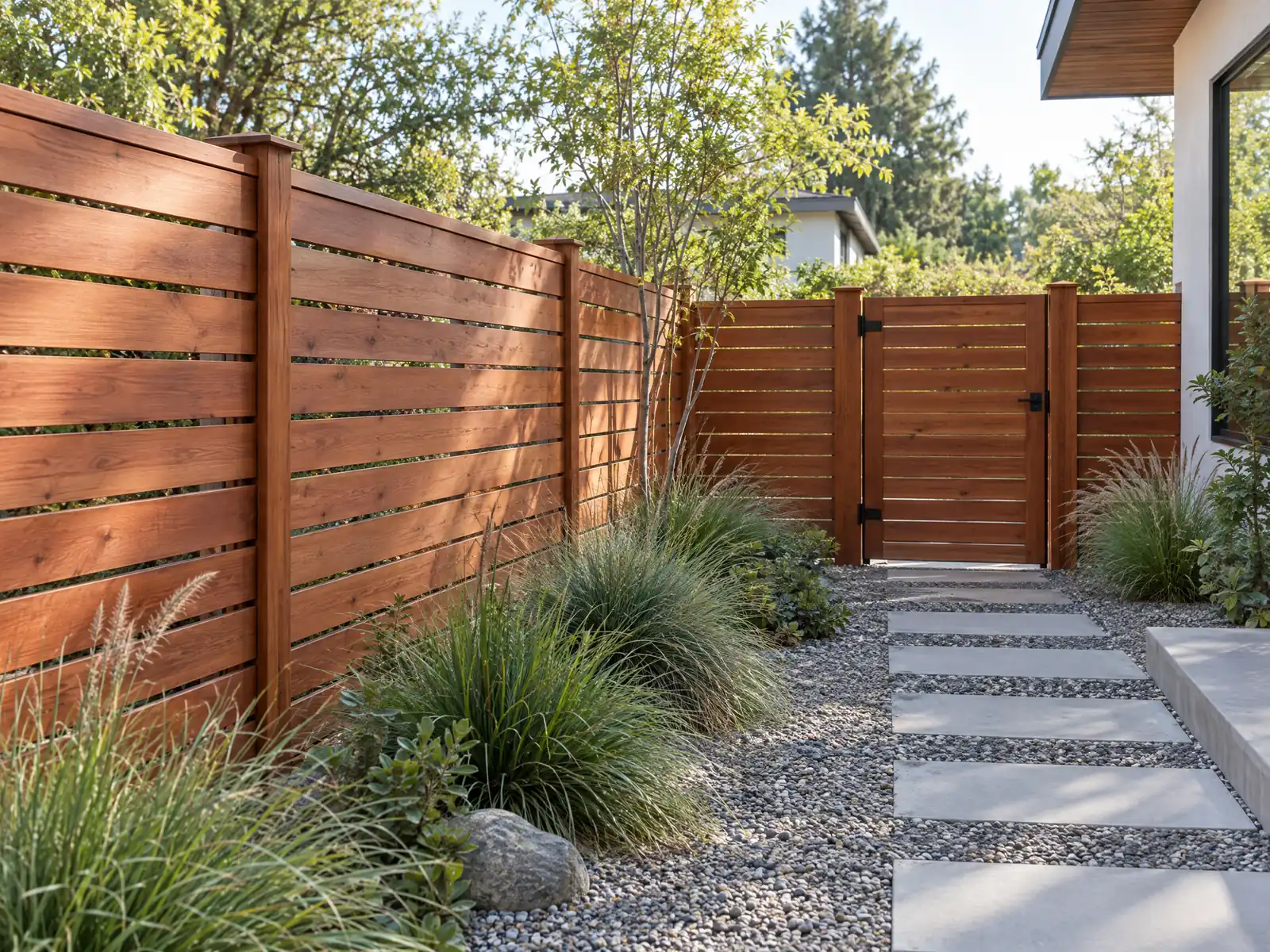
Fences here follow a mixed settlement pattern. Voters created Jurupa Valley on July 1, 2011, merging nine communities, and the City's first General Plan puts small-town character and the semi-rural, equestrian nature of the place first. Census Bureau ACS 2024 one-year estimates count 28,434 housing units, about 80.3 percent of them single-family detached, 6.6 percent mobile homes and 24.5 percent built in the 1980s, so most fence jobs are a backyard line on a tract lot, a side gate or a perimeter on a half-acre property.
Before pricing a fence, MDG Builders (CSLB #1040337) reads the zoning section and the permit list, files what the City asks for and schedules the crews. A licensed C-13 fencing subcontractor sets posts and panels, and a masonry-licensed subcontractor builds any block, because the C-13 class excludes masonry walls. The fencing page lists our sourced prices, the Jurupa Valley overview covers every trade we manage here, and the guides for Riverside and Corona show how two neighboring cities treat the same questions. Eastvale, Norco and Fontana set their own rules. The City's Building & Safety Department issues permits. We read the code on GoCodebook, a third-party mirror, because the City's Municode library refused automated requests, so confirm any section number with the City.
What Jurupa Valley's permit list, fence zoning and City handouts say about fences
Where fencing permits come from in Jurupa Valley: City of Jurupa Valley Community Development, Building & Safety Department.
- Zoning limits (Section 9.240.500): fences and walls in residential zones are 6 feet maximum, and within a required front or street-side setback they must be open to view above 42 inches. Garage doors, tires, pallets and other non-fence materials are banned, and perimeter fences or walls of chain link, razor, barbed or chicken wire, tarp or sheet metal are prohibited, except that chain link in place before September 1, 2023 may be repaired or replaced with like chain link (text read in GoCodebook's copy of the Jurupa Valley Municipal Code, 2026-10 edition updated 2026-10-04, a third-party mirror; the City's Municode site returned HTTP 403 to automated requests).
- Permit threshold: fences up to 3 feet are exempt from a building permit and anything over 3 feet needs one, which is stricter than the 6 foot zoning limit; all swimming pool barrier fencing needs a permit no matter the height (text read in GoCodebook's copy of the Jurupa Valley Municipal Code, 2026-10 edition updated 2026-10-04, a third-party mirror; the City's Municode site returned HTTP 403 to automated requests).
- Block walls: the City's freestanding block wall standard (revised 04/7/2026) covers 3 to 6 foot walls with two footing options, #4 bars, grouted cells, and inspections for footing rebar, lift 1 horizontal bar, lift 2 before grout and final; it is not designed to retain soil or tolerate more than 6 inches of grade change, walls under 3 feet need no permit, and a site plan is required. A wall on a shared property line also needs the City's Property Line Agreement signed with the adjoining owner, with no construction over an easement.
- Gates (standards revised 05/14/2026): pedestrian gates are required on paths of circulation to the public right-of-way (panic hardware if occupant load exceeds 50), motorized vehicle gates need an electrical permit and a UL 325 listed operator, an Opticom opener may be required by the Fire Department, and gates around pools must meet the pool enclosure standard. The Fire Code amendment adds that new motorized gates must open remotely for emergency vehicles per Riverside County Fire standards.
- Pool barriers (City Pool Enclosure handout, 04/9/2026): a 5 foot minimum fence or wall around the whole pool perimeter with no climbable members, self-closing and self-latching gates that open outward (4 foot maximum width per leaf), door alarms of at least 85 dB listed for pool barriers and mounted more than 60 inches up (chiming or security alarms are not accepted), and RV gates permanently locked. The City's 2018 Swimming Pool Safety Act policy requires at least two of the seven state drowning-prevention features on plans for a new or remodeled private pool.
- Retaining walls: any wall over 2 feet from top of footing, or carrying a surcharge, needs a permit and the City's standard (revised 05/06/2026) covers walls up to 6 feet with #4 rebar at set spacings, fully grouted cells, rubberized waterproofing, a drainage system with 4 inch perforated pipe in permeable fabric, and no building, driveway or vehicle loads behind it; a site plan is required.
- Fences and the Wildland-Urban Interface: where the WUI Code requires noncombustible or ignition-resistant materials, accessory structures of any size need a permit, and the City's WUI handout says paints and stains do not count as ignition protection, so ask the Building Official whether a fence or gate in a fire zone falls under that requirement (text read in GoCodebook's copy of the Jurupa Valley Municipal Code, 2026-10 edition updated 2026-10-04, a third-party mirror; the City's Municode site returned HTTP 403 to automated requests).
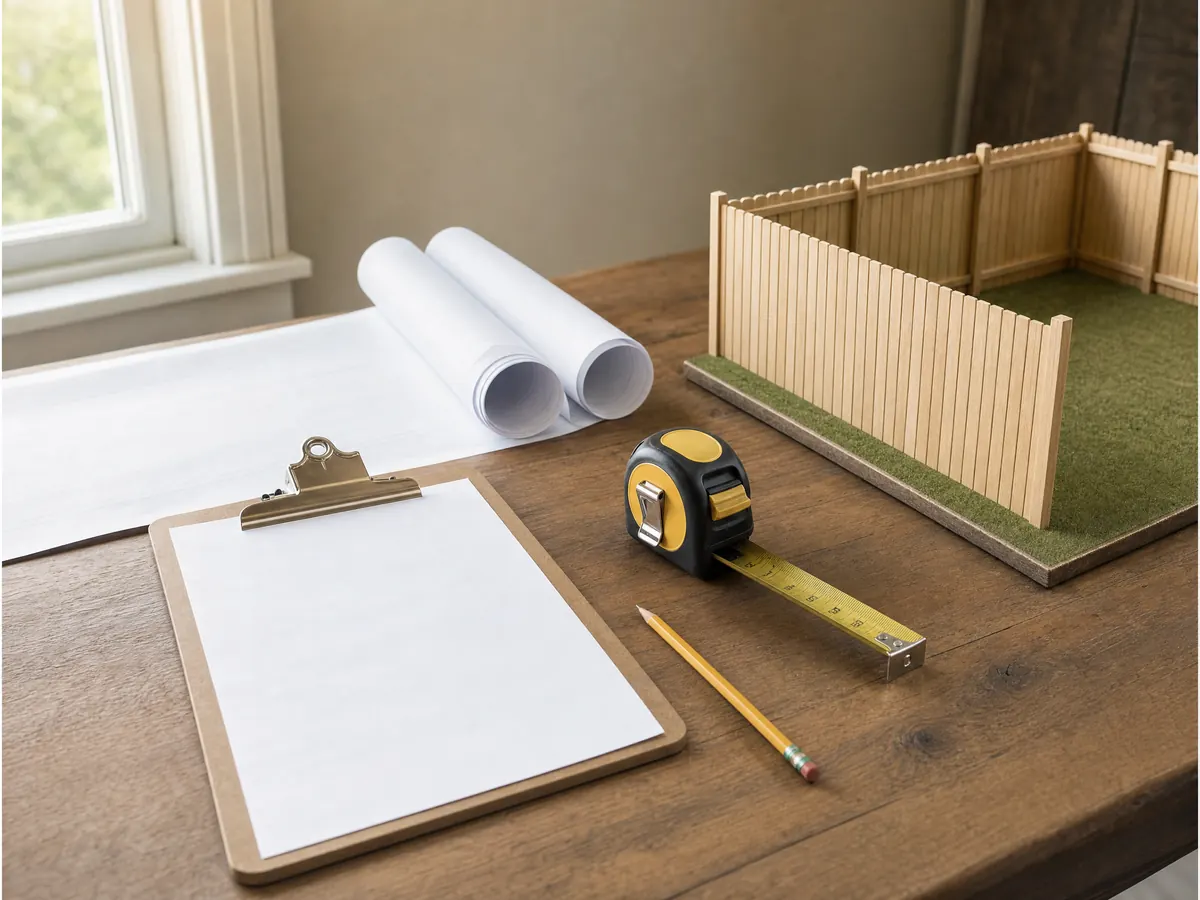
Does a Jurupa Valley fence need a permit above 3 feet, and why does zoning stop at 6?
Three numbers apply to the same fence. The City's building code amendment (Section 105.1.3) requires a permit for any fence over 3 feet in any material, the exemption list (Section 105.2) covers fences up to 3 feet, and pool barrier fencing needs a permit at any height. Zoning (Section 9.240.500) separately caps fences and walls in residential zones at 6 feet. The rules answer different questions, so a 5 foot fence is legal under zoning and still needs a building permit.
That is stricter than the model state code. Our research read the 2022 California Building Code listing fences up to 7 feet as exempt, and the City's local amendment overrides that here, so advice from other cities that says a 6 or 7 foot fence needs no permit does not apply in Jurupa Valley. A site plan is required, and applications go through Accela or the counter (8 am to 3 pm weekdays). Starting before the permit is issued triggers a special investigation and an investigation fee on top of the permit fee; the amount sits in the fee schedule, which we did not read.
Ask for the fence height and the permit number to appear on the written proposal.
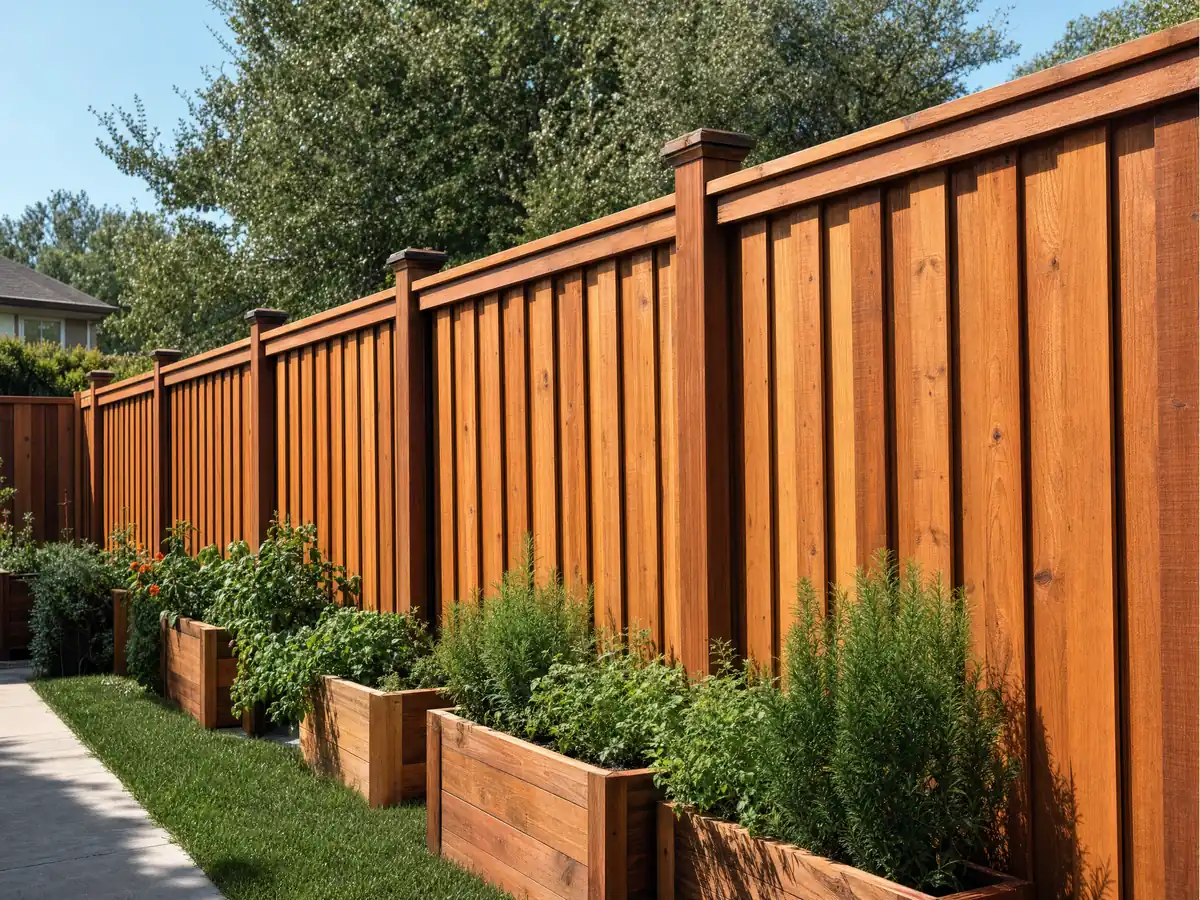
How tall can a Jurupa Valley front yard fence be, and which materials are banned?
Inside a required front or street-side setback, a fence must be open to view above 42 inches, so a solid 6 foot wood wall cannot run along the front of the lot. Behind the setback, residential zones allow up to 6 feet. The R-1, R-R and R-A zones each require a 20 foot front yard, and the City's zoning map decides which zone a parcel is in.
Section 9.240.500 also bans garage doors, tires, pallets and other non-fence materials, and prohibits perimeter fences or walls of chain link, razor, barbed or chicken wire, tarp or sheet metal. The one exception is chain link already standing before September 1, 2023, which may be repaired or replaced with like chain link. A rusted chain link run along a side yard is therefore a replace-in-kind question, while a new chain link perimeter is not allowed. We did not find what documents the installation date, so ask Planning.
Ask Planning how your lot's front and street-side setbacks are measured before choosing a style.
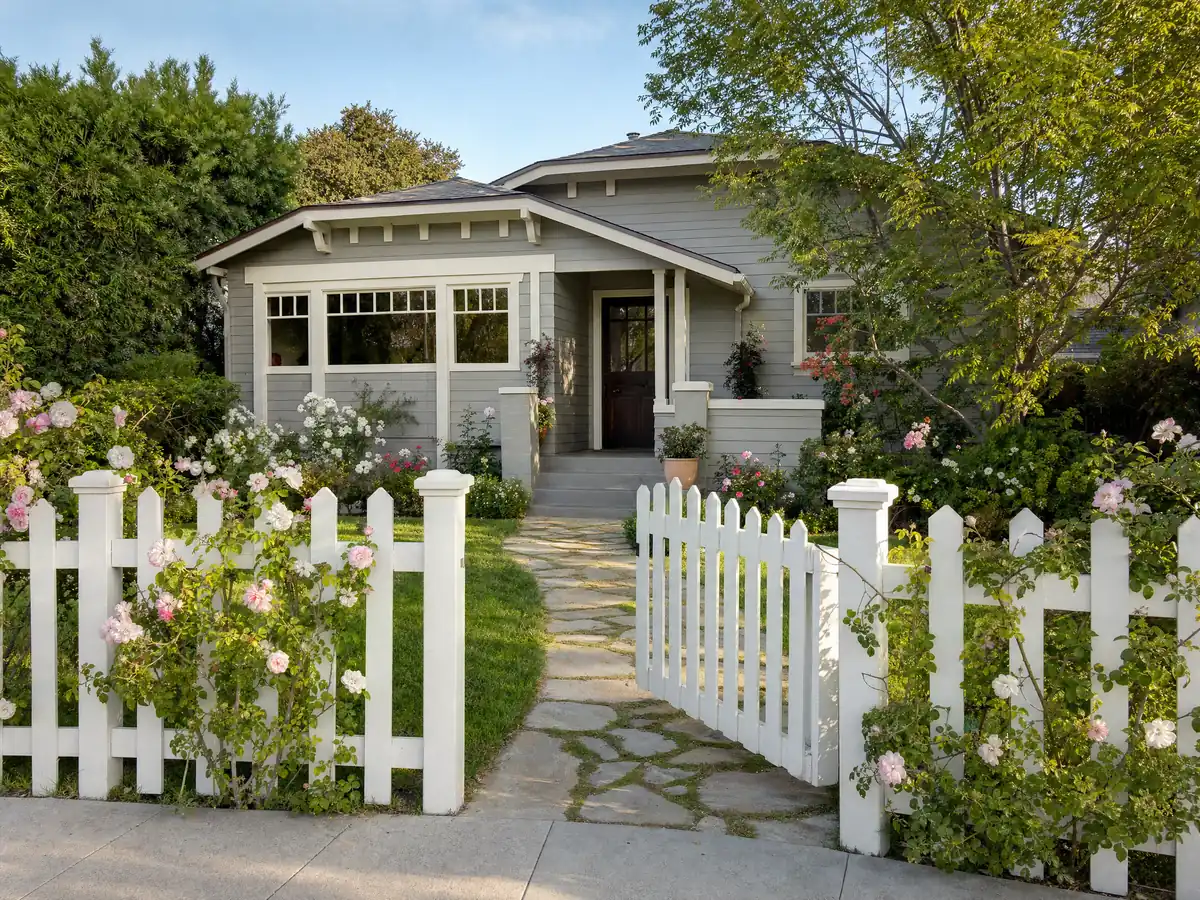
Does a fence in a Jurupa Valley fire zone have to be ignition resistant?
It may, and the City tells owners to ask. Where the Wildland-Urban Interface Code requires noncombustible or ignition-resistant materials, an accessory structure of any size needs a building permit, and the City's handout says paints and stains do not count as ignition protection. No source we read says whether a fence or gate falls under that requirement, so ask the Building Official before ordering wood. The 2025 Moderate, High and Very High maps were adopted by Ordinance 2025-13 on 6-26-2025, and we could not look up any parcel.
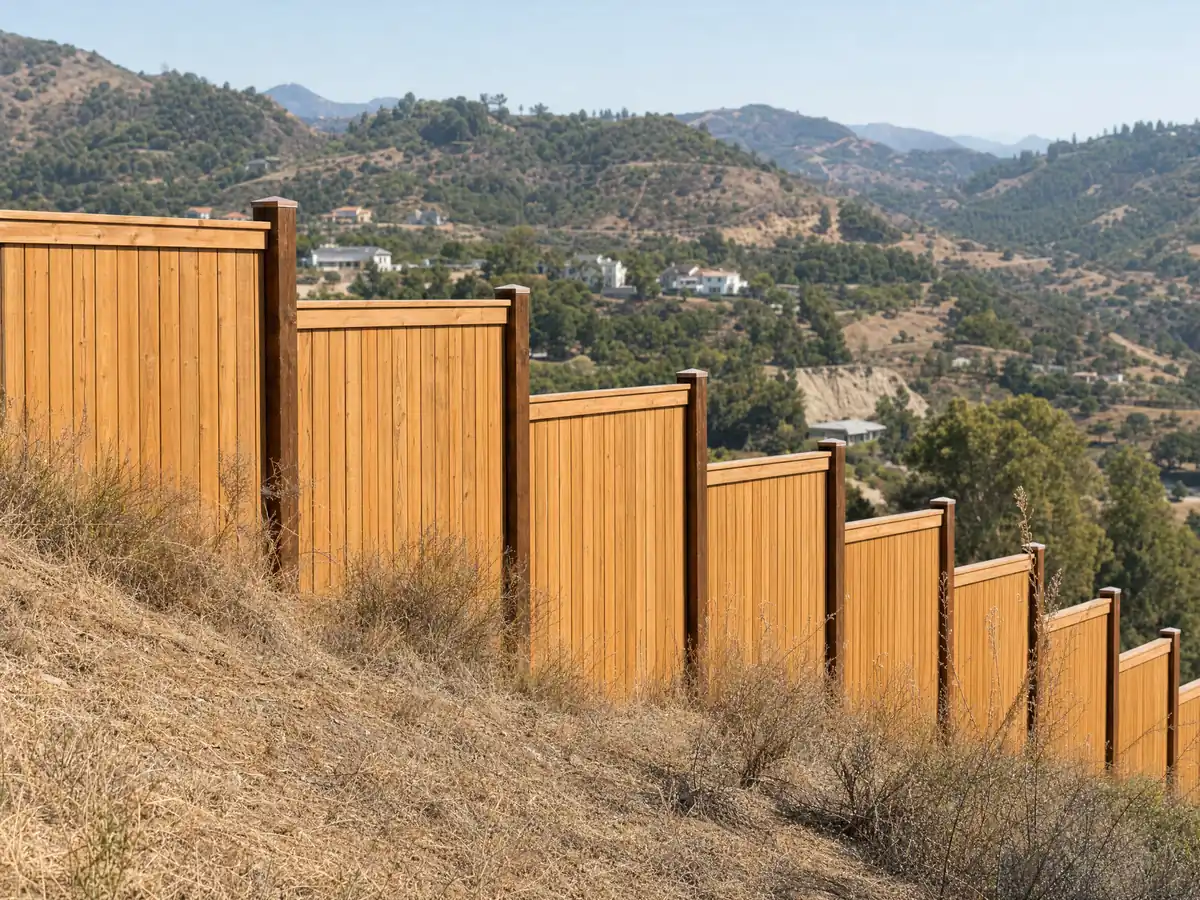
The terrain explains the concern. The City says the Jurupa Hills in the north and the Indian Hills in the center carry light, fast-burning chaparral, and the Santa Ana riverbed carries heavier fuels that can cast embers into the community. North of the SR 60 freeway the General Plan maps moderate to very high landslide susceptibility, and the Jurupa Mountains have slopes of 30 percent or more, which makes a fence on a slope a footing and drainage question as well as a height question.
Get the fire zone answer in writing and keep it with the contract.
What does the City's block wall standard require, and do I need my neighbor's signature?
The City publishes a freestanding block wall standard, revised April 7, 2026, for walls 3 to 6 feet high. It offers two footing options, calls for #4 bars and grouted cells and lists inspections for footing rebar, the first horizontal bar lift, the second lift before grout and final. It is not designed to retain soil or to tolerate more than 6 inches of grade change, walls under 3 feet need no permit, and a site plan is required.
A wall on a shared line also needs the City's Property Line Agreement signed with the adjoining owner, and nothing may be built over an easement. Retaining walls are separate: a wall over 2 feet from the top of the footing, or one carrying a surcharge, needs a permit, and the standard revised May 6, 2026 covers walls up to 6 feet with #4 rebar, fully grouted cells, rubberized waterproofing and 4 inch perforated drain pipe in permeable fabric. It allows no building, driveway or vehicle loads behind the wall.
Ask who draws the site plan and who collects the neighbor's signature.
Do high groundwater, liquefaction and blowing sand change how fence posts and walls are built?
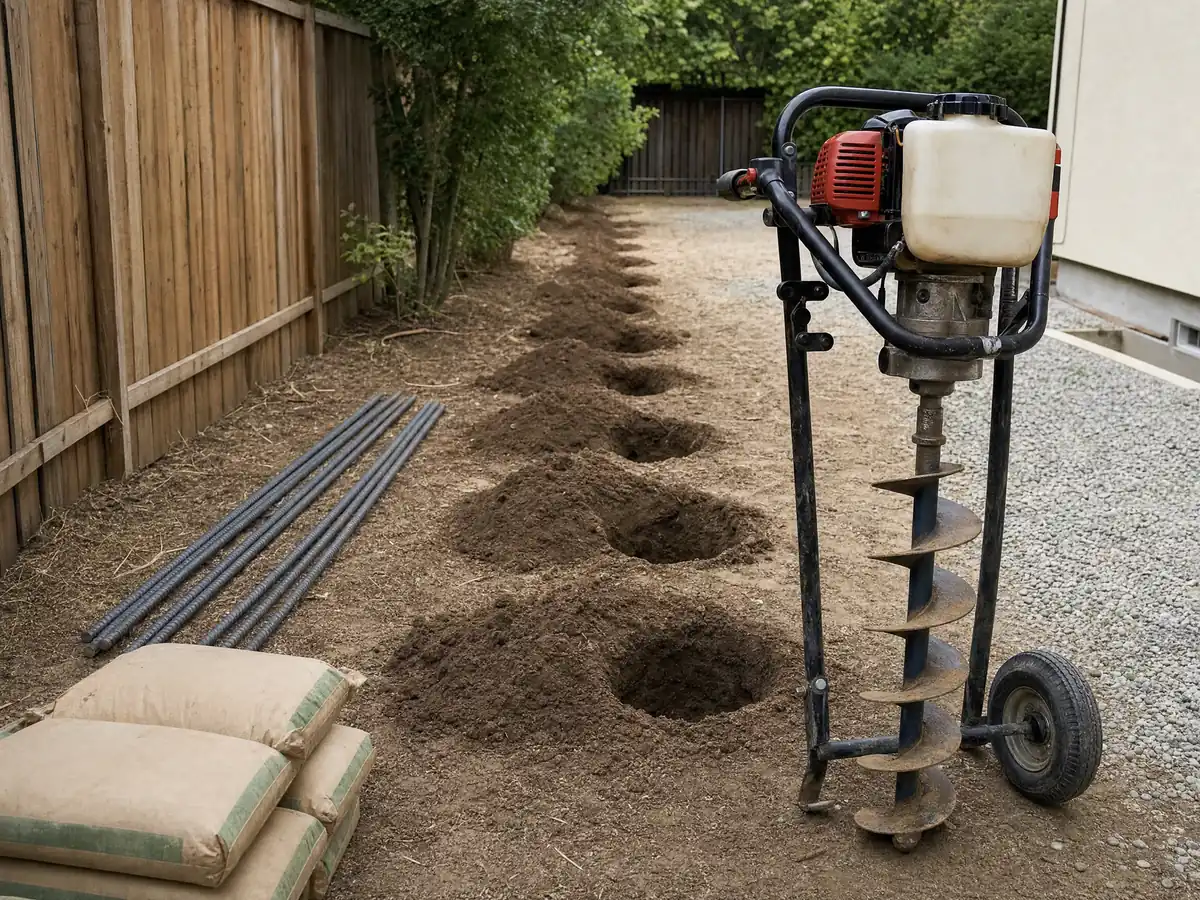
The General Plan says most of Jurupa Valley has a high groundwater table and a High liquefaction potential, with the State liquefaction zones mostly along the Santa Ana River and the far east and southwest also susceptible, and that expansive and collapsible soils and groundwater-related subsidence occur. Development in much of the City needs geotechnical reports. We found no rule asking for a soils report on a fence, so the practical effect is on footing depth and drainage, which belong in the written scope.
Wind adds its own load. The General Plan names wind erosion and blowing sand in Mira Loma, and Municipal Code Chapter 6.25 designates Agricultural Dust Control Area No. 1 there, where disturbing 3 acres or more needs a City permit. A fence line is far smaller than that, but SCAQMD Rule 403 still bars dust that stays visible past the property line, so trenching and post digging in sandy ground need wetting or another control. We found no City design wind speed, so we state none.
Ask what footing depth the crew plans and why.
What do the City's gate and pool barrier handouts require?
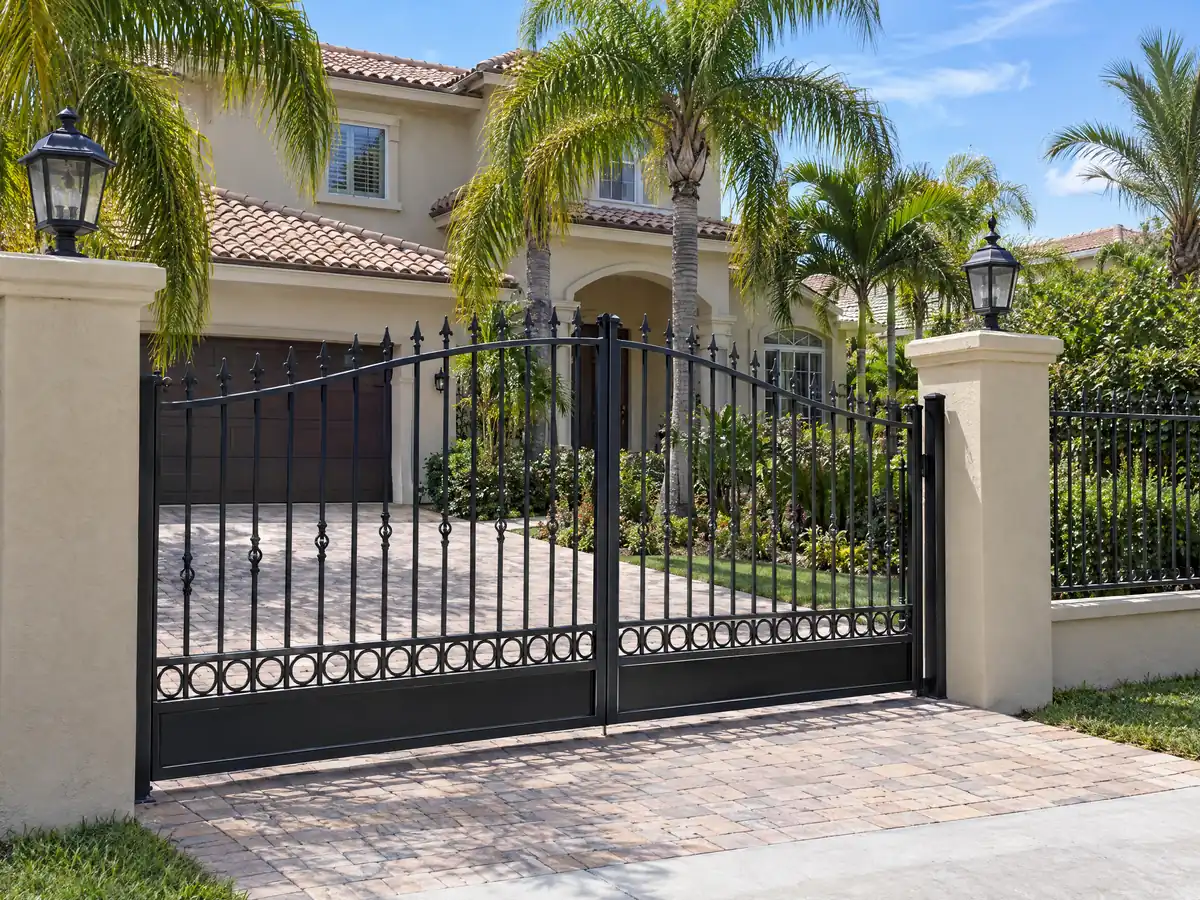
The gate standards, revised May 14, 2026, require pedestrian gates on paths of circulation to the public right-of-way, with panic hardware if the occupant load exceeds 50. A motorized vehicle gate needs an electrical permit and a UL 325 listed operator, the Fire Department may require an Opticom opener, and the Fire Code amendment says new motorized gates must open remotely for emergency vehicles under Riverside County Fire standards. Long driveways face the same code's fire access roads at least 24 feet wide with 13 feet 6 inches of clearance.
The Pool Enclosure handout (April 9, 2026) asks for a 5 foot minimum fence or wall around the whole pool with no climbable members and self-closing, self-latching gates that open outward, 4 feet wide at most per leaf. Door alarms must be at least 85 dB, listed for pool barriers and mounted more than 60 inches up; chiming or security alarms are not accepted, and RV gates must stay permanently locked.
Pools carry a paperwork conflict. The City's 2018 Swimming Pool Safety Act policy points to a chapter 6.30 for barriers, but that chapter in the code library is Excavation Safety Regulations, so we cite the handout instead. The policy requires at least two of the seven state drowning-prevention features on plans for a new or remodeled private pool.
How much does fence installation cost in Jurupa Valley, and who pays for a shared fence?
No Jurupa Valley price survey turned up, so these are Los Angeles figures. Angi's Los Angeles page (updated August 4, 2026) reports a $3,051 average inside a $1,734 to $4,422 range and $15 to $60 a foot, with 100 feet costing $2,100 to $2,350, wood $1,600 to $2,500 and vinyl $1,850 to $3,400. Its national page adds $150 to $2,000 for a gate and $3 to $5 a foot to remove an old fence, and the federal wage survey (May 2025) puts Los Angeles area fence erectors near $28 an hour. No independent per-foot price for block walls turned up, so none is printed here. Our planning ranges are $25 to $55 a foot for wood or vinyl privacy fence and $35 to $85 for aluminum or iron; chain link runs $12 to $30, but only repair or like replacement is allowed here.
California Civil Code 841 presumes neighbors split a boundary fence equally and asks the owner who plans to spend money to give each affected neighbor 30 days' written notice. Check any fence company with our license guide and see how general contractors use subcontractors for who answers to whom.
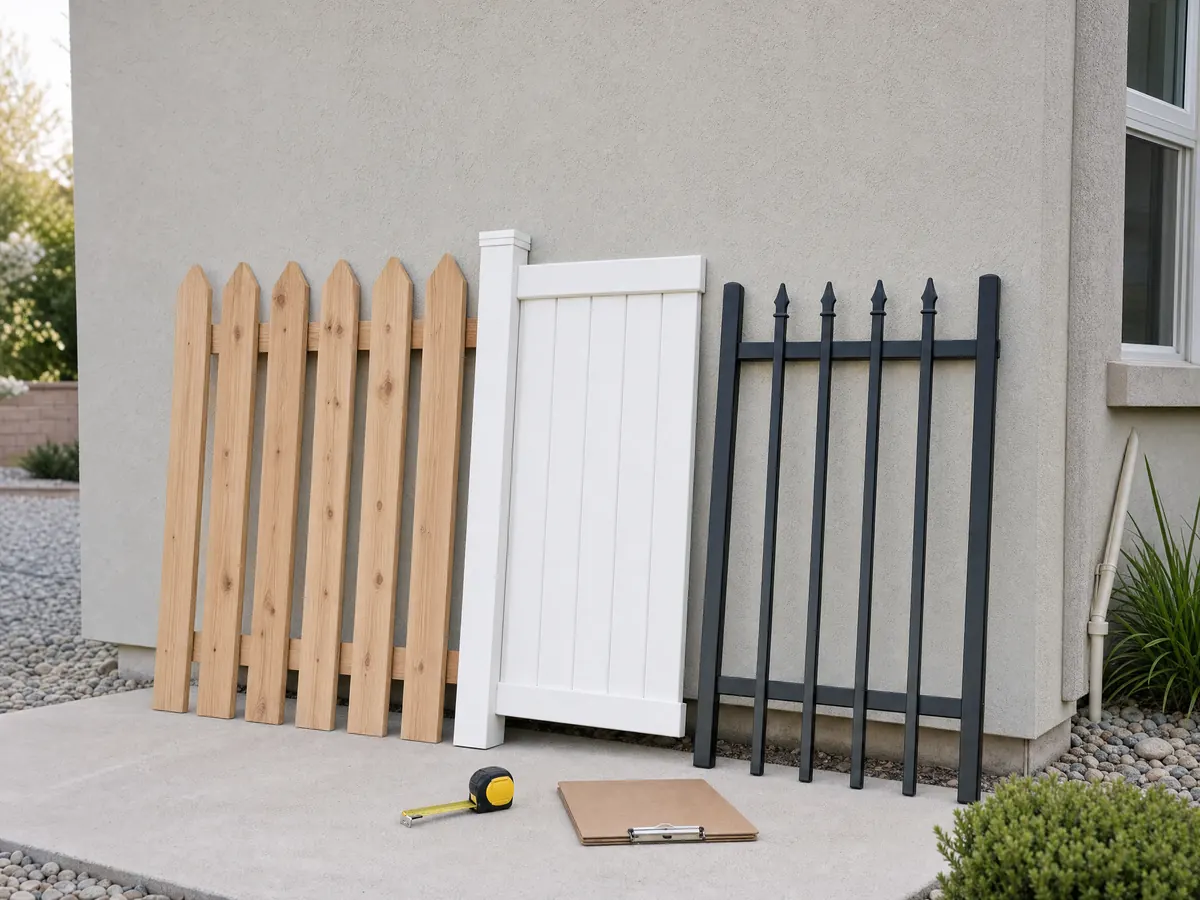
Fencing photos from Jurupa Valley and nearby communities
Fence scenes tied to Jurupa Valley places such as Rubidoux, Sunnyslope, Pedley and Glen Avon, and to nearby communities such as Riverside, Eastvale and Norco, from wood privacy runs and block walls to gates and pool barriers.
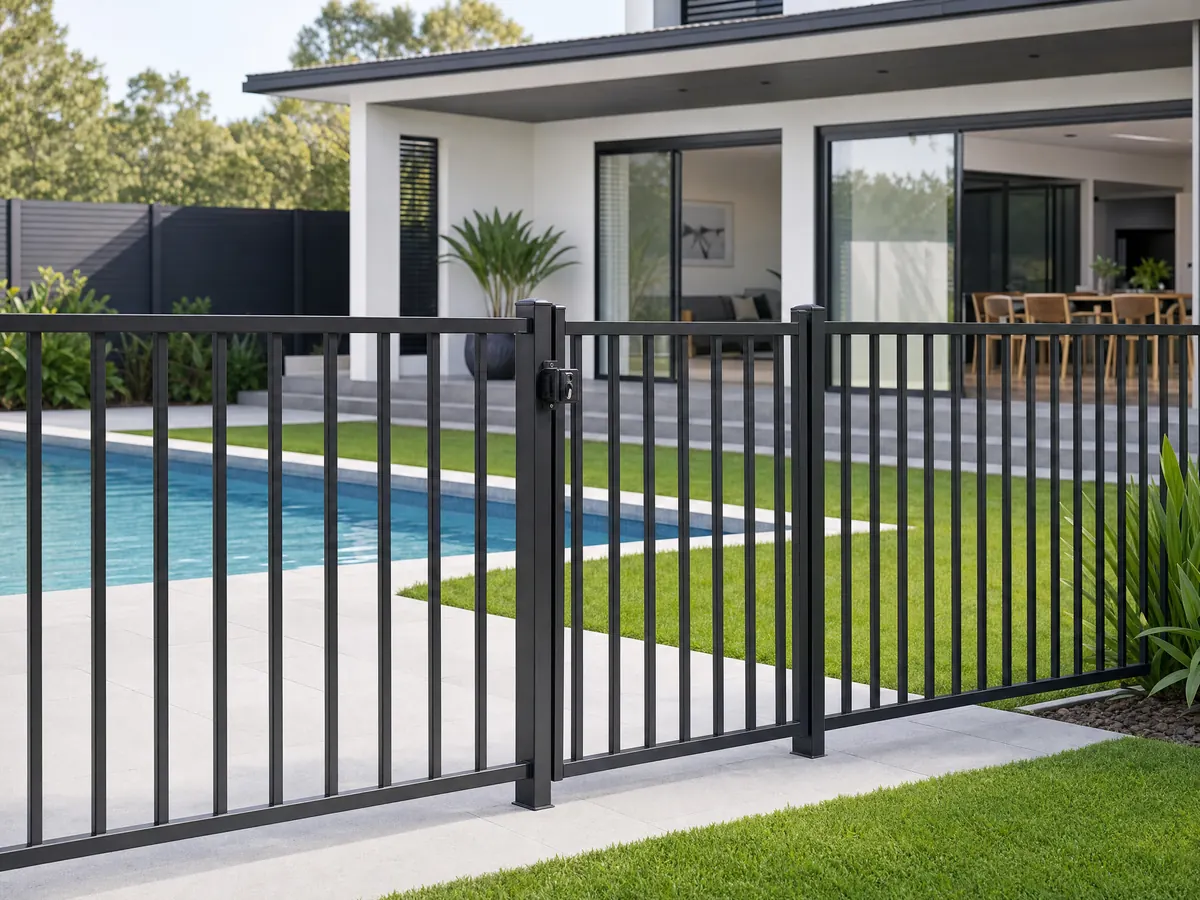
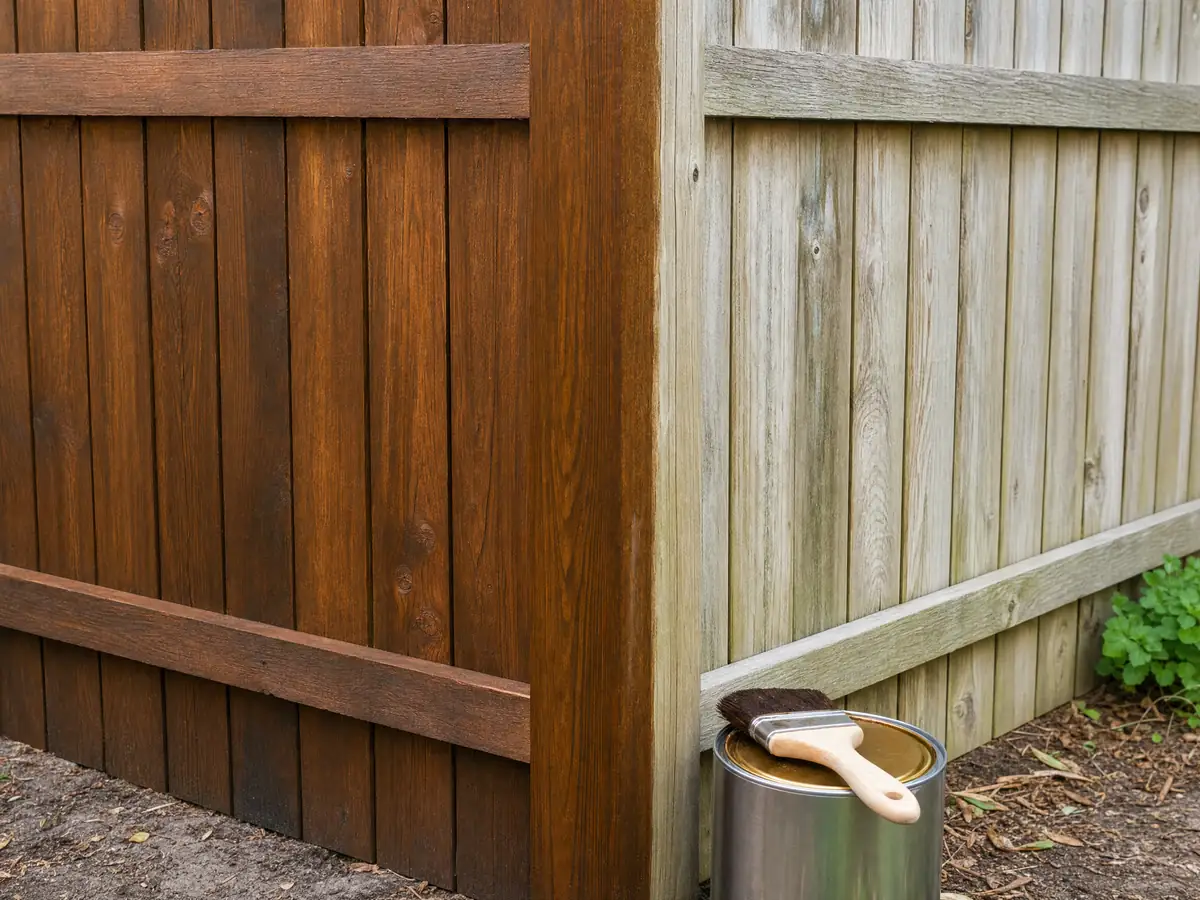
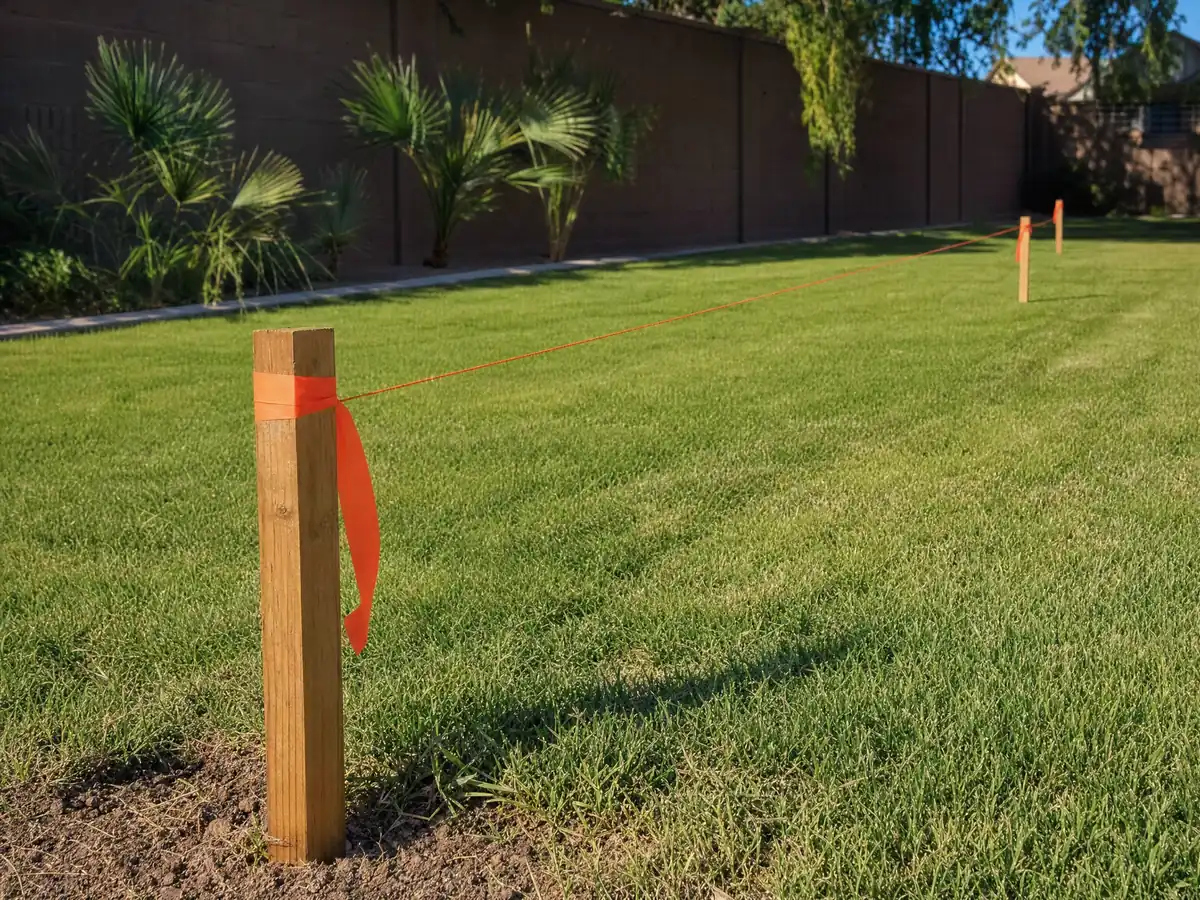
Where these Jurupa Valley fence figures come from
The fencing page sets out each fence price with its source, date and the numbers that disagree. Fence work often sits beside other outside jobs, and the Jurupa Valley rules for them are on the roofing page and the painting page. For a Riverside County city that handles fire zone fences differently, read the guide for Moreno Valley.
| What it covers | Typical range |
|---|---|
| Wood or vinyl privacy fence, 6 feet | $25 to $55 per linear foot |
| Chain-link | $12 to $30 per linear foot |
| Aluminum or ornamental iron | $35 to $85 per linear foot |
| Typical 100-foot backyard run | $2,500 to $5,500 total |
| Block walls, horizontal slat fences, gates and openers, hillside lots | Set by the written proposal |
Other work we manage in Jurupa Valley
Jurupa Valley fence questions, answered
Do I need a permit to build a fence in Jurupa Valley?
Yes, if it is over 3 feet tall. The City's building code requires a permit for any fence over 3 feet in any material, and pool barrier fencing needs one at any height. Zoning separately caps residential fences at 6 feet. Call Building & Safety at (951) 332-6464 to confirm your plan.
Can I put up a 7ft fence?
Not in a residential zone. Section 9.240.500 caps fences and walls there at 6 feet, even though the model state code treats fences up to 7 feet as exempt from a building permit. Anything over 3 feet needs a Jurupa Valley permit. Ask Planning whether any exception applies to your lot.
How tall can a fence be in the front yard?
In a required front or street-side setback, a fence must be open to view above 42 inches, so a solid privacy fence cannot sit there. Behind the setback, residential zones allow 6 feet. R-1, R-R and R-A zones each require a 20 foot front yard, so check the zoning map for your parcel.
Can I replace my chain link fence in Jurupa Valley?
Only in kind, and only if the chain link was in place before September 1, 2023. The zoning chapter bans new perimeter fences of chain link, razor, barbed or chicken wire, tarp or sheet metal, but lets older chain link be repaired or replaced with like chain link. Ask Planning how your fence's age is shown.
How much does fence installation cost in Jurupa Valley?
We found no Jurupa Valley survey. Angi's Los Angeles data show a $3,051 average and $15 to $60 a foot, and our planning ranges are $25 to $55 a foot for wood or vinyl and $35 to $85 for aluminum or iron. Slope, gates, old fence removal and block work move the price, and a written proposal is the real number.
How much does it cost to have 100 feet of fence installed?
Angi's Los Angeles page shows $2,100 to $2,350 for 100 feet, while our planning range of $25 to $55 a foot puts a wood or vinyl privacy run at about $2,500 to $5,500. The sources differ because jobs and materials differ. Gates, slopes and removal of an old fence are extra, so get the scope itemized.
Does your neighbor have to pay for half the fence in California?
Usually, as a starting presumption. Civil Code 841 presumes adjoining owners share the cost of a boundary fence equally, and it asks the owner who plans to spend money to give each affected neighbor 30 days' written notice. The presumption can be rebutted, so send the notice in writing before work begins.
Do you need a permit to build a block wall in California?
In Jurupa Valley, yes for any wall taller than 3 feet, because the City's permit list covers fences over 3 feet in any material. Lower walls need no permit. The City's freestanding block wall standard covers walls 3 to 6 feet high, and a wall on a shared line needs a signed Property Line Agreement.
What is the maximum height of a retaining wall without a permit in California?
In Jurupa Valley the line is 2 feet, measured from the top of the footing, and any wall carrying a surcharge needs a permit at any height. The City's retaining wall standard covers walls up to 6 feet and allows no building, driveway or vehicle loads behind them. Taller or loaded walls need engineered plans.
Do I need a permit to replace a pool gate or pool fence in Jurupa Valley?
Yes. Pool barrier fencing needs a permit at any height, and the City's Pool Enclosure handout requires a 5 foot minimum barrier, self-closing and self-latching gates that open outward and door alarms of at least 85 dB. Ask the counter whether a like-for-like gate swap on an existing pool is treated the same way.
Ask for a fence estimate in Jurupa Valley
Give us the neighborhood, the fence material, which side of the lot faces the street and whether a pool, a slope or a shared wall is involved. We read the height and permit rules for that yard before we call back.