
Roof Repairin Jurupa Valley, CA
Roof replacement in Jurupa Valley needs a permit, and the City lets owners file a residential reroof entirely online through Accela. Replace half the roof or more and the state cool roof limits apply. Inside the Wildland-Urban Interface, the 2025 code calls for a Class A roof unless the roofing type is exempt.
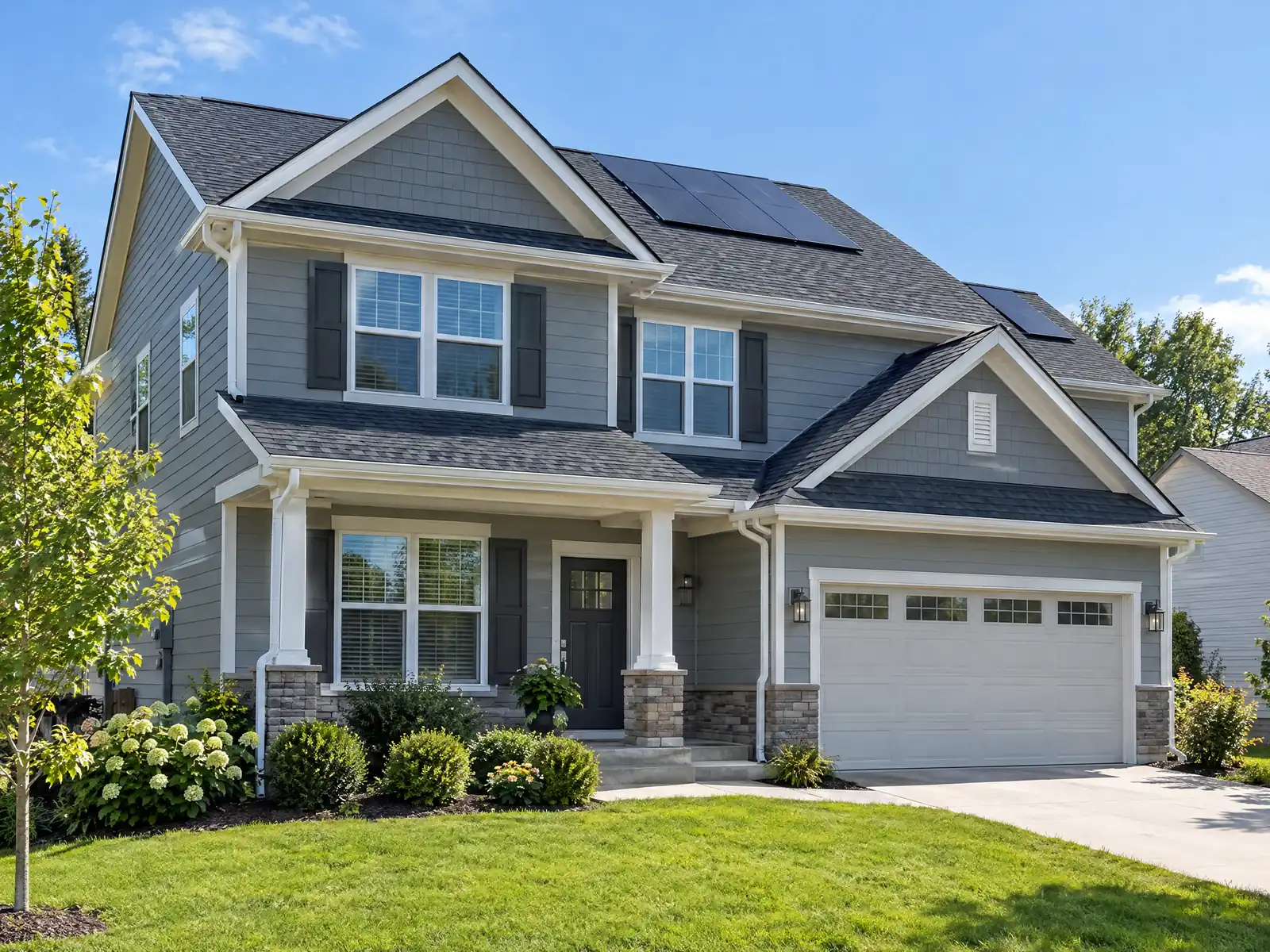
Jurupa Valley is one of California's youngest cities and one of its older settlements. Rancho Jurupa became a Mexican land grant to Juan Bandini in 1838, and voters created the city on July 1, 2011, joining nine communities over about 44 square miles. The roofs mostly date from the building boom in between. Census Bureau ACS 2024 one-year estimates count 28,434 housing units, and the largest single decade is the 1980s, with 6,959 units or 24.5 percent, while 44.8 percent of all units were built before 1980. The median owner-occupied home is worth $626,600.
On a roofing job, MDG Builders (CSLB #1040337) acts as the general contractor: we set the scope, work out which City paperwork applies and keep the calendar, and a licensed C-39 roofing subcontractor tears off and lays the new covering. Our roofing page holds the sourced prices, the Jurupa Valley overview lists every trade we manage here, and the guides for Riverside and Corona show how two neighboring Riverside County cities handle the same work. Eastvale, Norco and Fontana run their own counters. The City's Building & Safety Department issues permits inside city limits. The Municipal Code text below comes from GoCodebook, a third-party mirror, because the City's Municode library refused automated requests, so confirm every section with the City.
What Jurupa Valley's permit list, fire maps and Chapter 8.05 say about roofs
Where roofing permits come from in Jurupa Valley: City of Jurupa Valley Community Development, Building & Safety Department.
- Reroofs are one of the permits the City lets you file fully online through Accela, and the City offers a Residential Re-Roof CF1R compliance form (the version on the City's site is the February 2022 standards edition).
- Cool roof: the City's re-roof certificate says that when 50 percent or more of a roof is replaced, a steep-slope roof (2:12 or steeper) in climate zones 4 and 8 to 15 needs an aged solar reflectance of at least 0.20 and thermal emittance of 0.75 (or SRI of 16), unless an exception applies (a radiant barrier, R-38 ceiling insulation, no ducts in the attic in zones 2, 4, 9, 10, 12 and 14, or R-2 above-deck insulation); low-slope roofs need 0.63 reflectance or SRI 75. The City's own HVAC form for Jurupa Valley addresses is headed climate zone 10, which falls in that range.
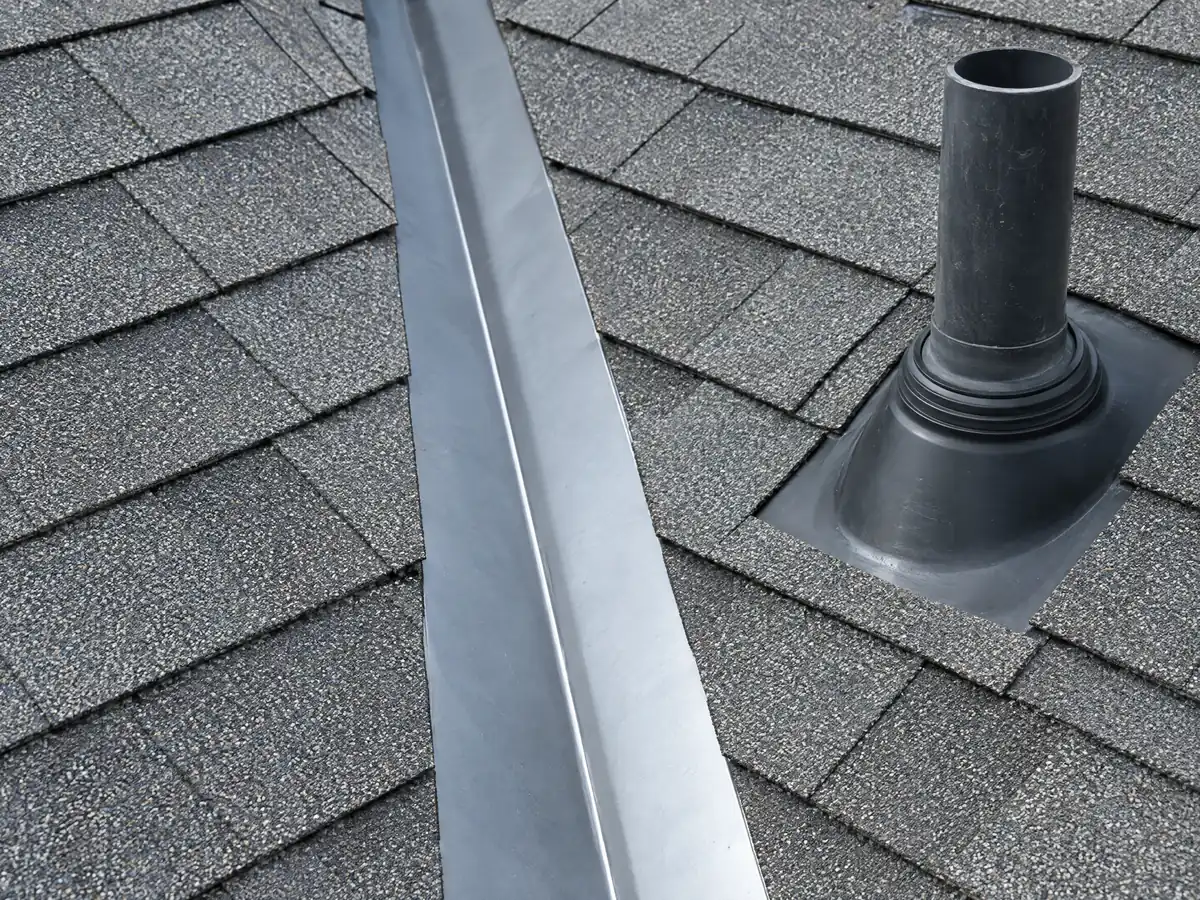
- Roofs in a Wildland-Urban Interface area must be Class A (ASTM E108 or UL 790) unless an exempt type such as masonry, metal or tile on a noncombustible deck; roof profiles that create airspace need a cap sheet, mineral wool or bird stops and sealed hip and ridge caps; valleys need corrosion-resistant metal over a 36 inch mineral cap sheet underlayment; gutters and vents must resist embers (City WUI handout).
- The City added a local roof sheathing and shear inspection (Section 110.3.3.1) that is done after roof sheathing and structural shear panels are nailed, in addition to the model-code inspections (text read in GoCodebook's copy of the Jurupa Valley Municipal Code, 2026-10 edition updated 2026-10-04, a third-party mirror; the City's Municode site returned HTTP 403 to automated requests).
- Solar on a new roof: SolarAPP+ is limited to roof-mounted systems on the main permitted dwelling (no ground or ballasted systems), through licensed contractors, with the City's ordinance setting a 1 to 3 business day issue time and a single inspection for small residential rooftop systems.
- Reroof paperwork that surprises people: the smoke and carbon monoxide alarm verification applies when any permit is issued for repairs to a dwelling, and the City's self-certification option exists for exterior-only jobs such as roofs where the inspector has no interior access.
- Repair money: the City's Housing Rehabilitation Program lists roofing among eligible health and safety repairs for low-income owner-occupants (grants up to $15,000).
Sources for these rules
- jurupavalley.org: Permits
- jurupavalley.org: Residential Re Roof CF1R PDF
- jurupavalley.org: 2025 California Wildland Urban Interface Code PDF
- gocodebook.com: chapter 8.05 adoption of construction codes 1
- jurupavalley.org: Solar App
- jurupavalley.org: Smoke and Carbon Monoxide Alarm Verification Form PDF
- jurupavalley.org: Housing Rehabilitation Program

Does roof repair or a re-roof need a permit in Jurupa Valley?
A re-roof does. The City's Permits page lists residential reroofs among the permit types that can be filed entirely online through the Accela Citizen Access portal, beside water heater and HVAC changeouts and rooftop solar, and the local amendment to the building code (Section 105.1.3) requires a permit for repairing a building or structure. We found nothing that says whether a small patch counts, so call Building & Safety at (951) 332-6464 or write BuildingPermits@jurupavalley.org before assuming a repair is exempt. The counter is open 8 am to 3 pm on weekdays.
A permit runs on a clock. As read on the mirror, an issued permit becomes invalid if work has not started within 12 months or has been suspended for 12 months, extensions of up to 180 days each must be requested before expiry, and the City's extension form lists a $111 processing fee. We did not read the fee schedule, so we print no permit fee.
Read the licensing line carefully. The City's room addition and ADU checklists ask contractors for State and City licenses and a workers' compensation certificate, while the Permits page says the City issues no business licenses and asks local businesses to register. No reroof checklist settled it, so ask the counter and ask your roofer for the certificate either way.
Ask for the permit number and the inspection dates in writing before the dumpster is delivered.
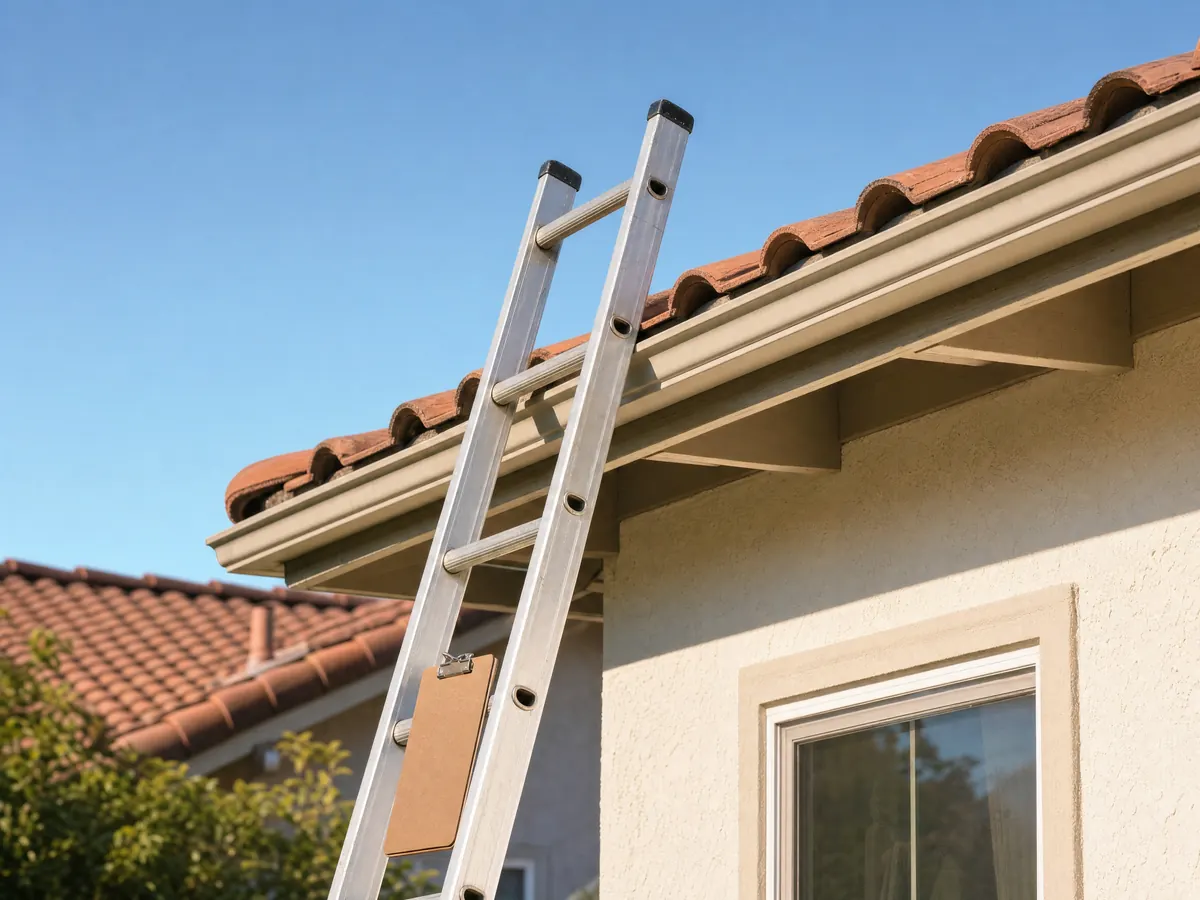
How old are Jurupa Valley roofs, and what do 100 days a year above 90 degrees do to them?
Roof age follows the decade. ACS 2024 counts 6,959 units from 1980 to 1989, 4,518 from the 1970s, 3,701 from the 1960s and 3,006 from the 1950s, so a roof original to a 1980s house is now more than 35 years old. The City's Housing Element says the older communities of Rubidoux, Mira Loma, Belltown and Glen Avon are mostly houses from before 1980, many with deferred maintenance. We found no Jurupa Valley roof survey, so we print no lifespan in years.
Long heat does the slow work. NOAA's 1991 to 2020 normals for Riverside Municipal Airport, the nearest full station at about 3.9 miles from the city center point, give about 100 days a year at or above 90 F, about 22 at or above 100 F and an August average high of 94.9 F. Rain totals 9.37 inches a year, 7.42 of it from December through March, and only 0.12 inch falls in July and 0.02 in August. We found no City snow load or design wind speed, so we state neither.
- Granules in the gutters or bare patches on shingles
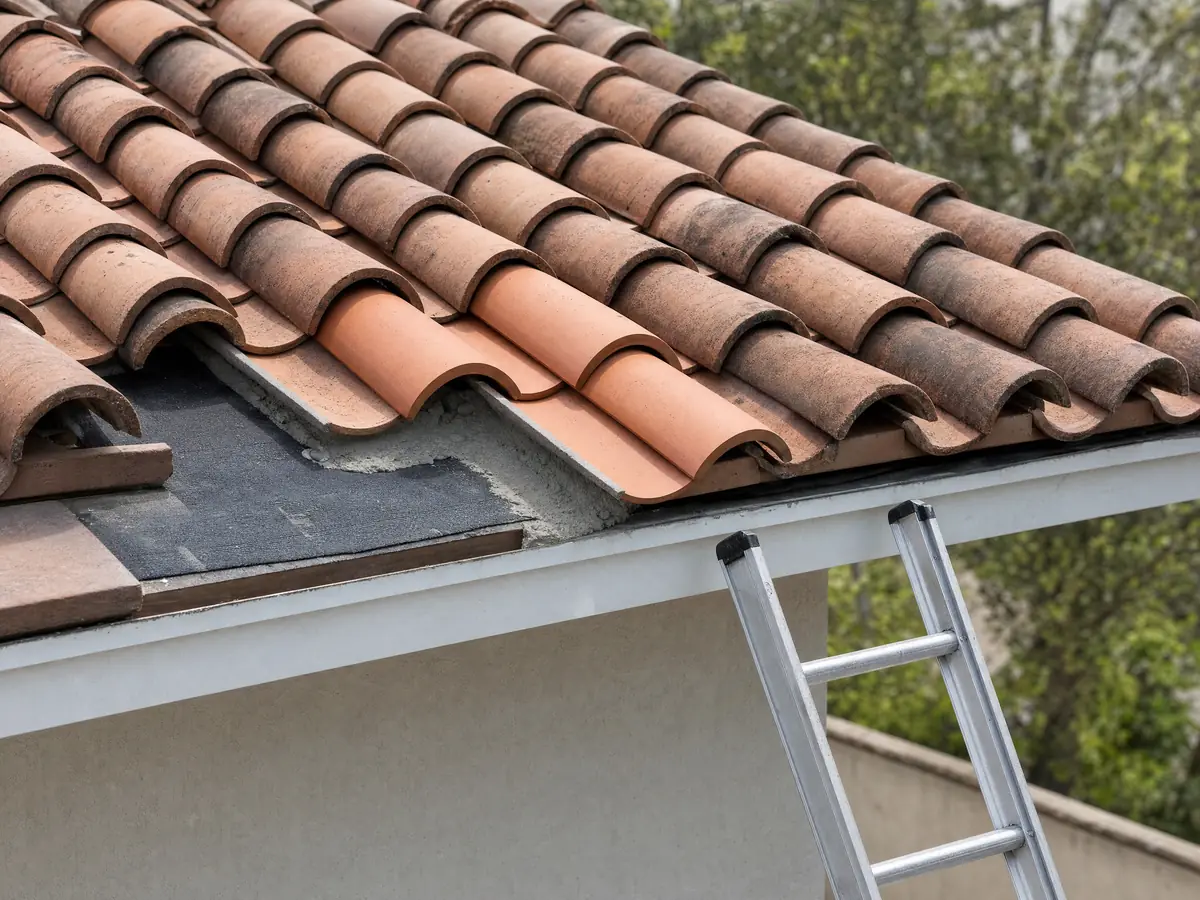
- Curled, cracked or slipped shingles and tiles
- Flashing lifting at chimneys, walls and vent pipes
- Soft or sagging spots when the deck is walked
Have any deck repair priced as its own line before tear-off starts.
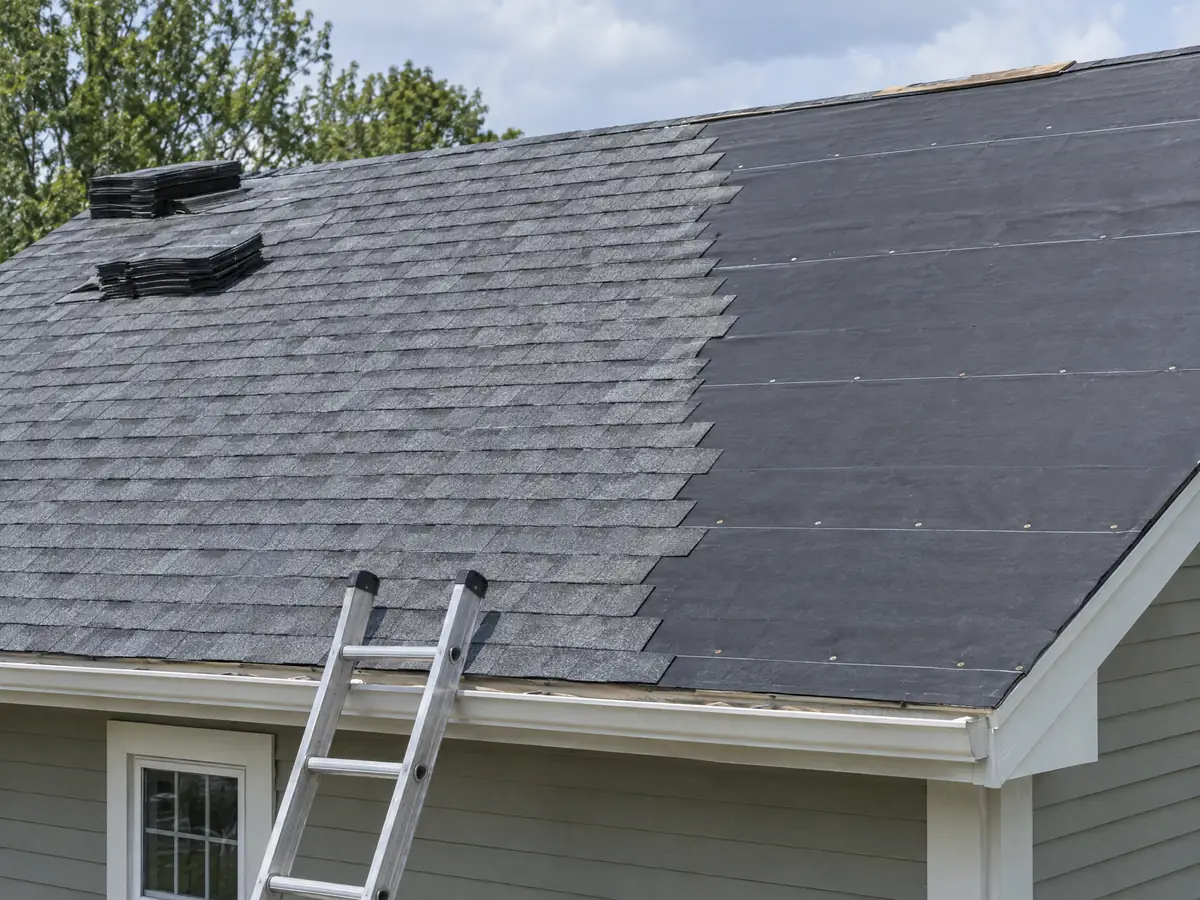
Is my Jurupa Valley roof in a High or Very High fire zone, and what roof does the zone need?
We cannot place your lot, and the City pages we read list no parcels. What is documented: the State Fire Marshal issued 2025 recommended Moderate, High and Very High maps for Riverside County's local responsibility areas on March 24, 2025, and the City Council adopted them by Ordinance 2025-13 on 6-26-2025 (Municipal Code Chapter 8.12). The zone level cannot be lowered locally. City pages describe light, fast-burning chaparral on the Jurupa Hills in the north and the Indian Hills in the center, and heavier fuels along the Santa Ana riverbed that can send embers into the neighborhoods. That describes fuels, not a ruling on any street.
For roofs, the City's handout on the 2025 Wildland-Urban Interface Code requires Class A (tested to ASTM E108 or UL 790) unless the roof is an exempt type such as masonry, metal or tile on a noncombustible deck. Profiles that leave an airspace need a cap sheet, mineral wool or bird stops and sealed hip and ridge caps, valleys need corrosion-resistant metal over a 36 inch mineral cap sheet, and gutters and vents must resist embers. Very High zone owners must keep 100 feet of defensible space, and owners in either zone must disclose the zone at sale.
Whether a re-roof on an existing house must be Class A was not stated in any City source we read, inside a zone or outside one, so ask Building & Safety.
Ask for the Class A listing on the proposal, not just the product name.
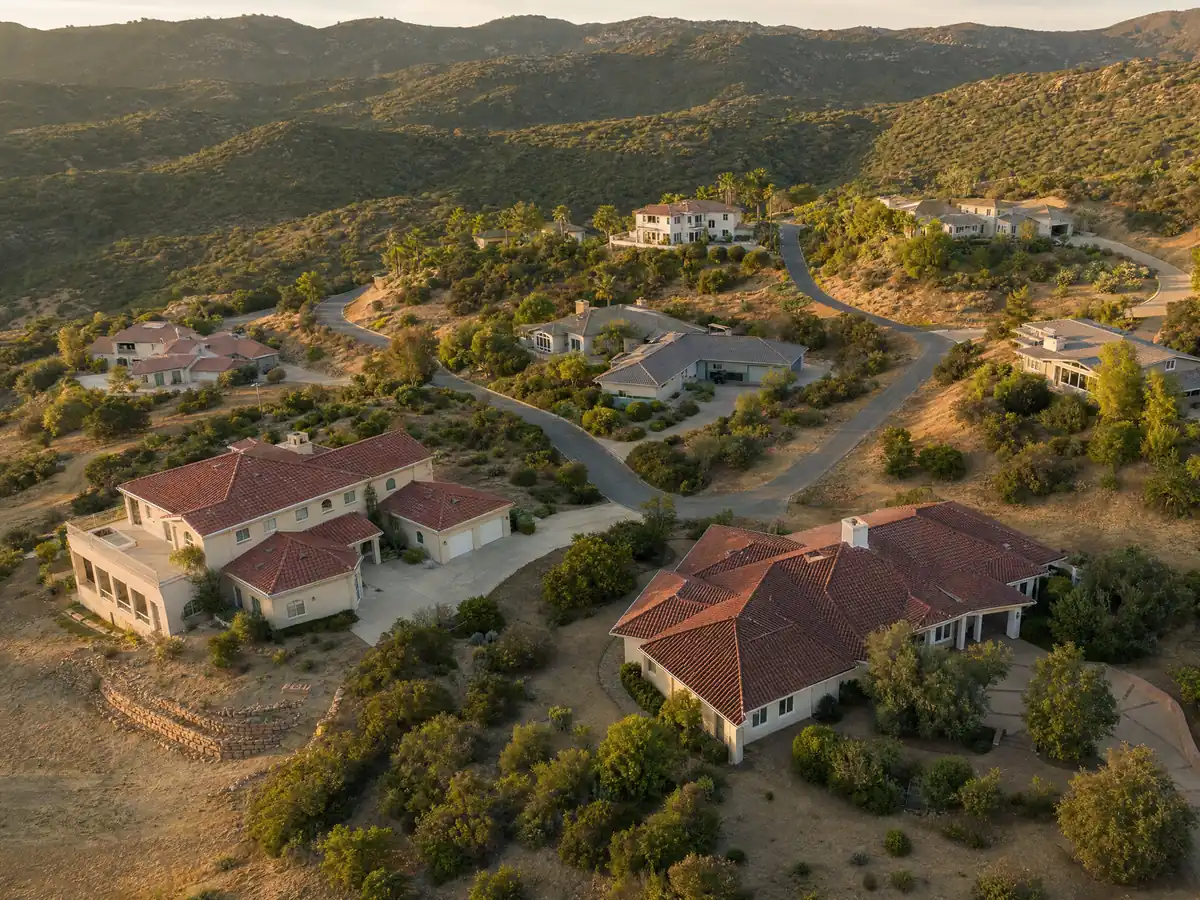
What does replacing half or more of a Jurupa Valley roof trigger under the cool roof rule?
The City's re-roof compliance certificate carries the state rule: when 50 percent or more of a roof is replaced, a steep-slope roof (2:12 or steeper) in climate zones 4 and 8 to 15 needs an aged solar reflectance of at least 0.20 and thermal emittance of 0.75, or an SRI of 16, unless an exception applies. Low-slope roofs need 0.63 reflectance or an SRI of 75. The City's own HVAC form for Jurupa Valley addresses is headed Climate Zone 10, inside that range. The listed exceptions include a radiant barrier, R-38 ceiling insulation, no ducts in the attic and R-2 insulation above the deck.
Two cautions. The certificate on the City's site is the February 2022 energy standards edition, while the City adopted the 2025 codes on 11-6-2025 by Ordinance 2025-24, so we could not confirm the current wording or whether the counter still accepts the older form. And roof area is a measurement, so the percent replaced should be written down and checked, not guessed.
- Percent of the roof being replaced
- Roof slope of each plane
- Aged reflectance and emittance of the chosen product
- Which exception, if any, the job relies on
Have the roofer measure each roof plane and put the percentage on the proposal.
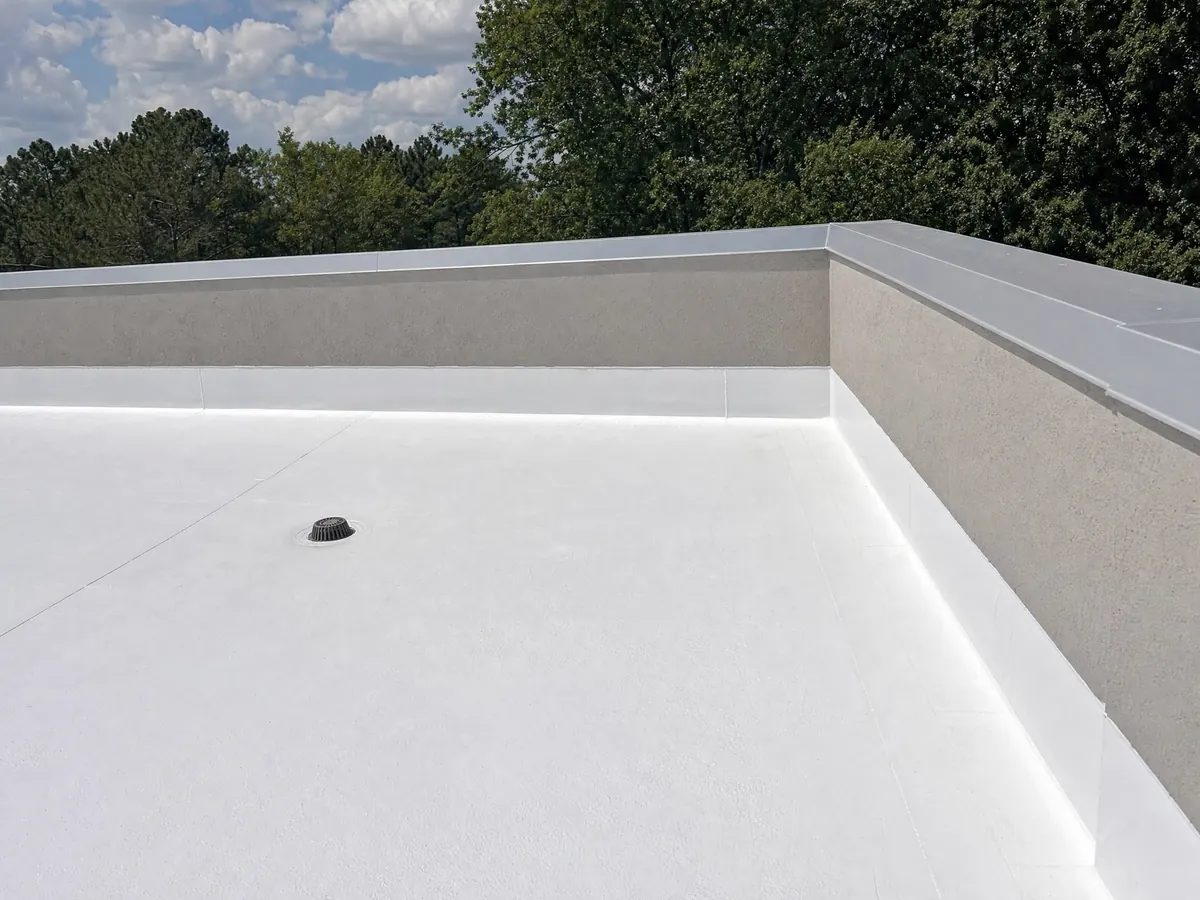
What does Jurupa Valley inspect on a reroof, and what else does the permit set off?
Jurupa Valley added its own roof sheathing and shear inspection (Section 110.3.3.1), done after the sheathing and structural shear panels are nailed, on top of the model-code inspections. The deck therefore gets looked at before the covering goes on, so the crew should not paper over an open deck.
Any permit for repairs to a dwelling also triggers the smoke and carbon monoxide alarm retrofit. Owner and licensed contractor may self-certify only when the work is exterior and the inspector cannot get inside, which fits a roof. That form still cites the 2022 California Residential Code, another sign that City paperwork lags the codes adopted in 2025.
Debris and noise have their own rules. A residential project valued at $25,000 or more must divert at least 65 percent of its debris and file a waste management plan with the permit application, and a tile or metal roof can reach that figure. Private construction within a quarter mile of a dwelling is exempt from the noise limits only if it stays out of 6 pm to 6 am from June through September, or 6 pm to 7 am from October through May.
Ask the roofer who files the waste plan and who holds the deposit.
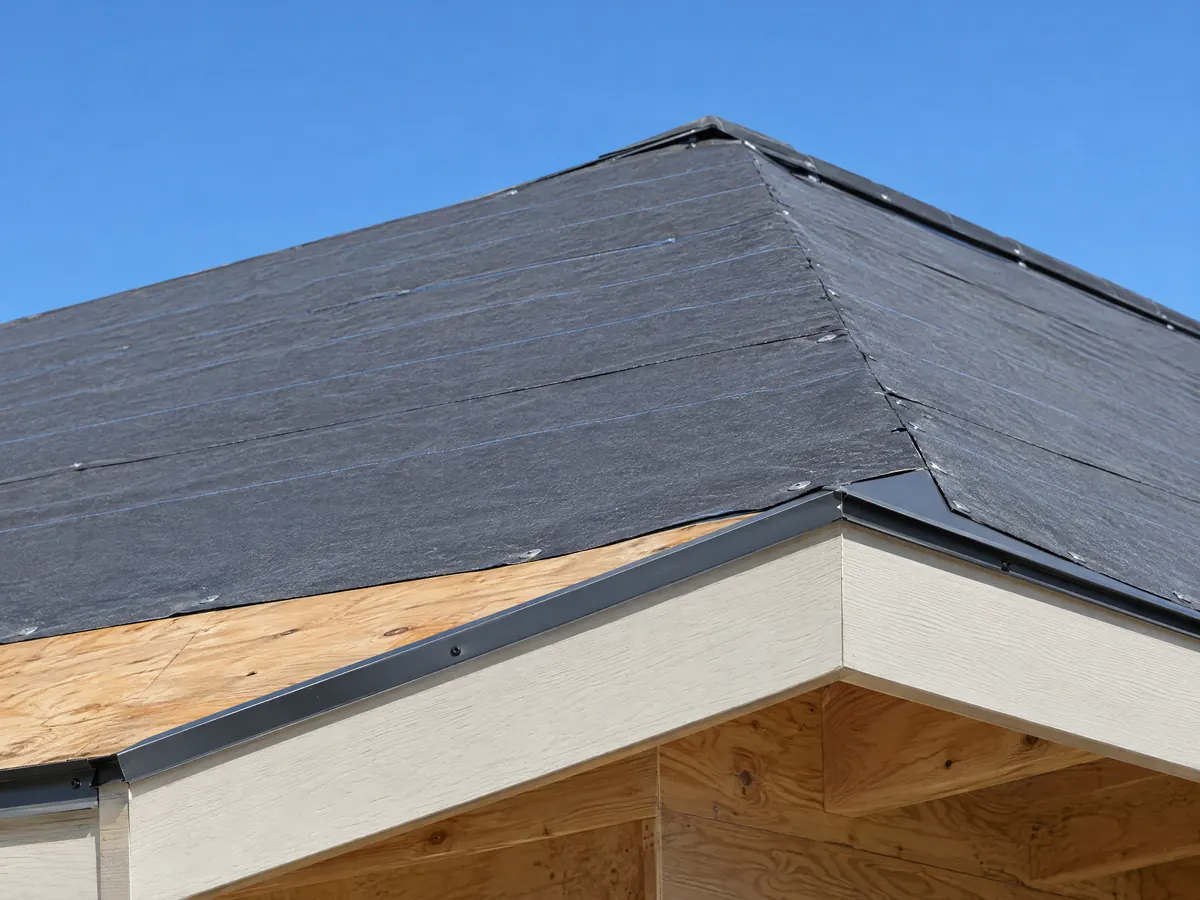
How do rooftop solar, barns and horse property change a re-roof in Jurupa Valley?
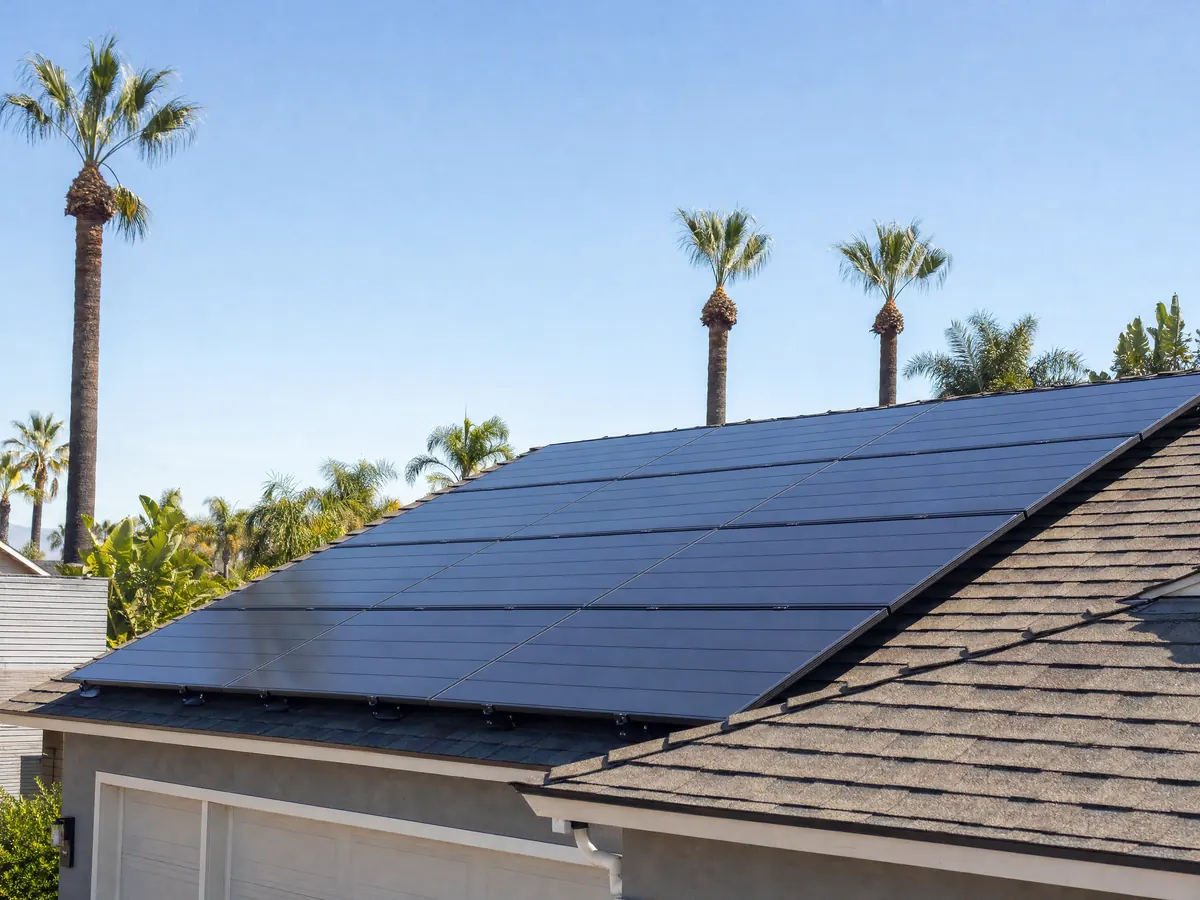
Panels on the old roof complicate the schedule. The City's SolarAPP+ path covers roof-mounted systems on the main permitted dwelling only, with no ground or ballasted systems, through licensed contractors, and the ordinance sets an issue time of 1 to 3 business days and a single inspection for small residential rooftop systems. We found nothing on whether a simple removal and reset needs its own permit, so ask before tear-off and have the roofer and the solar contractor agree on dates.
Not every roof sits on a house. The 2017 General Plan protects a semi-rural, equestrian character, with an Equestrian Lifestyle Protection Overlay and agricultural and rural residential zones, so one block can hold 1980s tract homes, half-acre horse properties and older worker housing. An accessory structure of any size needs a permit where the Wildland-Urban Interface Code requires noncombustible or ignition-resistant materials, so a barn reroof in a fire zone can need paperwork that a plain shed elsewhere would not. The City also publishes permit-ready plans for a barn, patio cover and shed, approved by Council in November 2024.
How much does roof replacement cost in Jurupa Valley, and how do I hire a roofer?
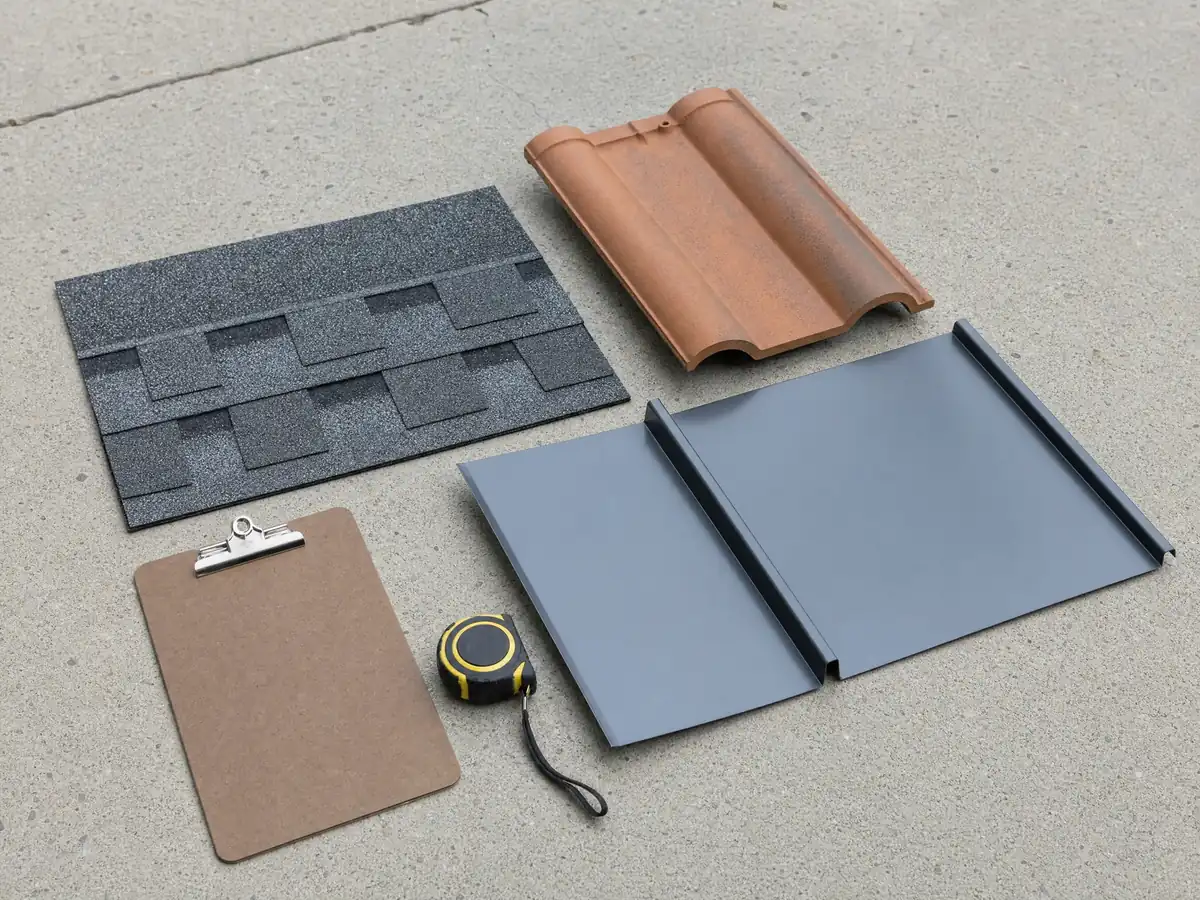
No Jurupa Valley price survey turned up, so the numbers below are Los Angeles figures and an Inland Empire bid can differ. Angi's Los Angeles page (updated July 31, 2026) reports a typical job at $10,256 to $24,963 around a $17,271 average, about $8.60 a square foot: asphalt runs $4 to $12, tile $7 to $15 and metal $7 to $16, tear-off adds $1,000 to $3,000, and taking solar panels off and back on adds $500 to $1,000. Remodeling magazine's Cost vs. Value 2025 report prices a fixed reference roof in Los Angeles at $36,417 for asphalt and $62,069 for metal without stating the roof size, which explains the gap. Our planning ranges are about $10,000 to $25,000 for asphalt, $15,000 to $37,000 for tile and $20,000 and up for metal.
Roofing is CSLB class C-39. Business and Professions Code 7159 requires a written, signed contract, limits the down payment to $1,000 or 10 percent of the price, whichever is less, and includes a box stating whether subcontractors will be used. See our license guide and how general contractors use subcontractors. Low-income owner-occupants may also qualify for the City's Housing Rehabilitation Program, which lists roofing among repairs eligible for grants of up to $15,000, first come first served.
Roofing photos from Jurupa Valley and nearby communities
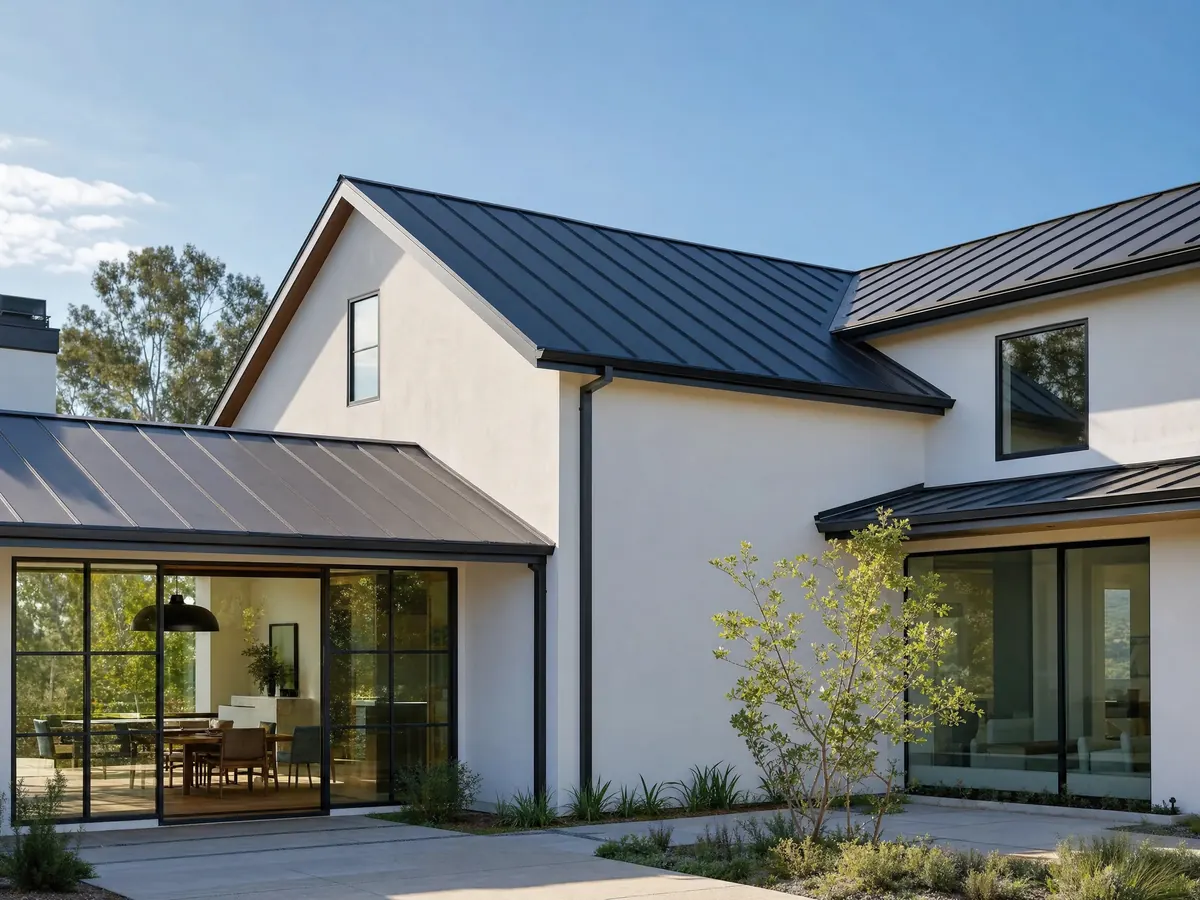
Roofing scenes tied to Jurupa Valley places such as Rubidoux, Pedley, Glen Avon and Mira Loma, and to nearby communities such as Riverside, Eastvale and Norco, from tear-offs and underlayment to tile repair and flashing work.
Where these Jurupa Valley roof figures come from
The roofing page lists every roofing price with its source and date, and the California roofing cost guide explains why a survey average and a fixed reference roof can sit so far apart. A new roof often leads to other outside work, and the Jurupa Valley rules for it are on the fencing page, the painting page and the kitchen remodeling page. For a Los Angeles County rulebook to set beside this one, read the roofing guide for Pasadena.
| What it covers | Typical range |
|---|---|
| Asphalt shingle, typical single-family roof | $10,000 to $25,000 |
| Concrete or clay tile | $7 to $15 per sq ft |
| Metal | $7 to $16 per sq ft |
| Remodeling Cost vs. Value 2025, Los Angeles | Asphalt $36,417. metal $62,069. |
| Extras | Tear-off $1,000 to $3,000. solar detach and reset $500 to $1,000. |
Other work we manage in Jurupa Valley
Jurupa Valley roofing questions, answered
Do I need a permit to replace my roof in Jurupa Valley?
Yes. The City lists residential reroofs among the permits that can be filed entirely online through Accela, and the local building code requires a permit for repairing or altering a structure. A permit lapses if work has not started within 12 months. Call Building & Safety at (951) 332-6464 to confirm how your job is classified.
Do I need a permit for roof repair in Jurupa Valley?
Probably for anything beyond a small patch, but we found no written rule that settles it. The permit list covers repairing a building or structure, and the exemptions name finish work and small structures, not roofs. Call (951) 332-6464 or email BuildingPermits@jurupavalley.org with the scope before work starts.
Does Jurupa Valley require a Class A roof?
In the Wildland-Urban Interface, yes, unless the roof is an exempt type such as masonry, metal or tile on a noncombustible deck. The City's 2025 handout sets Class A under ASTM E108 or UL 790 for those roofs. Whether an existing house outside a mapped zone needs Class A on a re-roof is not stated in a City source we read, so ask the counter.
Is my Jurupa Valley roof in a fire hazard zone?
We cannot say for your lot. The City adopted 2025 Moderate, High and Very High maps by Ordinance 2025-13 on June 26, 2025, and the map is on file at the City Clerk and online through Riverside County Fire. We found no parcel list, and the City cannot lower a zone, so check the map and write the answer into your contract.
How much does roof replacement cost in Jurupa Valley?
We found no Jurupa Valley survey. Angi's Los Angeles data show $10,256 to $24,963 for a typical roof, and our planning ranges are about $10,000 to $25,000 for asphalt, $15,000 to $37,000 for tile and $20,000 and up for metal. Roof size, tear-off, deck repair and solar removal move the total, and a written proposal is the real price.
How much should a 2000 sq ft roof cost?
Applying Angi's Los Angeles rate of $4 to $12 a square foot for asphalt, 2,000 square feet of roof comes to about $8,000 to $24,000, and tile at $7 to $15 comes to $14,000 to $30,000, before tear-off and deck repair. That is arithmetic, not a quote. Roof area runs larger than floor area, so the roof itself has to be measured.
What is the 25% rule for roofing?
We found no Jurupa Valley code section that uses 25 percent. The threshold we did find is 50 percent: replacing half the roof or more brings the state cool roof limits on the City's re-roof certificate. Ask the counter how it measures roof area, because that decides which side of the line a job lands on.
Do solar panels need a separate permit when I replace my roof?
Possibly, and the City pages we read do not say. New roof-mounted systems on the main dwelling go through SolarAPP+, with a 1 to 3 business day issue time and one inspection, but we found nothing on a simple removal and reset. Ask Building & Safety before tear-off, and have the roofer and solar contractor agree on the schedule.
What is the best time of year to replace a roof?
Summer is driest, with 0.12 inch of rain in July and 0.02 in August at Riverside Municipal Airport, but about 22 days a year reach 100 F and the noise exemption ends at 6 pm from June through September. Late spring and early fall bring cooler decks at the price of a little rain risk, so ask the crew how it handles heat.
How do I check a roofing contractor's license in California?
Search the license number on the Contractors State License Board site, confirm that classification C-39 Roofing is active and match the name on the card to your contract. Ask for a workers' compensation certificate too. The City's checklists mention State and City licenses, so ask the counter what applies to a reroof.
Ask for a roof inspection in Jurupa Valley
Tell us the neighborhood, the roof covering, the year the house was built and where water shows up inside. Before we call back we look at the fire zone question, the 50 percent cool roof line and whether solar panels sit on the roof.